Explore Japan's incredible food culture — filter by region, category, or name.
What makes a dish "soul food" in Japan? →
Popular foods in Japan
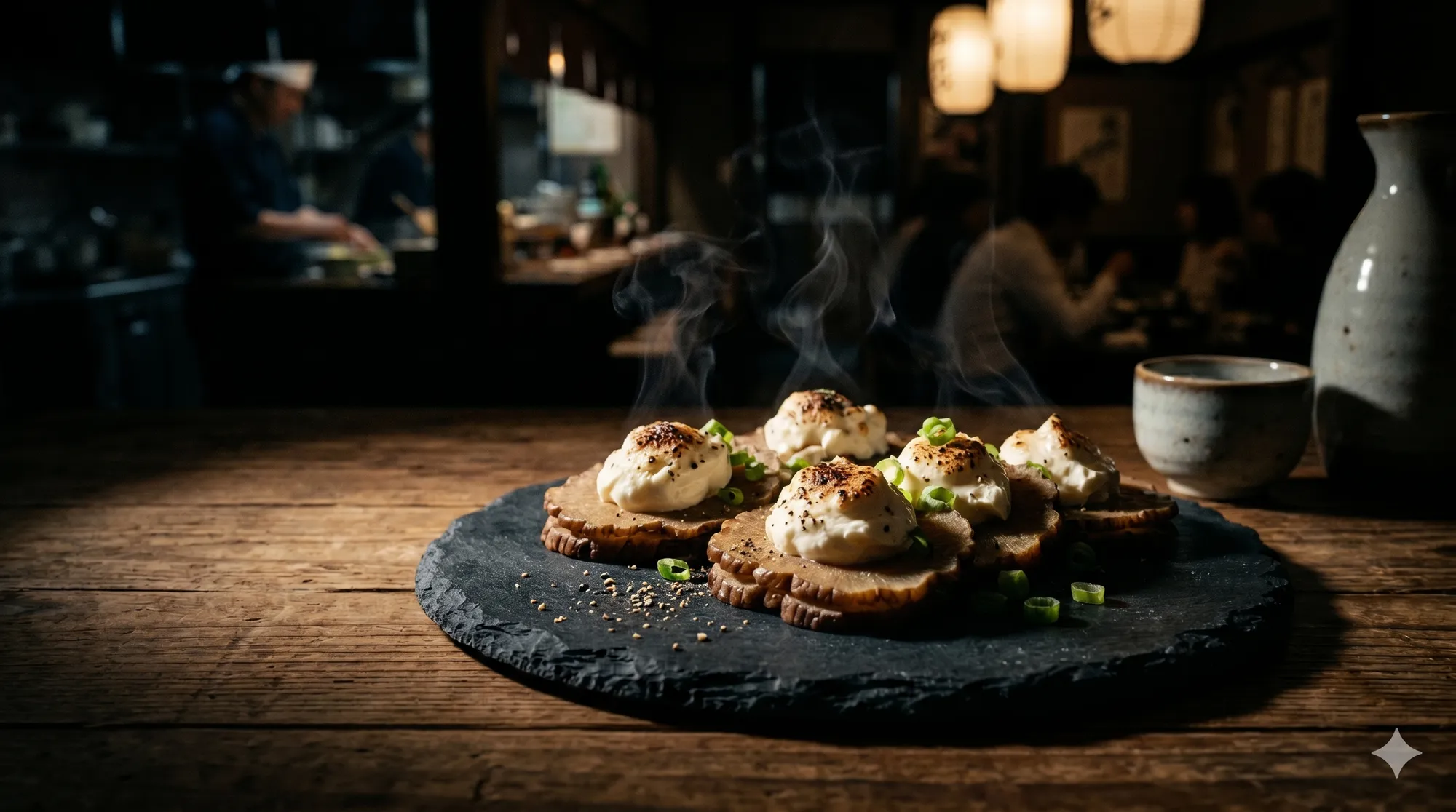
Smoke-cured daikon pickle, crunchy and savory, topped with cool cream cheese. Akita's snowbound tradition meets dairy and becomes the izakaya snack you can't stop eating.
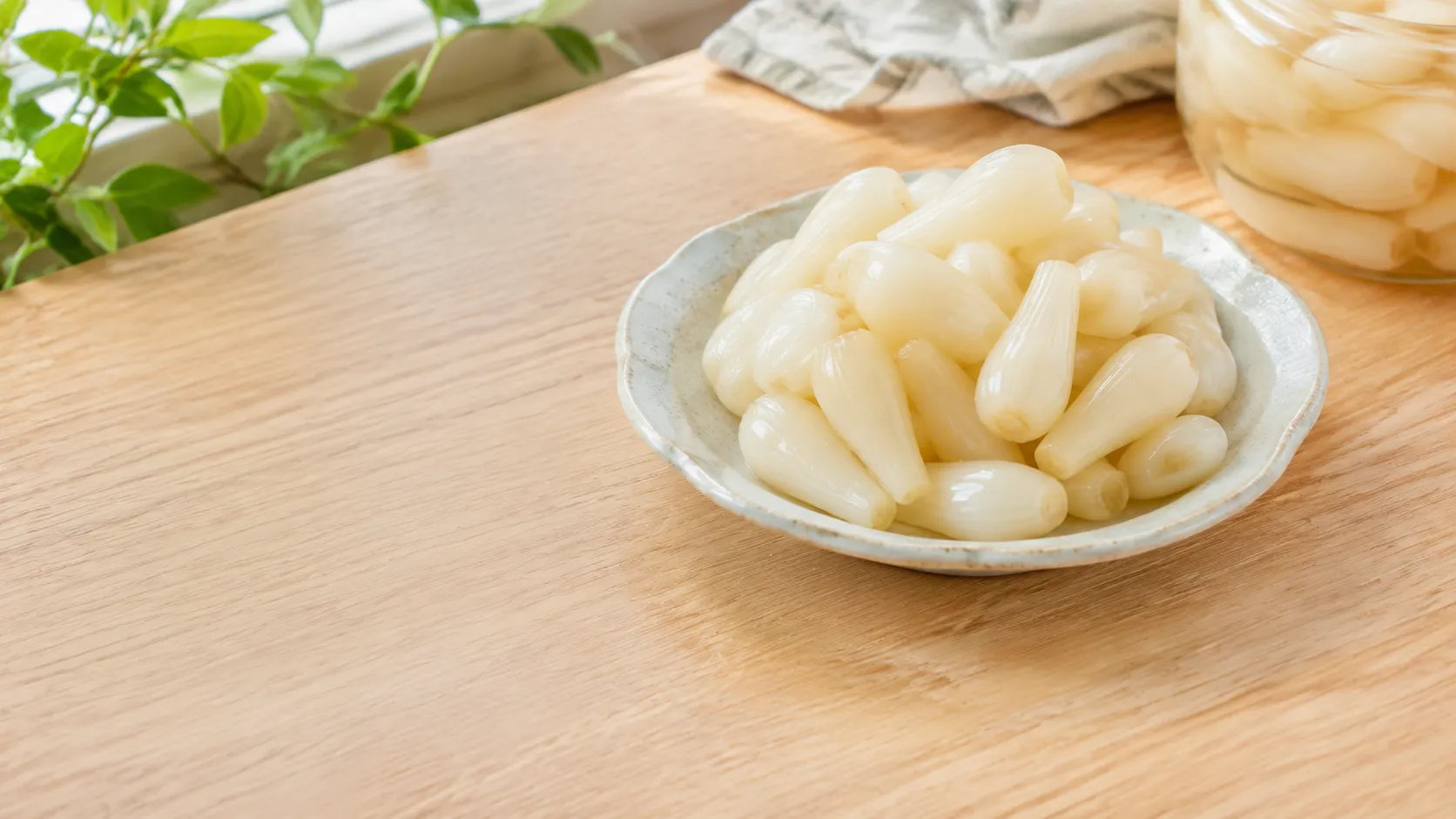
The crunch is so loud I actually stopped talking mid-sentence. Then I ate five more and understood why they sit next to curry in every restaurant in Japan.
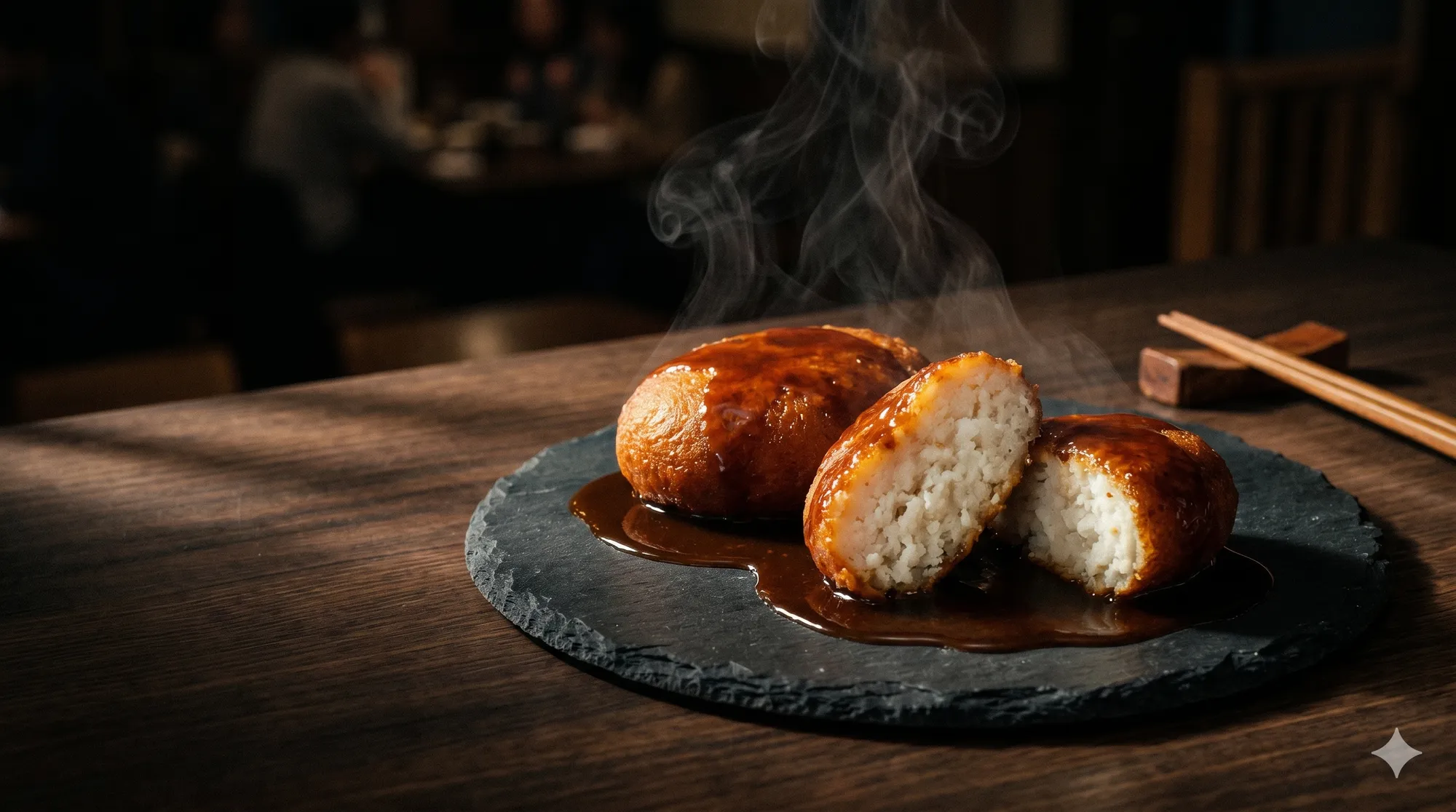
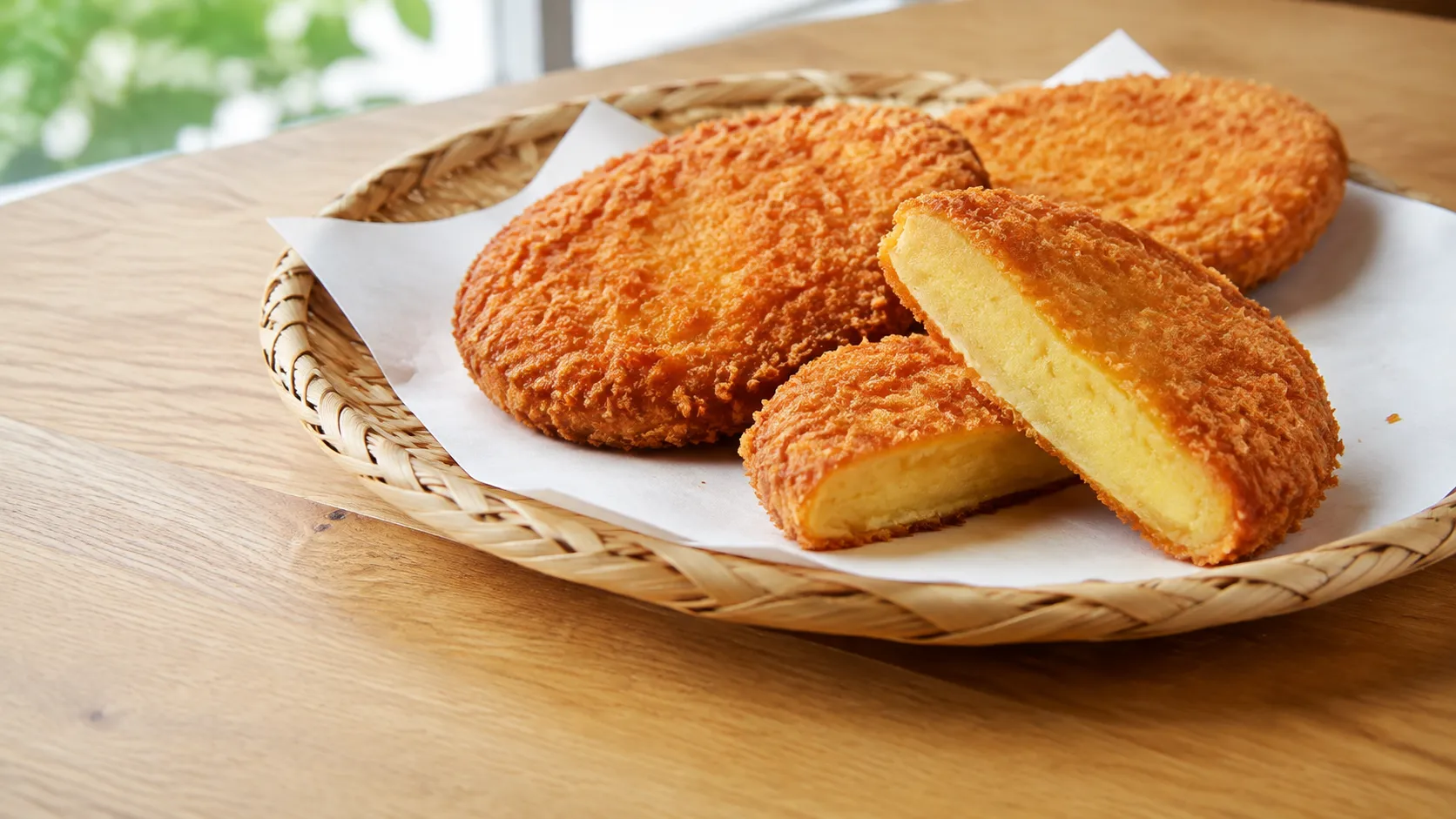
It's not jelly. It's not even really 'fry.' It's a coin-shaped okara-and-potato patty named after old money — and it's one of the weirdest, most lovable snacks in Japan.
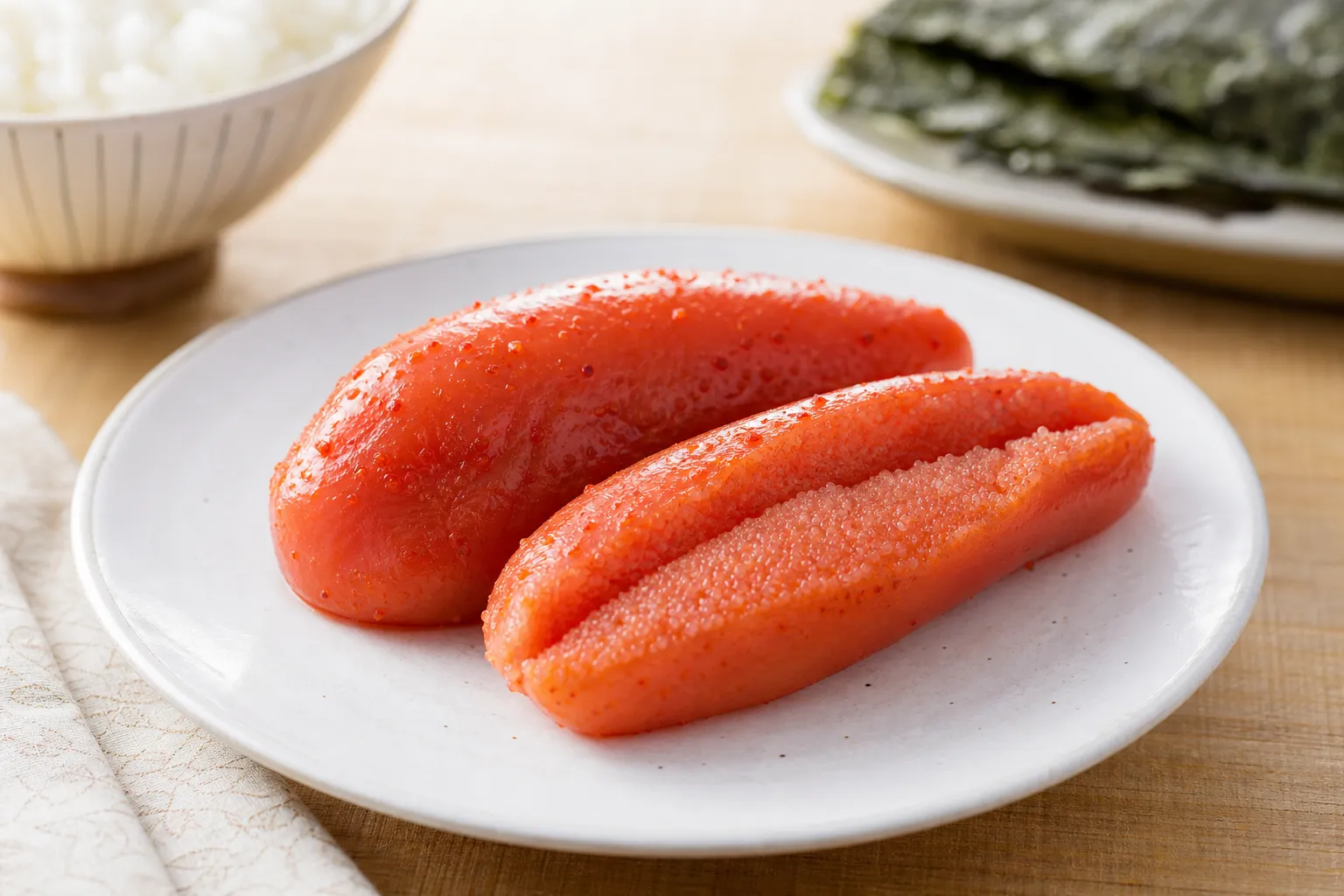
One bite of rice buried under a spoonful of vivid red roe and a slow chili burn creeps in behind the salt — by the second bowl I understood why Hakata builds entire breakfasts around this stuff.
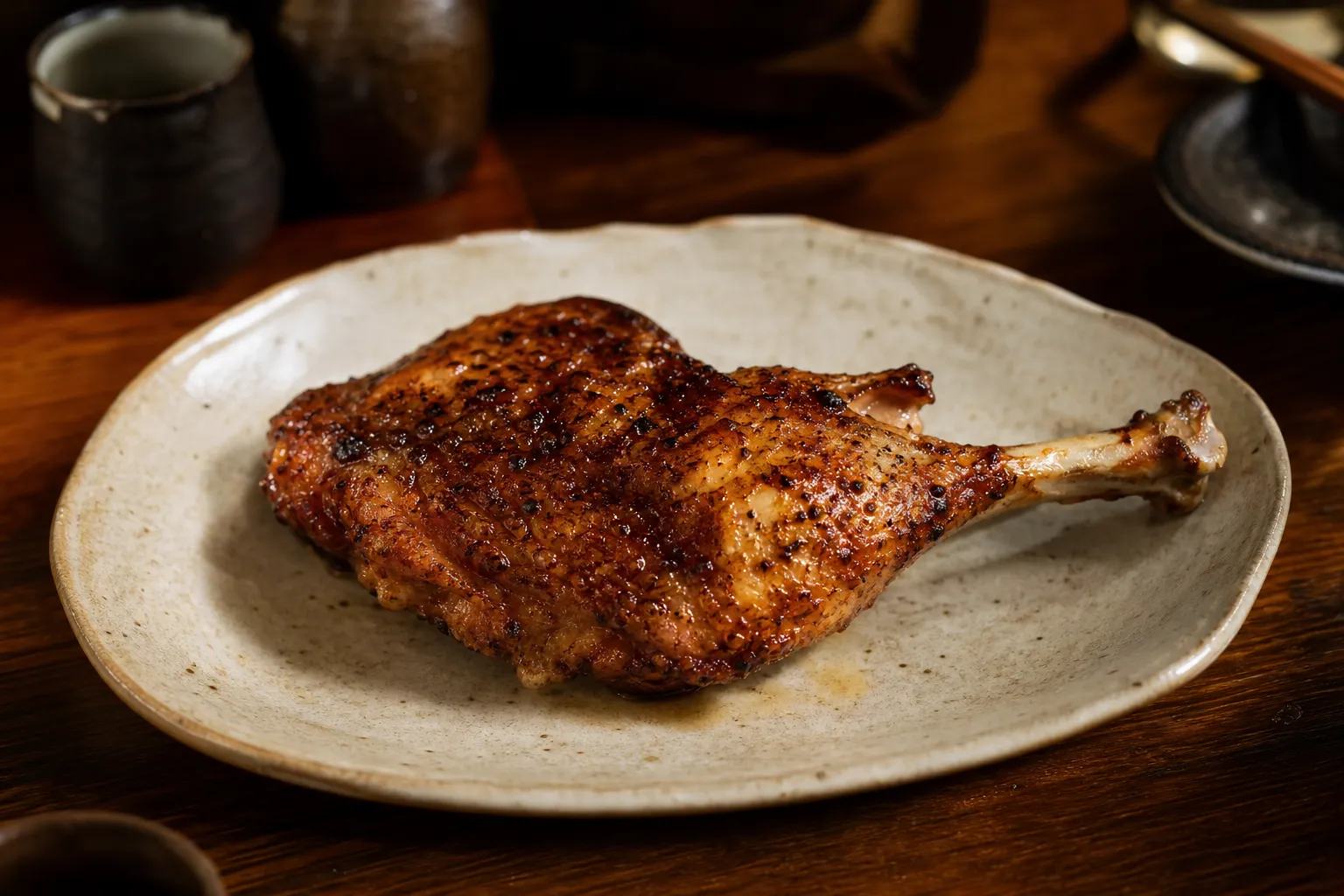
You don't cut it, you don't fork it — you grab the bone with a napkin and bite, and the first thing that hits you is the black pepper, hard, before you've even tasted the chicken.
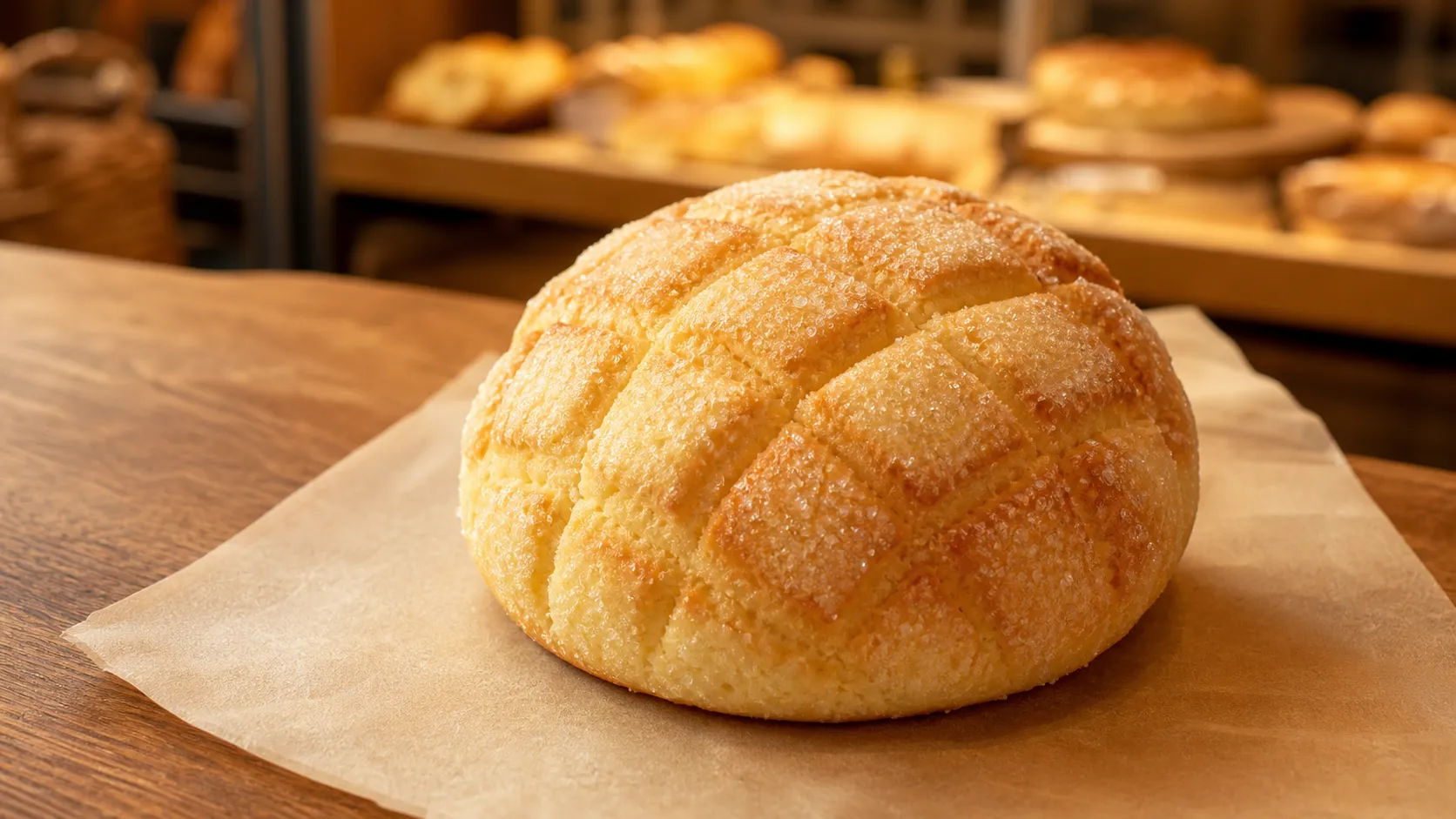
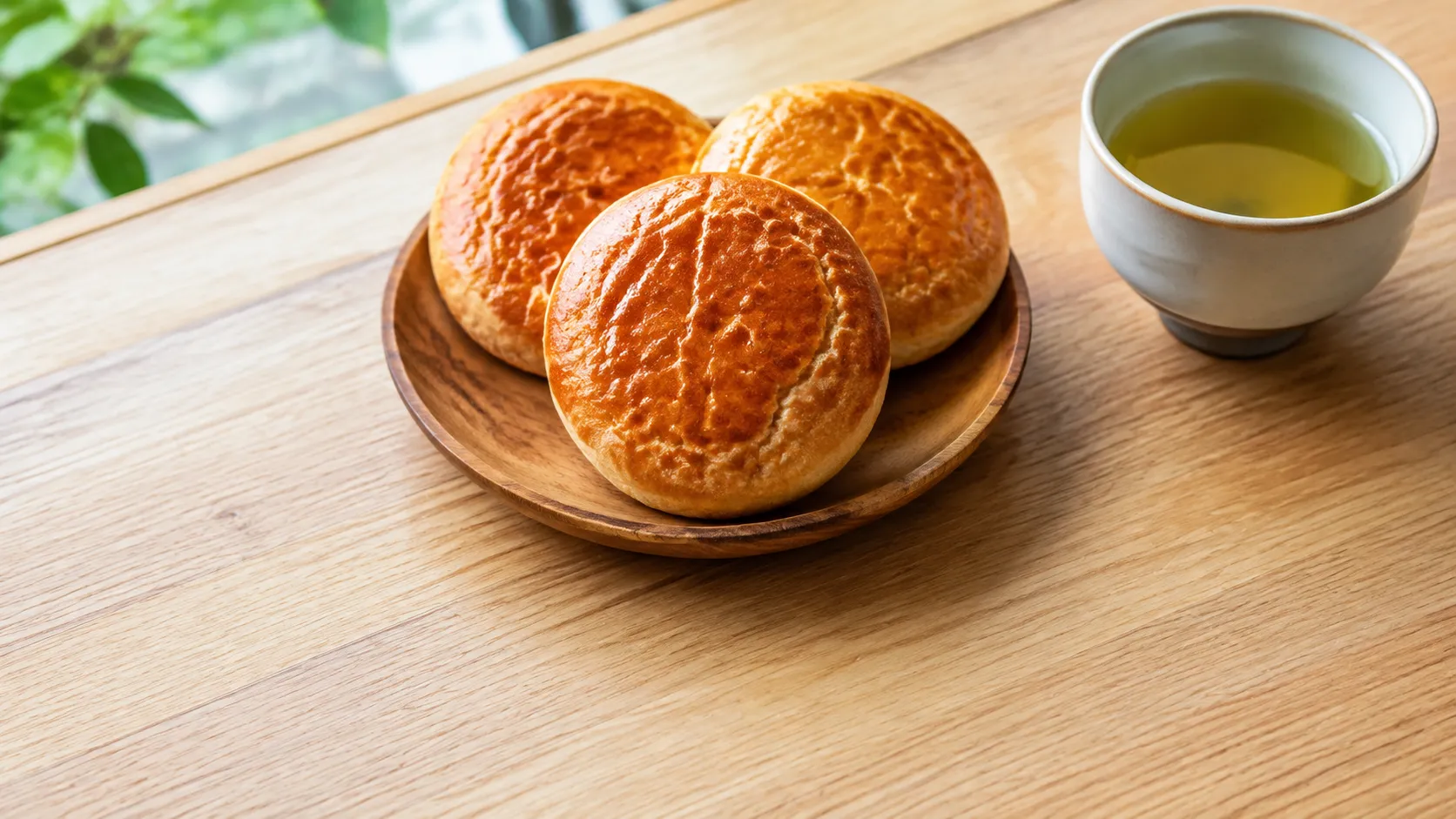
A soft, fluffy bun under a crisp, sweet, cookie-crust shell scored like a melon. There's usually no melon in it — just one of Japan's most beloved bakery treats, best warm and crackly.
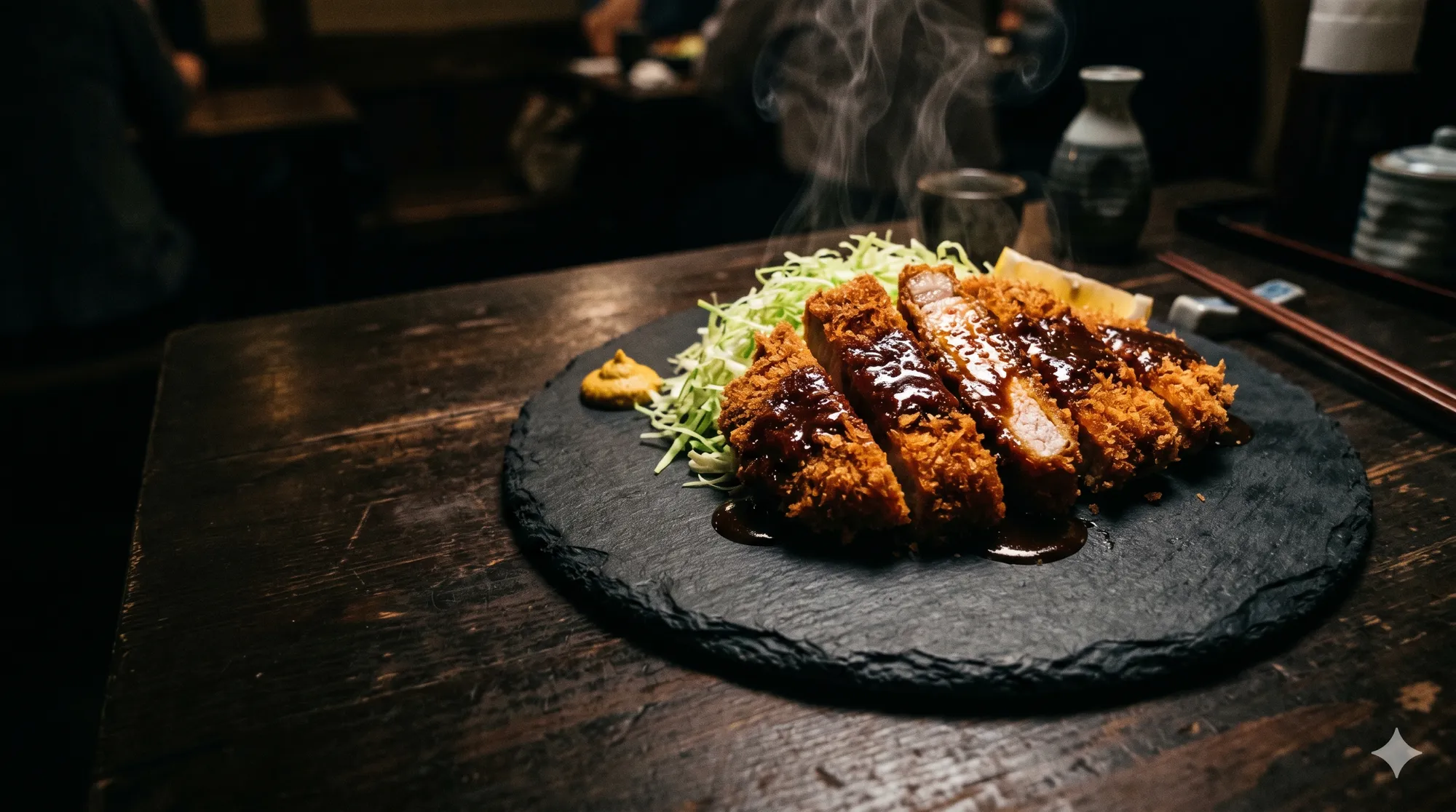
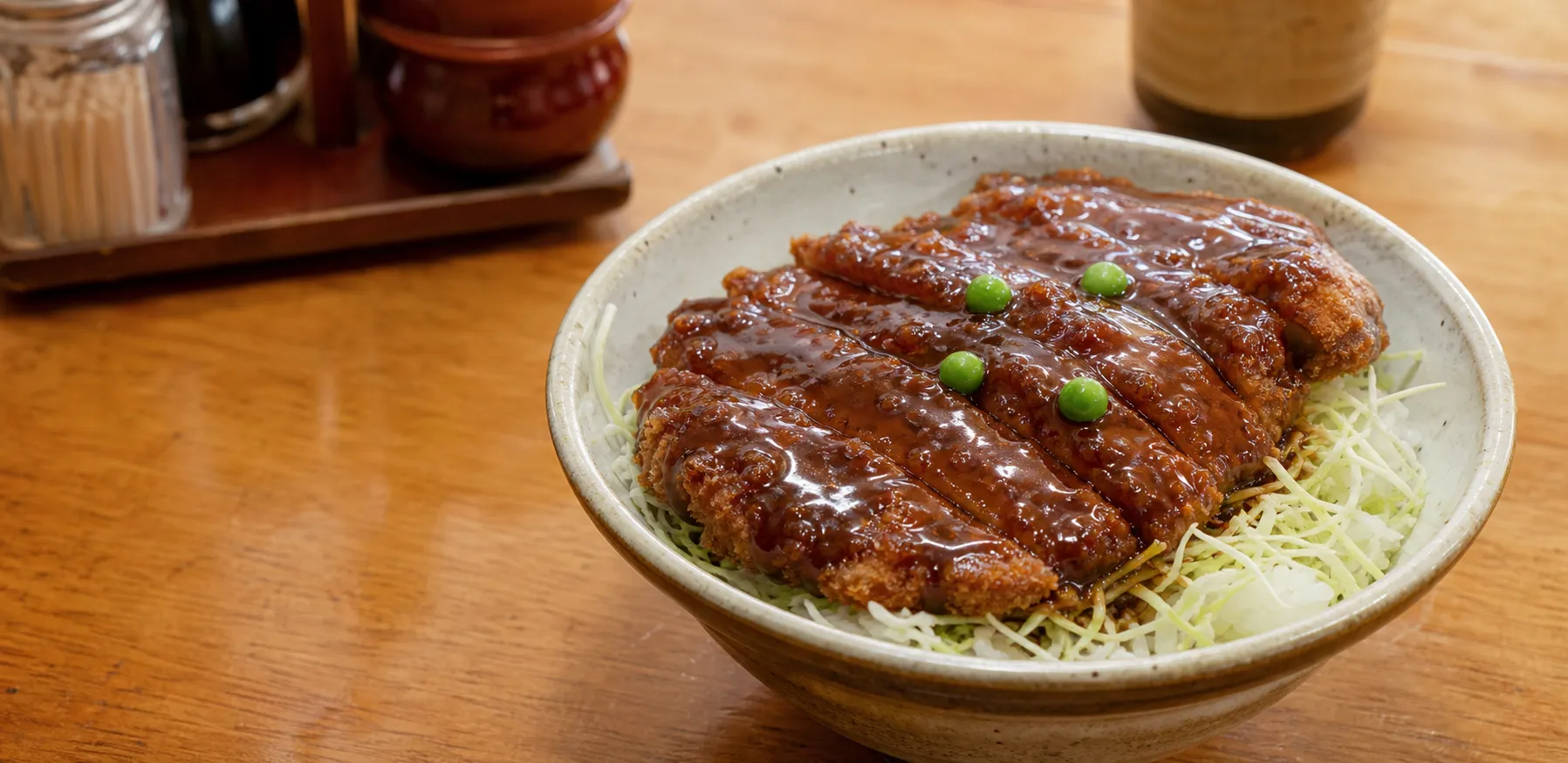
Take a perfect crispy tonkatsu and drown it in deep, dark, sweet-savory Nagoya miso. Heresy to some. Religion in Nagoya. Pick a side.
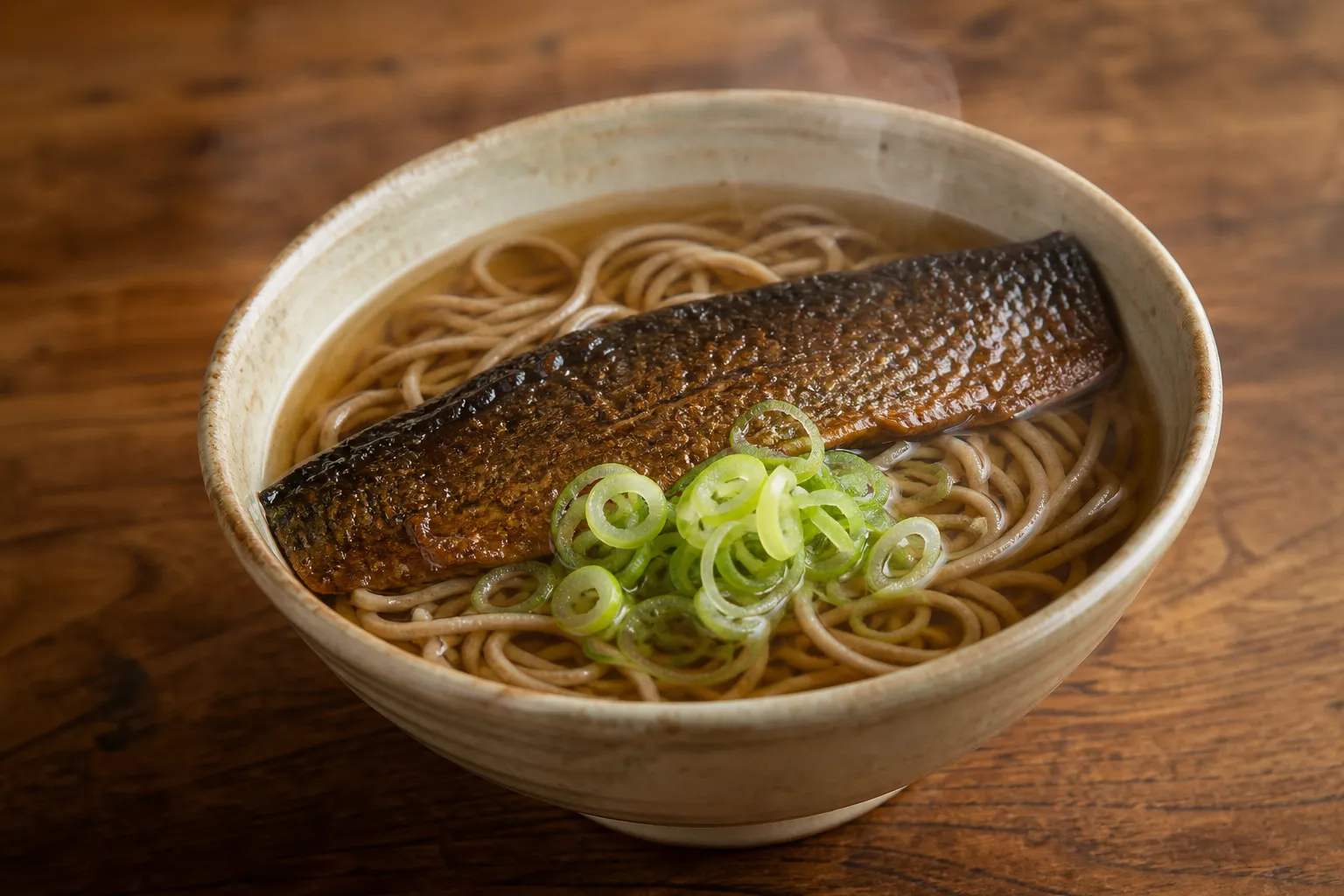
A whole simmered herring, dark and glossy and sweet, sitting on top of hot soba in a clear Kyoto broth — a landlocked city's love letter to preserved fish, and one of the great comfort bowls of Japan.
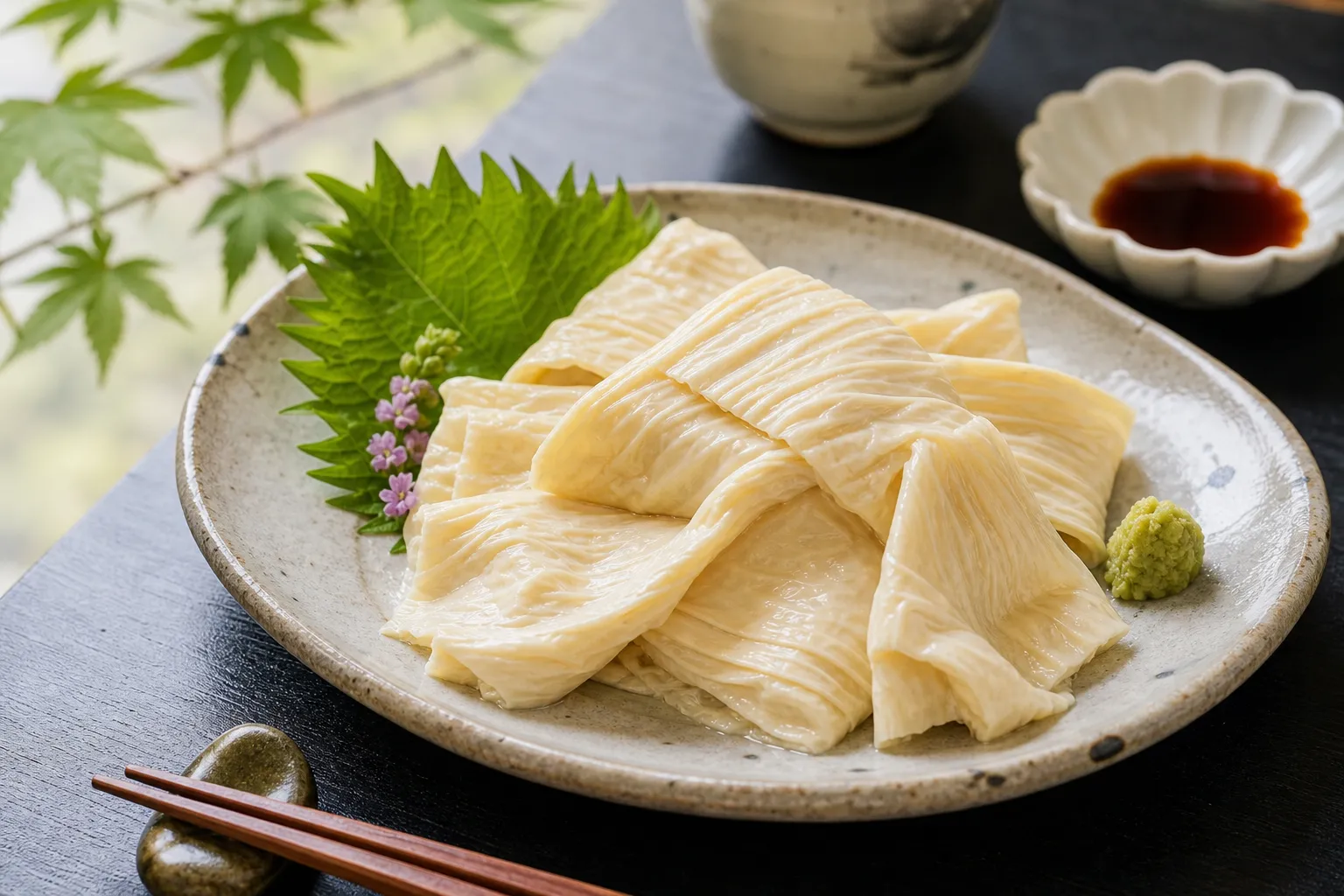
The delicate skin that forms on warm soy milk, lifted off in silky sheets and eaten with barely anything on it — Kyoto's quietest luxury, a food that tastes like patience itself.
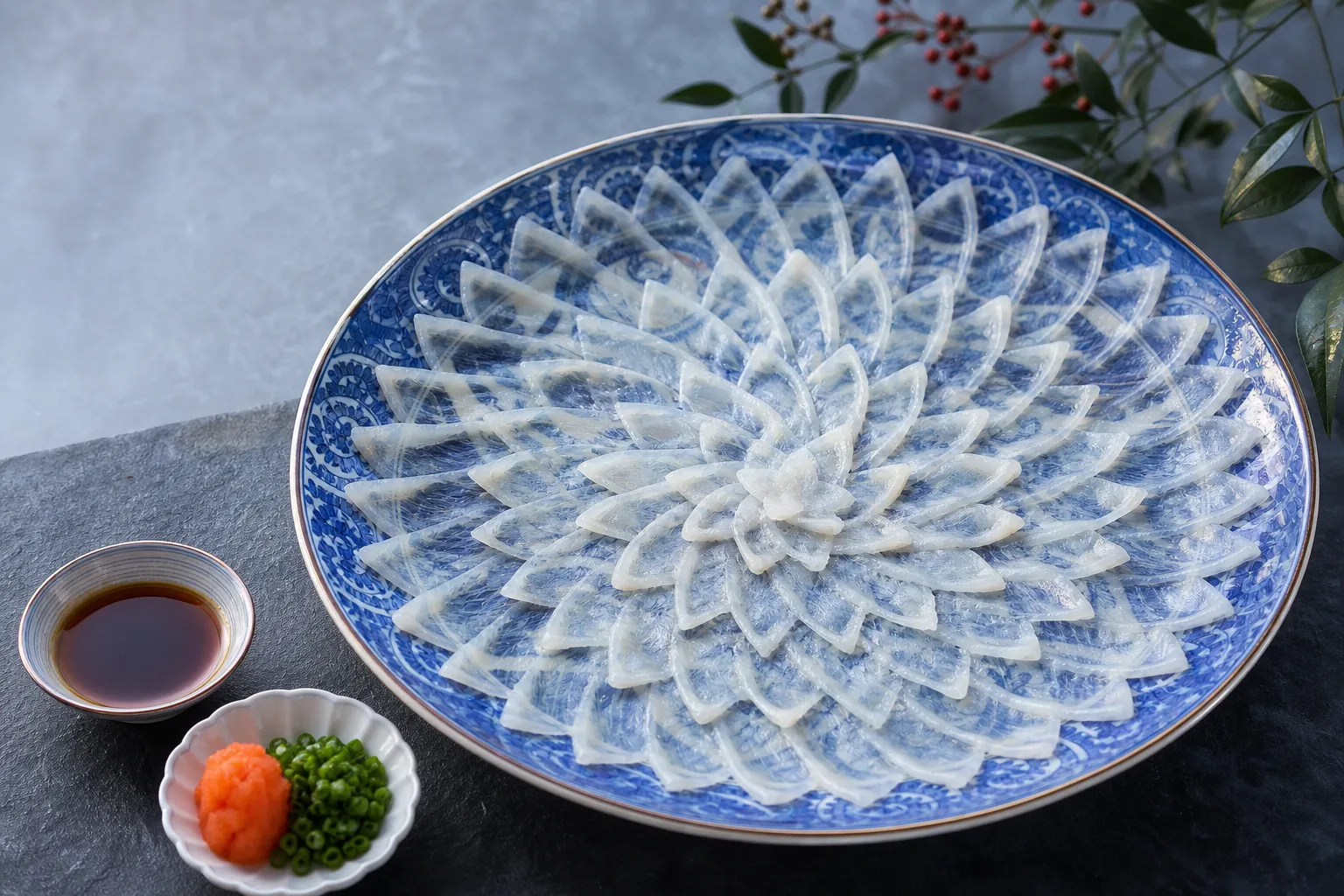
The fish that can kill you is sliced so thin you can read the pattern on the plate through it — and somehow that's the least unsettling part of the meal.
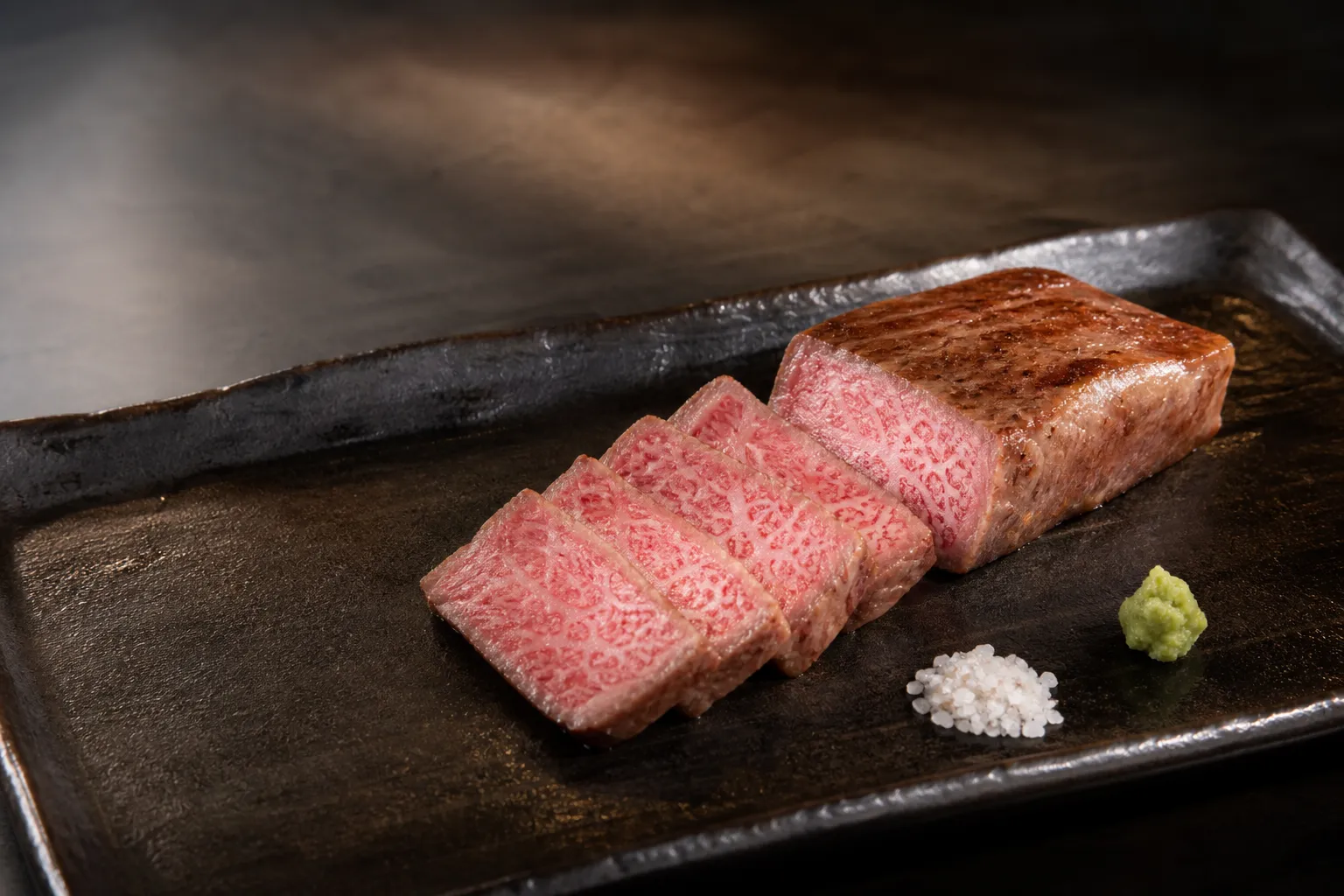
The fat didn't just sit there being fat — it kept melting into the meat with every bite, and I stopped talking mid-sentence to deal with it properly.
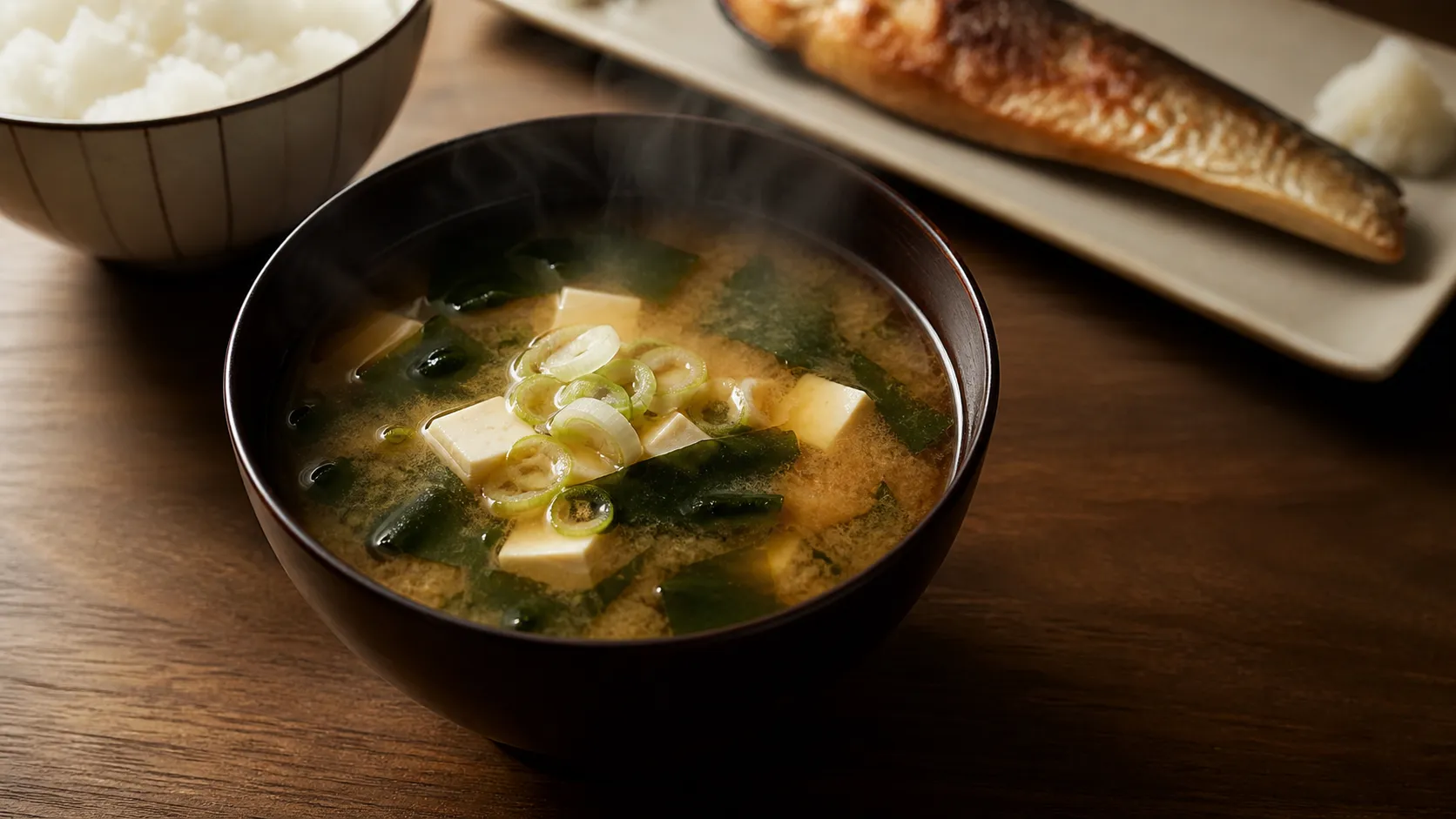
Fermented soybean paste dissolved in dashi, with tofu and seaweed bobbing inside — the warm, savory, umami-rich bowl that anchors nearly every Japanese meal. Quiet, ancient, and essential.
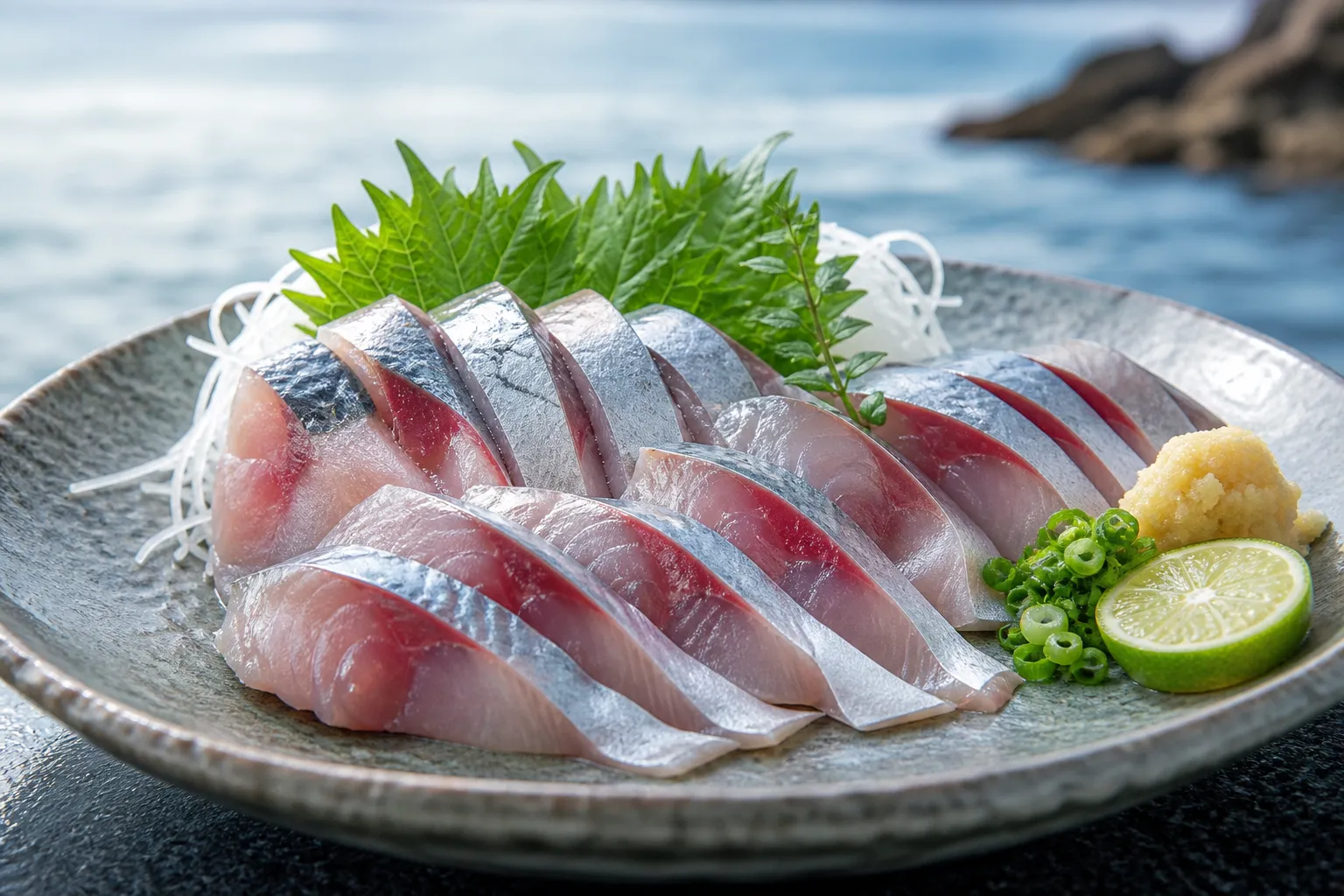
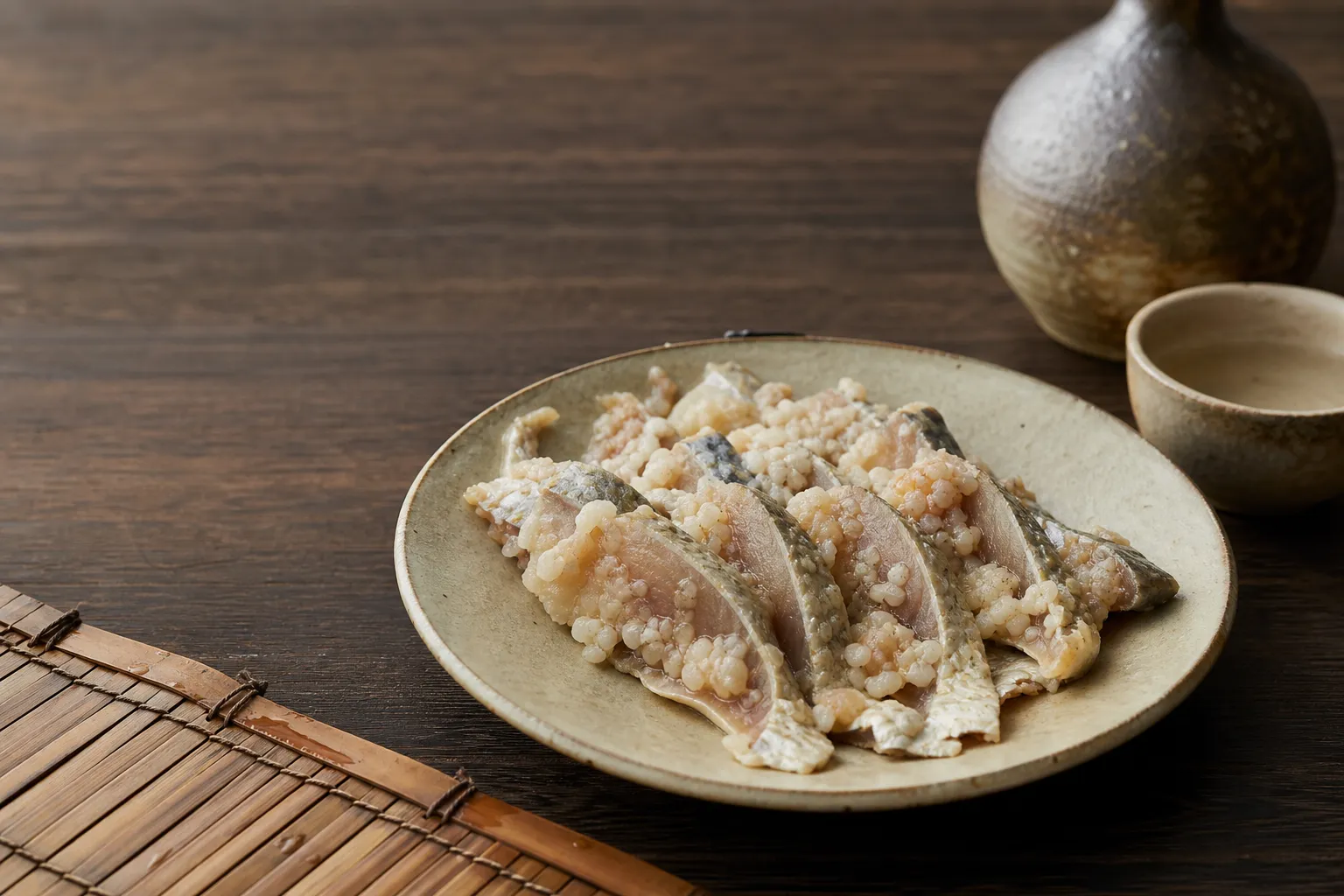
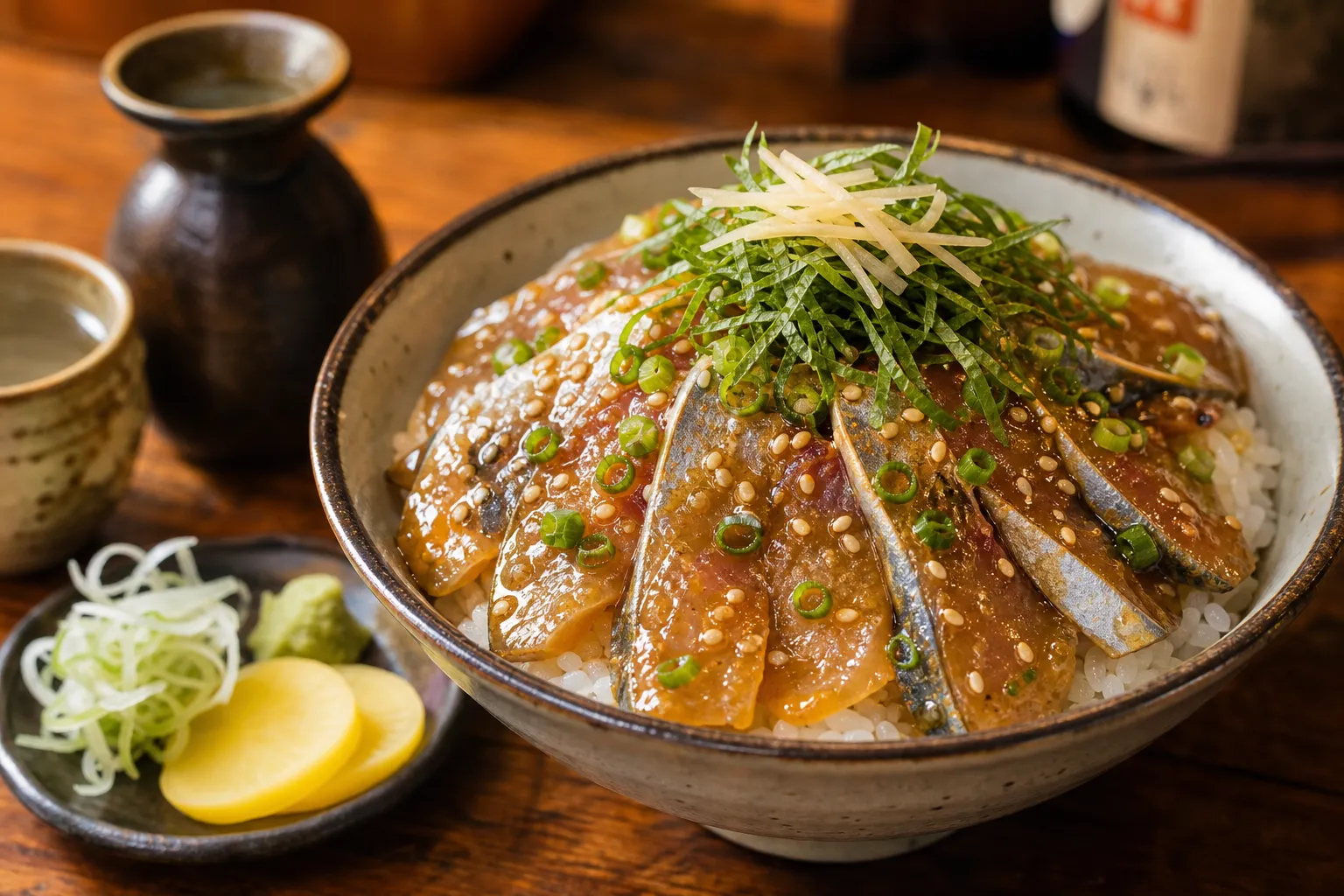
Mackerel — as sashimi. Glossy, firm, clean, and so ferociously fresh it breaks the one rule everyone thinks they know about mackerel: this brand-name fish from Oita's fast Bungo Channel is eaten raw, and it's a revelation.
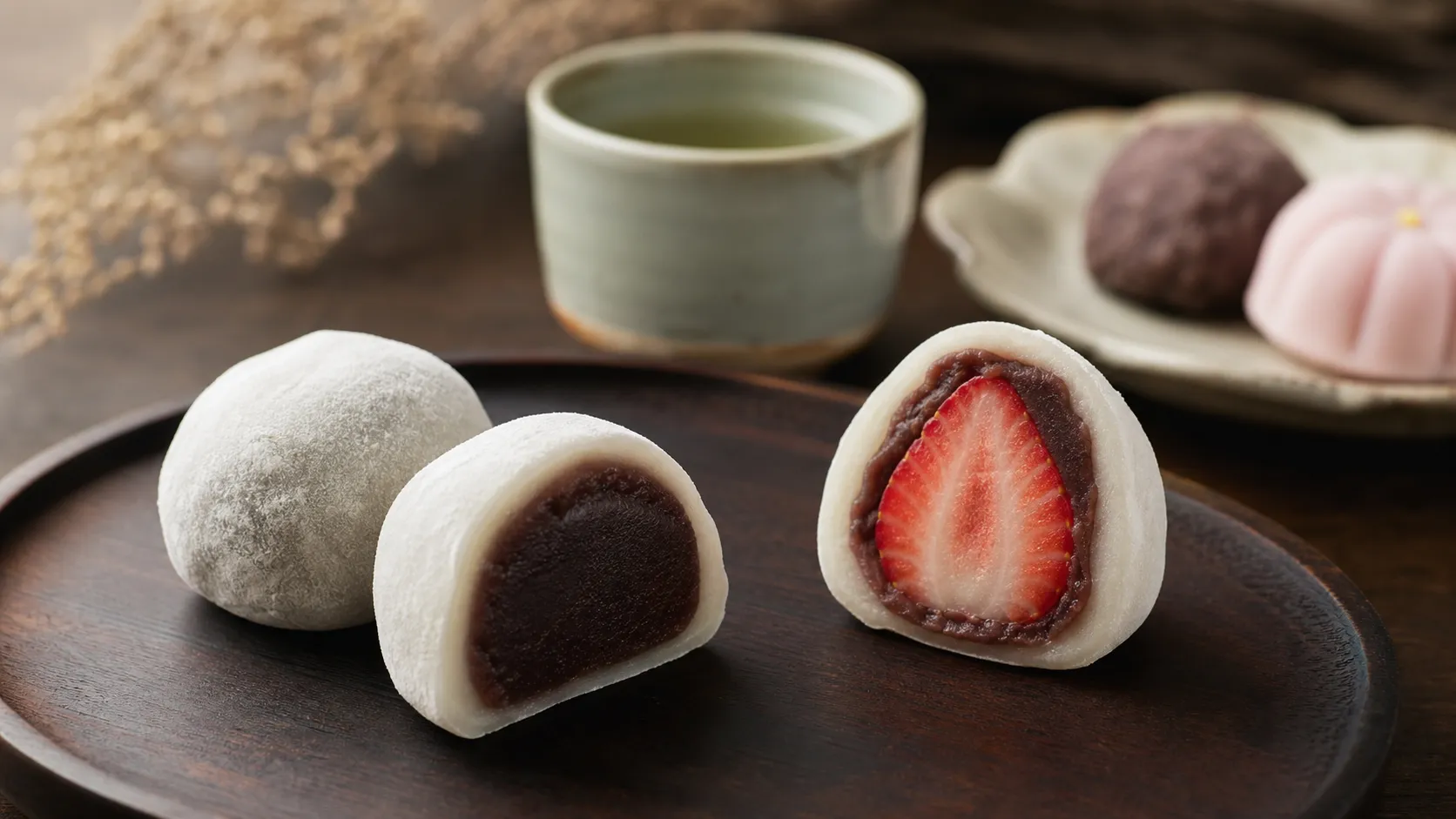
A pillowy ball of soft, chewy mochi wrapped around sweet red bean paste — and sometimes a whole strawberry. Soft, stretchy, and quietly addictive: the essential Japanese mochi sweet.
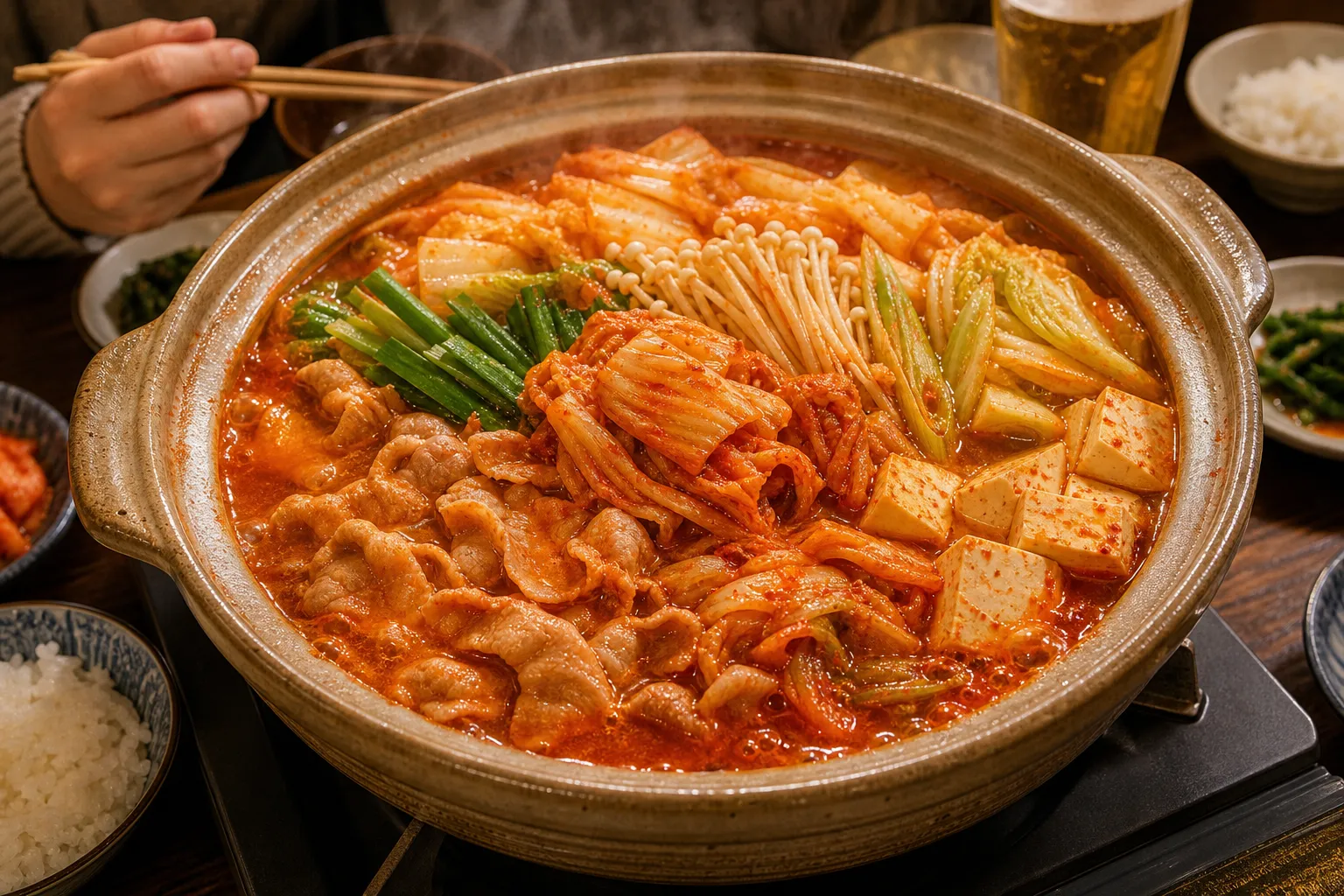
The hot pot that fights back — a bubbling red cauldron of kimchi, pork belly and tofu that makes you sweat in the best way, and has quietly become one of the most-eaten winter dinners in Japan.
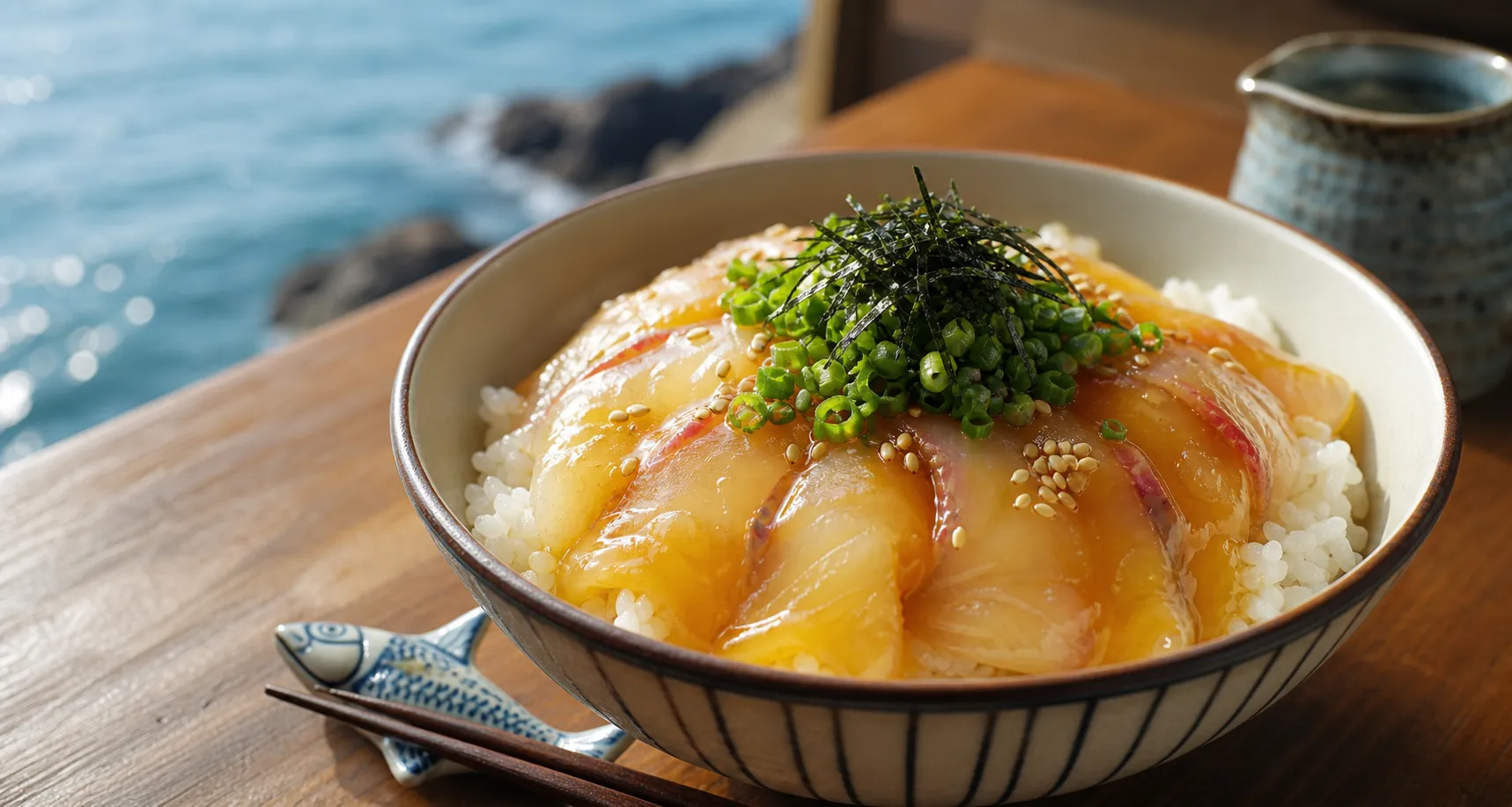
You crack a raw egg into your rice, drown it in sea-bream sashimi and a soy-dashi sauce, and mix like nobody's watching — Uwajima's version of taimeshi has nothing to do with the cooked rice dish everyone assumes it is.
It jiggles like tofu, it tastes like peanuts, and it took me three spoonfuls to accept that both of those things were happening in my mouth at the same time.
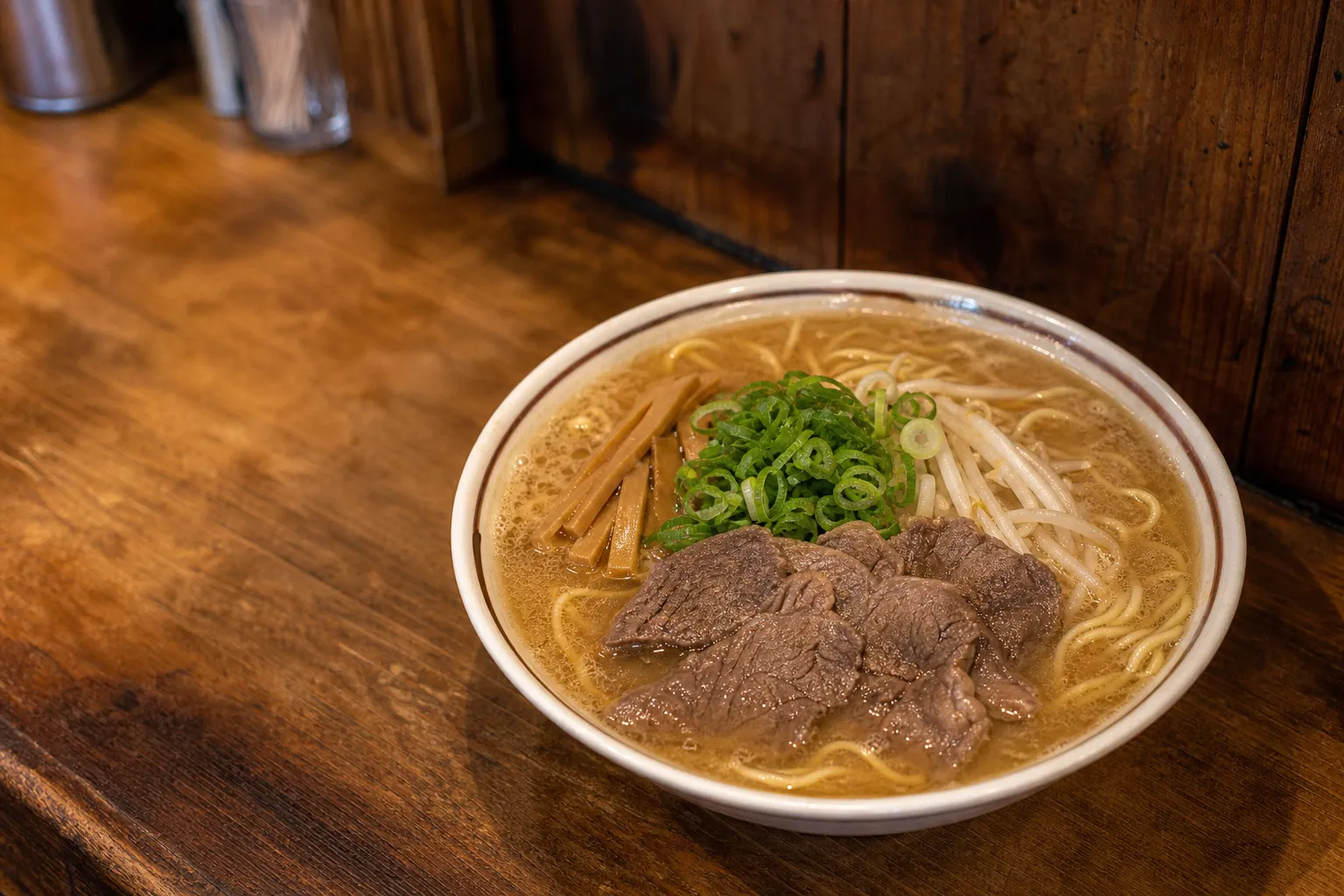
Ramen broth simmered from beef bones instead of pork — sweet, deep, and quietly unusual in a country obsessed with tonkotsu. Tottori has been eating it this way since the postwar years and barely told anyone.
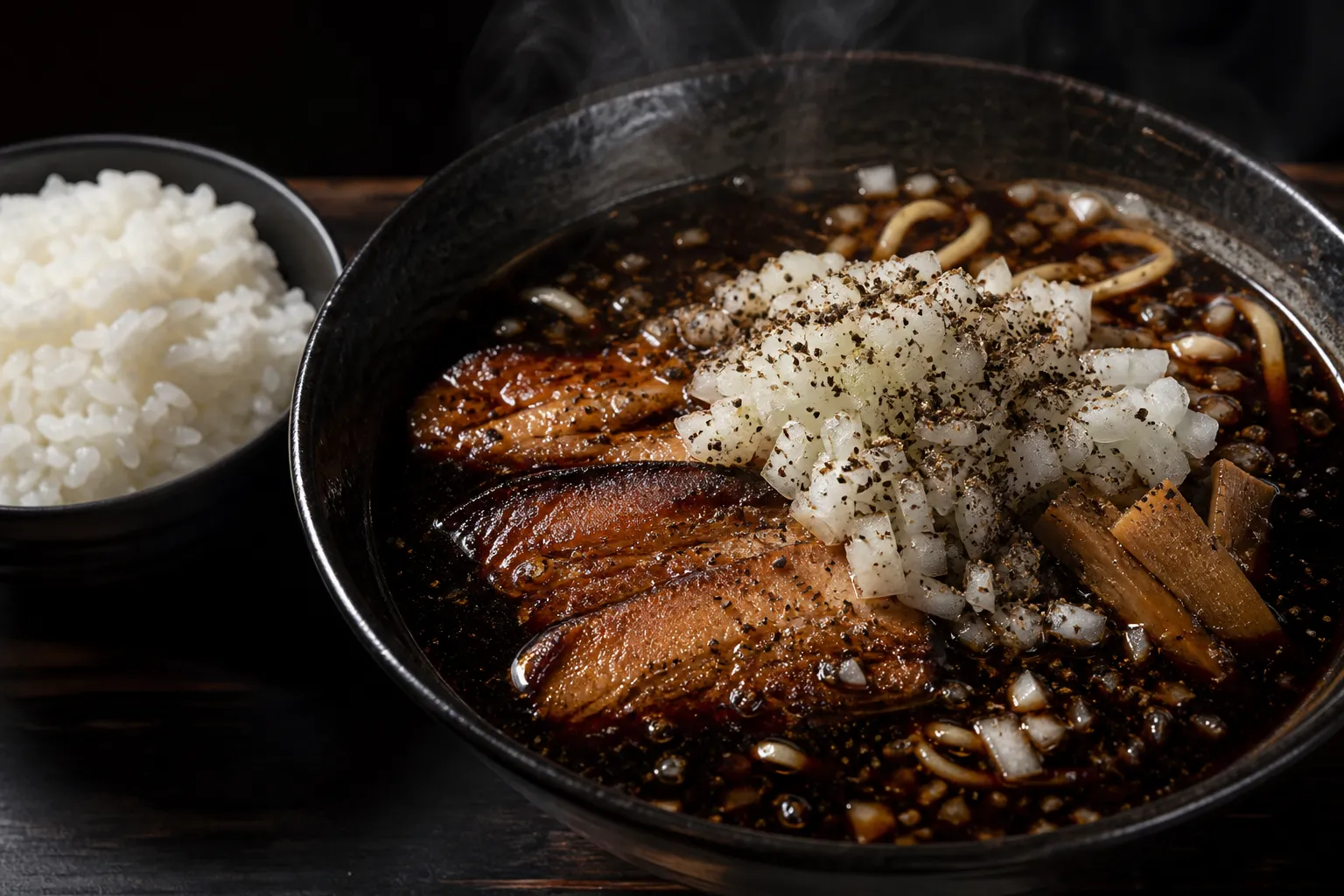
A bowl of ramen so dark it looks like ink, so salty it was built to be eaten with a side of rice. Toyama's black-broth monster isn't subtle — and that's the entire point.
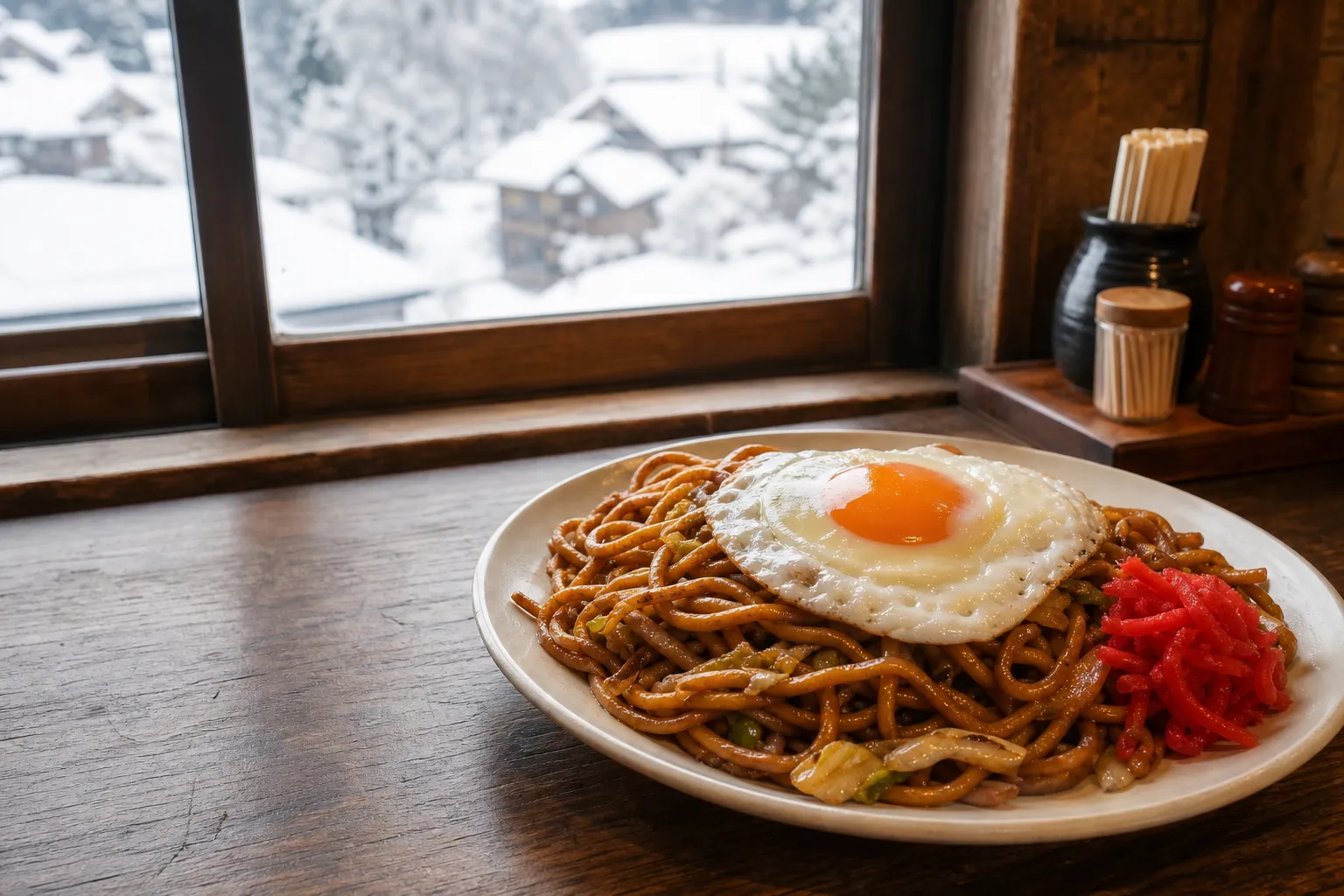
A fried egg cracked whole on top of a plate of yakisoba, a pile of red pickles on the side — and suddenly regular yakisoba looks unfinished. Akita's snow country did this one on purpose.
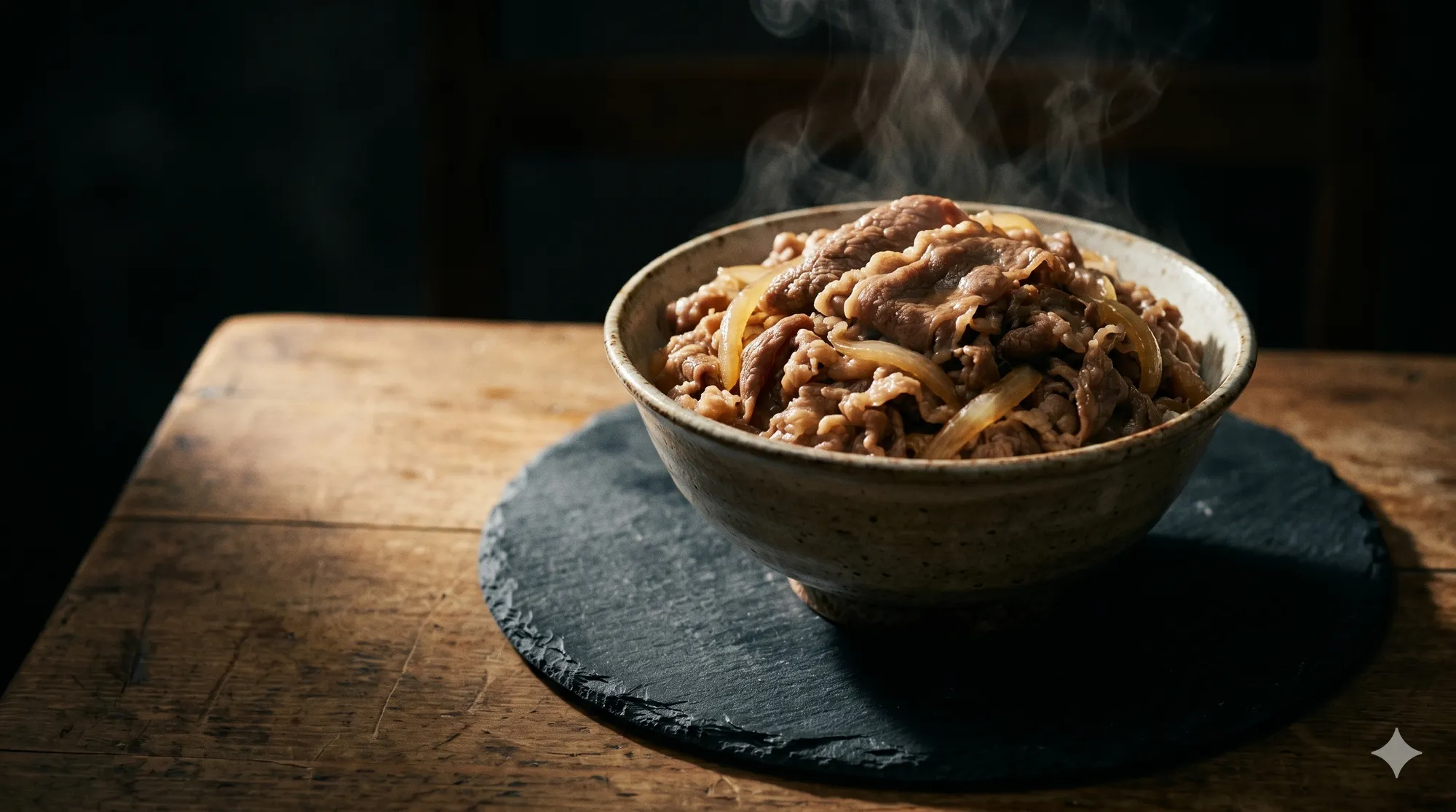
Thin-sliced beef and onion simmered in sweet-savory broth, piled over a bowl of hot rice. Fast, cheap, served in minutes, open all night — the working hero of the Japanese diet, and shockingly good.
Fermented lake carp aged in rice for a year or more — a sour, funky, cheese-and-sake bomb that turns out to be the great-grandparent of every piece of sushi you've ever eaten.
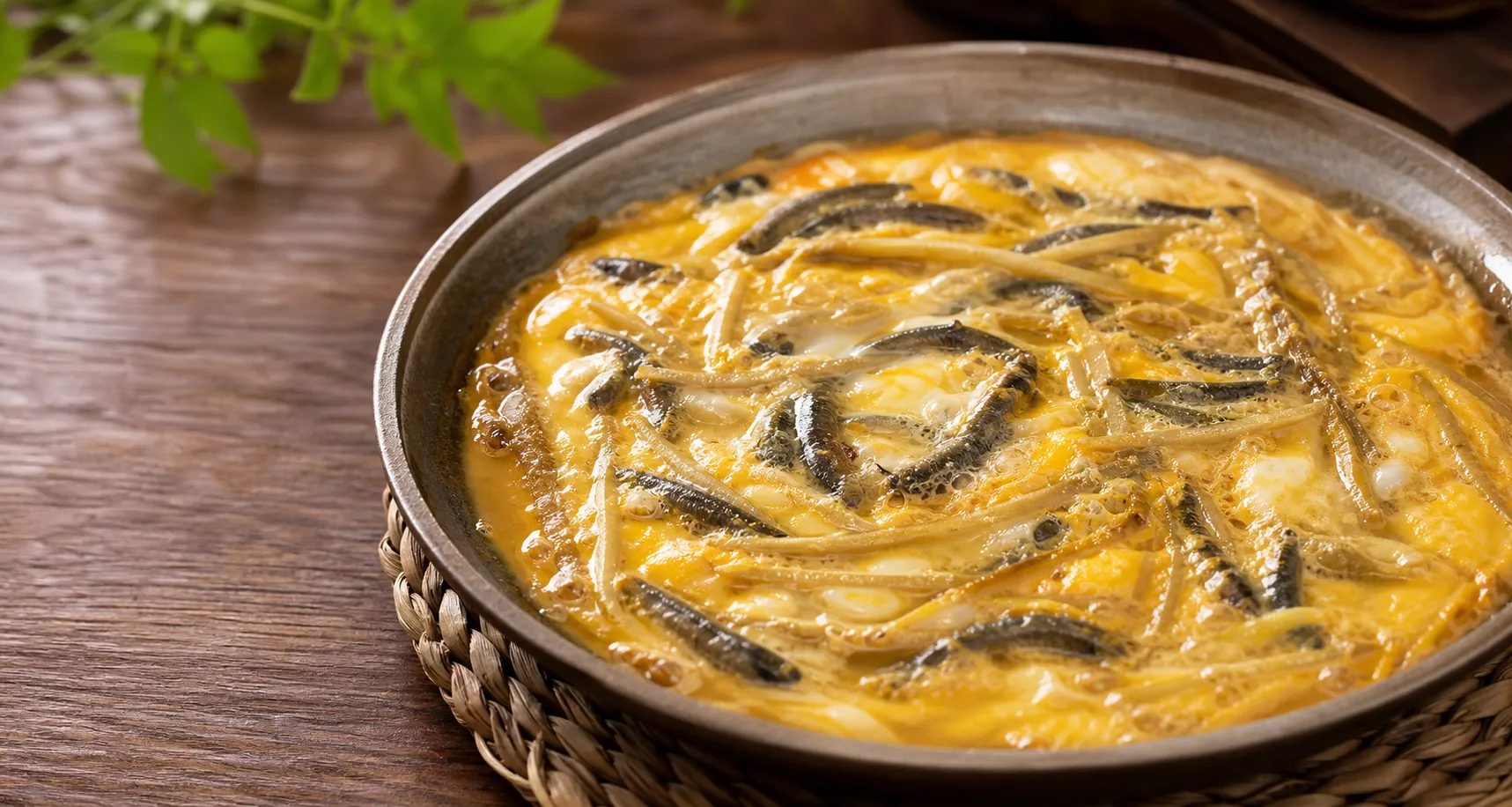
A shallow pan arrives with a soft golden lid of just-set egg trembling on top, and hidden underneath is the ingredient old Edo swore by for surviving the summer — a fish most travelers have never knowingly eaten.
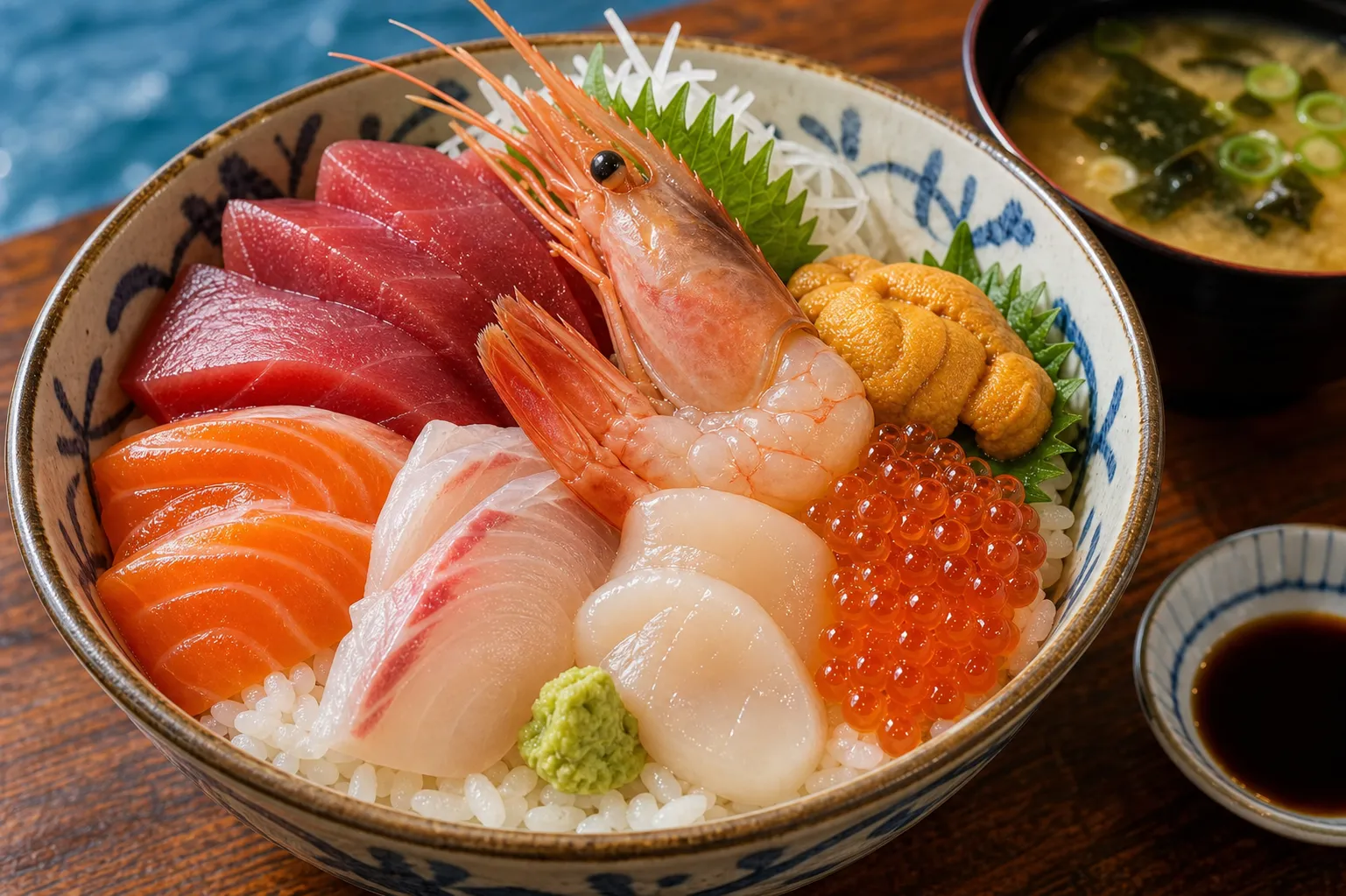
A whole ocean, sliced and fanned over rice — tuna, salmon, scallop, sweet shrimp, a golden slick of ikura. The greediest, most gorgeous bowl in Japan, and I'd cross a country for the good ones.
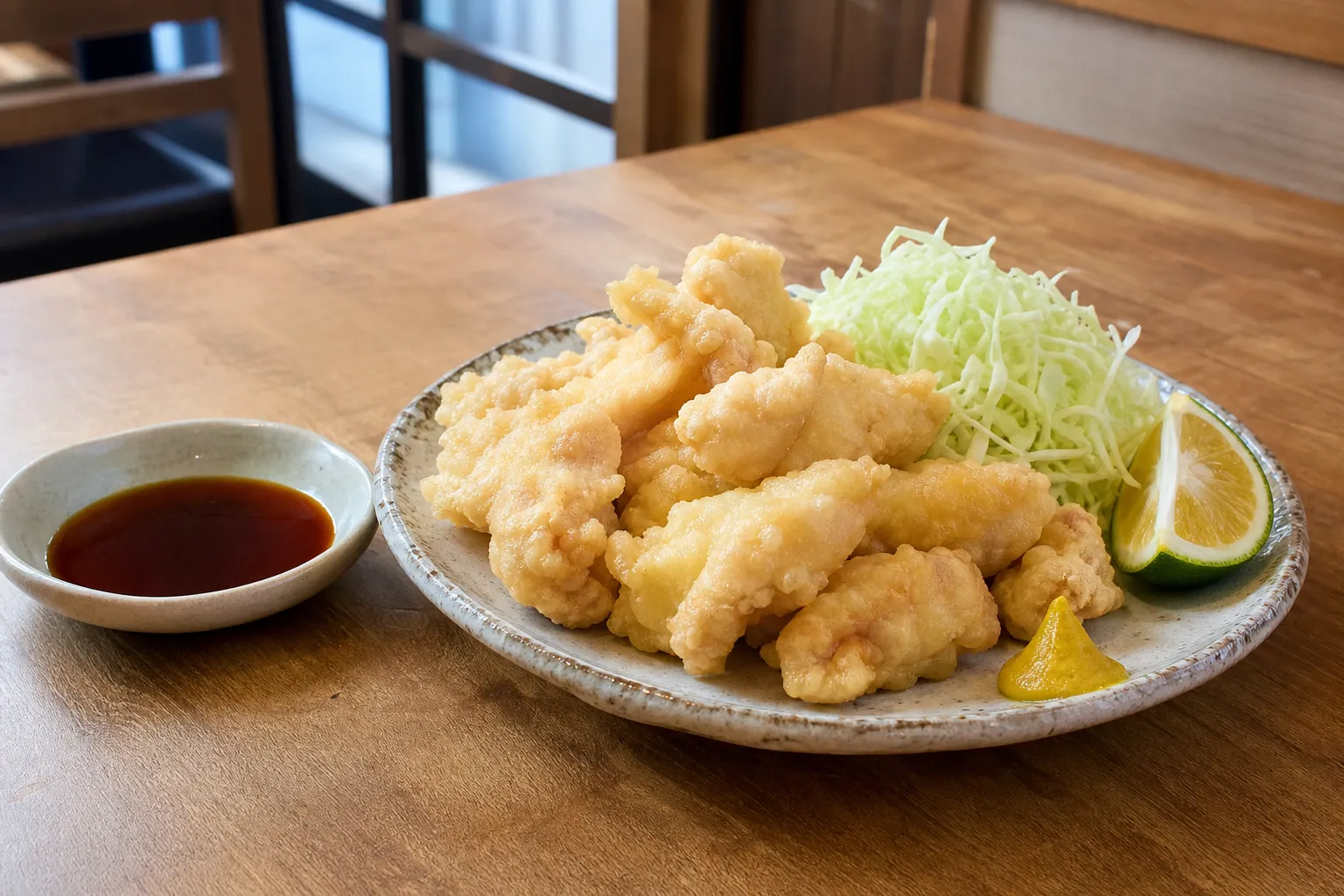
I bit in expecting karaage and got something else entirely — a cloud-light tempura coating, juicy chicken, and a splash of citrus-soy ponzu. This is Oita's chicken tempura, and it deserves to be as famous as its fried cousin.
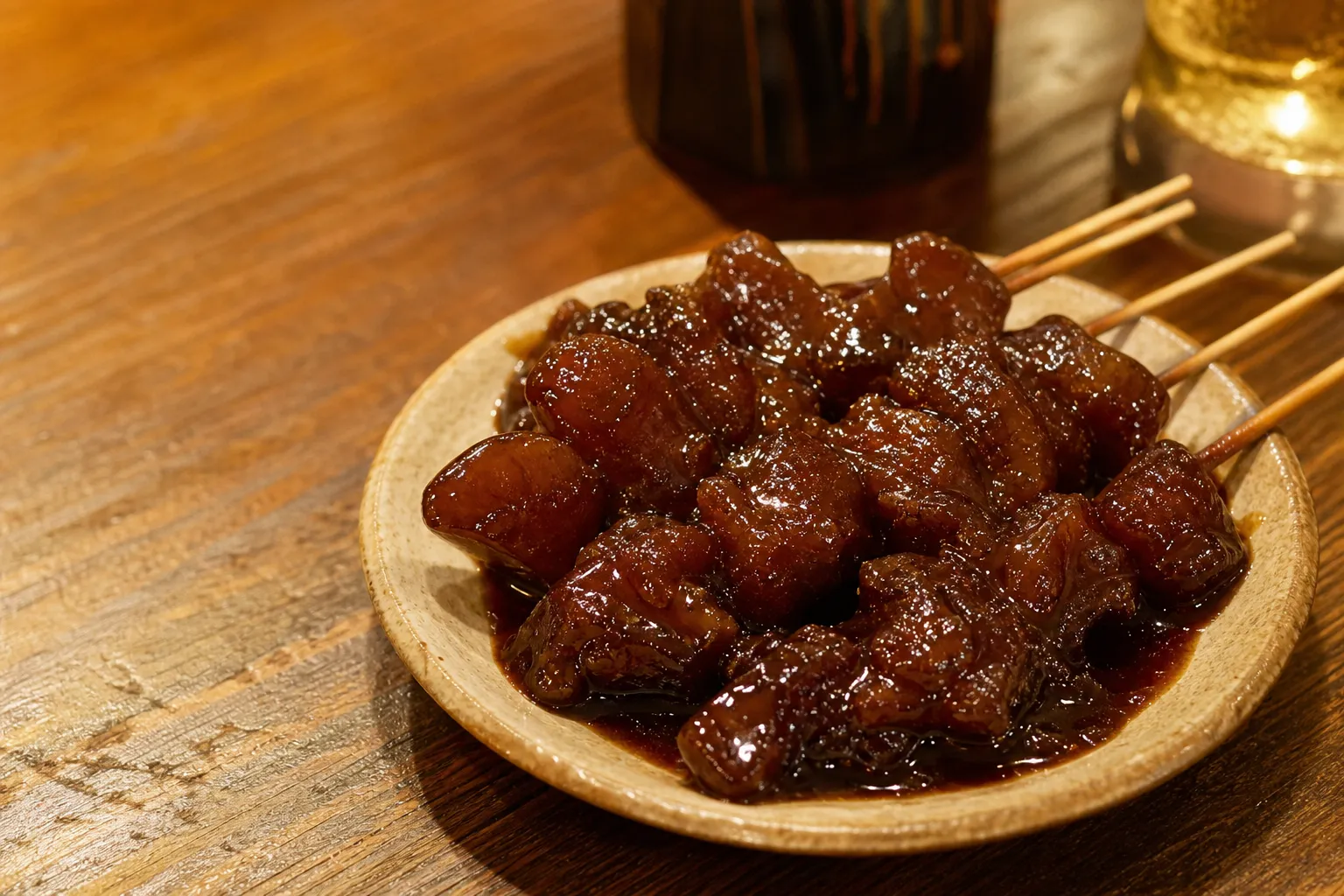
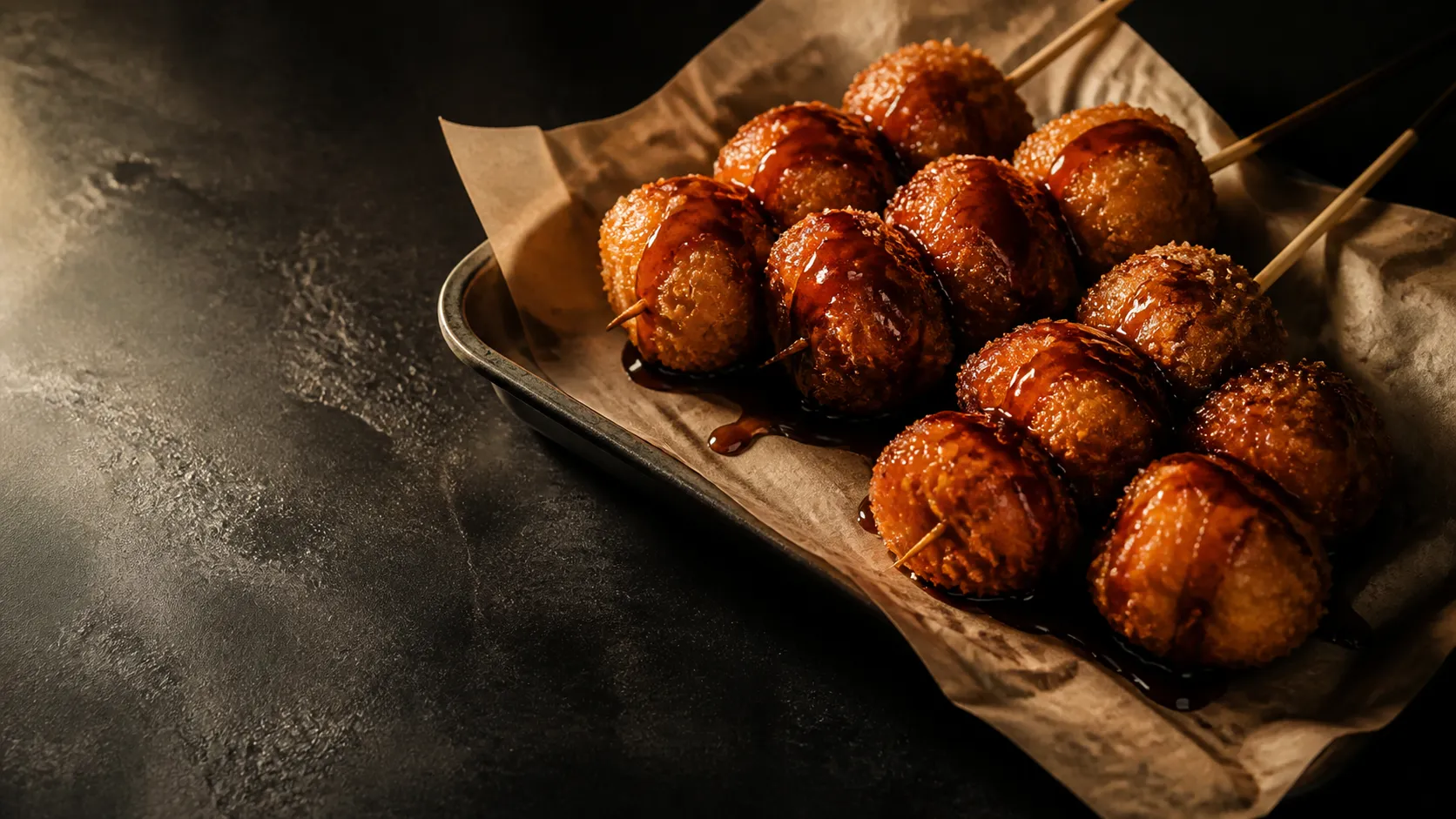
Beef tendon simmered for hours in dark miso until it goes soft, sticky, and almost sinful — this is the skewer that made me understand Osaka's love affair with cheap beer.
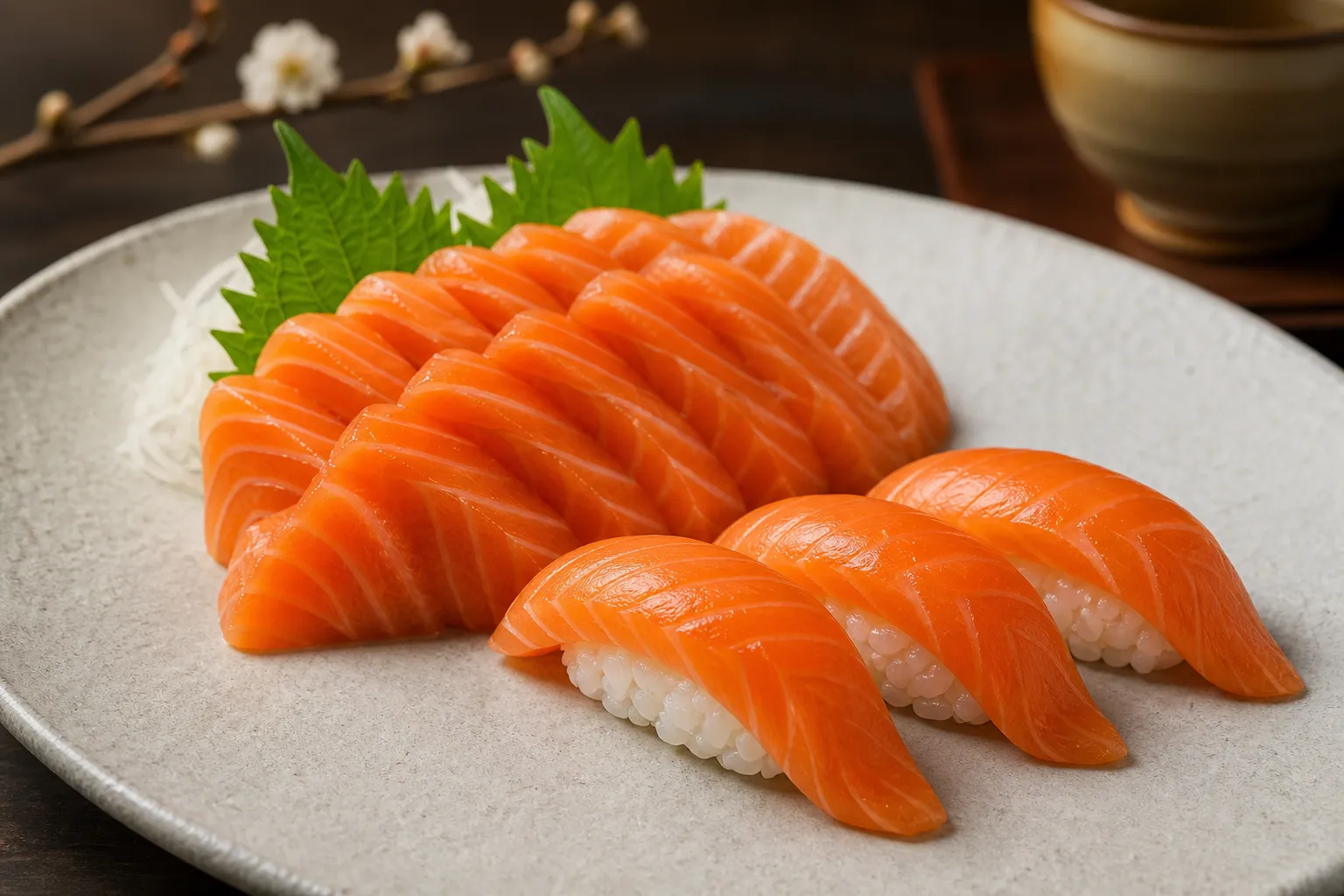
Landlocked Nagano, ringed by mountains, hours from any sea — and it's serving some of the cleanest, sweetest salmon sashimi I've put in my mouth.
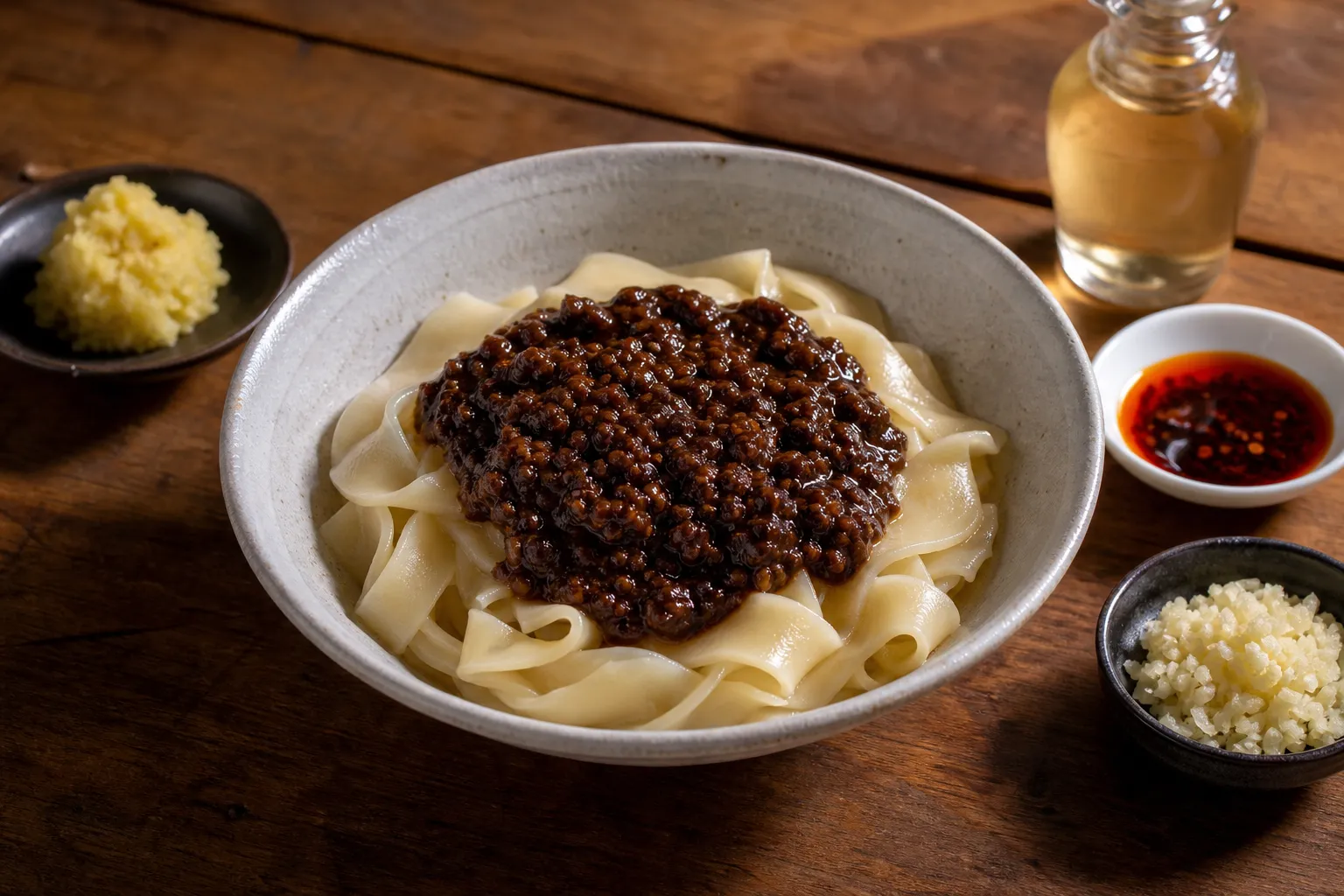
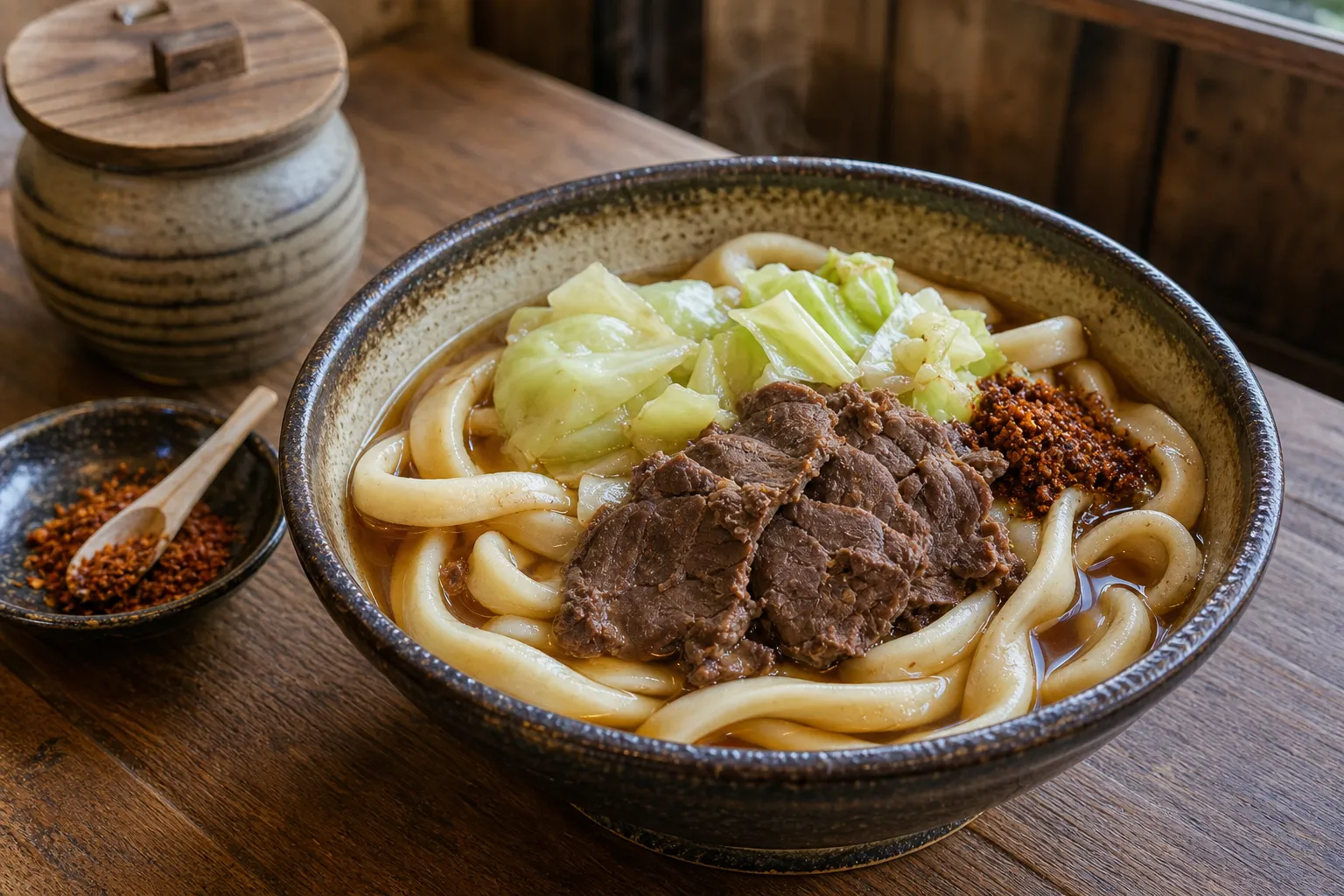
Morioka's strangest noodle: flat udon topped with a miso-meat paste you stir yourself, eaten down to the last noodle, then you crack a raw egg into the remaining sauce and the kitchen pours broth over it. That's the real ending.
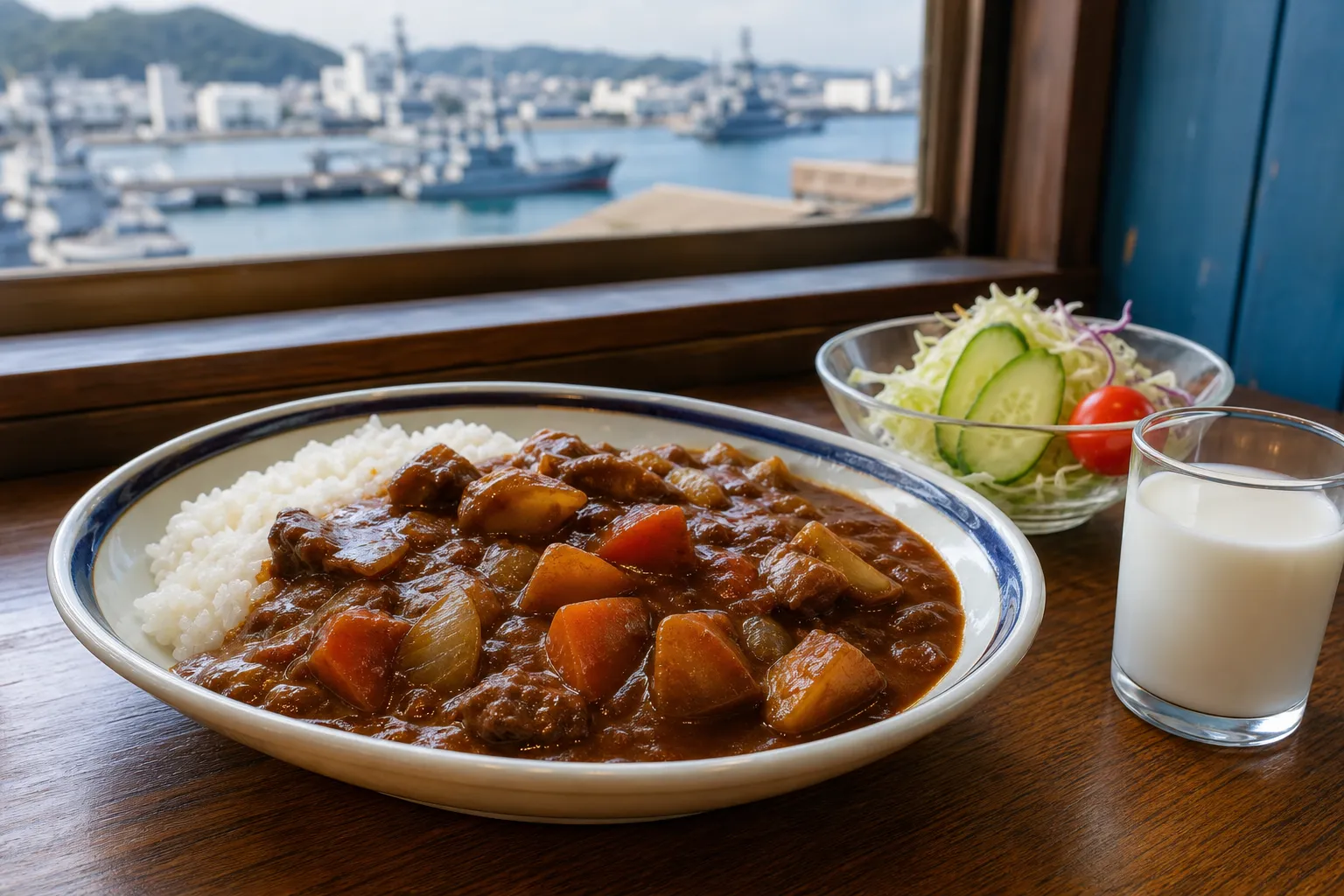
A whole naval fleet's worth of comfort on one plate — beef curry, a glass of milk, and a salad, standing at attention like it's inspection day.
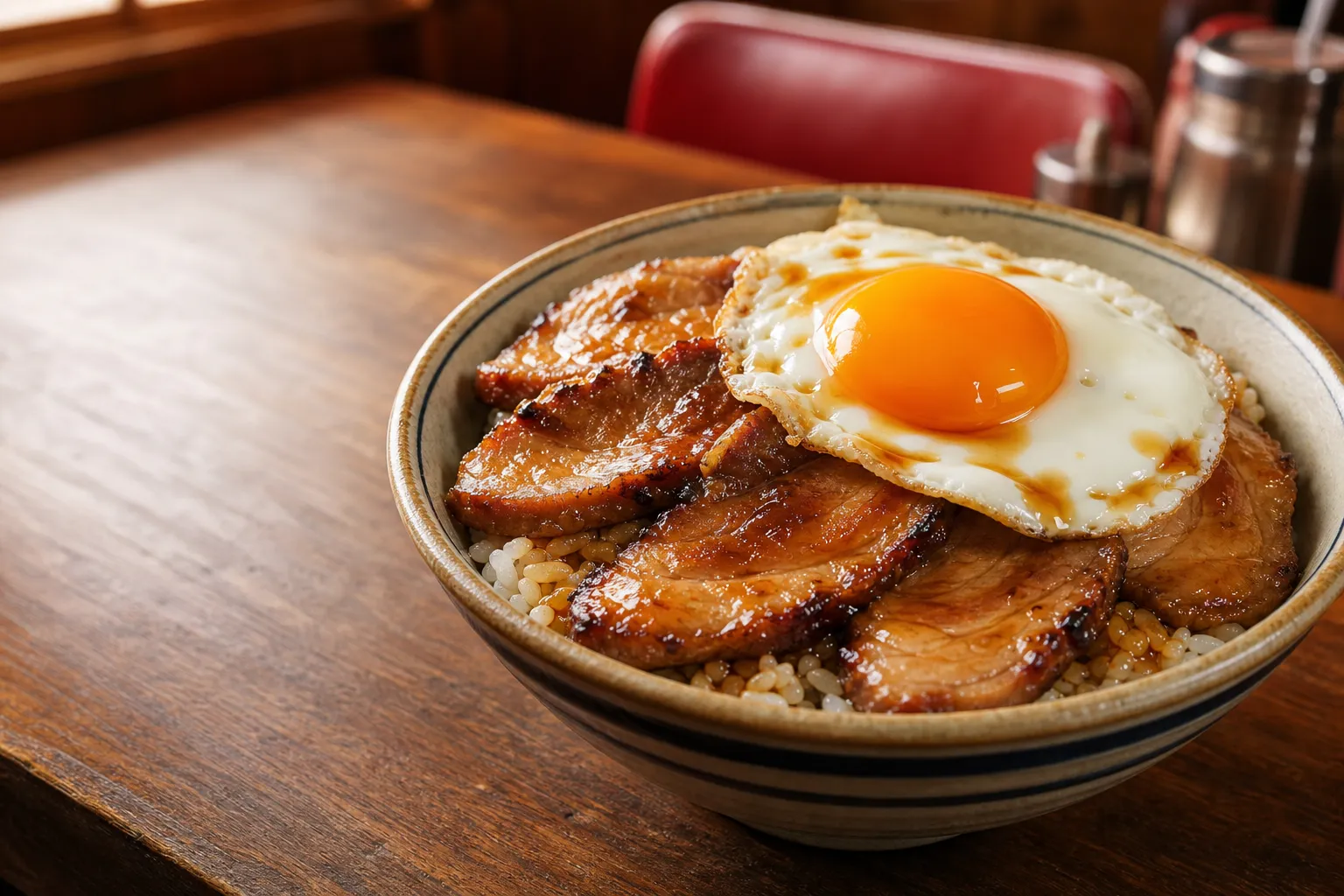
I broke the yolk and watched it slide down over the roast pork and the glossy sauce and the rice, and I understood, in that exact second, why an entire town claims this bowl as its own.
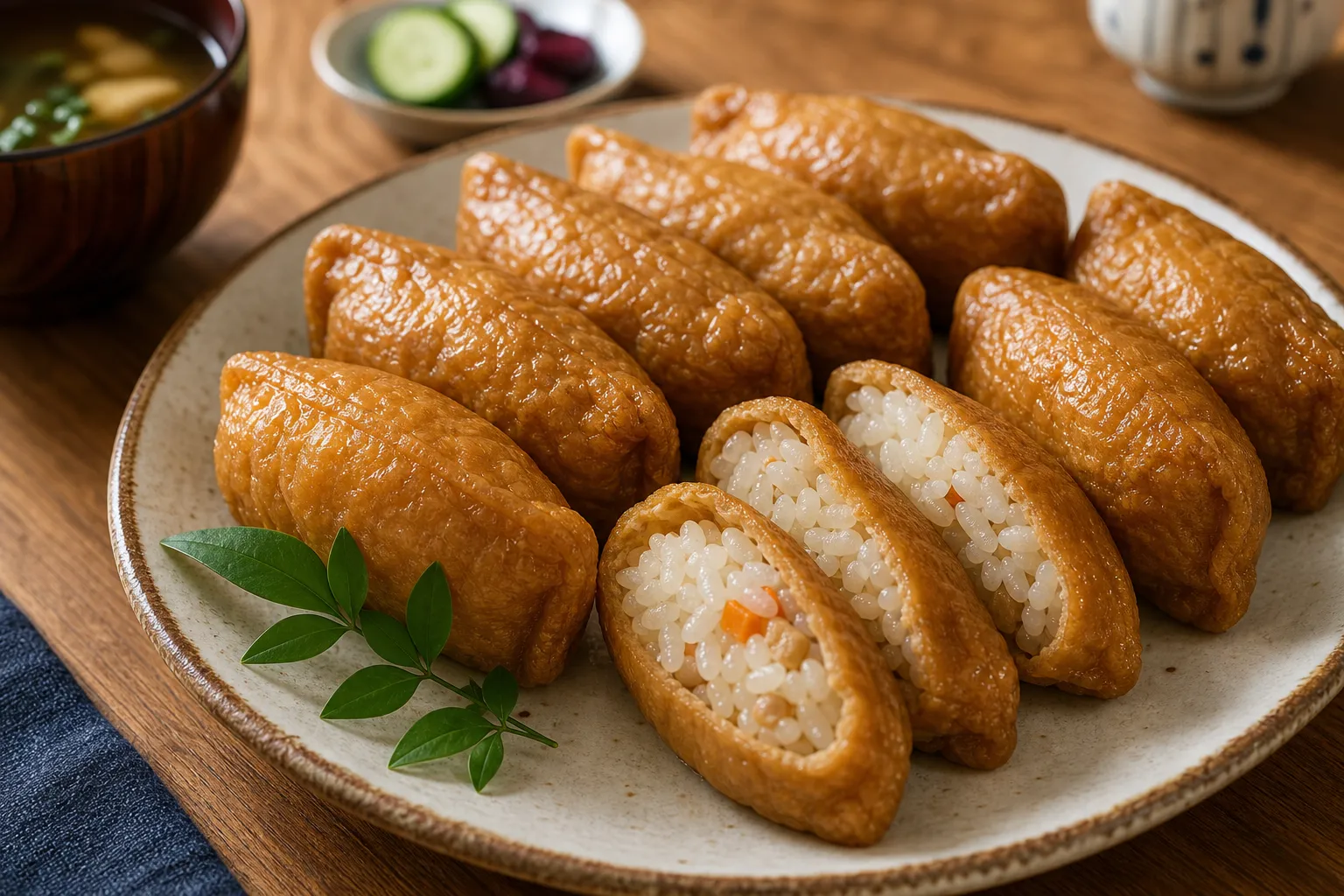
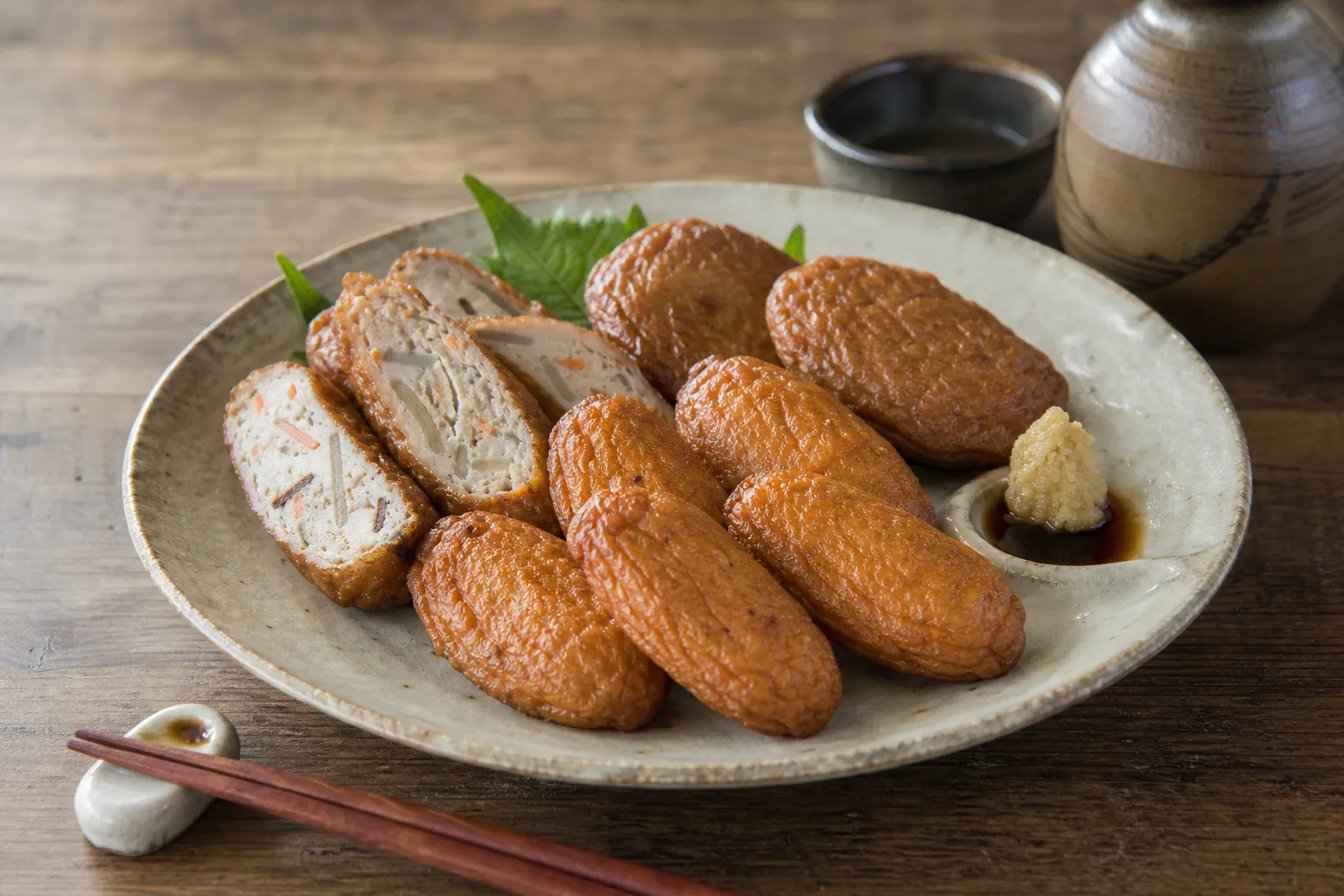
A little pouch of sweet, juicy fried tofu stuffed with sushi rice — no raw fish, no fuss, endlessly portable, and impossible to eat just one of. Named after a fox god who supposedly can't resist fried tofu either.
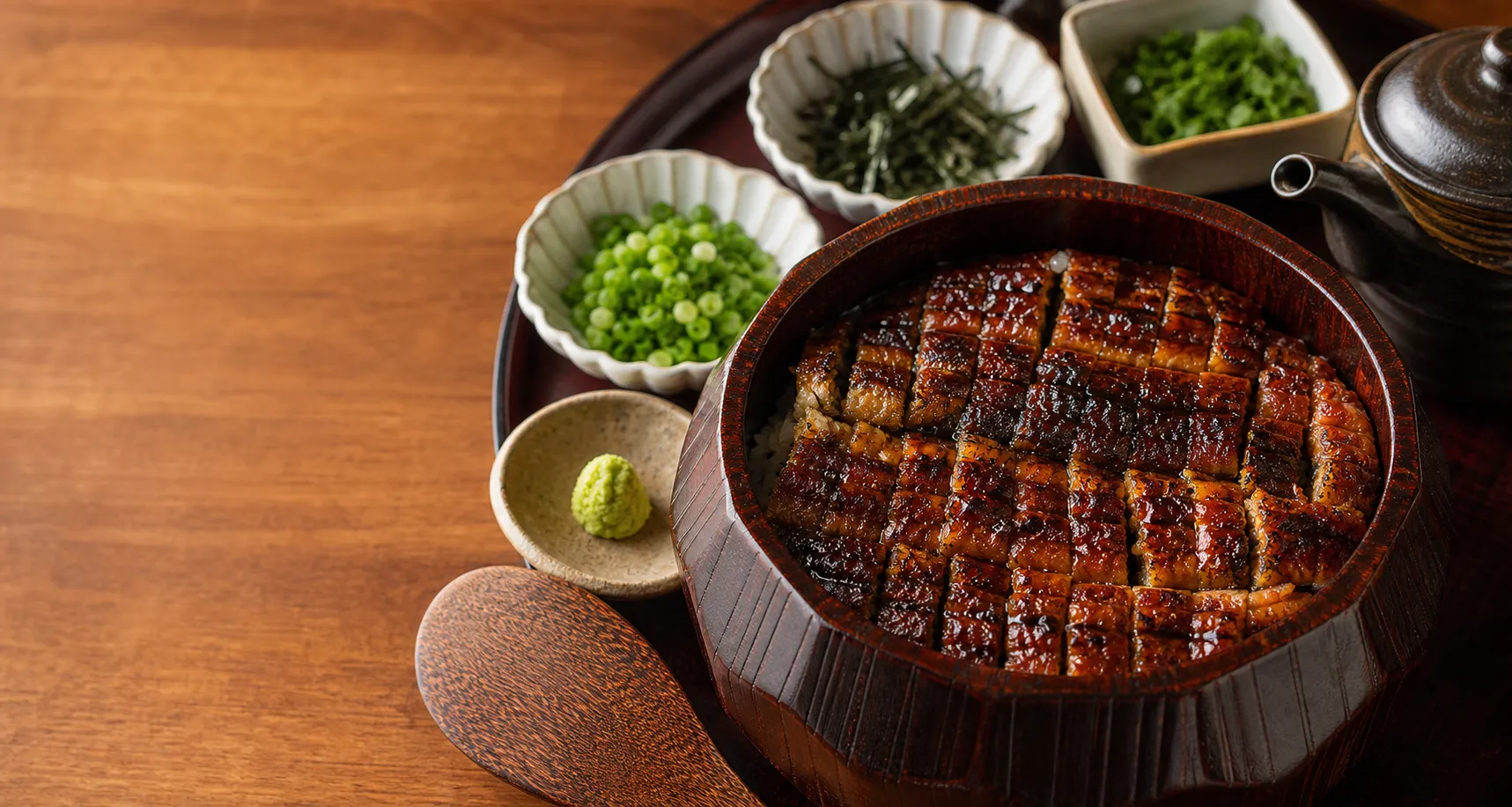
Charcoal-grilled eel over rice — but Nagoya makes you eat it three different ways from the same tub, and the third way (drowned in dashi) might ruin every other eel dish for you forever.
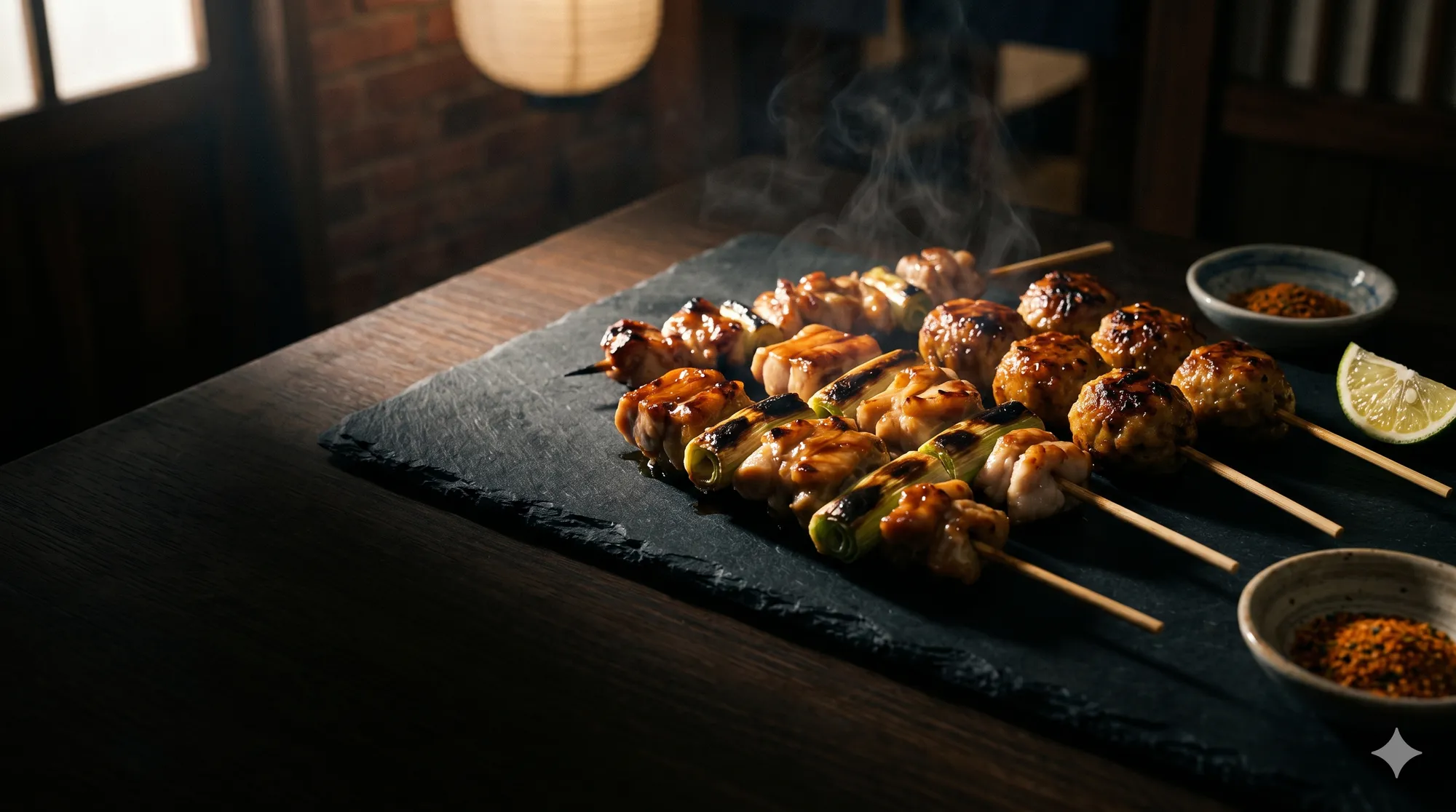
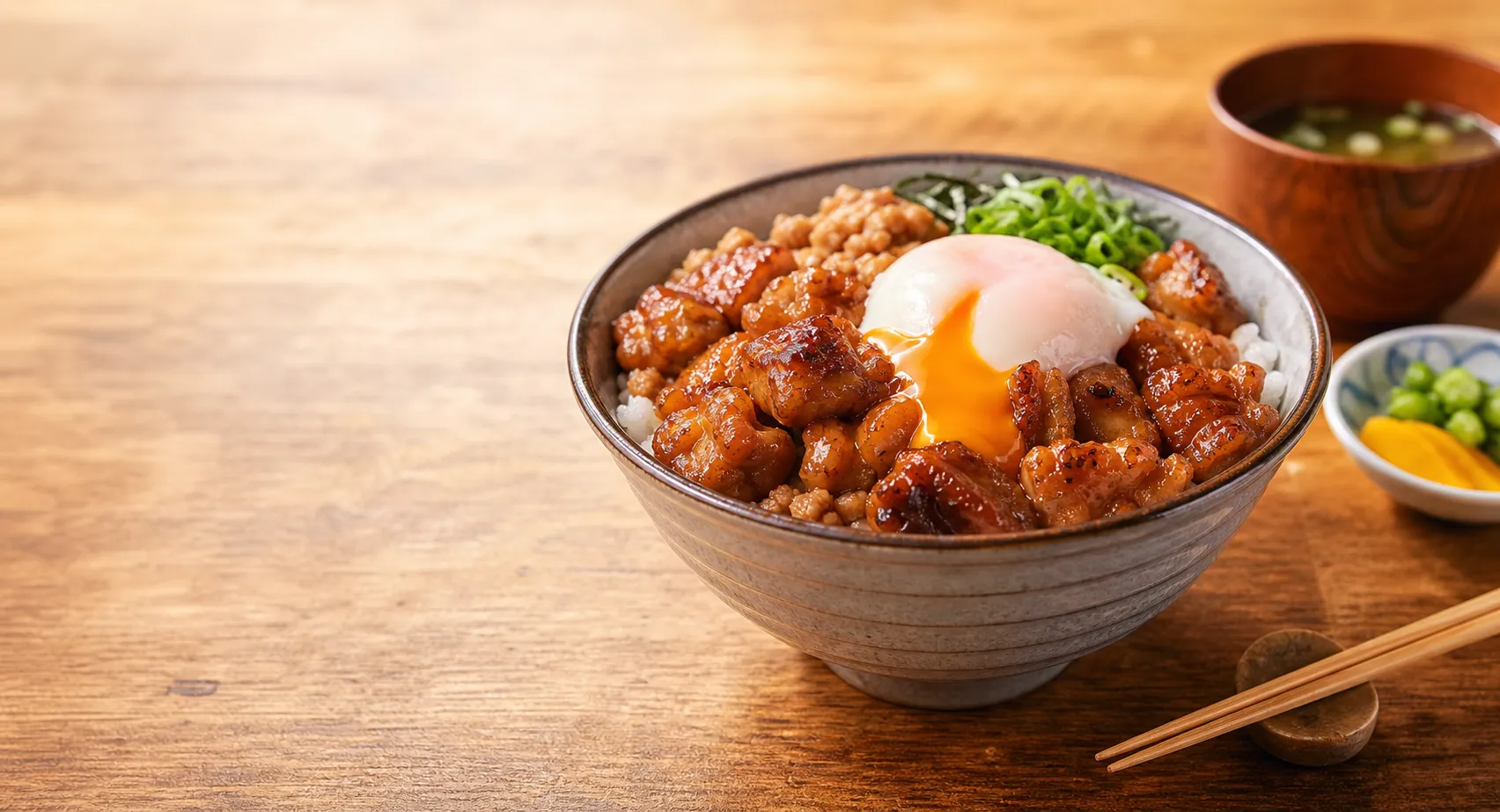
Bite-sized skewers of chicken grilled over blazing charcoal, seasoned with just salt or a sweet-savory tare. The beating heart of the izakaya, smoke and beer included. Nose-to-tail, and all of it good.
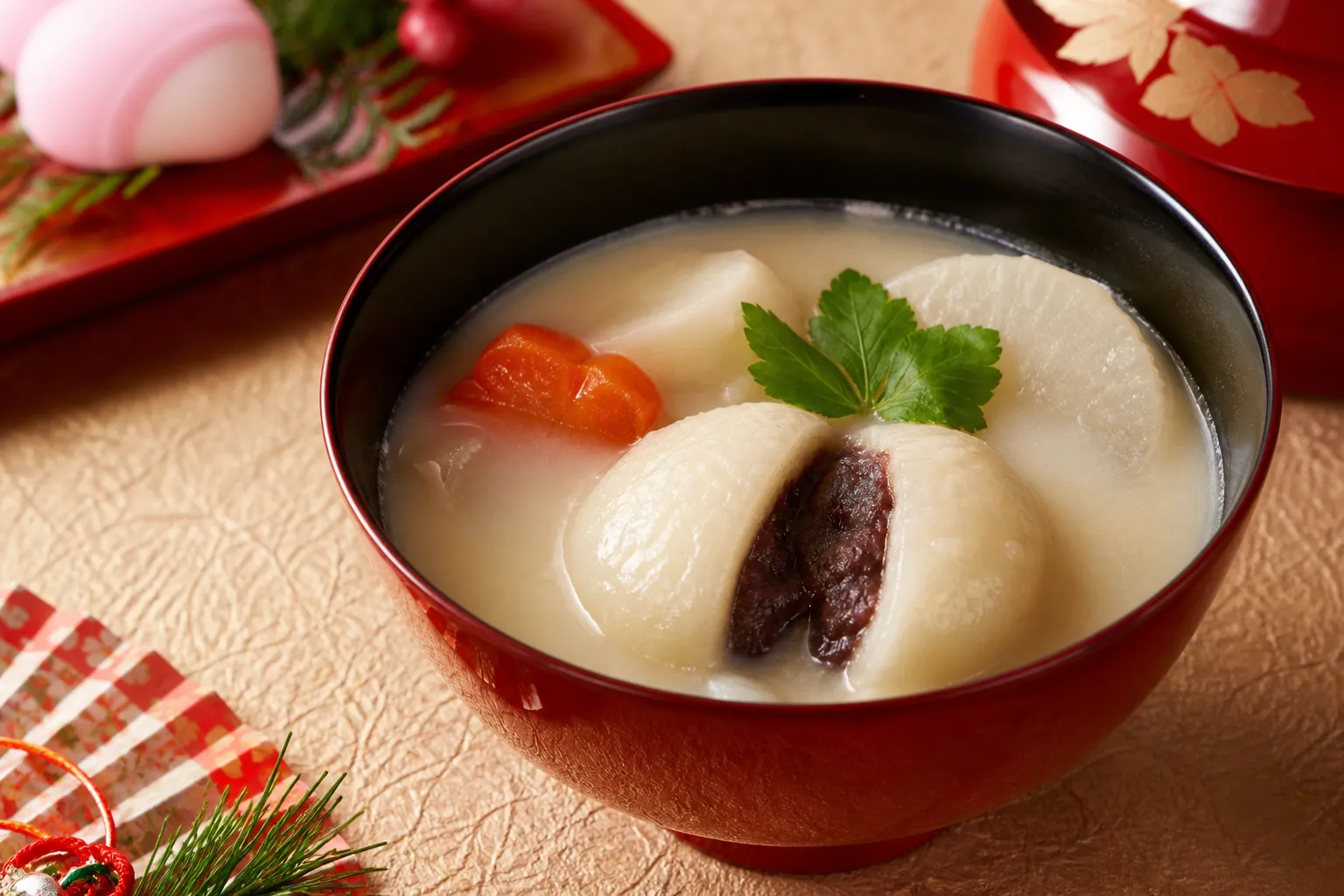
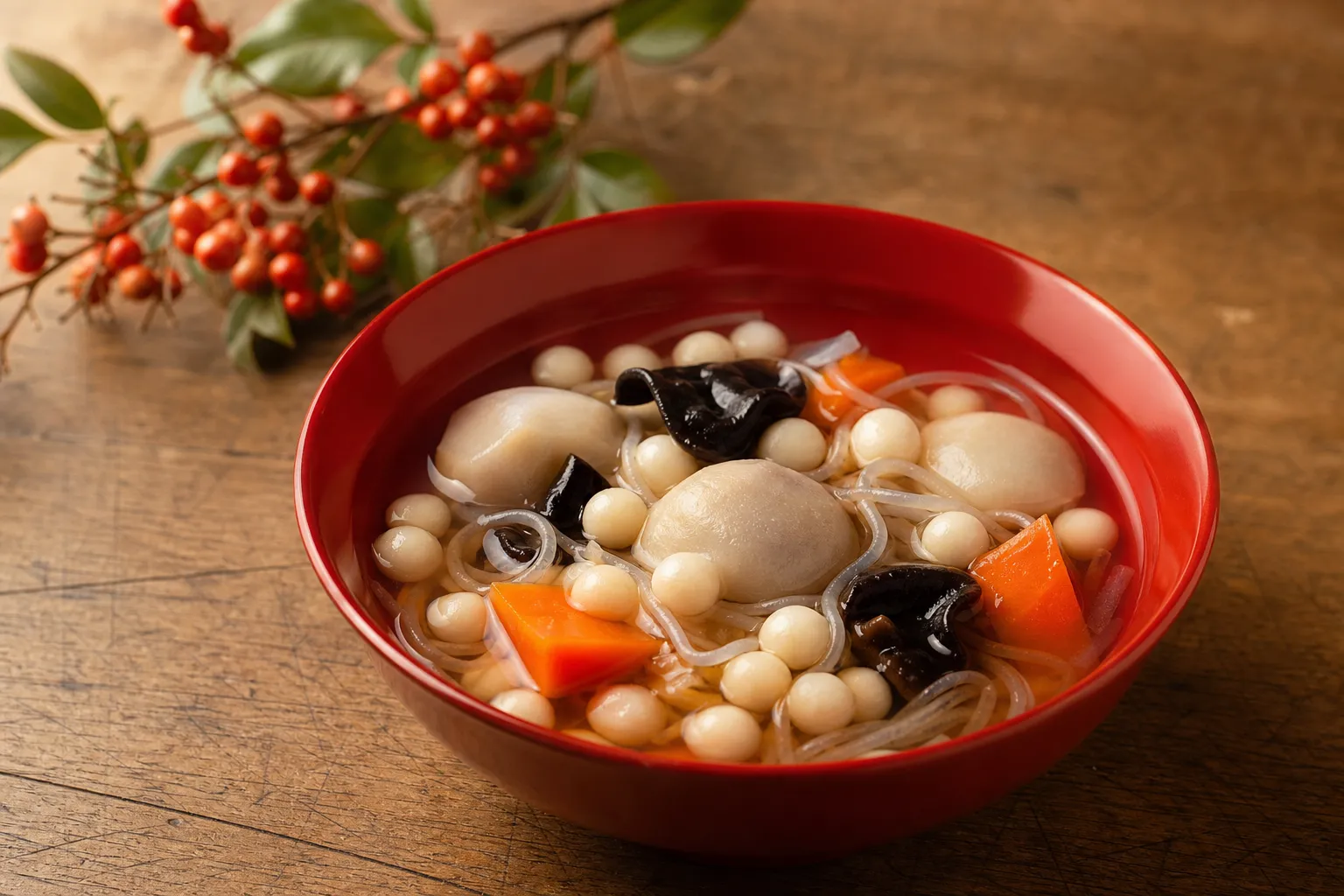
You bite into the mochi in your New Year soup and — wait — it's full of sweet red-bean paste, in a savory white-miso broth. Kagawa's gloriously confusing New Year bowl, born from a secret history of sugar.
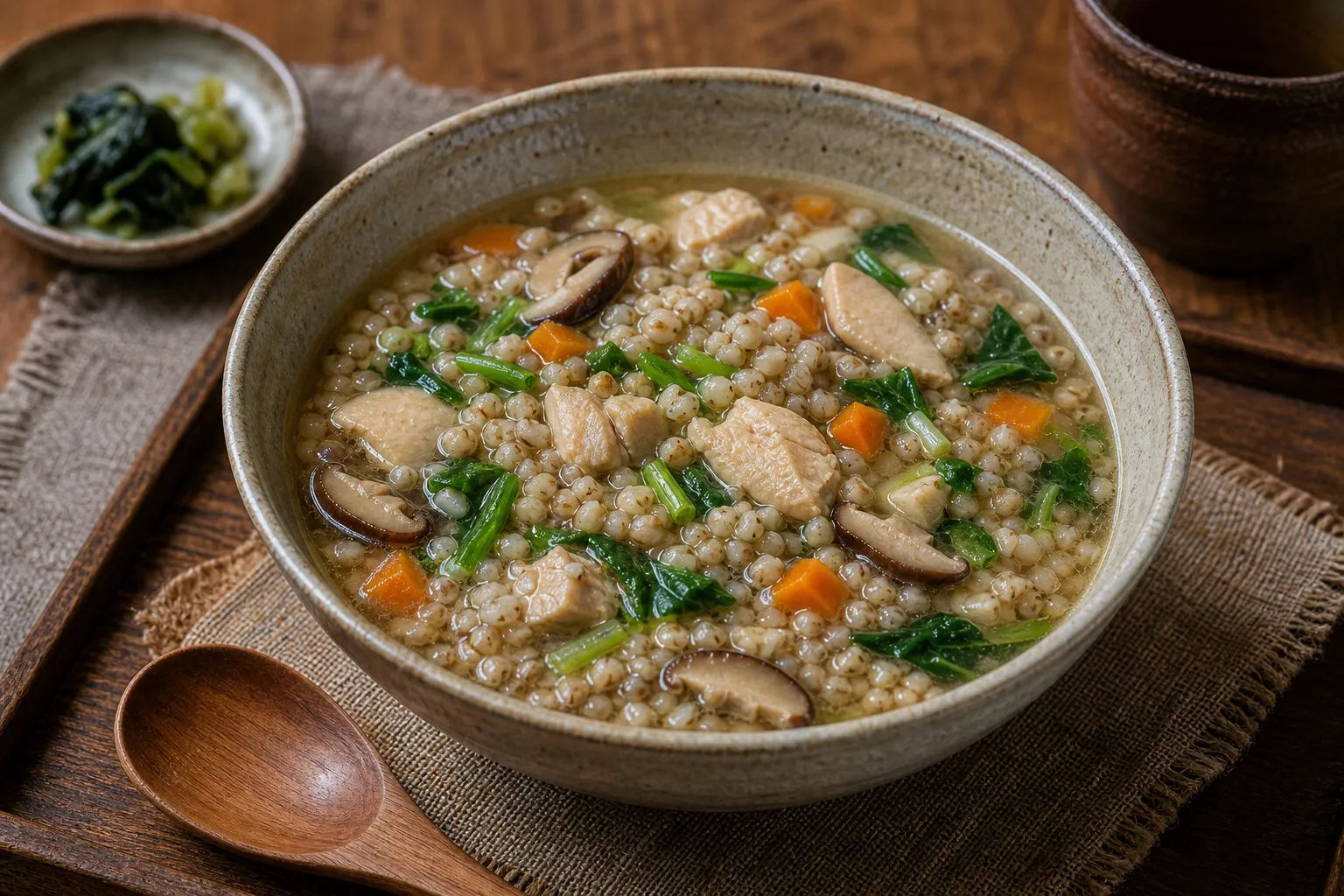
Not soba noodles — whole buckwheat grains, plump and nutty, simmered into a warm chicken-and-vegetable soup deep in the Iya Valley. Refugee food that became one of Japan's most quietly comforting bowls.
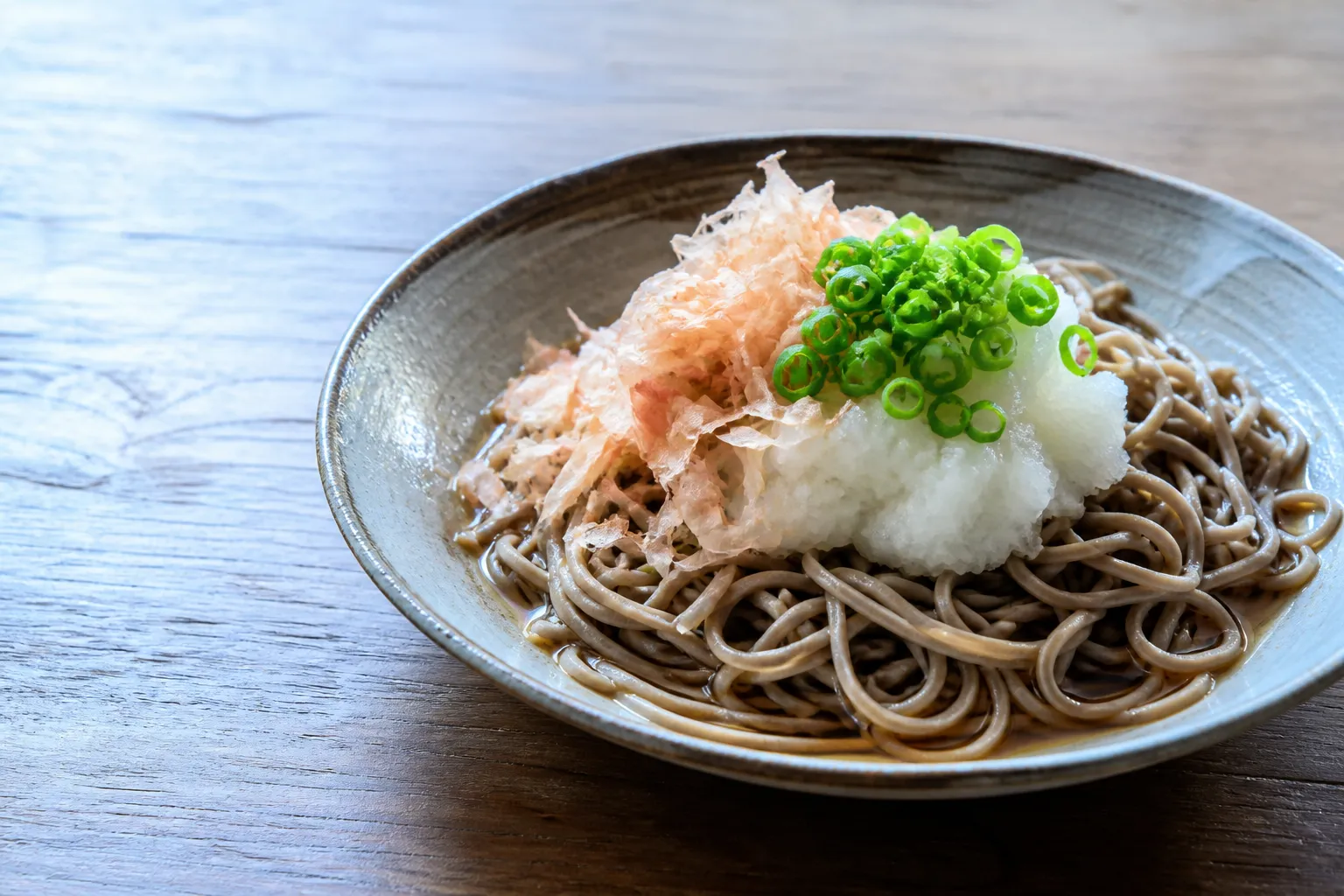
A mountain of grated daikon on cold buckwheat noodles, and the first bite is colder and sharper than any noodle dish has a right to be.
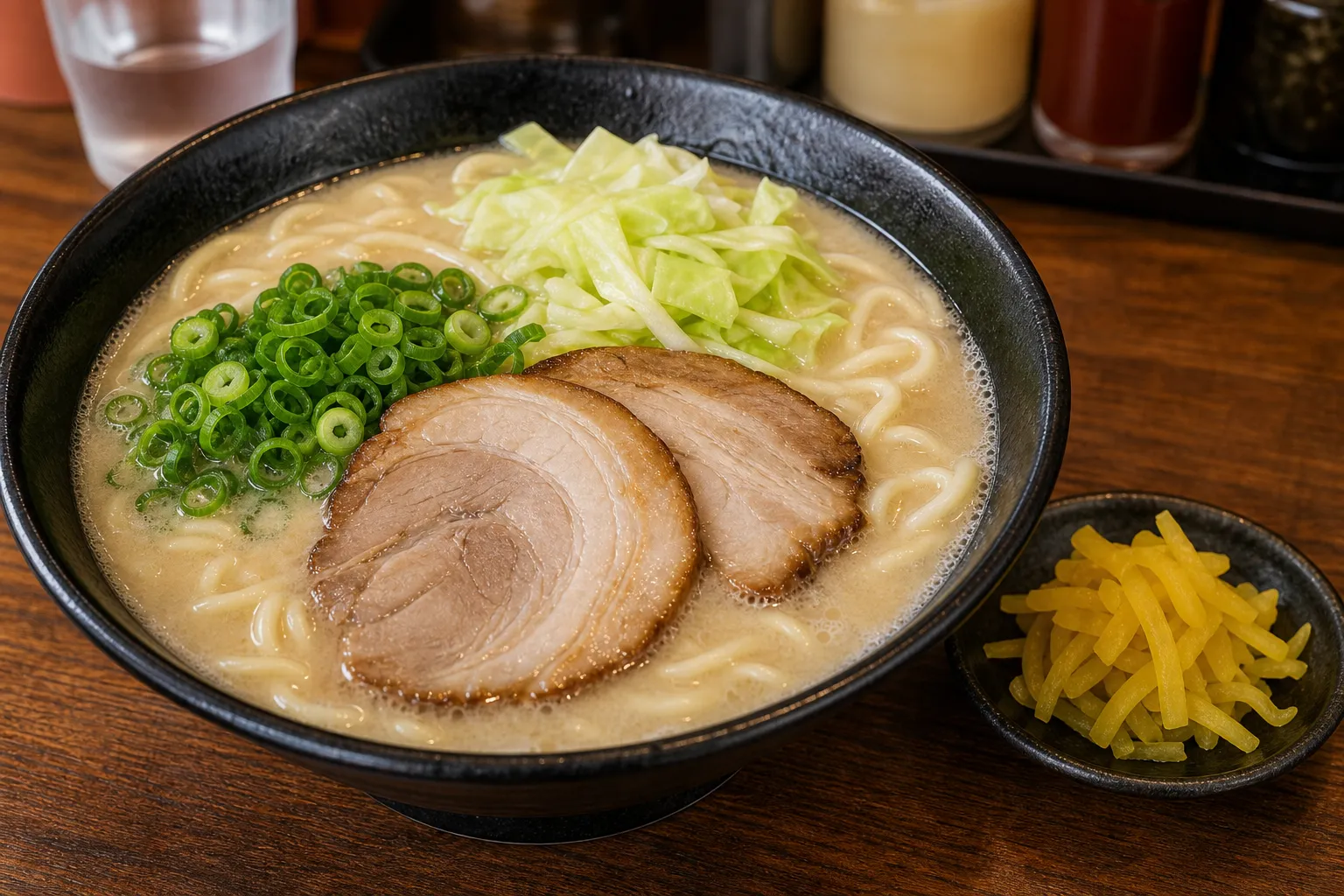
Kyushu's black sheep tonkotsu — softer, rounder, semi-cloudy — served with pickled radish and a hot cup of tea like it's a whole little ceremony. The gentle giant of pork-bone ramen.
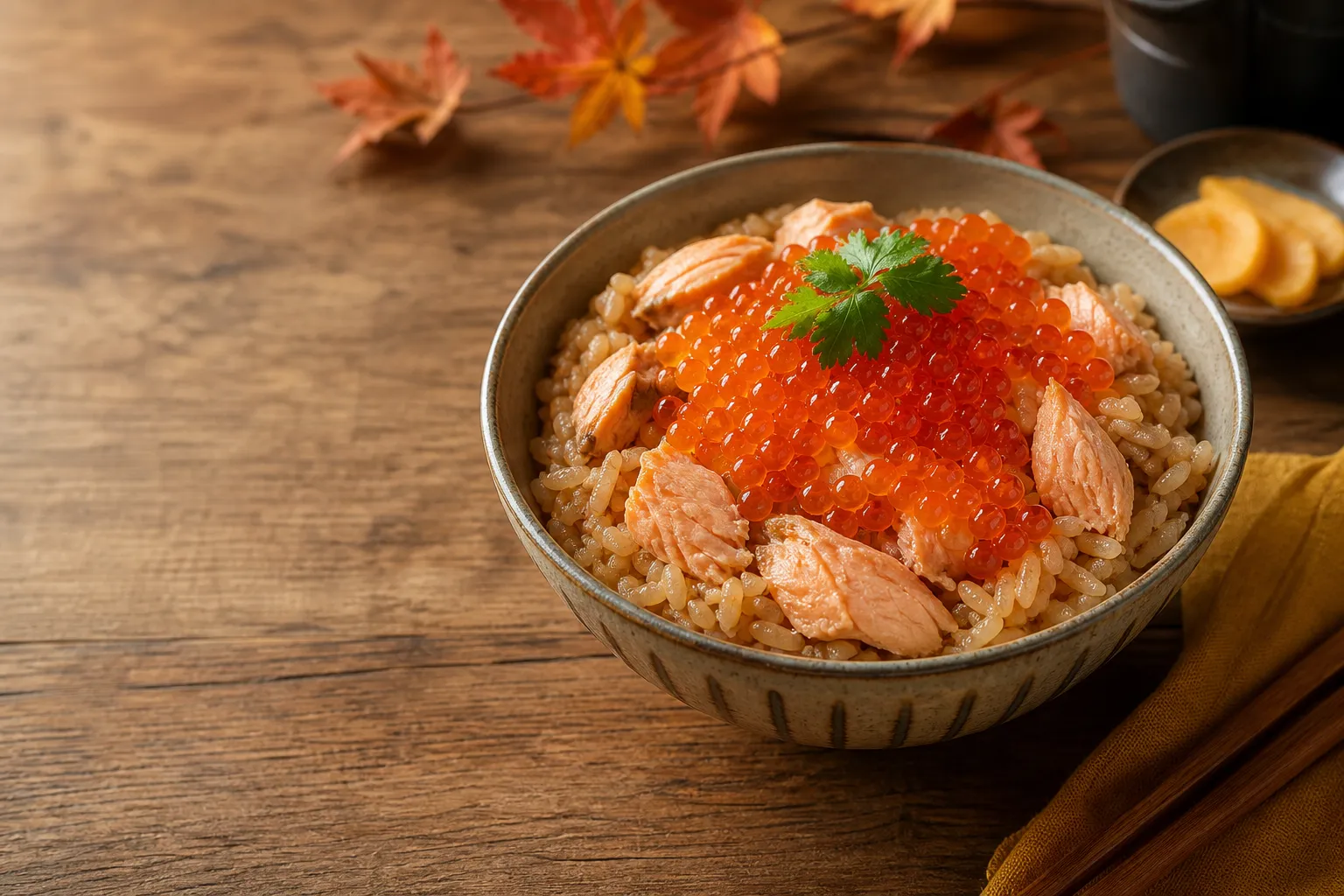
Rice cooked in the same broth as the salmon that's sitting on top of it, then crowned with roe so fresh it still pops between your teeth — this is a river town's autumn in a bowl.
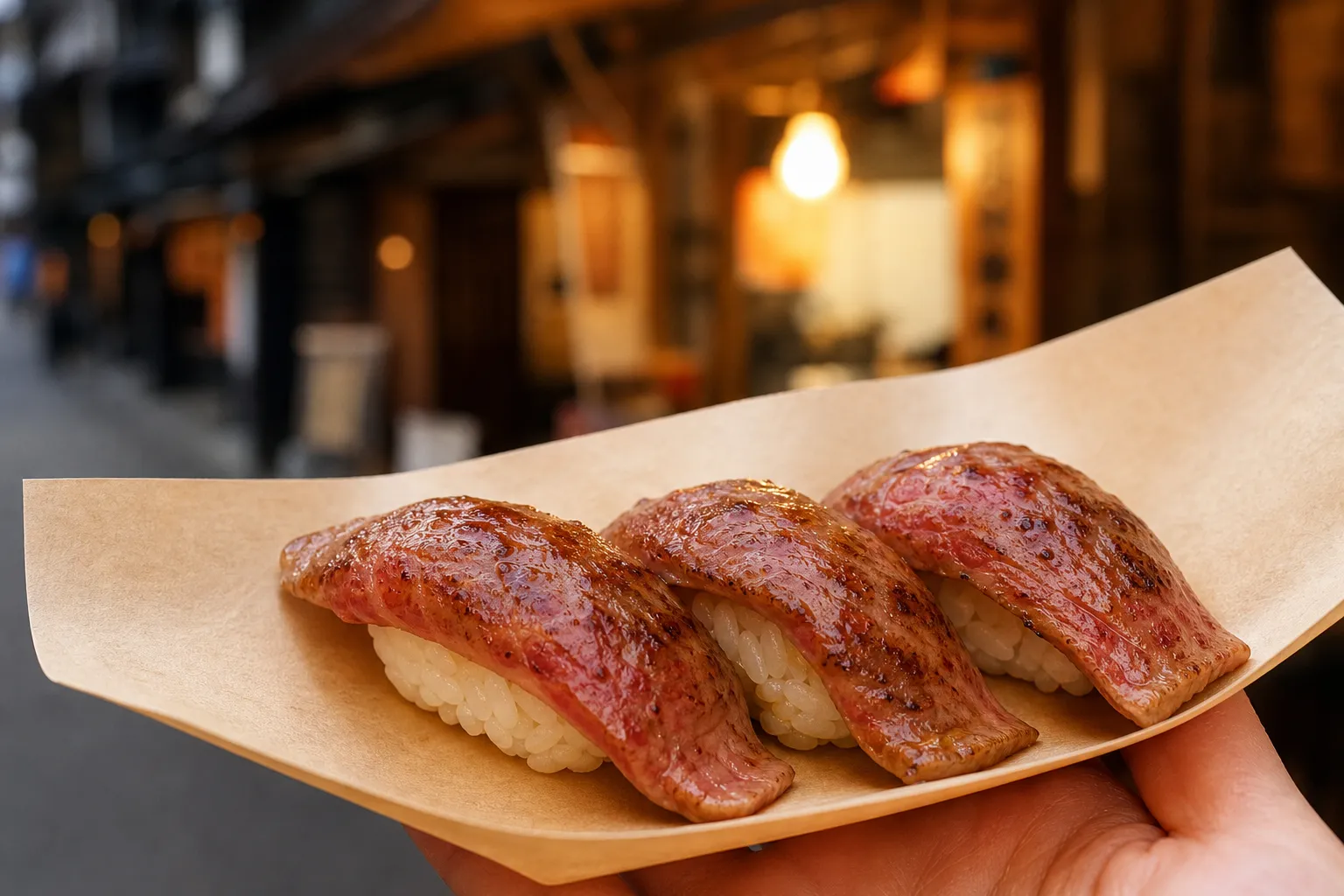
A torch flares over a single bite of beef sushi on a wooden boat, someone hands it to you still warm, and you eat Japan's most-awarded wagyu standing in the middle of a street.
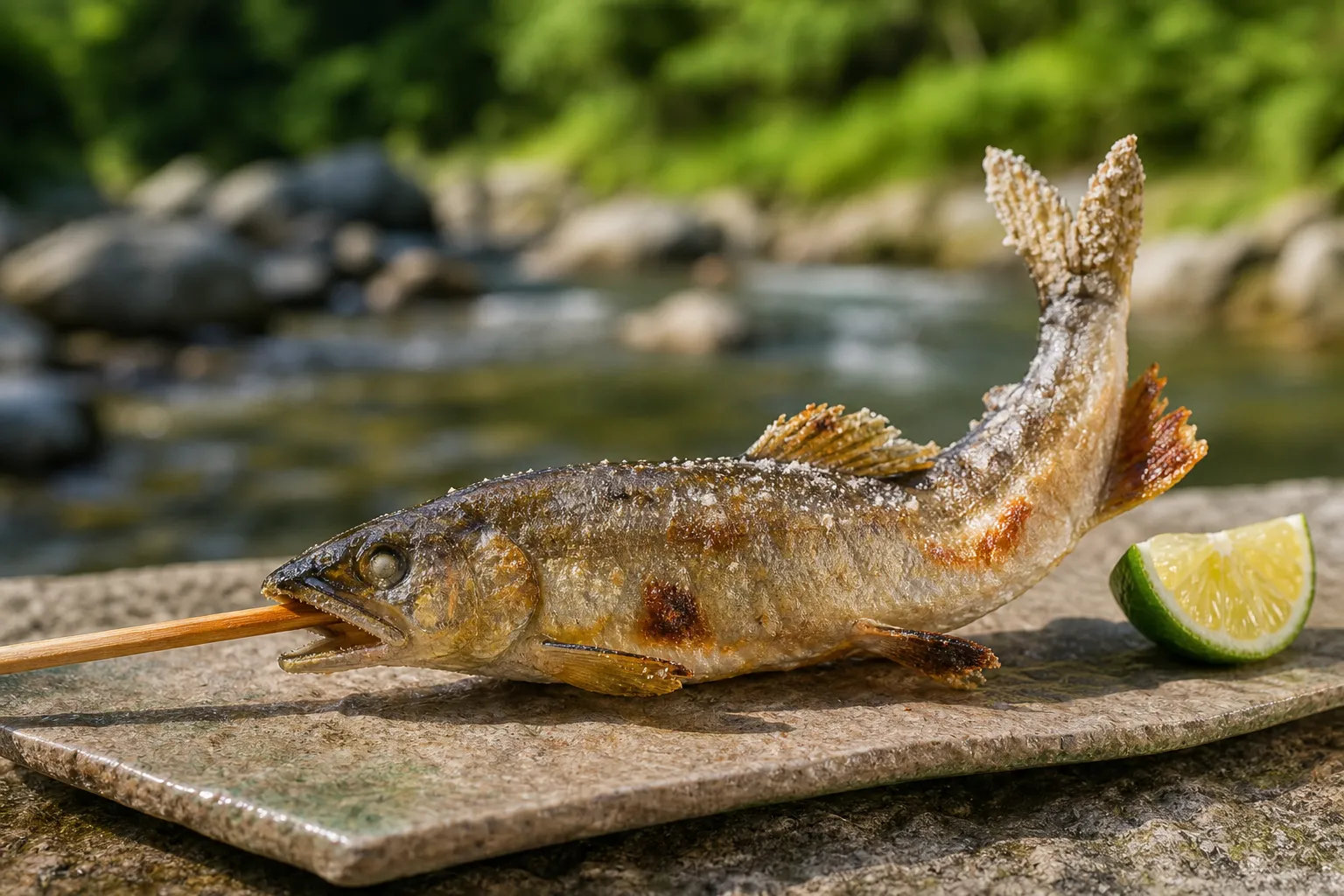
A whole river fish, salted and grilled over coals until the skin blisters and the fins go crisp — and then you eat the entire thing, head to tail, chasing the clean green taste of the Nagara River.
A grandmother in Fujikawa told me the little dough shapes in my soup were designed to scoop up good fortune, and then watched to make sure I ate every one of them.
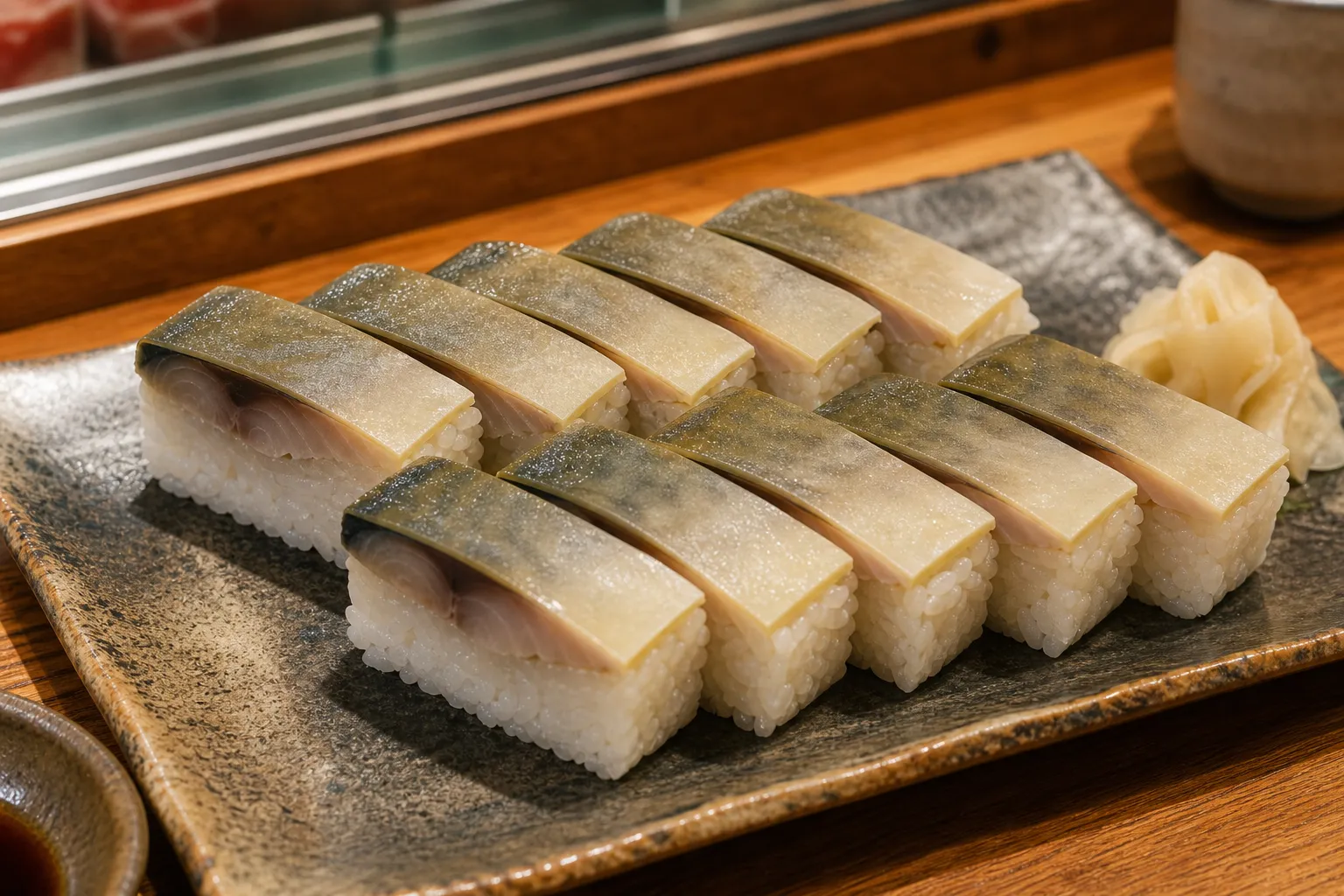
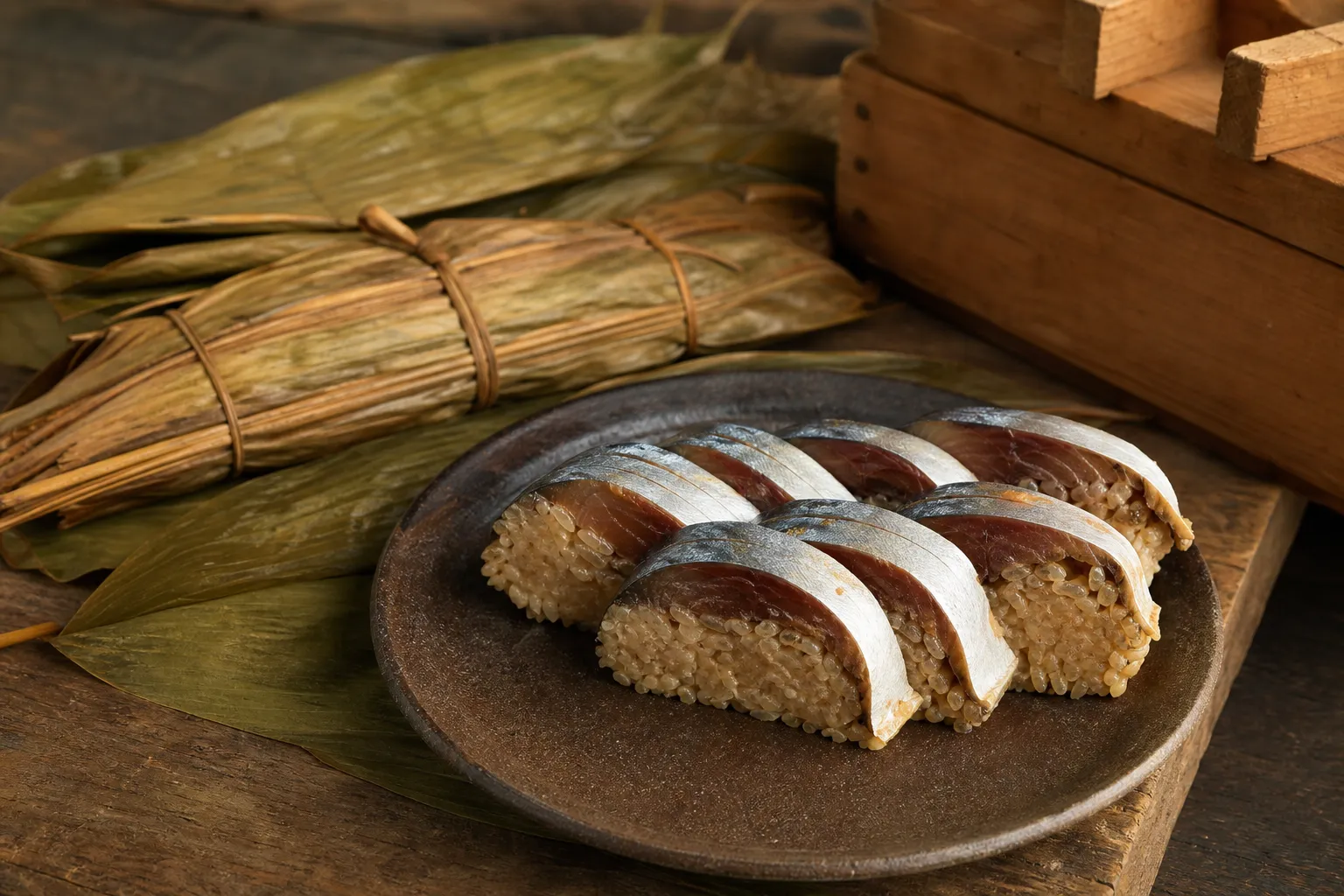
Osaka's beautiful pressed sushi — vinegar-cured mackerel and rice squared off in a wooden box and crowned with a translucent sheet of kelp, sliced into glossy little bricks that taste like the city's quieter, older idea of sushi.
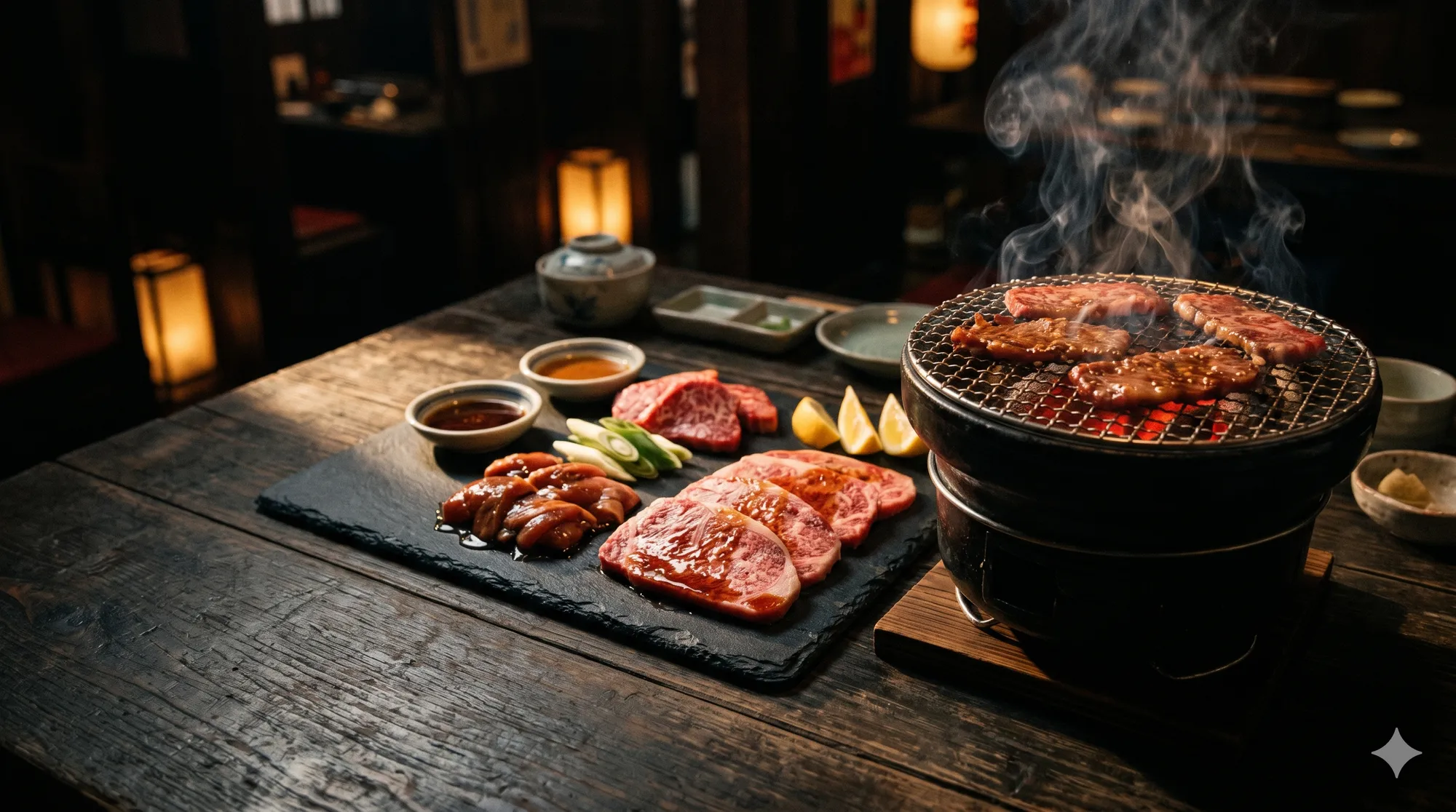
Japanese barbecue: bite-sized cuts of beef you grill yourself over fire at the table, dunk in sauce, and eat the second they're done. Social, smoky, customizable, and one of the best nights out you can have.
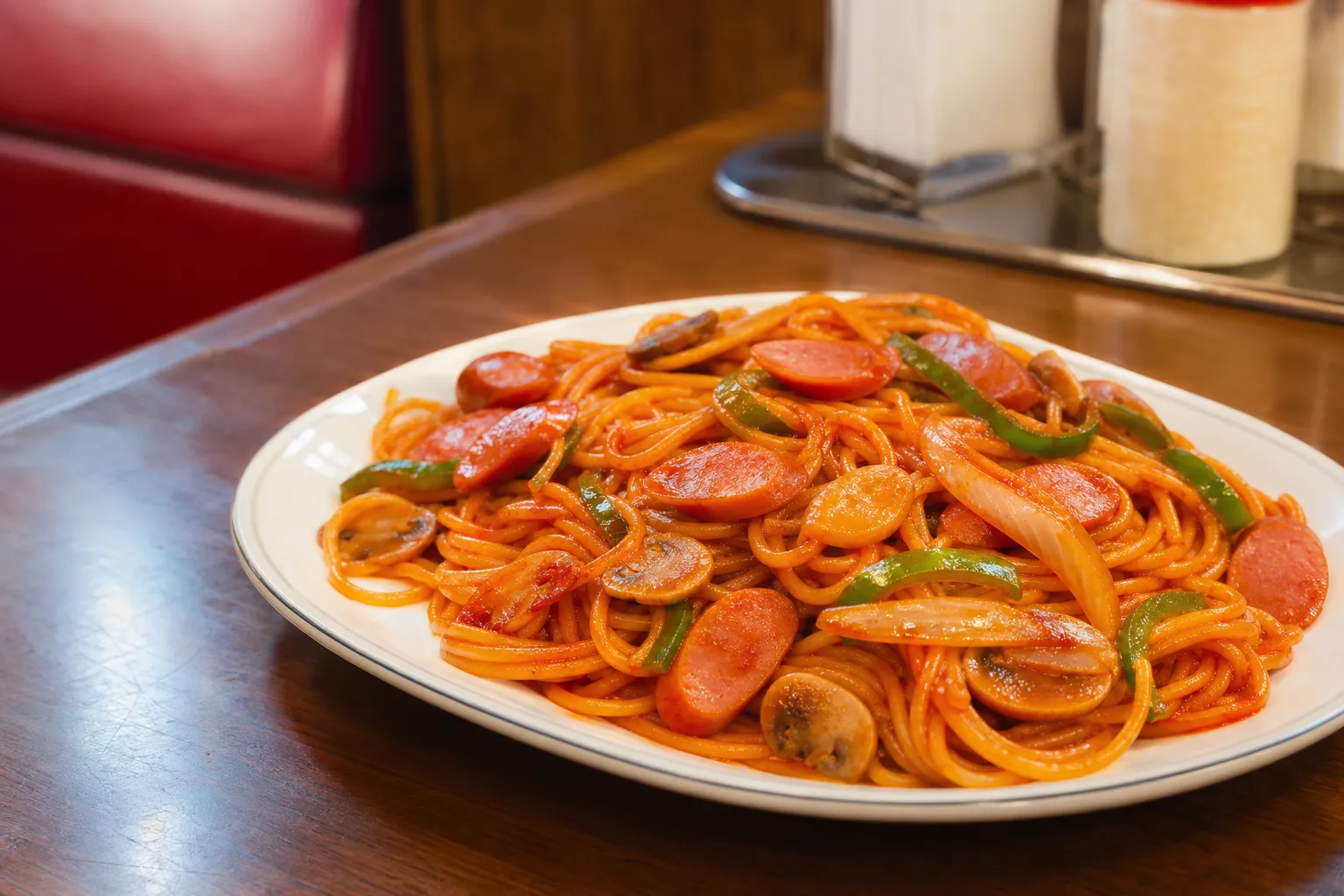
Ketchup spaghetti. Say it with a straight face, because Japan's retro-diner tangle of ketchup-glossed noodles, sausage and green pepper is comfort food so unapologetic it comes back around to genuinely great.
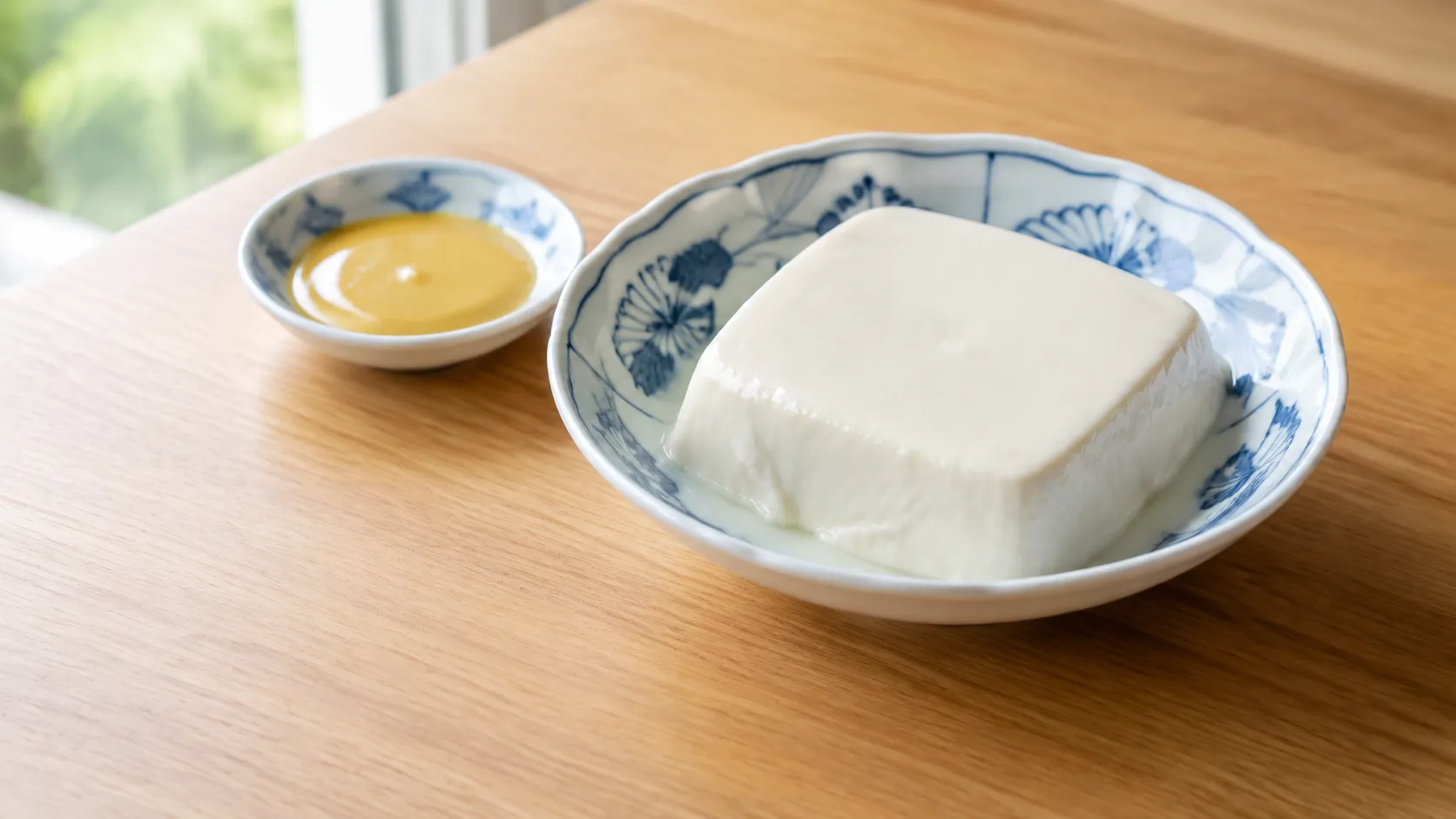
It has no soybeans in it, no coagulant, and no business being called tofu — and it was the best single thing I ate on a mountain full of monks.
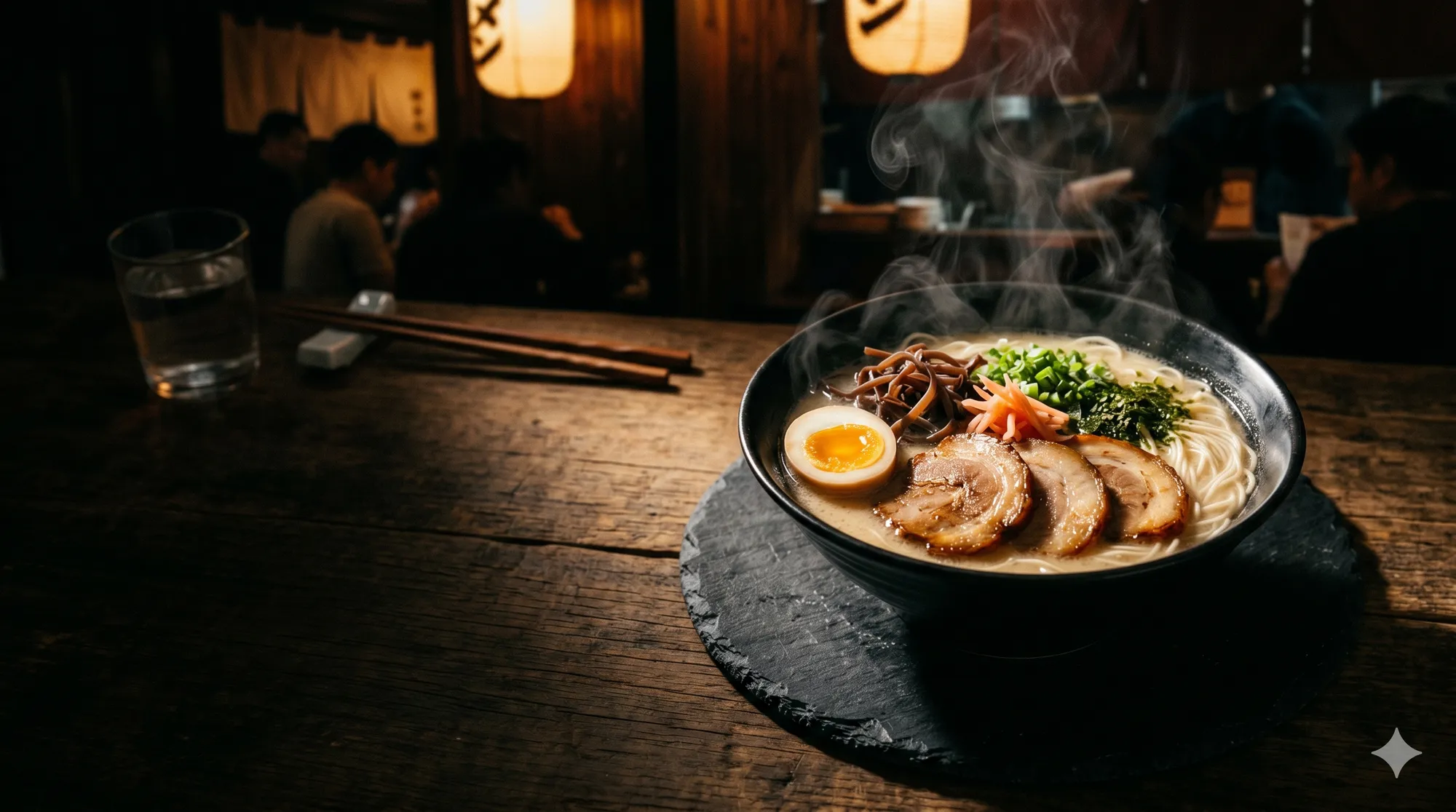
Milky pork-bone broth, hair-thin straight noodles, and a refill system that lets you keep the party going. Fukuoka's tonkotsu ramen runs on its own vocabulary — learn three words and you're in.
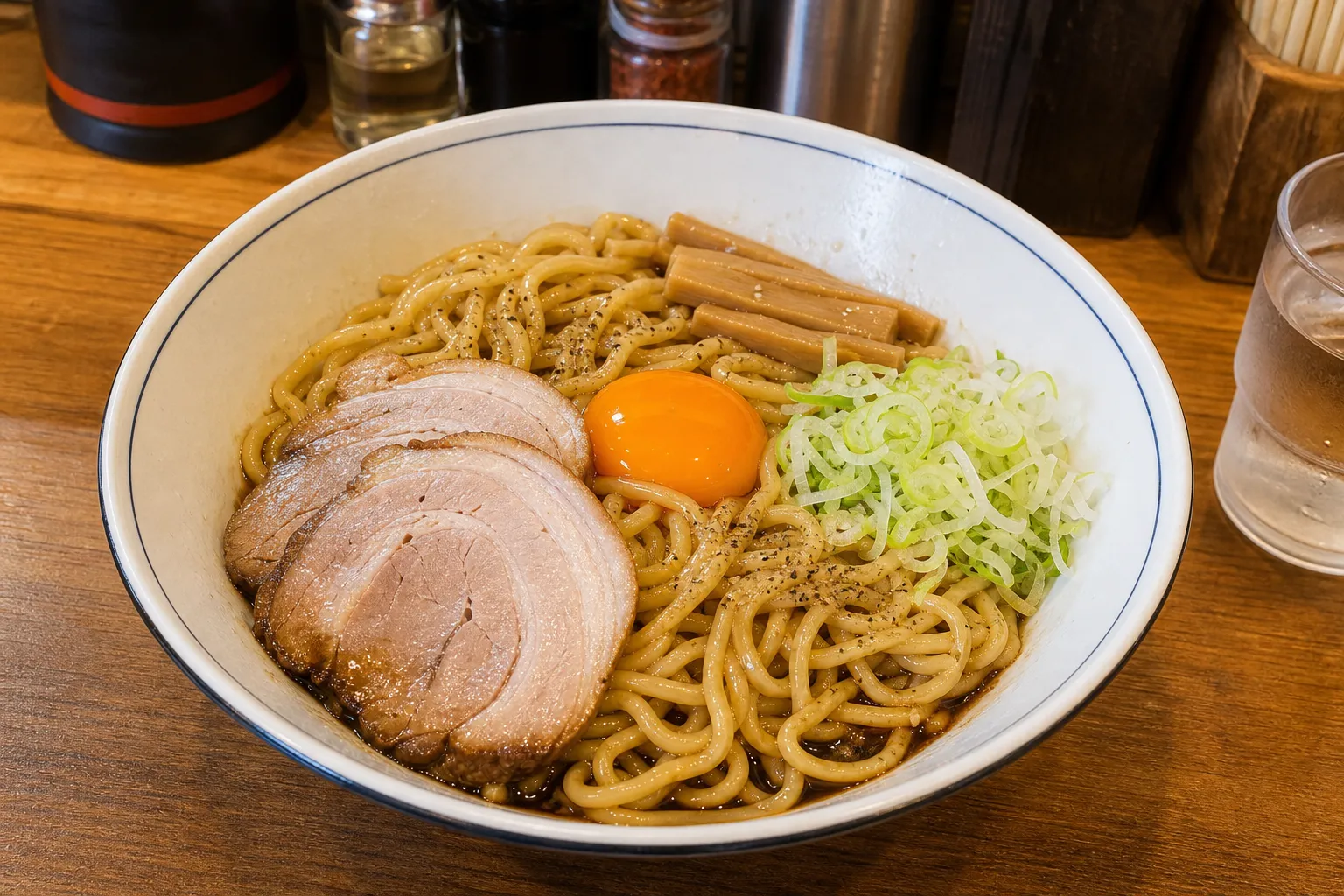
No soup. Just noodles, a hidden pool of tare and oil at the bottom of the bowl, and thirty seconds of frantic mixing that turns it into one of Tokyo's most addictive cheap thrills.
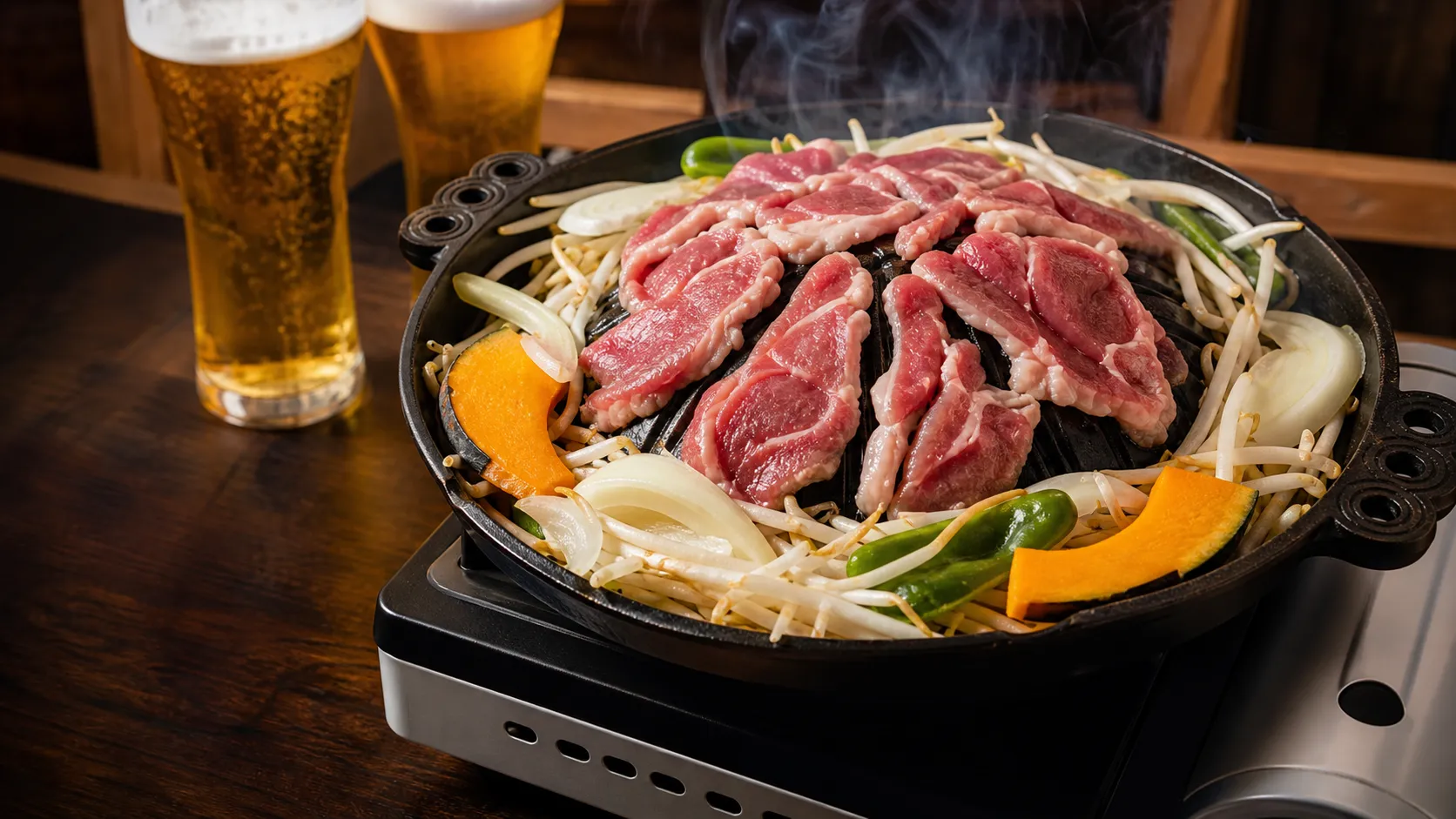
Hokkaido's mutton BBQ: lamb and vegetables sizzled on a domed iron pan, dipped in a sweet-soy tare that cuts right through the richness. Named after Genghis Khan. Eaten outdoors in the cold. Absolutely correct.
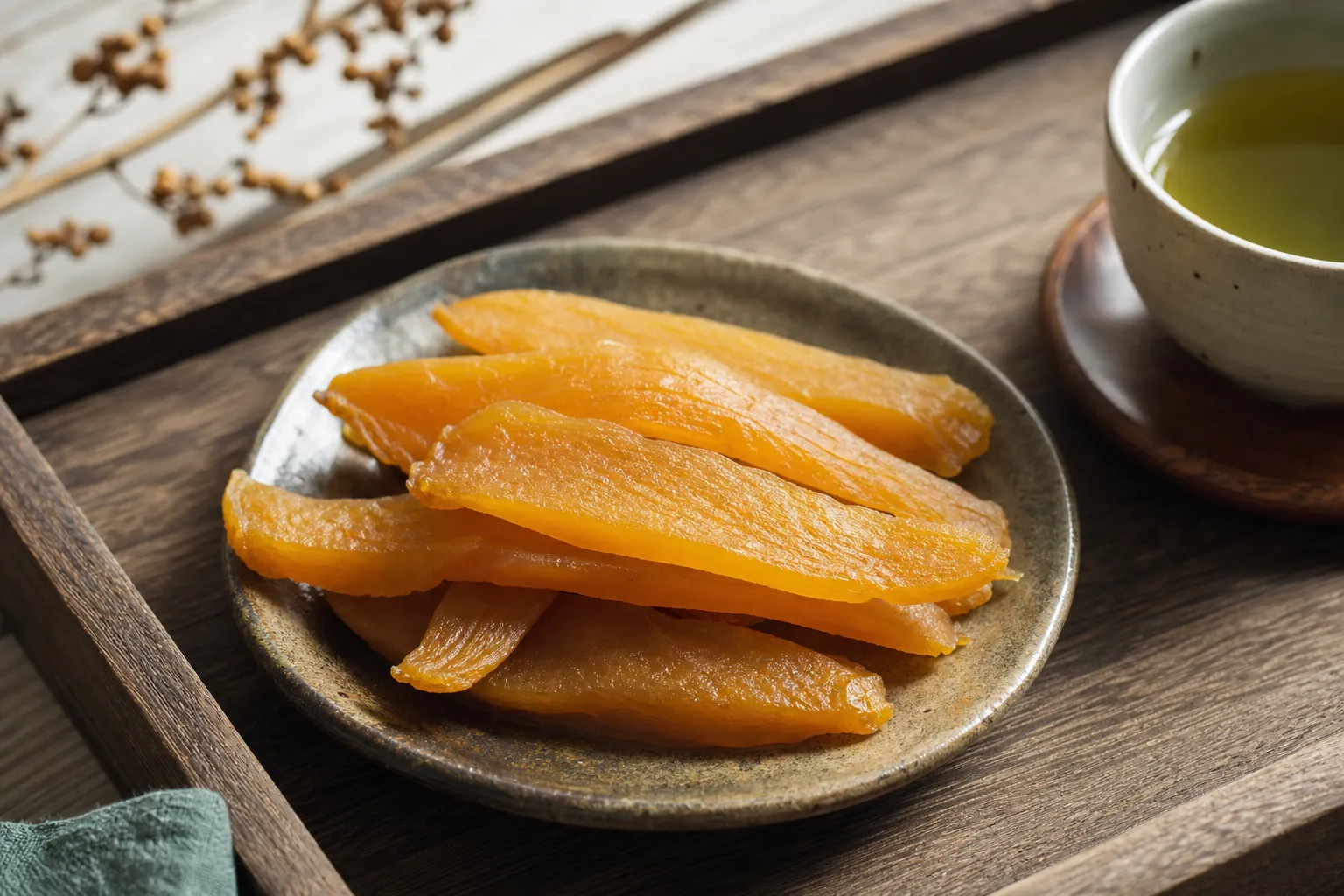
Amber, chewy slabs of nothing but sun-dried sweet potato — no sugar, no additives, just winter, patience and Ibaraki sunshine folded into candy that happens to be a vegetable.
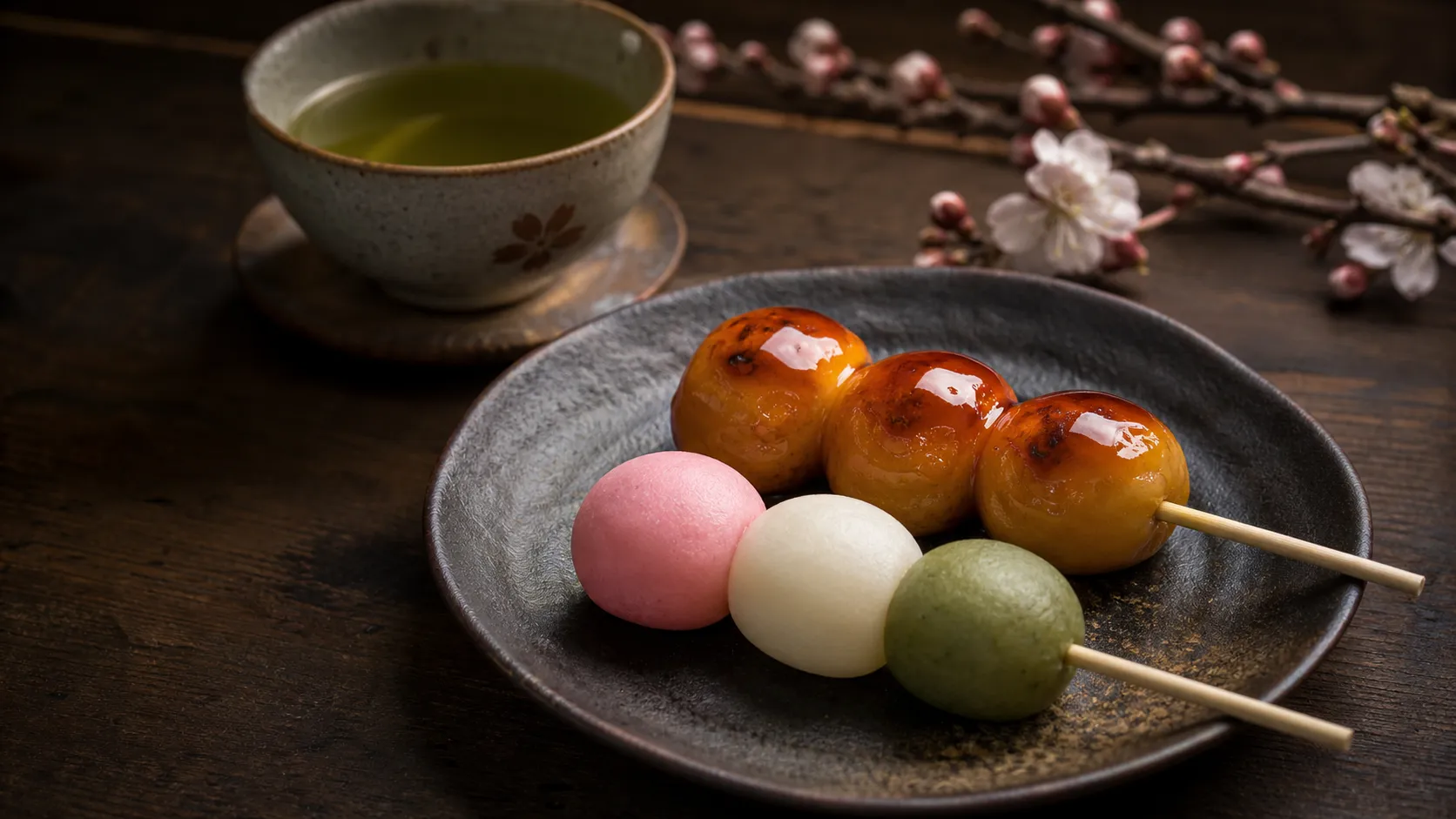
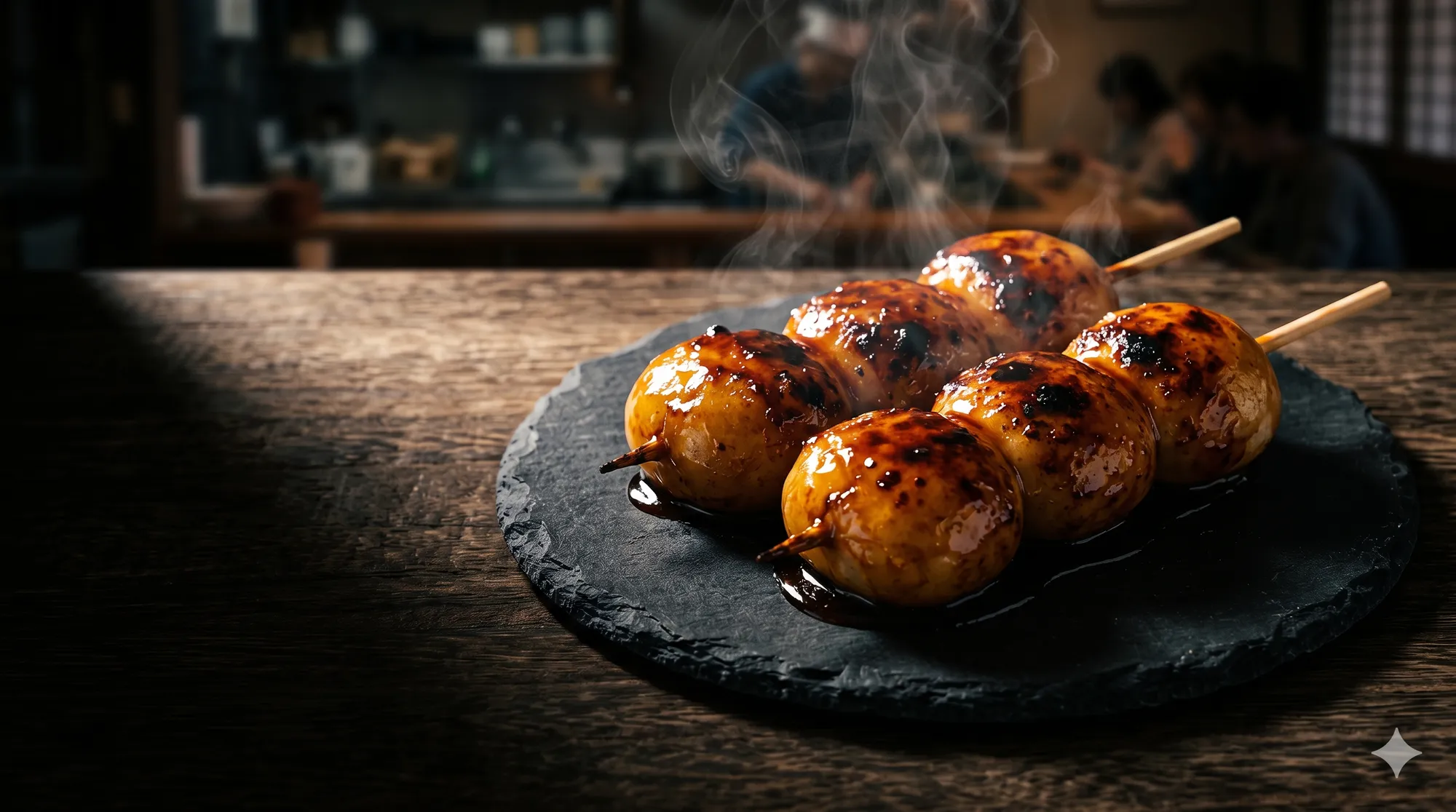
Chewy little rice-flour balls on a skewer, glazed with sweet-savory soy or topped with red bean. The everyday teatime dumpling — cheap, chewy, and seasonally beloved across Japan.
FamilyMart's hot-case fried chicken, and Japan's most democratic comfort food. Cheap, crispy, gushing-juicy, available 24/7 on every corner. Do not sleep on konbini chicken.
I tried to pick it up with chopsticks and it sagged, stretched, and very nearly escaped — which is when the shop owner started laughing at me from behind the counter.
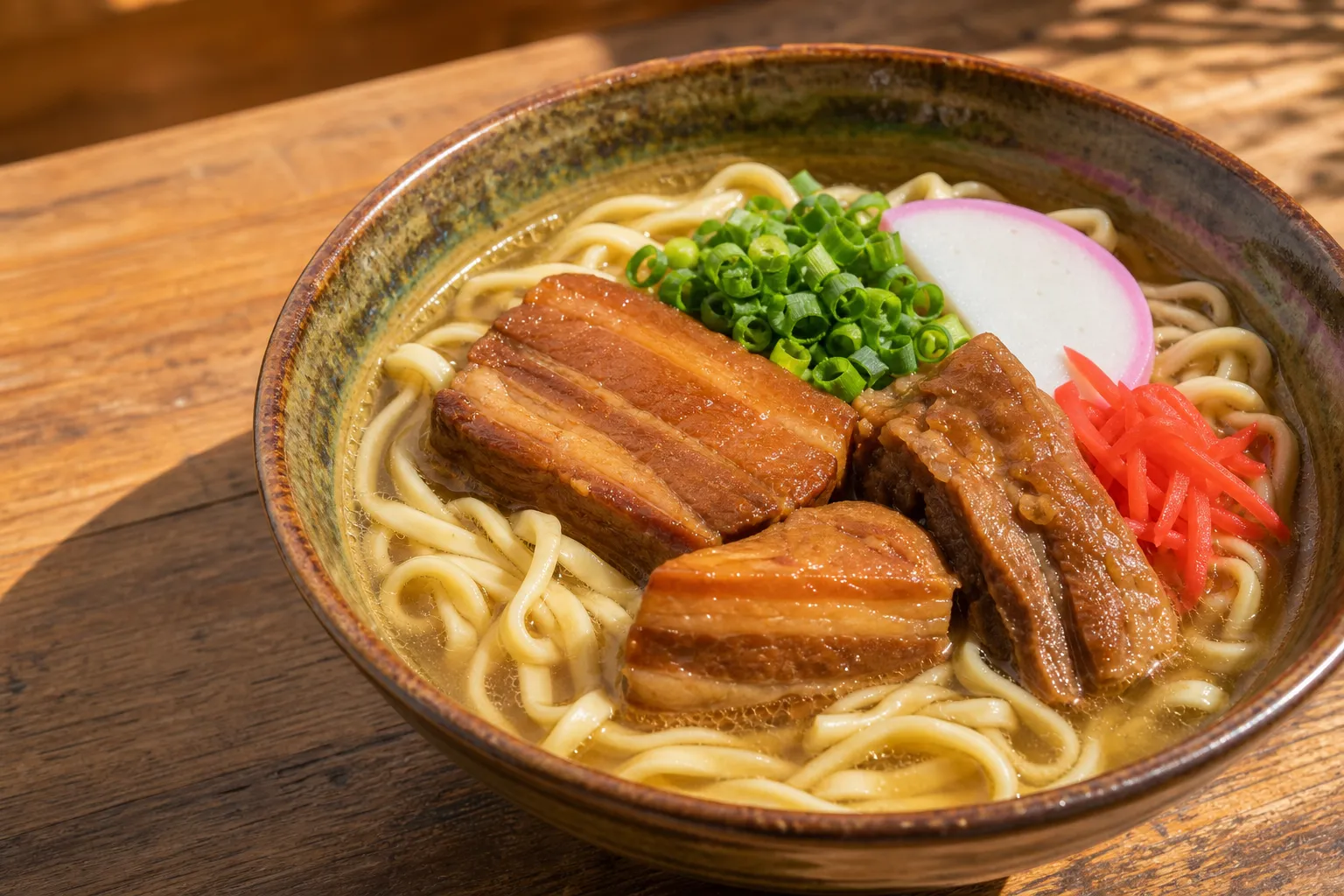
It's called soba. It's made with wheat. The broth is pork and bonito. The toppings are braised pork belly. It follows none of the rules and it is one of the best noodle soups in Japan.
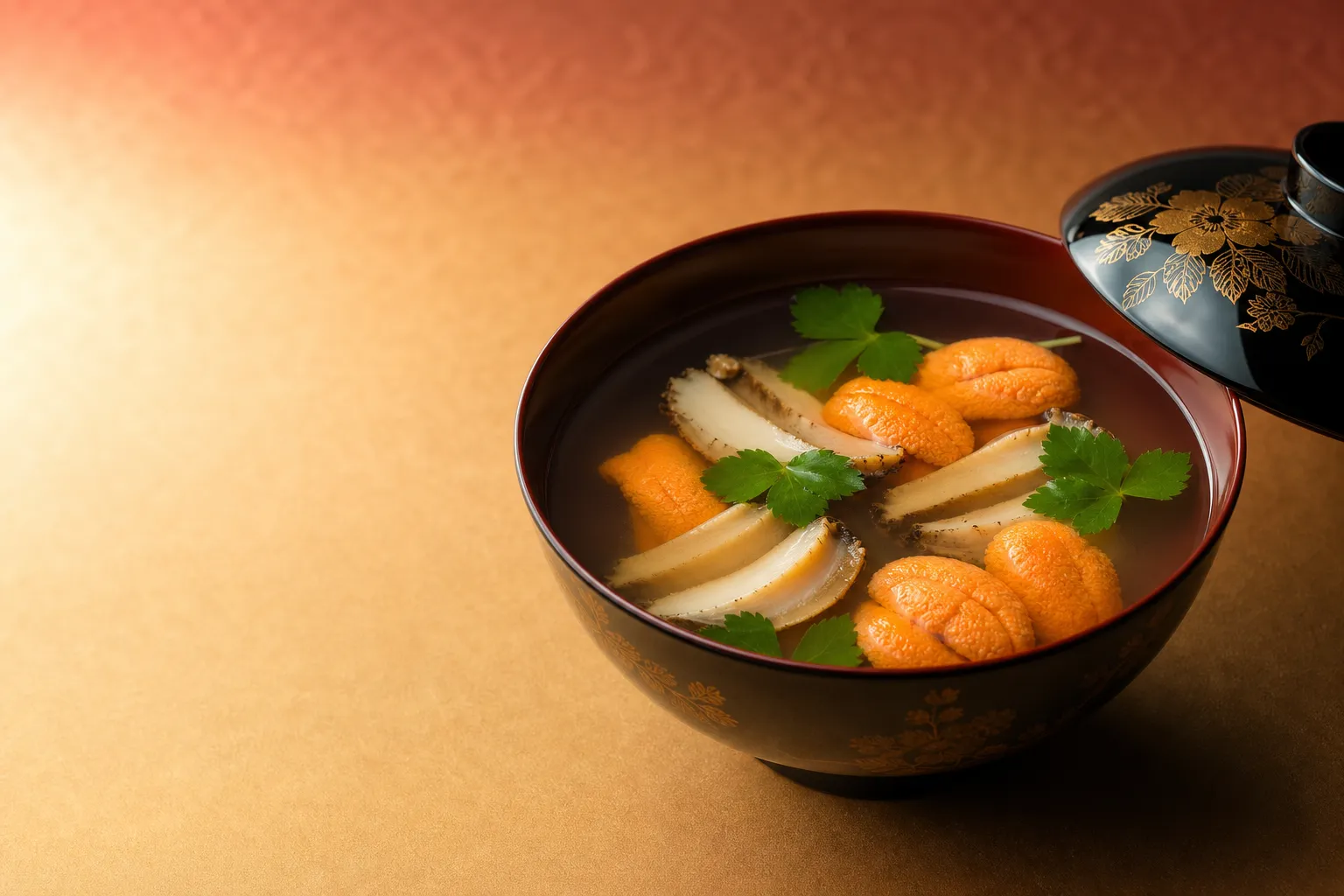
I ordered it expecting something fruity and got a bowl of the ocean at its most expensive instead — sea urchin and abalone floating in a broth so clear you could read through it.
I ordered it braced for plain sashimi and got fish that had been sitting in a soy-sesame marinade until it turned silky and deep — then someone poured hot tea over the leftovers and somehow it got even better.
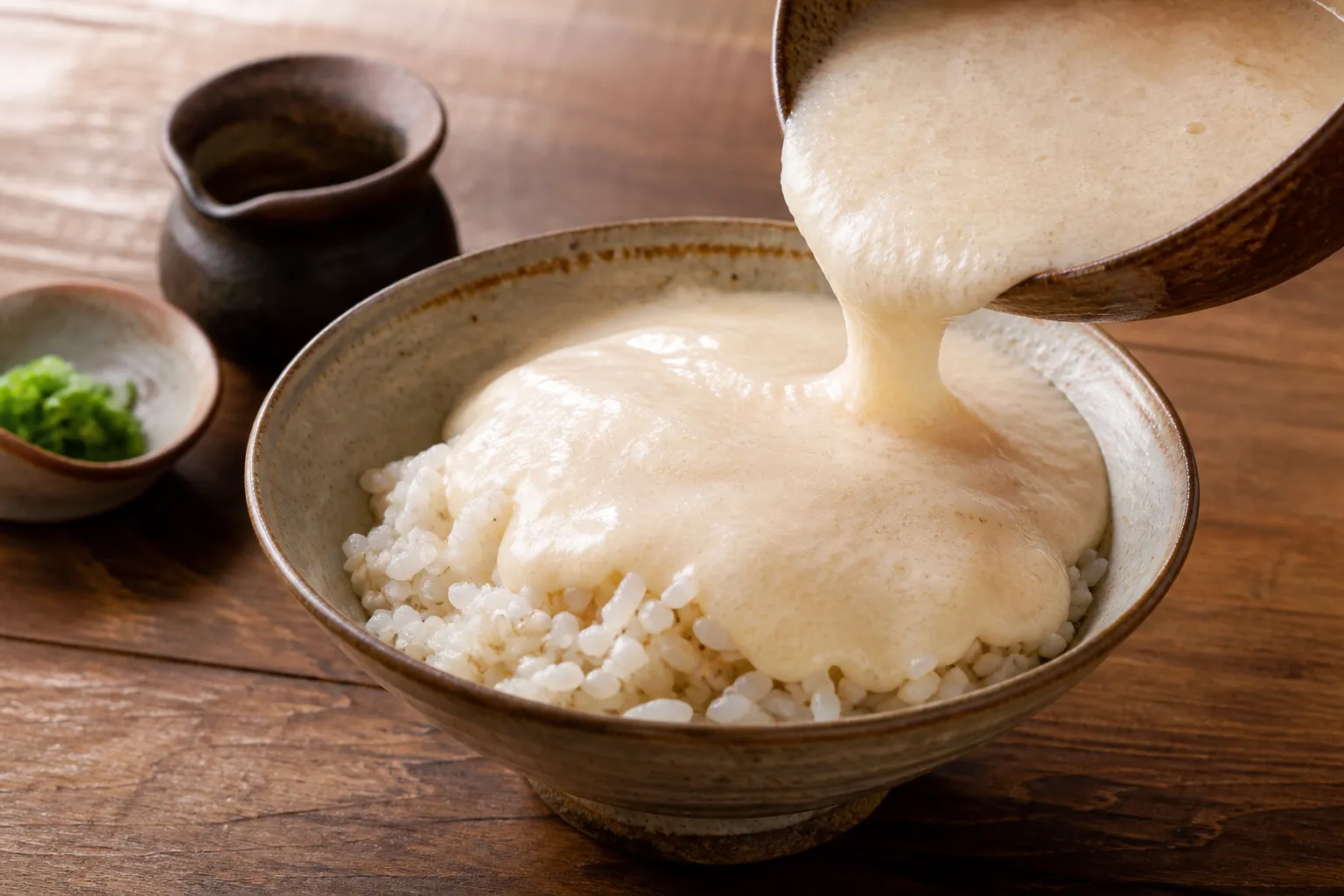
It slides off the spoon in one glossy, unbroken rope and refuses to let go — and travelers have been slurping this exact sticky bowl on the old Tokaido road for 400 years.
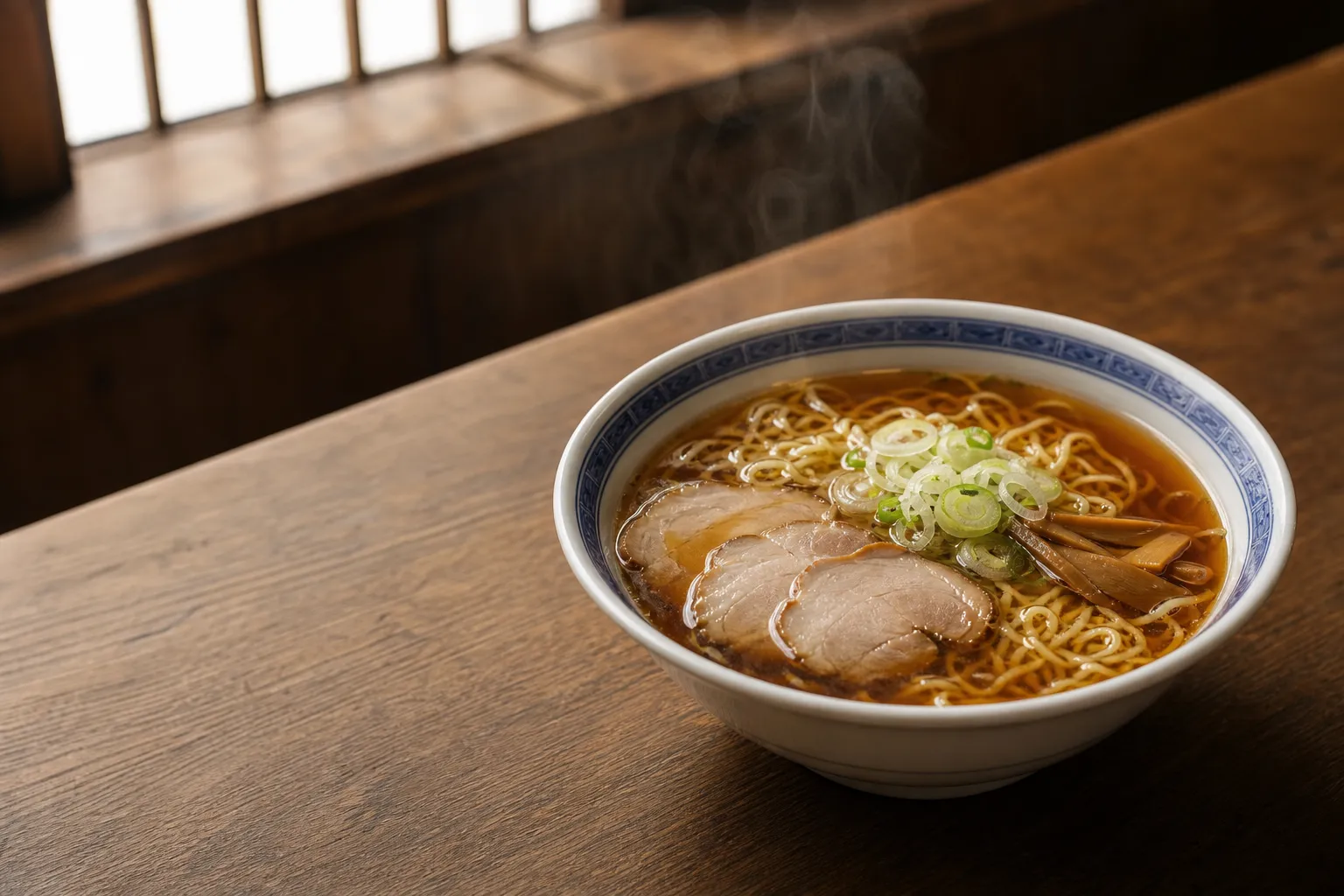
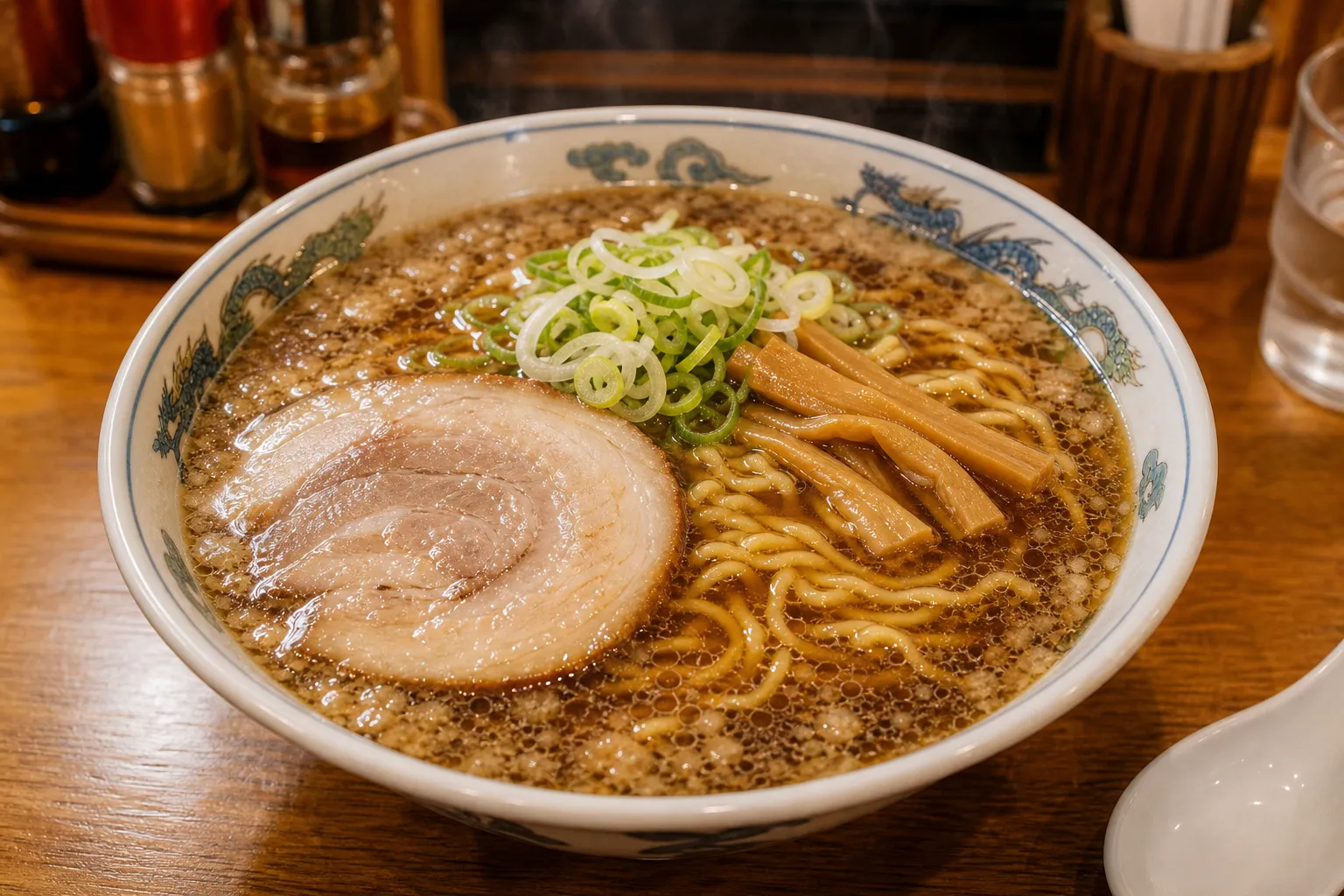
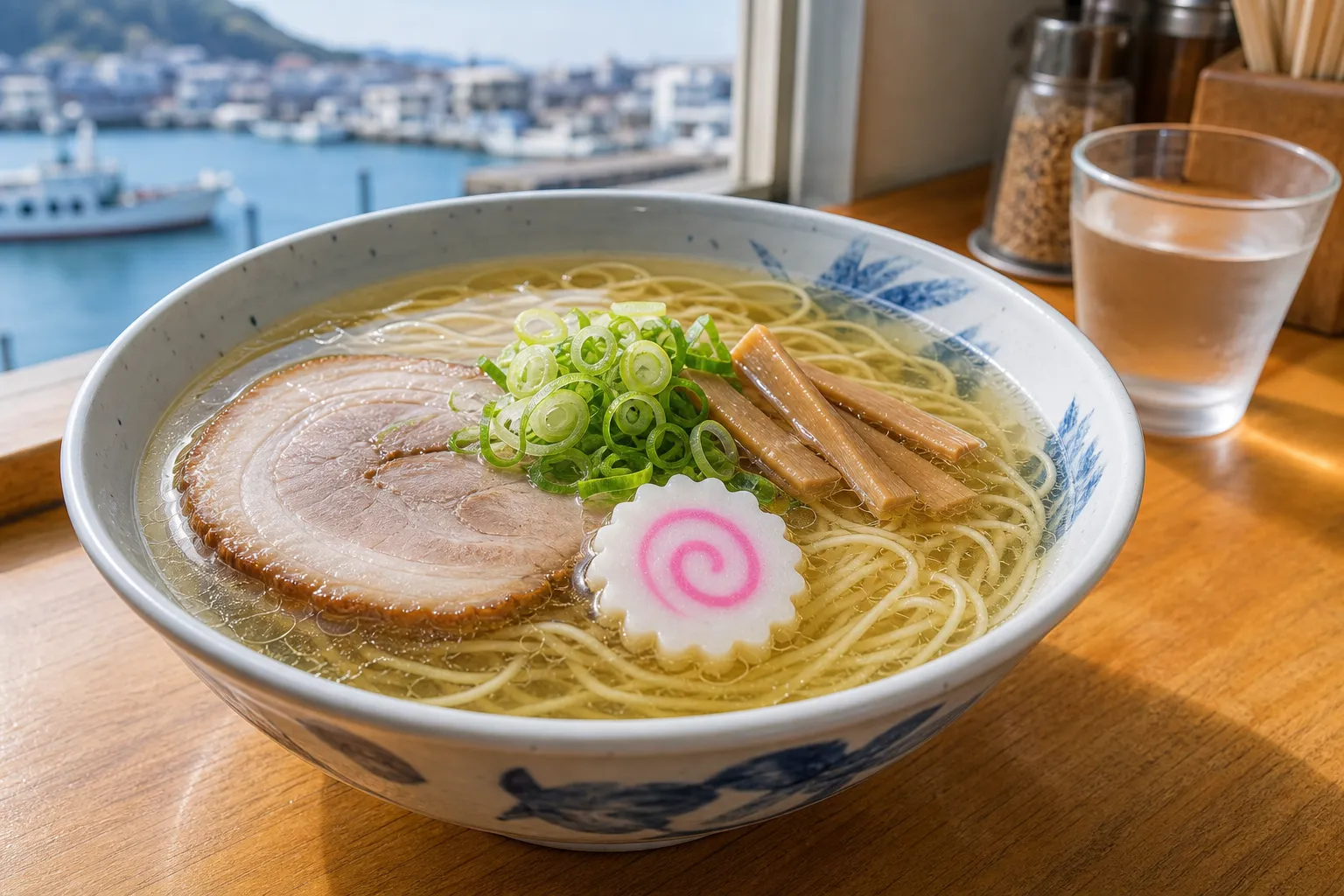
Thin, curly noodles in a soy broth the color of weak tea, in a snowbound mountain town that never got the memo that ramen had to be heavy. Hida-Takayama's quiet, soy-clear classic.
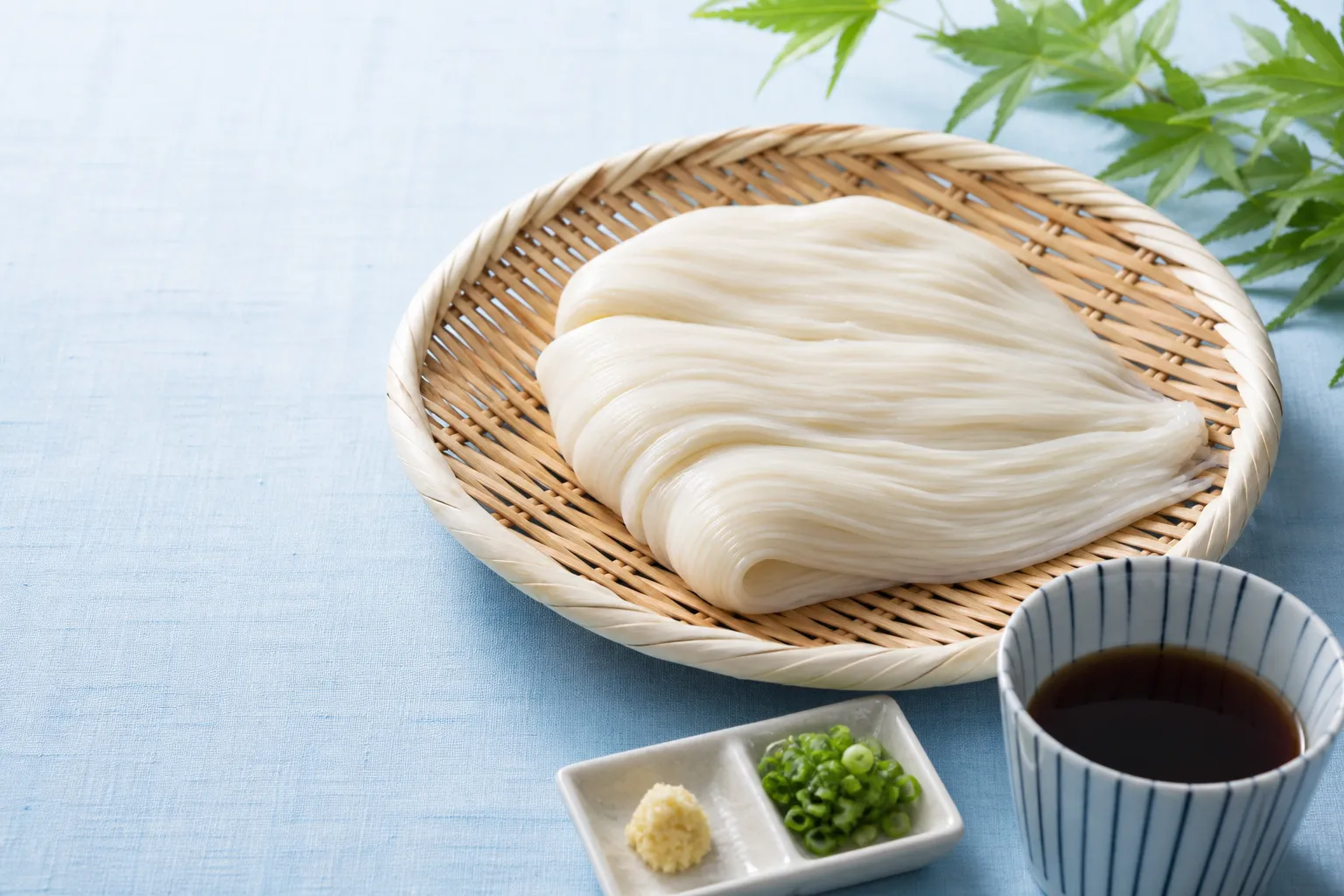
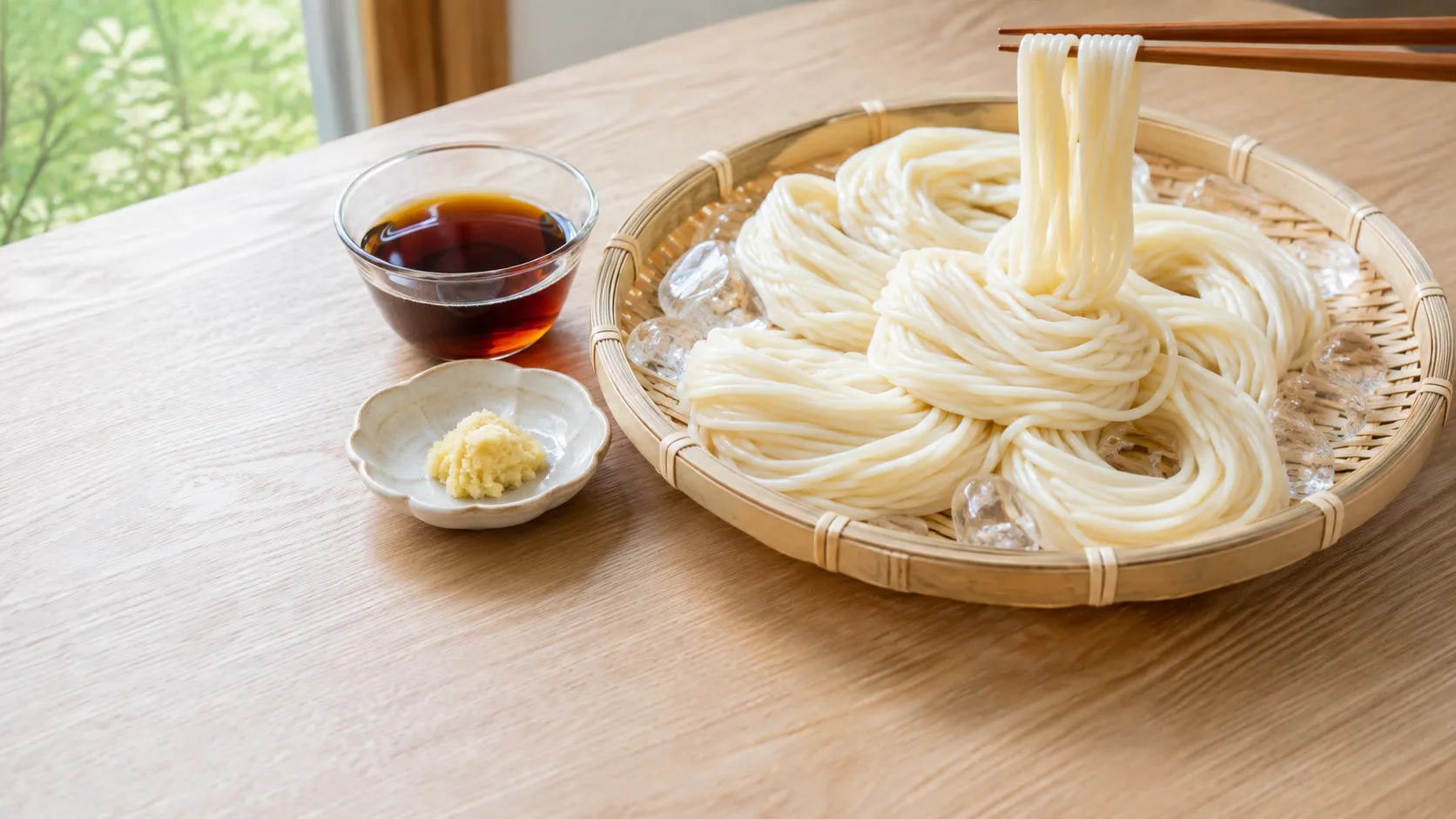
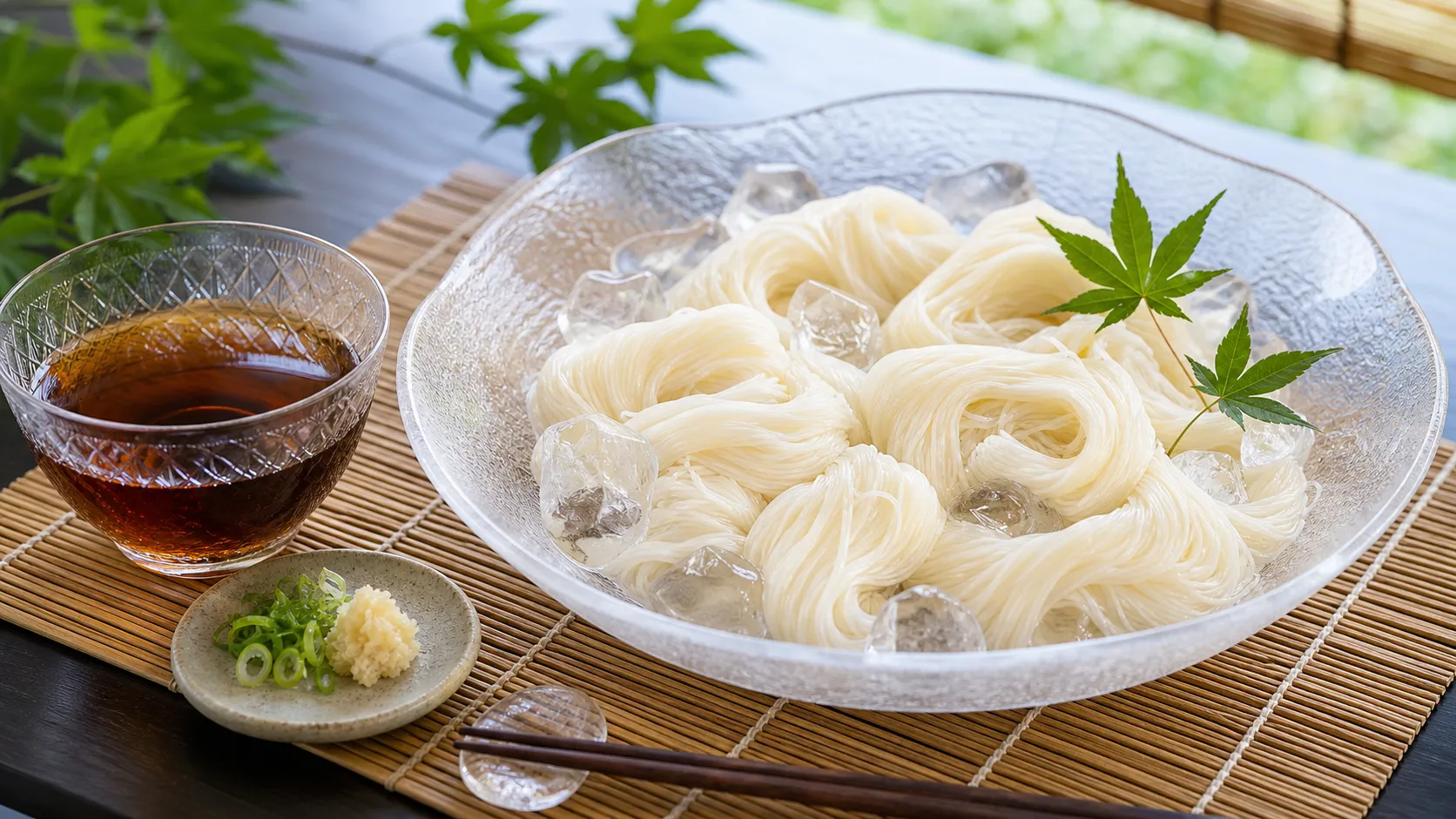
Udon so thin and silky it slips down before you've decided to chew. Three hundred years of hand-pulling, served cold with a dark dipping sauce. The most elegant noodle in Japan.
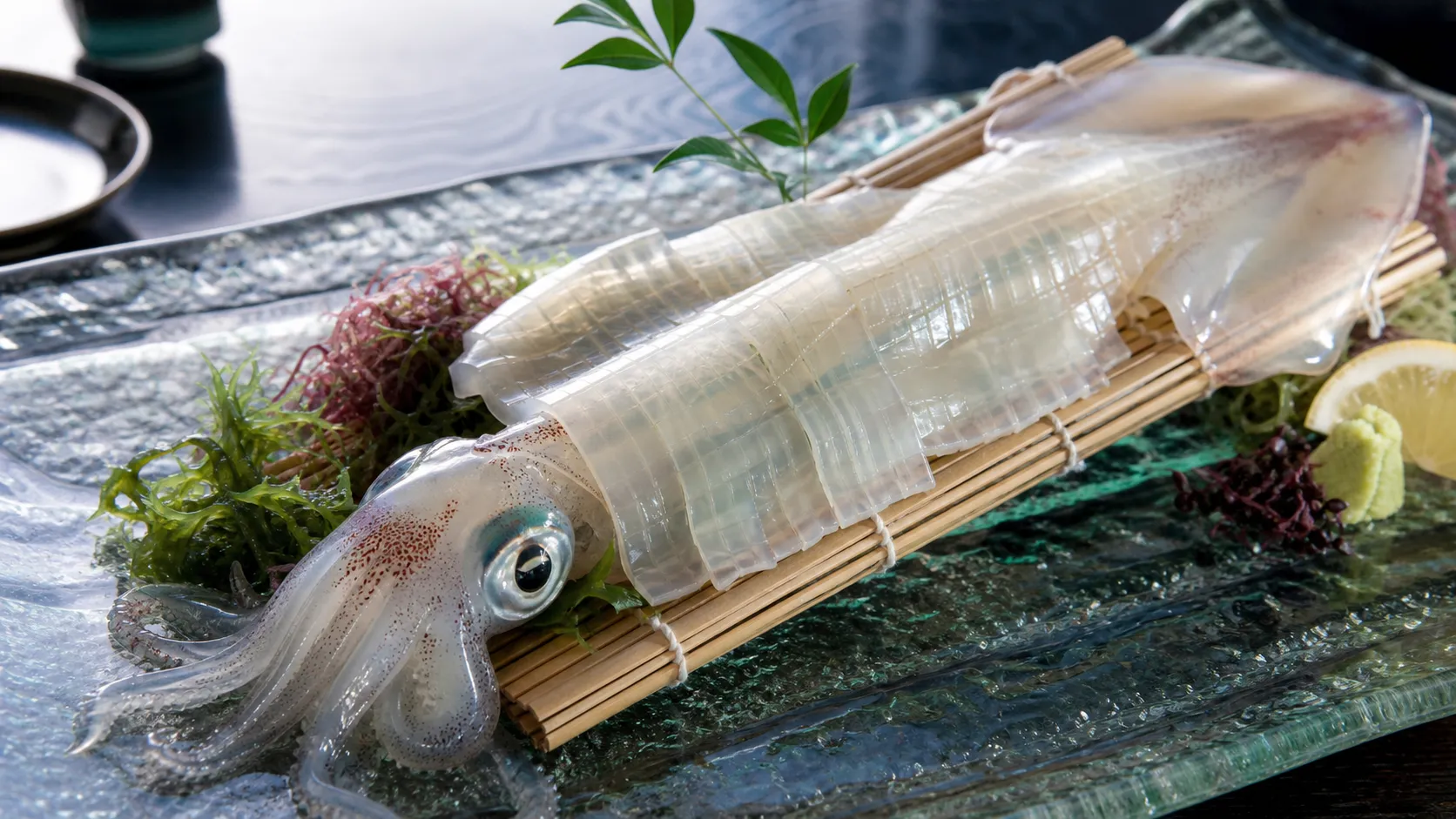
Squid so fresh the body is still glassy-clear and the legs are still moving when it reaches your table — sweeter and cleaner than any squid you thought you knew, at the little port that made it famous.
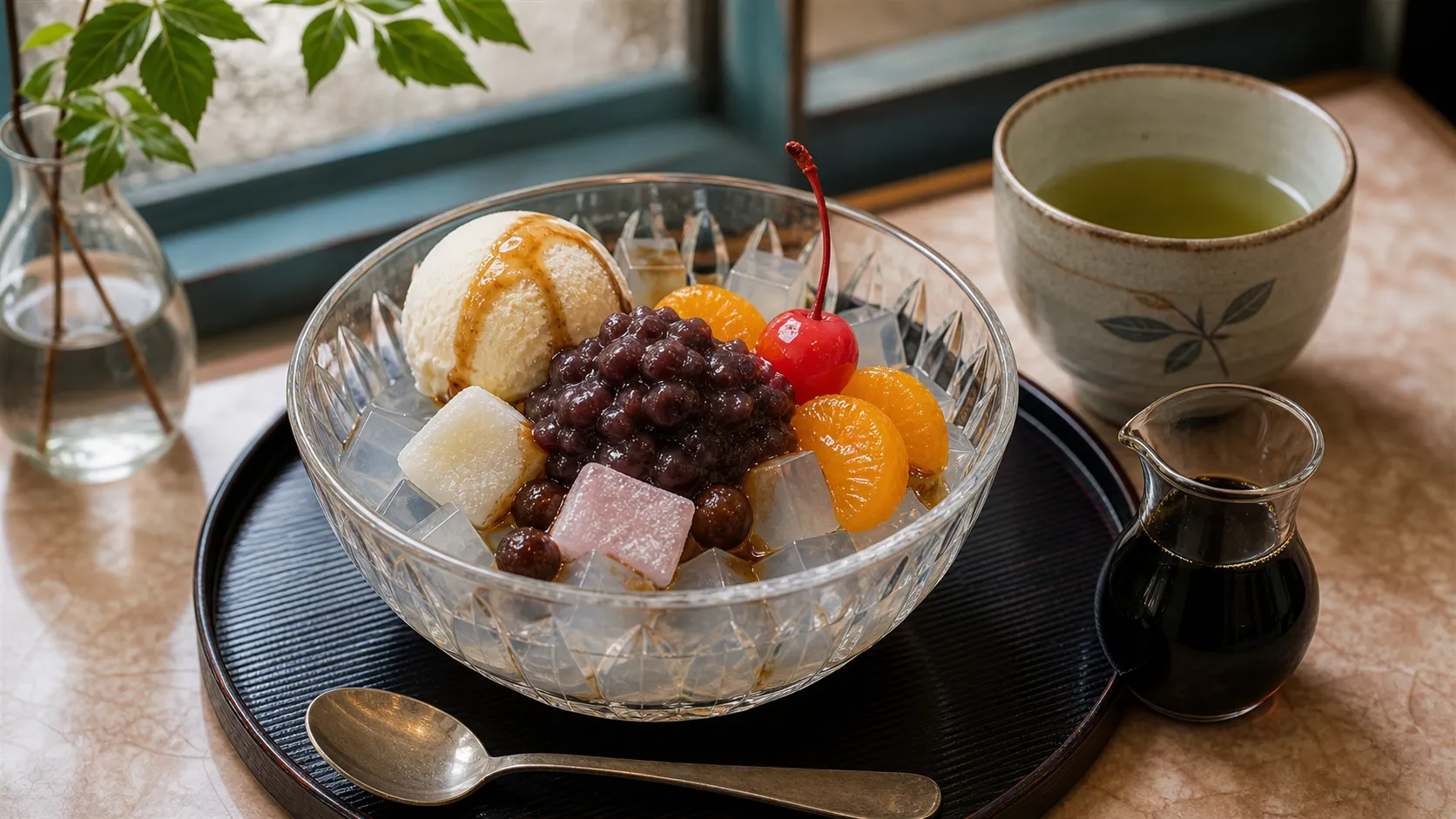
A cool glass bowl of firm agar jelly cubes, sweet red bean, soft mochi and fruit, waiting for you to pour dark sugar syrup over the whole thing — a build-your-own retro parfait that's basically a Japanese sweet-shop in a bowl.
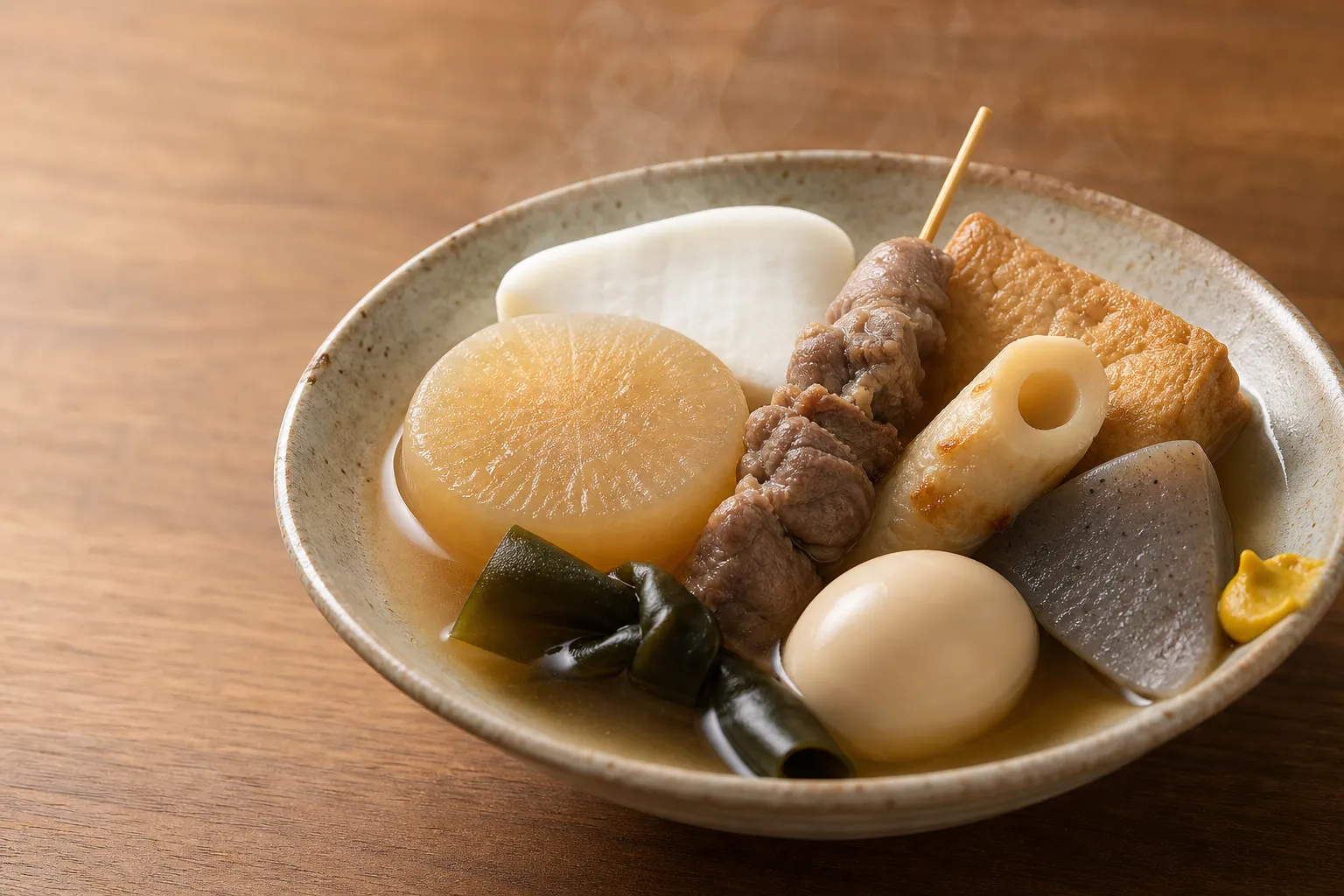
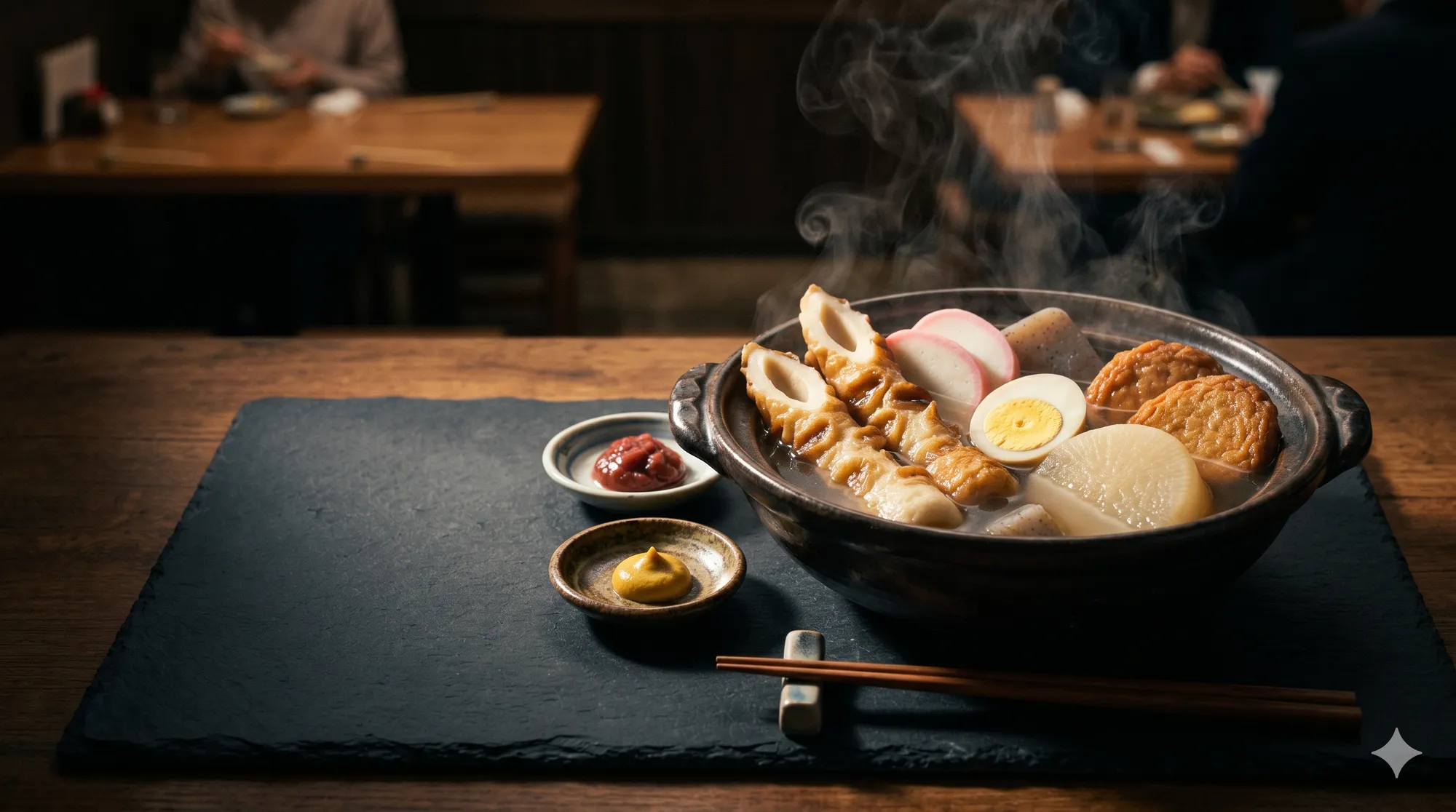
Winter, a convenience store at midnight, and that smell — warm dashi drifting from a steaming tray by the register. Point at a daikon, an egg, a triangle of konnyaku. Cheapest comfort in Japan.
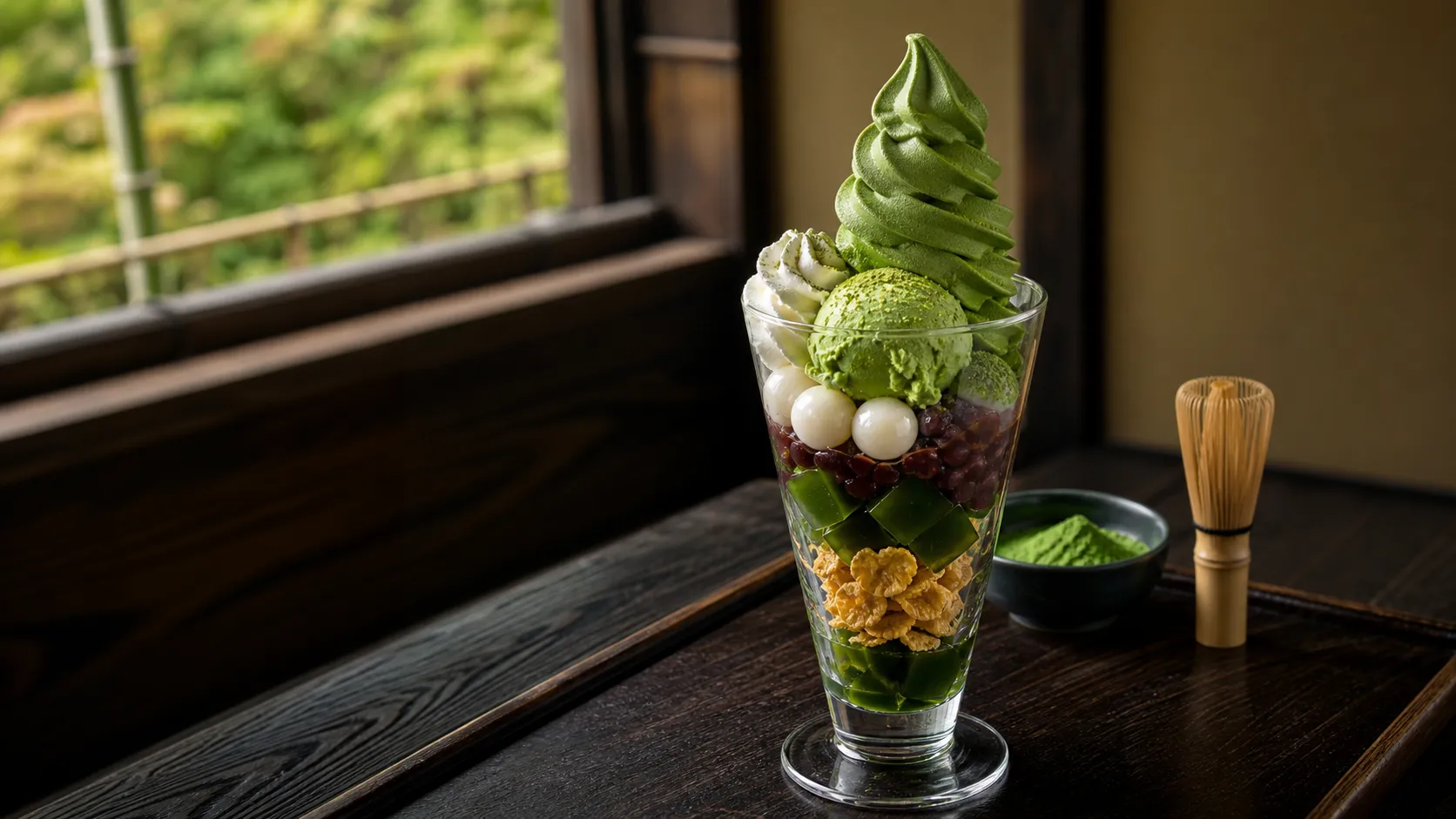
A towering glass of matcha ice cream, soft serve, anko, shiratama mochi and crunchy cornflakes — Japan's most theatrical dessert, and a one-way ticket to matcha obsession.
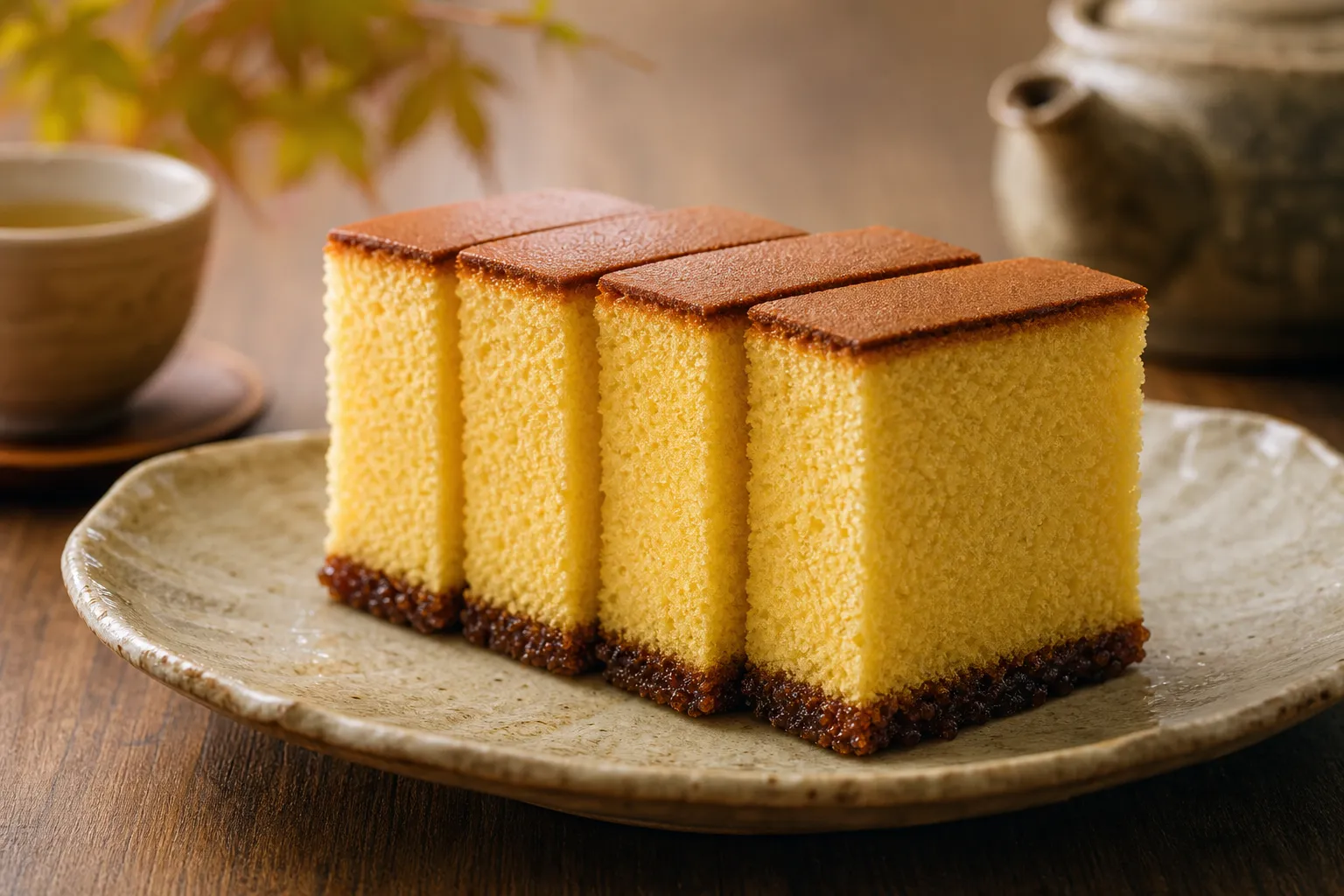
It looks like the most boring biscuit in Japan. Then you bite it and it's soft, and honey-warm, and about four hundred years of Portuguese sailors arrive all at once.
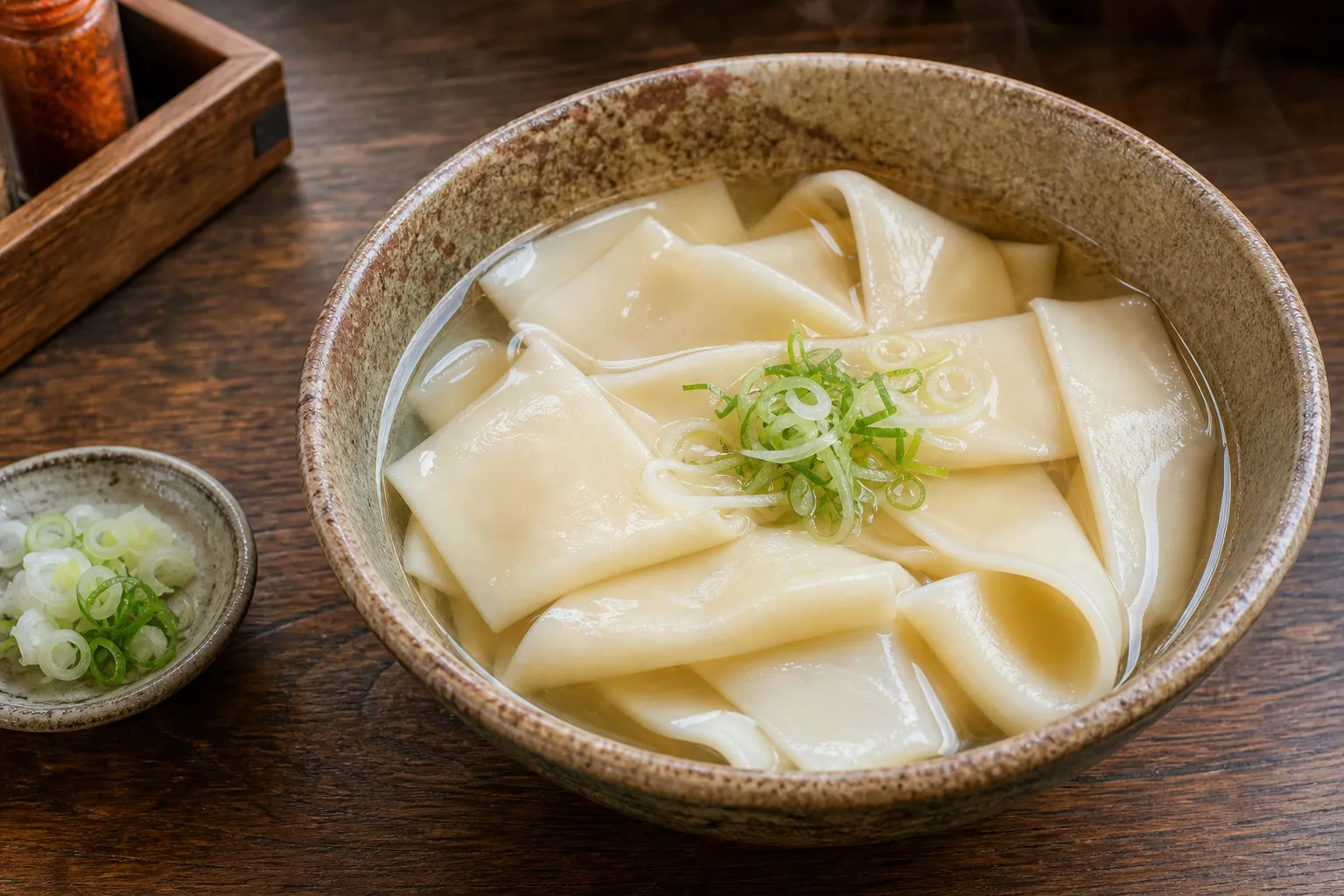
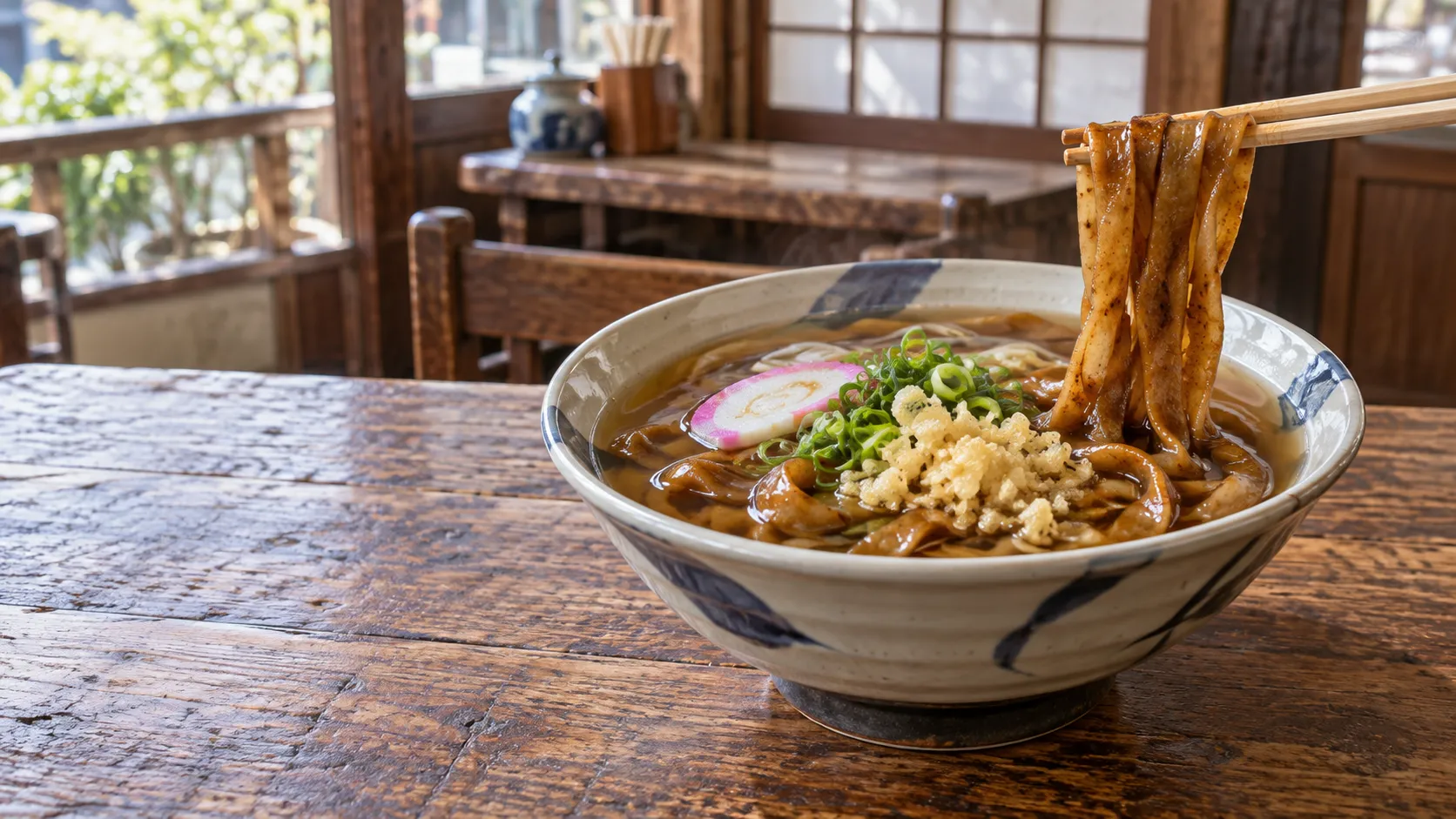
You order udon and the bowl arrives holding what looks like a folded silk scarf. One noodle wider than your hand, slippery and light — you laugh out loud before you even taste it.
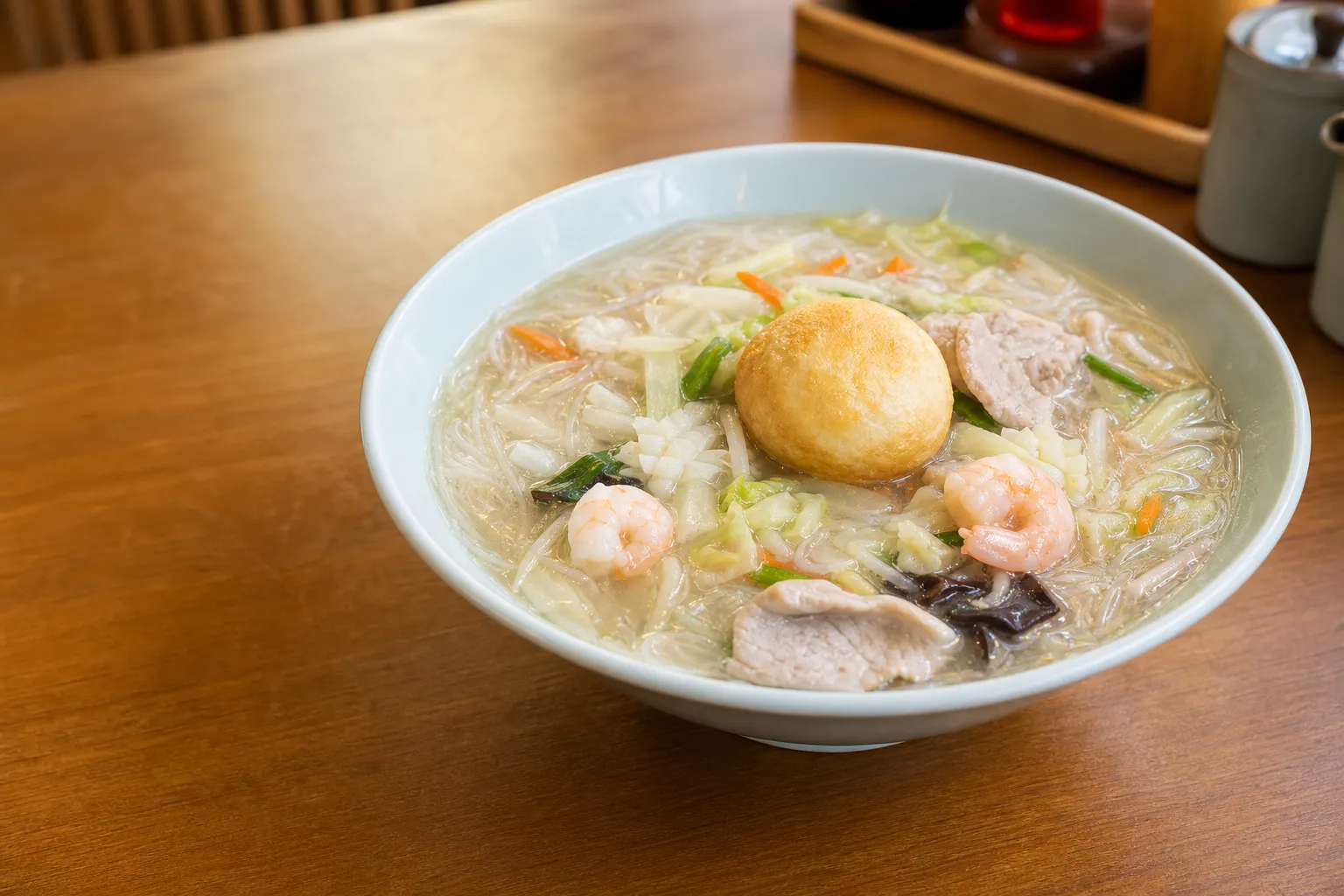
A whole fried egg, golden and round, floating in the middle of a clear soup like it's holding court. I circled it with my chopsticks for a full minute before I dared touch it.
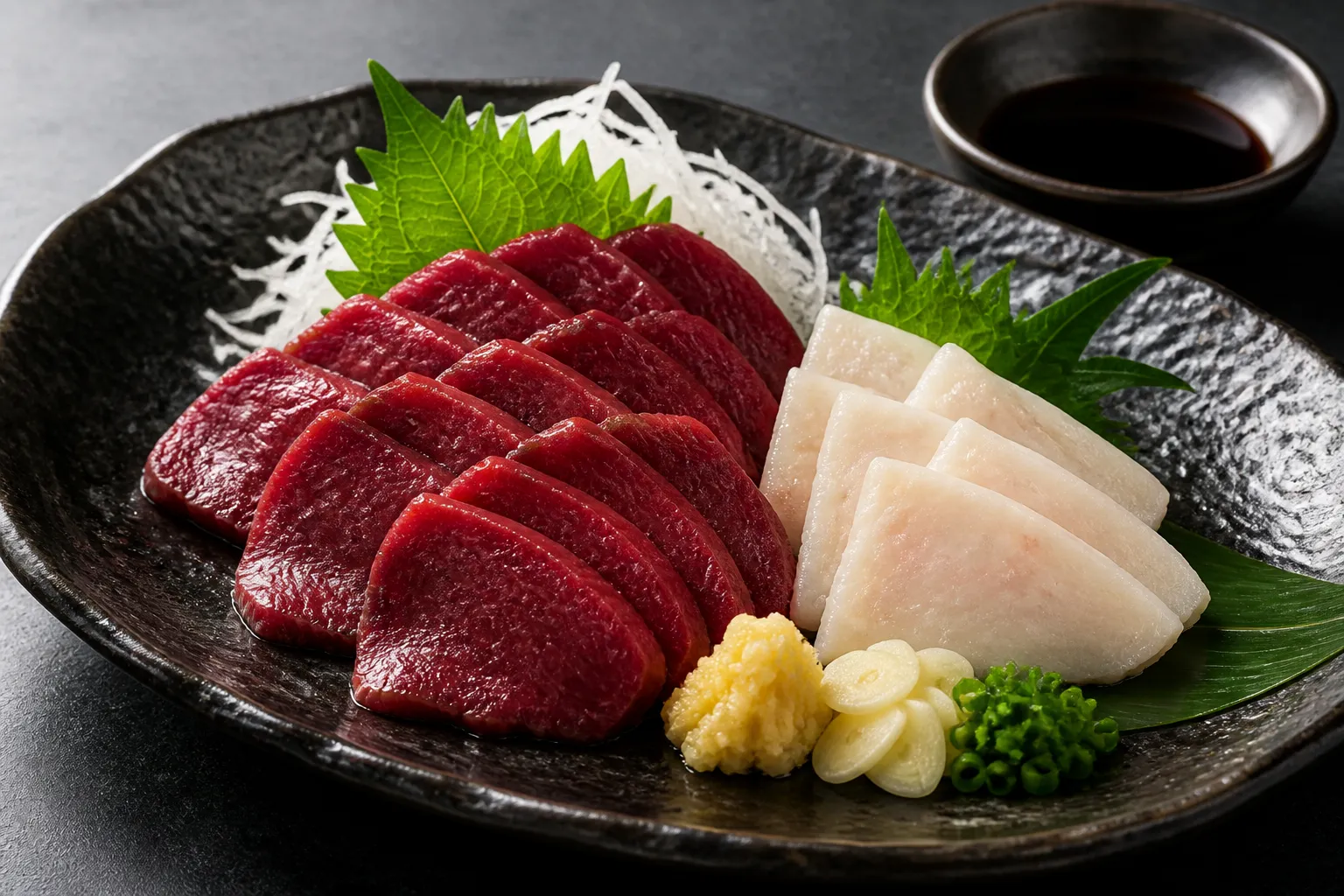
Raw horse meat, sliced thin, eaten with ginger and garlic and soy. Kumamoto's most provocative delicacy. Cleaner than beef, richer than tuna, and once you've tried it, you'll stop being surprised and start being converted.
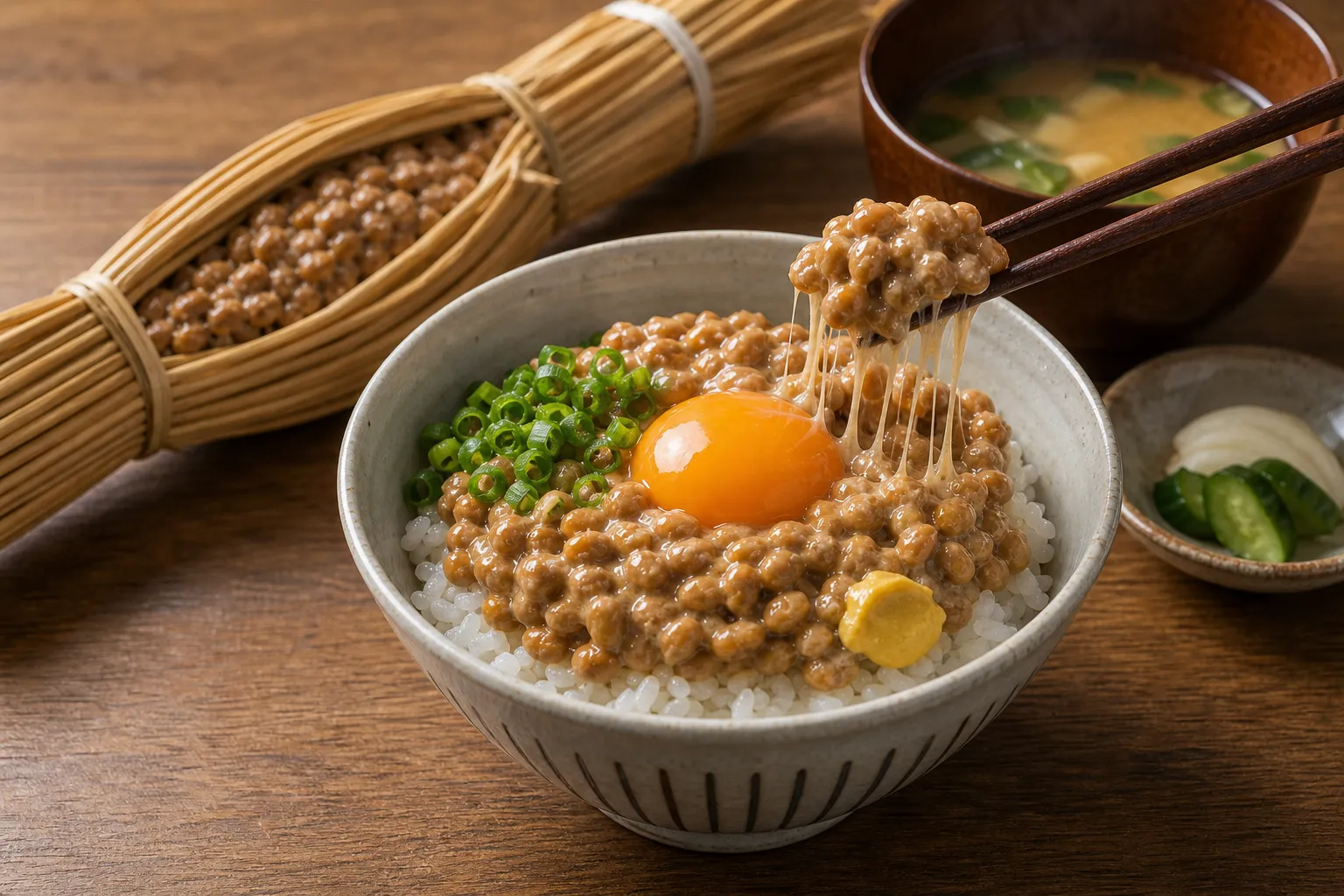
The smell arrives before the beans do. Stir, and the strings pull a foot into the air. This is the food Japan dares you to love — and in Mito, the whole city is on natto's side.
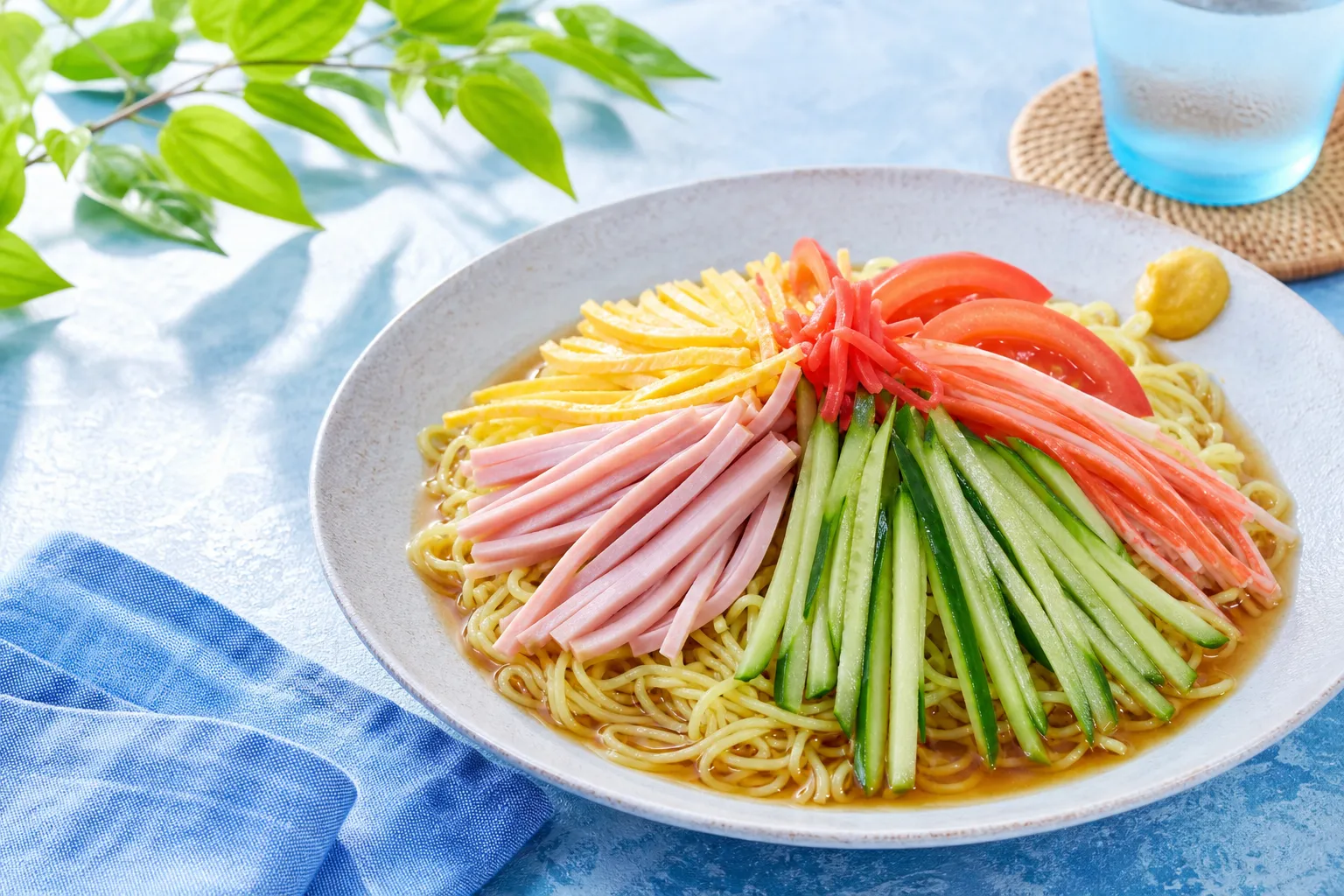
One day it's too hot to even look at a steaming bowl of ramen — and the next, every shop slaps up a banner: cold ramen has started. Summer, in noodle form.
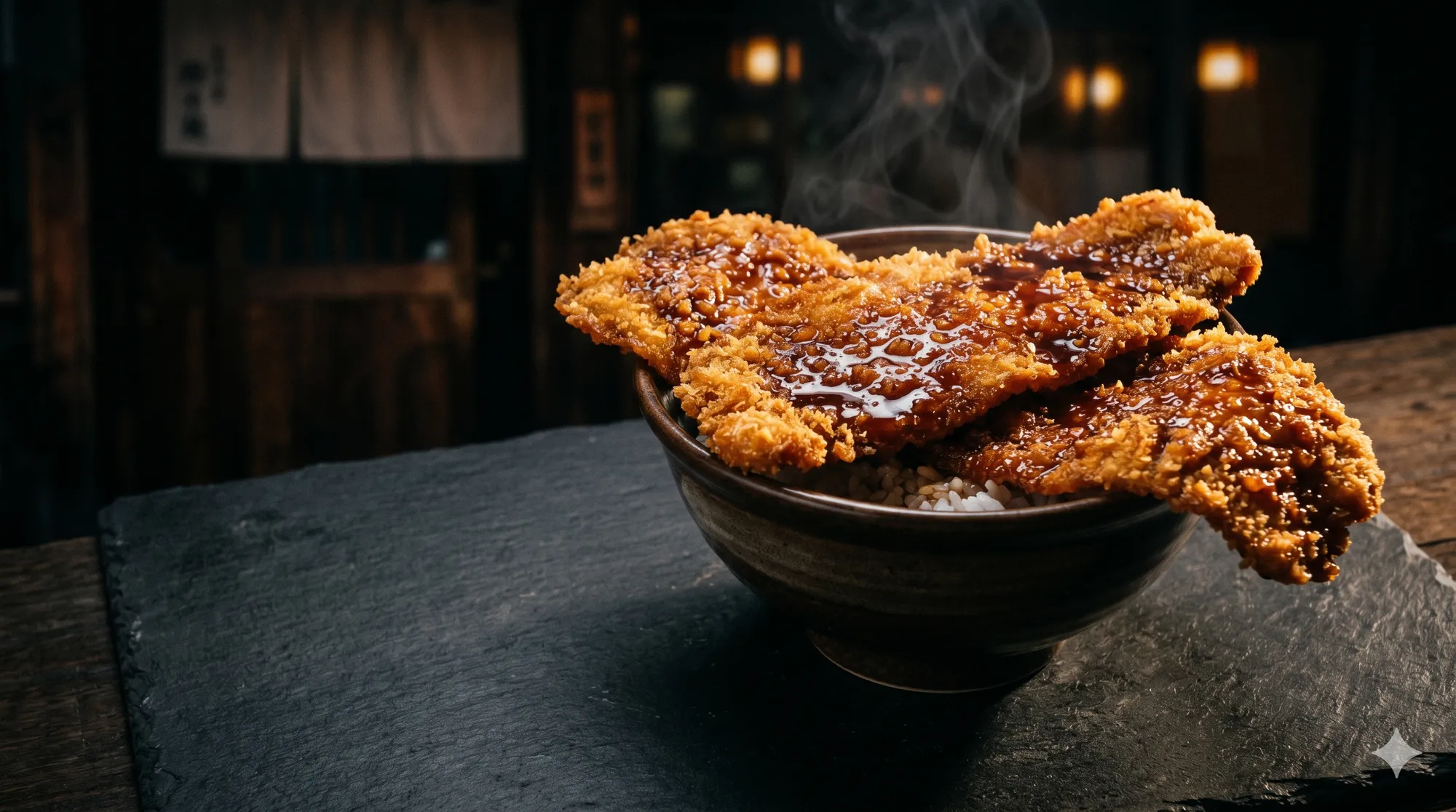
Katsudon with no egg and no dashi — just a crisp pork cutlet on rice, drowned in glossy brown demi-glace like something off a Western diner menu. Okayama looked at katsudon and poured gravy on it, and it works absurdly well.
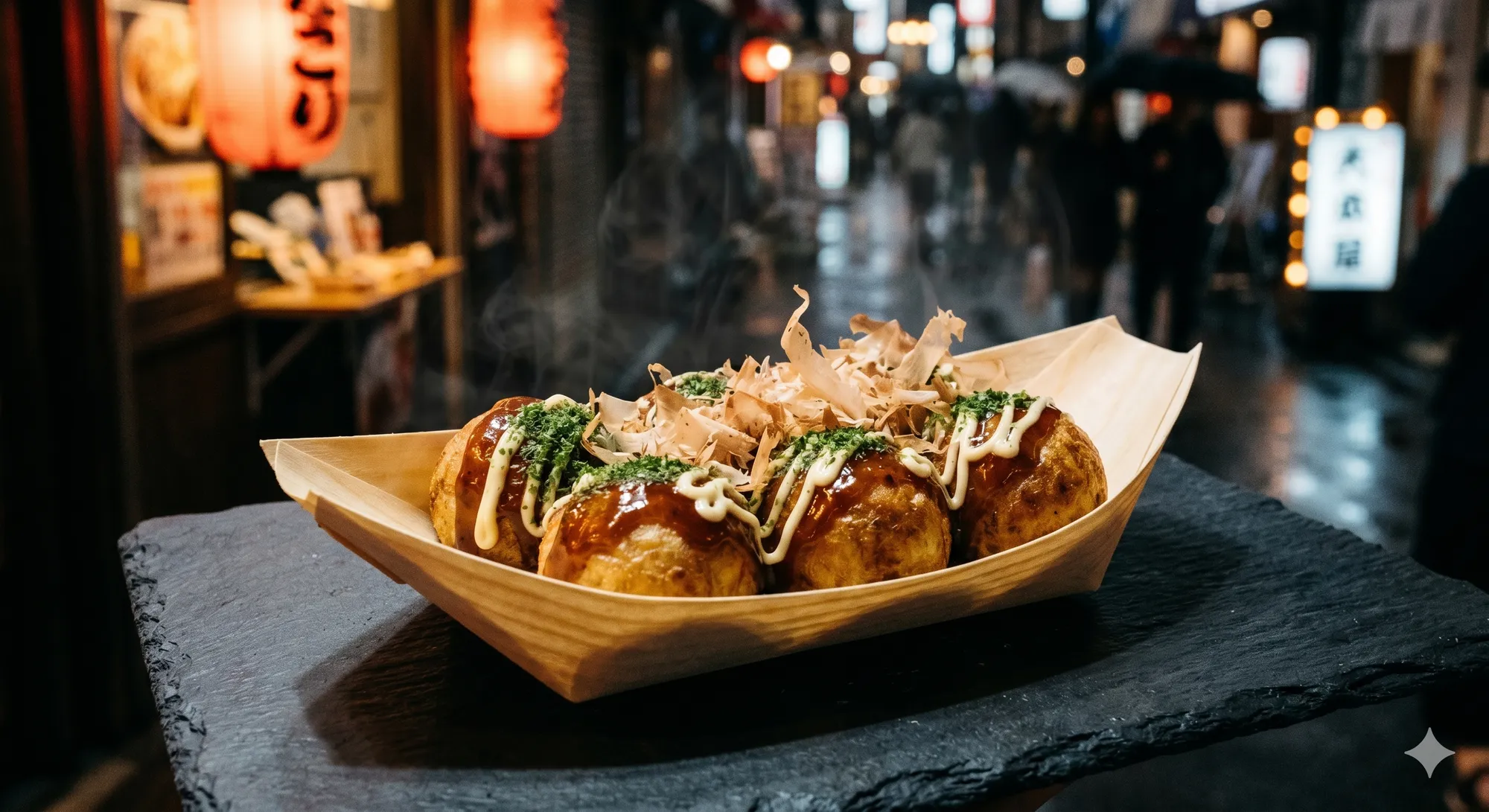
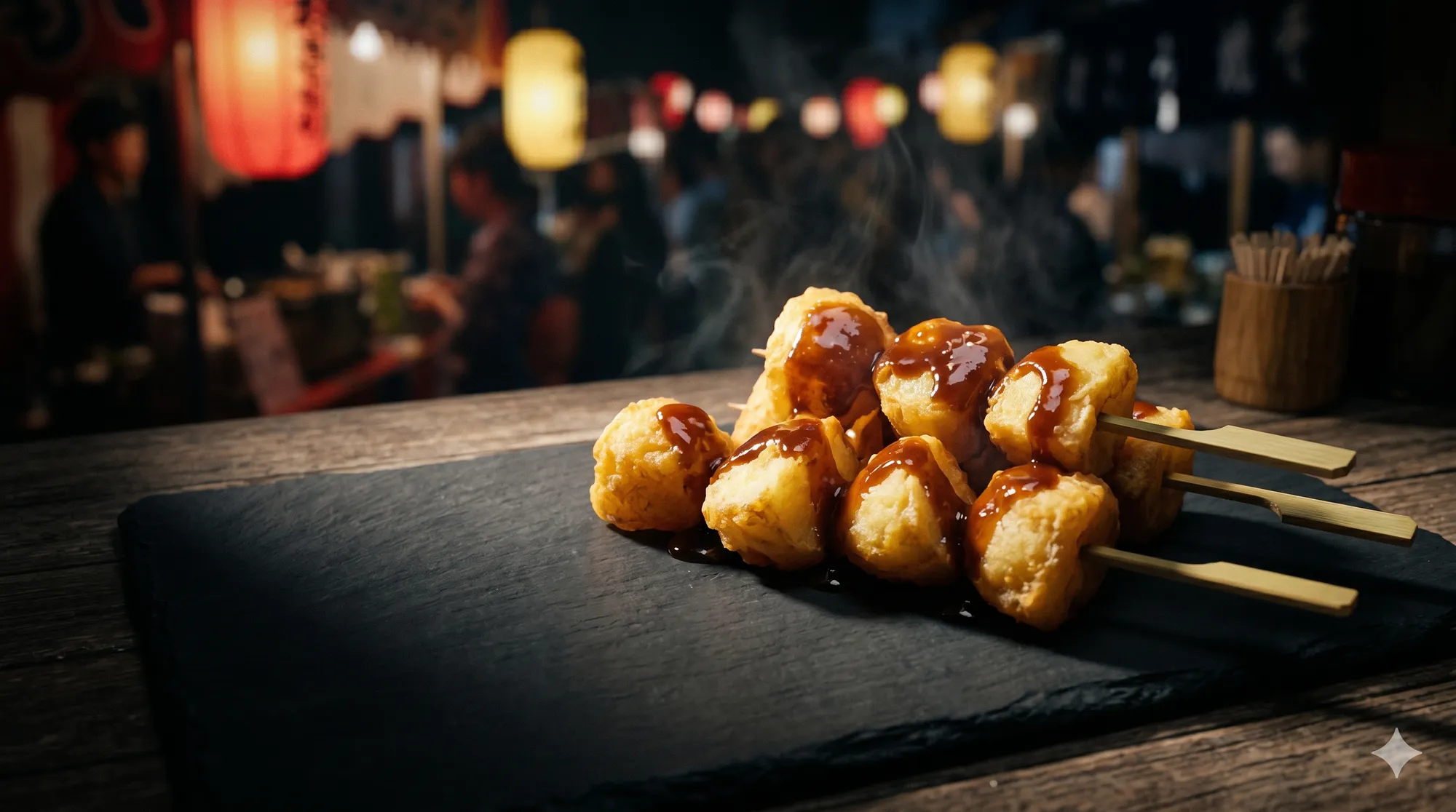
Osaka's molten-hot octopus balls — the one street food everyone slightly gets wrong. Here's the glorious truth, and exactly what to say at the stall.
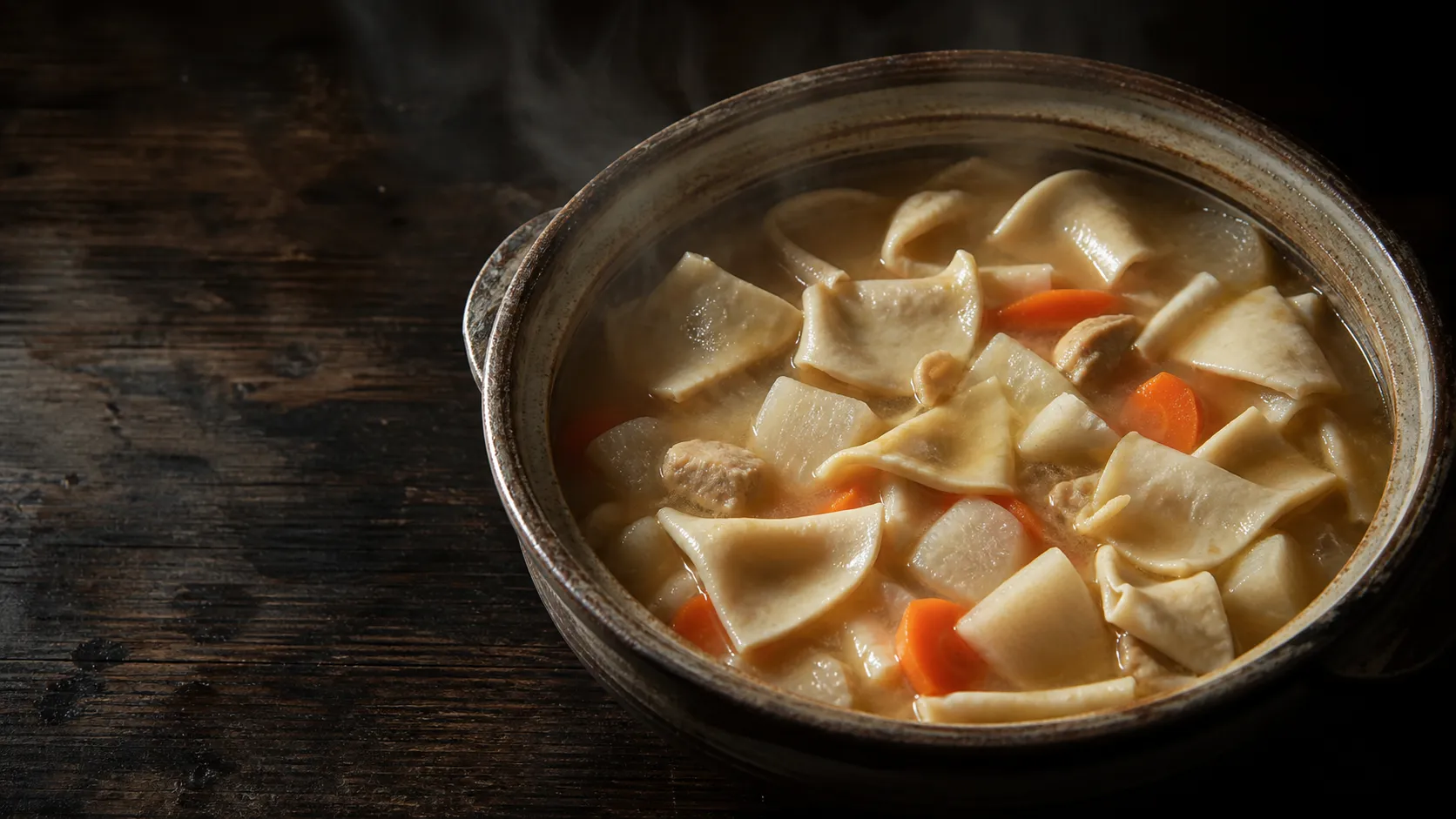
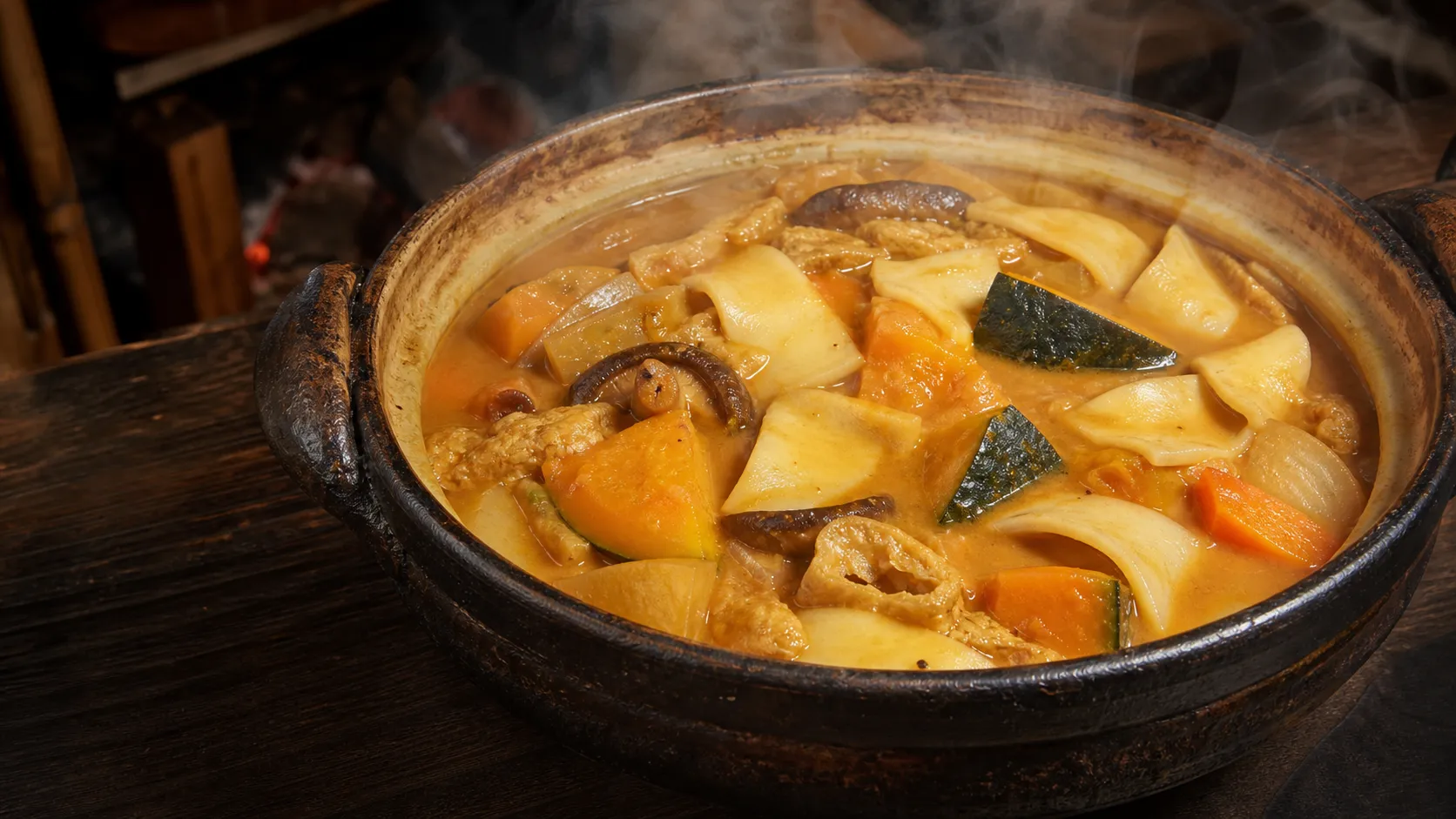
Yamanashi's ancient mountain stew: wide flat noodles made without salt, simmered directly in miso broth with pumpkin until everything thickens into something halfway between soup and casserole. Cold outside. Hot in the pot.
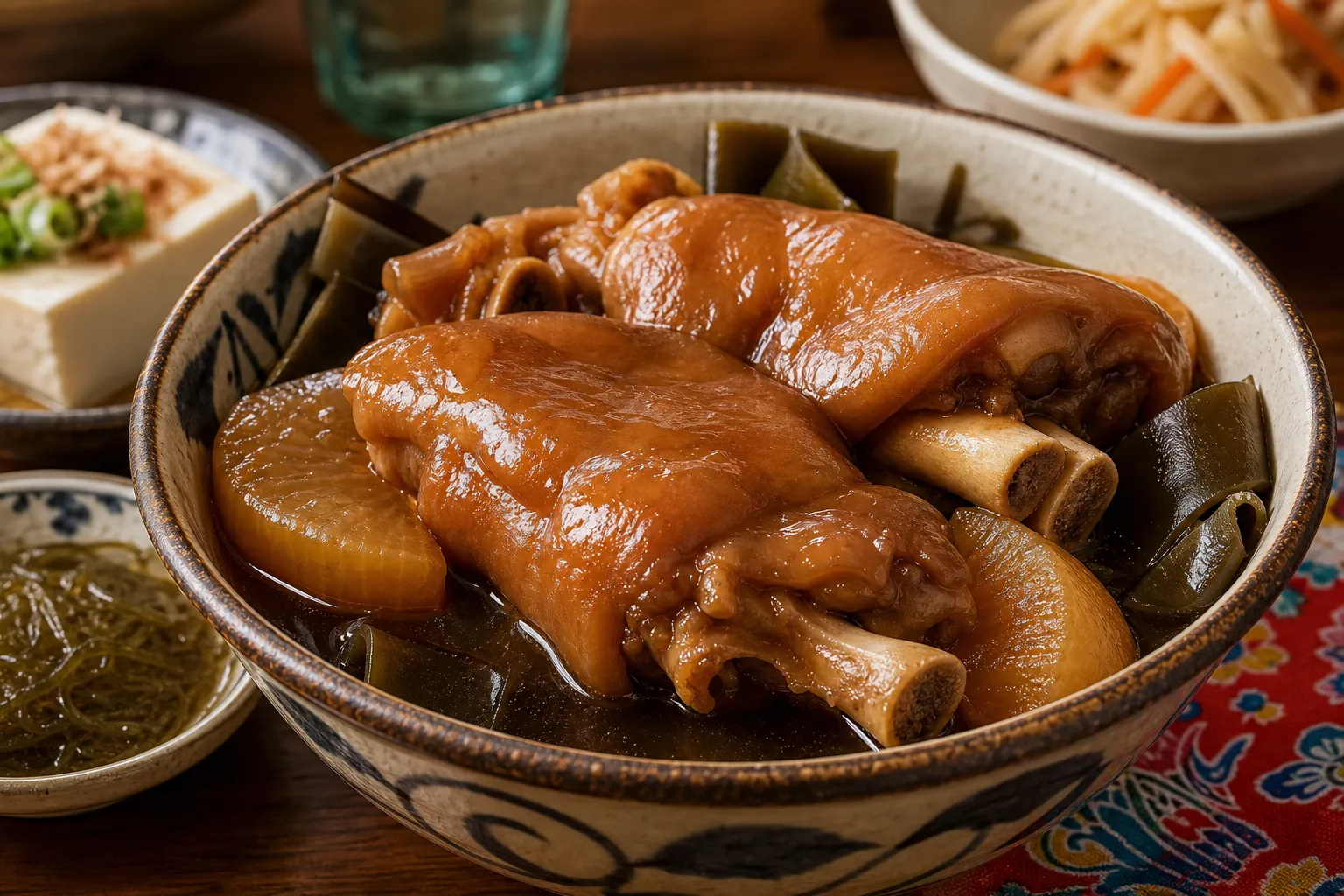
It wobbled when the bowl hit the table — actually jiggled — and I hesitated for one honest second before the first bite dissolved into warm, savory collagen and I understood why Okinawans swear by it.
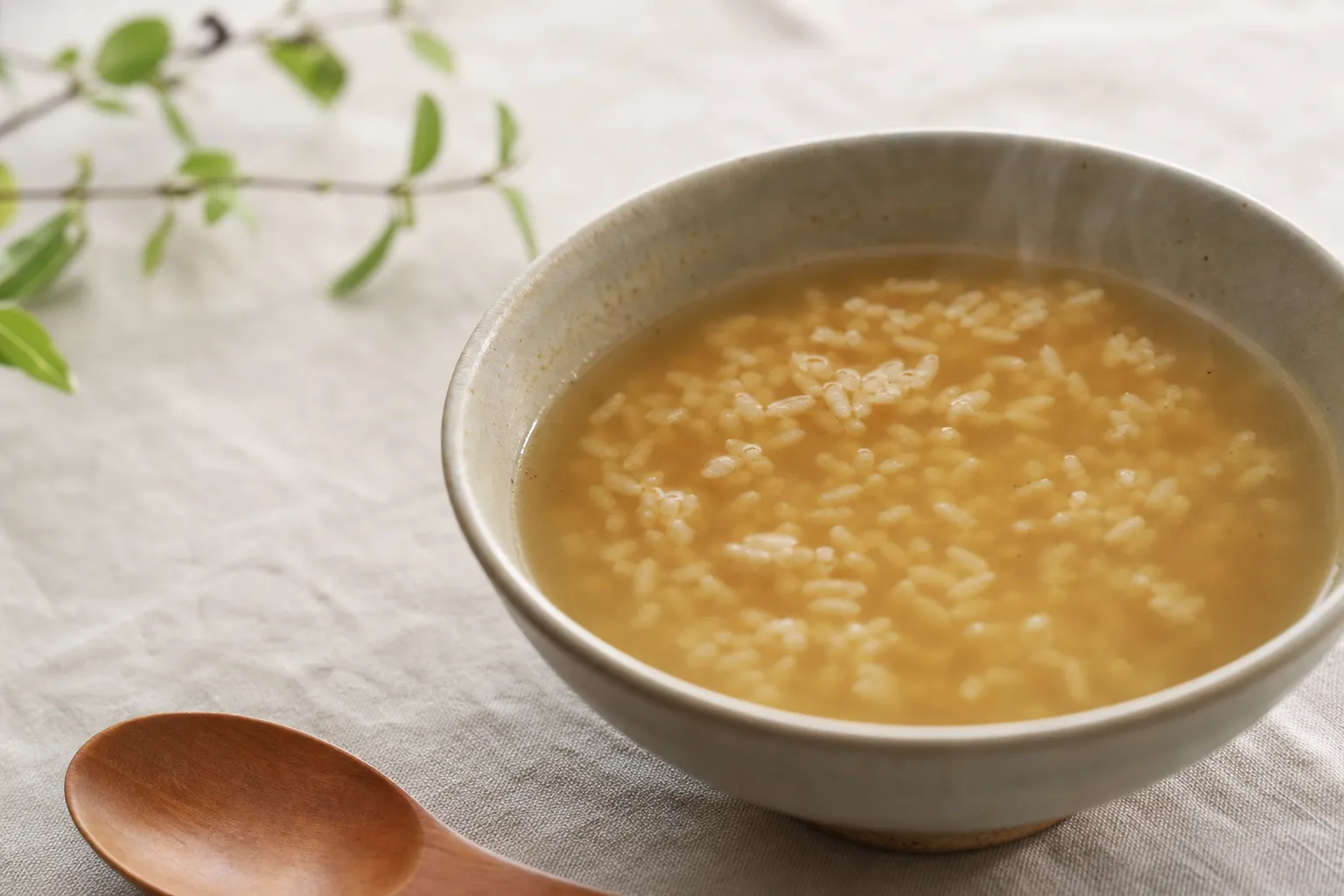
A thin, tea-colored rice porridge so gentle it almost isn't there — Nara has started its mornings with this whisper of a breakfast for over a thousand years.
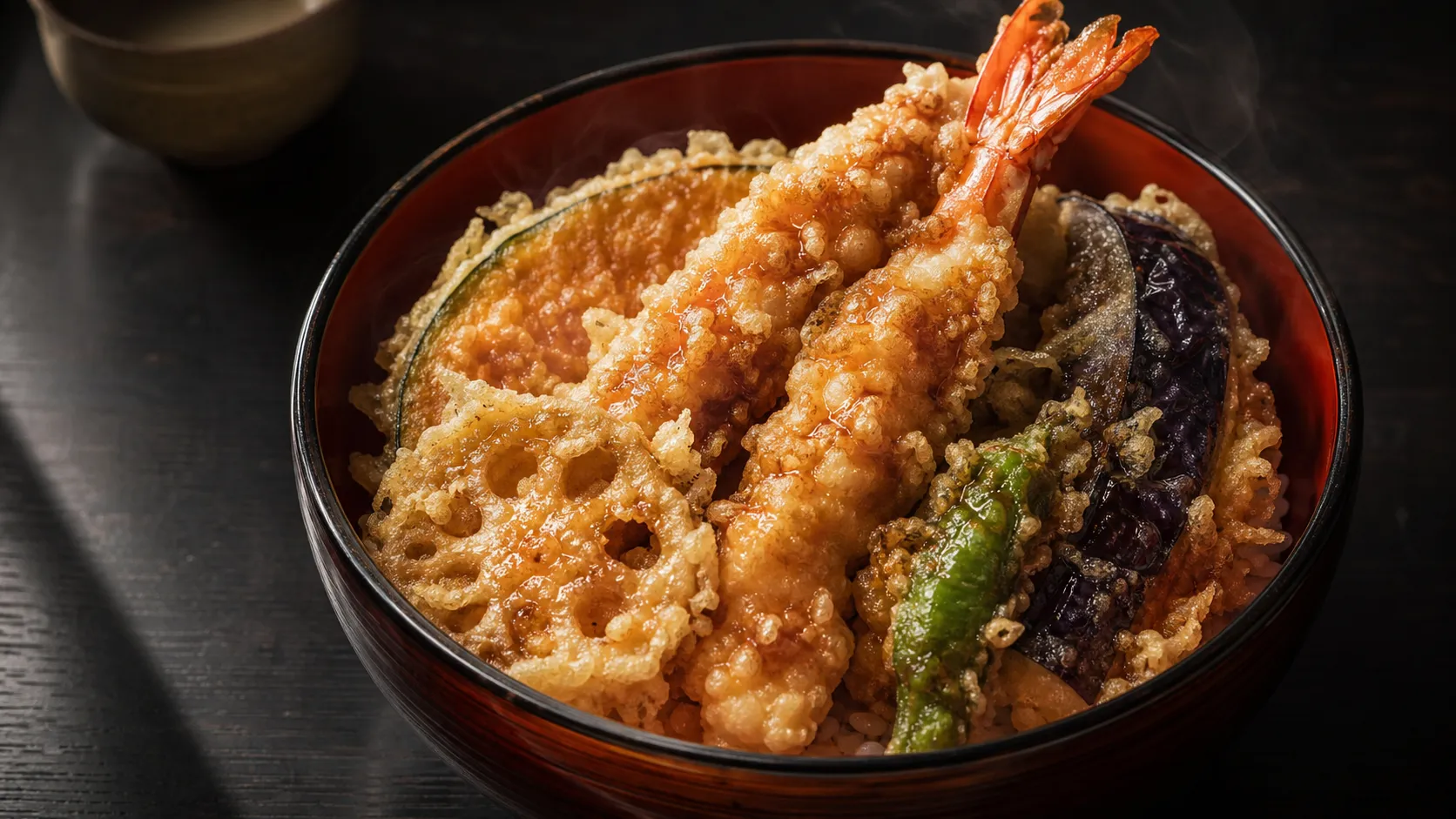
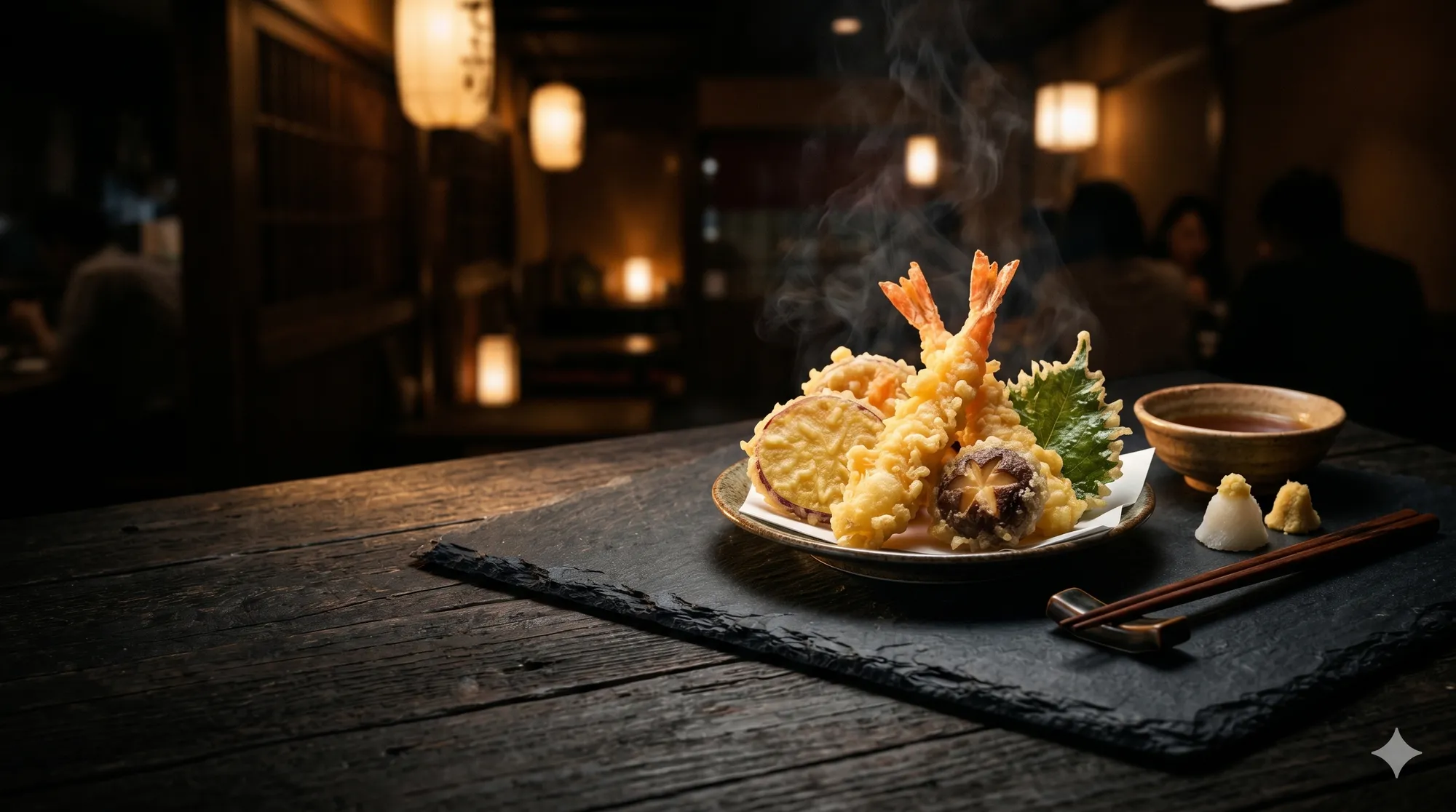
Crispy tempura — prawns, vegetables — dunked in a sweet-savory glaze and piled over rice so the sauce soaks in. Tempura's greedy, glorious rice-bowl form, and a steal at lunch.
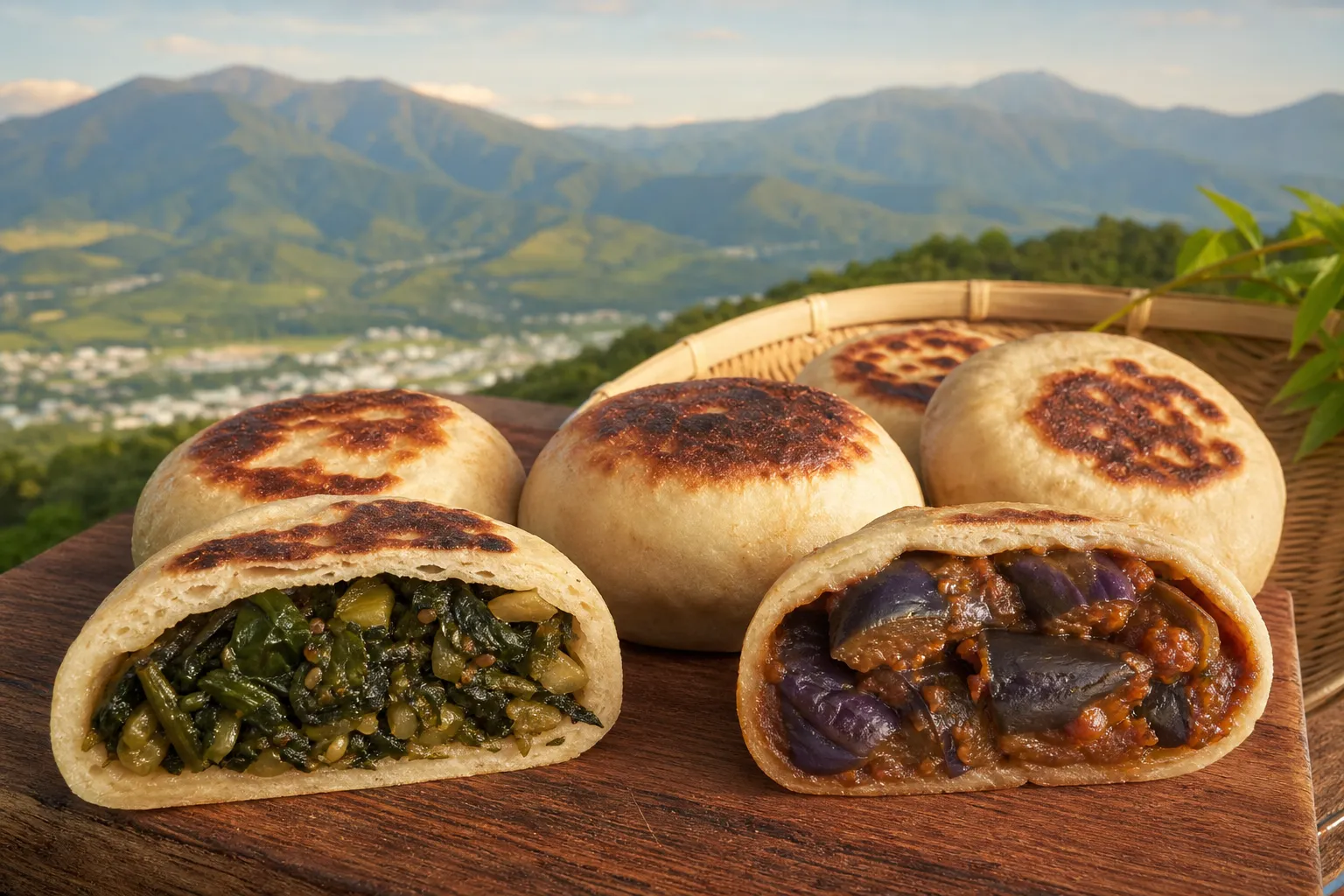
A chewy, lightly charred bun from the Nagano mountains, stuffed with pickled greens or eggplant miso instead of anything sweet. Farmhouse food that tastes like a cold morning by an irori hearth.
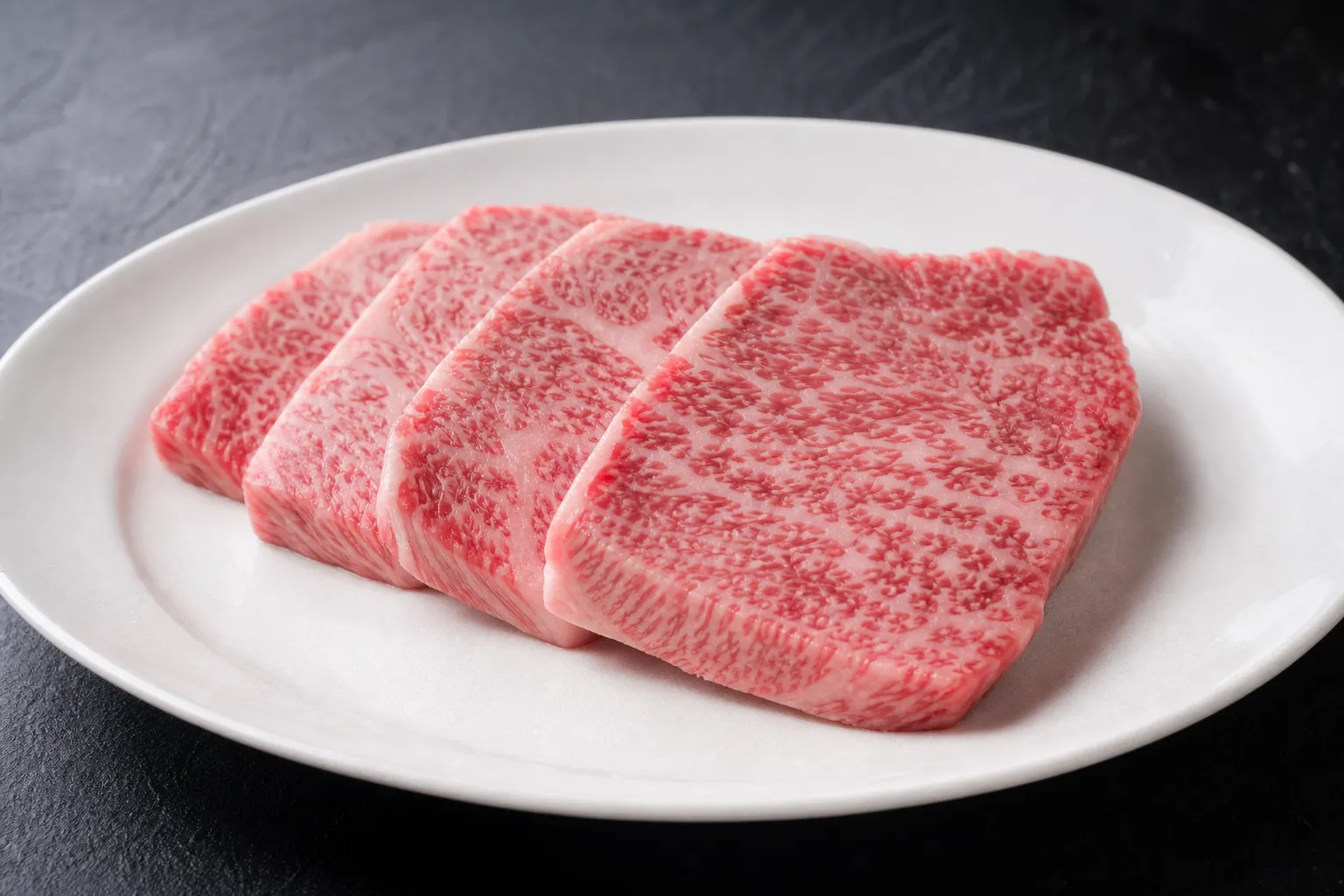
Four slices of raw beef on a plain white plate looked less like dinner and more like marble sculpture — and it turns out the fat is so fine it starts melting from the warmth of your fingers alone.
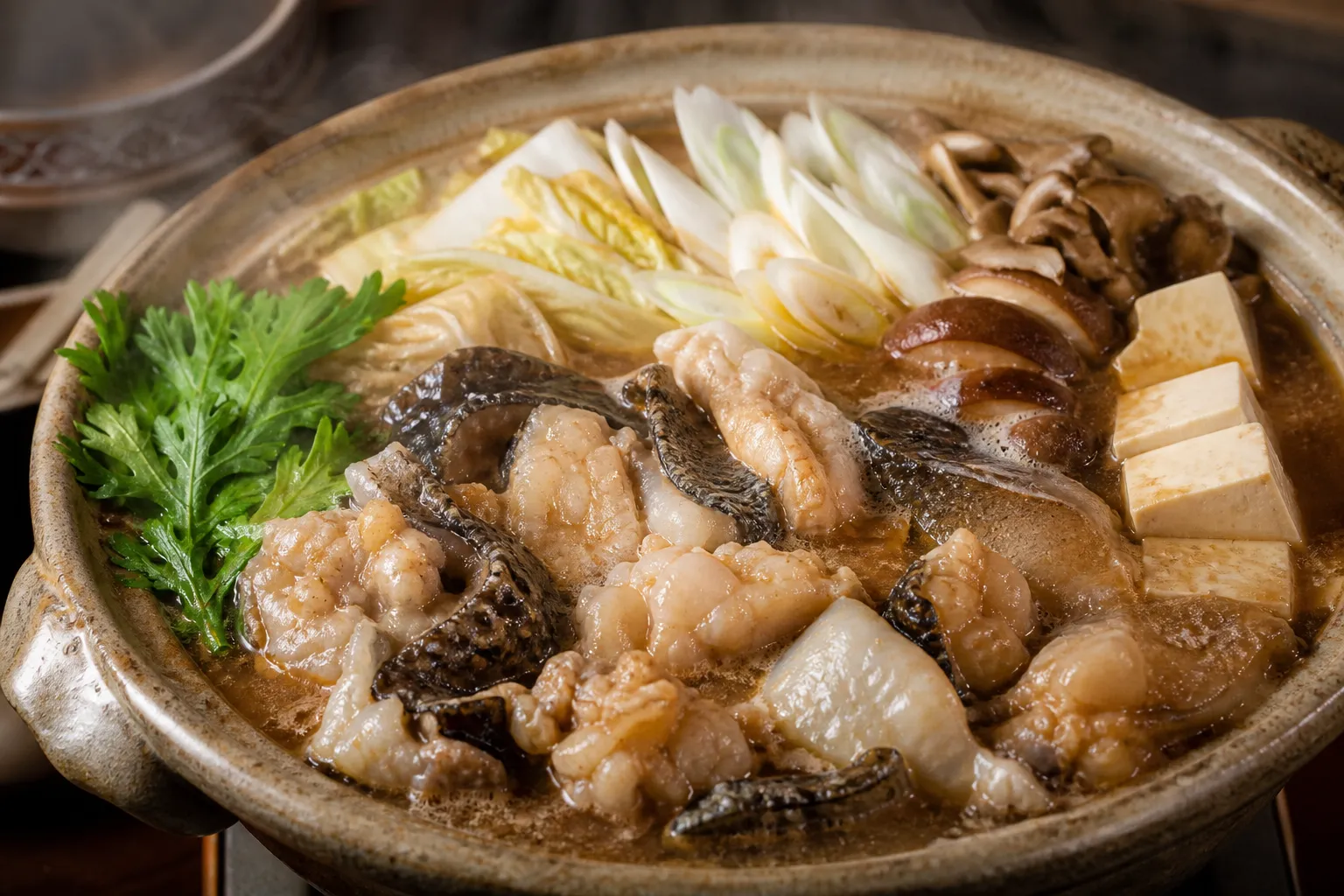
One of the ugliest fish in the entire ocean somehow makes one of the best winter pots in Japan — and the secret weapon is its liver, melted straight into the broth until the whole thing turns rich enough to make you gasp.
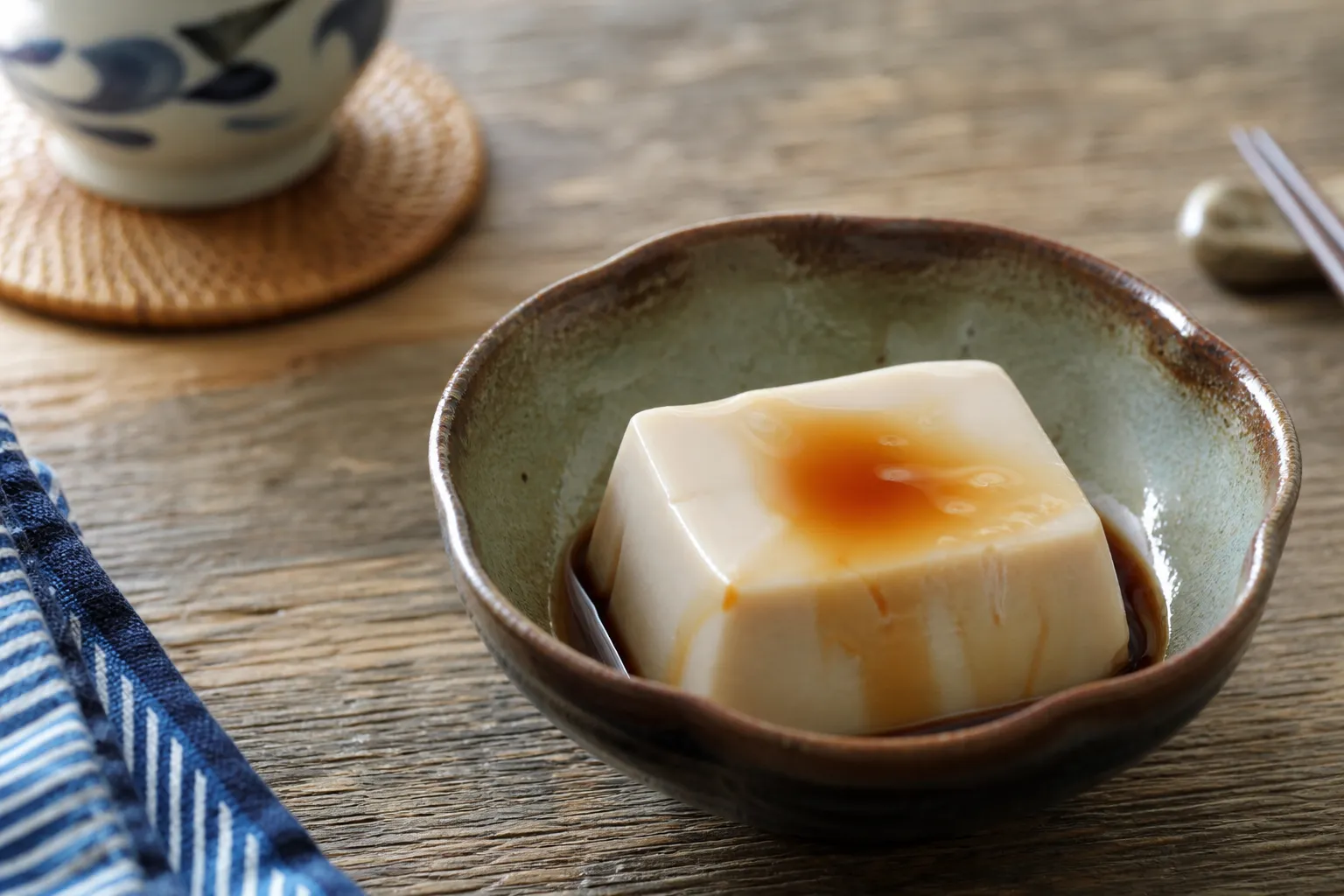
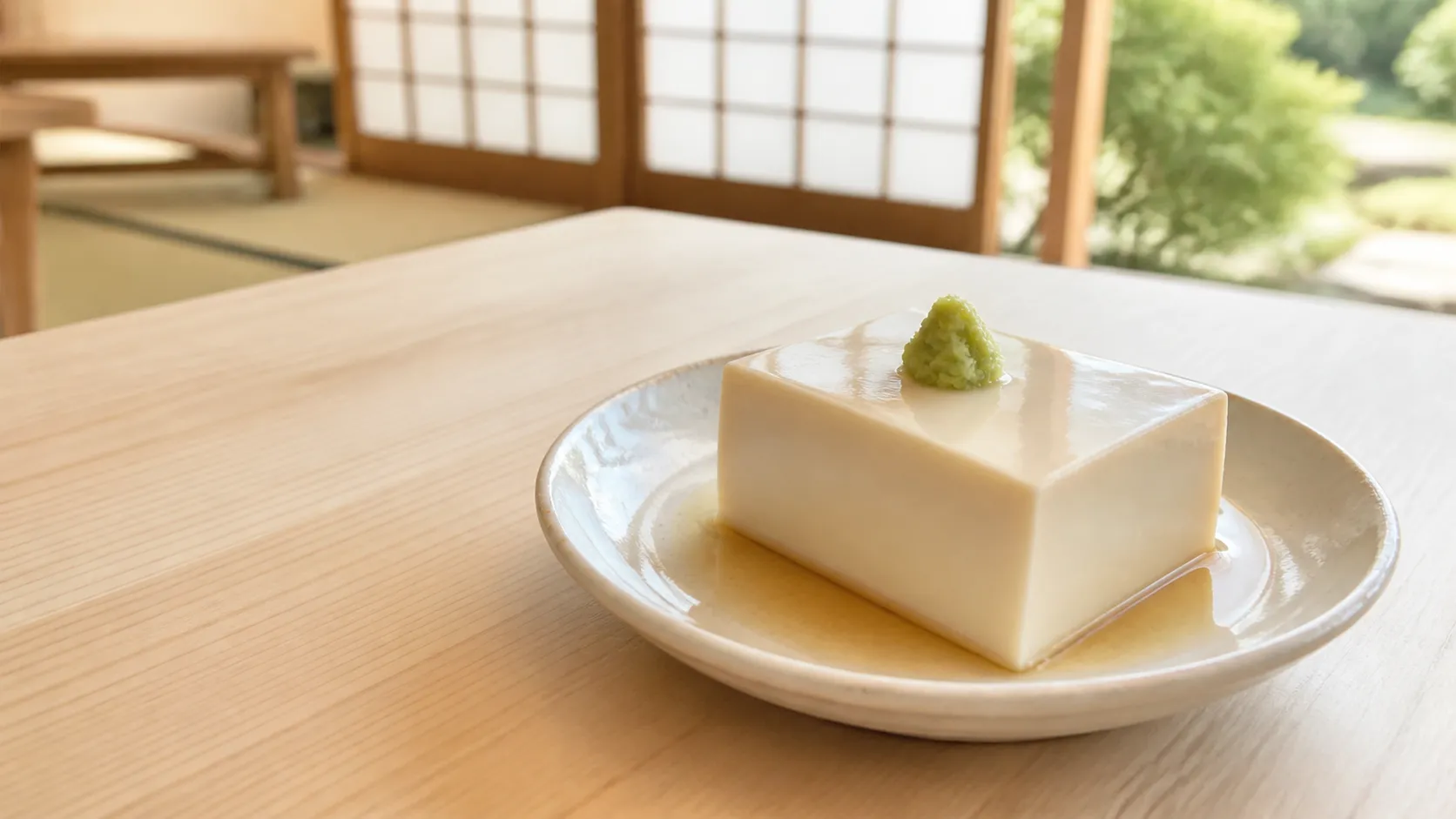
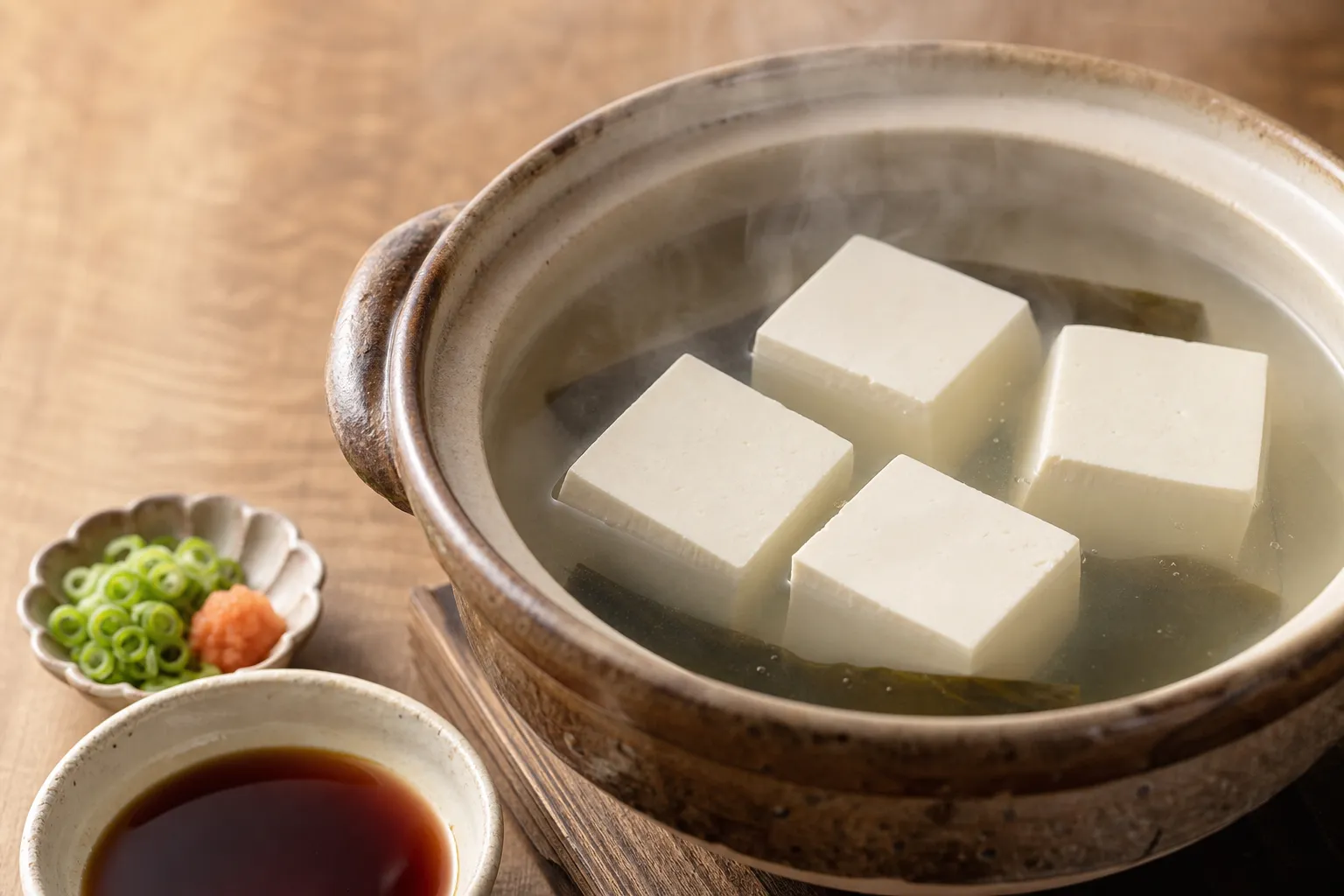
A pot of hot water, some blocks of tofu, and somehow that's the whole meal — and somehow that's exactly the point.
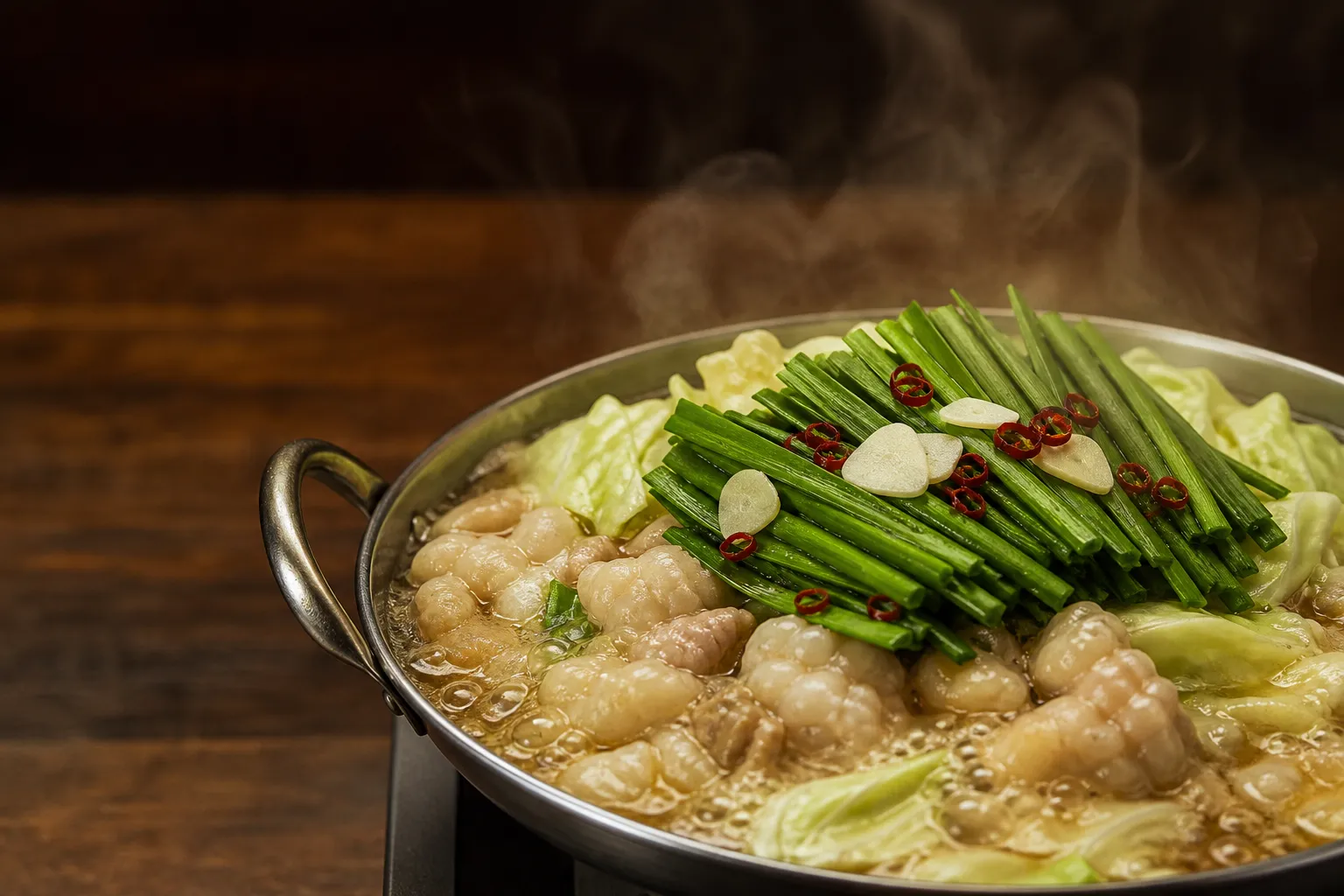
Soft, clean, and drowning in garlic and chives — Hakata's offal hot pot turns the scariest thing on the menu into the best. A steamy communal pot that makes a table of strangers feel like old friends by the last spoonful.
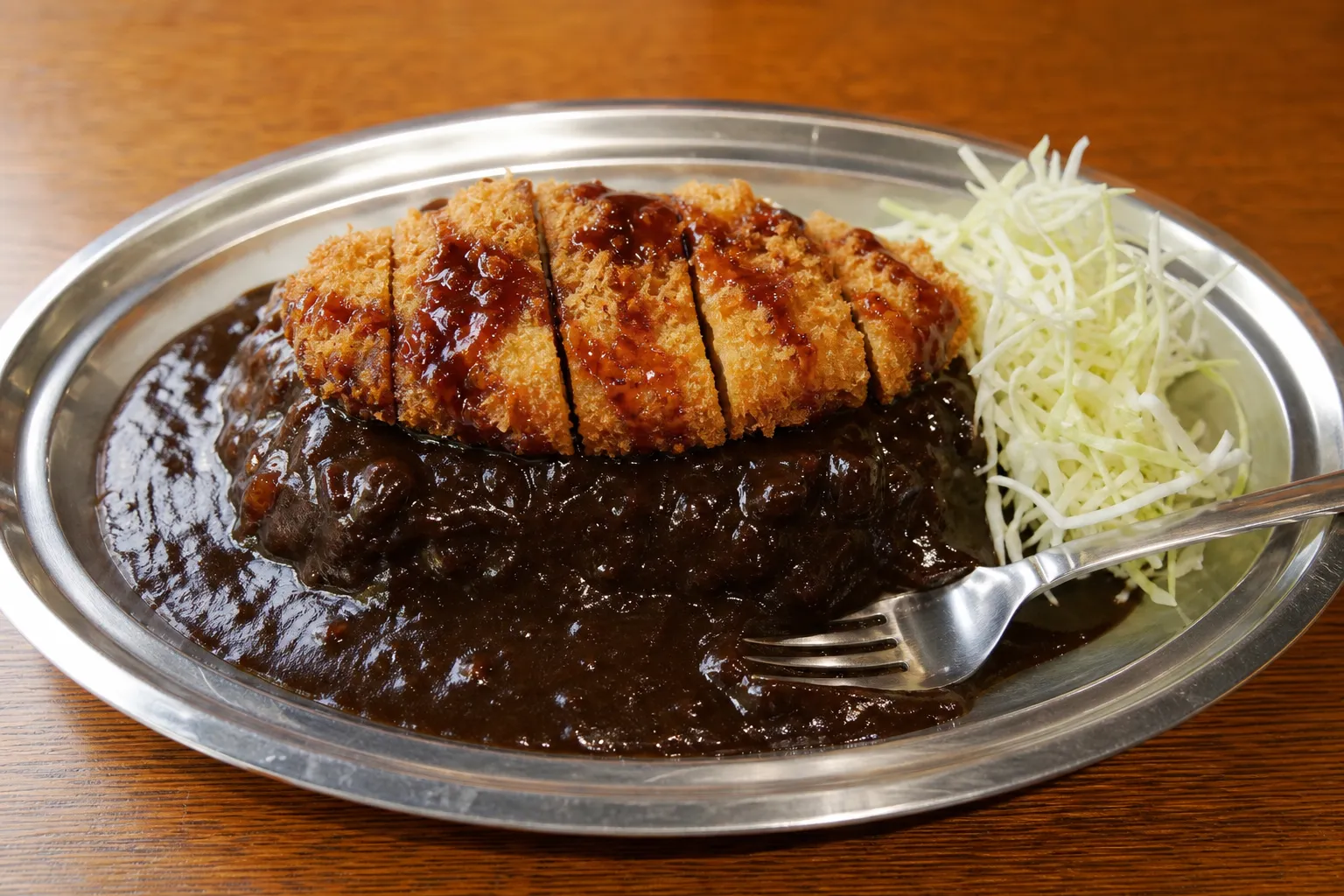
Curry so thick and dark it stands the fork up — served on a steel plate, crowned with a sauced-up katsu, cold cabbage on the side. Ishikawa's gloriously stubborn take on comfort food.
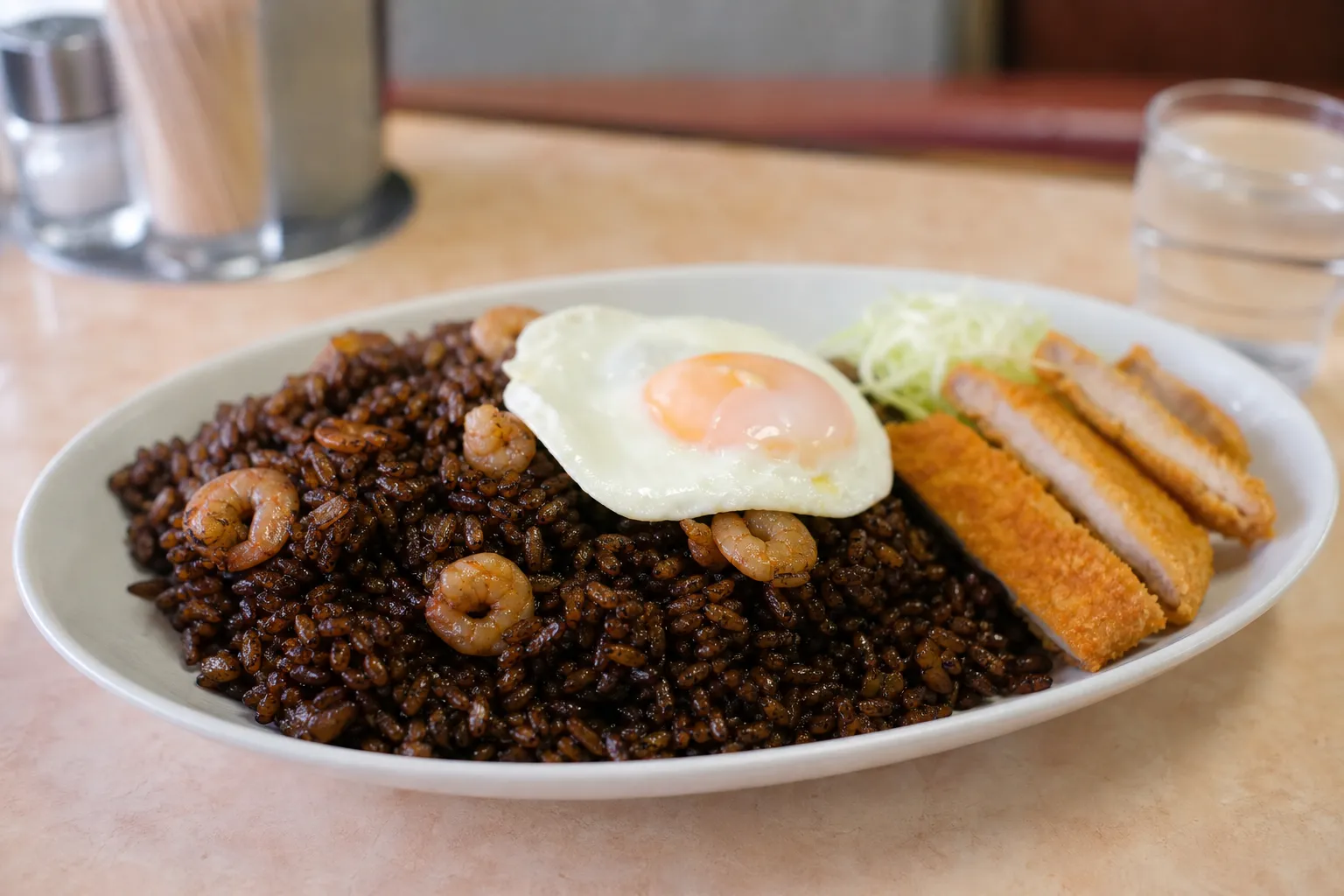
The rice is black. Not burnt-black — on-purpose black, glossy and rich, and I did not trust it until the first bite made me a believer.
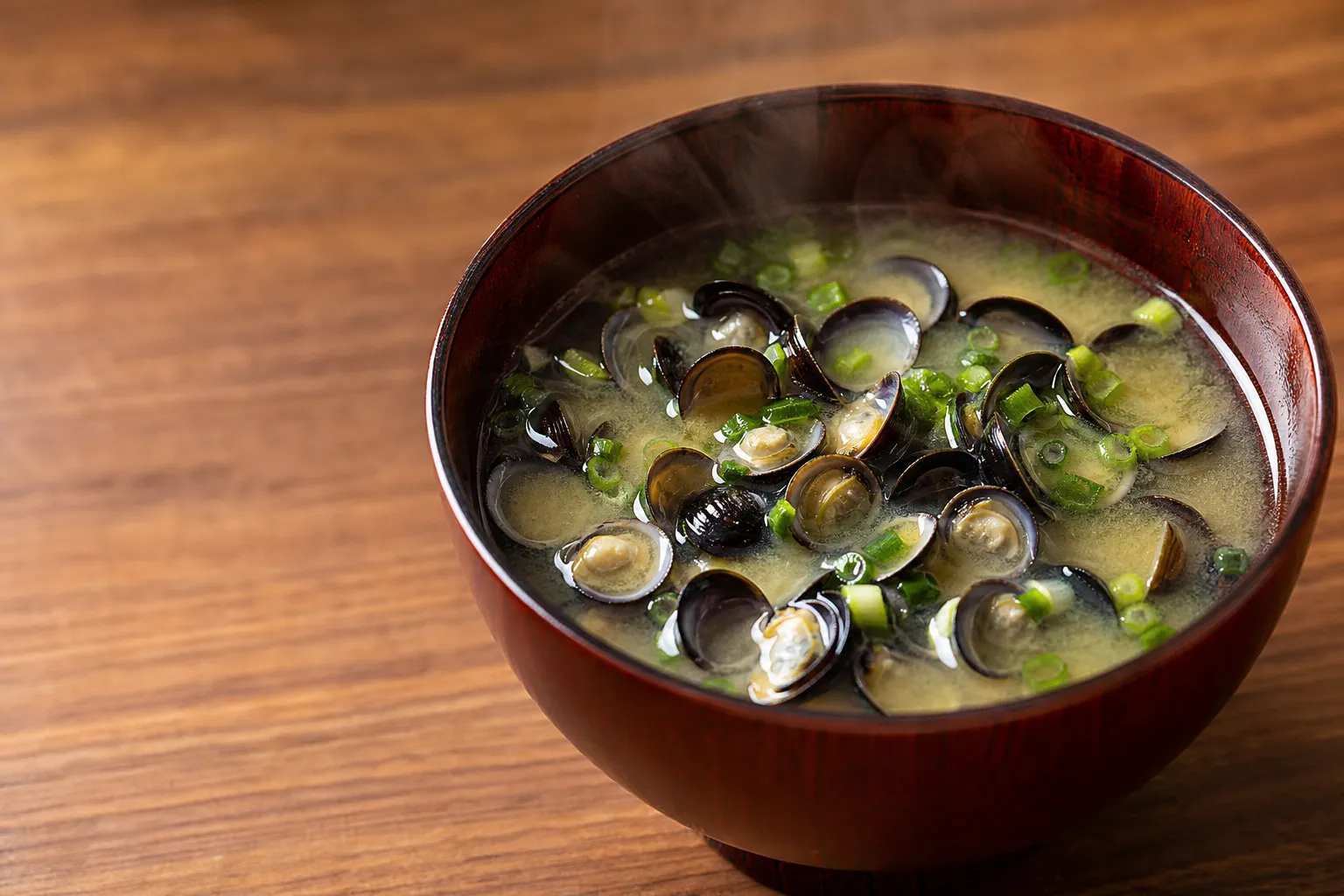
Tiny black clams the size of a fingernail, and somehow they make a miso soup deep enough to fix a rough morning — this is the bowl Shimane wakes up to.
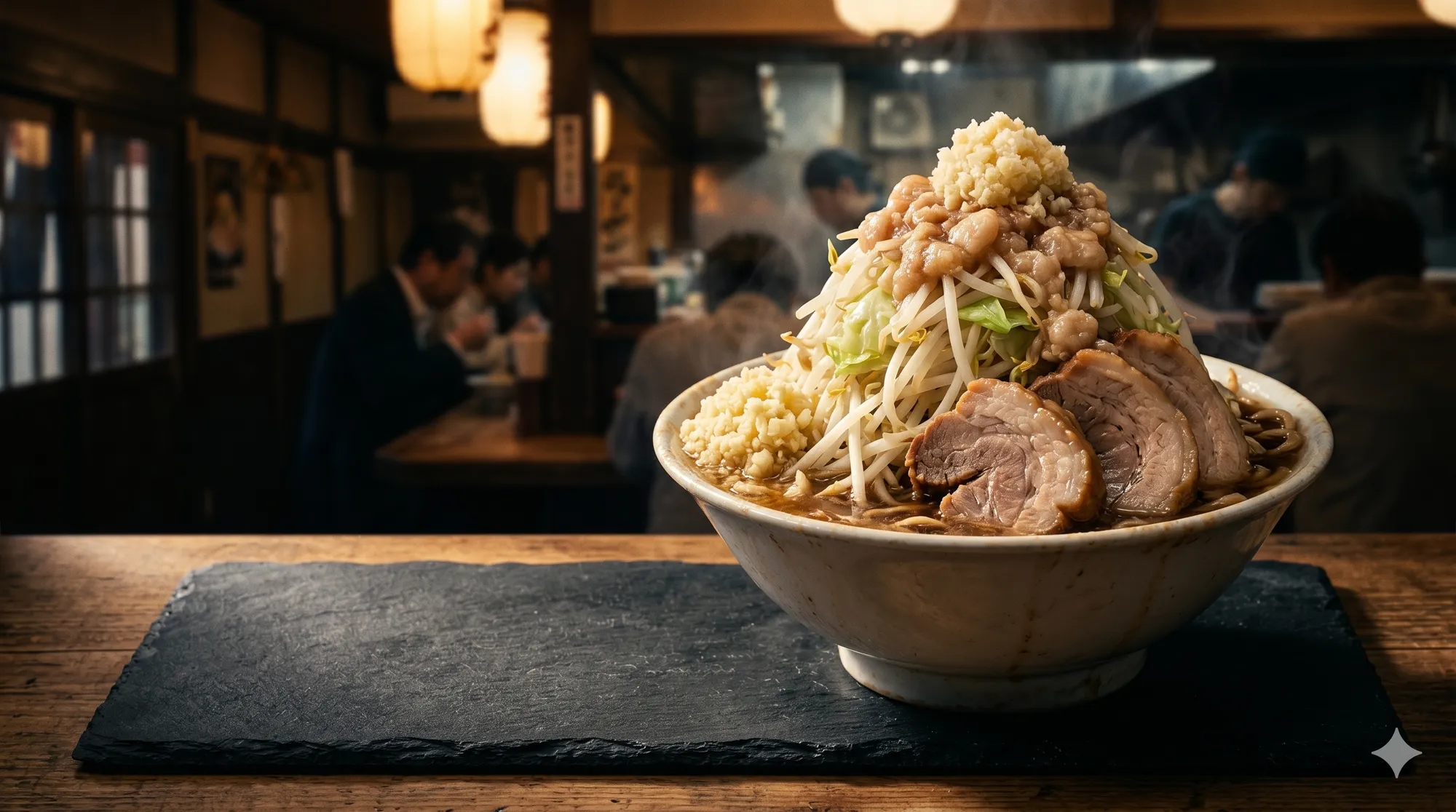
A roaring mountain of noodles, fat, garlic and pork that broke the rules of ramen and built a cult. Not a meal — a rite of passage. Learn the secret call before you go in.
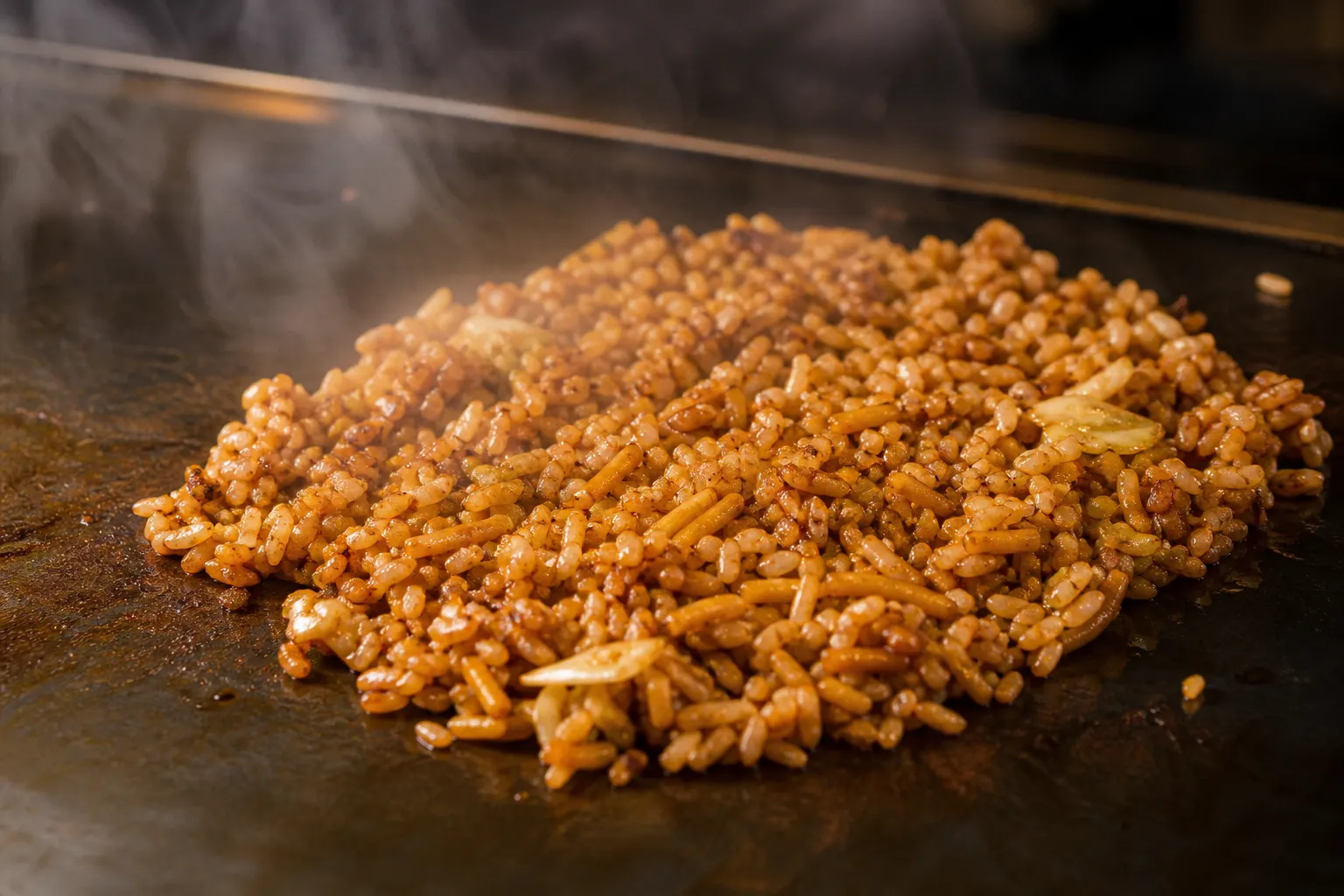
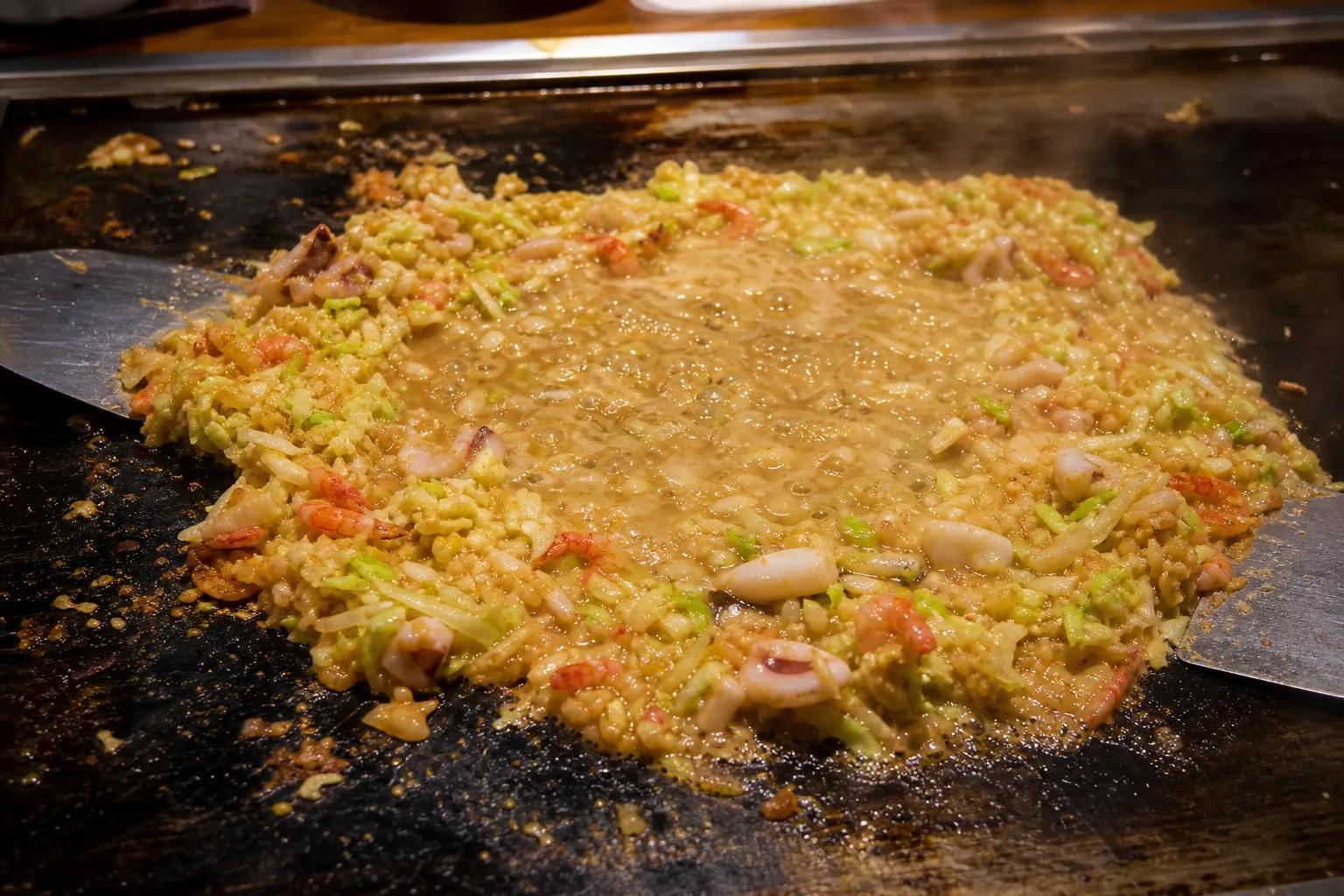
Fried noodles and rice, chopped together and griddled into one browned, sauce-soaked, gloriously excessive plate — Kobe invented double carbs and I will defend it forever.
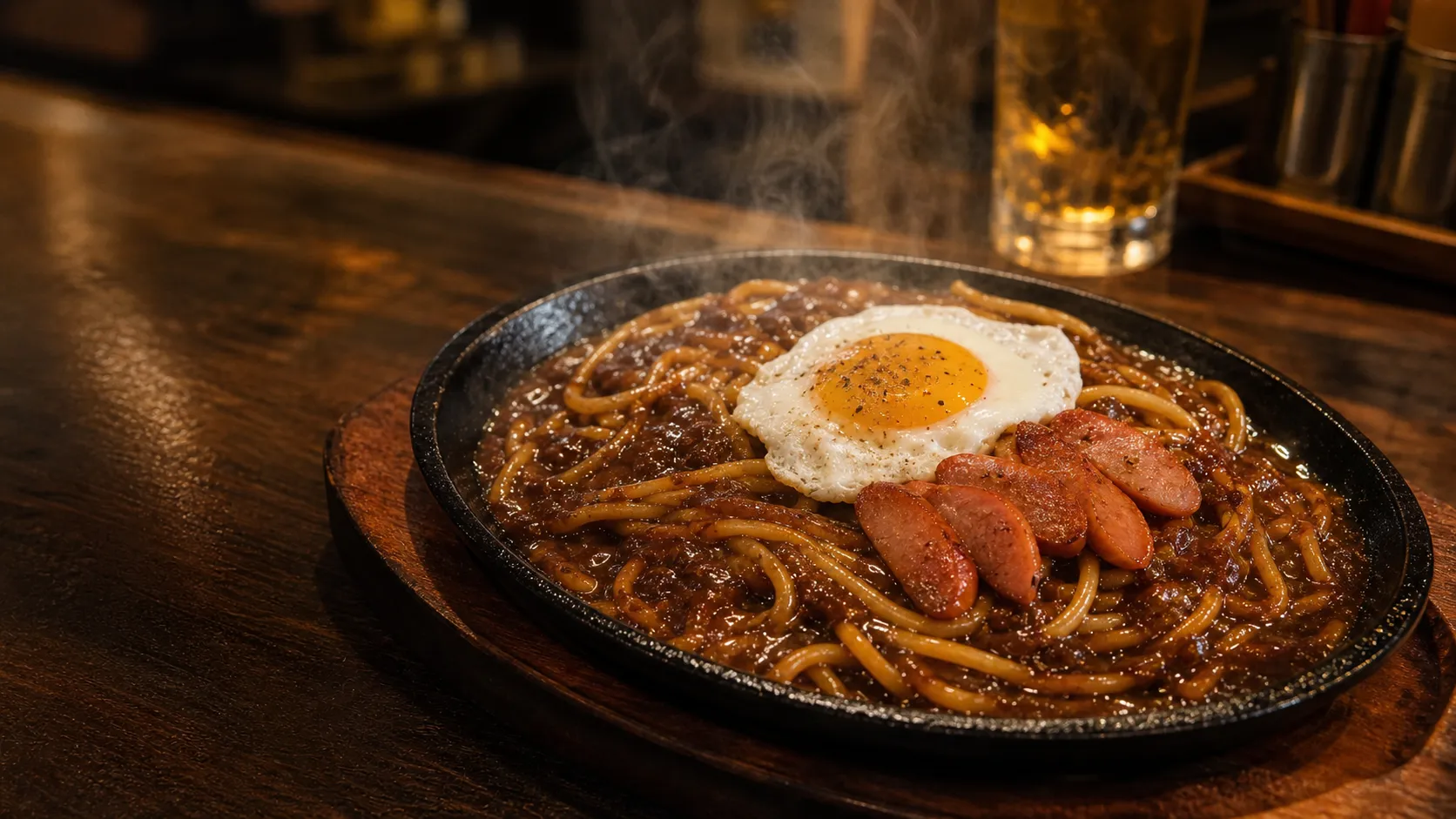
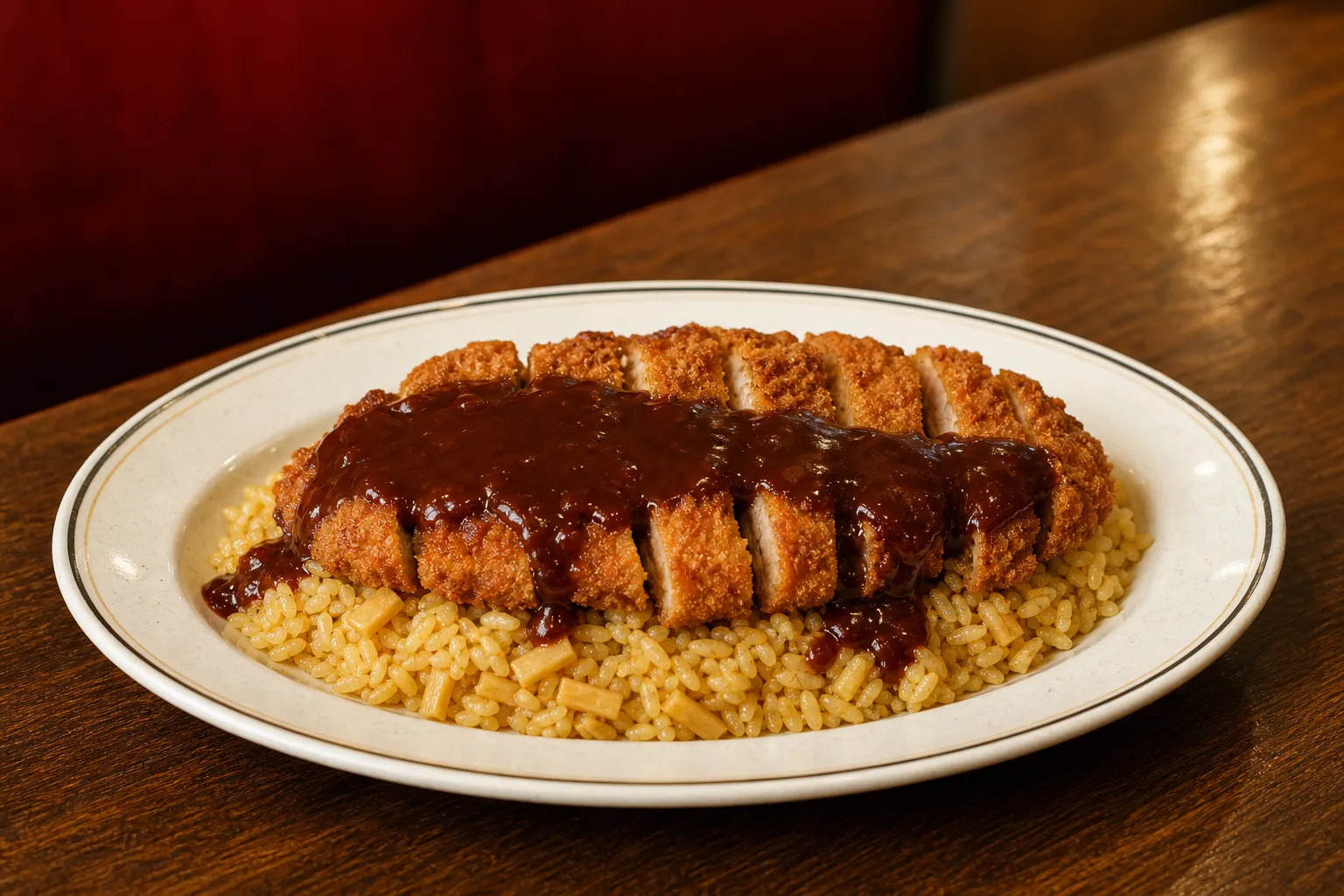
Nagoya's gloriously wrong spaghetti: thick noodles smothered in a dark, spiced meat sauce that's been thickened into something between gravy and curry. Italy has no idea this exists. Nagoya doesn't care.
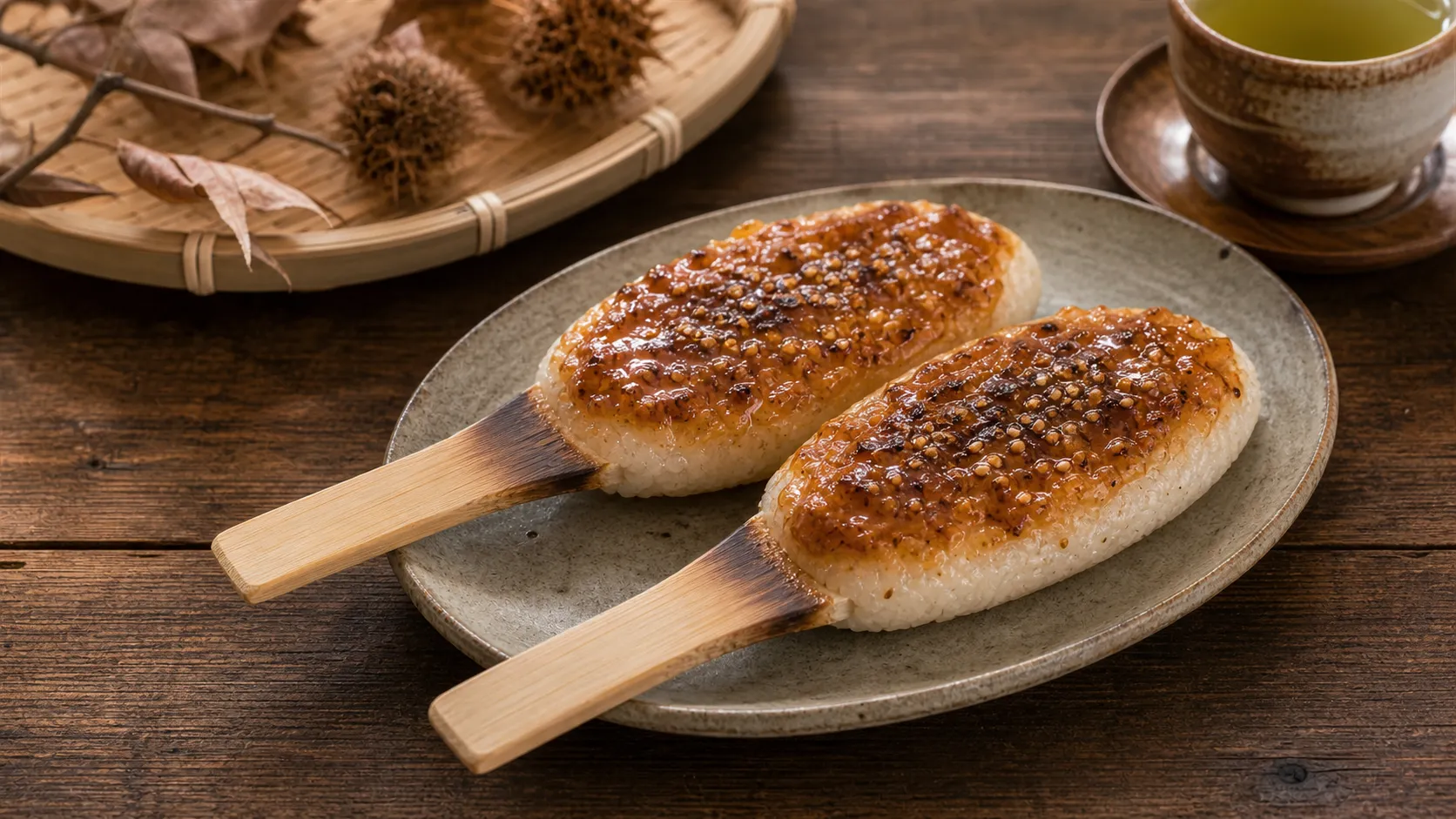
Pounded rice flattened onto a wooden paddle, slathered in a sweet-savory walnut-and-sesame miso glaze, and grilled over coals until the edges char — the smoky, sticky, gloriously messy soul food of Japan's central mountains.
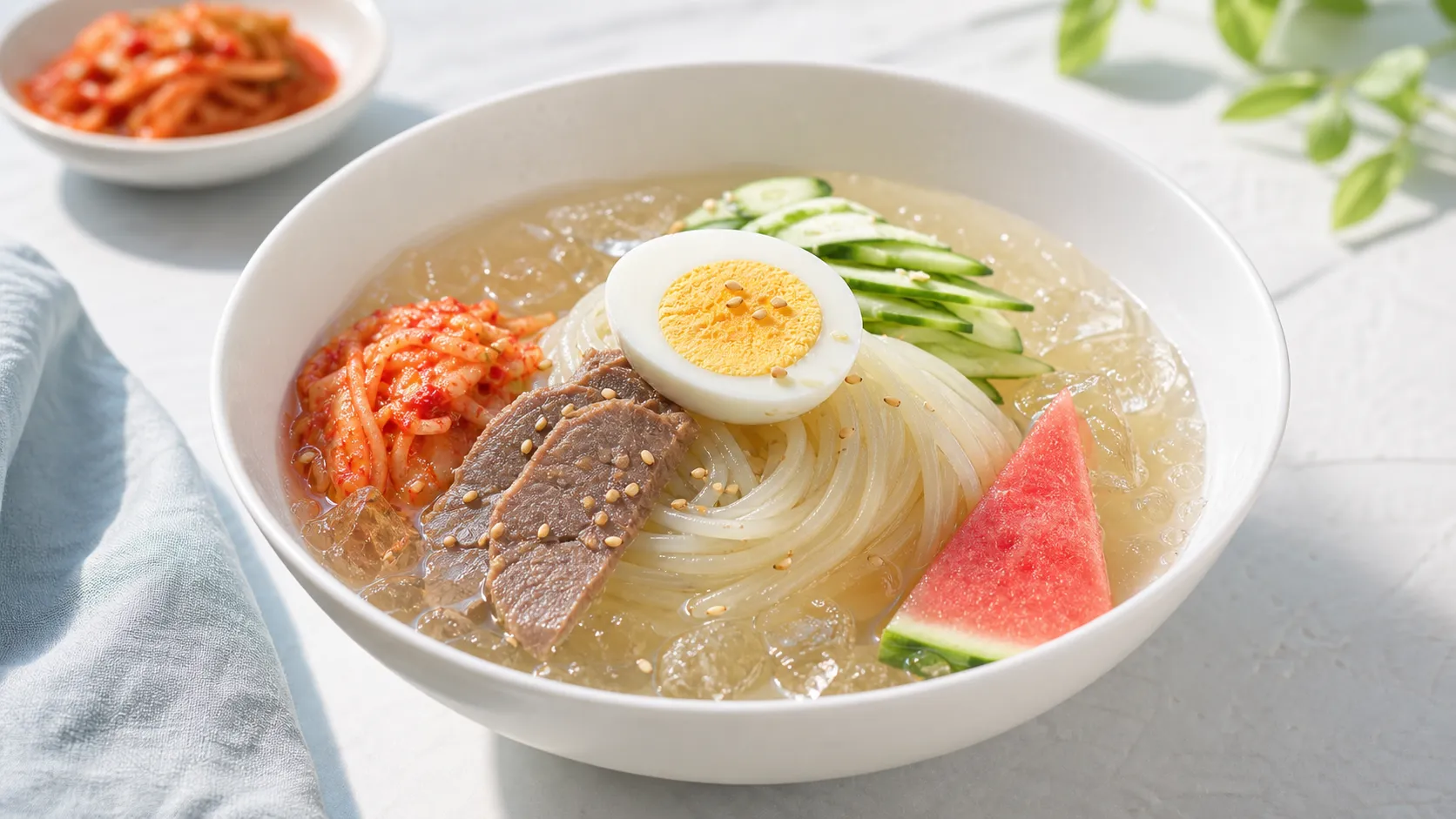
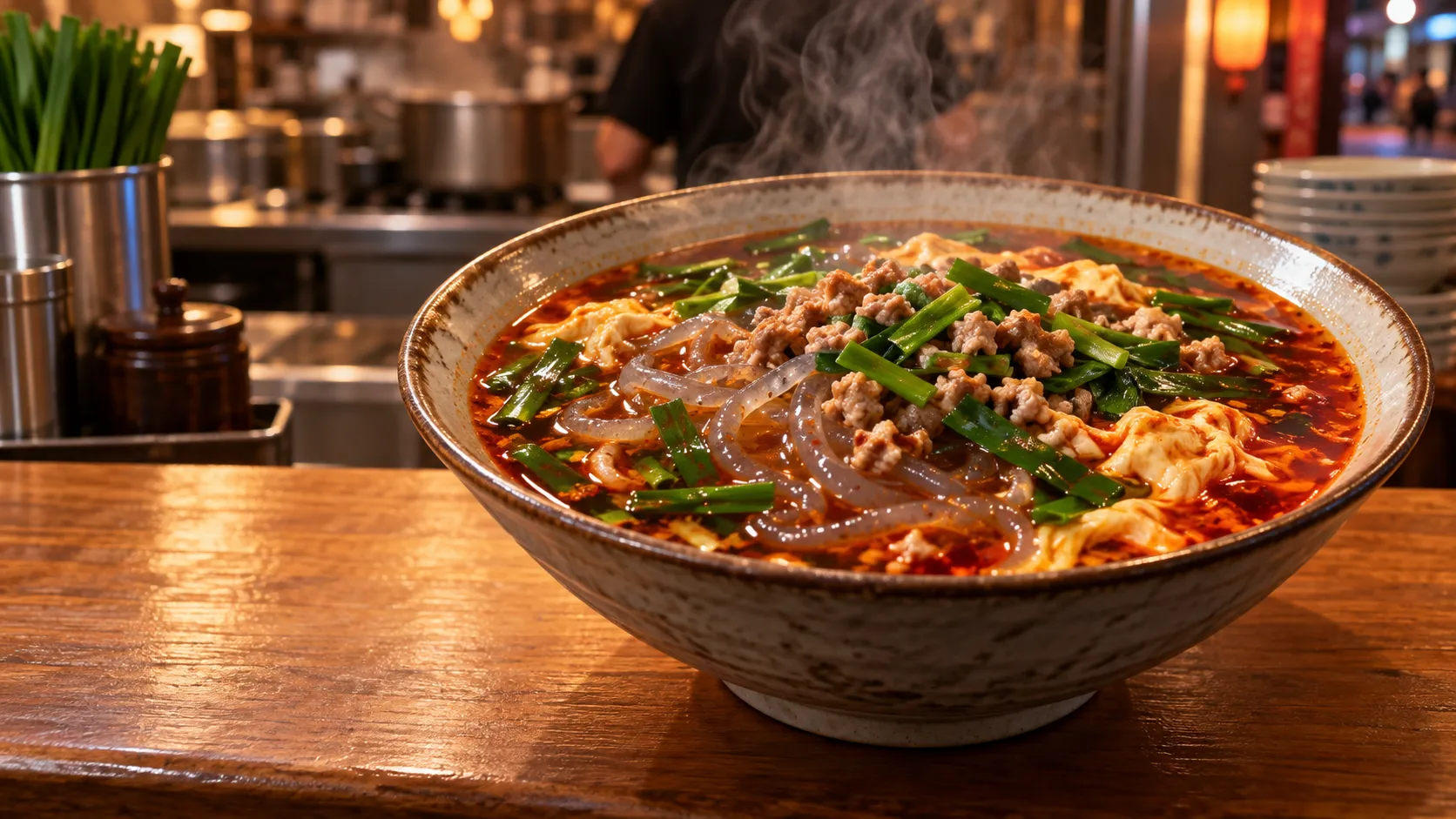
Morioka's cold noodles: gloriously chewy, translucent, sitting in an icy beef broth with kimchi and a slice of watermelon. Yes, watermelon. It works. Trust the noodle.
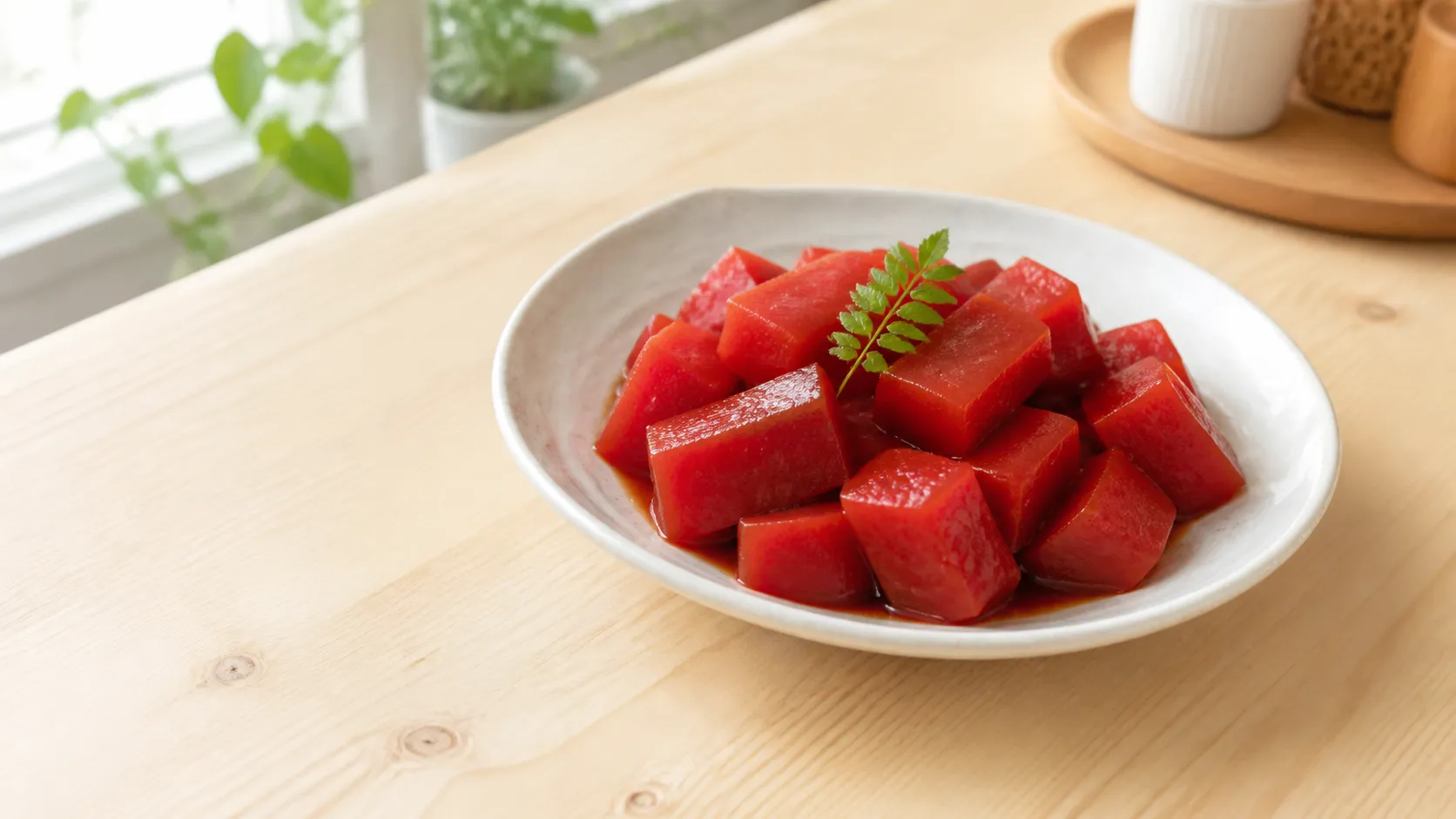
I cut into it fully expecting the red to stop at the surface, and it didn't. It goes all the way through. That's the moment this stops being a novelty and starts being a question.
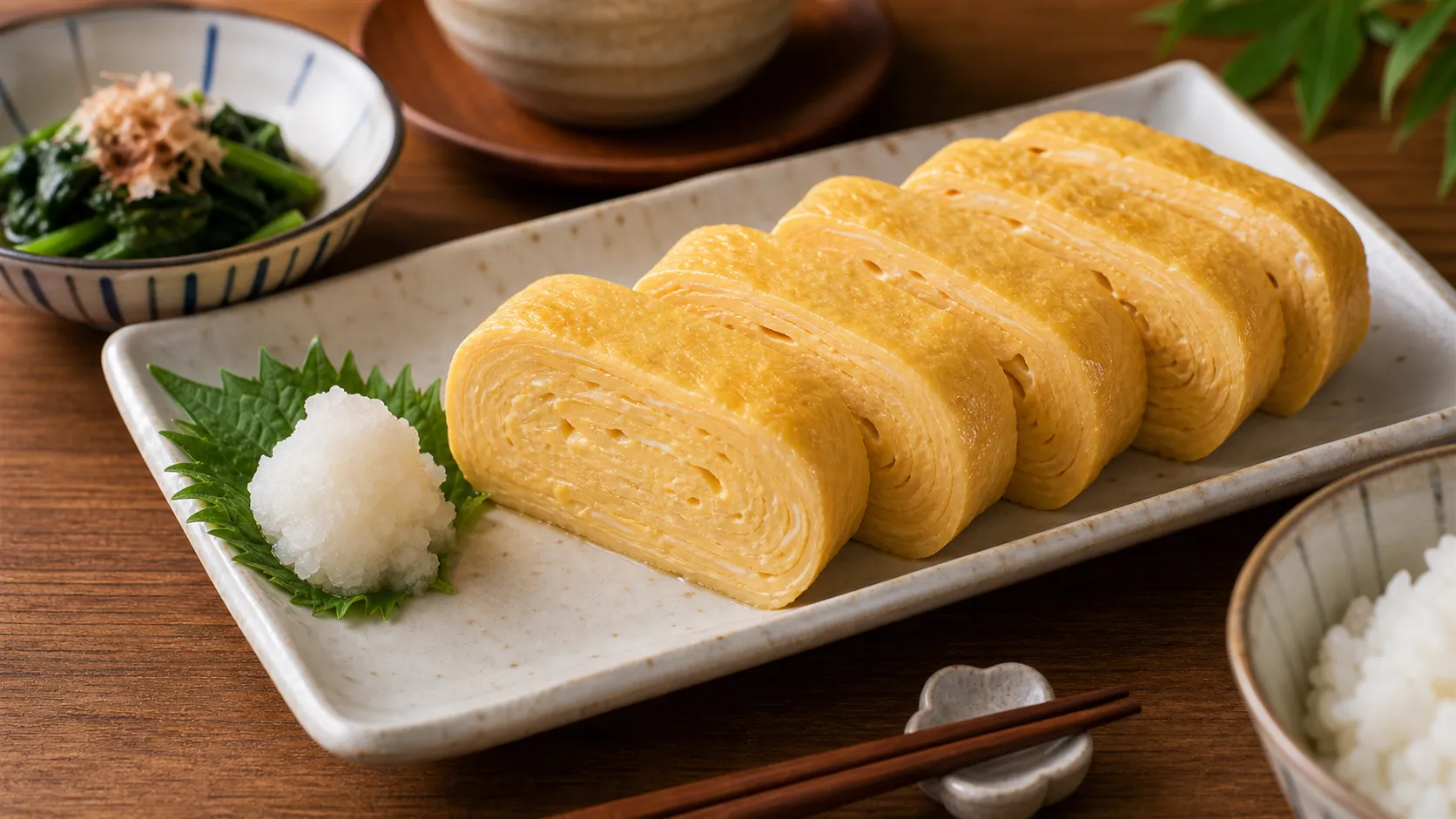
A rolled omelette so soft it almost trembles, layered fold over fold and soaked with dashi so that biting in releases a little warm rush of savory broth — the deceptively simple egg dish that Japanese chefs spend years perfecting.
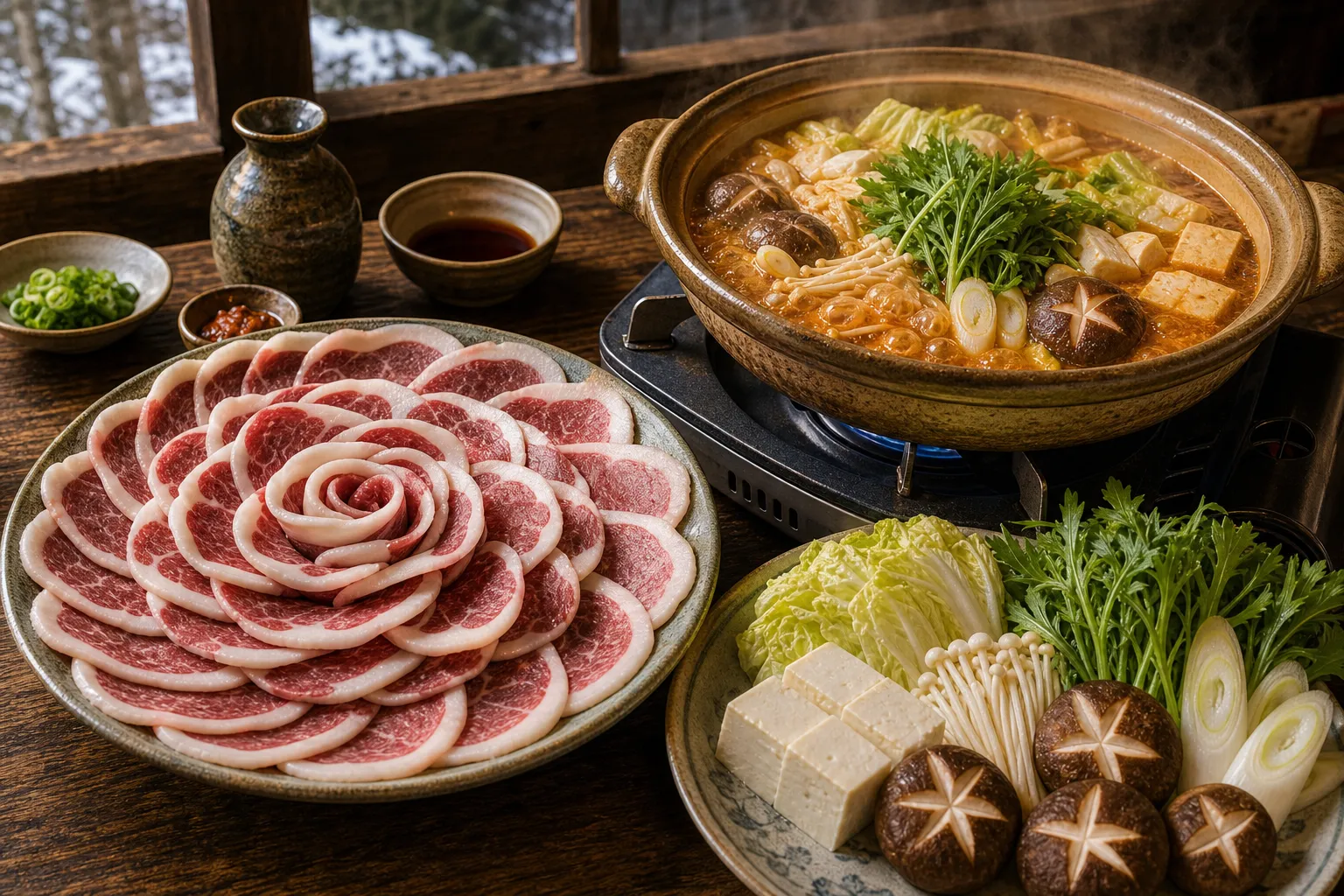
Wild boar, sliced so thin and marbled that it's laid out like the petals of a peony flower, then simmered in a sweet-savory miso broth in the mountains of Hyogo — the winter game dish that tastes nothing like you're bracing for.
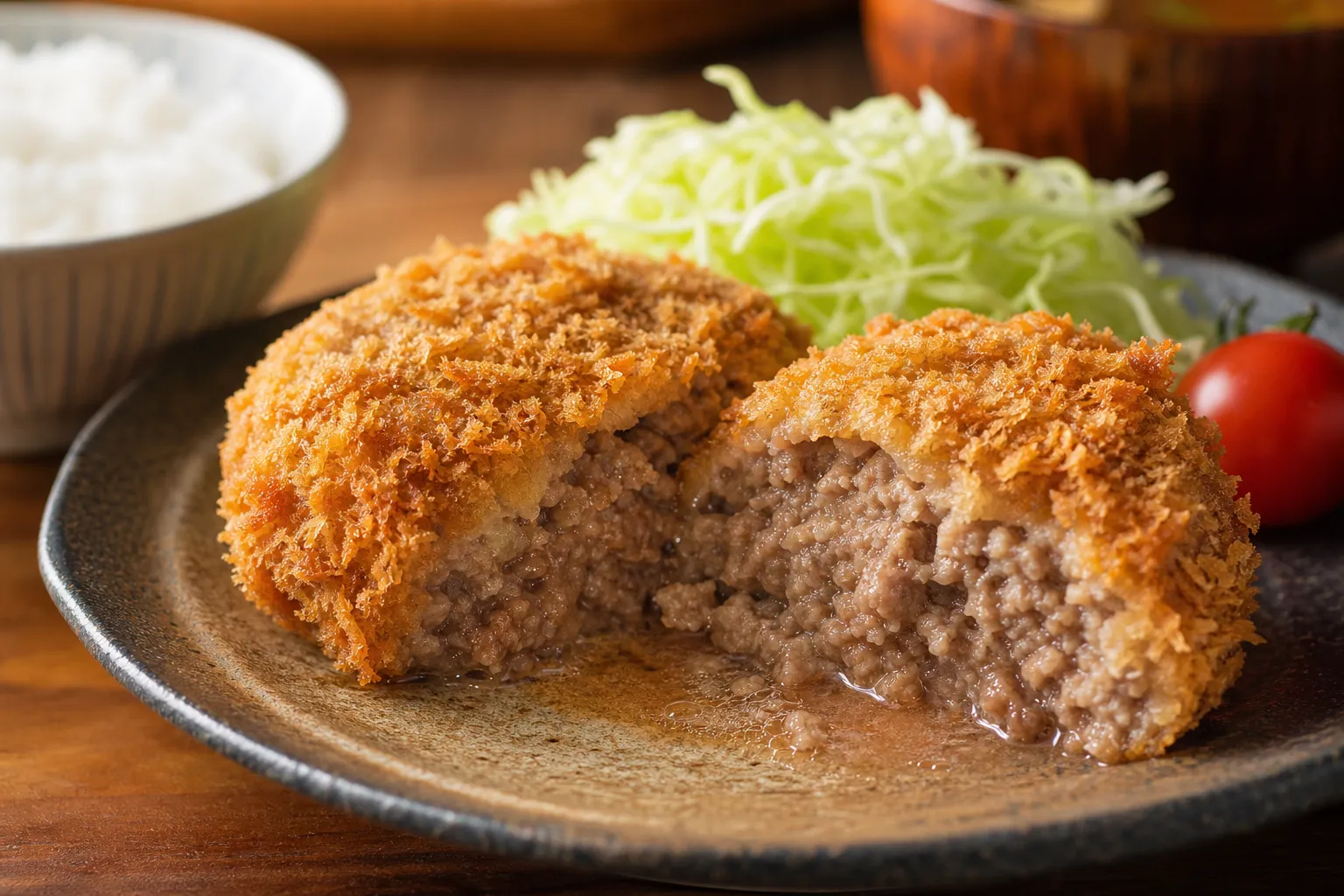
A deep-fried patty of seasoned minced meat in a crunchy panko shell that, when you bite it hot from a butcher-shop counter, gushes juice down your wrist and makes you forget you were walking somewhere.
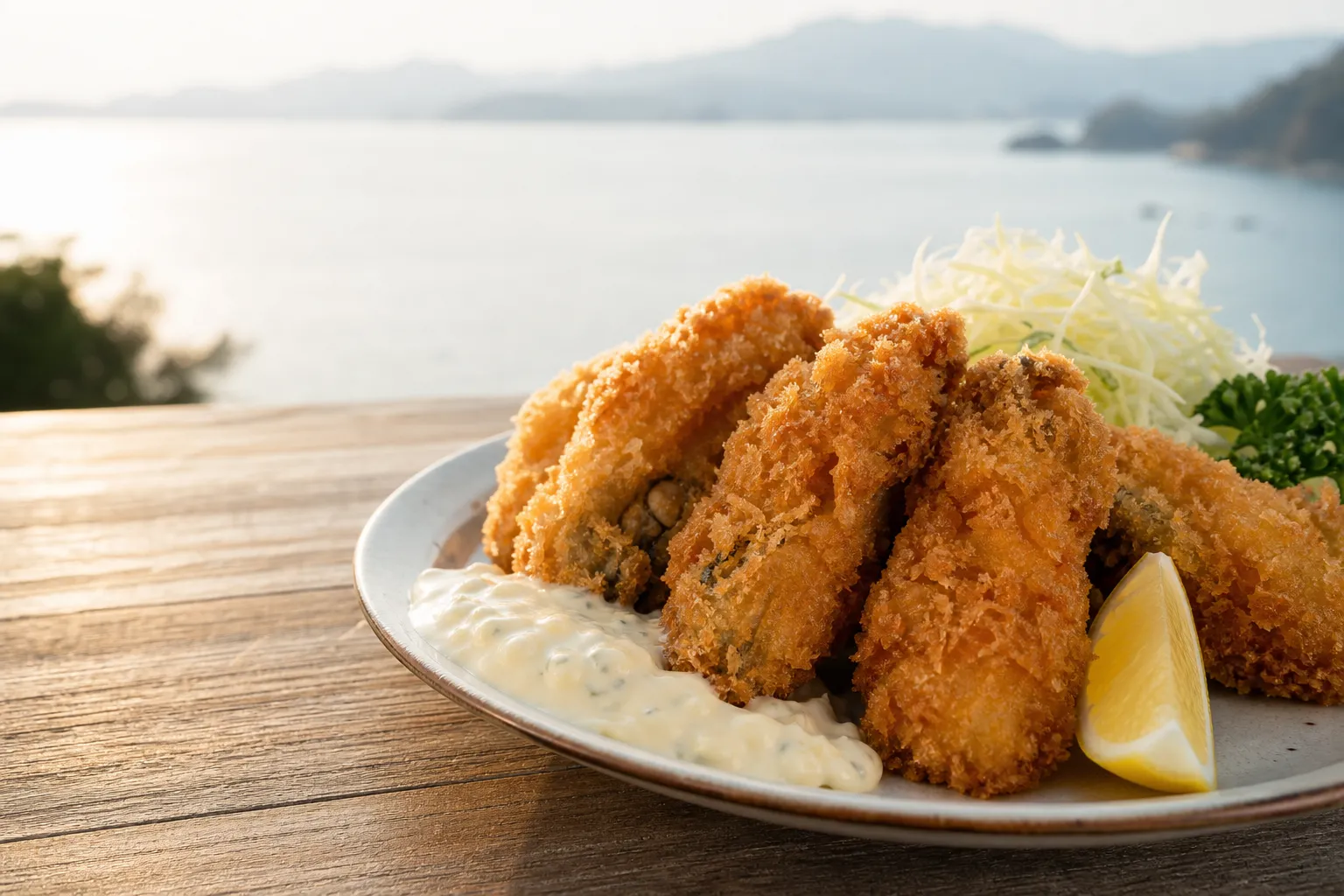
Crack the golden crust and the oyster inside is still plump and full of the sea — the fried food that finally made me understand why people drive to Hiroshima in winter.
Everyone warns you about the chewiness like it's a flaw — but that first spring-back bite of charcoal-grilled thigh is exactly the point, and I get it now.
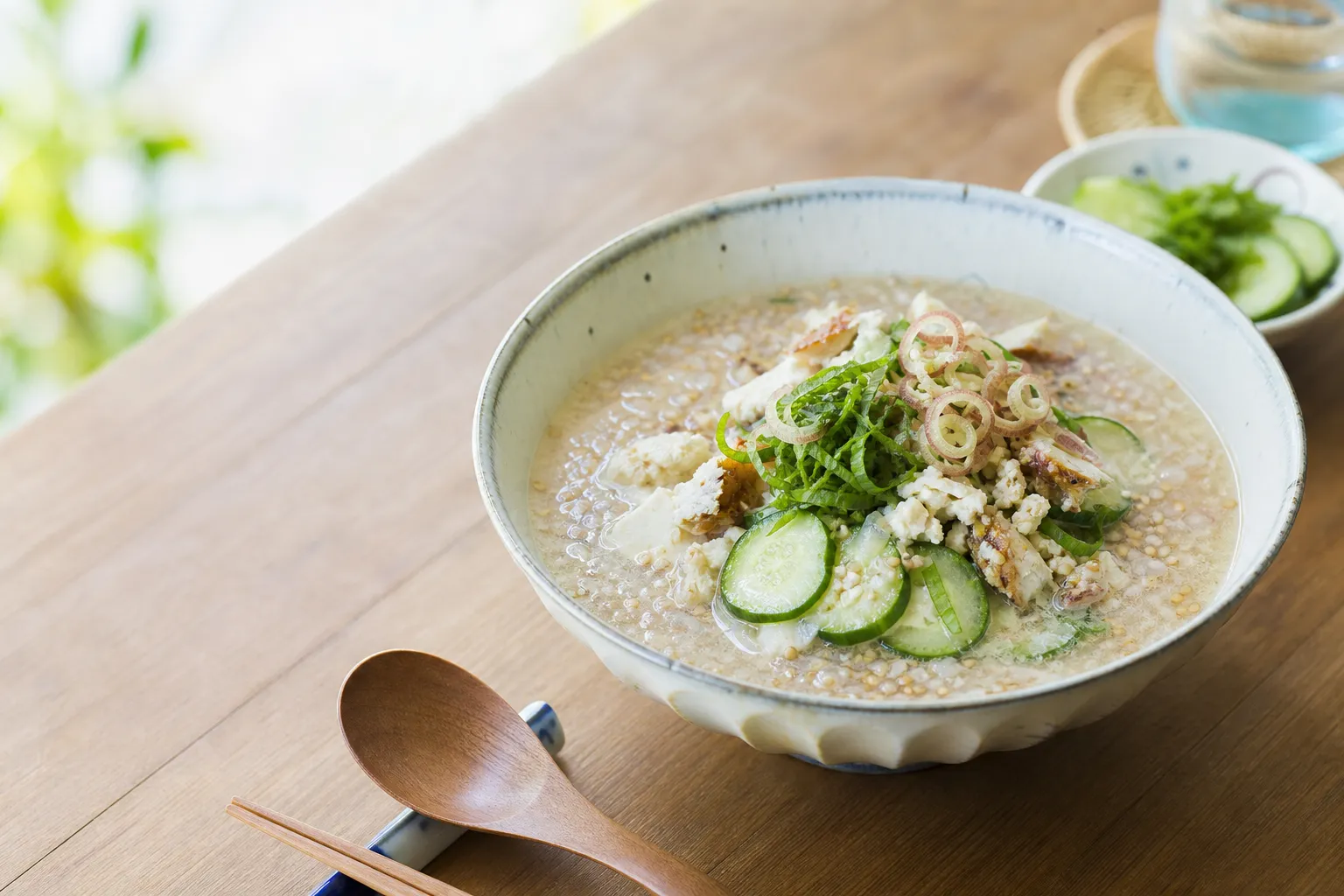
Cold miso soup. Poured over hot rice. In summer. I know how that sounds — I thought the same thing. Then I ate it on a brutal August afternoon in Miyazaki and understood exactly why farmers have been making it for centuries.
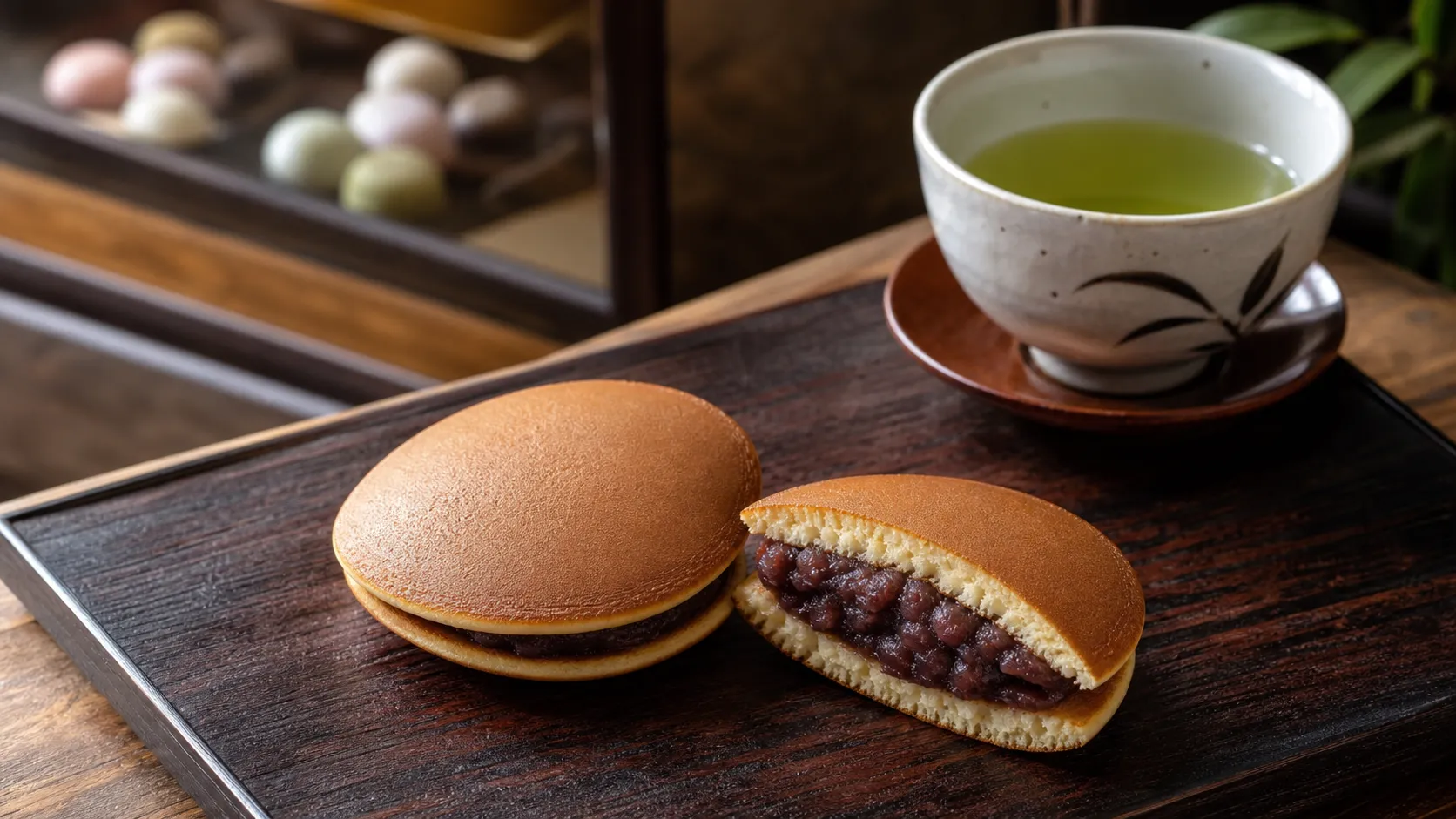
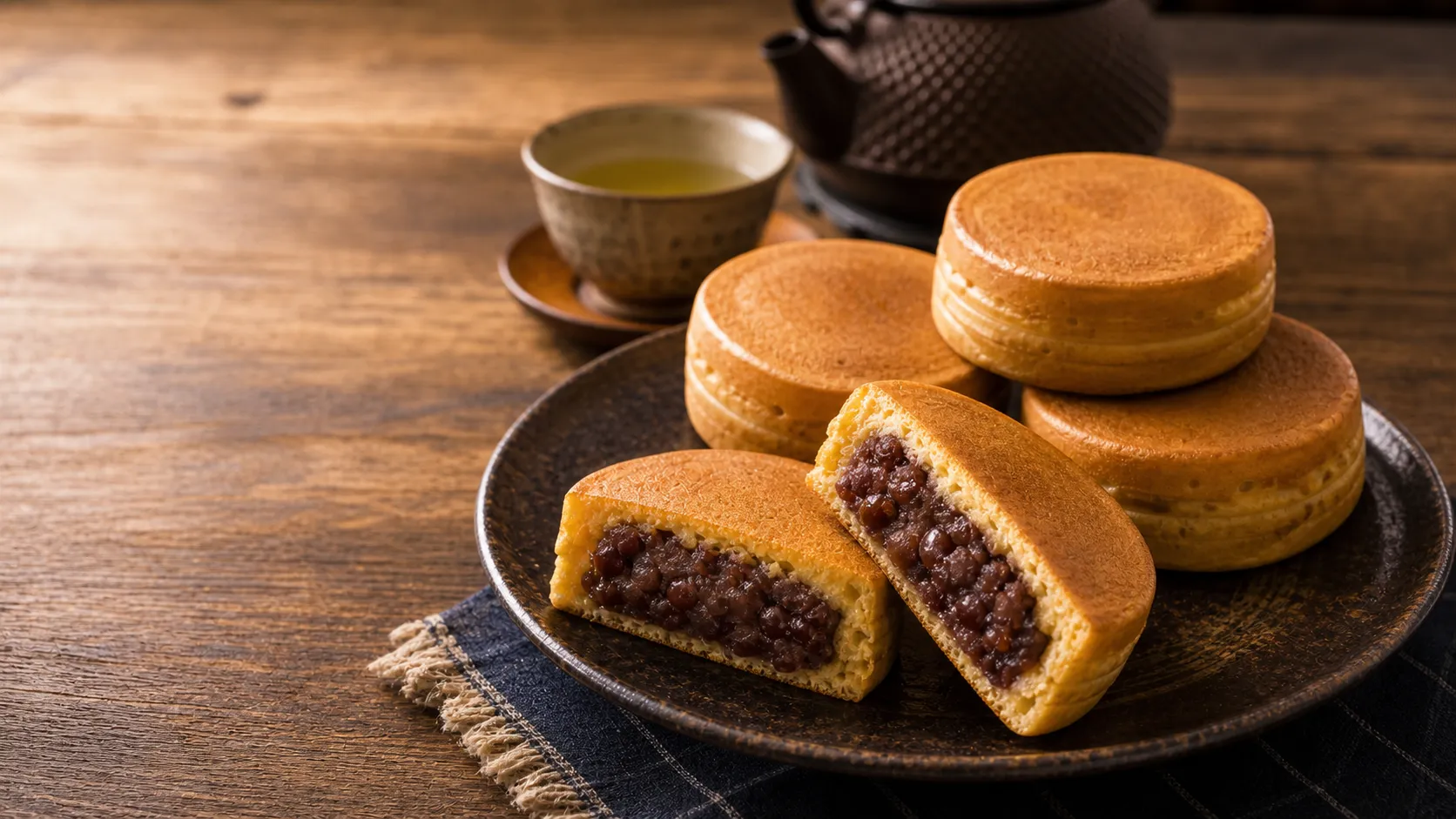
Two fluffy honey-pancakes sandwiching sweet red bean paste. Doraemon's favorite food, a teatime classic, and the most foolproof introduction to Japanese sweets there is.
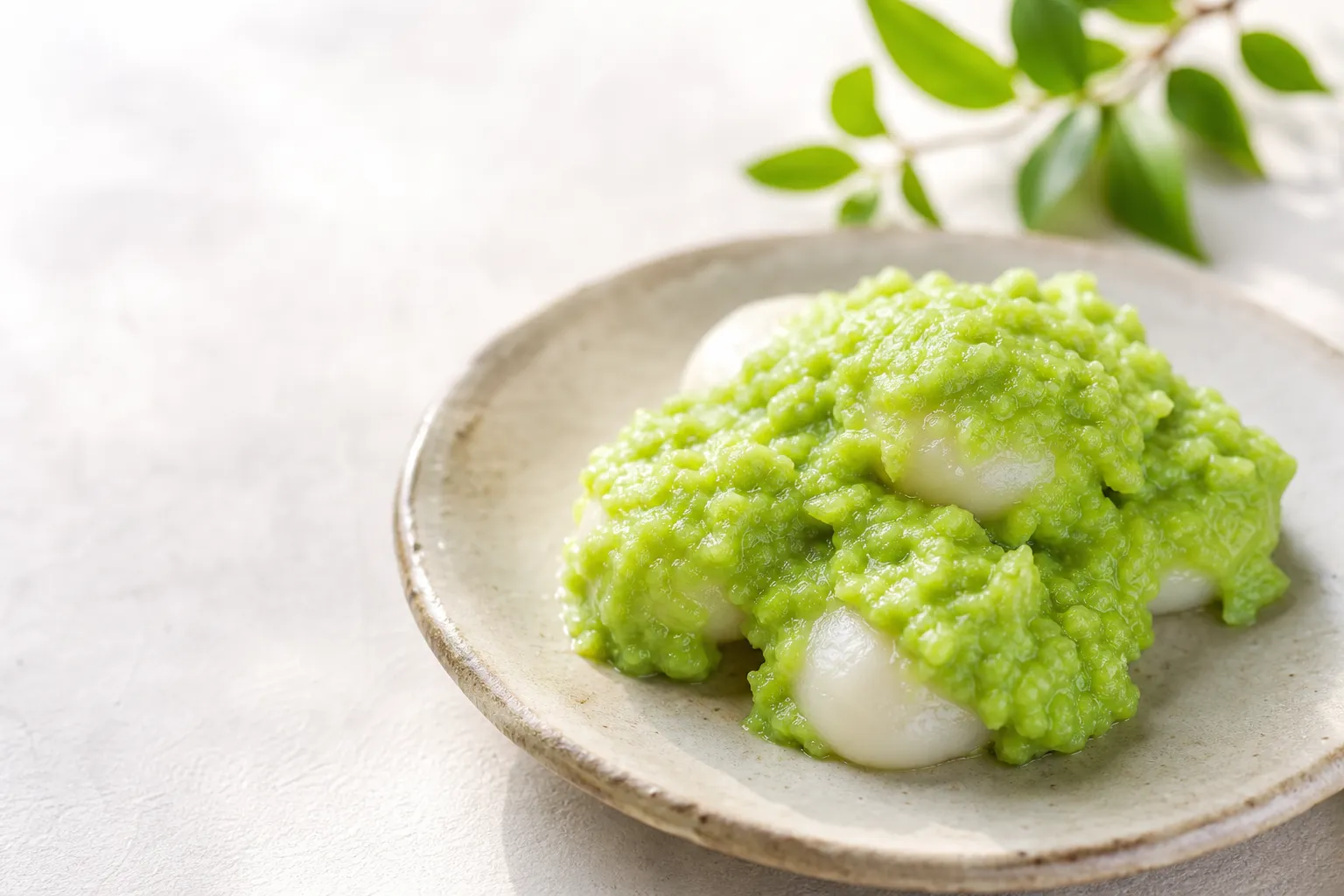
Soft mochi smothered in a vivid green paste of mashed young soybeans — sweet, grassy, faintly savory, and a color that stops you in the street. Sendai's most beautiful sweet.
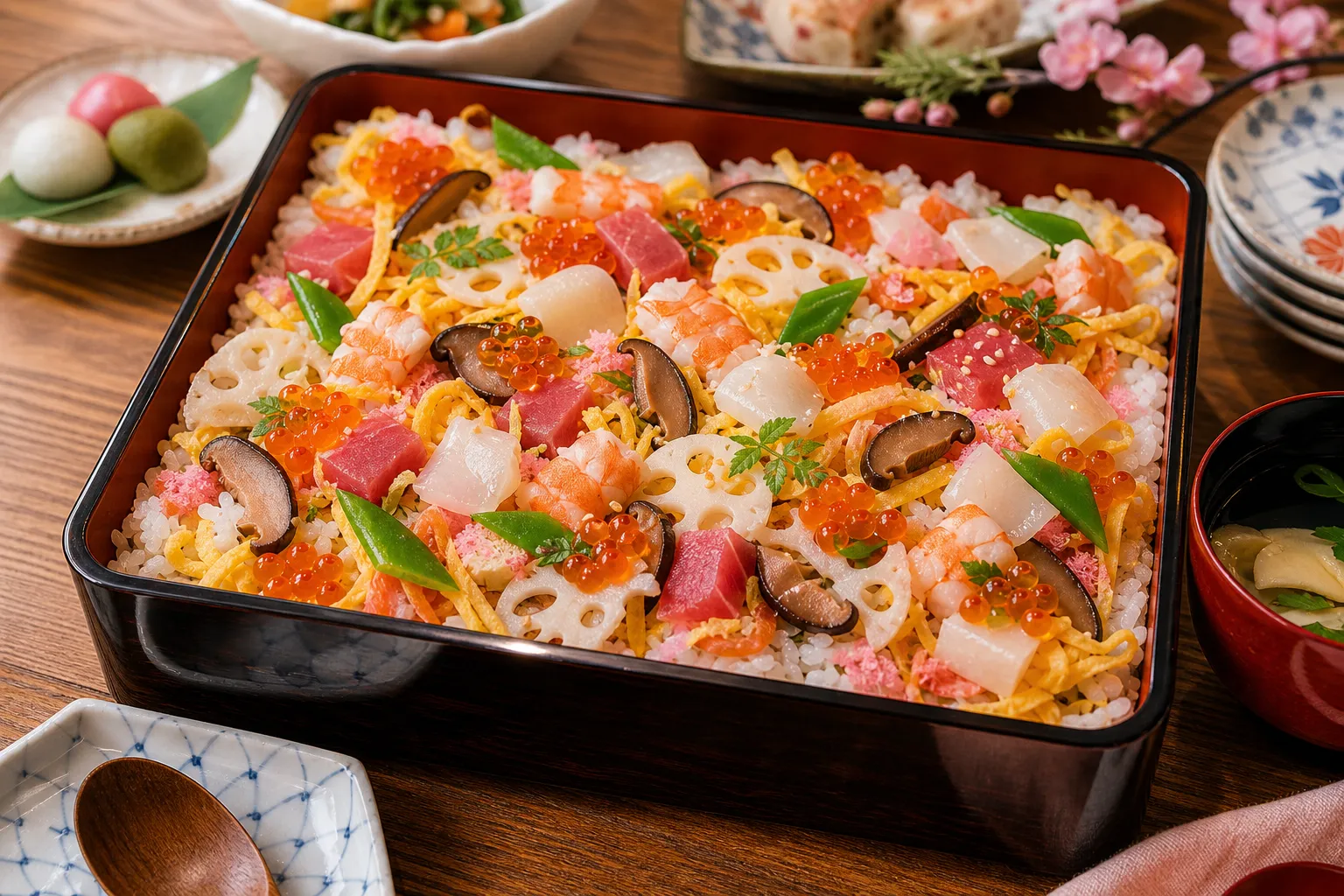
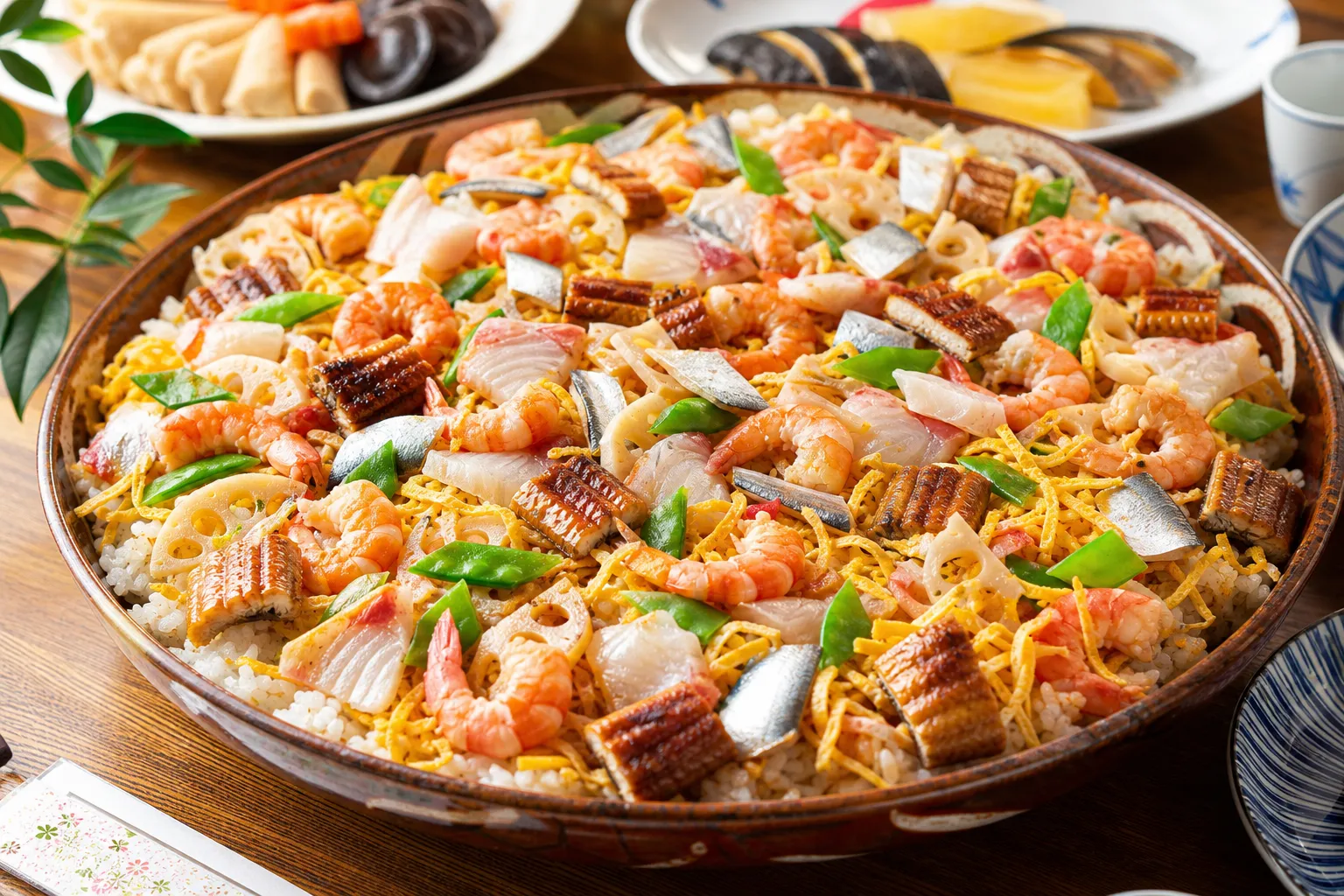
Sushi that gave up on tidy little pieces and just threw everything into a bowl — glossy sashimi in the city, confetti-bright vegetables and egg at home. Either way it's the most joyful, least intimidating way to eat sushi in Japan.
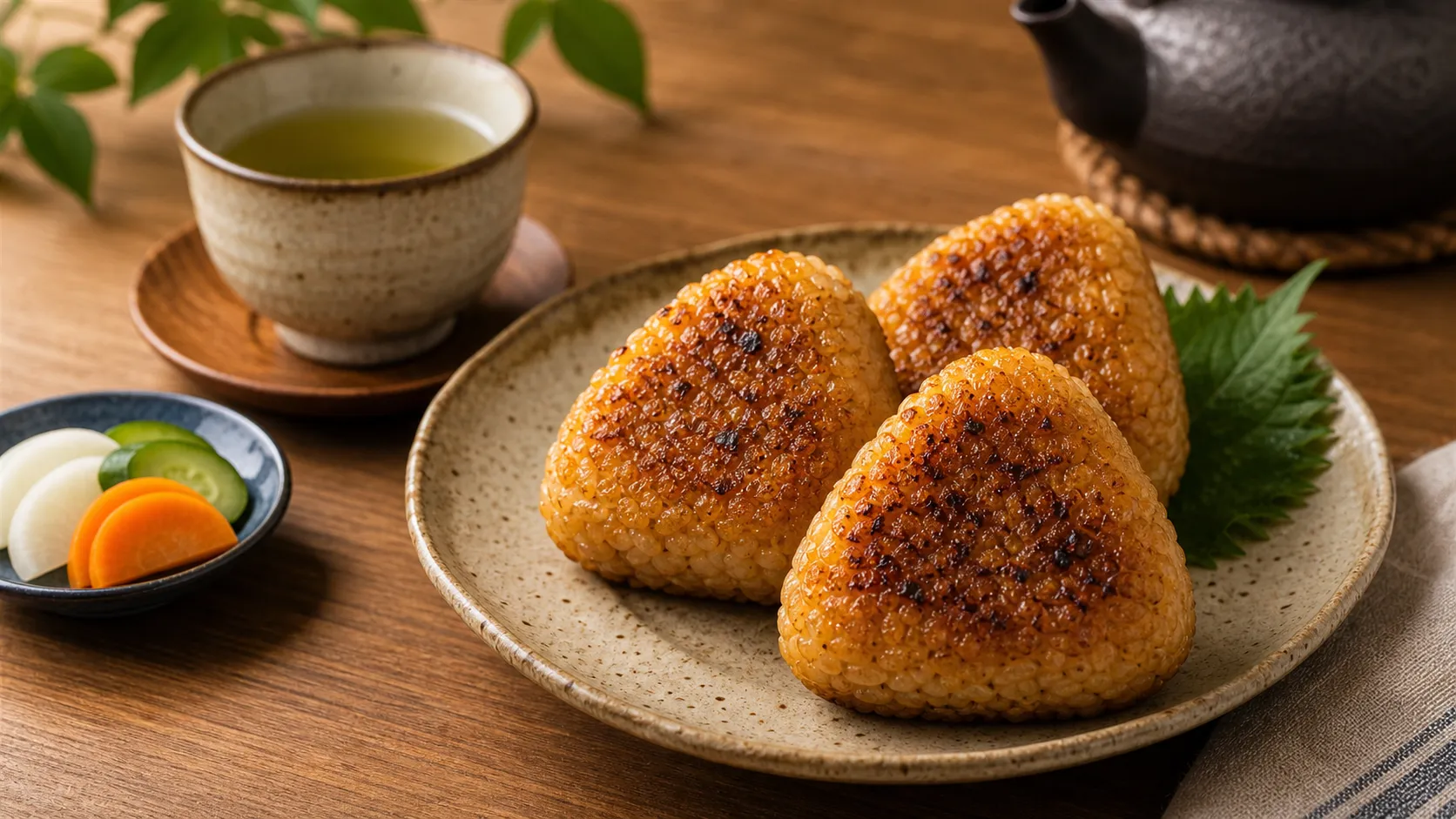
A rice ball brushed with soy sauce and grilled until the outside turns crackly-crisp and the whole thing smells like the best kind of caramelized, toasty comfort — the humble onigiri, upgraded by fire.
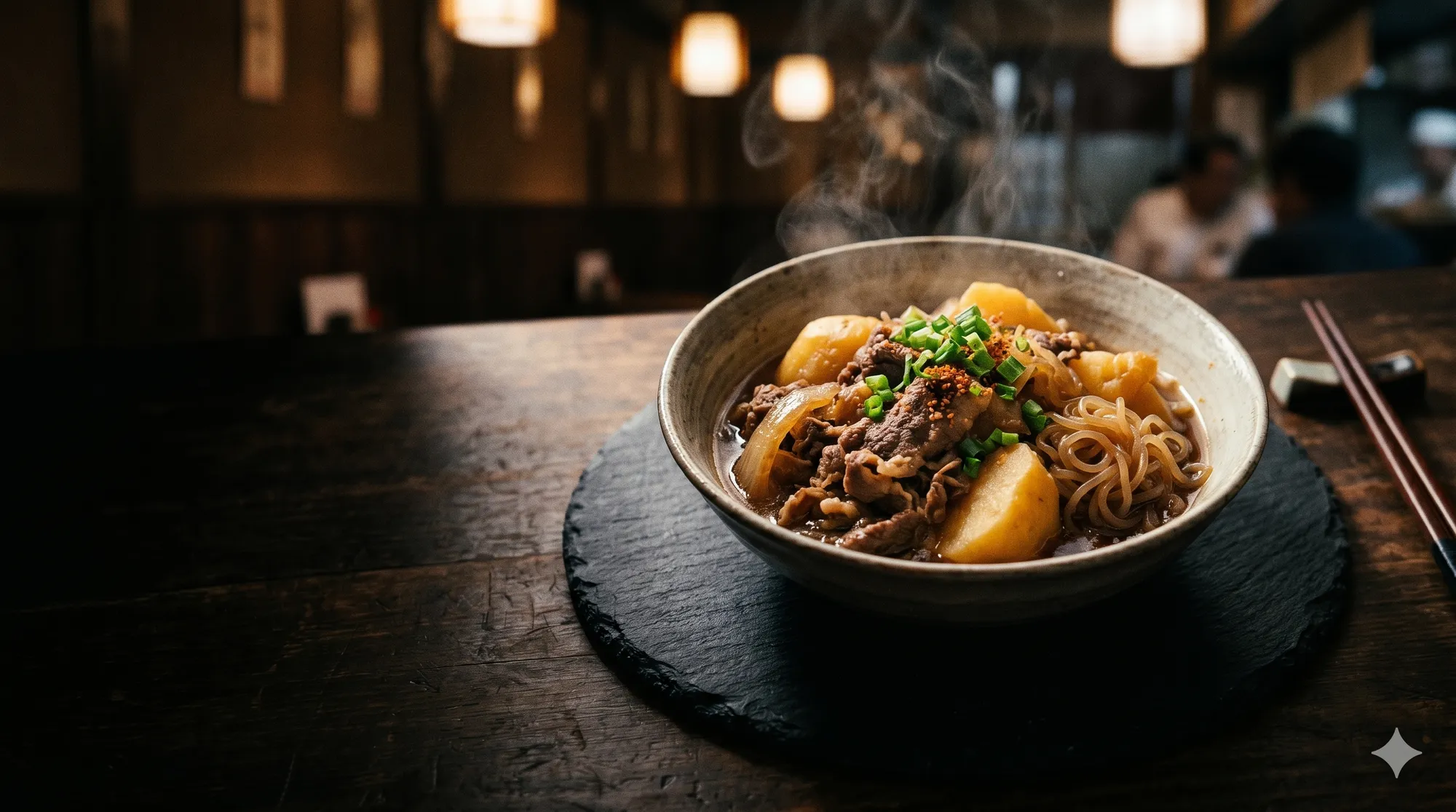
Meat and potatoes simmered in sweet soy until they melt — the dish Japan means when it says 'the taste of home.' Allegedly invented because an admiral missed British beef stew.
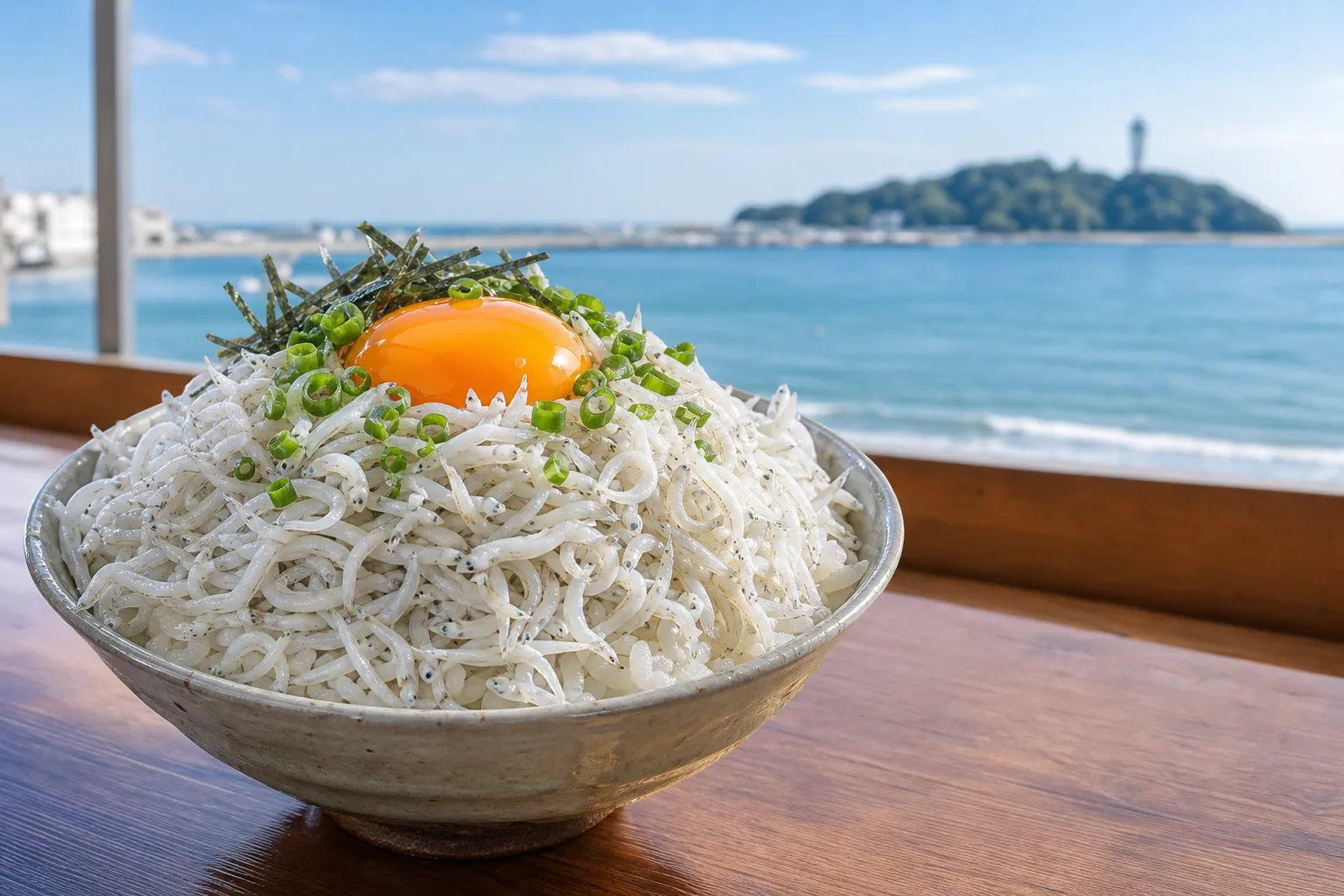
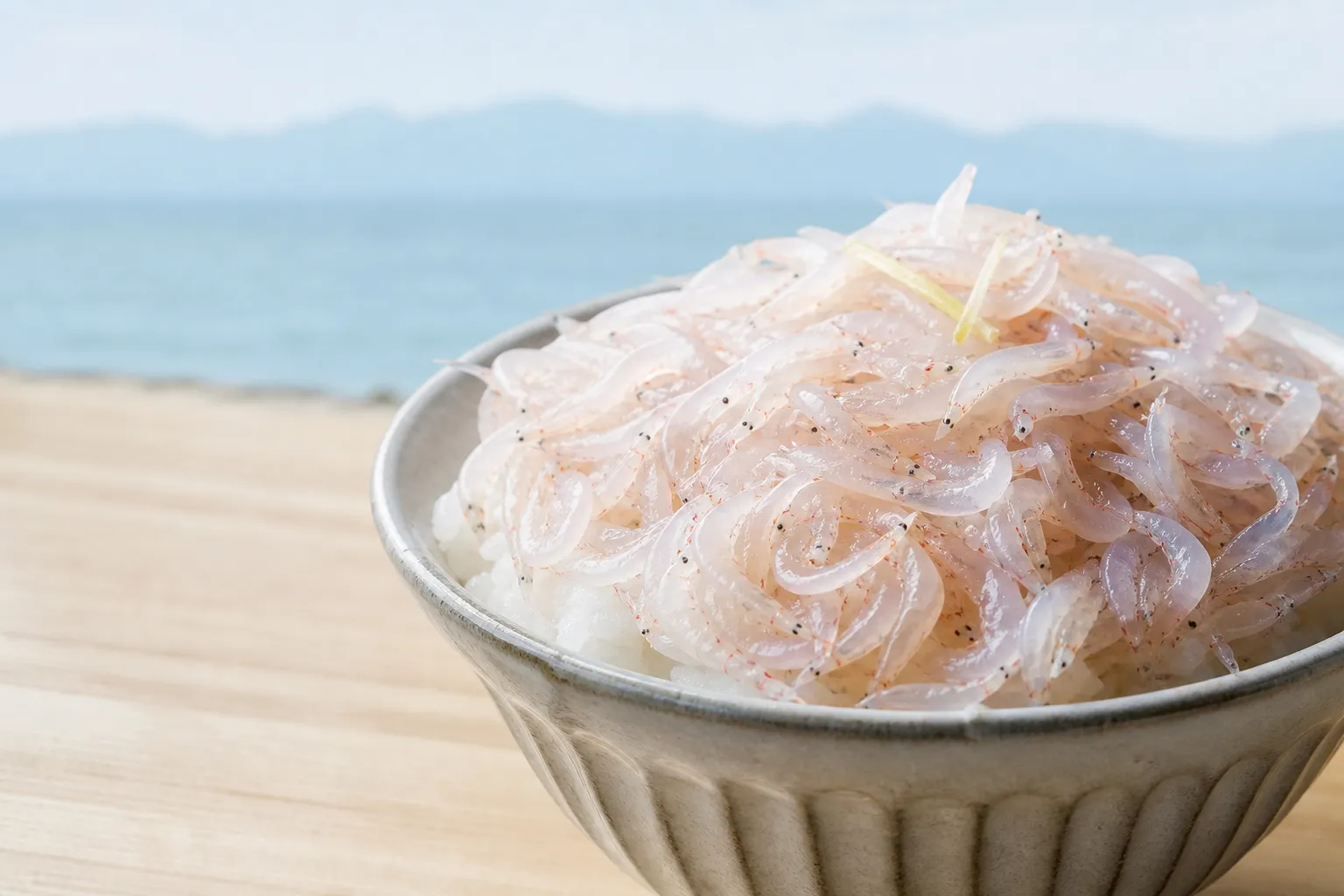
A mountain of tiny, glistening baby fish piled so high it eclipses the rice underneath — and somehow that's the appeal.
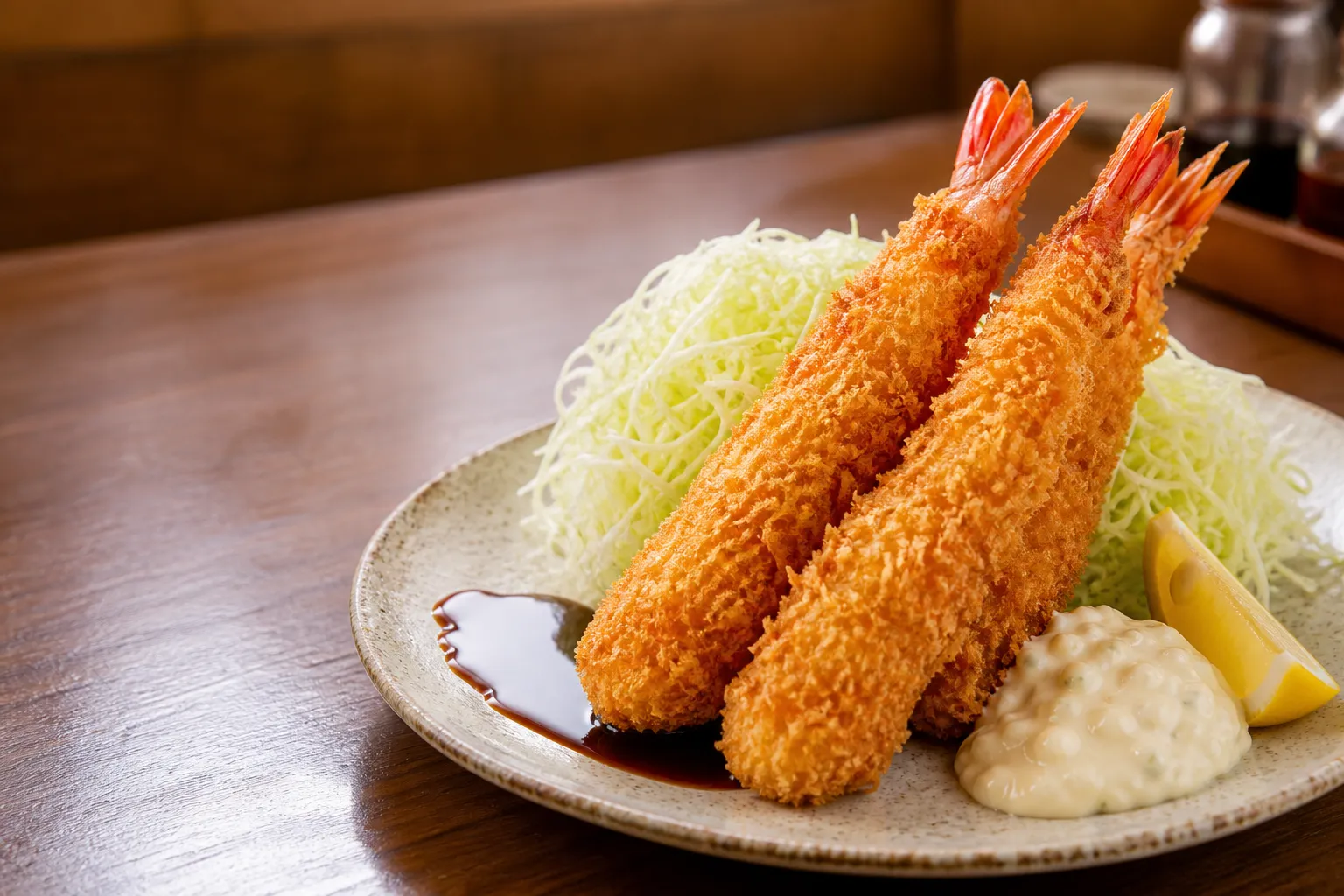
CRUNCH. That's the sound, and honestly that's the review. A fat prawn in a craggy panko coat, tail-on for a handle, a blob of tartar on the side. Pure joy in fried form.
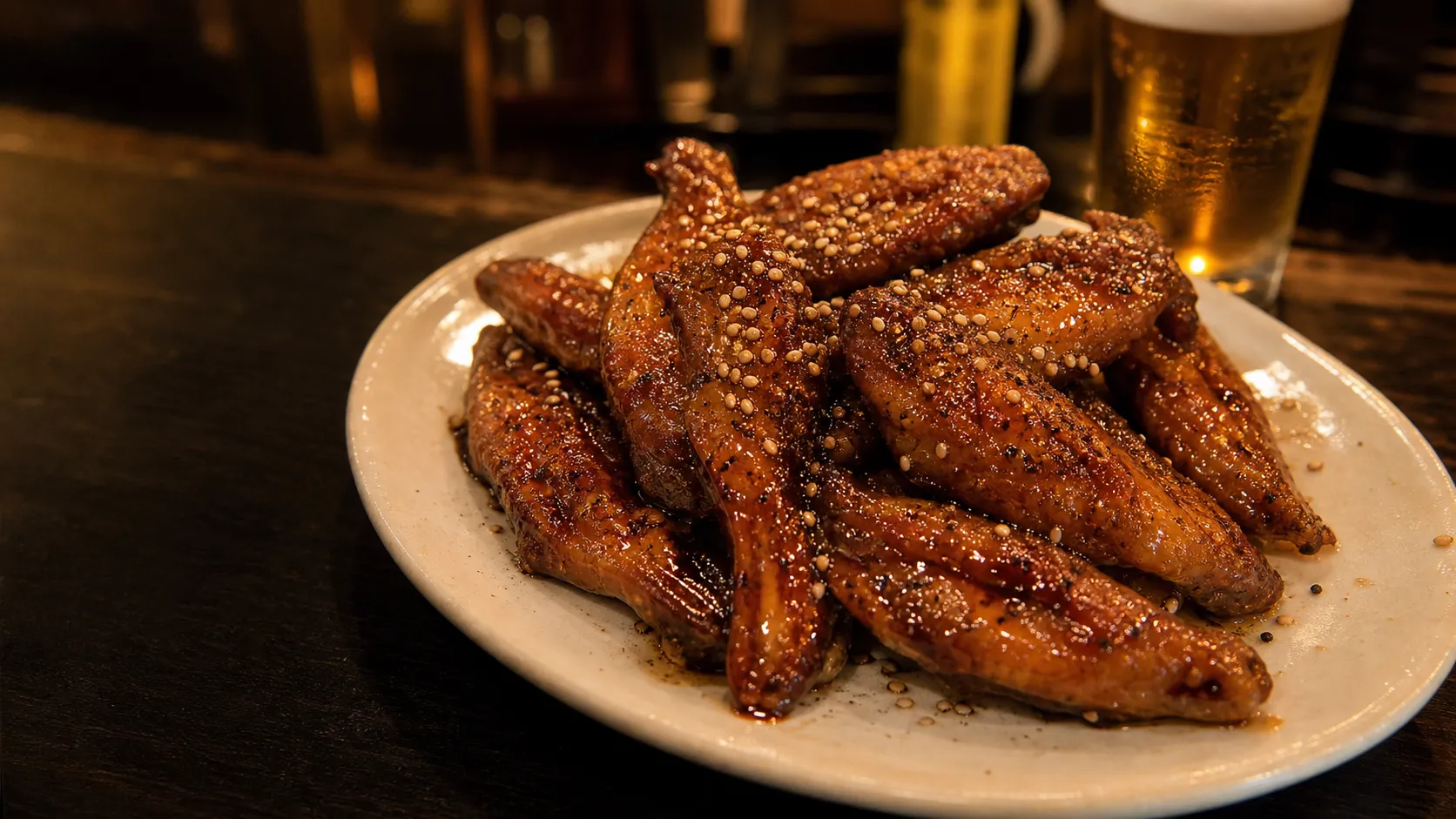
Nagoya's famous chicken wings: fried twice until they shatter, then glazed with sweet soy and coated in sesame and black pepper. You will eat ten before you realize you're doing it.
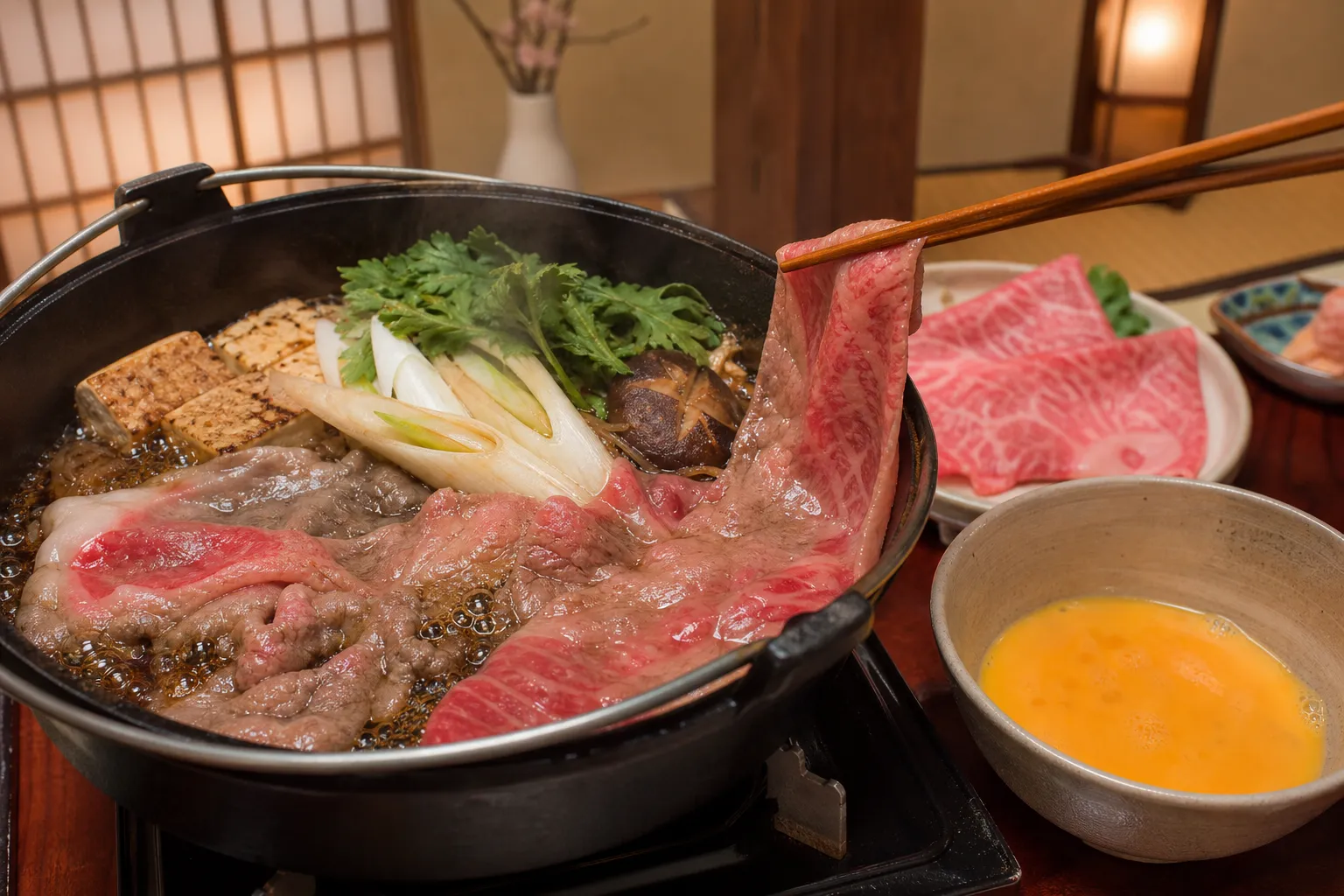
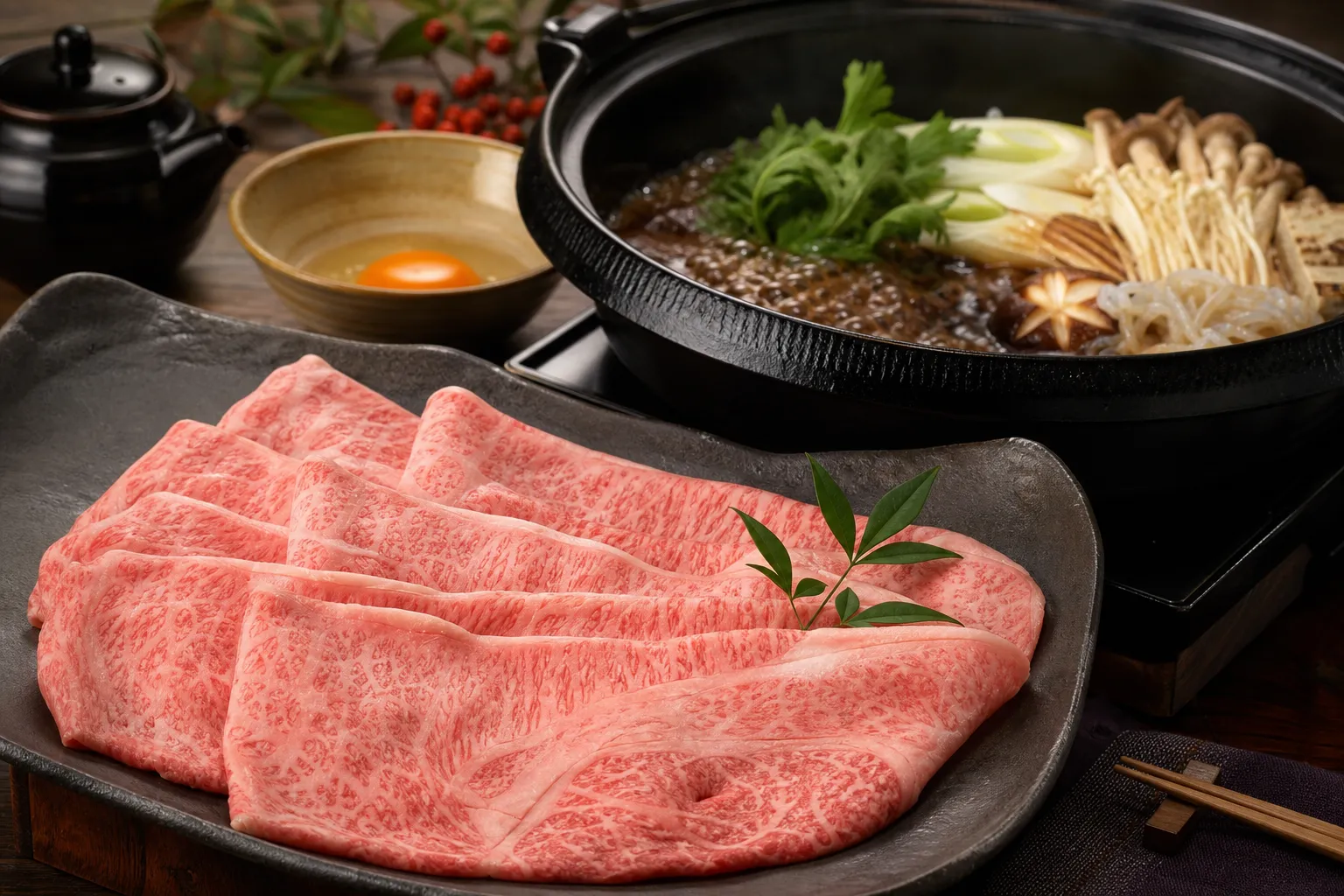
A paper-thin slice of marbled beef goes into the sukiyaki pot pink and comes out translucent, and somewhere between the pot and the raw egg dip I stopped talking mid-sentence.
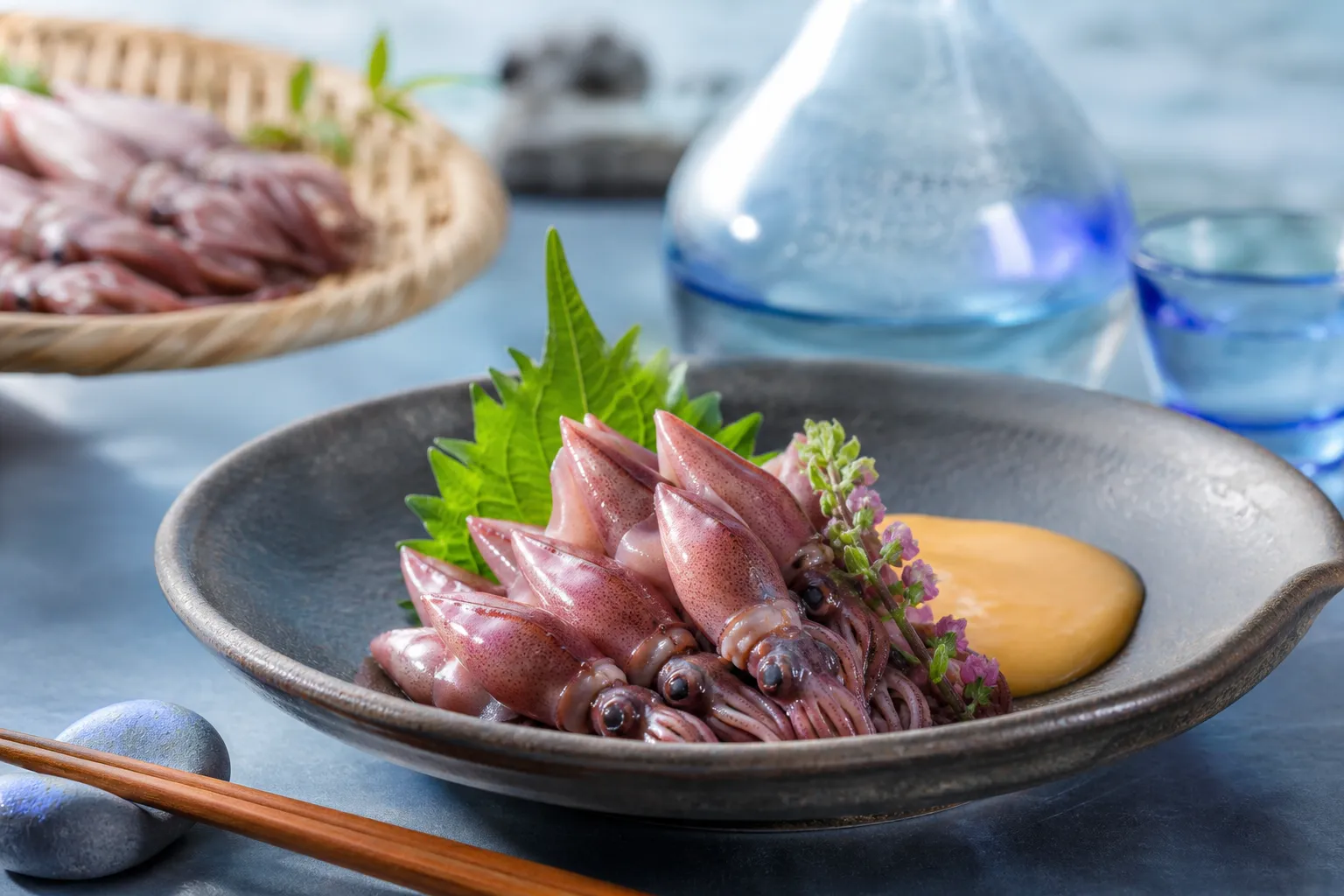
Squid the size of your thumb that glow electric blue in Toyama Bay, then arrive on your plate whole — boiled, curled, and dressed in sweet-tart vinegar-miso. Spring in one tiny, briny, burst-in-your-mouth bite.
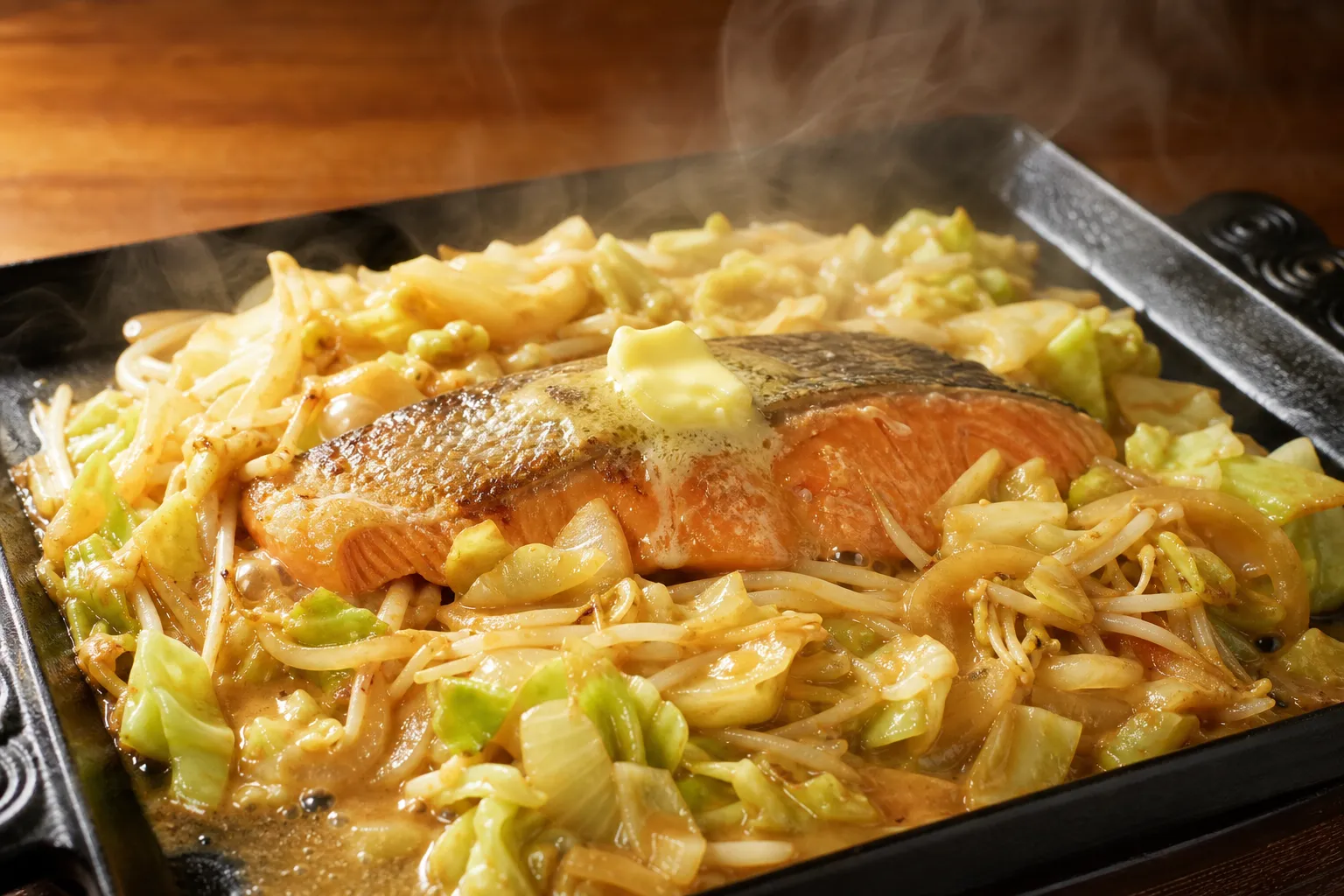
Salmon and a mountain of cabbage hit a screaming iron plate, and then someone drops in the miso-butter — that hiss is the sound of a fisherman's dinner that outgrew the boat.
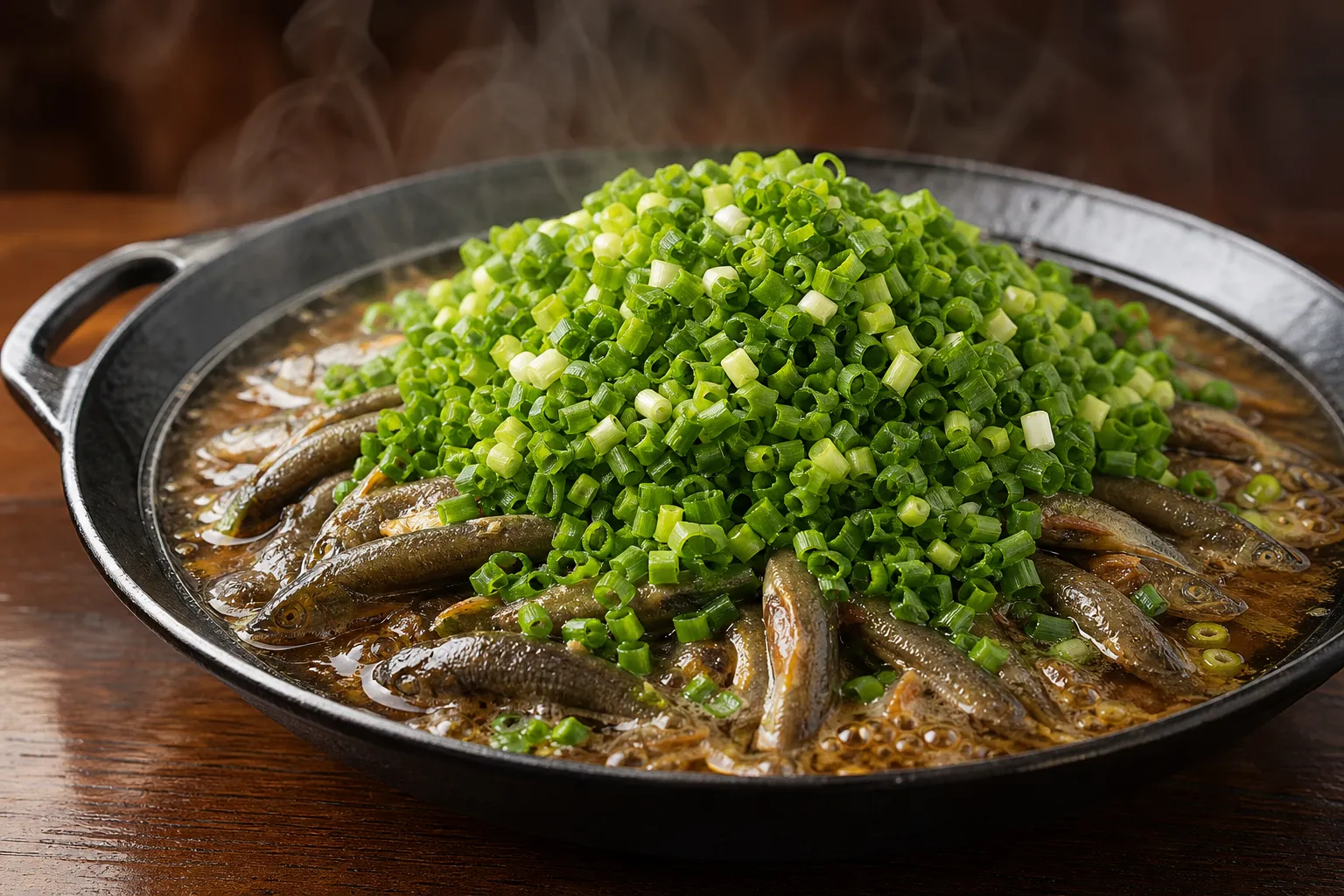
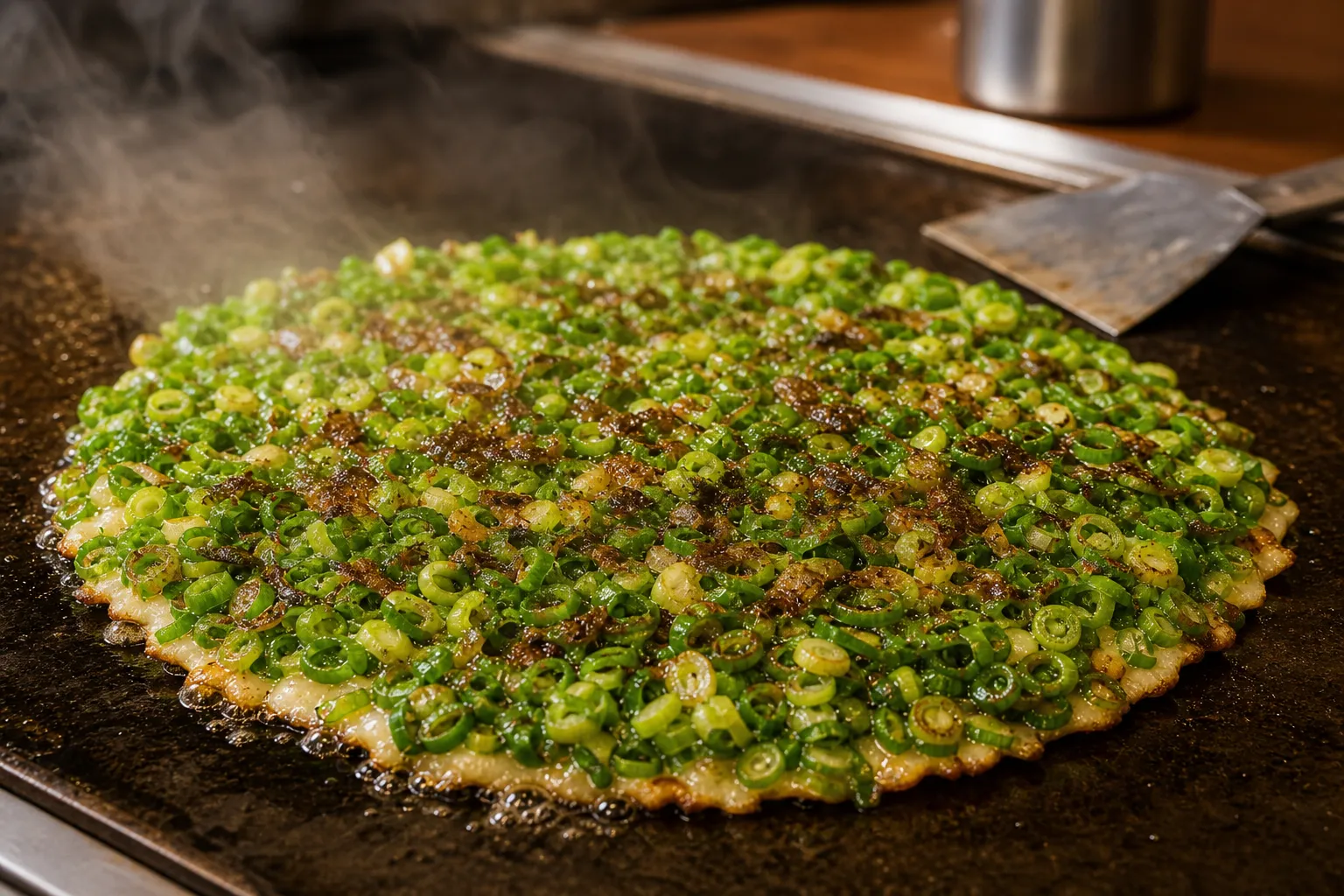
They set a flat iron pan in front of you, and it vanishes under a green avalanche — a whole mountain of chopped negi so tall you can't even see the fish it's burying. That's not garnish. That's the dish.
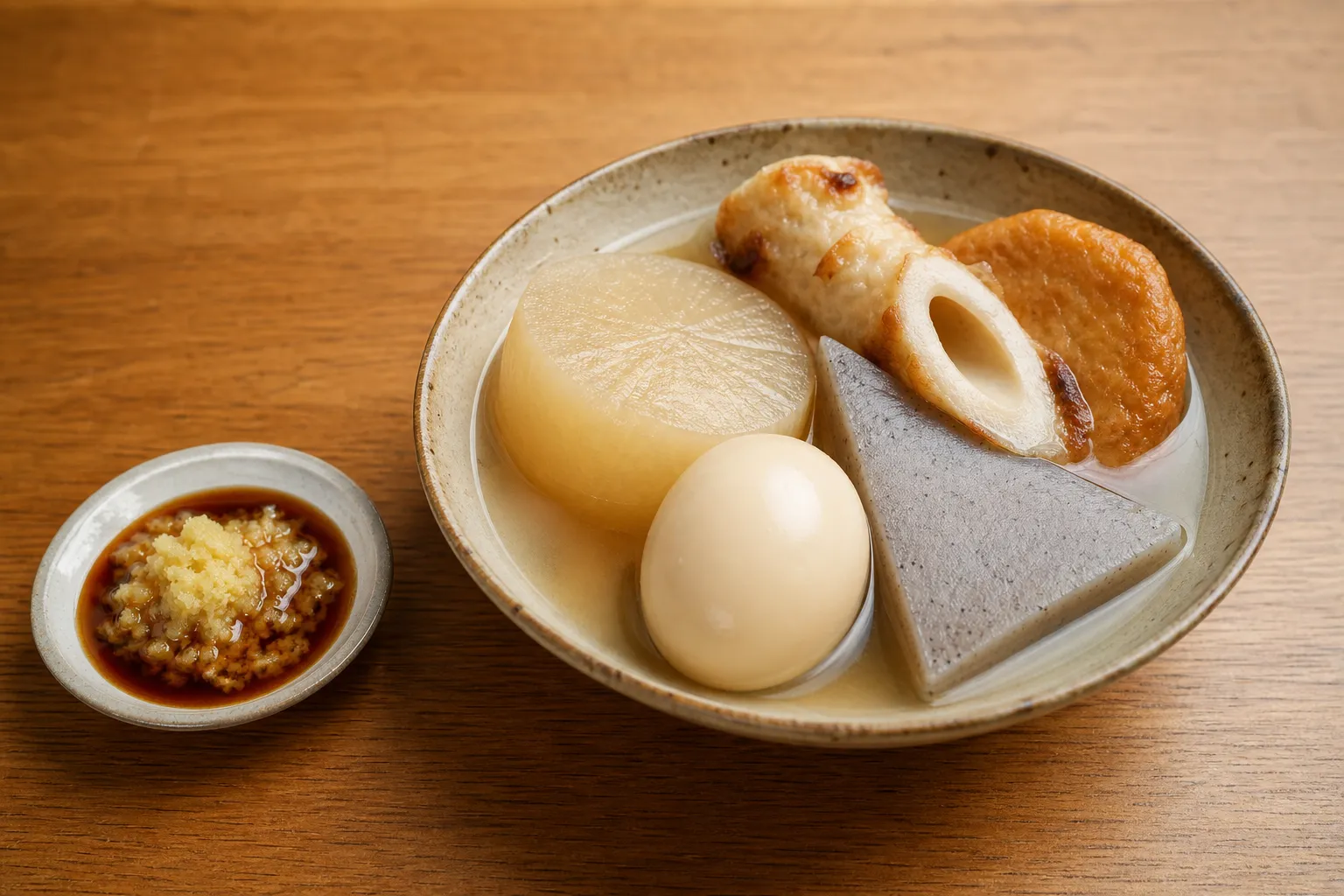
I dunked a chunk of daikon into the little dish of ginger soy sauce out of pure curiosity, and it rearranged how I think about oden completely — where has this been all my life?
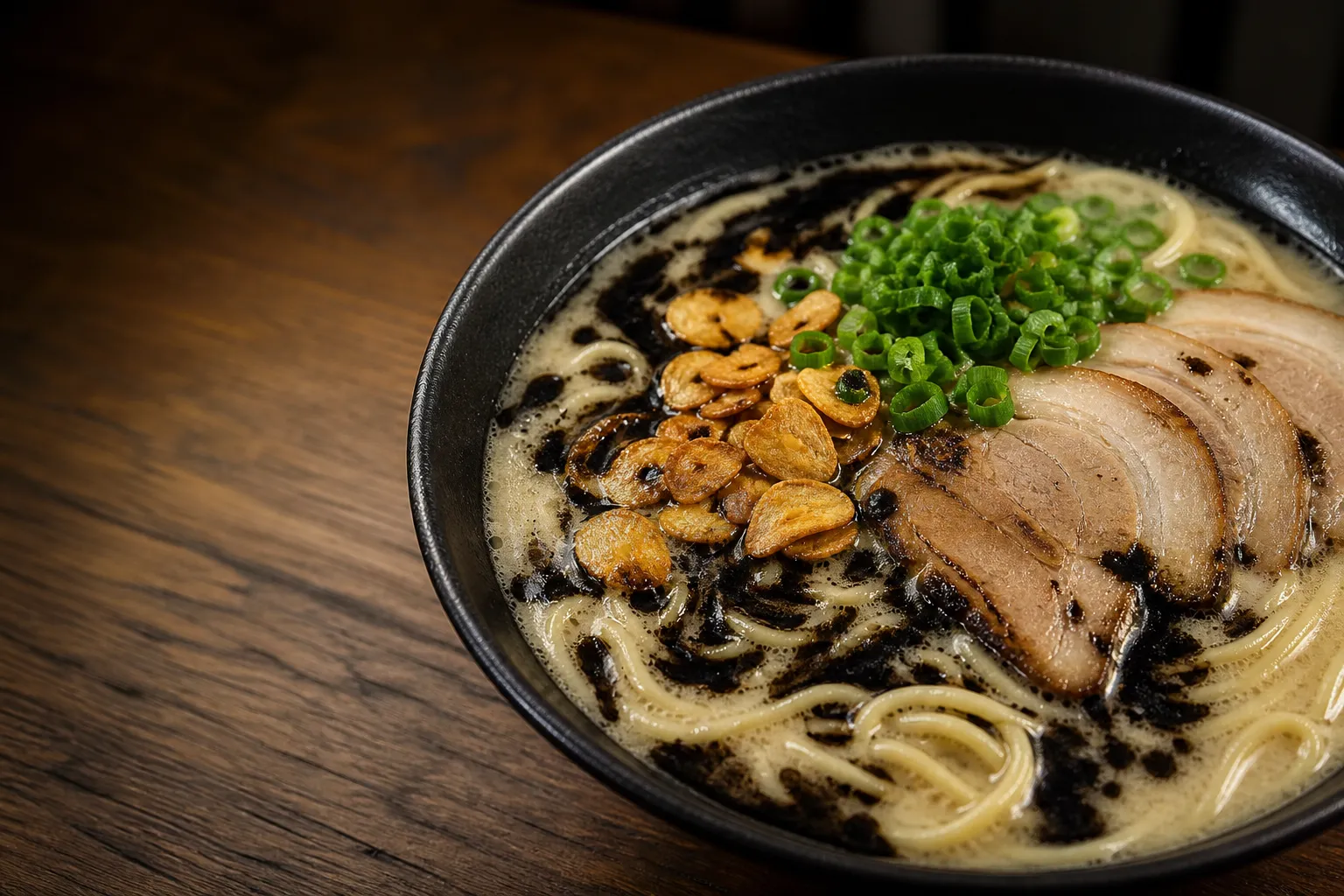
There's a black, glossy pool sitting on top of the broth, and it smells like garlic that's been dared to become something else entirely.
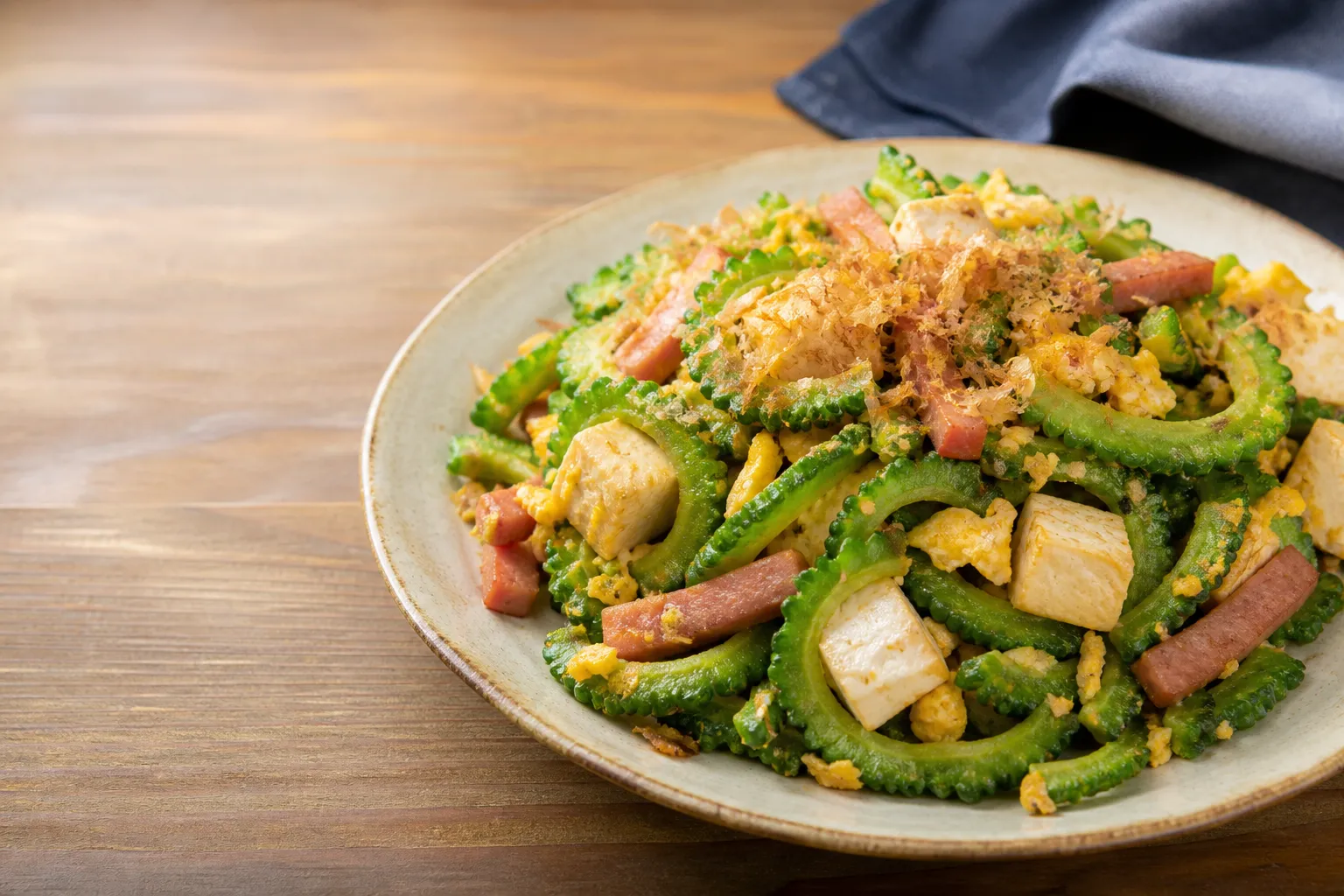
The first bite is bitter — properly, defiantly bitter — and then, somehow, you want another. Okinawa's home-style stir-fry is an acquired love that doesn't take long to acquire.
Fluffy fermented dough skewered, charcoal-grilled, and painted with sweet-savory miso until it caramelizes. Gunma's festival soul food — sticky-fingered, smoky, unforgettable.
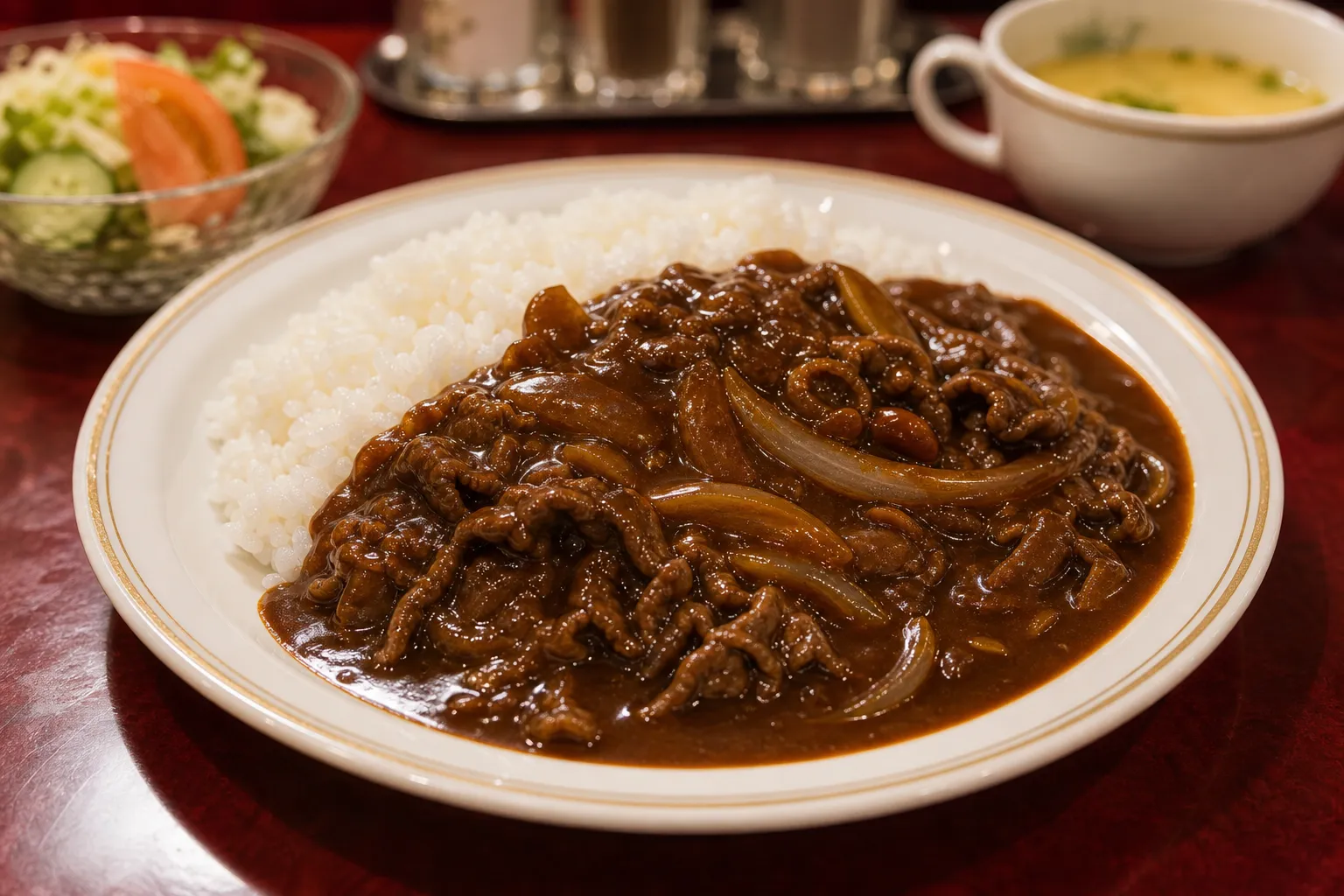
Curry's quieter, browner cousin — thin beef and onions melted into a glossy demi-glace sauce over rice, and the dish your Japanese friend's mom probably makes best.
Most oden is about the broth. This one is about the fish cakes — thirteen master kamaboko makers in one pot — and it ditches the mustard for tangy plum miso. Get off the Shinkansen for it.
One of Japan's three oldest wagyu brands, its marbled fat melting into sweet nothing the second it hits the hot sukiyaki pan — Shiga's 400-year-old beef that samurai smuggled to the shogun.
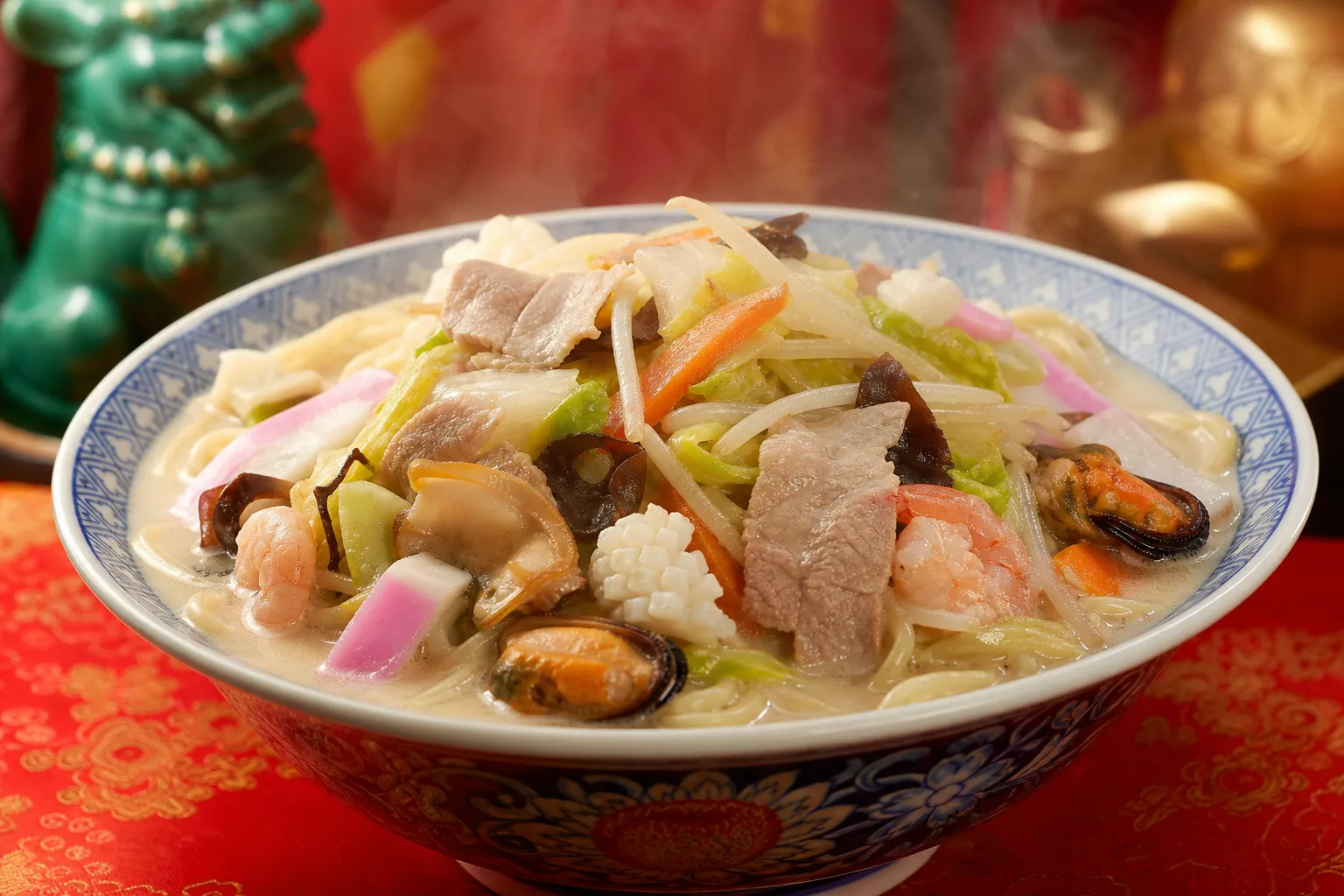
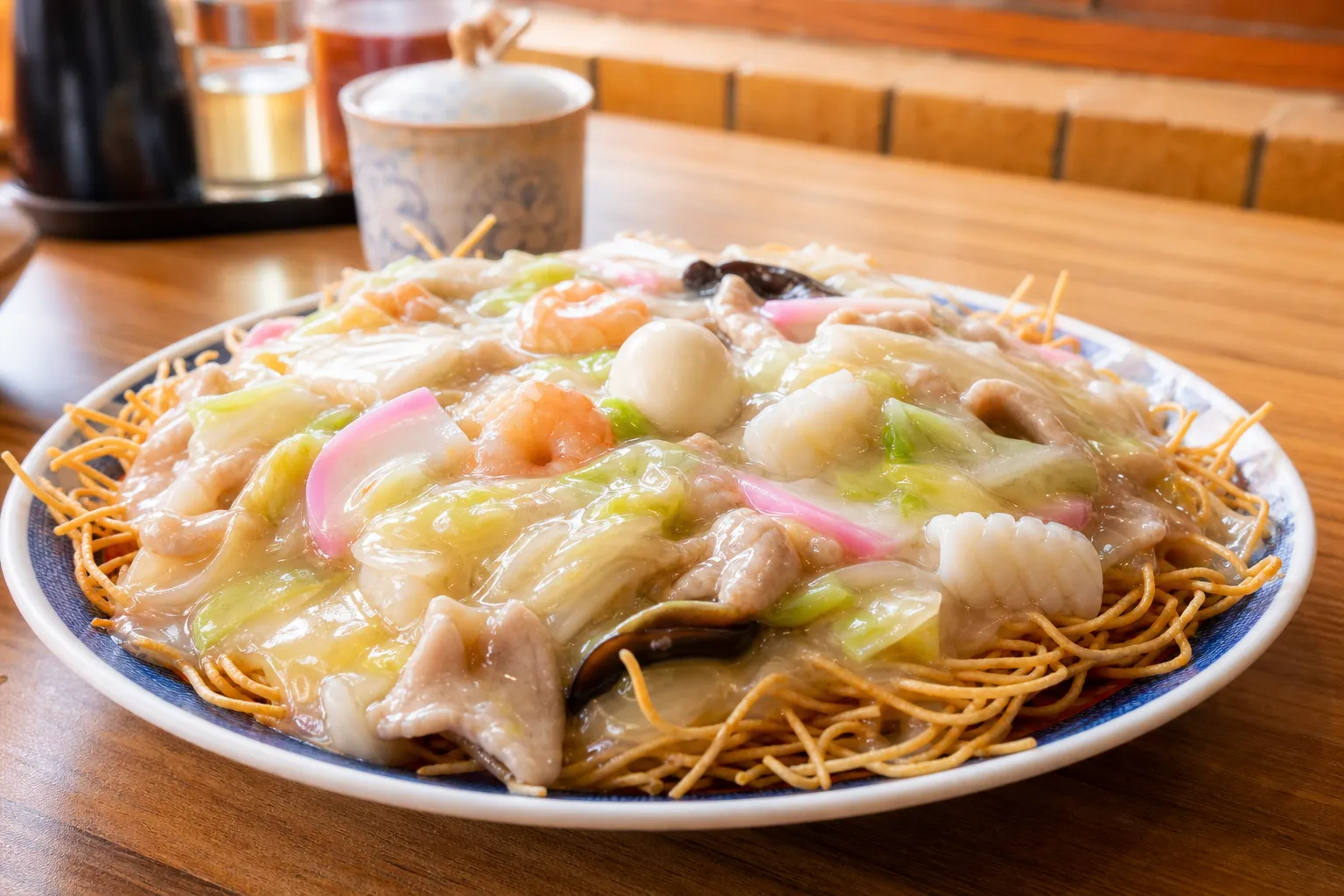
Thick noodles in a milky pork broth buried under a stir-fried mountain of pork, squid, shrimp, cabbage, and fish cake — all cooked in one pan. Invented to feed broke students, perfected into one of Japan's great bowls.
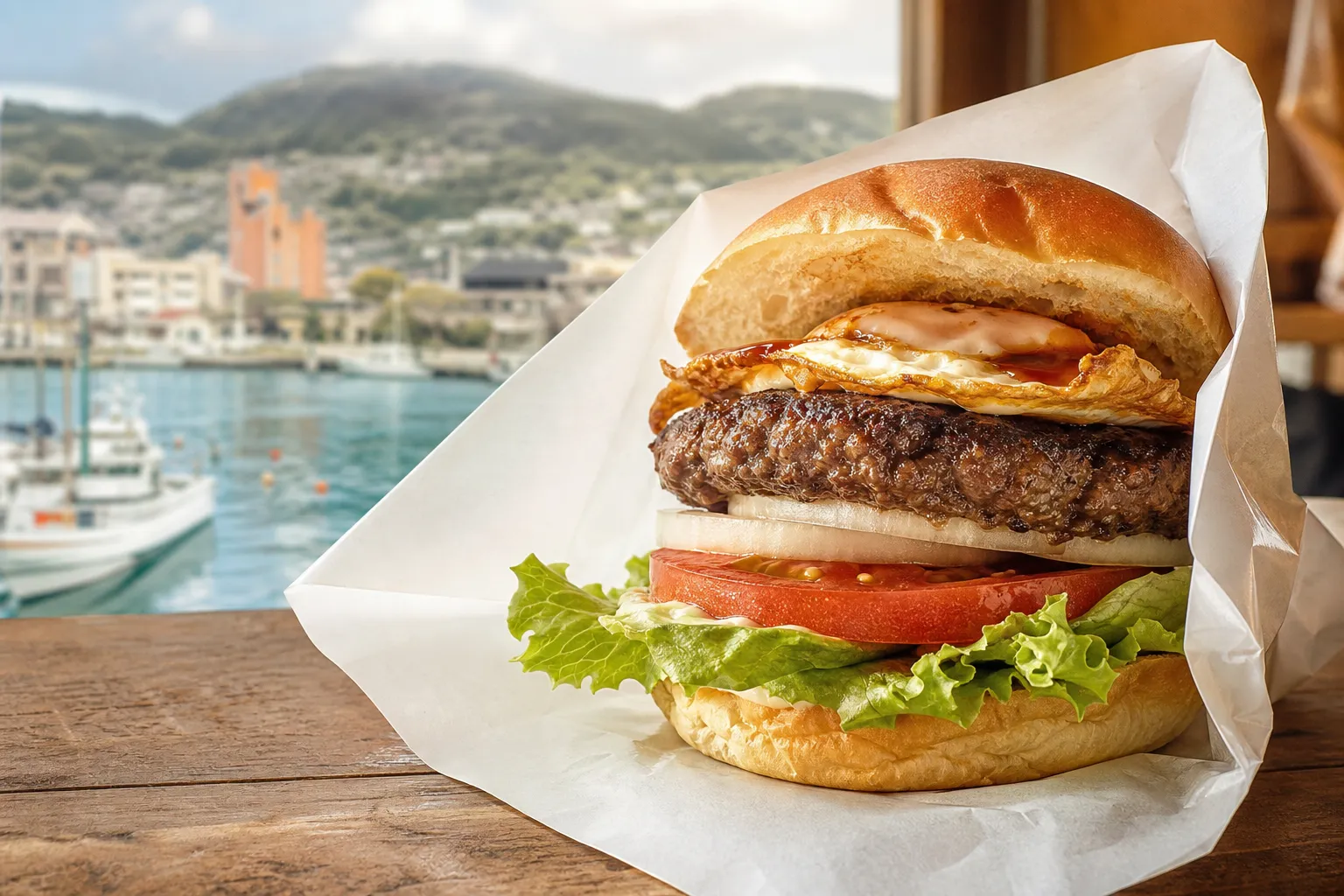
It arrives the size of your face, wrapped in paper like a gift you didn't earn, and you will need both hands and possibly a moment alone with it.
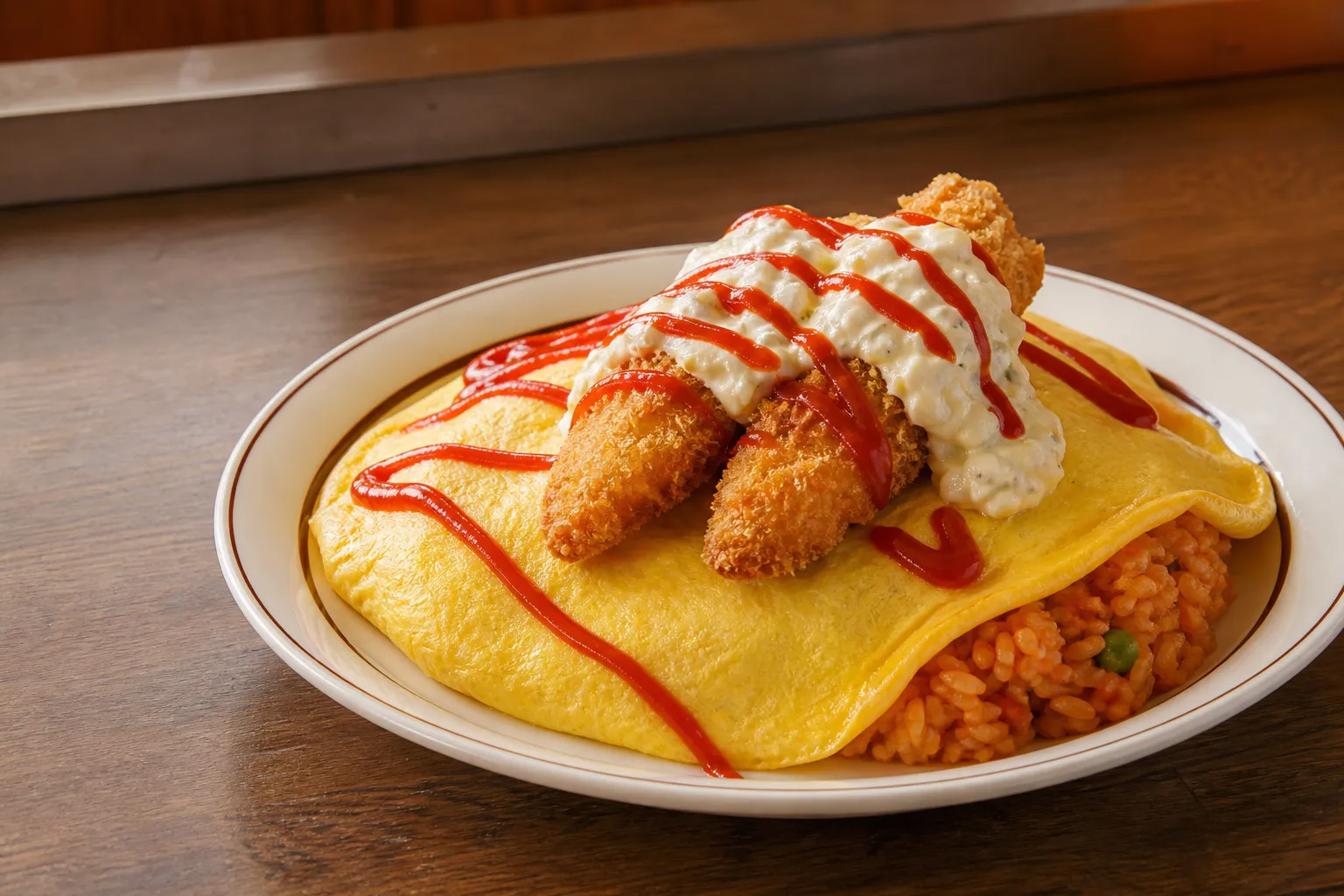
Ketchup rice, wrapped in egg, crowned with deep-fried fish, drowned in tartar sauce and a red ketchup swirl — Kanazawa built a plate with zero business working this well, and it works perfectly.
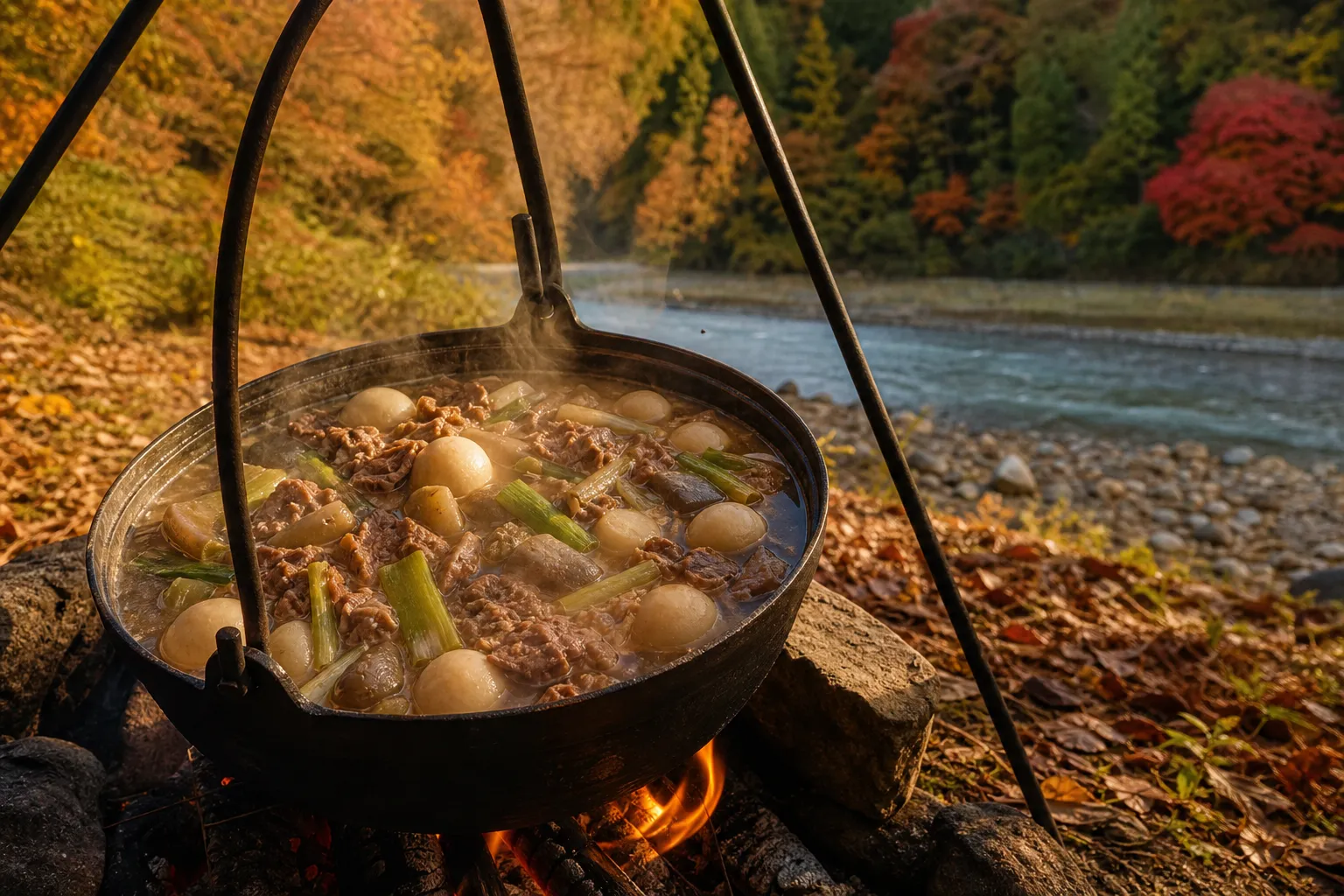
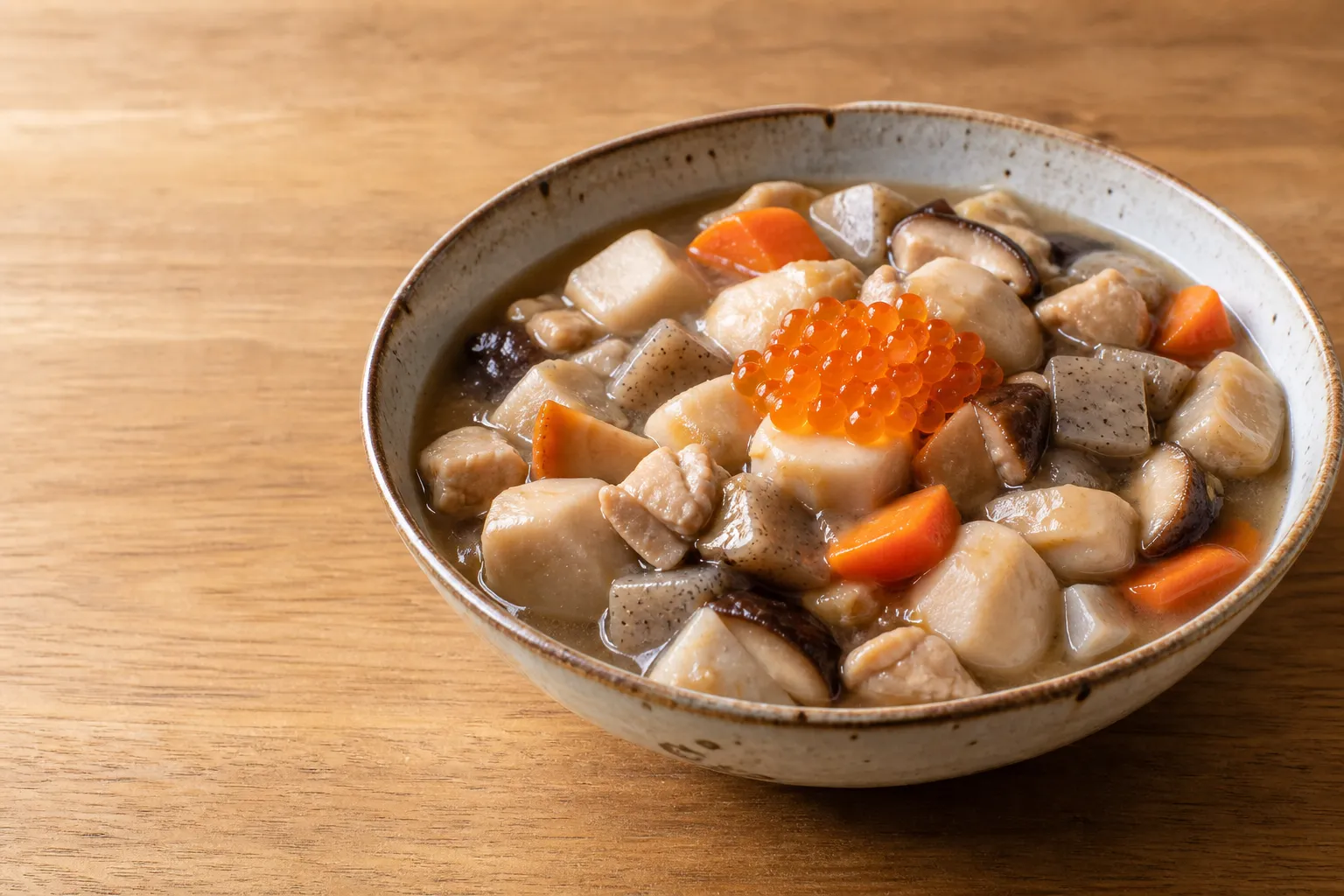
A bubbling pot of taro and beef in sweet soy broth, cooked on a riverbank under autumn leaves with everyone you know. It's not just a stew — it's a season, and a reason to gather.
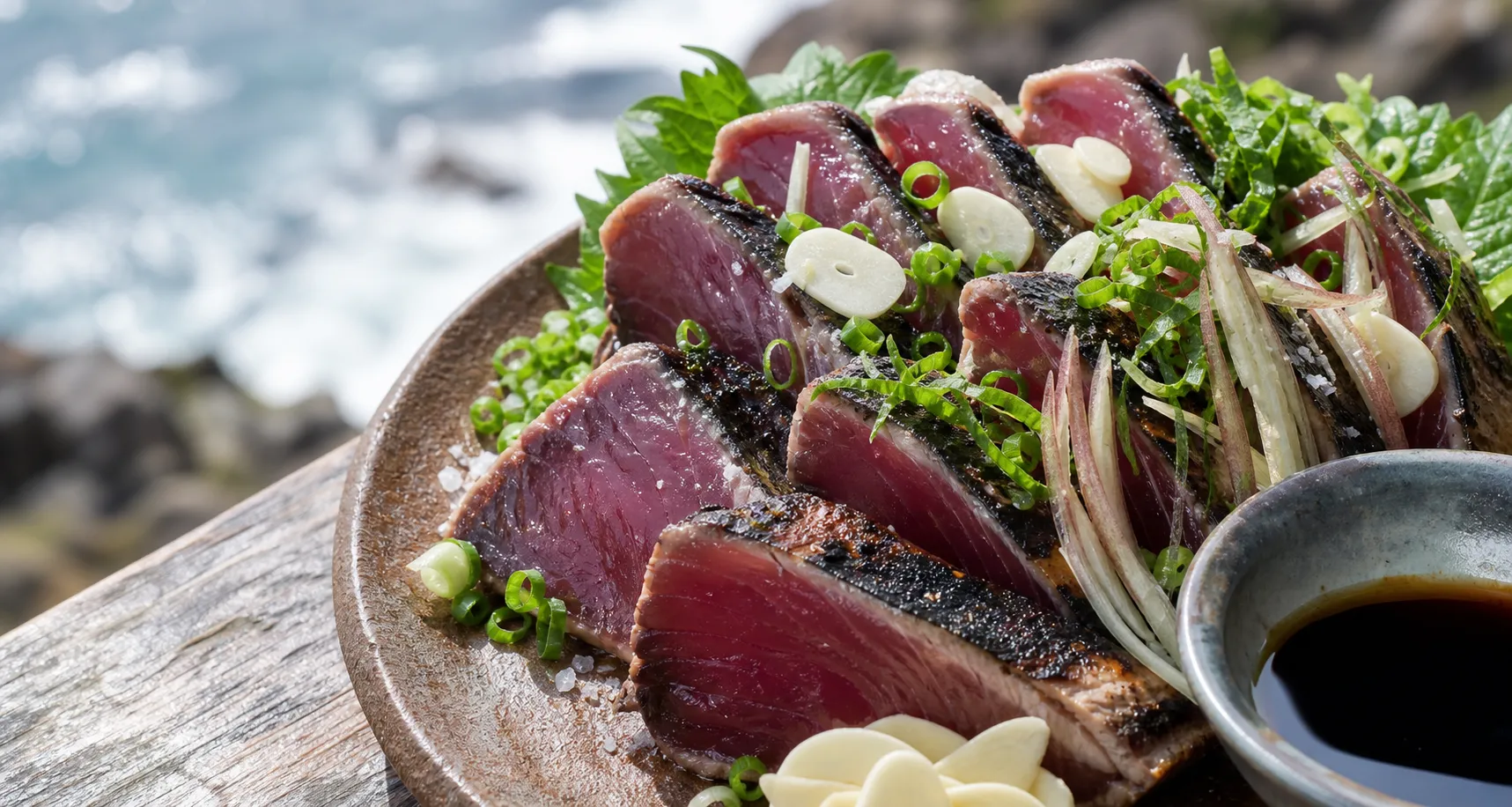
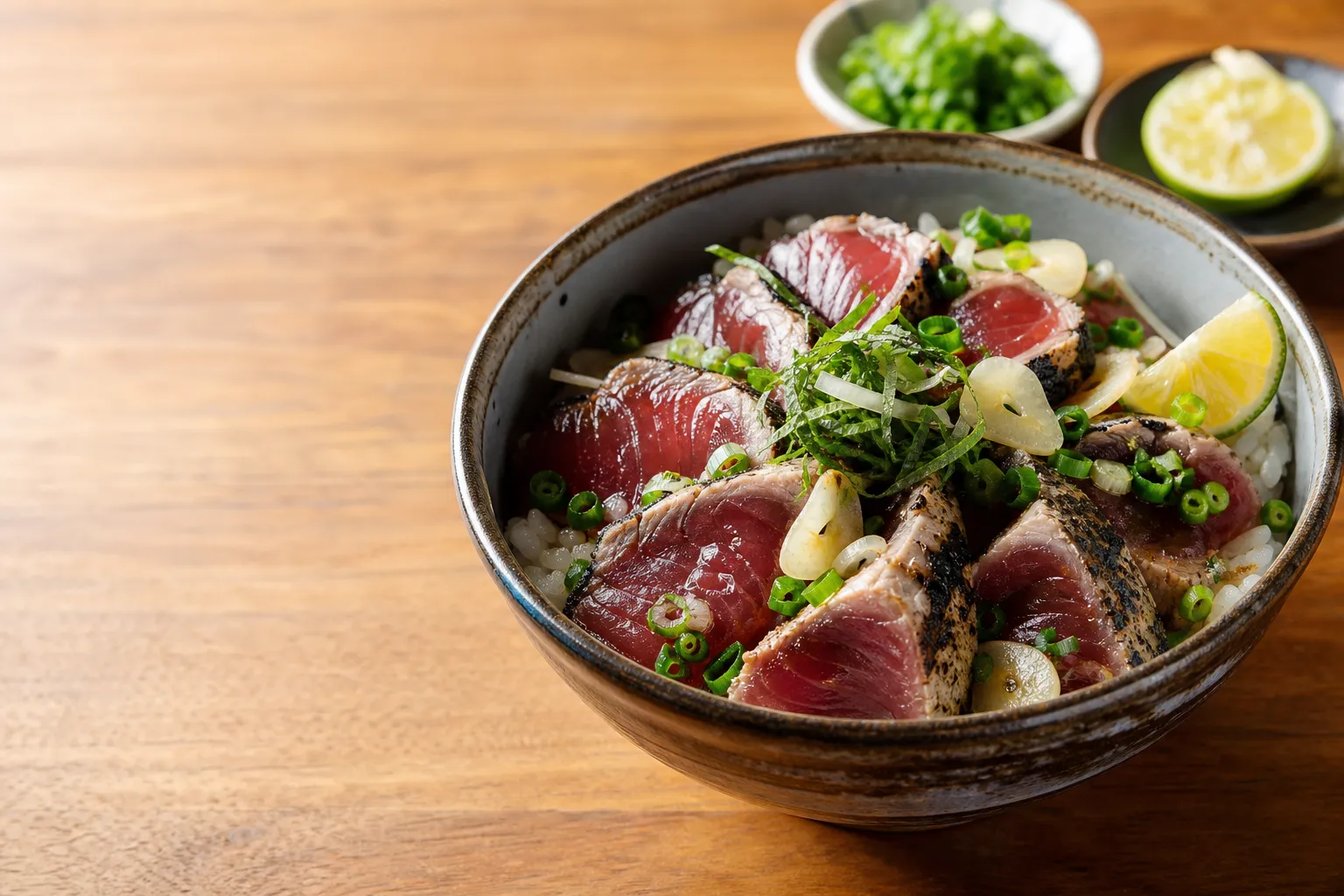
Bonito seared over a roaring straw fire — charred and smoky on the outside, ruby-red and raw within. Kochi's signature, and one of the great fish dishes of Japan.
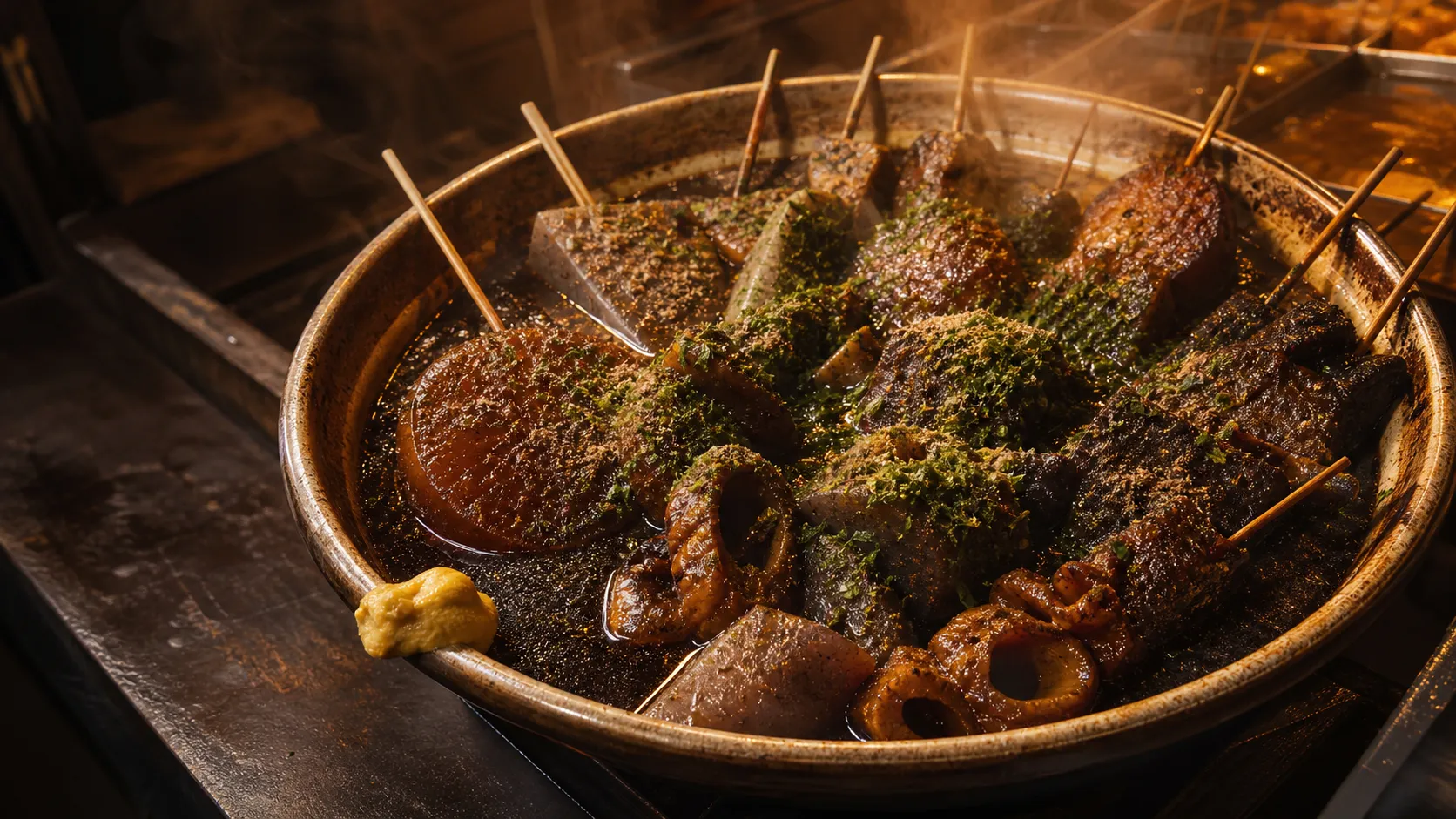
Black broth, beef tendons, skewered everything, finished with dried sardine powder and aonori. Shizuoka's oden looks intimidating, tastes like the deepest umami you've ever encountered, and costs about 100 yen per stick.
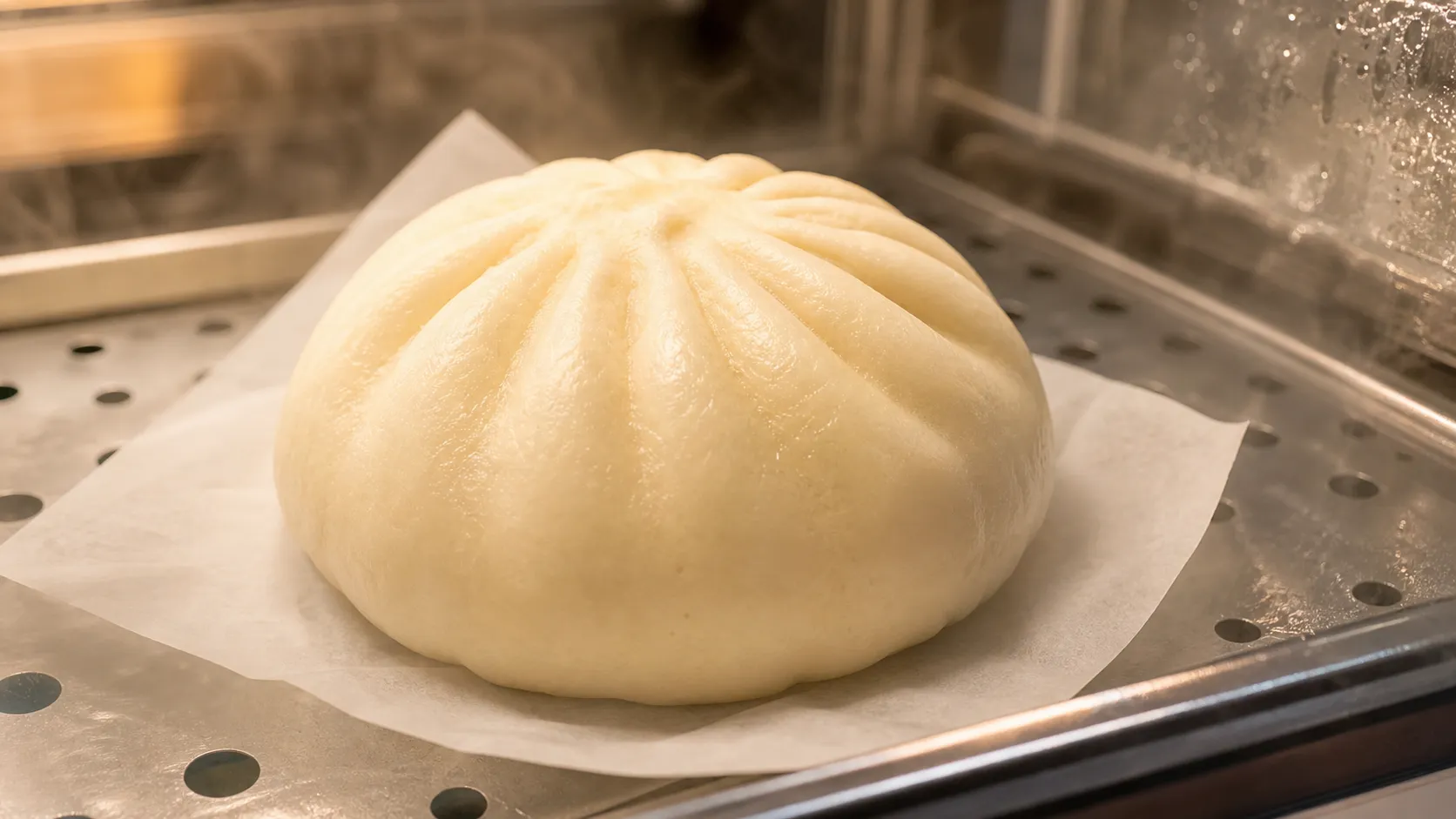
A fluffy steamed white bun stuffed with juicy seasoned pork — pulled hot from the convenience-store steamer on a cold day. Cheap, warming, and one of winter's small perfect pleasures.
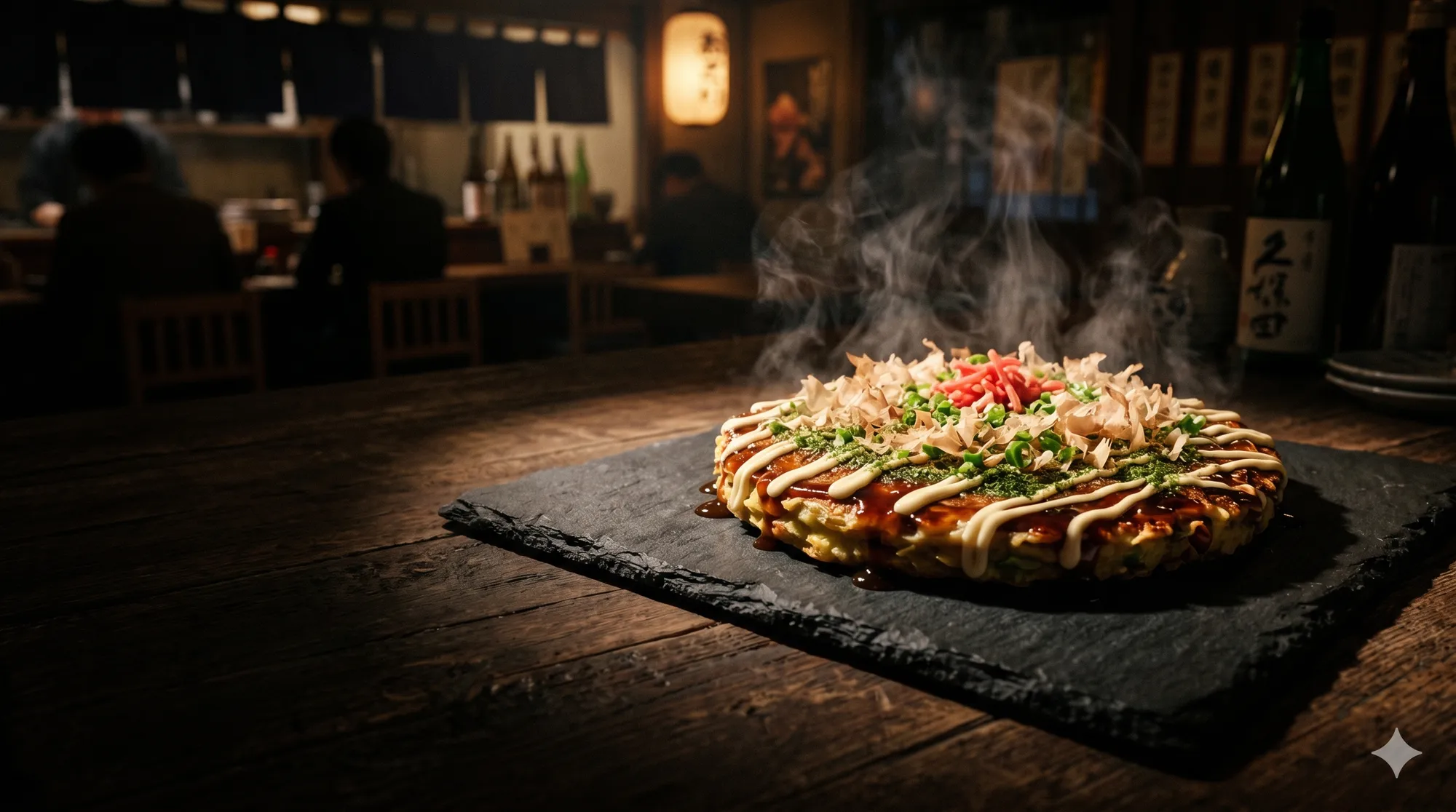
'Grill what you like' — a sizzling cabbage-packed pancake you build, cook, and drown in sauce and mayo. Osaka mixes it, Hiroshima layers it, and both will defend their honor.
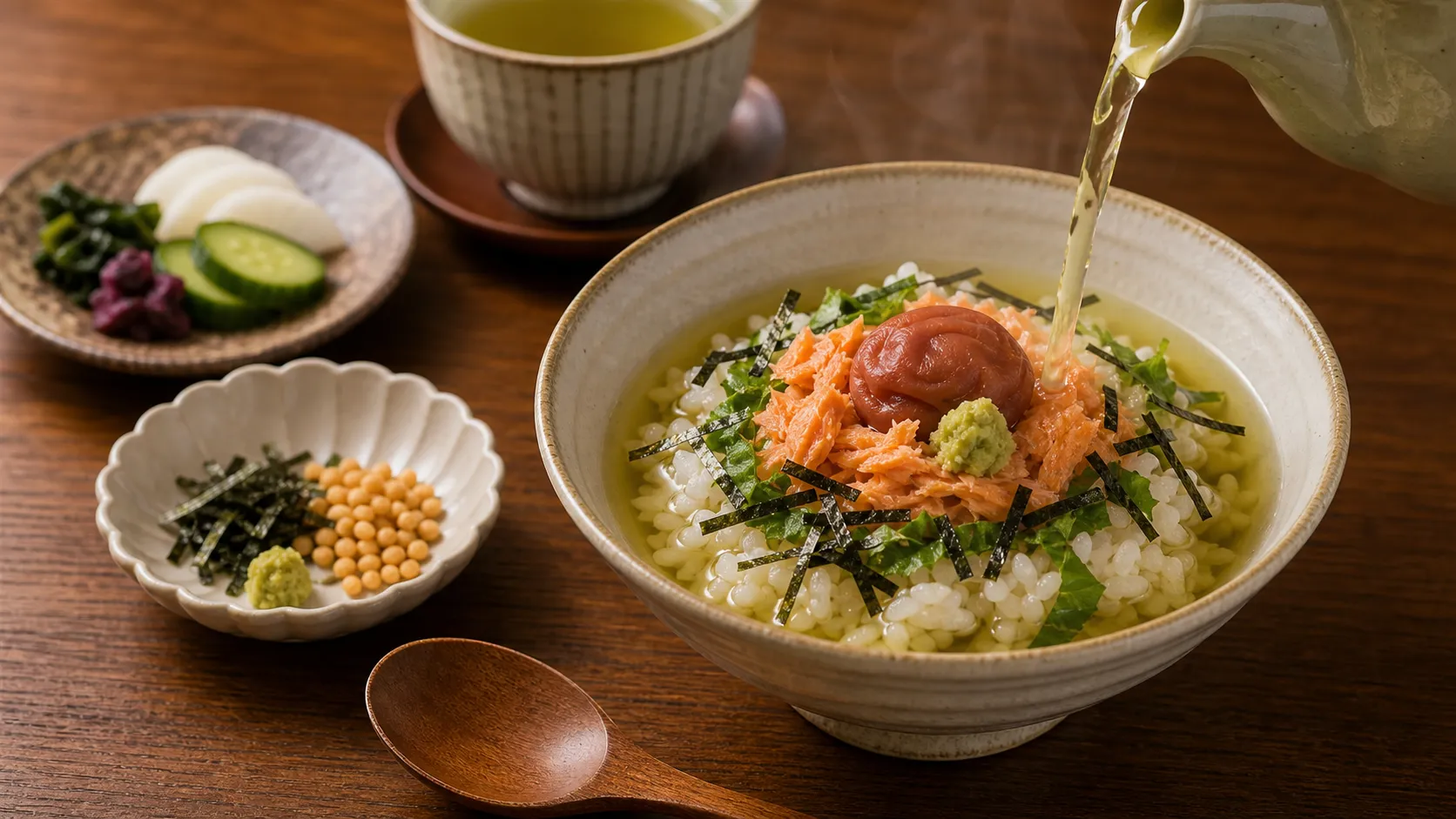
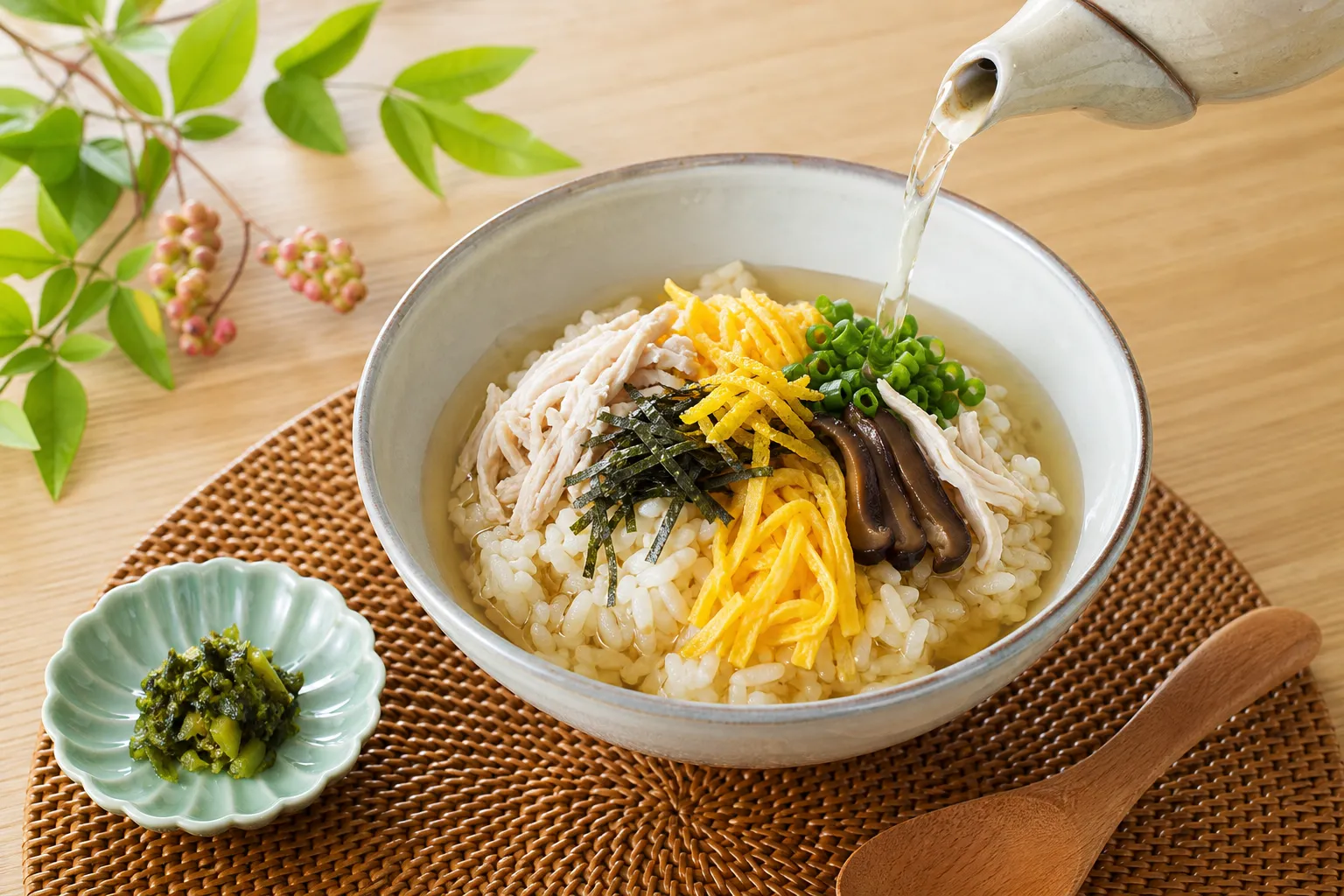
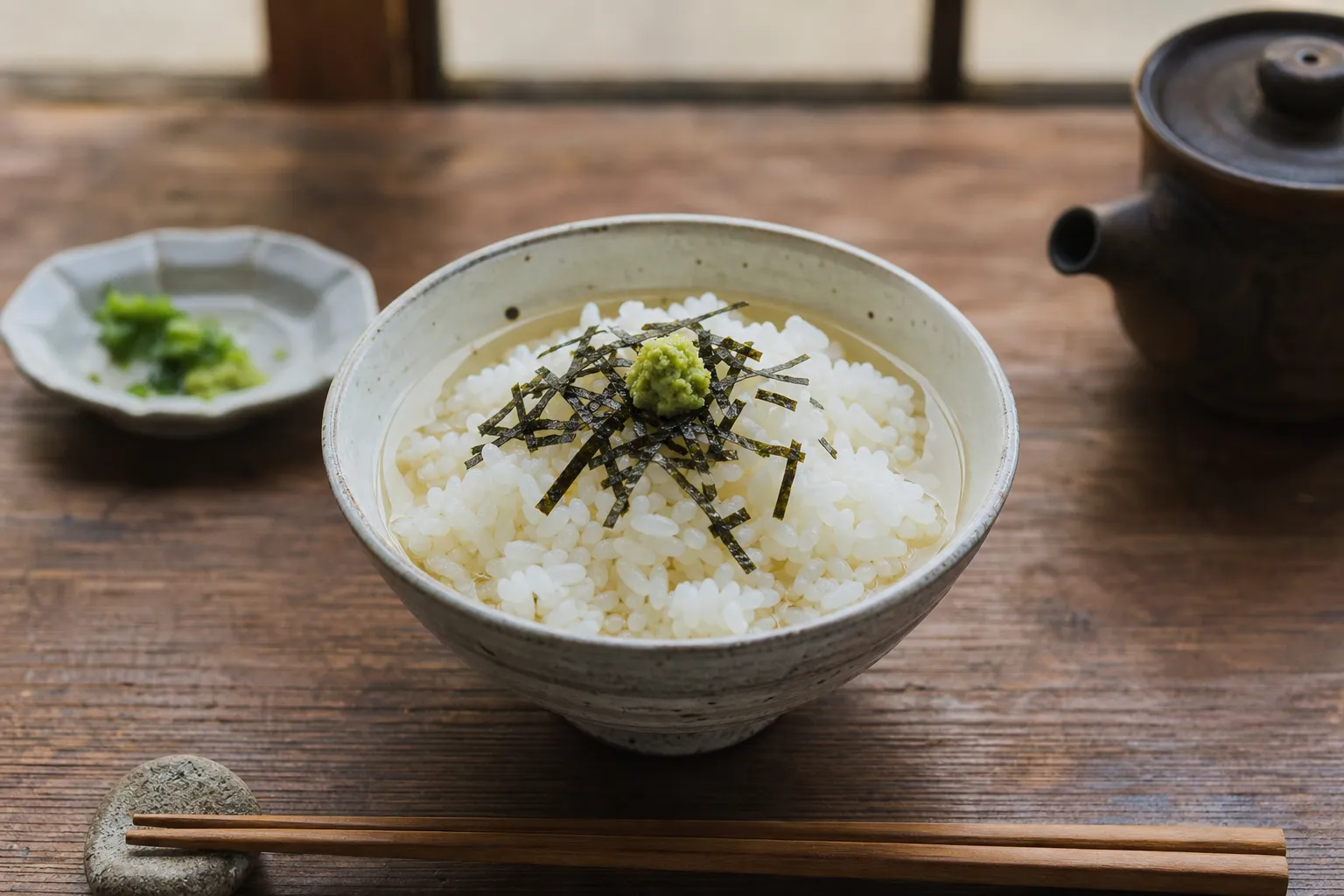
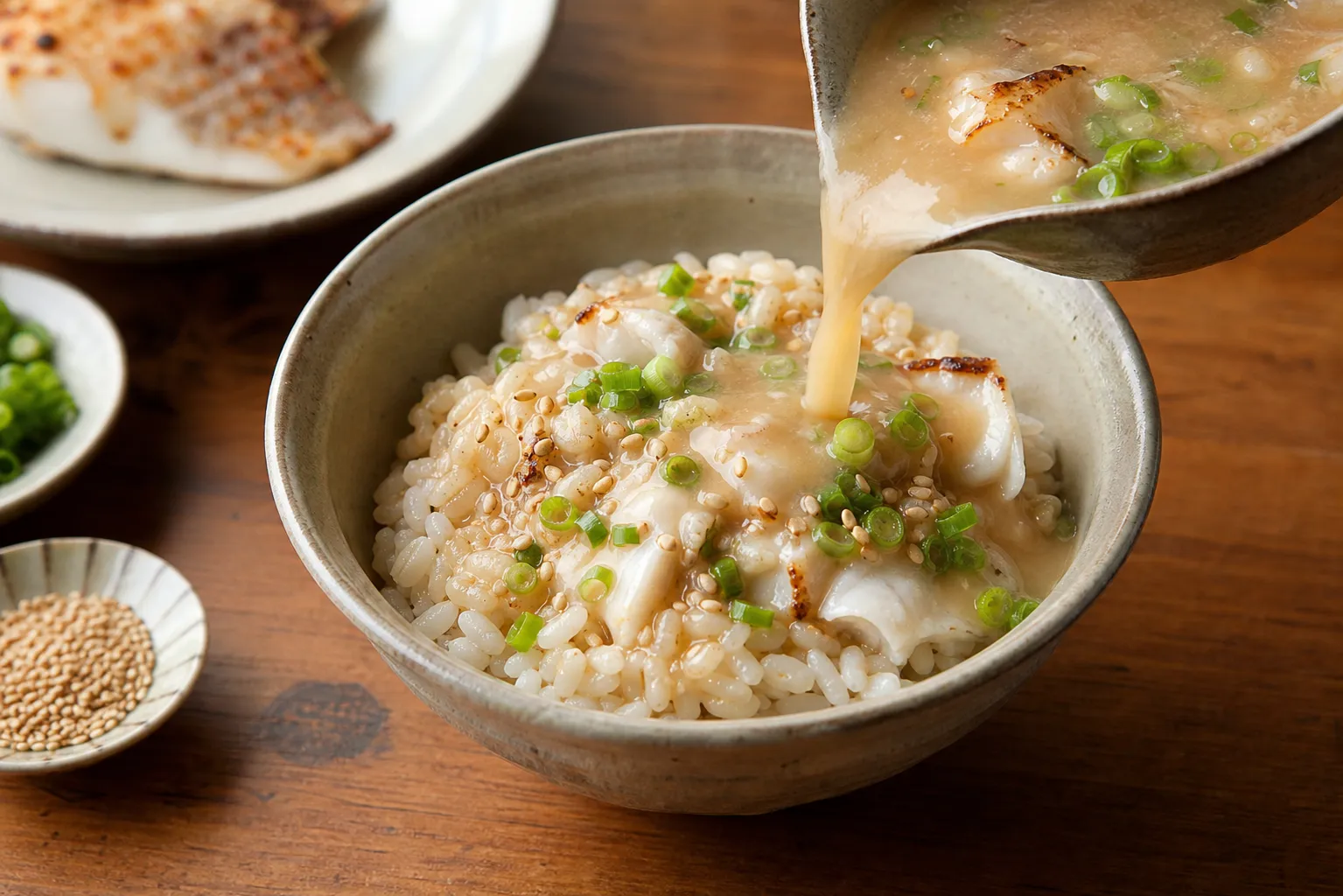
Pour hot green tea or dashi over a bowl of rice, scatter something savory on top, and eat — the gentlest, most quietly restorative dish in Japan, the one you reach for late at night when you just need a warm bowl to make everything okay.
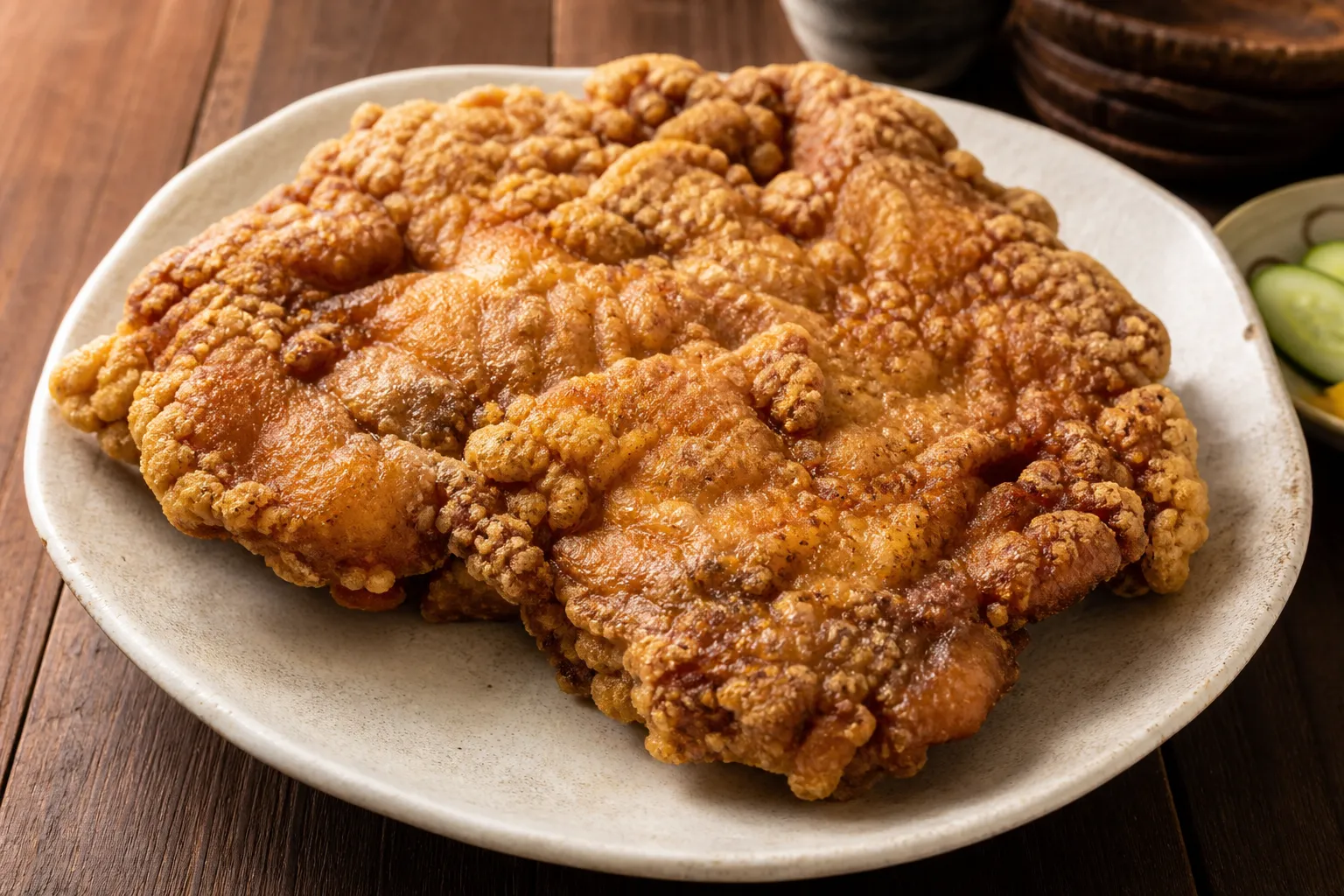
It's not a piece of fried chicken — it's a whole flattened thigh the size of your face, cragged with garlic-soy crust, and it arrives daring you to finish it.
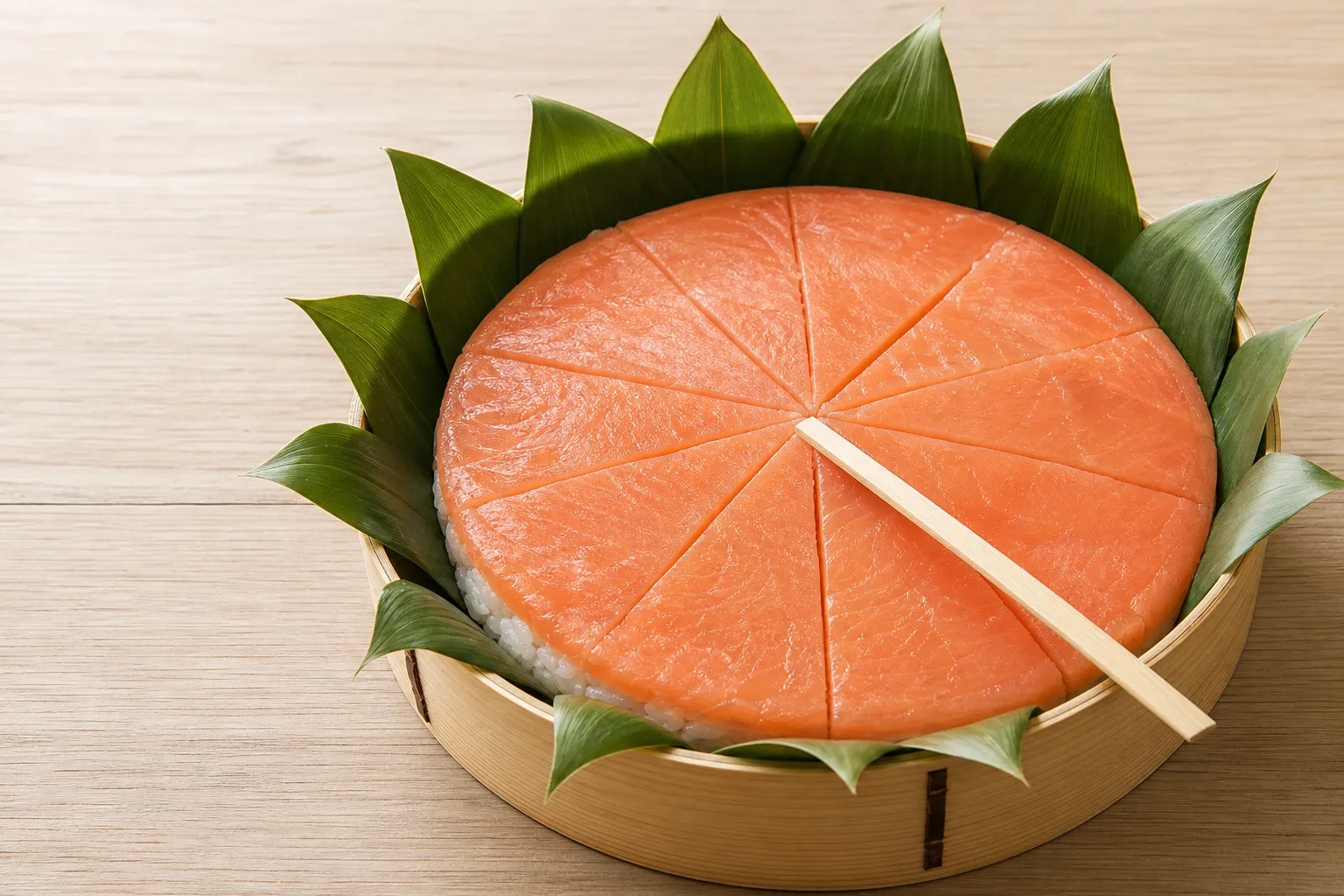
A pink wheel of pressed trout sushi, packed tight in a round wooden box and wrapped in bamboo leaves. You unwrap it like a present and cut it like a cake. Toyama's most beautiful lunch.
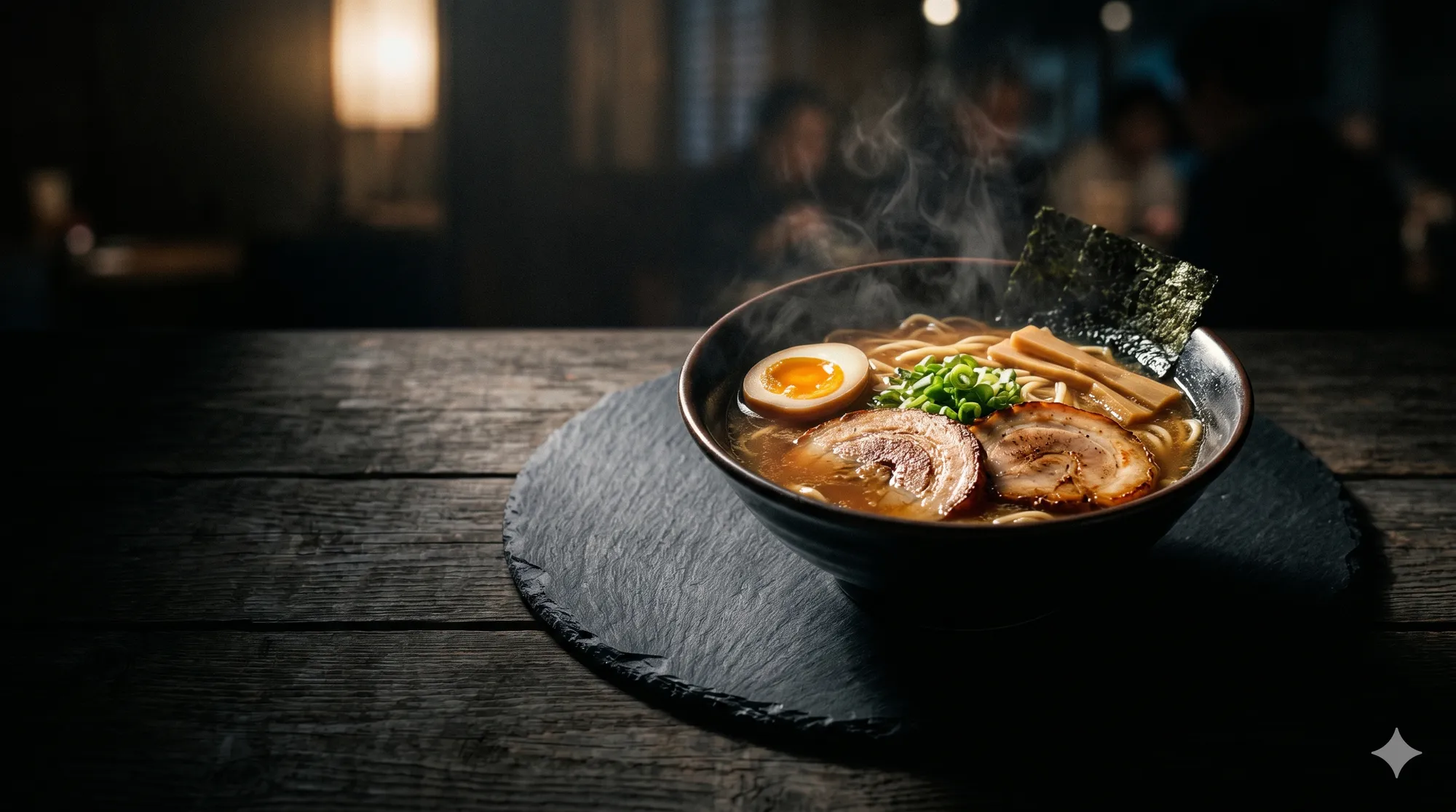
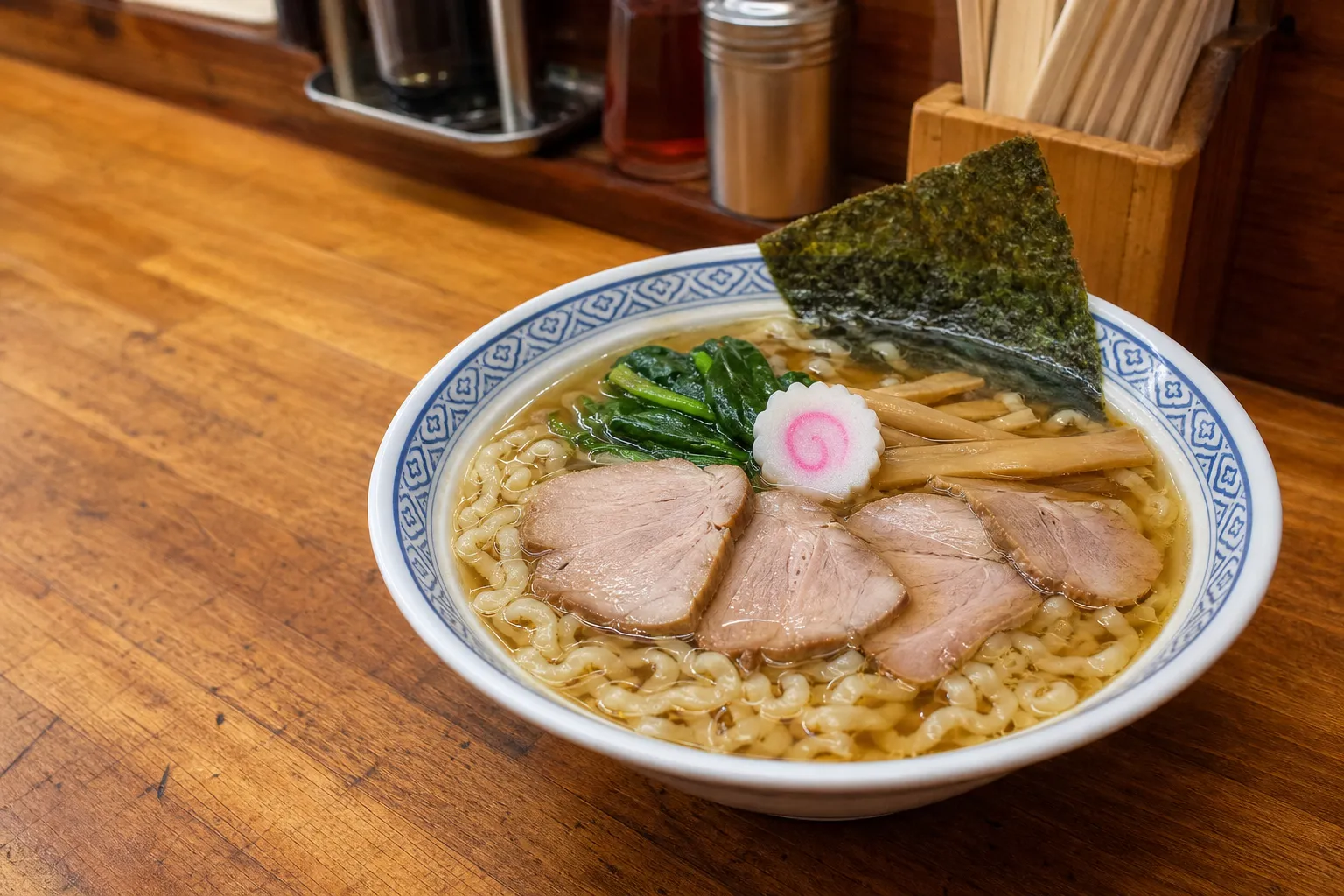
A bowl of noodles in soup — and somehow one of the most obsessed-over foods on the planet. Shoyu, miso, shio, tonkotsu: here's how to read a ramen menu and slurp like you mean it.
Noodles so thick they look like udon, slicked in a dark, intense sauce, with barely any toppings to get in the way. A factory town's honest, no-frills yakisoba — and it's proud of it.
Ice-cold soba under a pile of savory simmered meat in chilled soy-dashi. Yamagata's genius answer to brutal summer heat — cold, slurpable, and quietly addictive.
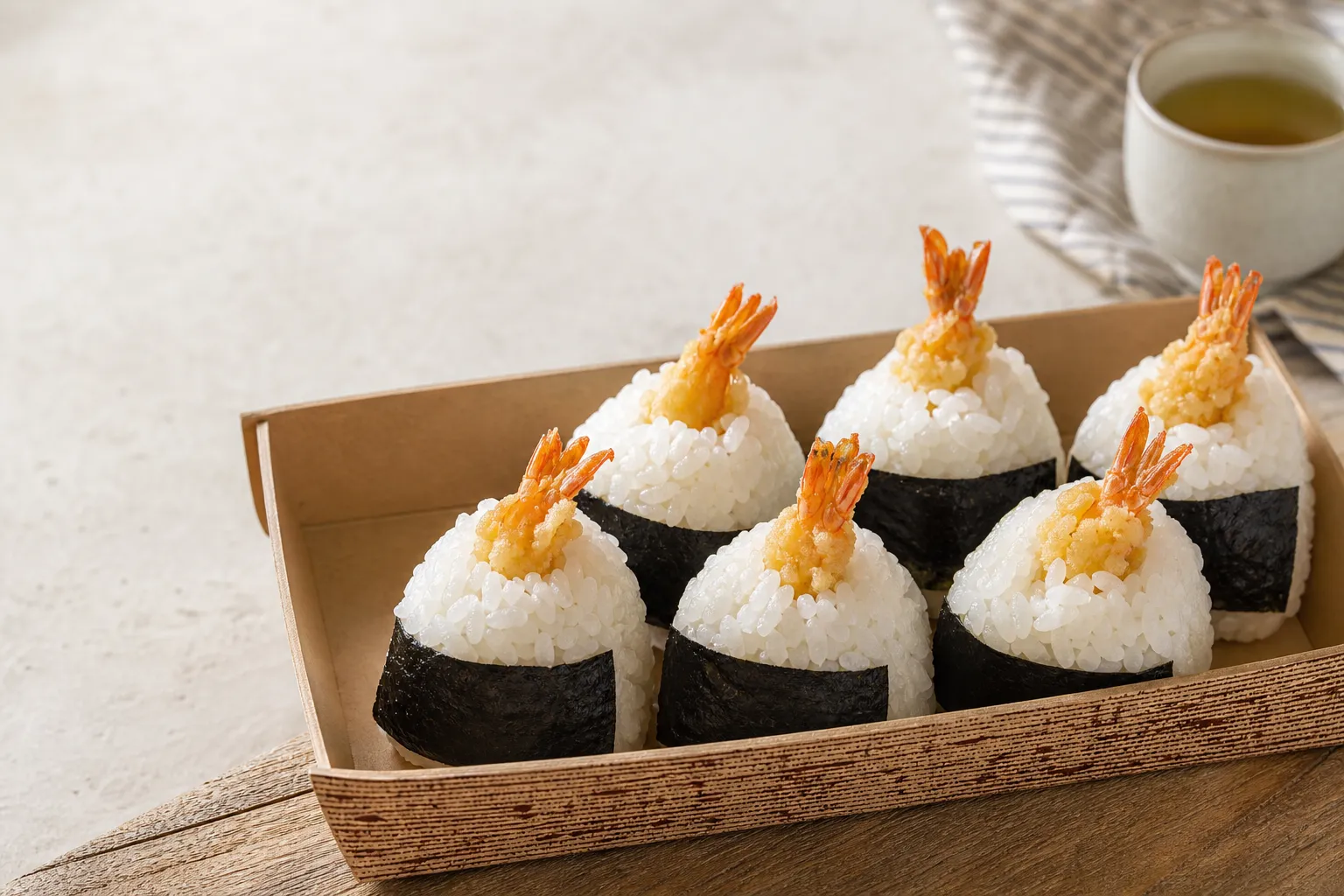
Little rice balls with a crisp shrimp tempura tail poking out of each one — Nagoya's portable genius, sold by the boxful and gone before your train pulls out of the station.
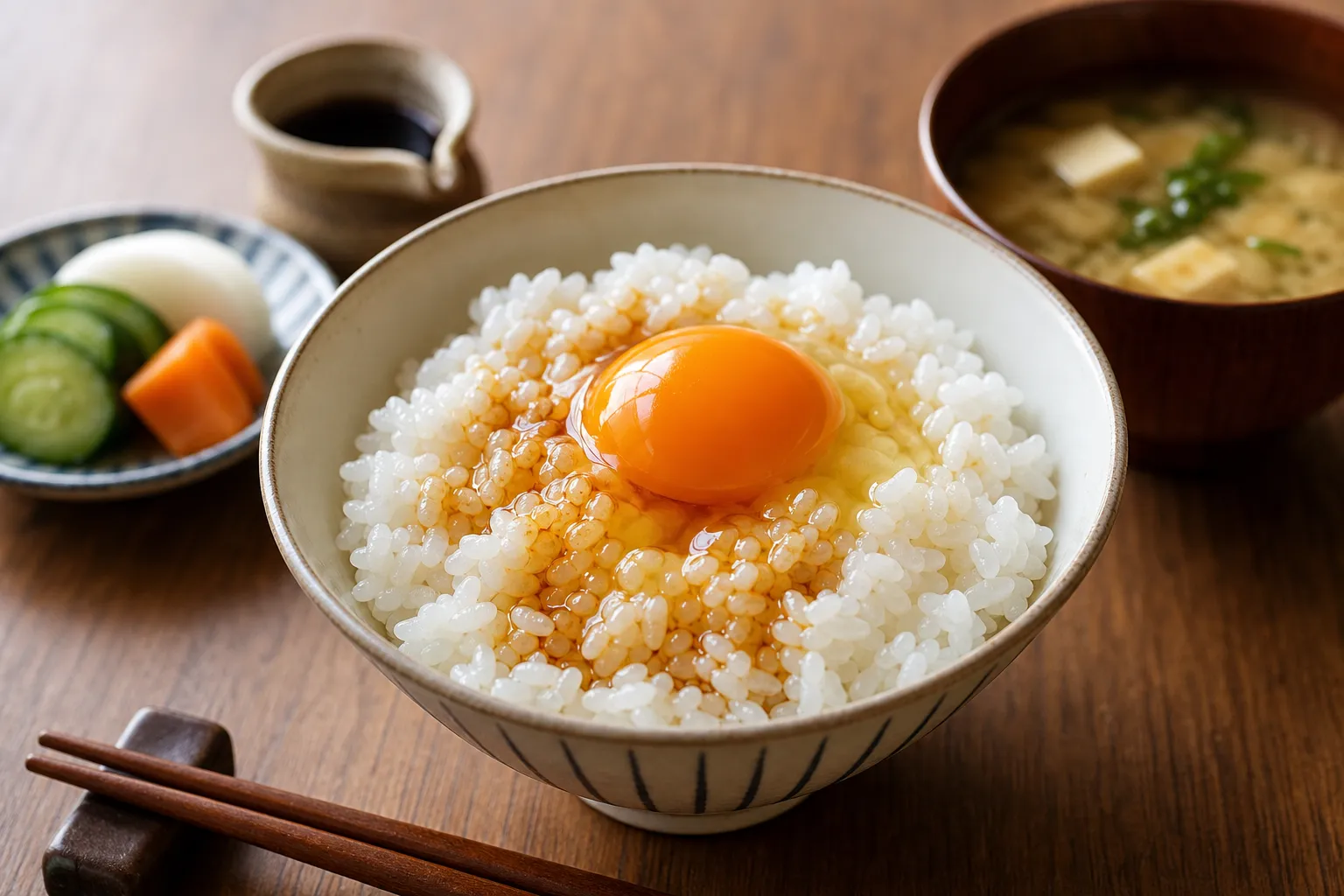
A raw egg, hot rice, a splash of soy sauce, thirty seconds of stirring — and somehow it's the breakfast half of Japan would defend with their lives.
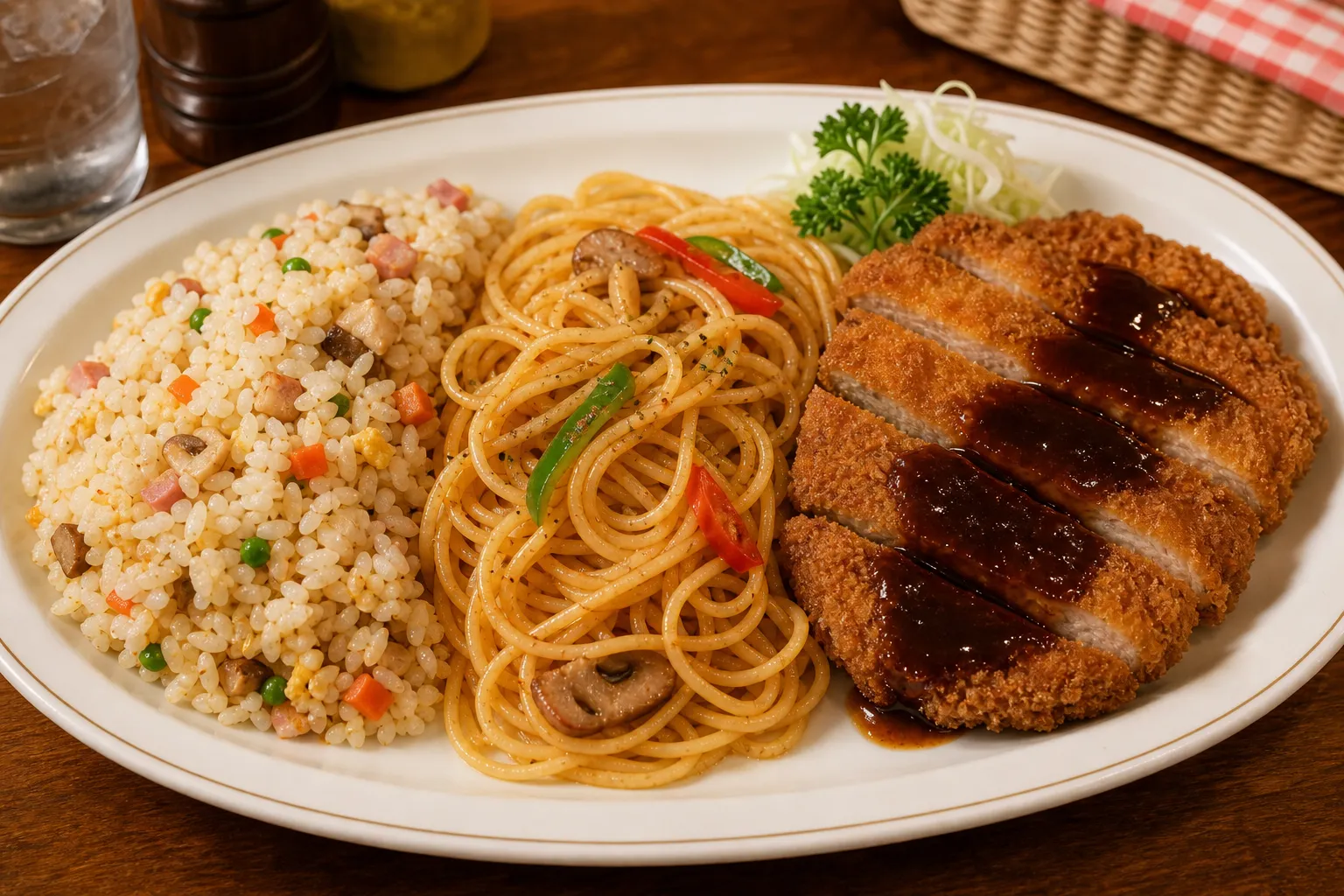
A tonkatsu, a pile of pilaf, and a heap of spaghetti walk onto one plate. This is not a joke. This is Nagasaki's proudest yōshoku creation, and it is magnificent.
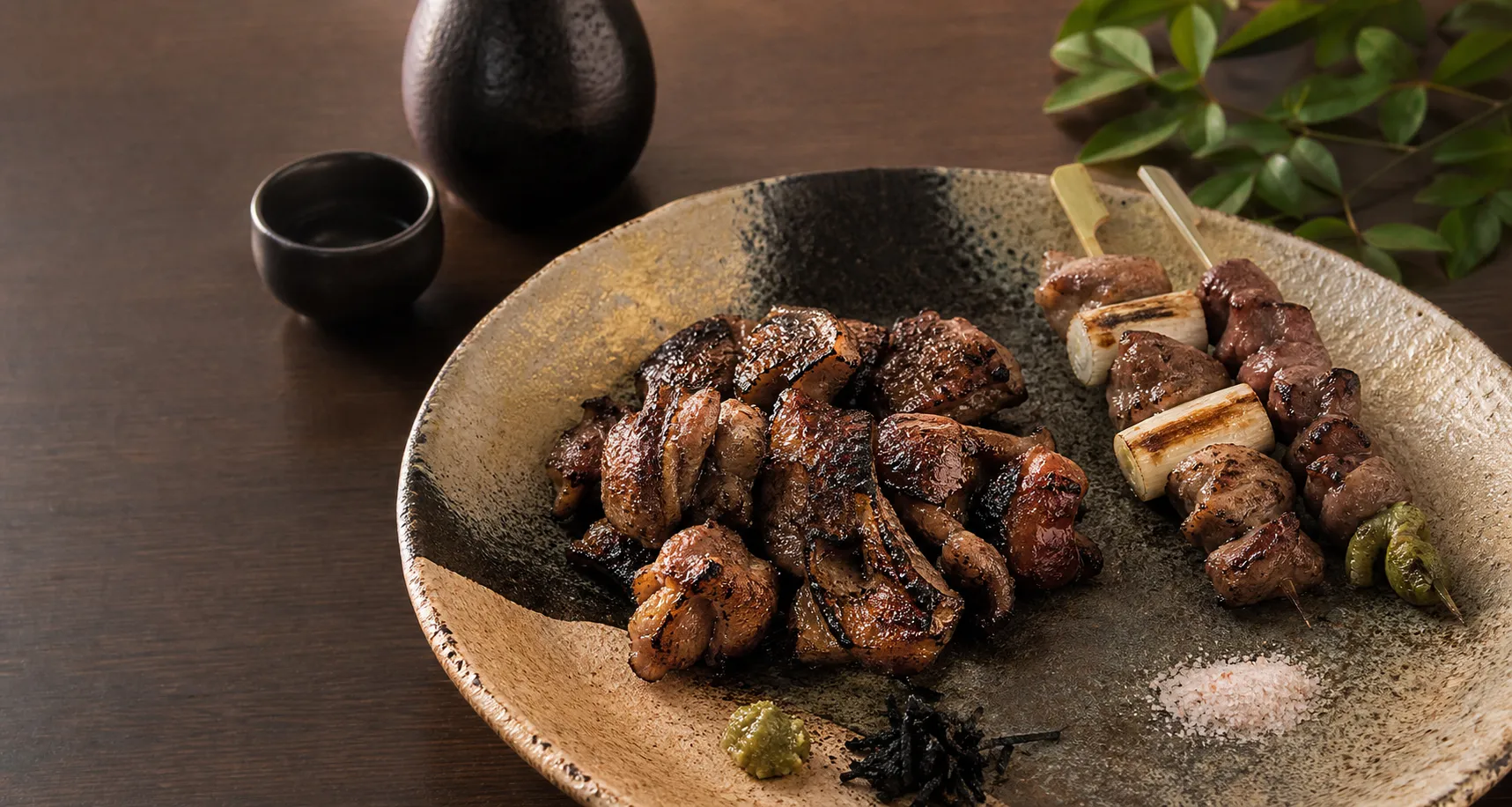
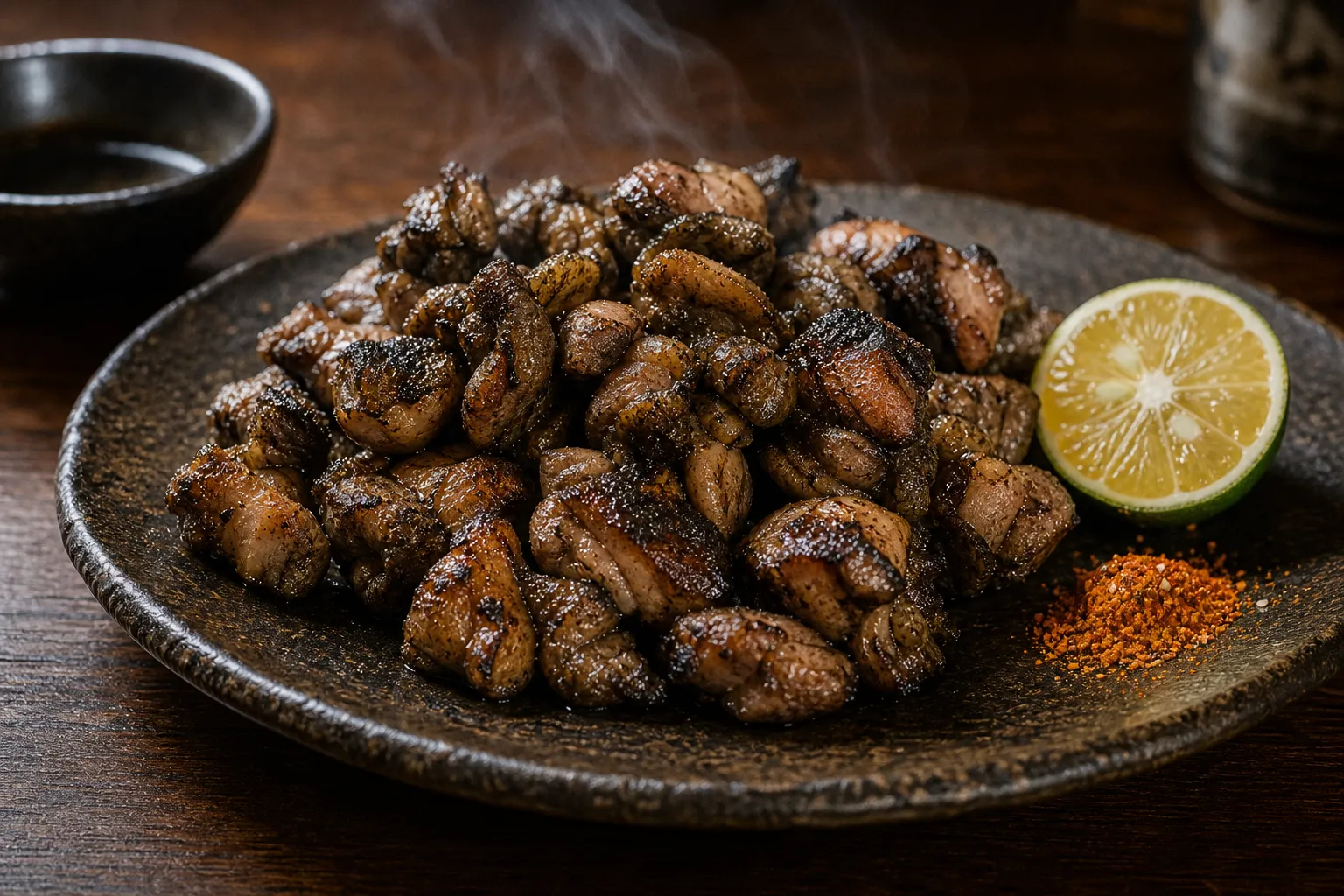
Chunks of local jidori thigh thrown over furious charcoal until they're blackened, smoky and impossibly juicy. It looks burnt. It is not burnt. It is the best thing Miyazaki will put in front of you.
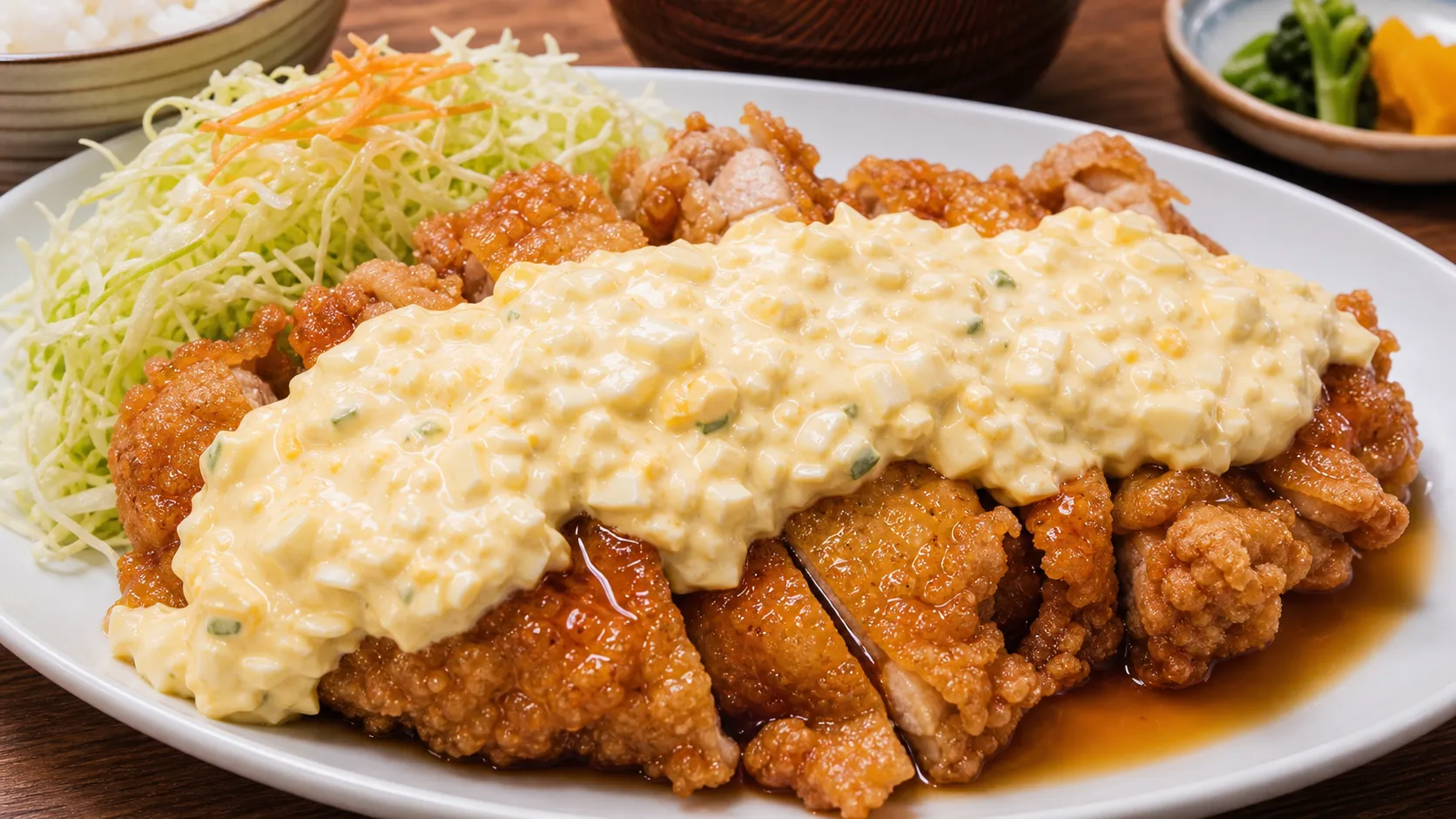
Deep-fried chicken soaked in sweet vinegar sauce, then buried under a snowdrift of homemade tartar. Miyazaki's greatest contribution to the art of fried chicken, and it's not even close.
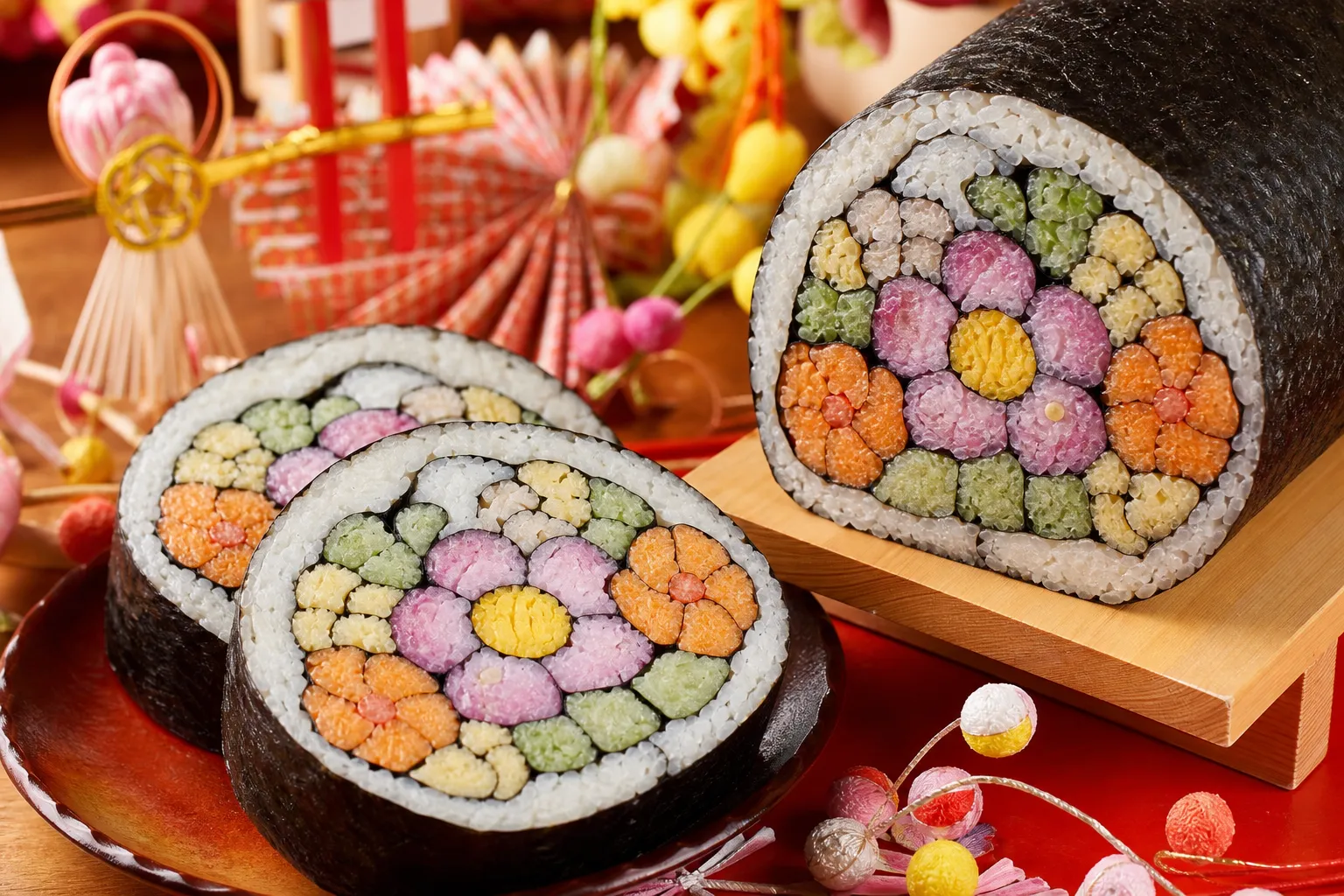
Someone slices a fat sushi roll in front of you and a full-color flower blooms out of the cut face — this is edible pixel art from the rice paddies of Chiba, and it is absurd and glorious.
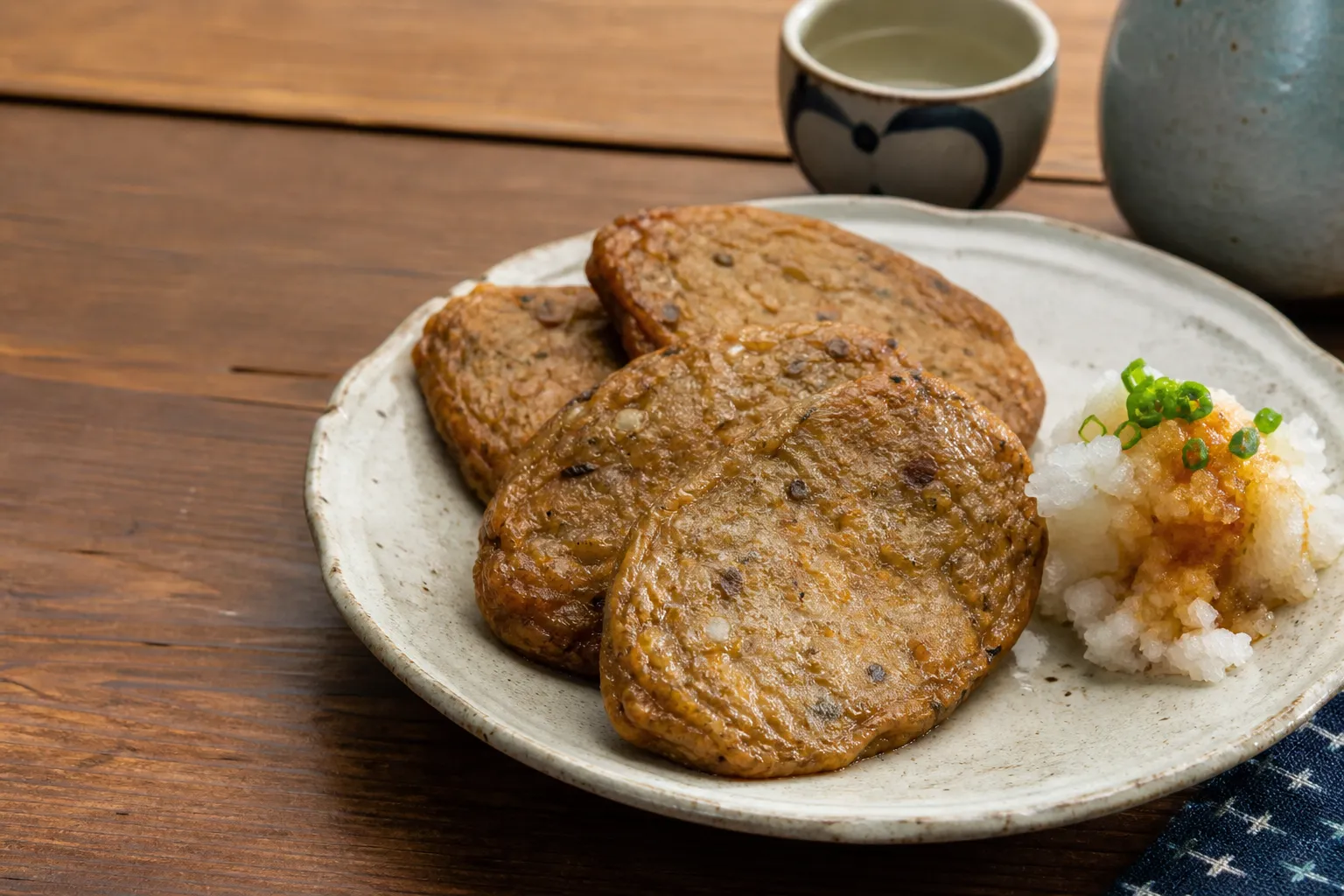
A rough little fried fish cake made from whole small fish — bones, skin and all — minced and griddled till golden. Humble, fishy in the best way, and weirdly addictive. Ehime's honest snack.
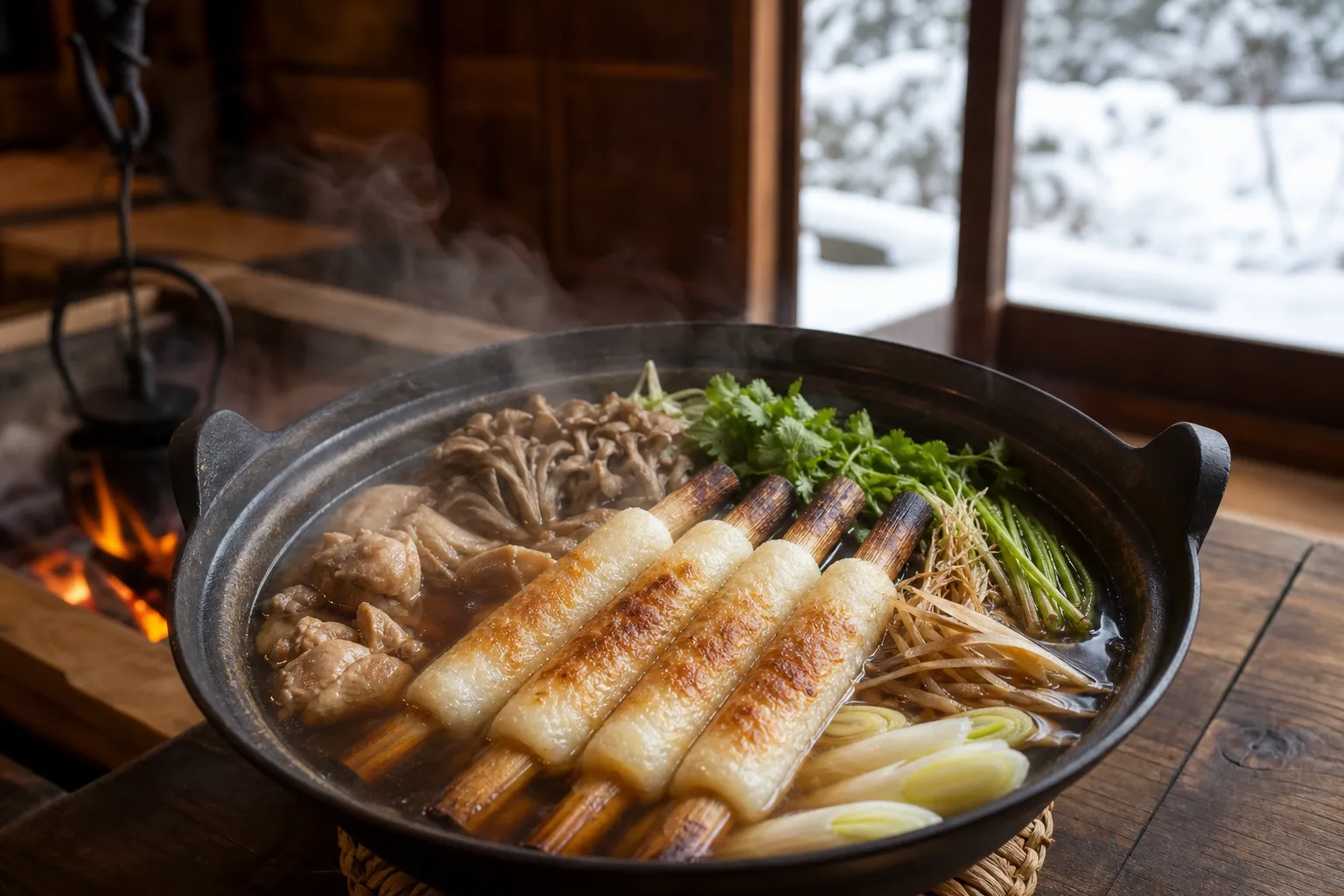
Pounded rice toasted onto cedar sticks, then dropped into a clear chicken hot pot until it drinks the broth. Akita in a bowl, and it tastes like coming in from the snow.
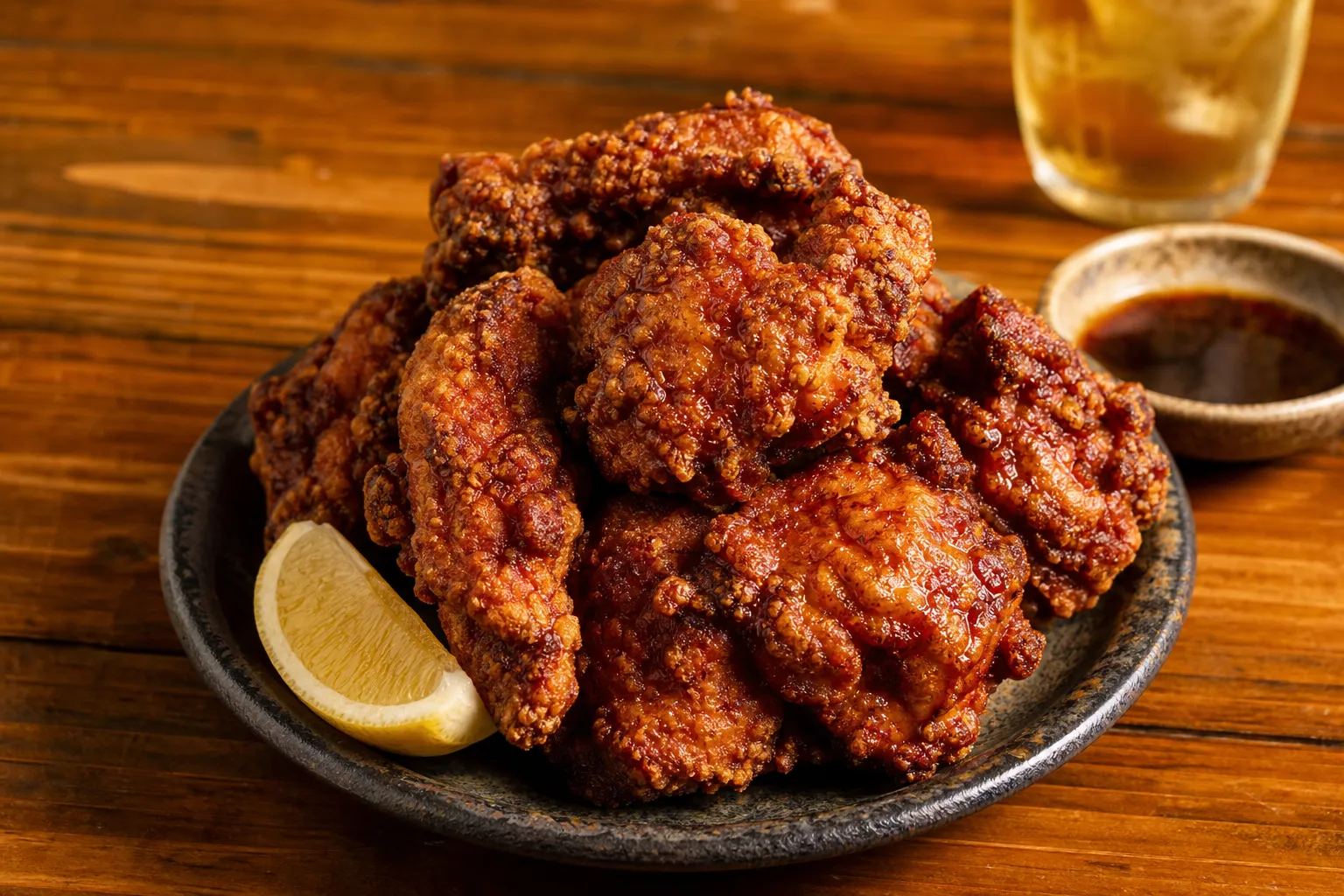
Hokkaido's fried chicken — bigger, darker, and more deeply marinated than karaage, with a craggy soy-garlic crust and juice that runs when you tear it open. Don't call it karaage up here.
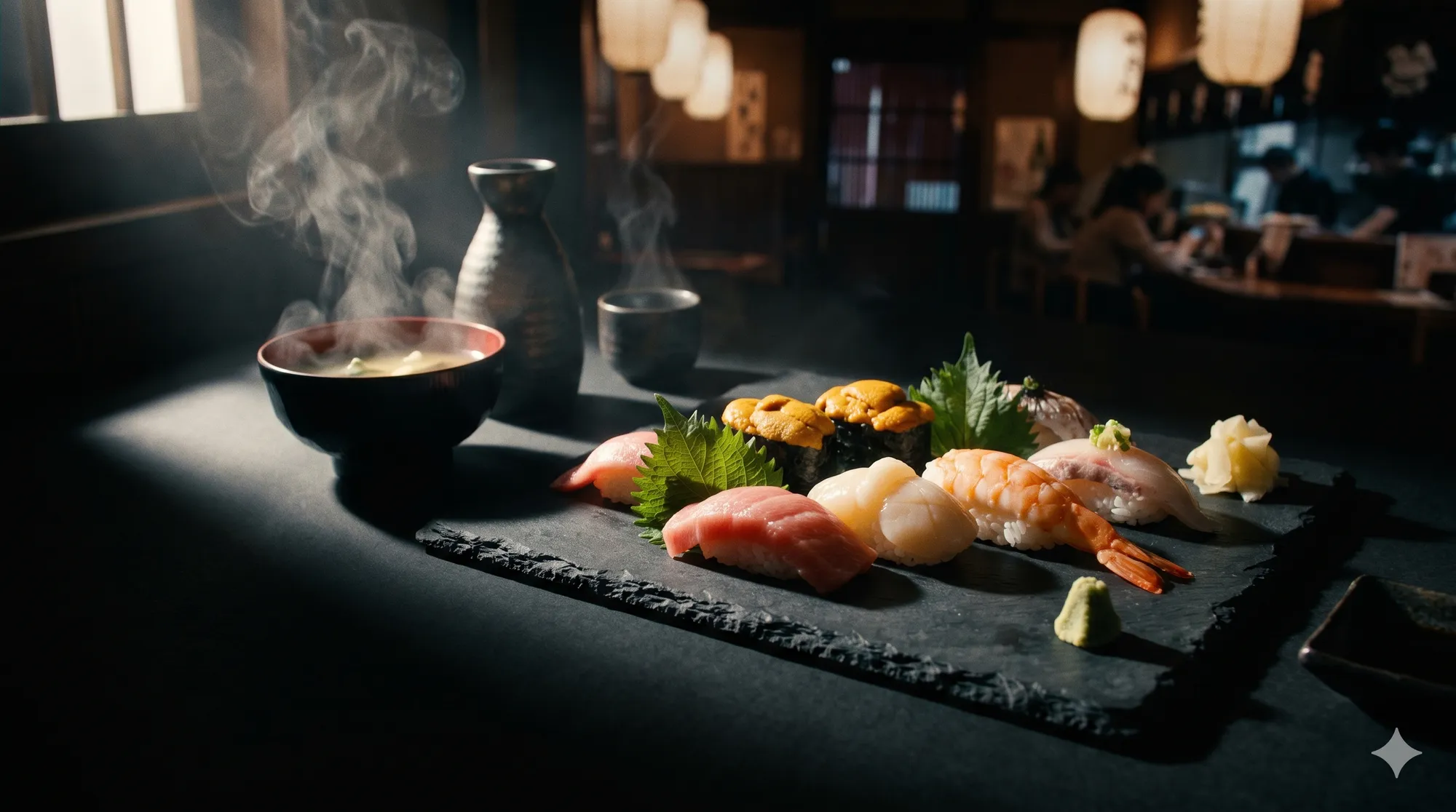
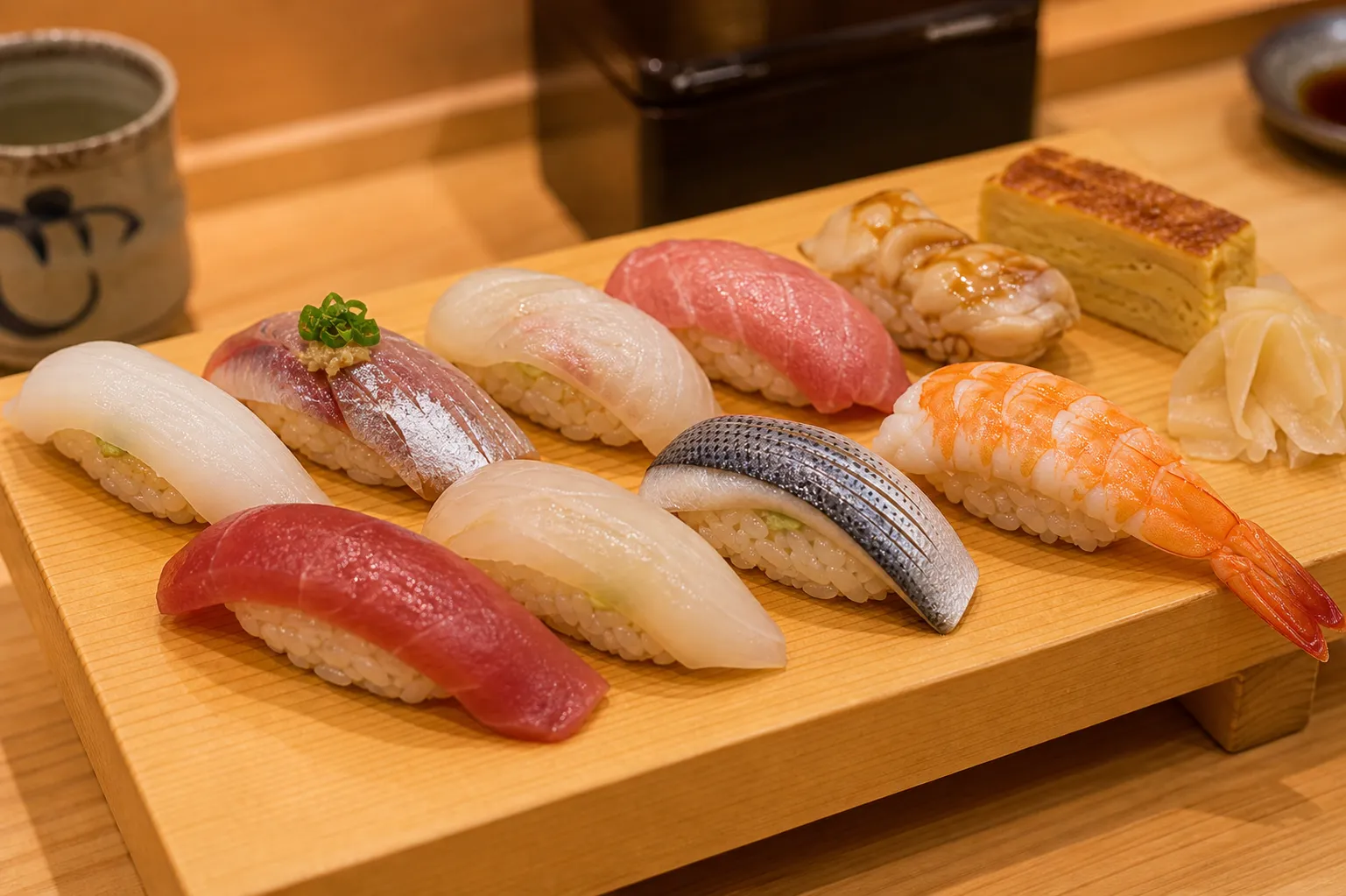
Vinegared rice, a slice of something perfect on top, and decades of obsession behind every piece. Forget the conveyor-belt clichés — real sushi is one of the great food experiences on earth, and it's easier to enjoy than you think.
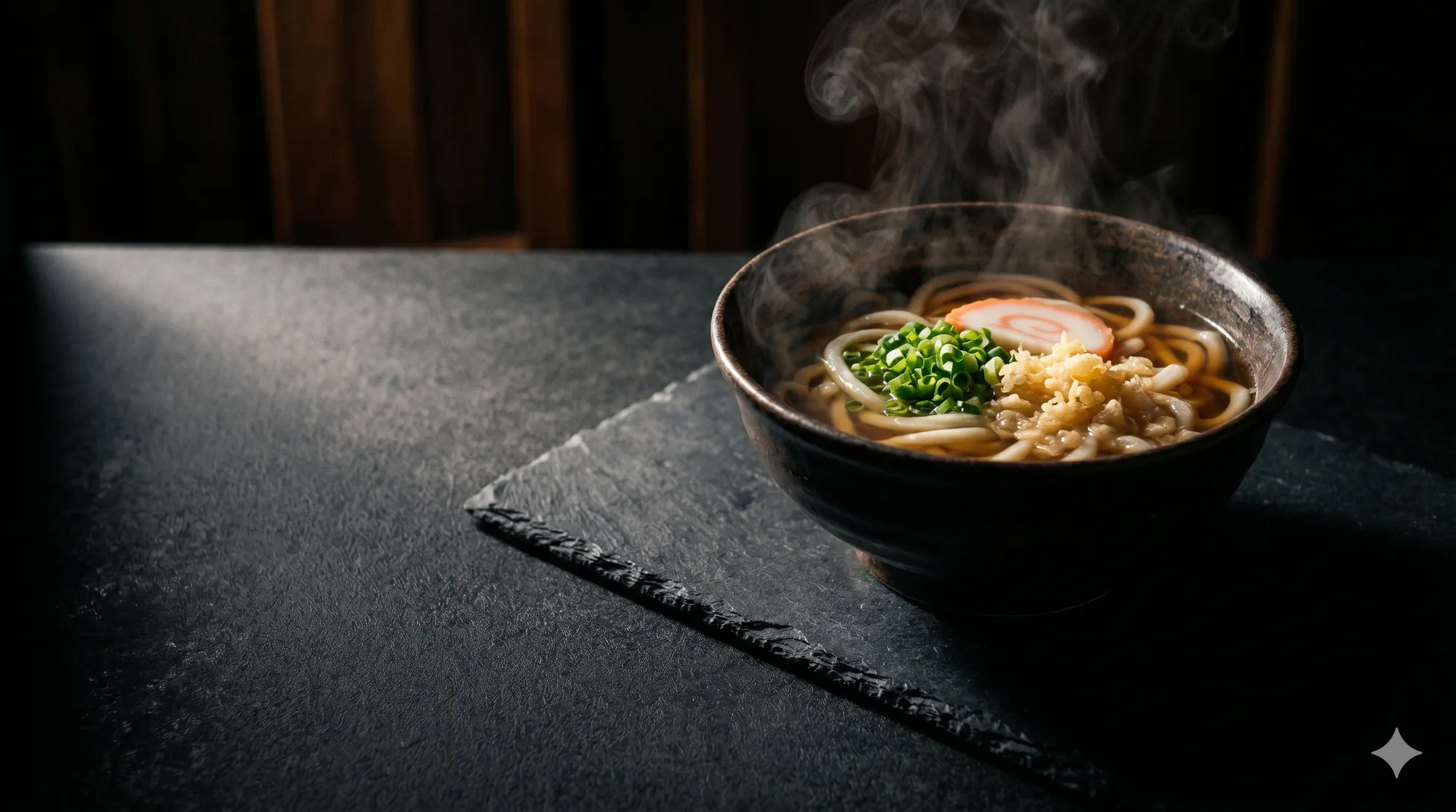
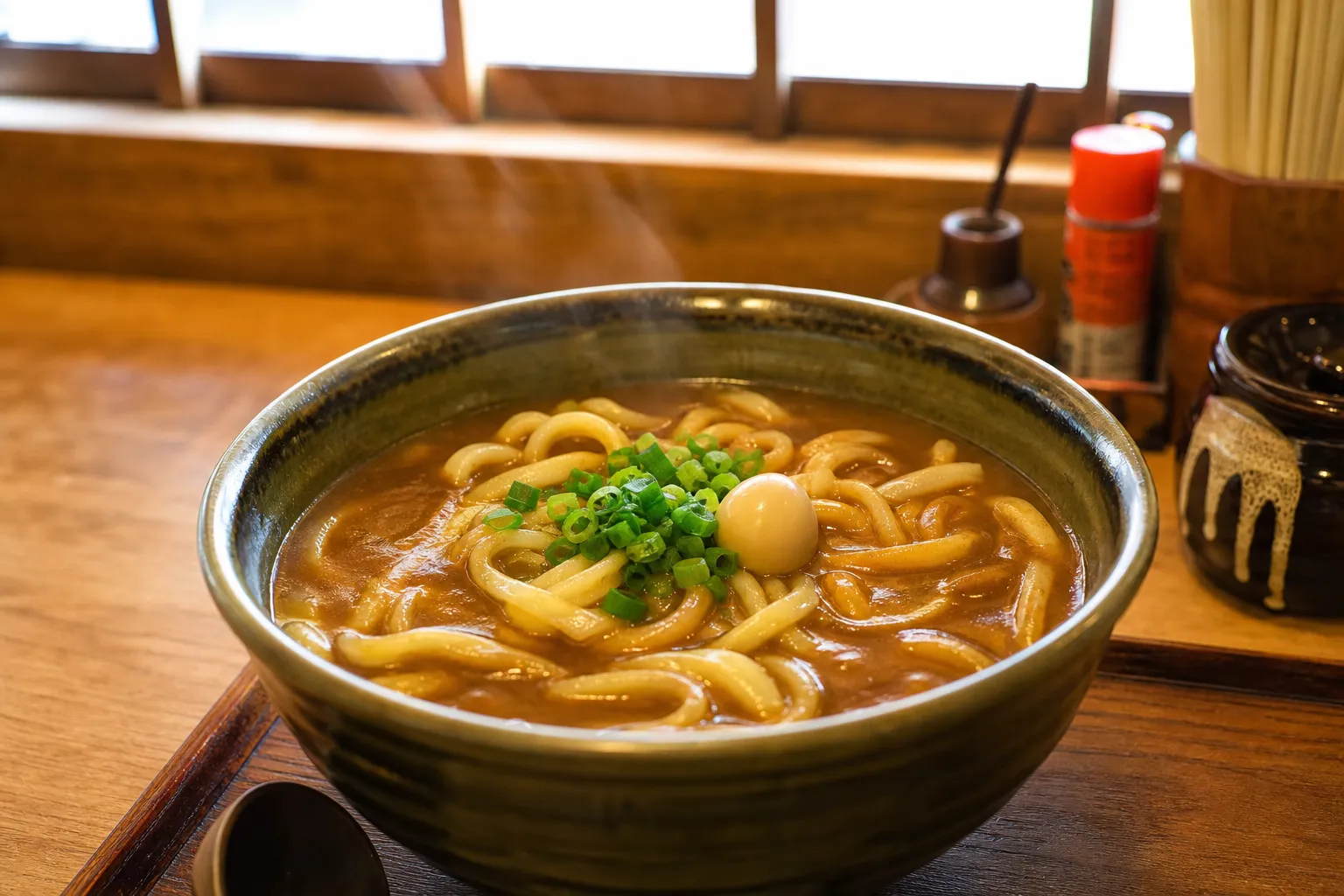
Thick, chewy, white wheat noodles in a clean dashi broth — the cozy, cheap, deeply satisfying bowl Japan reaches for when it wants comfort. Sanuki udon will ruin you for all other noodles.
Fluffy fried potato on a stick, drowned in sweet miso. It's a farmer's snack from the Chichibu mountains, and it's the kind of simple that ruins you for fancy food.
In Tokushima, saying "katsu" does not get you a pork cutlet. It gets you this — and the moment I understood that, a whole prefecture rearranged itself in my head.
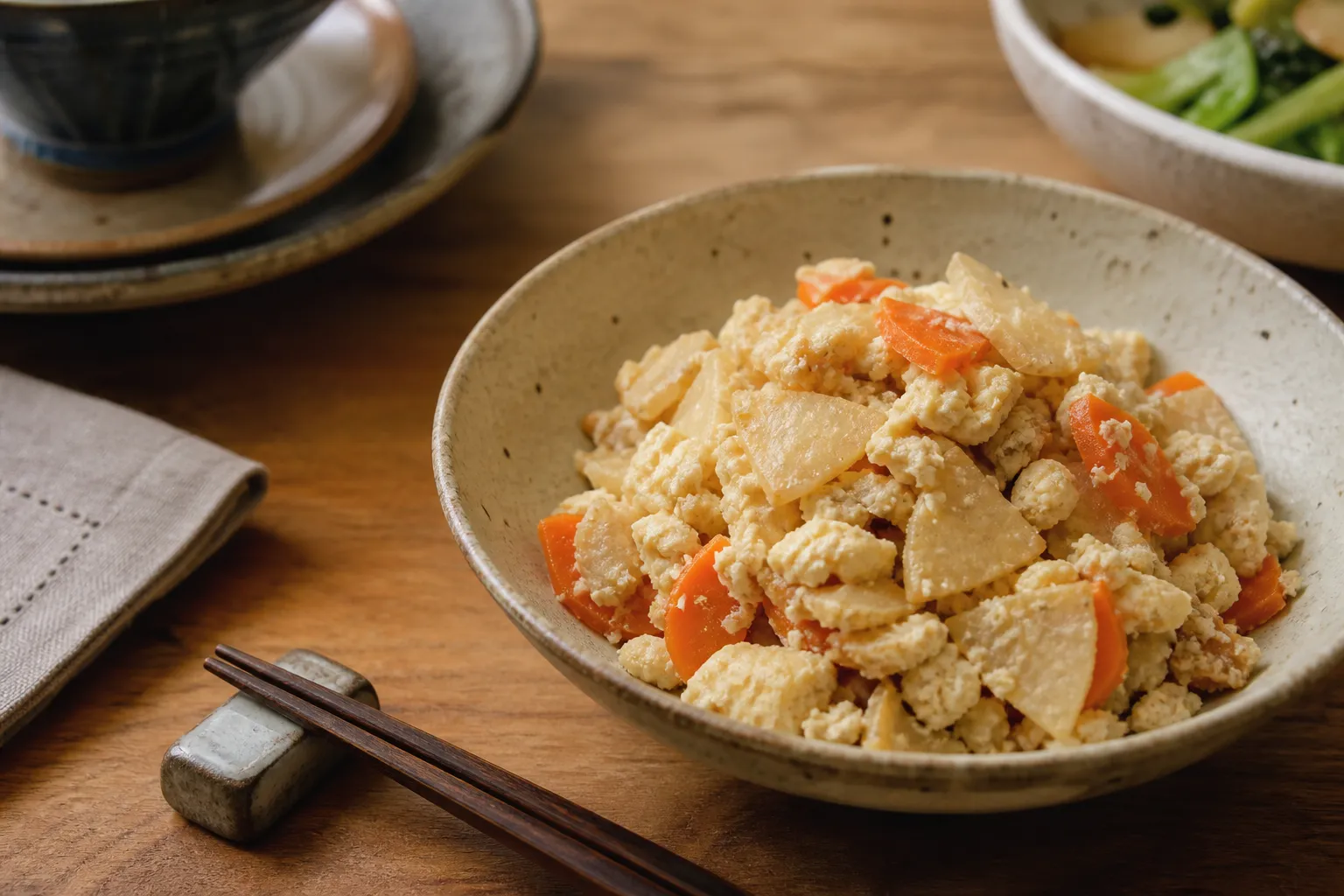
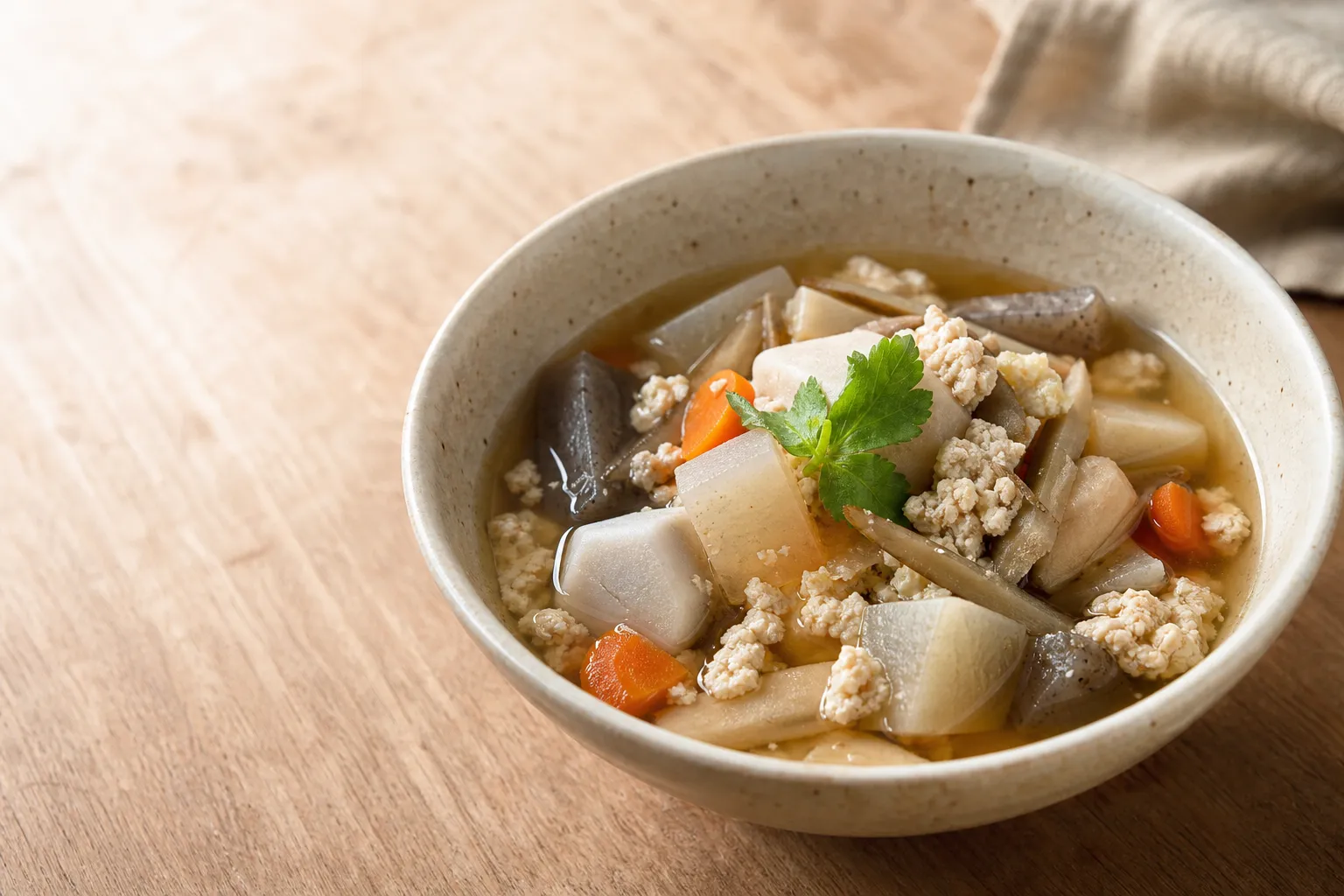
Not a soup, not a scramble — Yamaguchi's crumbled tofu simmered soft with sweet daikon and carrot until it's gently soy-glossed and disappears bowlful by bowlful. Winter comfort in a pot.
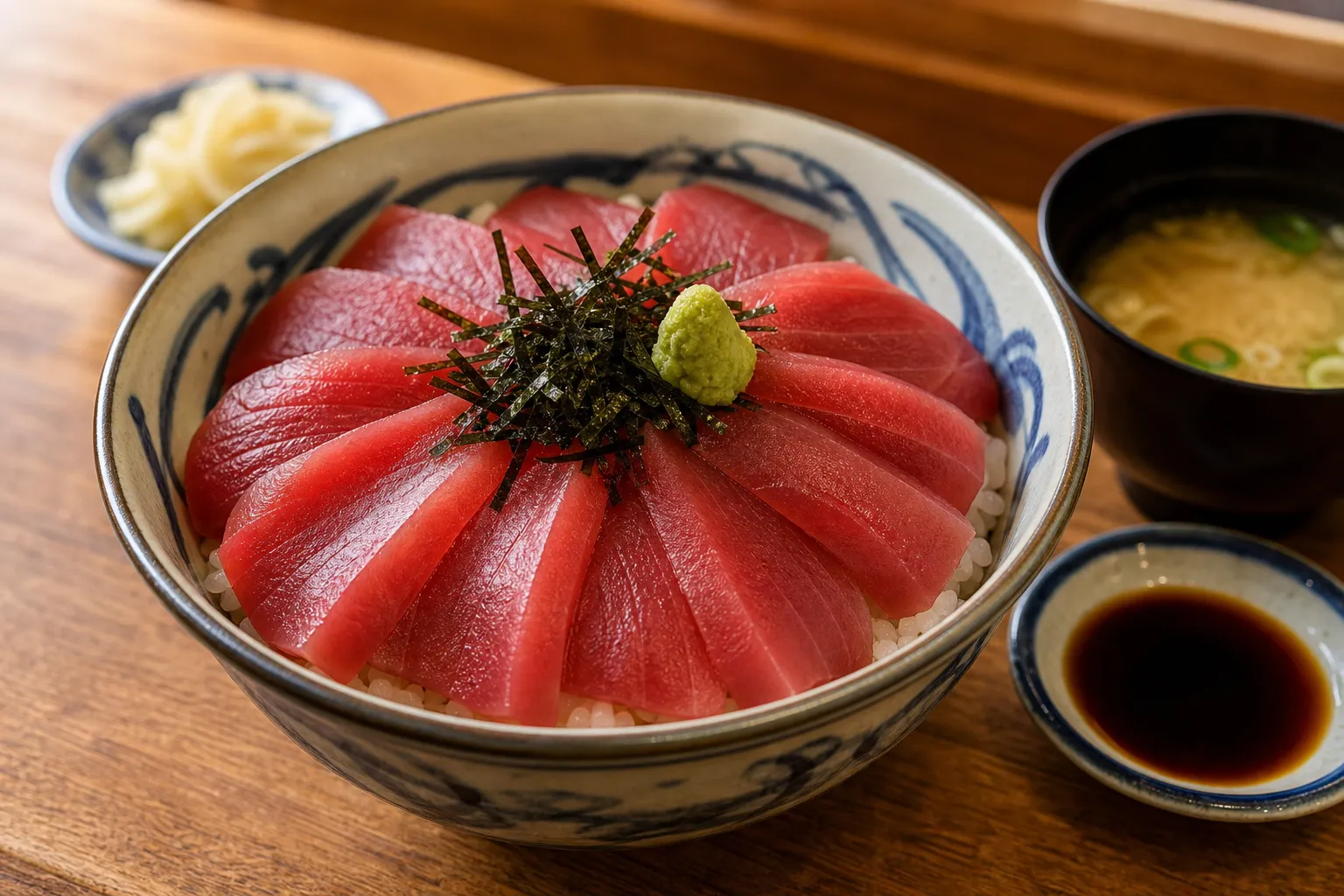
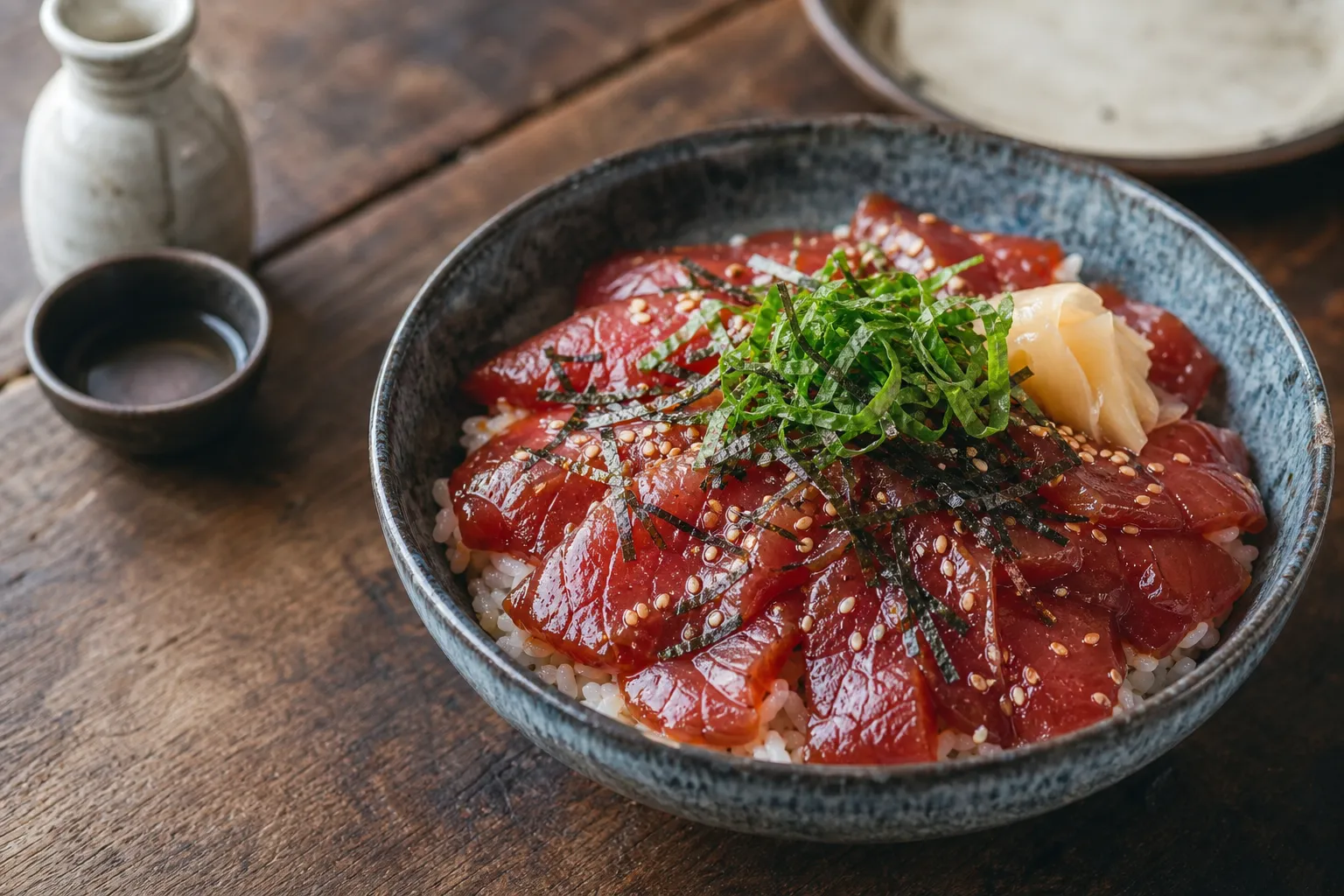
Cold slices of lean tuna over warm vinegared rice, a hit of wasabi, a splash of soy — nothing else, and it needs nothing else. Born in gambling dens for players who wanted one clean, one-handed bite of pure tuna joy.
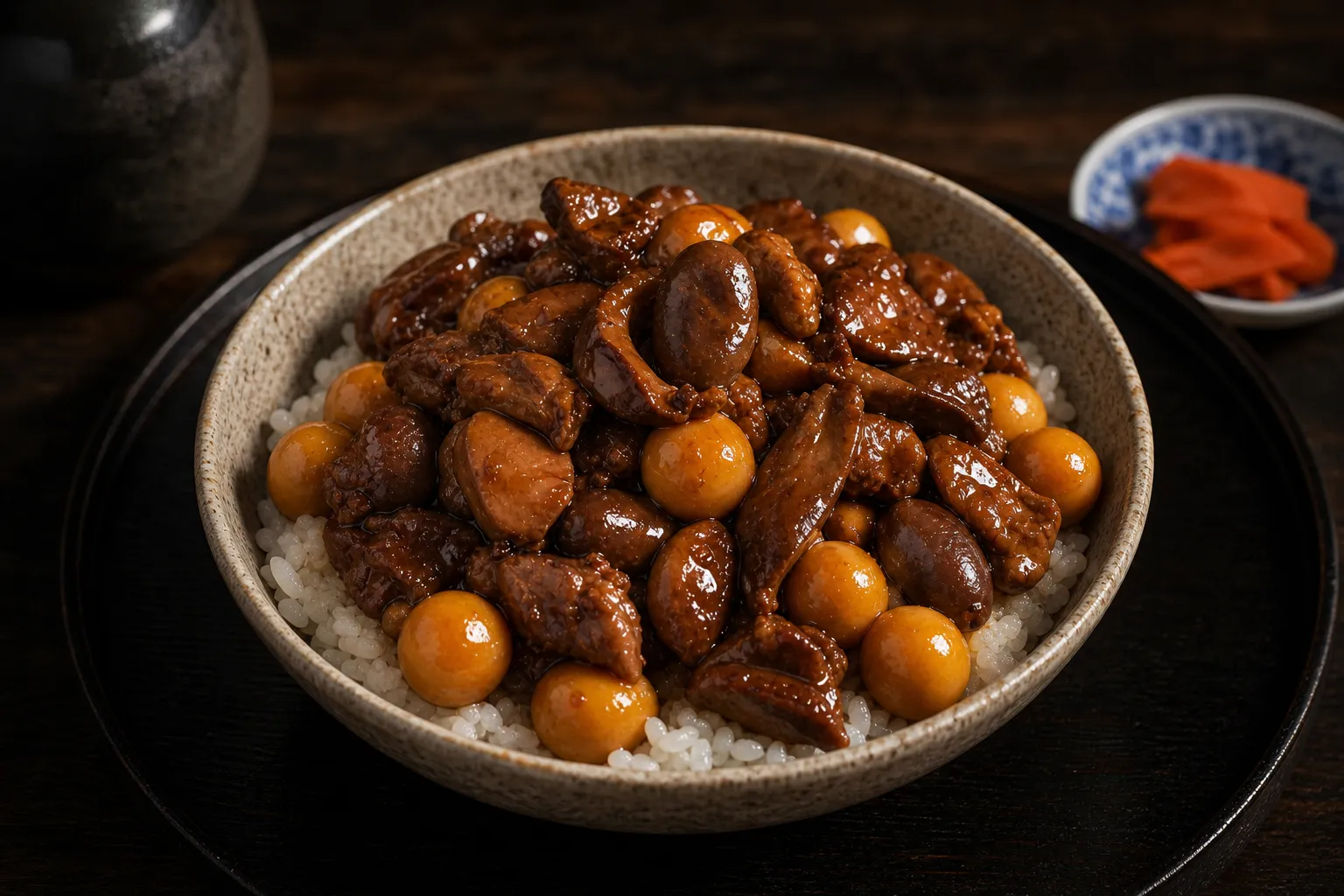
B-1 Grand Prix champion from Yamanashi: chicken innards — liver, gizzard, heart, and unfertilized egg — simmered in a sweet-salty tare until glossy and deeply rich. One of Japan's great kept secrets.
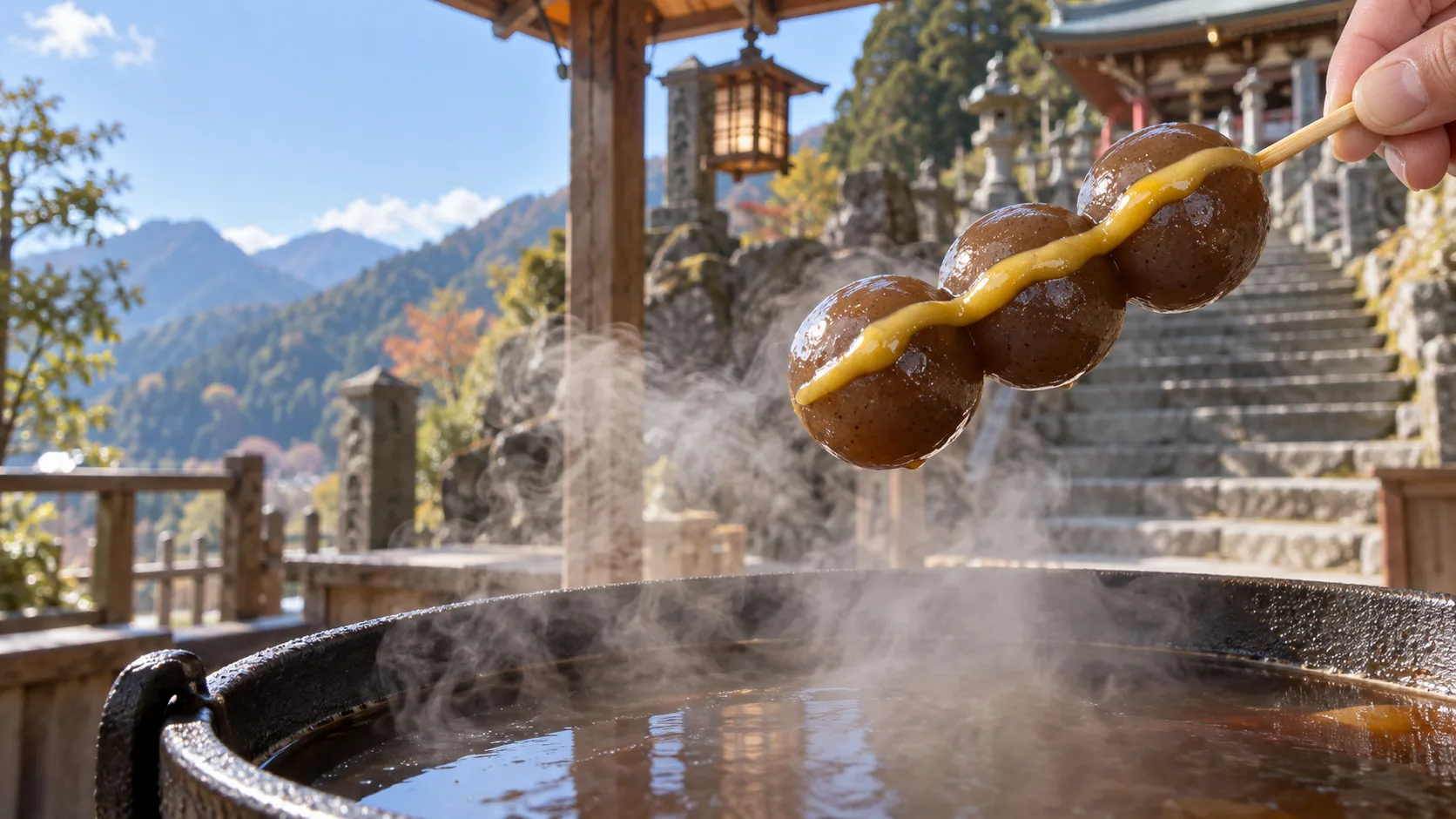
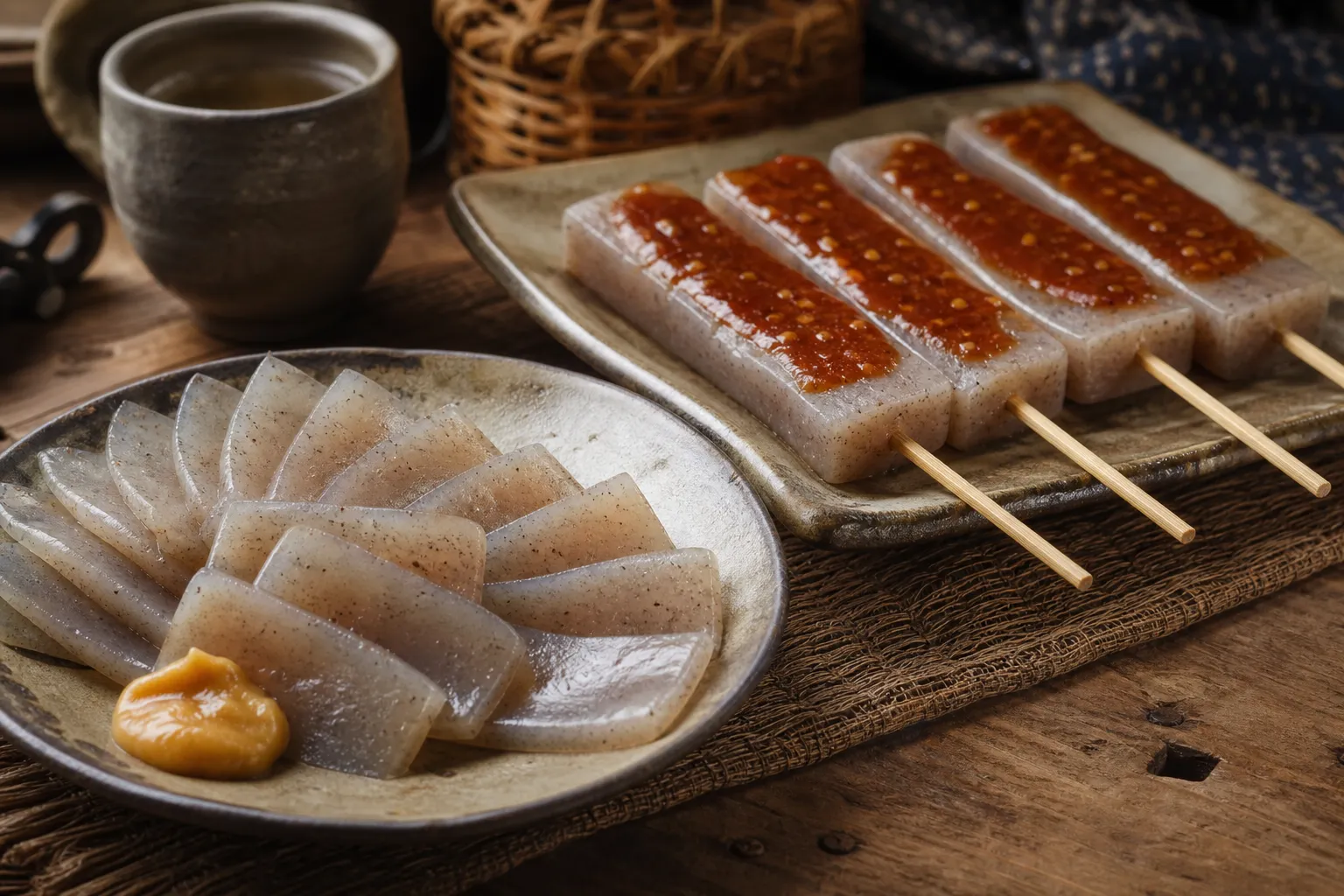
In Yamagata, tama konnyaku is a simple local snack that comes into its own when served hot from the skewer.
No, it's not the fish. Yes, everyone asks. And once you get past that, this is the noodle bowl I quietly crave more than the famous ones.
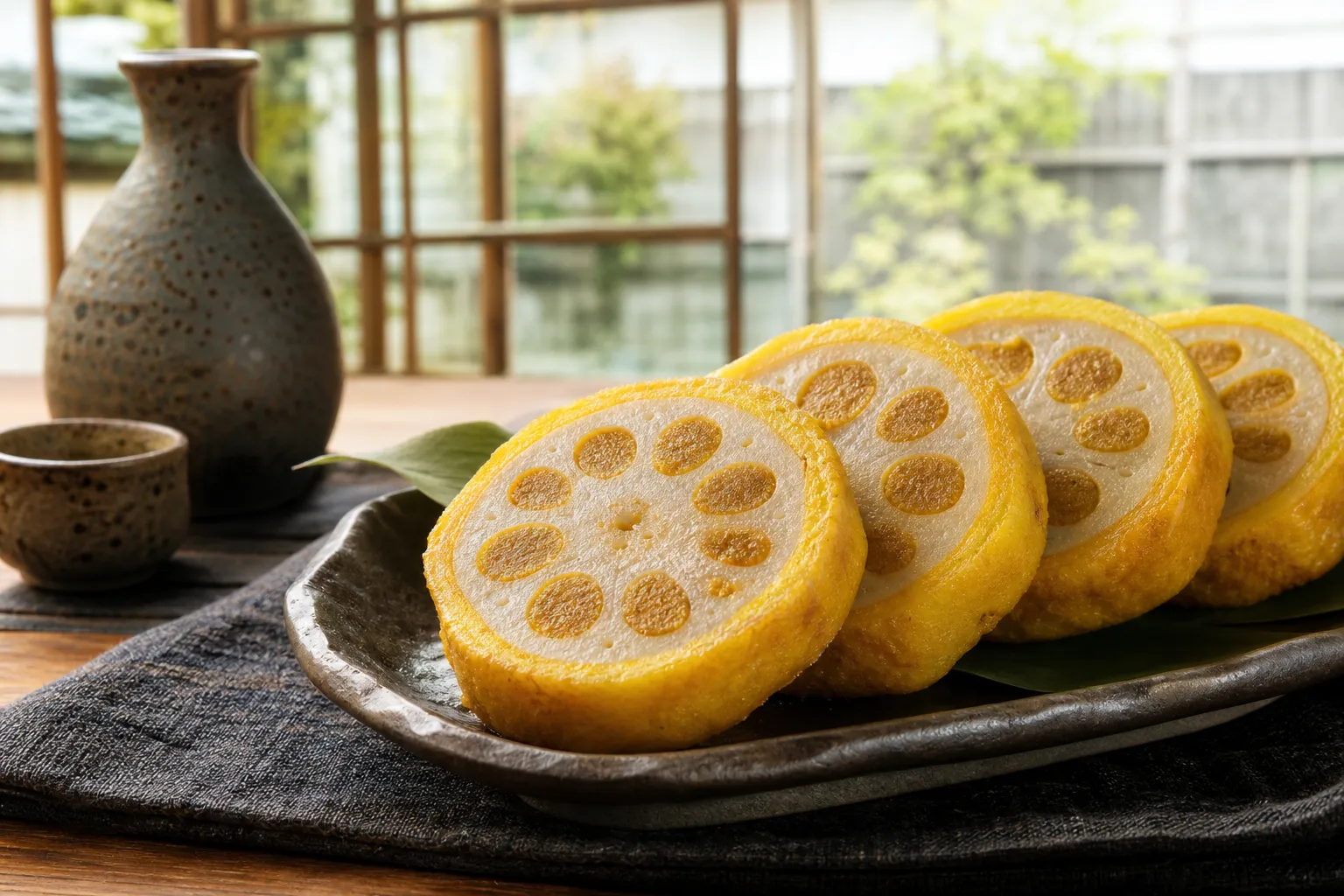
Someone looked at a lotus root's natural holes and thought: those need to be filled with fire. I bit in expecting a snack. I got a sinus-clearing act of devotion.
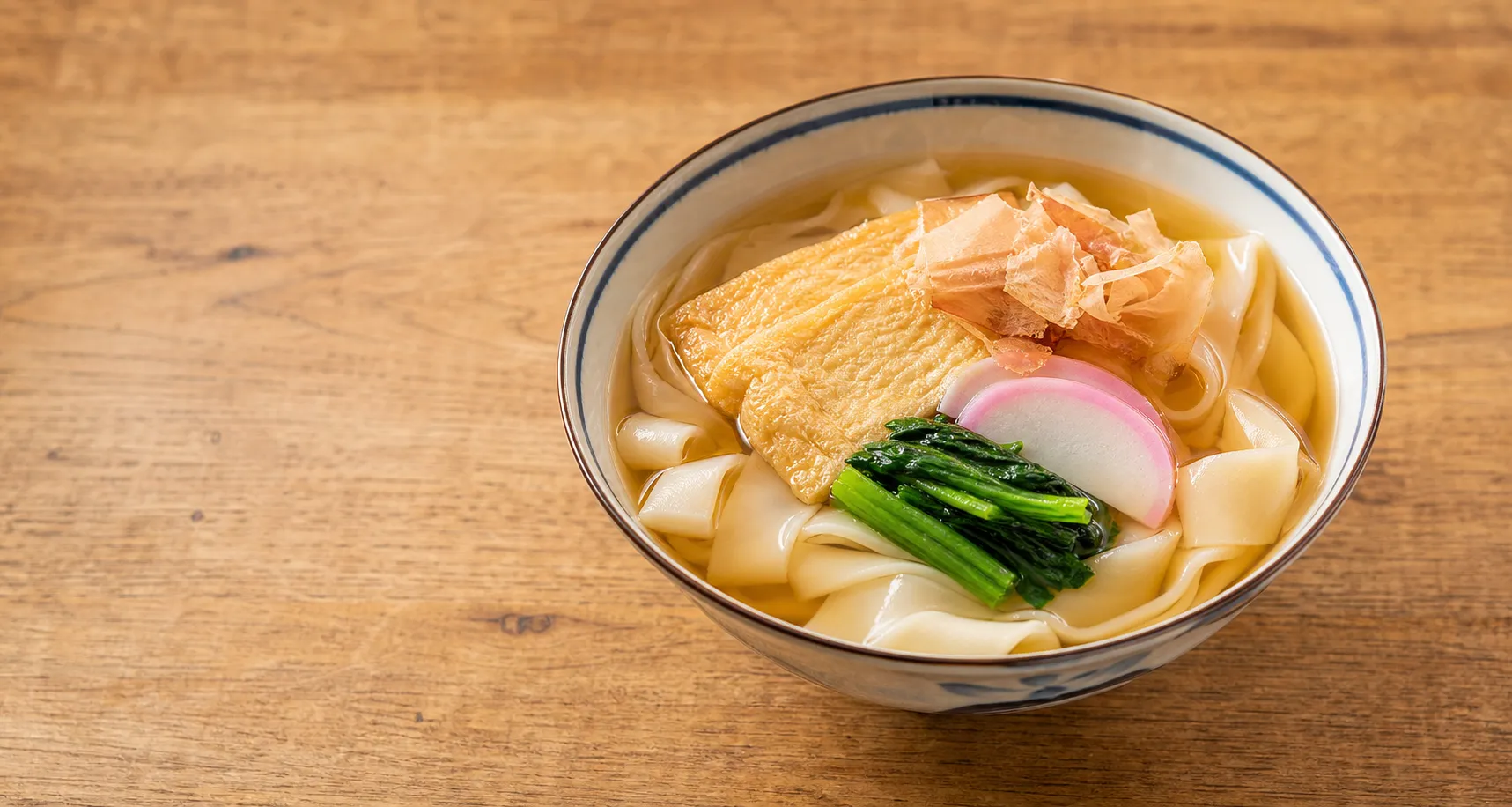
Silky ribbons of udon, wide and thin, slipping through a clear golden dashi before you can even aim your chopsticks. Nagoya's flat-noodle bowl is the quiet, addictive one you inhale standing up at the station.
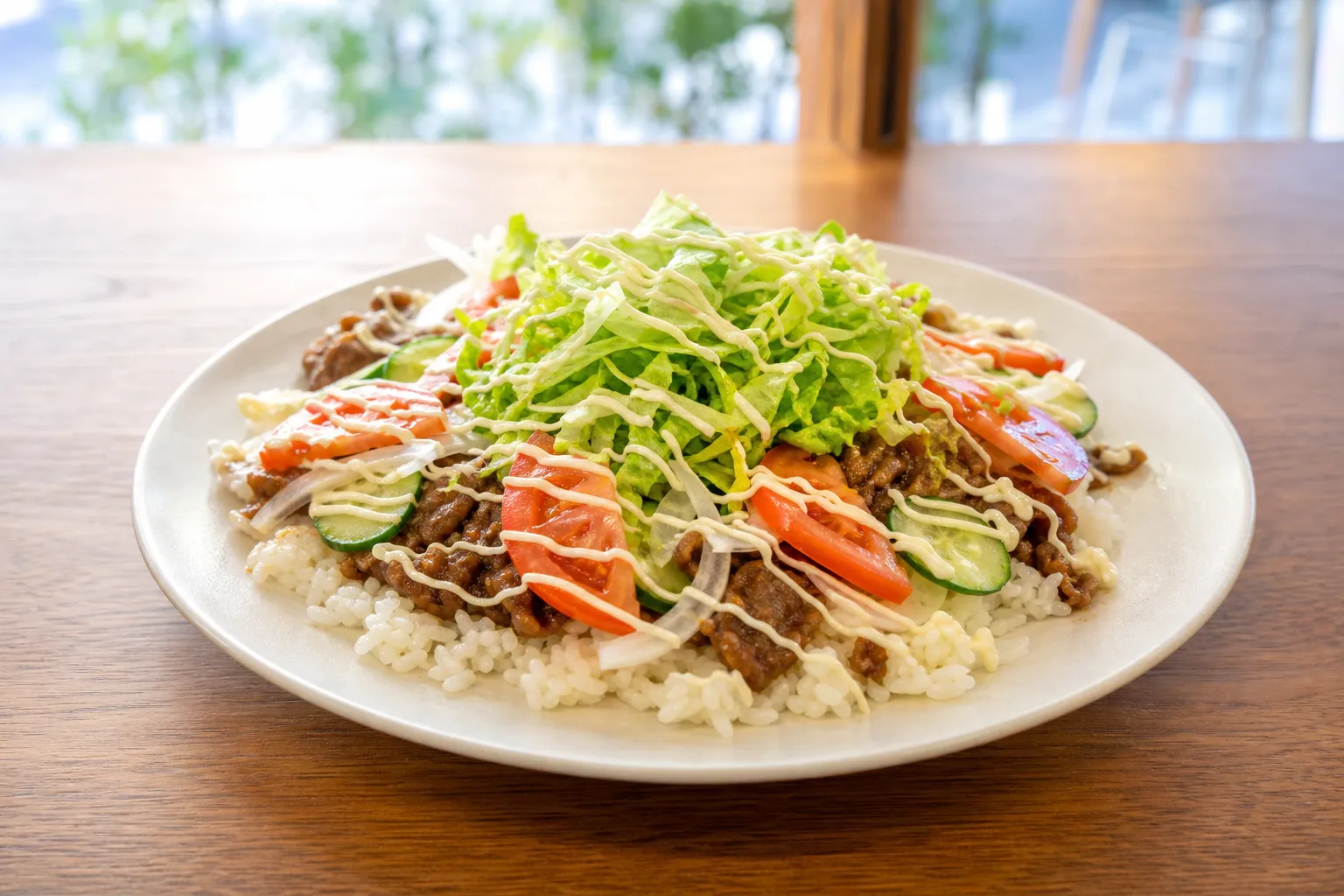
Warm rice, sweet-savory grilled beef, a heap of fresh raw vegetables, and a zigzag of mayonnaise — all on one flat plate. It has nothing to do with Italy, nobody's quite sure where the name came from, and Saga City eats it for lunch like it's the most normal thing in the world.
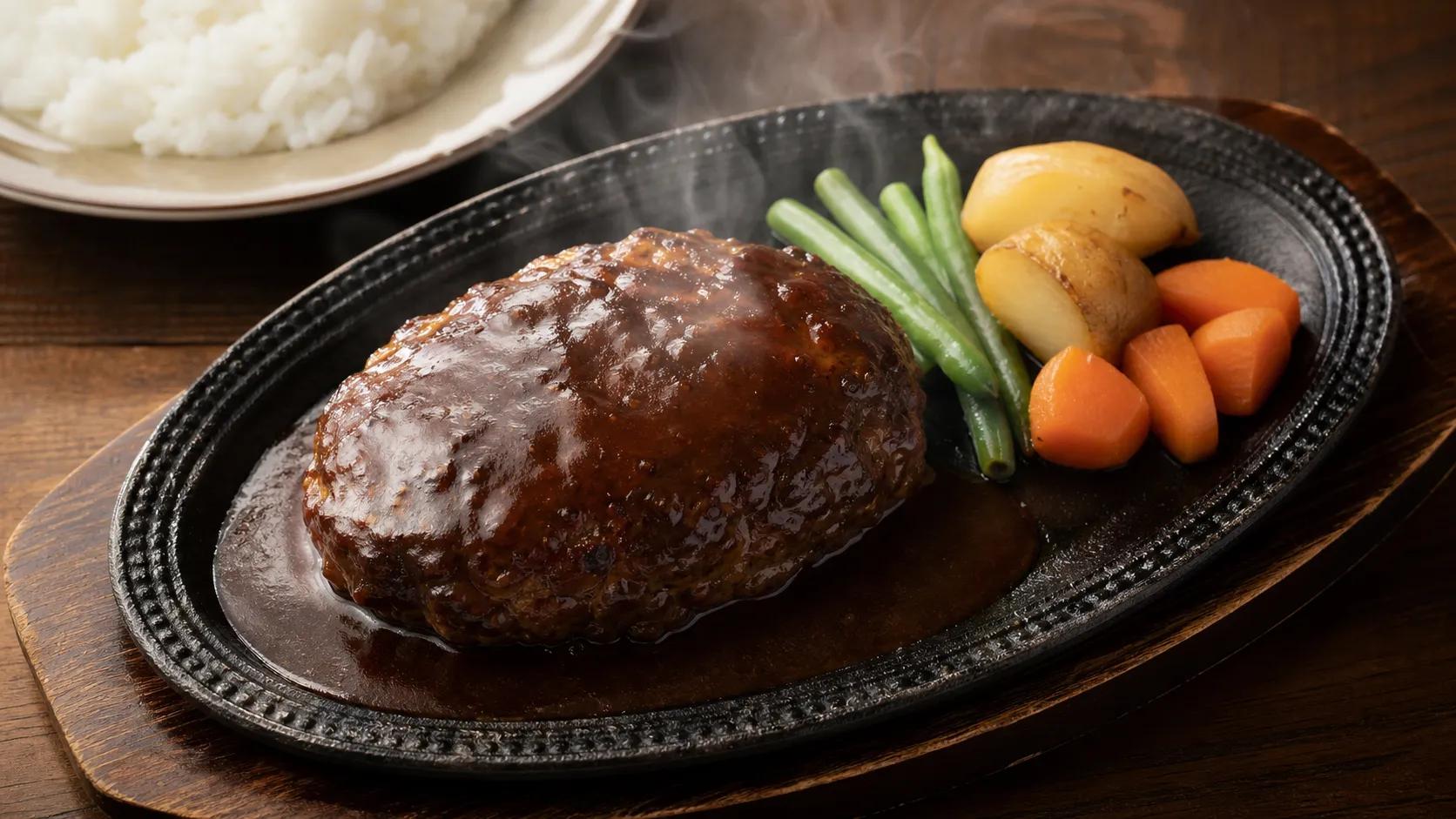
A juicy seasoned beef-and-pork patty — no bun — served on a plate with rice and a glossy demi-glace or sauce. Japan's beloved yoshoku comfort dish, and a kid's-menu hero adults never outgrow.
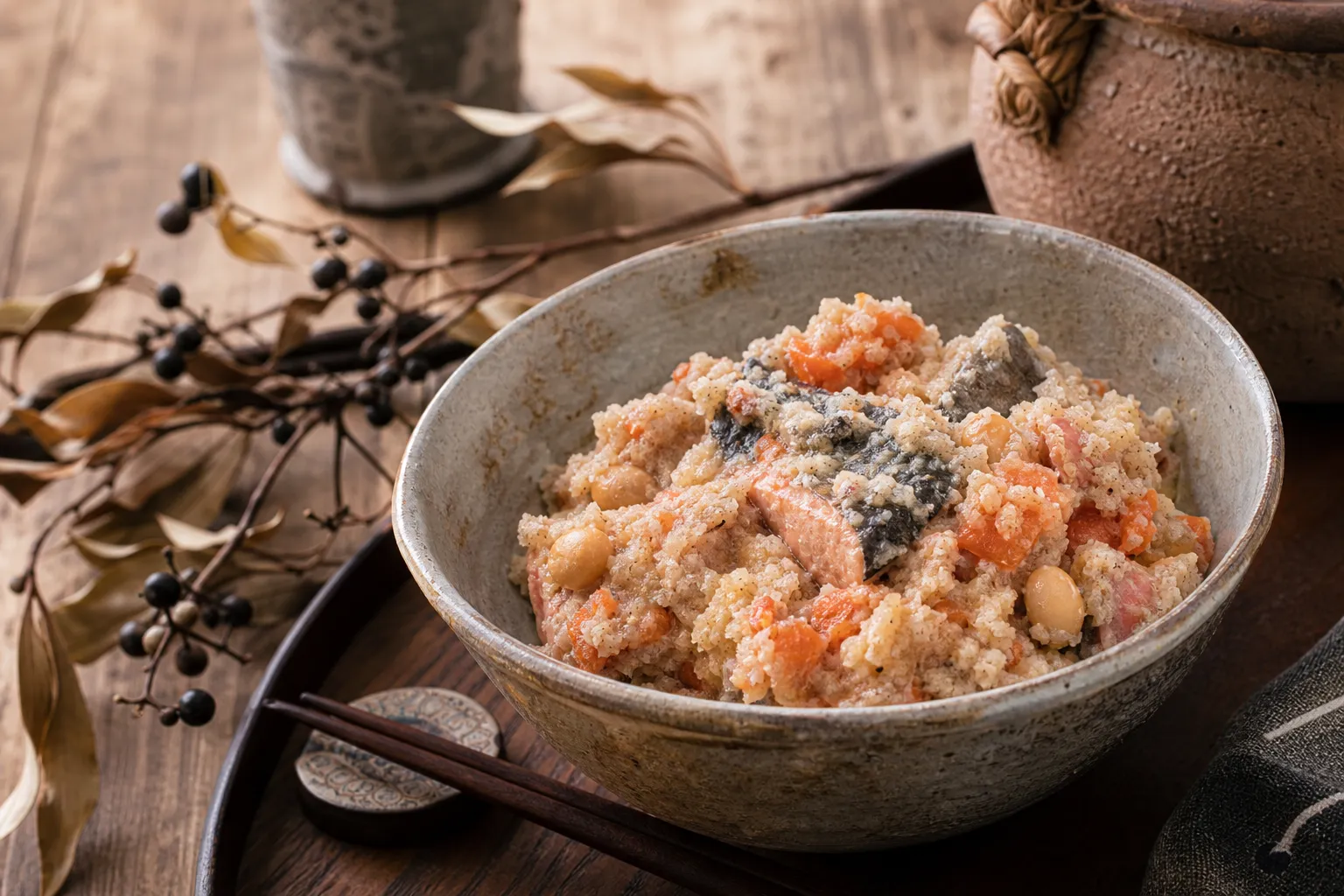
Grated daikon, soybeans, a salmon head and sake lees, simmered into a pinkish-grey rustic mess that Tochigi grandmothers swear by — the most polarizing bowl in Japan, and I ate the whole thing.
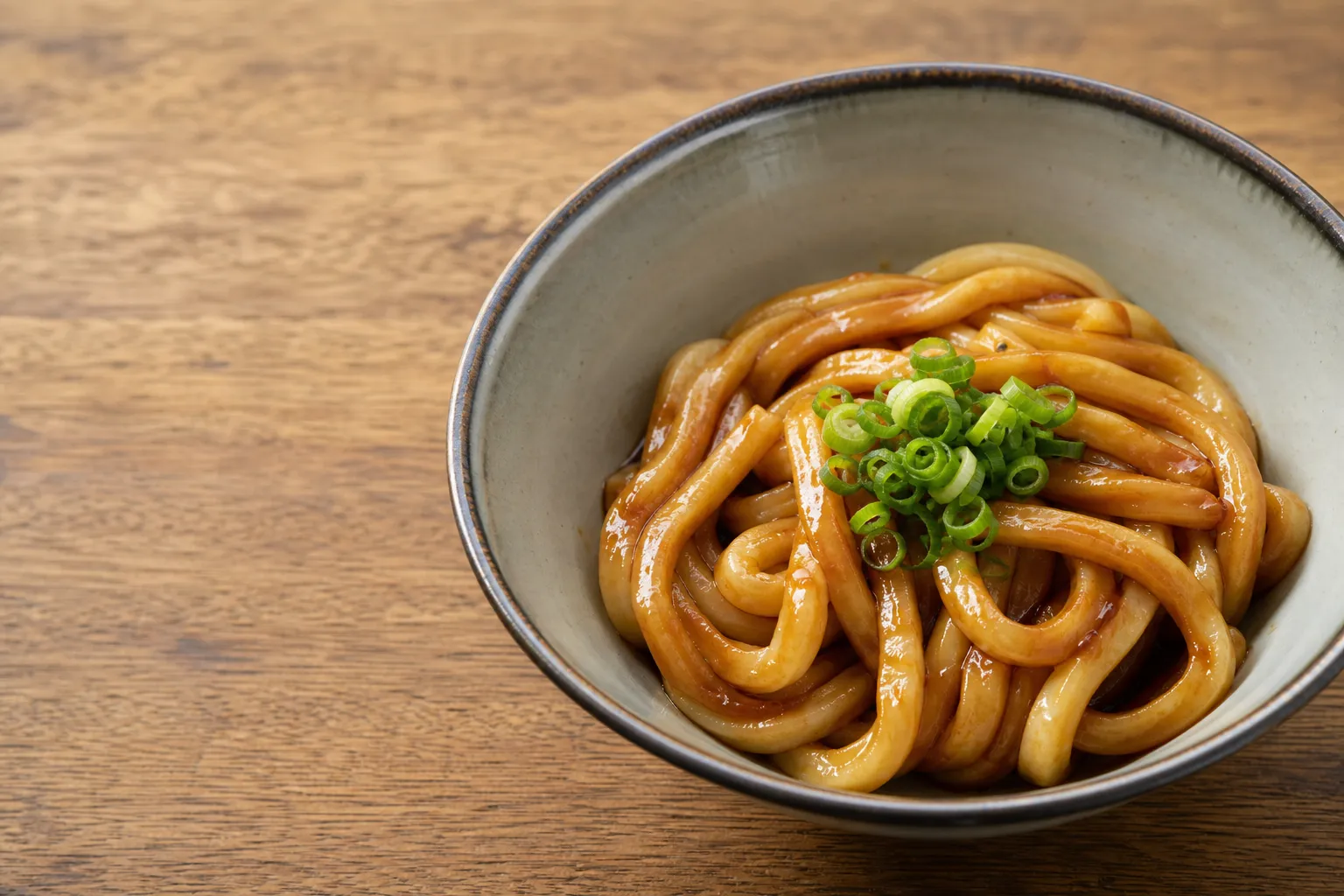
Fat, pillowy udon so soft it barely fights back, glossed in a dark, sweet-savory tare instead of soup. Ise's pilgrim food breaks every udon rule on purpose — and after a day on your feet, it's exactly right.
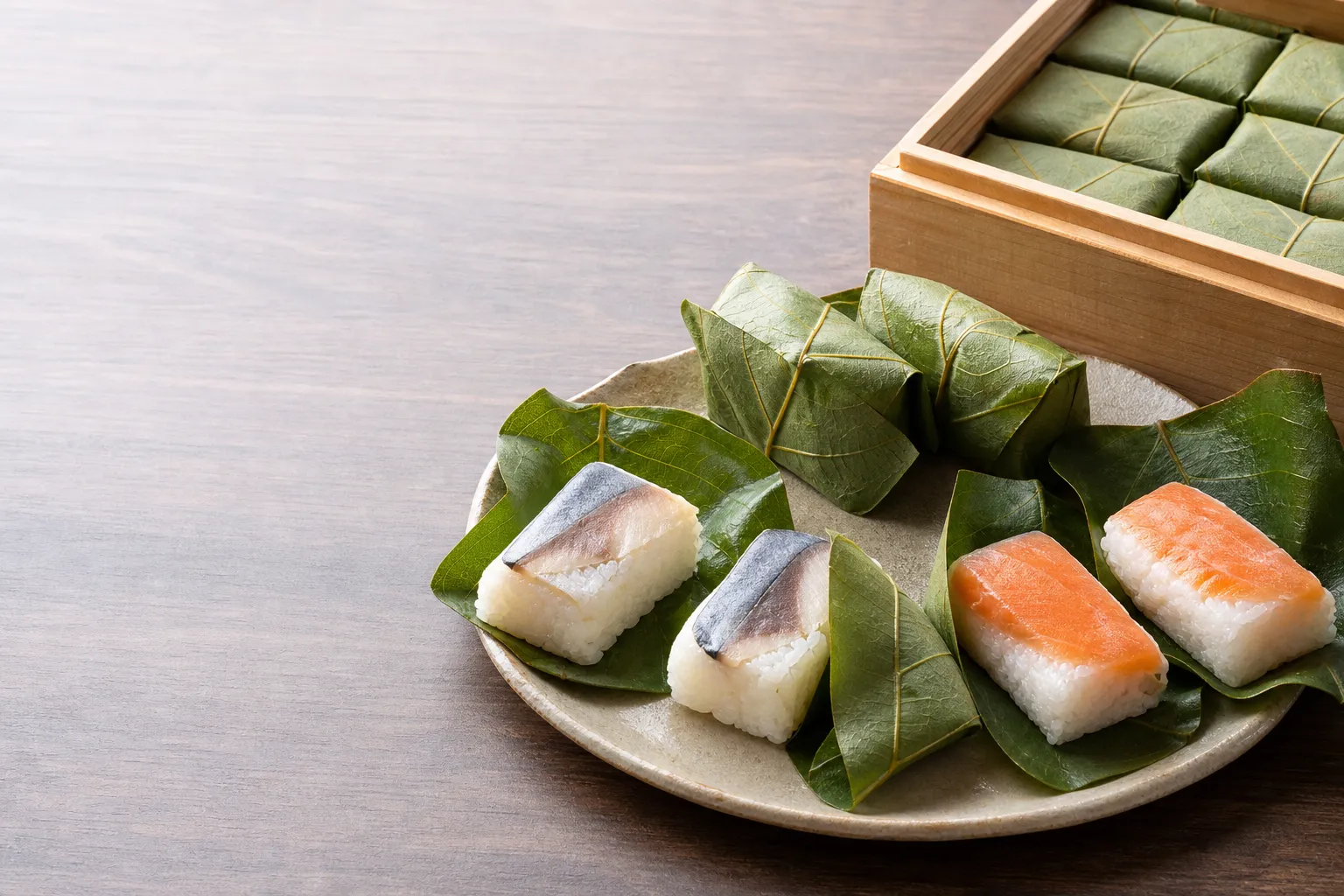
Pressed sushi wrapped in a persimmon leaf and left to mellow — mountain food from landlocked Nara, where salted mackerel learned to travel. Unwrap it like a tiny present.
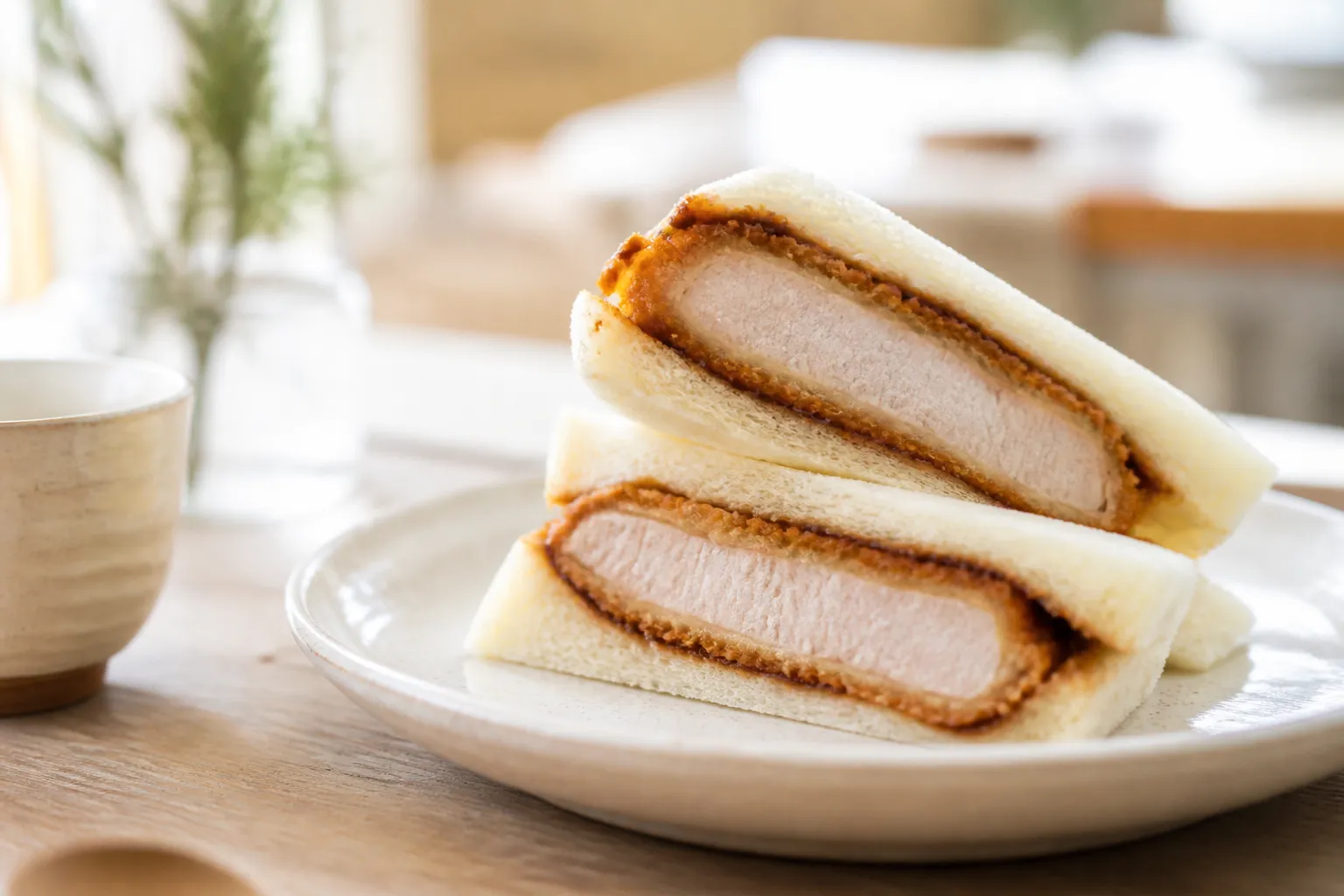
A thick, golden-fried pork cutlet, crustless white bread, one bite — and suddenly a convenience-store sandwich has no business tasting this good.
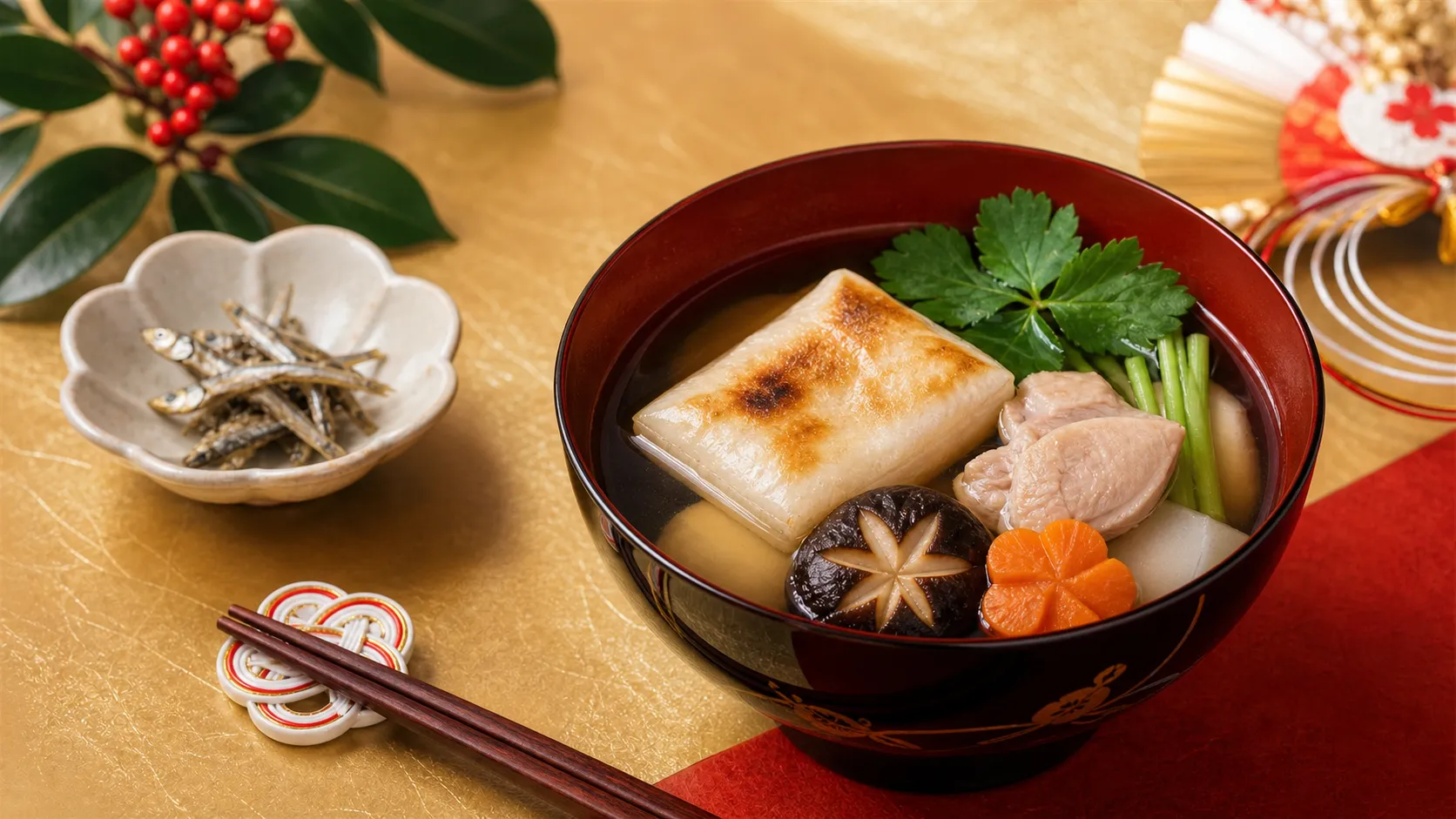
The mochi soup Japan eats on New Year's morning — a bowl so personal that its broth, its mochi shape, and its toppings change from region to region and even house to house, making it the most intimate dish in the country.
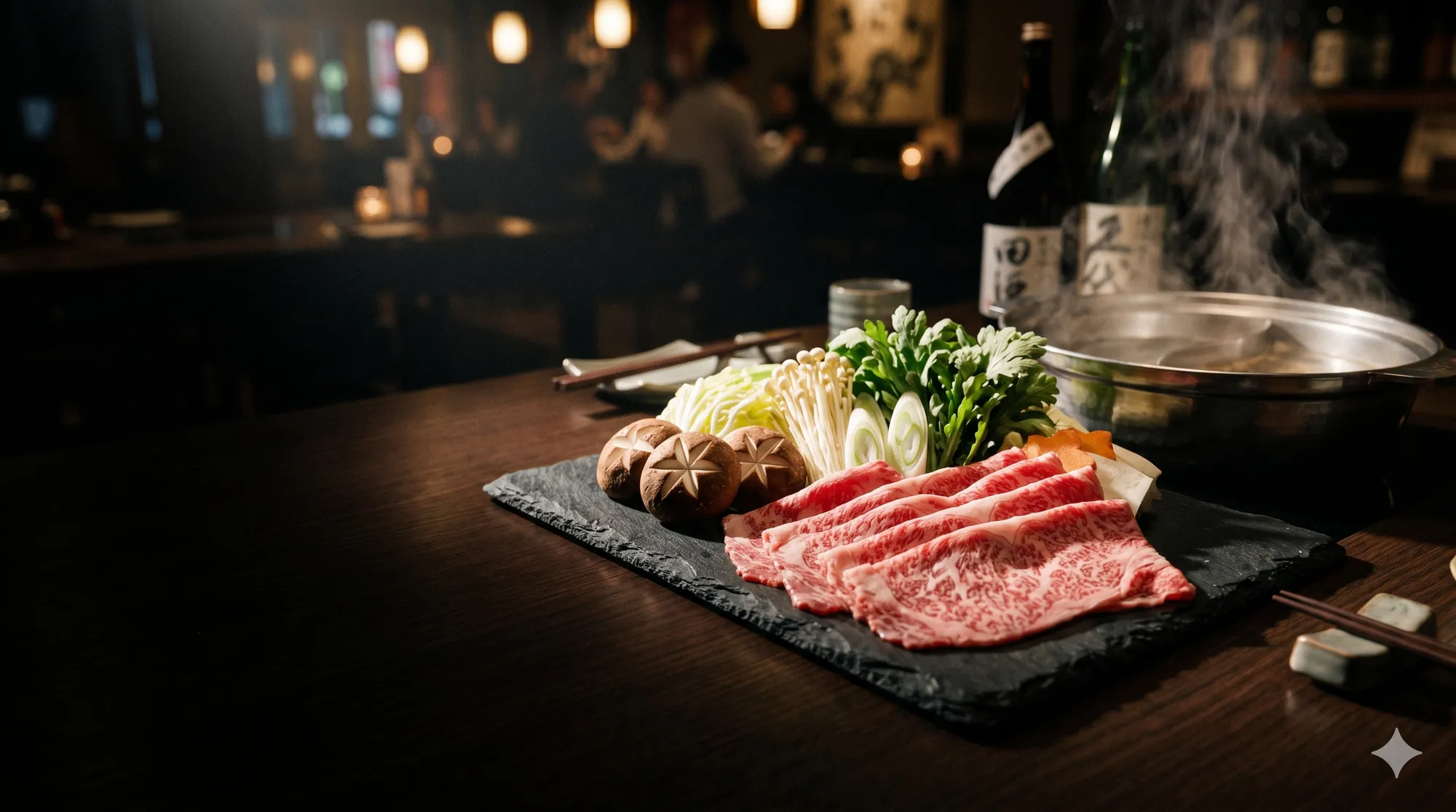
Swish a paper-thin slice of beef through hot broth for three seconds and your whole night changes. Japan's most elegant hot pot, where doing less is the entire point.
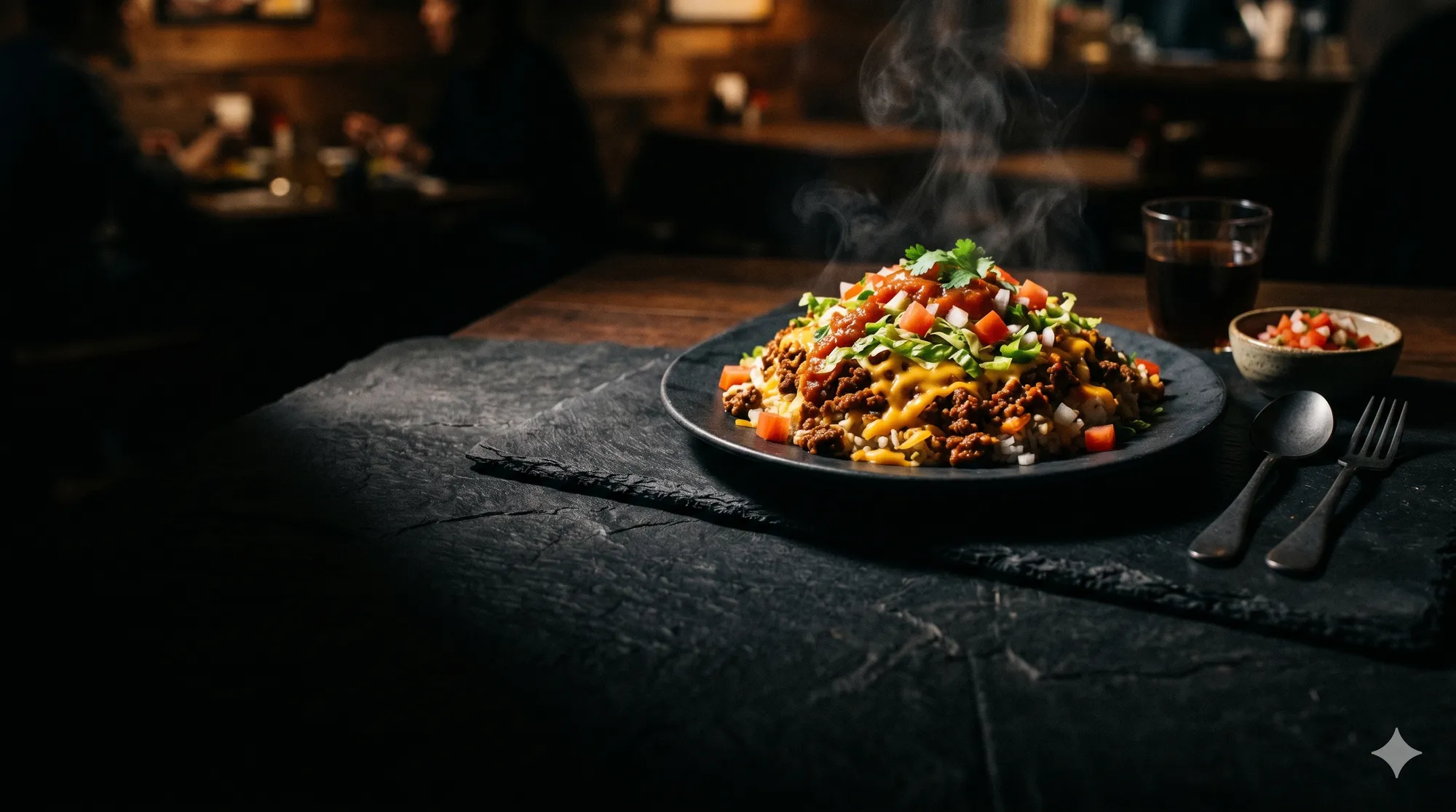
Taco fillings piled on rice instead of in a shell — seasoned beef, lettuce, tomato, cheese, salsa. Born next to a US base in Okinawa, it's the most deliciously unlikely fusion in Japan.
I lifted a bundle out of the ice water and stopped, because somen is supposed to be delicate and this was chewing back at me before I'd even started.
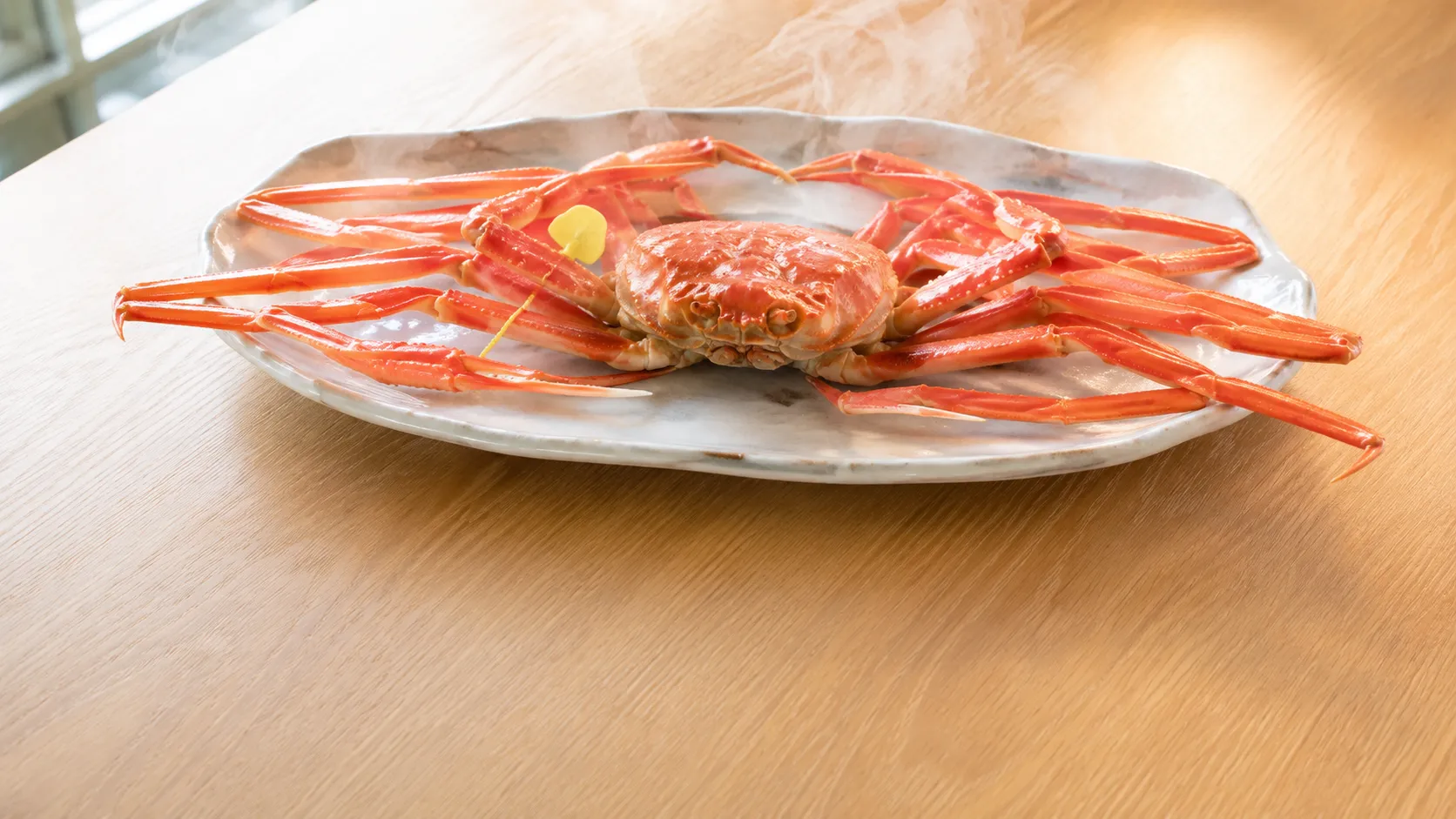
There's a small plastic tag clipped to the crab's leg like a name badge, and once someone explains what it means you will never look at a crab the same way again.
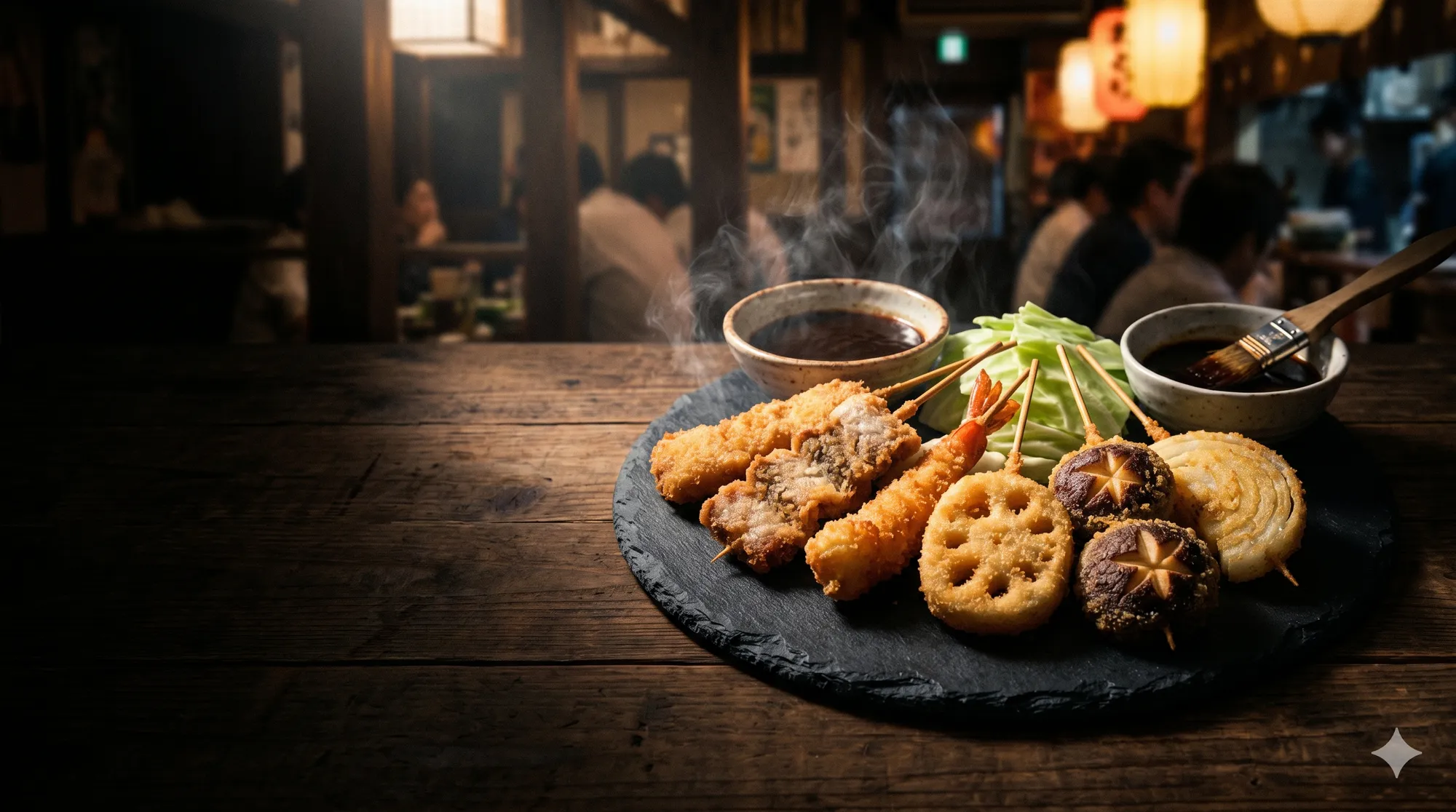
Skewered, panko-fried everything, dunked in a shared vat of sauce — with one sacred, non-negotiable rule that will get you glared at if you break it. Welcome to Osaka's rowdiest snack.
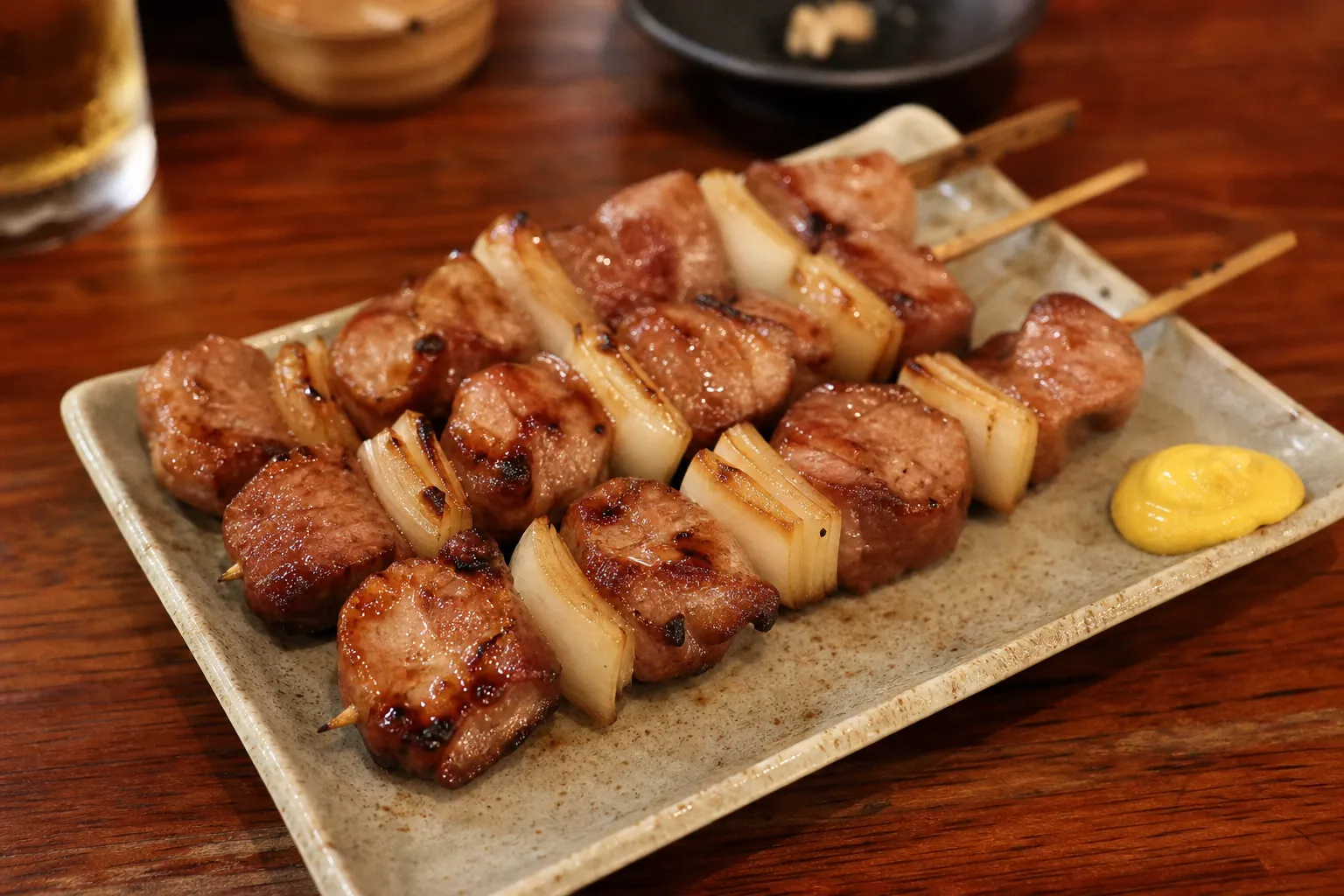
I ordered yakitori expecting chicken. What landed on the plate was pork, onion, and a smear of mustard so aggressive it cleared my sinuses — and I still went back for seconds.
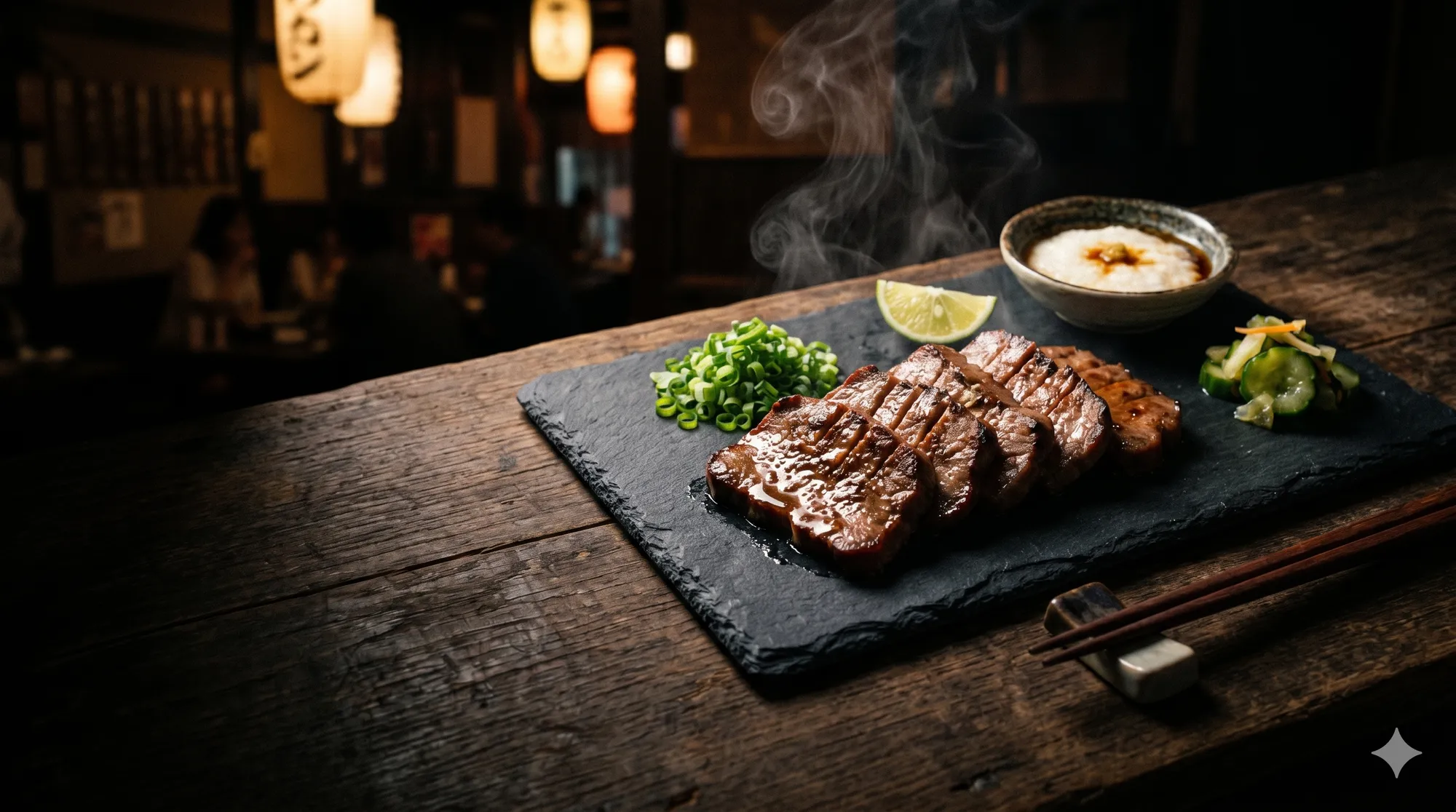
Thick-cut grilled beef tongue, charcoal-charred, snappy and rich — served with barley rice and oxtail soup. Sendai turned an overlooked cut into a destination. Trust the tongue.
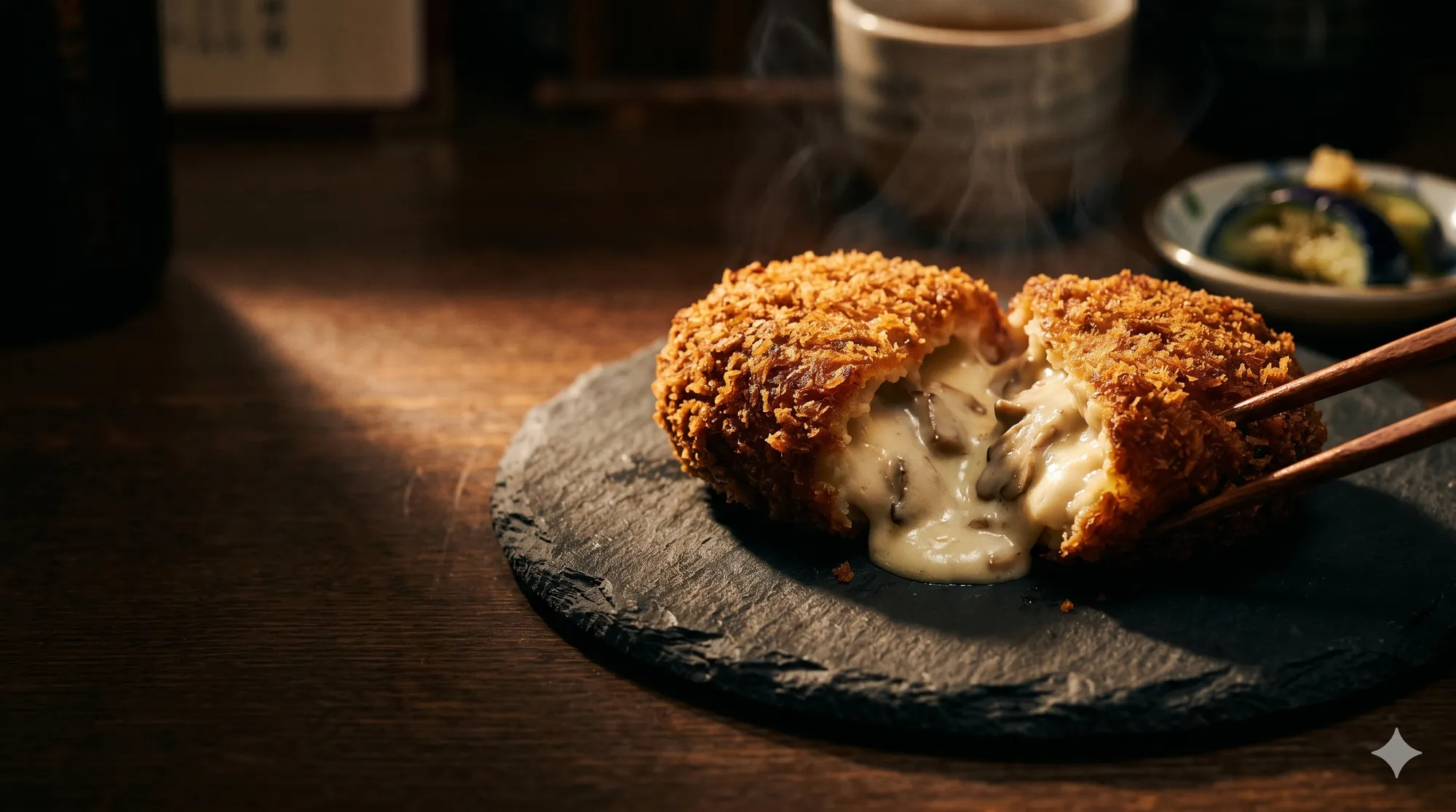
A small-town croquette so good it won a national contest. The star? A rice-flour cream croquette oozing maitake and béchamel. Underdog energy, championship flavor.
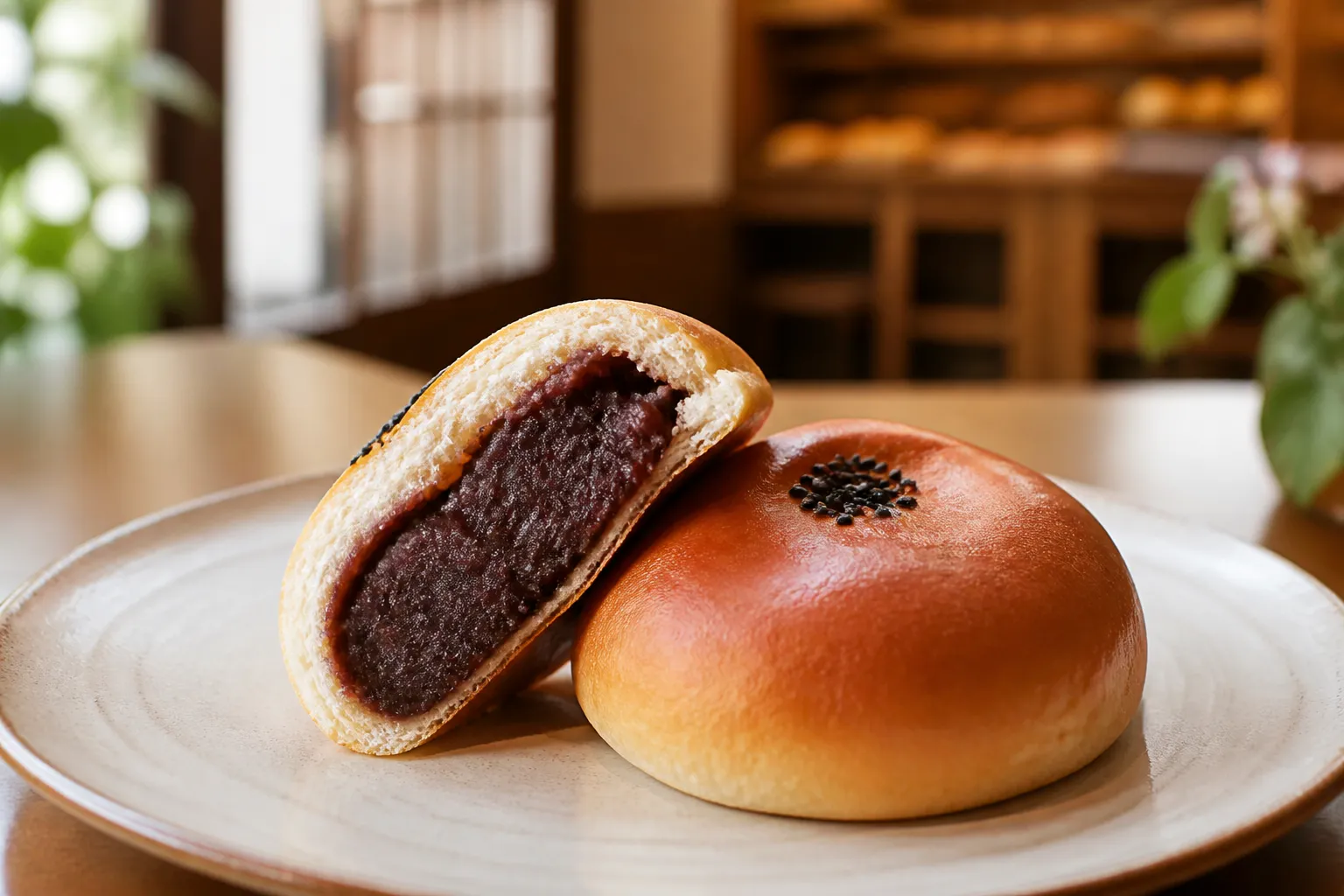
A soft little bun, one bite in, and suddenly it's dense, dark, sweet red bean all the way through — the bread that talked 1870s Japan into eating Western-style bread at all.
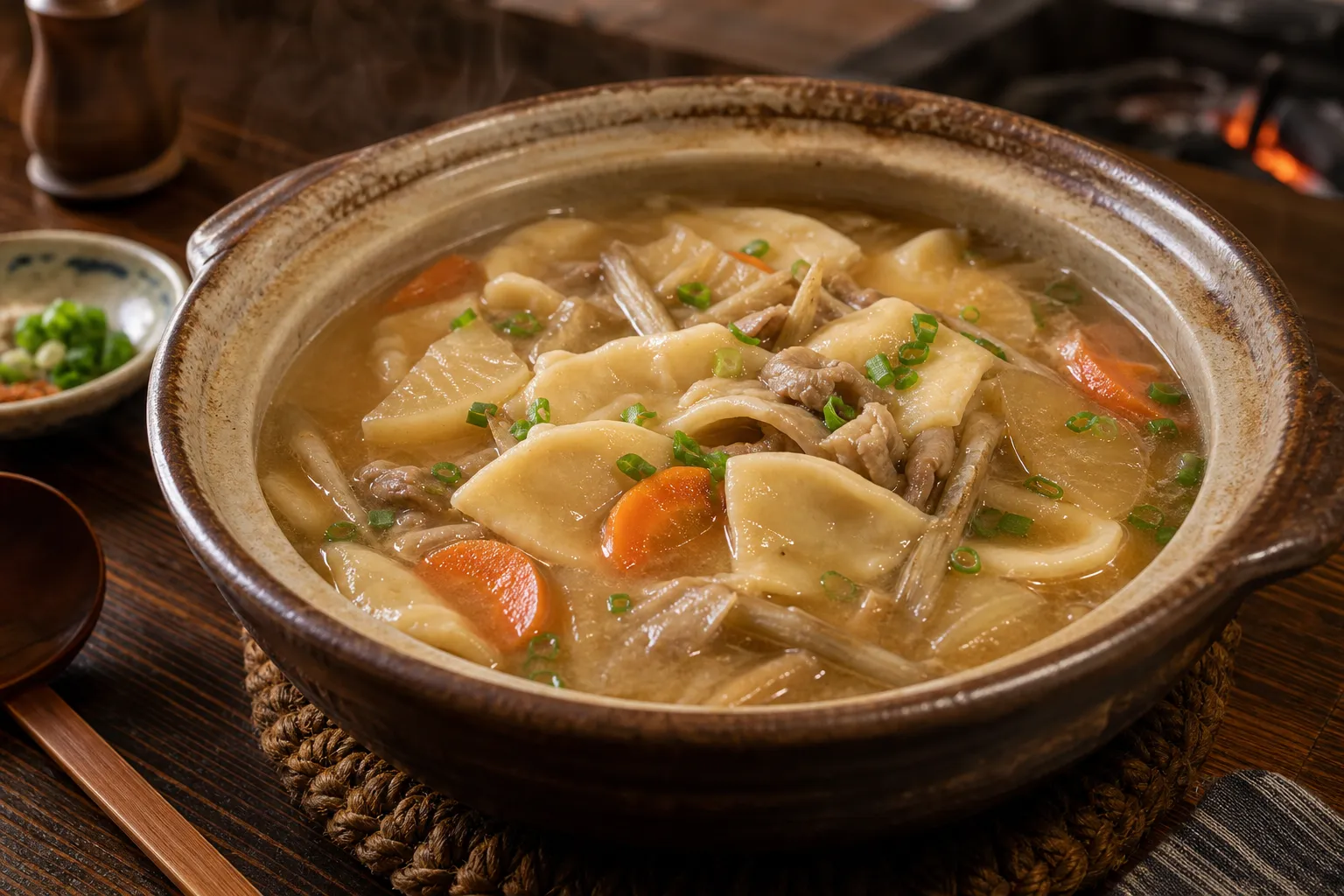
The dumplings weren't neat little balls — they were flat, torn-looking, chewy straps of dough sliding through miso broth, and one bowl on a cold day undid every knot in my shoulders.
No batter. No breading. Just fish, pounded into paste and fried until the outside turns the color of good leather. I bit in expecting crunch and got something closer to a warm hug.
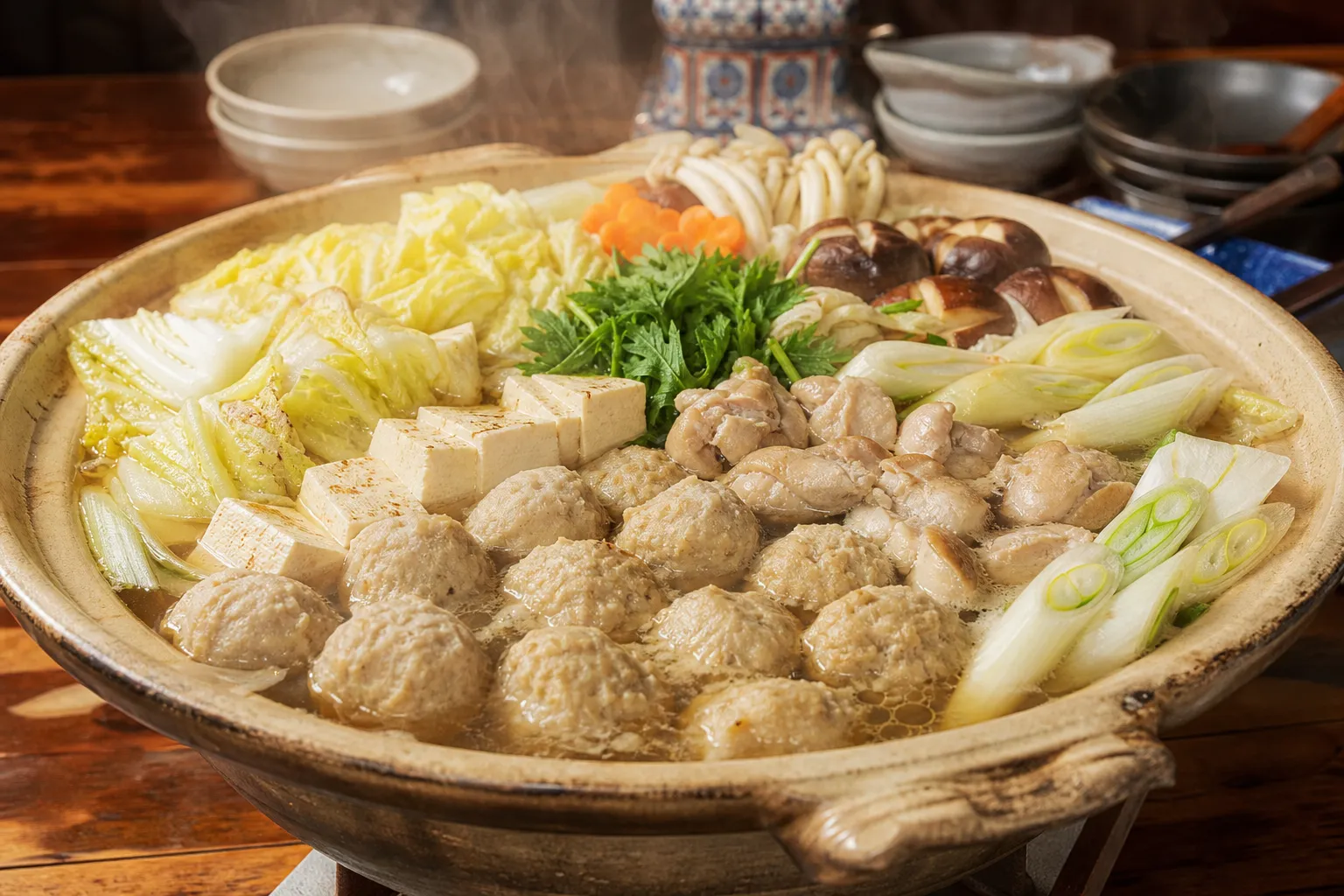
A pale, cloudy chicken broth so pure it stops you mid-sentence. Hakata's gentle chicken hot pot is winter comfort itself — dipped in citrus ponzu, finished as rice porridge, warm to the very last drop.
Soba bound with seaweed, served in neat one-bite coils on a long wooden tray — silky, slippery, impossibly springy. Niigata's textile country turned noodles into something you've never quite chewed before.
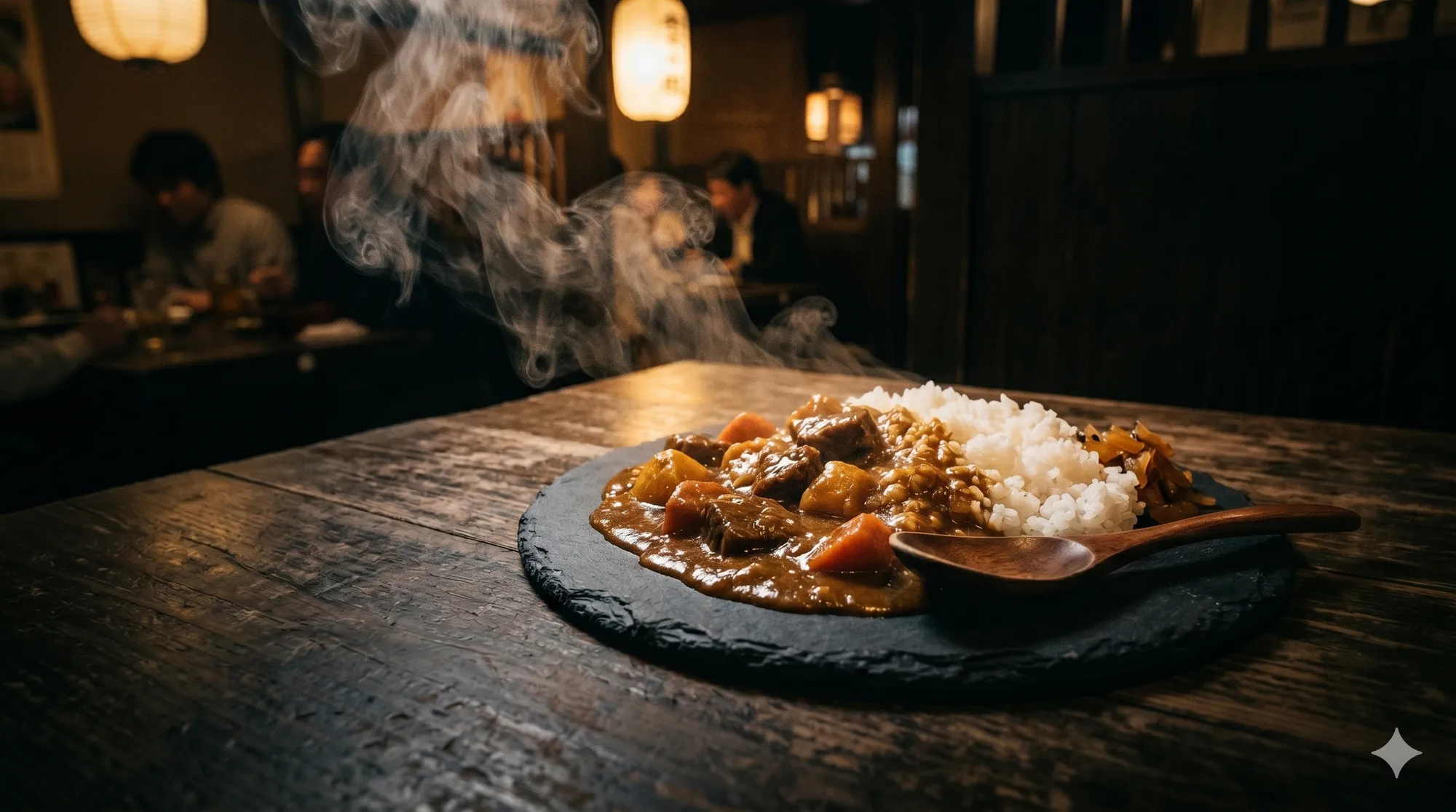
Not Indian. Not British. Thoroughly, lovingly Japanese — thick, sweet-savory, mild, and the smell of home on a Friday night. The nation's true comfort food.
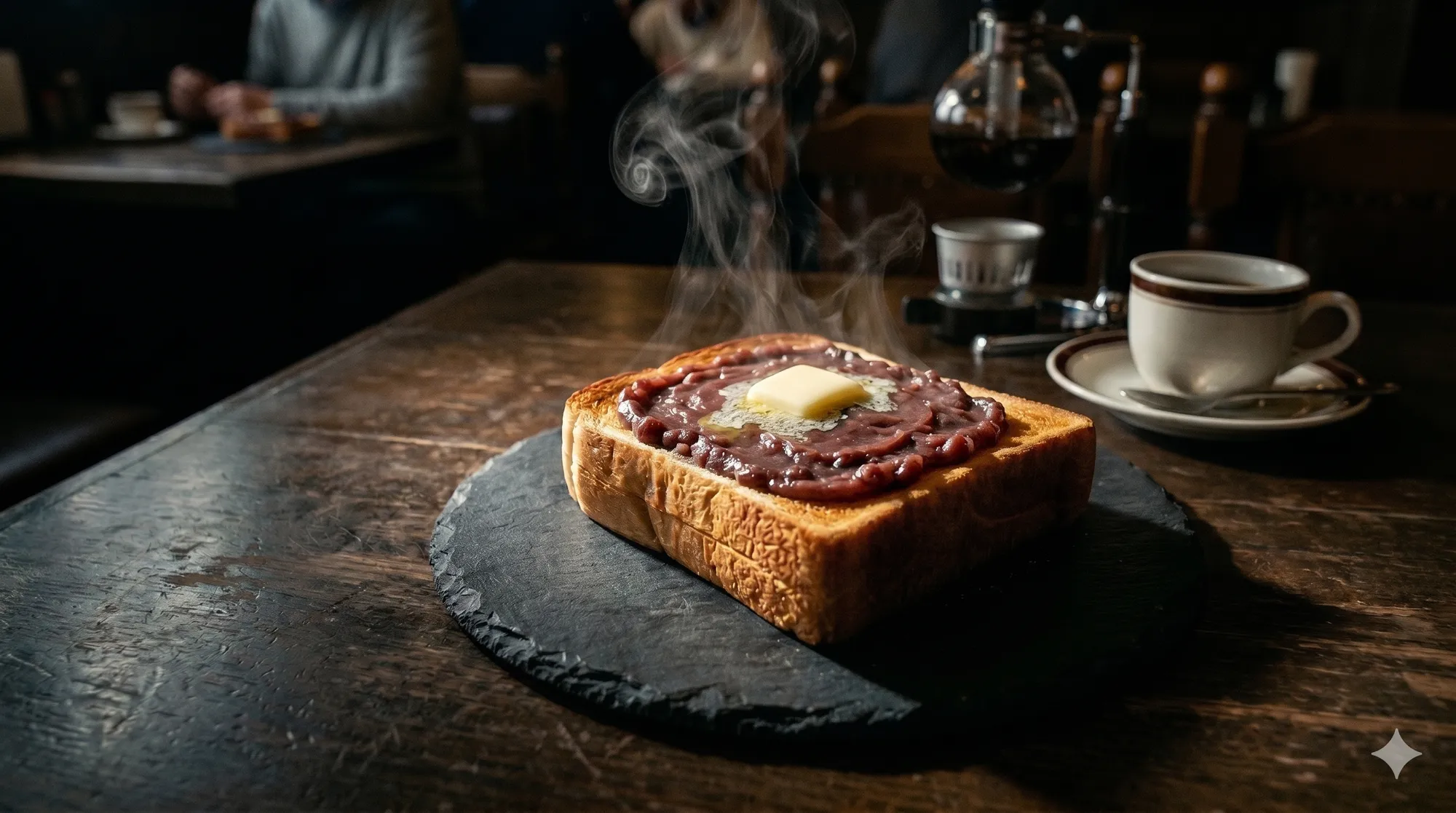
Thick buttered toast piled with sweet red bean paste. It sounds wrong. It is gloriously, sweet-salty right — and it's the cornerstone of Nagoya's legendary café mornings.
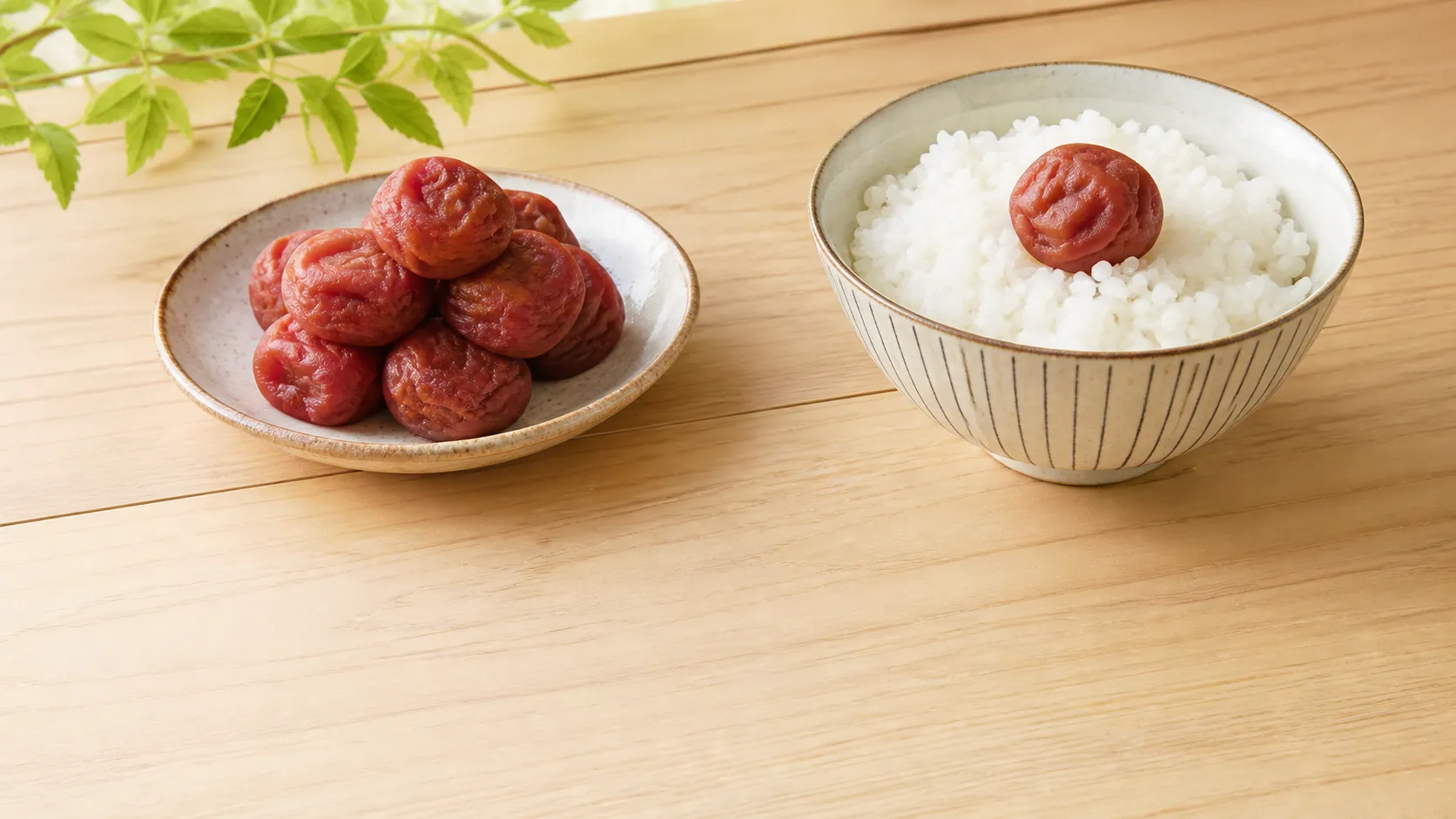
My whole face folded inward. A man on the next stool laughed so hard he had to put his tea down. Ten minutes later I bought a bag of them, because apparently I'm like this.
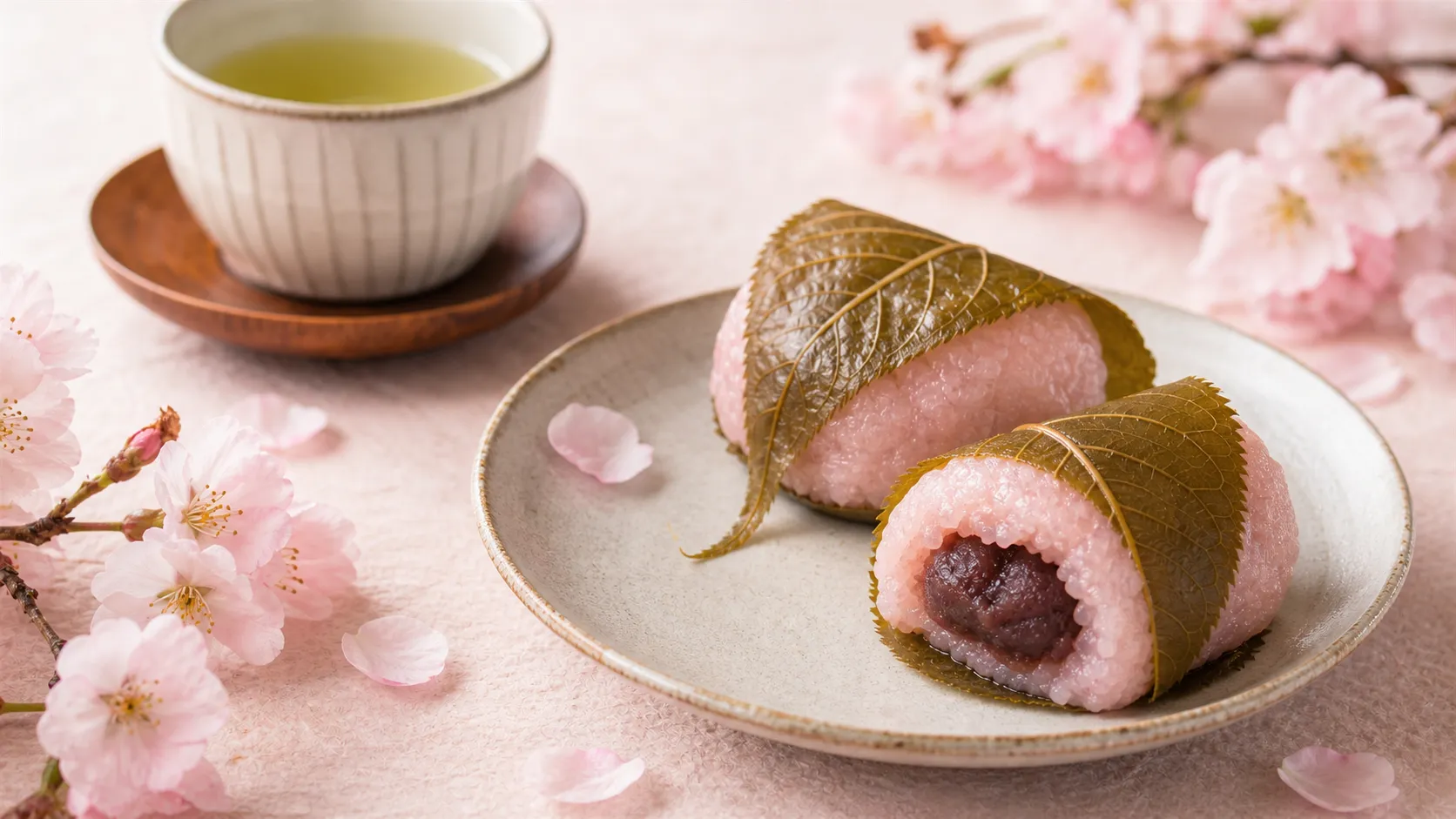
A pink mochi filled with sweet red bean and wrapped in a real, salted cherry-blossom leaf you're meant to eat — the taste of Japanese spring in a single, faintly floral, sweet-and-salty bite.
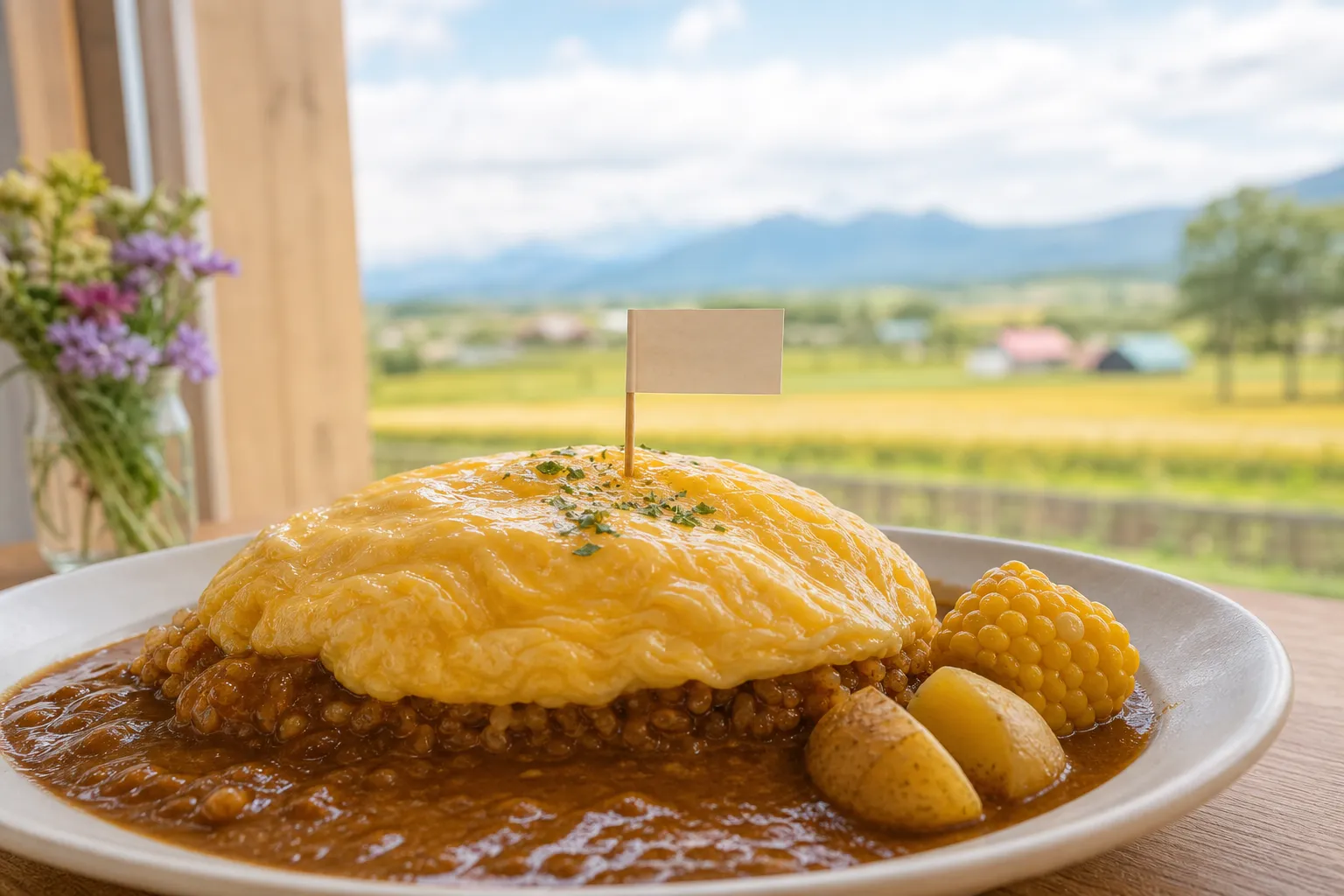
Cut into the omelette and curry sauce comes flooding out like it's been waiting all morning for permission — with a lavender field in the window behind it.
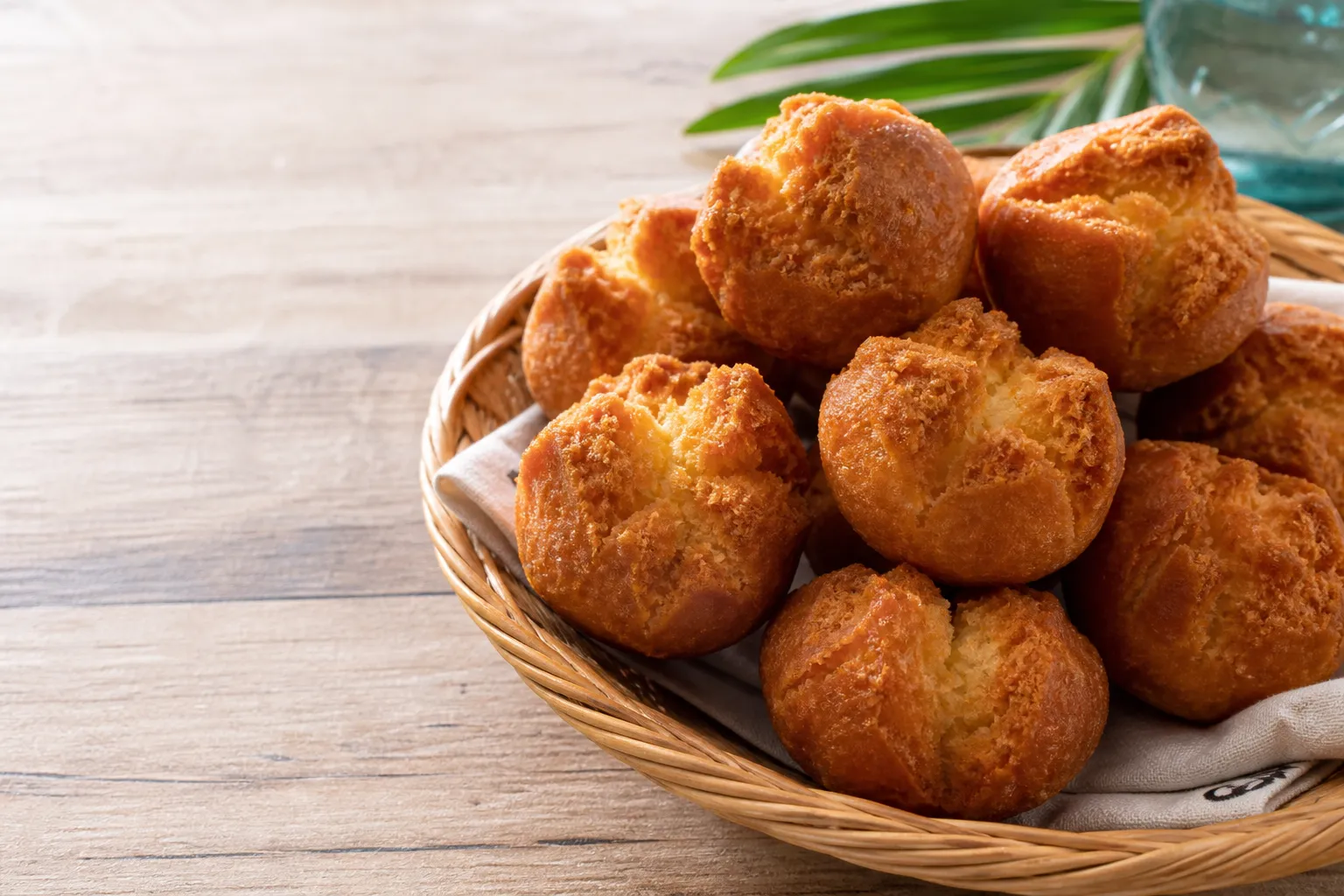
Still warm, the crust cracked open at the top like it had bloomed. Crisp outside, cakey inside — Okinawa's fried doughnut that is absolutely not a doughnut.
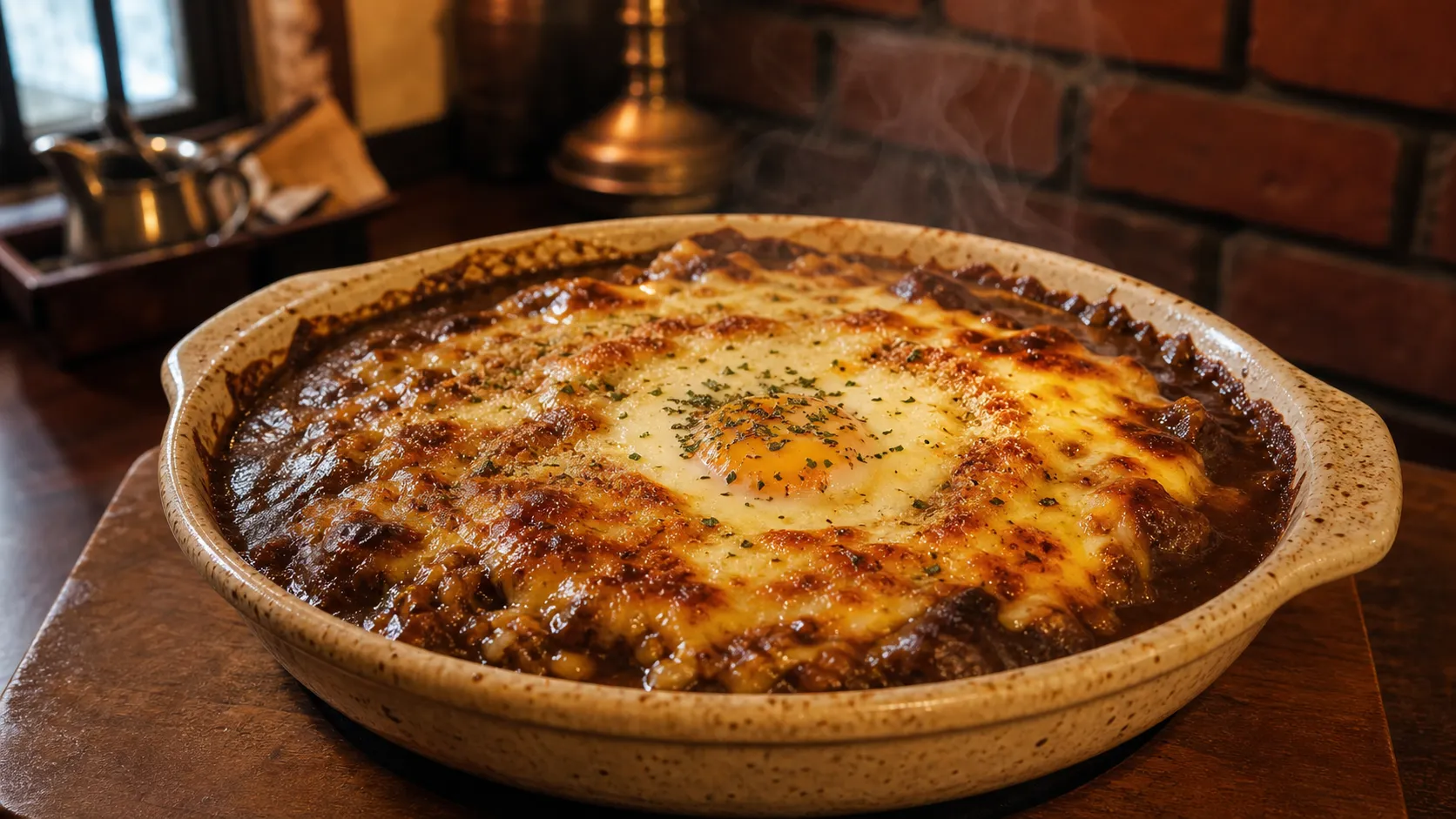
Someone cracked an egg onto curry rice, buried it in cheese, and baked the whole thing — and it's so much better than normal curry it feels almost unfair. In a port town frozen in 1910, this is the only correct thing to order.
There is a correct way to eat this and I did not know it, so I made a mess in front of several Yamanashi locals who were extremely kind about it and absolutely watching.
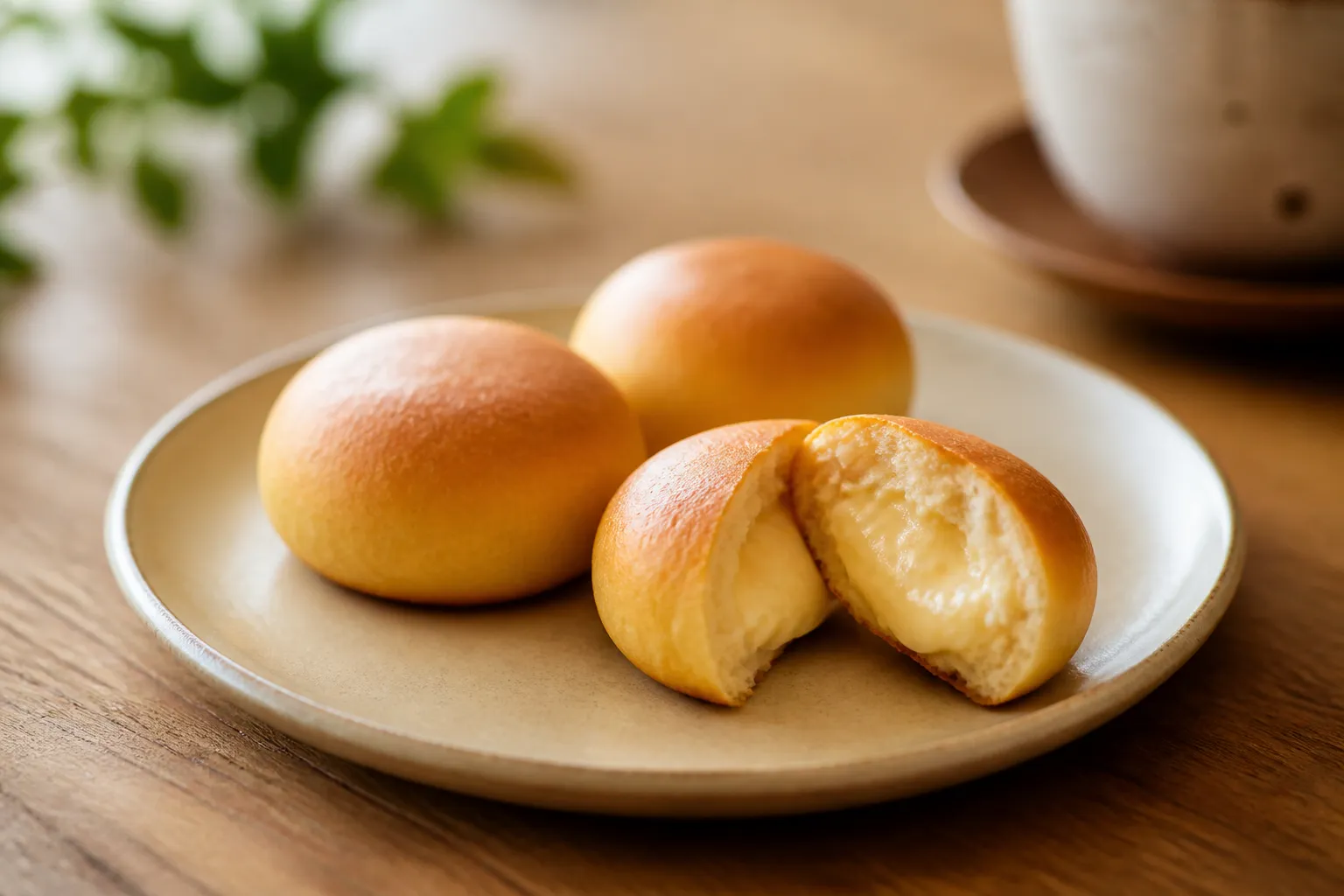
A warm golden bun that looks like a plain cookie until you bite in and hit a molten pocket of cream cheese — Miyazaki's sneaky-brilliant souvenir that ruined me for regular manju.
The original Tokyo nigiri, born before refrigerators existed — cured, marinated, simmered by hand, then pressed onto warm rice in a single confident motion. This is where sushi actually comes from, and it's a craft, not a slab of raw fish.
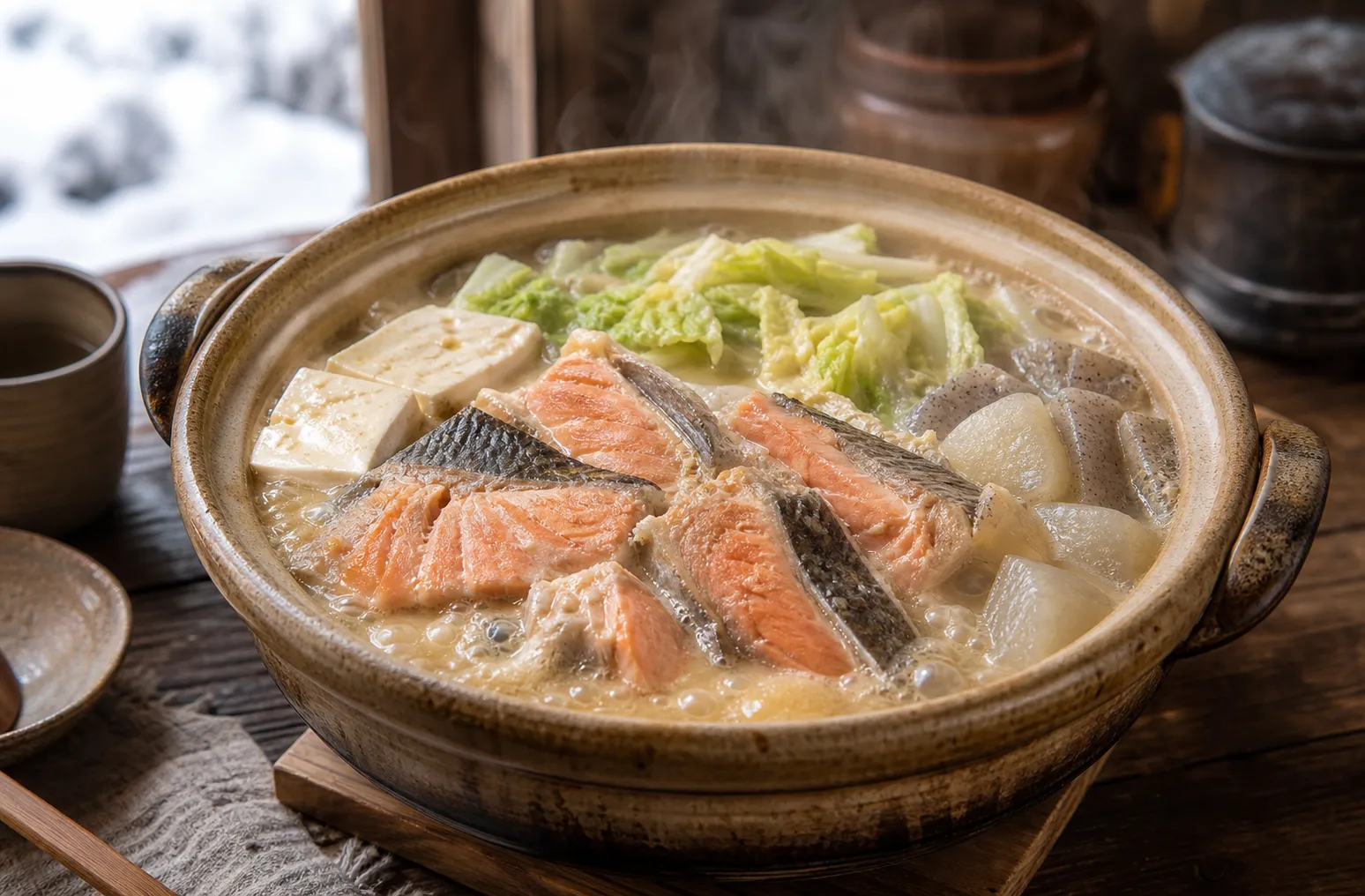
A whole clay pot of salmon, bubbling in miso, steam fogging up the window while snow piles up outside — this is what winter in Hokkaido actually tastes like.
Noodles so wide and wavy they look hand-torn, floating in a broth so clear you can read the bowl's pattern straight through it.
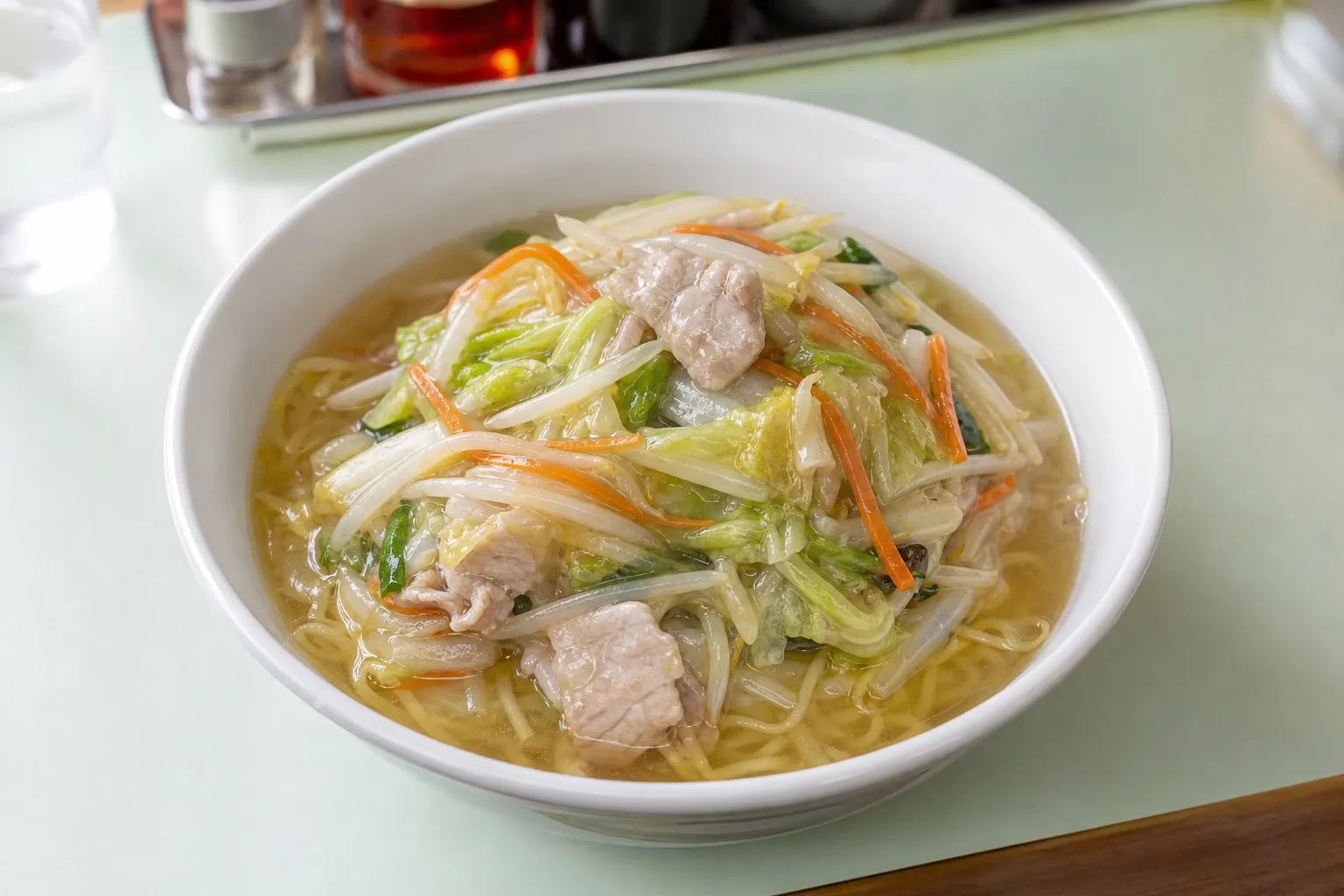
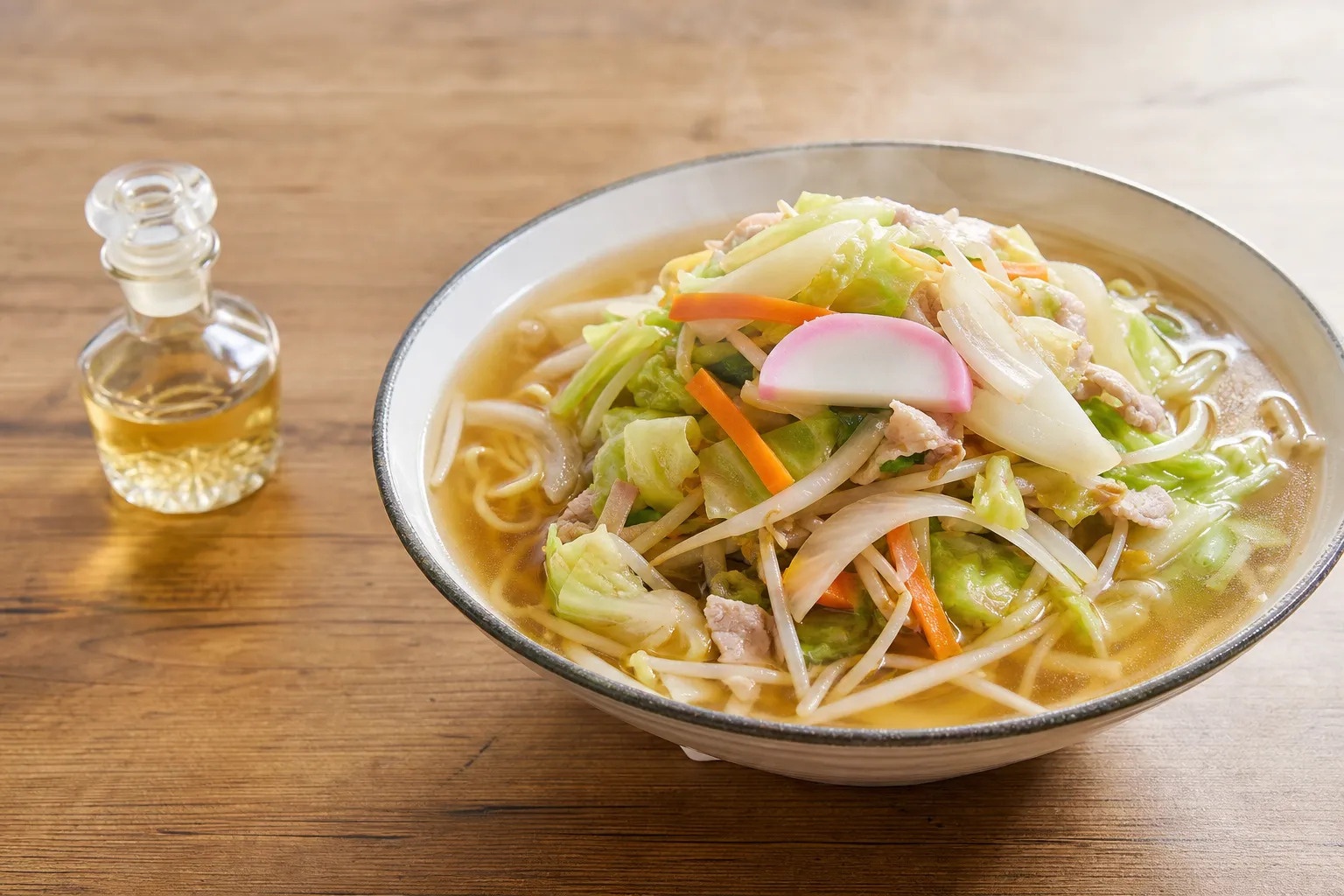
A mountain of vegetables in a broth so clear you'd never guess the name. Shiga's champon ditched the milky pork soup for a clean dashi — and a splash of vinegar you add yourself.
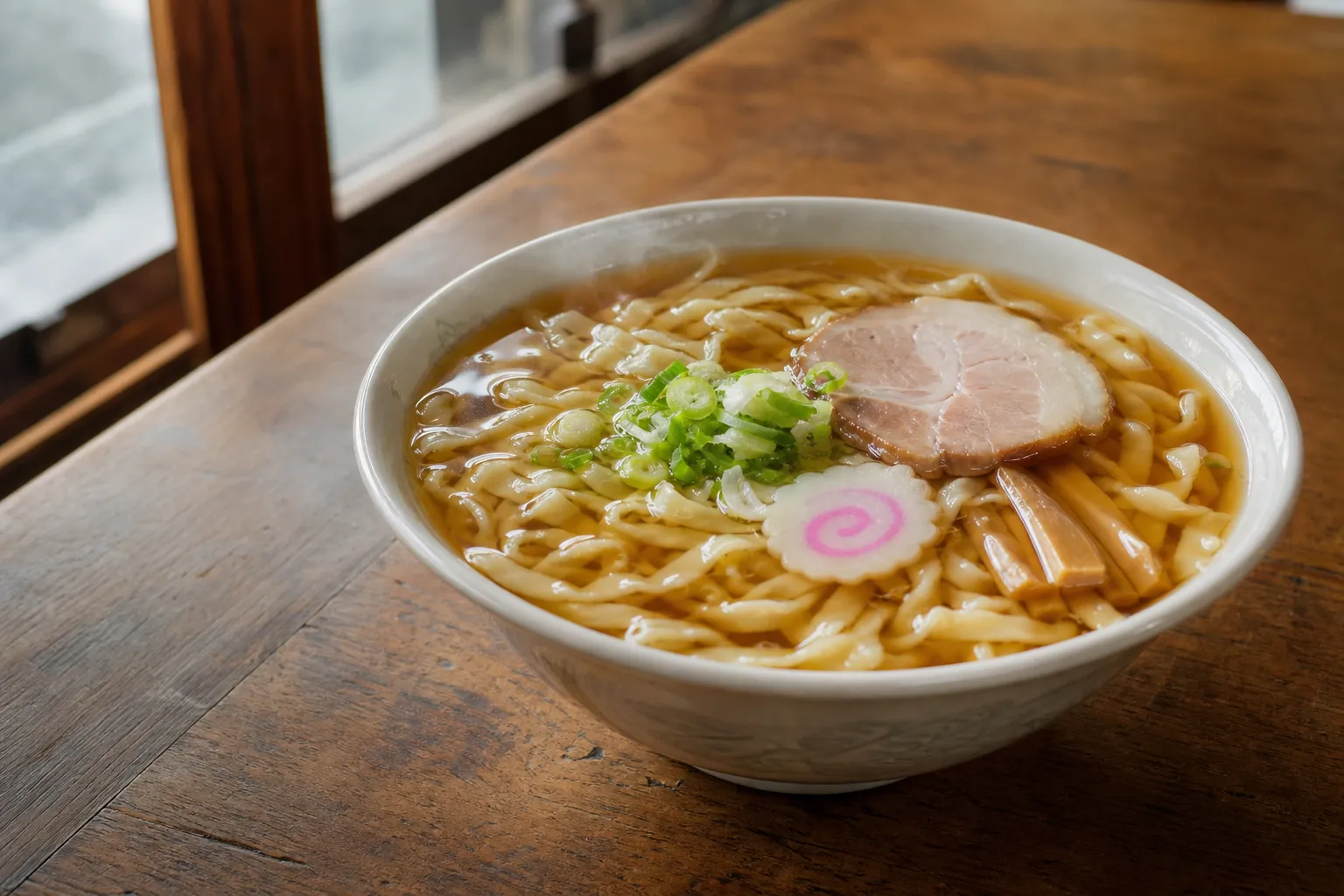
Noodles hand-pressed with a bamboo pole, flat and gloriously uneven, swimming in a soy broth so clear you can see the bottom of the bowl. Tochigi's ramen is a quiet masterclass in less-is-more.
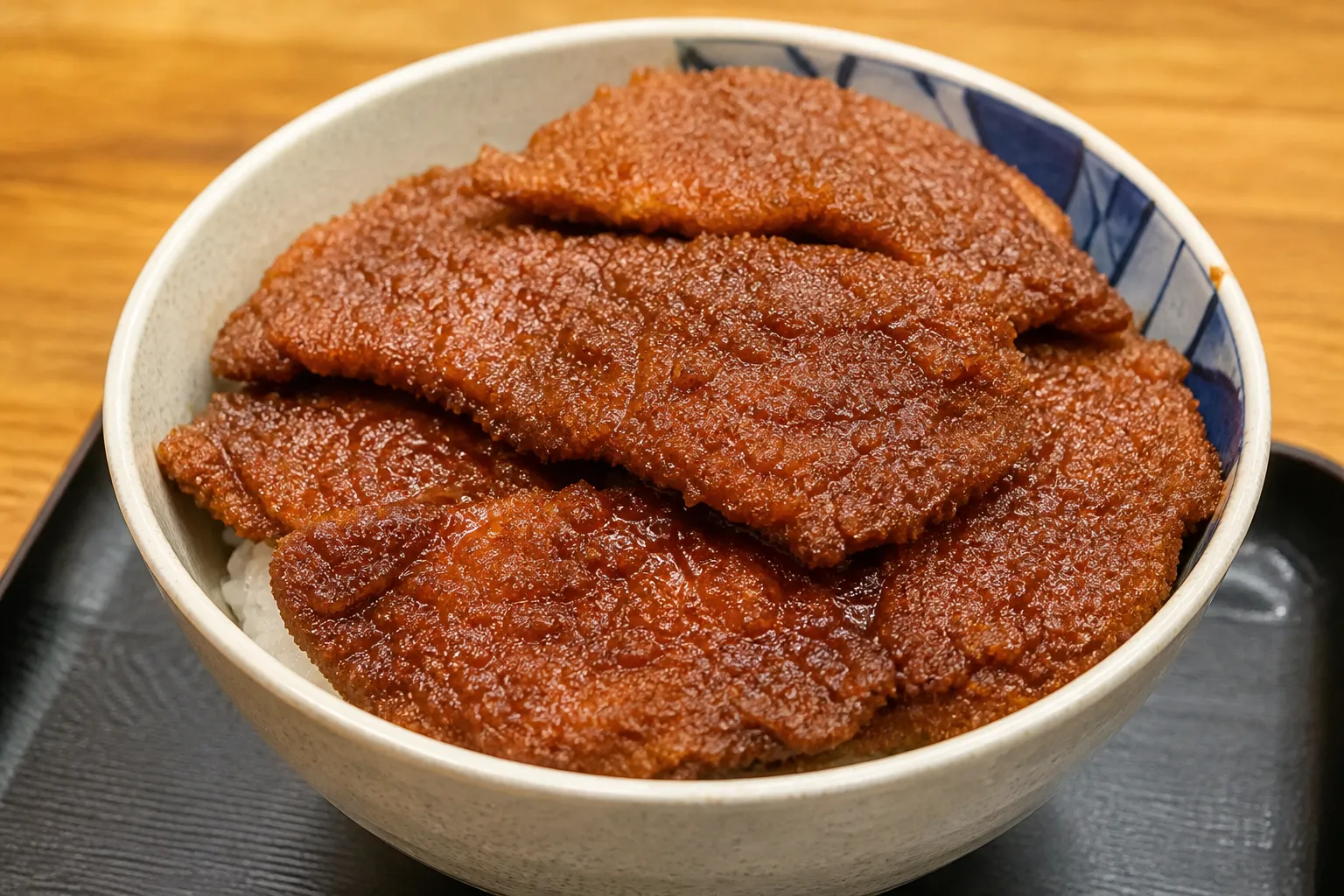
No egg. No onion. No broth. Just crisp thin cutlets fully bathed in a dark sweet-tangy sauce over hot rice. Fukui's katsudon throws out the rulebook — and it's a revelation.
A pork cutlet on buttered rice, drowned in demi-glace, invented at the far eastern edge of Japan — retro Western food from a town most maps forget.
Straw fire, three feet high, a slab of fish blackening in the flames — and then somehow that same fish is on my rice, smoky-edged and ruby-red in the middle, and I forget how to talk for a second.
A mountain of noodles fried until they shatter like glass, then drowned in a sauce so glossy it looks lacquered. I attacked it with chopsticks and lost the first round.
Eat the noodles, drink the broth, and just when you think the bowl is empty — dig down and find an entirely second meal waiting underneath.
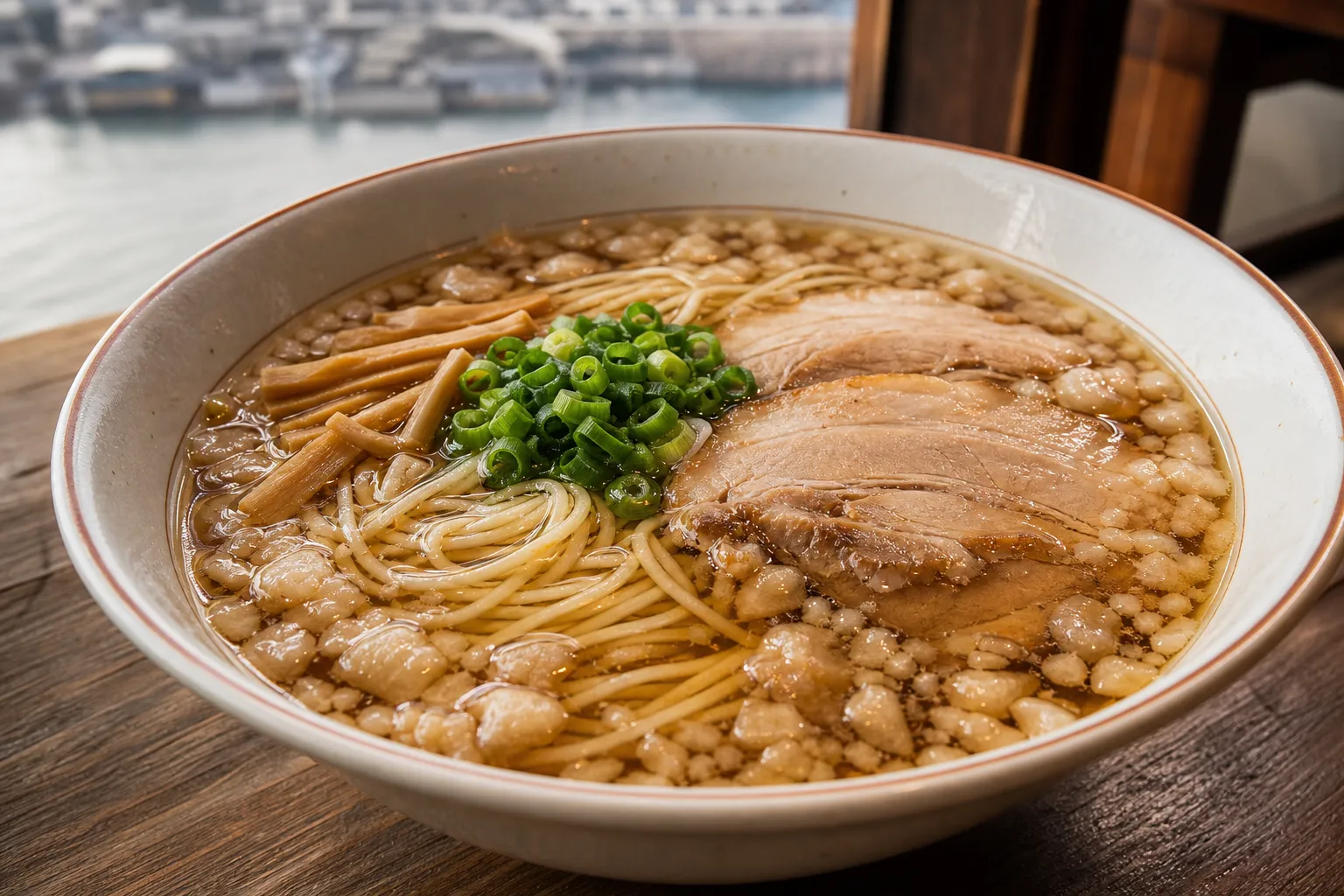
Clear soy broth from the Seto Inland Sea, studded with little pillows of melting pork fat that change everything. A hillside port town's bowl — light and deep at the same time, which shouldn't be possible.
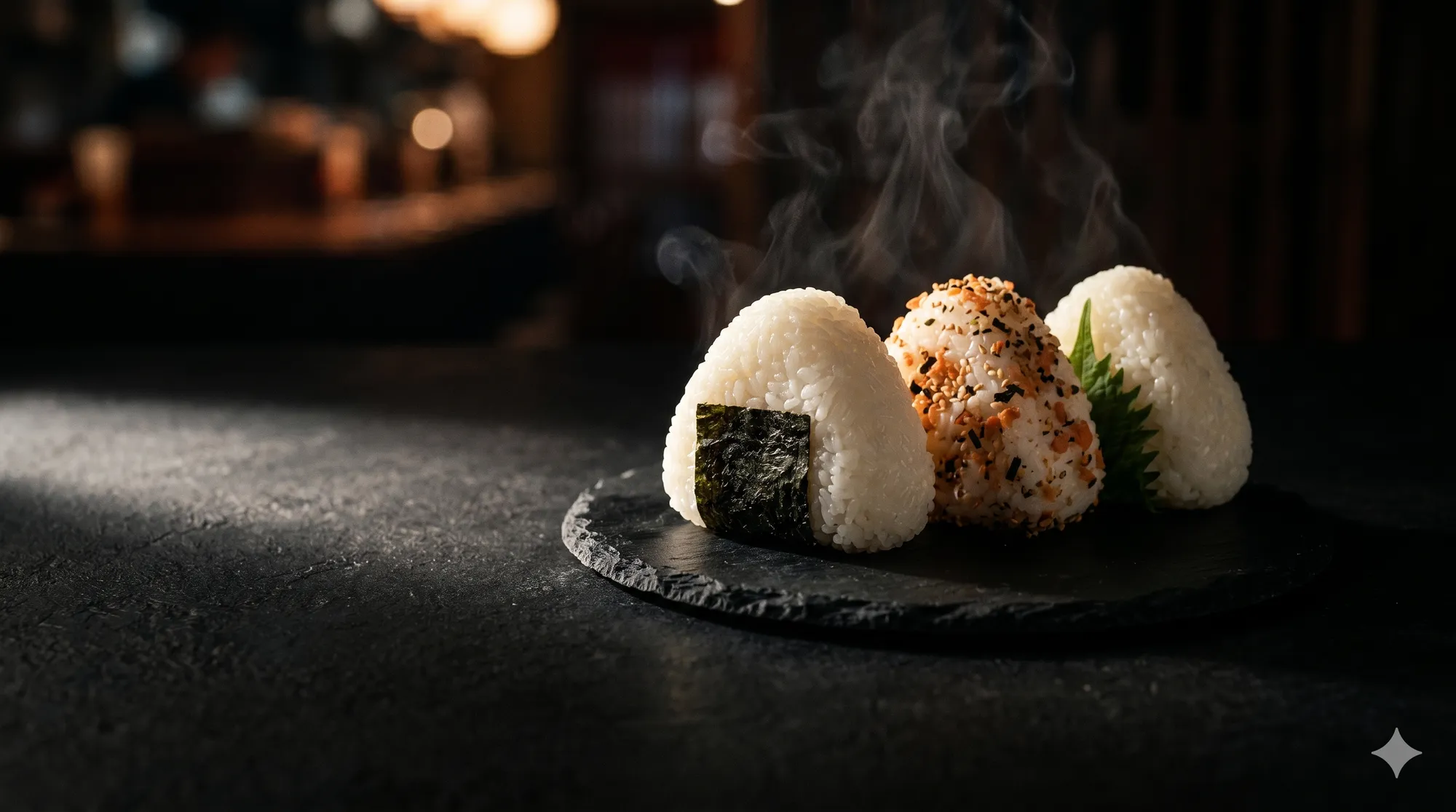
A triangle of rice with a savory surprise in the middle, wrapped in crisp seaweed. The perfect portable snack, the soul of the bento, and the single best ¥150 you can spend in a convenience store.
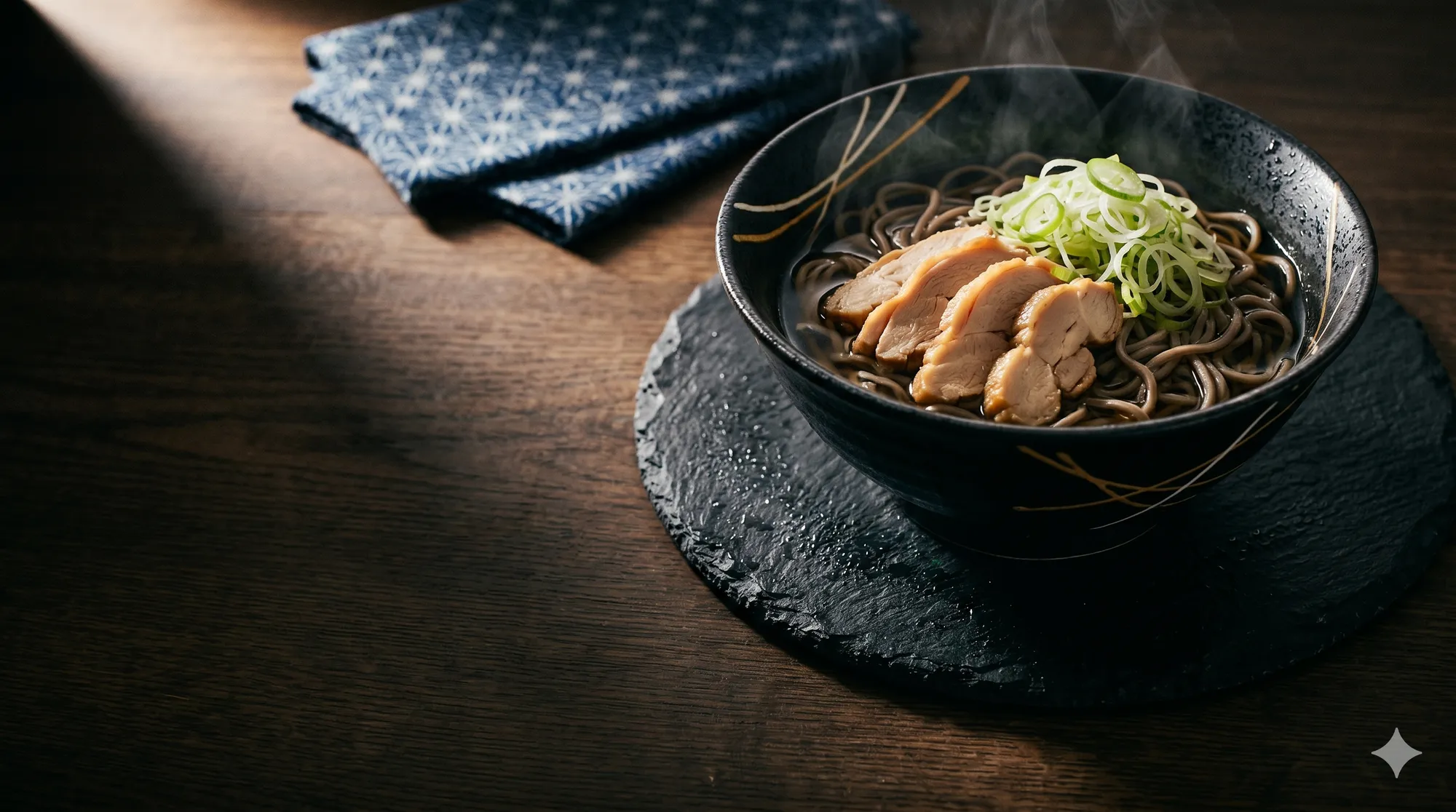
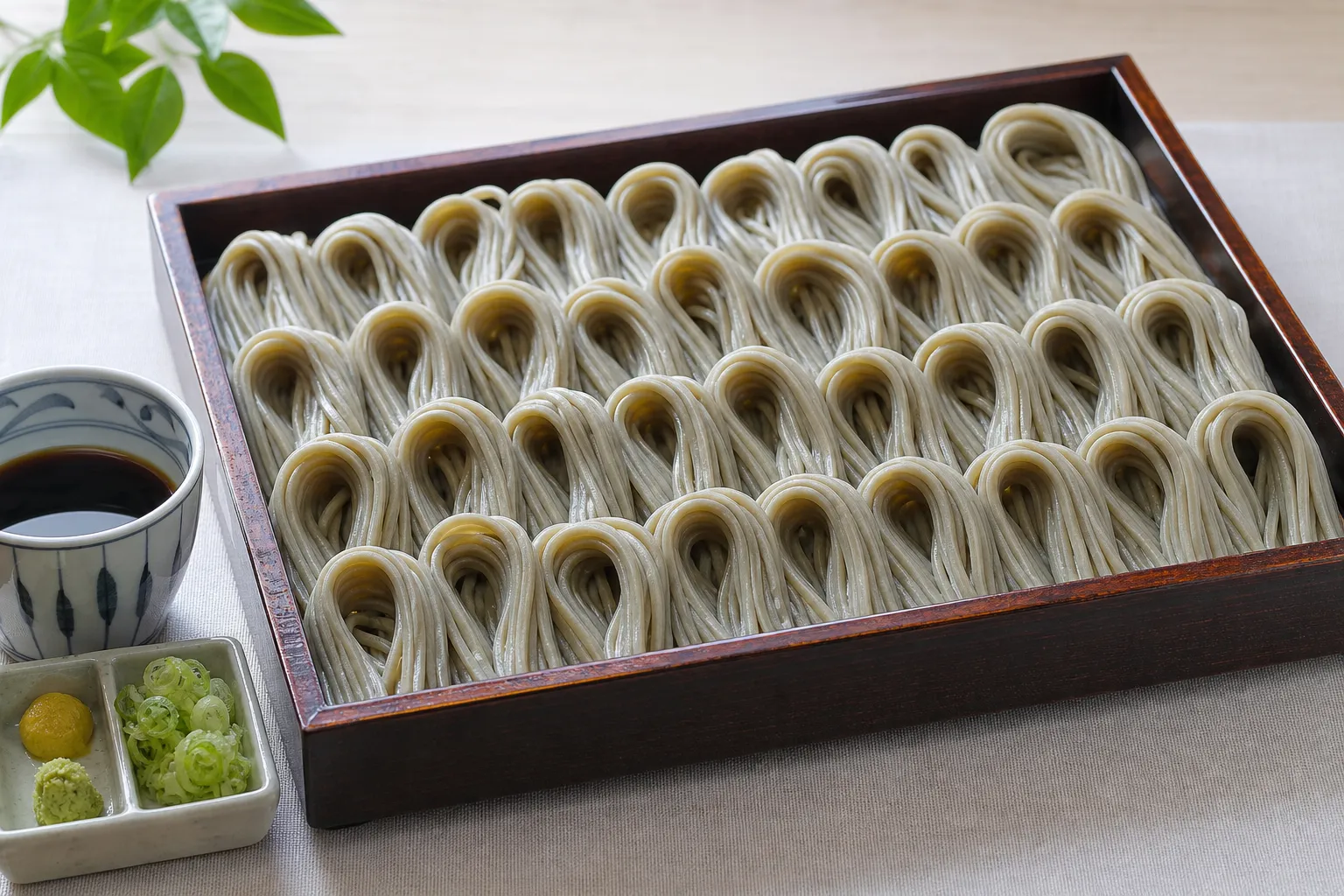
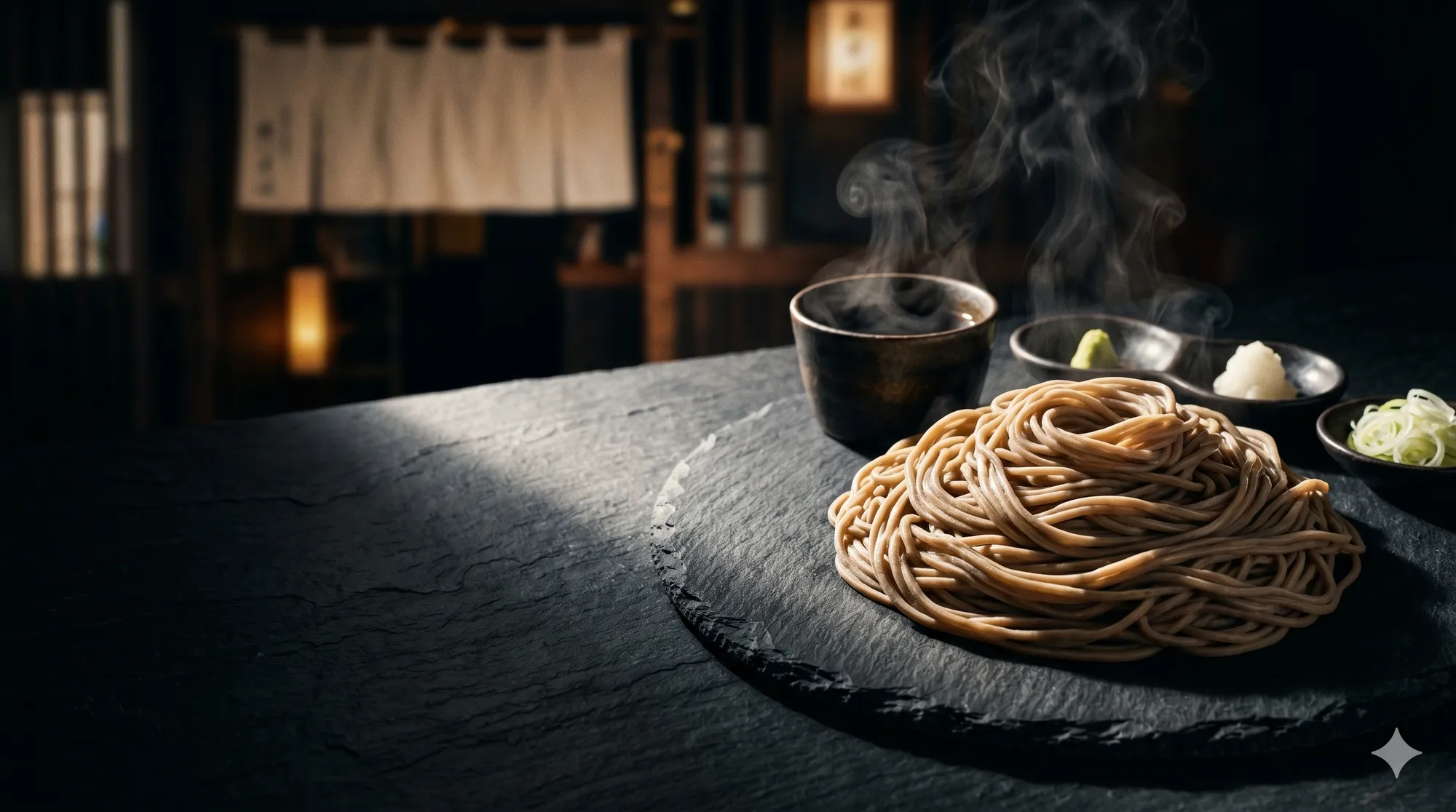
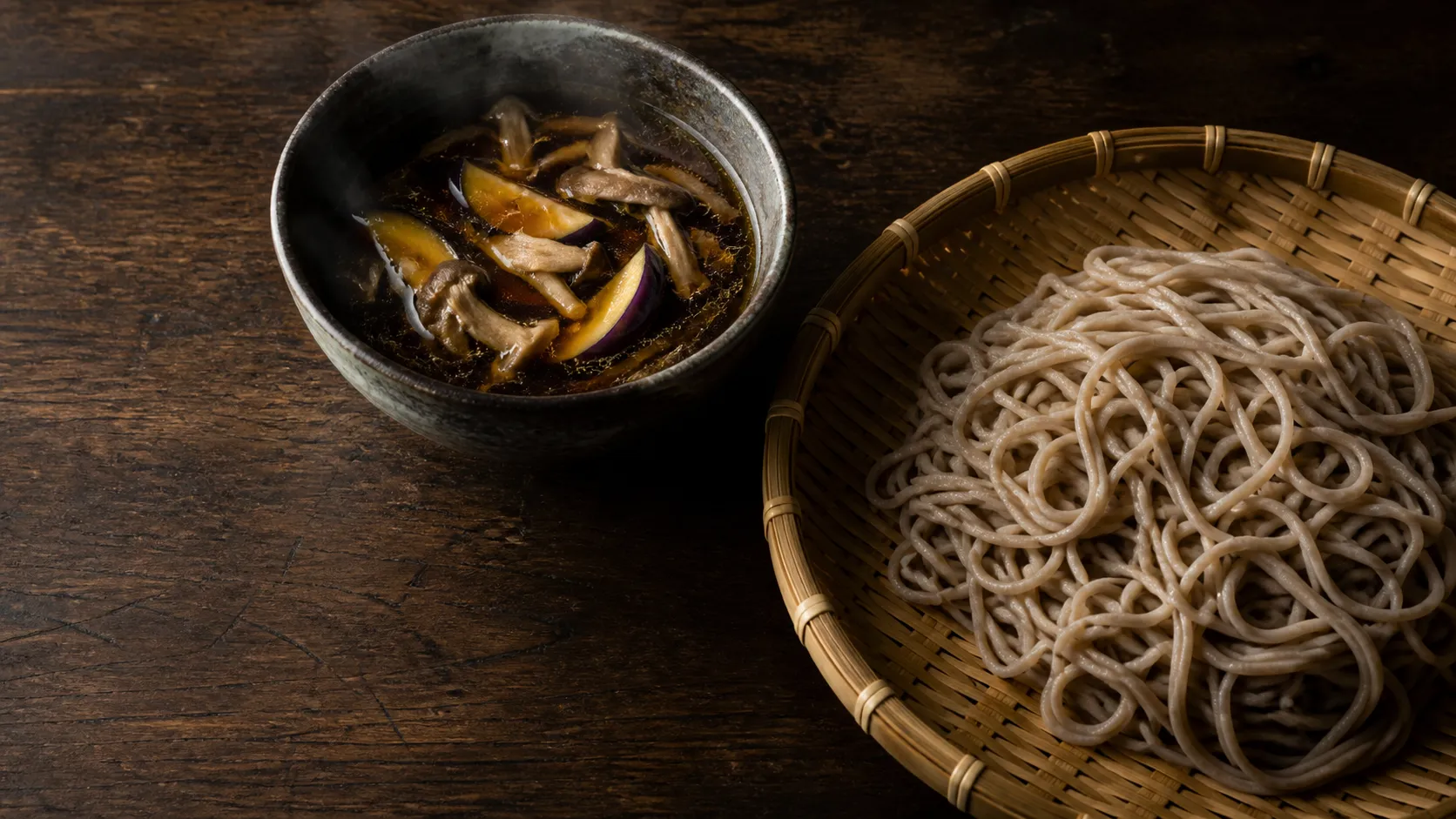
Nutty buckwheat noodles, served ice-cold with a dipping sauce or hot in broth — the lean, earthy, grown-up noodle Japan has eaten for centuries. Slurping is mandatory; so is the noodle-water finale.
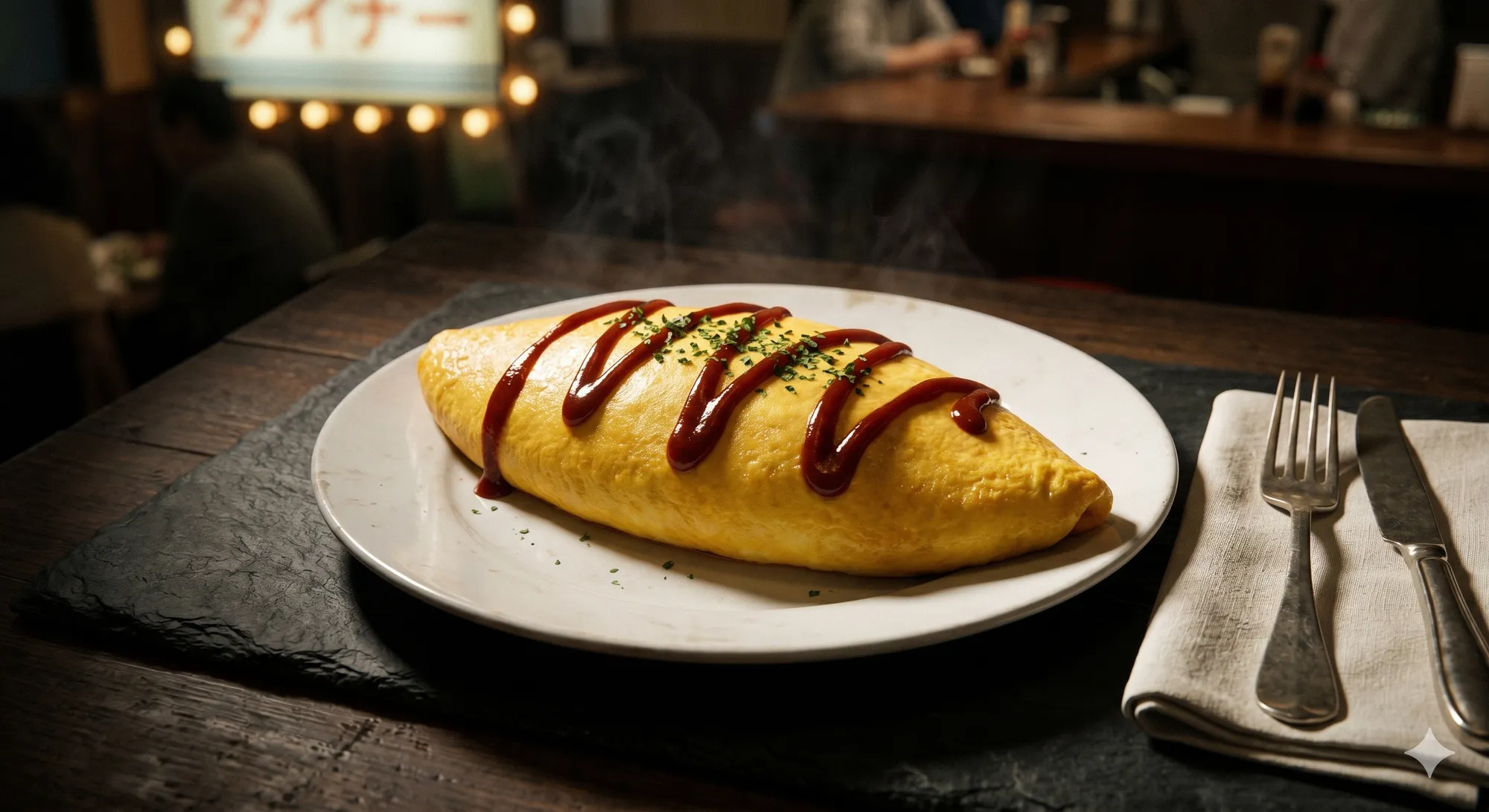
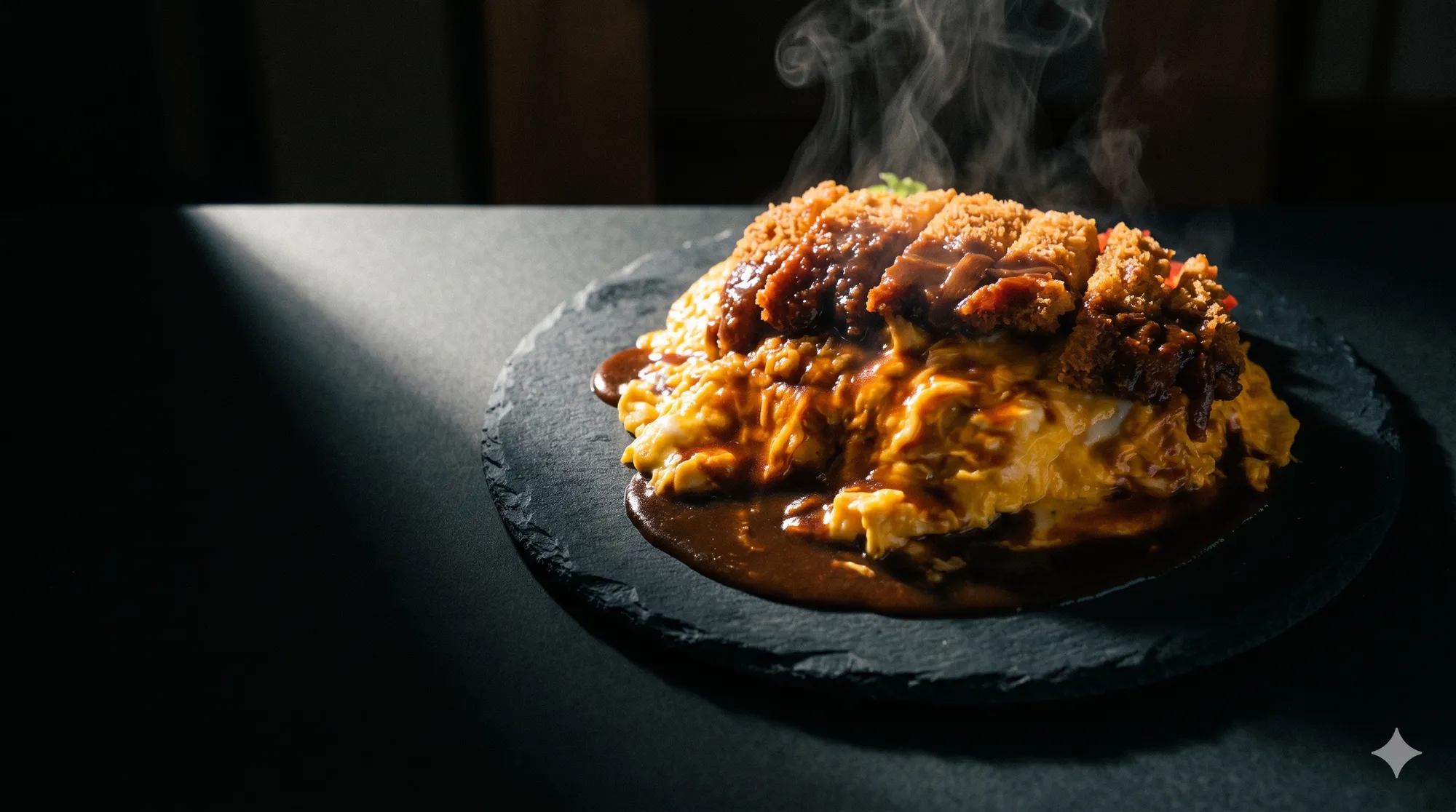
A silky egg blanket over ketchup rice — the most nostalgic plate in Japan. Born in 1925 for a customer with a weak stomach, now beloved by everyone with a heart.
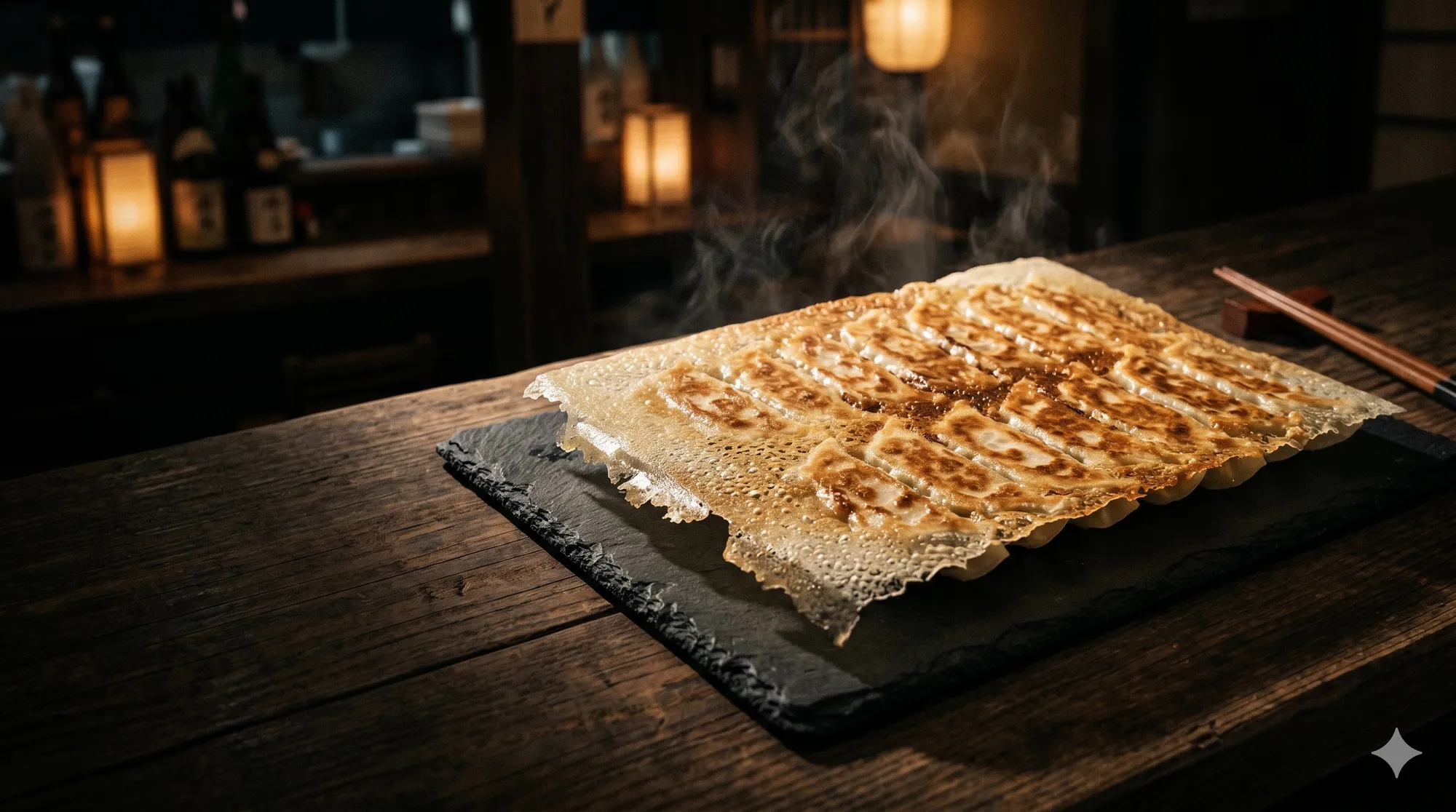
Gyoza with a crispy lace 'wing' connecting them all in one golden sheet. A tiny Tokyo upgrade that made an already-perfect dumpling impossible to stop eating.
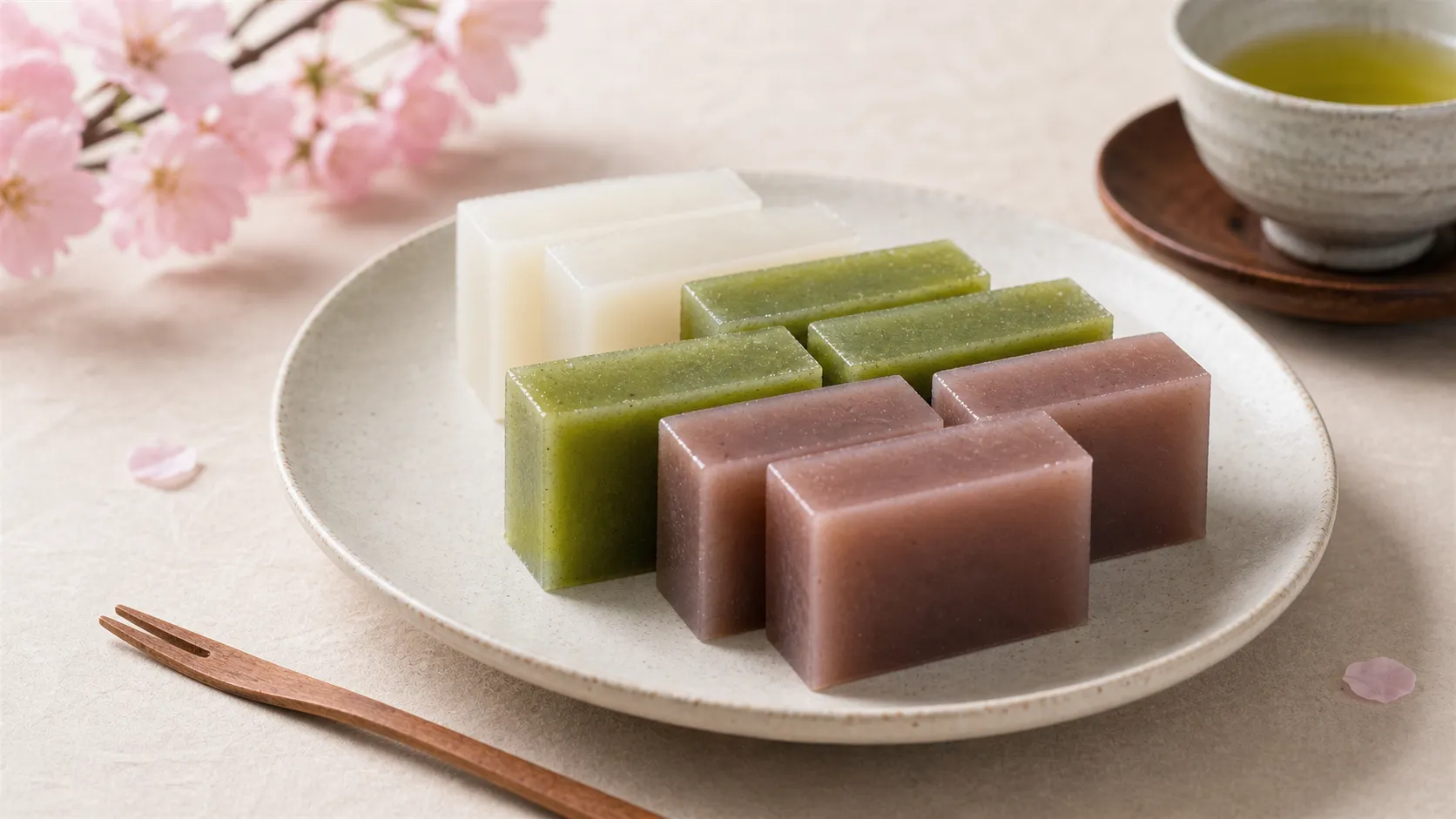
A steamed cake of rice flour and sugar that's somehow both chewy and clean, mild and moreish — Nagoya's understated, faintly wobbly sweet that grows on you until you can't stop buying it at the station.
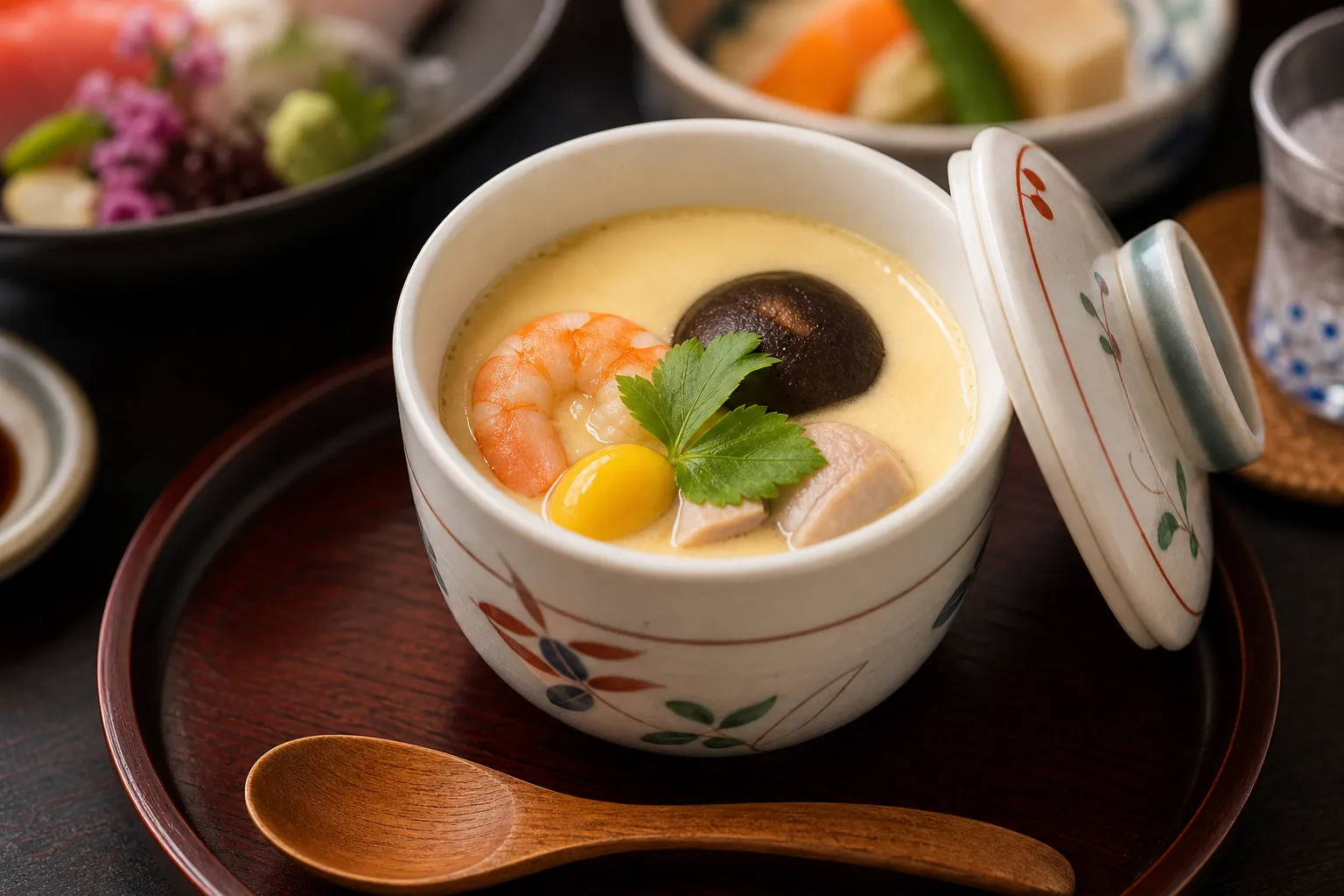
It arrives in a little lidded cup looking like custard — then the spoon sinks in and it's savory, warm, and hiding treasure at the bottom.
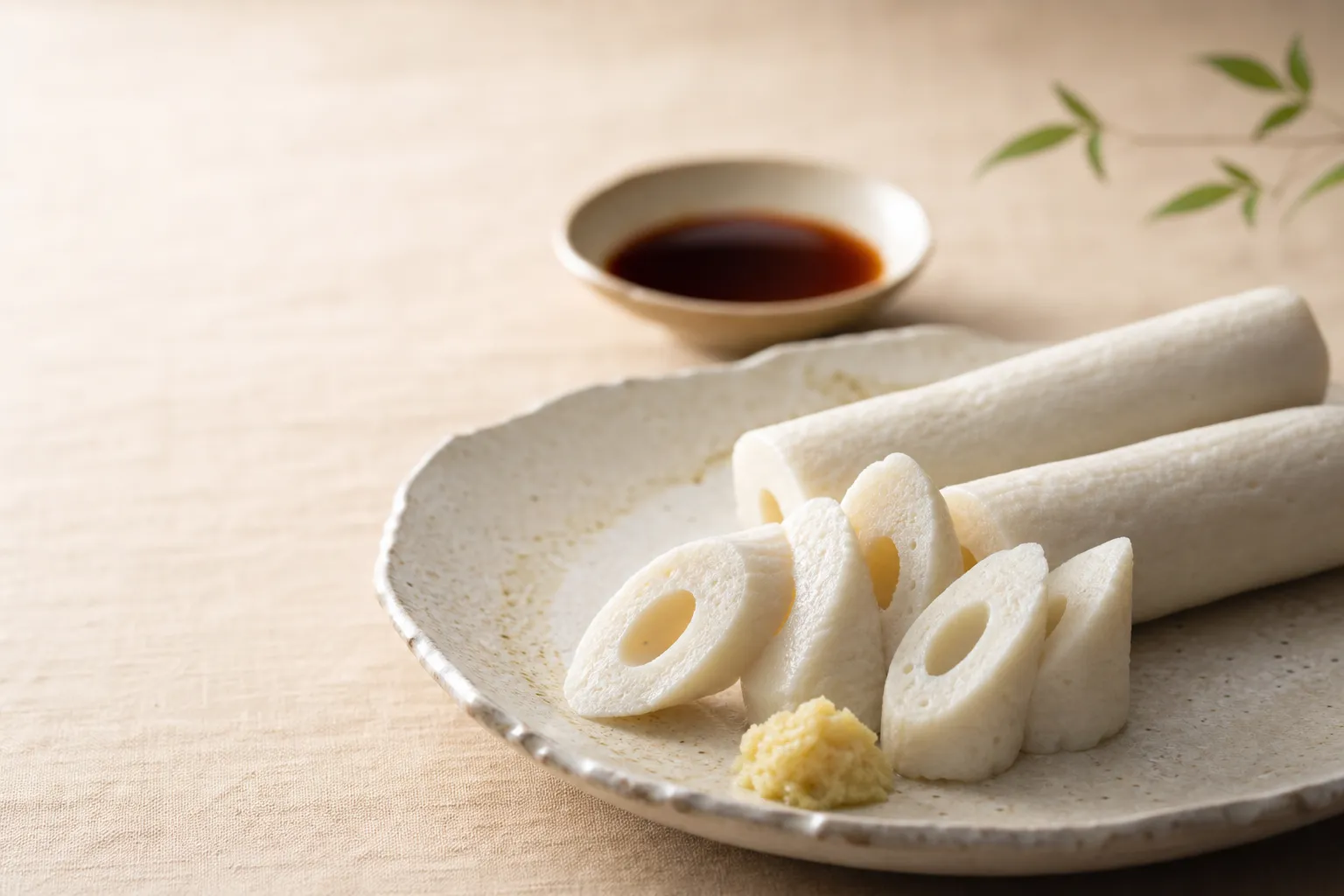
Half tofu, half fish paste, and lighter than either one has any right to be — Tottori took a chewy snack tube and made it pillowy, and I'm still thinking about it.
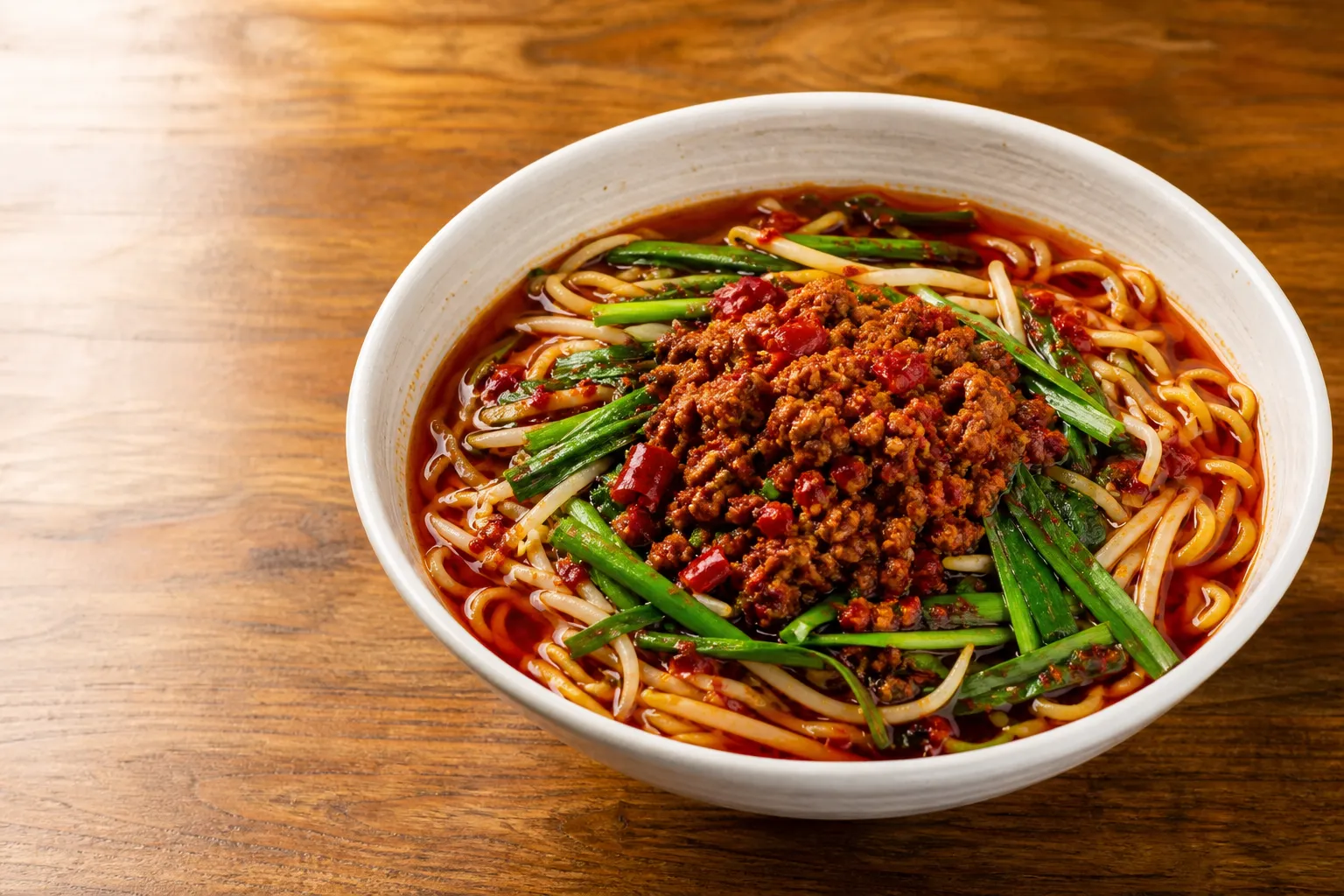
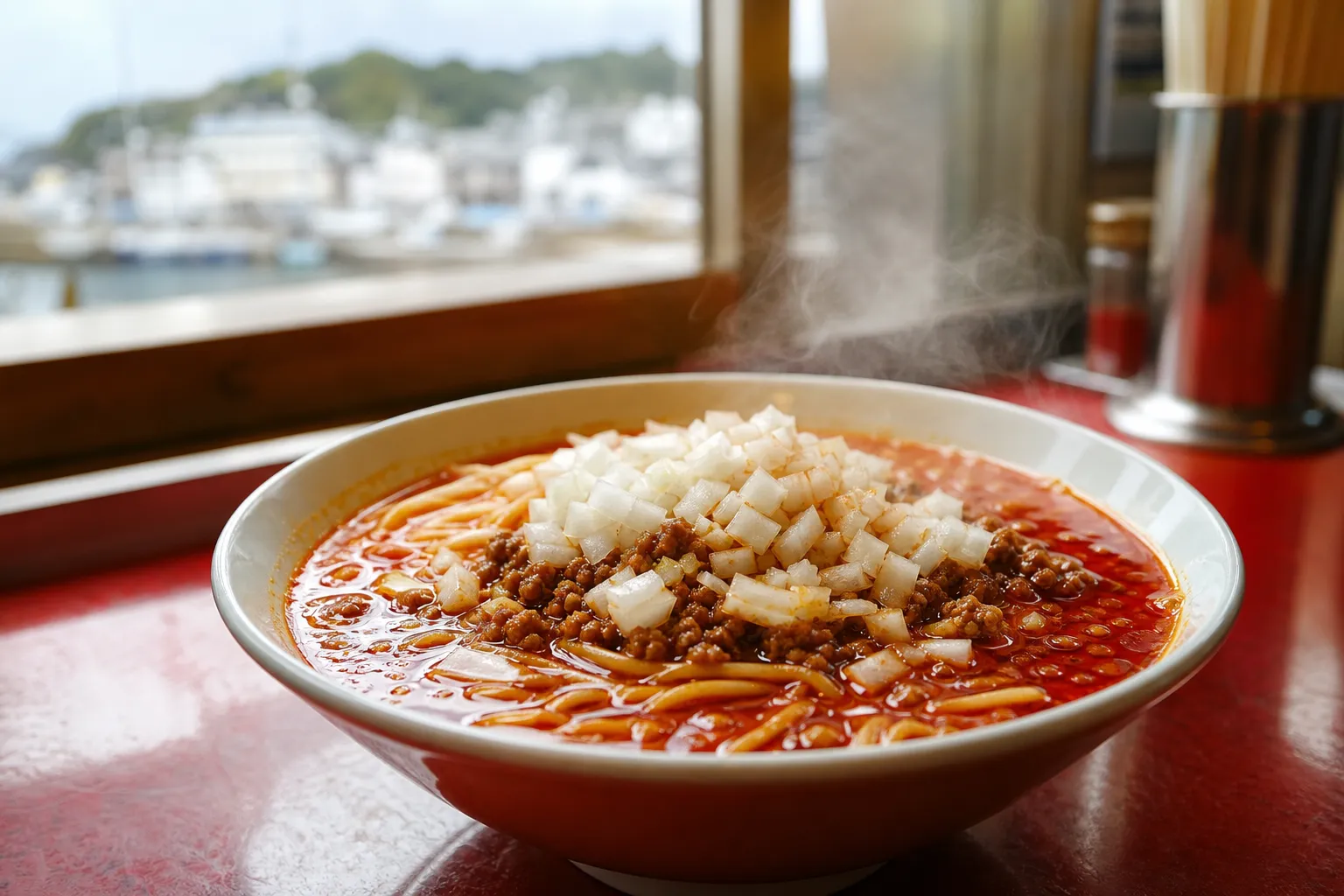
A chili-red bowl buried under a mountain of garlicky, fiery minced pork — invented in Nagoya, named after Taiwan, and hotter than either has any right to be. Your scalp will know within one mouthful.
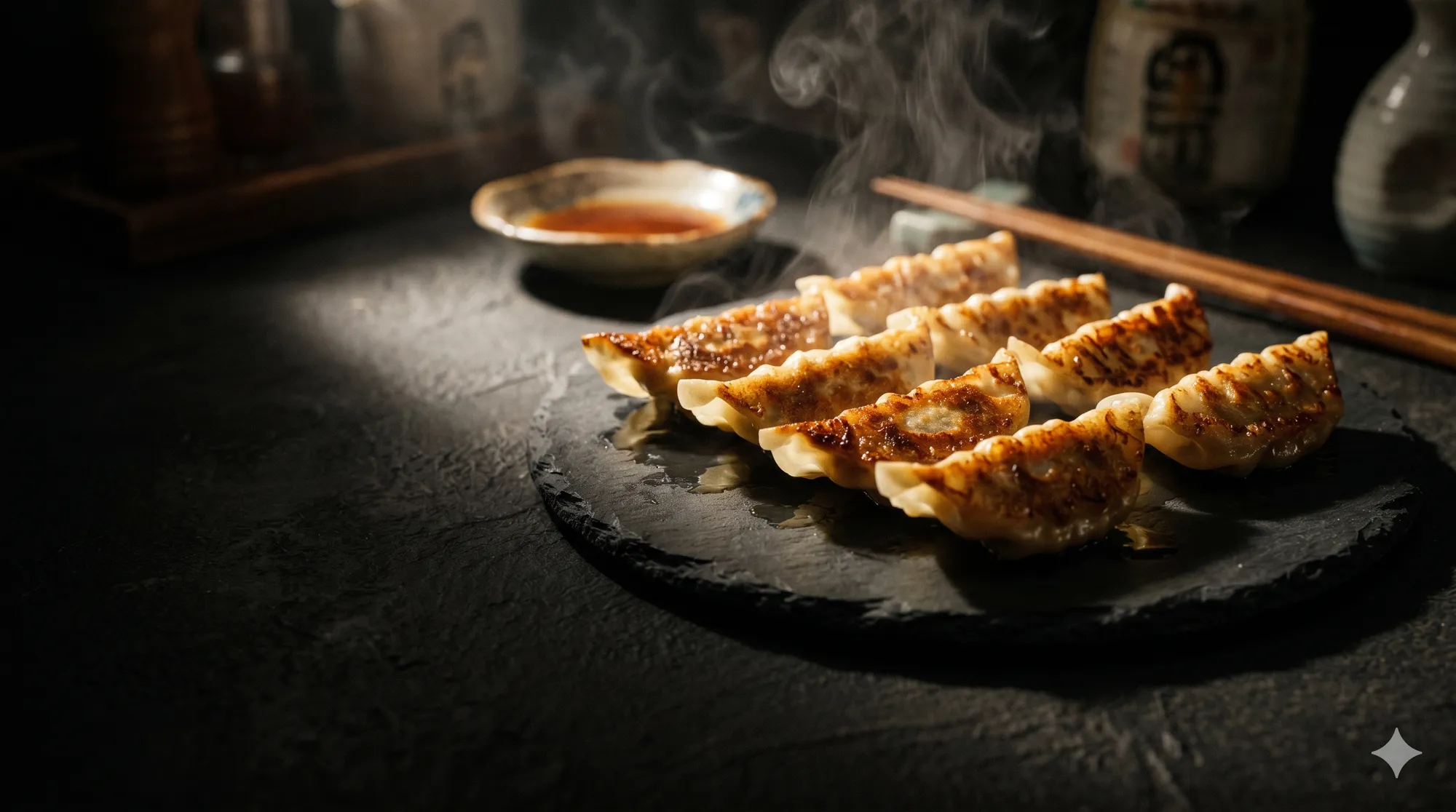
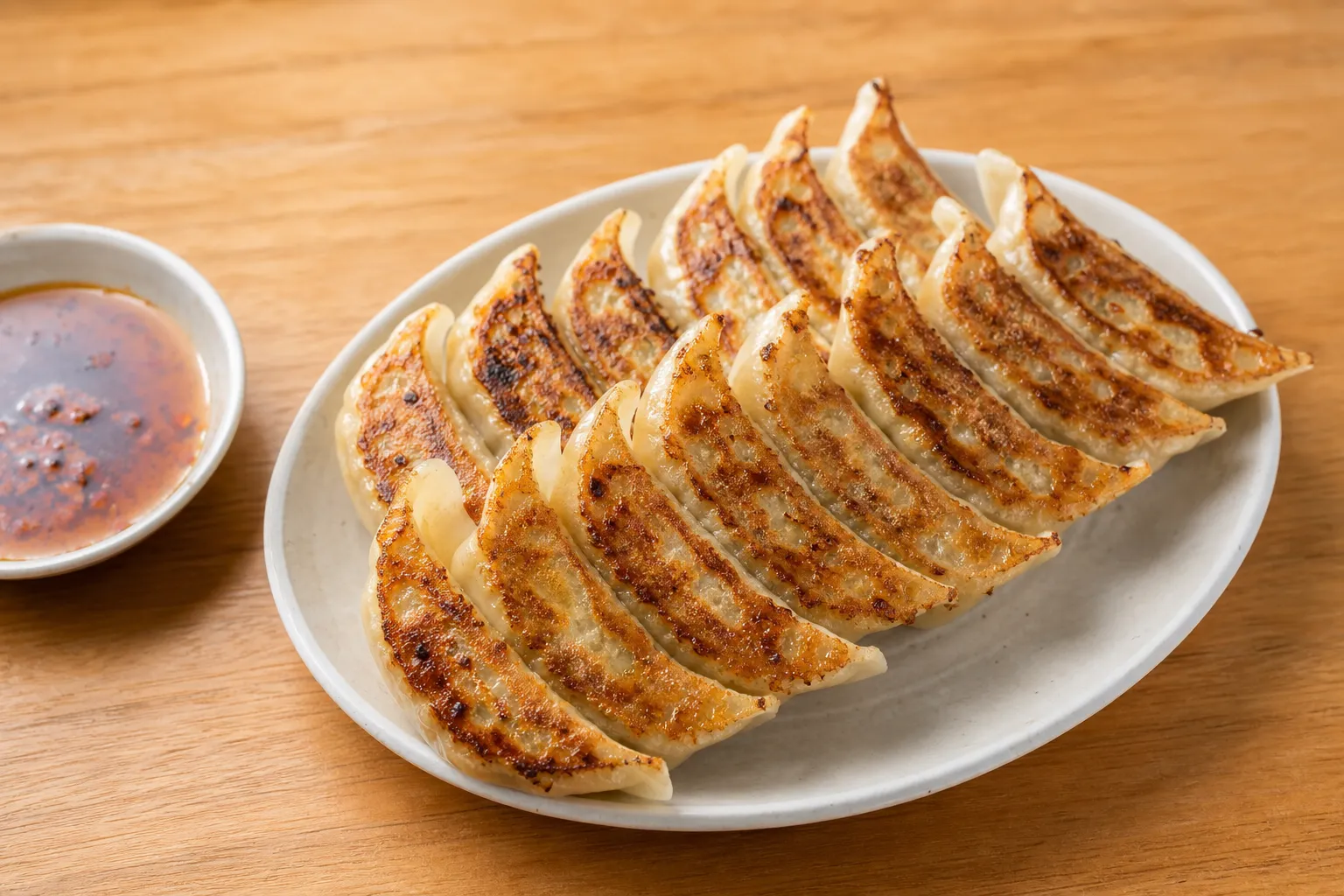
Pan-fried dumplings with a crispy bottom and a juicy pork-and-cabbage filling, dunked in vinegar-soy-chili. The ultimate ramen sidekick, the izakaya staple, and the snack nobody can stop eating.
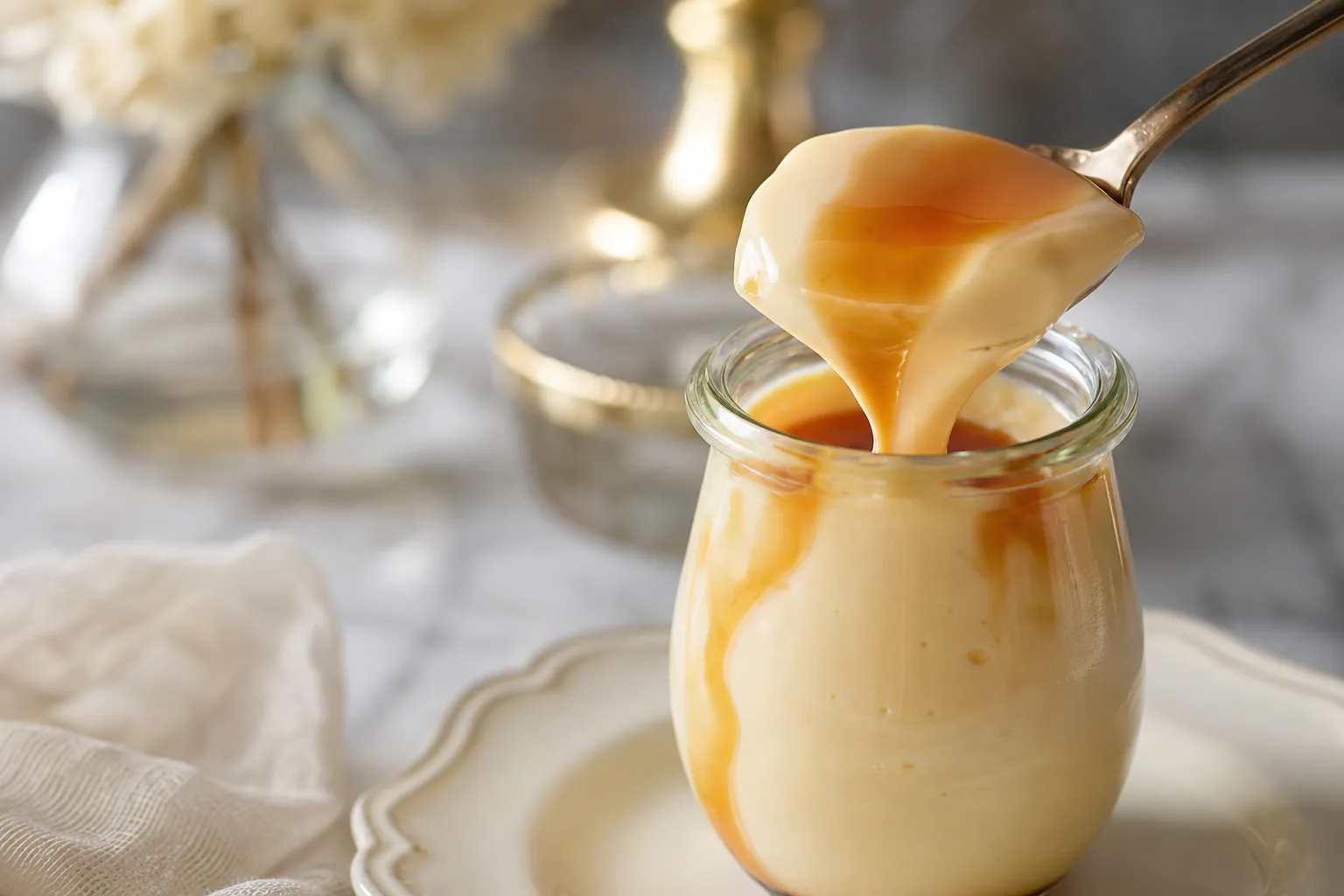
The spoon went in and the pudding just gave way, slumping and flowing instead of holding its shape — this is not the firm pudding you think you know.
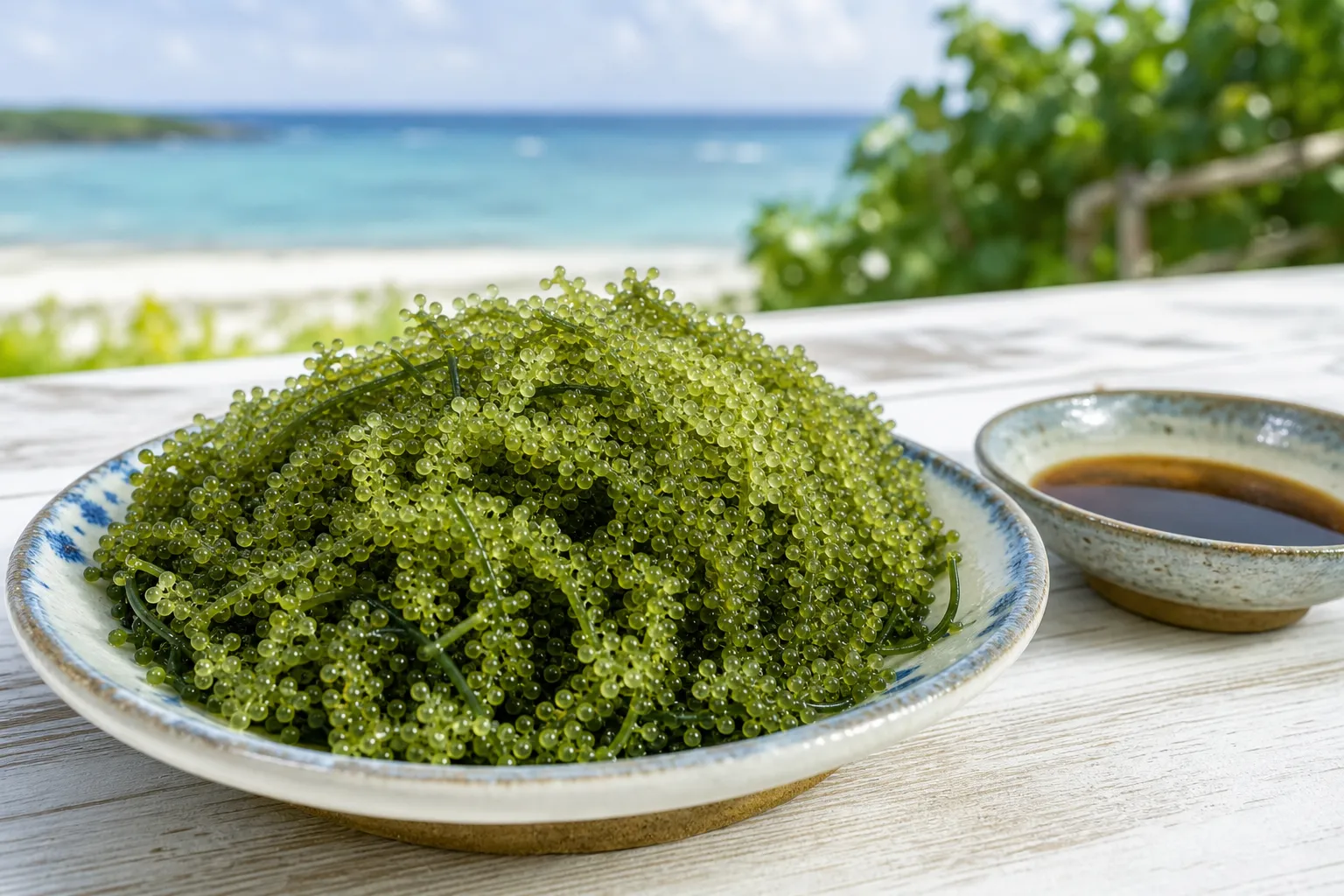
Tiny green beads burst between my teeth, one after another, like the ocean somehow figured out how to make caviar out of a salad.
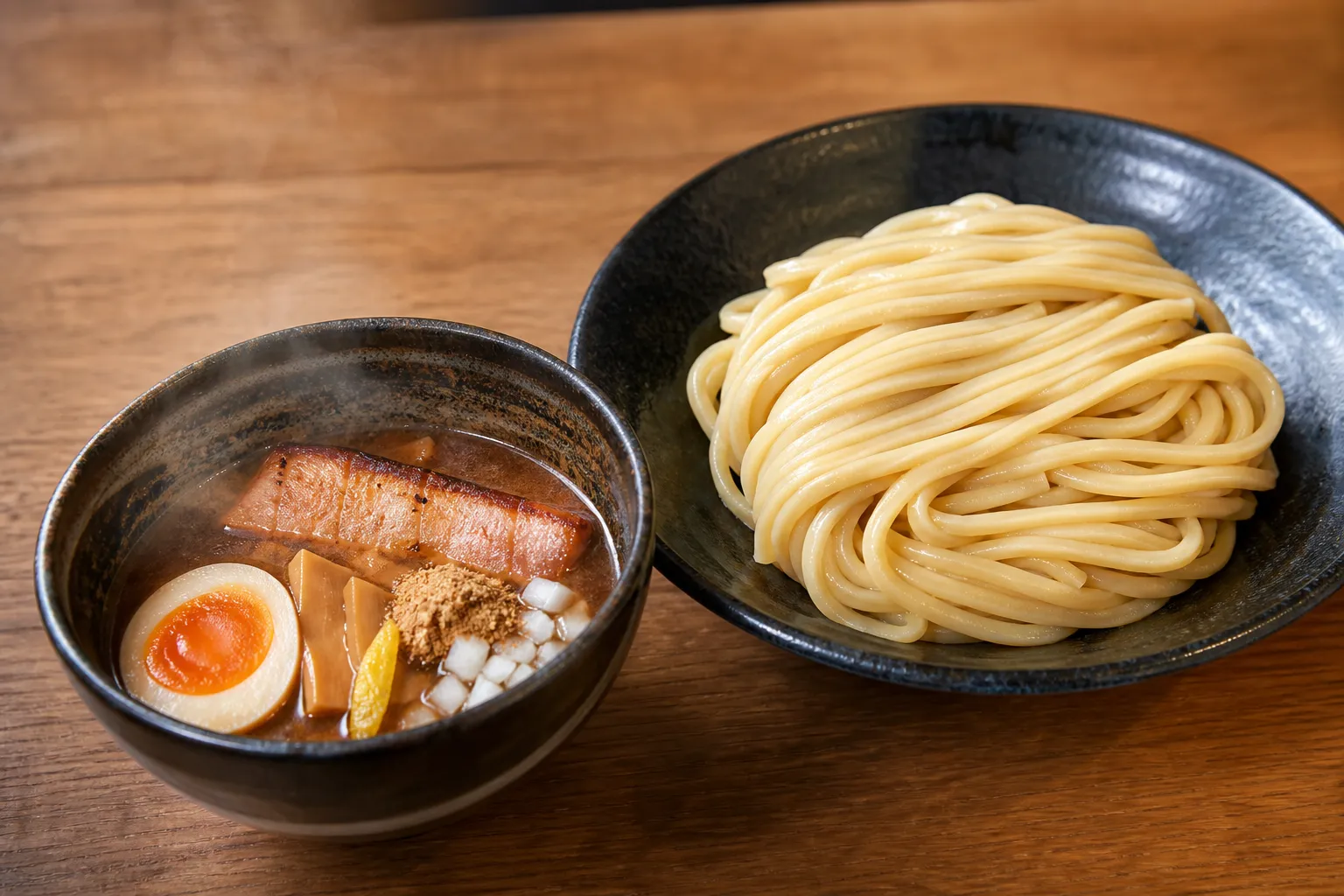
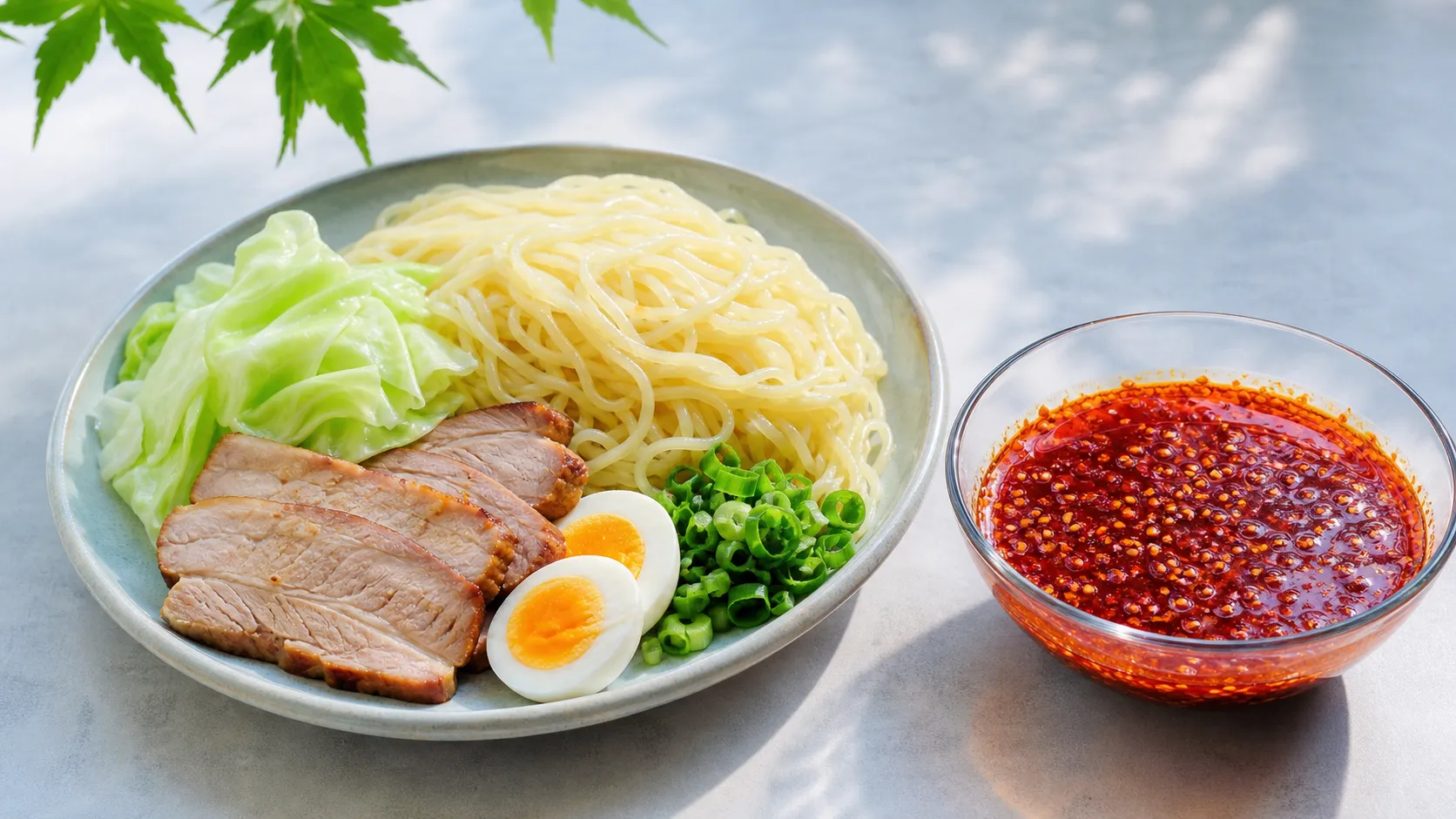
The noodles come naked on their own plate, next to a small bowl of something dark and intense. You dip. And then you understand why people line up for this.
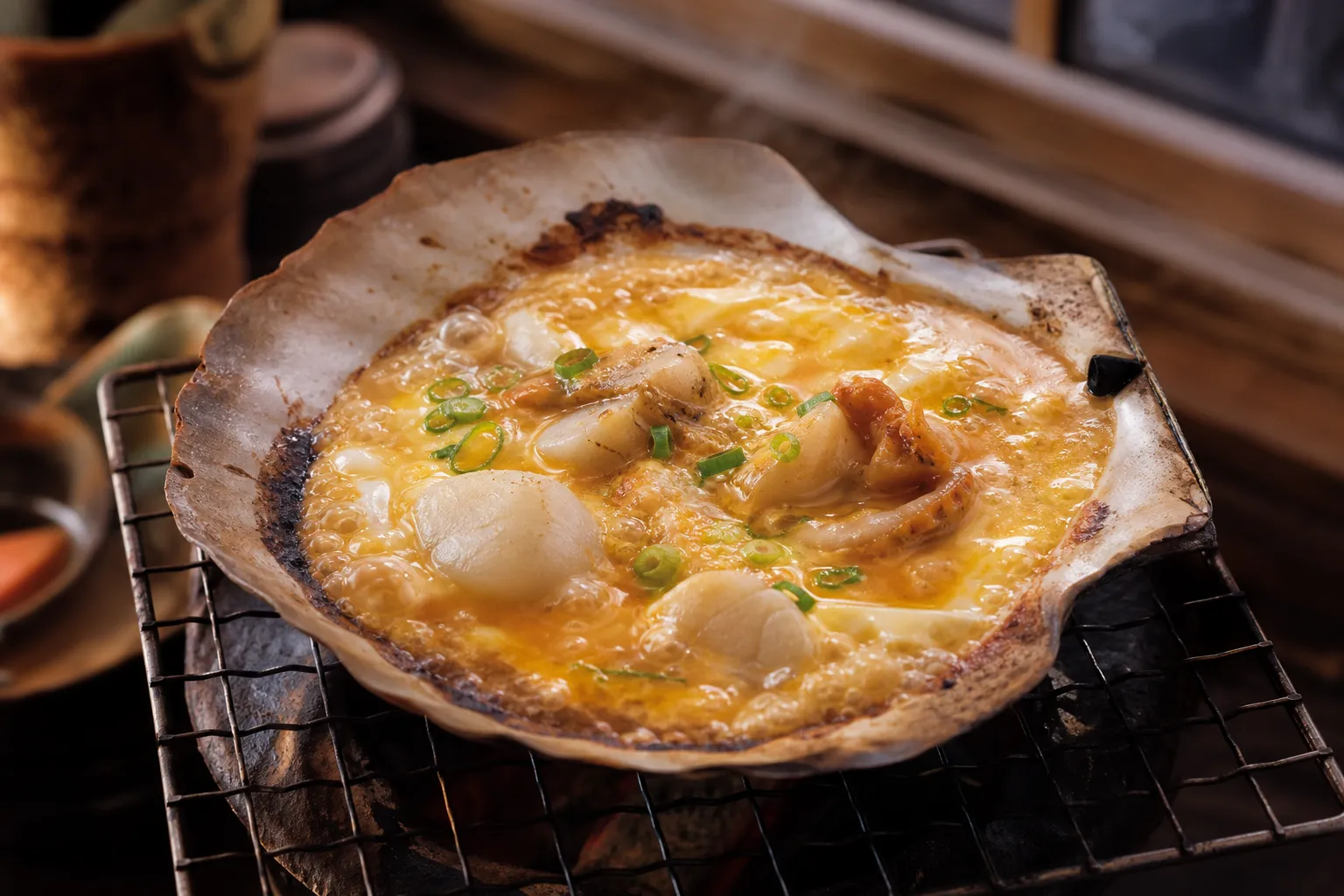
A scallop shell used as its own tiny frying pan — miso, dashi and scallop bubbling away until a beaten egg drapes over it all in soft golden folds. Aomori grandmothers have been cooking dinner in a seashell for generations.
Tiny bowls of soba refilled the instant you empty them, a server cheering you on, and only one way to make it stop. Iwate turned dinner into a sport — and it's the most fun you'll have eating.
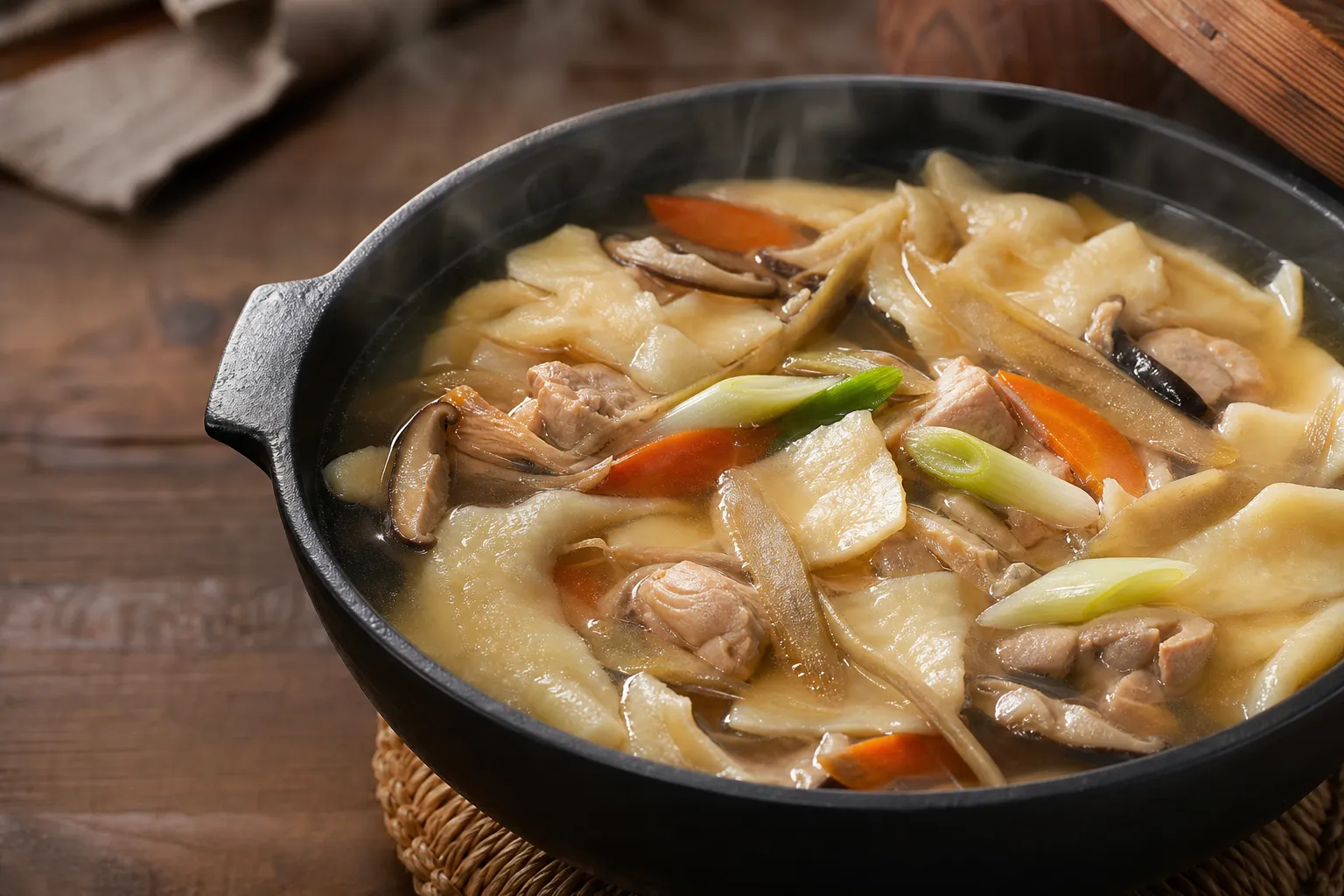
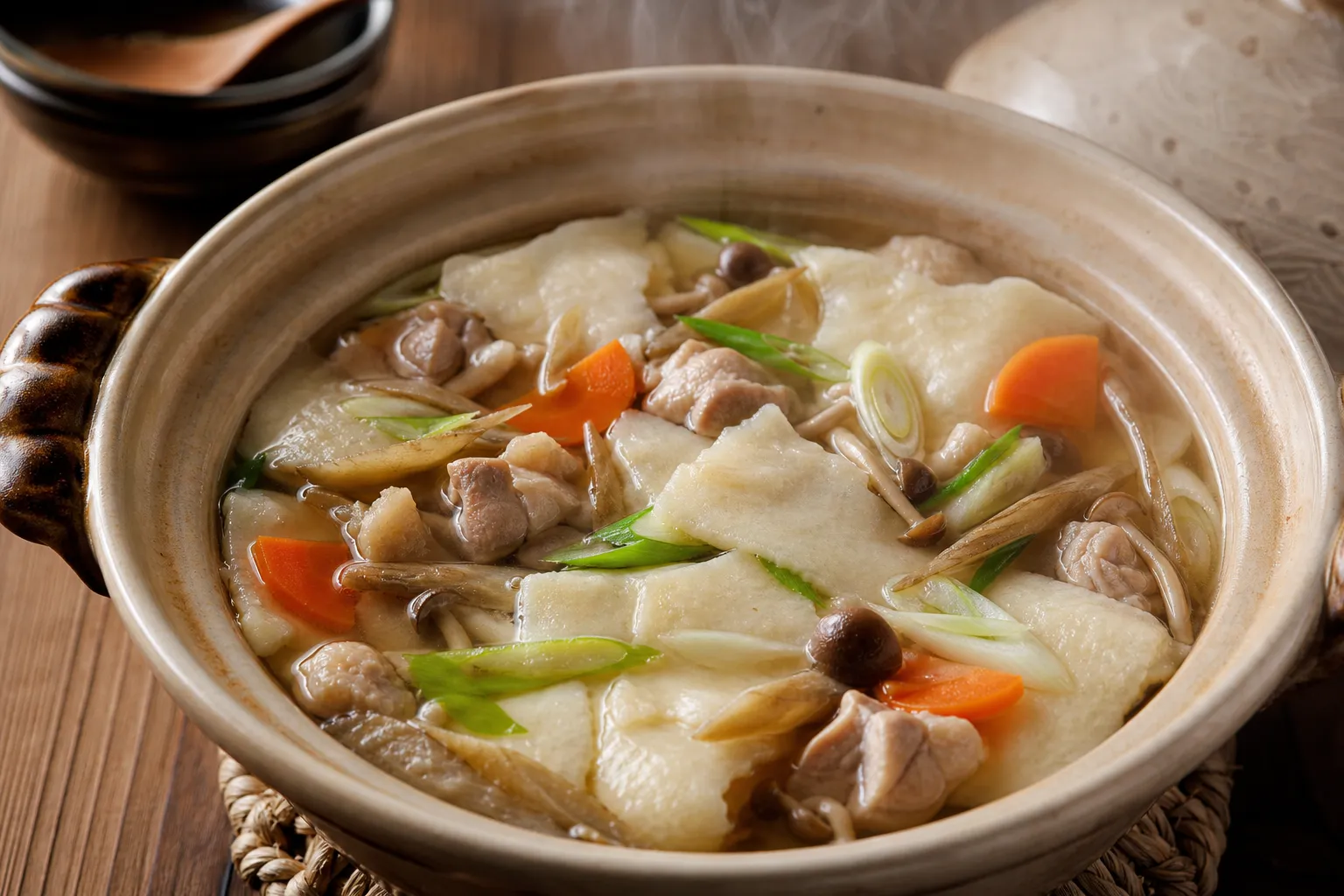
Torn scraps of wheat dough, pinched off by hand and dropped straight into a clear chicken-and-soy dashi thick with burdock and mushrooms — Iwate's answer to a freezing winter, chewy and slippery and made to fill you up.
A slick of lard traps the heat so your soy broth stays scalding to the last drop — because in Asahikawa, the cold outside is trying to kill your ramen. It loses.
They ask you for a number before they ask you for anything else. I said five like an idiot, and Nobeoka taught me something about myself that afternoon.
The udon that fights back. Fujiyoshida's noodles are so thick and stubbornly chewy your jaw gets a workout — served in a soy-miso broth under a fiery red condiment you won't find anywhere else.
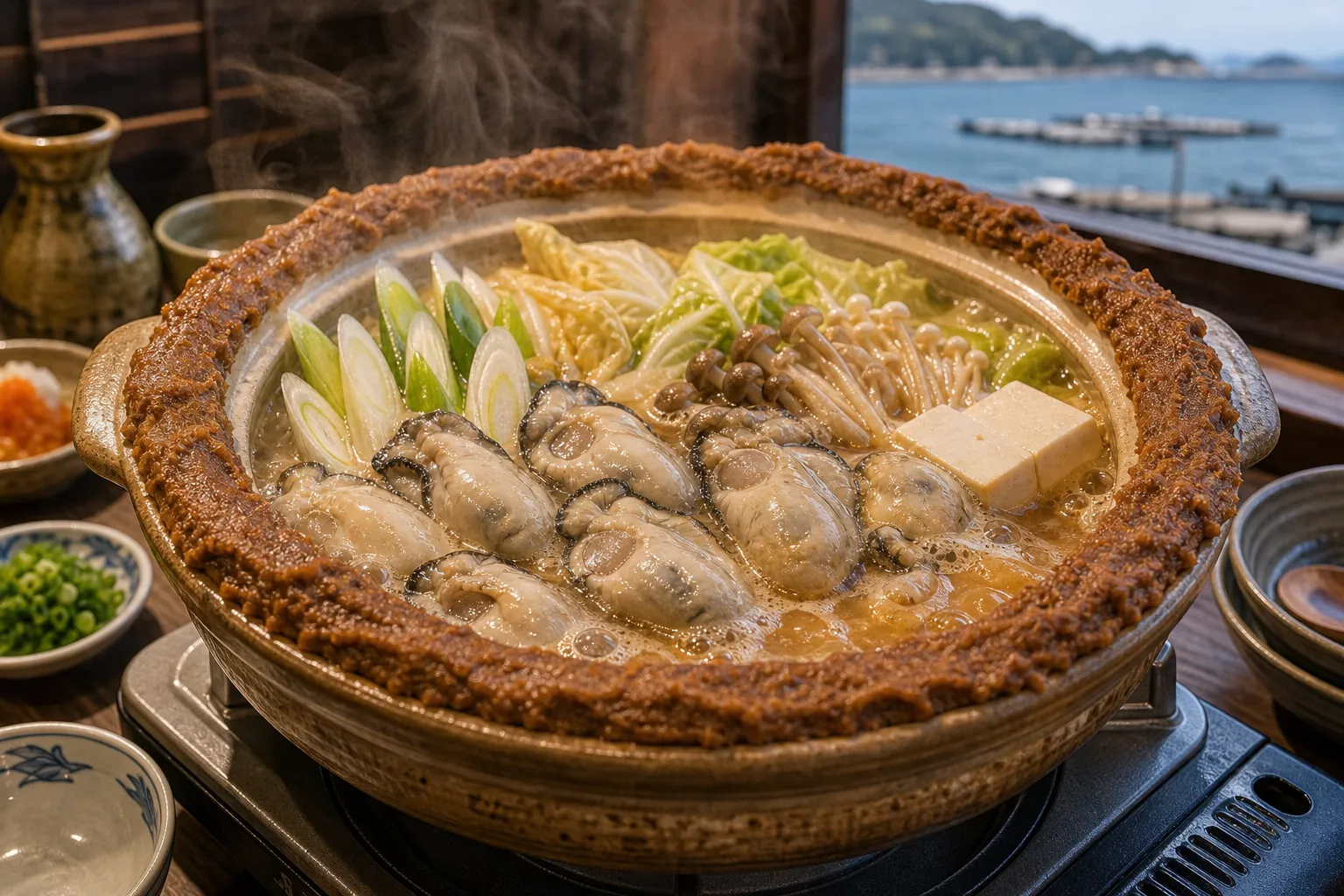
Hiroshima's plump winter oysters, simmered in a pot ringed with a 'dyke' of sweet miso that you scrape into the broth as you go — a hot pot you literally build the flavor of, one swipe at a time.
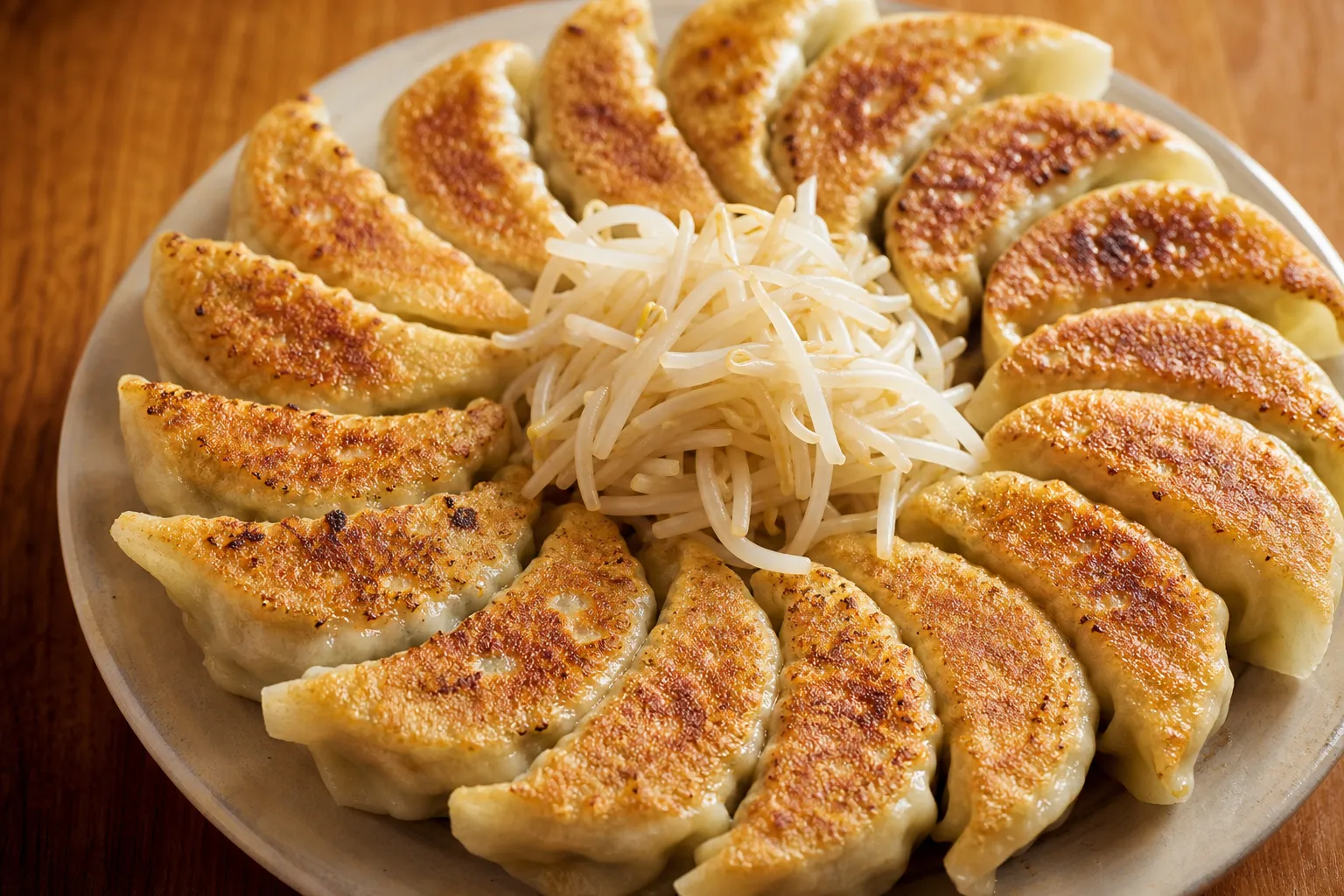
A ring of gyoza with a snowy mound of bean sprouts sitting in the hole at the center — like the plate itself is winking at you before you've picked up your chopsticks.
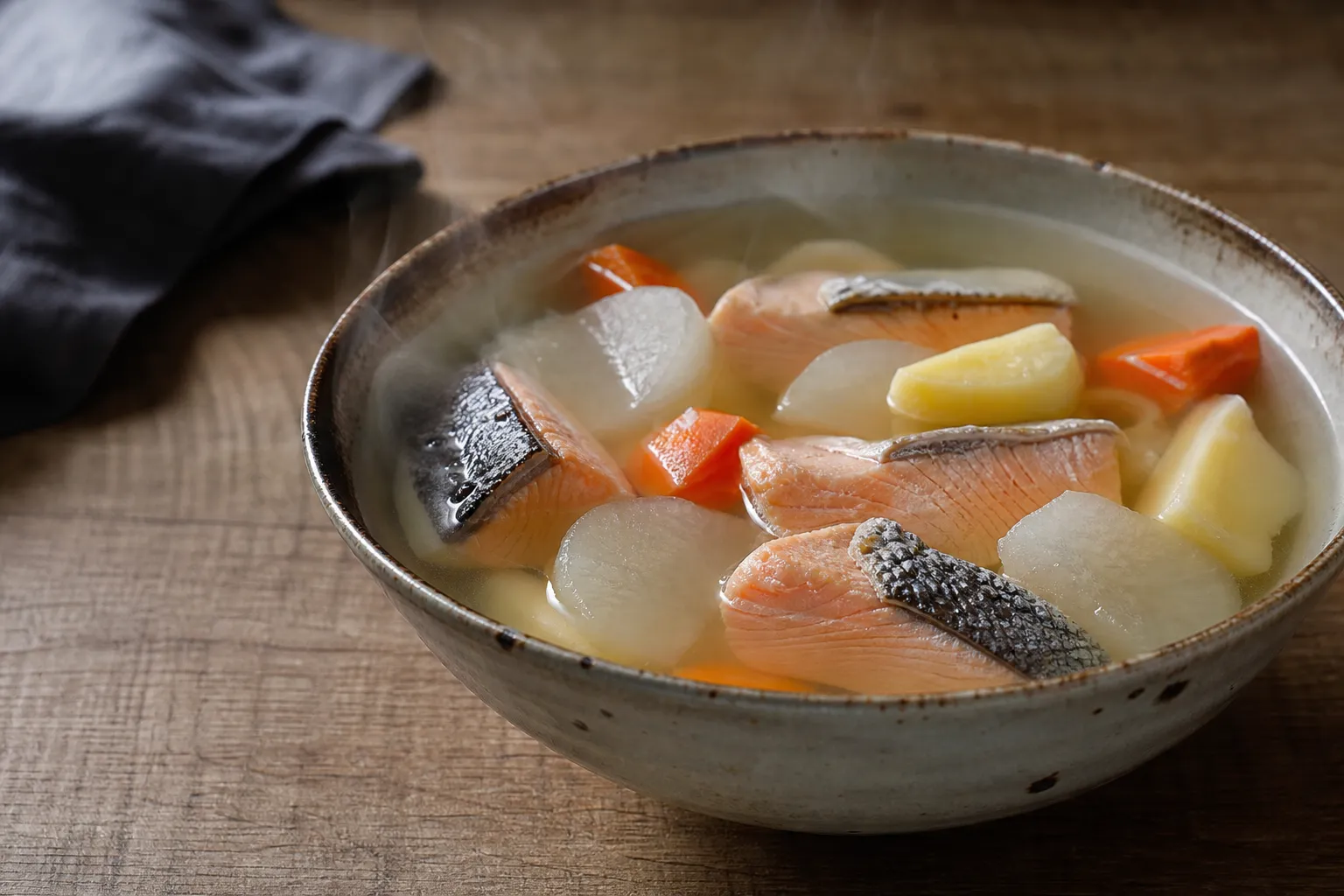
No miso, no cream, no drama — just salted fish and root vegetables in a clear broth so honest it tastes like a Hokkaido winter finally letting its guard down.
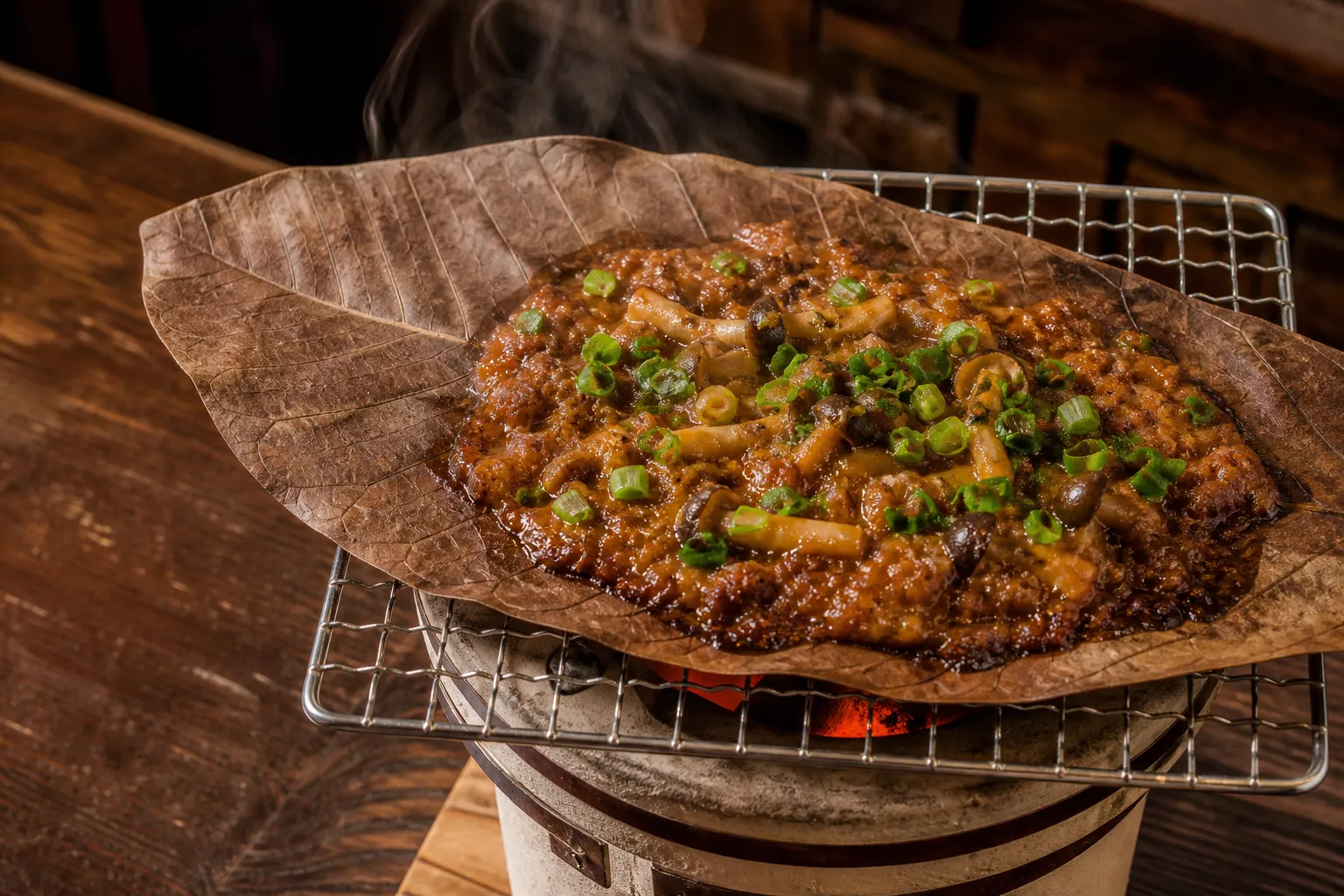
Sweet miso bubbling and caramelizing on a big dried magnolia leaf over a tabletop flame — Hida-Takayama's mountain breakfast turns one scoop of miso into the best reason to keep eating rice.
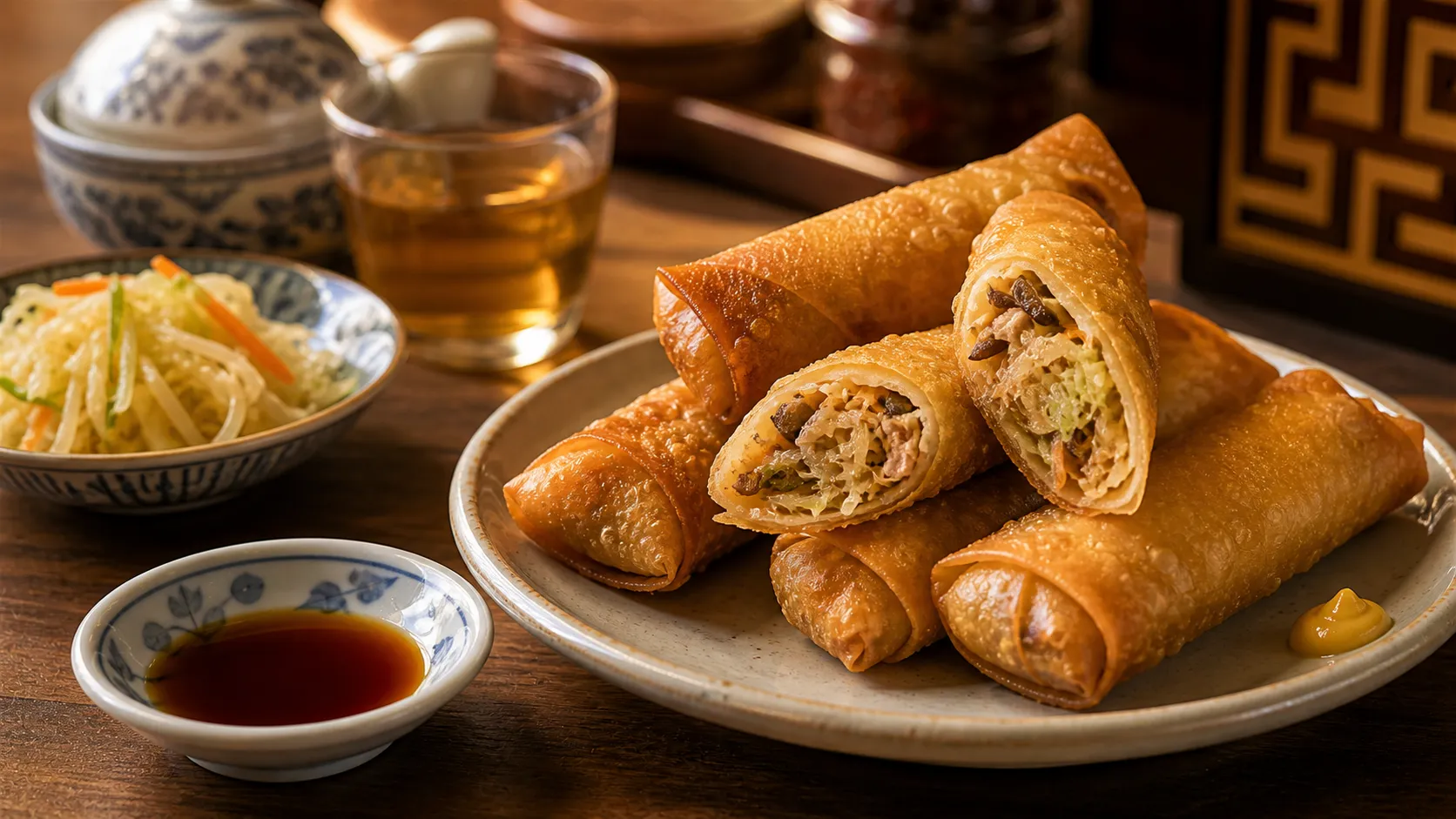
The Japanese spring roll — a shatteringly crisp golden tube that gives way to a hot, savory tangle of pork, cabbage and bamboo shoot, best eaten the second it's cool enough not to burn your mouth (you will not wait that long).
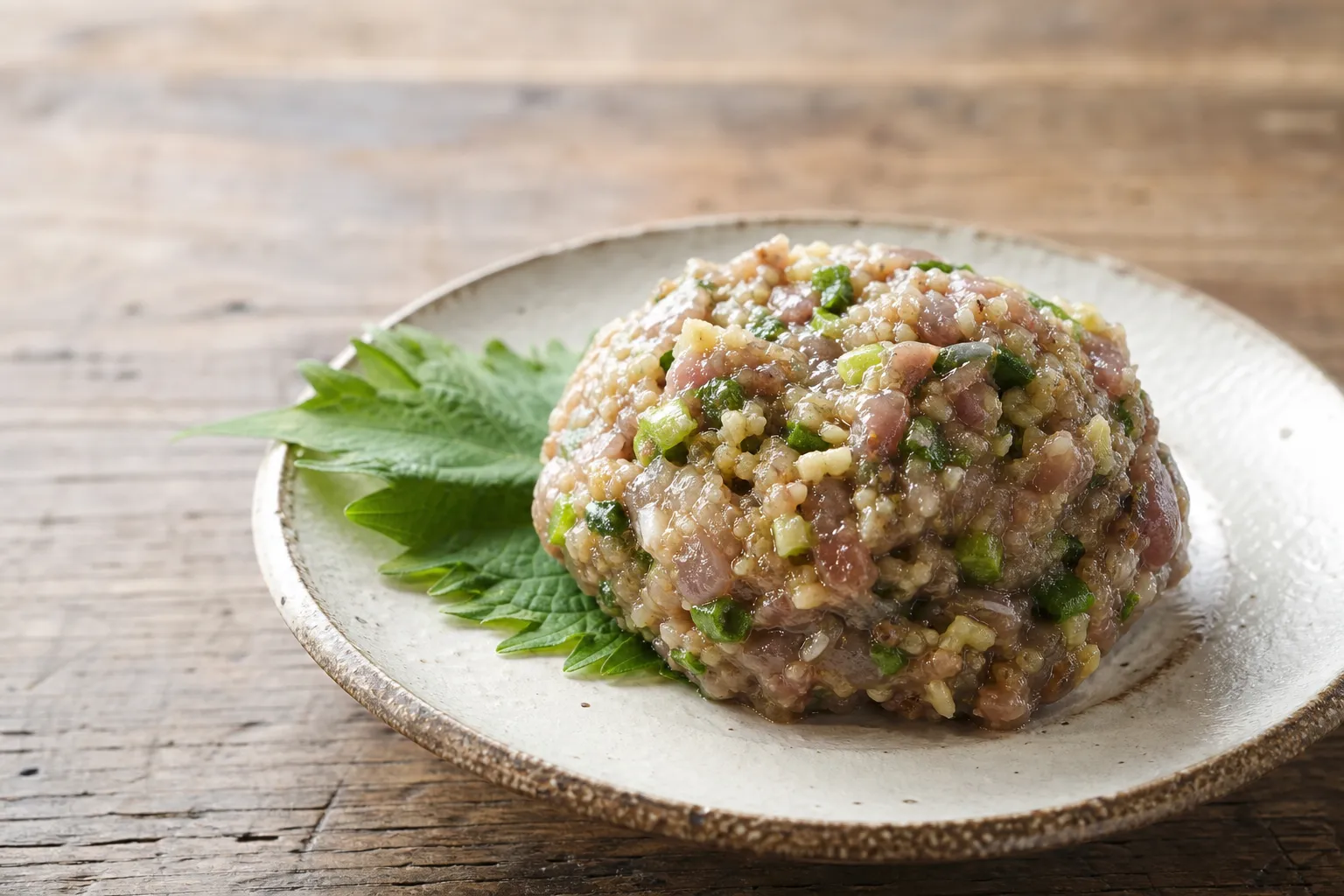
Fishermen chopped their catch with a blob of miso until it turned into a sticky, savory paste — and refused to wait for a kitchen to do it properly.
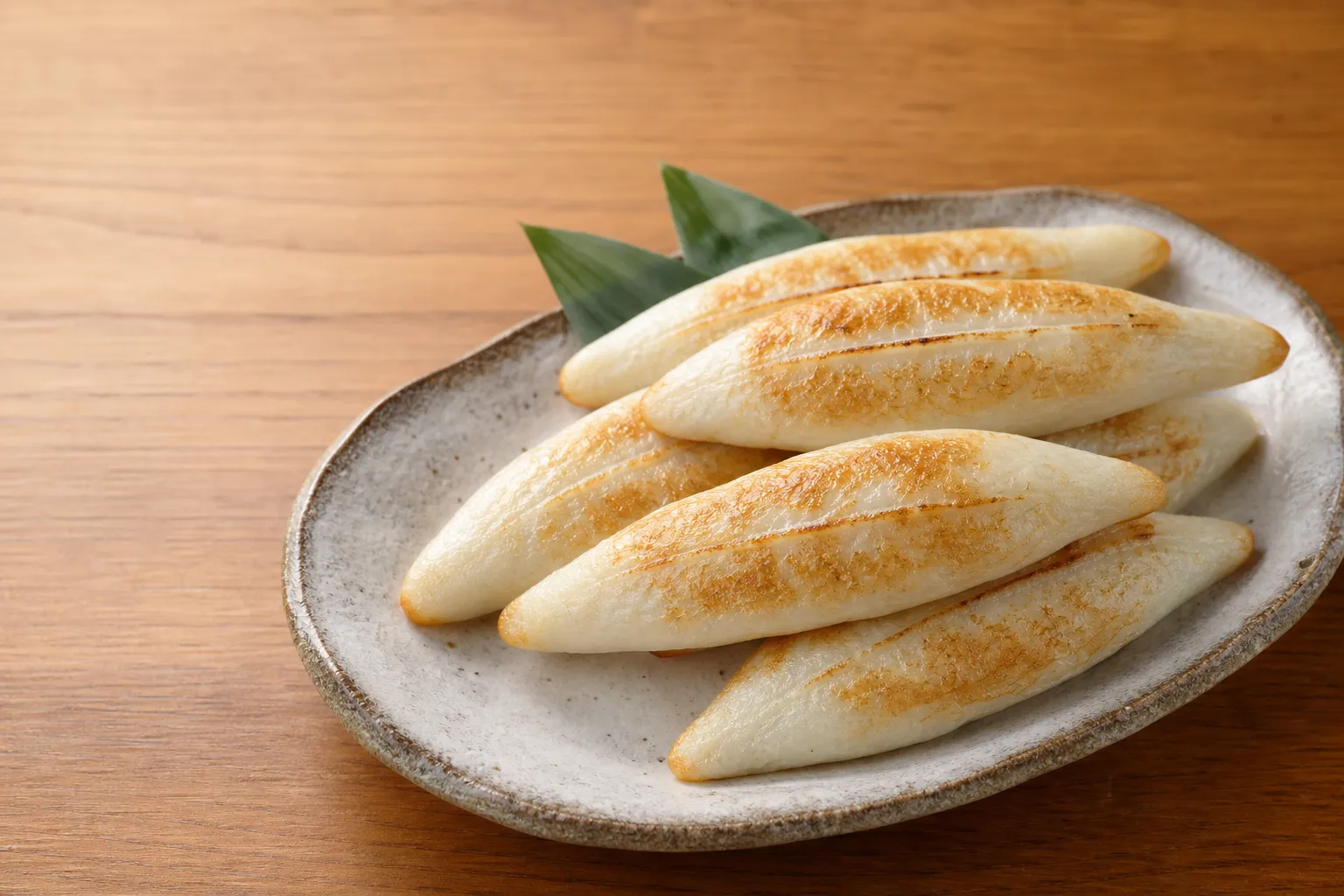
Grilled fresh off the rack, it snaps back against your teeth and tastes purely of the sea — a leaf-shaped little thing that ruined every rubbery fish cake I'd met before it.
Clear as tea, gold as morning light, quiet as a held breath — this is the ramen that proves subtraction is a flavor. Hokkaido's gentle bowl, and my hangover's best friend.
The moment my teeth hit the bottom crust I felt those sugar crystals crunch — and I sat there in the Nagasaki shop grinning like I'd found treasure, because in a way I had.
The pot that lands on your table is so absurdly loaded you assume it's a mistake, that it was meant for a table of six — and then you realize, no, this is what sumo wrestlers eat to become the size of a small car.
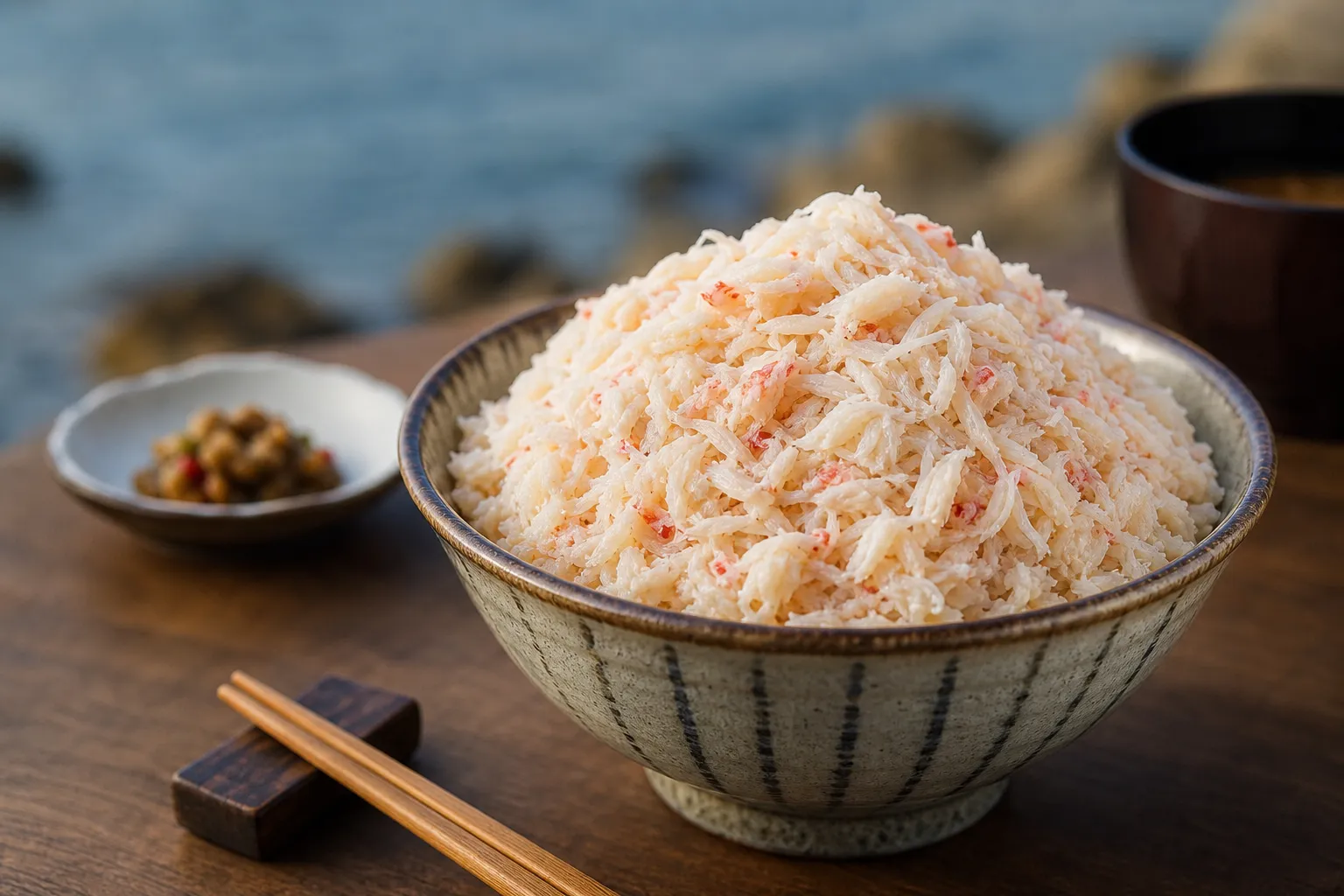
A whole snow crab is a glorious, sticky, two-handed wrestling match — but someone in Fukui already did all the work and piled the sweet white meat over rice for you.
Shredded chicken, golden egg, nori and toppings over rice — and then someone pours clear, hot chicken broth over the whole thing at the table. The most soothing bowl in the south. I have rarely felt so instantly calm about a meal.
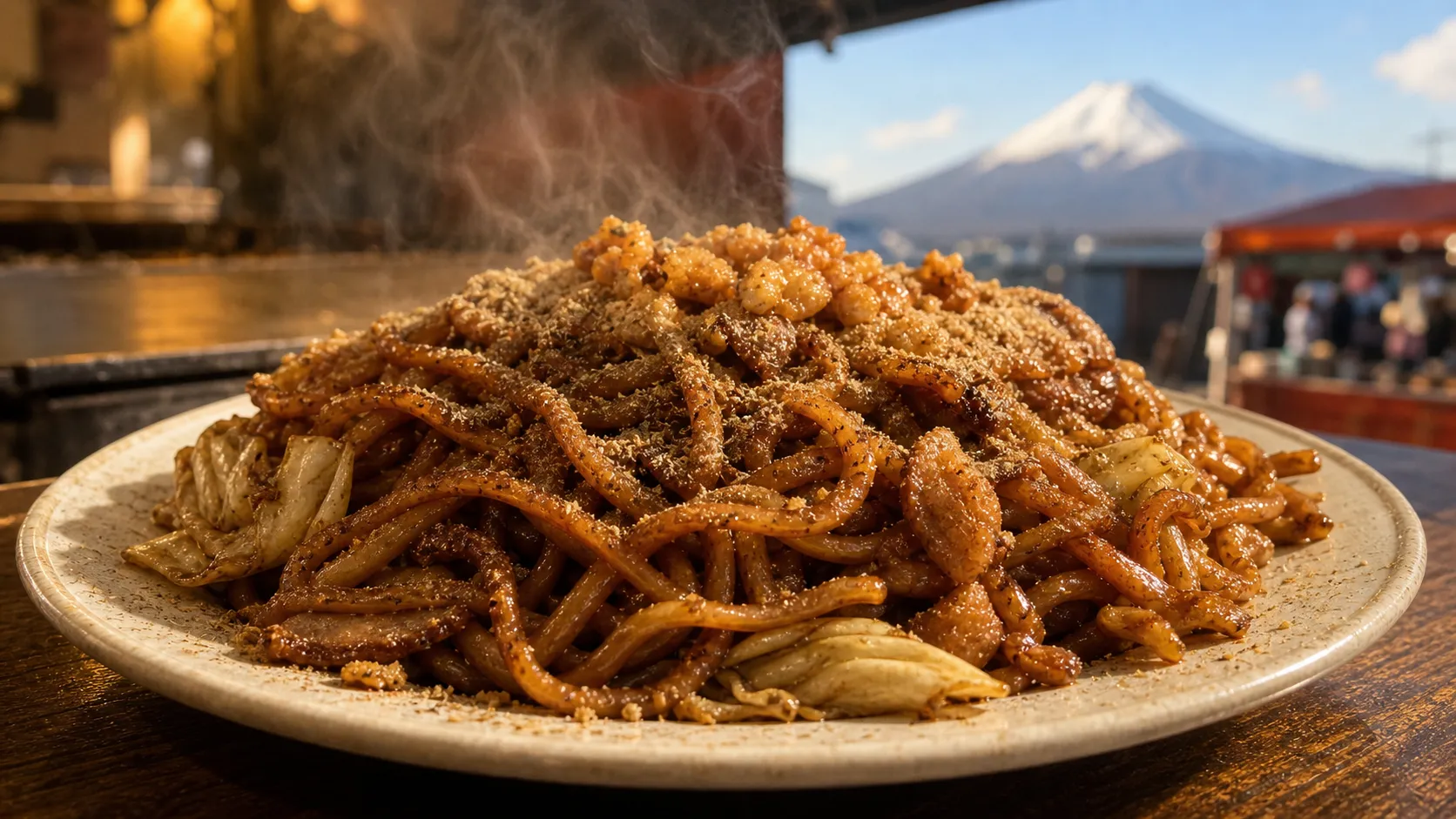
The yakisoba that won Japan's biggest B-grade food competition. Twice. Thick chewy noodles, lard frying, fish powder topping — this is what yakisoba becomes when a whole city decides to take it seriously.
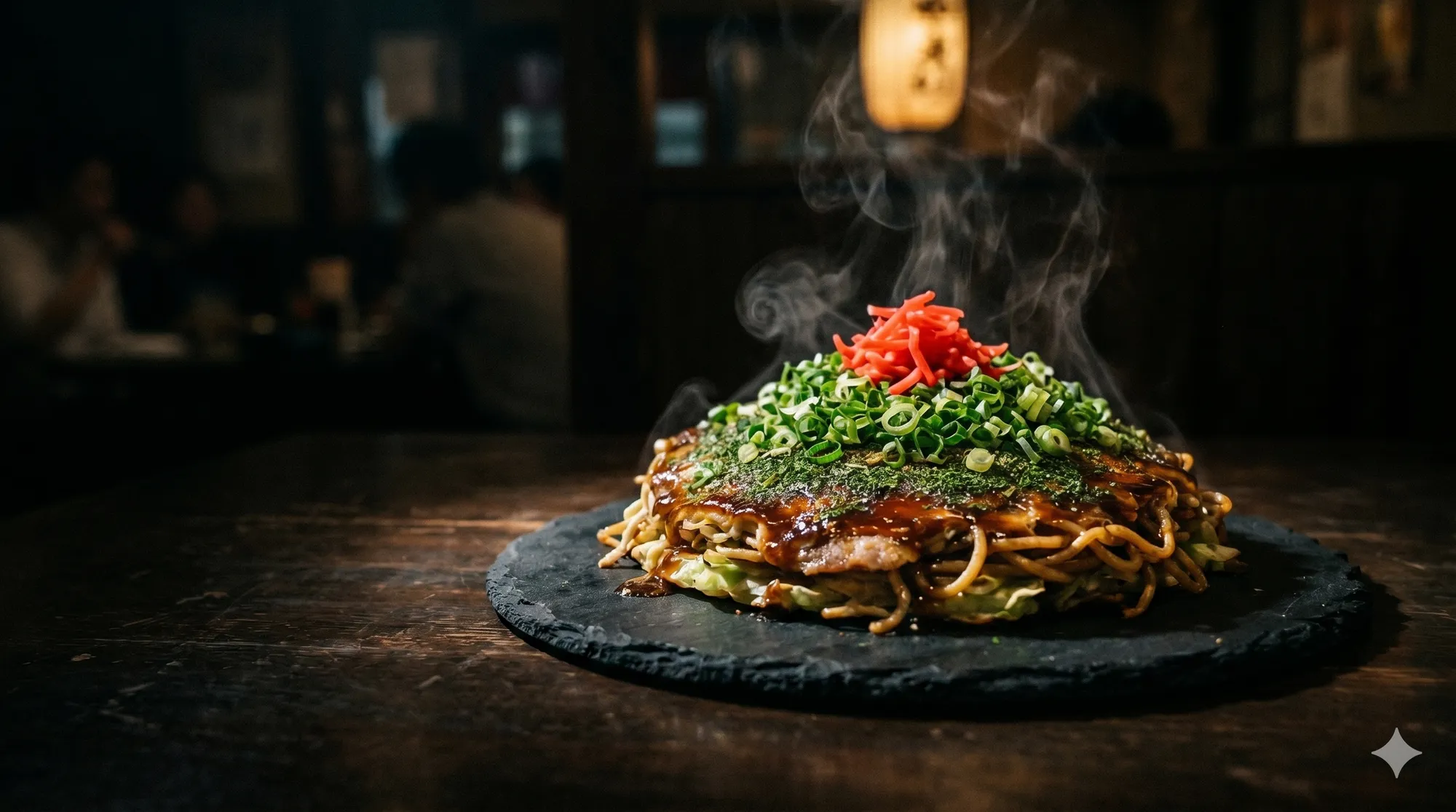
Not mixed — layered. A towering stack of crêpe, a mountain of cabbage, pork, a nest of noodles, and an egg, all pressed into one glorious skyscraper. And do NOT call it Hiroshima-yaki.
Two pork cutlets so big they're named after straw sandals, hanging off the bowl on every side. Chichibu's answer to the question nobody asked: what if katsudon, but more?
I bought what I thought was a box of ordinary sushi at a street market in Kochi. There was no fish in it anywhere, and that turned out to be the best thing about it.
Somebody in Kuroishi looked at a plate of fried noodles and thought: what this needs is soup. They were wrong about that. They were also completely right.
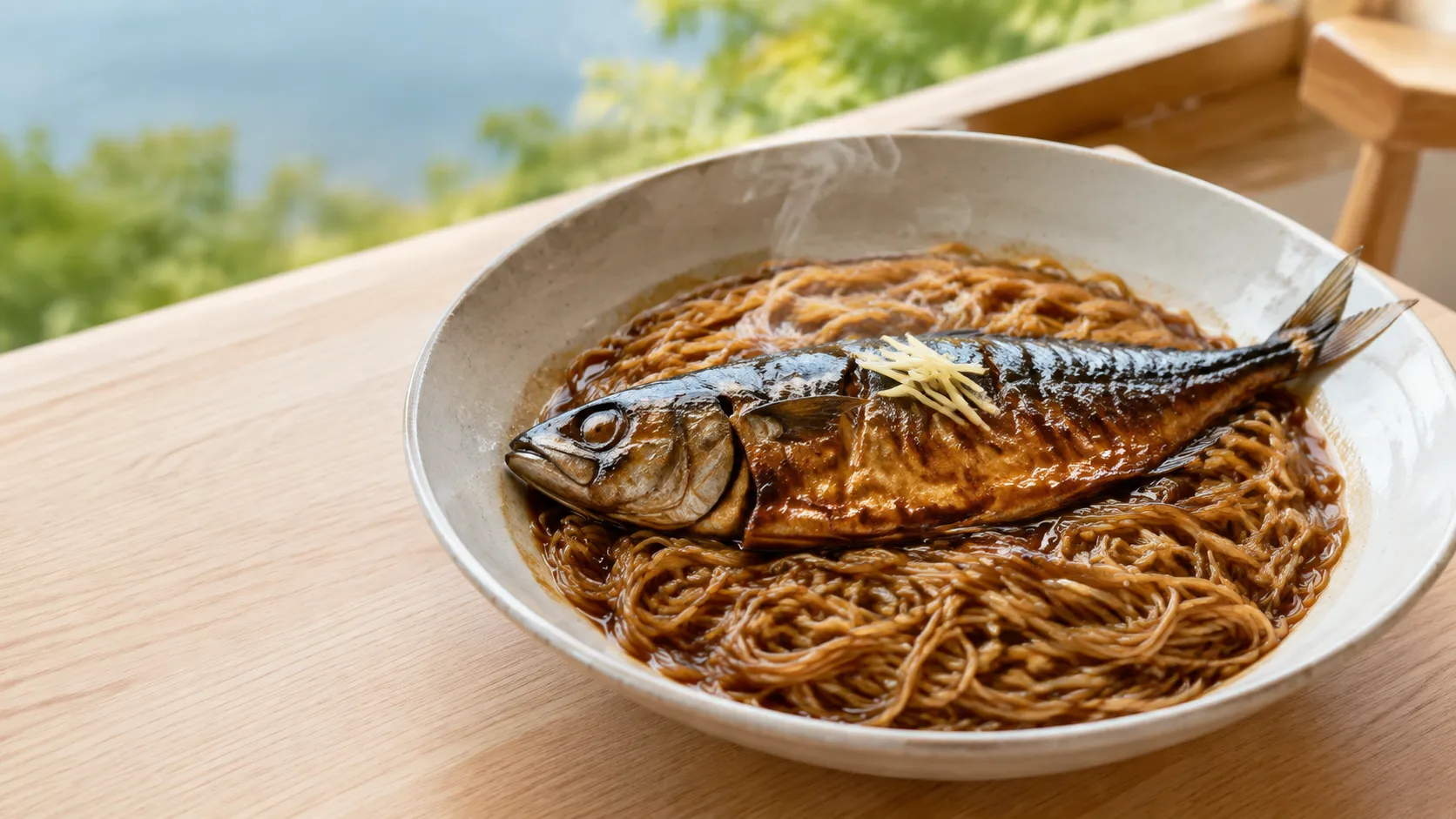
Somen noodles the color of strong tea, because they've been sitting in mackerel braising liquid absorbing everything it had — and yes, I drank what was left in the bowl.
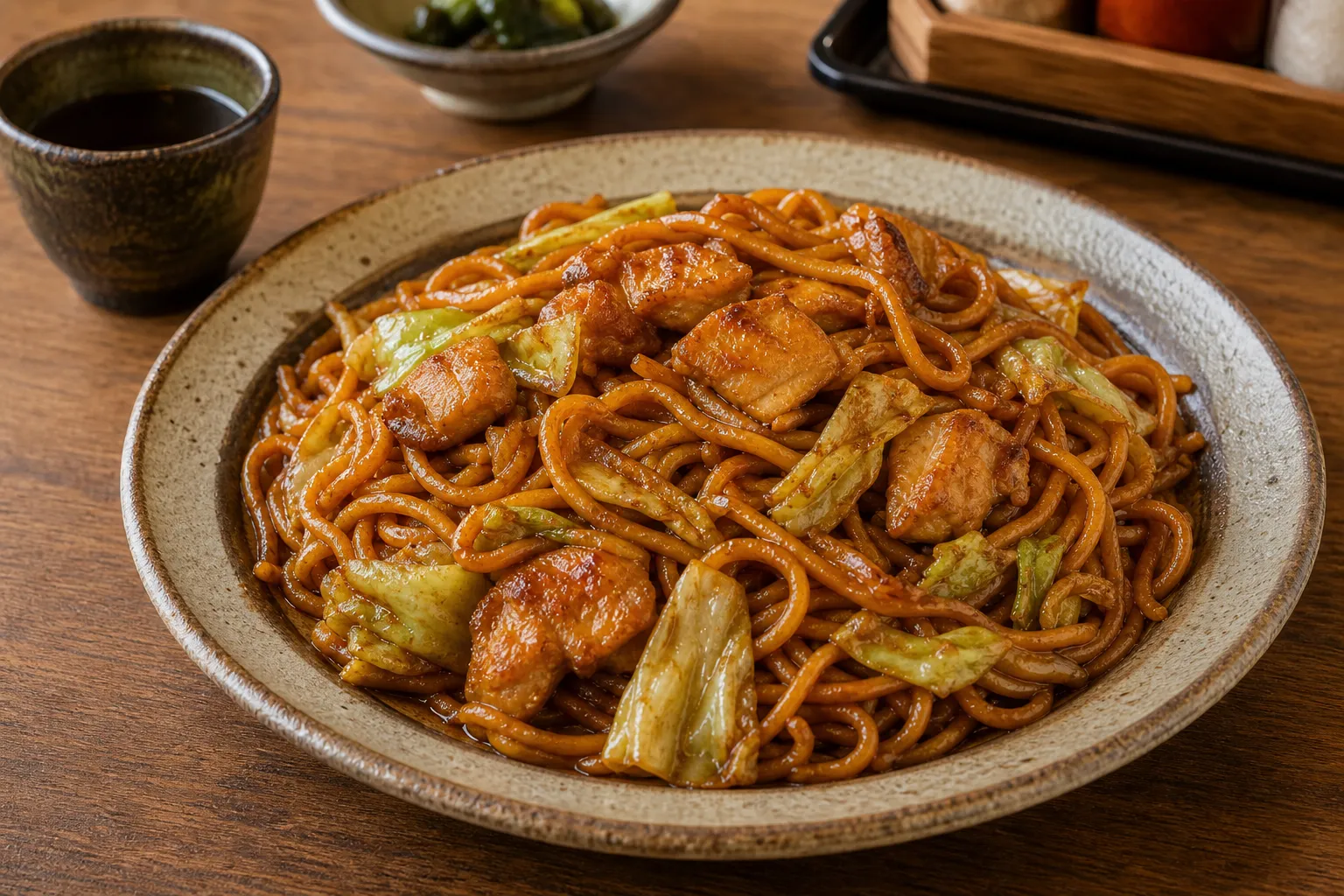
Forget the brown-sauce yakisoba you know. Up in Okayama's Hiruzen highlands they coat the noodles in a garlicky, sweet-savory miso dare with chicken and cabbage — and it ruins you for the normal kind.
It looks like a sad little bowl of plain rice with a dab of wasabi — and then your chopsticks hit the treasure buried underneath. A humble mountain town's edible magic trick, and one of Japan's three great rice dishes.
Okonomiyaki's leaner, greener Osaka cousin — a thin griddle cake packed with a mountain of chopped green onion instead of cabbage, savory with beef tendon, and finished with soy instead of sweet sauce.
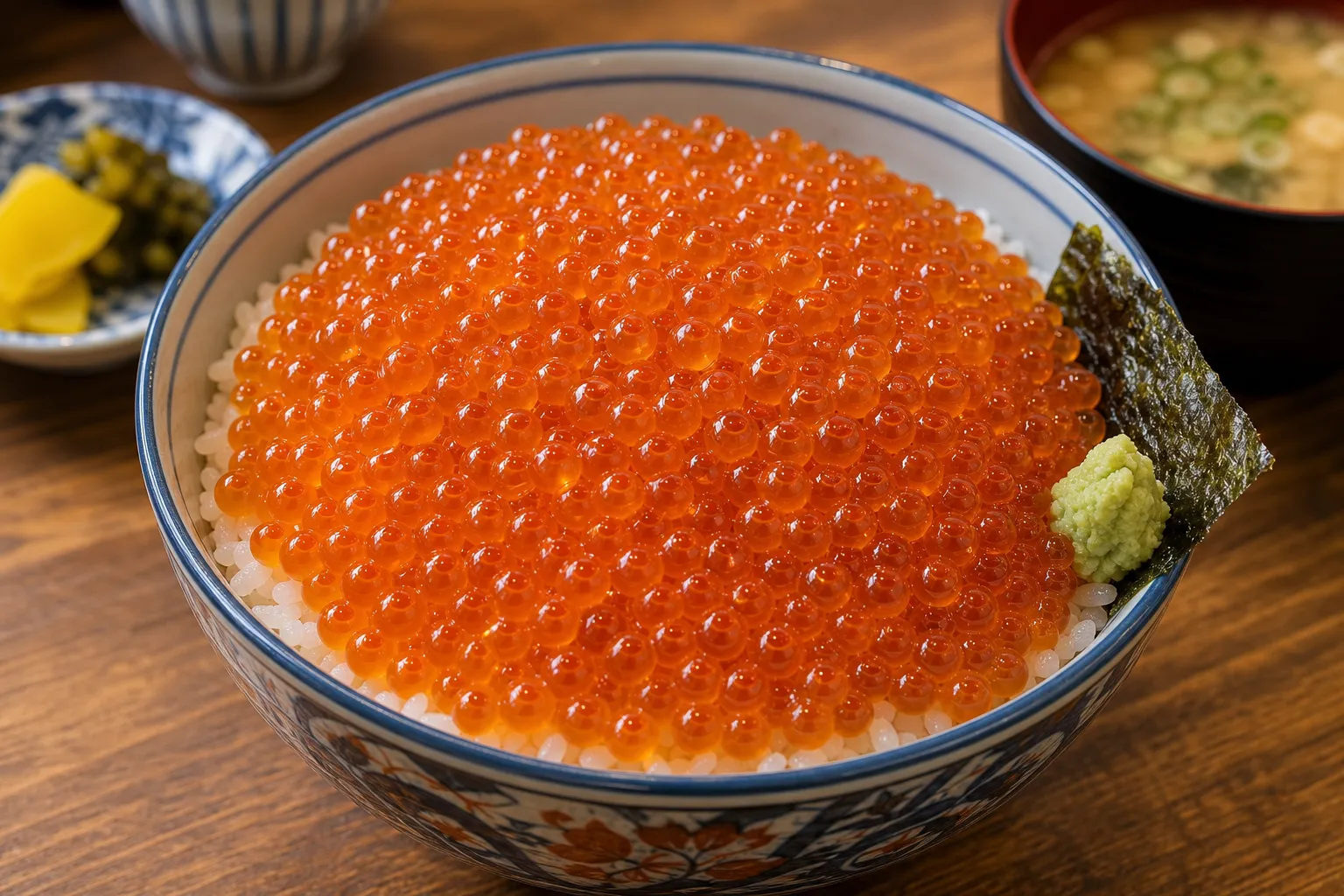
A bowl heaped with glistening orange salmon roe, each bead a little grenade of the sea. Ridiculous, glorious, and completely worth the guilt — Hokkaido's most obscene one-topping wonder.
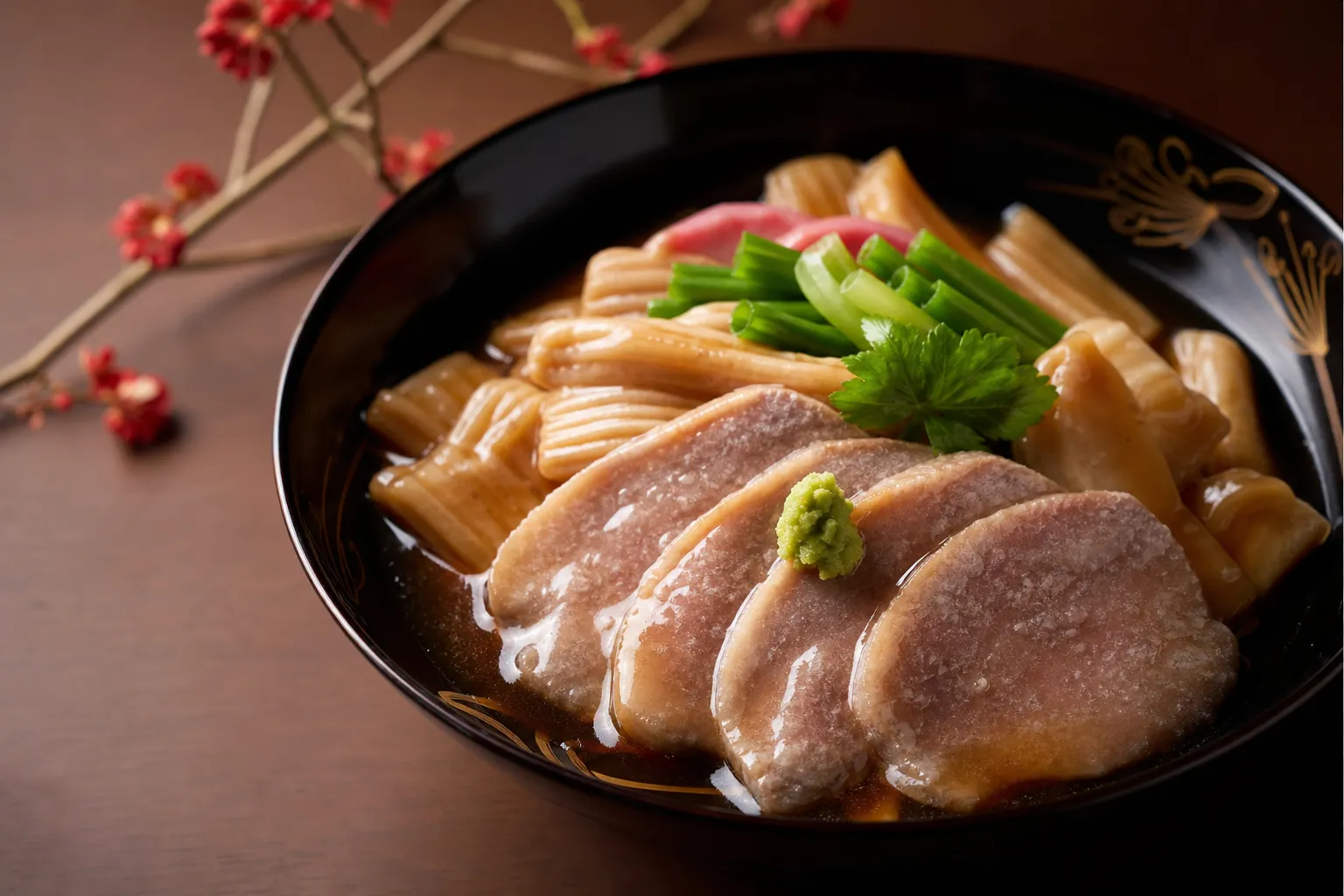
A tiny dab of wasabi on top of a warm, glossy duck stew — it sounds wrong, it looks fussy, and then the spoon hits your mouth and you go quiet.
One bite and the fat basically evaporates on your tongue before you've even started chewing — I actually laughed out loud at the table, alone, like an idiot.
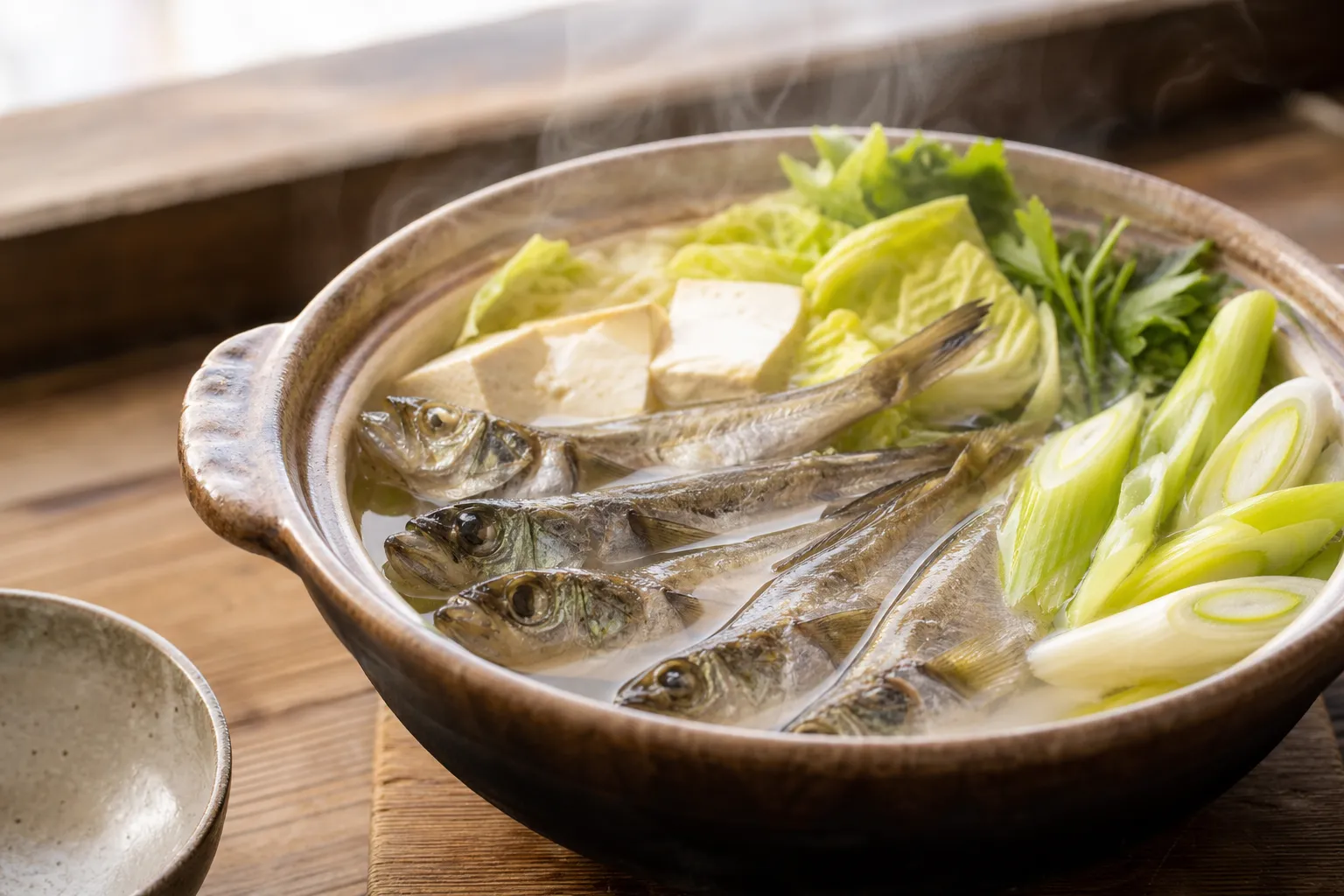
Winter in Akita means a clear pot bubbling with whole silvery fish and one funky, ancient fish sauce doing all the heavy lifting — and it lifts.
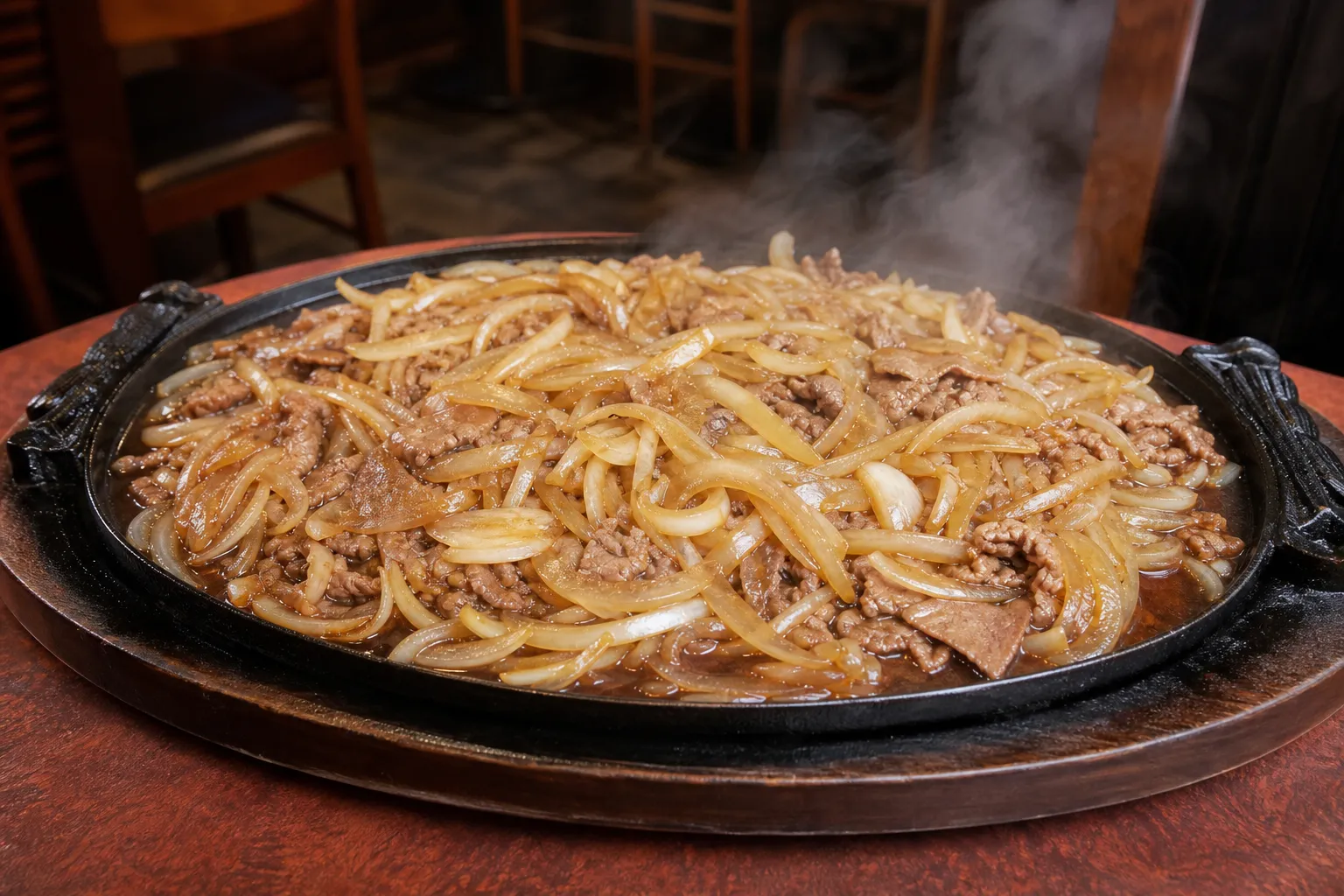
A hot plate arrives buried under onions, and you can't even see the beef yet — then it starts to sizzle down into a sweet-soy sauce and the whole table goes quiet. This is not yakiniku. This is Towada's own thing.
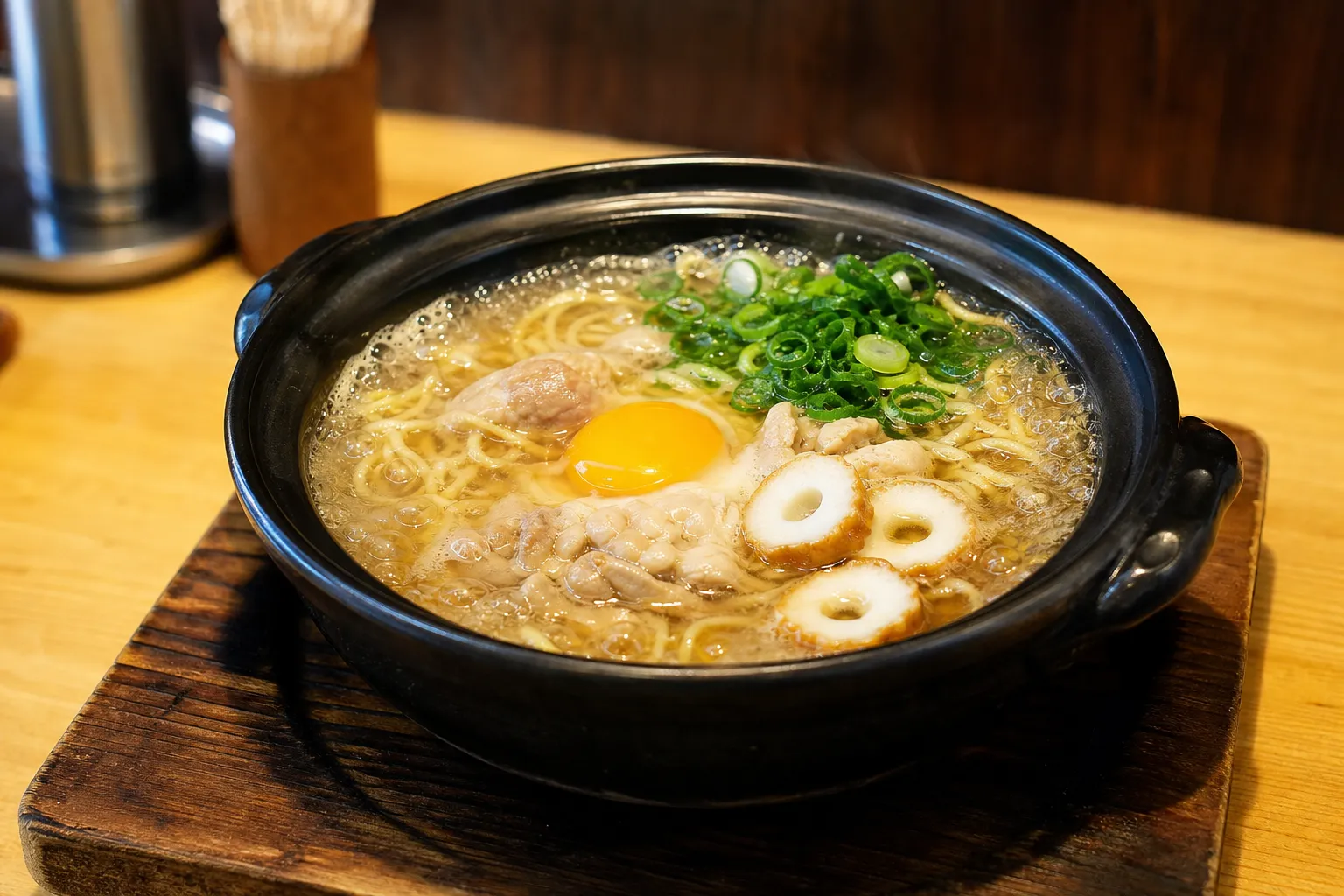
It arrives still boiling, in the clay pot it was cooked in, an egg cracked on top going from raw to soft-set right in front of you — this is not a bowl of ramen, it's a tiny pot of lava with noodles in it.
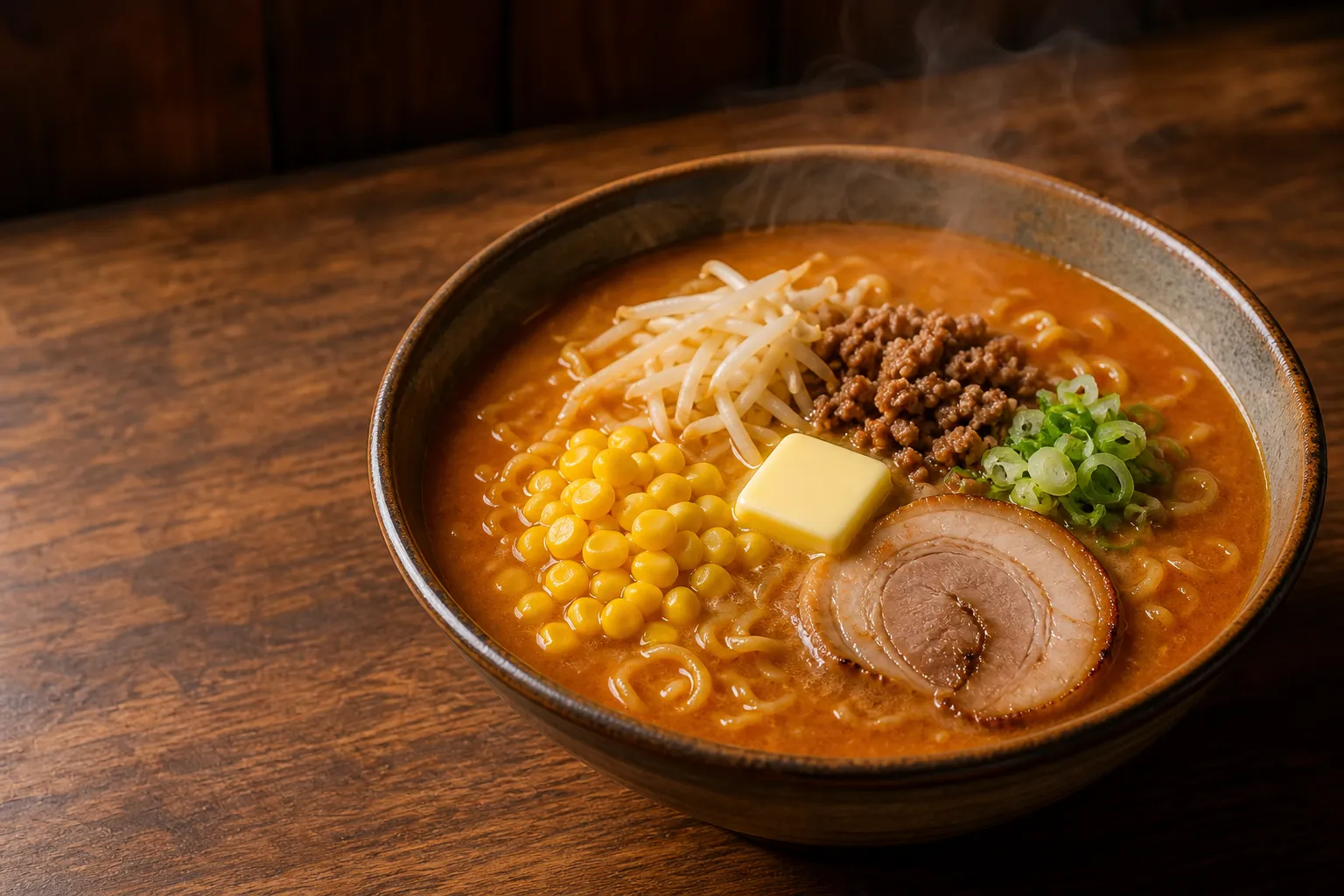
The butter melted into the red-brown broth and I nearly teared up. Sapporo's answer to a brutal winter: a bowl so rich and warm it feels like being wrapped in a blanket.
They put crackers in the hotpot. On purpose. Then they cooked them until the edges went soft and chewy like little dumplings — and I stopped doubting Hachinohe and started asking for seconds.
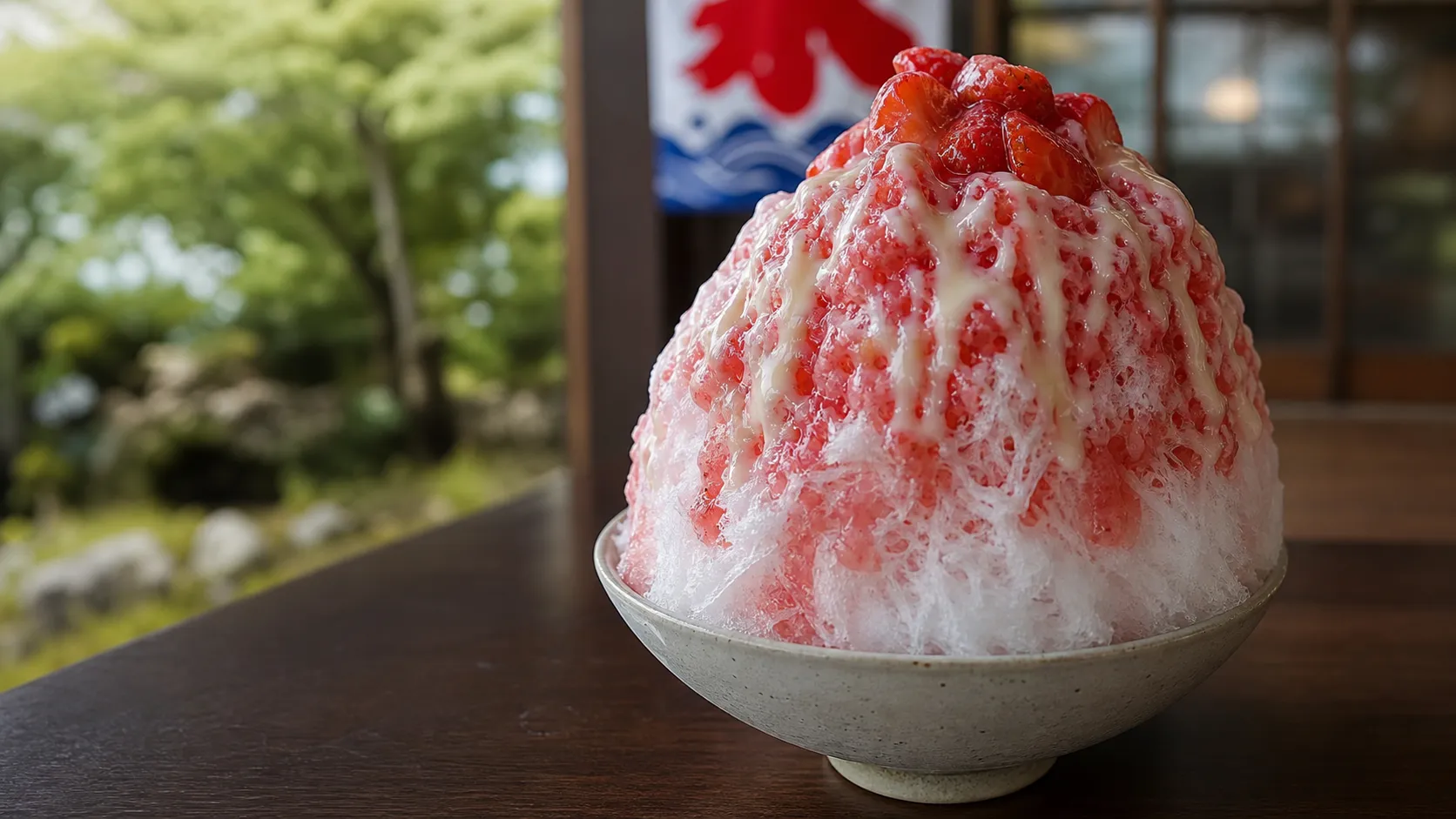
Mountains of fluffy shaved ice drenched in syrup — and at the high end, snow-soft ice with real fruit and condensed milk. Japan's summer survival dessert, far beyond a snow cone.
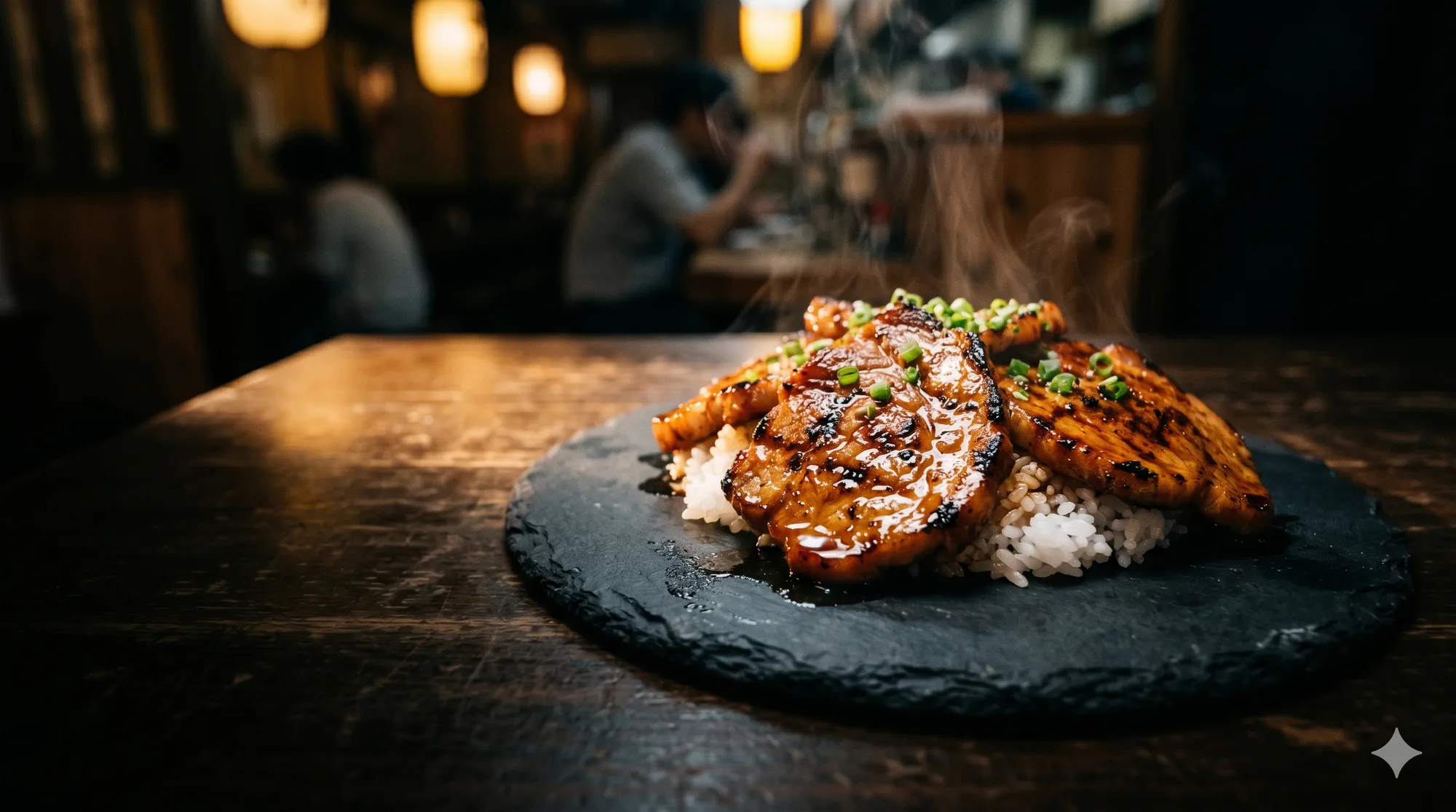
Thick slabs of pork, charred over flame and glazed in sweet soy, fanned over rice. Hokkaido's smoky, glossy, gloriously simple pride — born in Obihiro in the 1930s.
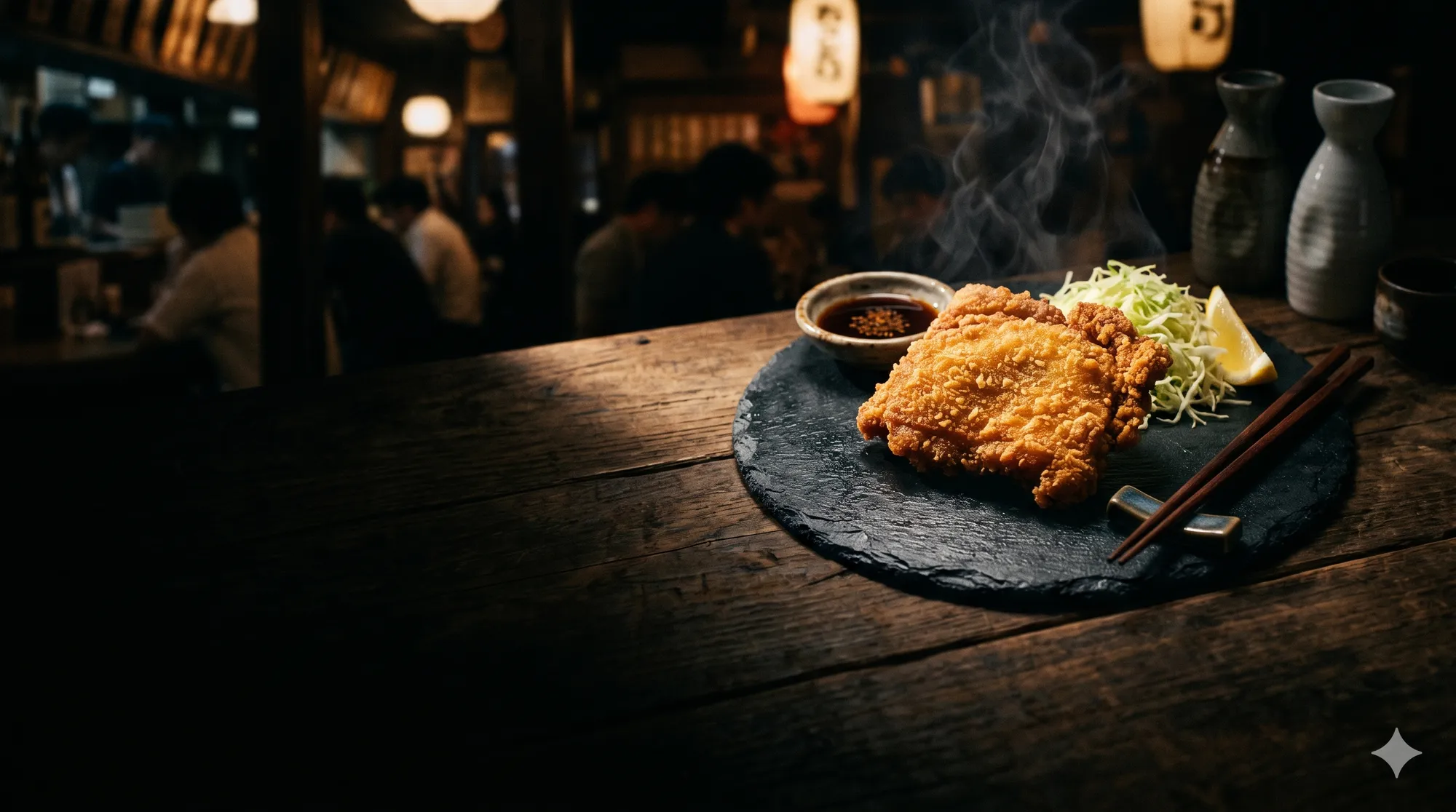
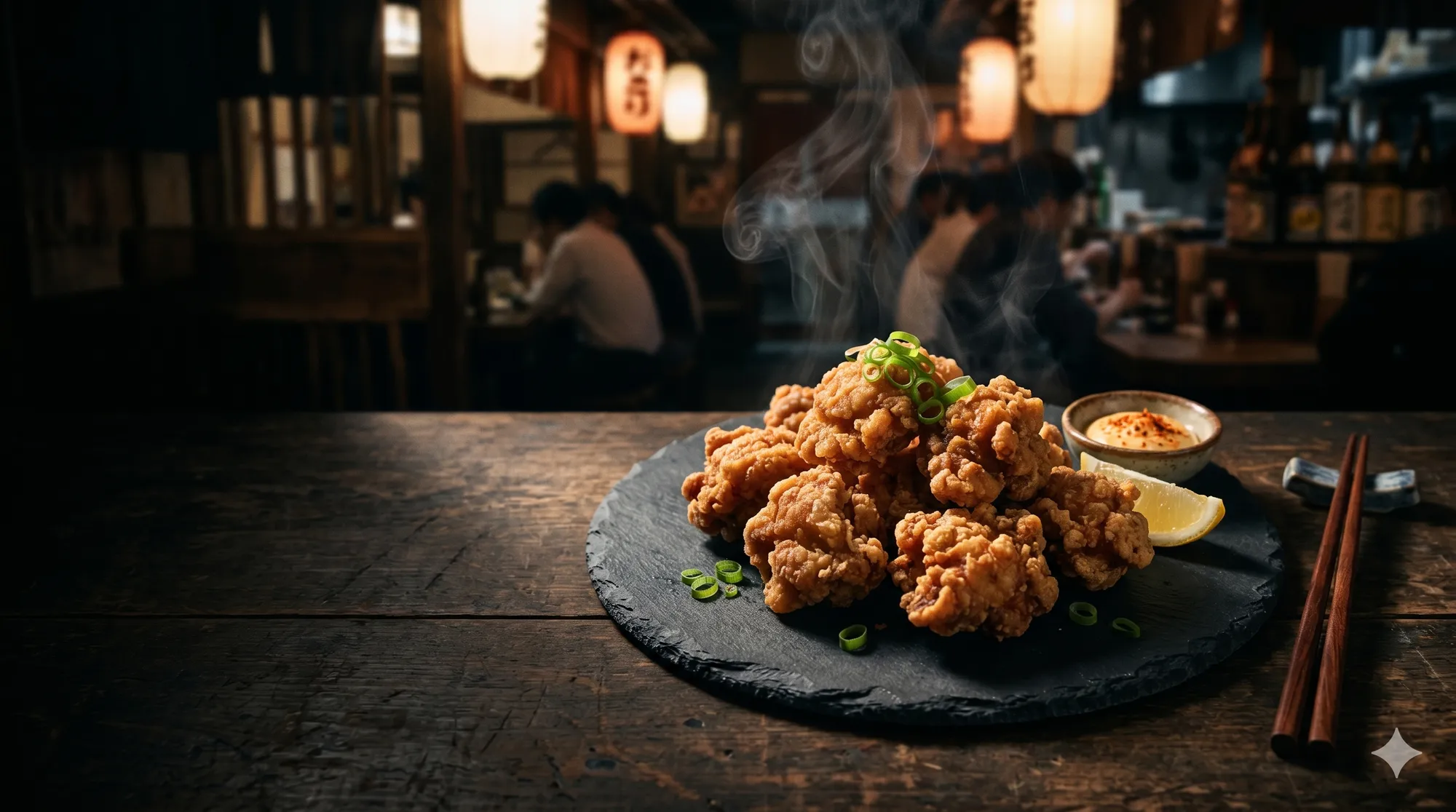
Japan's fried chicken: crackling-crisp outside, gushing-juicy inside, marinated in soy and ginger and garlic. The bento hero, the izakaya MVP, the snack worth fighting over.
The mushroom itself is chewy and honestly a bit gritty. Nobody in Tochigi cares. They want what it leaks into the broth, and after one dip I understood the whole obsession.
A hundred yen. One skewer. Potato, panko, and a slap of dark sauce — and I stood on the street eating four of them like I had somewhere to be and had decided not to go.
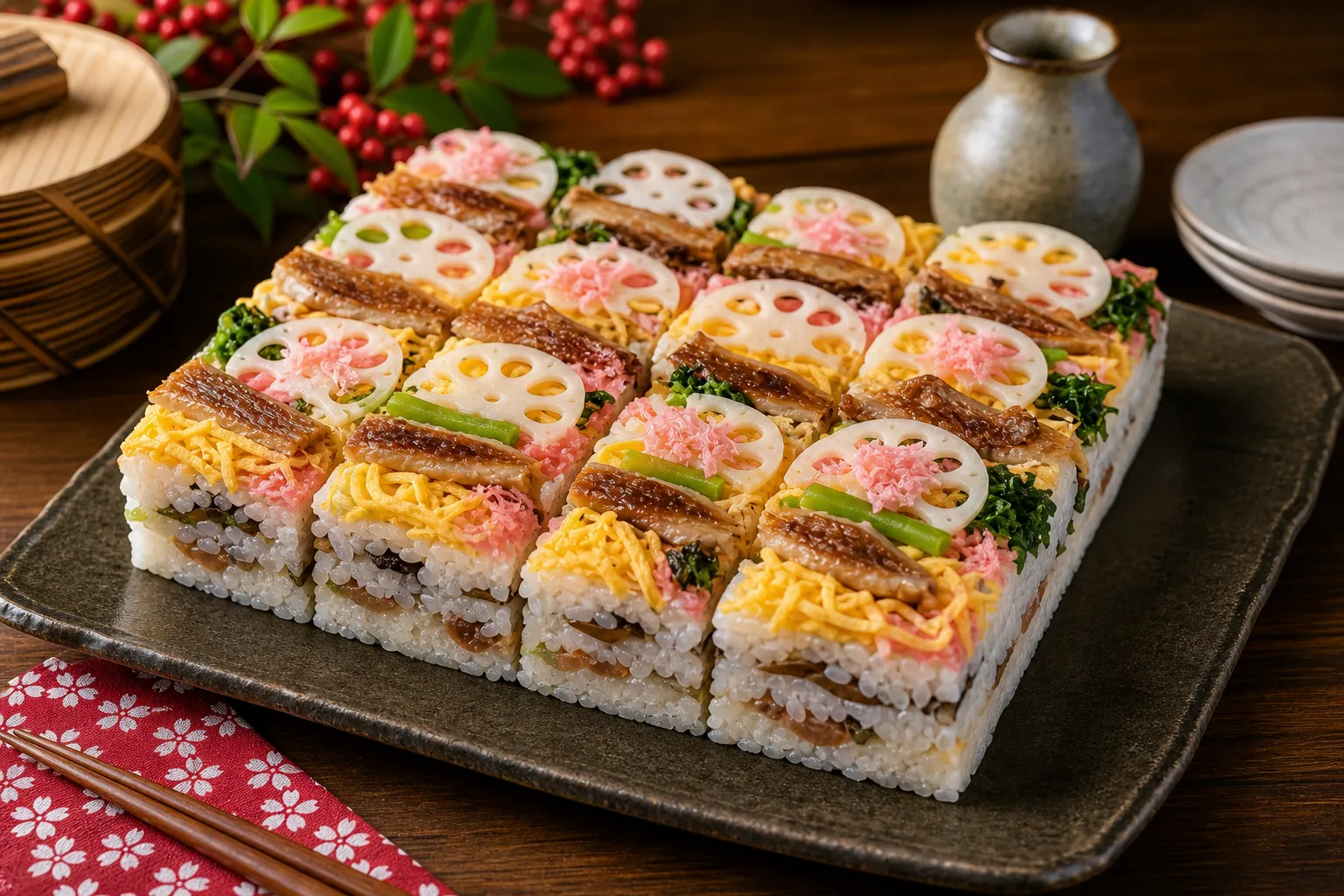
Sushi built like architecture — pressed in a giant wooden box in colorful layers, then cut into hefty blocks. This is the samurai's answer to feeding a castle, and it lands on the plate like a striped little monument.
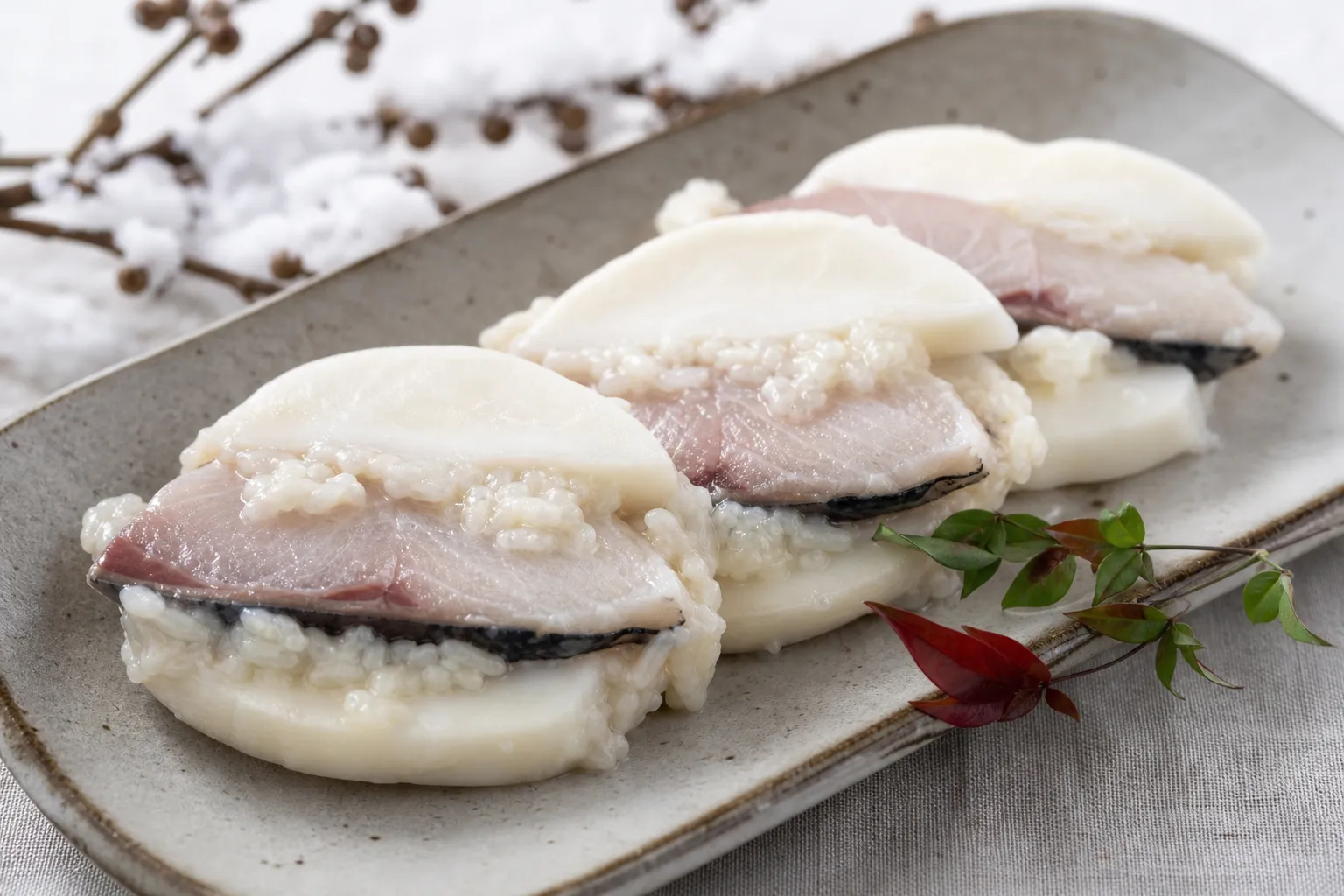
Two discs of pickled turnip with a slice of cured yellowtail hidden inside, all buried in sweet rice koji until it ferments into something funky, creamy and impossible to stop eating. Kanazawa's New Year on a plate.
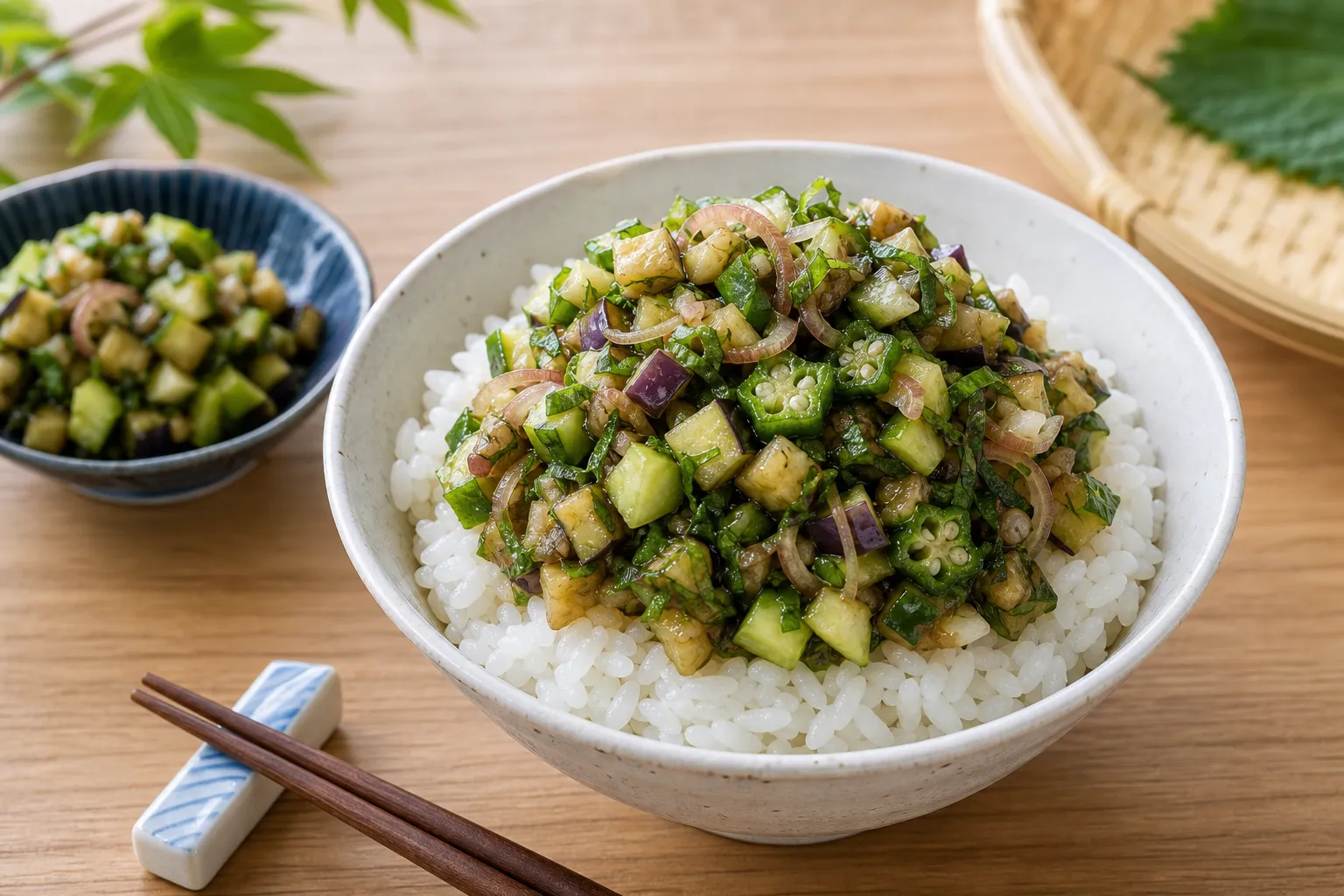
A cold, glistening pile of chopped summer vegetables — sticky, herby, salty — landing on hot white rice on a day too hot to want to eat anything. Somehow you clear three bowls.
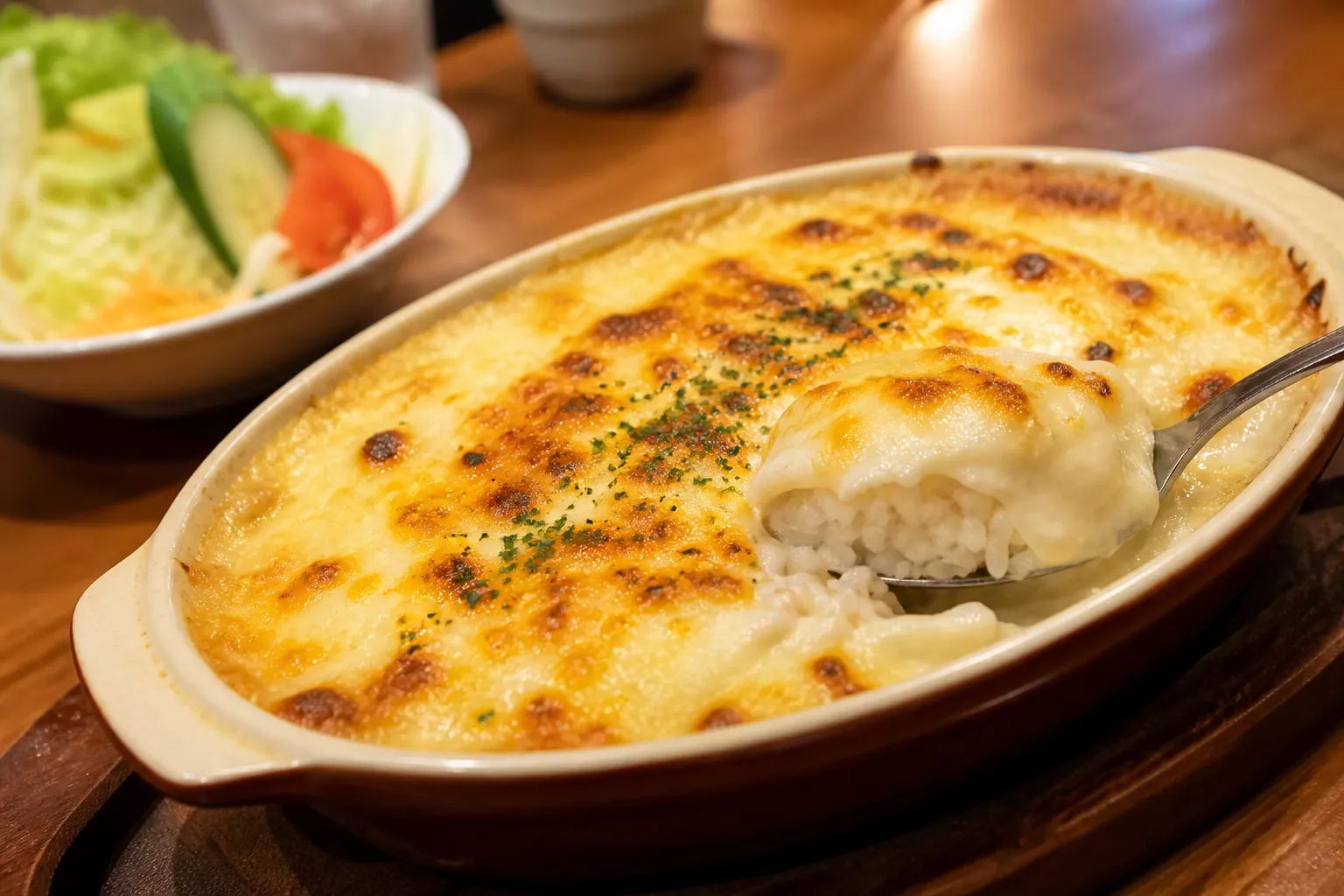
Buttered rice under a blanket of creamy béchamel and browned cheese, baked until it's bubbling at the edges — a Japanese invention that sounds like it shouldn't work and is, in fact, pure molten comfort.
A hot little drum of pancake batter with a molten core of sweet red bean, pressed in a circular iron mold and handed to you steaming — the cheap, perfect street sweet that Japan can't even agree on the name of.
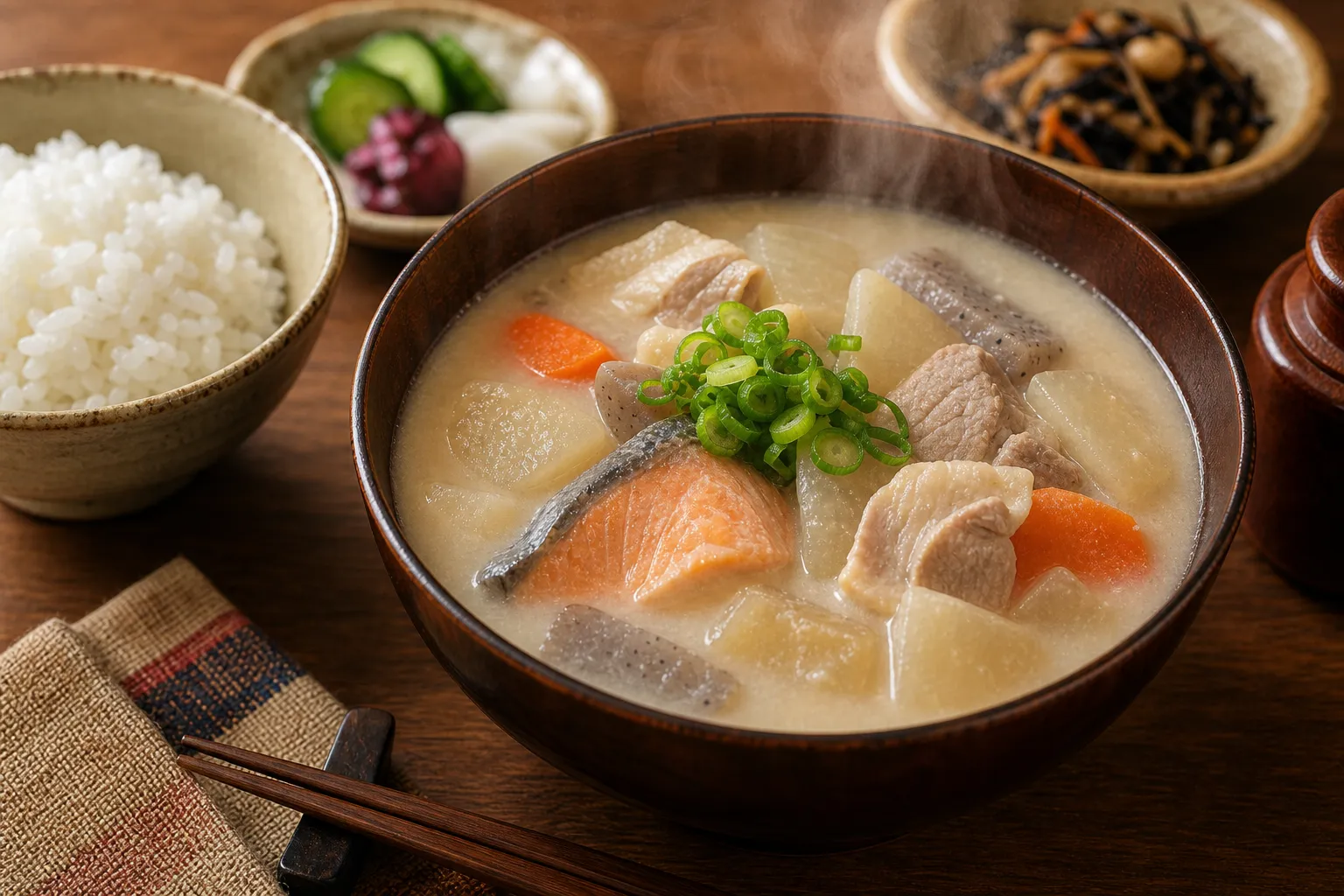
The warming winter soup that puts the leftovers of sake-making to glorious use — cloudy, faintly boozy, deeply comforting, thick with salmon and root vegetables and the smell of a Kansai kitchen in January.
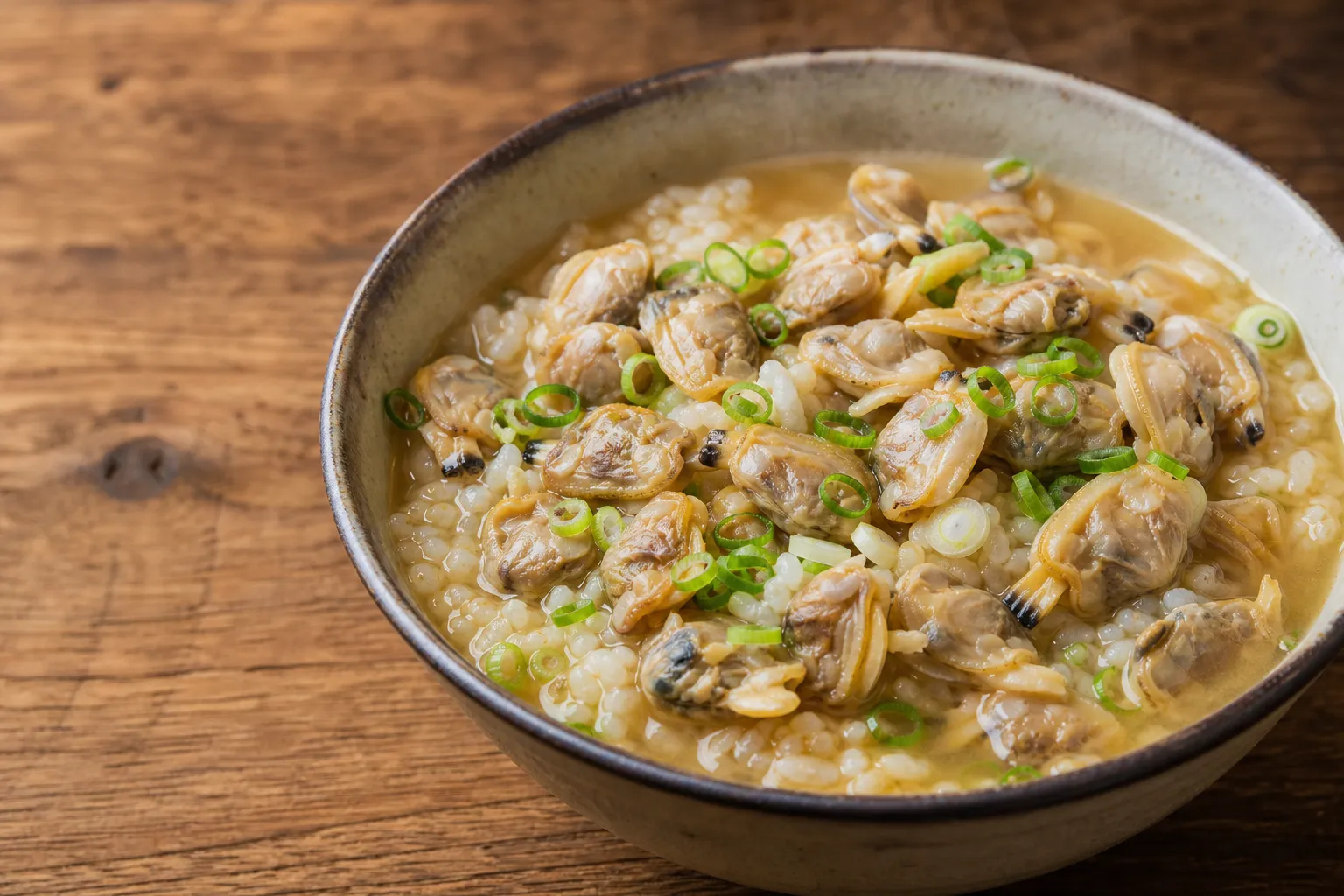
Clam broth soaked so deep into the rice that the rice itself becomes the point — this is what Tokyo's dockworkers ate before Tokyo had a skyline.
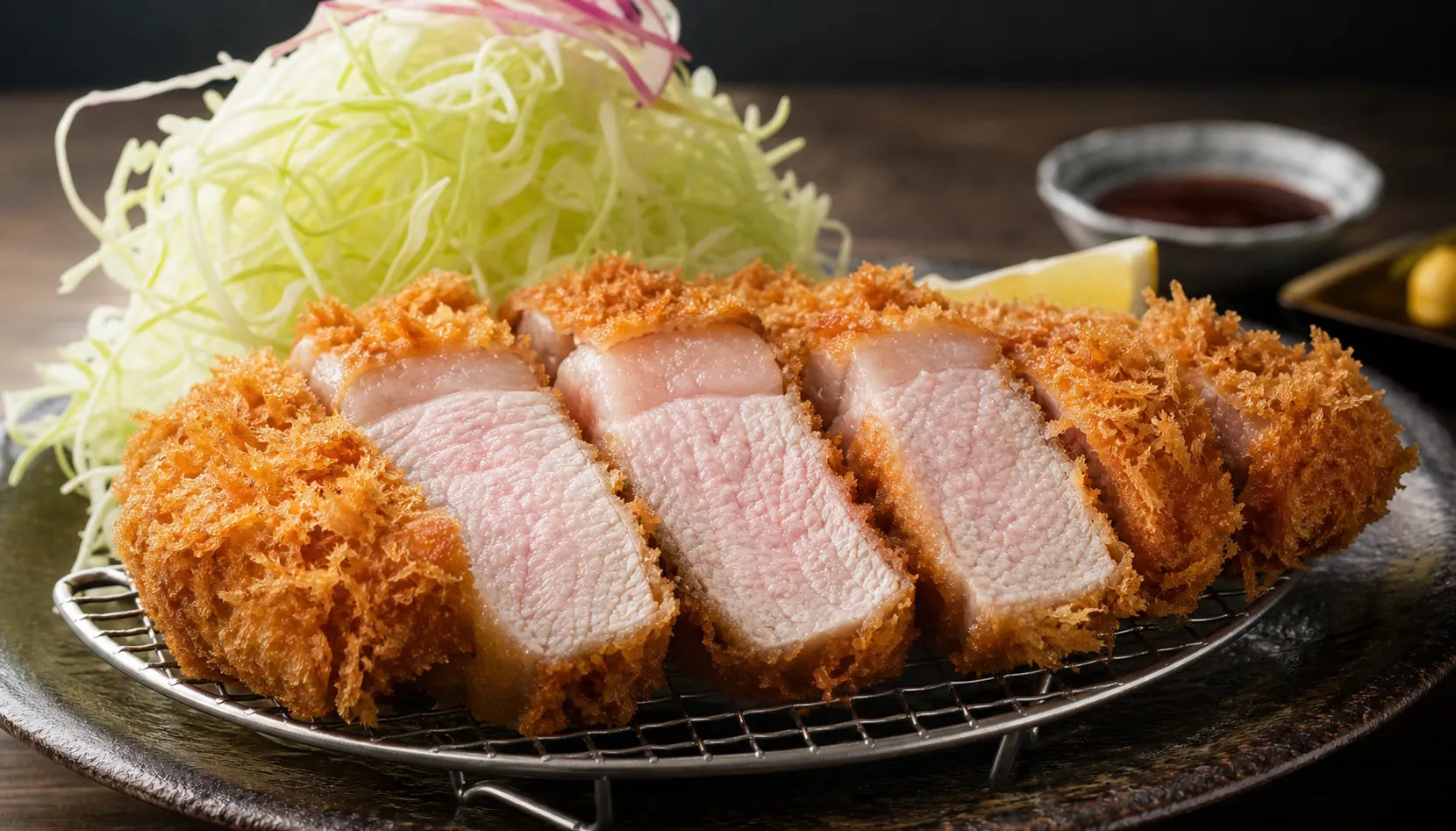
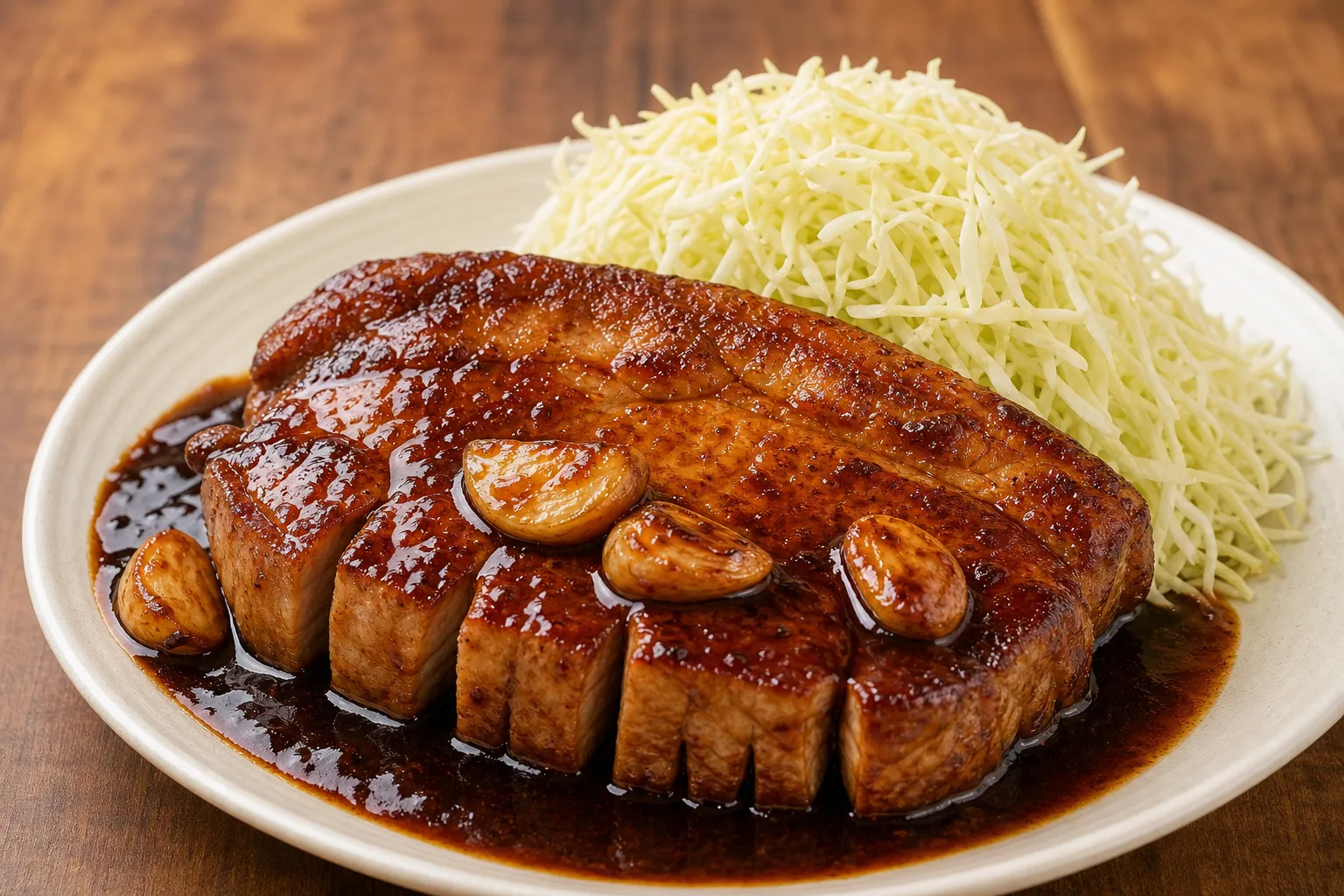
A slab of pork the thickness of your fist, seared black-brown and drowning in garlic sauce — this is not the polite cutlet you were expecting.
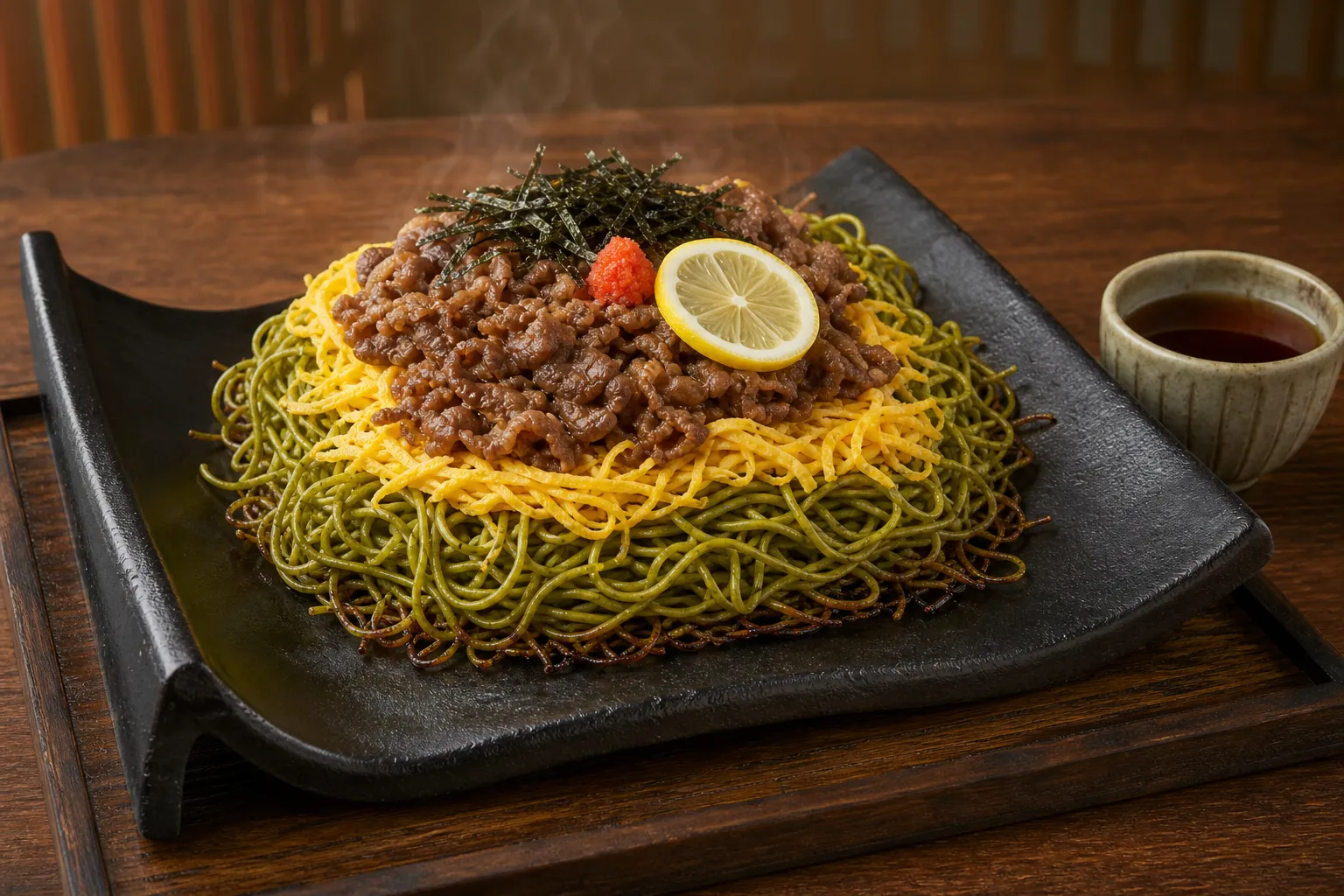
Green tea noodles served sizzling on a hot roof tile, piled with beef and shredded egg, the bottom layer going crispy against the clay. Yamaguchi turned a battlefield legend into one of the most fun things you can eat.
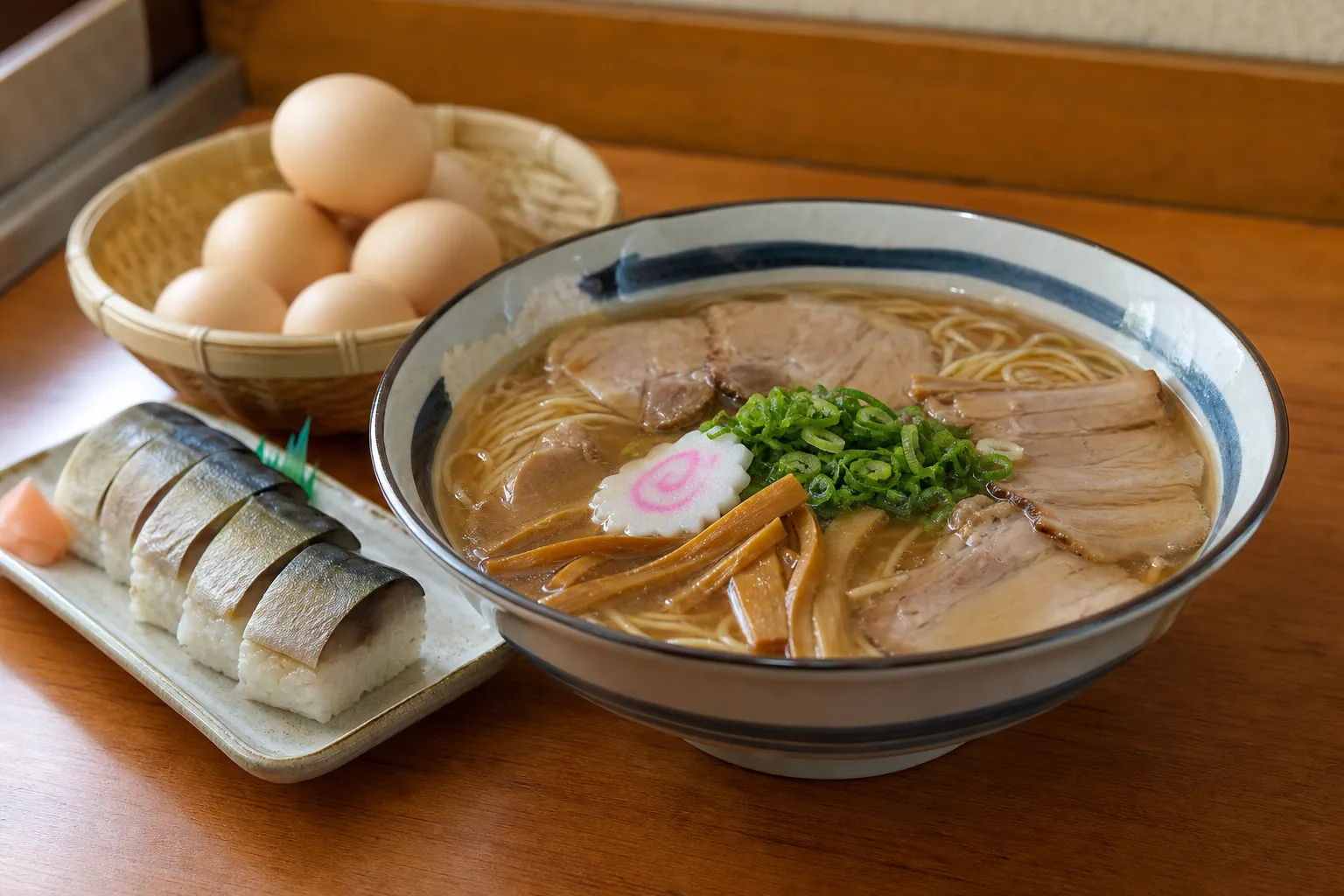
Pork-bone-meets-soy broth, thin springy noodles — and a self-serve table loaded with pressed mackerel sushi and boiled eggs you grab while you wait. Locals don't even call it ramen. They call it the good stuff.
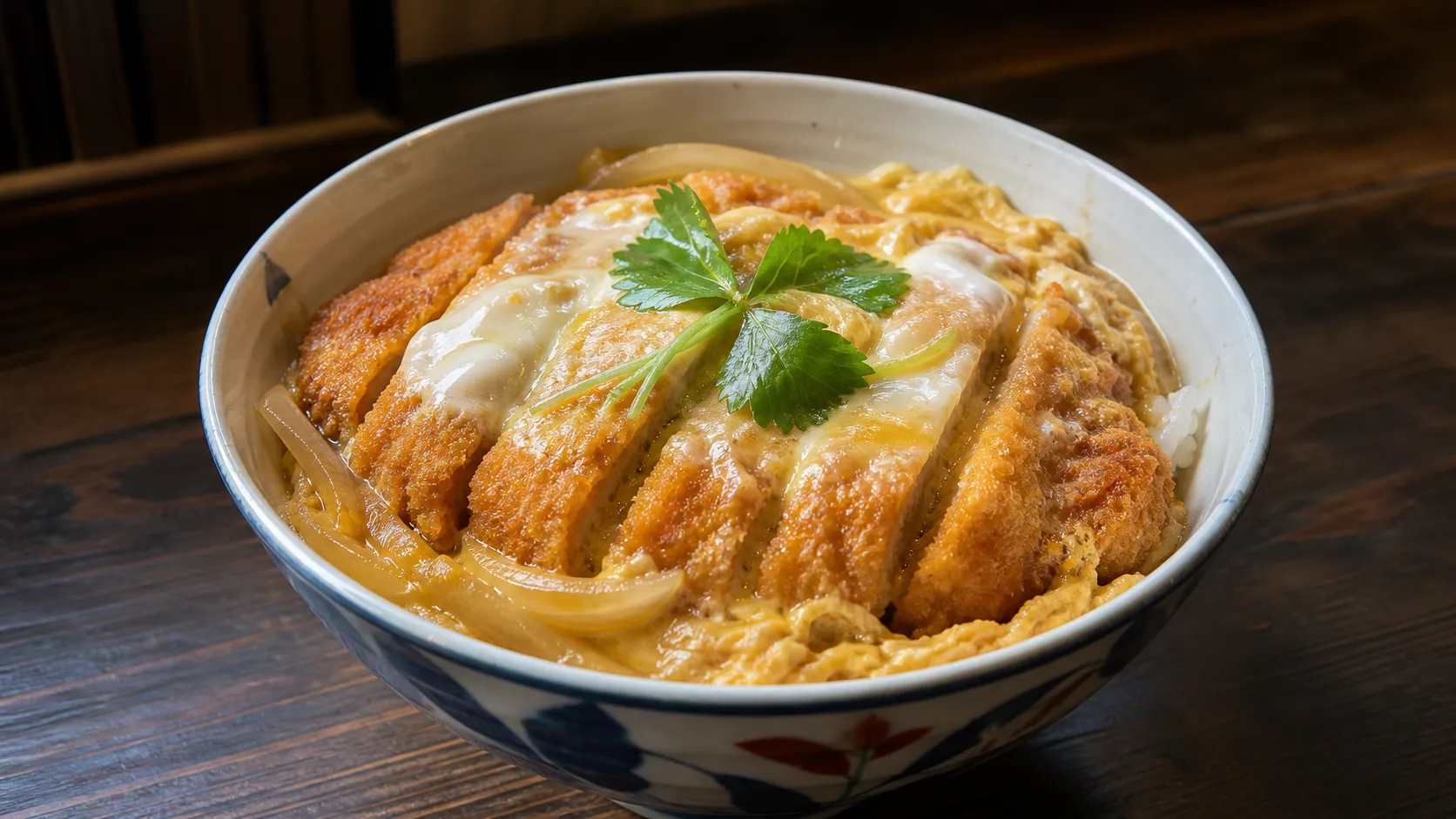
A crispy pork cutlet simmered with onion and egg in sweet-savory broth, draped over a bowl of hot rice. Comfort food with a fried-and-fluffy double punch — and the meal Japan eats to win.
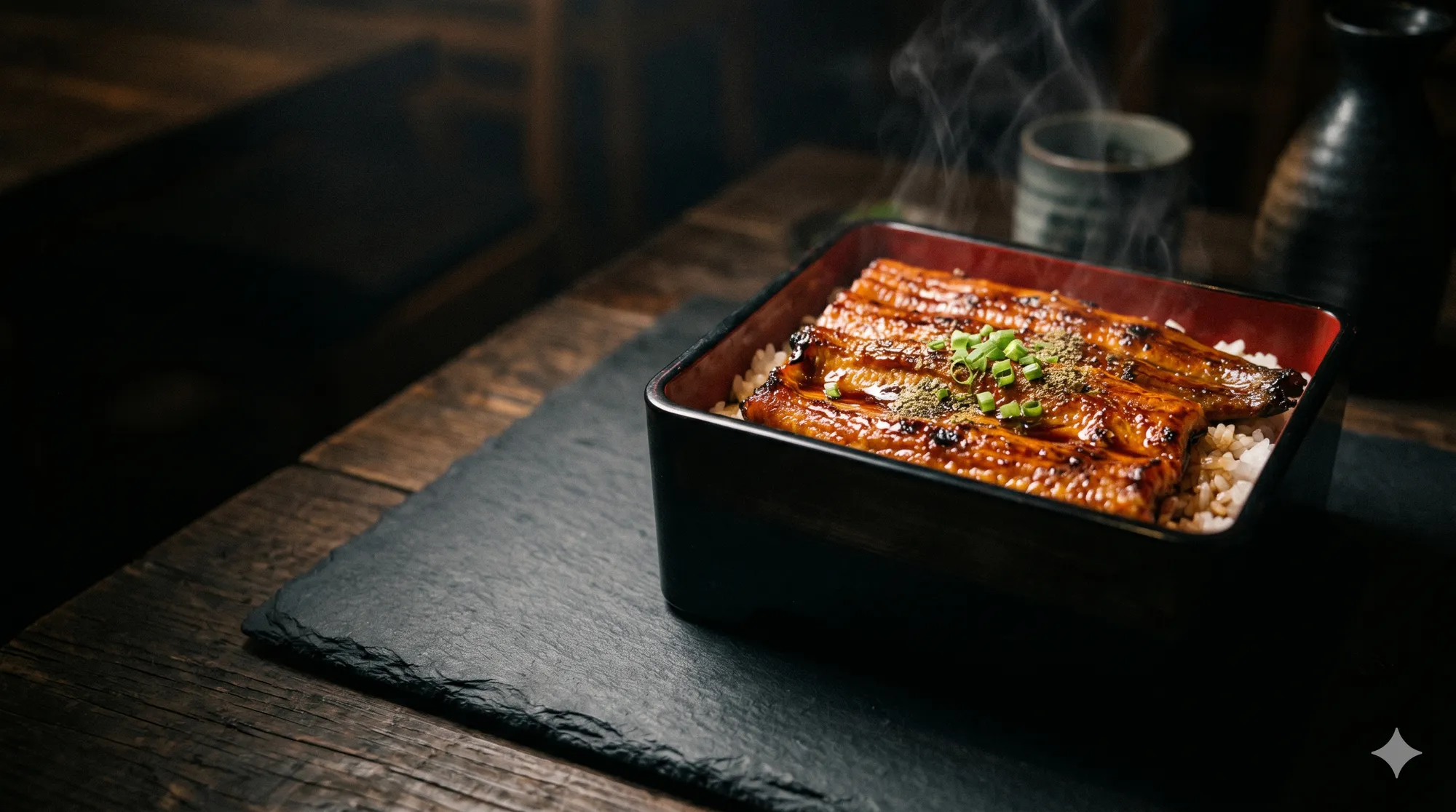
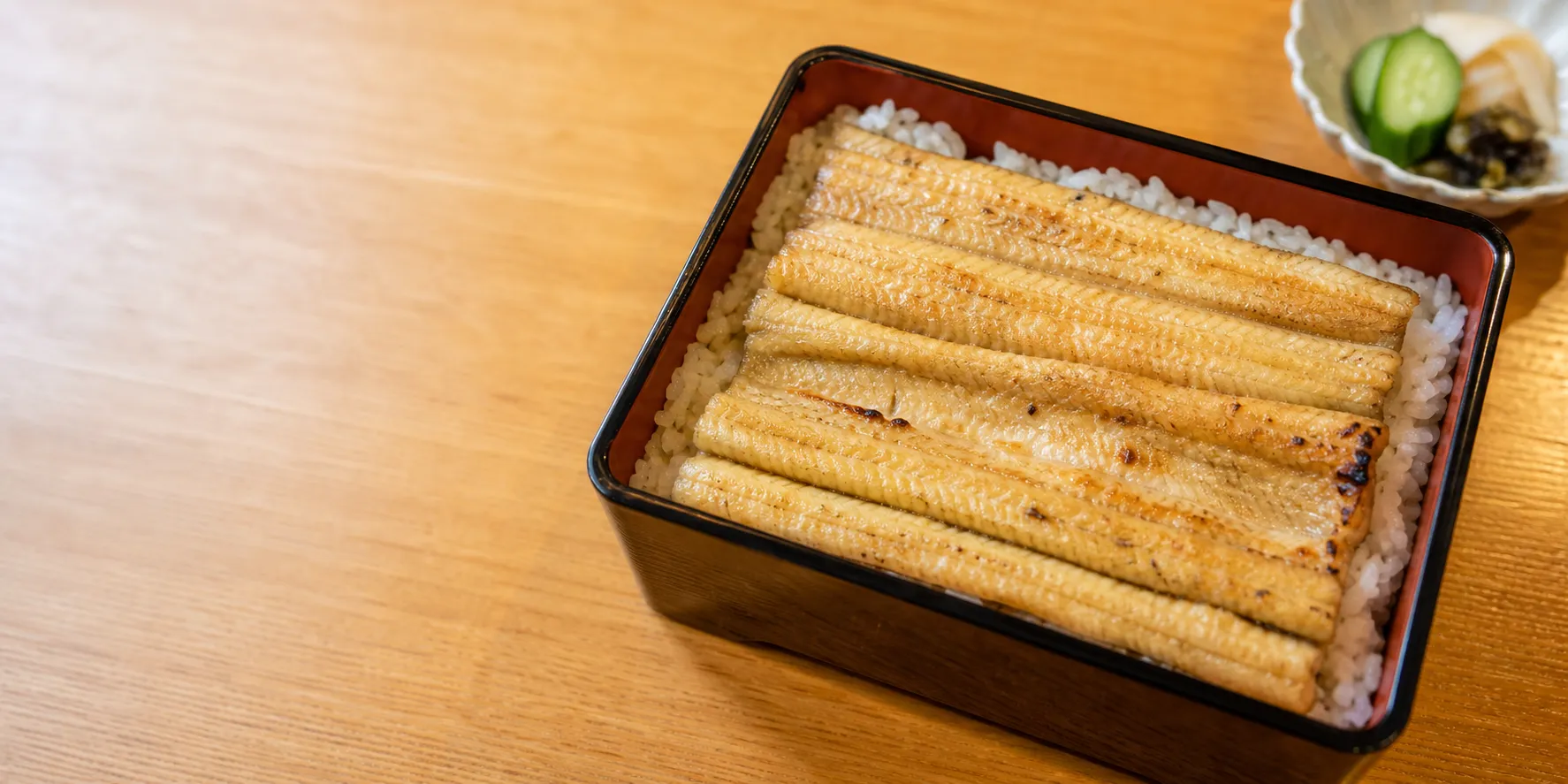
Freshwater eel, butterflied, grilled over charcoal, and lacquered in a sweet-savory glaze until it's smoky, rich, and falling apart. A splurge worth every yen — and Japan's favorite way to survive the summer.
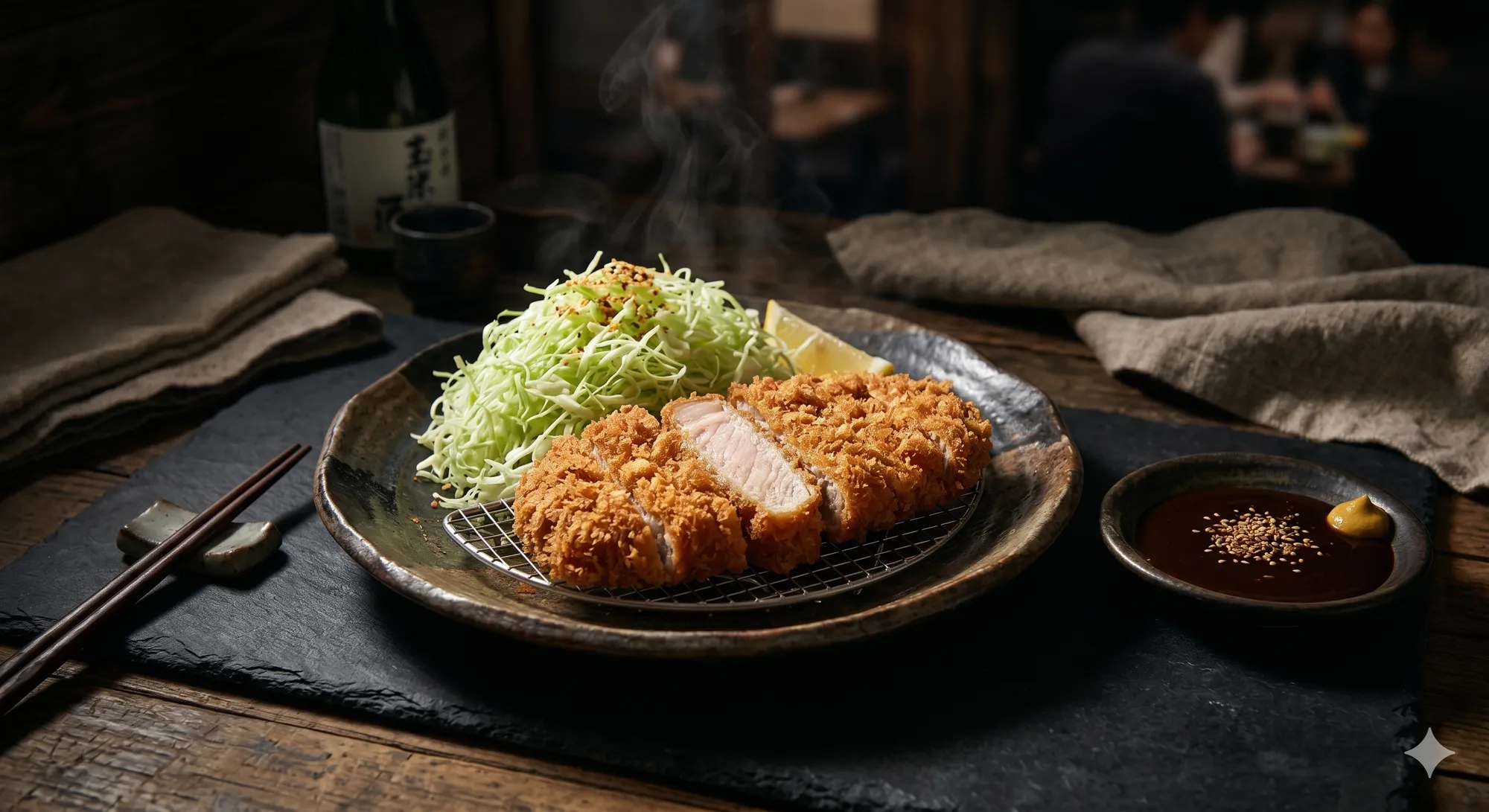
The crunch you can hear across the room. Japan borrowed a French cutlet, deep-fried it into something better — and here's how to order it like you belong.
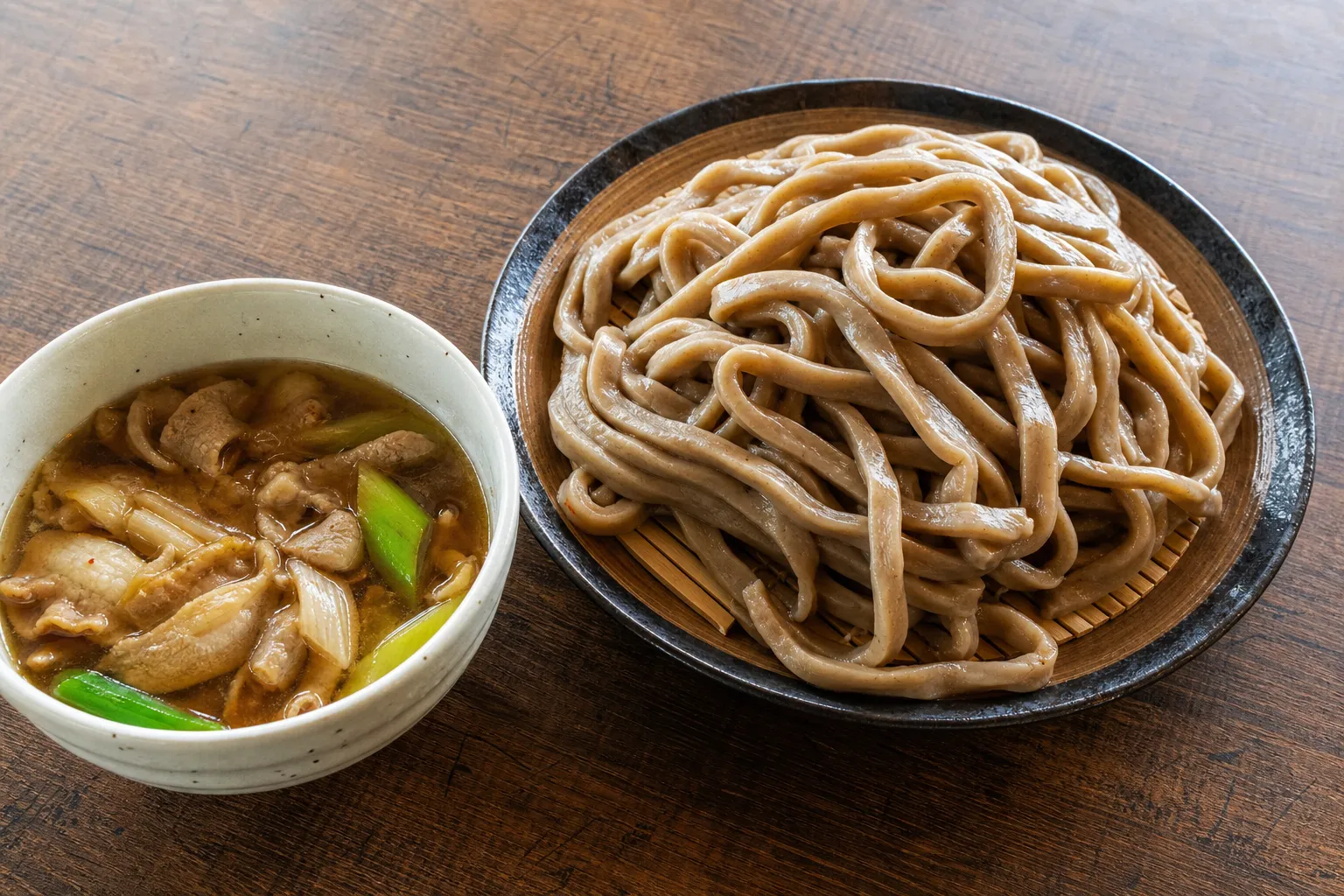
Udon with a jaw workout — thick, brownish, room-temperature noodles so defiantly chewy you dunk them into a hot, smoky pork-and-vegetable broth and just... go to town. Saitama farm food that fights back.
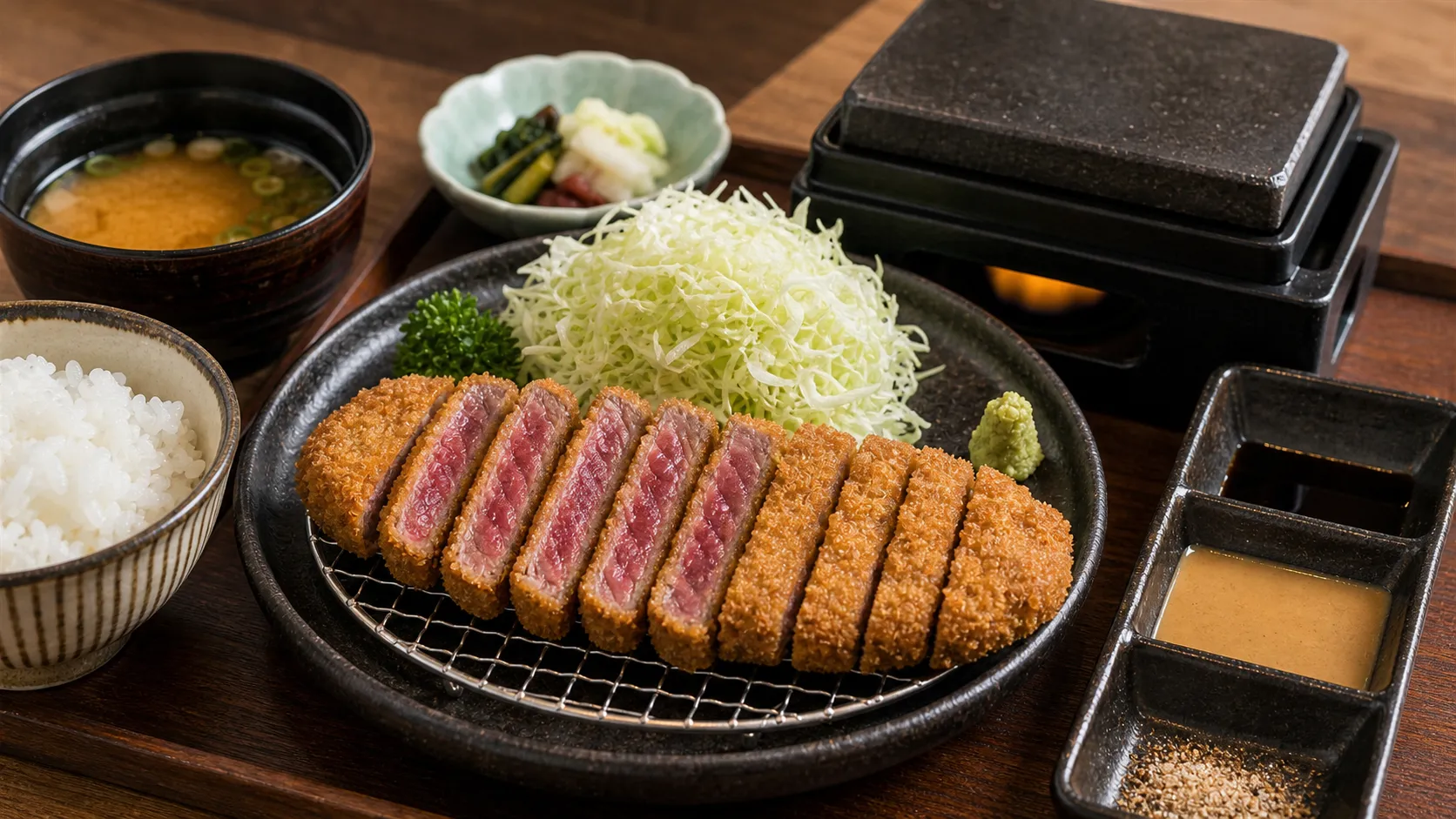
A thick slab of beef in a crunchy panko crust, deep-fried for seconds so the inside stays rosy and rare — then handed to you with a searing-hot stone so you can grill each bite exactly how you like it.
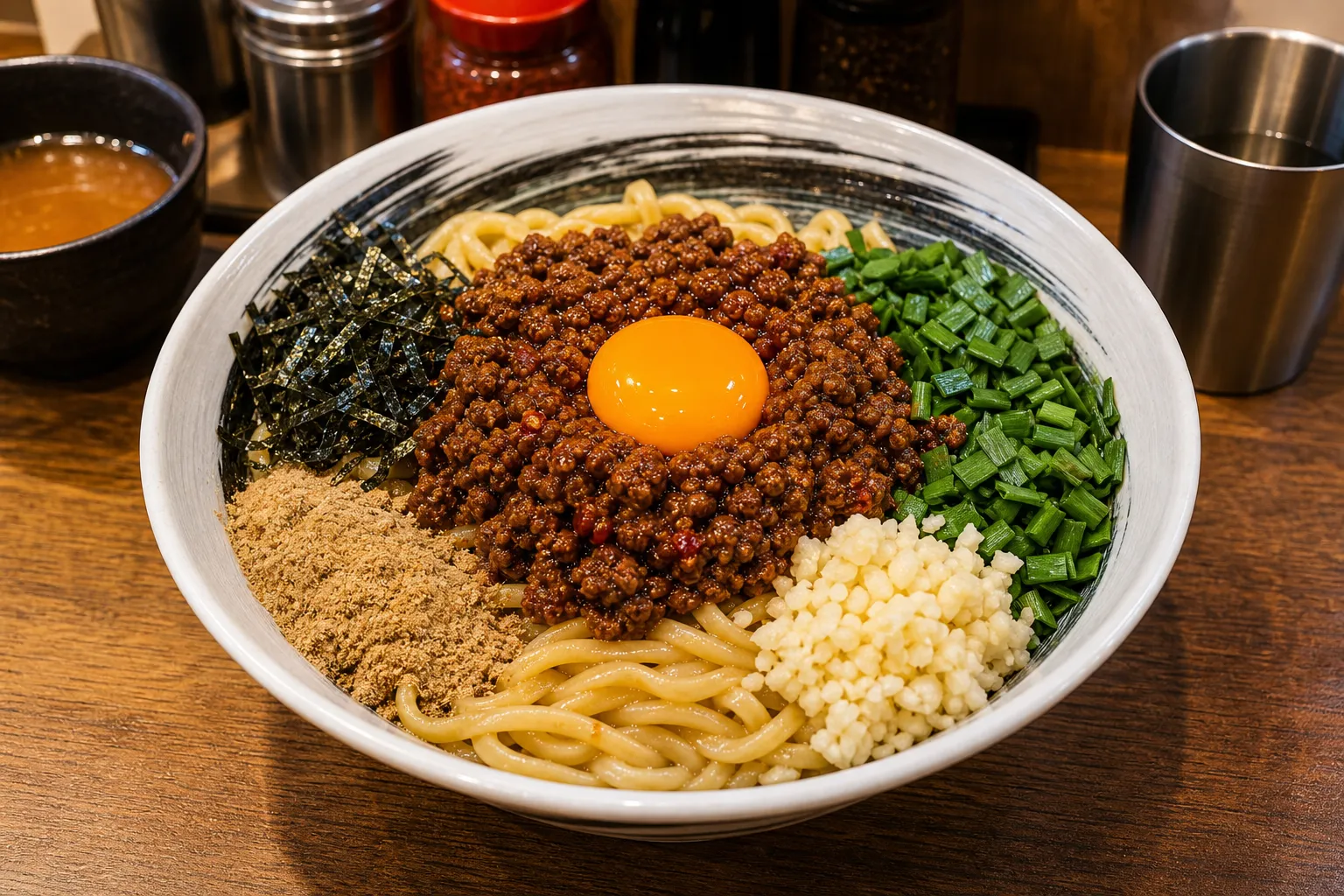
Break the egg yolk, plunge in, and mix like you're furious — this brothless Nagoya bomb of spicy pork, raw garlic and chives doesn't reveal itself until it's a chaotic, glorious mess.
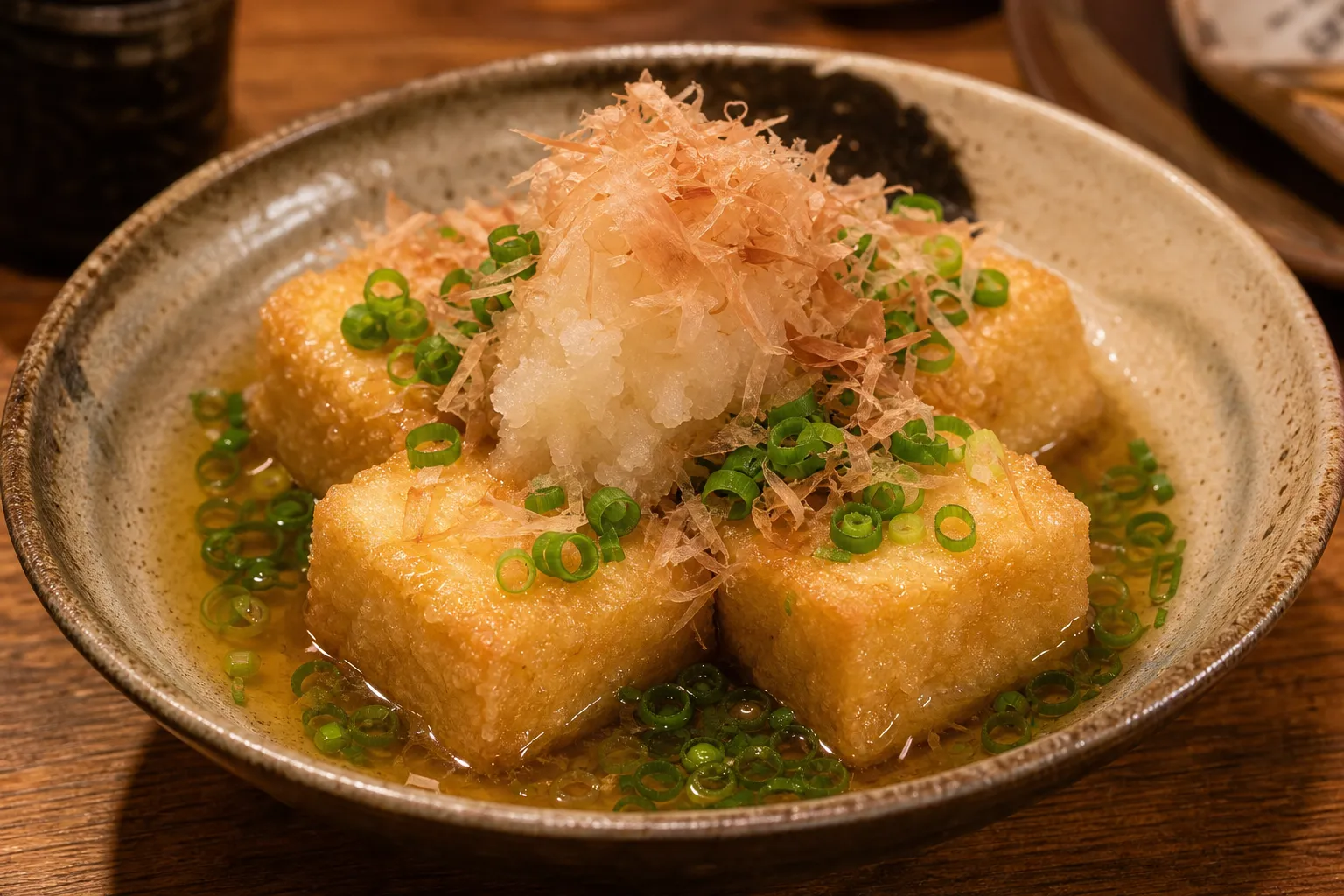
The crackly fried shell holds for exactly one bite, then collapses into warm silk in a puddle of dashi — this is the tofu dish that converts tofu skeptics.
My mouth was on fire and I was still going back for more — that particular kind of pain that somehow tells your brain to keep eating instead of stop.
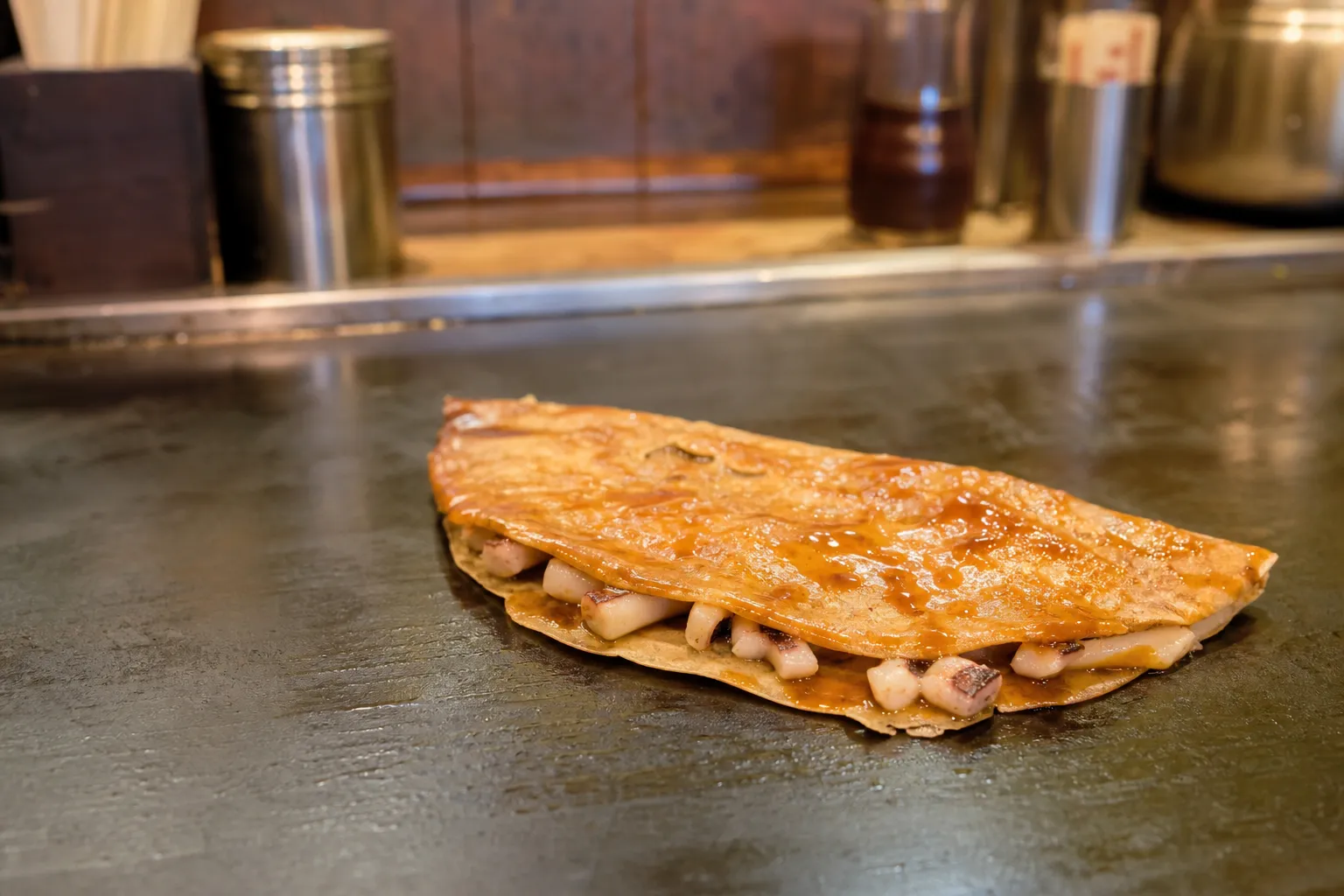
Not the whole grilled squid you're picturing from festival stalls — this is a flat, folded, sauce-slicked flour pancake, and Osaka has been quietly obsessed with it for decades.
Dark, glossy slices of soy-soaked bonito, still cool from the sea, mixed straight into warm vinegared rice with someone's bare hands. I took one bite on the ferry dock and forgot to keep walking.
Not the creamy sesame tantanmen you know. This is a bowl of fire-red chili oil, minced pork and raw onion, invented by fishermen to thaw out after a freezing morning at sea. It bites back.
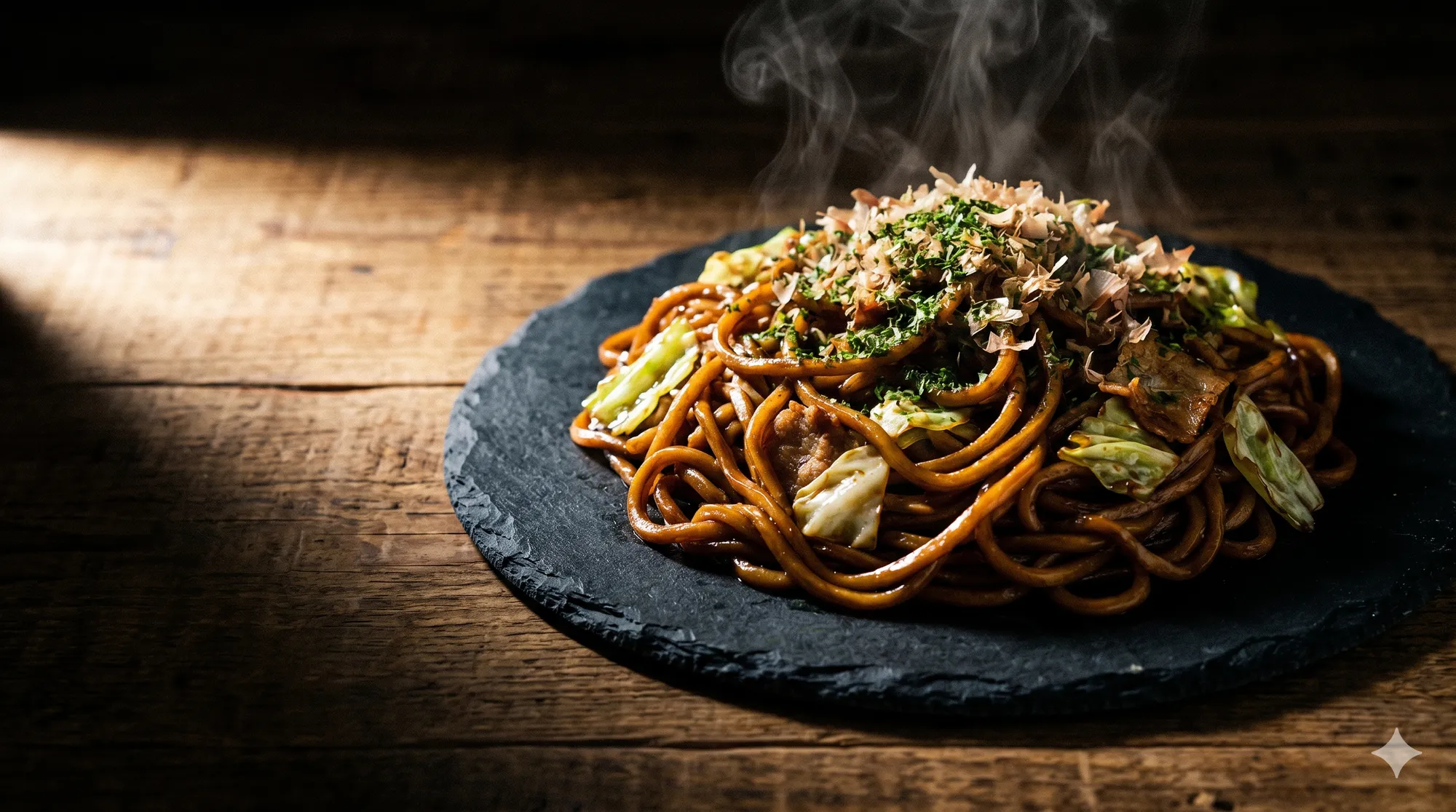
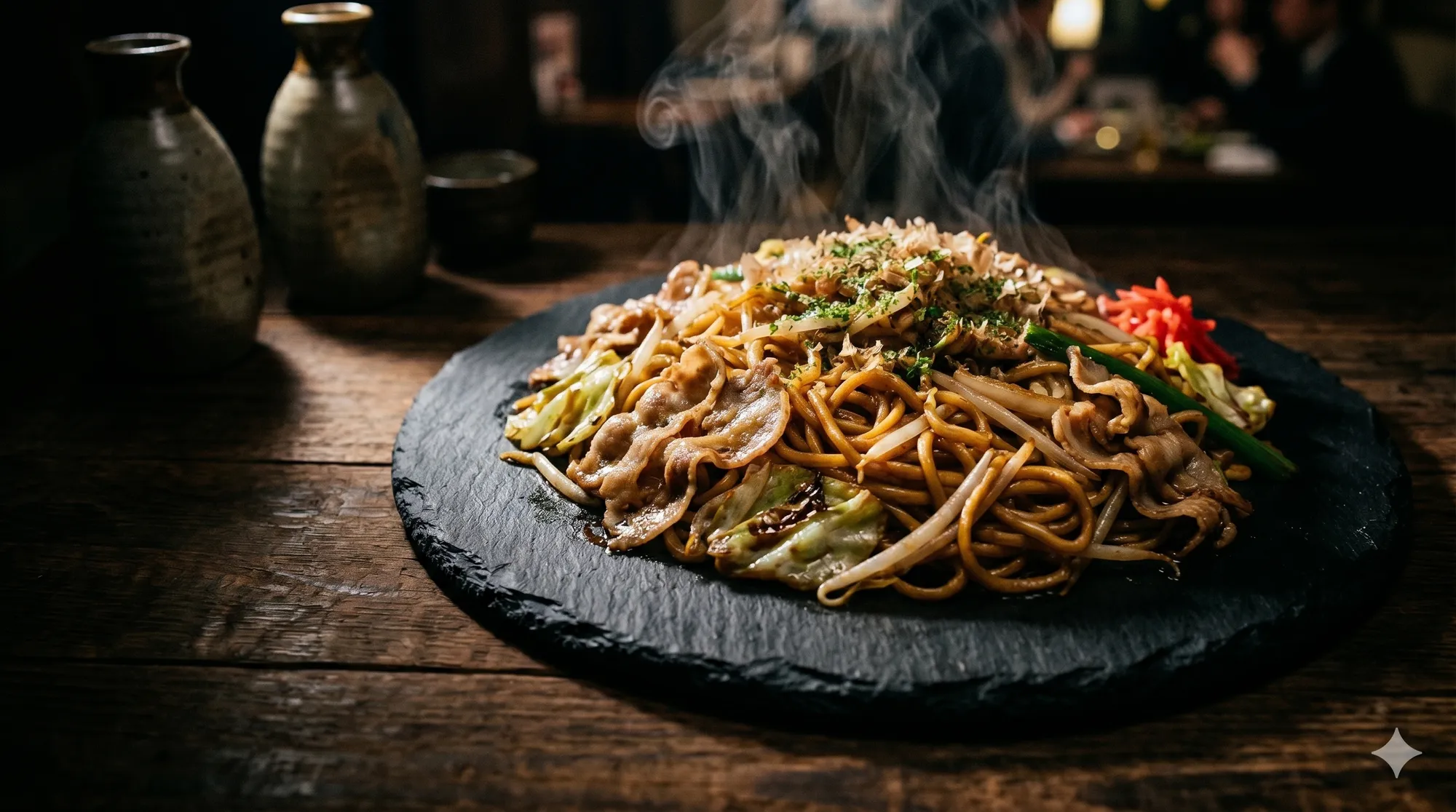
Griddle-fried noodles slicked in sweet-savory sauce, the smell that defines a Japanese summer festival. Cheap, fast, joyful — and secretly one of the country's great comfort foods.
Curry rice. Topped with omurice. Topped with a pork cutlet. Drowned in demi-glace. Fukui built a triple-decker monument to indulgence — and nobody knows where the name came from.
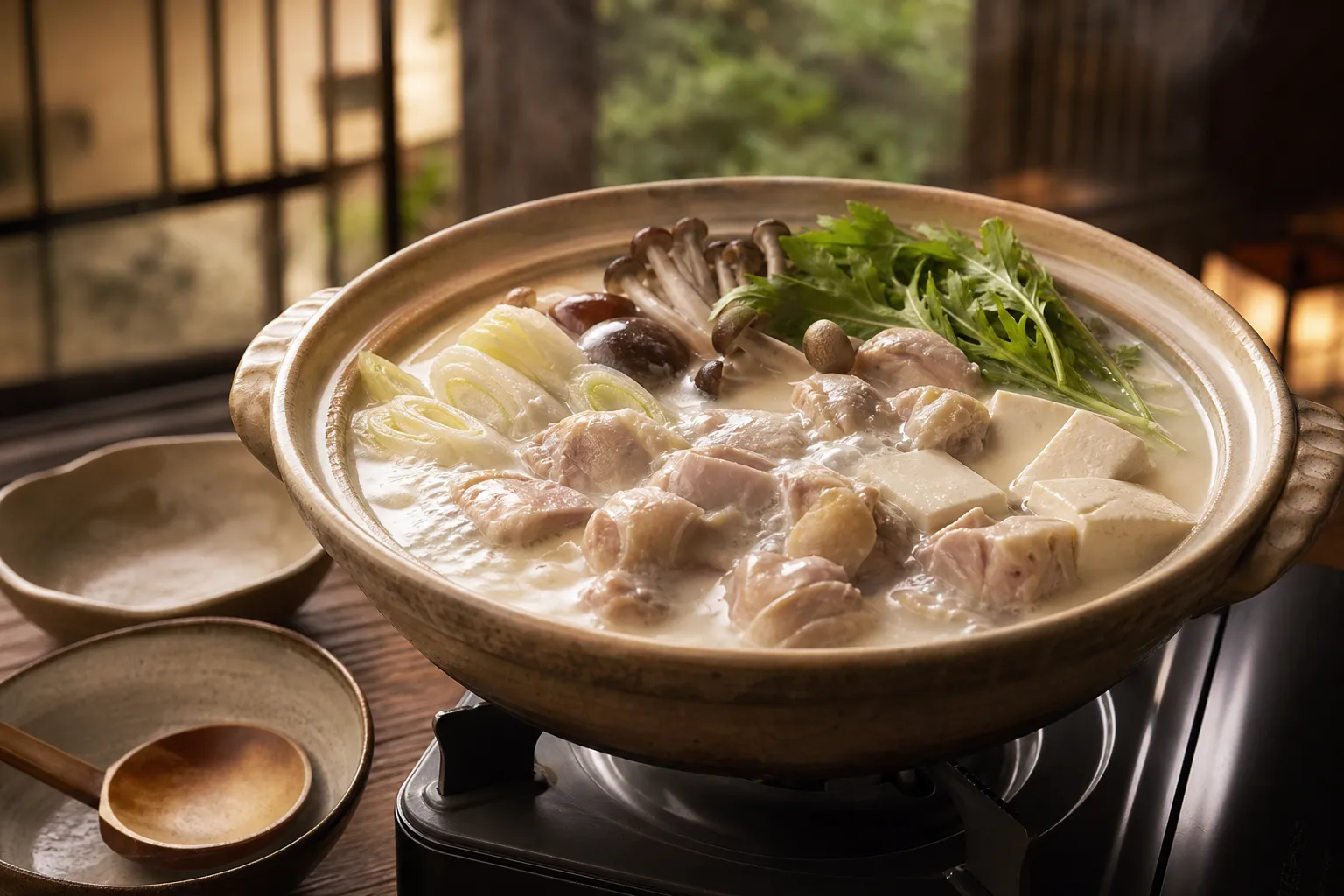
A chicken hot pot simmered in milk-enriched dashi until the broth turns creamy and white — a mild, warming nabe from Nara's ancient Asuka region that tastes like a 1,300-year-old dairy experiment finally paying off.
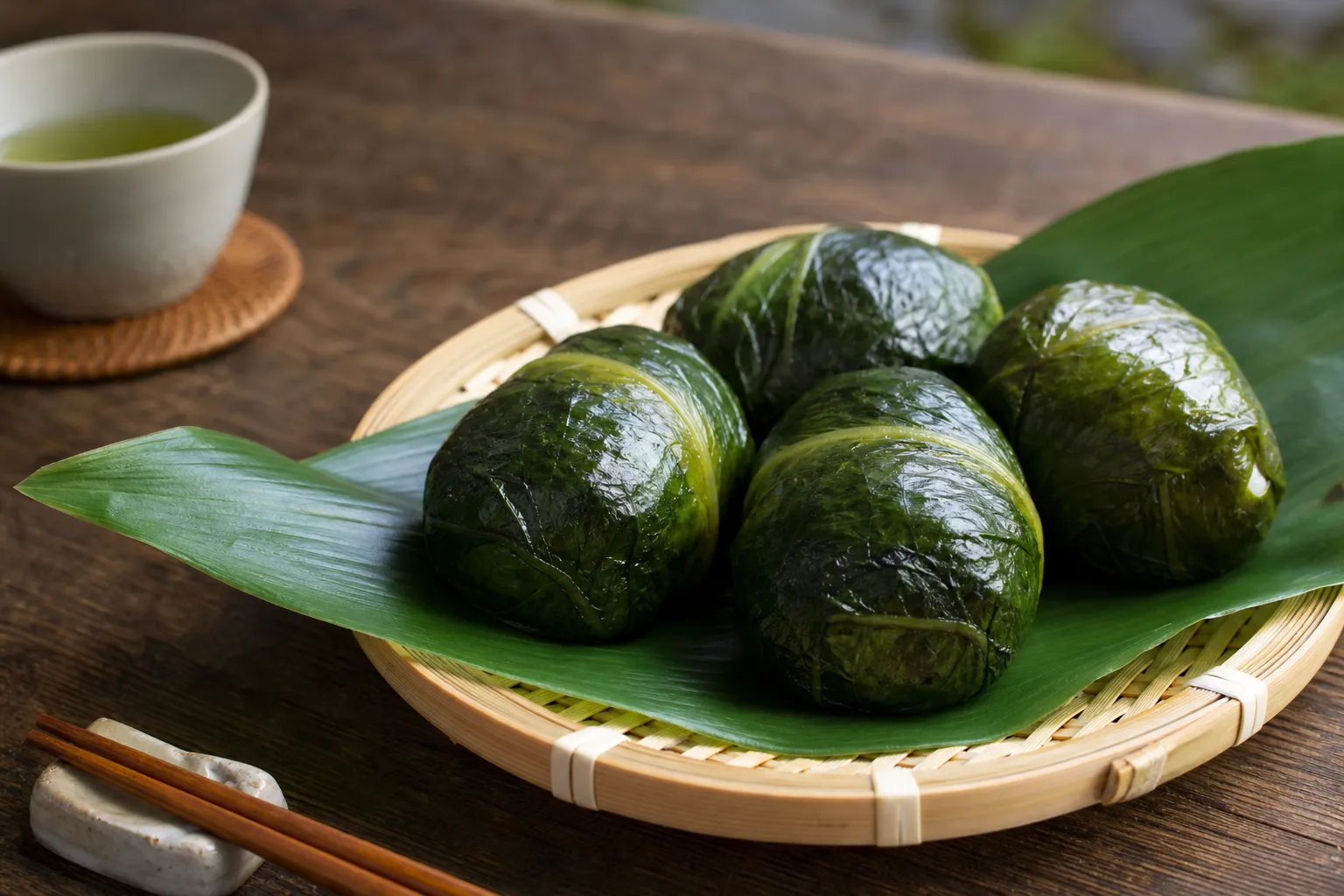
A rice ball wrapped head-to-toe in tangy pickled mustard greens, so big and good that the old story says your eyes go wide just to fit it in your mouth.
Threads of wheat so fine they barely register — then they hit the tsuyu and vanish, cool and silky, in a single slurp. Nara's Miwa is where somen was born, and it shows.
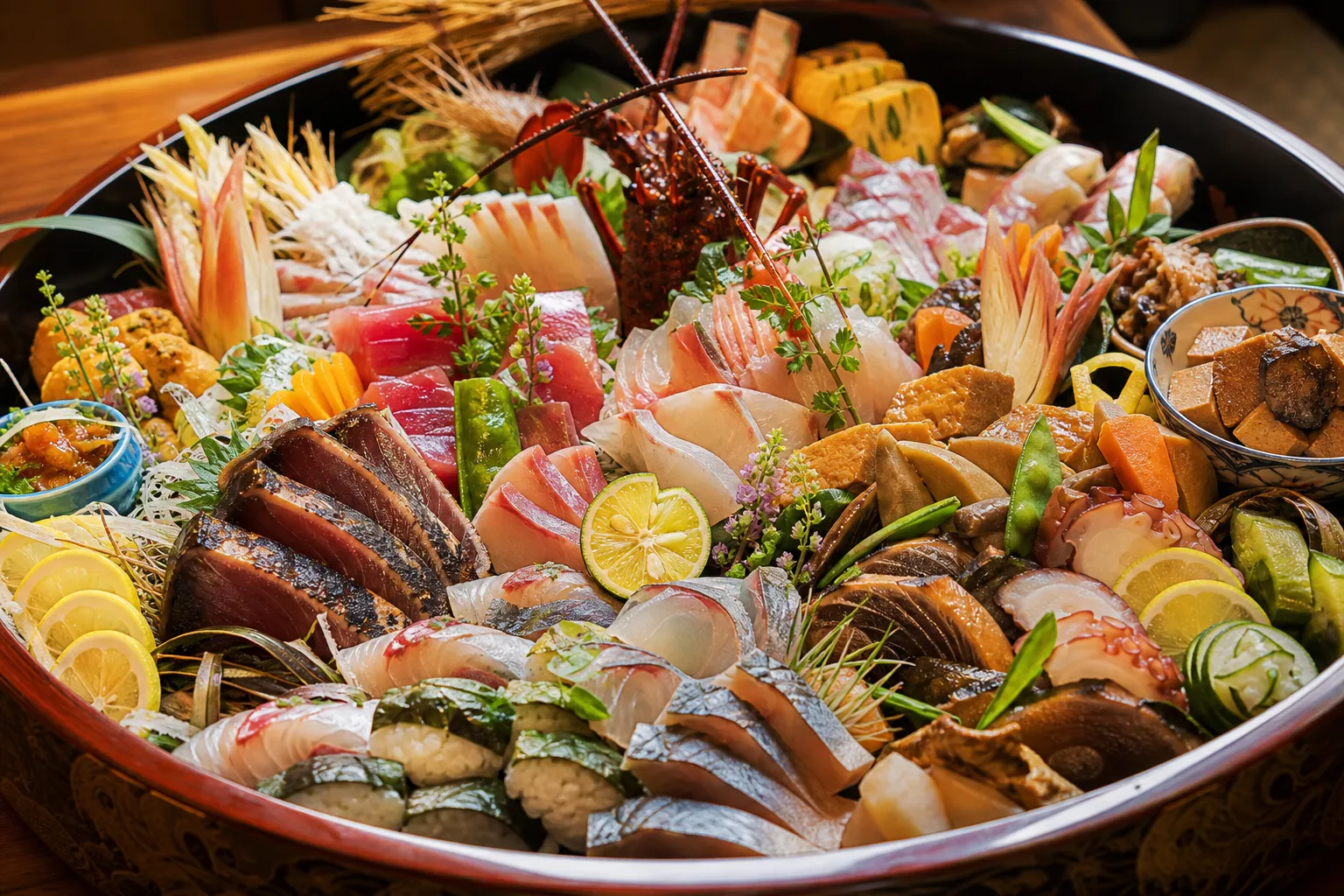
One enormous platter, piled sky-high with sashimi, sushi, seared bonito, simmered dishes and fruit — Kochi's answer to the party, where nobody serves you and everybody digs in.
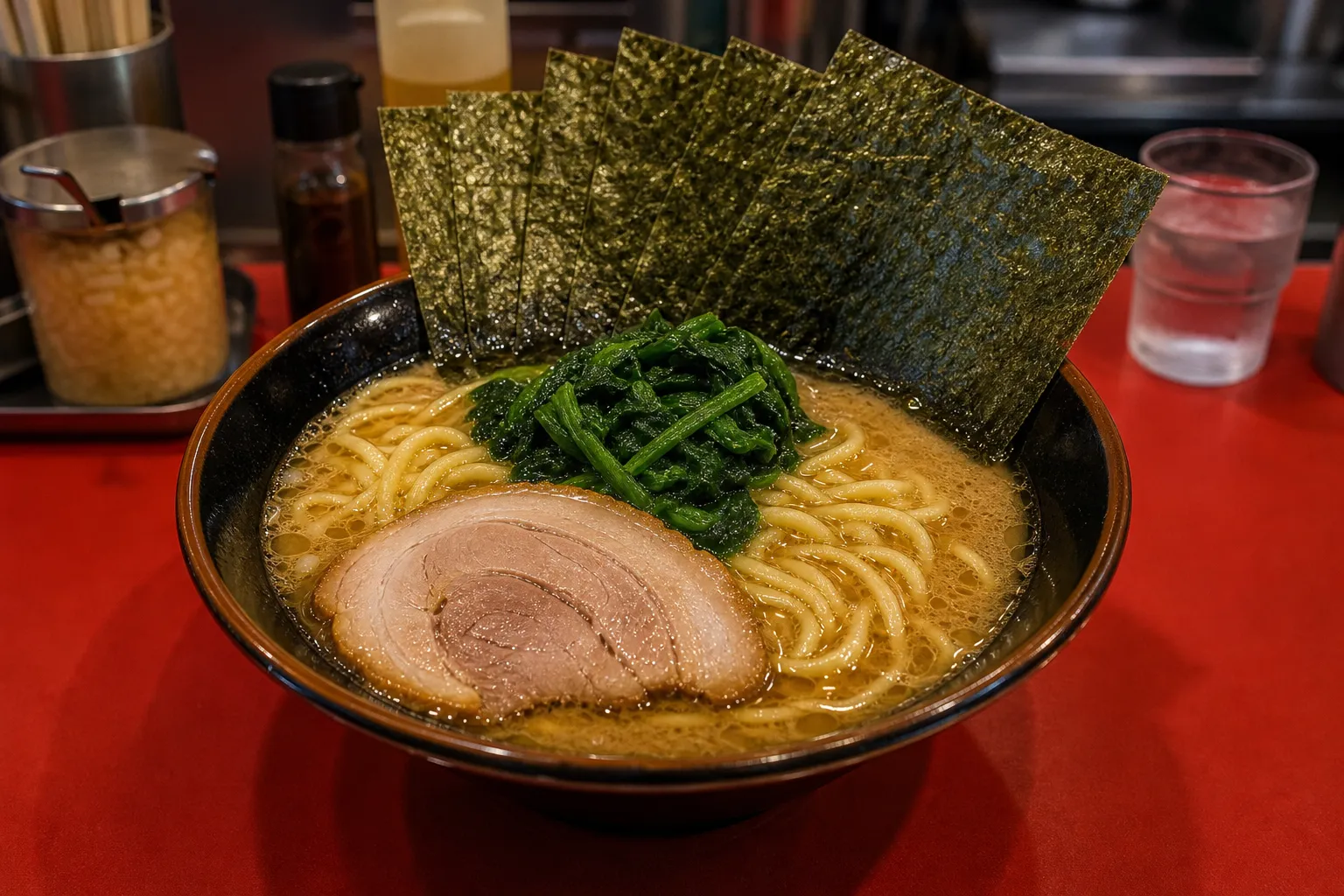
Thick noodles in a pork-and-soy powerhouse, crowned with spinach and giant sheets of nori — and a bowl of white rice standing by as its secret weapon. Yokohama's build-it-your-way monster.
It fell apart under my chopsticks before I'd even applied pressure — no bite required, just a soft collapse into something between fish and silk.
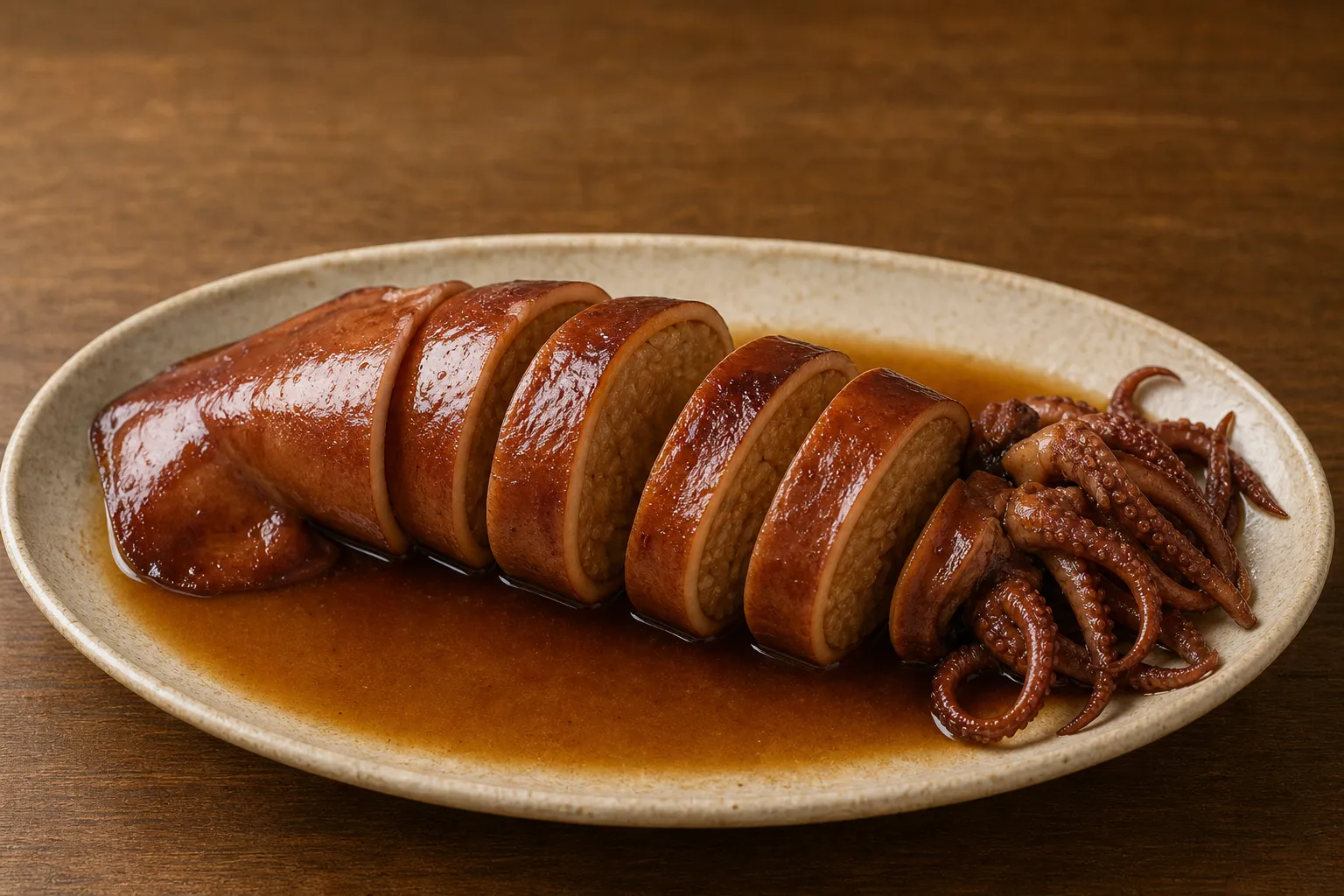
A whole squid, stuffed to bursting with sweet-soy rice and sliced into glossy rings — proof that the best meal in the station might be the cheap one in the box.
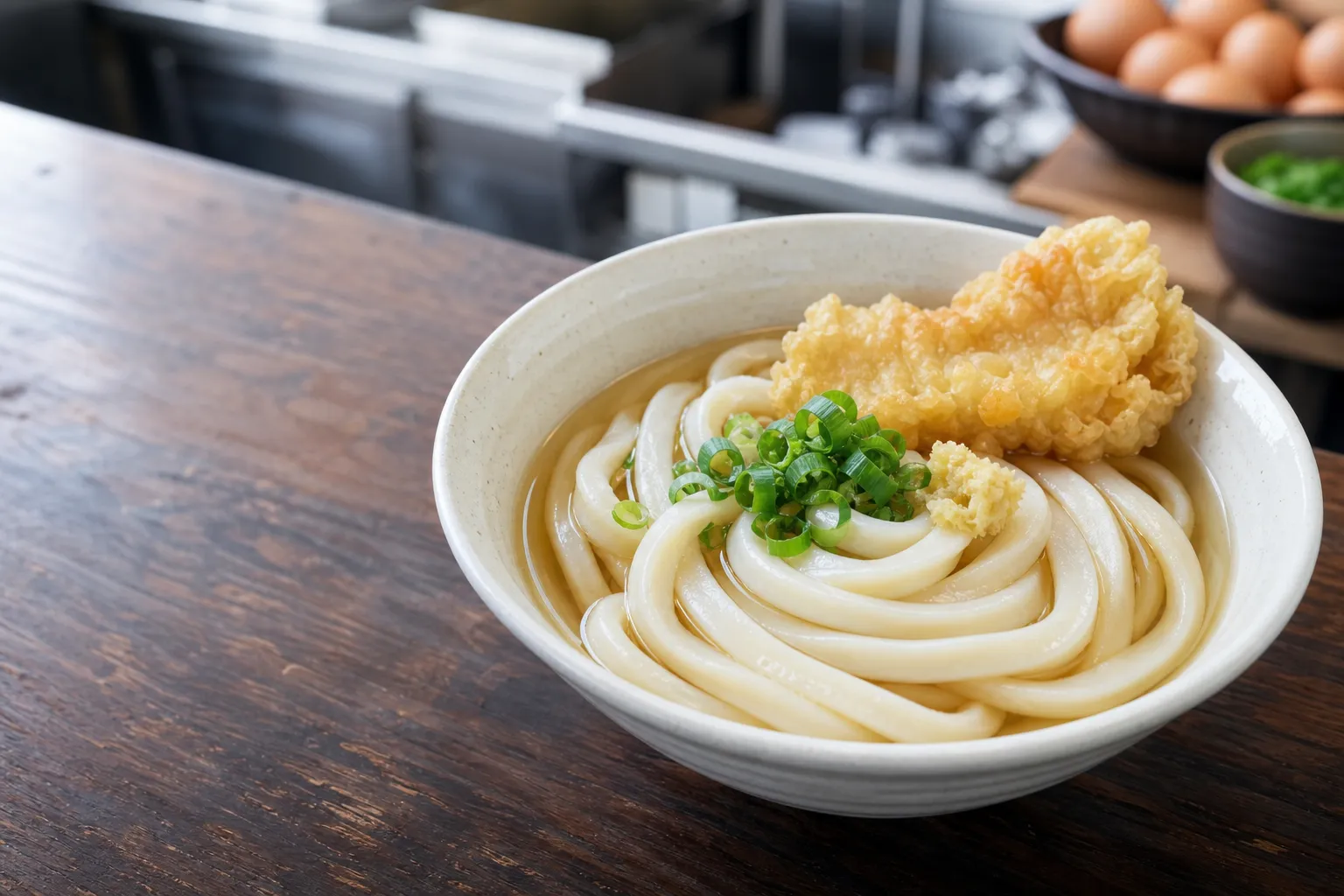
Thick, square-edged, defiantly chewy udon in a clear dashi — so good that a whole prefecture rebranded itself 'Udon Prefecture.' You grab a tray, you slurp, you leave changed.
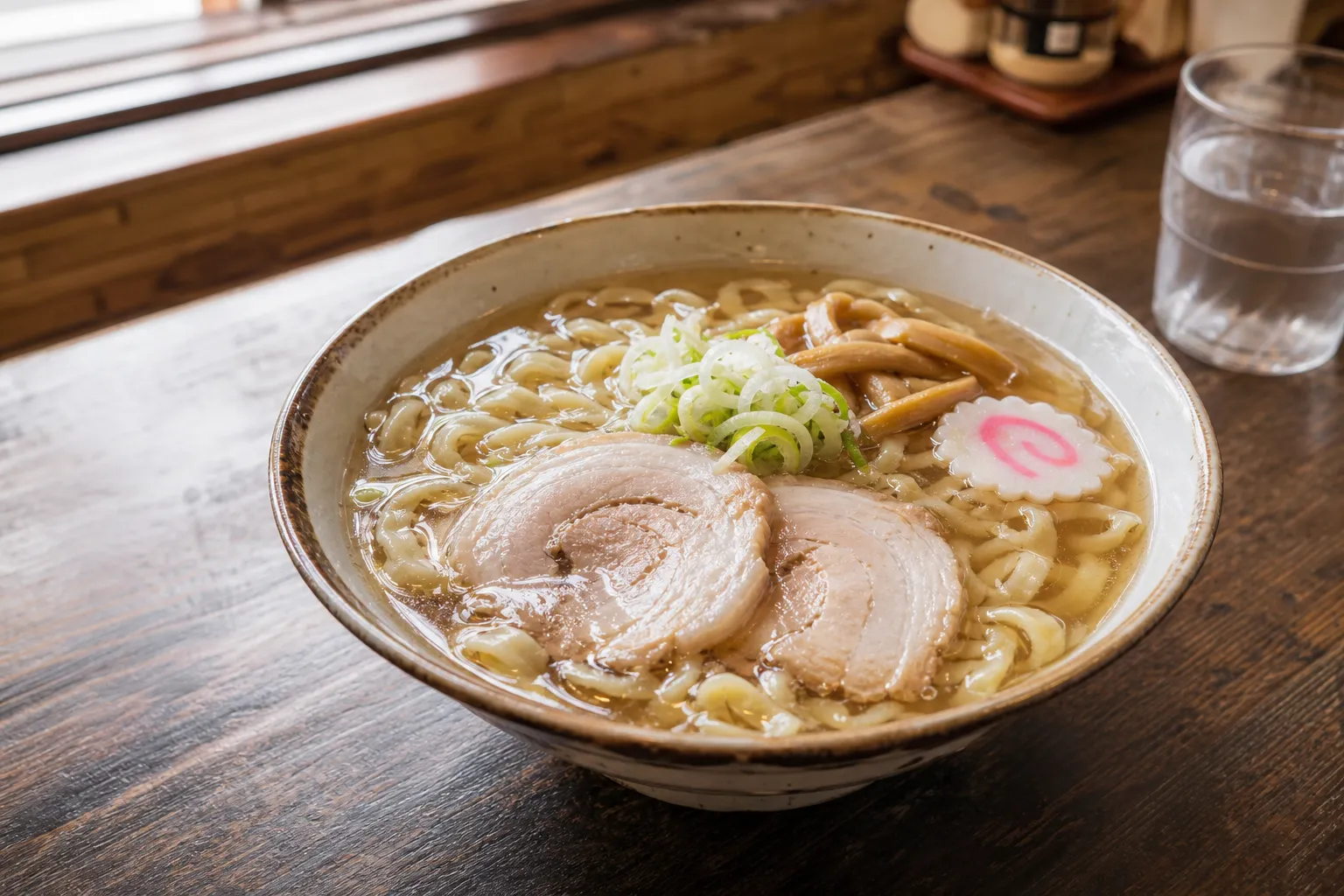
Flat, wide, curly noodles in a clear soy broth so clean you can see the bottom of the bowl — and a town so obsessed it eats ramen for breakfast. This is comfort with the volume turned down, on purpose.
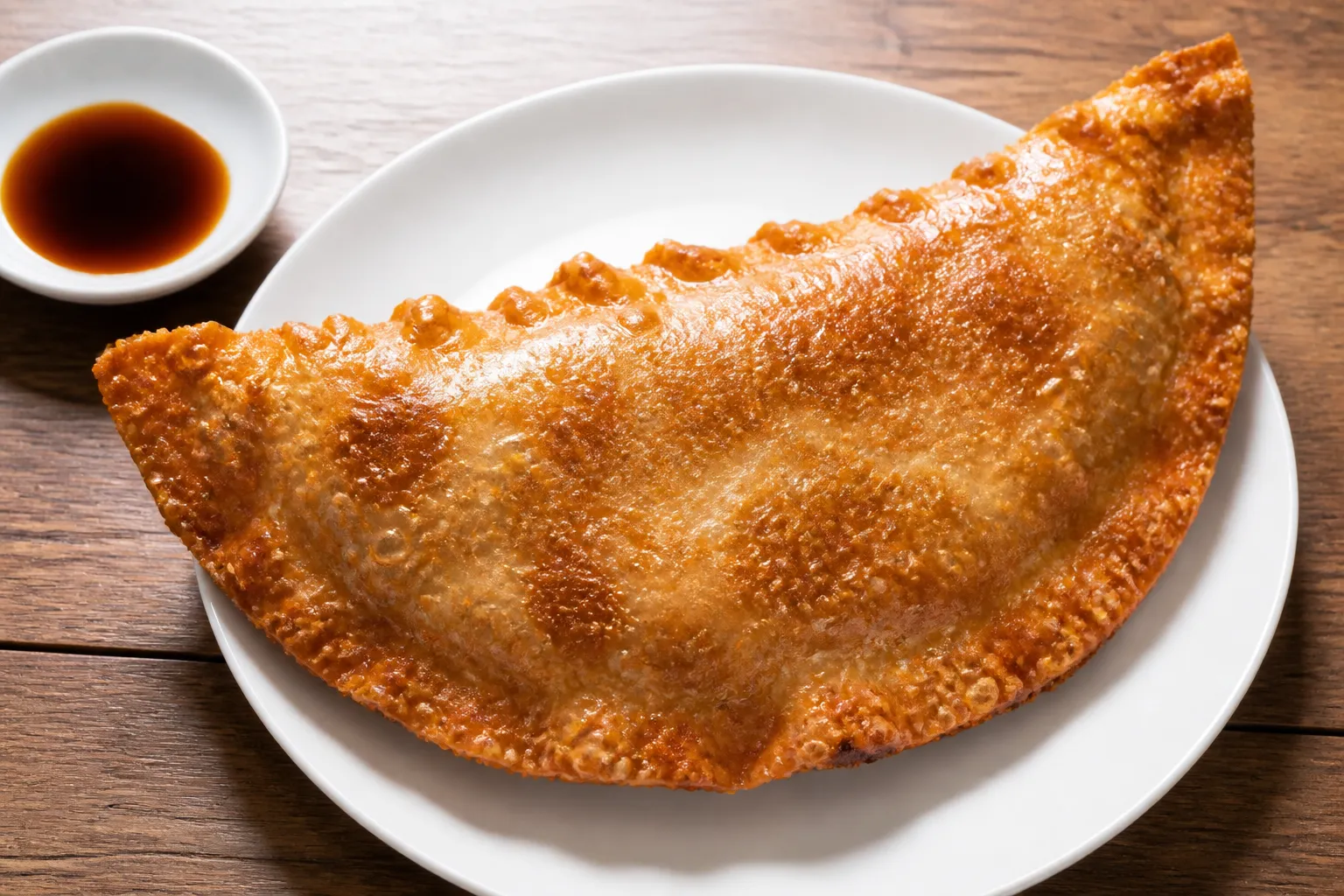
Japan's biggest gyoza. Fifteen centimeters across. Fried until the skin shatters. One piece is a meal. Tsu, Mie Prefecture's finest contribution to the ongoing debate about what gyoza can be.
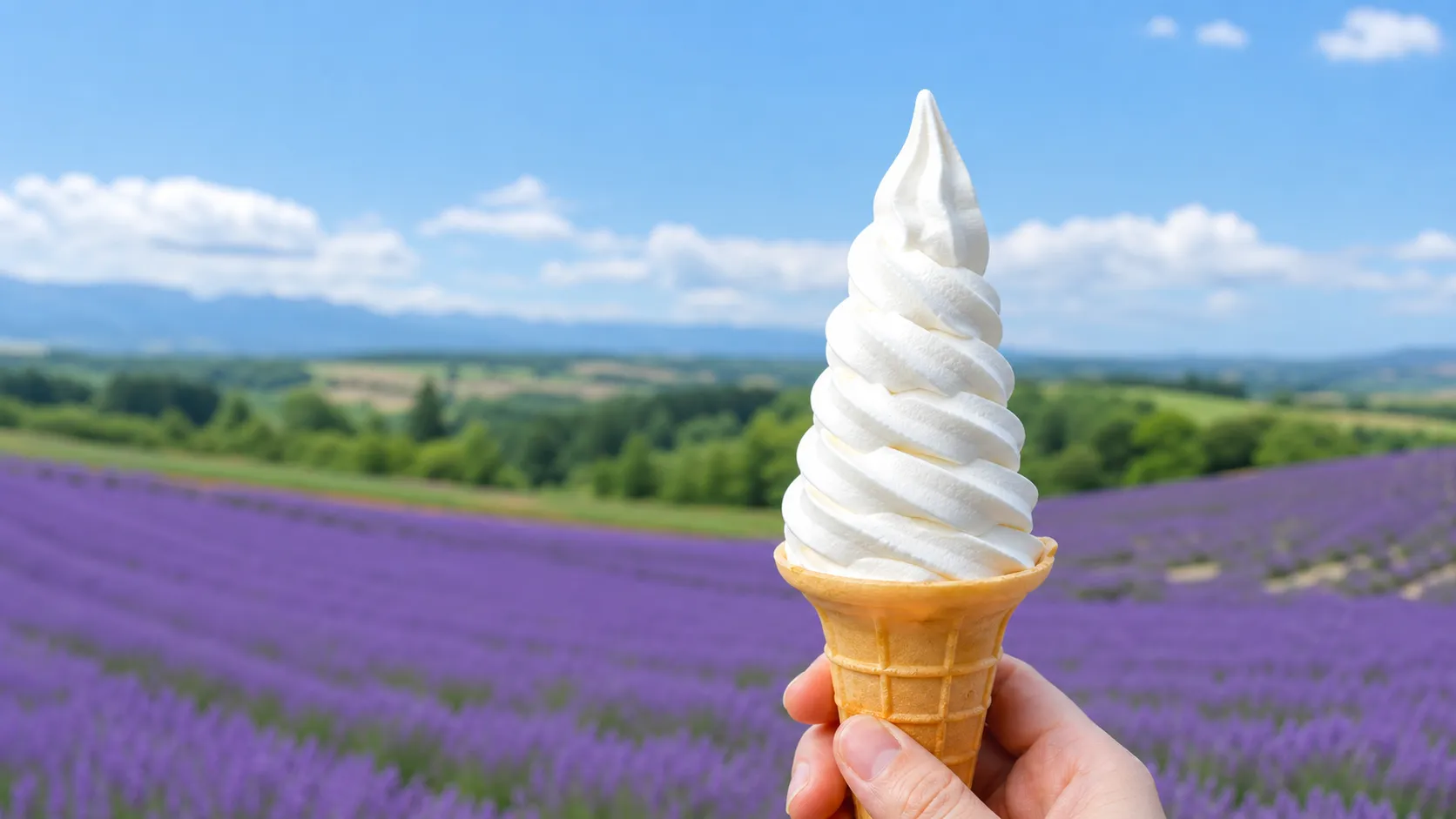
Japan's beloved soft serve — silky, towering swirls in flavors you won't find anywhere else, often made with famous local milk or regional specialties. A travel snack and a regional treasure hunt.
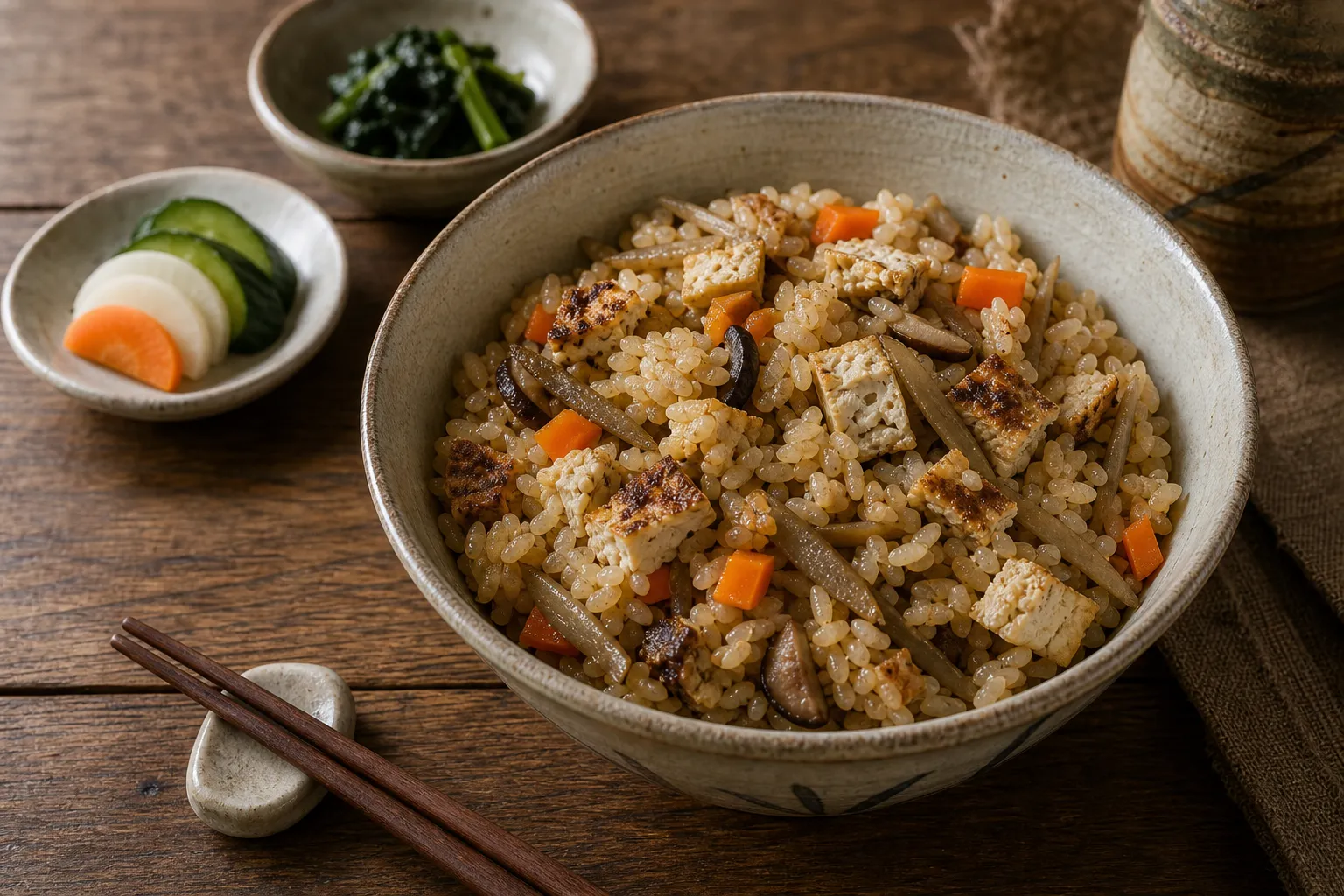
Rice named after thunder — because the tofu crackles like a storm when it hits the hot pan. Crumbled grilled tofu, carrot and burdock cooked right into the rice: humble Tottori country food with the best name in Japan.
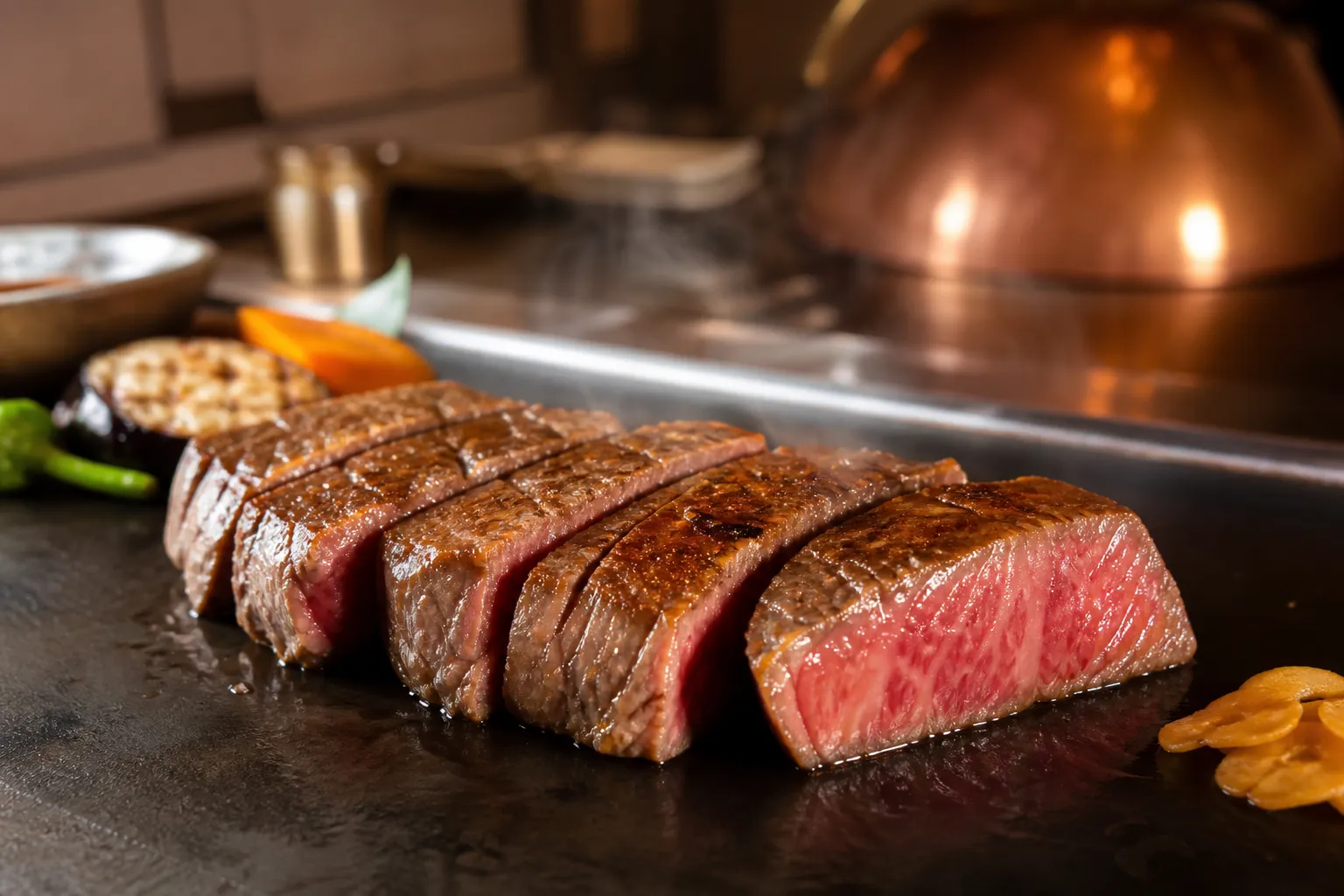
Marbled Kyushu wagyu seared on a screaming-hot iron plate until the fat crackles and the crust goes brown — Saga's strictly-graded beef, and the best steak reason to stop in Japan's quietest prefecture.
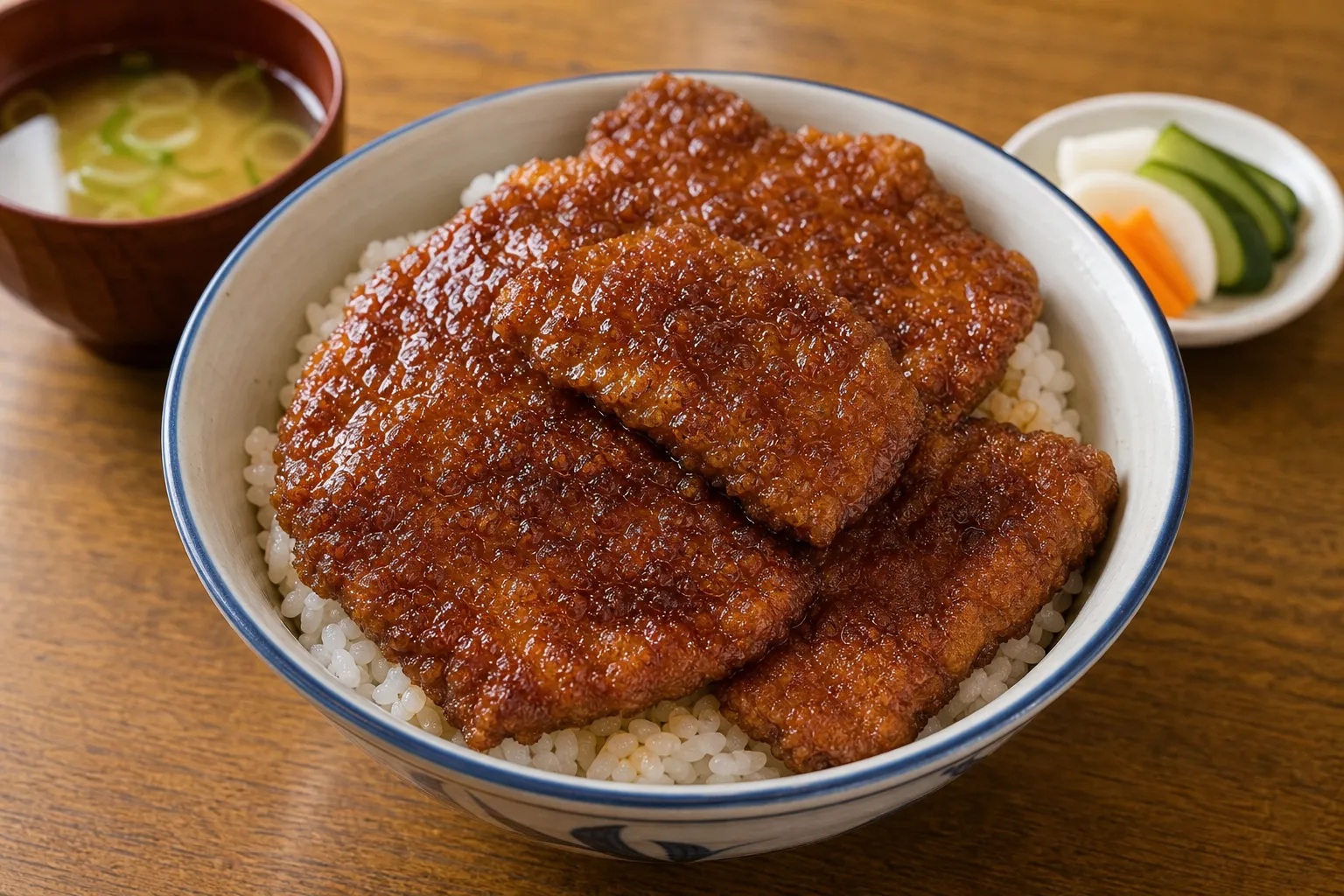
No egg, no fuss, no soggy simmering — just crisp thin cutlets flash-dunked in sweet soy tare and stacked on rice. Niigata took katsudon and stripped it down to the good part.
A whole plate of pan-fried dumplings with lacquered, crackle-crisp bottoms — in the city that eats more gyoza than anywhere else in Japan and has zero shame about it.
Grilled white fish pounded into miso, thinned with dashi, and poured cold over hot rice — a Uwajima fisherman's trick that turns a bowl of rice into the most savory, slurpable thing on the table.
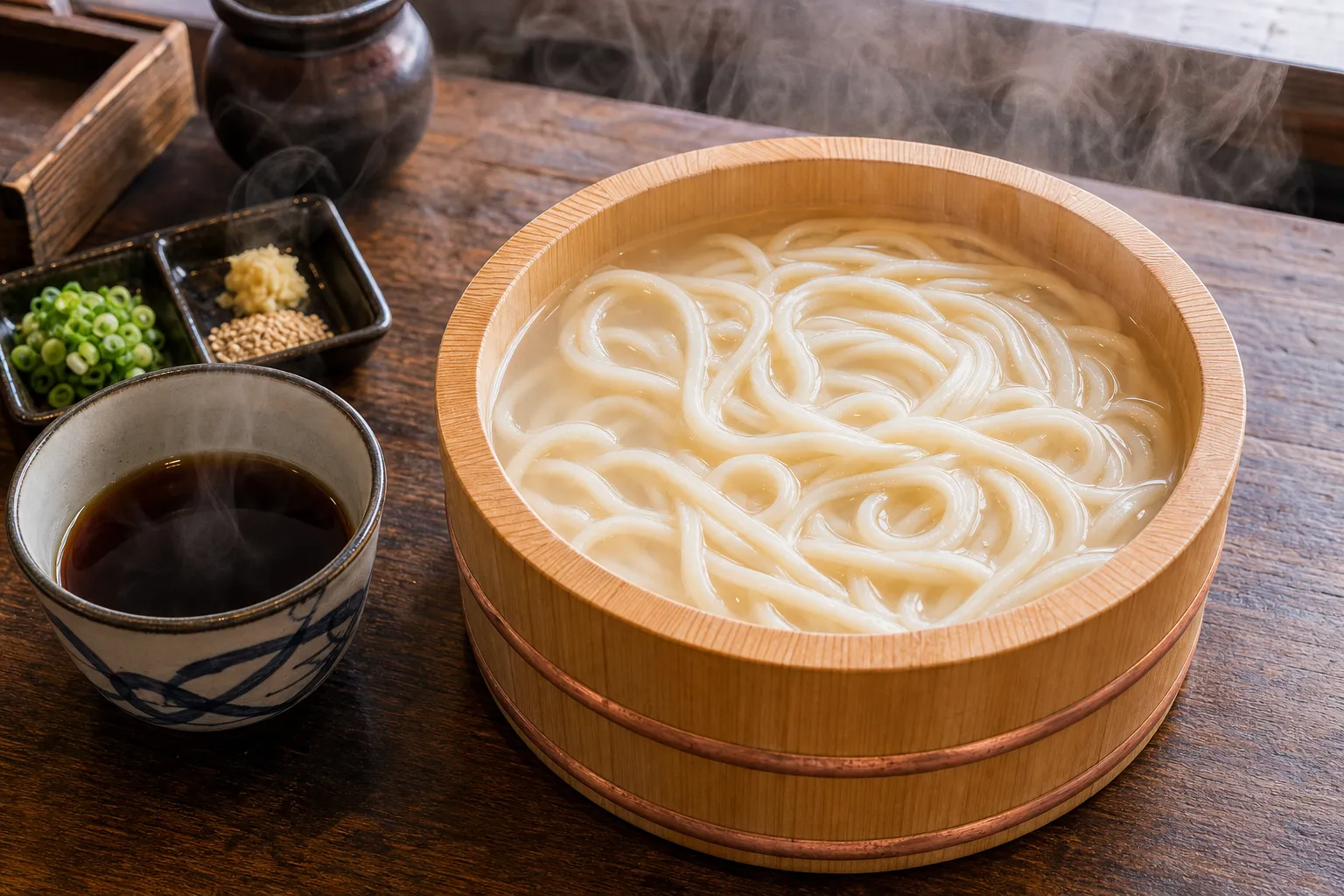
Straight from the pot to your tub, still swimming in its own cloudy cooking water, steam curling up — no cold rinse, no soup, nothing hiding the noodle. Kagawa serves udon at its softest, warmest, most naked, and it's a revelation.
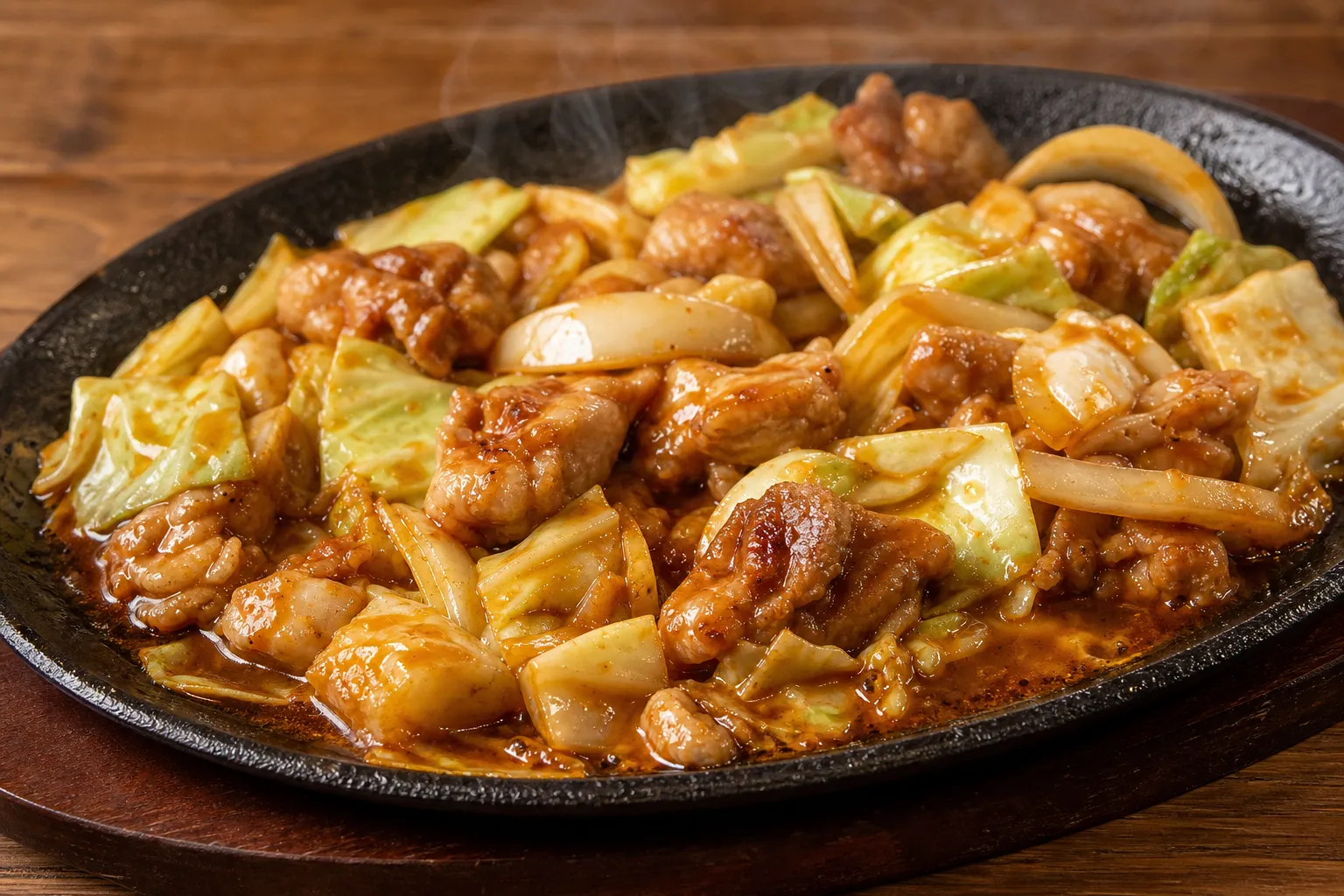
Chicken and cabbage hit a screaming-hot iron plate slathered in miso, and the whole table leans in — this is food you cook together, argue over, and fight for the last piece of.
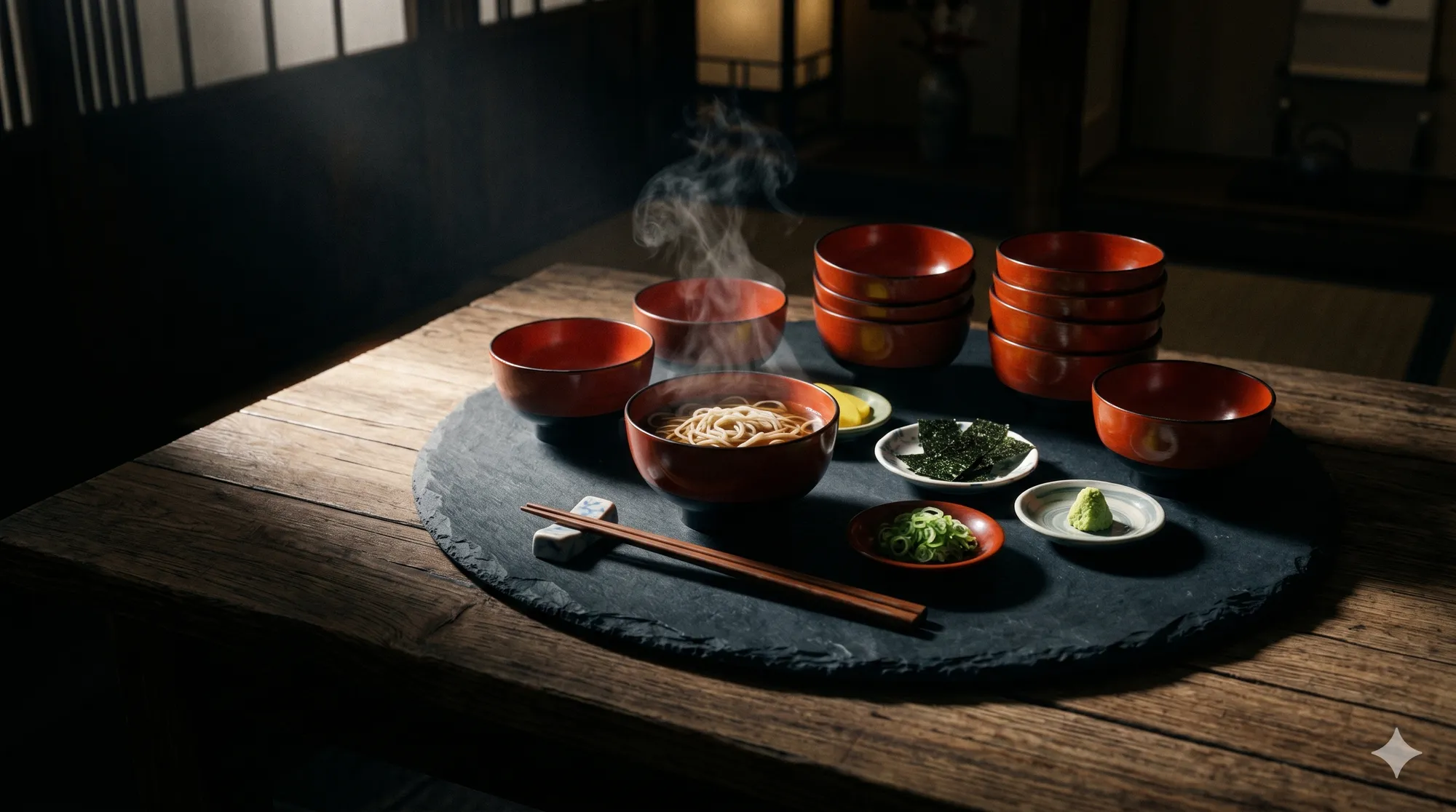
A tiny red lacquer bowl of soup that a whole region reaches for whenever something matters — weddings, New Year, the moments you want to remember.
A whole bowl piled with hundreds of tiny, ghost-pink shrimp so delicate they barely hold their shape — and then they dissolve into pure sweetness before you can even chew.
One plate, eight or nine kinds of seafood, and not a single grain of rice left uncovered — Okayama basically dared its neighbors to out-decorate this and nobody has.
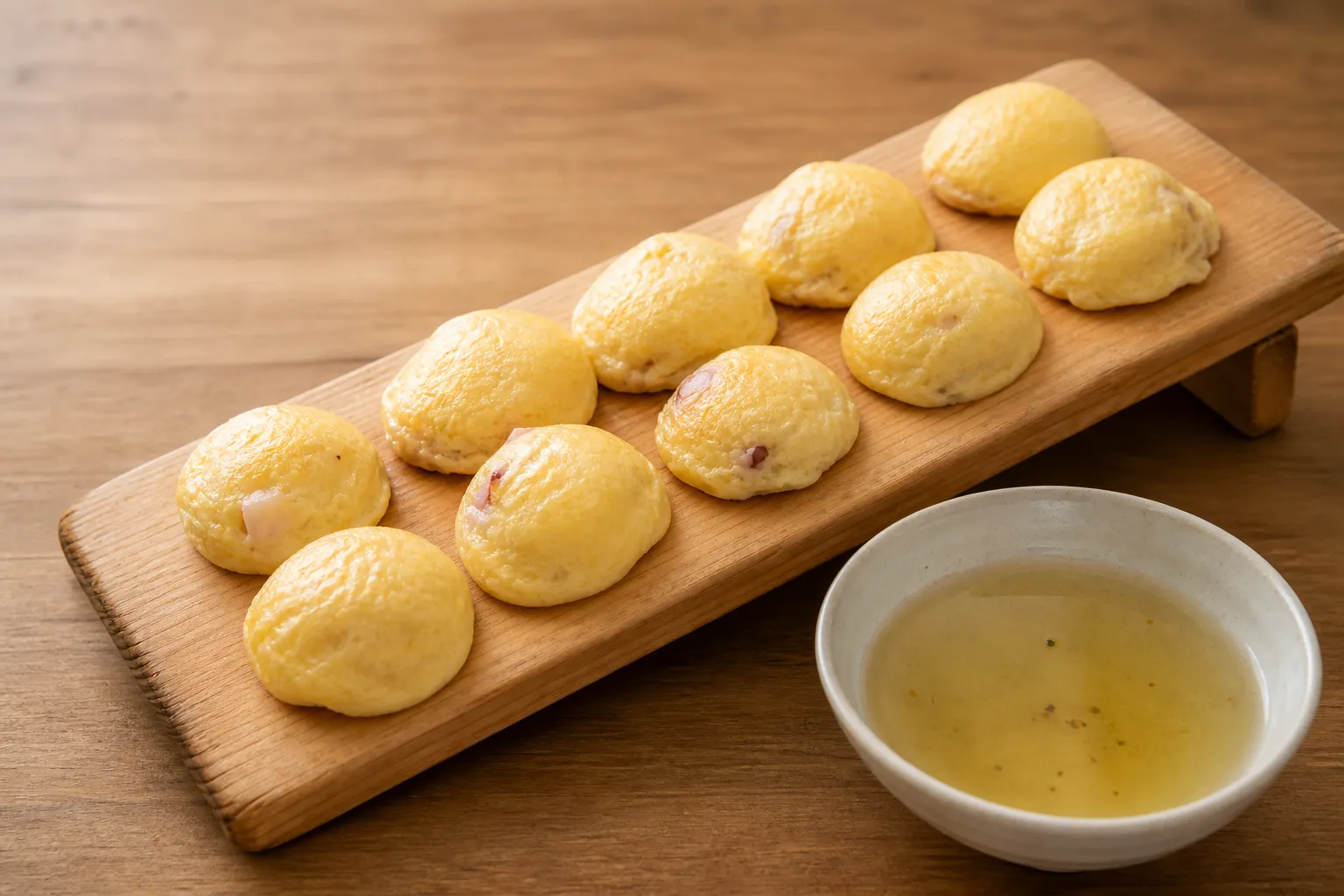
Imagine takoyaki, but so soft it barely holds together — pale, eggy, wobbling on a wooden board, and dunked into a bowl of warm dashi instead of drowned in sauce. Akashi's gentle original.
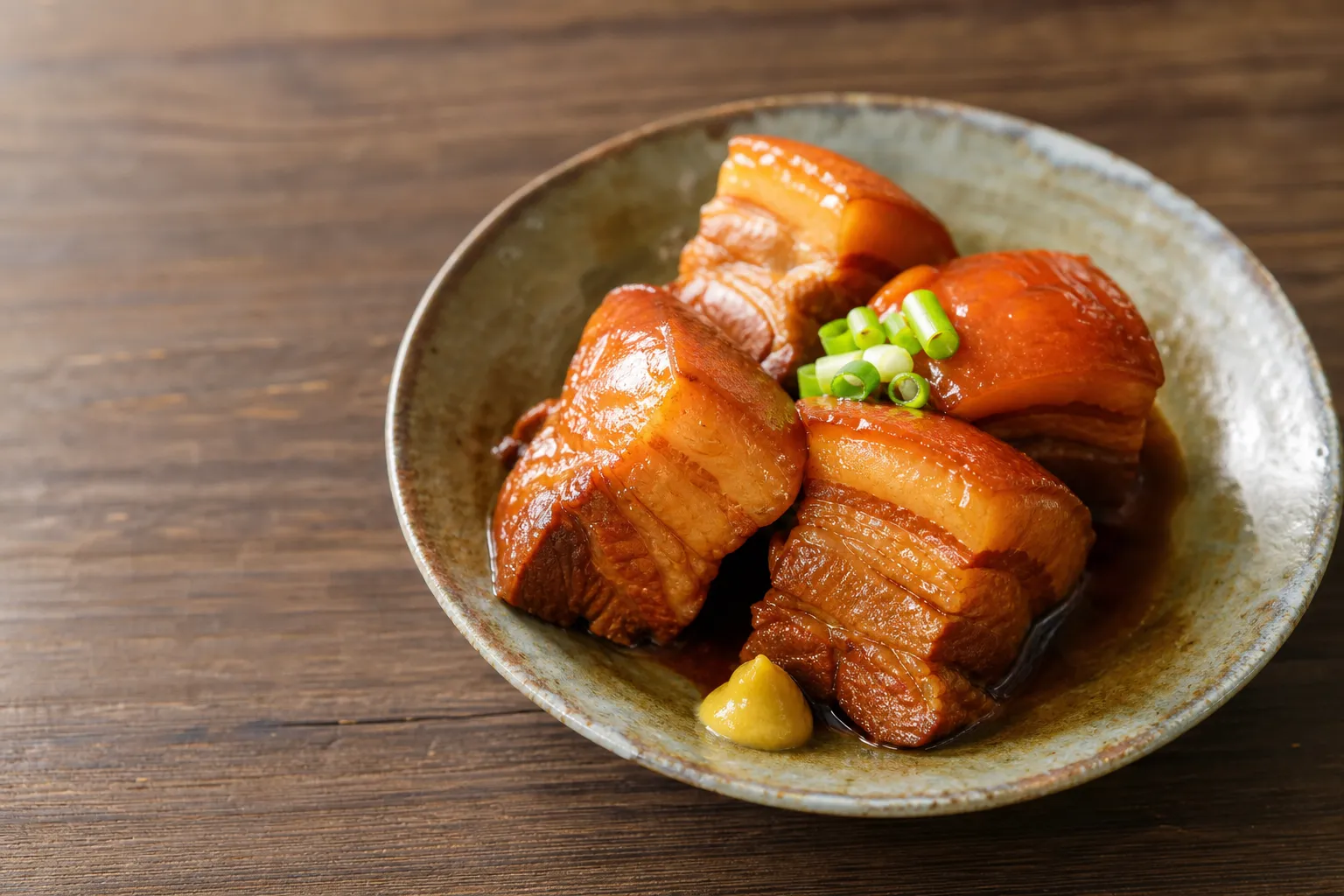
It didn't need a knife. The chopsticks just sank through it. Okinawa's slow-braised pork belly, glossy and melting, simmered in island liquor until it barely holds together.
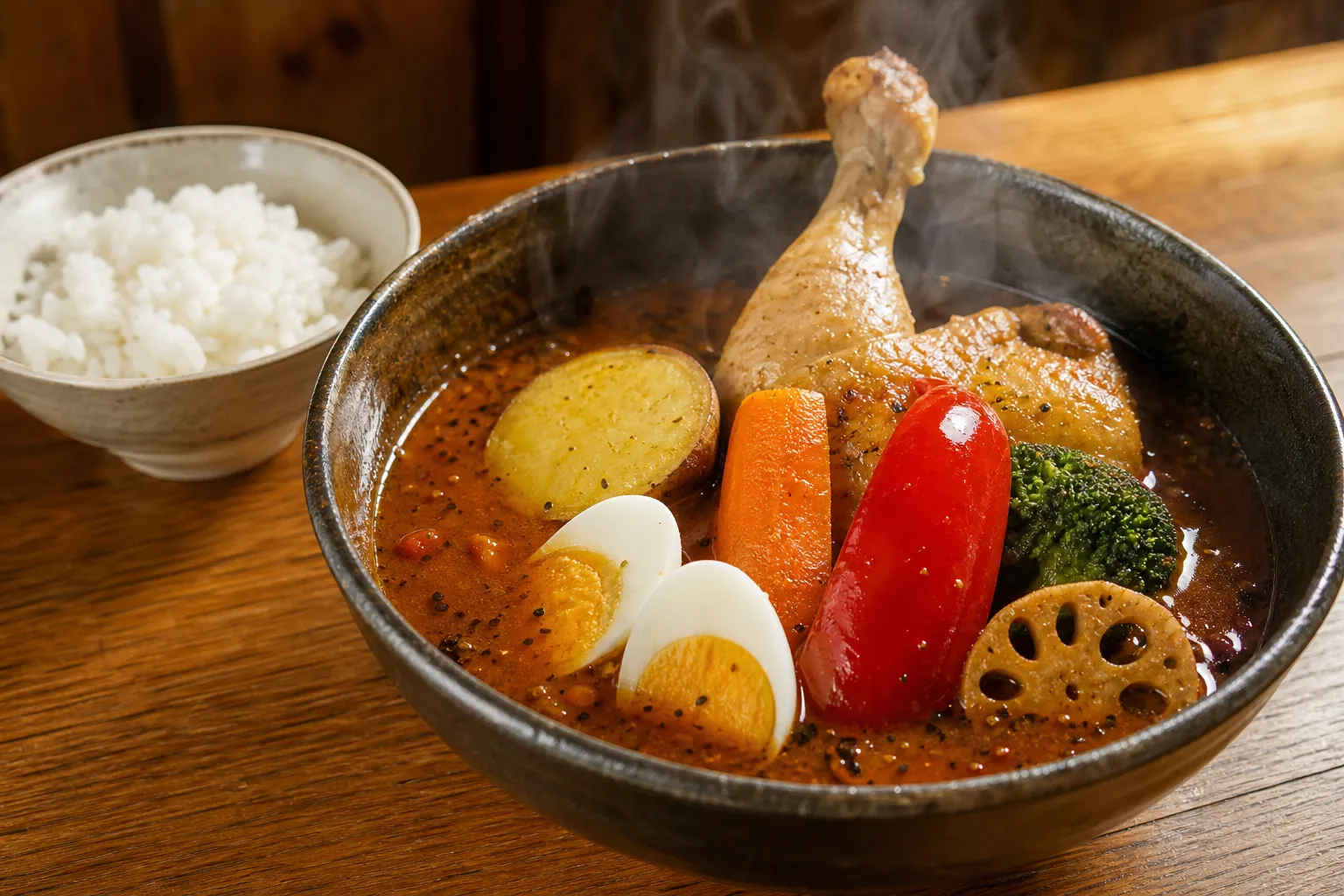
Not curry on rice. Curry as a thin, fragrant, spice-loaded soup with a whole chicken leg standing up in it. Sapporo invented this, and after one bowl in the snow you understand exactly why.
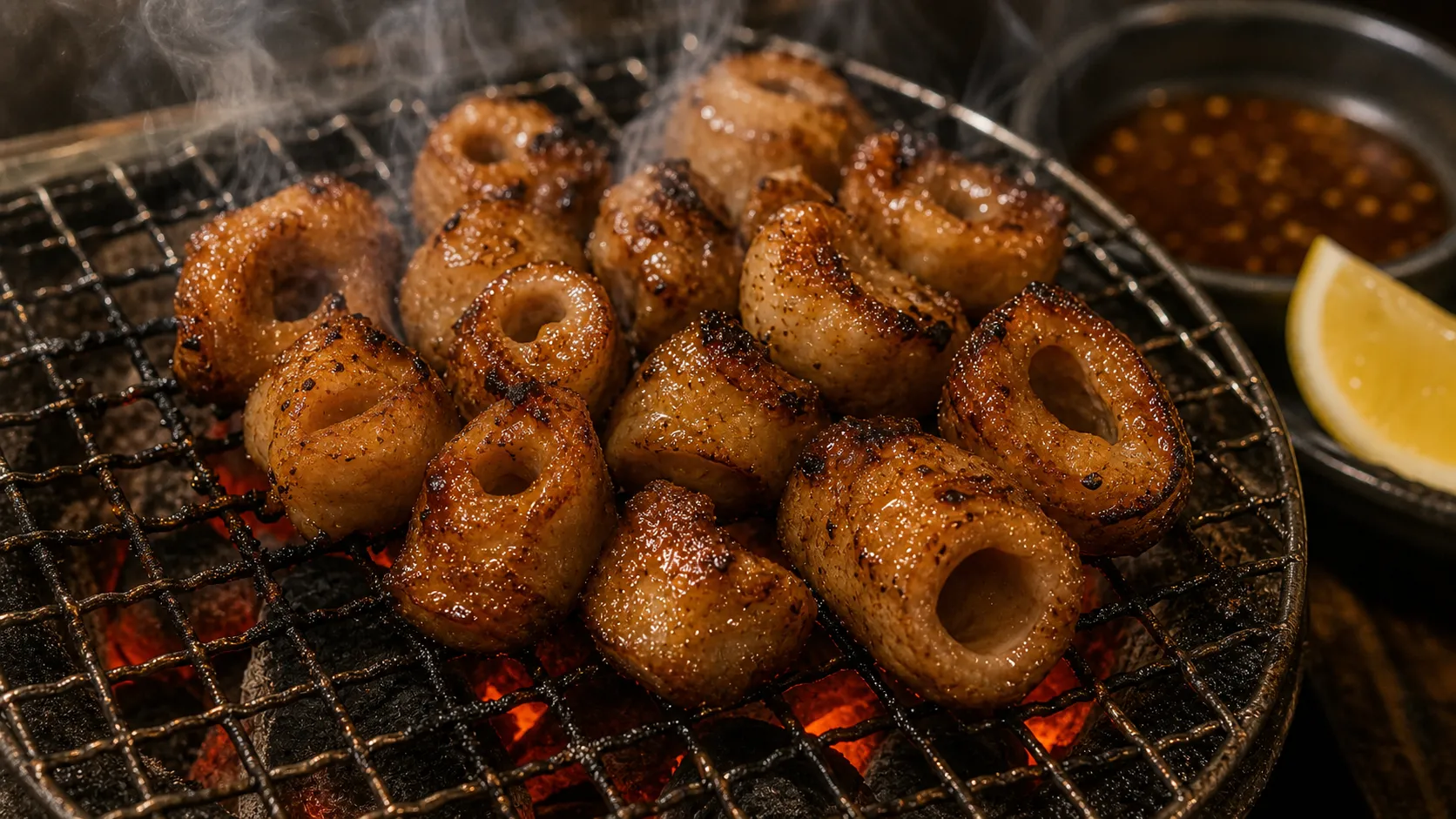
B-1 Grand Prix champion. Thick-cut pig large intestine grilled until the outside shatters and the inside goes creamy. It sounds alarming. It tastes like the best thing you've eaten all week.
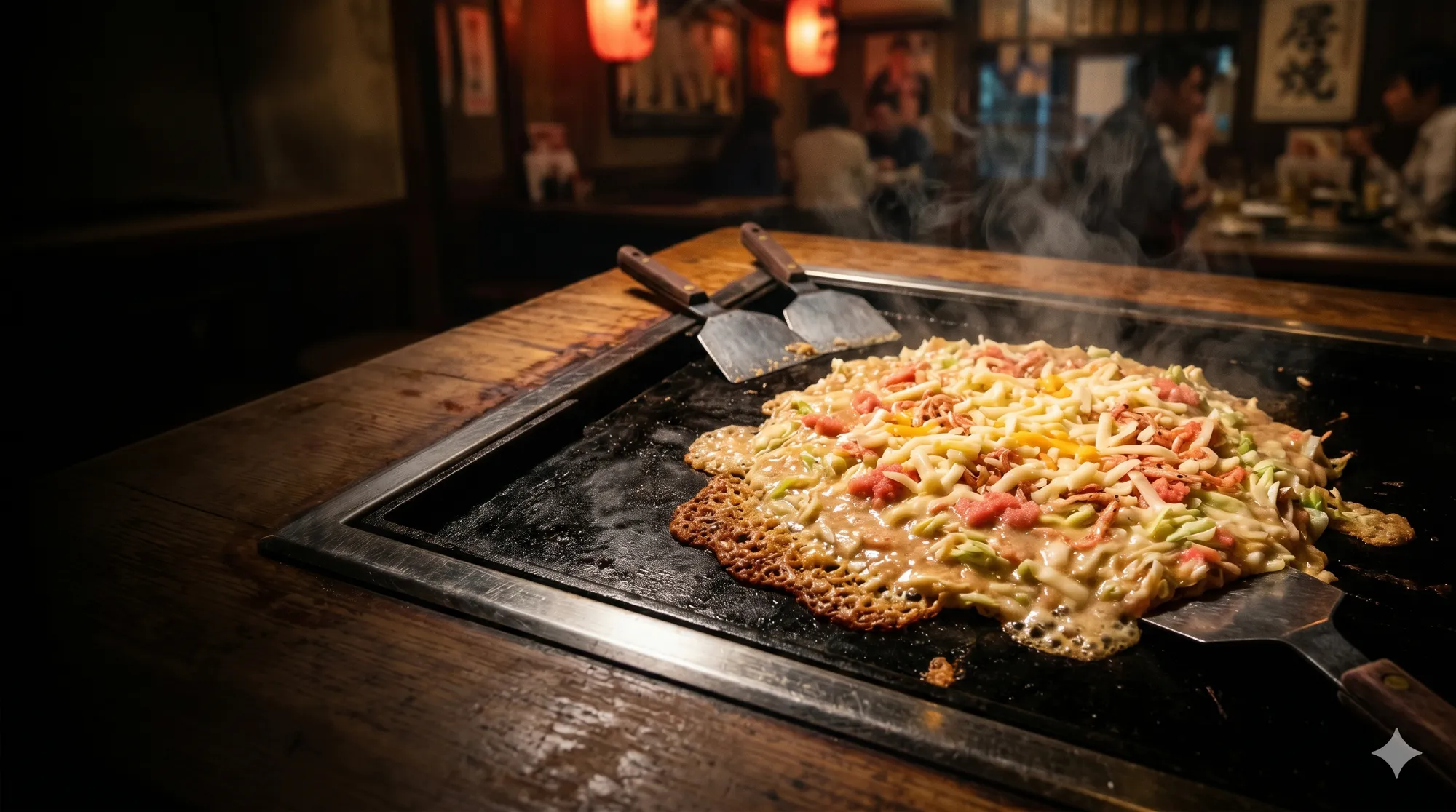
It looks like a mess. It is, gloriously, a mess. Tokyo's runny griddle-pancake is less a dish than a contact sport — and one street has dozens of shops to prove it.
Wobbly, near-zero-calorie, and somehow deeply satisfying — Gunma turns a grey mountain tuber into springy sashimi and blistered miso skewers, and I will fight for it.
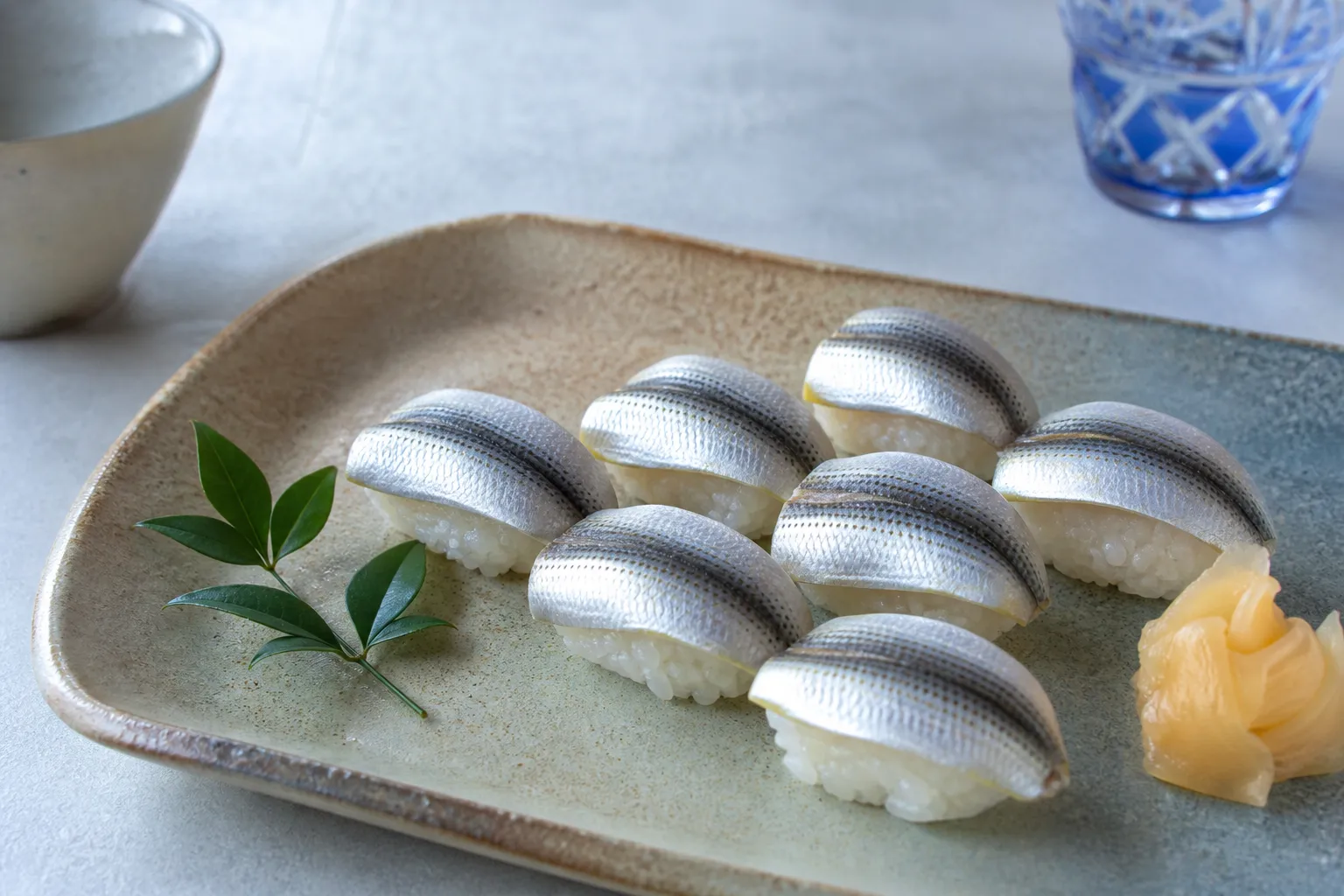
Silvery little vinegar-cured fish draped over sushi rice — so good, the Okayama legend goes, that you'll run next door to borrow more rice. The name is a joke about greed, and honestly it undersells the fish.
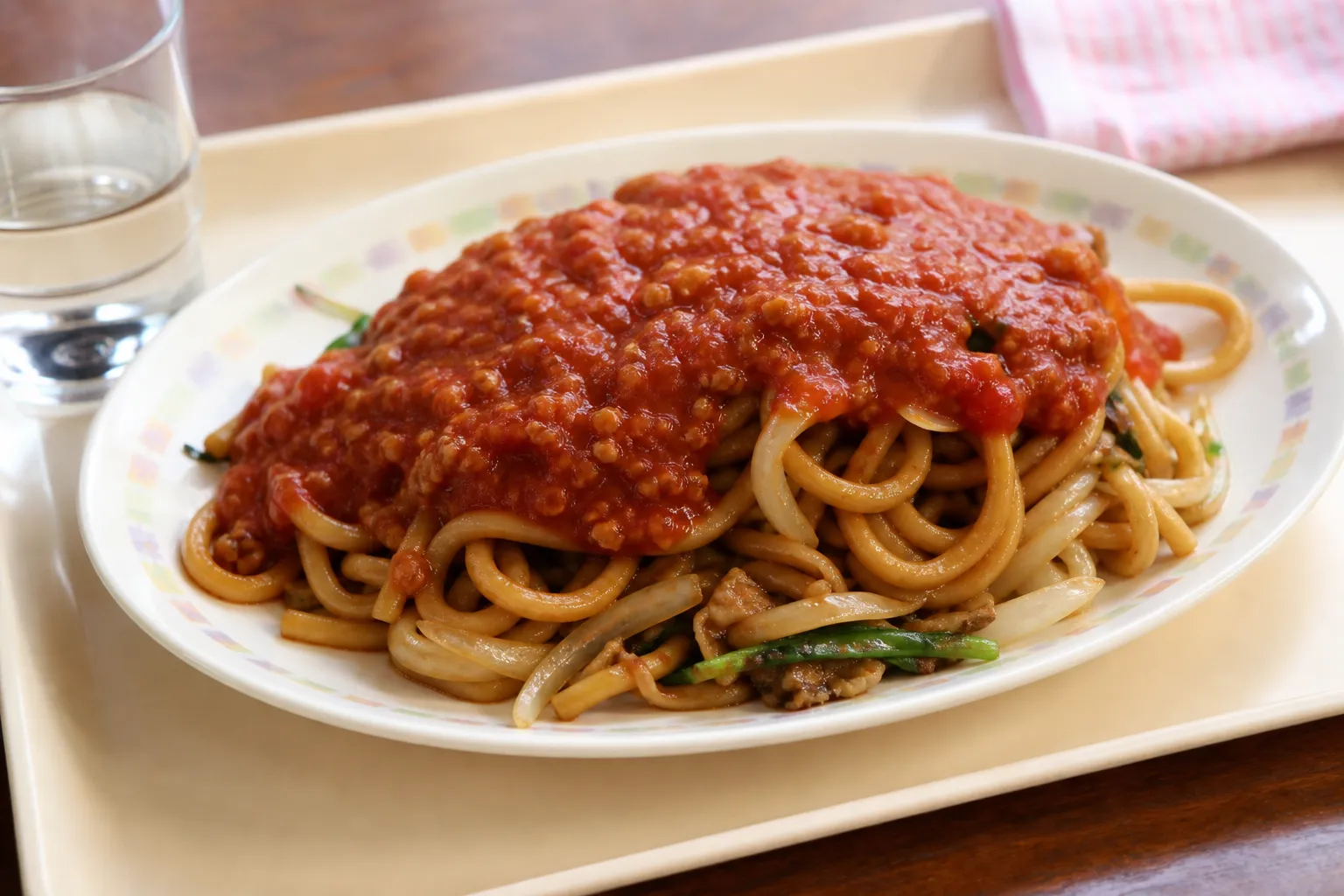
Thick, griddled chow-mein noodles crowned with a ladle of tomato meat sauce, served in a tray for pocket change — a local fast-food obsession that answers to the name 'Italian' and looks nothing like Italy.
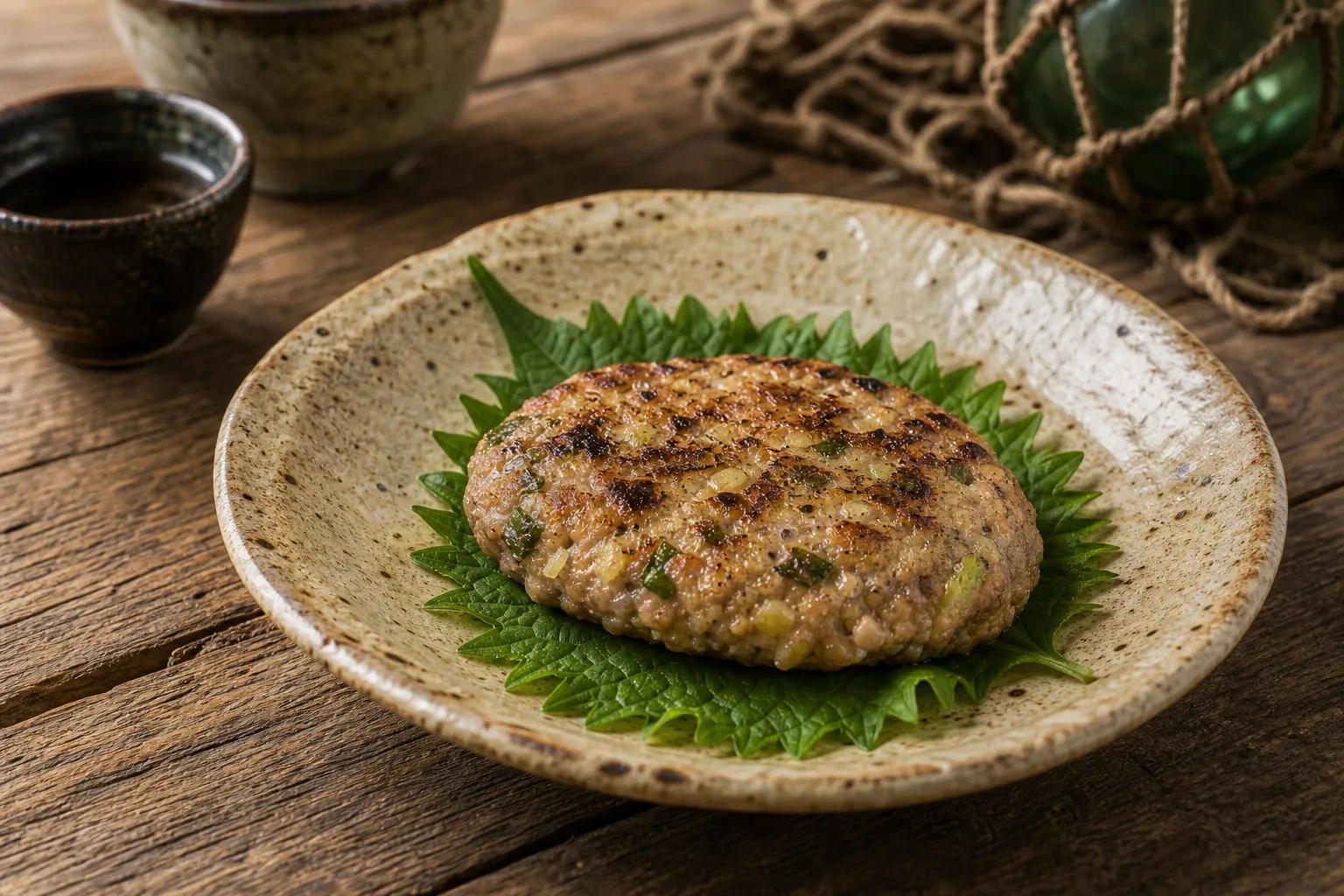
Fresh fish, pounded on a board with miso and ginger until it turns to paste, patted into a little patty on a shiso leaf, and seared until the edges go brown and the whole boat smells like dinner.
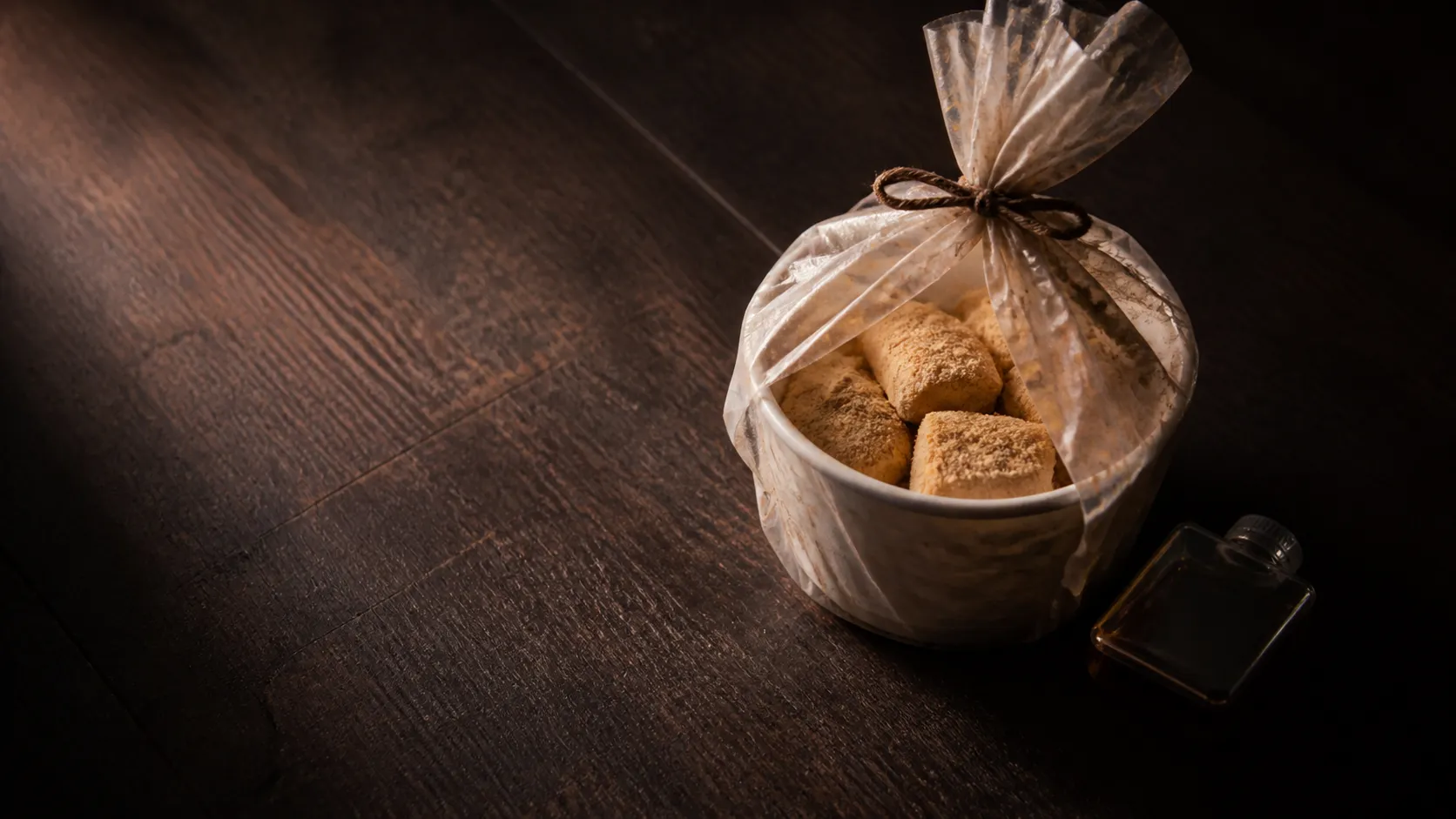
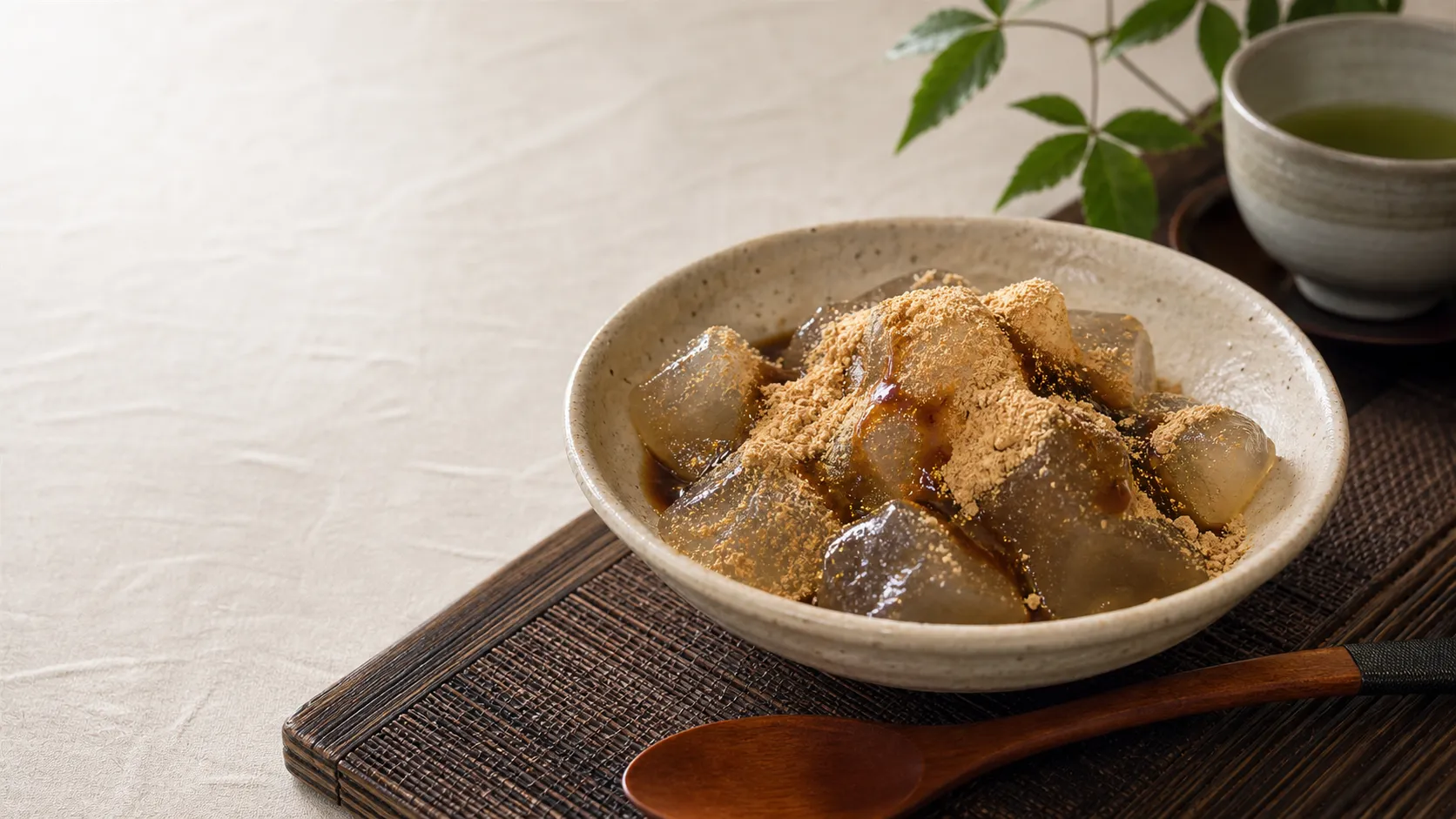
Cool, wobbling cubes of near-translucent jelly, rolled in nutty roasted soybean flour and drizzled with dark brown sugar syrup — the jiggliest, most refreshing sweet in Japan, and a texture you'll chase forever.
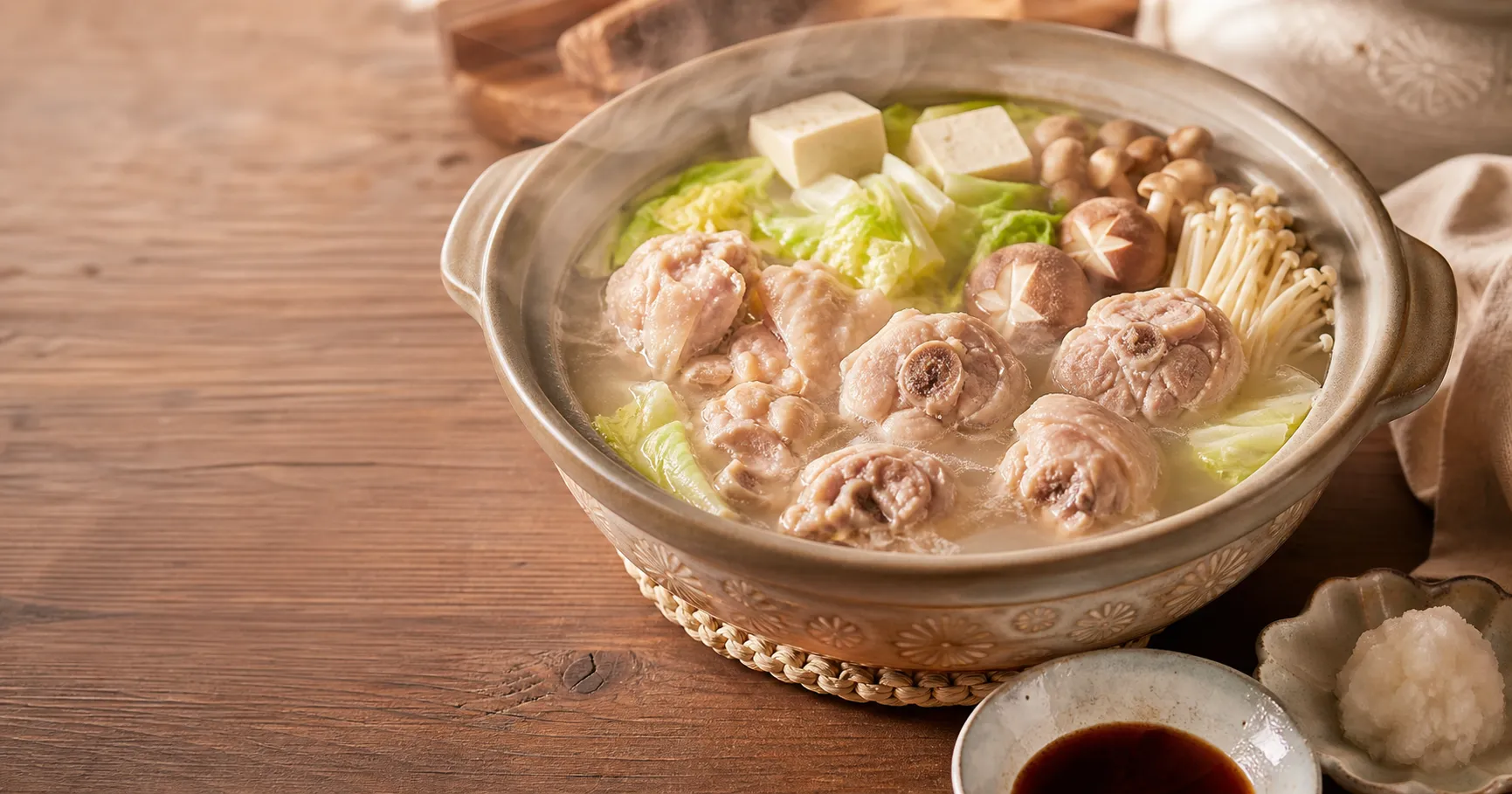
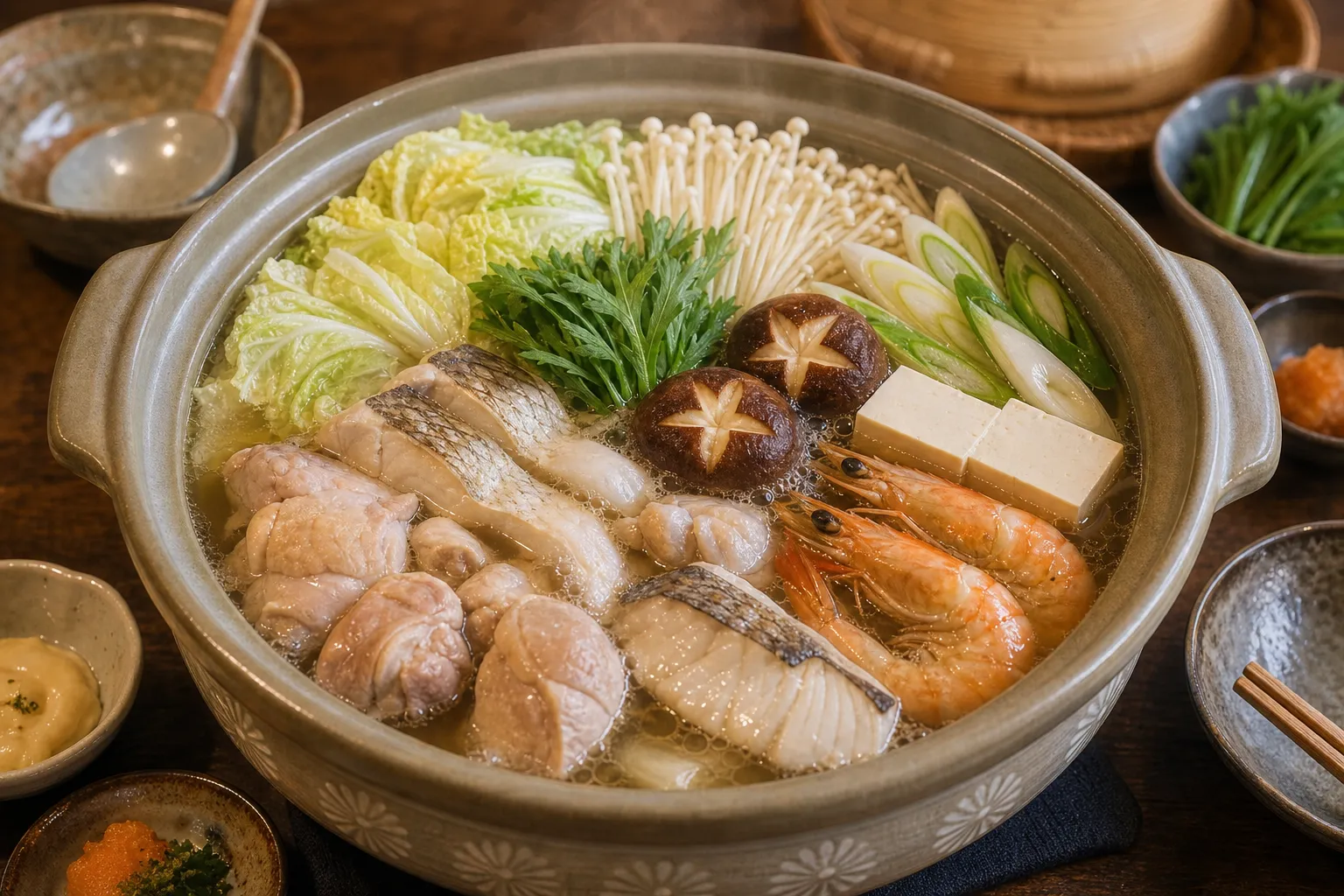
The hot pot Japan actually eats at home on cold nights — a bubbling communal pot of chicken, seafood, tofu and vegetables where the whole point is that everyone leans in, cooks together, and fights gently over the last piece.
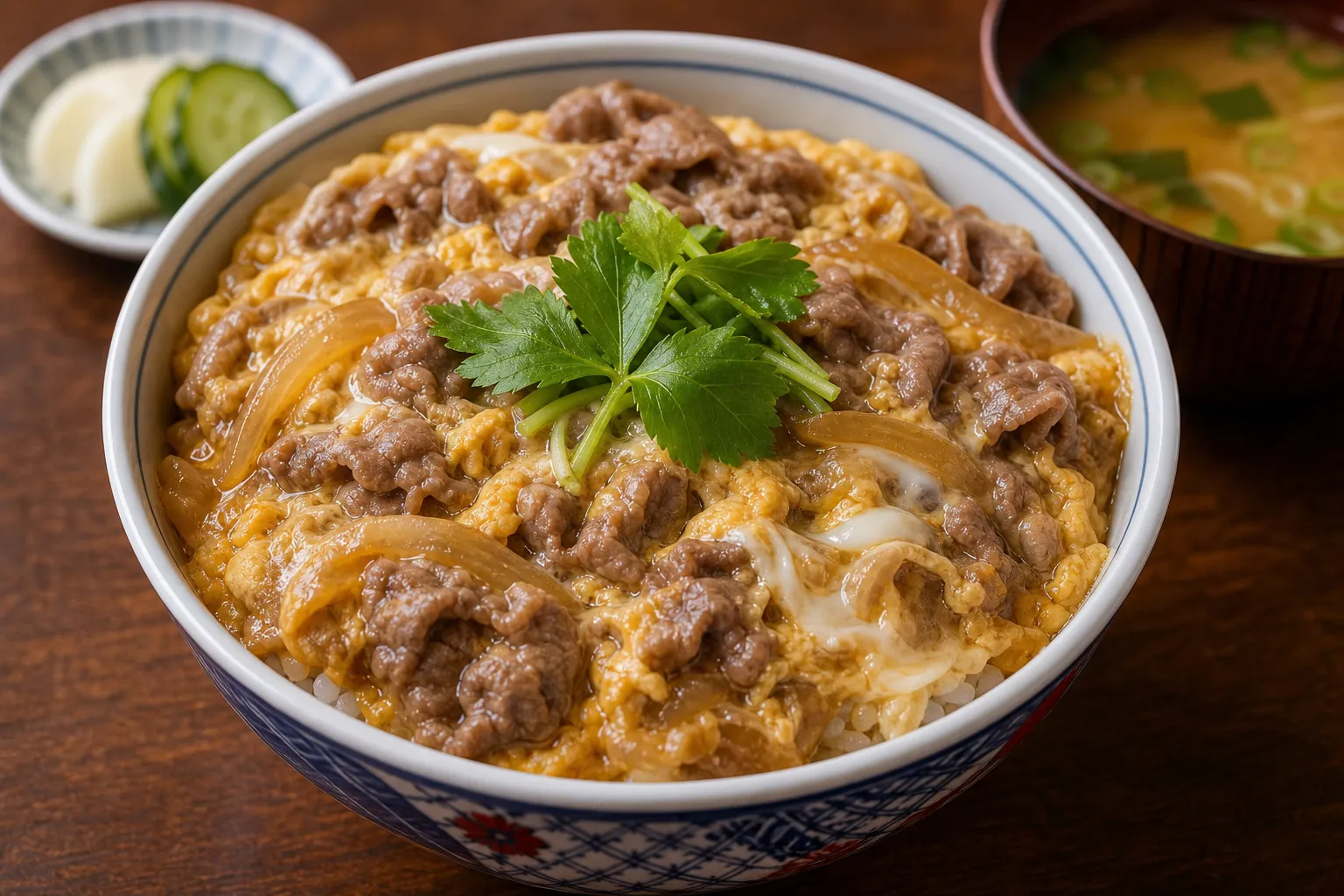
Beef and egg who've never met, thrown together in sweet dashi over rice — the cheeky Kansai bowl with the best name in Japan. Oyakodon's troublemaker cousin, and quietly just as good.
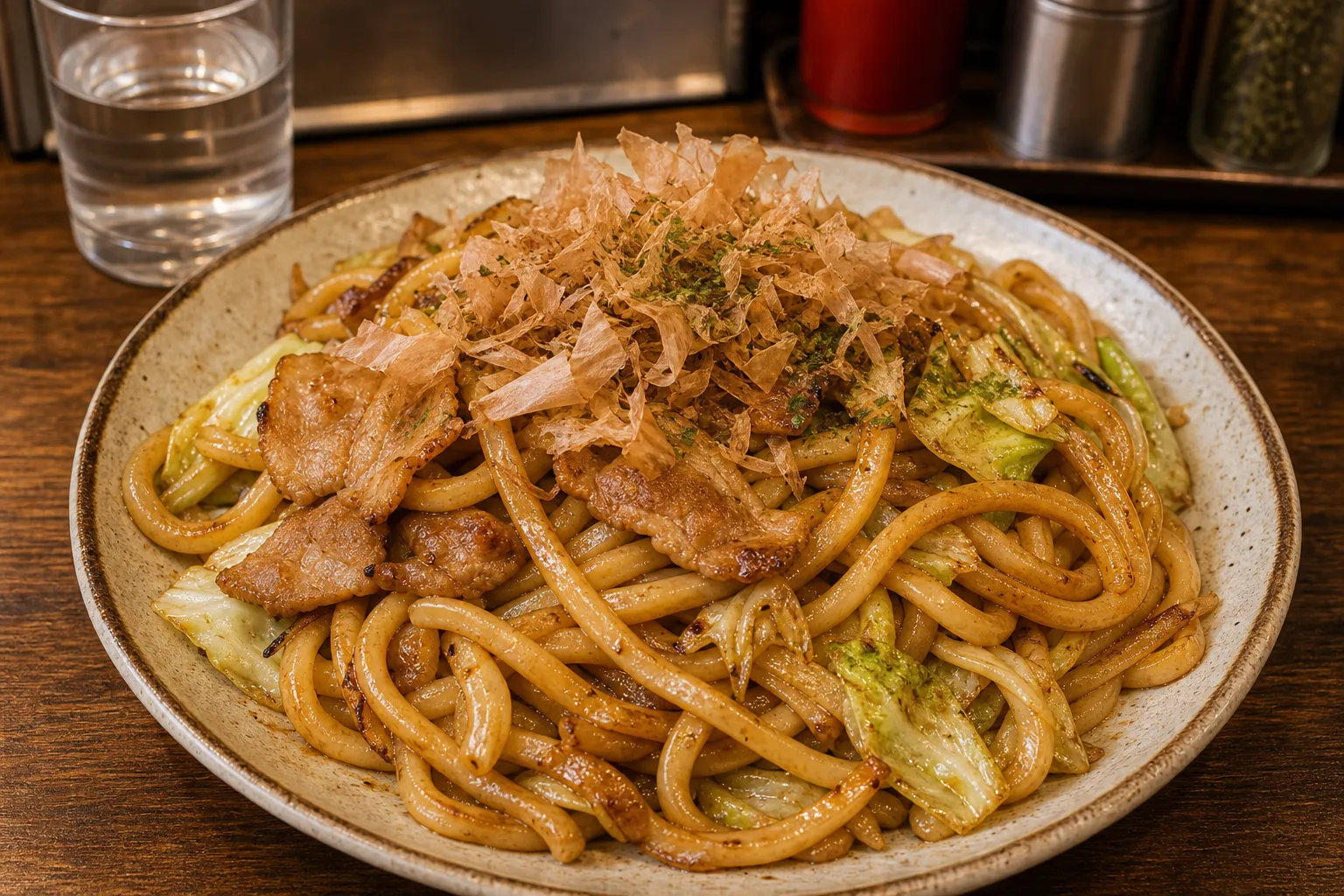
Fat udon noodles thrown on a hot griddle, seared with pork and cabbage until glossy and browned, then crowned with bonito flakes that literally dance. Kokura's post-war comfort food, and I love it more than yakisoba.
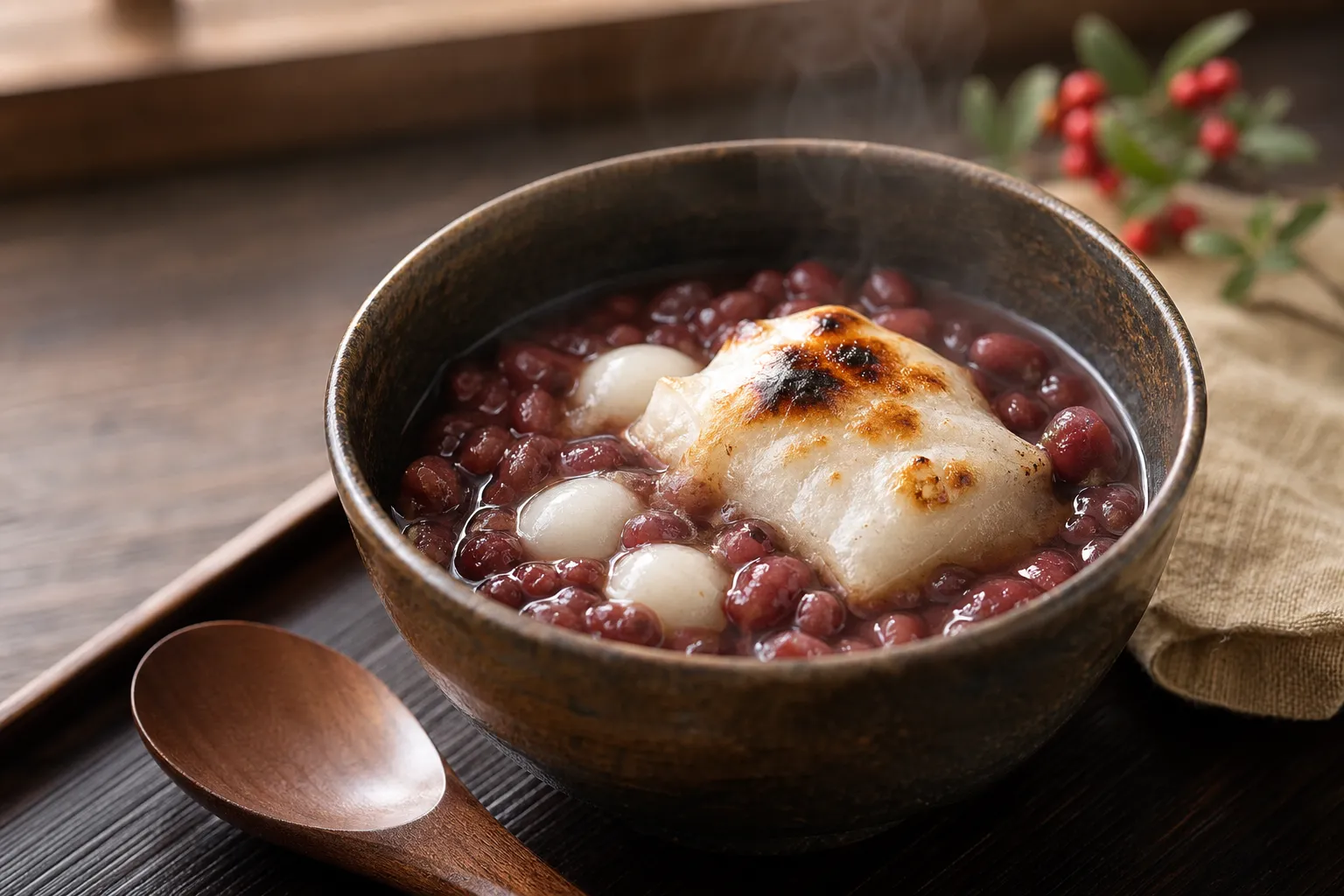
Whole red beans, still holding their shape, in a warm sweet broth with a soft chewy mochi hiding at the bottom — and the town says this is where the whole dish was born.
A monk broke a block of tofu apart with his bare hands instead of throwing it away, sautéed it with root vegetables, and accidentally invented one of Japan's most comforting soups.
A spoon goes into the bowl and comes out coated, silky, clinging — like the broth itself has opinions about leaving. Niigata's grandmother stew doesn't announce itself, and that's exactly why it wins.
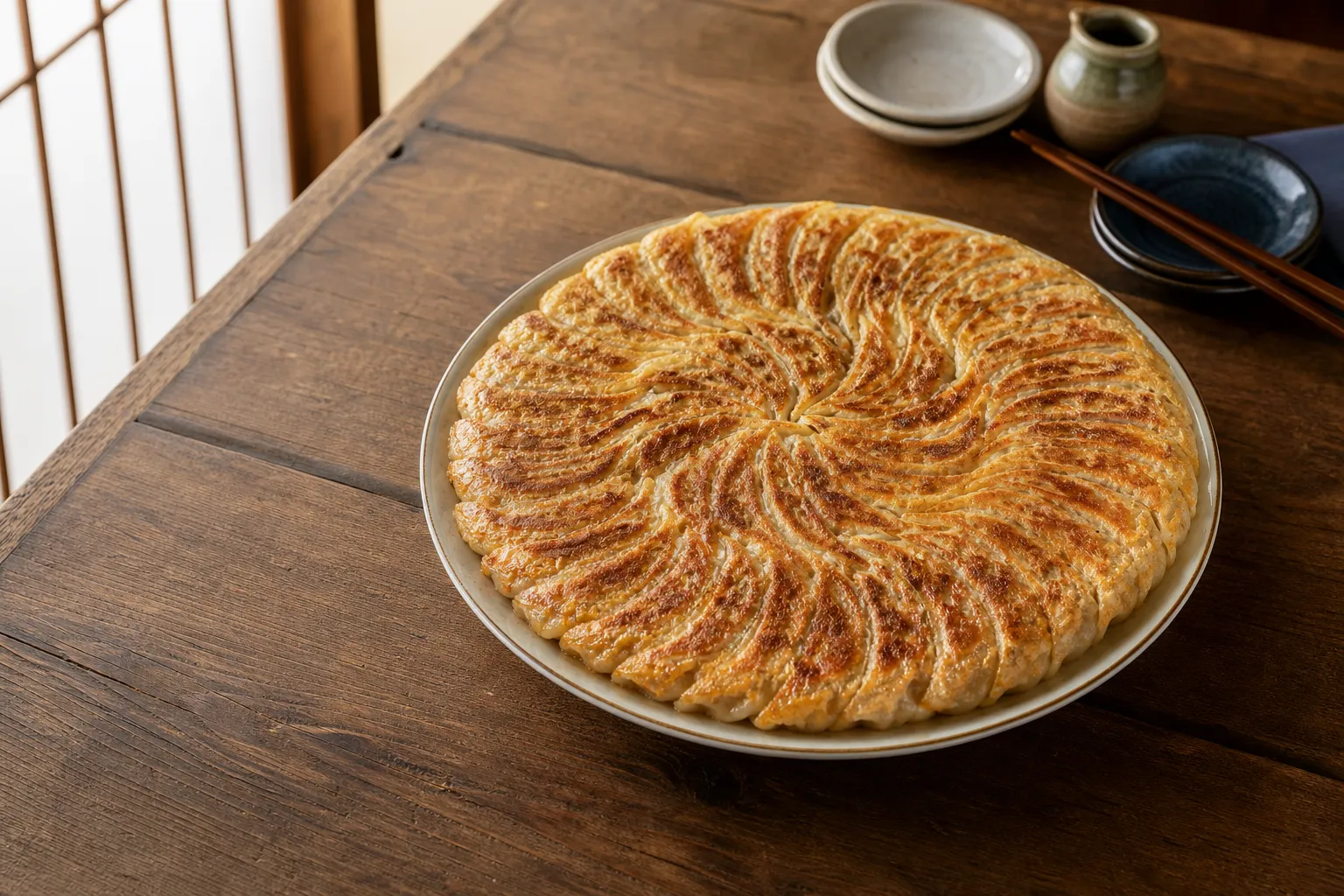
Thirty gyoza fused into one crackling golden disc, and the only way to serve it is whole, so the whole table has to fight over the first piece.
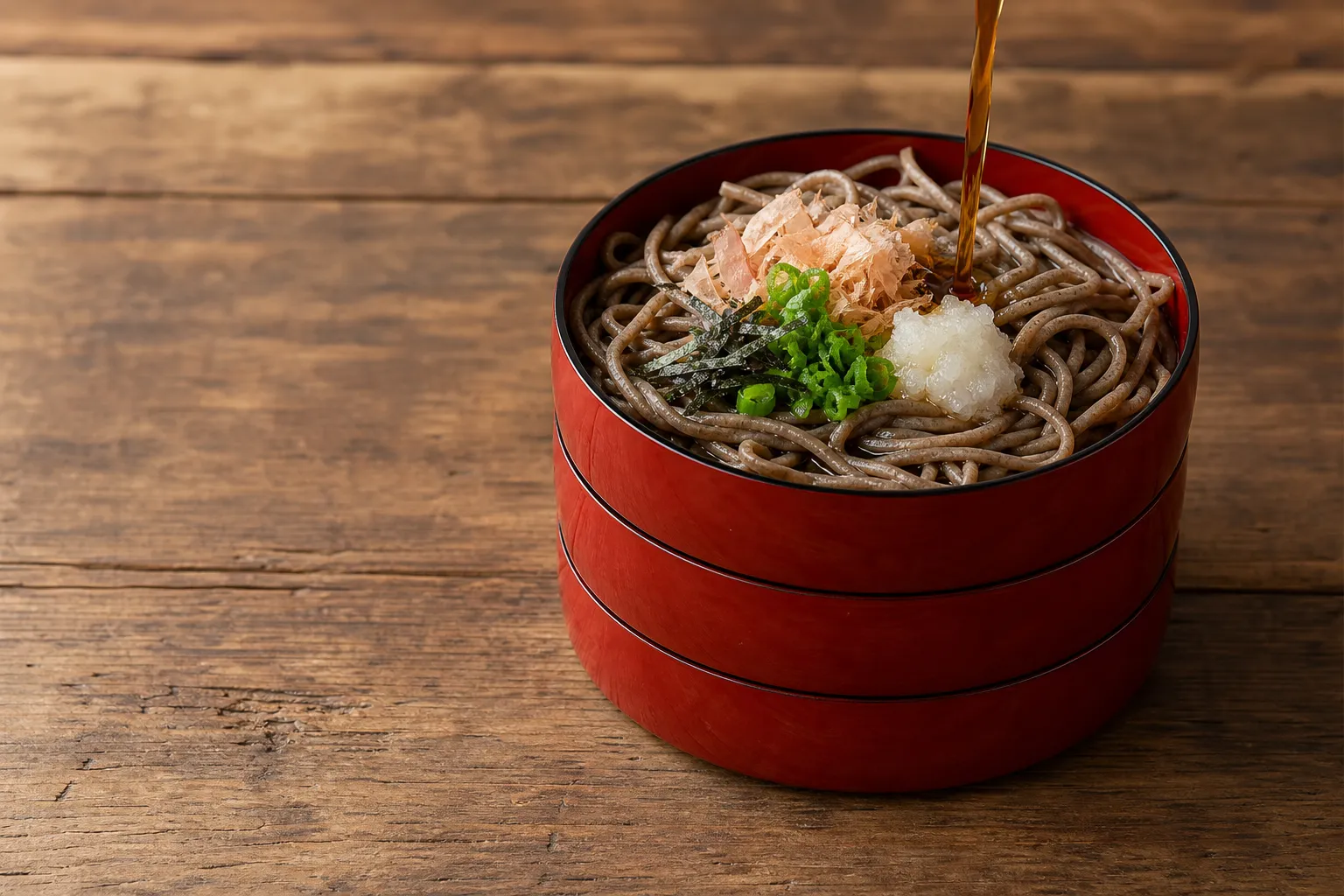
Three little lacquered tiers of dark, husk-and-all buckwheat, eaten in the shadow of Japan's oldest great shrine. You pour the broth straight on, stack the dishes down, and taste soba the way the gods' country has done it for centuries.
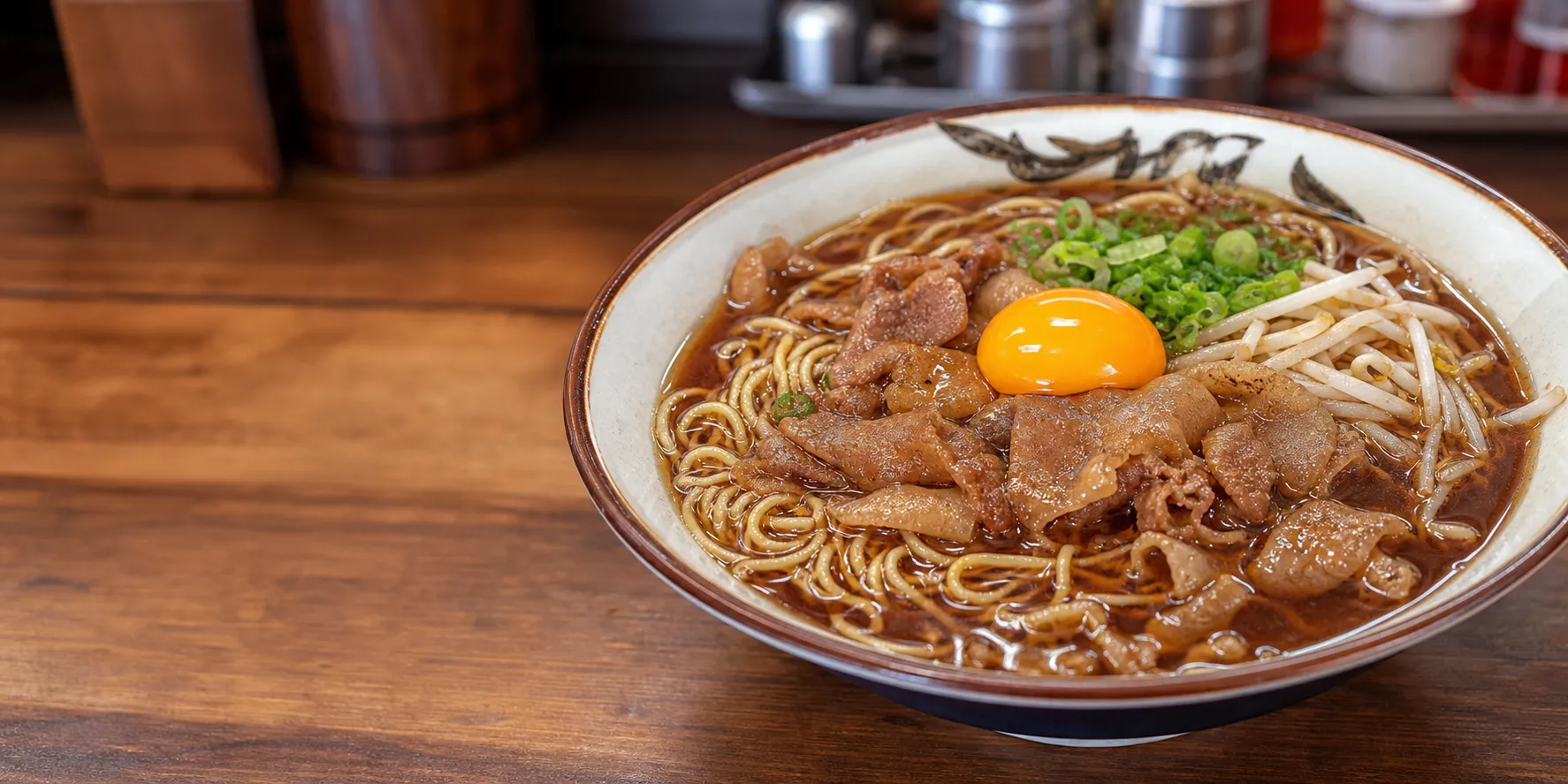
Dark, sweet-salty pork-soy broth, sticky-sweet simmered pork belly instead of chashu, and a raw egg cracked right on top. A ramen that eats like a meal over rice — because it kind of is.
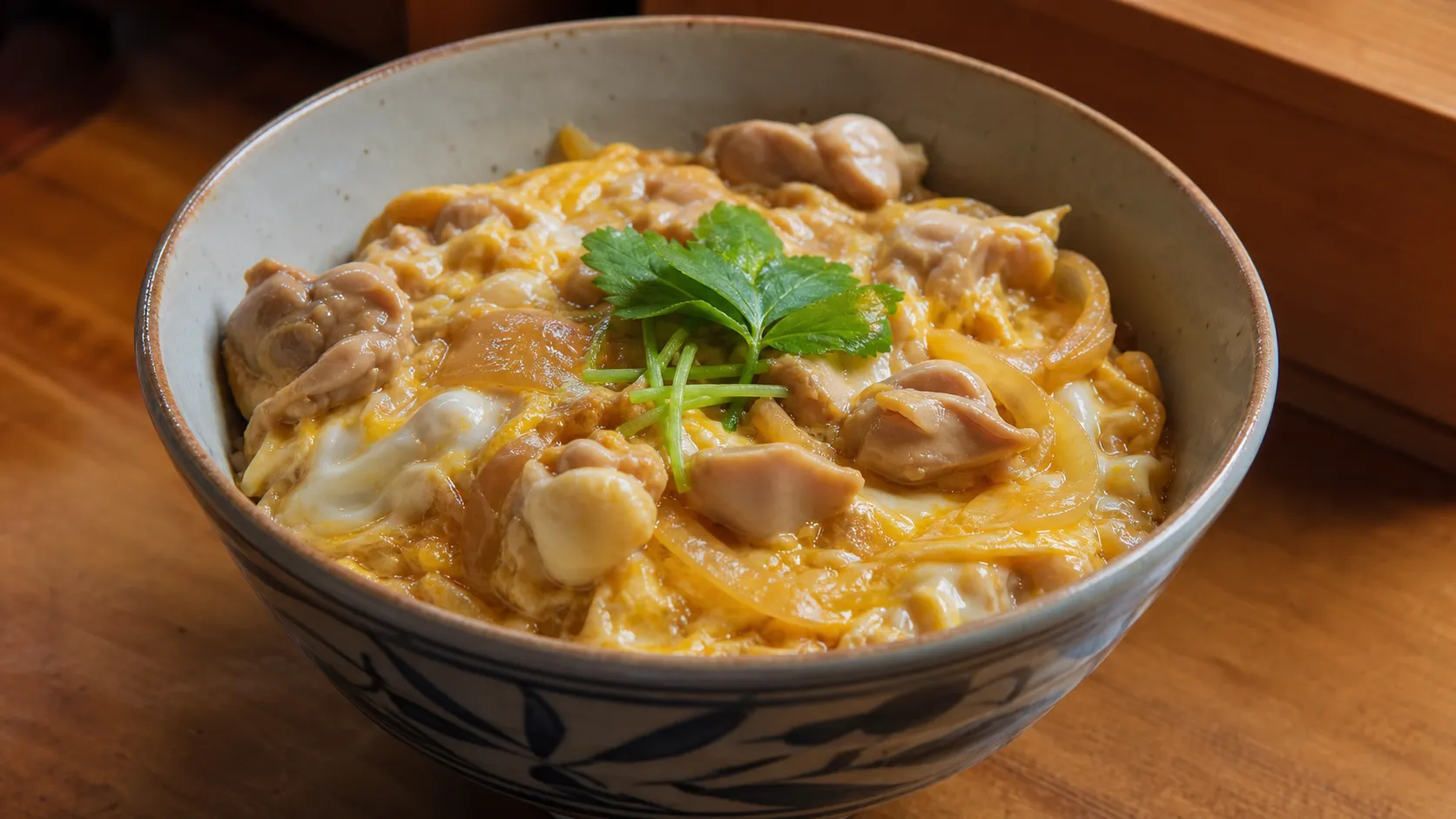
Chicken and egg simmered together in sweet-savory dashi and poured, silky and barely-set, over rice. Its name literally means 'parent-and-child bowl' — cozy, cheap, and quietly perfect.
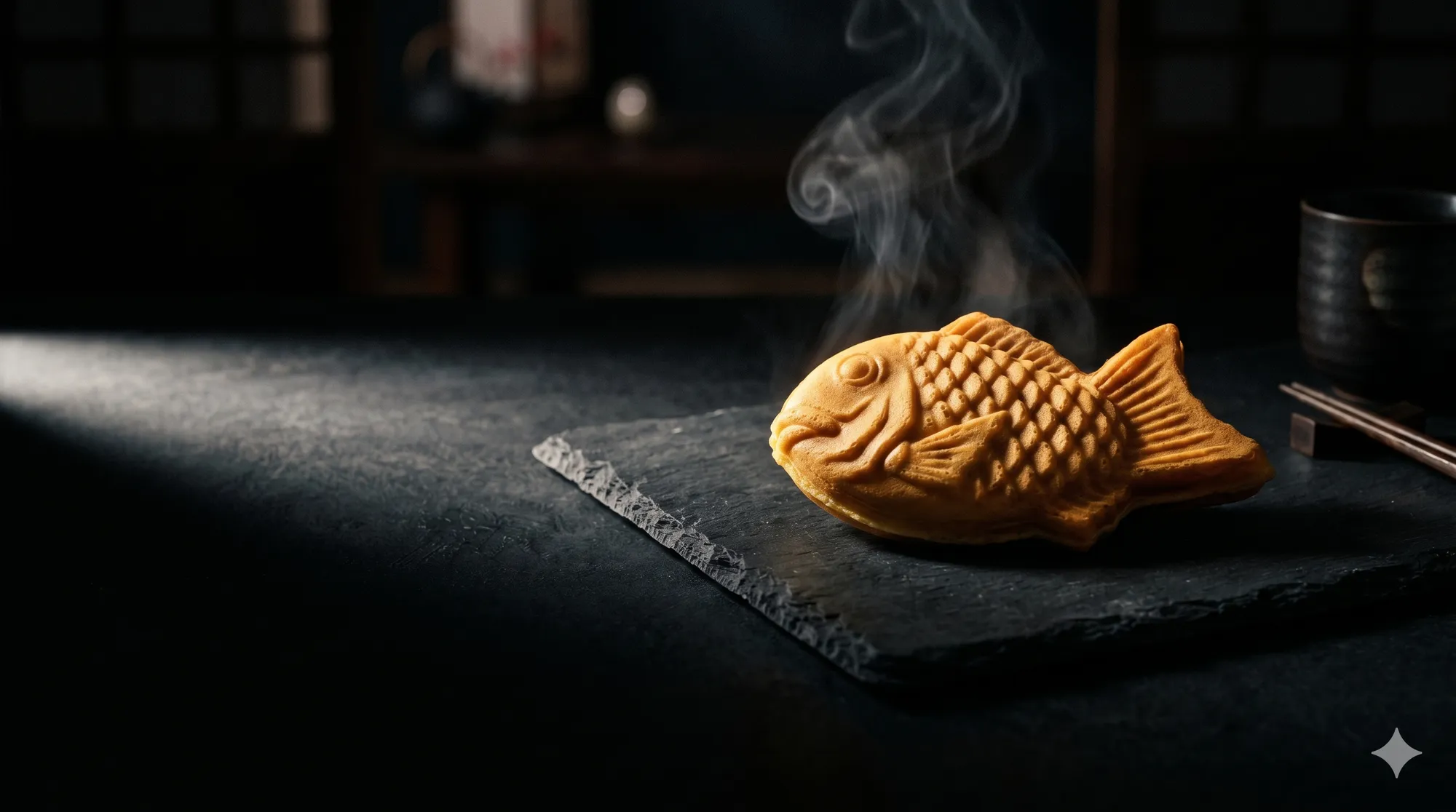
A fish-shaped cake, crisp at the edges and fluffy inside, stuffed with sweet red bean paste. Japan's most charming street snack — warm in your hand on a cold day, and impossible not to smile at.
Batter so light it's almost not there, around an ingredient cooked to its peak. It looks like the simplest thing in the world. It's one of the hardest to do perfectly.
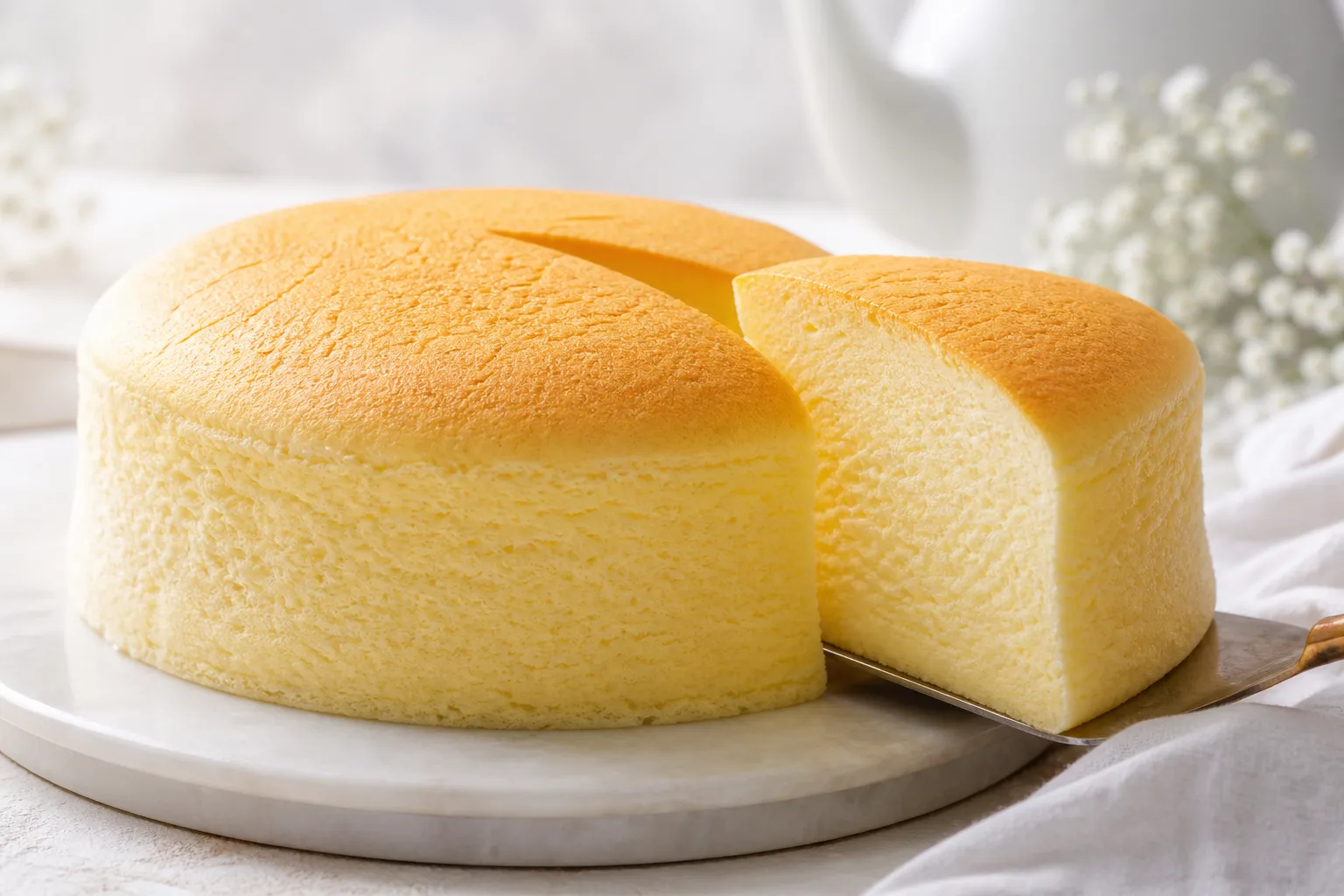
A slice lifted off the cake and it was still visibly wobbling on the plate — cheesecake reinvented as something closer to a cloud.
Salted mackerel pressed onto rice and left to ferment for weeks, tangy and funky and alive — the ancient pilgrim sushi of the Kumano mountains, from before sushi meant fresh fish at all.
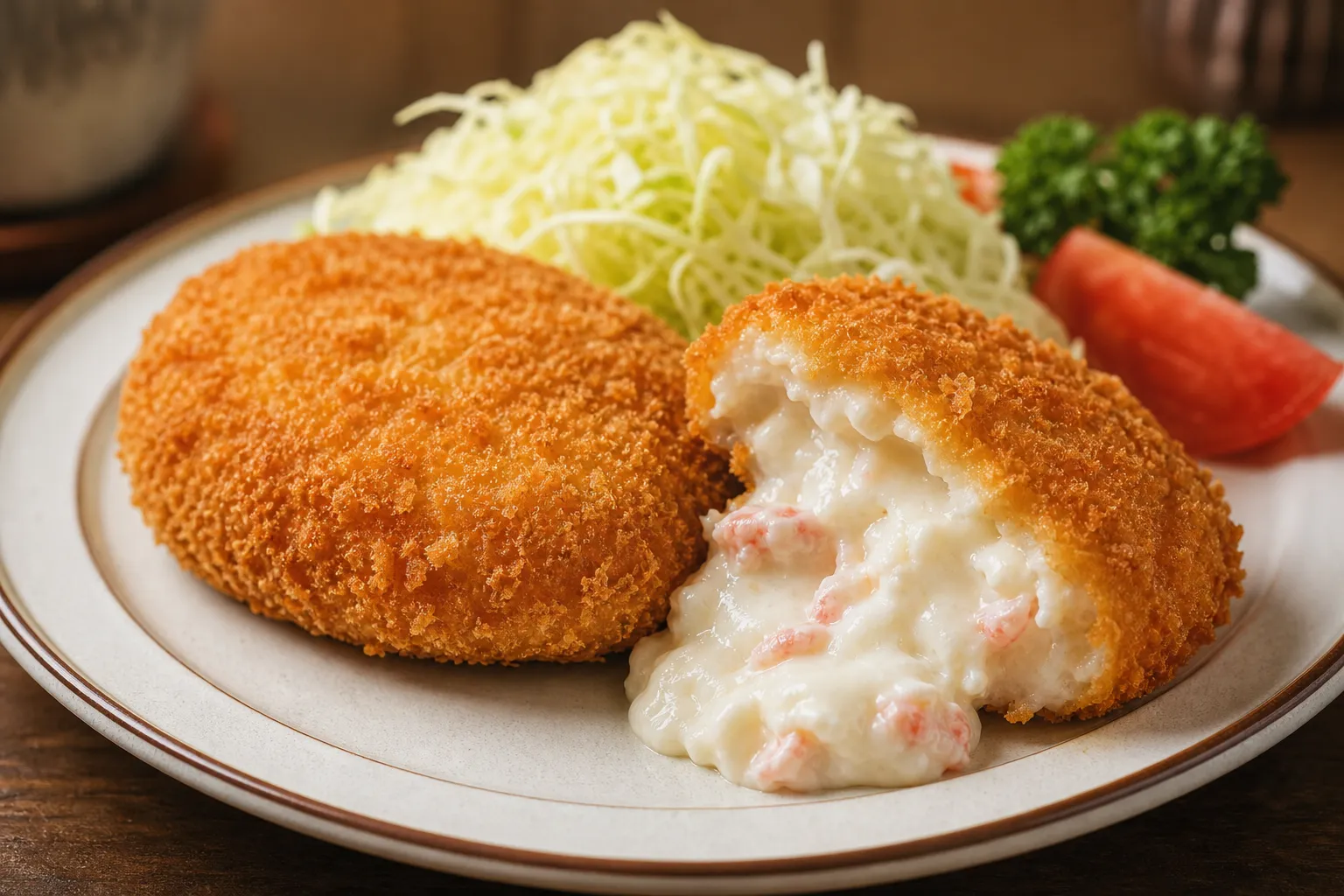
A crisp golden shell that gives way to a scalding rush of white béchamel cream — the croquette that trades the potato for pure molten sauce, and asks only that you not bite too eagerly.
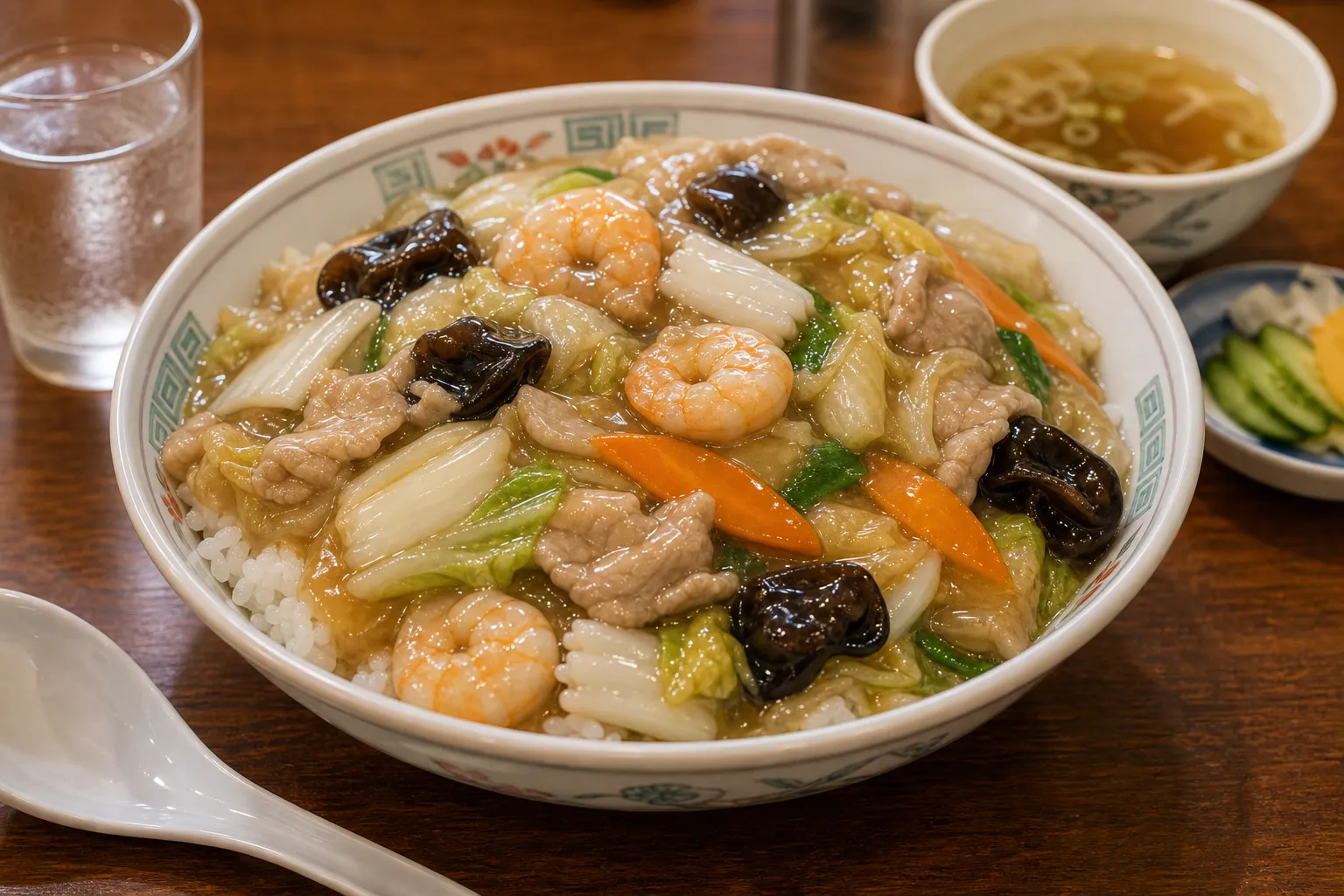
A glossy landslide of stir-fried pork and vegetables under a thick, glistening ankake sauce, poured steaming over rice. Cheap, hot, and hearty — the town-Chinese diner's answer to a bad day.
It looks like a griddle accident, tastes like a savory soup that decided to crisp up, and somehow gets more addictive the messier it gets.
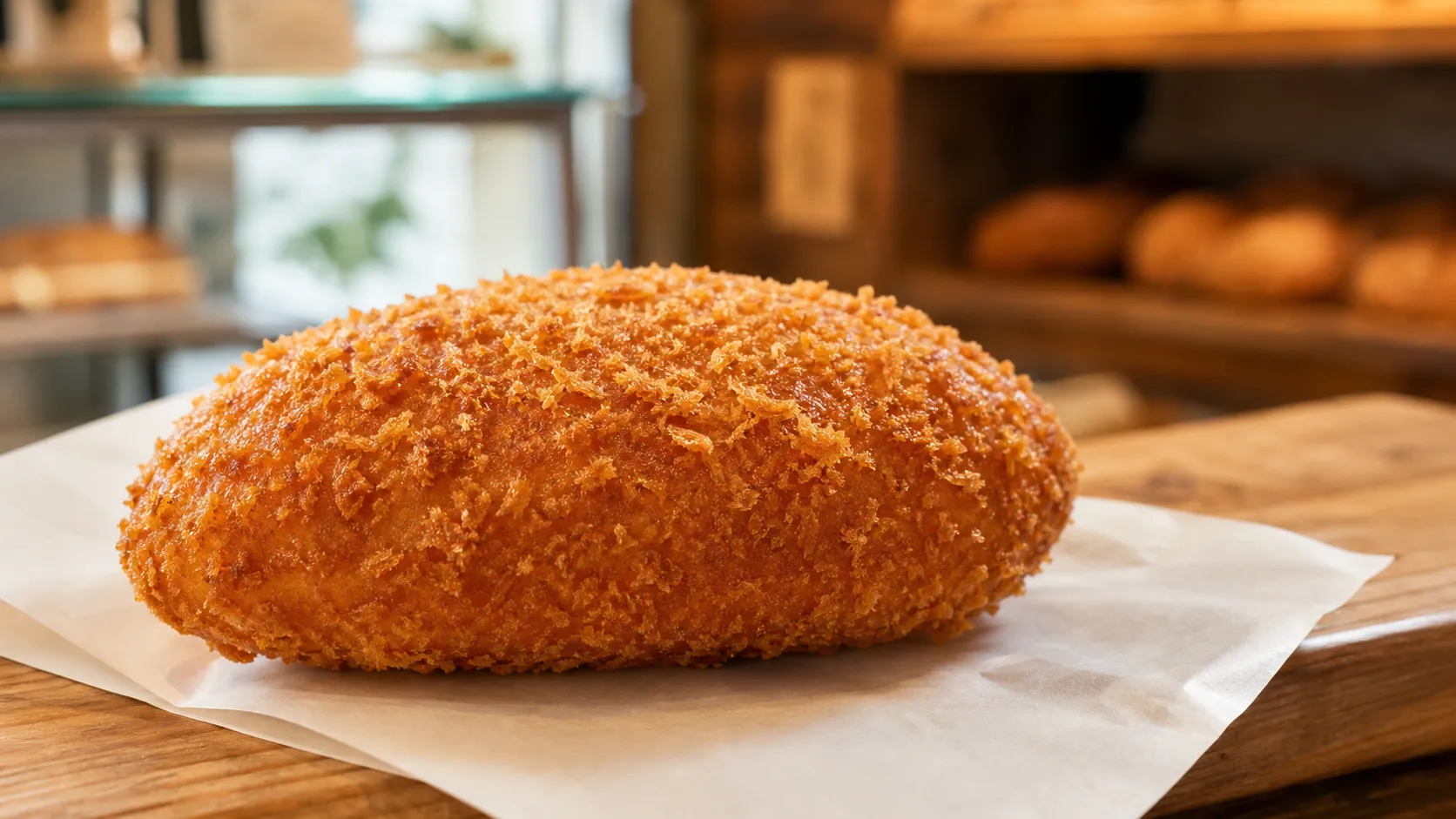
Japanese curry sealed inside dough, breaded, and deep-fried until shatteringly crisp. The savory bakery hero — crunchy outside, molten-spicy inside, and dangerously easy to eat two of.
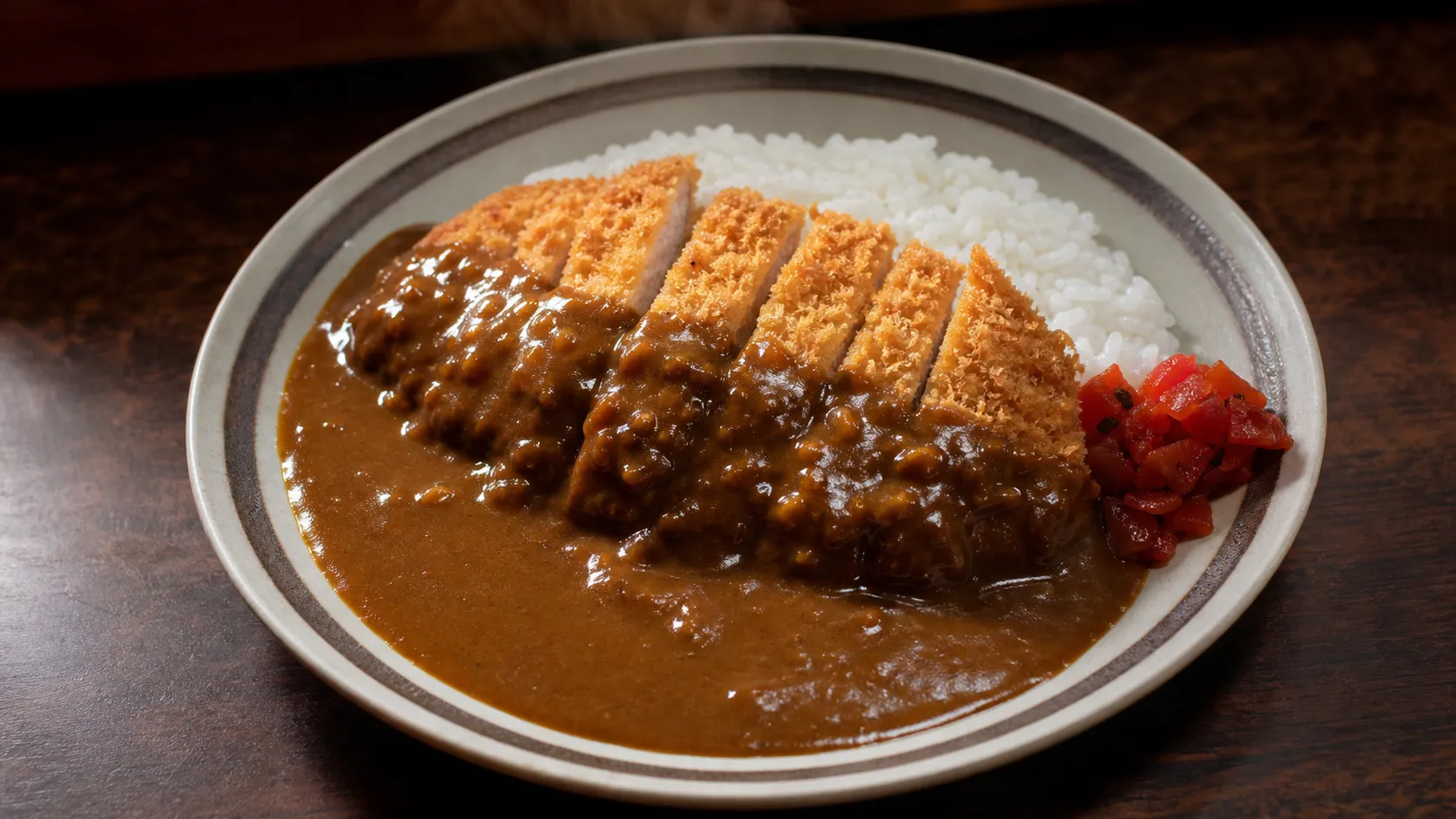
A crispy pork cutlet sitting on rice, drowned in thick, glossy Japanese curry. Two comfort-food titans on one plate — and the single most satisfying ¥1000 lunch in the country.
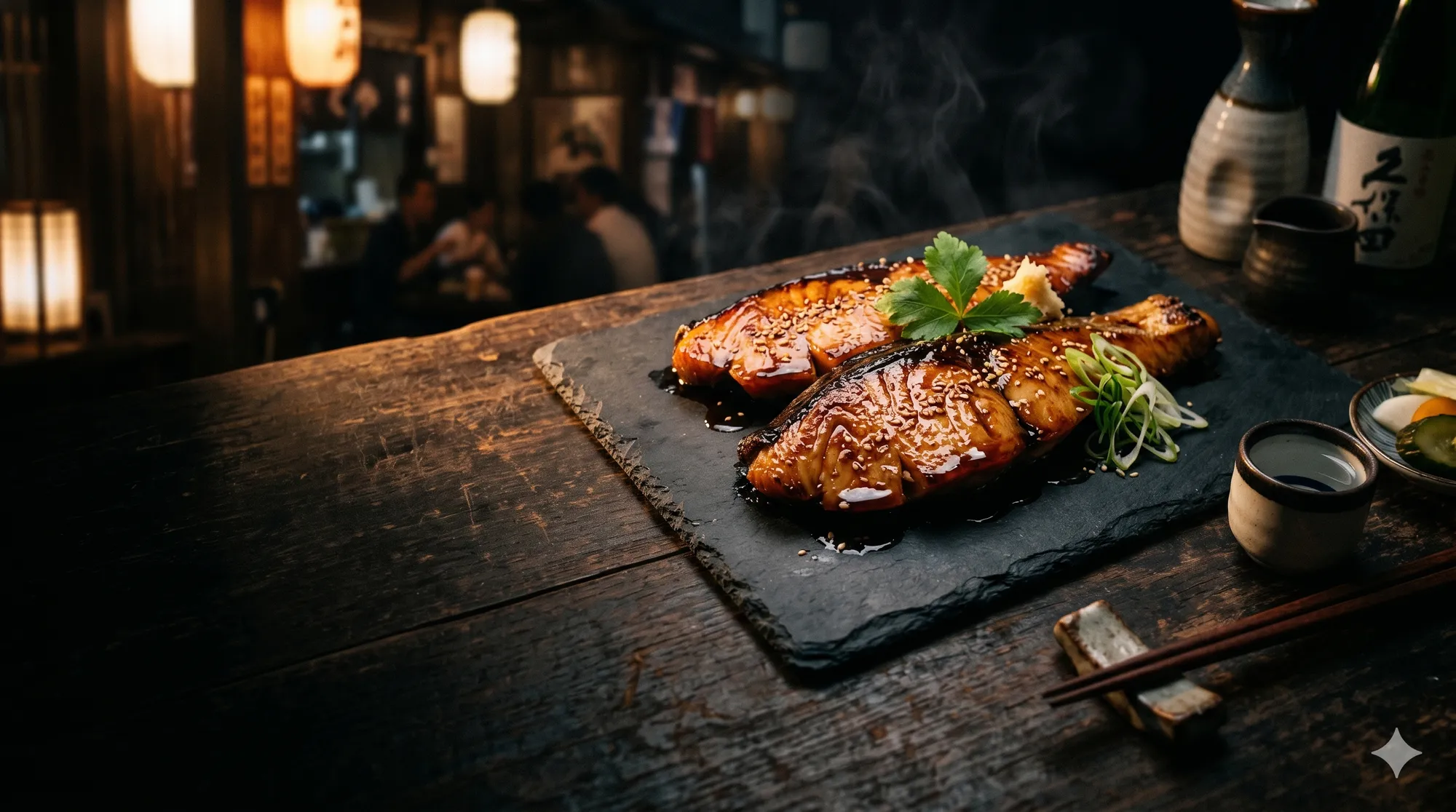
Fatty winter yellowtail lacquered in sweet soy until it shines. This is teriyaki the way Japan actually means it — not a bottled sauce, but a glossy glaze on a rich, seasonal fish.
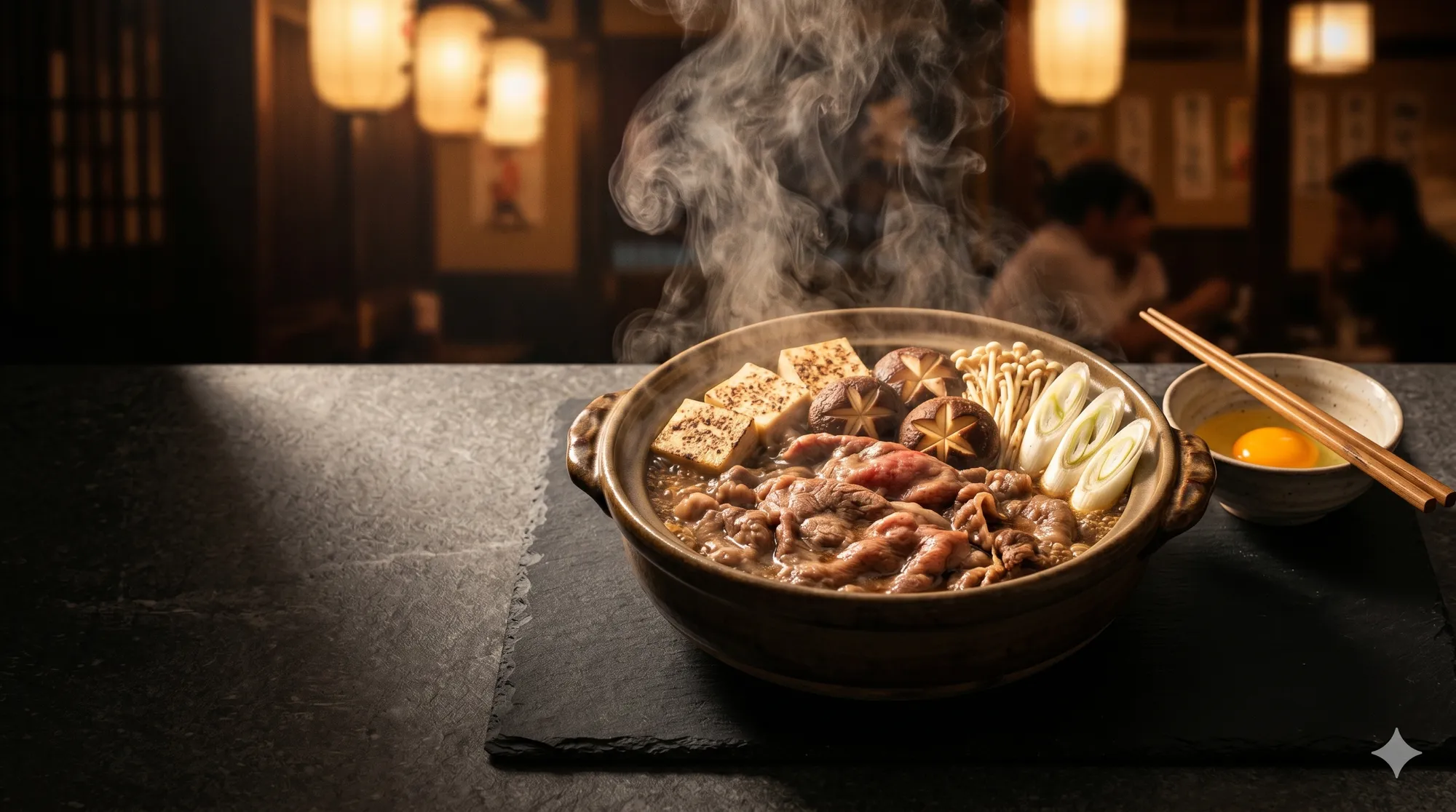
Marbled wagyu in a sweet-savory broth, swiped through cold raw egg. The hot pot Japan saves for the moments that matter — birthdays, New Year, good news.
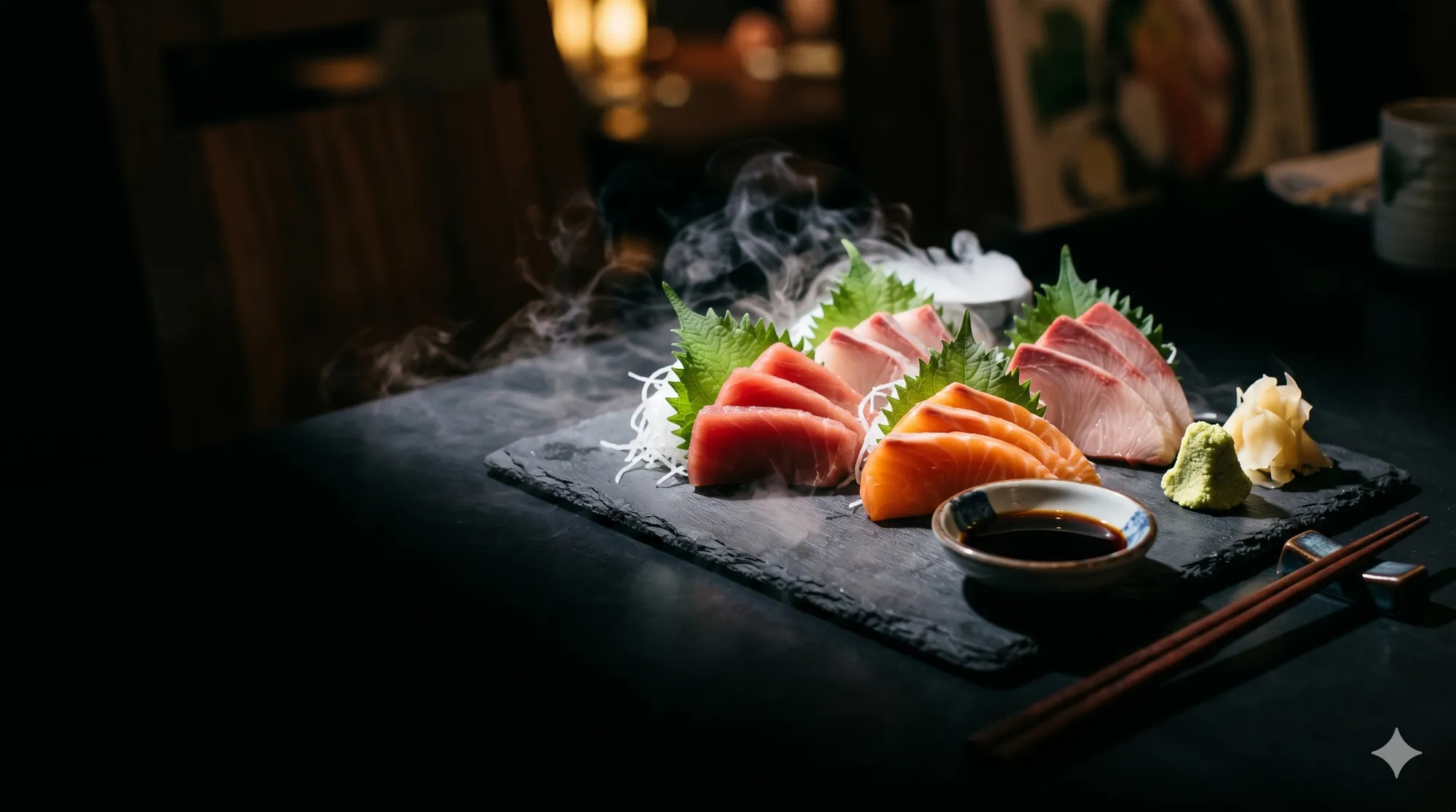
Raw fish, sliced with a blade and a lifetime of skill, served with nothing to hide behind. The purest, most honest, most quietly thrilling thing in all of Japanese cuisine.
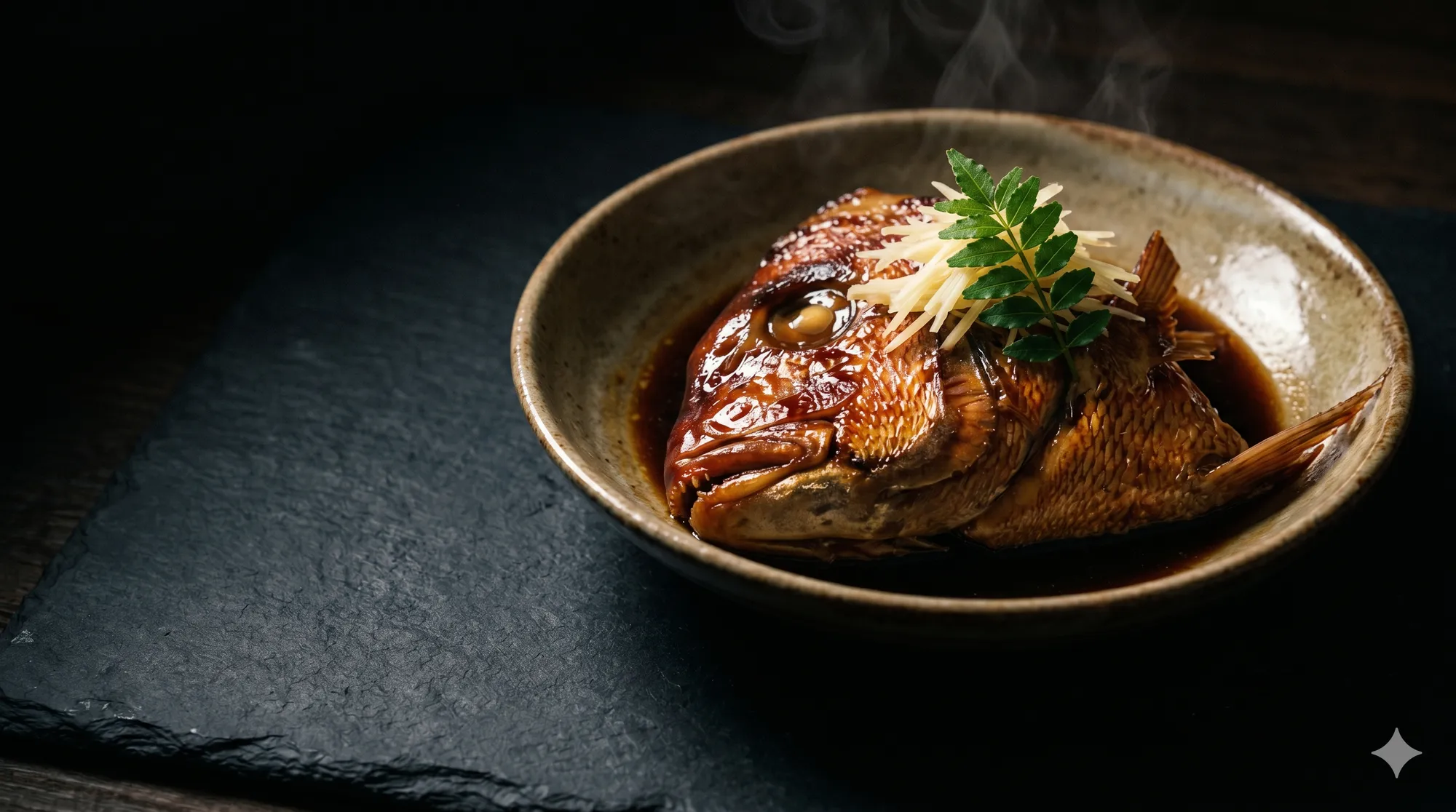
A whole fish head simmered in soy and mirin until it glistens like lacquer. It looks intimidating. It's secretly the best, richest, most prized part of the fish.
It's chicken over rice — but it's a very specific chicken, one Tokushima is quietly, competitively proud of, and once you know the backstory you'll never call it 'just a rice bowl' again.