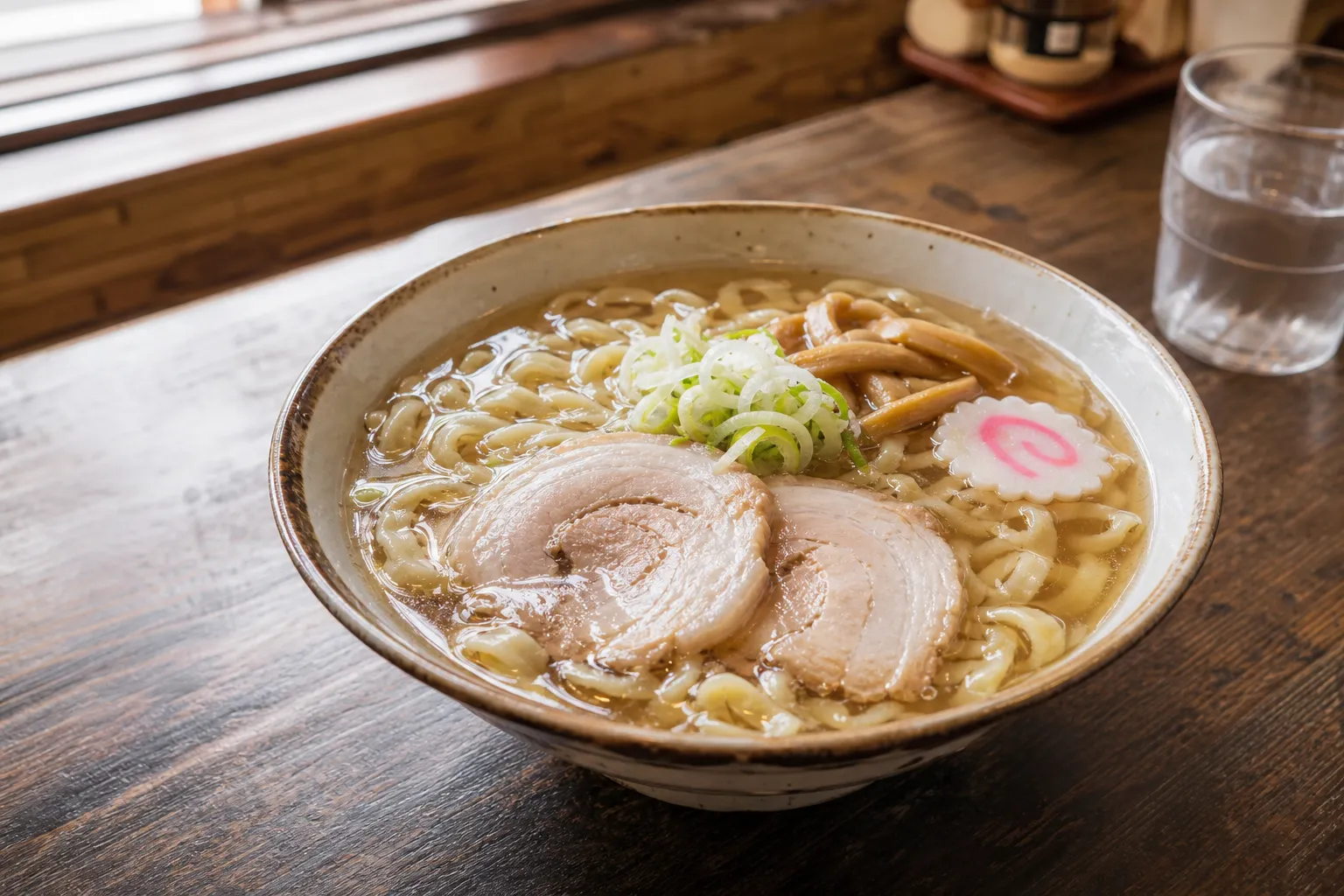
It's nine in the morning and I'm eating ramen, and so is everyone else in here, and nobody finds this strange except me.
Share this dish


Flat, wide, curly noodles in a clear soy broth so clean you can see the bottom of the bowl — and a town so obsessed it eats ramen for breakfast. This is comfort with the volume turned down, on purpose.
🍜 Planning a food trip to Fukushima?Add this dish to my Food Trip →
 Add this dish to my Food Trip →
That's the first thing Kitakata does to you: it quietly rearranges your sense of when ramen is allowed. The locals call it asa-ra — morning ramen — and they mean it. And the bowl that arrives is almost shockingly gentle after the heavy, oily ramen the rest of the world has trained you to expect: a clear, light golden broth you can see straight through, flat curly noodles with a soft chew, and a calm pile of char siu. I took one sip and felt my shoulders drop.
A town that eats ramen the way other towns drink coffee
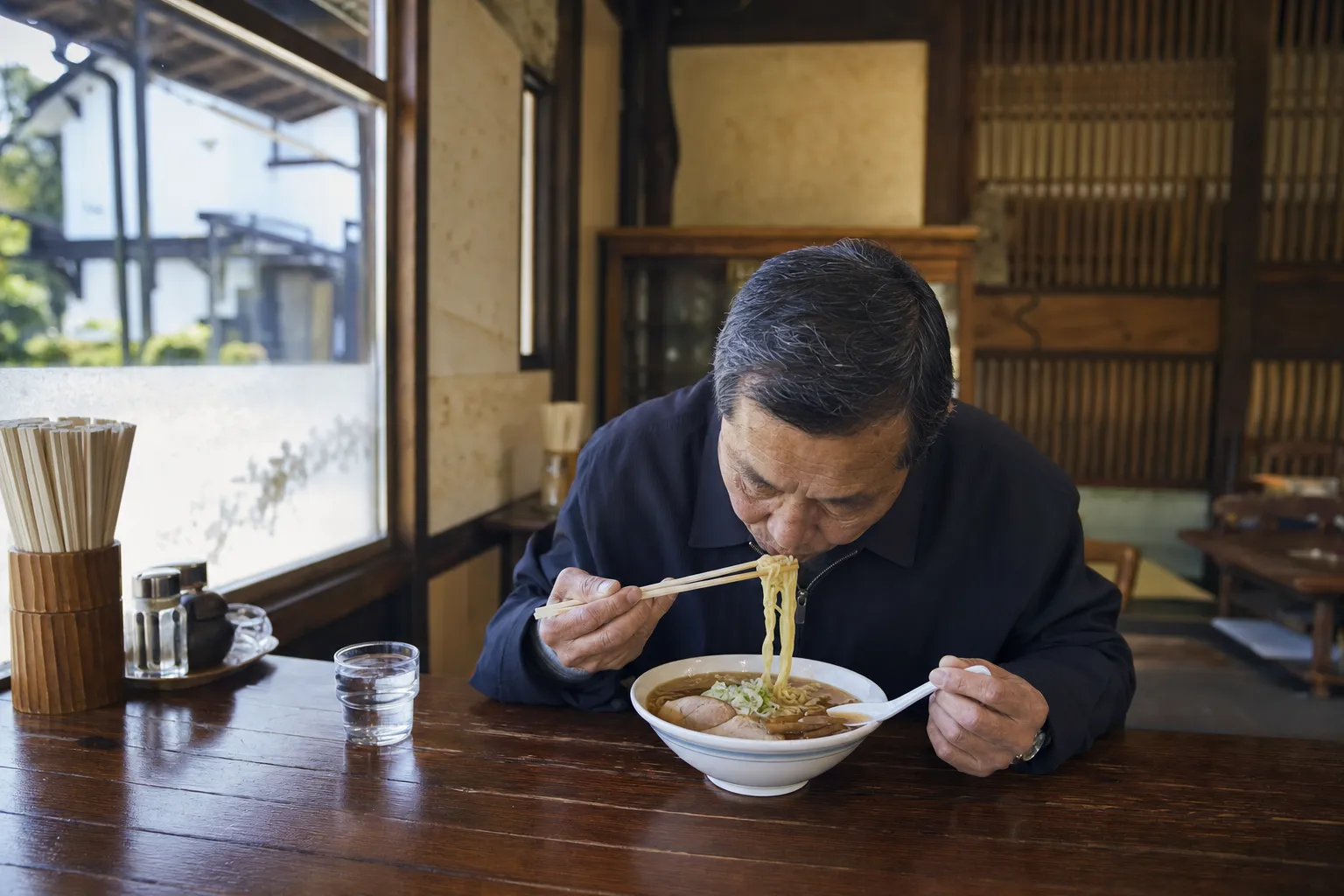
Kitakata is a small city in Fukushima famous for two things: its old kura (clay storehouses), and an almost unreasonable density of ramen shops — one of the highest per-capita counts in all of Japan. Ramen here isn't a treat you queue an hour for. It's daily infrastructure. People eat it in the morning before work, the way you might grab toast, and the asa-ra habit is woven so deep into the town that shops open early specifically for it.
I find this genuinely lovely. There's no spectacle to Kitakata ramen, no eighteen-hour broth mythology, no toppings arms race. It's a bowl built to be eaten constantly, by everyone, forever — and that humility is exactly what makes it so good. It doesn't need to impress you. It just needs to be there tomorrow morning too.
The noodle is the whole personality
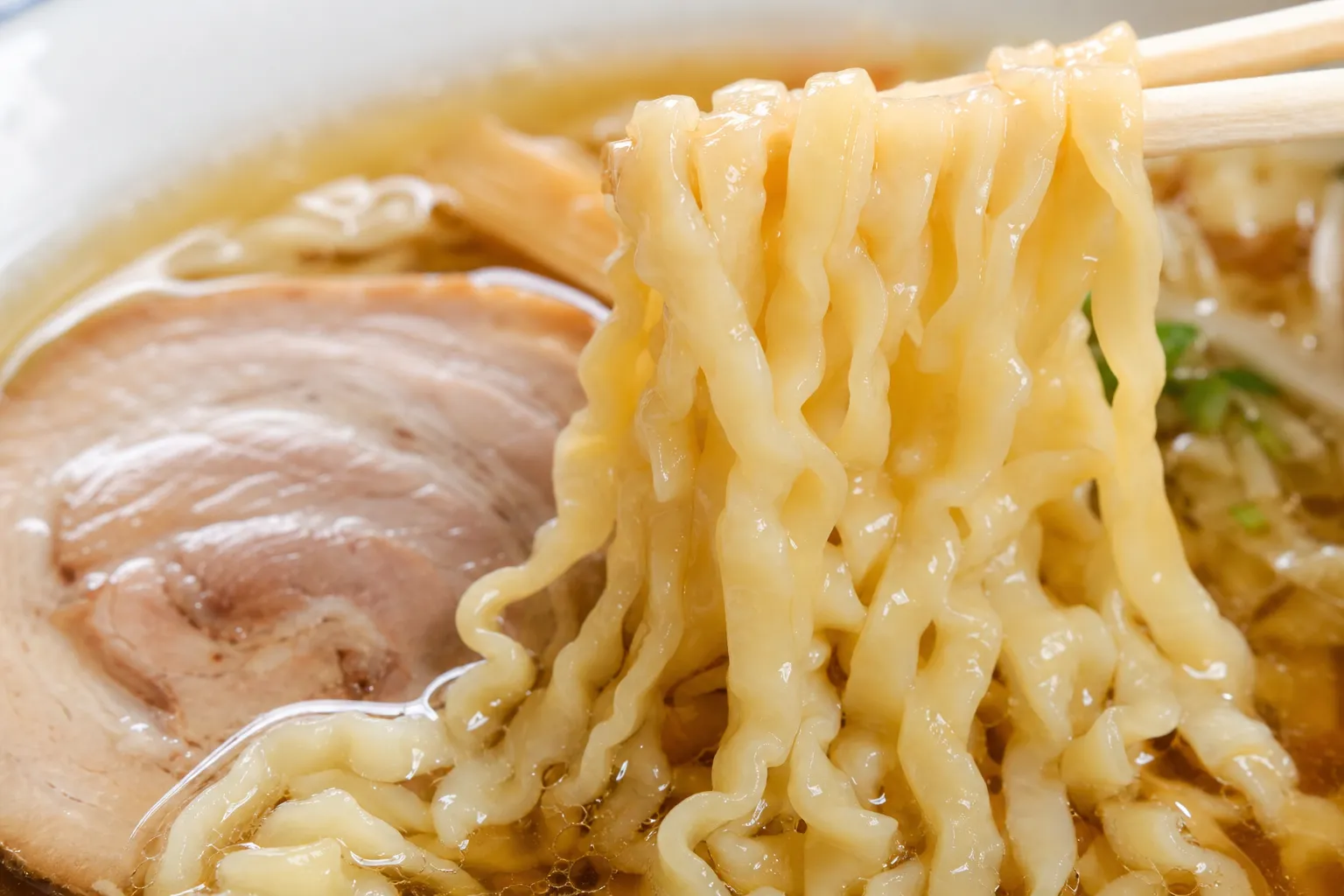
Lift the noodles and you'll see it immediately: they're flat, wide, and curly (hira-uchi chijiremen), made with a high water content that gives them a soft, slippery, satisfying chew unlike the firm thin strands of tonkotsu ramen. Those wavy ribbons catch the broth and carry it up to your mouth, which matters, because the broth is so clear and light it needs all the help it can get clinging on.
The soup is a clean soy (shoyu) base built from pork and niboshi (small dried sardines) — savory, gentle, a little oceanic, never heavy. Char siu is generous (many shops pile it high), with menma, green onion, and a slice of naruto. The whole thing is balanced toward clarity rather than richness. It's the rare ramen you could genuinely eat every single day, which, conveniently, is the entire idea.
How it's made
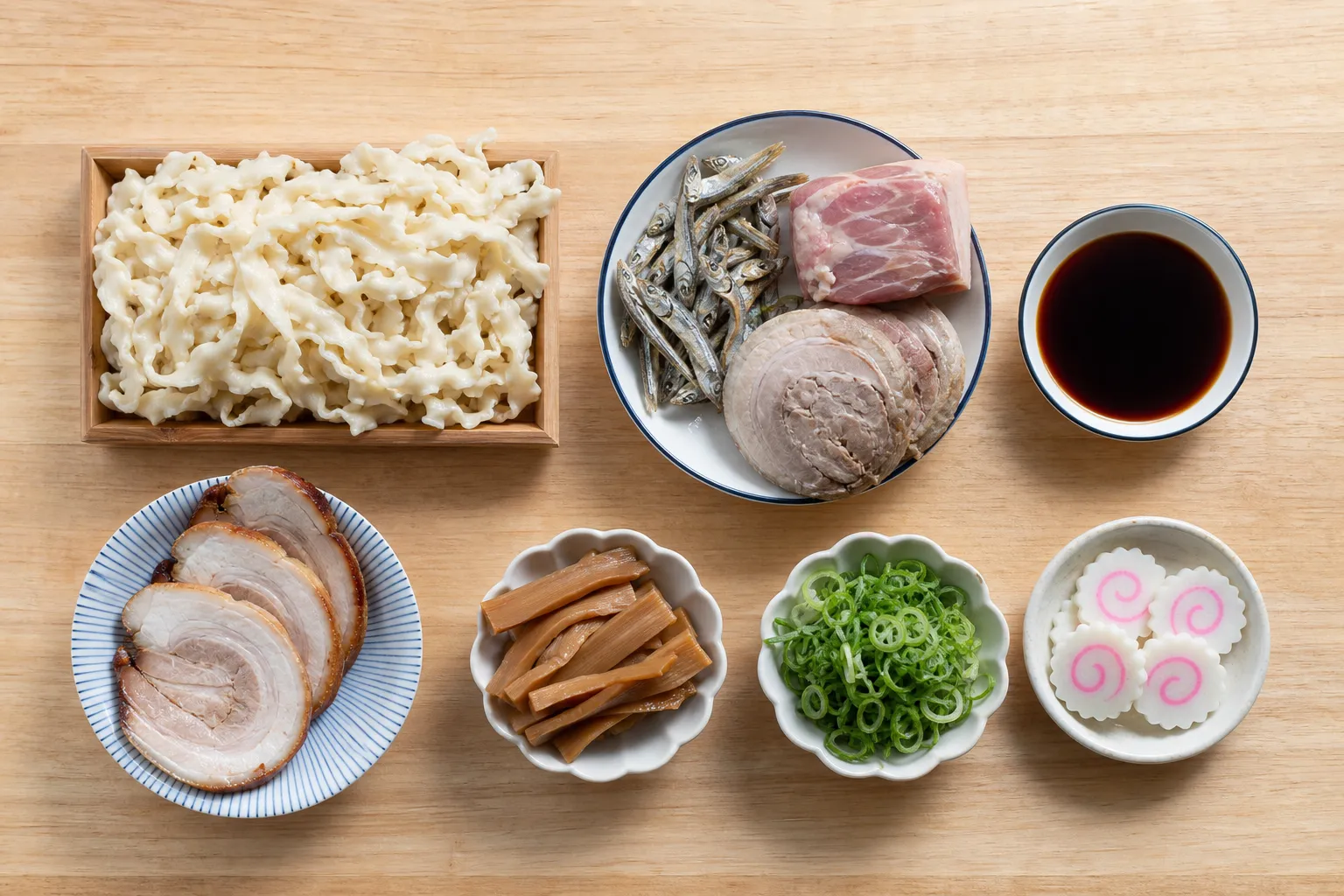
- Simmer a clear broth from pork and niboshi (small dried sardines), keeping it clean rather than cloudy
- Season with a soy (shoyu) tare — savory and light
- Cook the signature flat, wide, curly high-hydration noodles
- Combine broth and noodles, keeping the soup clear
- Top generously with rolled char siu, menma, green onion, and naruto
- Serve — and don't be surprised if it's breakfast
Before you go — come hungry in the morning
Your questions, answered honestly
"Ramen for breakfast — seriously?" — Seriously. Asa-ra (morning ramen) is a real Kitakata tradition, and shops open early for it. It's lighter than you fear and a genuinely great way to start a day.
"Will it be too plain if I'm used to rich ramen?" — It's clear, not bland — clean, savory, soy-and-sardine deep. Think of it as the opposite end of the spectrum from tonkotsu, and let it be what it is. Many people find it the most addictive bowl precisely because it never tires you out.
"What makes the noodles special?" — They're flat, wide, and curly with high water content — soft, slippery, chewy, and great at grabbing the light broth. The noodle is the signature here, more than the soup.
"How many shops are there really?" — Famously, a lot — Kitakata has one of Japan's highest ratios of ramen shops to people. You will not struggle to find a bowl.
What the staff will ask you
| You'll hear | Romaji | Meaning | Just say |
|---|---|---|---|
| 朝ラーですか? | Asa-rā desu ka? | "Here for morning ramen?" | Hai 😊 |
| チャーシュー増やしますか? | Chāshū fuyashimasu ka? | "Add extra char siu?" | Hai, onegaishimasu |
| 麺の硬さは? | Men no katasa wa? | "How firm should the noodles be?" | Futsū de — "regular" |
To order, just say "Kitakata ramen kudasai" (喜多方ラーメンください) — "Kitakata ramen, please."
Where to eat it
- Kitakata City, Fukushima — the town itself is the destination; ramen shops are everywhere, many in or near the old kura storehouse district, and many open early for asa-ra.
- Long-established Kitakata shops — the city has several decades-old shops considered local institutions; ask locally or look for the morning queues. Check hours, as many close in the afternoon.
- Kitakata-style shops elsewhere in Japan — the flat curly noodle and clear shoyu style has spread; a few shops nationwide serve a faithful version.
Soul Score
Local Roots5/5
First-Timer Friendly5/5
Adventure Level3/5
Comfort Level5/5
Travel Worthy4/5
These scores are one obsessed eater's gut feeling — not a verdict. A low number isn't a bad mark, just a different kind of adventure.
Know someone planning Japan?
← All Articles
Local Food · Kitakata, Fukushima
Still hungry?
Eat more from Fukushima
Local FoodAizu, Fukushima
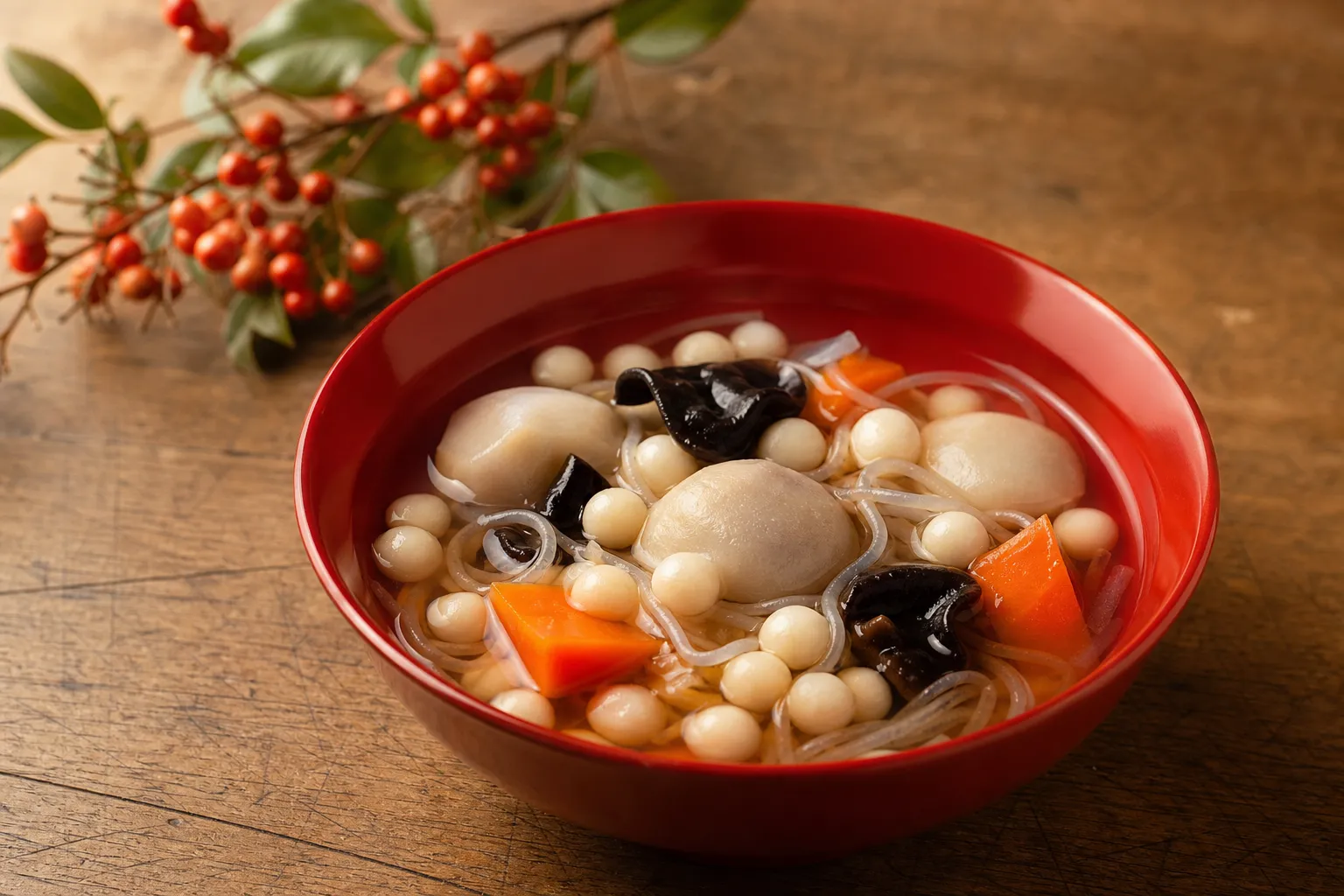
Kozuyu (こづゆ)
A tiny red lacquer bowl of soup that a whole region reaches for whenever something matters — weddings, New Year, the moments you want to remember.
July 5, 2026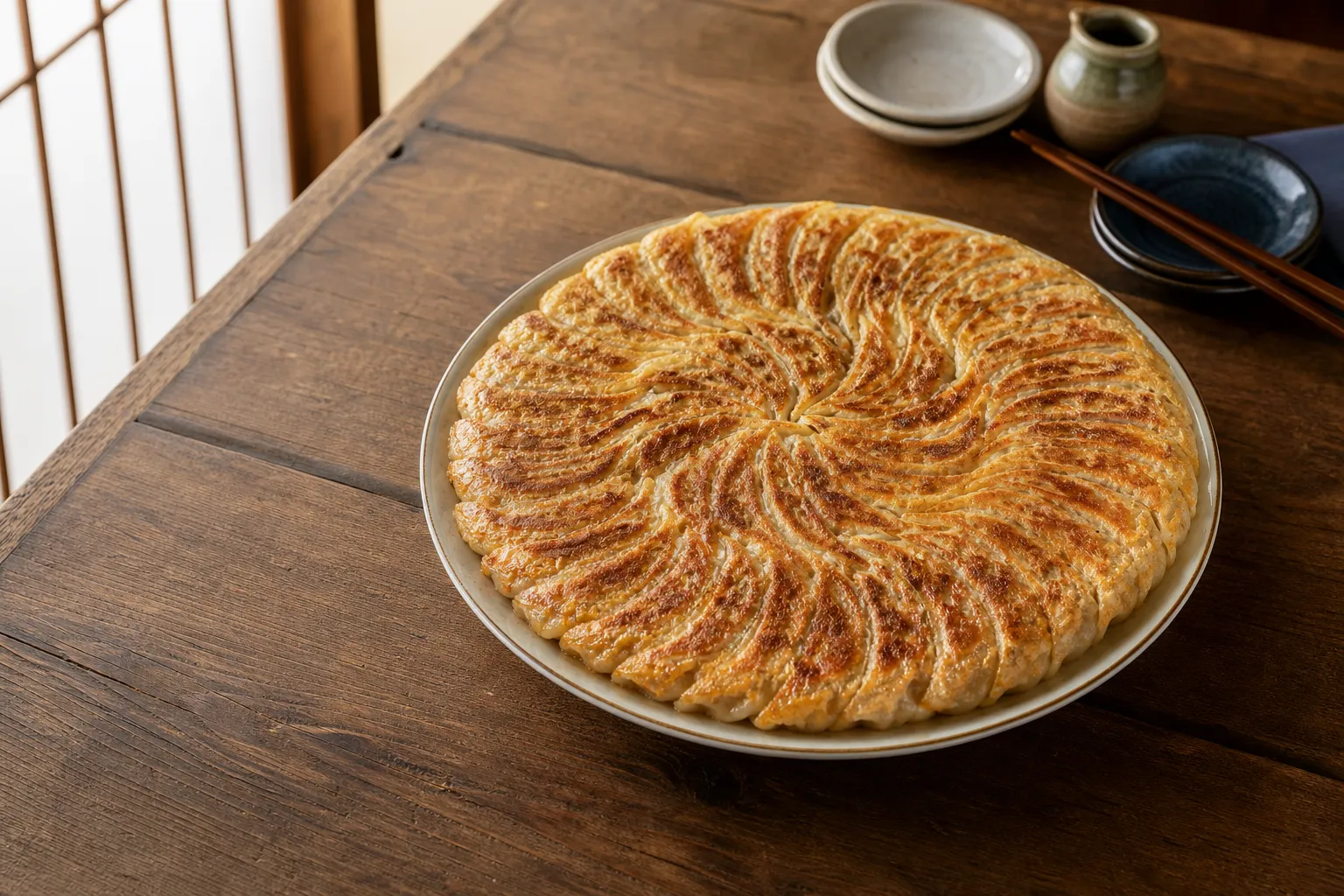
Local FoodFukushima
Enban Gyoza (円盤餃子)
Thirty gyoza fused into one crackling golden disc, and the only way to serve it is whole, so the whole table has to fight over the first piece.
July 4, 2026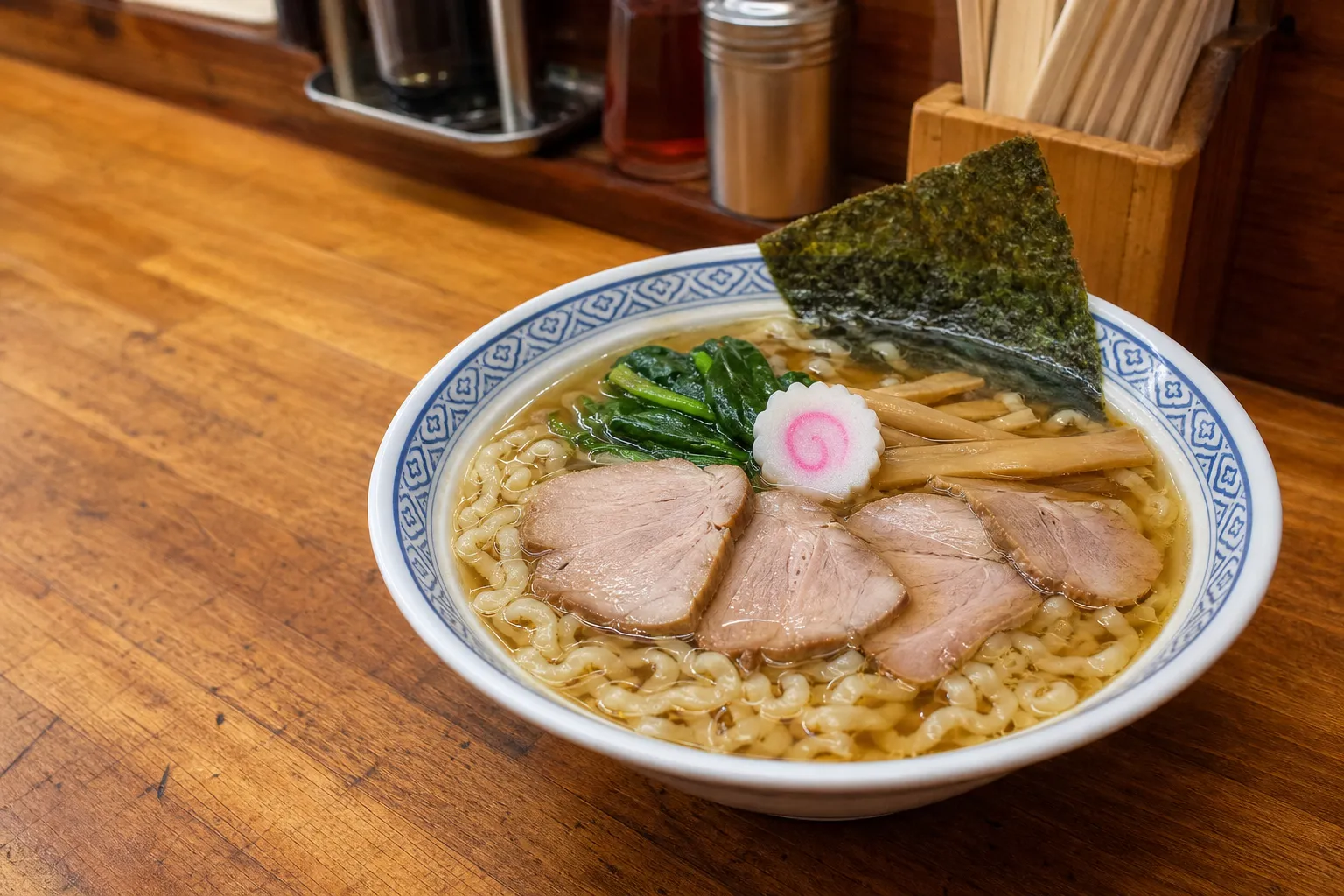
Local FoodShirakawa, Fukushima
Shirakawa Ramen (白河ラーメン)
Noodles so wide and wavy they look hand-torn, floating in a broth so clear you can read the bowl's pattern straight through it.
July 4, 2026Keep slurping the ramen trail
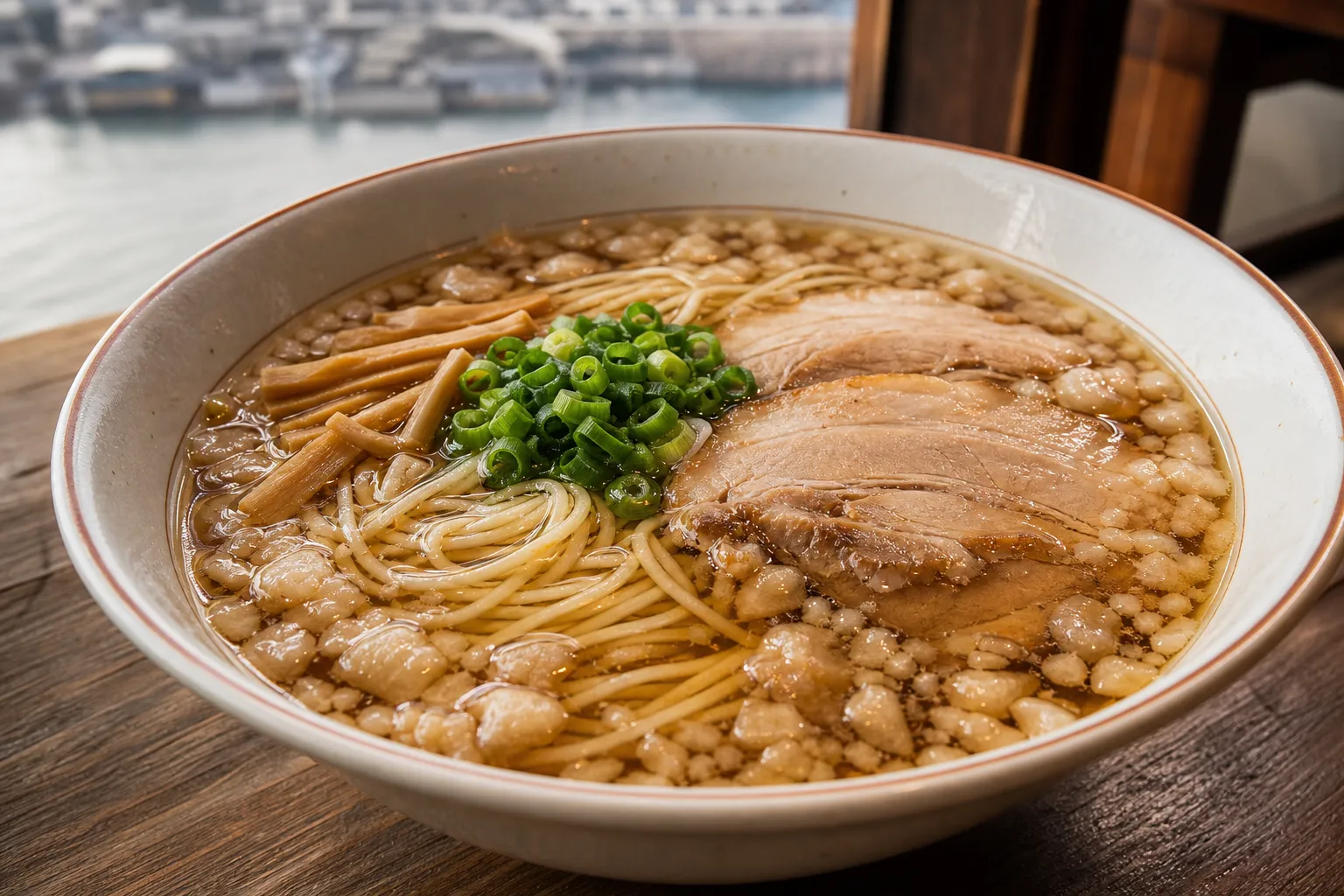
Local FoodOnomichi, Hiroshima
Onomichi Ramen (尾道ラーメン)
Clear soy broth from the Seto Inland Sea, studded with little pillows of melting pork fat that change everything. A hillside port town's bowl — light and deep at the same time, which shouldn't be possible.
June 26, 2026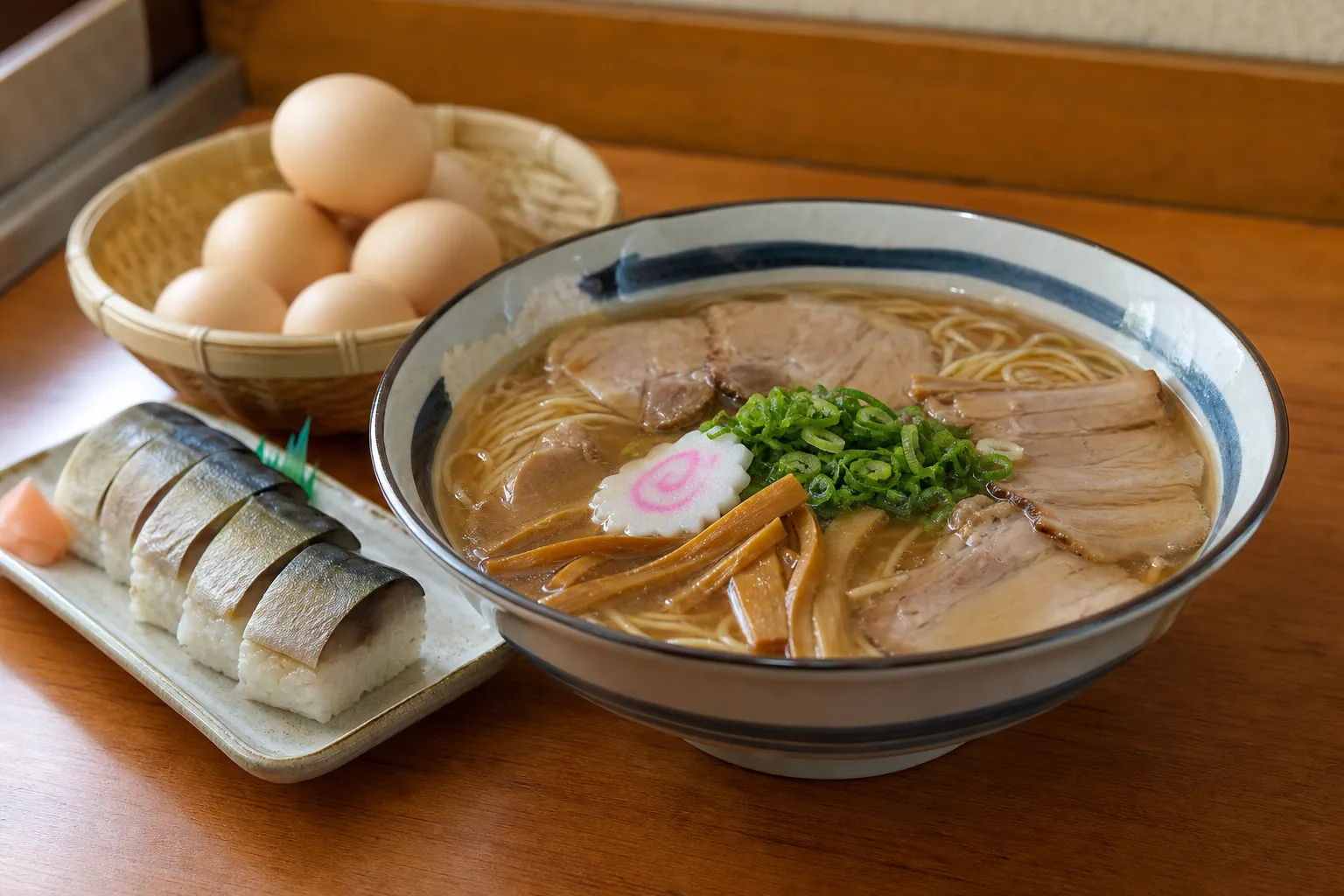
Local FoodWakayama, Wakayama
Wakayama Ramen (和歌山ラーメン)
Pork-bone-meets-soy broth, thin springy noodles — and a self-serve table loaded with pressed mackerel sushi and boiled eggs you grab while you wait. Locals don't even call it ramen. They call it the good stuff.
June 26, 2026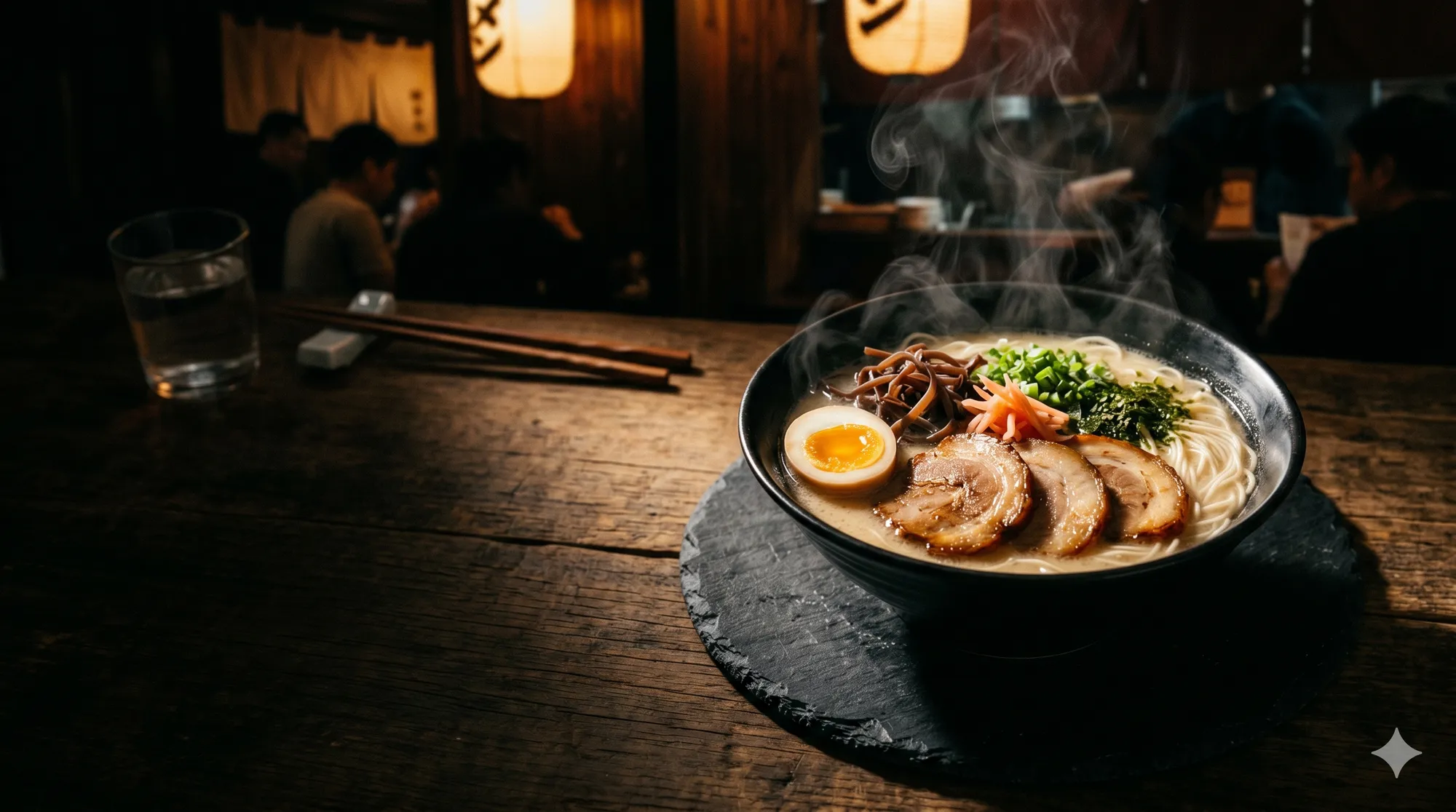
Local FoodFukuoka
Hakata Ramen (博多ラーメン)
Milky pork-bone broth, hair-thin straight noodles, and a refill system that lets you keep the party going. Fukuoka's tonkotsu ramen runs on its own vocabulary — learn three words and you're in.
June 15, 2026