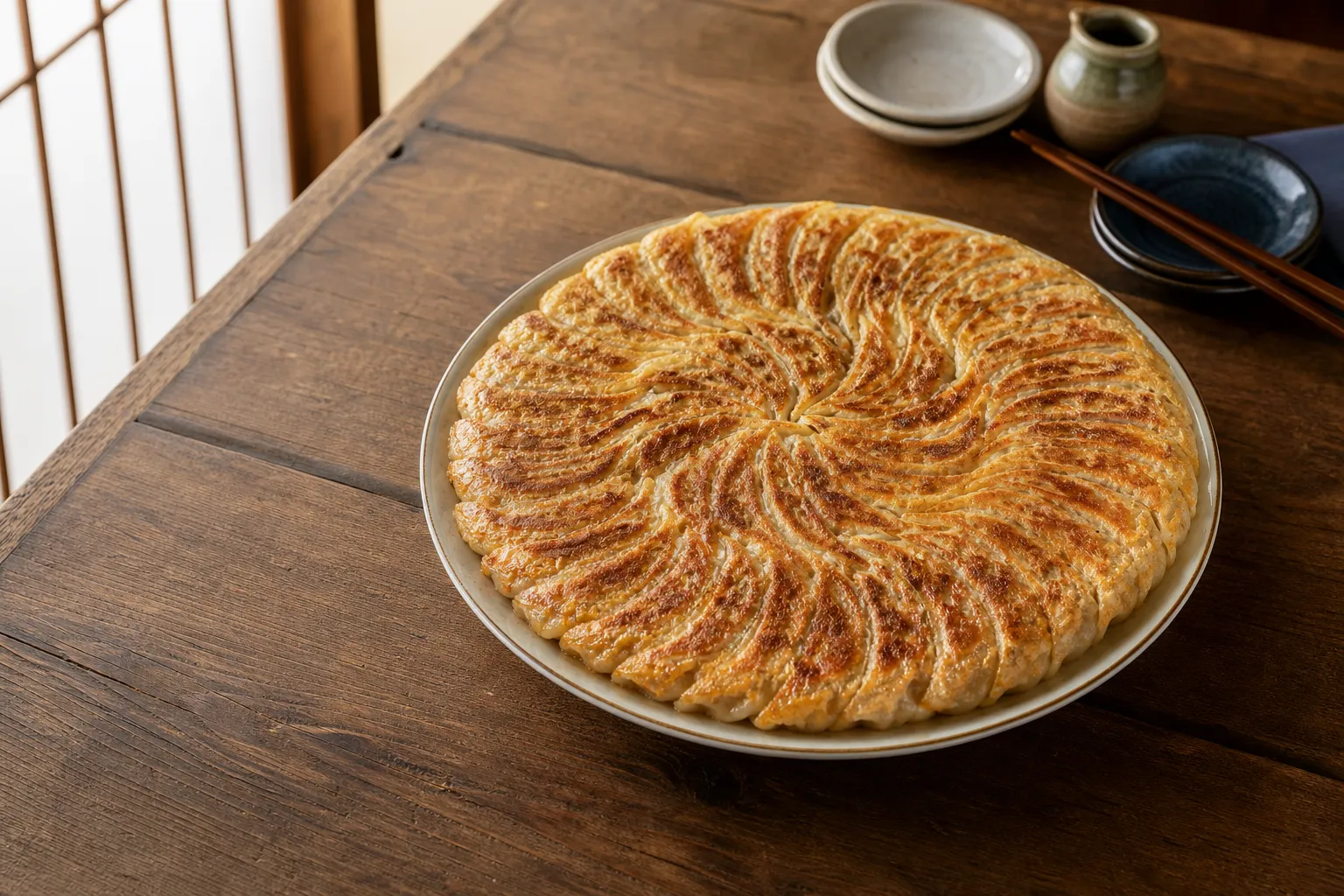
It landed on the table as one single object — not a plate of gyoza, a disc of gyoza, thirty-some dumplings fused together at the hip by their own crispy bottoms, spiraling out from the center like some kind of edible sundial. Somebody had to be the one to break it apart first, and for a second nobody at the table moved, like we were all waiting to see who'd disturb the pattern. Then someone just went for it and the spell broke and it was chaos, chopsticks everywhere, beer glasses clinking.
Share this dish


Thirty gyoza fused into one crackling golden disc, and the only way to serve it is whole, so the whole table has to fight over the first piece.
🍜 Planning a food trip to Fukushima?Add this dish to my Food Trip →
 Add this dish to my Food Trip →
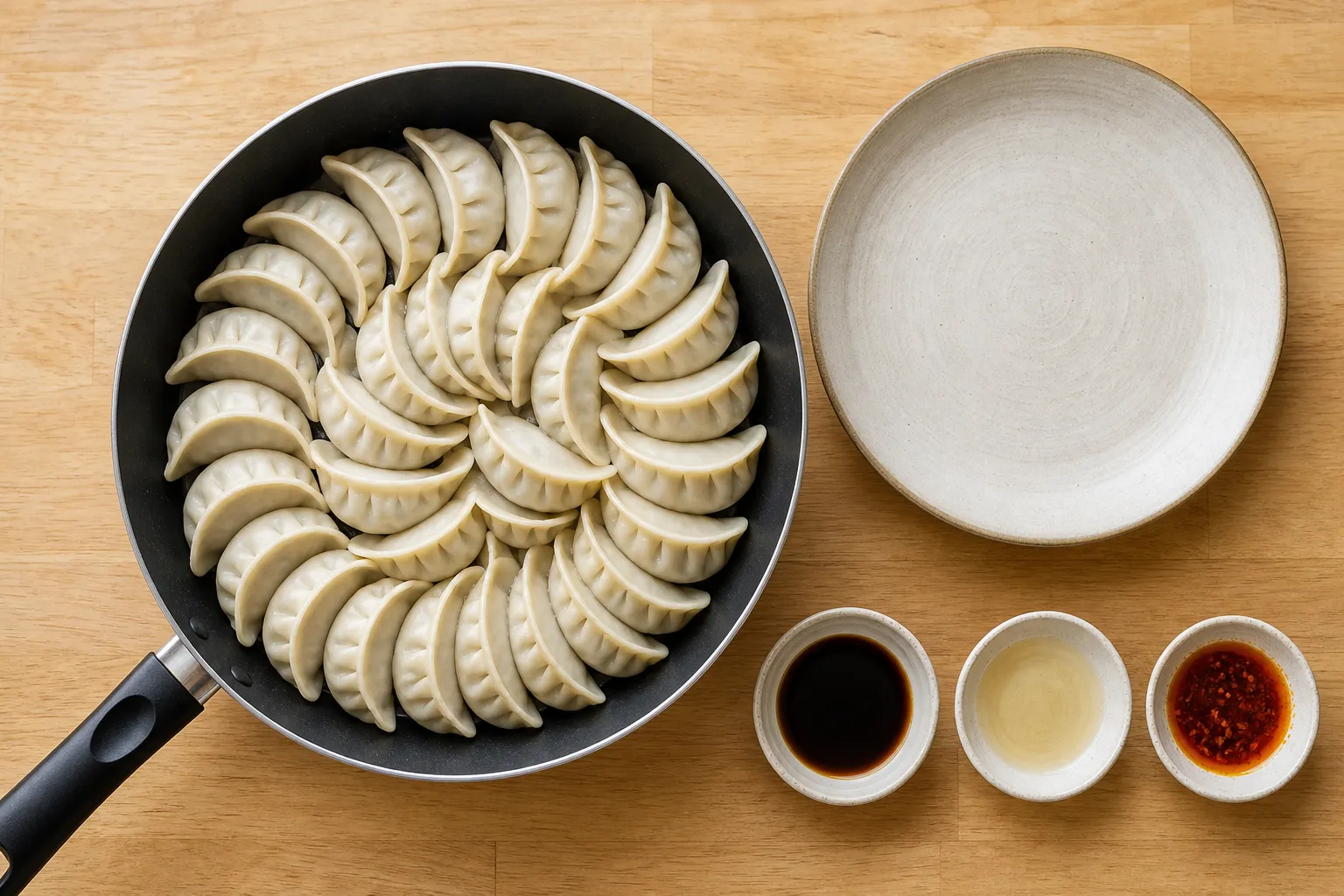
This is enban gyoza (円盤餃子) — literally "disc gyoza" — Fukushima's signature move on pan-fried dumplings. Regular yaki-gyoza go into the pan in a neat single row; enban gyoza go in packed tight in a spiral or concentric circle, so tight that as they cook, their bottoms fuse into one connected crispy sheet. Flip the whole thing out onto a plate and you get exactly what the name promises: one round, one disc, one crackling golden object that happens to be made of dozens of individual dumplings.
A Fukushima diner trick that became a citywide obsession
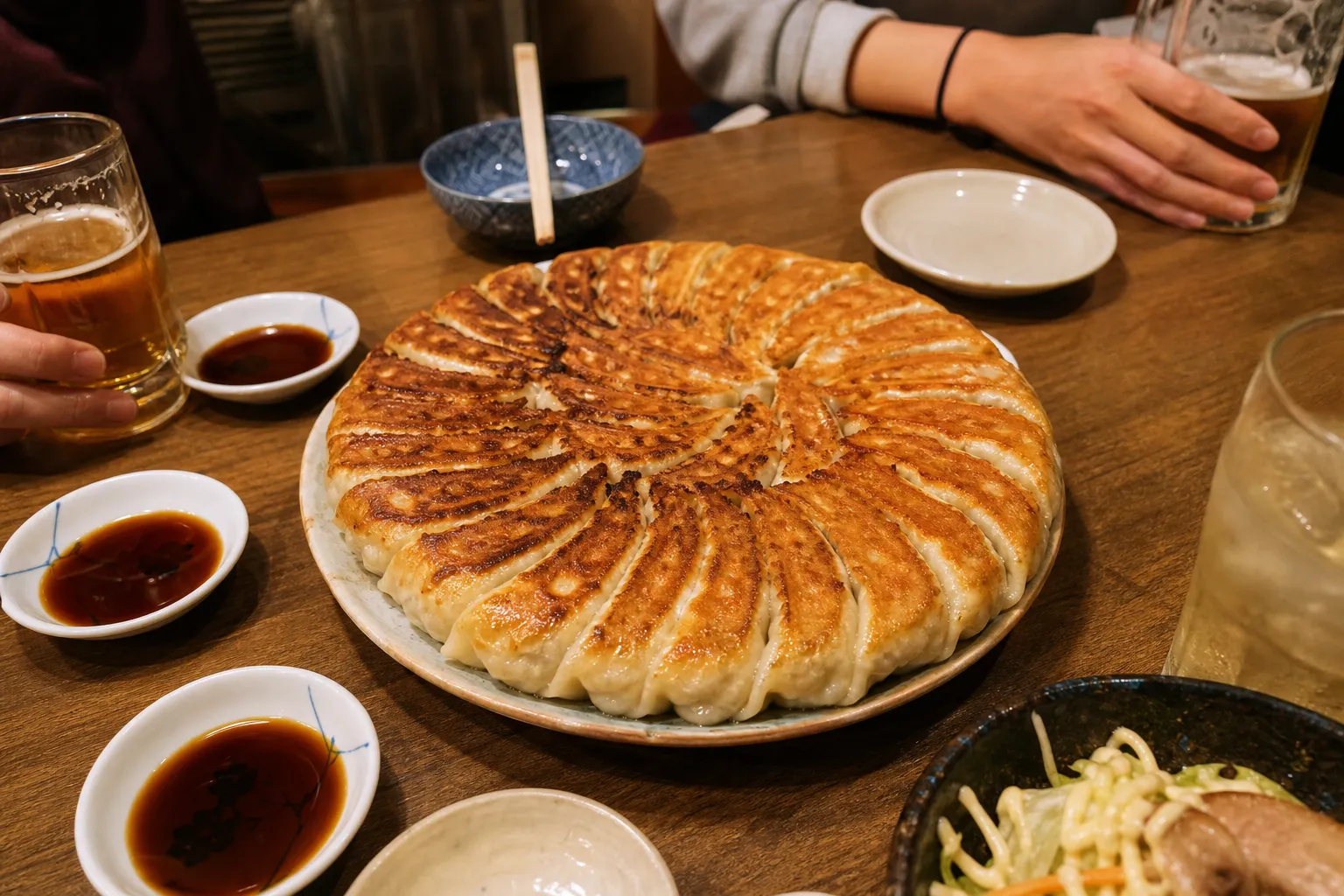
Fukushima City has been serious about gyoza since the postwar years, when returnees and cooks influenced by northern Chinese cooking styles started opening dumpling shops around the station. Somewhere along the way, local cooks started arranging their gyoza in circles in the pan instead of rows — partly practical (you can fit more dumplings into a round pan this way), partly showmanship (nothing else on the table looks like this when it arrives). Either way, it stuck, and now Fukushima runs its own gyoza-shop map and rivalry the same way ramen towns argue over broth.
I love that the format itself became the selling point. It's still just pork and cabbage in a wrapper — but the presentation turns a humdrum side dish into the centerpiece of the meal, and I watched an entire table of strangers get genuinely excited about geometry. I have never seen dumplings generate this much table-side enthusiasm anywhere else.
The fused bottoms are the whole point
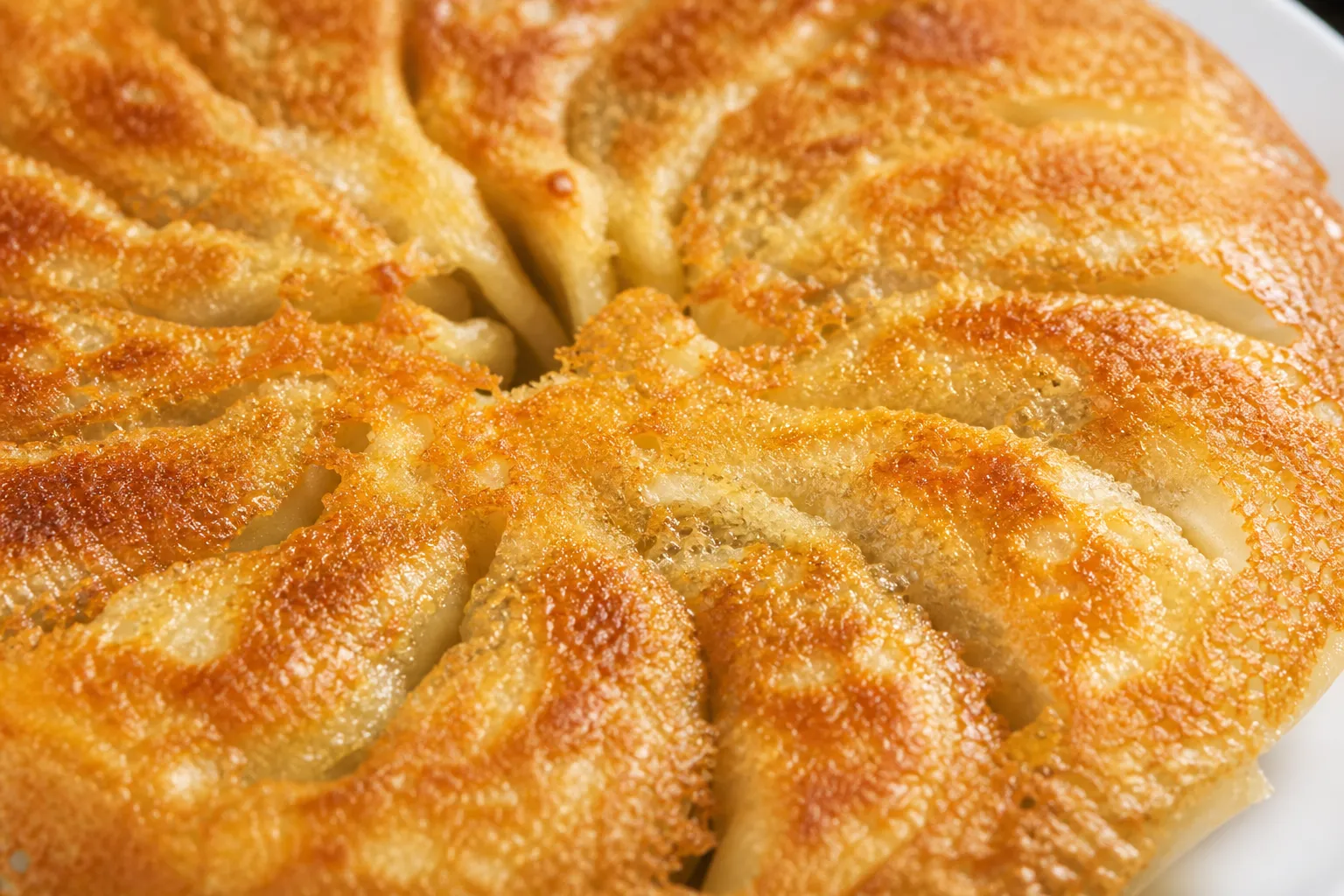
Look at the underside of a disc and you'll see the trick clearly: a continuous golden-brown lattice where the dumplings' bottoms cooked together into one connected crust, crisp enough to hold the whole shape together when it's flipped onto the serving plate. Break a piece off and the crust cracks like a good pancake edge, giving way to the soft, steamed top of the wrapper and a juicy pork-and-cabbage filling underneath.
That combination — shatter-crisp bottom, tender everything else — is what makes enban gyoza more satisfying than a normal plate of the same dumplings. You're basically getting a gyoza and a savory cracker in every single bite. Dip it in the usual soy-vinegar-chili oil mix, and honestly, I'd argue the crispy bottom alone is worth the trip.
How it's made
- Mix ground pork with finely chopped cabbage, garlic, ginger, and seasonings for the filling
- Wrap the filling in thin gyoza skins, pleating and sealing each one by hand
- Arrange the raw gyoza tightly in a circular spiral pattern in a round frying pan
- Add a little oil, sear the bottoms, then pour in water and cover to steam through
- Uncover and let the water evaporate so the bottoms crisp back up and fuse together
- Flip or slide the entire connected disc out onto a large serving plate
- Serve whole, with soy sauce, vinegar, and rayu (chili oil) on the side for dipping
Before you go — for the first-timer
Your questions, answered honestly
"How do I actually eat this without wrecking the shape?" — Someone breaks off a wedge first, like a pizza — chopsticks or a small spatula usually work. Don't be shy about being the one to start.
"Is it different from normal gyoza?" — Same filling and wrapper as regular yaki-gyoza; the difference is purely how it's arranged and cooked in the pan, which fuses the bottoms into one crispy sheet.
"What's the dipping sauce?" — The standard combo: soy sauce, rice vinegar, and rayu (chili oil), mixed to taste at the table. Adjust the chili oil to your own spice tolerance.
"Can one order feed the table?" — Usually yes — a full disc typically holds 20–30+ dumplings, built for sharing. Order one to start and add more if the table's still hungry.
What the staff will ask you
| You'll hear | Romaji | Meaning | Just say |
|---|---|---|---|
| 何枚にしますか? | Nanmai ni shimasu ka? | "How many discs?" | Ichimai onegaishimasu (one, please) |
| タレは付けますか? | Tare wa tsukemasu ka? | "Want dipping sauce?" | Hai, onegaishimasu (yes please) |
| ラー油は使いますか? | Rāyu wa tsukaimasu ka? | "Using chili oil?" | Sukoshi dake (just a little) |
To order, just say "Enban gyoza kudasai" (円盤餃子ください) — "Disc gyoza, please."
Where to eat it
- Fukushima City — the dish's home turf, with a cluster of long-running gyoza specialty shops near and around Fukushima Station.
- Fukushima Gyoza Kai (餃子会) member shops — a local association of gyoza restaurants across the city, each with its own take on the disc format and dipping sauce.
- Check before you go — popular shops can have lines at peak dinner hours and may sell out of gyoza before closing, so an early visit or reservation where possible is safer.
Soul Score
Local Roots4/5
First-Timer Friendly5/5
Adventure Level3/5
Comfort Level5/5
Travel Worthy3/5
These scores are one obsessed eater's gut feeling — not a verdict. A low number isn't a bad mark, just a different kind of adventure.
Know someone planning Japan?
← All Articles
Local Food · Fukushima
Still hungry?
Eat more from Fukushima
Local FoodAizu, Fukushima
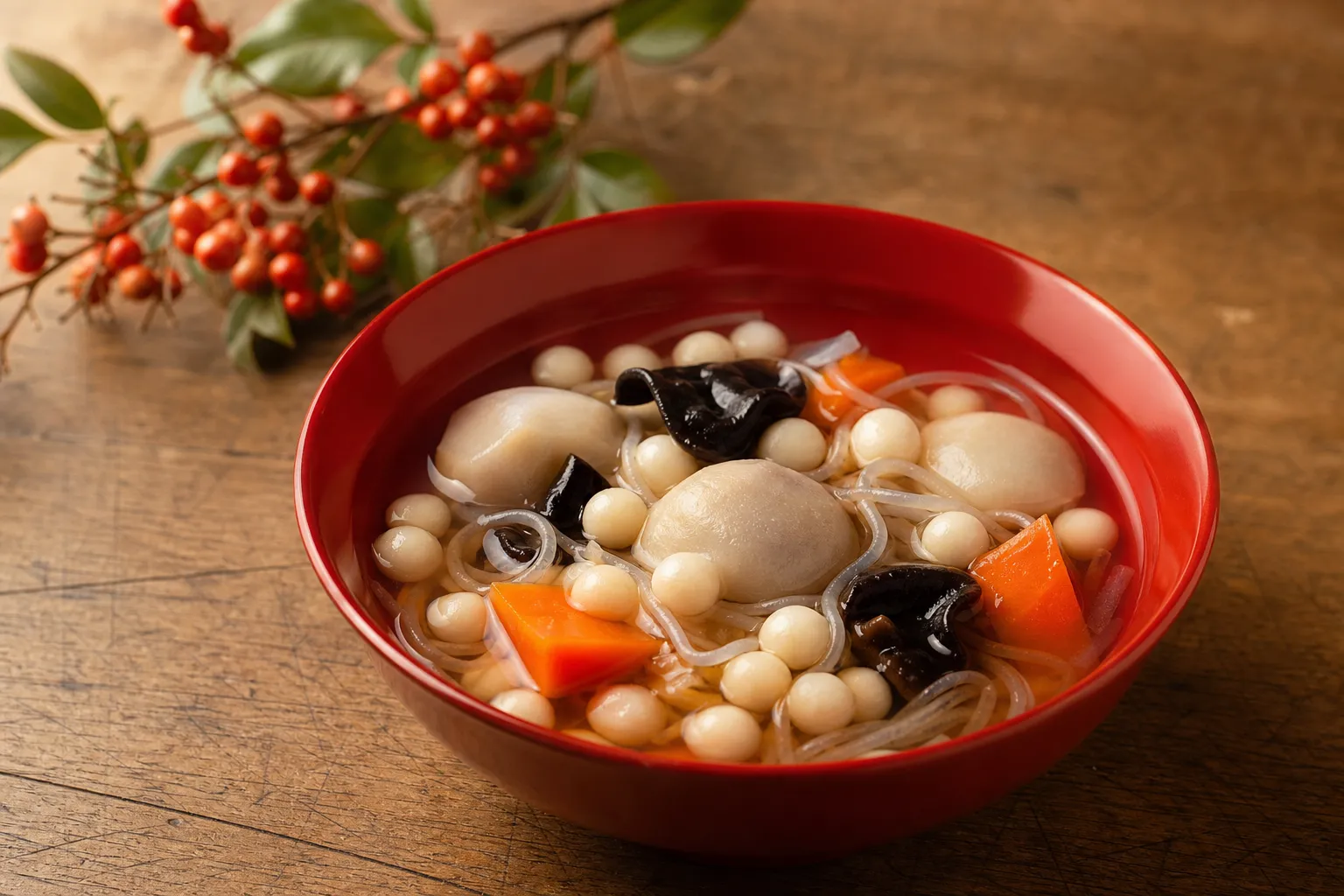
Kozuyu (こづゆ)
A tiny red lacquer bowl of soup that a whole region reaches for whenever something matters — weddings, New Year, the moments you want to remember.
July 5, 2026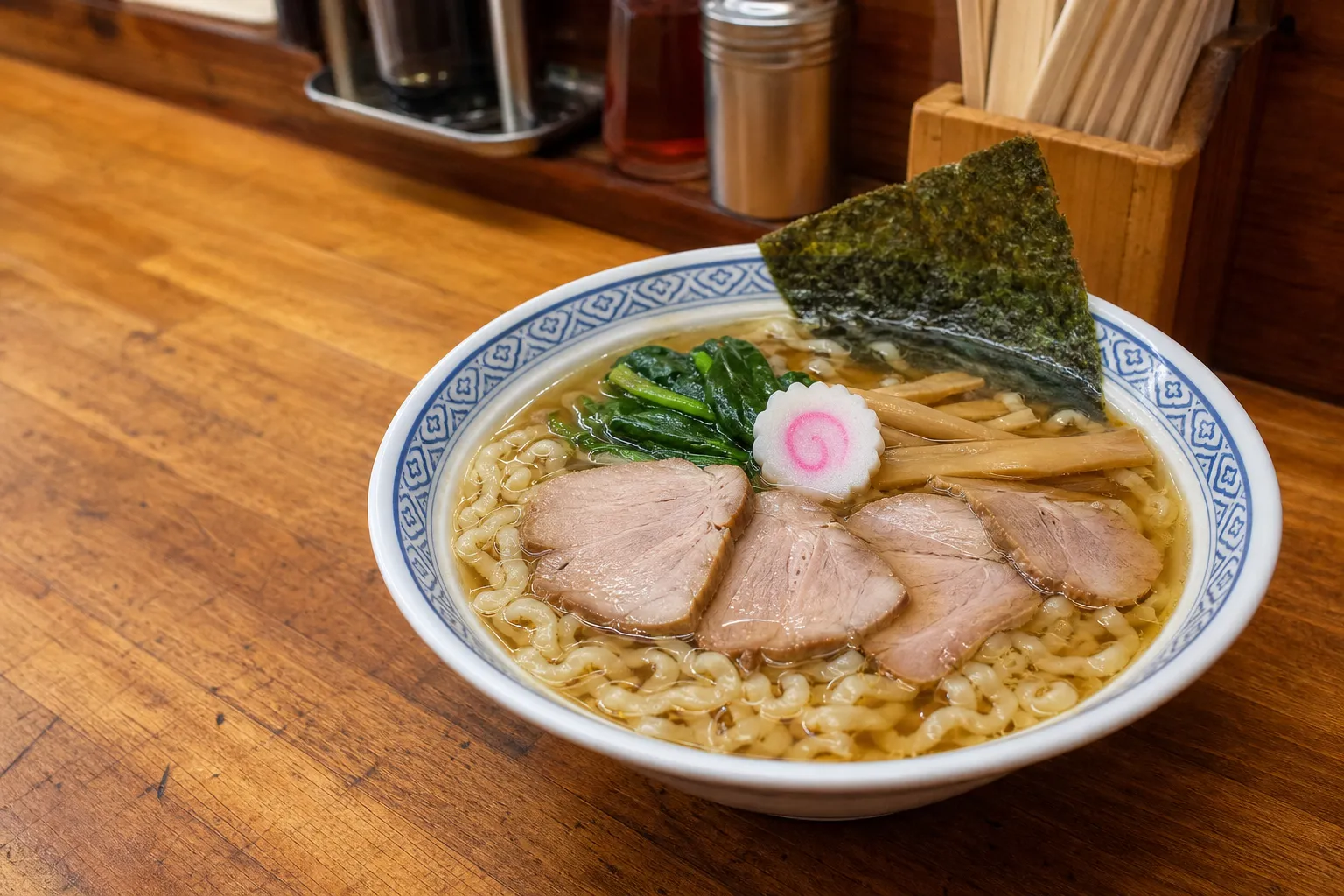
Local FoodShirakawa, Fukushima
Shirakawa Ramen (白河ラーメン)
Noodles so wide and wavy they look hand-torn, floating in a broth so clear you can read the bowl's pattern straight through it.
July 4, 2026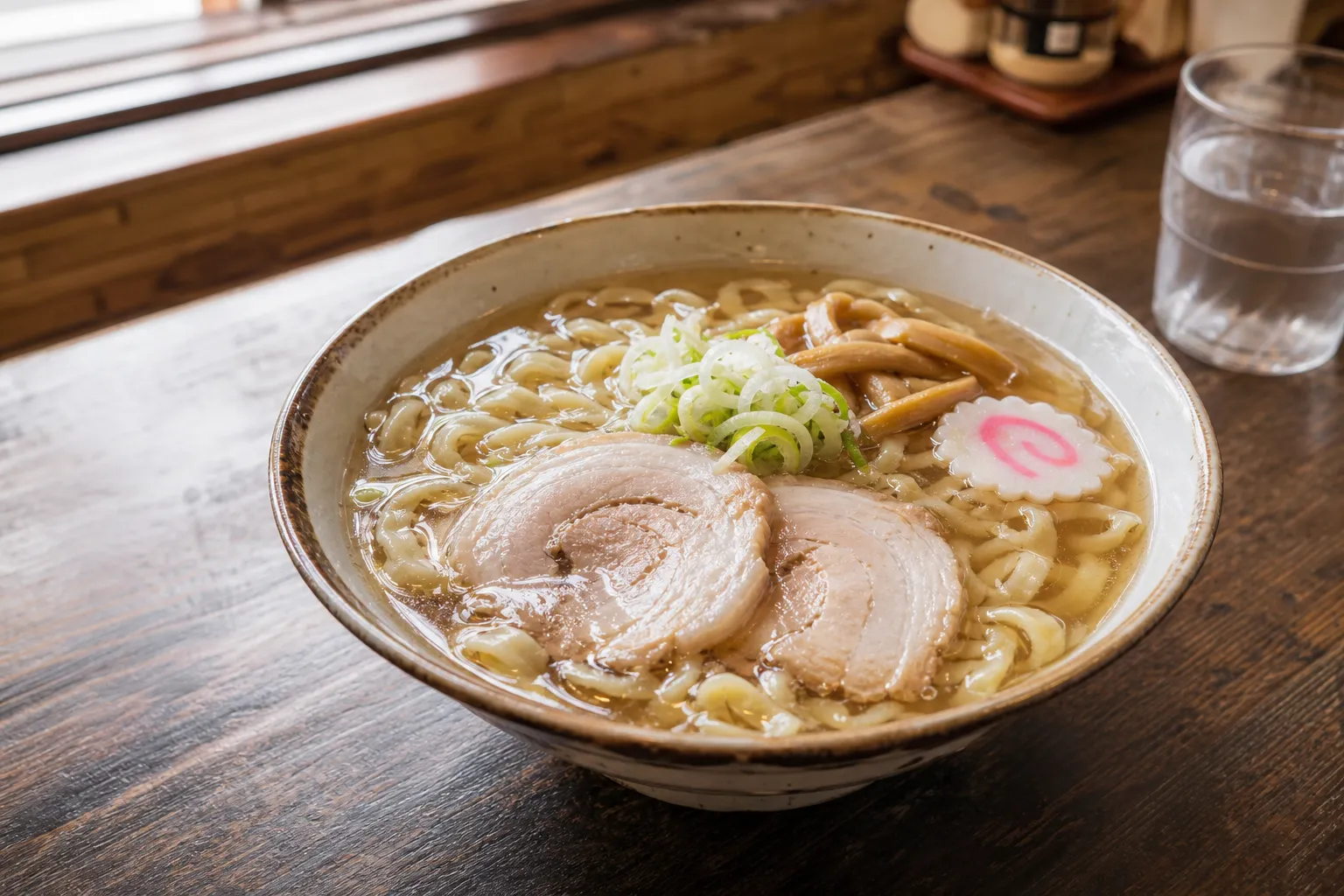
Local FoodKitakata, Fukushima
Kitakata Ramen (喜多方ラーメン)
Flat, wide, curly noodles in a clear soy broth so clean you can see the bottom of the bowl — and a town so obsessed it eats ramen for breakfast. This is comfort with the volume turned down, on purpose.
June 26, 2026