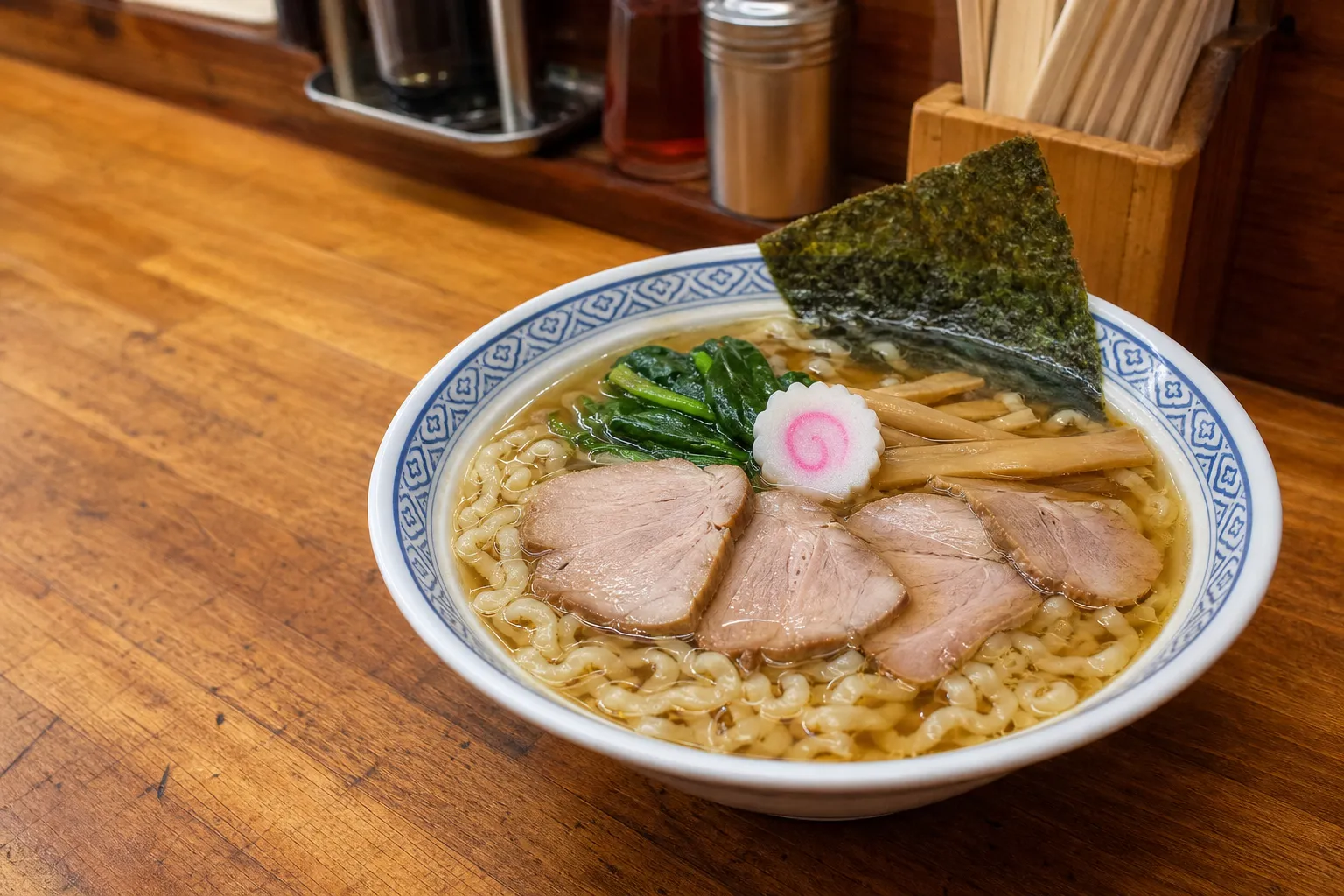
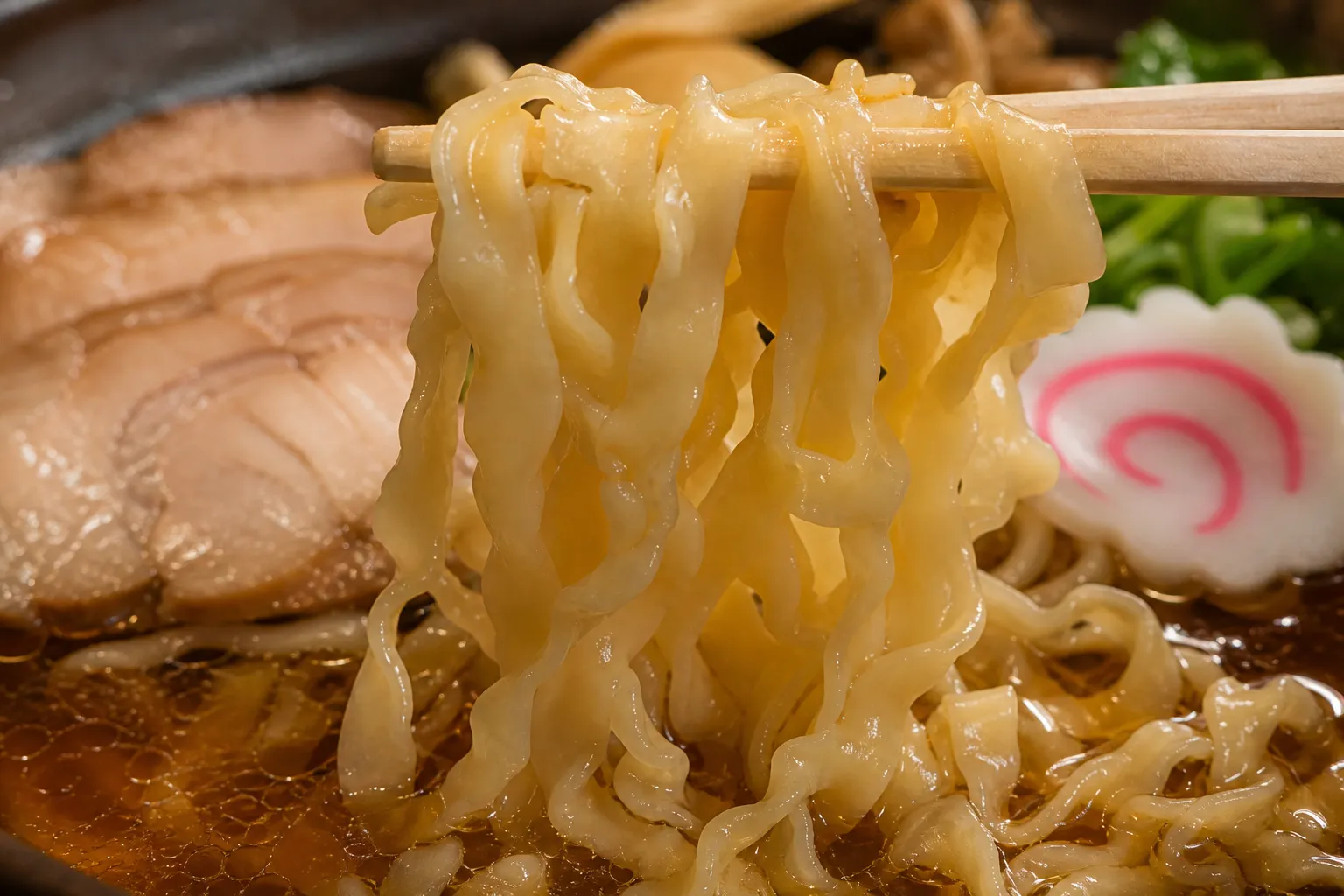
I lifted the chopsticks and the noodle just kept coming. And coming. Wide, flat, rippling like a ribbon someone crimped by hand — because someone did, actually, by hand, that morning, a few hours before it hit my bowl.
Share this dish


Noodles so wide and wavy they look hand-torn, floating in a broth so clear you can read the bowl's pattern straight through it.
🍜 Planning a food trip to Fukushima?Add this dish to my Food Trip →
 Add this dish to my Food Trip →
That's the first thing that tells you Shirakawa ramen isn't like the ramen you've probably had. Most ramen noodles are machine-cut, thin, uniform. These are te-uchi — hand-pulled and hand-cut, thick, irregular, deliberately wavy — and they carry broth in every fold instead of just floating in it. The second thing is the broth itself: a clean, pale, almost see-through shoyu-chicken stock, nothing like the cloudy tonkatsu-white bowls or the deep miso ones you might already know. It looks deceptively plain sitting there. It is not plain. It's just honest.
A small castle town's quiet noodle obsession
Shirakawa, a modest city in southern Fukushima known historically for its castle and its position as a gateway between the Kanto and Tohoku regions, built its ramen identity slowly rather than through one famous founding shop. Multiple small, independent noodle-makers across the town — each pulling and cutting their own noodles by hand, a genuinely labor-intensive tradition most ramen shops elsewhere abandoned decades ago for machines — collectively created a local style distinct enough that "Shirakawa Ramen" is now recognized as one of Fukushima's three defined regional ramen styles.
What I find genuinely admirable is that this wasn't a marketing campaign. It was just a lot of individual shopkeepers, generation after generation, refusing to give up the hand-pulled noodle because it tastes better in that particular clear broth. I ordered a second bowl the next morning just to make sure I wasn't imagining the difference. I wasn't.
What actually separates it from every other bowl of ramen
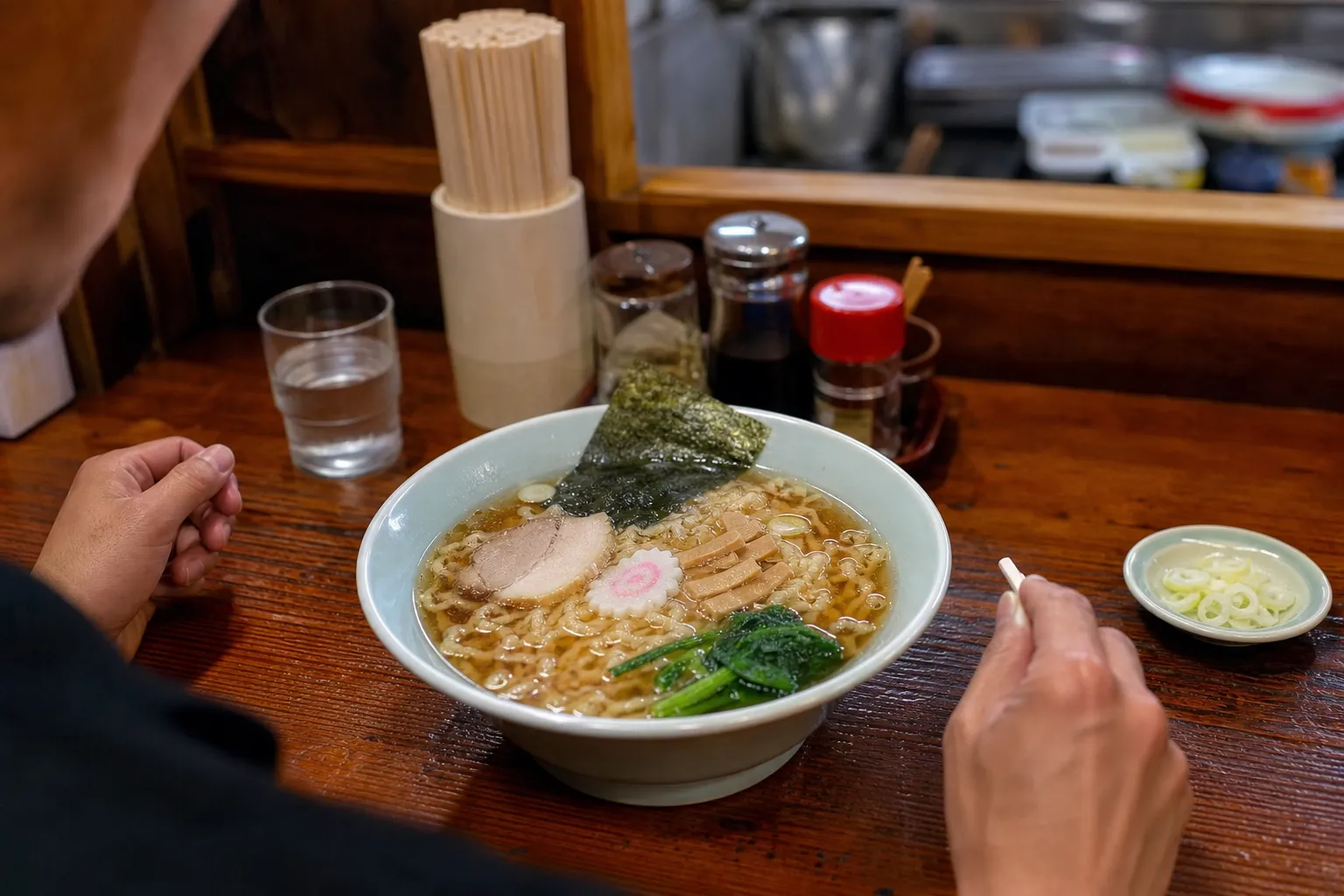
The broth is a clear shoyu-based chicken stock — light-bodied, savory, and completely without the fatty richness of a tonkotsu bowl. It's the kind of soup you can drink to the very last spoonful and still feel like you've eaten something clean. Against that, the noodles do all the textural heavy lifting: wide, flat, and deliberately wavy from the hand-cutting, with a soft-but-chewy bite that's completely different from the thin, springy noodles most ramen shops serve.
Toppings stay simple and let the broth-and-noodle combination stay the star: a few slices of tender chashu, menma (fermented bamboo shoots), a wilted handful of spinach or other greens for a slight bitterness, a sheet of nori, and the pink-swirled naruto fish cake balanced on top like a little flag. Nothing here is trying to overwhelm you. It's a bowl built for eating the whole thing without getting tired of it — the definition of comfort food, in my book.
How the noodles get that shape
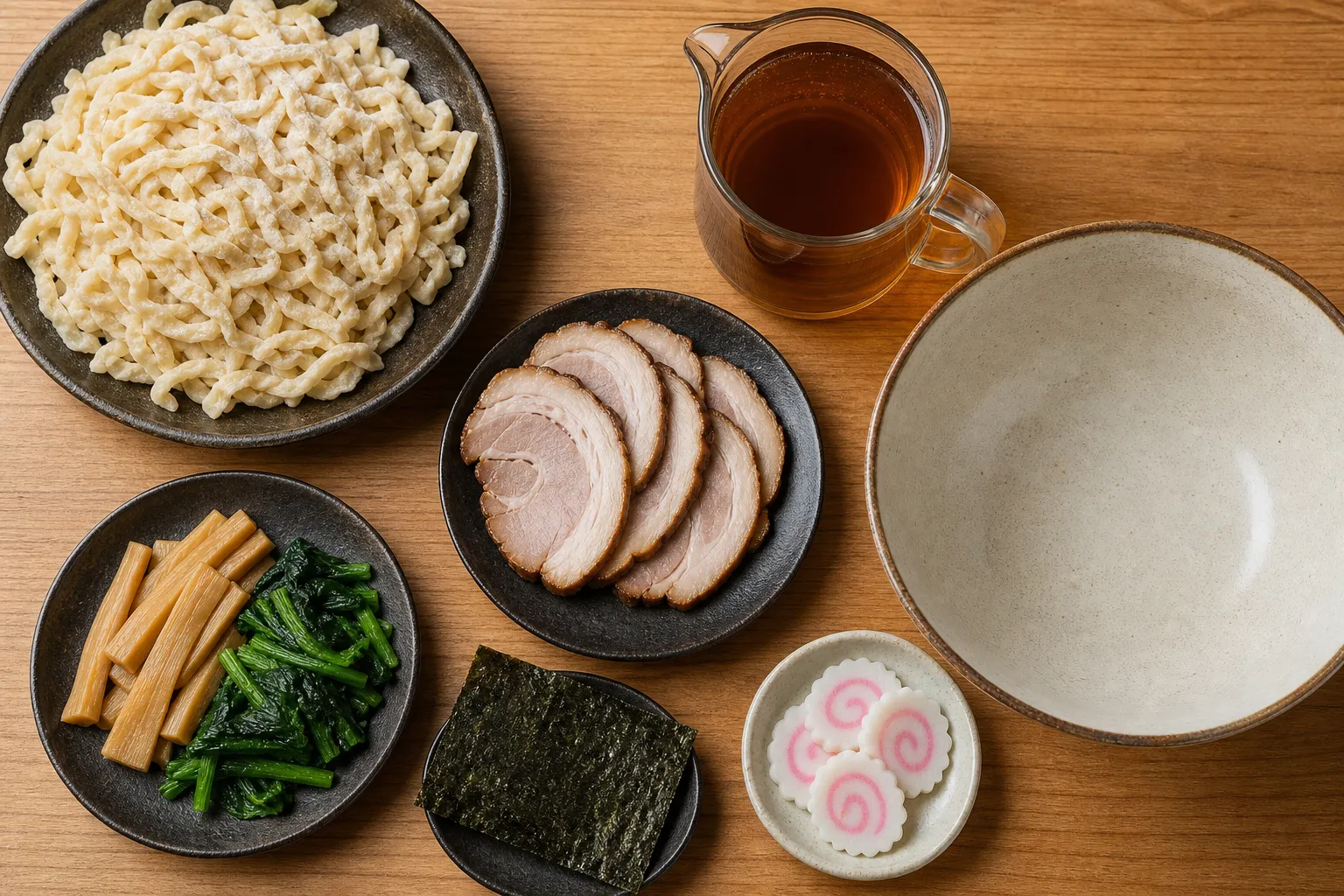
- Dough is mixed and rested, then rolled out by hand rather than run through a noodle-cutting machine
- It's folded and hand-cut into wide, uneven strips — the irregularity is the point, not a flaw
- A clear chicken-and-shoyu broth simmers separately, kept light rather than reduced down thick
- Noodles are boiled to order, just long enough that they stay chewy rather than soft
- Assembled with chashu, menma, greens, nori, and naruto, then served immediately while the noodles still hold their shape
Watching a shop owner cut these by hand, fast and confident after decades of practice, is its own small show. I tried to imitate the motion with my hands on the walk back to my hotel room. I do not recommend attempting this at home either.
Before you go — the stuff that actually matters
Your questions, answered honestly
"Is this the same as Kitakata ramen?" — No, and don't mix them up in front of a Fukushima local. Kitakata (also in Fukushima) is famous for its own hand-cut flat noodles too, but the two towns' styles and broths developed independently and each has its own proud fans. Ask for "Shirakawa ramen" specifically if that's what you came for.
"Why is the broth so clear?" — That's the whole character of the style — a light chicken-shoyu stock rather than a heavy, boiled-down pork bone broth. It's meant to be delicate, not deep and fatty.
"Are the noodles really cut by hand at every shop?" — At the shops that built the town's reputation, yes — that's the defining feature. It's worth asking if you want to be sure you're getting the real te-uchi experience rather than a machine-cut bowl.
"Can I ask for extra noodles?" — Many shops offer kaedama (a noodle refill) even for hand-cut styles, though it's less universal than at tonkotsu specialists — just ask, and they'll tell you if it's available.
"Is it filling enough for a full meal?" — Very much so — the noodles are thick and substantial even though the broth is light. Most people leave completely satisfied.
What the staff will ask you
| You'll hear | Romaji | Meaning | Just say |
|---|---|---|---|
| 麺の量は普通で大丈夫ですか? | Men no ryō wa futsū de daijōbu desu ka? | "Regular noodle portion okay?" | Hai, daijōbu desu (yes, that's fine) |
| チャーシュー増しできます | Chāshū mashi dekimasu | "We can add extra chashu" | Onegaishimasu (yes, please) / Daijōbu desu (no thanks) |
| 味は濃いめ、薄めどちらが好みですか? | Aji wa koime, usume dochira ga konomi desu ka? | "Stronger or lighter flavor?" | Futsū de onegaishimasu (regular, please) |
| 食券をお持ちですか? | Shokken o omochi desu ka? | "Do you have a ticket?" | Kore desu (here it is) — hand over the machine ticket |
| お冷やどうぞ | Ohiya dōzo | "Here's your water" | Arigatō gozaimasu (thank you) |
To order, just say "Shirakawa rāmen kudasai" (白河ラーメンください) — "Shirakawa ramen, please."
Where to eat it
- Central Shirakawa, around JR Shin-Shirakawa and Shirakawa Stations — the town's core cluster of long-running, family-run hand-cut noodle shops.
- Near Shirakawa Castle (Komine Castle) — several noodle shops sit within walking distance if you're combining the bowl with a castle visit.
- Roadside and highway rest stops along Route 4 through Shirakawa often carry local shops' versions too, for a quicker stop.
Many of these are small, individually run shops with limited hours and occasional closed days, so check current hours before making a special trip.
Soul Score
Local Roots5/5
First-Timer Friendly4/5
Adventure Level3/5
Comfort Level5/5
Travel Worthy4/5
These scores are one obsessed eater's gut feeling — not a verdict. A low number isn't a bad mark, just a different kind of adventure.
Know someone planning Japan?
← All Articles
Local Food · Shirakawa, Fukushima
Still hungry?
Eat more from Fukushima
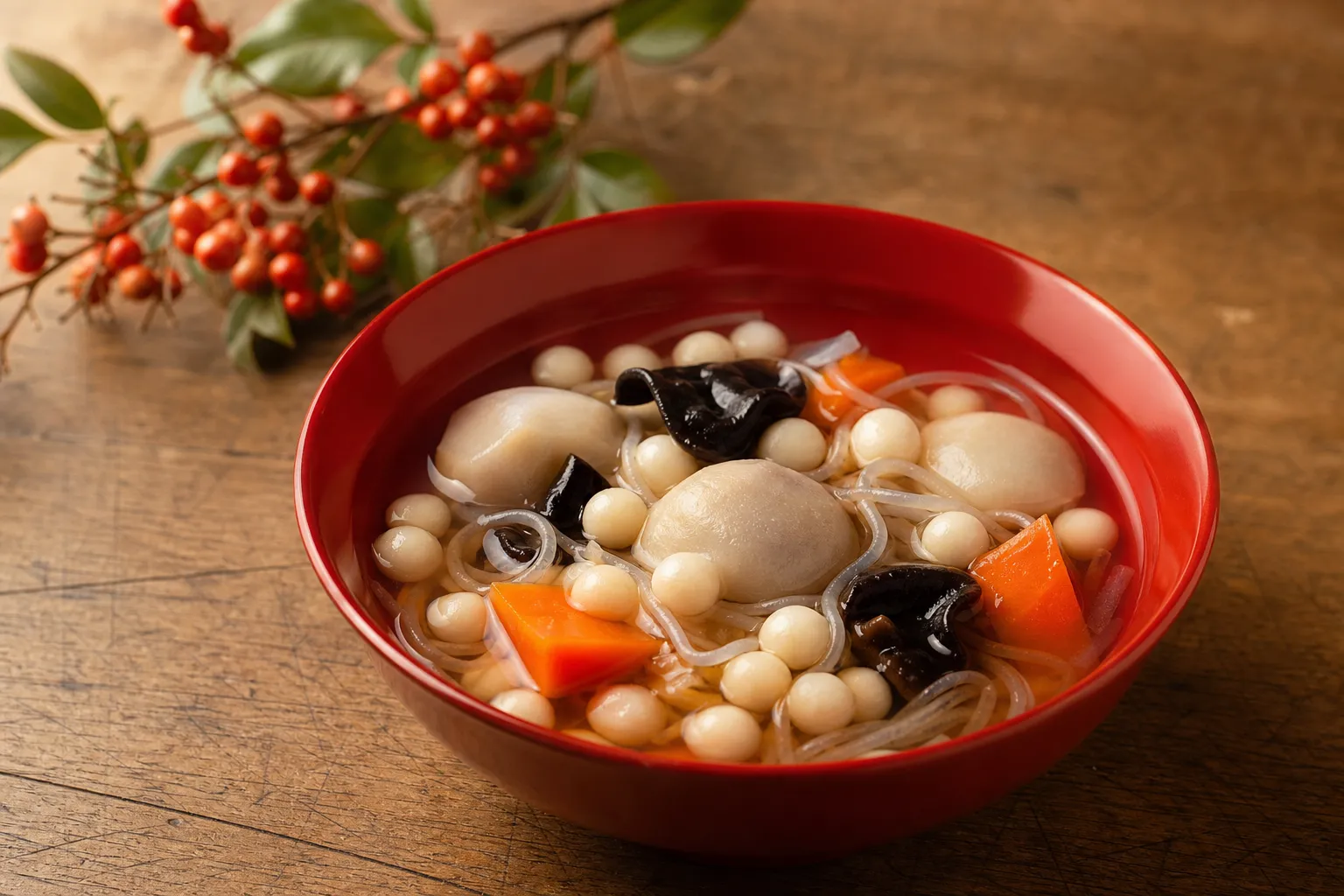
Local FoodAizu, Fukushima
Kozuyu (こづゆ)
A tiny red lacquer bowl of soup that a whole region reaches for whenever something matters — weddings, New Year, the moments you want to remember.
July 5, 2026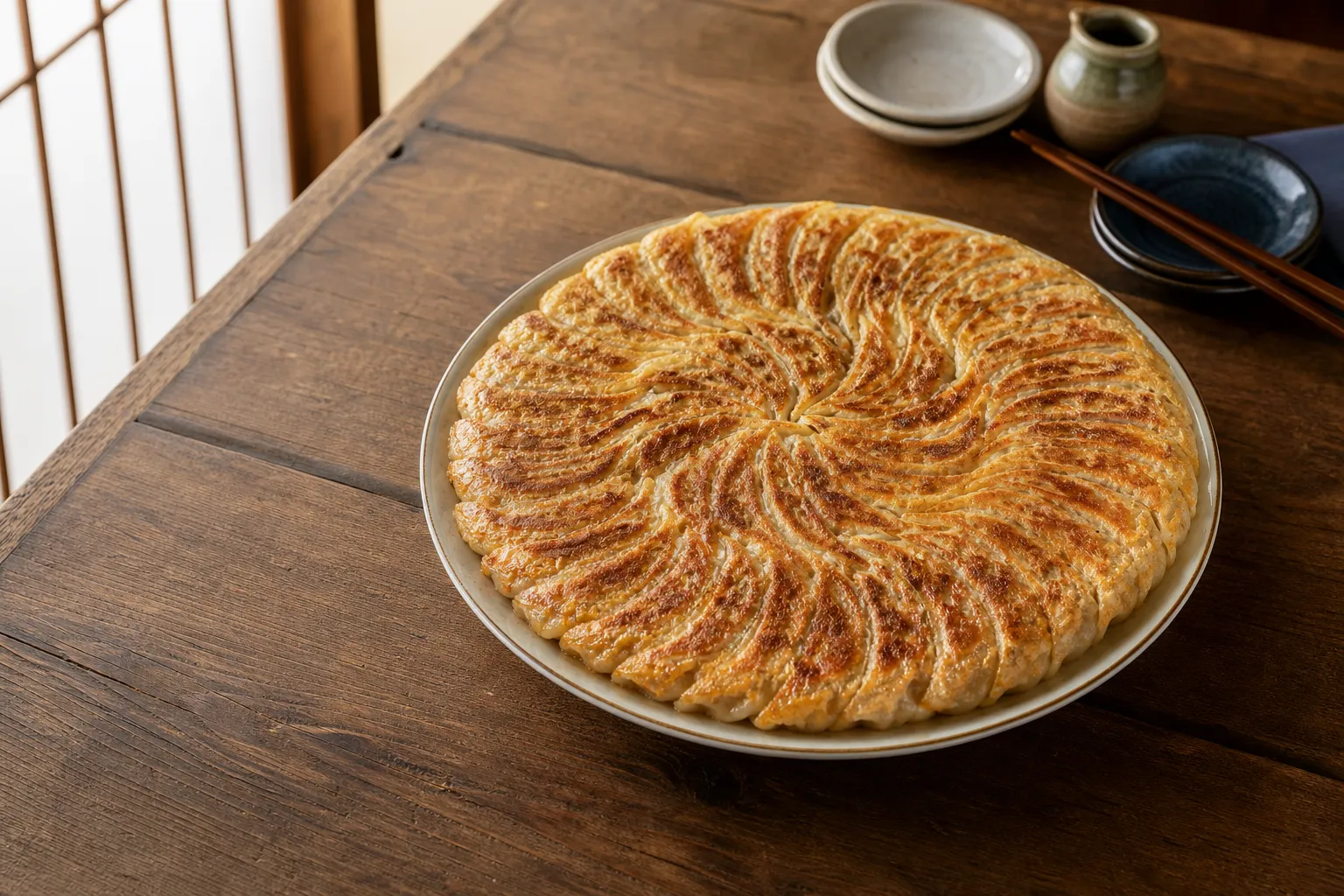
Local FoodFukushima
Enban Gyoza (円盤餃子)
Thirty gyoza fused into one crackling golden disc, and the only way to serve it is whole, so the whole table has to fight over the first piece.
July 4, 2026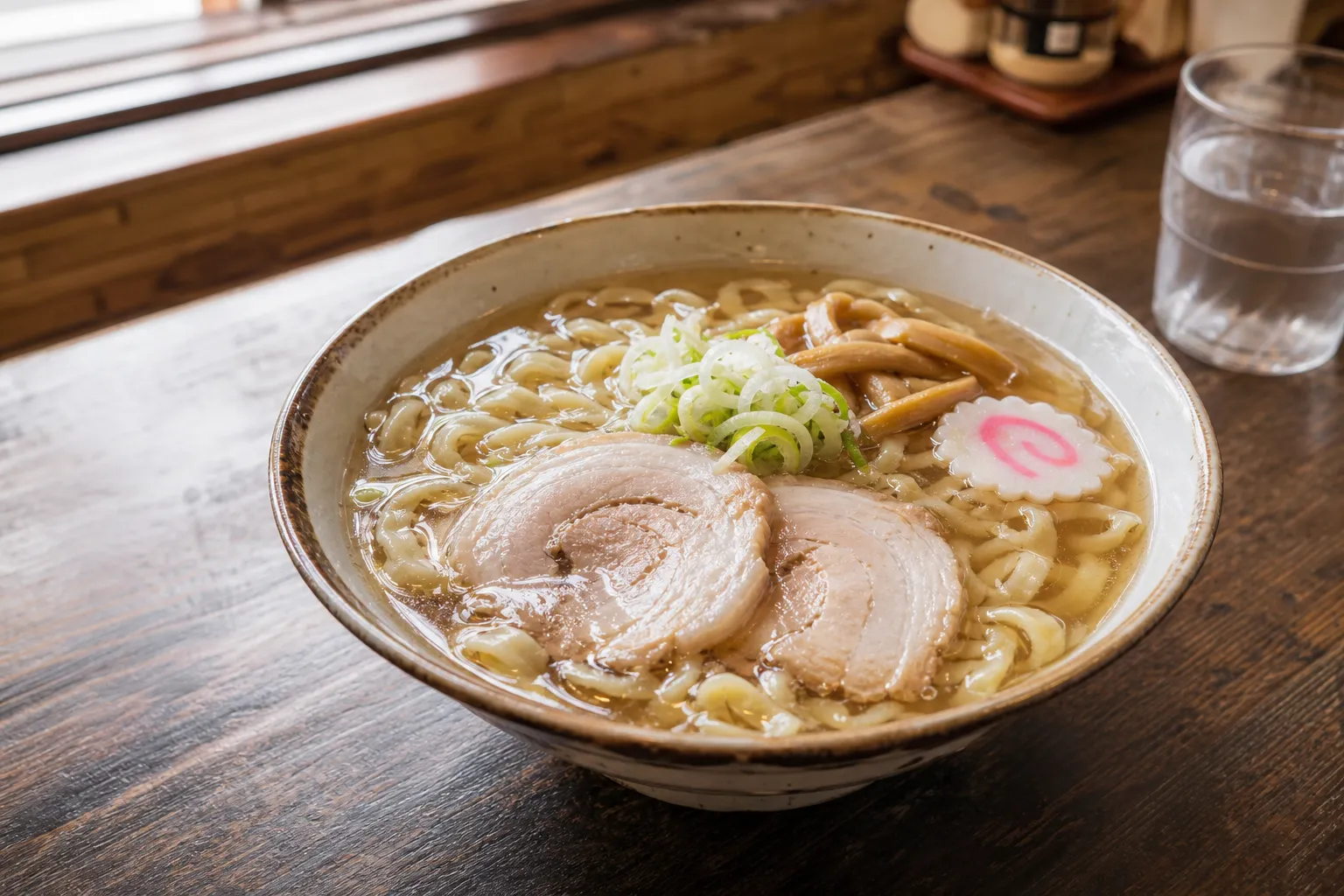
Local FoodKitakata, Fukushima
Kitakata Ramen (喜多方ラーメン)
Flat, wide, curly noodles in a clear soy broth so clean you can see the bottom of the bowl — and a town so obsessed it eats ramen for breakfast. This is comfort with the volume turned down, on purpose.
June 26, 2026