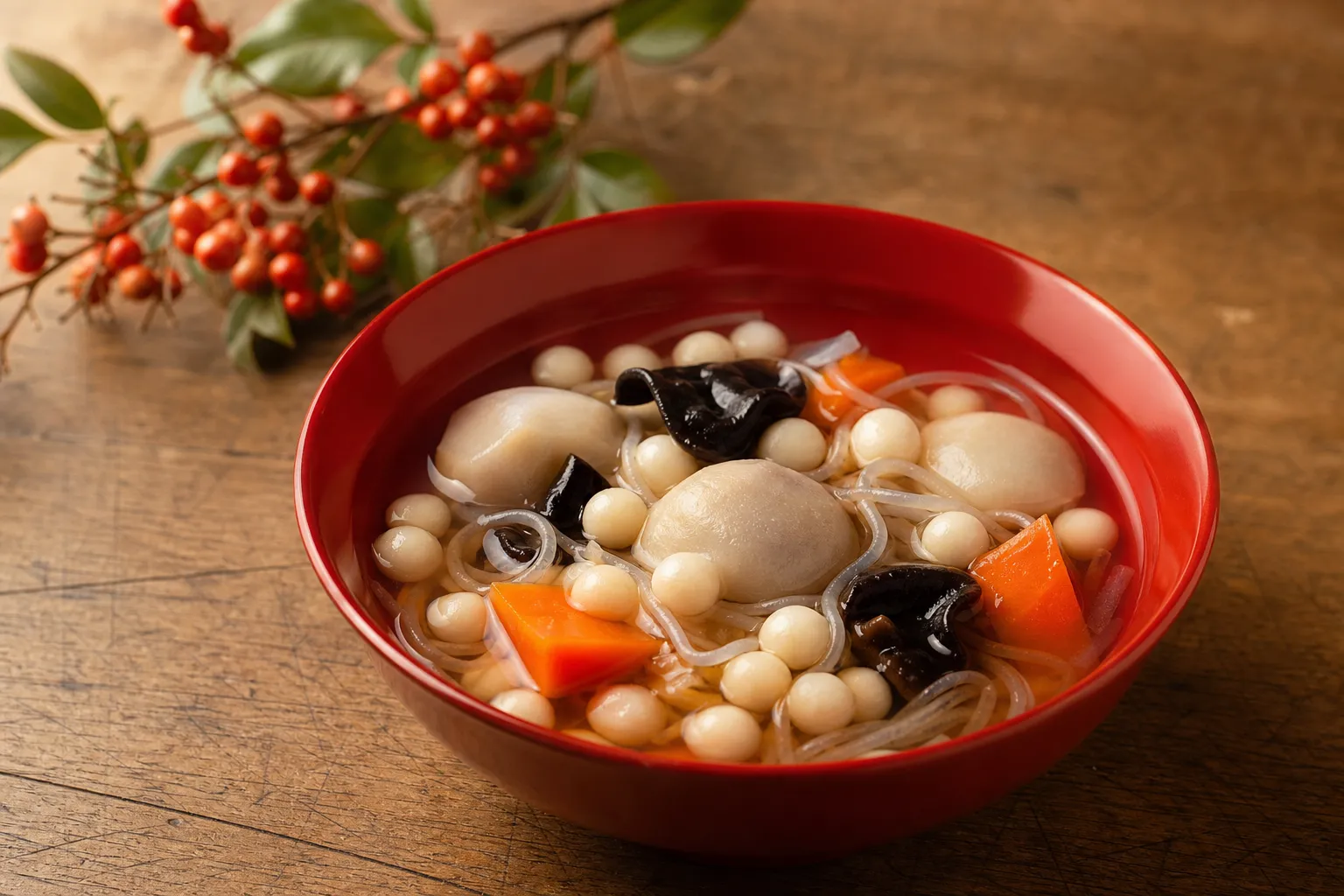
The bowl was almost too small to be serious — a little cup of red lacquer that fit in one palm — and I nearly overlooked it on the tray. Then I tasted the broth and understood I'd been about to disrespect something people in Aizu have loved for centuries. Sweet, deep, faintly of the sea, and completely clear. I put the bowl down and thought, okay, this region knows something I don't.
Share this dish


A tiny red lacquer bowl of soup that a whole region reaches for whenever something matters — weddings, New Year, the moments you want to remember.
🍜 Planning a food trip to Fukushima?Add this dish to my Food Trip →
 Add this dish to my Food Trip →
What they know is kozuyu (こづゆ), and the first thing to understand is that this is a soup with a job. It's the dish Aizu in Fukushima brings out for the occasions that matter — weddings, New Year, festivals, the arrival of someone important. The broth is drawn from dried scallops, which gives it that quiet oceanic depth even though Aizu sits landlocked deep in the mountains. Floating in it: taro, carrot, wood-ear mushroom, thread konnyaku, and tiny round balls of wheat gluten called mamefu. It's served in a small red lacquer bowl, and here's the part I adore — you're meant to be offered refills, again and again, because a host who lets your kozuyu bowl run empty isn't hosting properly.
Why a mountain region built its feast around the sea
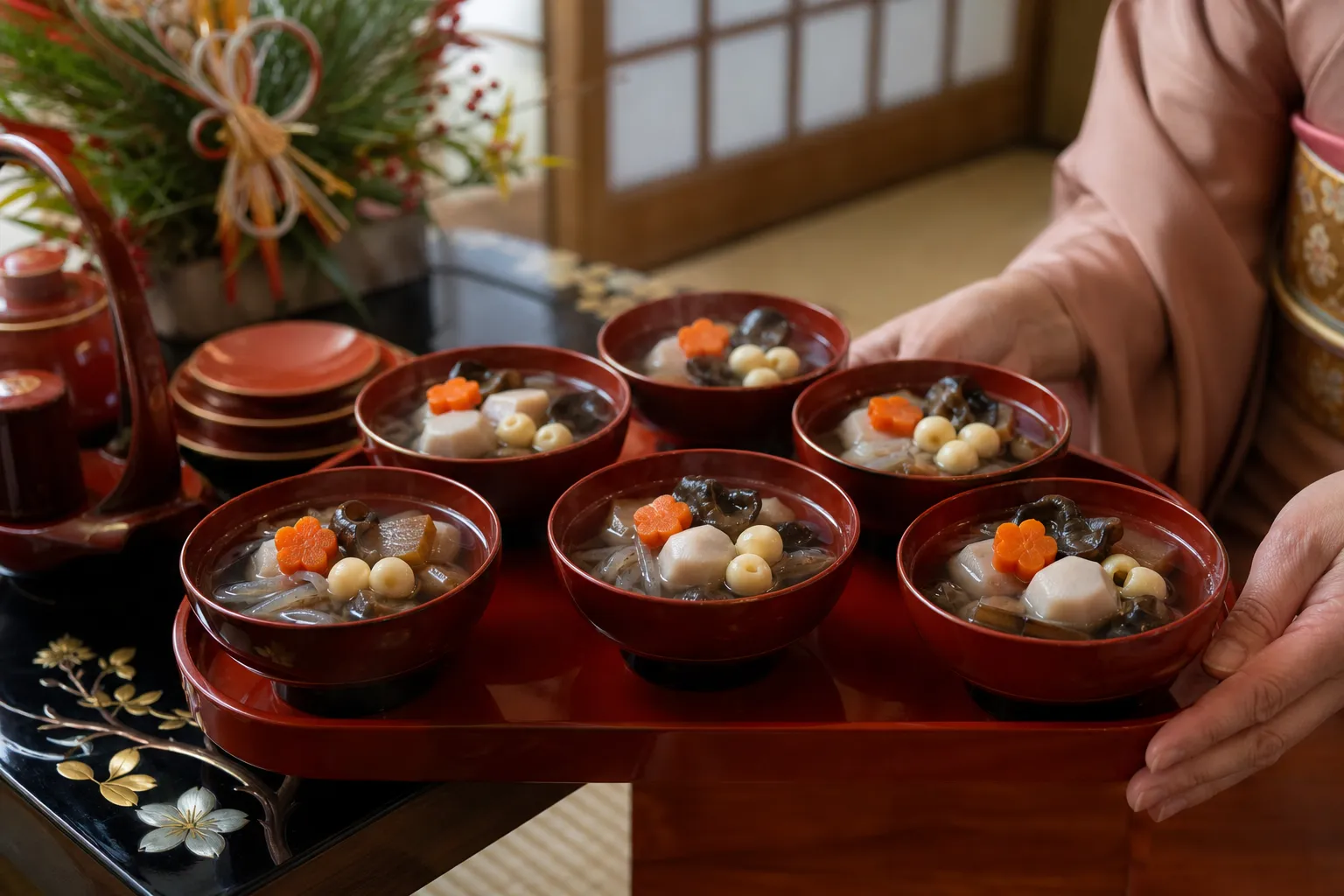
Aizu is deep inland, ringed by mountains, historically a place where fresh seafood simply could not reach. So how did its most treasured celebration soup come to taste of the ocean? Dried scallops. In the Edo period, preserved seafood could travel where fresh could not, and dried scallops became a prized, expensive luxury — exactly the kind of thing you'd save for the biggest days of the year.
That's the whole soul of kozuyu, and I find it genuinely moving: a landlocked samurai domain expressing hospitality and status through the one taste of the sea it could get its hands on. Every element is small, restrained, precisely cut. It's a soup that says we spared no effort and hid all the effort — the Aizu personality in a lacquer cup. The tiny bowls themselves are part of it: a special set of lacquerware kept just for kozuyu, brought out only when the occasion earns it.
What it actually tastes like
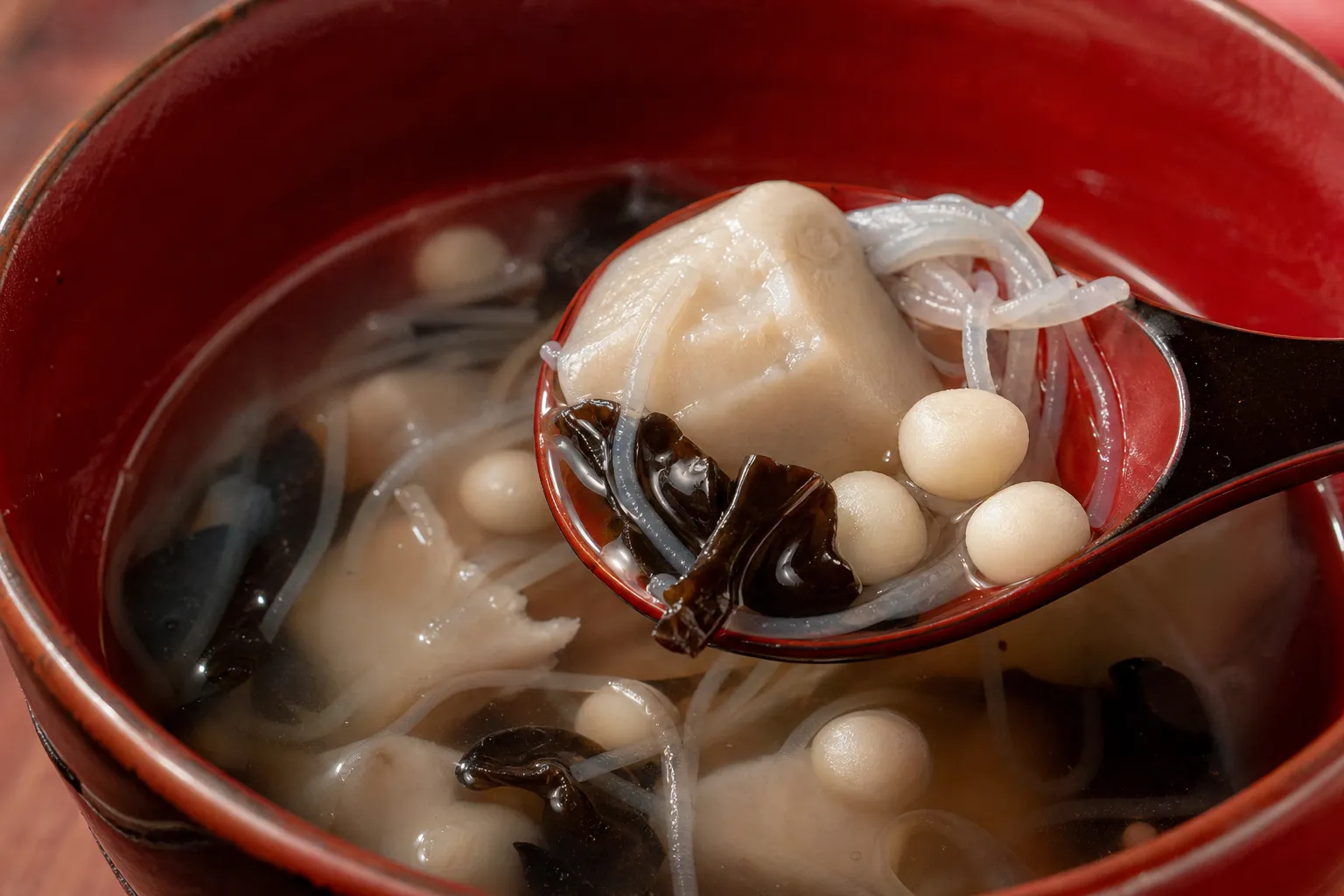
Don't expect a punch. Kozuyu works by accumulation. The dried-scallop dashi is savory and gently sweet, seasoned lightly with soy and sake so nothing muddies it — this is emphatically not a miso soup, and mistaking it for one would miss the entire point. It's clear enough to see the bottom of the bowl.
The joy is in the textures knocking against each other: soft, almost creamy taro; the slippery snap of thread konnyaku; the strange delightful crunch of wood-ear mushroom; and the mamefu, those little round gluten balls that soak up broth and burst gently between your teeth. Each spoonful is a slightly different combination. I kept accepting refills long past the point of politeness, purely because I wanted to keep playing with it. Nobody minded. That's sort of the whole idea.
How a bowl of kozuyu comes together
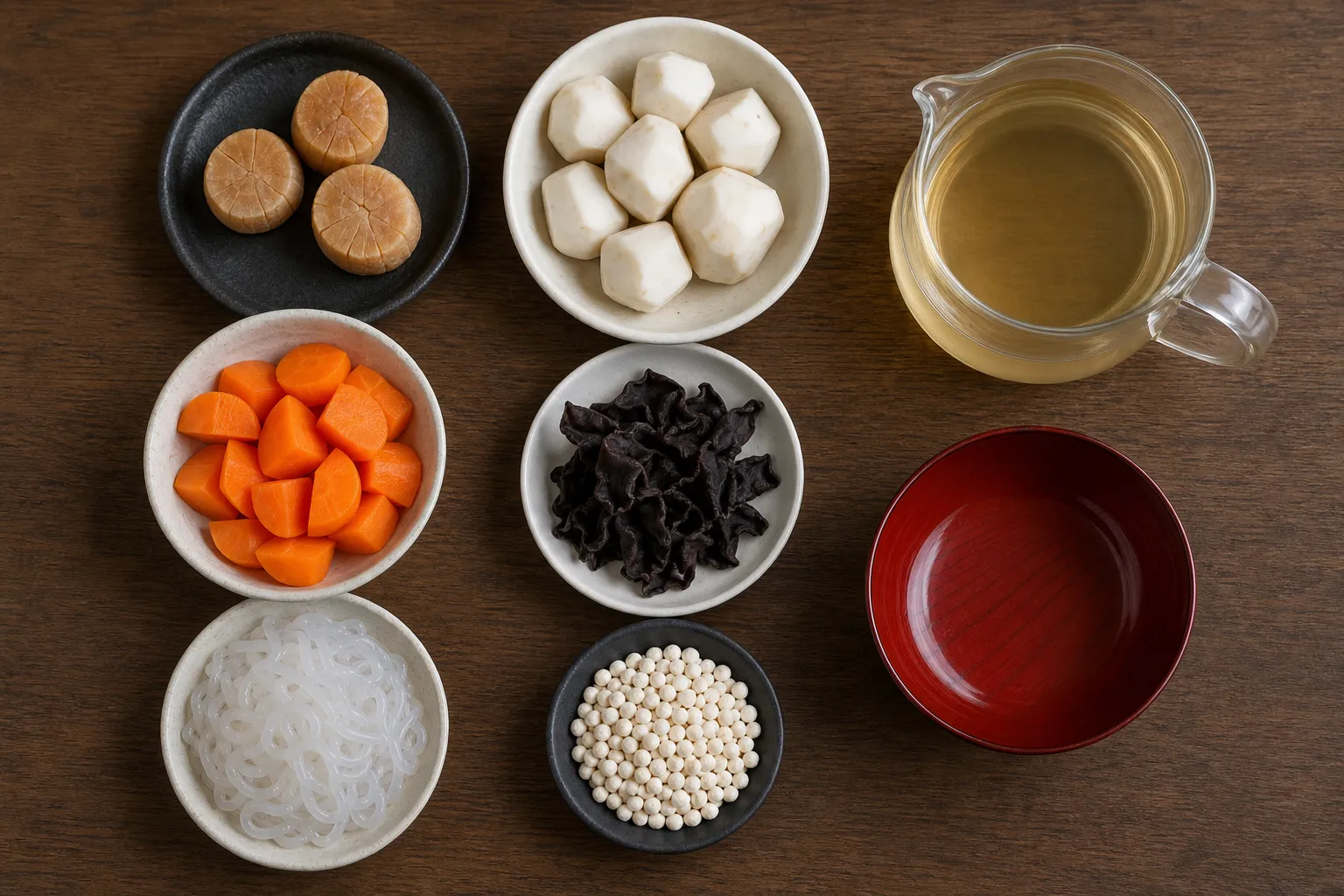
- Dried scallops are soaked to rehydrate, and the soaking liquid becomes the base of a clear dashi
- The dashi is seasoned gently with light soy sauce, sake, and salt — kept clear, never miso
- Taro, carrot, wood-ear mushroom, and thread konnyaku are cut small and simmered until tender
- Small round mamefu wheat-gluten balls are added near the end so they stay springy
- It's ladled into small red lacquer bowls and served hot — and traditionally refilled for guests as many times as they'll accept
Before you go — accept the refill
Your questions, answered honestly
"Why is the bowl so small?" — Because it's meant to be refilled. Kozuyu comes in a special little lacquer bowl and the whole ritual is the host topping you up again and again. Don't treat the first serving as the whole experience — it's the first of several. Say yes.
"Is it just a fancy miso soup?" — No, and locals will gently correct you. It's a clear soup on dried-scallop dashi. No miso, no pork, no cloudiness. The delicacy and clarity are exactly what make it special-occasion food rather than everyday food.
"Can I try it if I'm not at a wedding?" — Yes. Ryokan and kaiseki restaurants around Aizu-Wakamatsu serve it as part of local set meals and courses, especially those showcasing regional cuisine. You don't need an invitation to a celebration — you just need to be in Aizu and order thoughtfully.
"Is there anything in it I should watch for?" — It's mild and approachable, genuinely one of the friendlier regional soups to meet. Wood-ear mushroom and konnyaku have unusual textures if you've never had them, but nothing here is challenging. This is comfort, not adventure.
What the staff will ask you
| You'll hear | Romaji | Meaning | Just say |
|---|---|---|---|
| おかわりはいかがですか? | Okawari wa ikaga desu ka? | "Would you like a refill?" | Hai, onegaishimasu (yes, please) |
| 定食になさいますか、単品になさいますか? | Teishoku ni nasaimasu ka, tanpin ni nasaimasu ka? | "As a set meal or à la carte?" | Teishoku de onegaishimasu (the set meal, please) |
| 温かいうちにどうぞ | Atatakai uchi ni dōzo | "Please, while it's hot" | Arigatō gozaimasu (thank you) |
To order, just say "Kozuyu o kudasai" (こづゆをください) — "Kozuyu, please."
Where to eat it
- Aizu-Wakamatsu, Fukushima — the heart of Aizu; the old castle town's ryokan and traditional restaurants are the natural place to meet kozuyu in its proper setting.
- Aizu regional kaiseki and set-meal restaurants — places built around Aizu home cooking frequently include kozuyu as part of a local course or teishoku.
- Ryokan in the wider Aizu region — inns around Aizu, especially those serving seasonal and celebratory menus, often present kozuyu as a highlight of the local table.
Availability leans toward celebration seasons and set menus, and specifics change shop to shop, so check current menus before you go.
Soul Score
Local Roots5/5
First-Timer Friendly4/5
Adventure Level3/5
Comfort Level5/5
Travel Worthy4/5
These scores are one obsessed eater's gut feeling — not a verdict. A low number isn't a bad mark, just a different kind of adventure.
Know someone planning Japan?
← All Articles
Local Food · Aizu, Fukushima
Still hungry?
Eat more from Fukushima
Local FoodFukushima
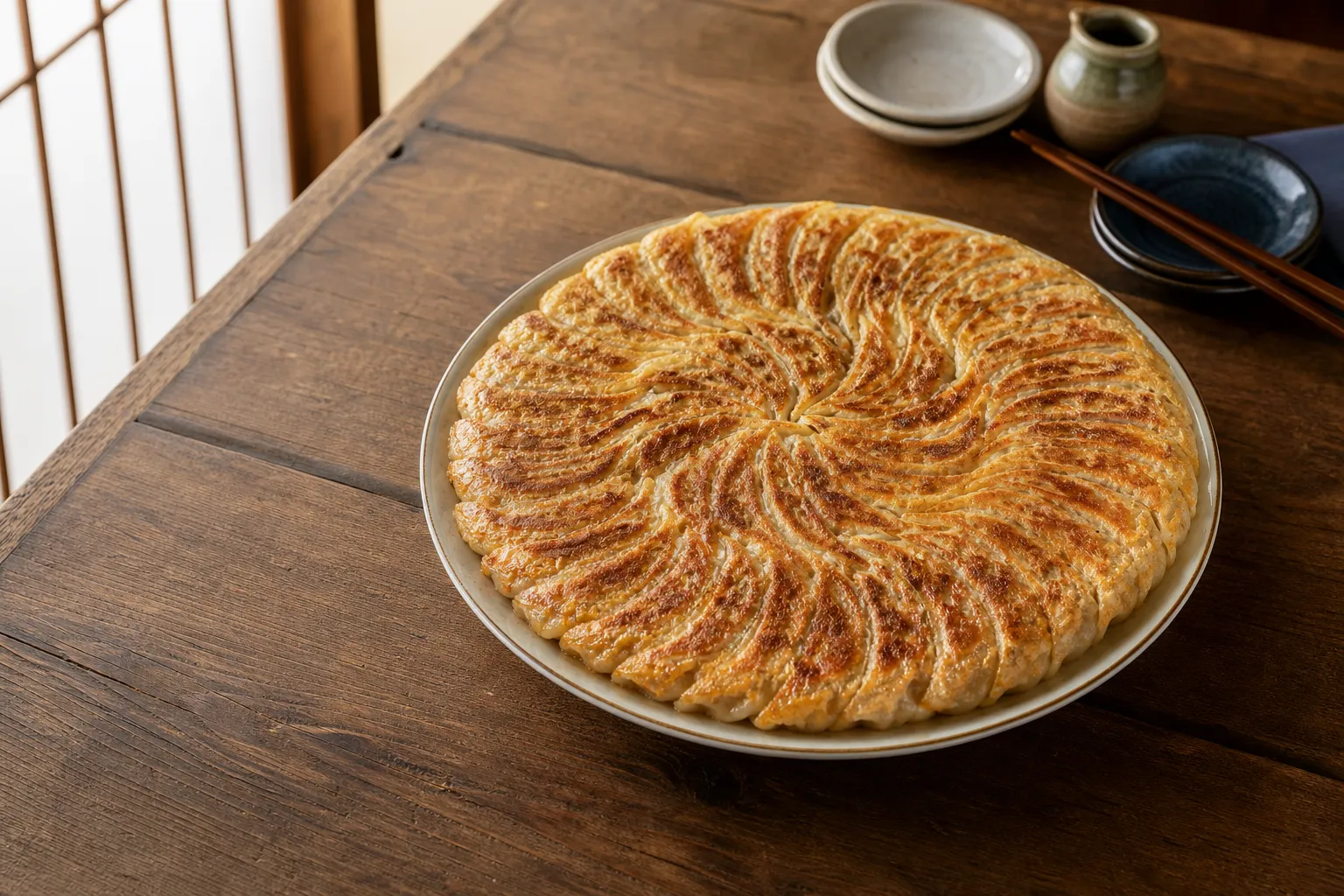
Enban Gyoza (円盤餃子)
Thirty gyoza fused into one crackling golden disc, and the only way to serve it is whole, so the whole table has to fight over the first piece.
July 4, 2026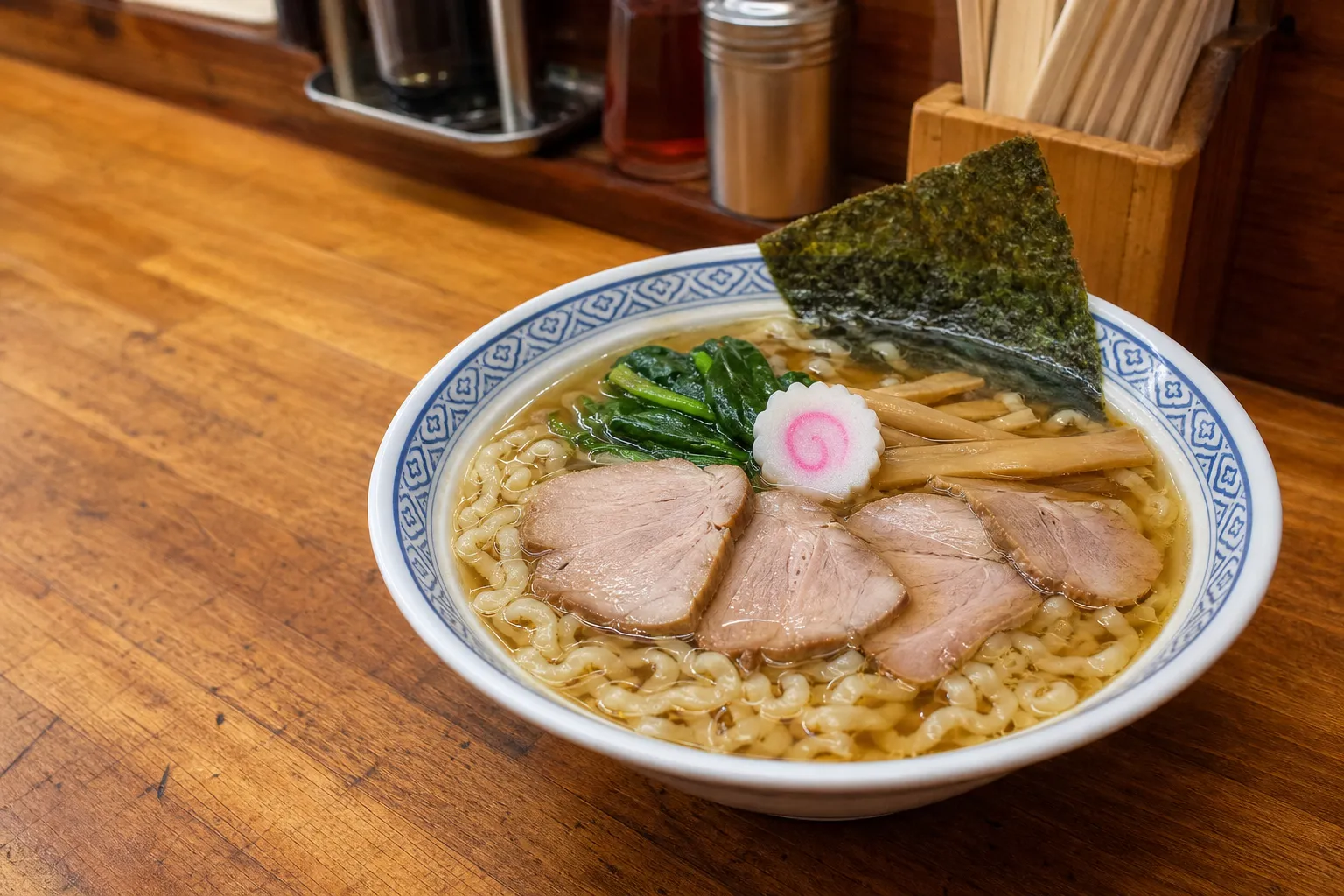
Local FoodShirakawa, Fukushima
Shirakawa Ramen (白河ラーメン)
Noodles so wide and wavy they look hand-torn, floating in a broth so clear you can read the bowl's pattern straight through it.
July 4, 2026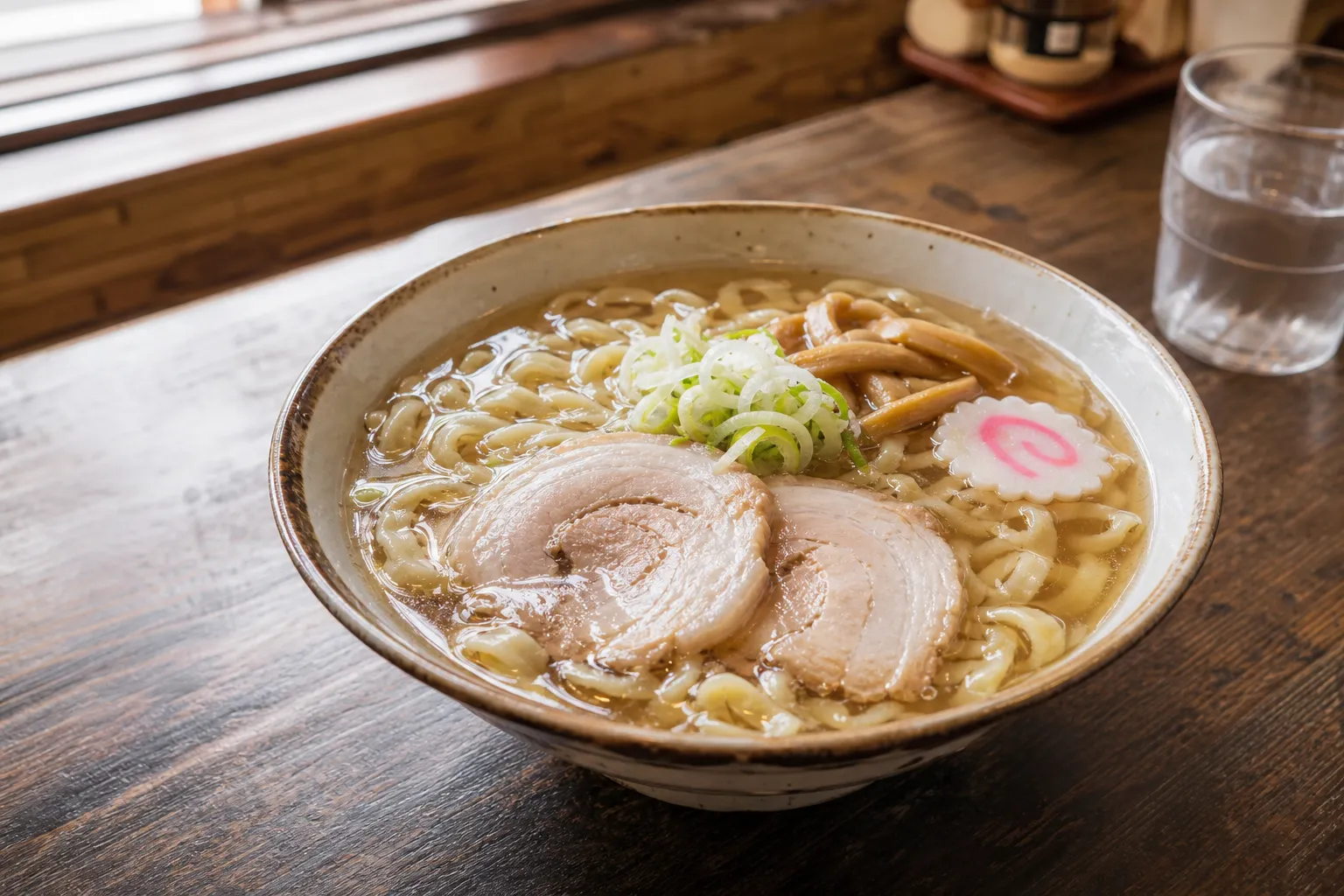
Local FoodKitakata, Fukushima
Kitakata Ramen (喜多方ラーメン)
Flat, wide, curly noodles in a clear soy broth so clean you can see the bottom of the bowl — and a town so obsessed it eats ramen for breakfast. This is comfort with the volume turned down, on purpose.
June 26, 2026