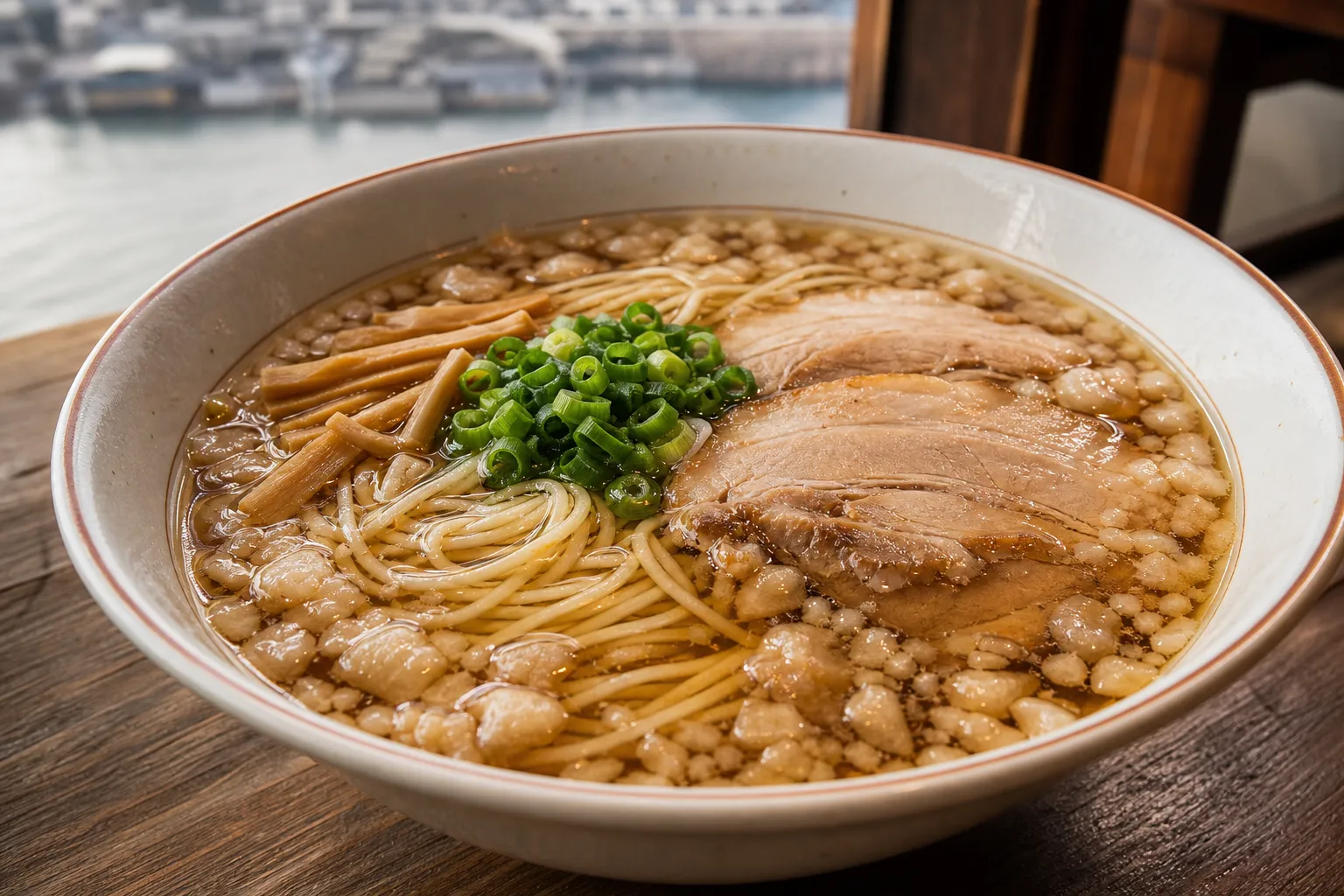
The broth looked clear and innocent, and then I saw the little glistening cubes floating on top and thought, what are those, and then I took a sip and immediately understood that those little cubes were the entire secret.
Share this dish


Clear soy broth from the Seto Inland Sea, studded with little pillows of melting pork fat that change everything. A hillside port town's bowl — light and deep at the same time, which shouldn't be possible.
🍜 Planning a food trip to Hiroshima?Add this dish to my Food Trip →
 Add this dish to my Food Trip →
They're pork back-fat — seabura — rendered into soft, melting pillows that float on a clean soy broth and dissolve as you eat, dropping pockets of richness into a soup that's otherwise light and fish-deep. It's a magic trick: the broth tastes both delicate and full at once, and you spend the whole bowl trying to figure out how. The answer is bobbing right there on the surface.
A bowl shaped by the Seto Inland Sea
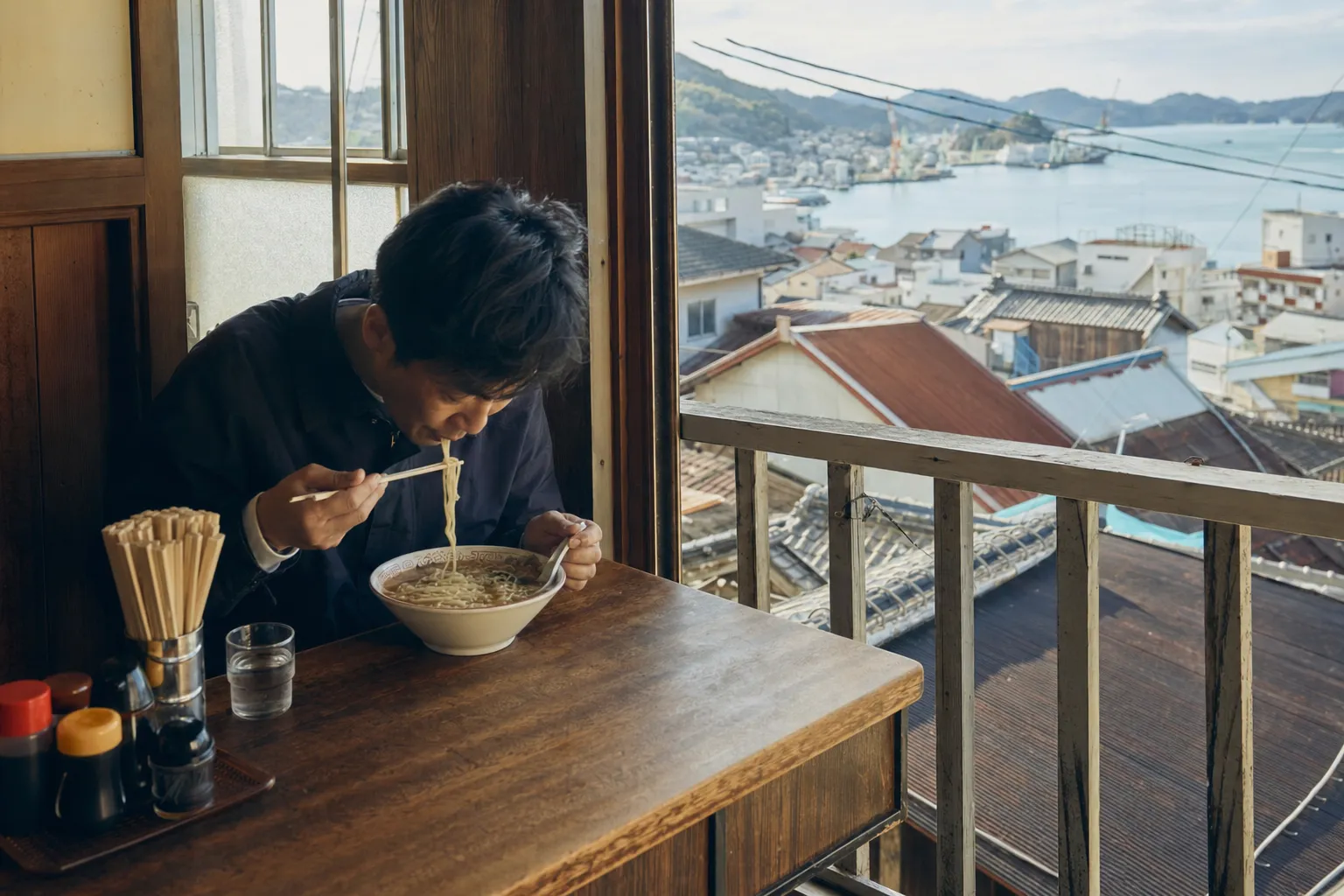
Onomichi is a steep, photogenic port town on the Seto Inland Sea in Hiroshima — all slopes, cats, temples, and water — and its ramen tastes like where it comes from. The broth leans on dashi from the small fish of the Inland Sea layered into a soy base, which gives it that clean, savory, faintly oceanic backbone. Then the local move: chunks of pork back-fat floated on top, a working-port idea for adding cheap, satisfying richness without muddying the clear soup.
I love that the dish carries its geography so plainly. The sea is in the dashi; the hardworking port is in the fat. It's not trying to be elegant — it's trying to be satisfying after a long day, and it absolutely is. Eating a bowl with the slopes and the water just outside the door is one of those small travel moments that lodges in your memory.
Why the floating fat matters so much
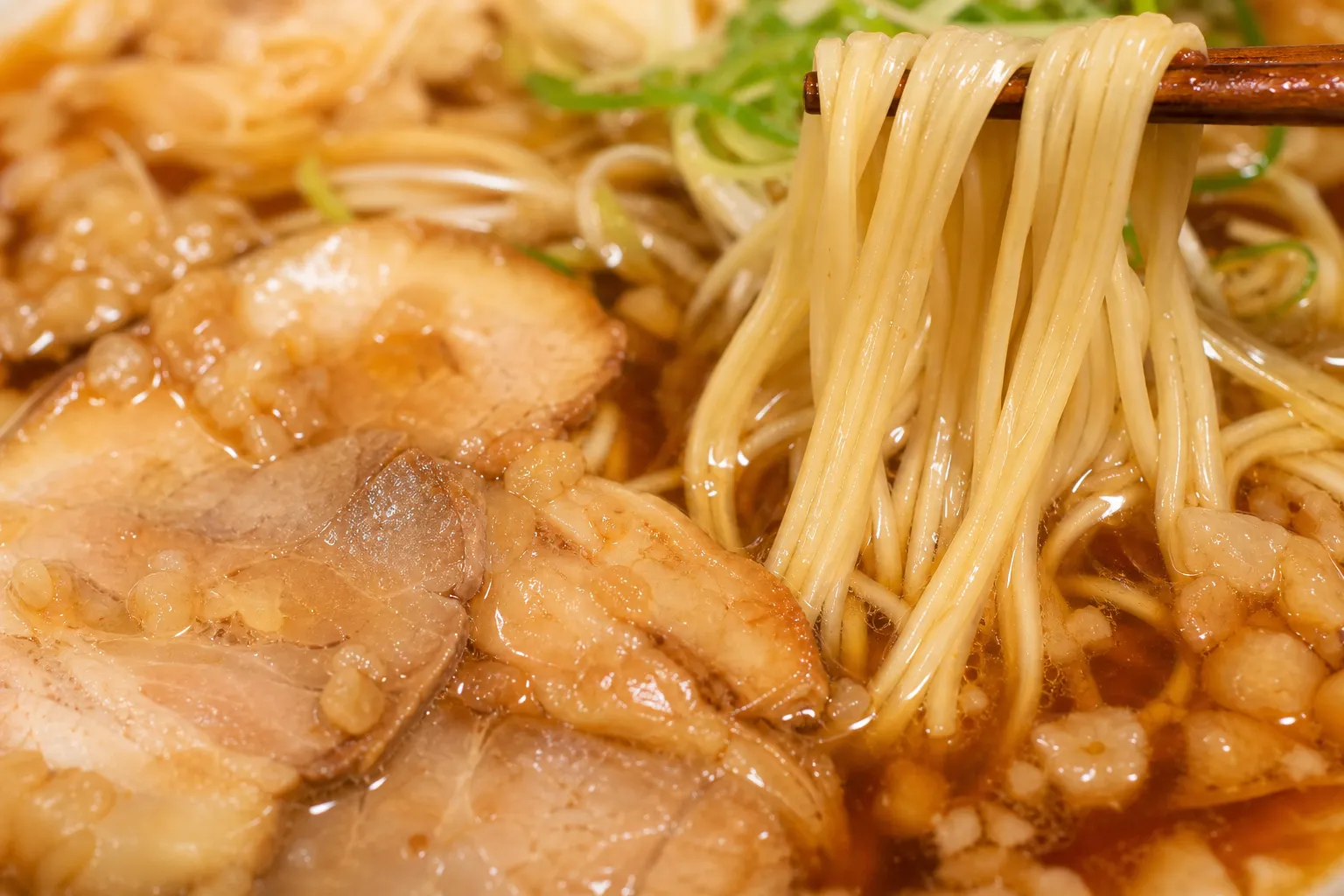
Look at the surface: a clear amber shoyu broth dotted with small, glistening cubes of pork back-fat. As the soup's heat works on them, they soften and melt, so every few spoonfuls you get a little burst of rich, savory fat against the clean fish-and-soy base. The contrast is the whole pleasure — light broth, rich punctuation, repeat.
The noodles are typically flat and straight, with a firm bite that holds up in the broth. Char siu, menma, and green onion keep it classic. Nothing here is fussy; it's a bowl that knows exactly what it is. The back-fat is the signature — skip a shop that leaves it out, because you'd be skipping the point.
How it's made
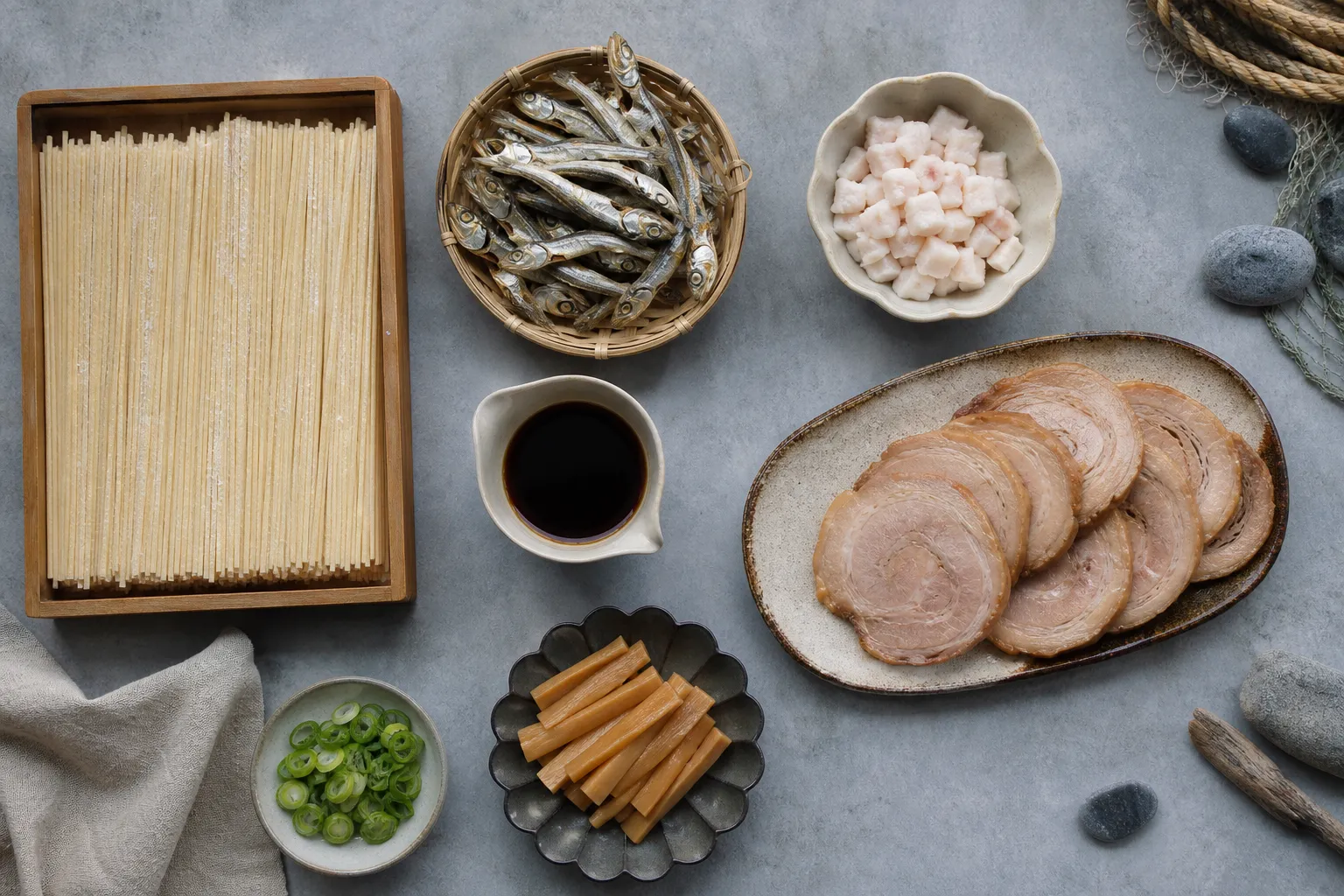
- Build a clear soy (shoyu) broth with dashi from the small fish of the Seto Inland Sea, plus pork
- Render pork back-fat into small soft cubes (seabura)
- Cook flat, straight noodles with a firm bite
- Combine broth and noodles, keeping the soup clear
- Top with char siu, menma, green onion — and float the back-fat cubes on the surface
- Serve hot, so the fat melts as you eat
Your questions, answered honestly
"Isn't pork fat on top going to be heavy?" — Surprisingly no. It melts into an otherwise light, clear broth, so you get richness in bursts rather than a heavy oily blanket. It's the balance that makes it special.
"How is it different from regular shoyu ramen?" — Two things: the Seto Inland Sea small-fish dashi gives a cleaner, more oceanic depth, and the floating back-fat adds melting richness. Together they make it distinctly Onomichi.
"Is it a good intro bowl for someone nervous about ramen?" — Yes — it's savory and approachable, not spicy or funky. The clear broth is easy to love.
What the staff will ask you
| You'll hear | Romaji | Meaning | Just say |
|---|---|---|---|
| 背脂は普通でいいですか? | Seabura wa futsū de ii desu ka? | "Regular amount of back-fat okay?" | Hai, onegaishimasu |
| 麺の硬さは? | Men no katasa wa? | "Noodle firmness?" | Futsū de — "regular" |
| 大盛りにしますか? | Ōmori ni shimasu ka? | "Large size?" | Futsū de or Hai if hungry |
To order, just say "Onomichi ramen kudasai" (尾道ラーメンください) — "Onomichi ramen, please."
Where to eat it
- Onomichi, Hiroshima — the town itself; ramen shops cluster near the station and along the shopping street, many with the slopes and sea close by.
- Long-running Onomichi shops — several decade-old local shops are considered the standard-bearers; look for the back-fat on the menu. Check hours before visiting.
- Onomichi-style shops elsewhere — the style has fans nationwide, and a number of shops outside Hiroshima serve a faithful back-fat-and-shoyu version.
Soul Score
Local Roots4/5
First-Timer Friendly4/5
Adventure Level3/5
Comfort Level5/5
Travel Worthy4/5
These scores are one obsessed eater's gut feeling — not a verdict. A low number isn't a bad mark, just a different kind of adventure.
Know someone planning Japan?
← All Articles
Local Food · Onomichi, Hiroshima
Still hungry?
Eat more from Hiroshima
Local FoodHiroshima
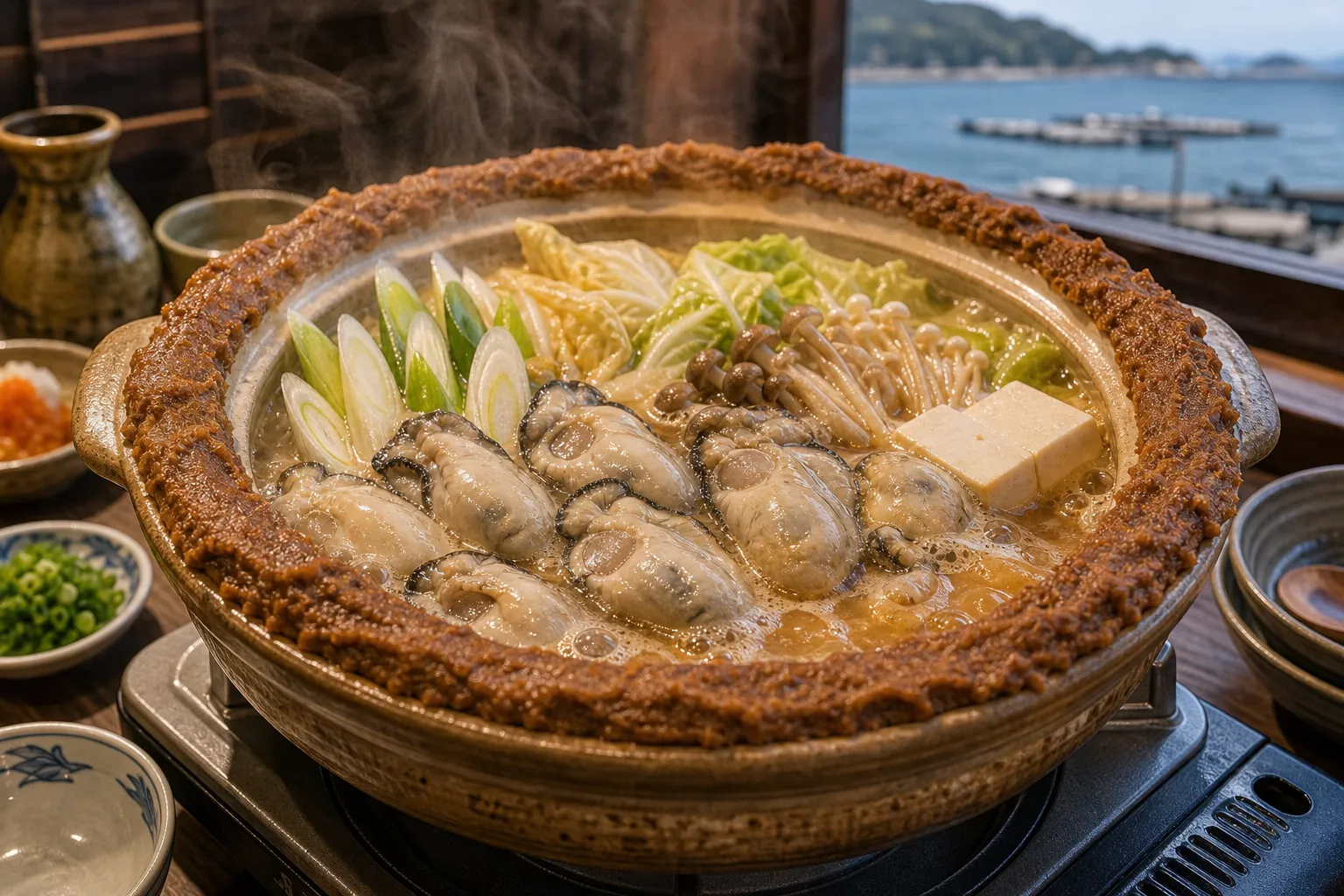
Kaki no Dotenabe (牡蠣の土手鍋)
Hiroshima's plump winter oysters, simmered in a pot ringed with a 'dyke' of sweet miso that you scrape into the broth as you go — a hot pot you literally build the flavor of, one swipe at a time.
July 10, 2026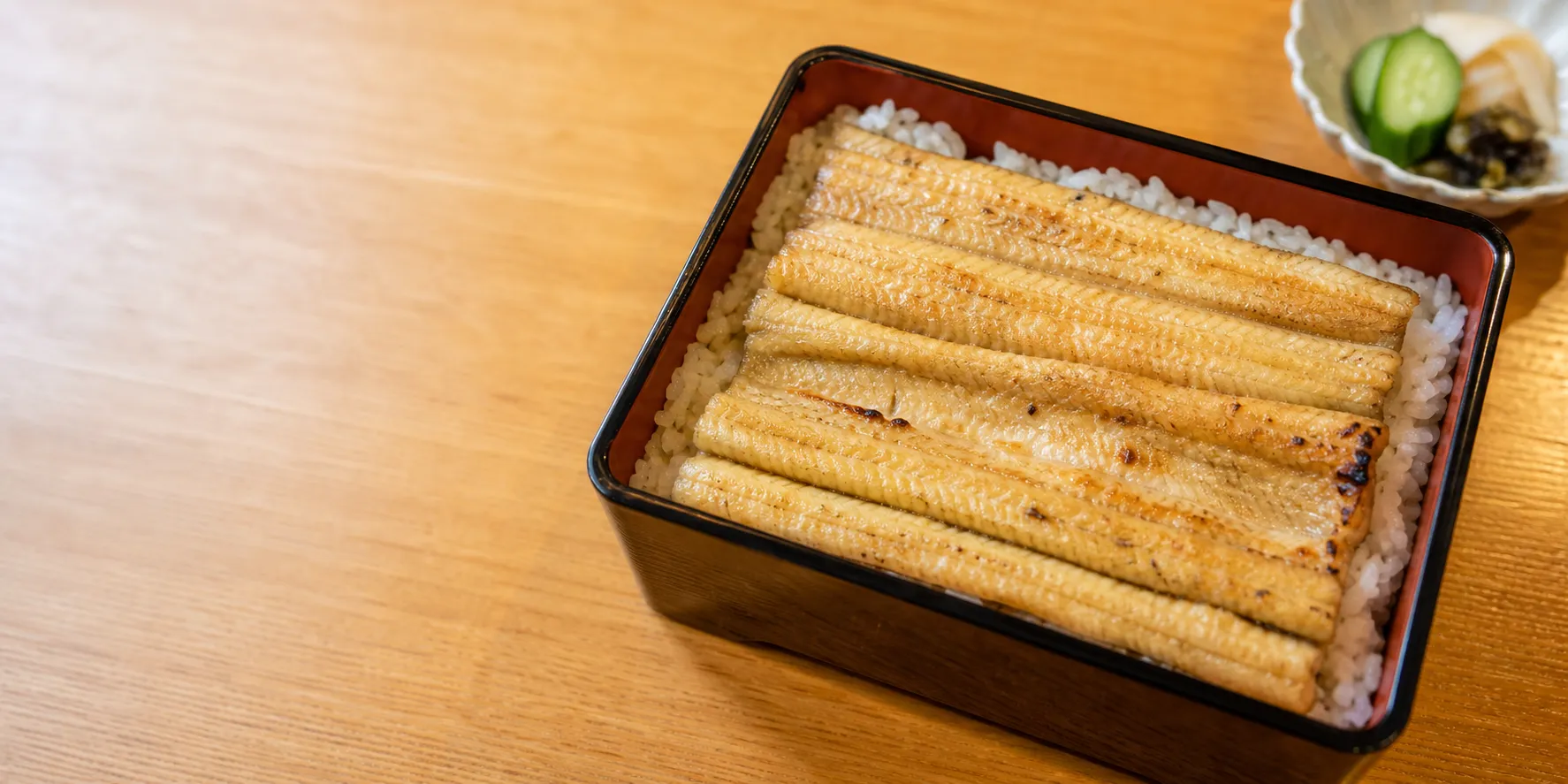
Local FoodMiyajima / Hiroshima
Anago Meshi (あなご飯)
It fell apart under my chopsticks before I'd even applied pressure — no bite required, just a soft collapse into something between fish and silk.
July 5, 2026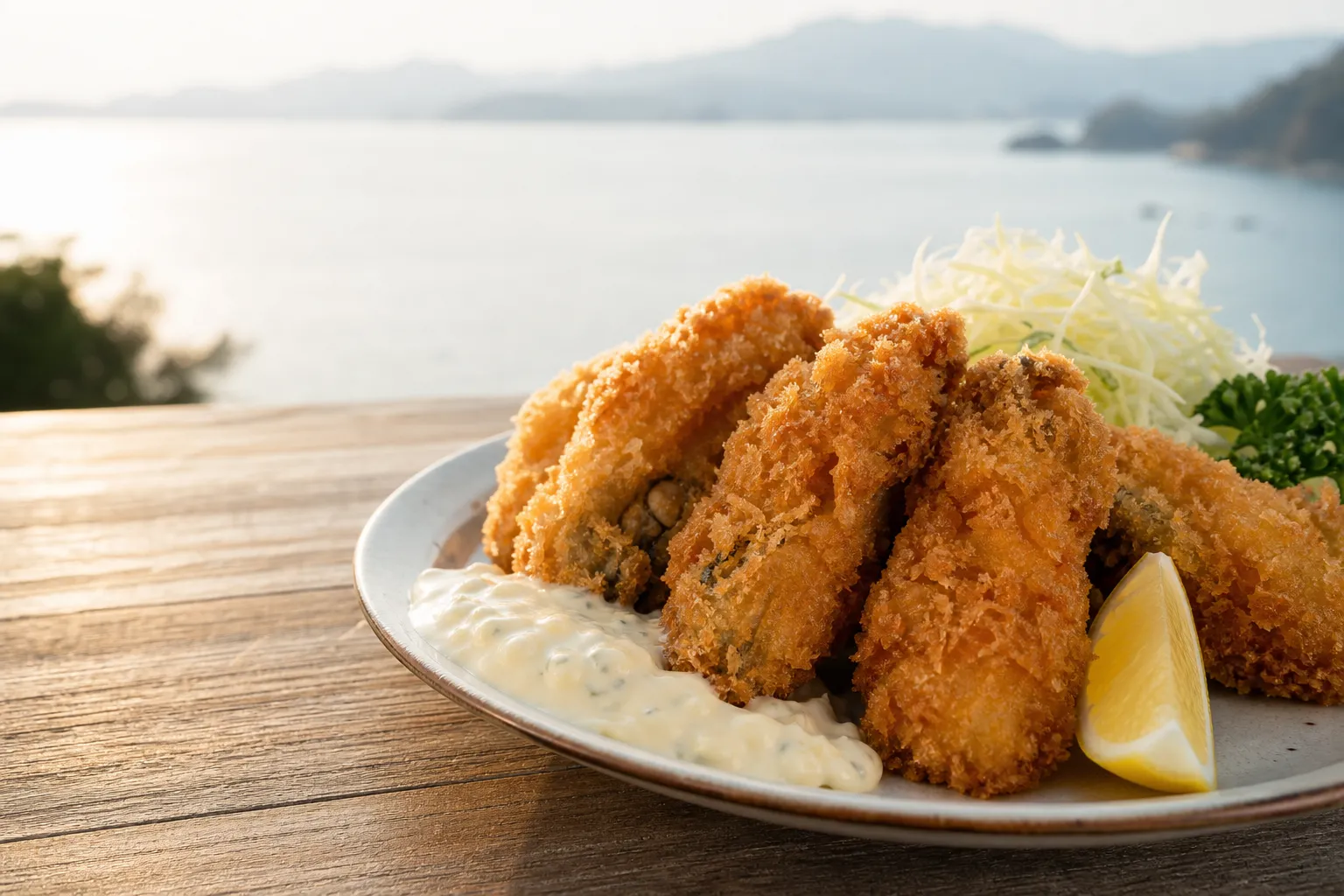
Local FoodHiroshima
Hiroshima Kaki Fry (広島かきフライ)
Crack the golden crust and the oyster inside is still plump and full of the sea — the fried food that finally made me understand why people drive to Hiroshima in winter.
July 5, 2026Keep slurping the ramen trail
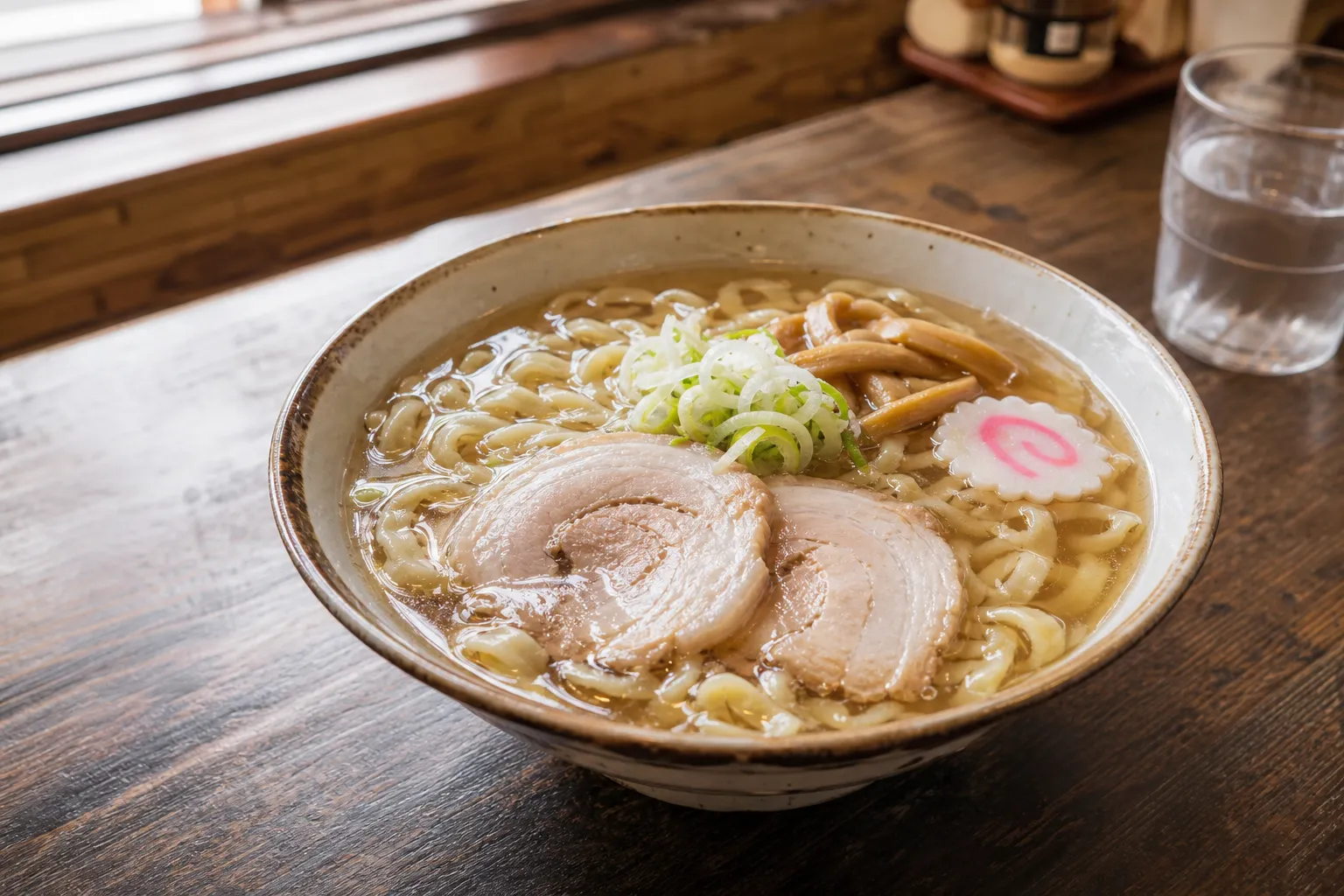
Local FoodKitakata, Fukushima
Kitakata Ramen (喜多方ラーメン)
Flat, wide, curly noodles in a clear soy broth so clean you can see the bottom of the bowl — and a town so obsessed it eats ramen for breakfast. This is comfort with the volume turned down, on purpose.
June 26, 2026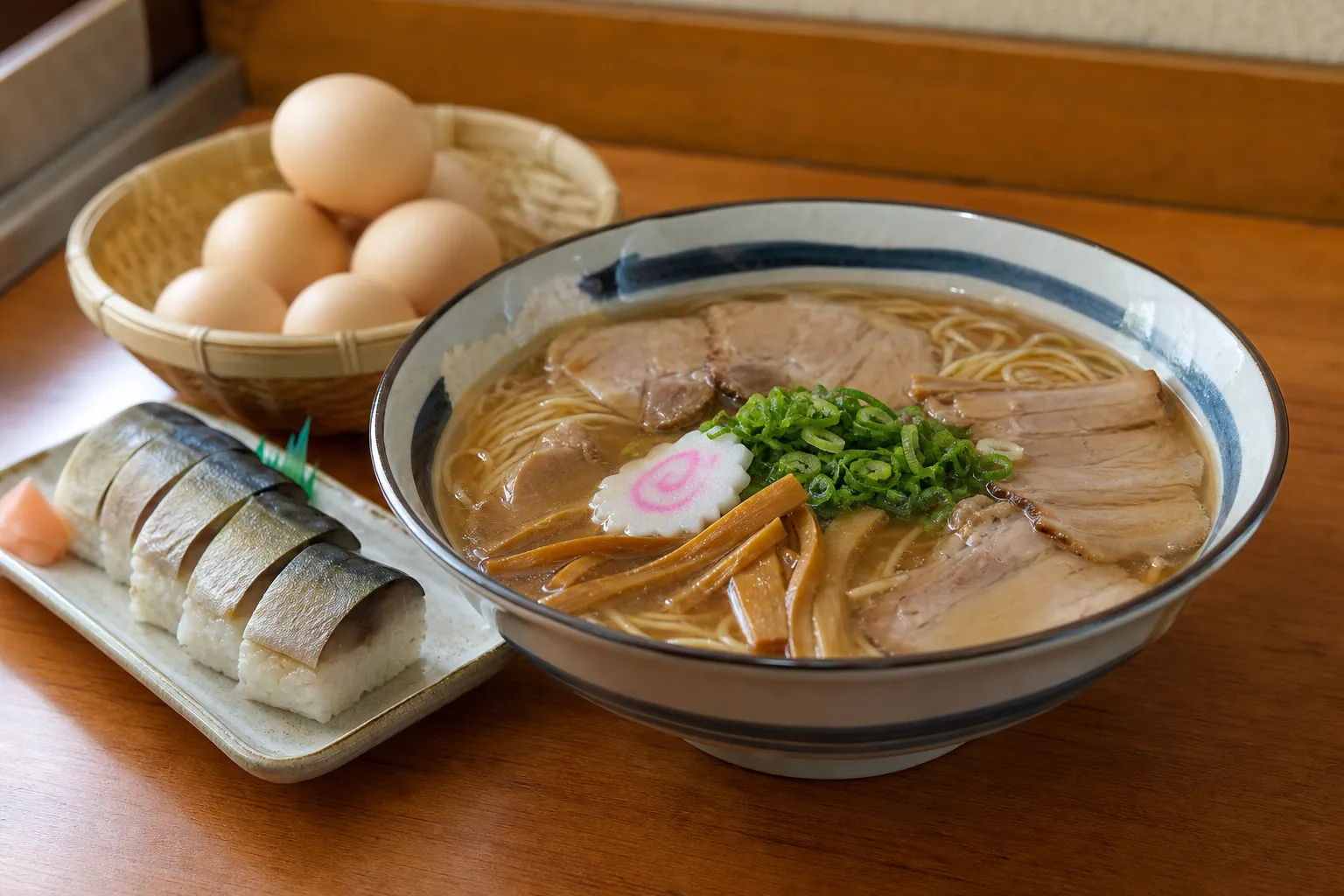
Local FoodWakayama, Wakayama
Wakayama Ramen (和歌山ラーメン)
Pork-bone-meets-soy broth, thin springy noodles — and a self-serve table loaded with pressed mackerel sushi and boiled eggs you grab while you wait. Locals don't even call it ramen. They call it the good stuff.
June 26, 2026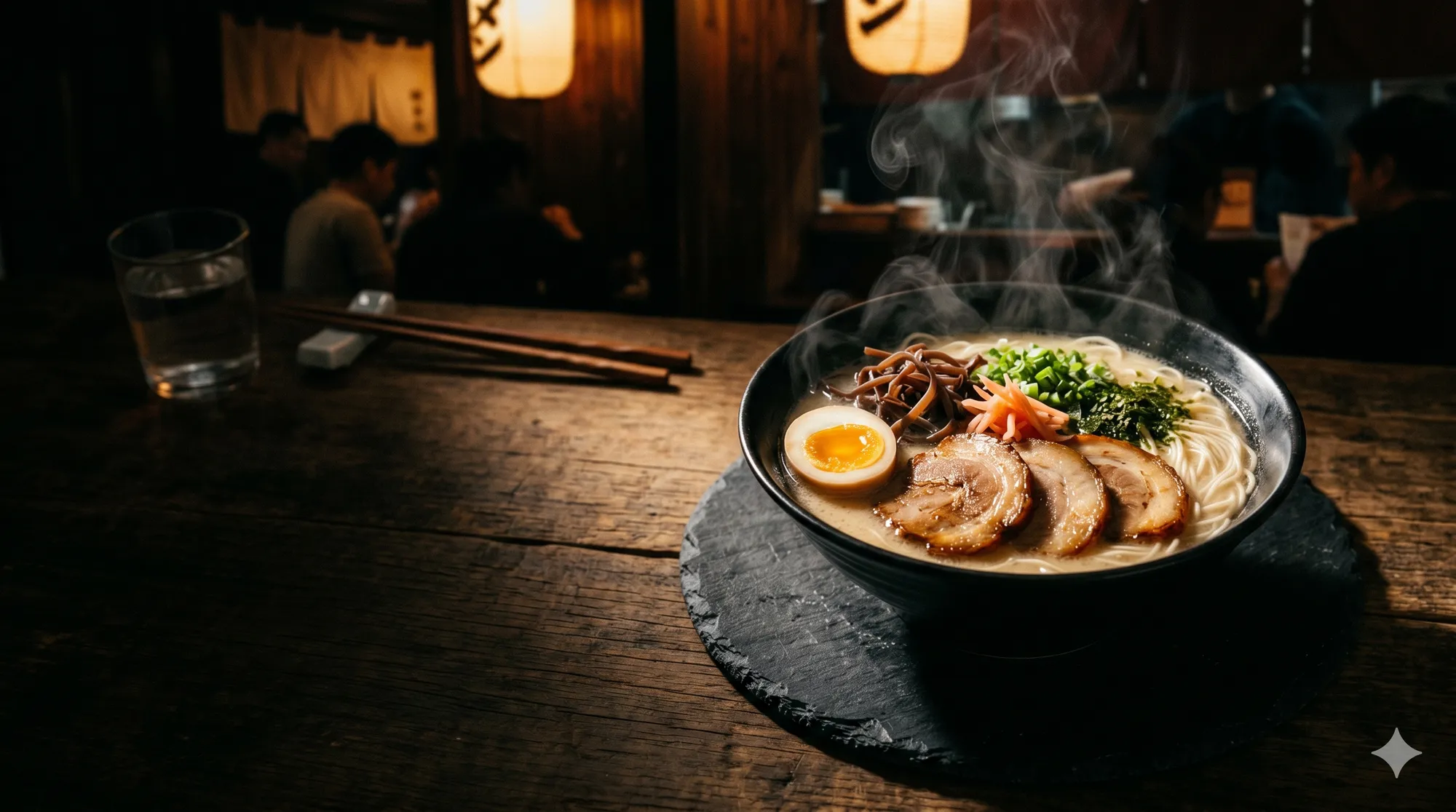
Local FoodFukuoka
Hakata Ramen (博多ラーメン)
Milky pork-bone broth, hair-thin straight noodles, and a refill system that lets you keep the party going. Fukuoka's tonkotsu ramen runs on its own vocabulary — learn three words and you're in.
June 15, 2026