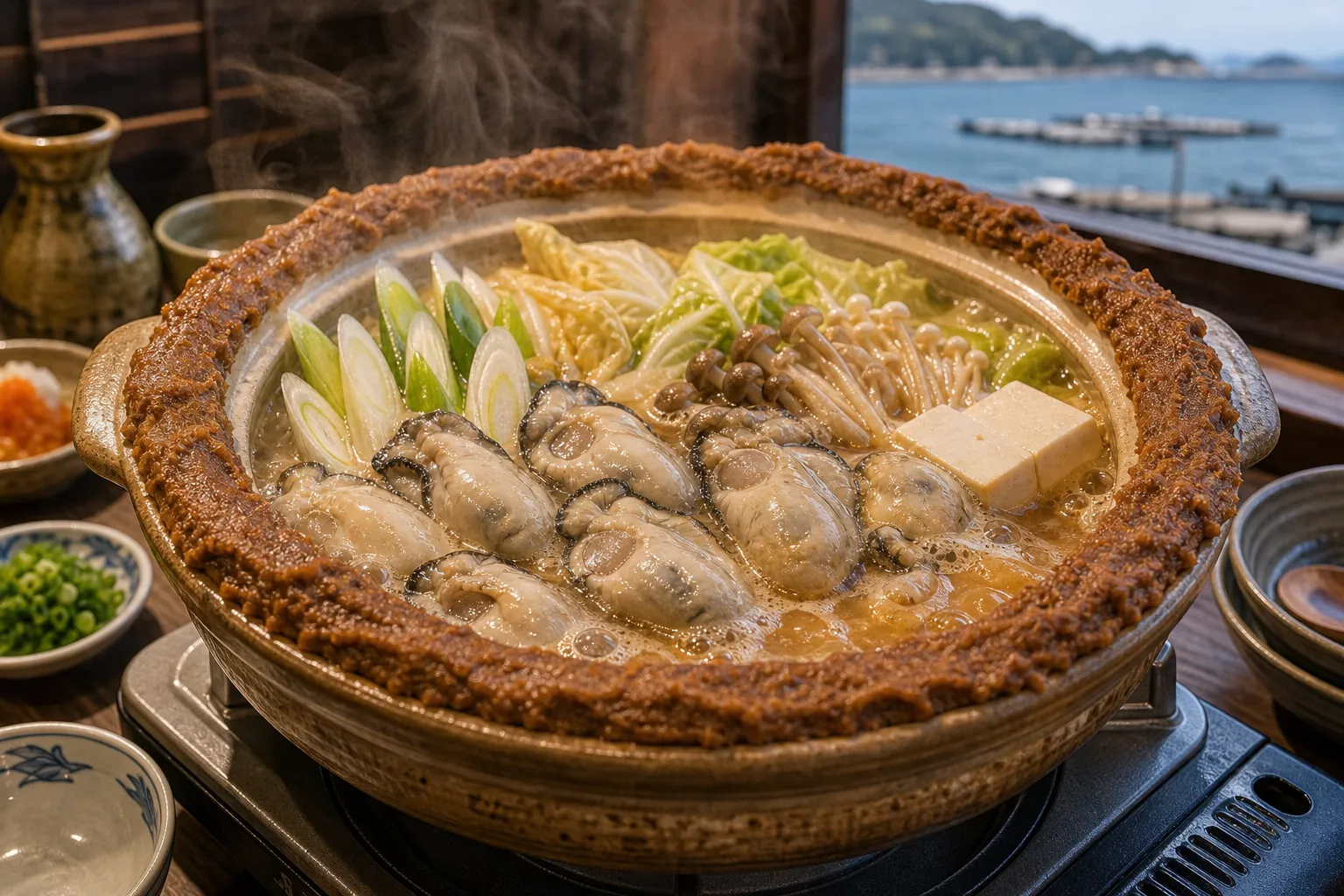
The pot comes to the table wearing a wall. There's a thick bank of miso smeared all the way around the inside rim — a little edible levee — and inside it, dashi and vegetables and, most importantly, oysters. Plump, grey, glistening Hiroshima oysters. And then the server does the thing that makes this dish this dish: they scrape a swipe of that miso wall down into the broth, and the whole pot changes. That's kaki no dotenabe, and it's the only hot pot I know where you build the flavor with your own chopsticks, one swipe at a time.
Share this dish


Hiroshima's plump winter oysters, simmered in a pot ringed with a 'dyke' of sweet miso that you scrape into the broth as you go — a hot pot you literally build the flavor of, one swipe at a time.
🍜 Planning a food trip to Hiroshima?Add this dish to my Food Trip →
 Add this dish to my Food Trip →
Here's the mechanism: kaki no dotenabe (牡蠣の土手鍋) is a Hiroshima oyster hot pot, and dote means "embankment" or "dyke" — because sweet miso is banked up around the rim of the pot like an earthen wall. As the pot simmers, you scrape miso off that wall into the broth bit by bit, sweetening and thickening it to taste, while oysters, tofu, and vegetables cook in the middle. Rim of miso + Hiroshima oysters + scrape-as-you-go: that's what makes it a dotenabe and not a plain miso pot. And Hiroshima is the right place for it, because Hiroshima is oysters — the prefecture grows the lion's share of Japan's.
Why Hiroshima turns its oysters into a wall of miso
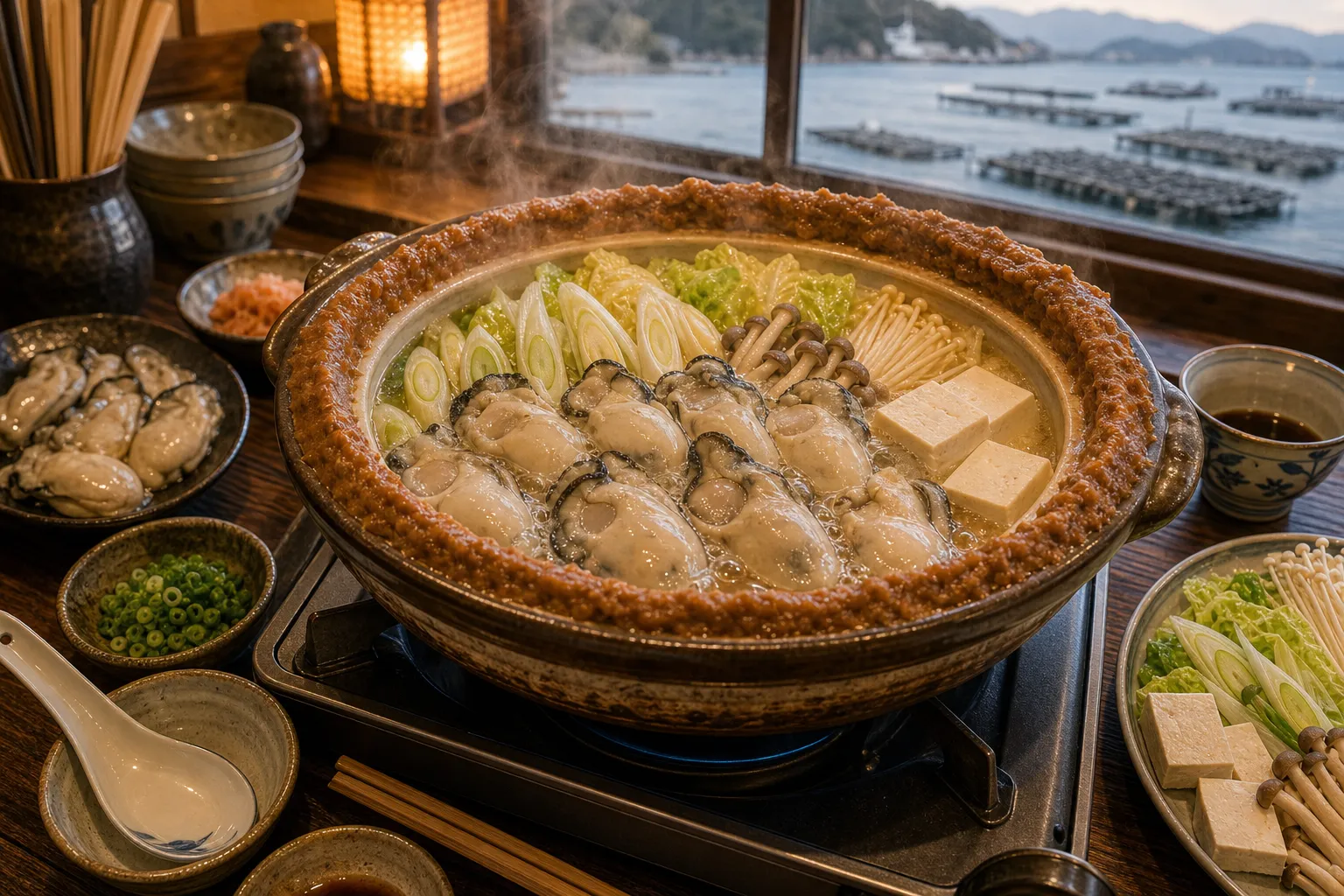
Hiroshima has farmed oysters in its calm, nutrient-rich Seto Inland Sea bays for centuries, and it produces the overwhelming majority of the country's oyster harvest. When you grow that many oysters, you invent that many ways to eat them — grilled, fried into kaki fry, dropped into rice — and the dotenabe is the great winter one, the pot that shows off the oyster at its cold-season, milky-plump peak.
The miso-wall trick isn't just theater, either — it's a clever bit of engineering. Oysters get tough and shrink if they're boiled too hard or seasoned too aggressively from the start, so the dote lets each person melt in sweetness gradually, keeping the broth gentle enough that the oysters stay plump and tender. It's a dish that builds in patience, right there at the table. I love that the sweetness is a decision you make with a chopstick, swipe by swipe.
What makes the eating experience different
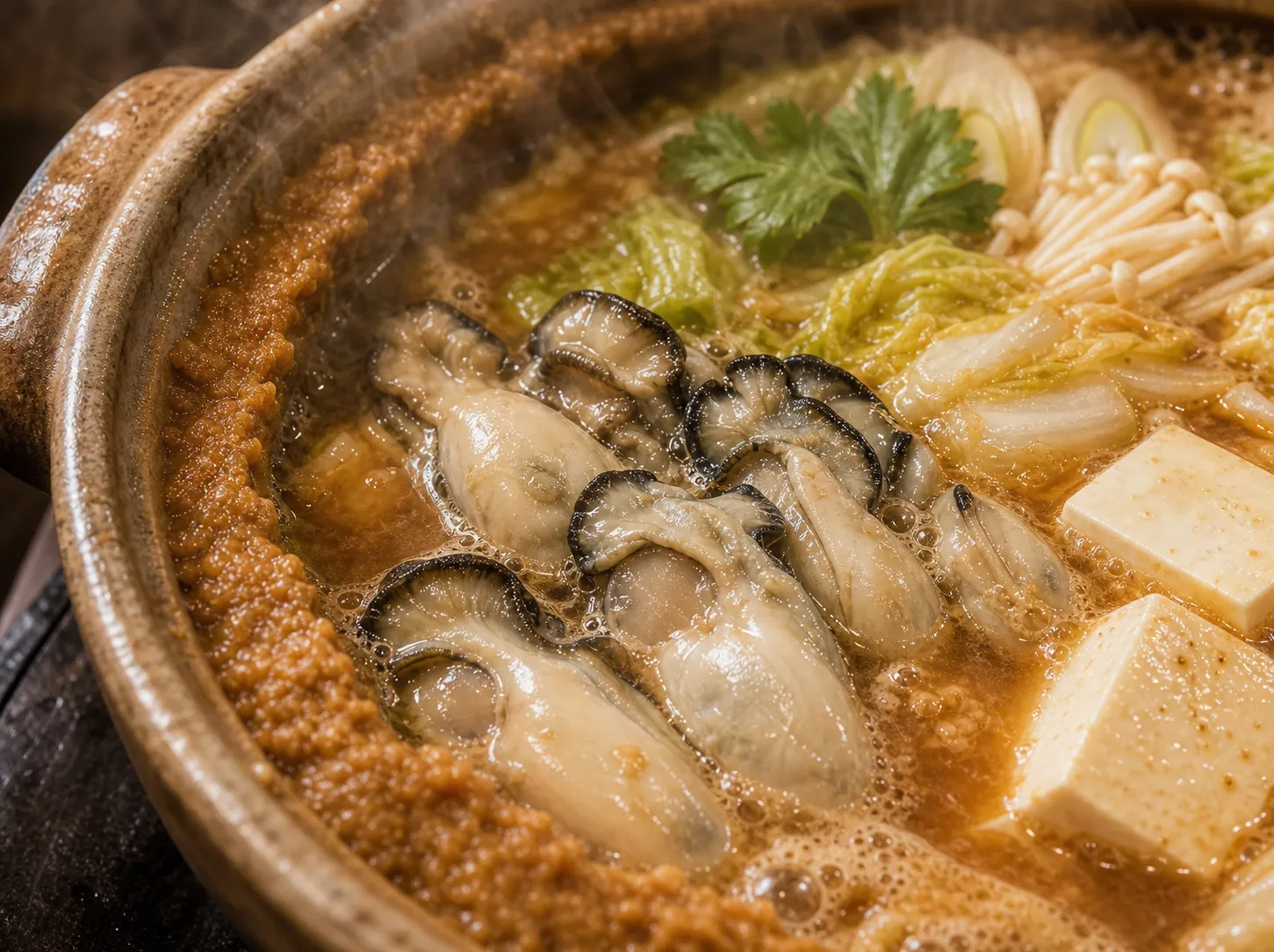
- Winter Hiroshima oysters are plump, creamy and briny, and a few seconds in the hot broth is all they need — they stay juicy, not rubbery
- The sweet miso, scraped in gradually, meets the sea-salt of the oysters and turns the broth into something rich, mellow and deeply comforting
- You control the sweetness — swipe more miso off the wall for a richer broth, less for a cleaner one
- Tofu and vegetables poach in that oyster-miso liquid and quietly become some of the best bites in the pot
- The finish writes itself: rice cooked into the oyster-and-miso broth (zosui) is a last bowl that tastes like the whole Inland Sea in winter
How it's made
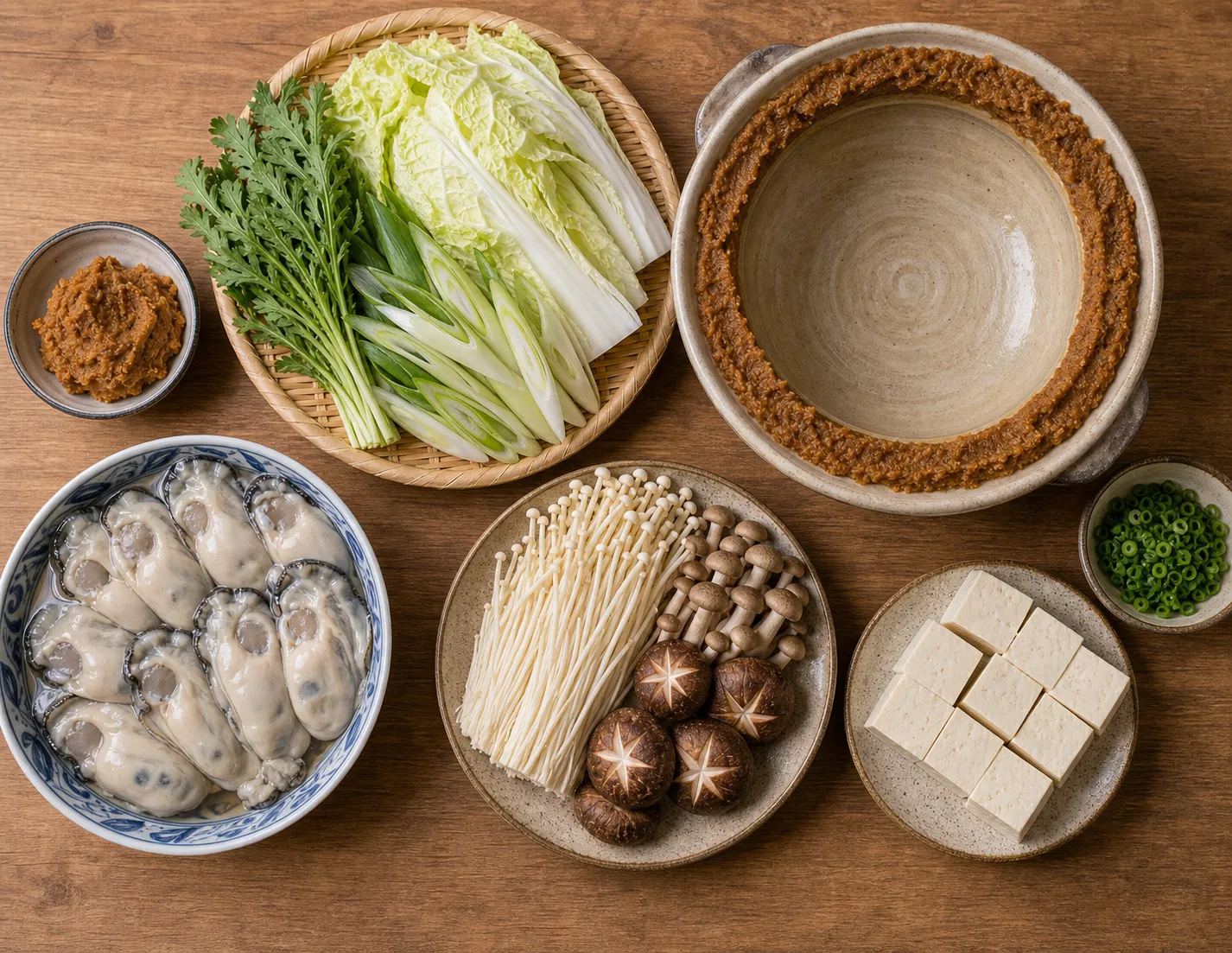
- Bank the miso around the rim. Sweet miso is smeared in a thick wall around the inside of the earthenware pot — this is the dote, the dish's namesake and its seasoning reservoir.
- Fill the middle with dashi and vegetables. A light dashi broth, napa cabbage, green onion, mushrooms and tofu go into the center of the pot.
- Add the oysters last. Plump fresh Hiroshima oysters go in when the broth is hot; they cook fast, so timing matters.
- Scrape the wall into the broth as you eat. Each person melts miso off the dote into the simmering broth, adjusting the sweetness to taste as the meal goes.
- Finish with zosui. Rice cooked into the leftover oyster-miso broth is the traditional ending — do not let that broth leave un-eaten.
The first time you see someone scrape the miso wall in, it feels almost naughty, like eating the pot itself. It's supposed to happen. That's the whole game.
Before you go — eat it where the oysters live, in winter
Your questions, answered honestly
"I'm nervous about oysters — is this a safe way in?" — Actually, yes, in a good way. These oysters are cooked in the hot broth, not raw, so it's a gentler introduction than a raw platter. They come out plump and briny-sweet, and the miso broth wraps around them. If you've been unsure about oysters, cooked Hiroshima oysters in a warm pot are a lovely place to start.
"How do I use the miso wall?" — Scrape a little of it off the rim into the broth as the pot simmers, and taste. Add more for a sweeter, richer broth; leave it if you like it cleaner. There's no wrong amount — the dote exists precisely so you can season to your own liking, swipe by swipe.
"When should I eat it?" — Winter. Hiroshima oysters peak in the cold months, and that's when the dotenabe is at its best. In warm months you'll struggle to find it done well, so aim for oyster season if you can.
"What's the finish?" — Zosui: rice cooked into the leftover oyster-and-miso broth. After oysters and miso have simmered together, that broth is extraordinary, and turning it into porridge at the end is the traditional, glorious finale.
What the staff will ask you
| You'll hear | Romaji | Meaning | Just say |
|---|---|---|---|
| 何名様ですか? | Nan-mei sama desu ka? | "How many people?" | Futari desu (two people) — or hold up fingers |
| 牡蠣の追加はいかがですか? | Kaki no tsuika wa ikaga desu ka? | "More oysters?" | Onegaishimasu (yes, please) / Daijōbu desu (we're okay) |
| 〆に雑炊はいかがですか? | Shime ni zōsui wa ikaga desu ka? | "Rice porridge to finish?" | Onegaishimasu (yes, please) |
To order, just say "Kaki no dotenabe o kudasai" (牡蠣の土手鍋をください) — "Oyster miso-wall hot pot, please."
Where to eat it
- Hiroshima city and the oyster coast — restaurants across Hiroshima, especially those specializing in oysters, serve dotenabe through the winter; it's a signature local way to eat the prefecture's most famous product.
- Miyajima and the Seto Inland Sea area — the island and its surrounding coast are oyster country, and winter oyster restaurants here often feature the dish alongside grilled and fried oysters.
- Winter oyster festivals in Hiroshima — the prefecture holds oyster-season events in the cold months; timing a visit to one is a great way to eat oysters at their freshest.
Kaki no dotenabe is a seasonal winter dish and oyster availability, prices and menus vary by shop and season — check current details and confirm they're serving it before you go.
Soul Score
Local Roots5/5
First-Timer Friendly3/5
Adventure Level3/5
Comfort Level5/5
Travel Worthy4/5
These scores are one obsessed eater's gut feeling — not a verdict. A low number isn't a bad mark, just a different kind of adventure.
Know someone planning Japan?
← All Articles
Local Food · Hiroshima
Still hungry?
Eat more from Hiroshima
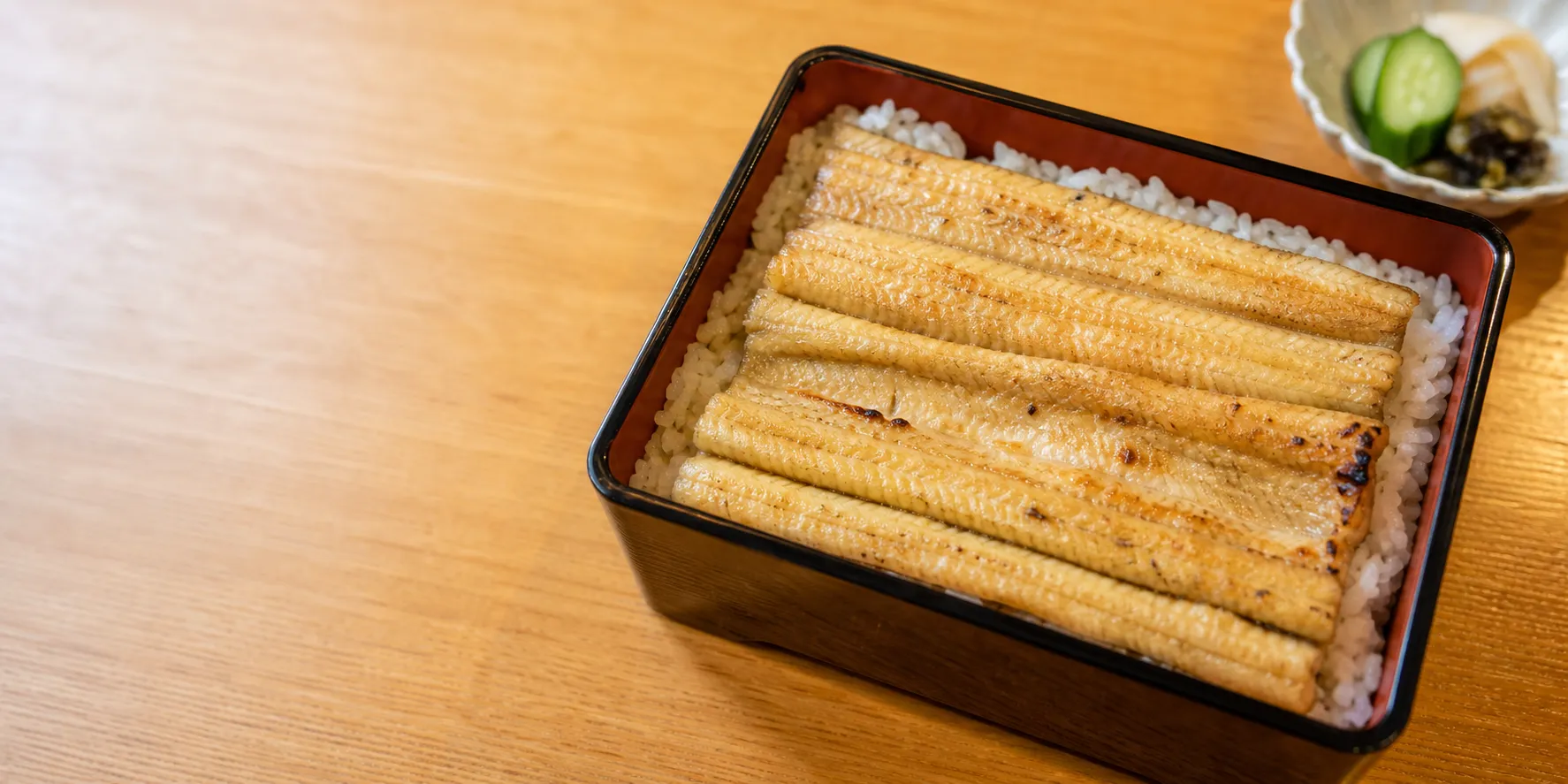
Local FoodMiyajima / Hiroshima
Anago Meshi (あなご飯)
It fell apart under my chopsticks before I'd even applied pressure — no bite required, just a soft collapse into something between fish and silk.
July 5, 2026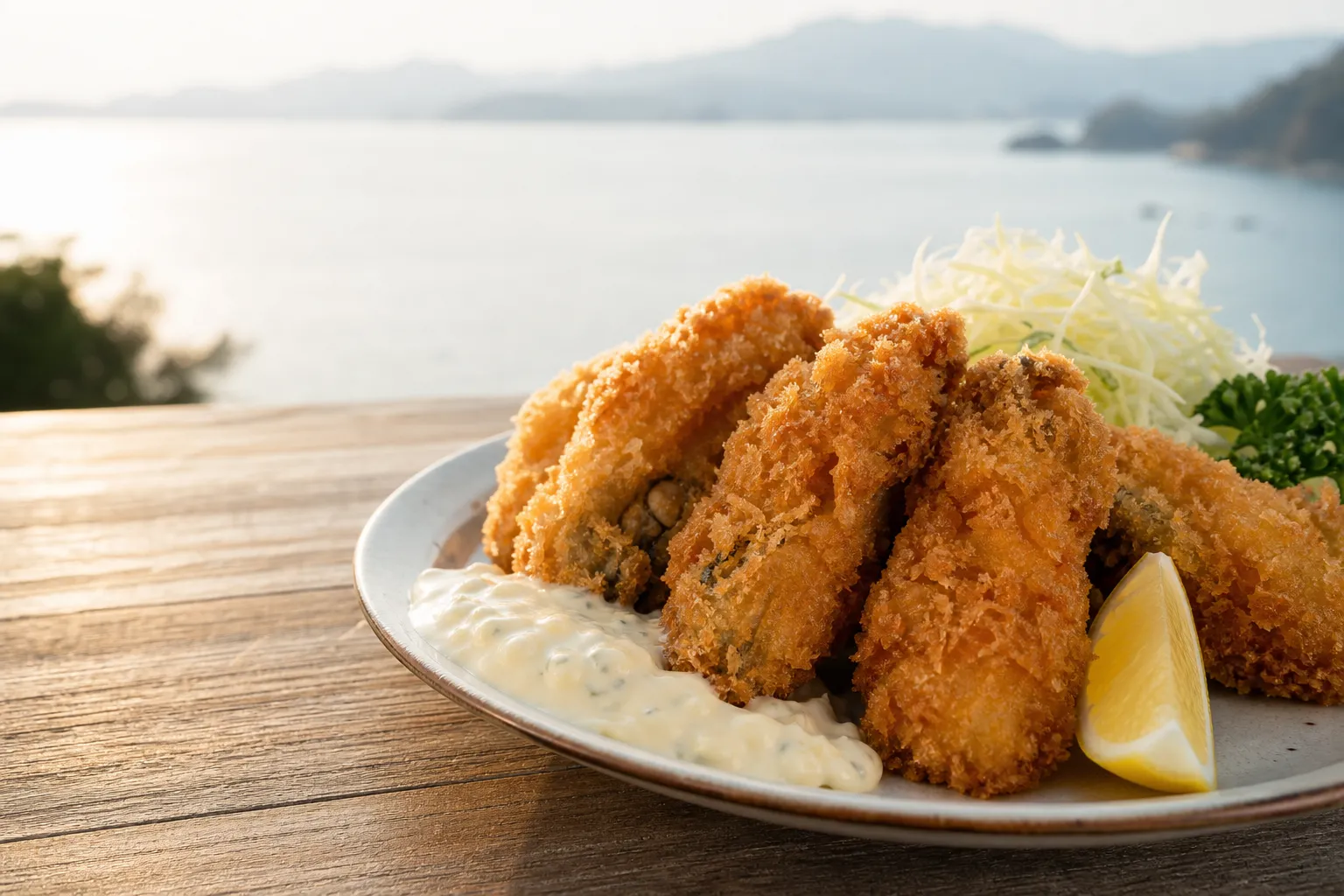
Local FoodHiroshima
Hiroshima Kaki Fry (広島かきフライ)
Crack the golden crust and the oyster inside is still plump and full of the sea — the fried food that finally made me understand why people drive to Hiroshima in winter.
July 5, 2026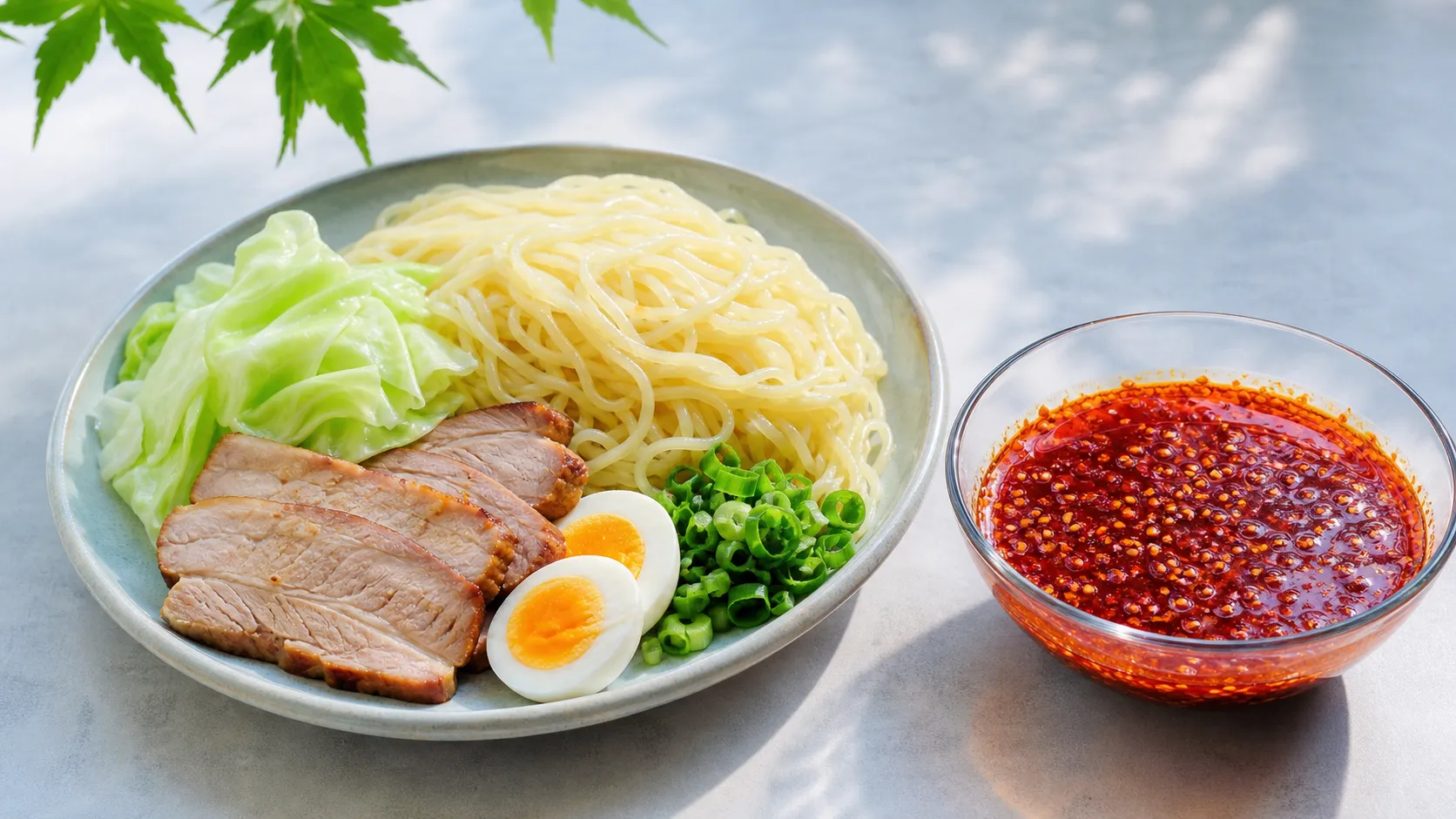
Local FoodHiroshima
Hiroshima Tsukemen (広島つけ麺)
My mouth was on fire and I was still going back for more — that particular kind of pain that somehow tells your brain to keep eating instead of stop.
July 5, 2026