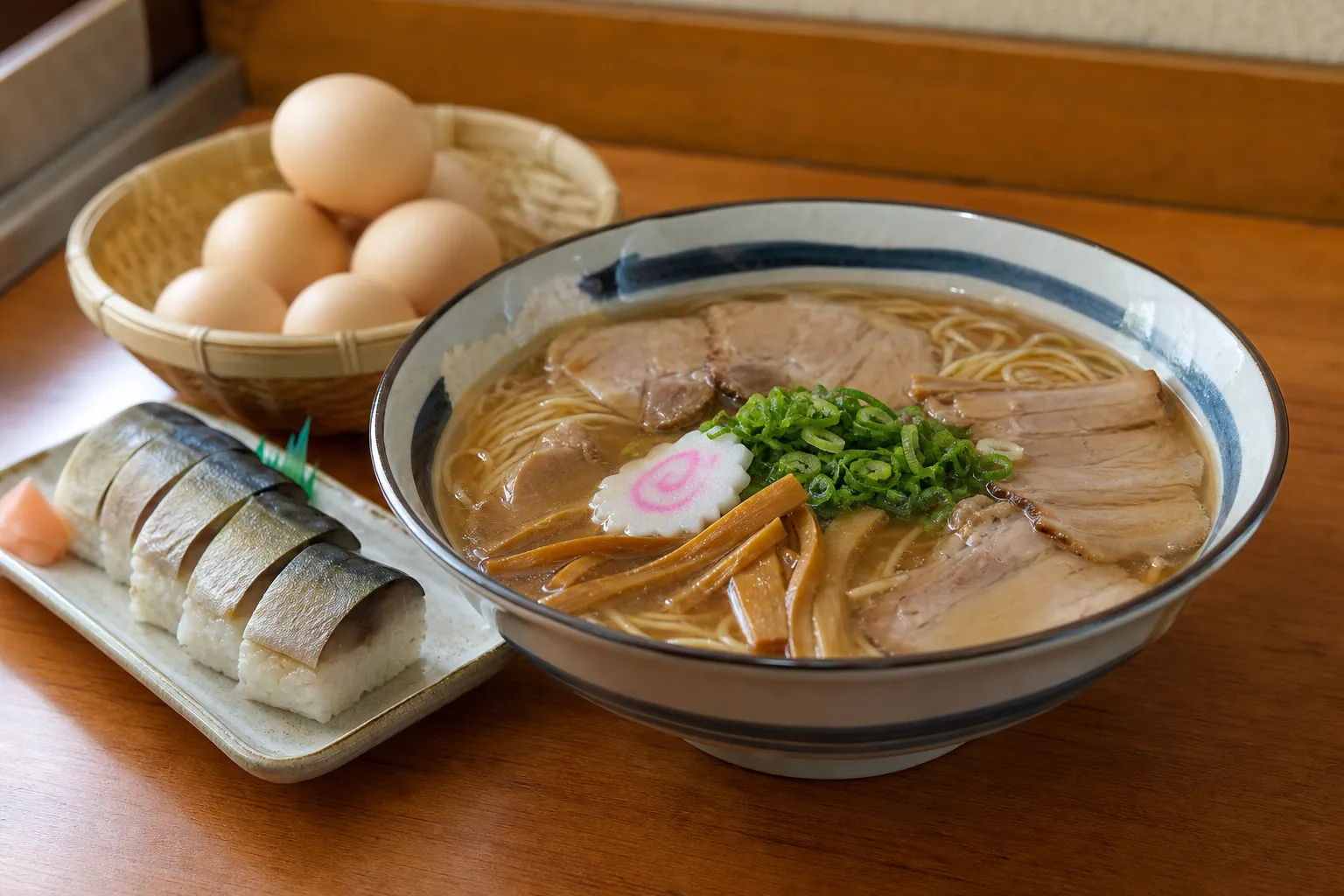
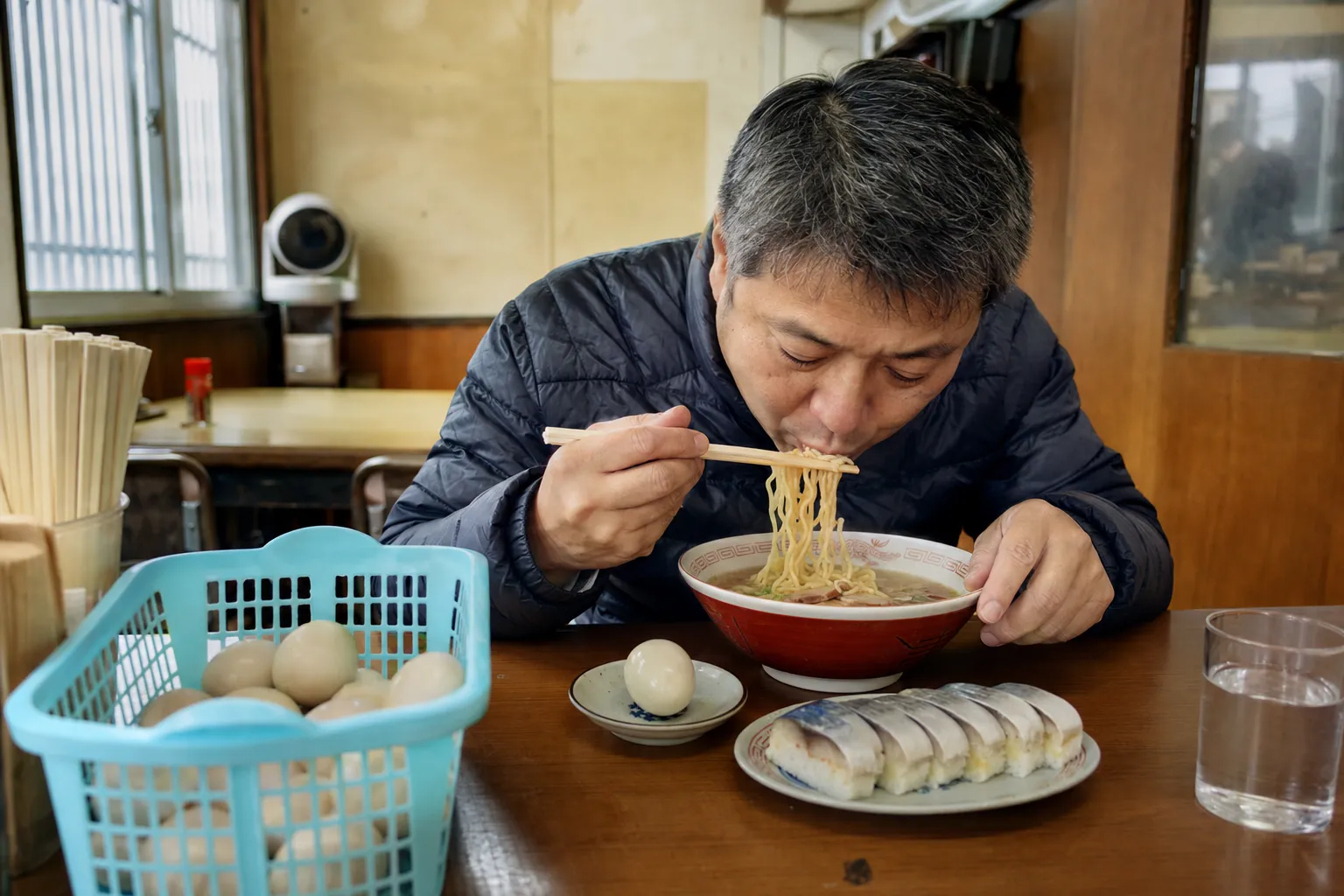
While I was waiting for my ramen, I noticed the basket of boiled eggs and the plate of little pressed-mackerel sushi already sitting on the table, and a regular next to me just... took some. Started eating. Before his ramen even arrived. I copied him because that is the law of travel, and it turned out to be one of the best decisions of the trip.
Share this dish


Pork-bone-meets-soy broth, thin springy noodles — and a self-serve table loaded with pressed mackerel sushi and boiled eggs you grab while you wait. Locals don't even call it ramen. They call it the good stuff.
🍜 Planning a food trip to Wakayama?Add this dish to my Food Trip →
 Add this dish to my Food Trip →
That's the Wakayama ritual: you graze on hayazushi (pressed mackerel sushi) and boiled eggs from the self-serve table while you wait, then settle up by counting what you ate at the end. And then the ramen lands — a brown, savory pork-and-soy broth that locals are so casual about they don't even call it ramen. They call it chuka soba. The good stuff.
A bowl the locals refuse to call ramen
In Wakayama, the dish that the rest of Japan calls "Wakayama ramen" is known locally as chuka soba ("Chinese noodles") — a sign of how deep and old the habit runs here. It exploded into national fame in the late 1990s after a TV show crowned a Wakayama shop among Japan's best, and suddenly the whole country wanted a bowl. But in town it had always just been the everyday noodle soup people grew up on.
The thing I love most is the table custom. The hayazushi and boiled eggs sitting out, the honor-system tally, the regulars helping themselves before the ramen arrives — it's relaxed and trusting and completely charming, a little local choreography you get to join the moment you sit down. The mackerel sushi, faintly vinegared and pressed, is also a genuinely great pairing: a cool, sharp bite between mouthfuls of rich brown broth.
Pork bones and soy, meeting in the middle
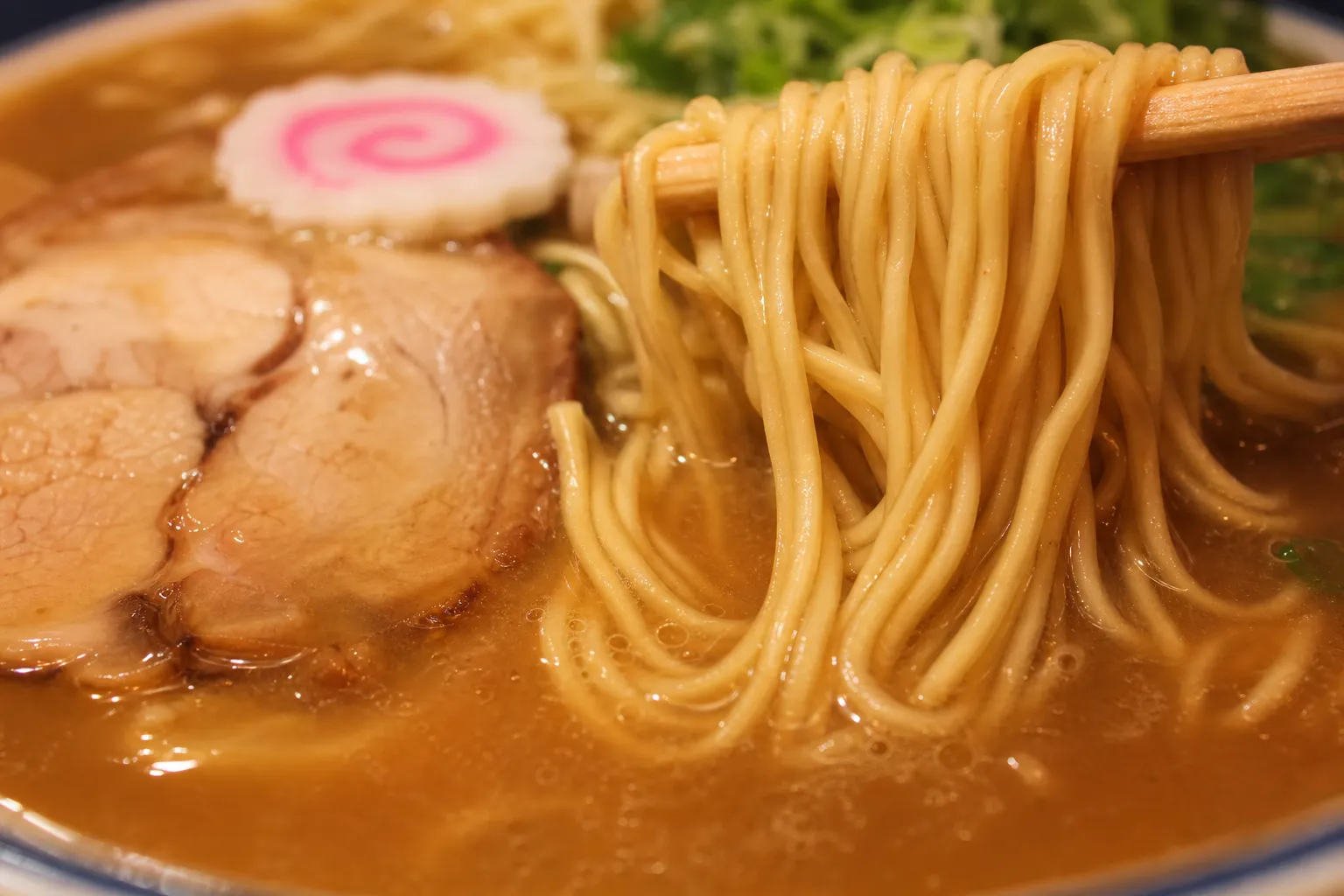
Wakayama broth sits right between two famous styles. It's tonkotsu-shoyu — pork bones simmered for richness, then blended with a dark soy tare — so the soup comes out brown and savory and full-bodied without being the heavy pure-white cream of Hakata tonkotsu or the clear lightness of Tokyo shoyu. It's the best of both: porky depth, soy sharpness, deeply satisfying.
The noodles are thin and straight, with a firm springy bite that suits the rich broth. Toppings stay classic — slices of char siu, menma, green onion, and a pink-and-white naruto swirl. It's a comforting, no-nonsense, deeply savory bowl. And then you remember the mackerel sushi waiting on the table, and you reach for one more.
How it's made
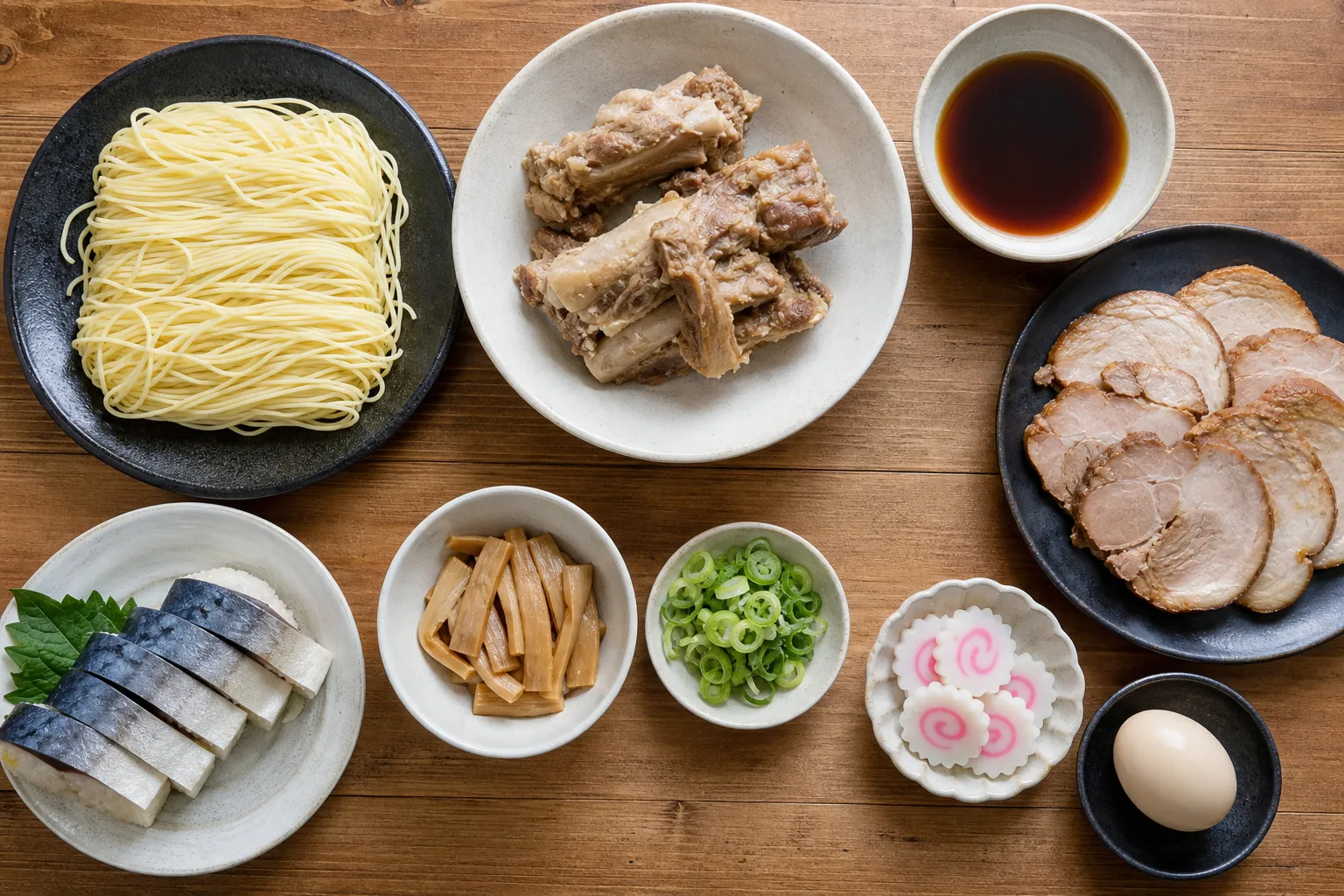
- Simmer pork bones into a rich broth, then blend with a dark soy (shoyu) tare for the signature tonkotsu-shoyu base
- Cook thin, straight noodles with a firm bite
- Combine broth and noodles
- Top with char siu, menma, green onion, and naruto
- Set out hayazushi (pressed mackerel sushi) and boiled eggs on the table for self-serve grazing
- Serve the ramen — and tally the sushi and eggs you ate when you pay
Your questions, answered honestly
"Do I really just take the sushi and eggs off the table?" — Yes. They're self-serve while you wait, and you pay for what you ate at the end (honor system — staff count the plates/wrappers). Grabbing a hayazushi before your ramen is completely normal and very much the move.
"Why do locals call it chuka soba, not ramen?" — It's the older, traditional name ("Chinese noodles"), and in Wakayama the habit stuck. Order it either way — they'll know what you mean — but chuka soba earns a nod.
"Is the broth heavy?" — It's rich but balanced — pork-bone depth cut with soy sharpness, browner and lighter than pure tonkotsu. Very easy to enjoy.
What the staff will ask you
| You'll hear | Romaji | Meaning | Just say |
|---|---|---|---|
| 中華そばでいいですか? | Chūka soba de ii desu ka? | "The chuka soba (ramen), yes?" | Hai, onegaishimasu |
| 早寿司は食べましたか? | Hayazushi wa tabemashita ka? | "Did you have any mackerel sushi?" | Hai, ◯ko — "yes, [number]" |
| 麺の硬さは? | Men no katasa wa? | "Noodle firmness?" | Futsū de — "regular" |
To order, just say "Chuka soba kudasai" (中華そばください) — "Chuka soba (Wakayama ramen), please."
Where to eat it
- Wakayama City — the home of the style; shops cluster around the city, many with the classic self-serve hayazushi and egg table custom.
- Ide Shoten (井出商店), Wakayama — the shop widely credited with sparking the late-'90s national boom; a pilgrimage spot for the style. Check current hours.
- Wakayama-style shops elsewhere — the tonkotsu-shoyu style has spread, and a number of shops nationwide serve a faithful Wakayama-style chuka soba.
Soul Score
Local Roots4/5
First-Timer Friendly4/5
Adventure Level3/5
Comfort Level5/5
Travel Worthy4/5
These scores are one obsessed eater's gut feeling — not a verdict. A low number isn't a bad mark, just a different kind of adventure.
Know someone planning Japan?
← All Articles
Local Food · Wakayama, Wakayama
Still hungry?
Eat more from Wakayama
Local FoodKoyasan, Wakayama
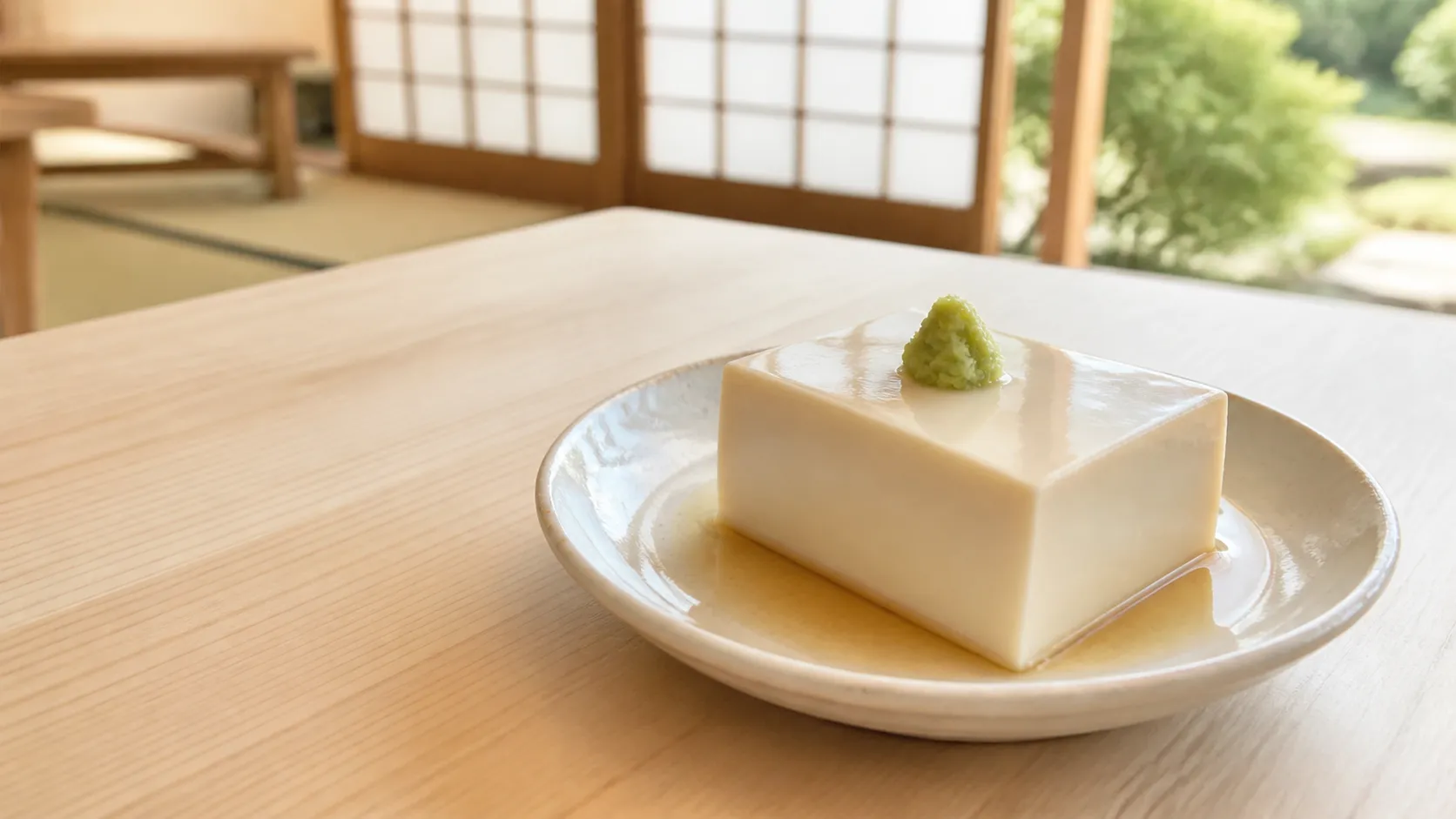
Goma-dofu (ごま豆腐)
It has no soybeans in it, no coagulant, and no business being called tofu — and it was the best single thing I ate on a mountain full of monks.
September 2, 2026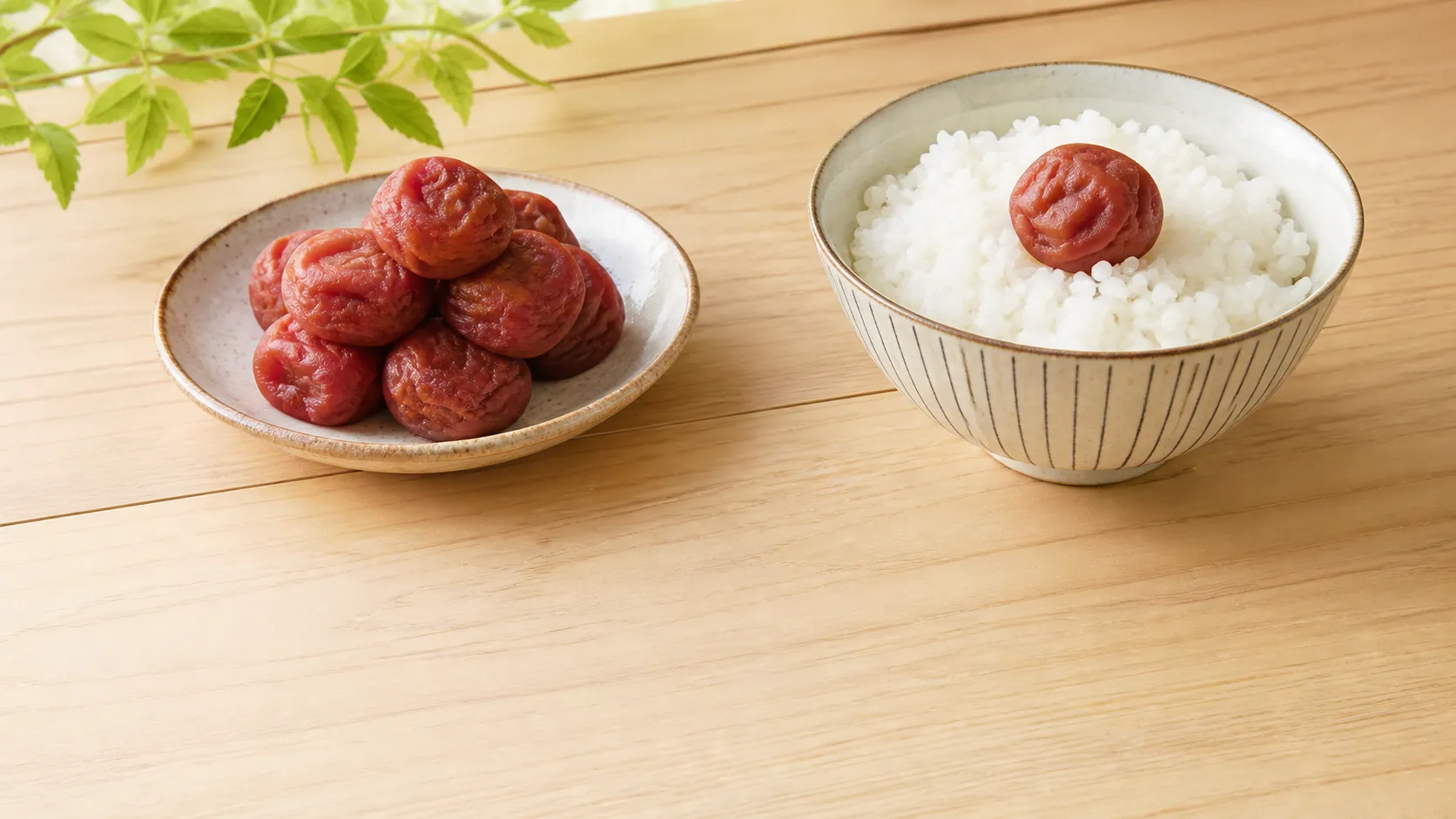
Local FoodMinabe, Wakayama
Umeboshi (梅干し)
My whole face folded inward. A man on the next stool laughed so hard he had to put his tea down. Ten minutes later I bought a bag of them, because apparently I'm like this.
September 2, 2026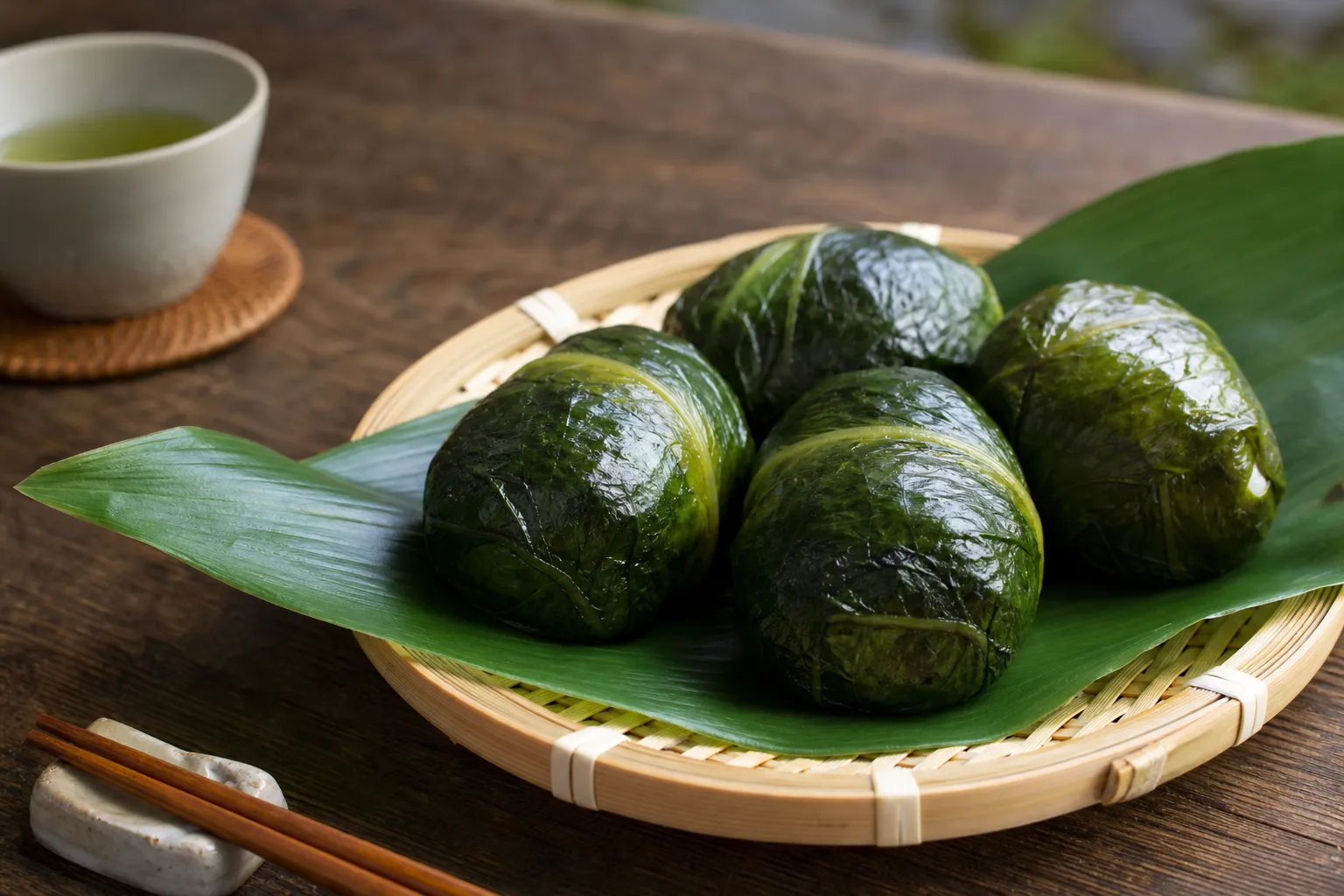
Local FoodKumano, Wakayama
Mehari-zushi (めはり寿司)
A rice ball wrapped head-to-toe in tangy pickled mustard greens, so big and good that the old story says your eyes go wide just to fit it in your mouth.
July 12, 2026Keep slurping the ramen trail
Local FoodKitakata, Fukushima
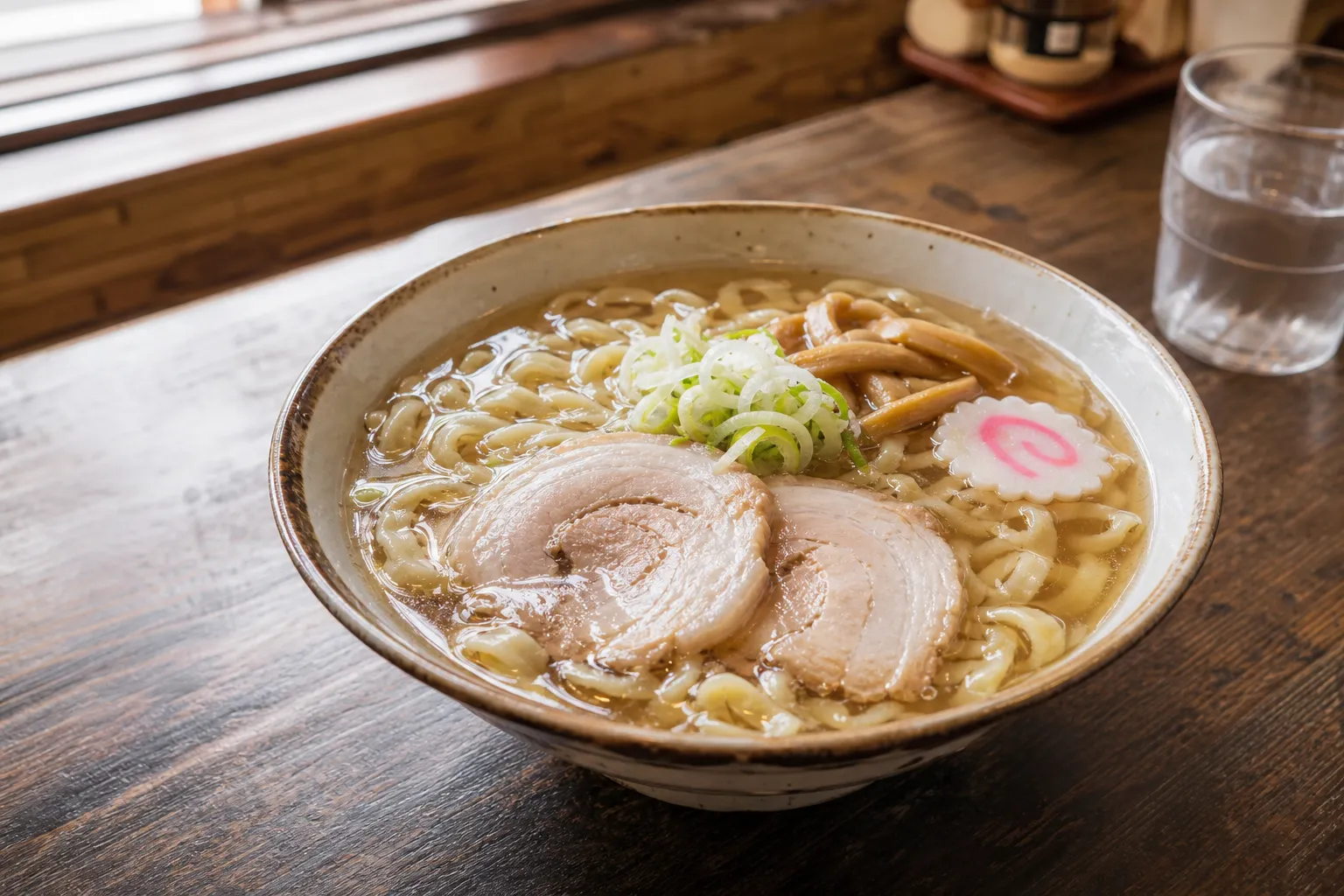
Kitakata Ramen (喜多方ラーメン)
Flat, wide, curly noodles in a clear soy broth so clean you can see the bottom of the bowl — and a town so obsessed it eats ramen for breakfast. This is comfort with the volume turned down, on purpose.
June 26, 2026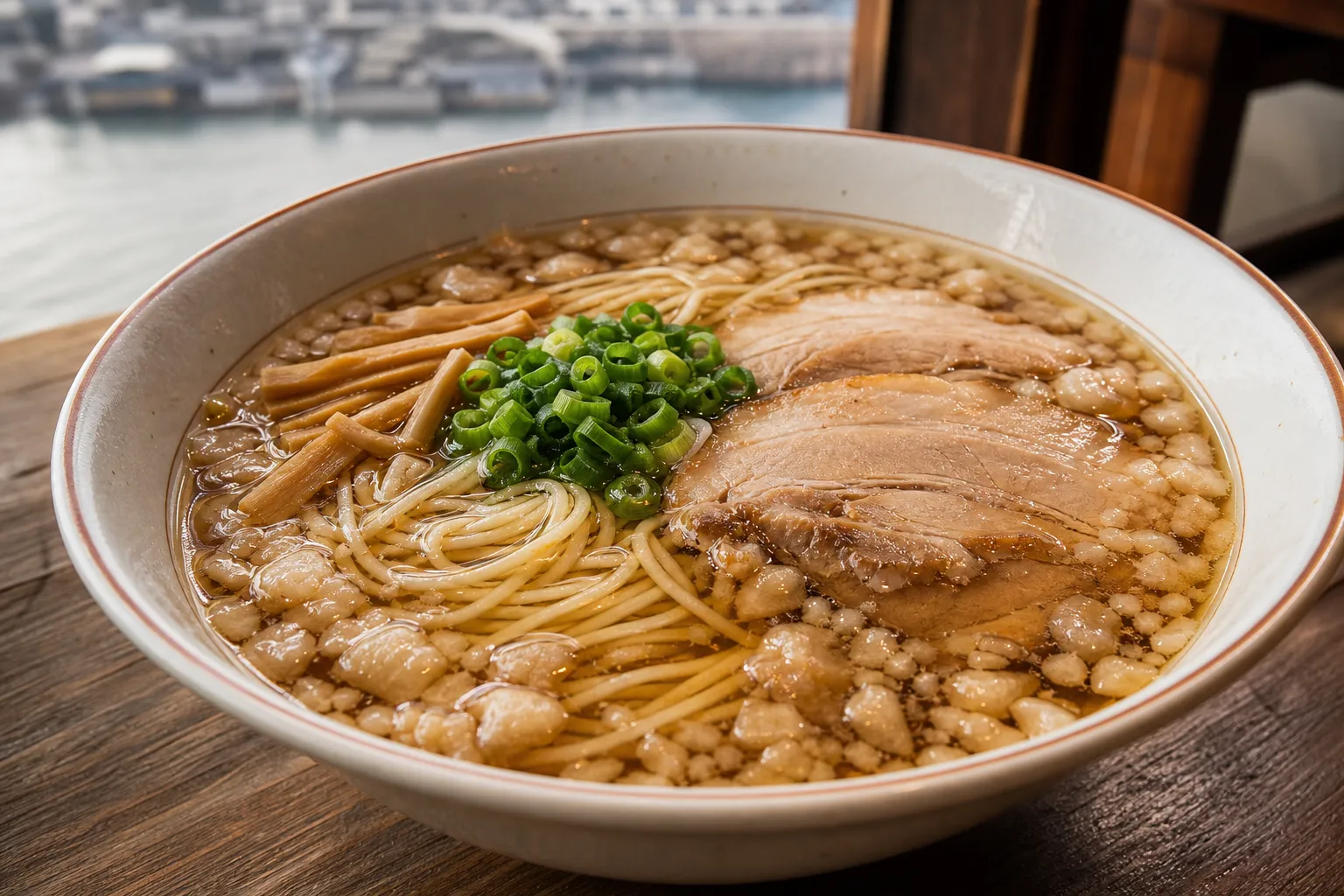
Local FoodOnomichi, Hiroshima
Onomichi Ramen (尾道ラーメン)
Clear soy broth from the Seto Inland Sea, studded with little pillows of melting pork fat that change everything. A hillside port town's bowl — light and deep at the same time, which shouldn't be possible.
June 26, 2026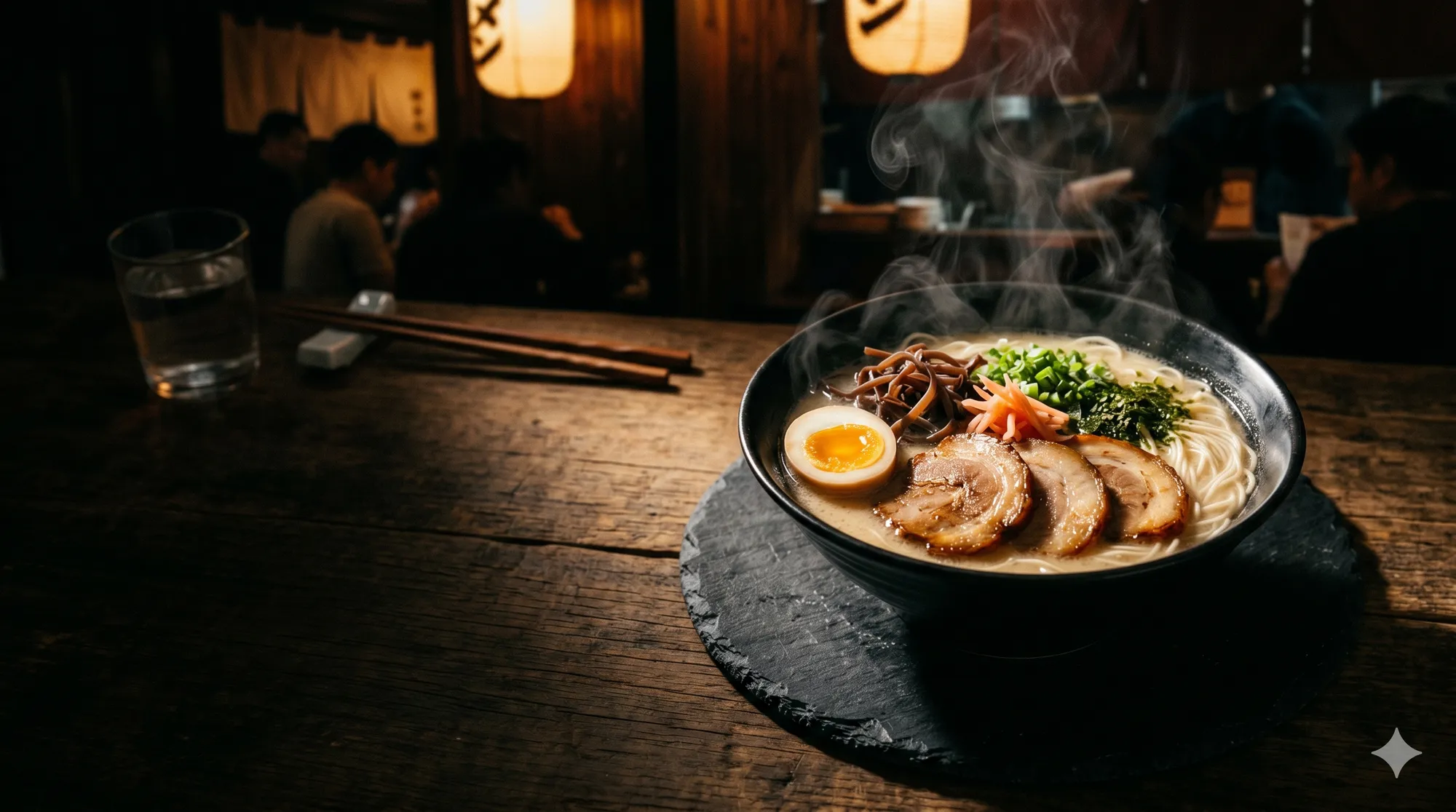
Local FoodFukuoka
Hakata Ramen (博多ラーメン)
Milky pork-bone broth, hair-thin straight noodles, and a refill system that lets you keep the party going. Fukuoka's tonkotsu ramen runs on its own vocabulary — learn three words and you're in.
June 15, 2026