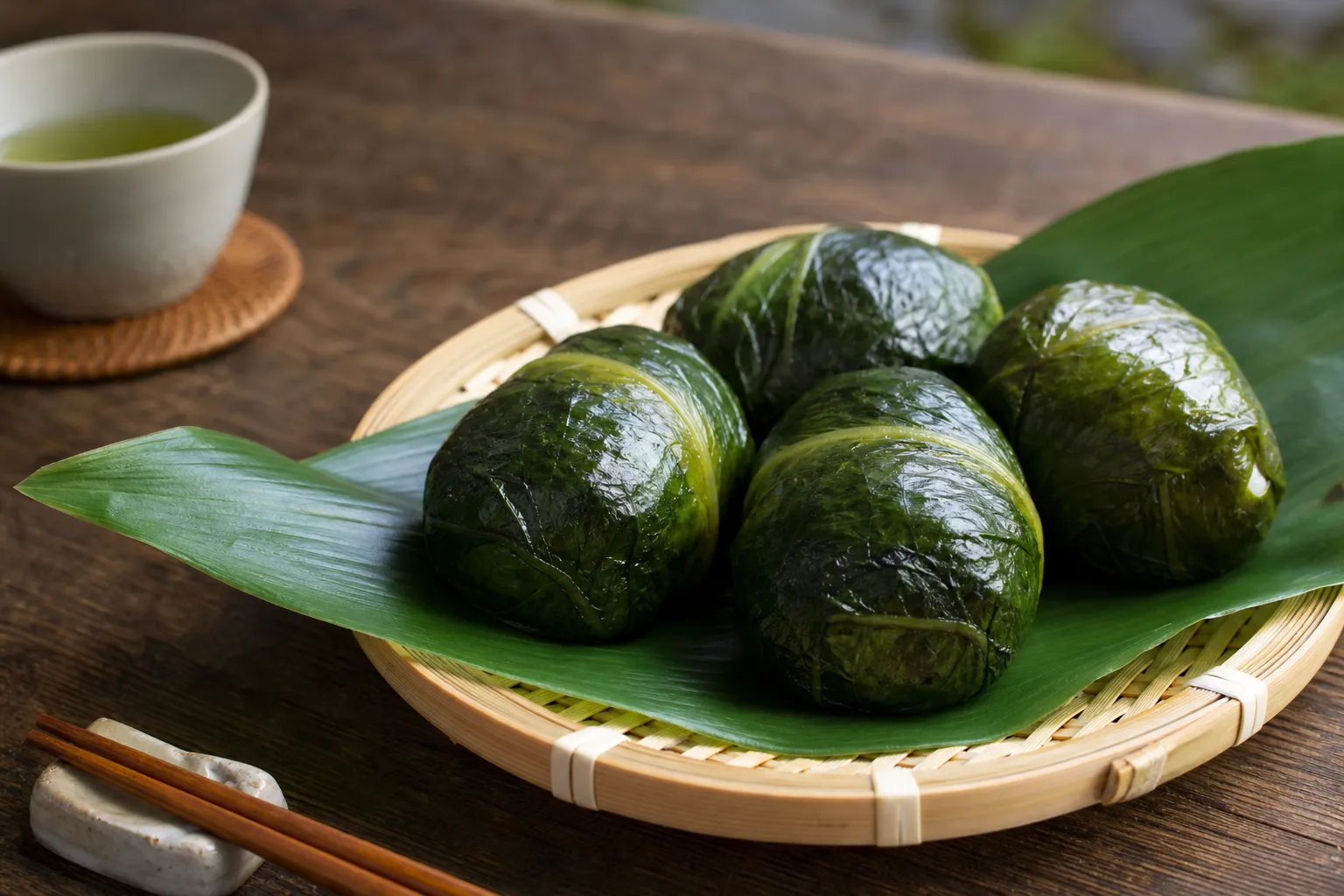
I underestimated it. It's just a rice ball in a leaf, I thought — and then I picked one up, realized it was the size of my fist, opened wide, and got hit with this bright, tangy, savory crunch of pickled greens against warm rice, and I actually laughed mid-bite. My eyes did go wide. The name is not a metaphor. It's a warning label.
Share this dish


A rice ball wrapped head-to-toe in tangy pickled mustard greens, so big and good that the old story says your eyes go wide just to fit it in your mouth.
🍜 Planning a food trip to Wakayama?Add this dish to my Food Trip →
 Add this dish to my Food Trip →
Here's what it is: mehari-zushi (めはり寿司) is a rice ball wrapped completely — top, bottom, sides — in a big pickled leaf of takana mustard greens, so the tangy, salty leaf is the wrapper and the seasoning both. No nori in sight. It comes from the Kumano mountains and river valleys of Wakayama, where it was the packed lunch of forestry and field workers who needed something filling, sturdy and easy to eat with dirty hands. The name is usually explained as me-hari — "eyes wide open" — because the balls were made so big you had to stretch your eyes (and your mouth) to bite one. This is not a nori-wrapped onigiri; it's the mountain original, greens and all.
Lunchbox of the Kumano mountains
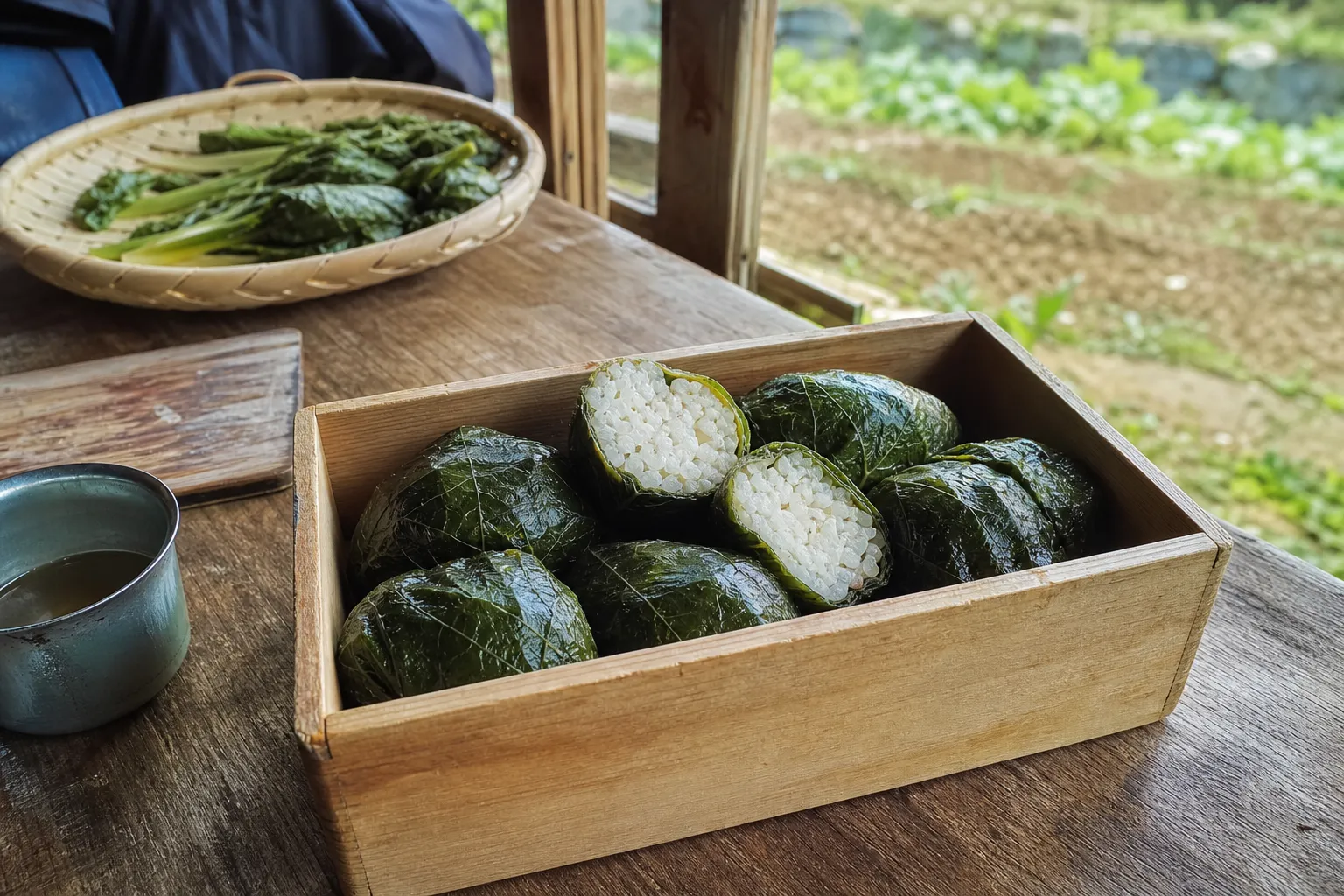
Kumano is deep, green, rain-soaked country — sacred pilgrimage trails, cedar forests, fast rivers. It's not easy land to farm, but takana grows well, and pickling it in salt made it keep. Wrap that preserved leaf around a big ball of rice and you've got the perfect working lunch: no plate, no chopsticks, no wrapper to unwrap, just a sturdy, salty, satisfying handful you can eat one-handed on a mountainside with an axe in the other. It fed foresters, farmers and river workers, and it fed pilgrims on the Kumano Kodo trails.
I love how honest that is. There's no luxury in mehari-zushi and it isn't trying for any — it's smart, thrifty, regional food that turned a hardy local green and a bowl of rice into something genuinely delicious. The original versions were reportedly huge, cartoonishly so, which is exactly the detail that makes me grin. A lunch so big it renames your face. That's confidence.
What makes it so good
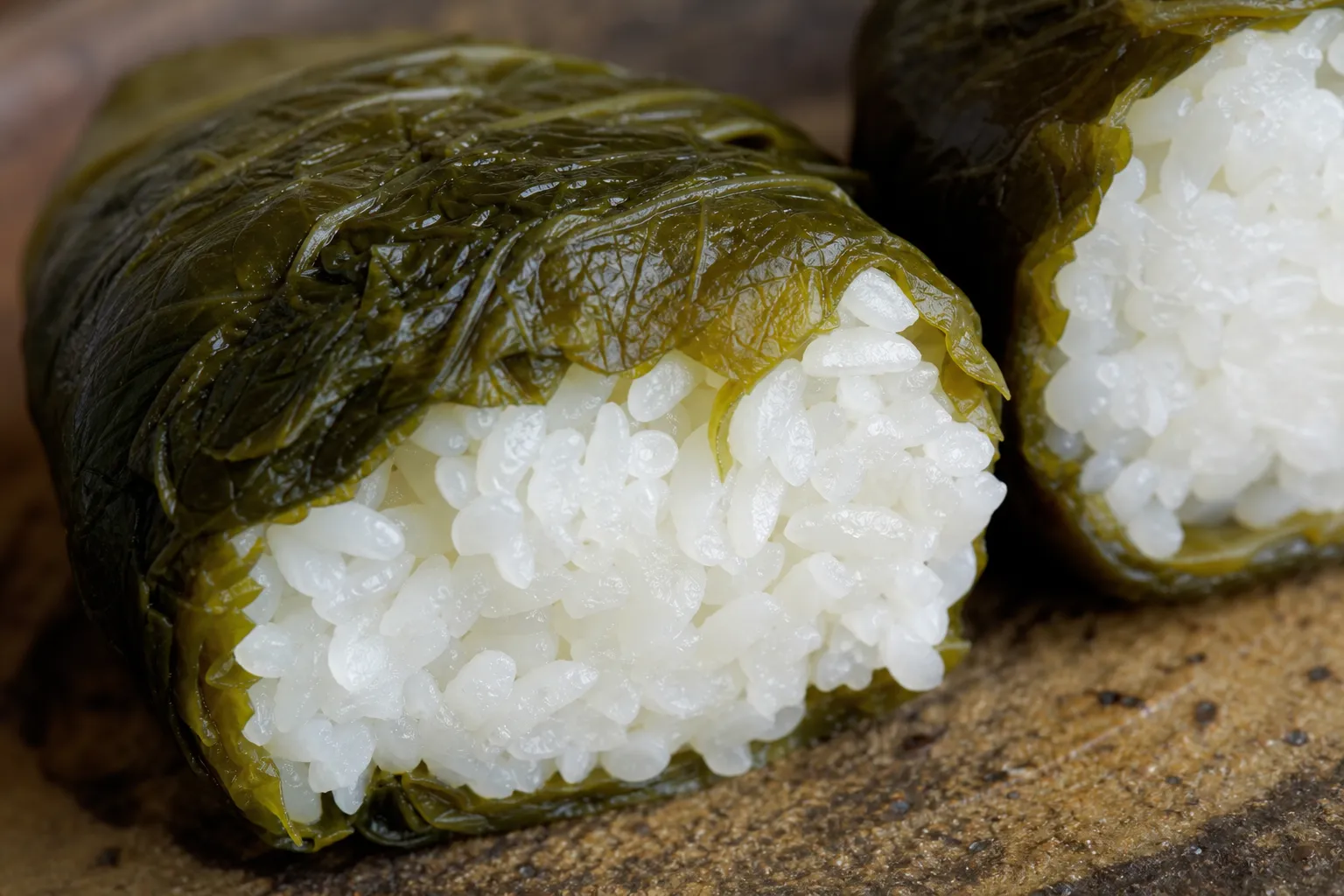
- The pickled takana leaf does everything at once — it's the wrapper, the seasoning and a tangy, savory hit of umami, all in one
- The contrast is the whole appeal: cool, salty, slightly crunchy greens against warm, plain, comforting rice
- It's completely hand-held and self-contained — no nori to go soft, no filling to fall out, built to be eaten anywhere
- The flavor is clean and rustic — no heavy sauces, just fermented-pickle tang and rice, which makes it weirdly moreish
- Some versions chop extra leaf into the rice or tuck a little inside, layering the takana flavor even deeper
How it's made
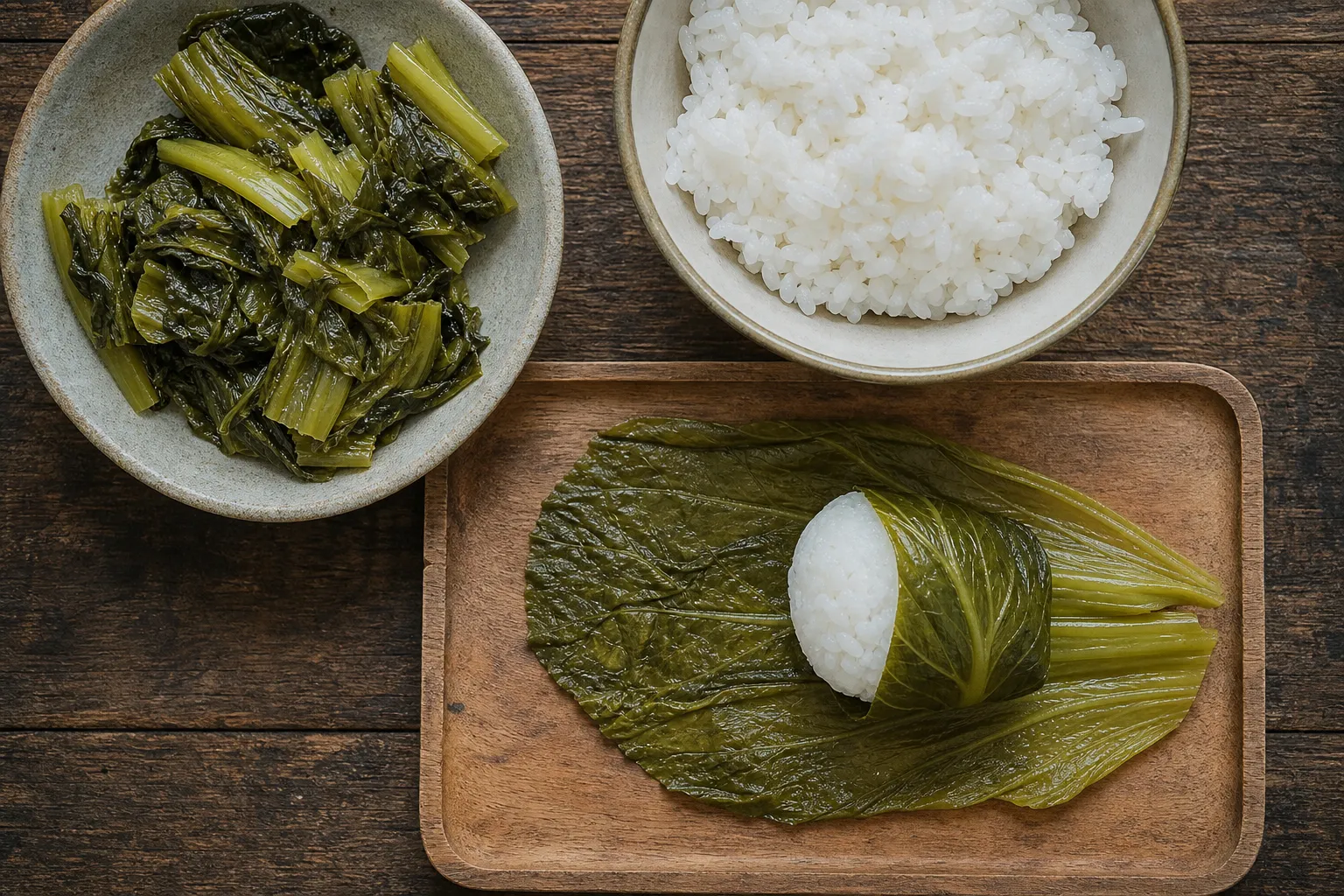
- Pickle the greens. Whole takana mustard-green leaves are salted and pressed until they wilt, soften and turn tangy — this is the takana-zuke that makes the wrapper.
- Prep the rice. Warm rice is seasoned lightly (some cooks add a little of the chopped pickle or a touch of soy) and shaped into a firm, generous ball.
- Trim the leaves. The pickled leaves are rinsed of excess salt if needed and their thick stems trimmed so they wrap smoothly.
- Wrap it whole. Each rice ball is completely enclosed in one or more leaves, leaf-side out, tucked so it holds together.
- Rest and serve. The wrapped balls sit a short while so the flavors meld, then are served whole — eaten in big, eye-widening bites.
It's simple food, so the pickle is where the skill lives: greens tangy and salty enough to season the rice but not so aggressive they overpower it. Good takana-zuke makes a good mehari-zushi, full stop.
Before you go — open wide, eat with your hands
Your questions, answered honestly
"What's the leaf, and do I eat it?" — It's takana, a leafy mustard green, pickled in salt until tangy. And yes — you absolutely eat it; the leaf is the point. It's the wrapper and the seasoning, so don't peel it off like plastic.
"How is this different from a normal onigiri?" — A regular onigiri is wrapped in dried nori seaweed and usually has a filling. Mehari-zushi is wrapped in pickled mustard greens and often has no filling at all — the tangy leaf does all the flavoring. Different wrapper, different soul.
"Why is it called 'eyes wide open'?" — The traditional ones were made big — the story goes you had to open your eyes (and mouth) wide to take a bite. Some shops still make them hearty; others sell smaller, tidier versions, but the name sticks to all of them.
"Is it spicy or strong?" — No. It's savory, lightly salty and pleasantly tangy from the pickle — mild and comforting, very easy for a first-timer. If anything it's on the gentle, homey end of the spectrum.
What the staff will ask you
| You'll hear | Romaji | Meaning | Just say |
|---|---|---|---|
| 何個にしますか? | Nan-ko ni shimasu ka? | "How many would you like?" | Ni-ko kudasai (two, please) |
| お茶もつけますか? | O-cha mo tsukemasu ka? | "Would you like tea as well?" | Onegai shimasu (yes, please) |
| 温かいのと冷たいの、どちらがいいですか? | Atatakai no to tsumetai no, dochira ga ii desu ka? | "Warm or cold?" | Dochira demo ii desu (either is fine) |
To order, just say "Mehari-zushi o kudasai" (めはり寿司をください) — "Mehari-zushi, please."
Where to eat it
- The Kumano region of Wakayama — towns like Shingu and Nachikatsuura, and along the Kumano Kodo pilgrimage routes, are the dish's heartland, with local shops and specialists serving it fresh.
- Stations, rest stops and roadside stations (michi-no-eki) in southern Wakayama and neighboring Mie/Nara — a common, reliable place to grab mehari-zushi as a packed meal or bento.
- Soba and set-meal restaurants around Kumano — often serve mehari-zushi alongside a bowl of noodles as a local set, a good way to try it with a hot dish.
Mehari-zushi is regional and often made fresh in limited quantities; sizes, hours and availability vary by shop and some rural spots close early, so check before you go.
Soul Score
Local Roots5/5
First-Timer Friendly5/5
Adventure Level3/5
Comfort Level5/5
Travel Worthy4/5
These scores are one obsessed eater's gut feeling — not a verdict. A low number isn't a bad mark, just a different kind of adventure.
Know someone planning Japan?
← All Articles
Local Food · Kumano, Wakayama
Still hungry?
Eat more from Wakayama
Local FoodKoyasan, Wakayama
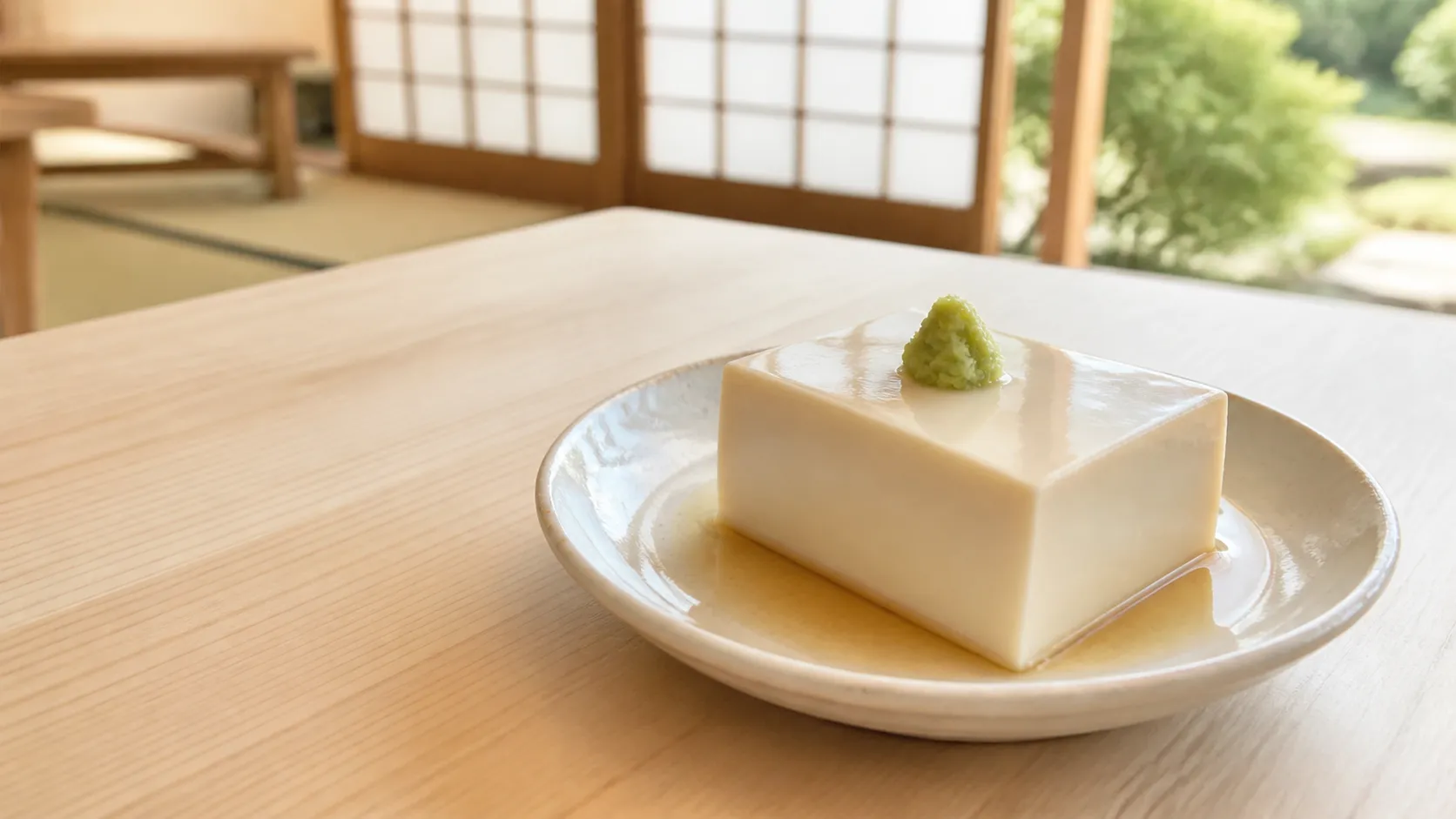
Goma-dofu (ごま豆腐)
It has no soybeans in it, no coagulant, and no business being called tofu — and it was the best single thing I ate on a mountain full of monks.
September 2, 2026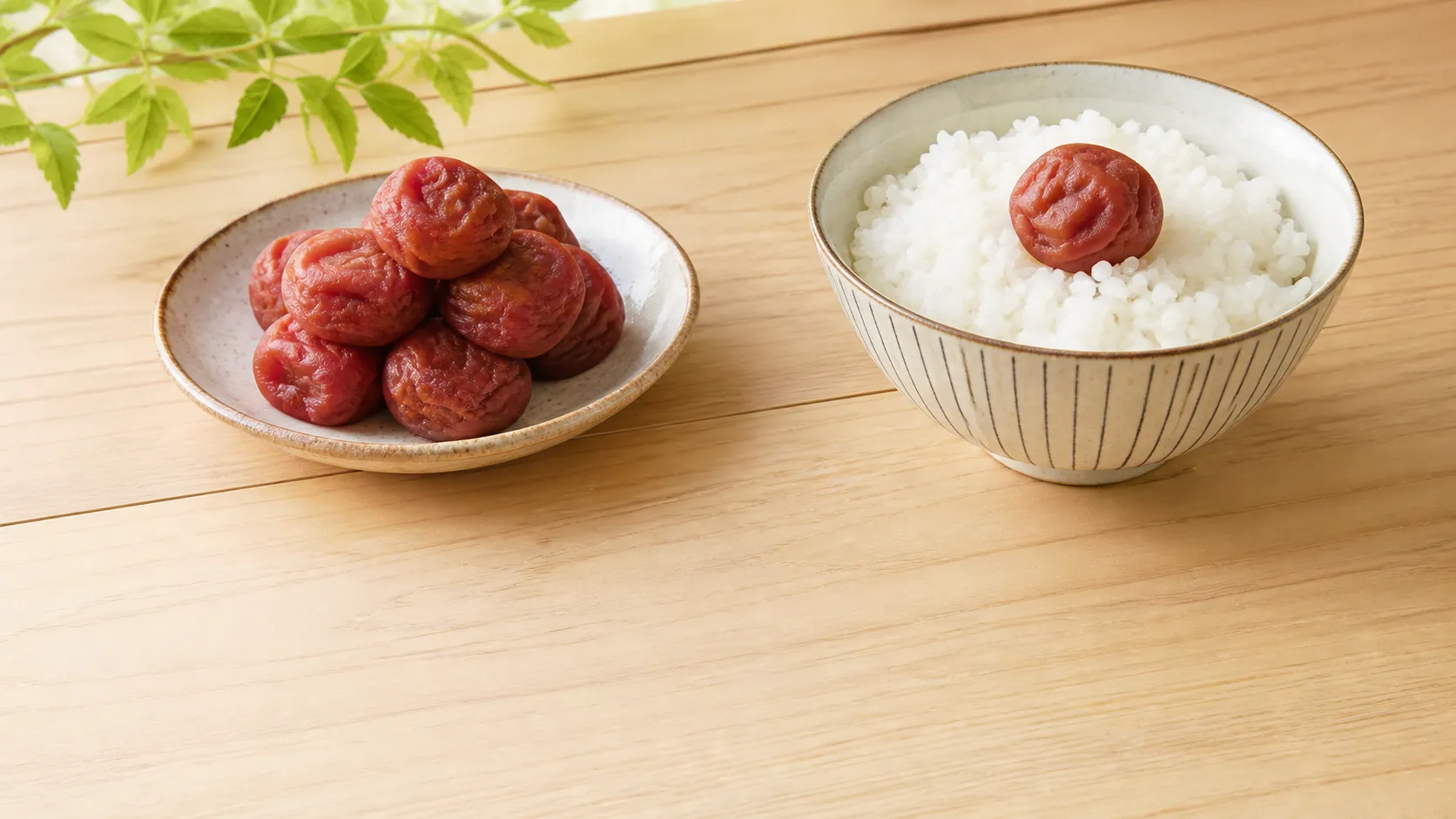
Local FoodMinabe, Wakayama
Umeboshi (梅干し)
My whole face folded inward. A man on the next stool laughed so hard he had to put his tea down. Ten minutes later I bought a bag of them, because apparently I'm like this.
September 2, 2026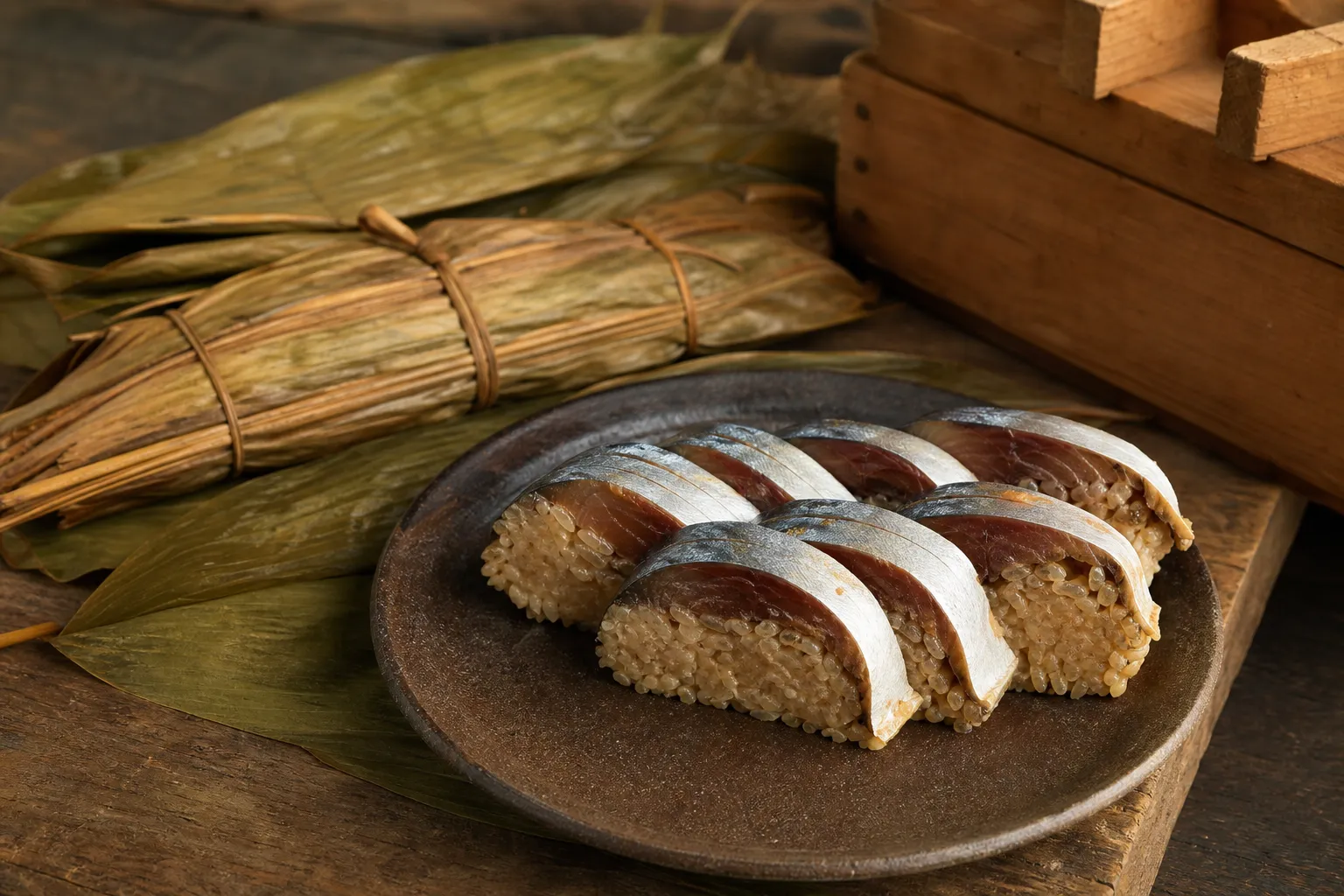
Local FoodKumano, Wakayama
Saba Narezushi (さばのなれずし)
Salted mackerel pressed onto rice and left to ferment for weeks, tangy and funky and alive — the ancient pilgrim sushi of the Kumano mountains, from before sushi meant fresh fish at all.
July 12, 2026