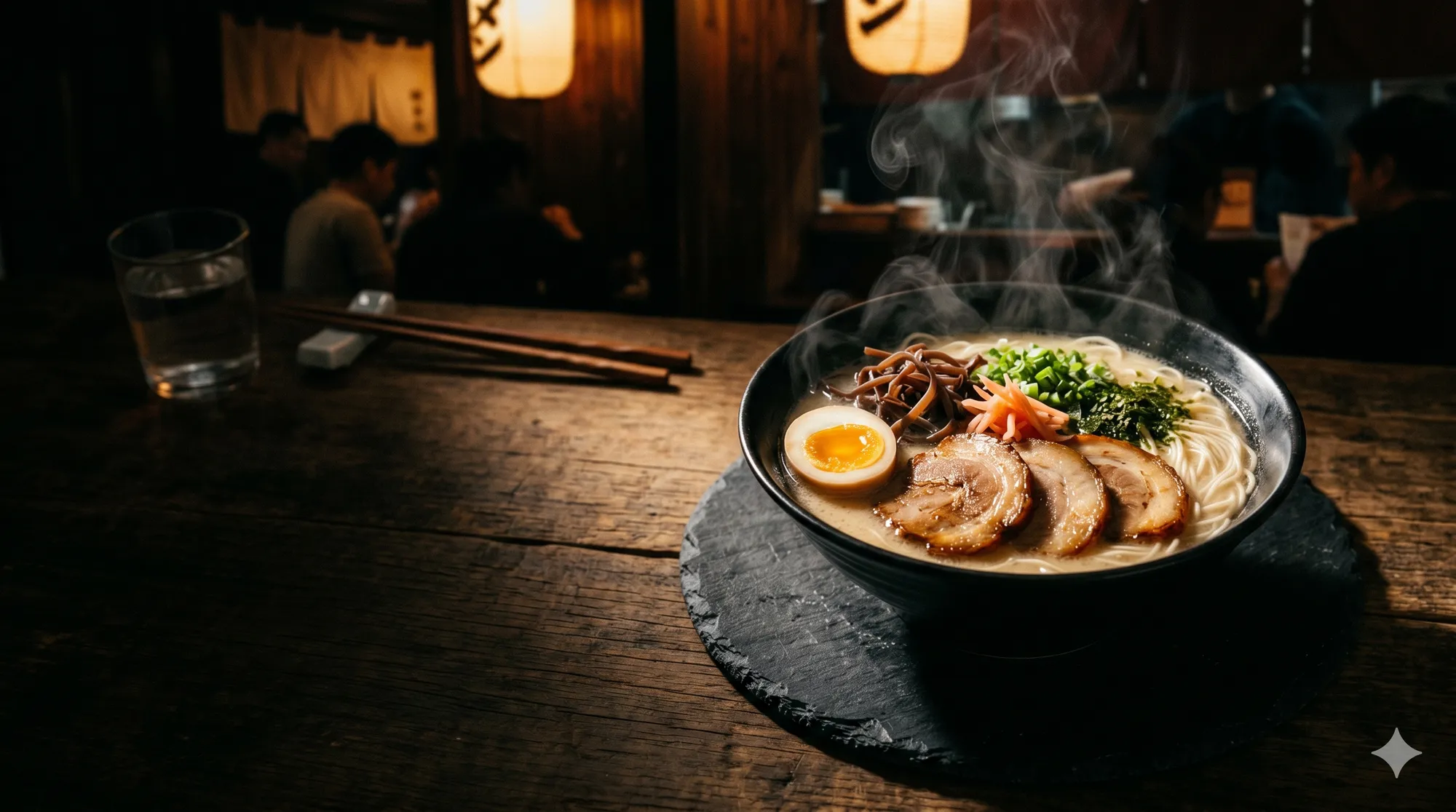
Some bowls of ramen are a meal. Hakata ramen is a system — and once you learn how it works, you'll never want to eat it any other way.
Share this dish


Milky pork-bone broth, hair-thin straight noodles, and a refill system that lets you keep the party going. Fukuoka's tonkotsu ramen runs on its own vocabulary — learn three words and you're in.
🍜 Planning a food trip to Fukuoka?Add this dish to my Food Trip →
 Add this dish to my Food Trip →
This is Fukuoka's legendary tonkotsu ramen: a rich, milky, almost creamy broth made by boiling pork bones hard for hours, poured over ultra-thin, dead-straight noodles that cook in seconds. And here's the genius part — those noodles are thin on purpose, because Hakata ramen comes with kaedama: when you've slurped your noodles but still have broth left, you shout for a fresh batch and keep going. You even choose how firm you want them. It's interactive, it's customizable, it's gloriously slurpable, and it has its own little vocabulary that turns first-timers into regulars in one sitting. Let me arm you with the words.
Born in the post-war stalls of Fukuoka
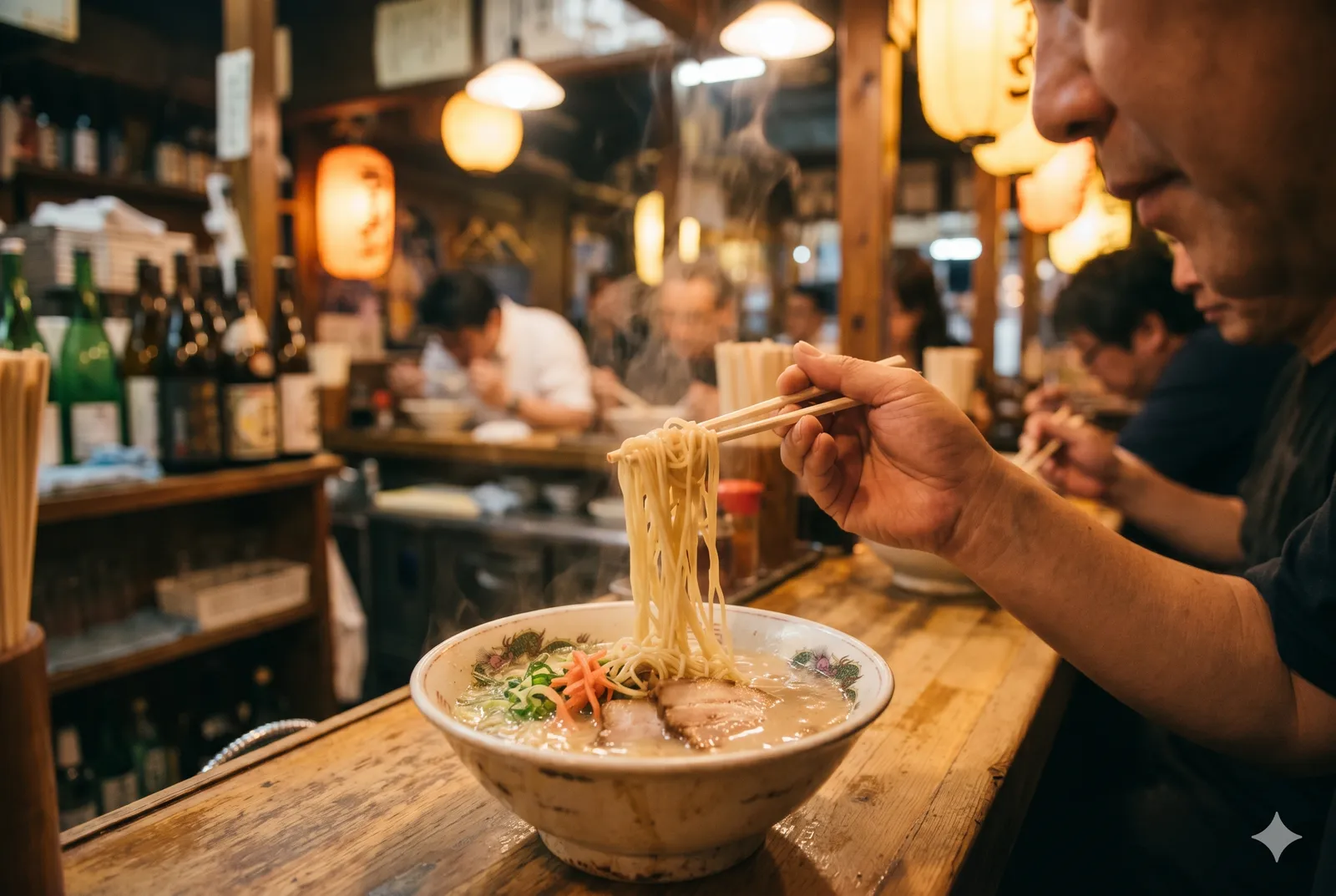
Hakata ramen grew up in the yatai — the open-air street food stalls that still glow along Fukuoka's Nakasu riverside at night. Post-war cooks pushed pork-bone broth to its rich, cloudy extreme, paired it with quick-cooking thin noodles to serve hungry crowds fast, and the kaedama refill system was born to keep everyone happily eating. From those stalls, tonkotsu ramen conquered Japan and then the world — chains like Ichiran and Ippudo were both born in Fukuoka — but the soul of it is still a steaming bowl at a stall under the stars.
Why it's so craveable
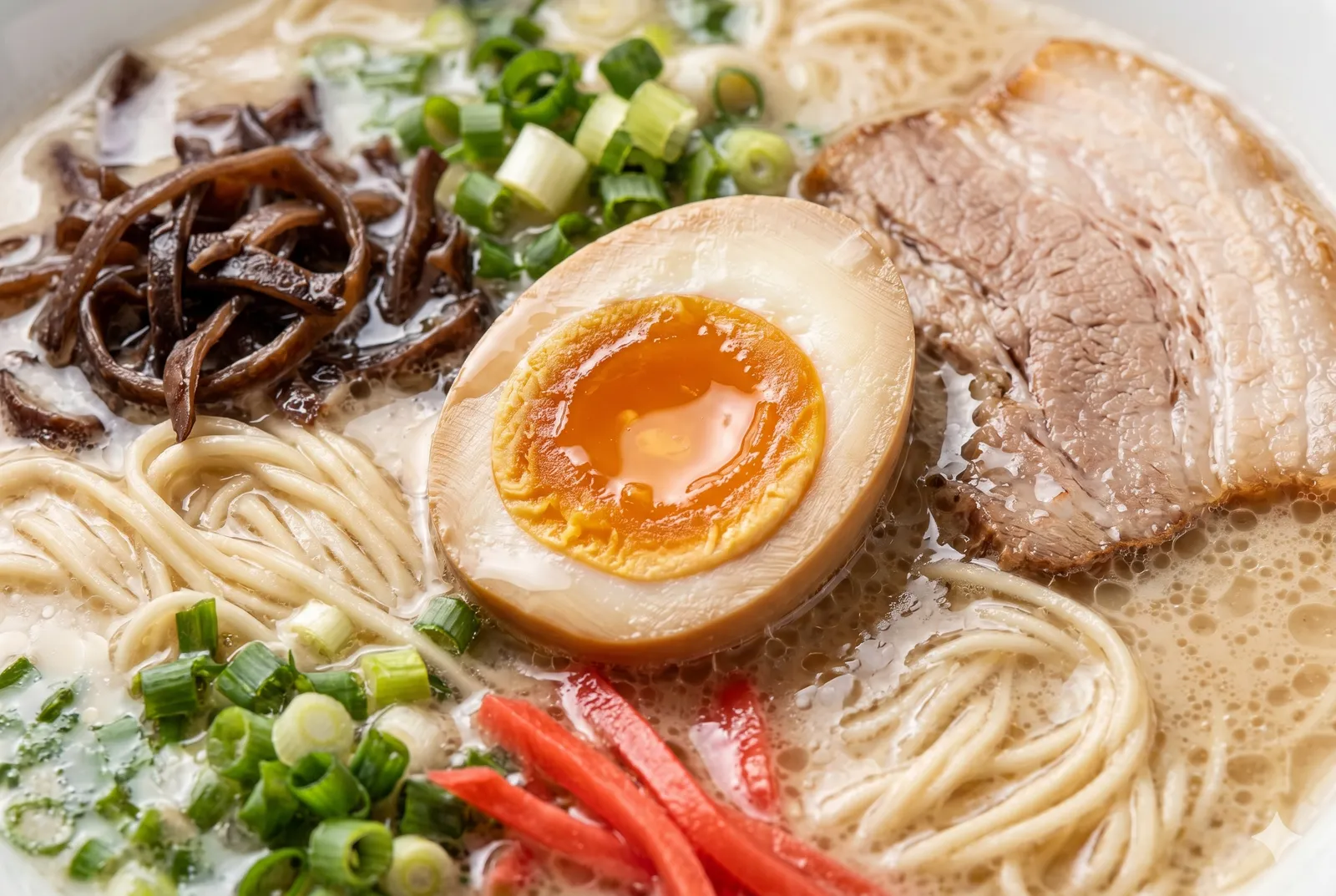
The broth is the star: pork-bone tonkotsu, simmered until it's milky-white, collagen-rich, and deeply savory — silky and intense without being heavy-handed. The thin, firm, straight noodles are built to carry it and to cook in seconds, which is exactly why kaedama works so well. Toppings are usually minimal and perfect: a few slices of chashu, green onion, sesame, kikurage mushroom, and pickled mustard greens (takana) and red ginger you add yourself.
How it's made
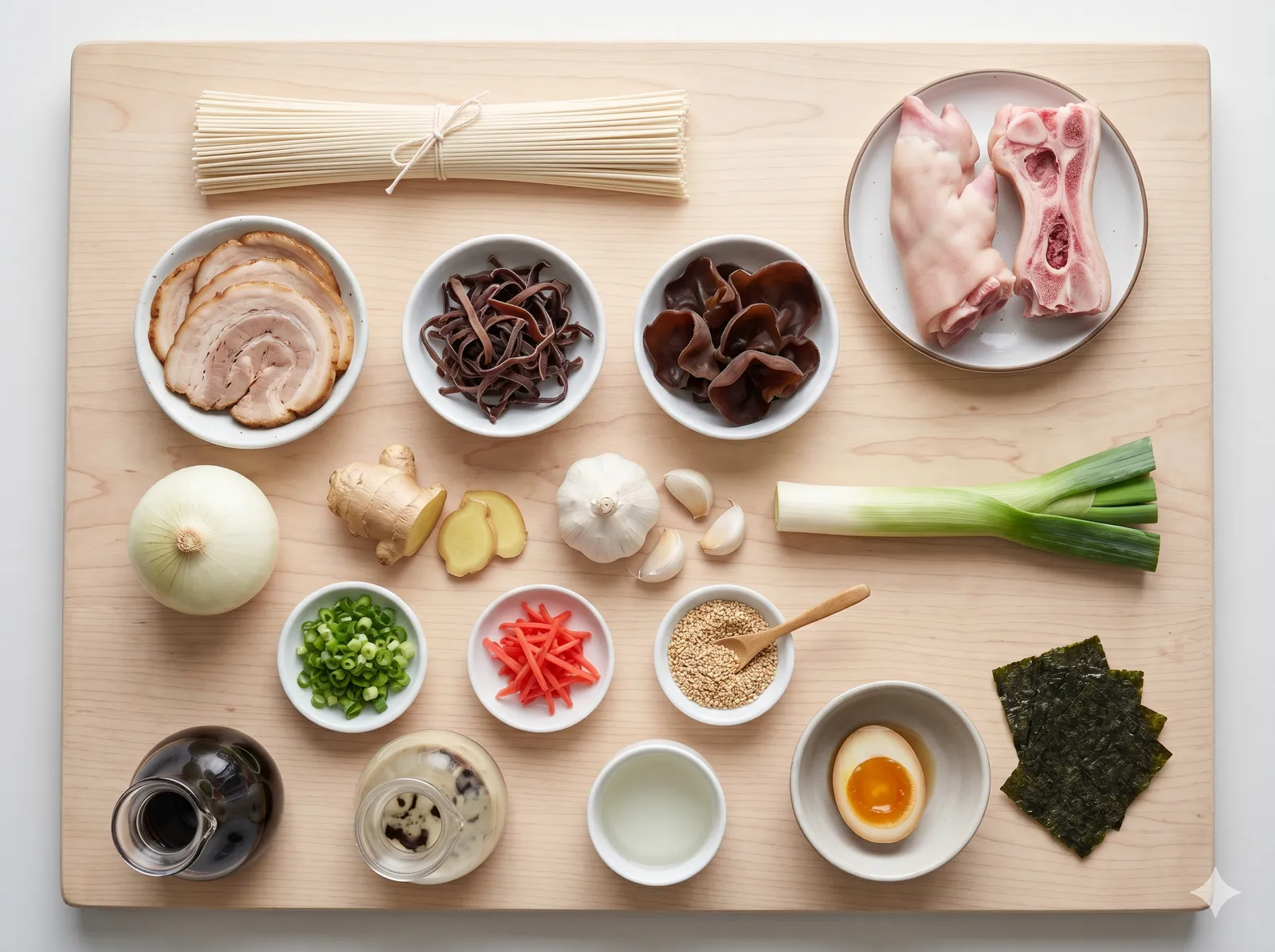
- Boil pork bones hard for many hours until the broth turns milky and rich
- Season with a tare (often salt-based) and aromatics
- Cook the ultra-thin straight noodles for just seconds to your chosen firmness
- Pour broth over noodles; top with chashu, green onion, sesame, kikurage
- Add takana, red ginger, garlic, or sesame from the counter to taste — then kaedama for more noodles
Before you go — learn three magic words
Your questions, answered honestly
"What is kaedama, exactly?" — When your noodles are gone but you've still got broth, call out "Kaedama!" and they'll bring a fresh portion of noodles (for a small charge) to drop right in. Order it while you still have enough hot broth left — that's the trick. It's the whole reason the noodles are thin.
"How do I order the noodle firmness?" — They'll ask how firm you want them. From firm to soft: harigane (super firm, "wire"), barikata (very firm — the local favorite), futsū (normal), yawa (soft). First time, barikata or futsū are safe and great.
"What should I add from the counter?" — A little takana (spicy mustard greens), red pickled ginger, sesame, and a touch of grated garlic — but go easy at first so you can taste the broth. Add as you go.
"Is it really okay to slurp loudly?" — Encouraged. Slurping cools the noodles and is good manners. At a yatai, lean in and go for it.
What the staff will ask you
| You'll hear | Romaji | Meaning | Just say |
|---|---|---|---|
| 麺の固さは? | Men no katasa wa? | "How firm do you want the noodles?" | Barikata de (very firm) / Futsū de (normal) |
| 替え玉いかがですか? | Kaedama ikaga desu ka? | "Want an extra noodle refill?" | Kaedama onegaishimasu! (yes!) / Daijōbu desu (I'm good) |
| 味の濃さは? | Aji no kosa wa? | "How strong (salty) a broth?" | Futsū de (normal) |
To order, just say "Tonkotsu rāmen, barikata de" (とんこつラーメン、バリカタで) — "Tonkotsu ramen, very firm noodles, please."
Where to eat it
- Nakasu yatai (中洲屋台), Fukuoka — the riverside street stalls at night; the most atmospheric way to eat it, full stop.
- Shin-Shin (博多 by 一風堂... ) and local Fukuoka shops — beloved tonkotsu spots all over the city.
- Ichiran & Ippudo — both born in Fukuoka and now everywhere, if you want a polished, reliable intro before the real stalls.
Yatai hours depend on the weather and the night, and shops change, so check before you go — and remember: order kaedama while the broth's still hot.
Soul Score
Local Roots5/5
First-Timer Friendly4/5
Adventure Level3/5
Comfort Level5/5
Travel Worthy5/5
These scores are one obsessed eater's gut feeling — not a verdict. A low number isn't a bad mark, just a different kind of adventure.
Planning what to eat in Fukuoka?🍜 Fukuoka Food Guide: What to Eat, Where to Start, and How to Order →
Know someone planning Japan?
← All Articles
Local Food · Fukuoka
Still hungry?
Eat more from Fukuoka
Local FoodFukuoka
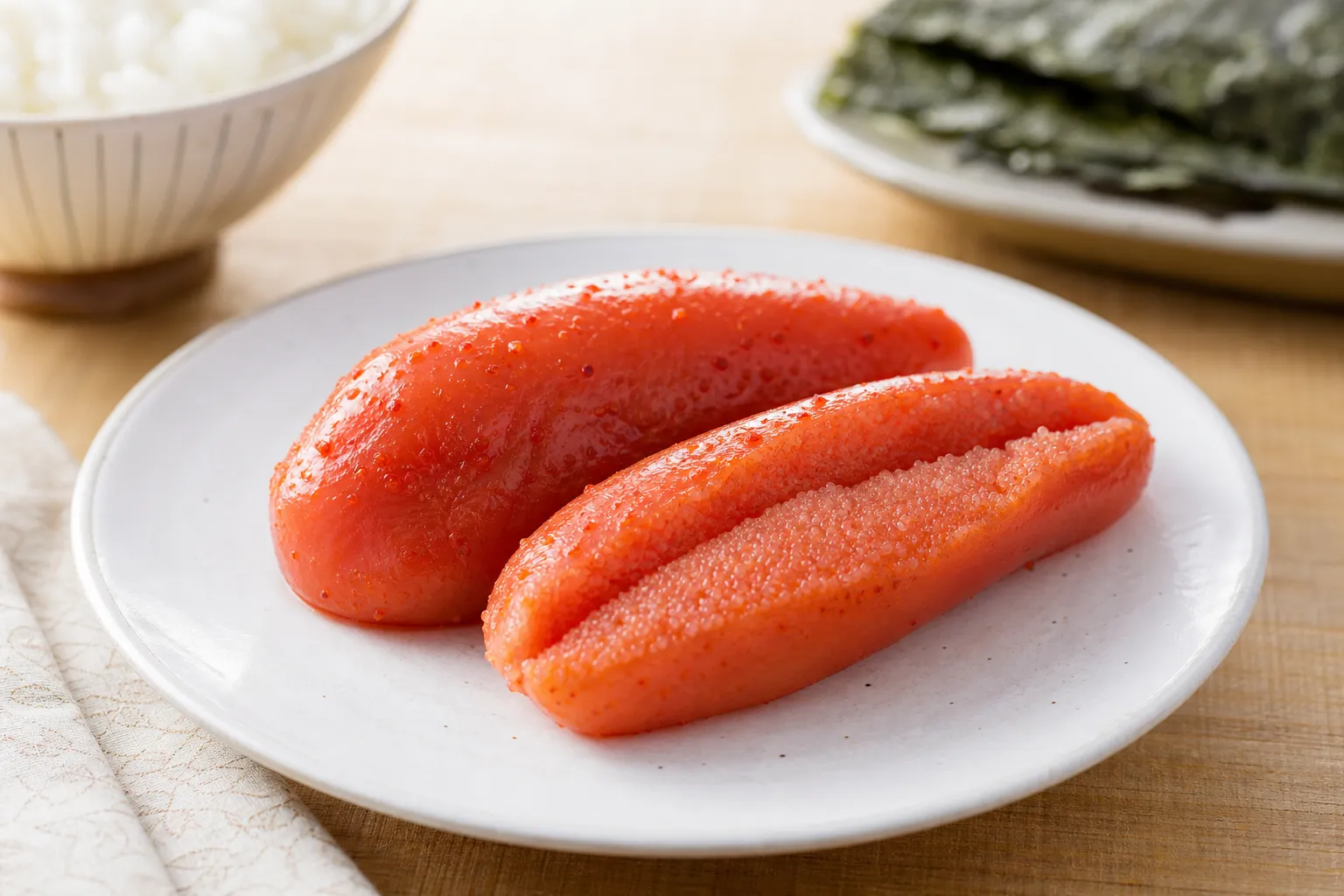
Mentaiko (明太子)
One bite of rice buried under a spoonful of vivid red roe and a slow chili burn creeps in behind the salt — by the second bowl I understood why Hakata builds entire breakfasts around this stuff.
July 22, 2026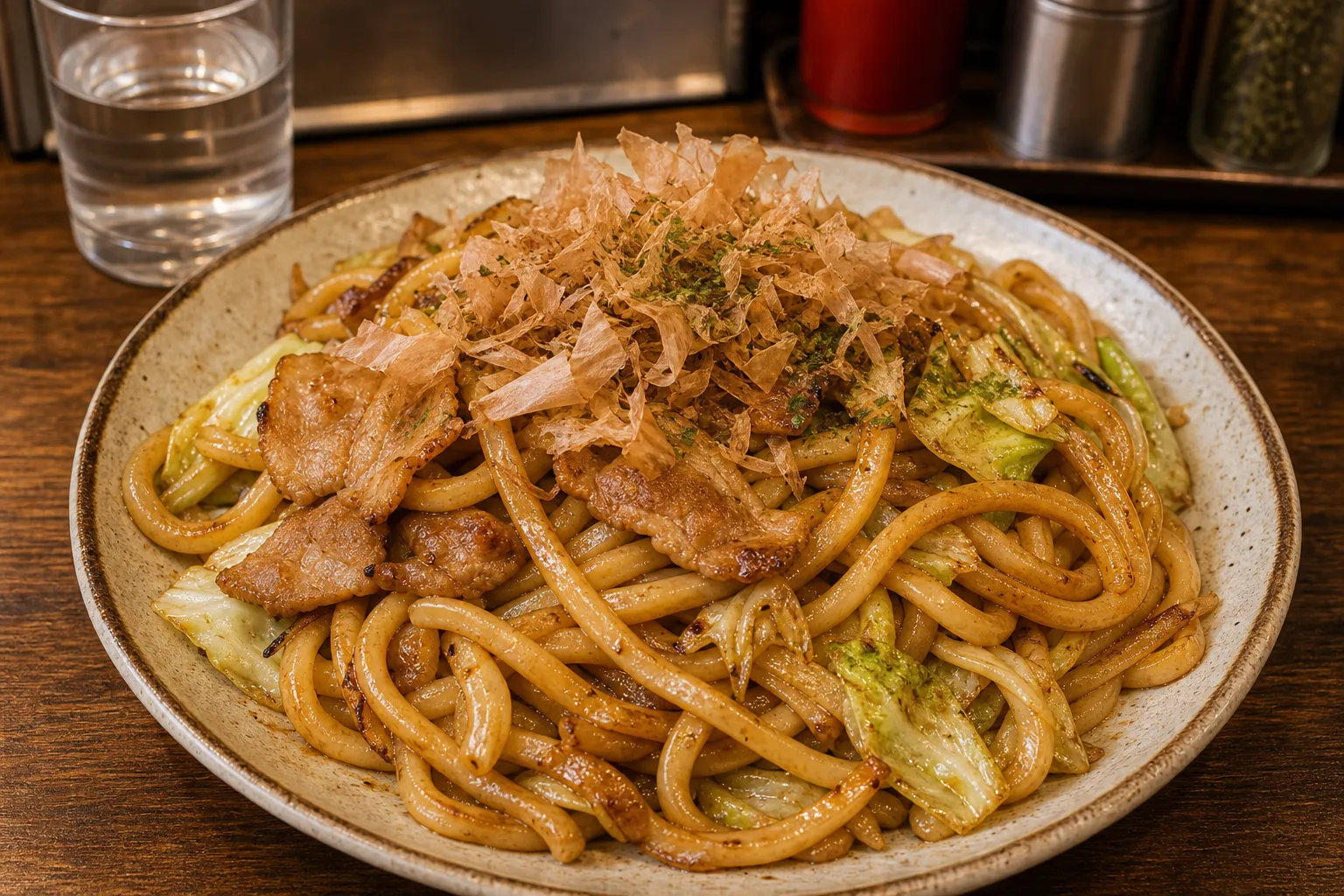
Local FoodKitakyushu, Fukuoka
Yaki Udon (焼きうどん)
Fat udon noodles thrown on a hot griddle, seared with pork and cabbage until glossy and browned, then crowned with bonito flakes that literally dance. Kokura's post-war comfort food, and I love it more than yakisoba.
July 9, 2026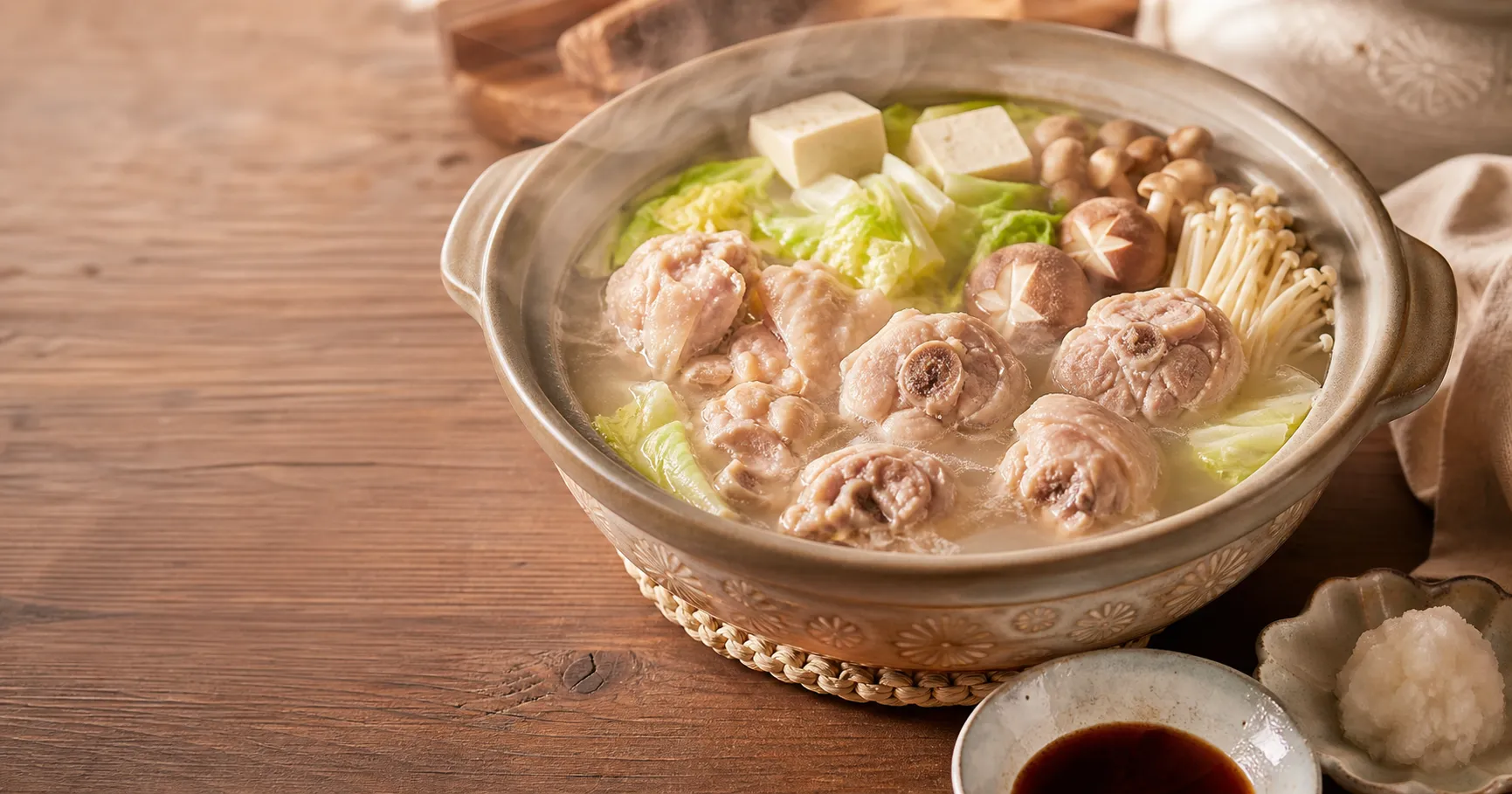
Local FoodHakata, Fukuoka
Mizutaki (水炊き)
A pale, cloudy chicken broth so pure it stops you mid-sentence. Hakata's gentle chicken hot pot is winter comfort itself — dipped in citrus ponzu, finished as rice porridge, warm to the very last drop.
July 3, 2026Keep slurping the ramen trail
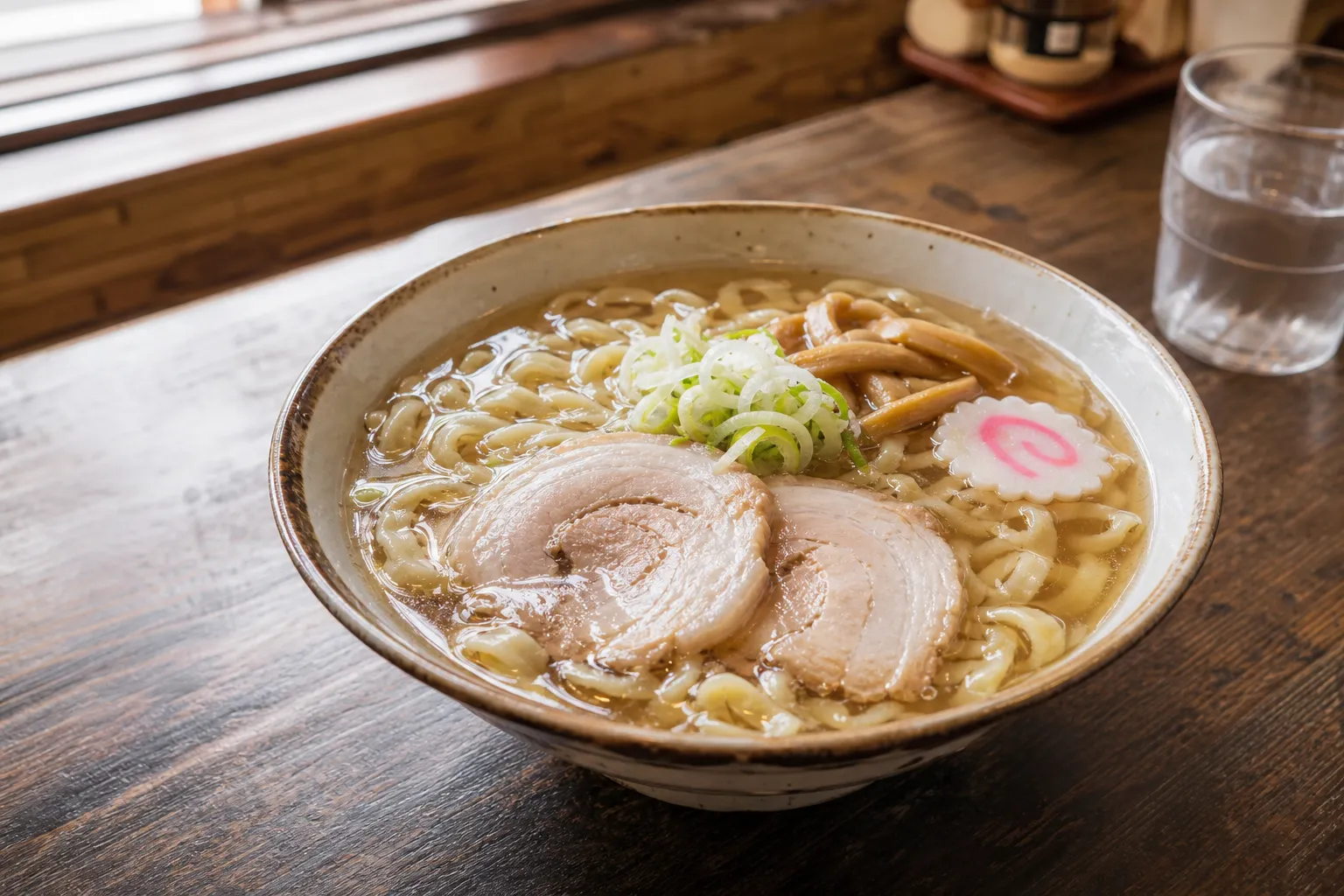
Local FoodKitakata, Fukushima
Kitakata Ramen (喜多方ラーメン)
Flat, wide, curly noodles in a clear soy broth so clean you can see the bottom of the bowl — and a town so obsessed it eats ramen for breakfast. This is comfort with the volume turned down, on purpose.
June 26, 2026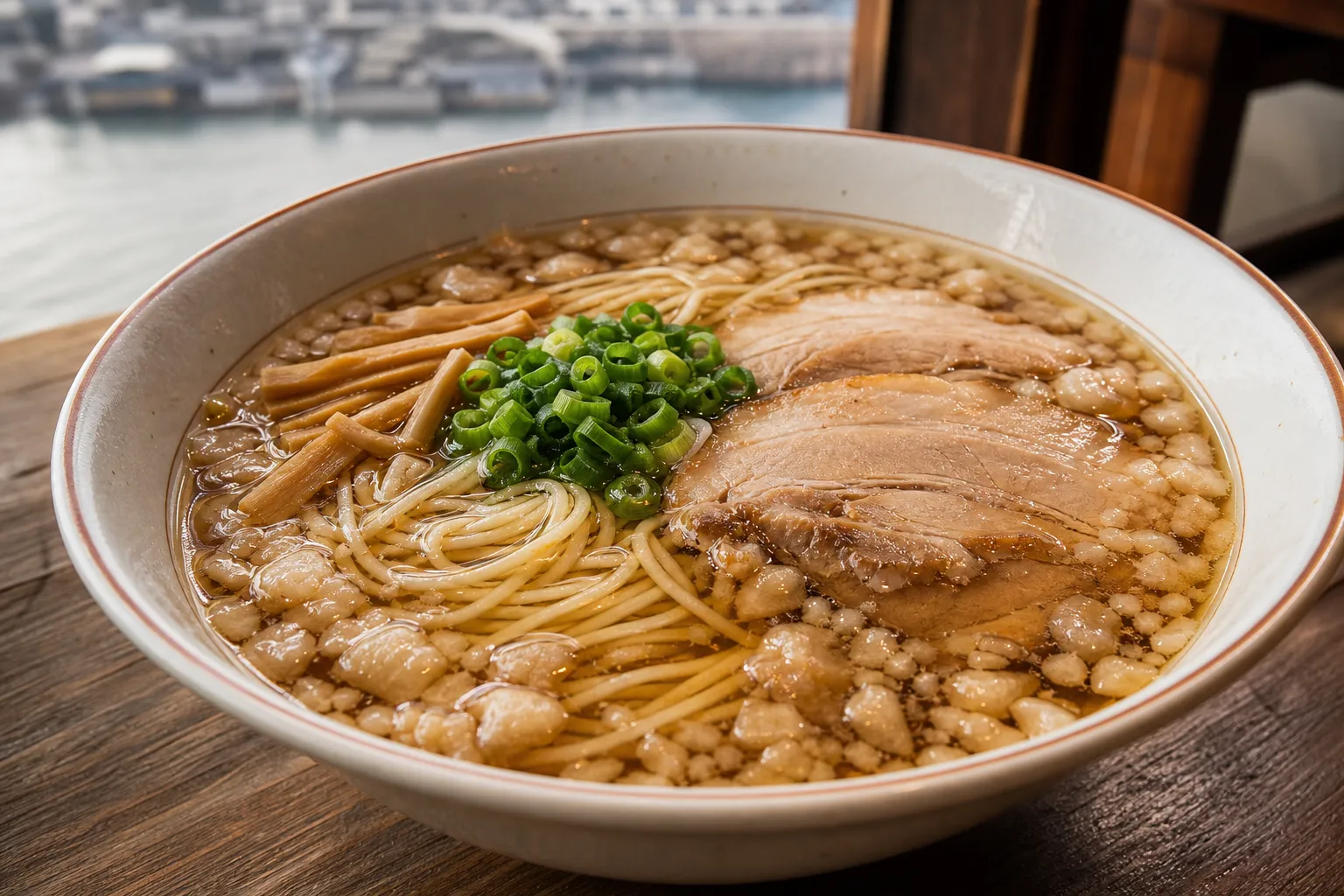
Local FoodOnomichi, Hiroshima
Onomichi Ramen (尾道ラーメン)
Clear soy broth from the Seto Inland Sea, studded with little pillows of melting pork fat that change everything. A hillside port town's bowl — light and deep at the same time, which shouldn't be possible.
June 26, 2026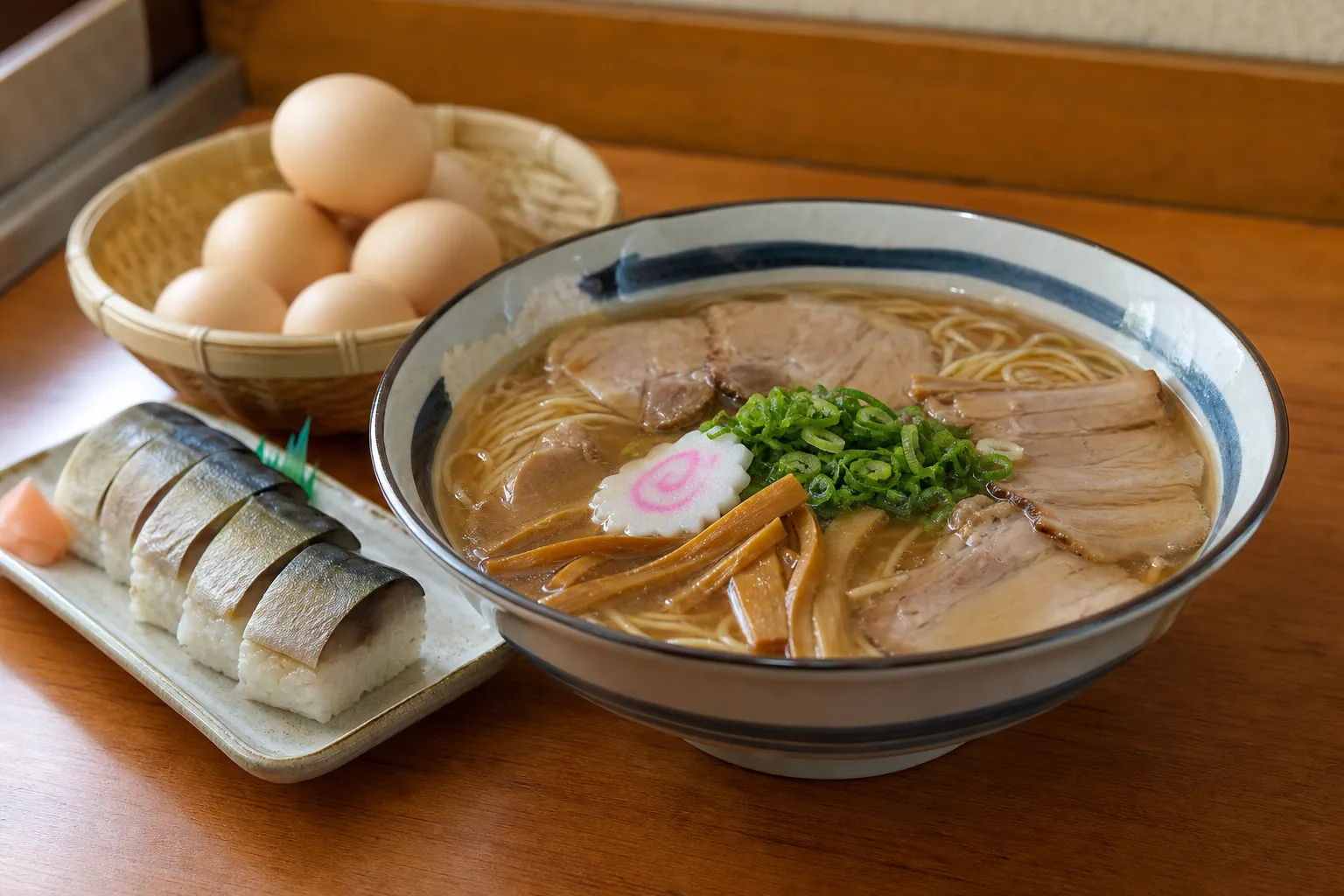
Local FoodWakayama, Wakayama
Wakayama Ramen (和歌山ラーメン)
Pork-bone-meets-soy broth, thin springy noodles — and a self-serve table loaded with pressed mackerel sushi and boiled eggs you grab while you wait. Locals don't even call it ramen. They call it the good stuff.
June 26, 2026