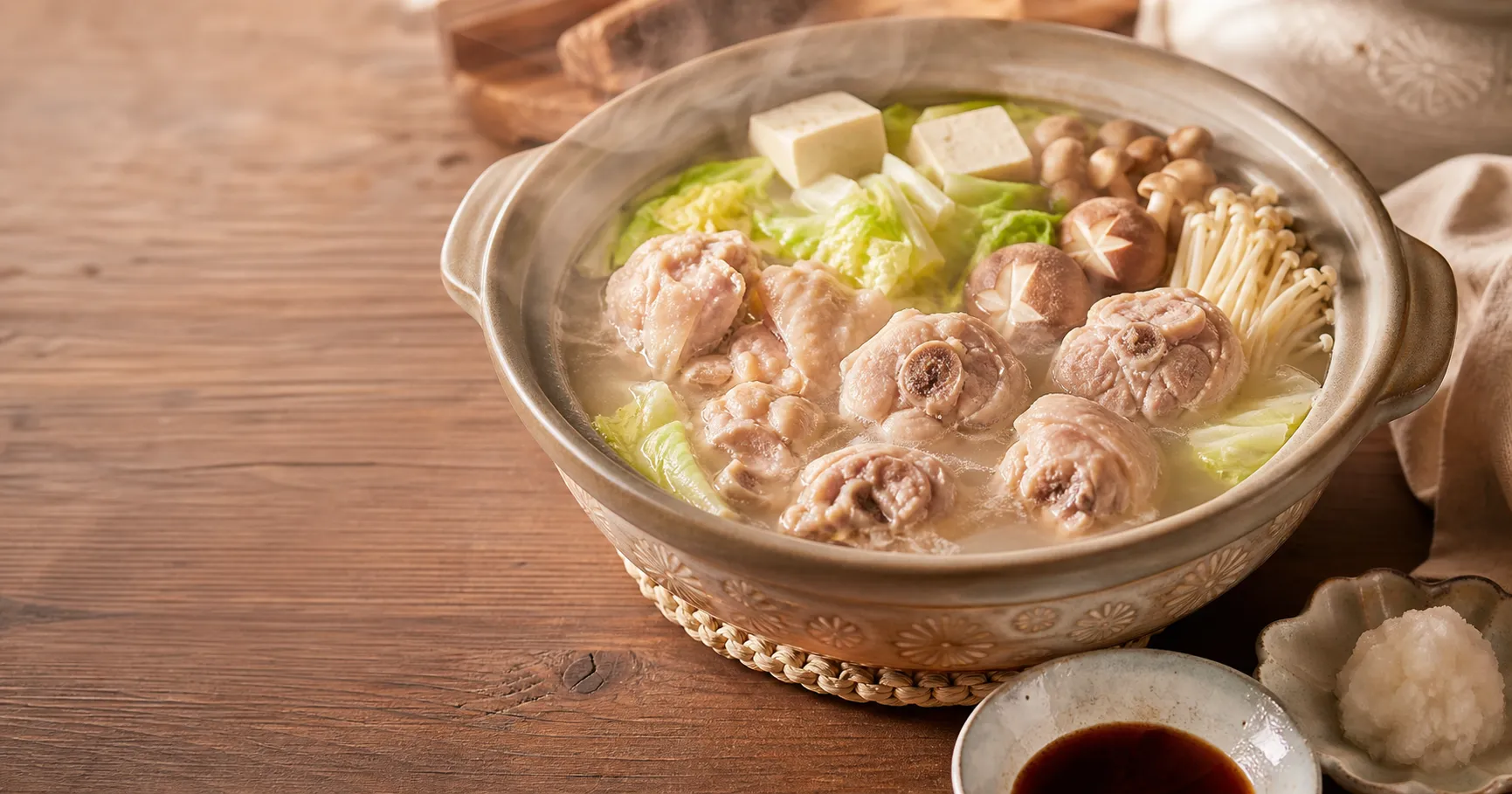
I drank the broth first. Plain, no ponzu, no salt, just a little bowl of the pale cloudy liquid ladled straight out of the pot — and I stopped talking mid-sentence. It tasted like chicken, but chicken cranked to a level I didn't know existed: rich and deep and yet somehow completely clean, no oil slick, no heaviness, just warmth spreading out from the middle of me. Outside it was raining sideways. I did not care about anything.
Share this dish


A pale, cloudy chicken broth so pure it stops you mid-sentence. Hakata's gentle chicken hot pot is winter comfort itself — dipped in citrus ponzu, finished as rice porridge, warm to the very last drop.
🍜 Planning a food trip to Fukuoka?Add this dish to my Food Trip →
 Add this dish to my Food Trip →
This is mizutaki (水炊き), Hakata's great chicken hot pot: bone-in chicken simmered slow in a donabe clay pot with cabbage, tofu, and mushrooms until the water turns into a pale, milky-clean chicken broth. You fish out the pieces and dip them in ponzu — citrus-soy — brightened with grated daikon and green onion. It is the opposite of a fiery red hot pot. It whispers instead of shouts, and I love it for that.
Born from a Nagasaki-Fukuoka handshake
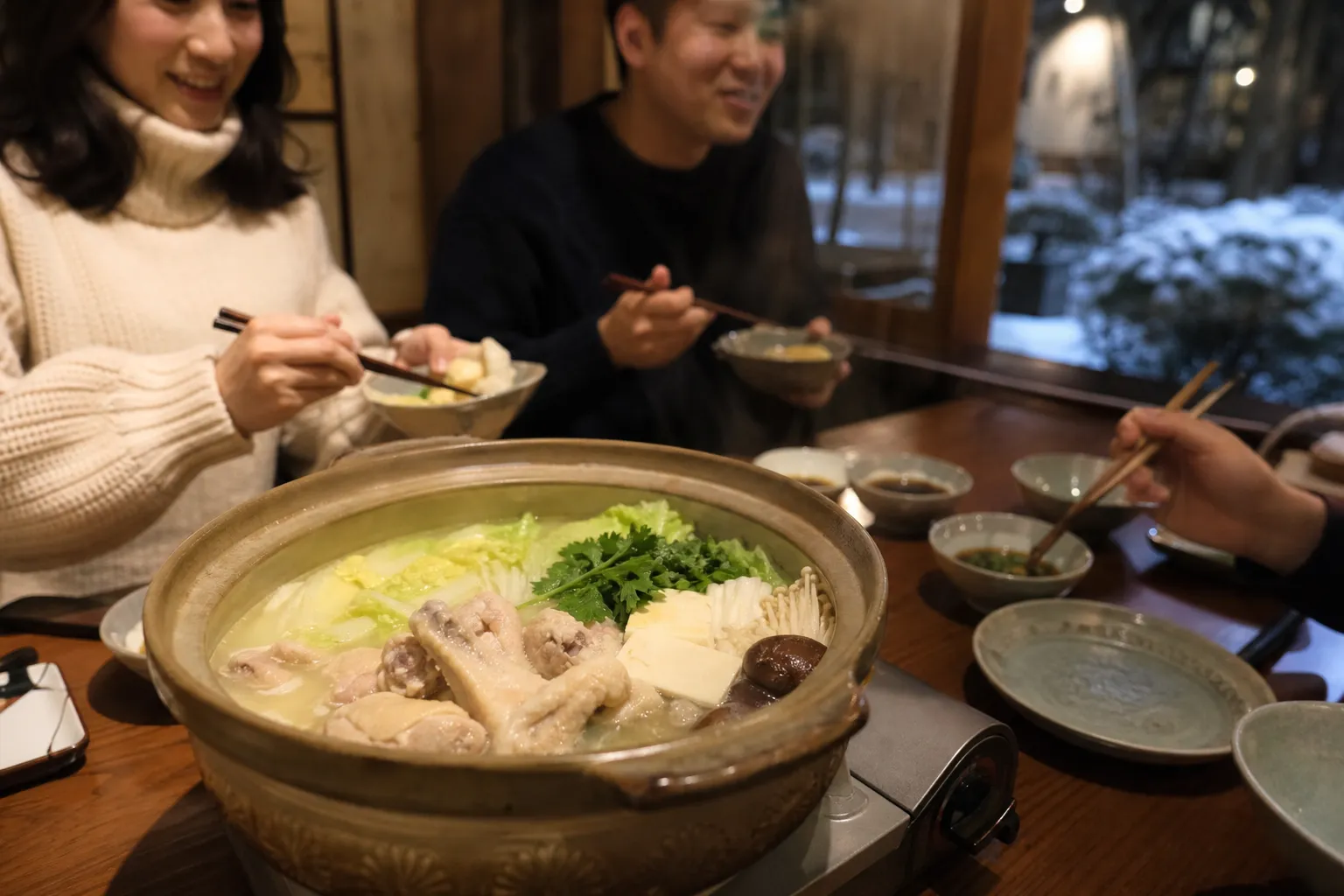
Mizutaki grew up in Fukuoka around the turn of the twentieth century, when a Hakata cook reportedly blended Western chicken-consommé technique with Chinese boiled-chicken cooking into something entirely its own. The name literally means "water-cook," which sounds almost like an insult until you taste what happens: just chicken and water and time, coaxed into a broth so full it seems impossible nothing else went in.
I find that genuinely moving. No fat bomb, no secret paste, no cheat — the whole dish is patience and good chicken. In a food culture that also gave the world tonkotsu ramen (also Fukuoka, also cloudy, but a completely different animal), mizutaki is the quiet sibling who turned out to be profound. Do not confuse the two. This is not pork. This is chicken finding out what it's capable of.
Why the pale broth wins
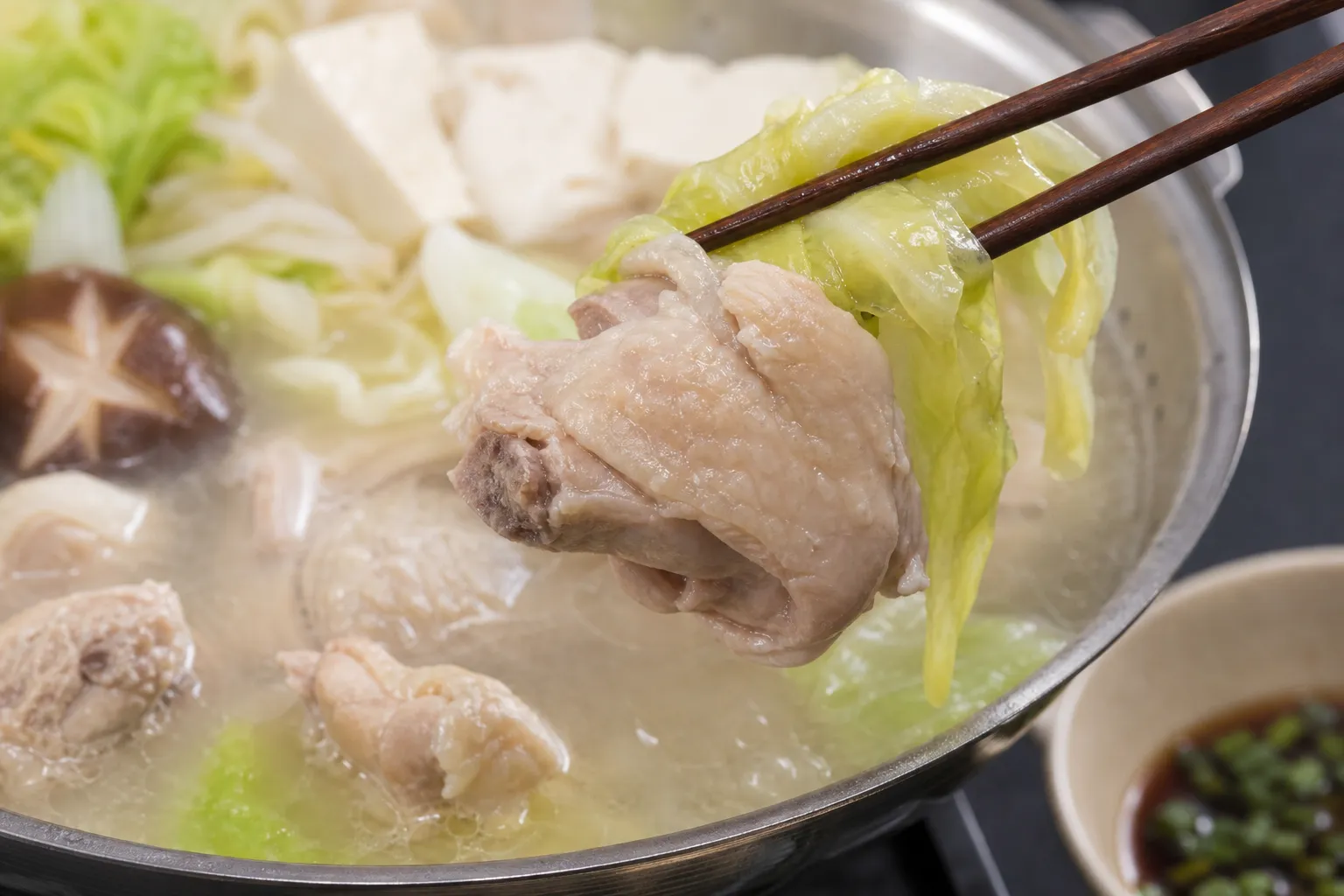
The magic is that mizutaki works in layers, and it changes as the night goes on. Early, the broth is lighter and you taste the chicken clean; later, after the cabbage and tofu and mushrooms have given themselves up, it's deeper and sweeter and cloudier. Same pot, better and better.
Then there's the ponzu, which is the whole trick to eating it. The broth is gentle, so you dip each piece of tender bone-in chicken into citrus-soy loaded with grated daikon and green onion, and the tartness snaps everything awake without ever drowning the flavor. Rich chicken, bright citrus, soft vegetables, all warm. It should be plain. It is instead the coziest thing imaginable, and I kept "just having one more piece" until the pot was a ruin.
How it's made
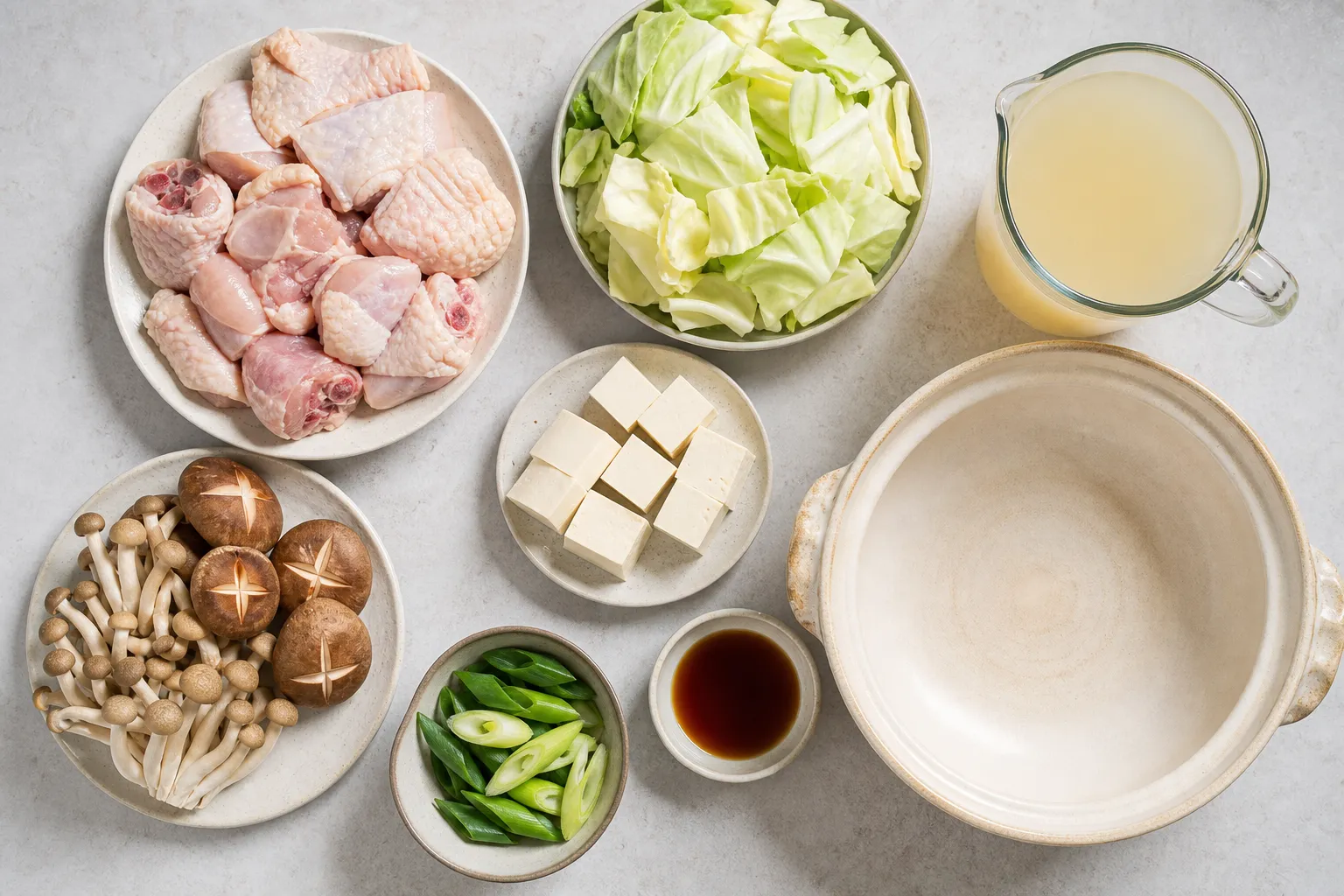
- Simmer bone-in chicken pieces in water in a donabe clay pot, skimming, until a pale milky broth forms
- Taste the plain broth first — this is the point, don't skip it
- Add cabbage, tofu, and mushrooms and let them cook in the broth
- Fish out pieces as they're ready and dip them in ponzu with grated daikon and green onion
- Keep going, adding vegetables, as the broth deepens through the meal
- At the end, cook rice in the leftover broth to make zosui — the perfect final act
Before you go — for the hot-pot-curious
Your questions, answered honestly
"Is this like beef shabu-shabu or a spicy red hot pot?" — No. It's neither. Mizutaki is a chicken hot pot, pale and clean, with no spice and no miso in the base. The flavor is all in the deep chicken broth and the citrusy ponzu dip. Don't come expecting fire.
"Do I really drink the broth plain?" — Yes, and please do, at least the first bowl. The clean chicken broth is the star of the whole dish. Season later; taste it naked first.
"Can I order it for one?" — Usually not. Mizutaki is a shared pot, typically for two or more, ordered by the pot rather than per person. Bring a friend and settle in.
"What's the best part?" — Honestly, the ending. Cooking rice into the leftover broth to make zosui (rice porridge) turns every last drop of chicken flavor into a bowl of pure comfort. Save room.
What the staff will ask you
| You'll hear | Romaji | Meaning | Just say |
|---|---|---|---|
| 何名様ですか? | Nan-mei-sama desu ka? | "How many people?" | Futari desu (two) / Sannin desu (three) |
| ポン酢でどうぞ | Ponzu de dōzo | "Please dip it in ponzu" | Hai, arigatō (yes, thanks) |
| 〆は雑炊にしますか? | Shime wa zōsui ni shimasu ka? | "Finish with rice porridge?" | Hai, onegaishimasu (yes please) |
To order, just say "Mizutaki kudasai" (水炊きください) — "Mizutaki, please."
Where to eat it
- Hakata, Fukuoka — the home of the dish. The Nakasu and Tenjin districts are packed with specialist mizutaki restaurants, many of them long-established, serving the bone-in-chicken-and-ponzu version at its source.
- Nationwide — good specialist hot pot restaurants in bigger cities serve mizutaki, especially in winter; look for 水炊き on the menu.
- Check before you go — the famous old Hakata mizutaki houses keep their own hours, often take reservations, and fill up on cold nights; call ahead if you can.
Soul Score
Local Roots4/5
First-Timer Friendly4/5
Adventure Level3/5
Comfort Level5/5
Travel Worthy4/5
These scores are one obsessed eater's gut feeling — not a verdict. A low number isn't a bad mark, just a different kind of adventure.
Planning what to eat in Fukuoka?🍜 Fukuoka Food Guide: What to Eat, Where to Start, and How to Order →
Know someone planning Japan?
← All Articles
Local Food · Hakata, Fukuoka
Still hungry?
Eat more from Fukuoka
Local FoodFukuoka
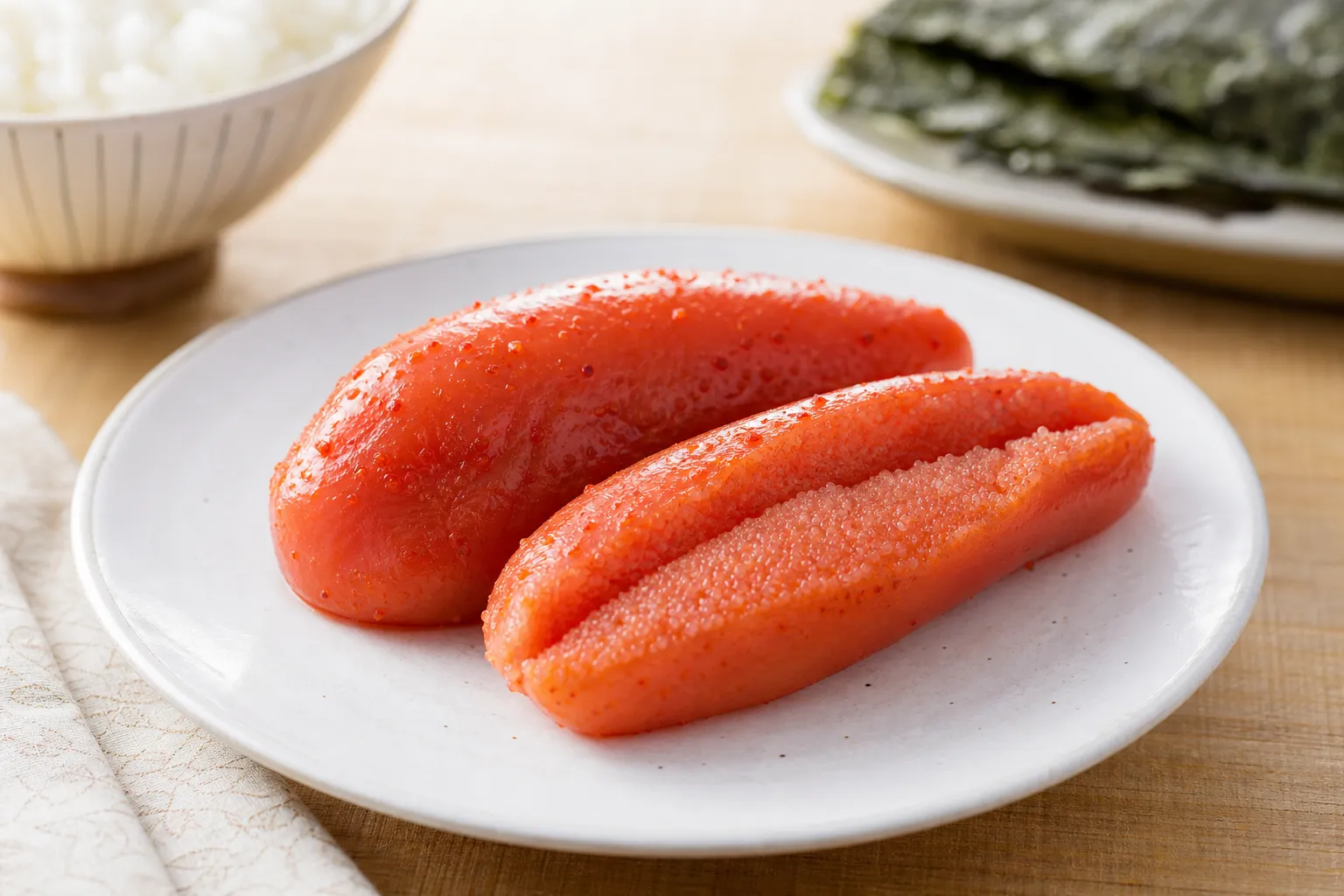
Mentaiko (明太子)
One bite of rice buried under a spoonful of vivid red roe and a slow chili burn creeps in behind the salt — by the second bowl I understood why Hakata builds entire breakfasts around this stuff.
July 22, 2026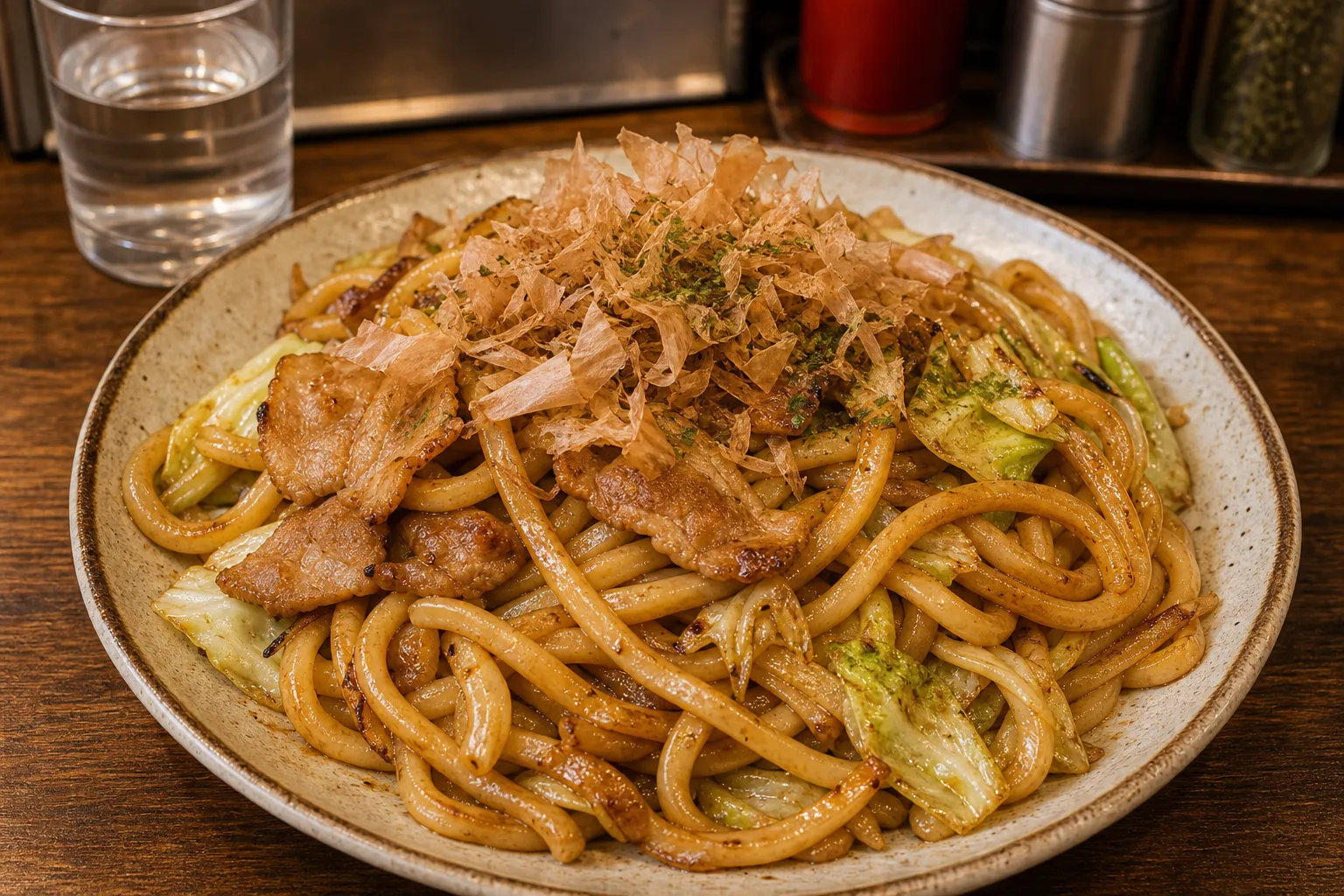
Local FoodKitakyushu, Fukuoka
Yaki Udon (焼きうどん)
Fat udon noodles thrown on a hot griddle, seared with pork and cabbage until glossy and browned, then crowned with bonito flakes that literally dance. Kokura's post-war comfort food, and I love it more than yakisoba.
July 9, 2026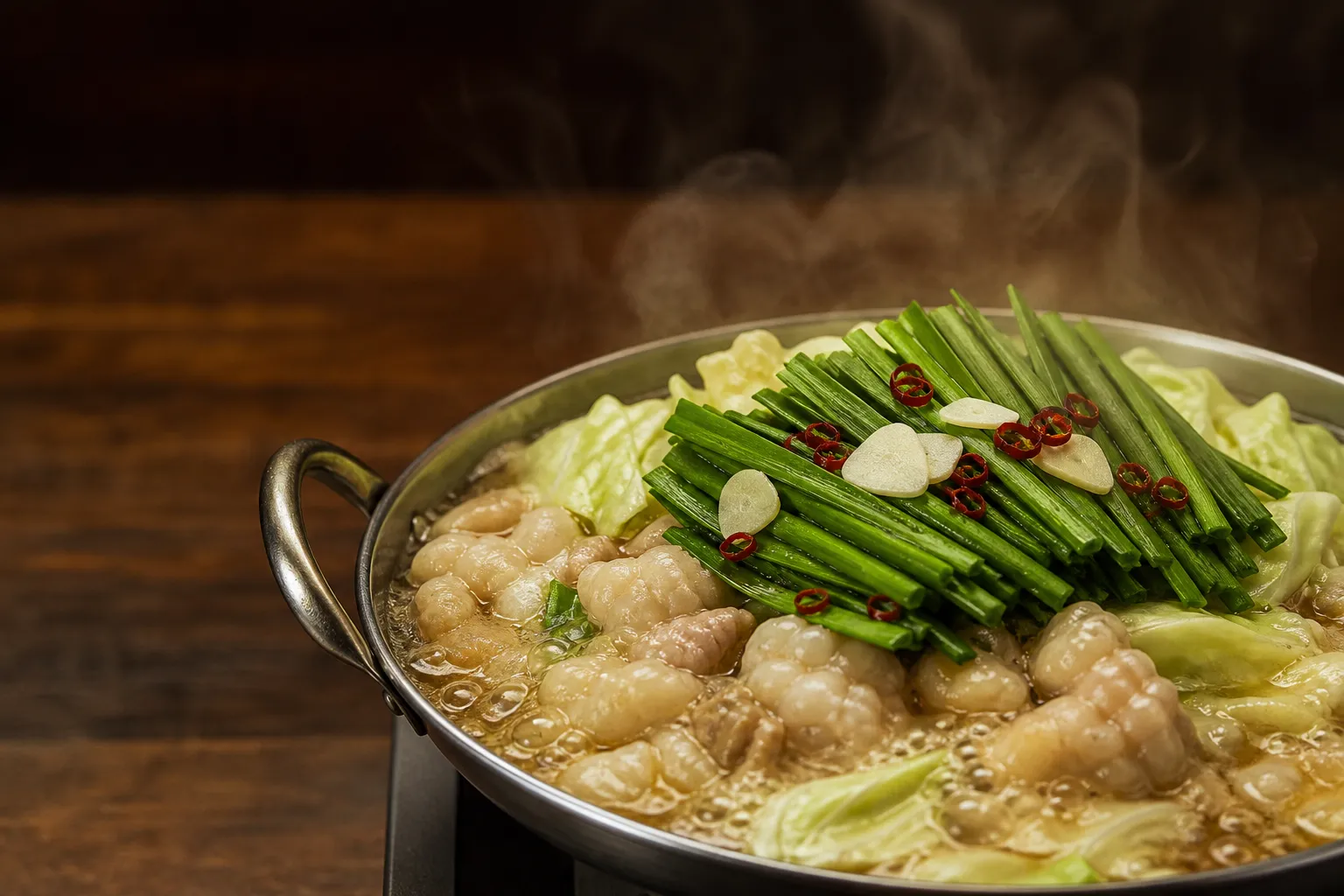
Local FoodHakata, Fukuoka
Motsunabe (もつ鍋)
Soft, clean, and drowning in garlic and chives — Hakata's offal hot pot turns the scariest thing on the menu into the best. A steamy communal pot that makes a table of strangers feel like old friends by the last spoonful.
July 3, 2026