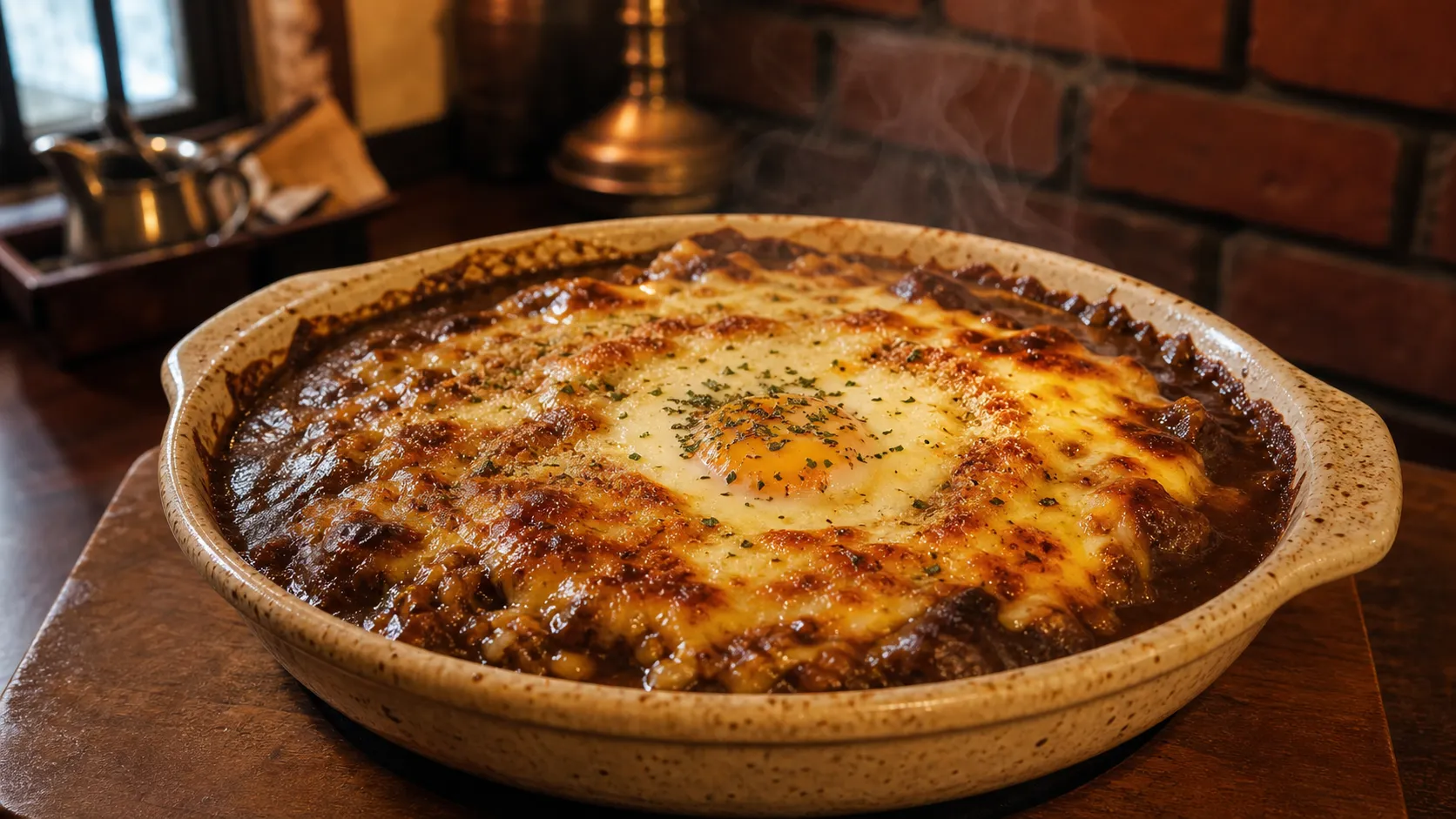
Hold on. You're allowed to do this to curry?
Share this dish


Someone cracked an egg onto curry rice, buried it in cheese, and baked the whole thing — and it's so much better than normal curry it feels almost unfair. In a port town frozen in 1910, this is the only correct thing to order.
🍜 Planning a food trip to Fukuoka?Add this dish to my Food Trip →
 Add this dish to my Food Trip →
They baked it. They took perfectly good curry rice, cracked an egg straight onto it, buried the whole thing under a snowstorm of cheese, and shoved it in an oven — and the result is so much better than regular curry that I'm a little offended on behalf of every normal plate of curry I've ever eaten. The egg is baked into the curry.
Not poached on top. Not fried alongside. Cracked directly onto the curry rice in its ceramic dish and slid into the oven, where it sets slowly while the curry underneath bubbles at the edges and the cheese goes brown and the whole thing comes out looking like something from a particularly excellent grandmother's kitchen in 1958. I cracked through the set egg, the yolk ran down into the curry, and I ate the whole thing too fast and too hot and did not care even a little. Why doesn't every curry work this way?
I'll be honest: the first time someone described yaki-curry to me — "it's curry, but baked" — I nodded politely and filed it under gimmick. Reheated leftovers with a fancy name. Then I had it in Mojiko (門司港), the old port district of Kitakyushu, Fukuoka, and spent the rest of the afternoon mildly annoyed that nobody had told me sooner. That's all it is: curry rice in an oven-safe dish, an egg, a fistful of grated cheese, baked until the top browns and the edges spit. That's the entire trick. And somehow it tastes like someone quietly improved on curry back in the 1950s and decided to keep the secret inside one Taisho-era port town instead of telling the rest of the country.
A retro port that needed a retro dish
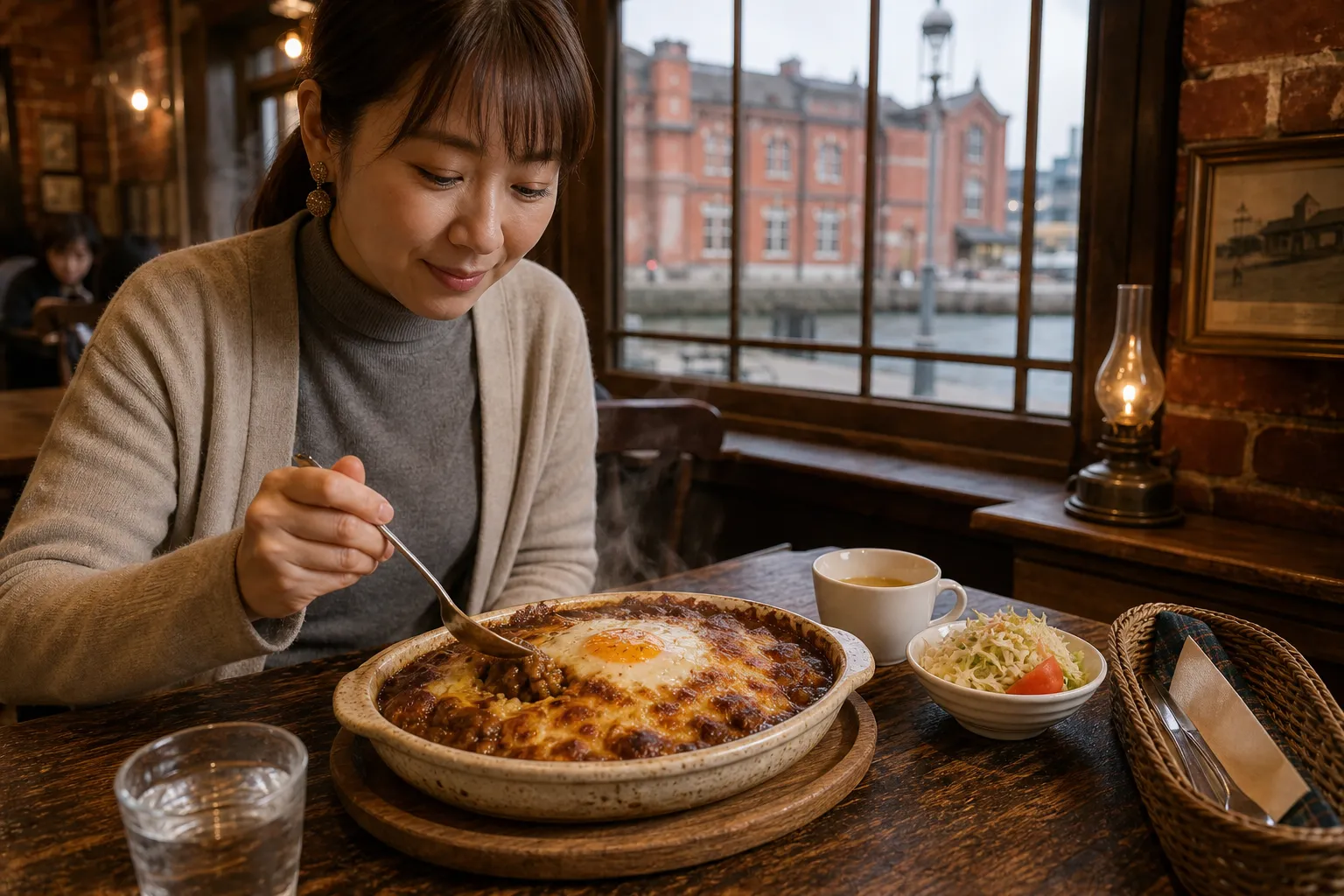
Mojiko (門司港) was one of Japan's major international trading ports in the Meiji and Taisho eras, and the neighborhood still looks like it: red-brick customs buildings, a Renaissance-style train station, European-inflected warehouses now converted to shops and restaurants. Walking out of that station I genuinely felt like I'd stepped into a sepia photograph — and in a place like that, a curry that got baked in a 1950s café oven somehow feels like the only correct thing to order.
The story goes that a café owner in the 1950s started baking leftover curry just to reheat it, tasted the result, and presumably stood very still for a moment — because it was better than the original. He built a menu around the accident. The dish spread through the port's café culture and stayed stubbornly local for decades — beloved in Kitakyushu, unknown almost everywhere else — until food media found it and turned Mojiko into a yaki-curry pilgrimage. Now there are dozens of shops down here, each guarding its own curry base, its own cheese blend, its own egg timing like a family secret. Trying to compare them all is not a chore. It's the whole reason to come.
What the oven does that the pot can't
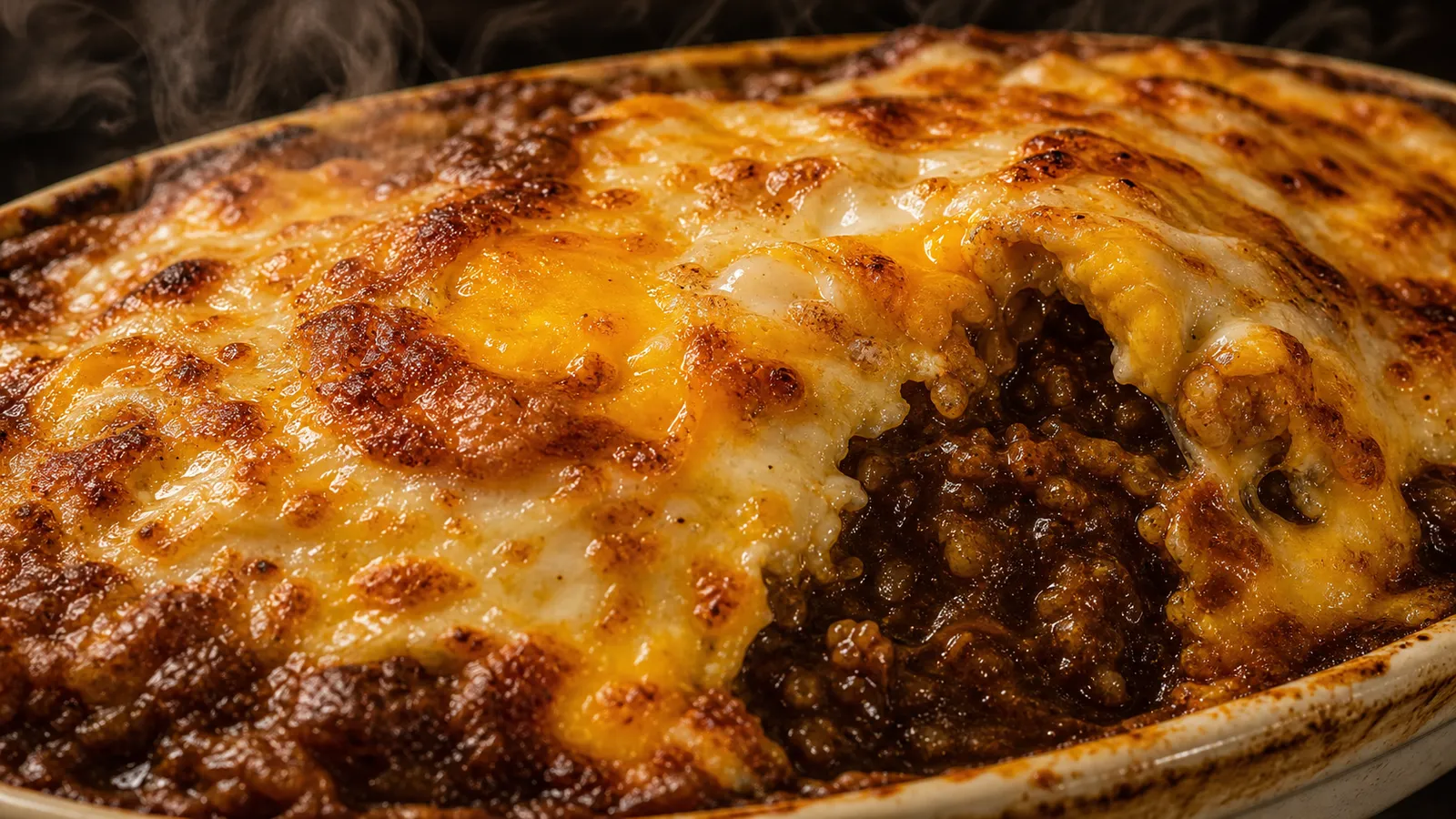
Here's the part I didn't expect. Baking does three things to curry that a stovetop simply cannot fake.
First, the surface caramelizes. The top layer of rice and curry at the edges gets slightly dried and browned, developing a different flavor from the interior — the way a good paella has a crust on the bottom.
Second, the cheese creates a skin. Grated over the top, it melts and browns in the oven heat, forming a slightly crispy crust that shatters when you break it and releases a concentrated umami hit into the curry beneath.
Third, the egg sets slowly and perfectly. Unlike a fried egg dropped on top of regular curry (which immediately slides around and gets cold), the oven-baked egg becomes part of the dish — the white sets firm, the yolk stays slightly runny in the center, and the edges caramelize into the cheese. When you break it, the yolk enriches the curry in a way that feels intentional rather than accidental.
The first time I broke through that browned cheese skin into a still-runny yolk and dragged a spoonful through the crusty edge of the dish, I made an involuntary noise. The couple at the next table did not even look up. They understood.
The curry itself varies by shop — some Japanese-style, some European-influenced, some fiery, some mild. The baking is the constant.
How it's made
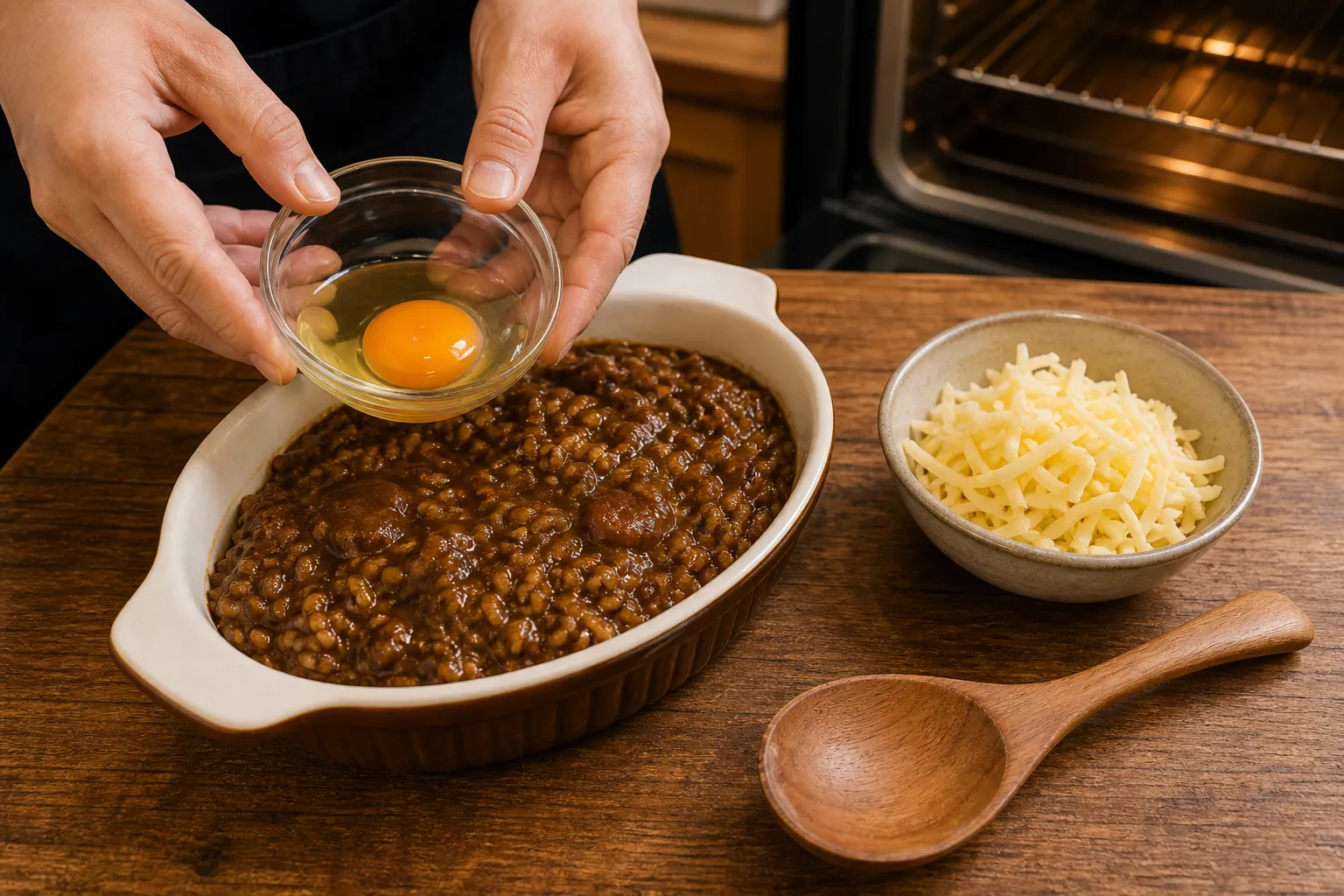
- Make the curry base (each shop's is different; most are richer and thicker than standard curry for baking)
- Place rice in an oven-safe ceramic dish; ladle curry over the rice
- Crack one egg on top; scatter grated cheese generously over the surface
- Bake at high heat until the cheese is golden-brown and the egg is just set — typically 10–15 minutes
- Serve in the dish, still bubbling; eat immediately
Before you go — break the egg first
Your questions, answered honestly
"Is it spicy?" — Varies by shop. Many Mojiko yaki-curry places offer heat levels; the default is medium. Ask if you're sensitive.
"Do I need to go to Mojiko specifically?" — Honestly, yes. Yaki-curry exists elsewhere but the combination of the dish, the Taisho architecture, eating it in a brick-walled heritage café — that's the full experience. Mojiko is 15 minutes from Kokura station by train and completely worth the side trip.
"What's the best way to eat it?" — Break the yolk first. Mix it gently into the curry. Then eat from the edges (where the crust is) toward the center. Don't let it cool — it goes from perfect to dense quickly.
"How do the shops differ?" — Curry base (Japanese vs European spice), cheese type (mild blends to aged), egg treatment (some shops torch the surface instead of baking, producing a different texture). Walking the port and comparing shops is part of the experience.
What the staff will ask you
| You'll hear | Romaji | Meaning | Just say |
|---|---|---|---|
| 辛さはどうしますか? | Karasa wa dō shimasu ka? | "How spicy?" | Futsū de onegaishimasu (regular) |
| チーズはたっぷりでよろしいですか? | Chīzu wa tappuri de yoroshii desu ka? | "Lots of cheese, is that okay?" | Hai, onegaishimasu — obviously |
| お飲み物は? | Onomimono wa? | "Something to drink?" | Mizu de onegaishimasu (water please) |
To order, just say "Yaki-kare kudasai" (焼きカレーください) — "Yaki-curry, please."
Where to eat it
- Mojiko Retro area — the port district has 30+ yaki-curry shops within walking distance of the station. No single "must-go" — wandering and choosing by atmosphere is the correct approach.
- Café Caro and Bel Ami — two of the older, more established shops in the historic district, consistently mentioned in local guides.
- Mojiko Station — the station building itself is a designated Important Cultural Property; eat yaki-curry, then walk the entire retro district. It takes 2–3 hours and is one of the best afternoon itineraries in Kyushu.
Soul Score
Local Roots5/5
First-Timer Friendly4/5
Adventure Level3/5
Comfort Level5/5
Travel Worthy5/5
These scores are one obsessed eater's gut feeling — not a verdict. A low number isn't a bad mark, just a different kind of adventure.
Know someone planning Japan?
← All Articles
Local Food · Mojiko, Kitakyushu
Still hungry?
Eat more from Fukuoka
Local FoodFukuoka
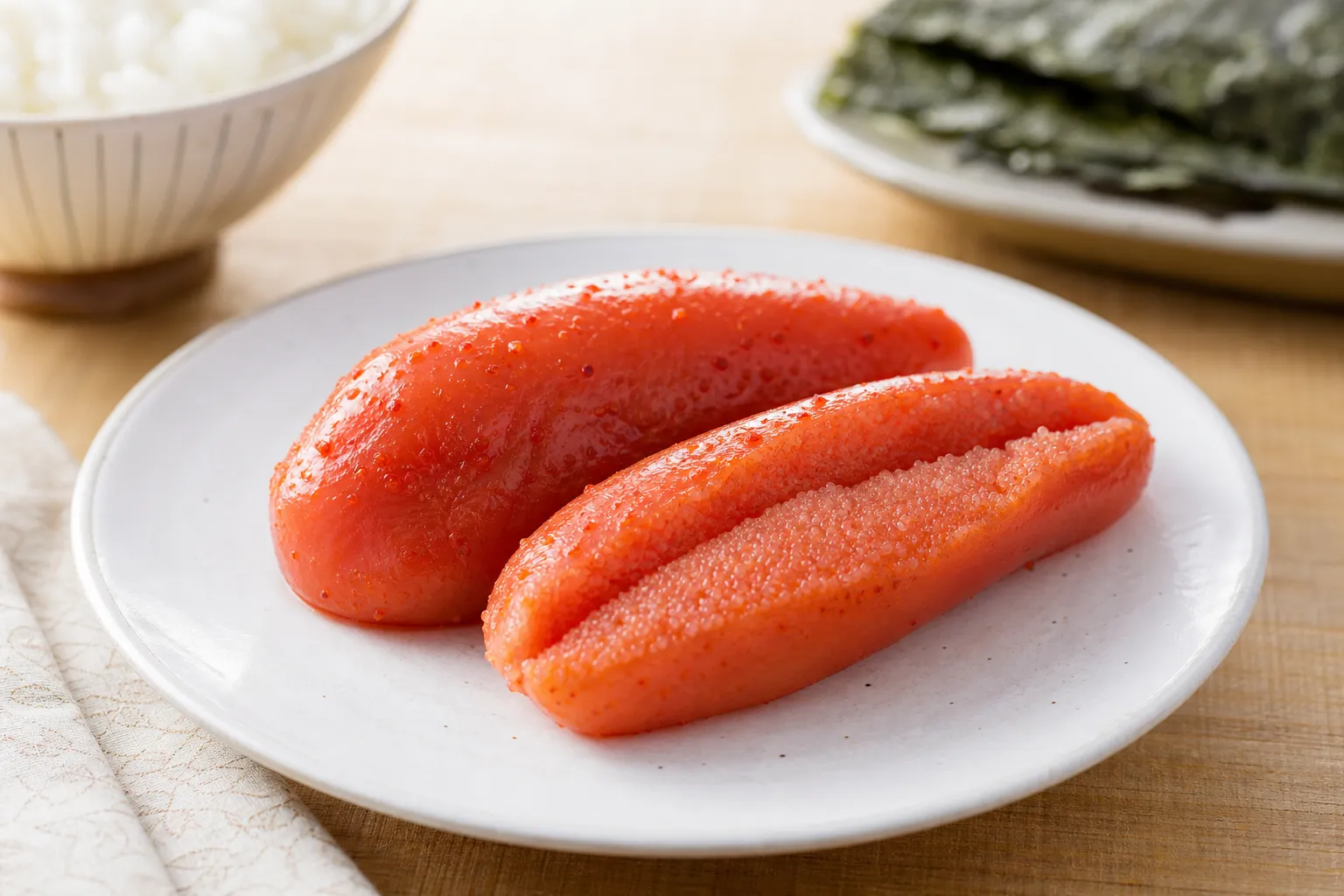
Mentaiko (明太子)
One bite of rice buried under a spoonful of vivid red roe and a slow chili burn creeps in behind the salt — by the second bowl I understood why Hakata builds entire breakfasts around this stuff.
July 22, 2026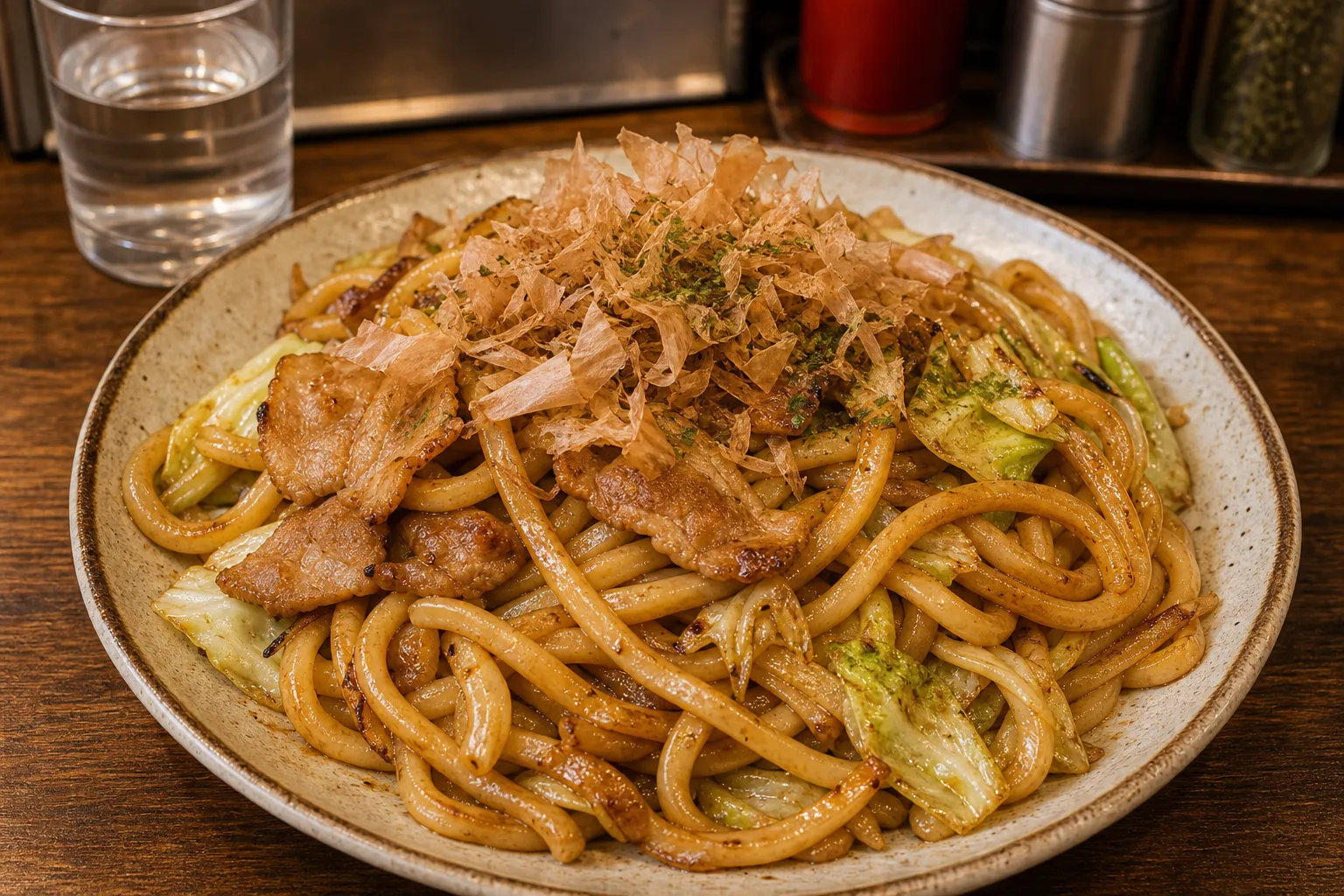
Local FoodKitakyushu, Fukuoka
Yaki Udon (焼きうどん)
Fat udon noodles thrown on a hot griddle, seared with pork and cabbage until glossy and browned, then crowned with bonito flakes that literally dance. Kokura's post-war comfort food, and I love it more than yakisoba.
July 9, 2026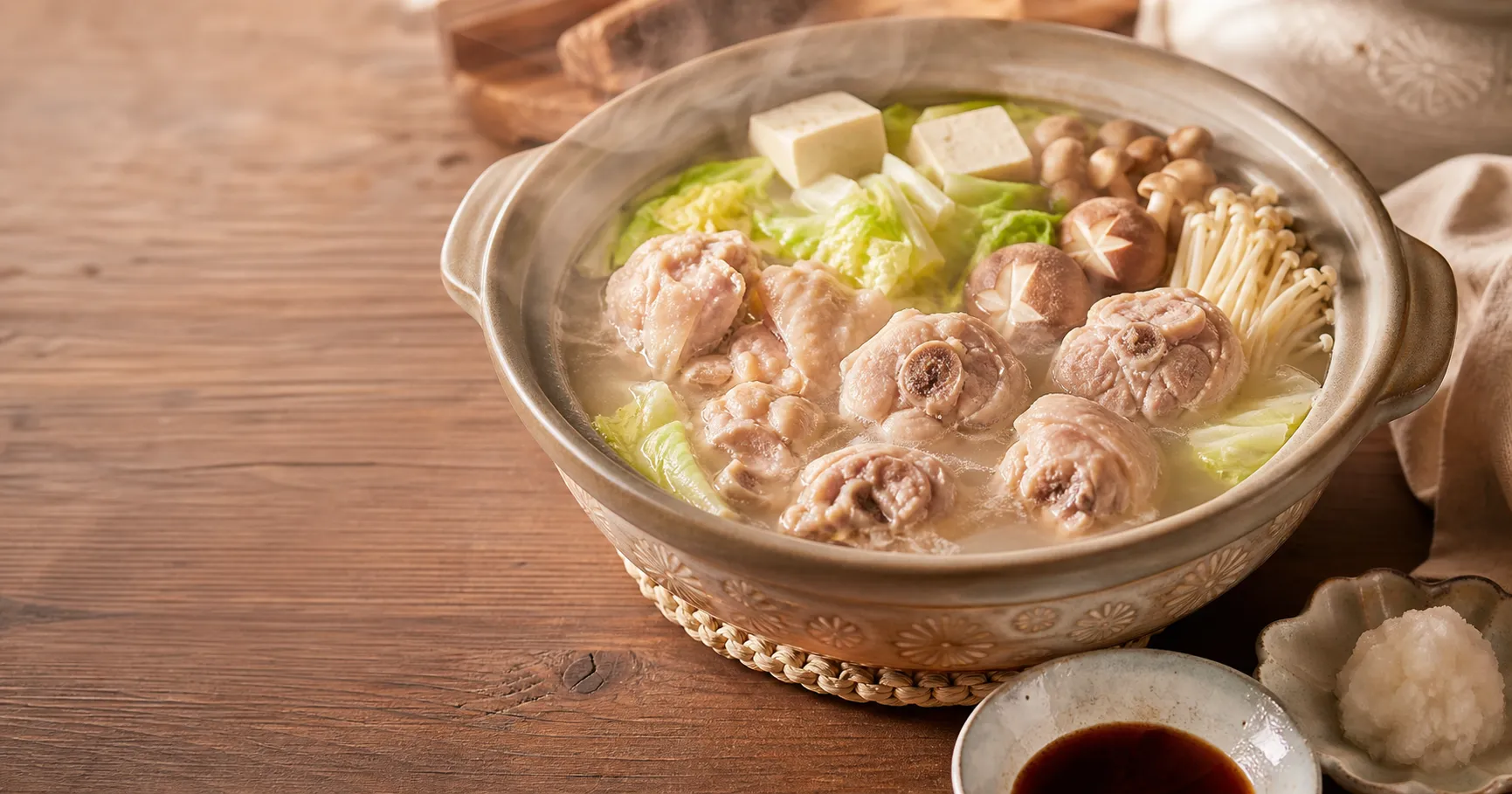
Local FoodHakata, Fukuoka
Mizutaki (水炊き)
A pale, cloudy chicken broth so pure it stops you mid-sentence. Hakata's gentle chicken hot pot is winter comfort itself — dipped in citrus ponzu, finished as rice porridge, warm to the very last drop.
July 3, 2026