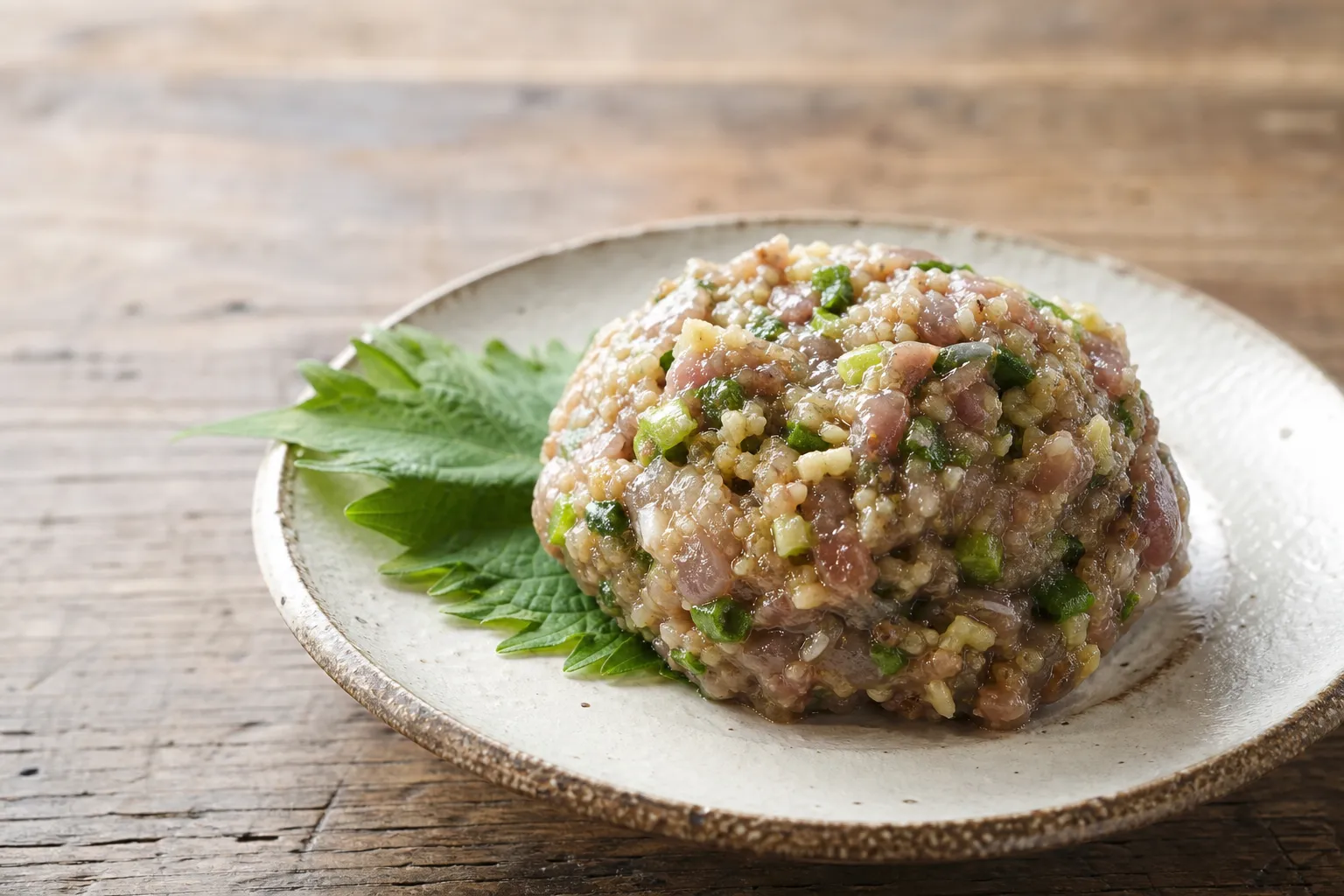
Somebody handed me a spoon of what looked like tuna salad that had been dropped, then a knife came down on it another forty times out of spite. I ate it anyway. I'm glad I did.
Share this dish


Fishermen chopped their catch with a blob of miso until it turned into a sticky, savory paste — and refused to wait for a kitchen to do it properly.
🍜 Planning a food trip to Chiba?Add this dish to my Food Trip →
 Add this dish to my Food Trip →
That's namero, more or less — raw, oily fish, usually aji (horse mackerel) or sardine, finely chopped and then pounded on the cutting board together with miso, ginger, green onion, and shiso leaf until the whole thing turns into a sticky, aromatic, faintly fishy paste. It is not sashimi. It doesn't want to be sashimi. Sashimi wants you to admire the cut; namero wants you to forget the fish was ever a solid object at all. Fishermen on Chiba's Boso Peninsula came up with this, on their boats, with whatever was on hand and no time to be delicate about it.
Invented by people too impatient for a cutting board indoors
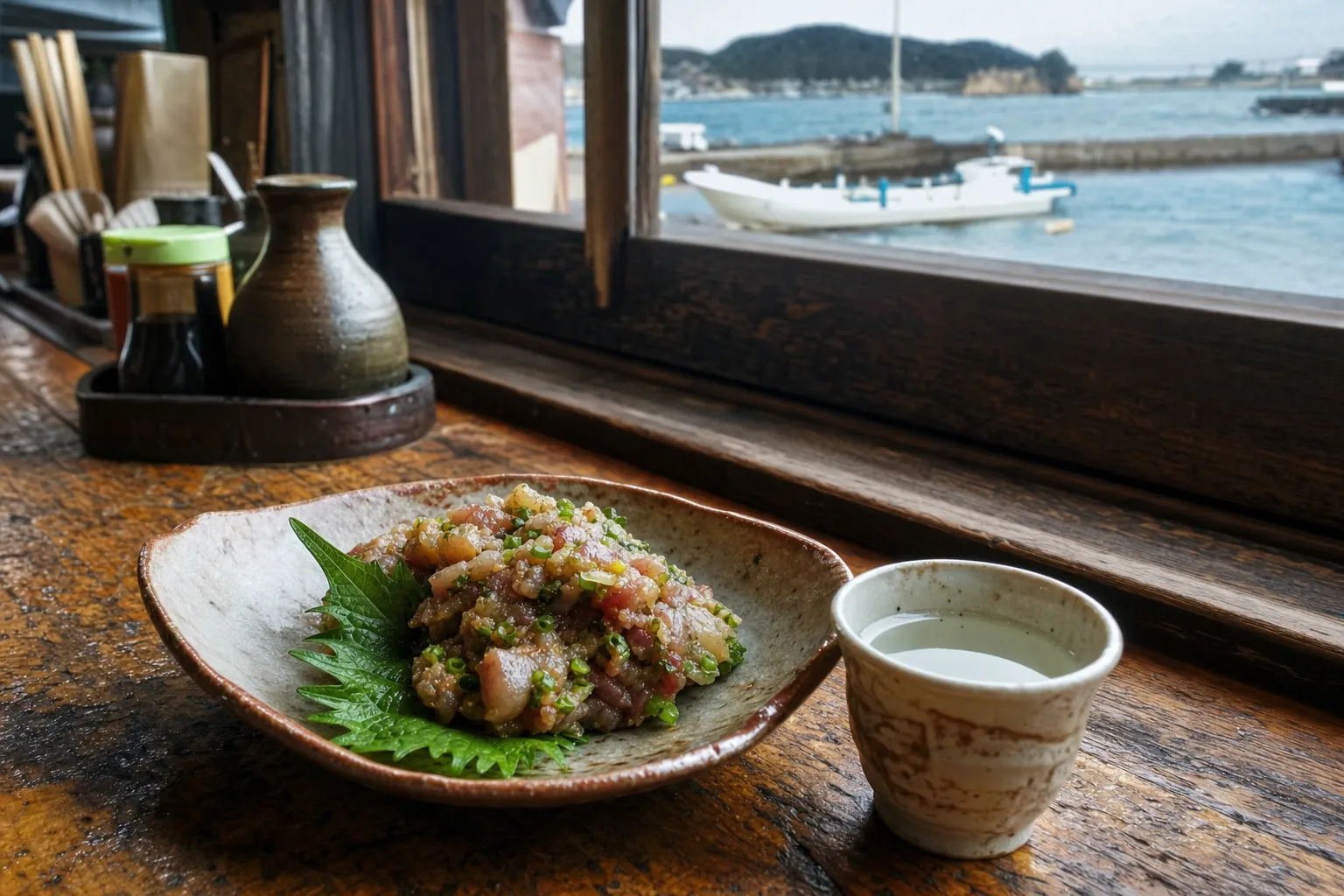
The story goes that fishermen working the waters off the Boso Peninsula would prepare namero right there on deck, using their catch, a portable stash of miso, and whatever aromatics they had — no proper kitchen, no plating, just a knife and a bowl. The name itself comes from nameru, "to lick" — supposedly because the paste came out so smooth and savory that people would lick the plate clean rather than let a drop go to waste. I find that a genuinely great origin story for a dish: not refined by chefs, but perfected by hungry men in a hurry who happened to have great instincts.
It stuck around as home and izakaya food up and down the Boso coast, particularly in towns like Katsuura and Choshi, where the fish comes off the boat literally hours before it hits your plate. I've eaten a lot of raw fish preparations in Japan. This is the one that feels the least designed and the most survived — passed down because it worked, not because anyone dressed it up.
Why it isn't just chopped-up sashimi
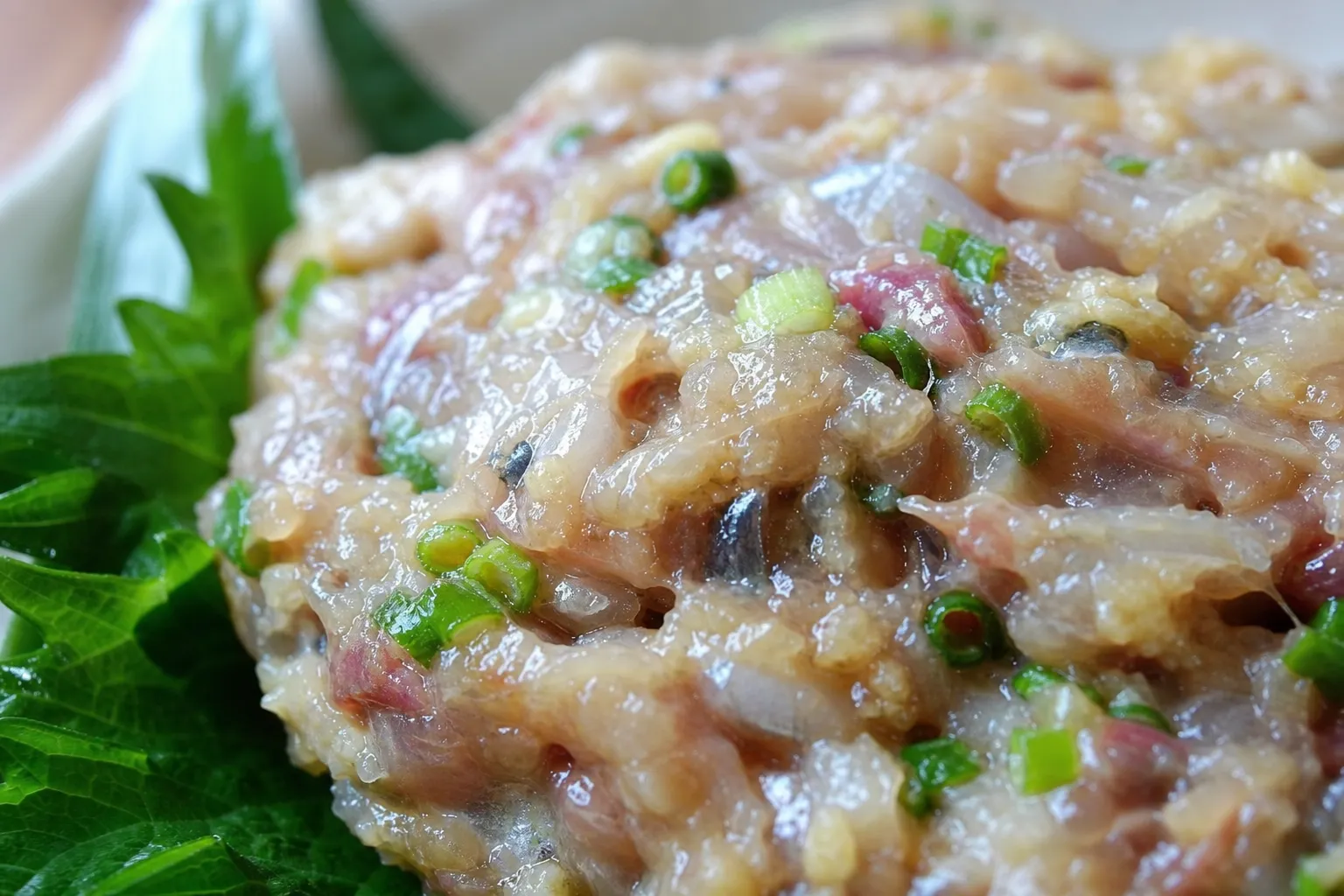
The defining move is the pounding, not just the chopping. You take the raw fillets, chop them roughly, then keep working the knife — sometimes two knives at once, alternating — through the fish along with the miso, ginger, scallion, and shiso, folding and mashing as you go, until the texture shifts from "diced fish" into something closer to a sticky, cohesive paste that holds together on a spoon. Sashimi is about the clean cut and the pure taste of the fish alone. Namero is the opposite instinct entirely — it wants the fish fully integrated with everything else, punchy and complex in every bite rather than clean and singular.
Flavor-wise, it's bold: the natural oiliness of aji or sardine, the salty ferment of miso, a sharp ginger kick, and the faint anise-like brightness of shiso cutting through the richness. It's not a polite appetizer. It's a strong, savory, slightly funky bite that pairs shockingly well with a cold beer or a small cup of sake, and I mean that as the highest compliment I can give raw fish.
How it's made
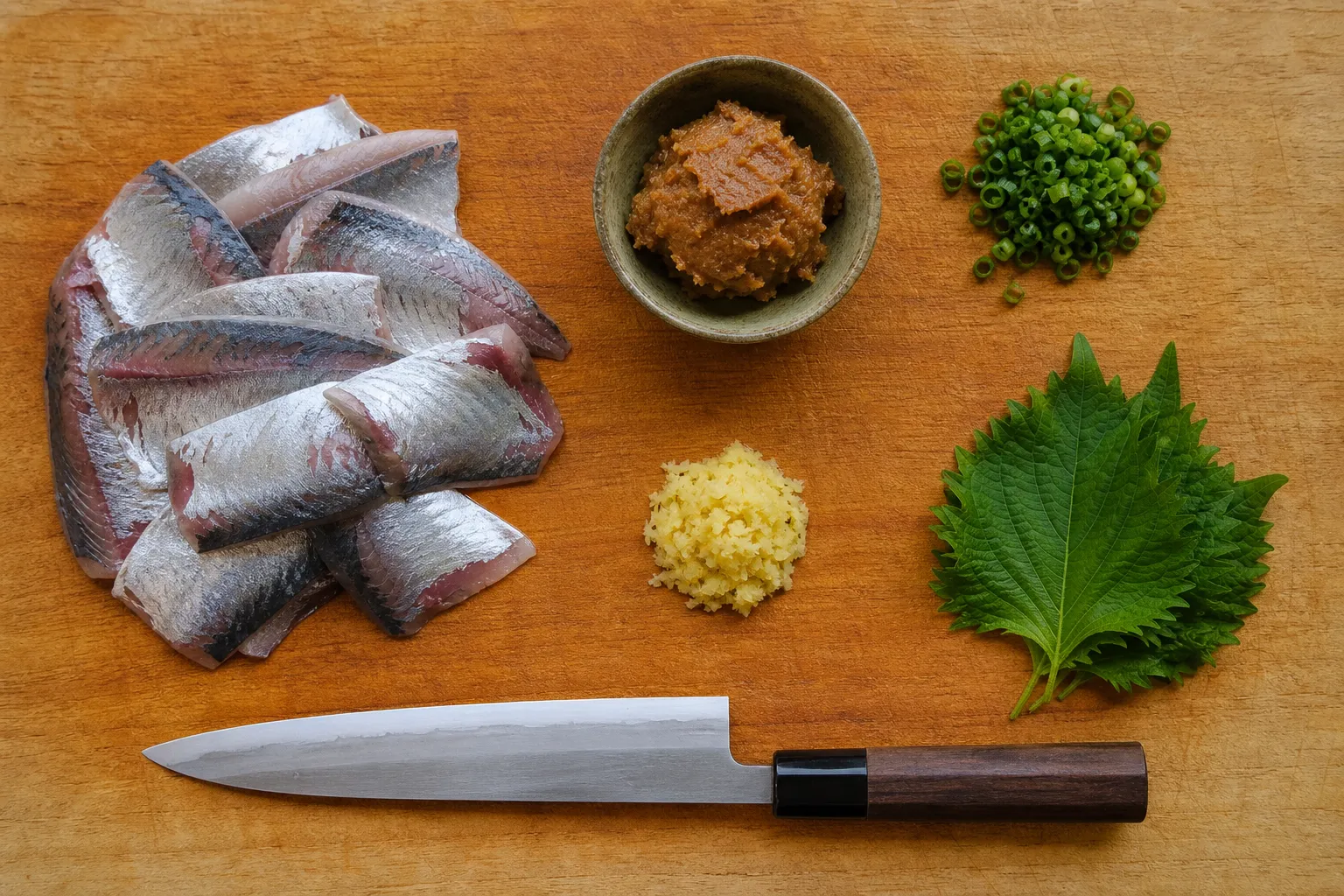
- Fresh aji (horse mackerel) or sardine is filleted, skinned, and pin-boned
- The fillets are roughly chopped, then finely minced with miso, grated ginger, chopped green onion, and shredded shiso leaf
- The mixture is pounded and folded with the back of the knife (sometimes two knives worked simultaneously) until it turns sticky and cohesive
- It's tasted and adjusted — more miso for saltiness, more ginger for bite — right there on the board
- Served cold, often mounded on a plate or directly on the cutting board it was made on, eaten with a spoon or straight with chopsticks
Some shops finish extra portions on a hot griddle afterward — that version is called sanga-yaki, and it turns the same paste into a savory, slightly caramelized patty if raw fish still feels like a stretch for you.
Before you go — what to expect from a bowl of pounded raw fish
Your questions, answered honestly
"Is this basically just chopped sashimi?" — No — that's the single biggest misconception. It's pounded with miso and aromatics into a cohesive paste, not a pile of clean-cut raw fish. The texture and flavor are both completely different from sashimi.
"I'm nervous about raw fish — should I still try this?" — It's a genuinely bold, adventurous dish, and I won't pretend otherwise — this is not the gentlest entry point into Japanese raw seafood. If you love sashimi already, you'll likely love this too. If raw fish makes you nervous in general, consider starting with the grilled sanga-yaki version instead, which is the same paste cooked on a griddle.
"Does it taste very fishy?" — Yes, more assertively than sashimi does — aji and sardine are oily fish, and the point of namero is to let that richness come through, balanced by miso and ginger rather than hidden.
"What do I eat it with?" — A spoon or chopsticks, often as a shared appetizer alongside drinks, sometimes wrapped in a lettuce or shiso leaf if the restaurant serves it that way.
"Is it served warm or cold?" — Cold, always, straight from the fridge or fresh off the board. If you're offered a warm version, that's sanga-yaki, a different (cooked) preparation of the same idea.
What the staff will ask you
| You'll hear | Romaji | Meaning | Just say |
|---|---|---|---|
| 生とさんが焼き、どちらにしますか? | Nama to sangayaki, dochira ni shimasu ka? | "Raw namero or the grilled sanga-yaki version?" | Nama de onegaishimasu (raw, please) |
| 魚は鯵でよろしいですか? | Sakana wa aji de yoroshii desu ka? | "Is horse mackerel okay for the fish?" | Hai, daijōbu desu (yes, that's fine) |
| お酒は何にしますか? | Osake wa nani ni shimasu ka? | "What would you like to drink?" | Nihonshu o onegaishimasu (sake, please) |
To order, just say "Namero kudasai" (なめろうください) — "Namero, please."
Where to eat it
- Katsuura, Chiba — a fishing town on the Boso Peninsula's Pacific coast, well known for its morning market and fresh-catch namero.
- Choshi, Chiba — one of Japan's largest fishing ports, with plenty of izakaya and seafood restaurants serving namero made from the day's landing.
- Tateyama and the wider Boso Peninsula coast — smaller fishing towns along this stretch commonly feature namero on izakaya menus, especially in the evening alongside drinks.
Namero depends entirely on same-day-fresh fish, so it's worth asking what's freshest that day rather than fixating on aji specifically — sardine or other oily local fish versions are just as good.
Soul Score
Local Roots5/5
First-Timer Friendly2/5
Adventure Level5/5
Comfort Level3/5
Travel Worthy4/5
These scores are one obsessed eater's gut feeling — not a verdict. A low number isn't a bad mark, just a different kind of adventure.
Know someone planning Japan?
← All Articles
Local Food · Chiba
Still hungry?
Eat more from Chiba
Local FoodChiba
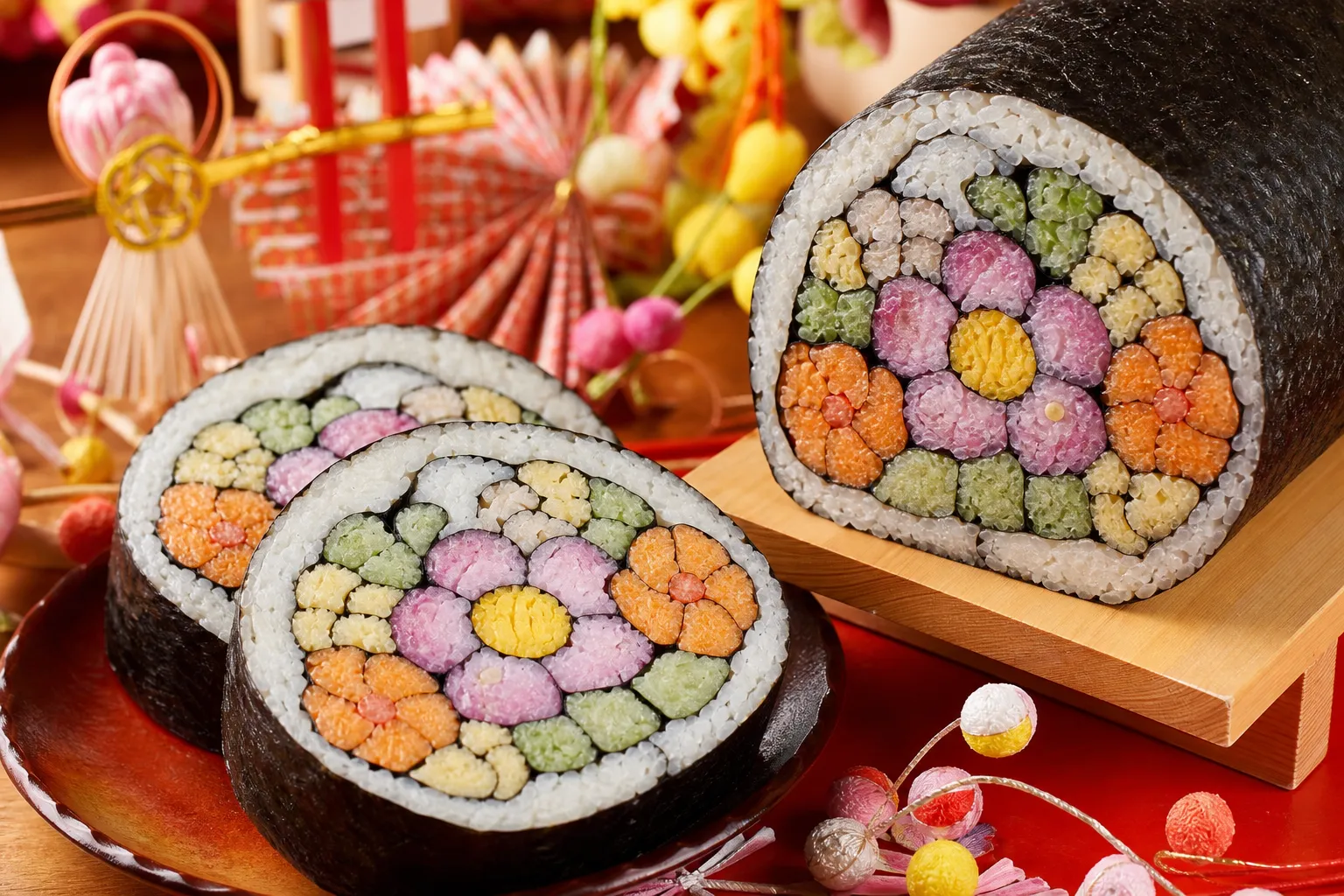
Futomaki Matsuri-zushi (太巻き祭り寿司)
Someone slices a fat sushi roll in front of you and a full-color flower blooms out of the cut face — this is edible pixel art from the rice paddies of Chiba, and it is absurd and glorious.
July 12, 2026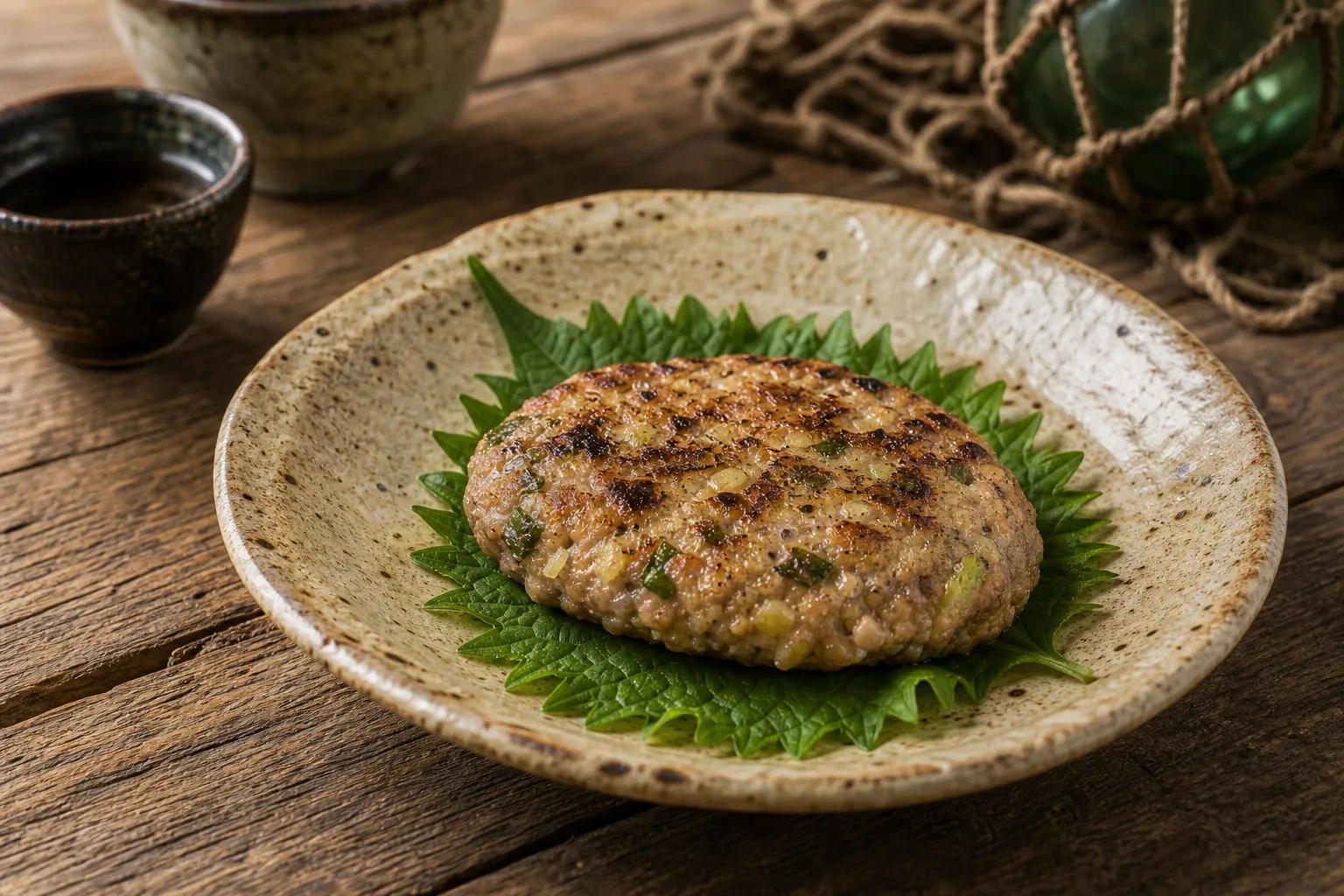
Local FoodBoso Peninsula, Chiba
Sanga-yaki (さんが焼き)
Fresh fish, pounded on a board with miso and ginger until it turns to paste, patted into a little patty on a shiso leaf, and seared until the edges go brown and the whole boat smells like dinner.
July 12, 2026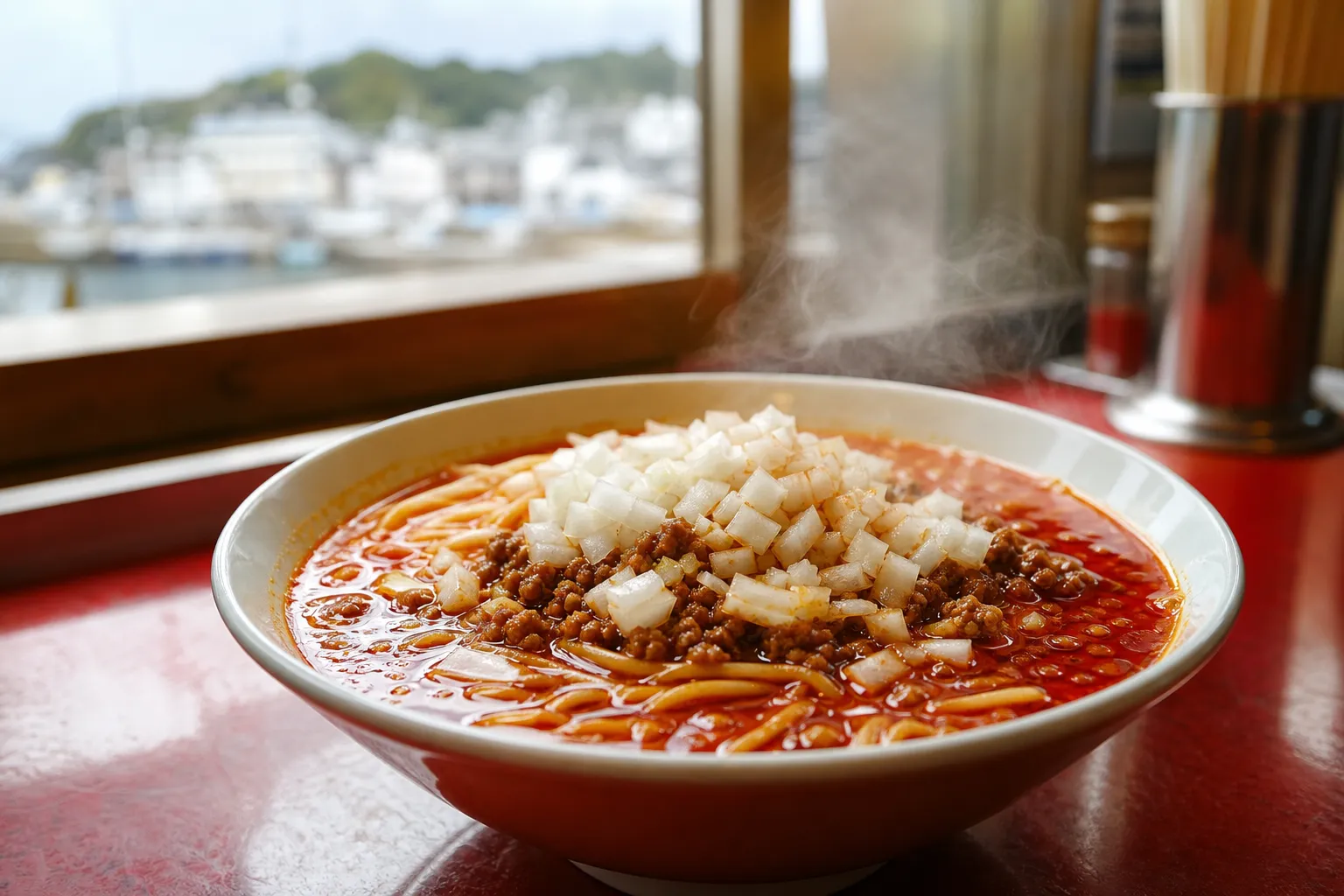
Local FoodKatsuura, Chiba
Katsuura Tantanmen (勝浦タンタンメン)
Not the creamy sesame tantanmen you know. This is a bowl of fire-red chili oil, minced pork and raw onion, invented by fishermen to thaw out after a freezing morning at sea. It bites back.
June 28, 2026