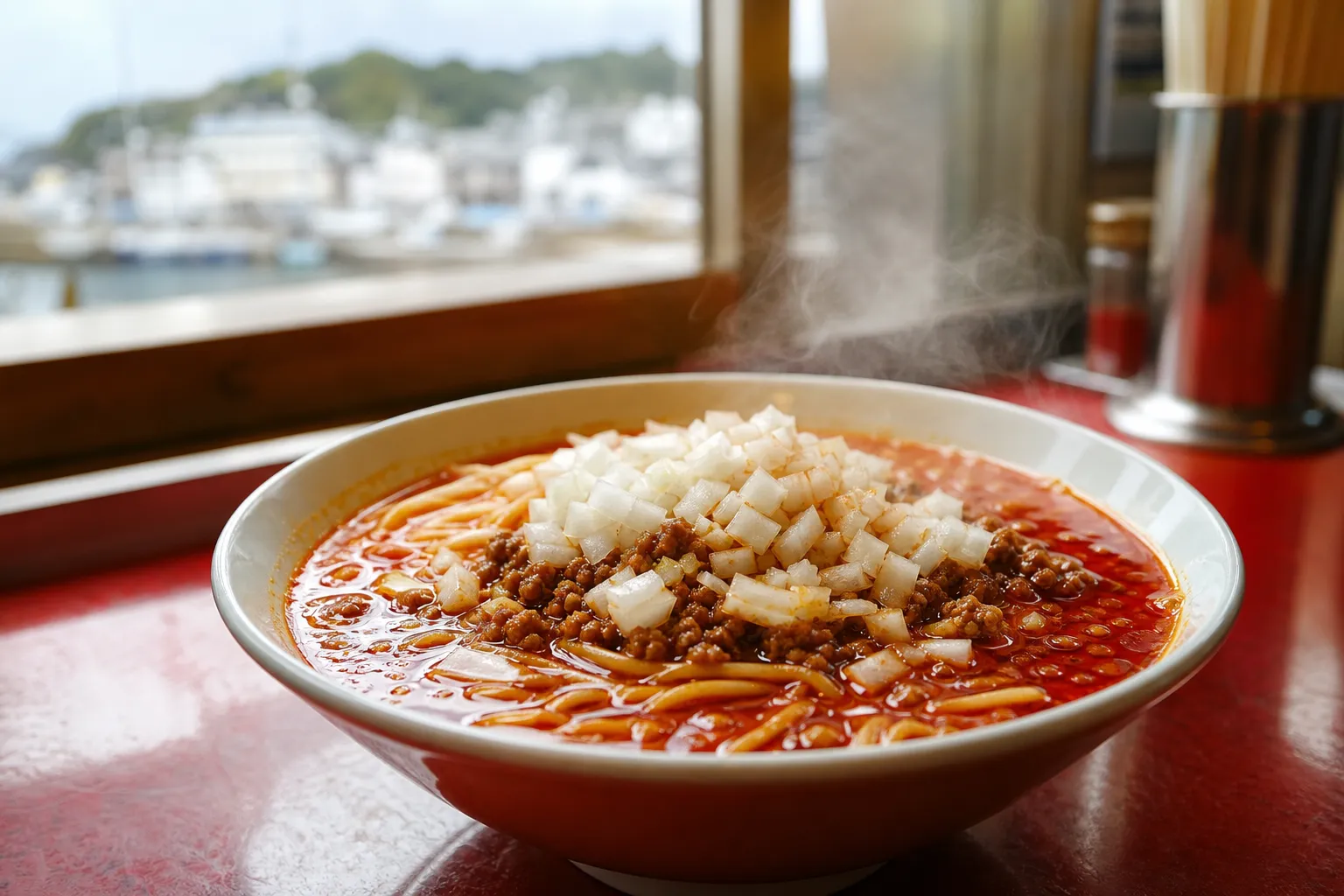
I braced for the creamy, nutty, sesame-paste tantanmen I knew. What landed instead was a bowl glowing fire-engine red, slick with chili oil, no peanut-sesame softness anywhere in sight — just a mound of minced pork, a heap of raw chopped onion, and a broth that went straight for the back of my throat. First spoonful: a cough. Second spoonful: a grin. By the third I was sweating and completely converted.
Share this dish


Not the creamy sesame tantanmen you know. This is a bowl of fire-red chili oil, minced pork and raw onion, invented by fishermen to thaw out after a freezing morning at sea. It bites back.
🍜 Planning a food trip to Chiba?Add this dish to my Food Trip →
 Add this dish to my Food Trip →
This is Katsuura tantanmen (勝浦タンタンメン), the defiant local ramen of Katsuura, a fishing town on the Chiba coast. Forget Sichuan sesame paste — this is a soy-and-chili-oil broth, bright red and genuinely spicy, piled with stir-fried minced pork and raw onion over straight noodles. It was dreamed up to warm fishermen and divers to the bone after brutal cold mornings on the water, and you can taste that purpose in every fiery sip.
A fisherman's antidote to the cold
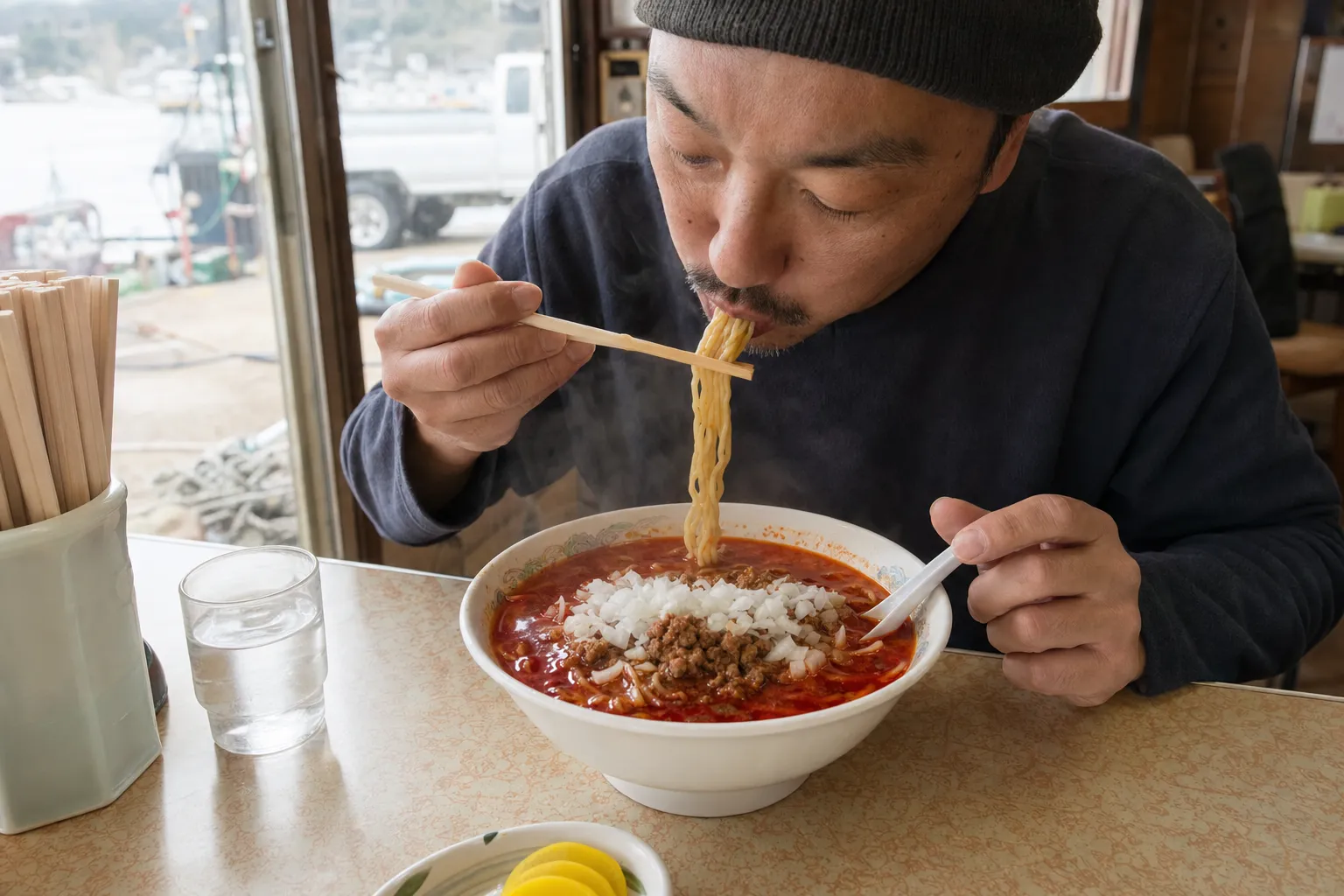
The origin is the whole personality of the dish. Katsuura is a working fishing port, and its people — fishermen, divers, the ama who free-dive for shellfish — came back from the cold sea needing to be thawed from the inside out. So local cooks built a tantanmen with no sesame paste at all, just soy, a flood of red rāyu chili oil, hot pork and onion: cheaper, fierier, and engineered to chase the chill out of your bones. The name says "tantanmen," but the bowl is its own invention.
I love that it's named after a famous dish and then refuses to be it. There's something very honest about a town that took an idea, stripped it down to what cold, tired, hungry workers actually needed, and accidentally created a regional icon. Katsuura now leans into it proudly — it's the thing to eat in town, and locals will happily tell you it's better than the creamy kind. After a bowl, I wasn't going to argue.
Why the red bowl works
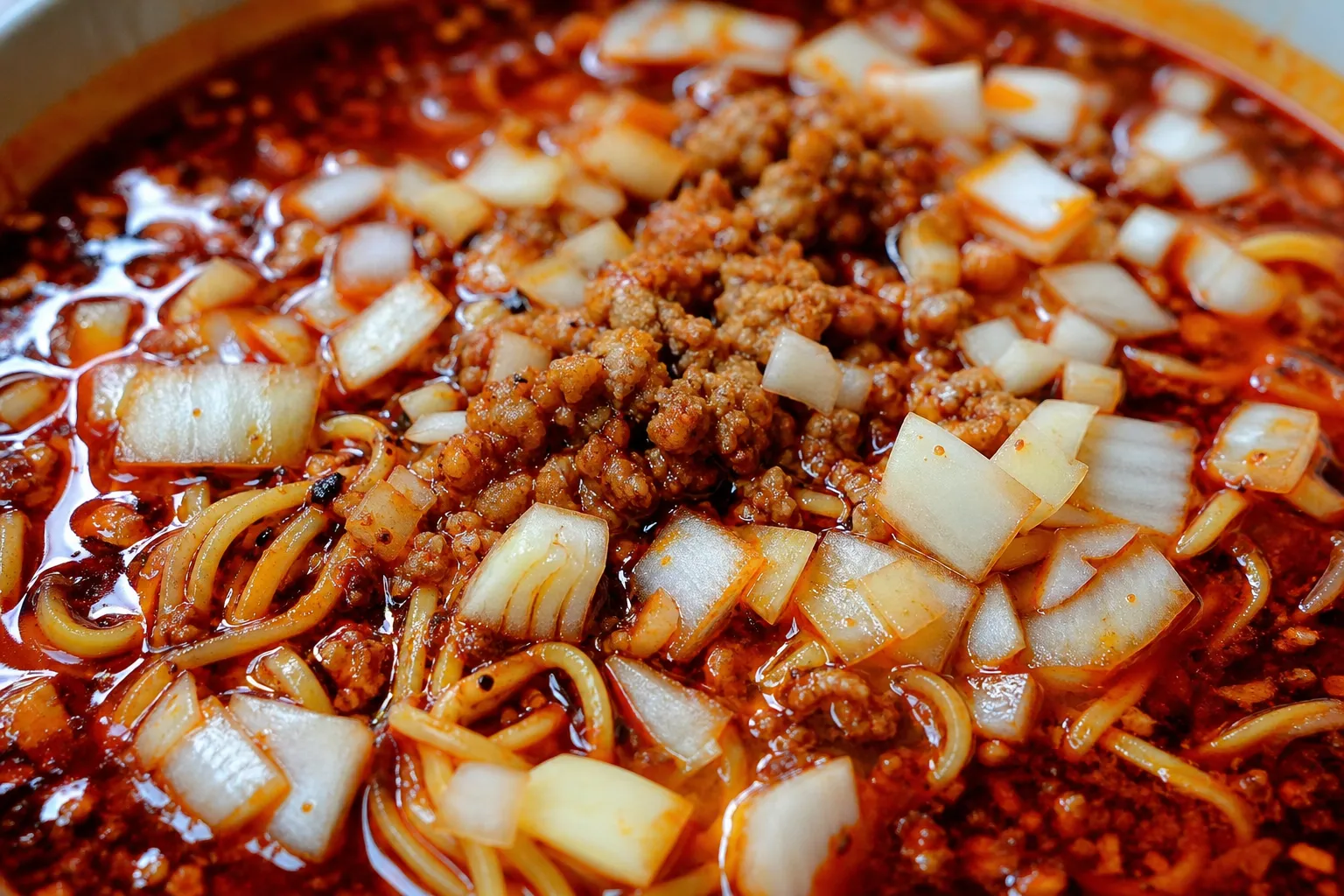
It's heat with a backbone. The broth is soy-based and savory underneath, but the surface is all glossy red chili oil, so every mouthful carries warmth that builds rather than just stinging. The minced pork gives it richness and chew, and the raw onion — and this is the genius part — stays sharp and fresh, cutting the heat and the oil so the bowl never feels heavy, just alive.
Straight noodles underneath soak up the red broth and carry it up to you. It's the kind of spicy that makes your scalp prickle and your nose run a little and somehow makes you eat faster, not slower. On a cold day it is medicinal. I finished it flushed, cleared-out, and weirdly euphoric — exactly the state those fishermen were chasing.
How it's made
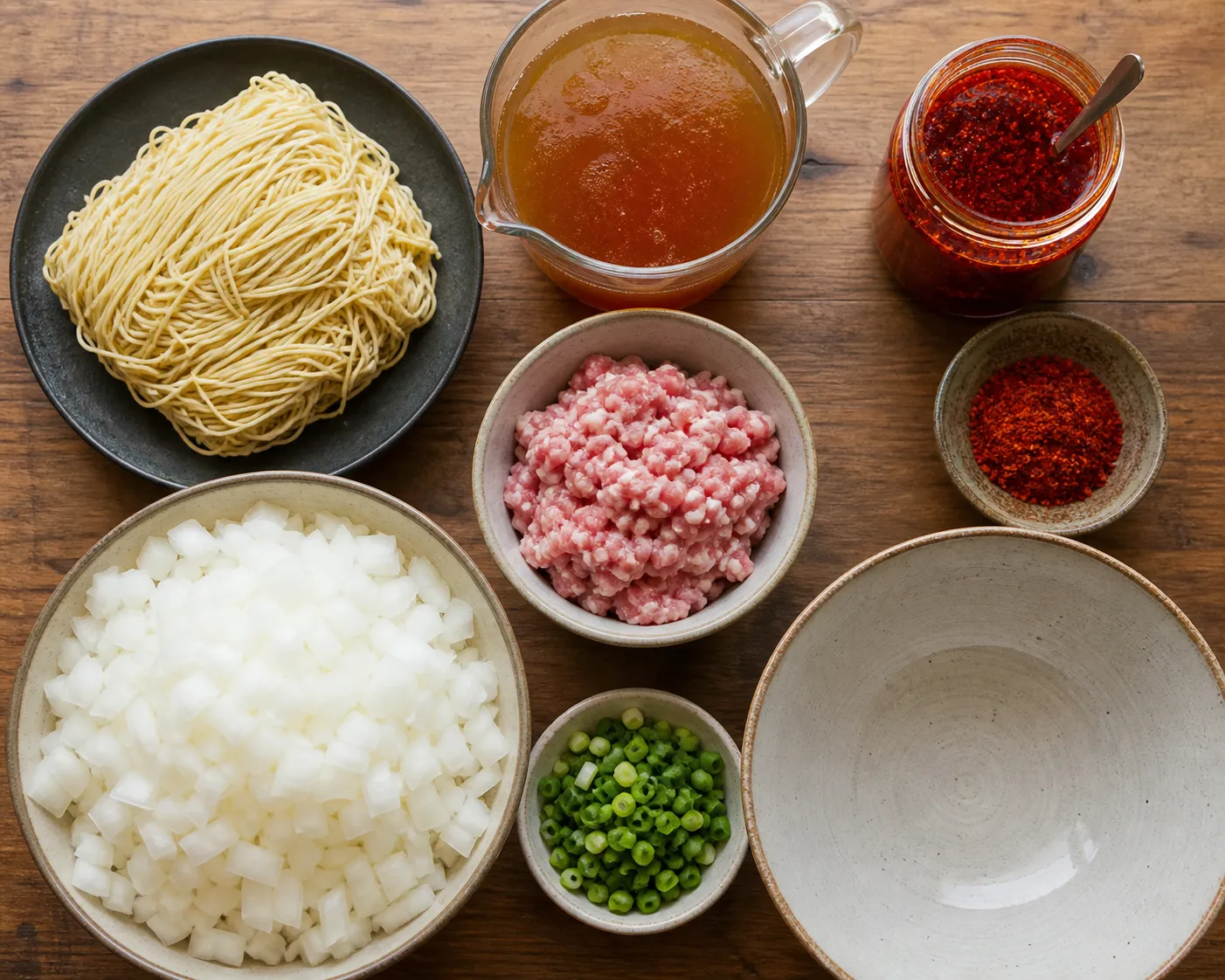
- Build a savory soy-based broth (chicken/pork stock + soy tare) — no sesame paste
- Stir in plenty of red chili oil (rāyu) until the broth turns bright red and spicy
- Stir-fry minced pork with seasoning
- Boil straight ramen noodles and pour the red broth over them
- Top with the hot minced pork and a generous heap of chopped raw onion
- Serve fiery hot — and keep a glass of water close
Before you go — for the brave
Your questions, answered honestly
"Is this the creamy sesame tantanmen?" — No, and that surprise is the whole experience. Katsuura tantanmen has no sesame paste. It's a clear-ish, soy-based, chili-oil-red broth — much spicier and lighter than the Sichuan-style creamy kind.
"How spicy is it, really?" — Genuinely spicy. Not novelty-hot, but the red oil means business. Many shops let you adjust the heat — see the phrases below.
"What's the raw onion doing?" — Cutting the heat and the oil with a fresh, sharp bite. Don't push it aside; it's a key part of the balance.
"Can I make it milder?" — Usually yes. Ask for it less spicy when you order (amakuchi de / less rāyu). Shops are used to the request.
What the staff will ask you
| You'll hear | Romaji | Meaning | Just say |
|---|---|---|---|
| 辛さはどうしますか? | Karasa wa dō shimasu ka? | "How spicy do you want it?" | Futsū de (normal) / Amakuchi de (mild) |
| 玉ねぎ多めにしますか? | Tamanegi ōme ni shimasu ka? | "Extra onion?" | Hai, onegaishimasu (yes please) |
| ライスはつけますか? | Raisu wa tsukemasu ka? | "Add rice?" | Hai (yes) / Daijōbu desu (I'm fine) |
To order, just say "Katsuura tantanmen kudasai" (勝浦タンタンメンください) — "Katsuura tantanmen, please."
Where to eat it
- Katsuura, Chiba — the home of the dish, where ramen and Chinese-style shops around the fishing town each serve their own version. The most authentic place to try it, ideally after a cold morning by the sea like the fishermen who inspired it.
- Around the Katsuura area & Boso Peninsula — it's the town's signature specialty and well-promoted locally, so you'll find it on menus across the area.
- Check before you go — small-town shops keep their own hours and can close early or sell out; confirm before making the trip.
Soul Score
Local Roots4/5
First-Timer Friendly3/5
Adventure Level4/5
Comfort Level4/5
Travel Worthy4/5
These scores are one obsessed eater's gut feeling — not a verdict. A low number isn't a bad mark, just a different kind of adventure.
Know someone planning Japan?
← All Articles
Local Food · Katsuura, Chiba
Still hungry?
Eat more from Chiba
Local FoodChiba
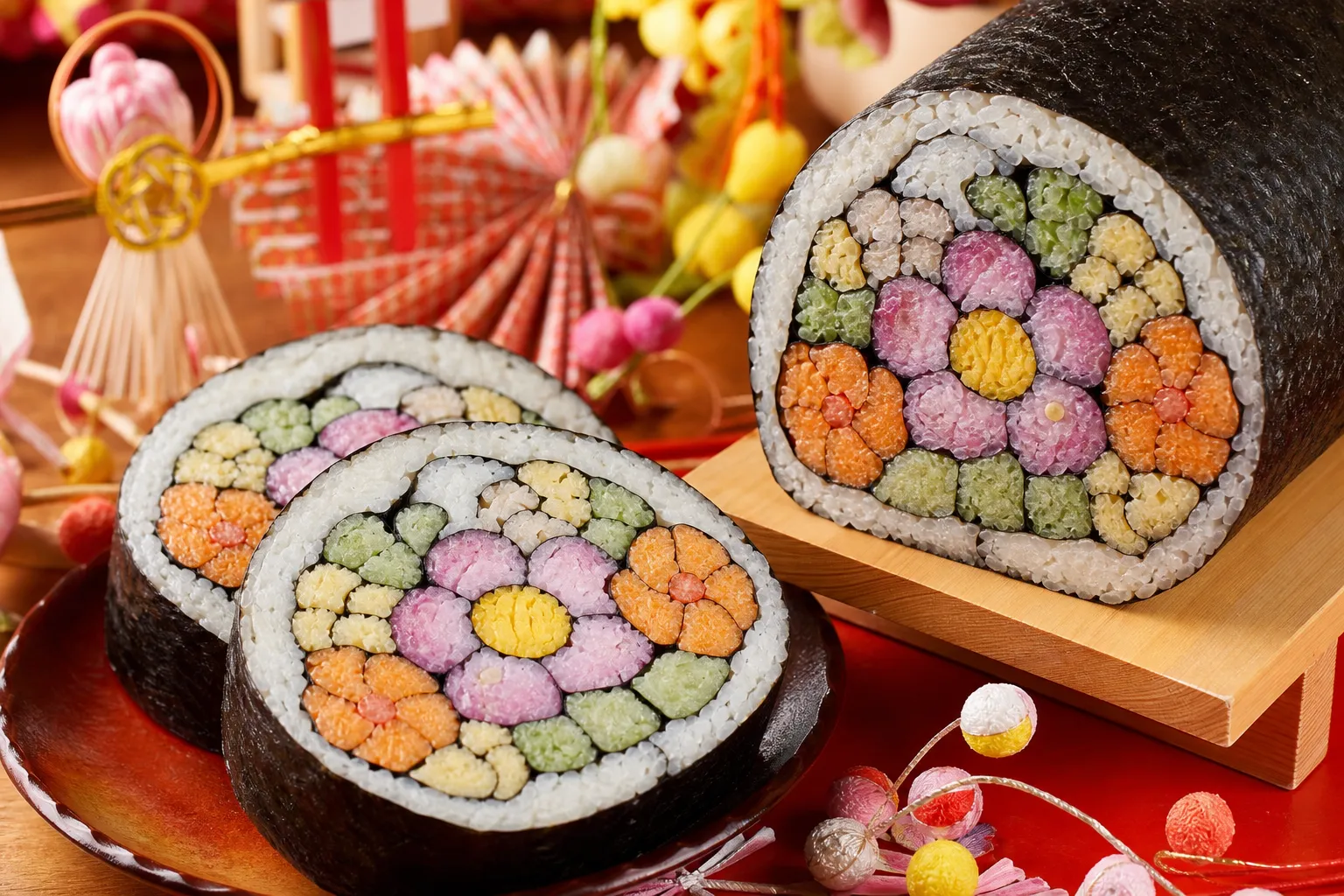
Futomaki Matsuri-zushi (太巻き祭り寿司)
Someone slices a fat sushi roll in front of you and a full-color flower blooms out of the cut face — this is edible pixel art from the rice paddies of Chiba, and it is absurd and glorious.
July 12, 2026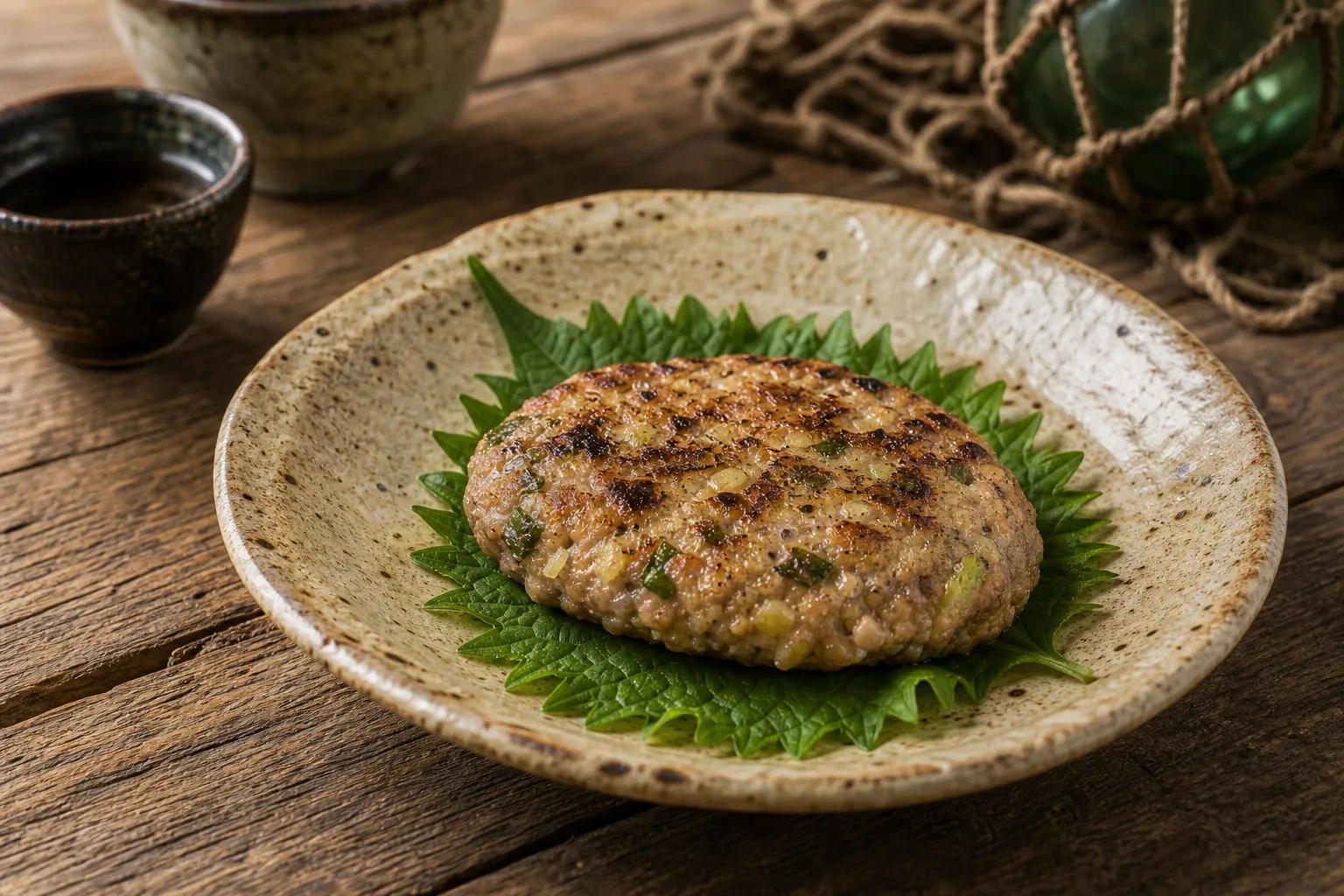
Local FoodBoso Peninsula, Chiba
Sanga-yaki (さんが焼き)
Fresh fish, pounded on a board with miso and ginger until it turns to paste, patted into a little patty on a shiso leaf, and seared until the edges go brown and the whole boat smells like dinner.
July 12, 2026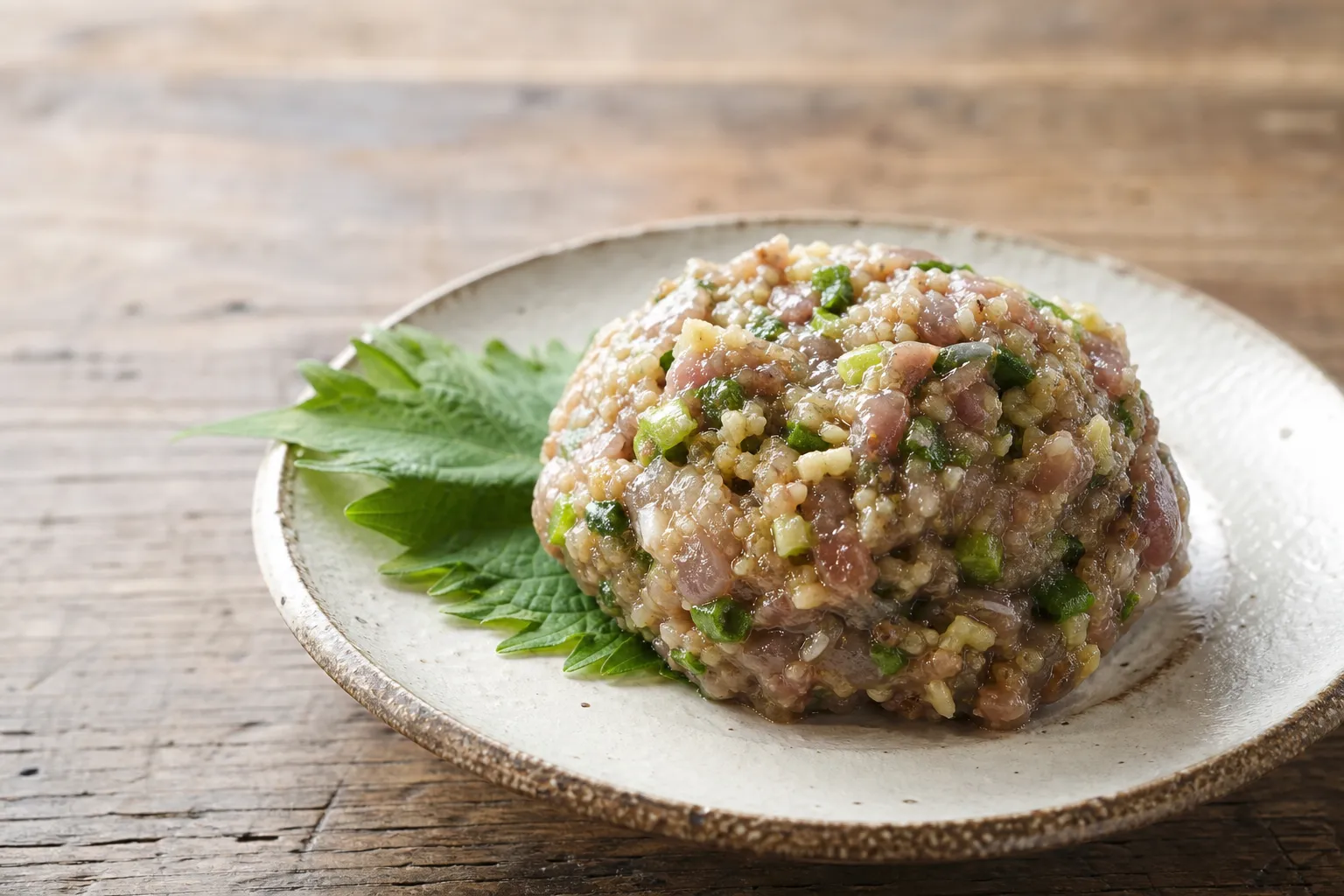
Local FoodChiba
Namero (なめろう)
Fishermen chopped their catch with a blob of miso until it turned into a sticky, savory paste — and refused to wait for a kitchen to do it properly.
July 5, 2026