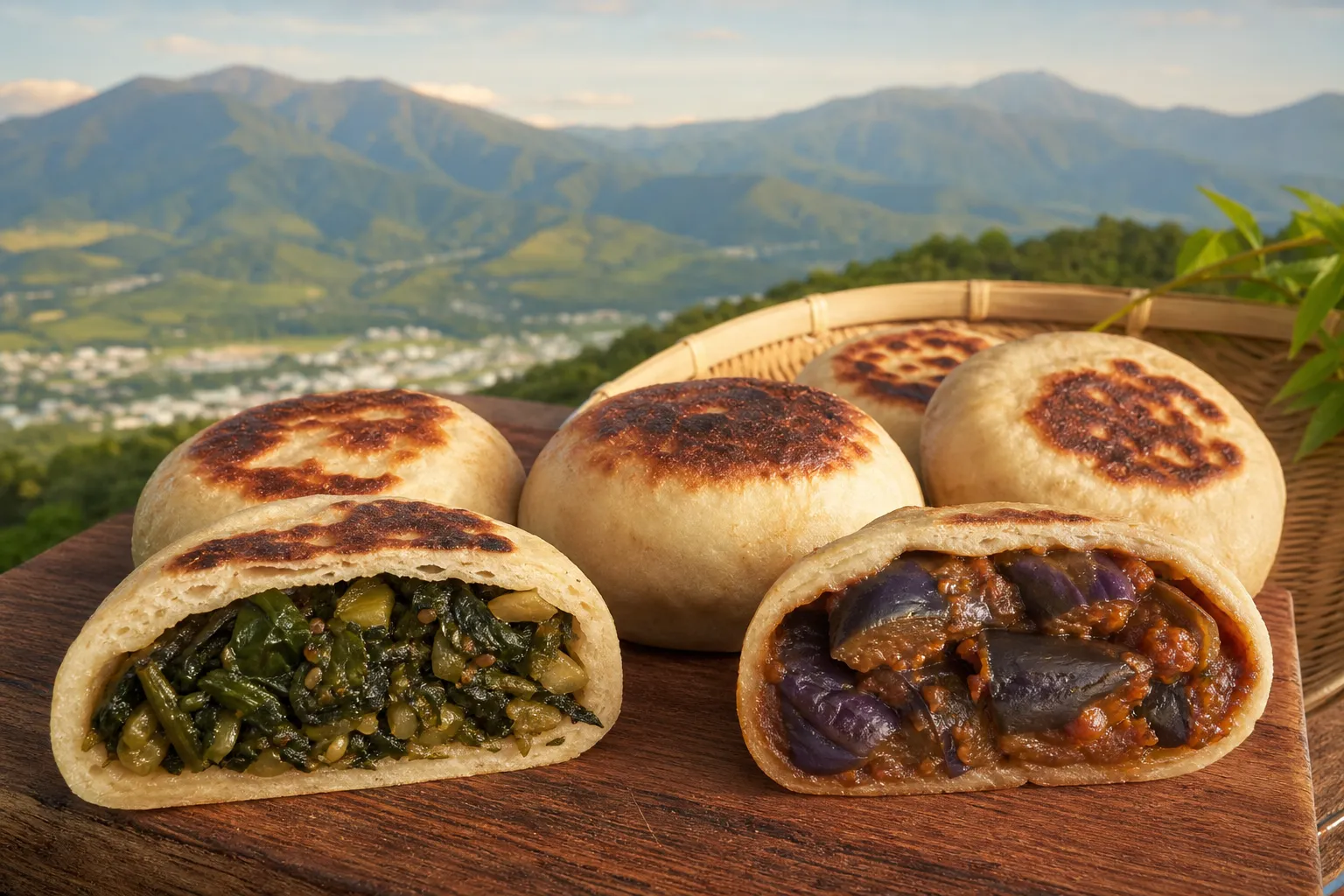
I bit in expecting something sweet — it looked like a little bun, and buns are usually sweet, my brain reasoned badly. Instead I got tangy pickled greens, savory and a little funky, wrapped in a chewy, faintly charred skin that tasted of woodsmoke and cold mountain mornings. It was the opposite of what I'd braced for and so much better, and I stood there in the Nagano cold finishing it in about four bites.
Share this dish


A chewy, lightly charred bun from the Nagano mountains, stuffed with pickled greens or eggplant miso instead of anything sweet. Farmhouse food that tastes like a cold morning by an irori hearth.
🍜 Planning a food trip to Nagano?Add this dish to my Food Trip →
 Add this dish to my Food Trip →
This is oyaki (おやき), the everyday treasure of the Nagano mountains: a round, flattened bun of wheat-and-buckwheat dough wrapped around a savory filling — most classically nozawana pickled greens or eggplant miso — then grilled, steamed, or both. Where rice was hard to grow, the highland villages made flour-and-buckwheat dough do the work, and turned humble fillings into one of the most comforting handheld foods in Japan.
Mountain food, made from what grew
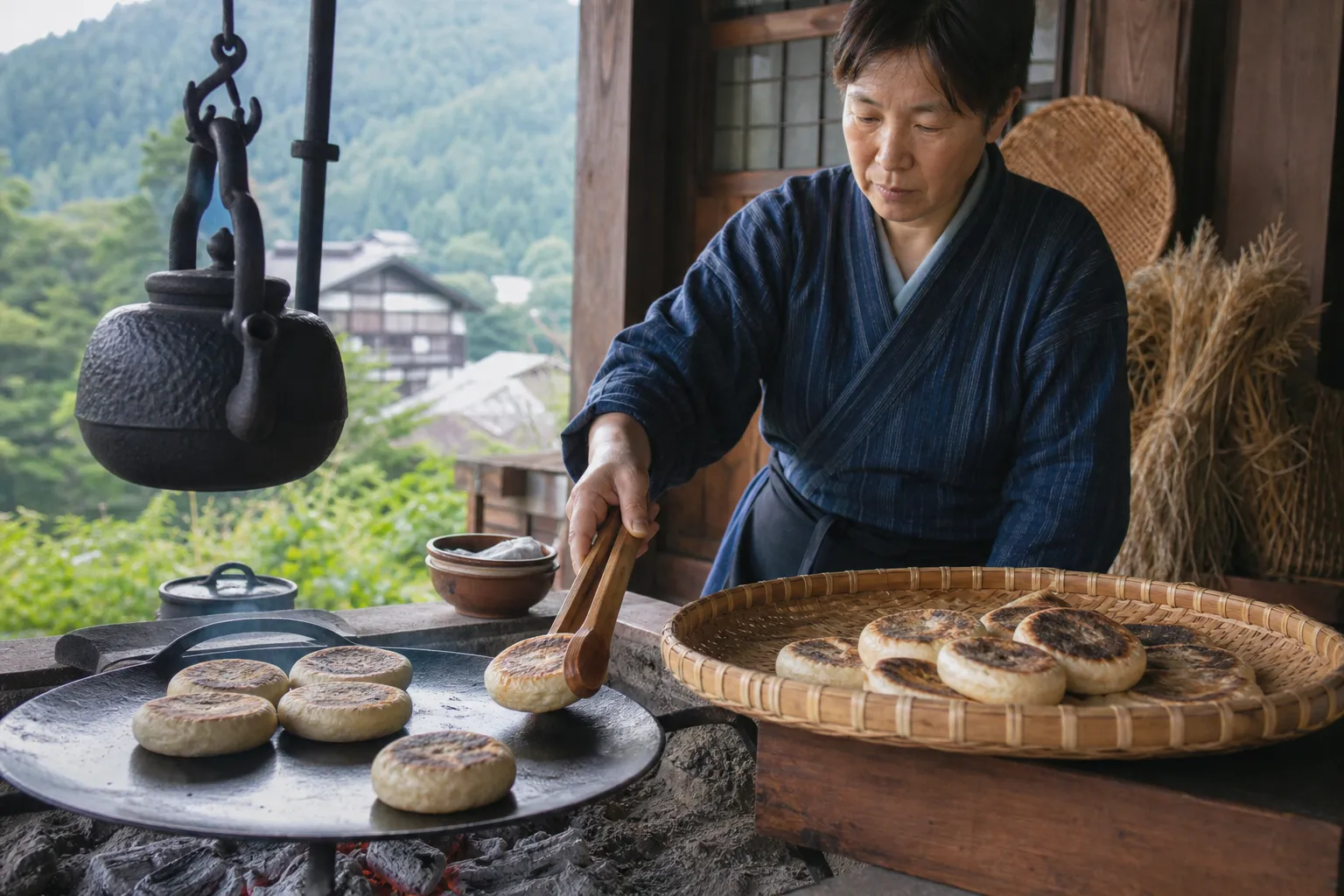
Oyaki is a map of its own landscape. The mountains of Nagano were too cold and steep for easy rice farming, so people grew buckwheat and wheat and leaned on hardy mountain vegetables and pickles to get through long winters. Oyaki is what that reality tastes like: dough you can make without rice, wrapped around whatever the season and the pantry offered — pickled greens, miso-stewed eggplant, pumpkin, mushrooms, sometimes sweet bean. Traditionally they were even baked in the ash of the irori, the sunken farmhouse hearth.
I find that genuinely moving. This isn't a dish someone designed to delight tourists; it's a dish that kept mountain families fed, shaped entirely by what the land would give. And it survived — Nagano grandmothers still make them, roadside stands still grill them, and the village of Ogawa built a whole beloved oyaki tradition around them. Eat one and you're eating a couple of centuries of highland practicality, still warm in your hand.
Why the chewy, savory bun works
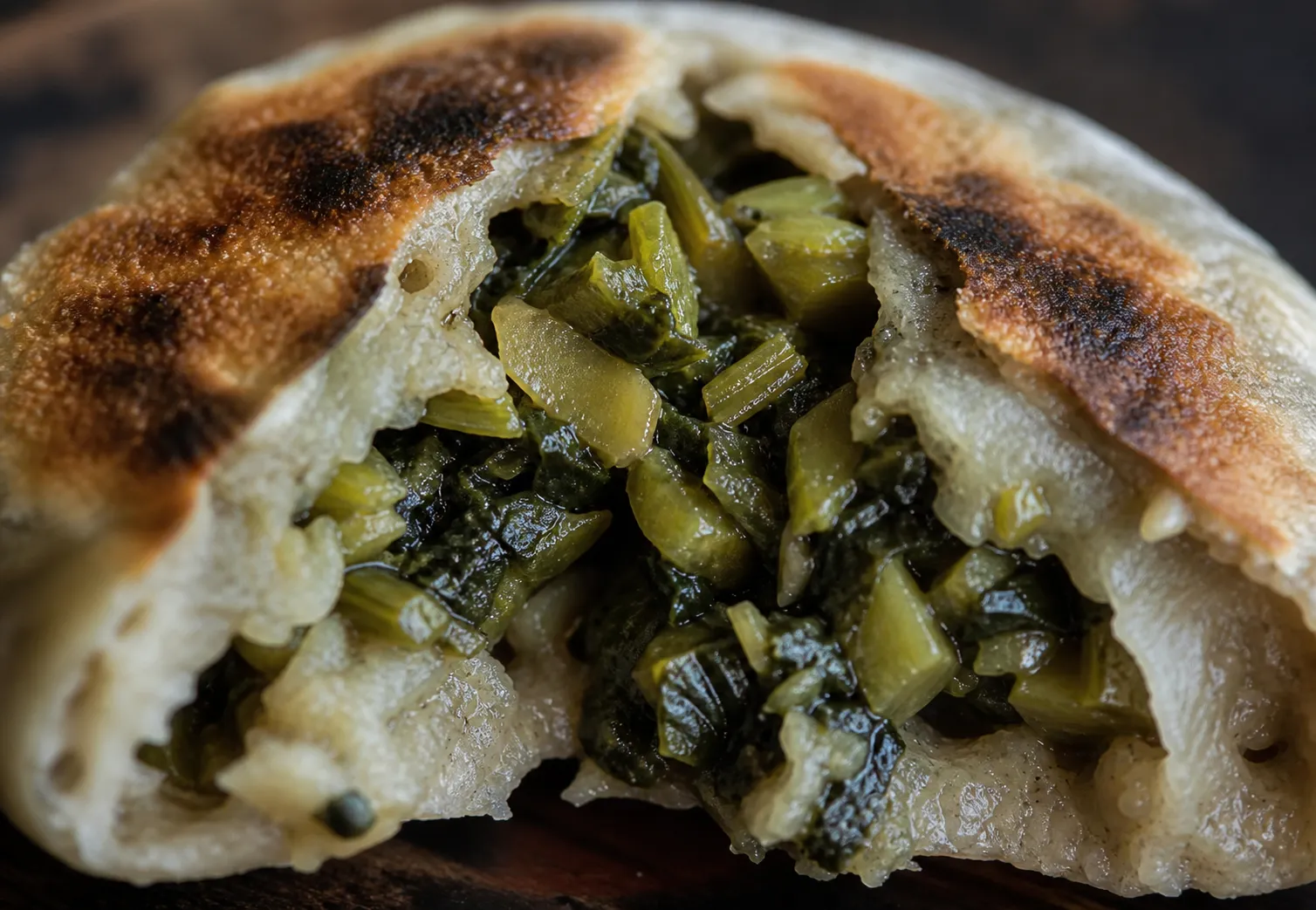
It's all about the contrast between skin and filling. The dough is thicker and chewier than a Chinese steamed bun — a little rustic, with the earthy note of buckwheat — and when it's finished on a griddle or over coals, the outside picks up golden, lightly charred spots that add smoke and crunch against the soft inside. It's substantial without being heavy, the kind of texture you can feel doing you good.
Then the filling does the talking, and it's usually savory: tangy nozawana greens, or eggplant simmered in miso until rich and almost meaty, or sweet-savory kabocha. Each one is a small, warm, deeply homemade-tasting bite. They're cheap, they're filling, they travel well in a cold hand on a mountain morning, and I genuinely could not stop at one. I did not try very hard to.
How it's made
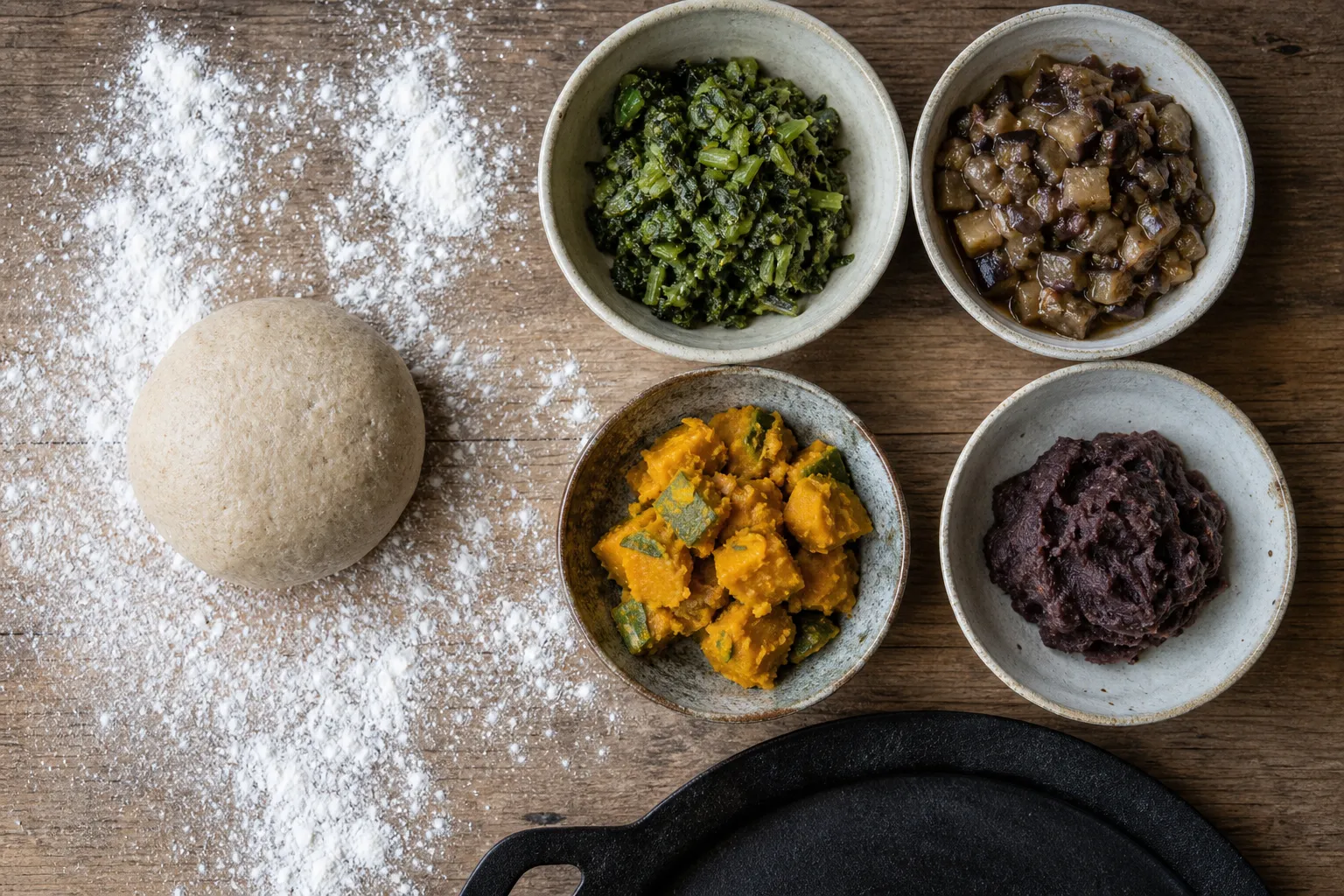
- Make a dough from wheat and buckwheat flour, and rest it
- Prepare savory fillings — nozawana pickled greens, eggplant miso (nasu miso), kabocha, mushrooms (or sweet bean for a sweet version)
- Roll the dough into rounds and wrap a spoonful of filling inside, sealing into a flattened bun
- Cook by grilling on an iron griddle, steaming, or grilling then steaming — village to village varies
- Often finished over heat for those signature lightly charred spots
- Eat warm, by hand, ideally somewhere cold
Before you go — for the oyaki-curious
Your questions, answered honestly
"Are they sweet or savory?" — Mostly savory, and that surprises a lot of first-timers. The classics are pickled greens (nozawana) and eggplant miso. Sweet versions (red bean, pumpkin) exist too, so check what a stand has if you have a preference.
"What's the most traditional filling?" — Nozawana pickled greens and nasu miso (eggplant miso) are the iconic Nagano fillings. If you want the real-deal mountain flavor, start there.
"Grilled or steamed — what's the difference?" — Grilled oyaki have a chewier, lightly charred skin; steamed ones are softer and fluffier. Many places grill-then-steam. Both are good; the grilled char is my favorite.
"Is it a snack or a meal?" — Either. They're cheap and handheld like a snack, but two or three savory ones make a genuine light meal — perfect while traveling around Nagano.
What the staff will ask you
| You'll hear | Romaji | Meaning | Just say |
|---|---|---|---|
| 中身はどれにしますか? | Nakami wa dore ni shimasu ka? | "Which filling?" | Nozawana de (the pickled greens) |
| 温めますか? | Atatamemasu ka? | "Shall I warm it up?" | Hai, onegaishimasu (yes please) |
| いくつにしますか? | Ikutsu ni shimasu ka? | "How many?" | Futatsu kudasai (two, please) |
To order, just say "Oyaki kudasai" (おやきください) — "Oyaki, please."
Where to eat it
- Nagano Prefecture — oyaki are everywhere: roadside stands, markets, mountain villages, and shops around Zenkoji temple in Nagano City. The obvious place to eat them fresh off the griddle.
- Ogawa village & the highland areas — the village of Ogawa is especially associated with oyaki, and rural areas across Nagano keep the tradition alive at farm stands and michi-no-eki roadside stations.
- Check before you go — small stands and village shops keep limited hours; confirm timing, and ask whether they're grilled or steamed if you have a preference.
Soul Score
Local Roots5/5
First-Timer Friendly5/5
Adventure Level3/5
Comfort Level5/5
Travel Worthy4/5
These scores are one obsessed eater's gut feeling — not a verdict. A low number isn't a bad mark, just a different kind of adventure.
Know someone planning Japan?
← All Articles
Local Food · Nagano, Nagano
Still hungry?
Eat more from Nagano
Local FoodNagano
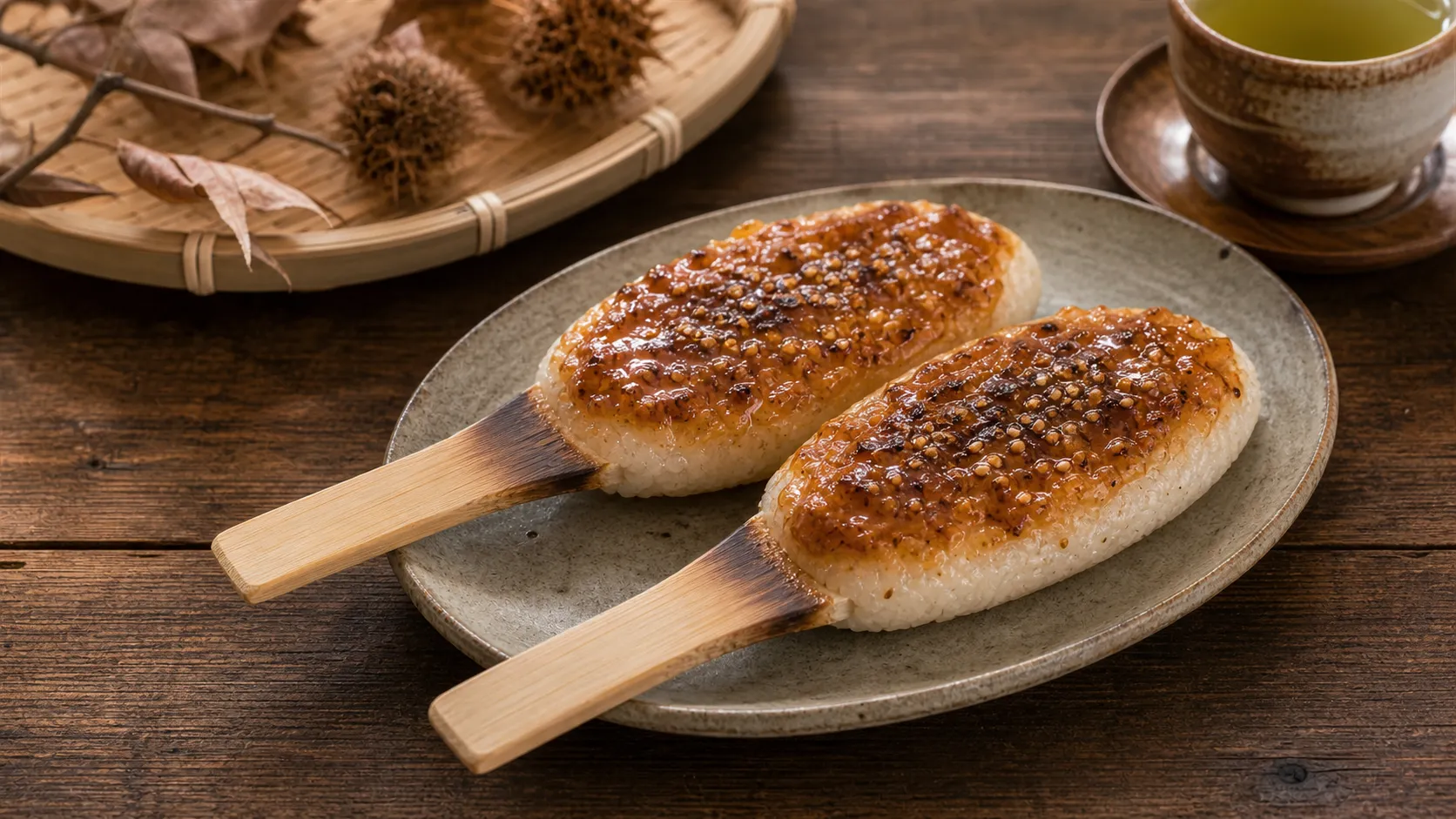
Gohei-mochi (五平餅)
Pounded rice flattened onto a wooden paddle, slathered in a sweet-savory walnut-and-sesame miso glaze, and grilled over coals until the edges char — the smoky, sticky, gloriously messy soul food of Japan's central mountains.
July 10, 2026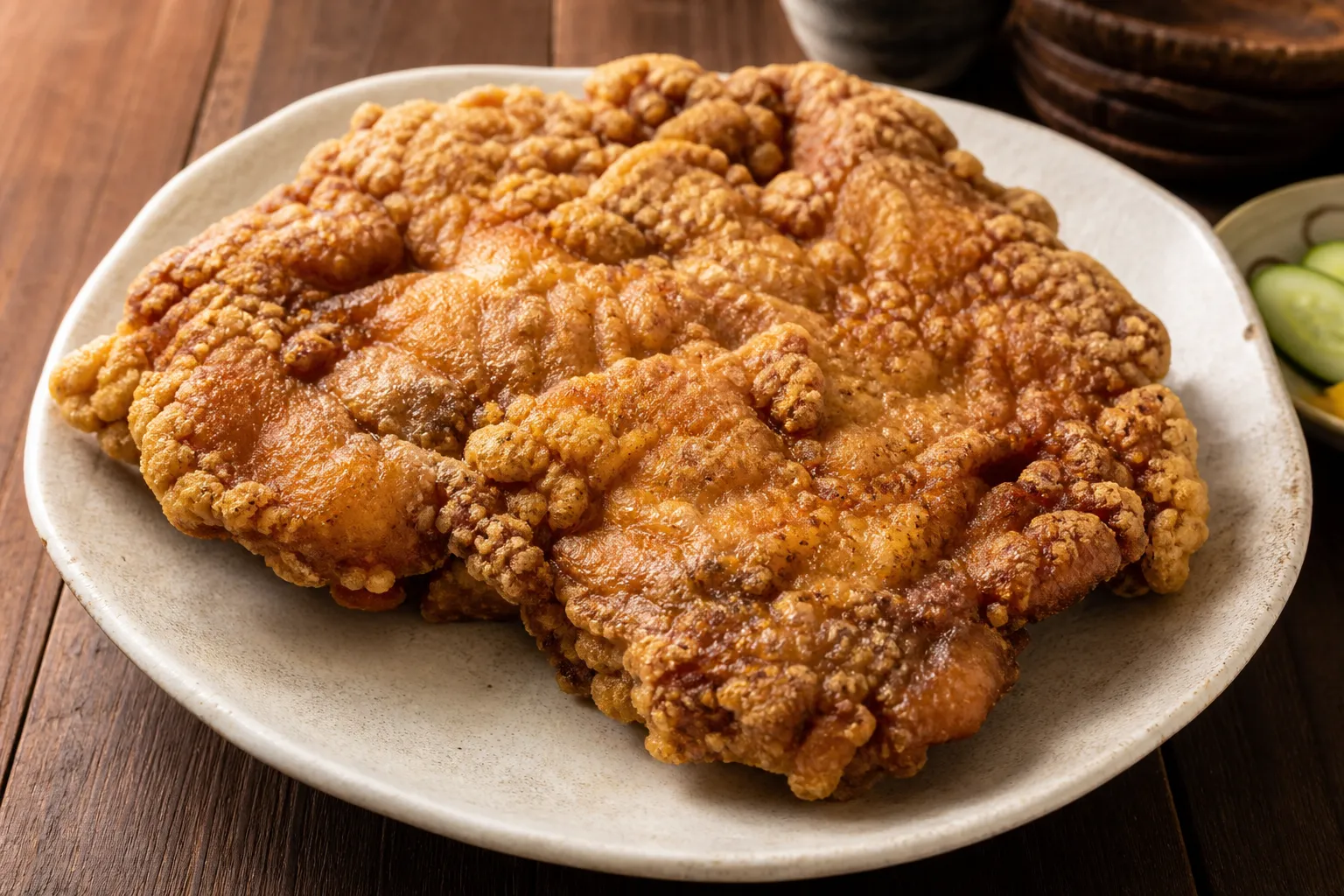
Local FoodMatsumoto / Shiojiri, Nagano
Sanzoku-yaki (山賊焼き)
It's not a piece of fried chicken — it's a whole flattened thigh the size of your face, cragged with garlic-soy crust, and it arrives daring you to finish it.
July 5, 2026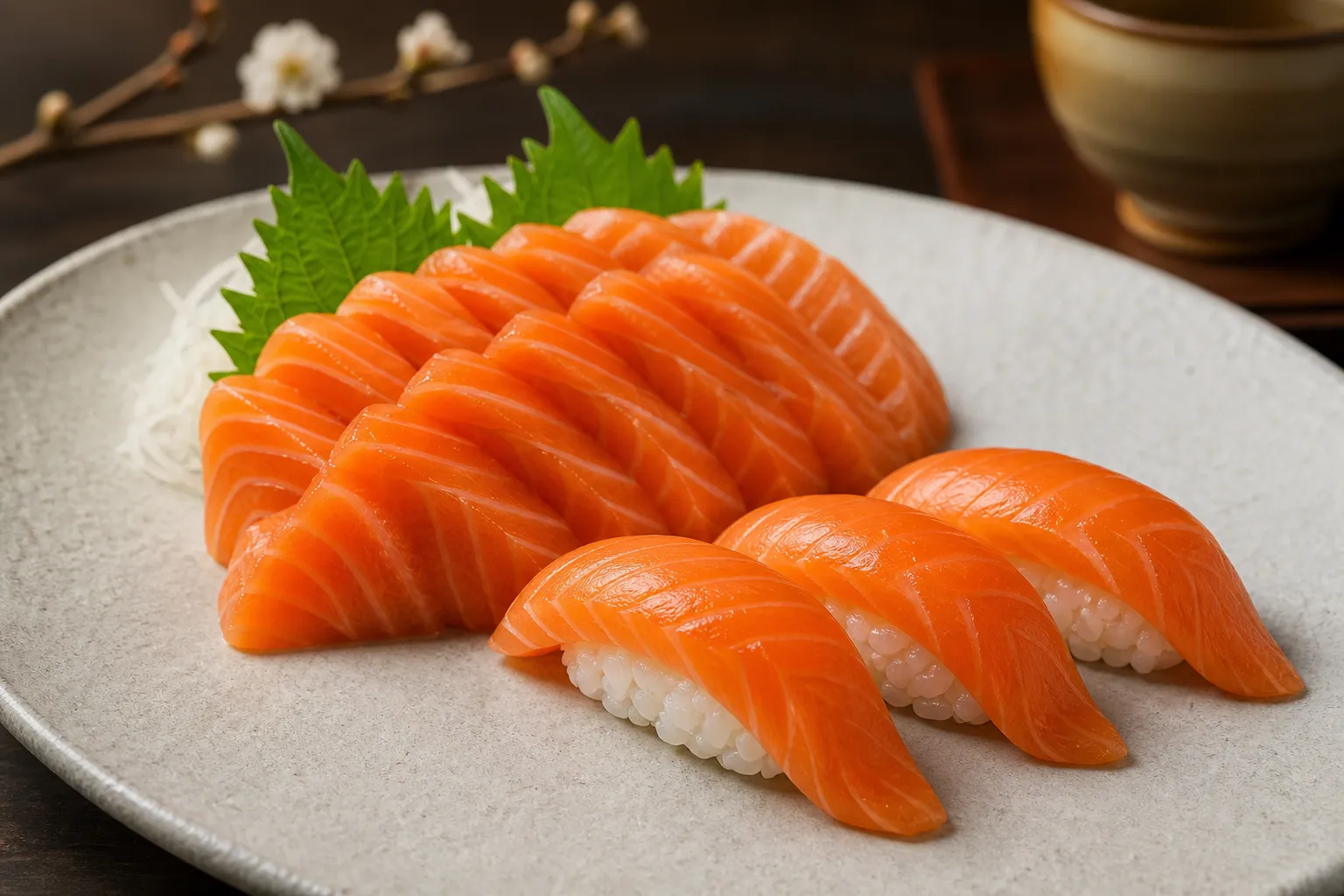
Local FoodNagano
Shinshu Salmon (信州サーモン)
Landlocked Nagano, ringed by mountains, hours from any sea — and it's serving some of the cleanest, sweetest salmon sashimi I've put in my mouth.
July 5, 2026