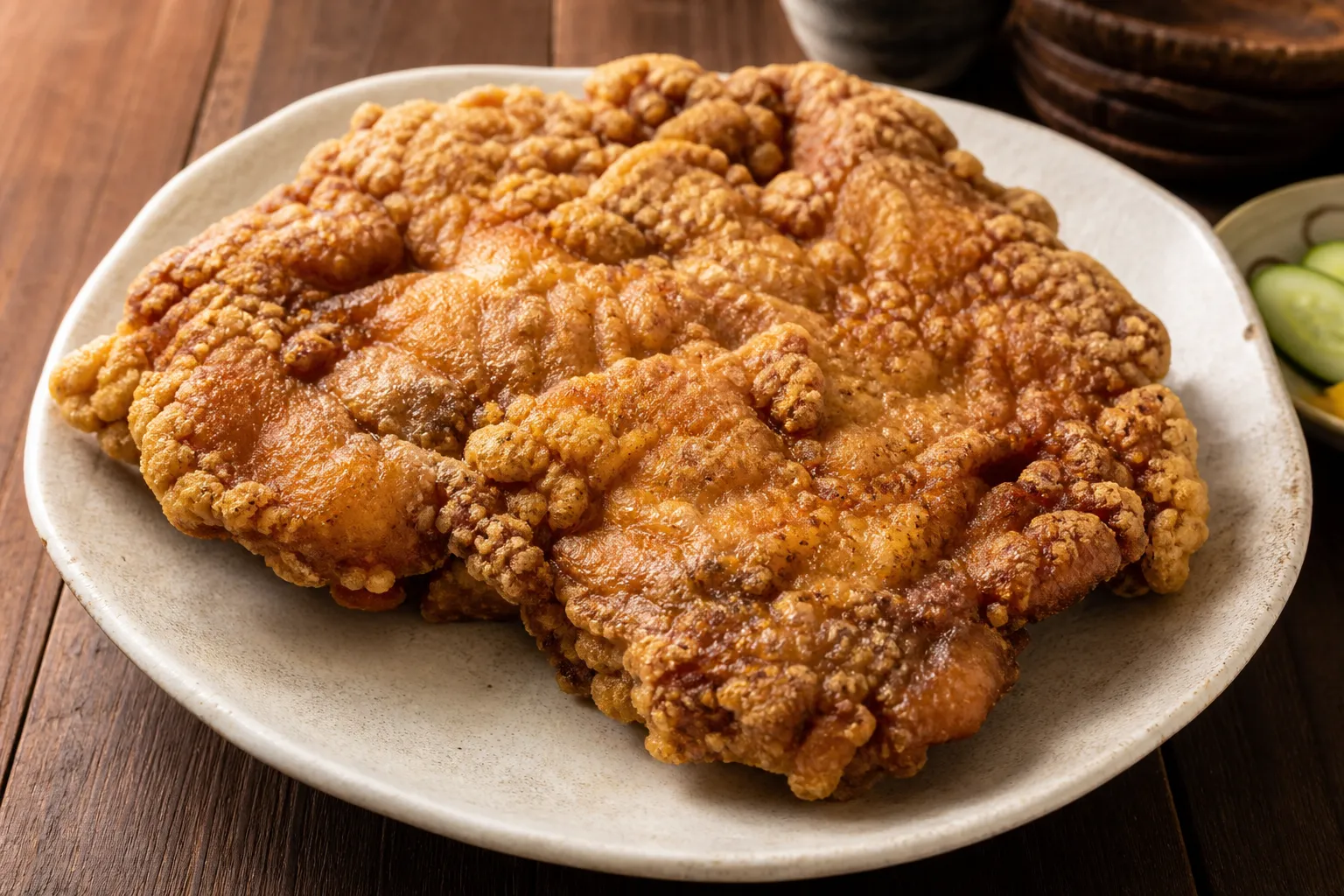
The plate landed and I actually leaned back. It was one single piece of fried chicken, but "piece" is a lie — this was a whole thigh, pounded flat and fried until it spread across the plate like a golden continent, edges craggy and blistered, the smell of garlic hitting me a full second before it touched down. I picked up my chopsticks, realized chopsticks were laughably inadequate, and just went in. The crust shattered. The meat underneath was juicy and dense and unapologetically garlicky, and somewhere around the third bite I understood that this was not a snack. This was a commitment. I made the commitment.
Share this dish


It's not a piece of fried chicken — it's a whole flattened thigh the size of your face, cragged with garlic-soy crust, and it arrives daring you to finish it.
🍜 Planning a food trip to Nagano?Add this dish to my Food Trip →
 Add this dish to my Food Trip →
This is sanzoku-yaki (山賊焼き), the pride of Matsumoto and Shiojiri in Nagano. Despite the "yaki" (grilled) in the name, it's fried: a whole chicken thigh, marinated in a punchy garlic-soy sauce, dredged in potato starch, and deep-fried flat until the outside goes shatteringly crisp and the inside stays juicy. The name means "bandit grill" — and the local pun is great: sanzoku (bandit) sounds like "tori-age," where tori can mean both "to take/plunder" and "chicken," so a bandit who takes things and a dish that fries chicken land on the same joke. It is not bite-size karaage, it is not chicken nanban drowned in tartar sauce, and it is not breaded tonkatsu. It's one giant, crunchy, garlic-slammed slab, and that scale is the entire personality.
Why a landlocked mountain region went this hard on chicken
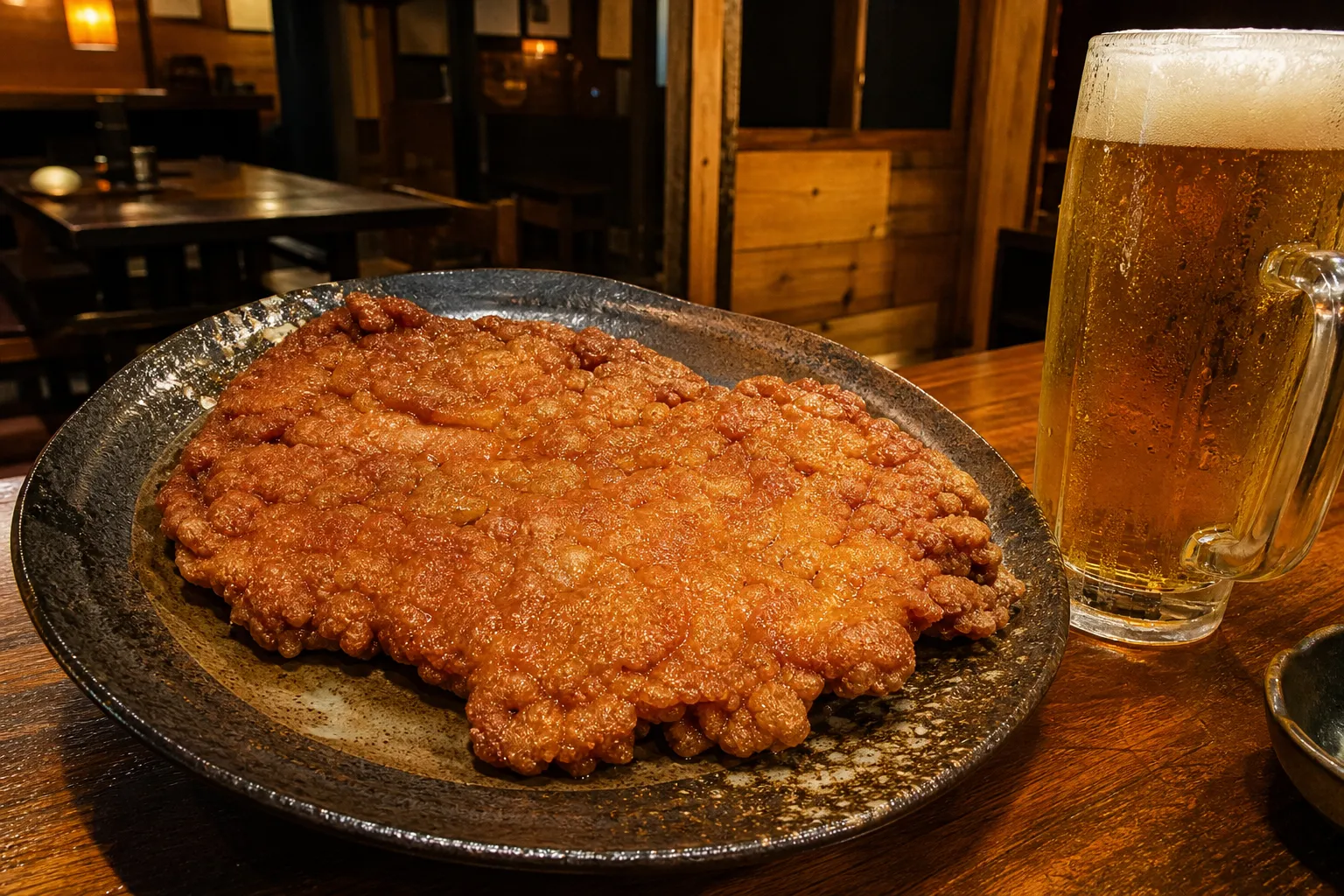
Nagano is deep in the mountains — no coastline, long cold winters, the kind of place where hearty, filling, keep-you-warm food isn't a lifestyle choice but a survival strategy. Sanzoku-yaki fits that landscape perfectly: cheap protein, big portion, bold seasoning, fries up fast and feeds you completely. Both Matsumoto and Shiojiri claim it as a local specialty, and there's a friendly rivalry over it that I find delightful — two towns, one enormous chicken, each convinced theirs is the real one.
What I love is how unfancy the whole thing is. This is a region that also does refined soba and delicate mountain vegetables, and then here's sanzoku-yaki: a plate-swallowing hunk of garlic fried chicken with zero pretension, meant to be washed down with a cold beer in a warm tavern while snow piles up outside. I ate the whole thing. I regret nothing. My travel companion refused to sit downwind of me for the rest of the evening, which felt fair.
Why the crust and the garlic do all the work
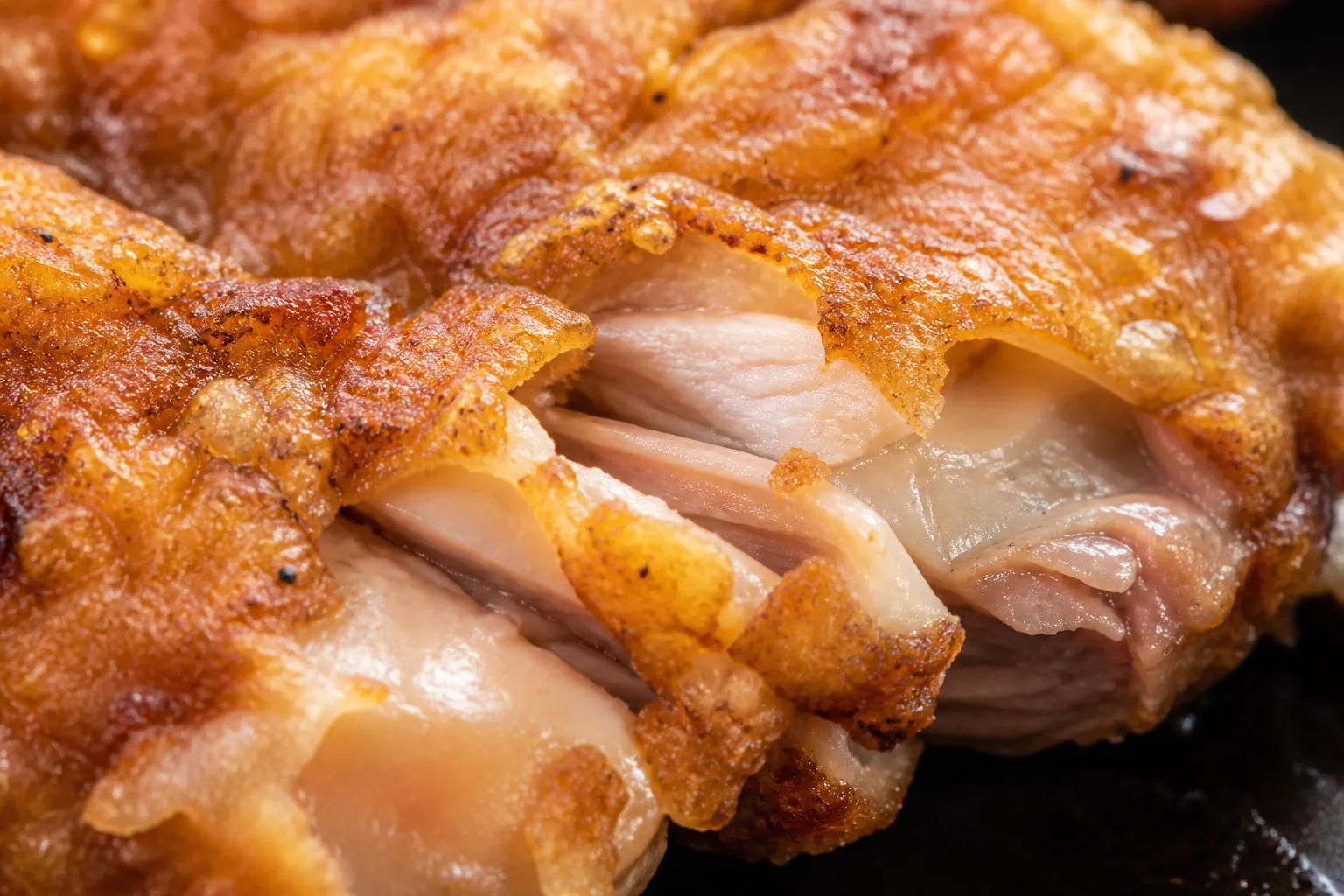
Potato starch is the secret. Unlike wheat flour or panko, a potato-starch coat fries up into that specific glassy, craggy crunch — lighter and crisper, with little blistered ridges that catch the garlic-soy marinade and go extra dark and flavorful. Break through it and the thigh underneath is still juicy, because frying one big piece keeps the meat from drying out the way small nuggets can.
And the garlic. This is not a shy dish. The marinade goes deep — soy, garlic, sometimes ginger — so the flavor isn't just on the surface, it's in the meat. It's savory and rich and a little rowdy, exactly like something called "bandit grill" should be. There's no sweet teriyaki glaze, no creamy sauce, no delicate anything. It's confident, garlicky, crunchy, and huge. Perfect food for when you're cold, hungry, and done pretending you'll order a salad.
How it gets made
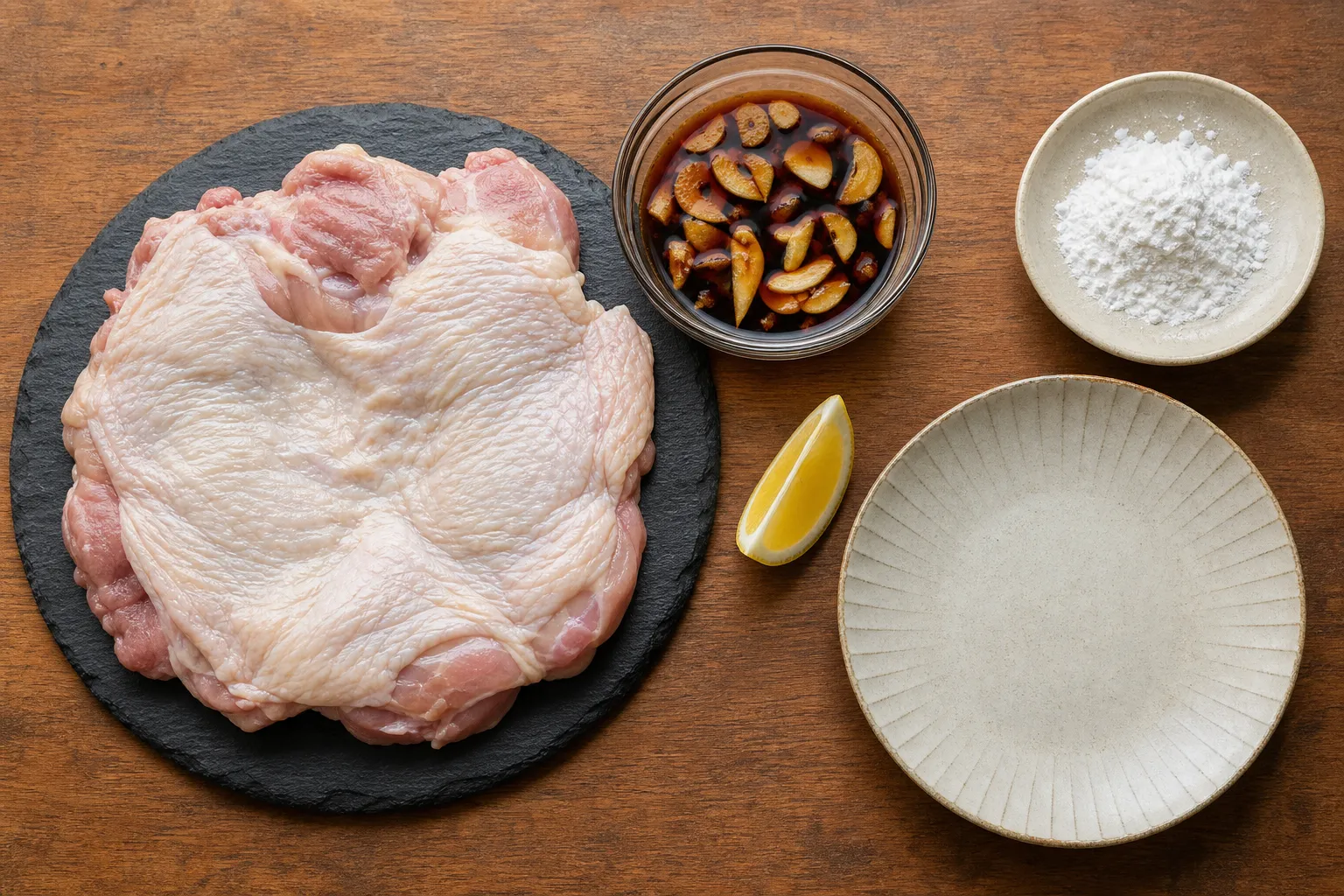
- Take one whole chicken thigh and, if needed, butterfly or pound it flatter so it fries evenly and spreads wide
- Marinate it in a bold garlic-soy sauce (soy, plenty of garlic, often ginger) so the flavor soaks all the way in
- Dredge the whole thigh in potato starch for that glassy, craggy crust
- Deep-fry the entire piece flat until the outside is deeply crisp and golden and the inside stays juicy
- Serve as one giant slab with a wedge of lemon and shredded cabbage — often as a set with rice and miso soup
Before you go — bring an appetite
Your questions, answered honestly
"Is it really just one big piece?" — Yes, and that's the whole idea. A single whole thigh, fried flat, filling the plate. If it arrives as a pile of small chunks, that's regular karaage, not sanzoku-yaki. The scale is the point.
"How is it different from karaage?" — Karaage is bite-size pieces. Sanzoku-yaki is one enormous thigh, and the marinade leans hard into garlic. Same broad family, very different experience. Think one epic slab versus a handful of nuggets.
"Is it spicy?" — No. It's garlicky and deeply savory, not hot. The kick you feel is garlic, not chili.
"Can I finish a whole one?" — Maybe! It's big. If you're not sure, get one to share, or order it as a teishoku set so the rice and cabbage help you pace it. And yes — plan your garlic exposure accordingly.
What the staff will ask you
| You'll hear | Romaji | Meaning | Just say |
|---|---|---|---|
| 単品ですか、定食にしますか? | Tanpin desu ka, teishoku ni shimasu ka? | "Just the dish or a set meal?" | Teishoku de onegaishimasu (the set, please) |
| ご飯の量はどうしますか? | Gohan no ryō wa dō shimasu ka? | "How much rice would you like?" | Futsū de onegaishimasu (regular, please) |
| レモンはおつけしますか? | Remon wa otsuke shimasu ka? | "Would you like lemon with it?" | Hai, onegaishimasu (yes, please) |
To order, just say "Sanzoku-yaki o kudasai" (山賊焼きをください) — "Sanzoku-yaki, please."
Where to eat it
- Matsumoto, Nagano — izakaya and teishoku shops around the city and near Matsumoto Castle serve it as a local staple; it's a classic pairing with a local beer.
- Shiojiri, Nagano — the other home of the dish, with local diners and taverns that take their sanzoku-yaki seriously and claim the original.
- Local izakaya across central Nagano — many mountain-town taverns in the region put a giant sanzoku-yaki on the menu; look for it among the fried-chicken listings.
Portion sizes, sets, and shop hours vary, so check current details before you go — and confirm you're getting the whole-thigh version, not standard karaage.
Soul Score
Local Roots4/5
First-Timer Friendly4/5
Adventure Level3/5
Comfort Level5/5
Travel Worthy4/5
These scores are one obsessed eater's gut feeling — not a verdict. A low number isn't a bad mark, just a different kind of adventure.
Know someone planning Japan?
← All Articles
Local Food · Matsumoto / Shiojiri, Nagano
Still hungry?
Eat more from Nagano
Local FoodNagano
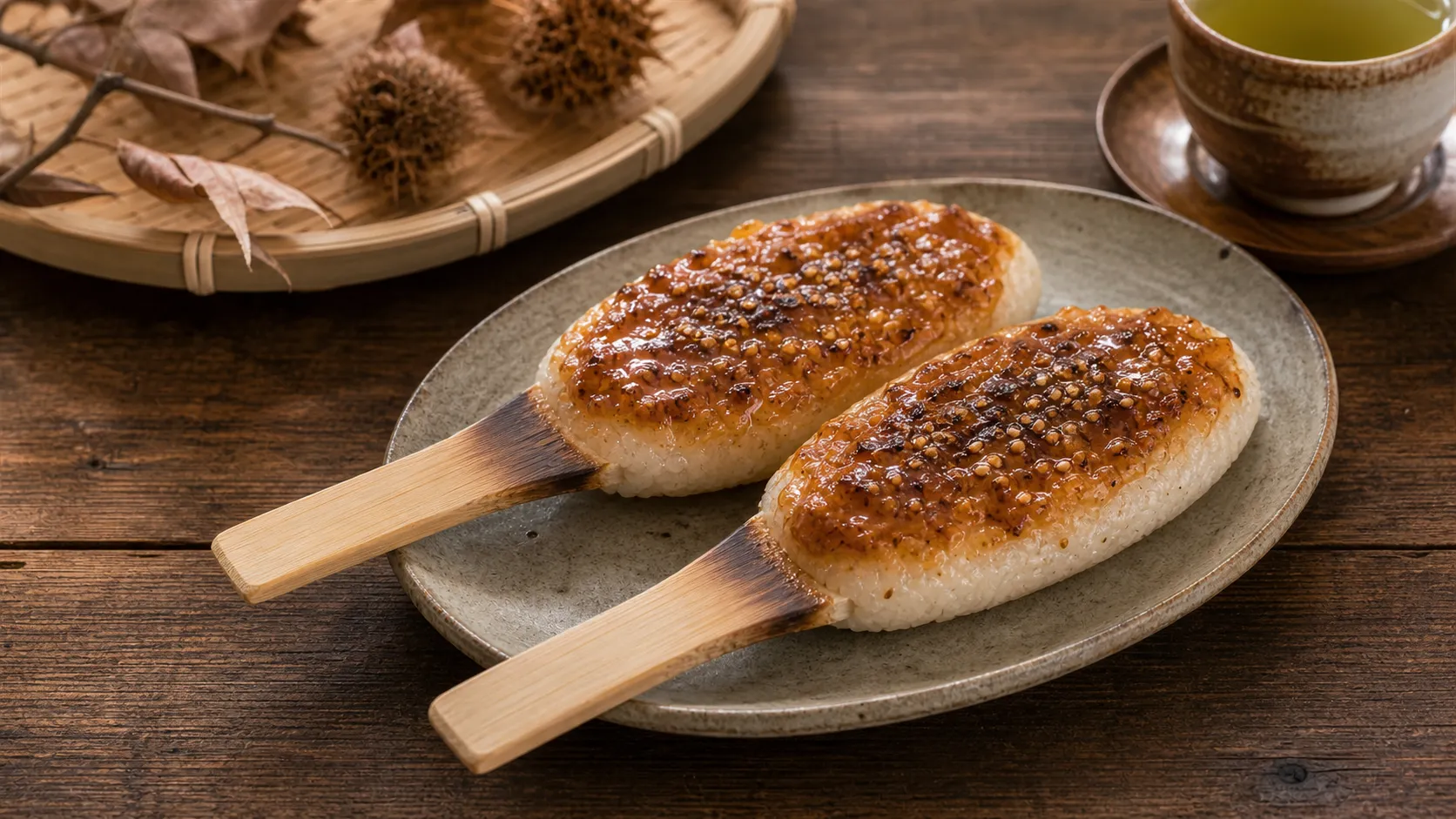
Gohei-mochi (五平餅)
Pounded rice flattened onto a wooden paddle, slathered in a sweet-savory walnut-and-sesame miso glaze, and grilled over coals until the edges char — the smoky, sticky, gloriously messy soul food of Japan's central mountains.
July 10, 2026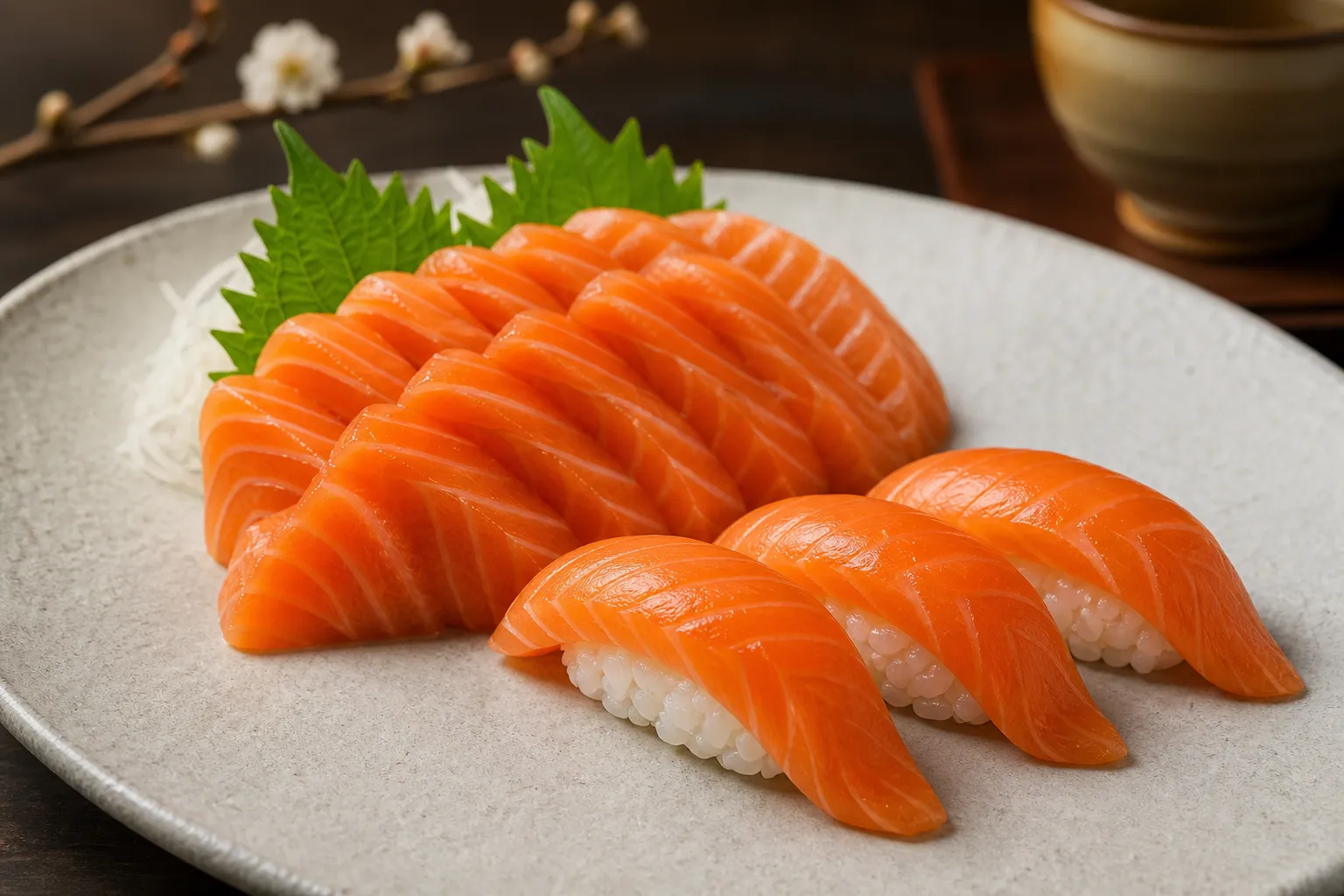
Local FoodNagano
Shinshu Salmon (信州サーモン)
Landlocked Nagano, ringed by mountains, hours from any sea — and it's serving some of the cleanest, sweetest salmon sashimi I've put in my mouth.
July 5, 2026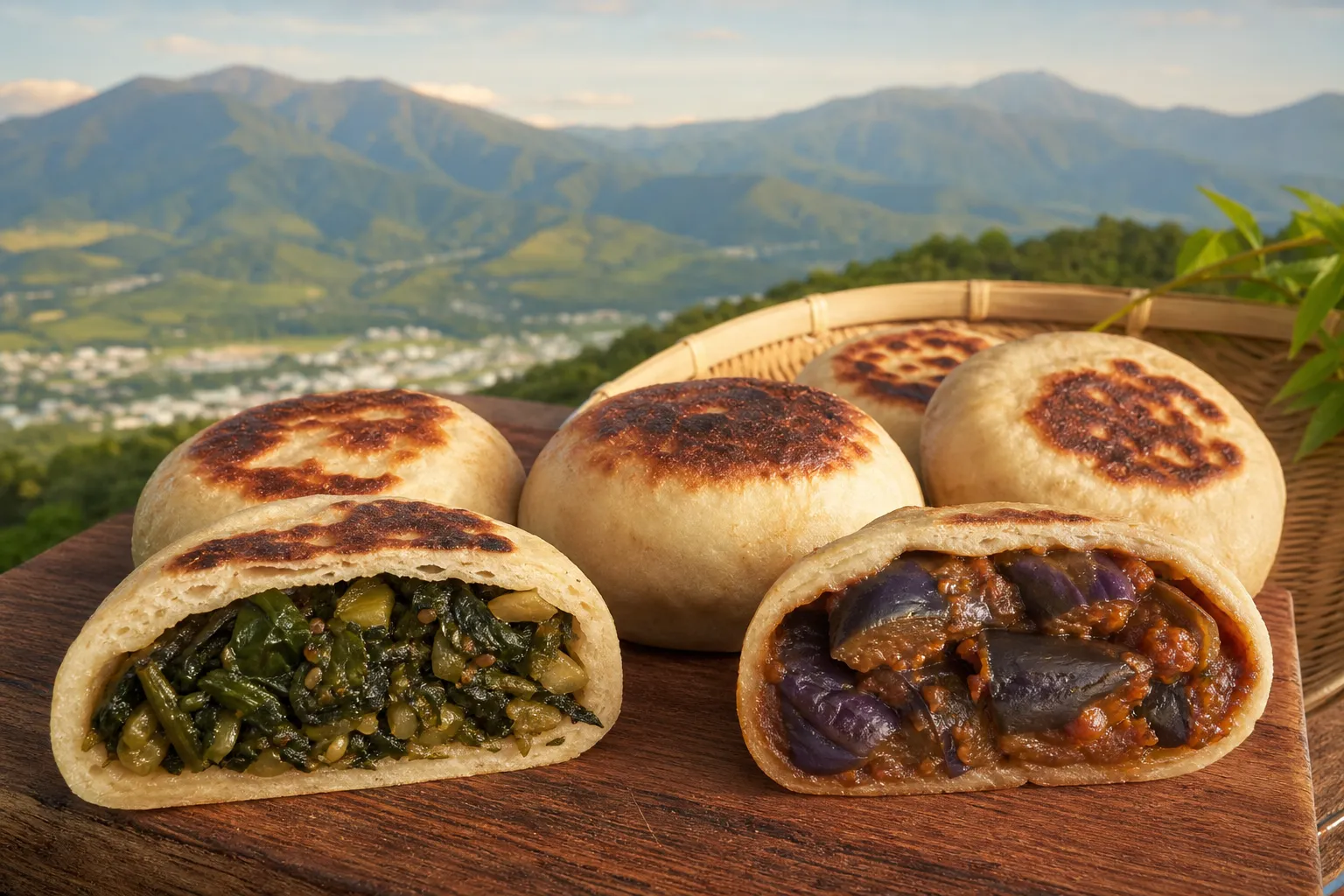
Local FoodNagano, Nagano
Oyaki (おやき)
A chewy, lightly charred bun from the Nagano mountains, stuffed with pickled greens or eggplant miso instead of anything sweet. Farmhouse food that tastes like a cold morning by an irori hearth.
June 28, 2026