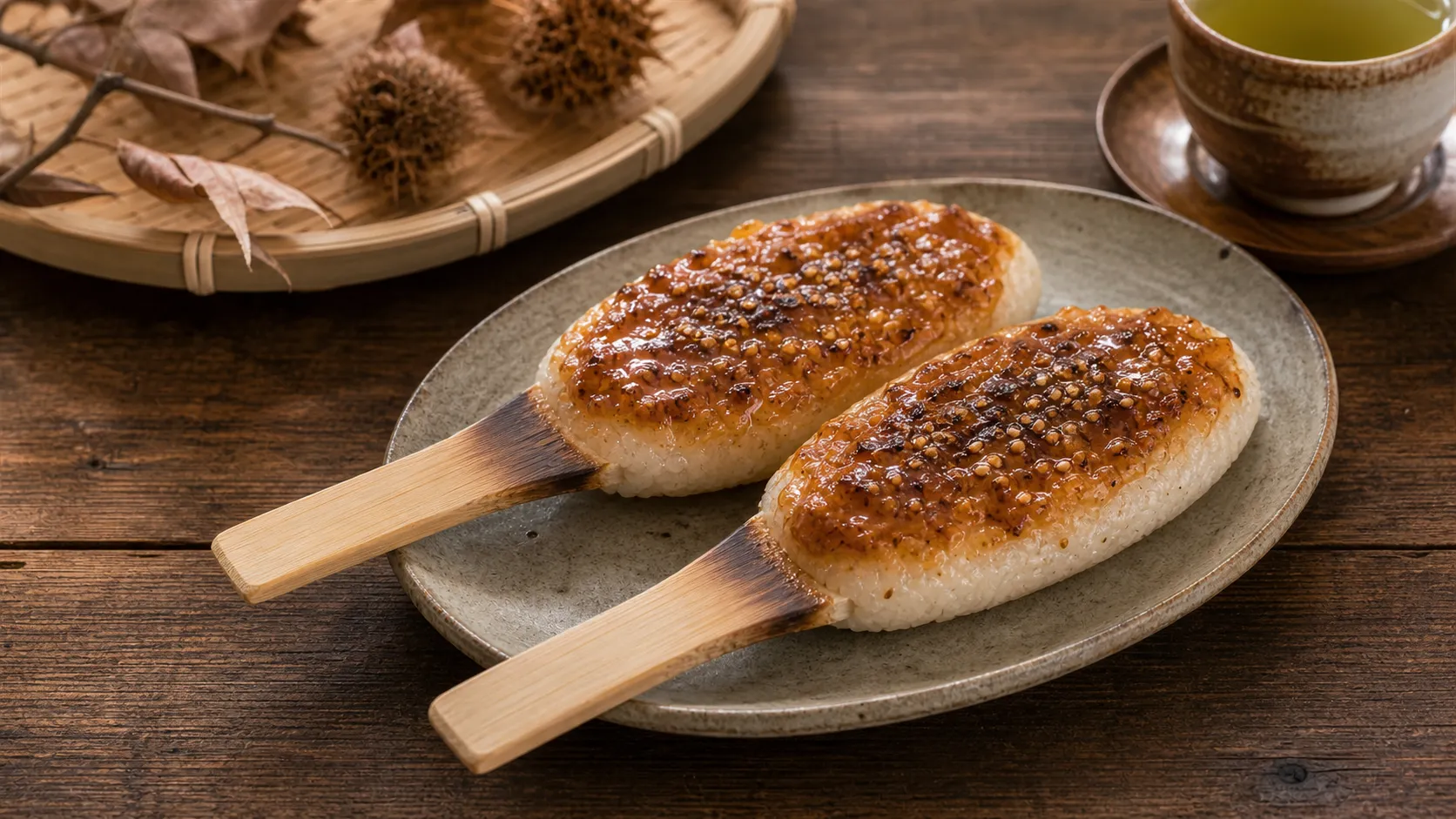
You smell it before you see it — that unmistakable char of miso hitting hot coals, sweet and toasty and drifting down a mountain road. You follow your nose to a stall, and there they are: paddles of grilled rice glossy with dark, caramelized glaze, hissing over charcoal. You get one, and it's warm and smoky and sticky and nutty and sweet-savory all at once, the rice half-chewy and half-crisp at the charred edges, and standing there in the cold mountain air eating it off a stick, I feel like I've discovered a secret. That's gohei-mochi, the soul food of Japan's central highlands.
Share this dish


Pounded rice flattened onto a wooden paddle, slathered in a sweet-savory walnut-and-sesame miso glaze, and grilled over coals until the edges char — the smoky, sticky, gloriously messy soul food of Japan's central mountains.
🍜 Planning a food trip to Nagano?Add this dish to my Food Trip →
 Add this dish to my Food Trip →
Here's what it is: gohei-mochi (五平餅) is cooked rice that's half-pounded (so it's sticky but still grainy), pressed onto a flat wooden skewer, coated in a sweet-savory miso glaze enriched with ground walnut or sesame (sometimes egoma perilla seed), and grilled over charcoal until the glaze caramelizes and the edges char. Half-pounded rice on a paddle, nutty miso glaze, grilled: that's what makes it gohei-mochi and not a plain round dango or a soy-only mitarashi. It's the pride of the mountain valleys of Nagano, Gifu and Aichi — Kiso, Hida, and the highlands where rice was precious and this was a feast.
Mountain food, made for celebration
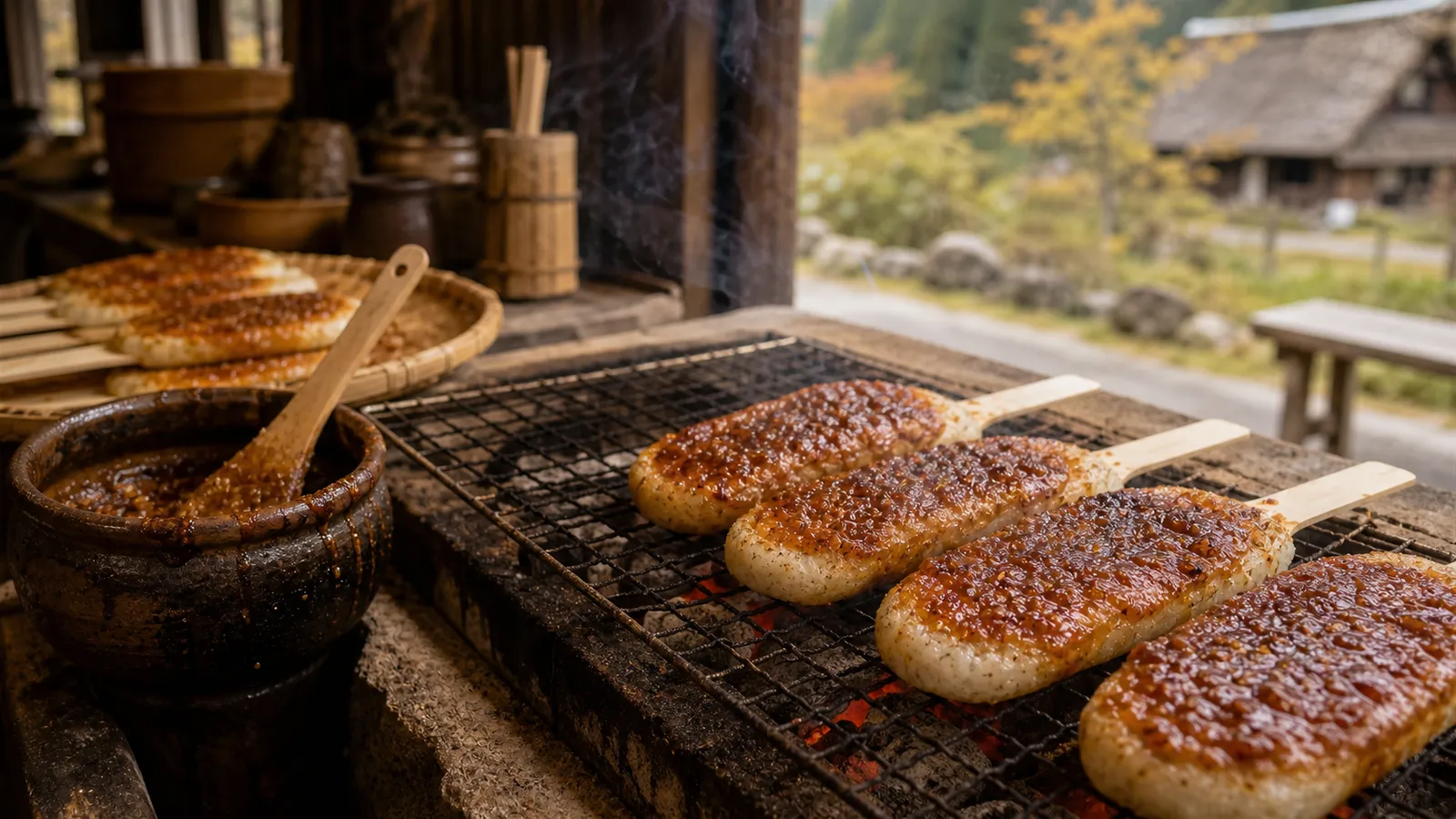
In the mountains of central Japan, where rice didn't grow as easily as in the lowlands, a paddle of pounded rice slathered in rich miso and grilled was genuinely special-occasion food — made for festivals, for guests, for celebrations. That's the heart of gohei-mochi: it's treat food, born from valleys where rice was to be honored, not taken for granted. The shape varies from valley to valley — some flat and oval like a paddle, some round like little balls on a stick — and so does the glaze, walnut here, sesame there, egoma somewhere else.
I love that regional variation, because it means every mountain town has its own gohei-mochi, and eating your way through the highlands becomes a little tasting tour of miso glazes. There's real history in it — you'll hear that the name comes from a man called Gohei who invented it, or from the gohei wands used in Shinto ritual that the paddle shape resembles. Either way, it tastes like the mountains: hearty, warming, smoky, unpretentious, and made with obvious care. It's the kind of food that makes a cold highland day feel like a festival.
What makes the eating experience different
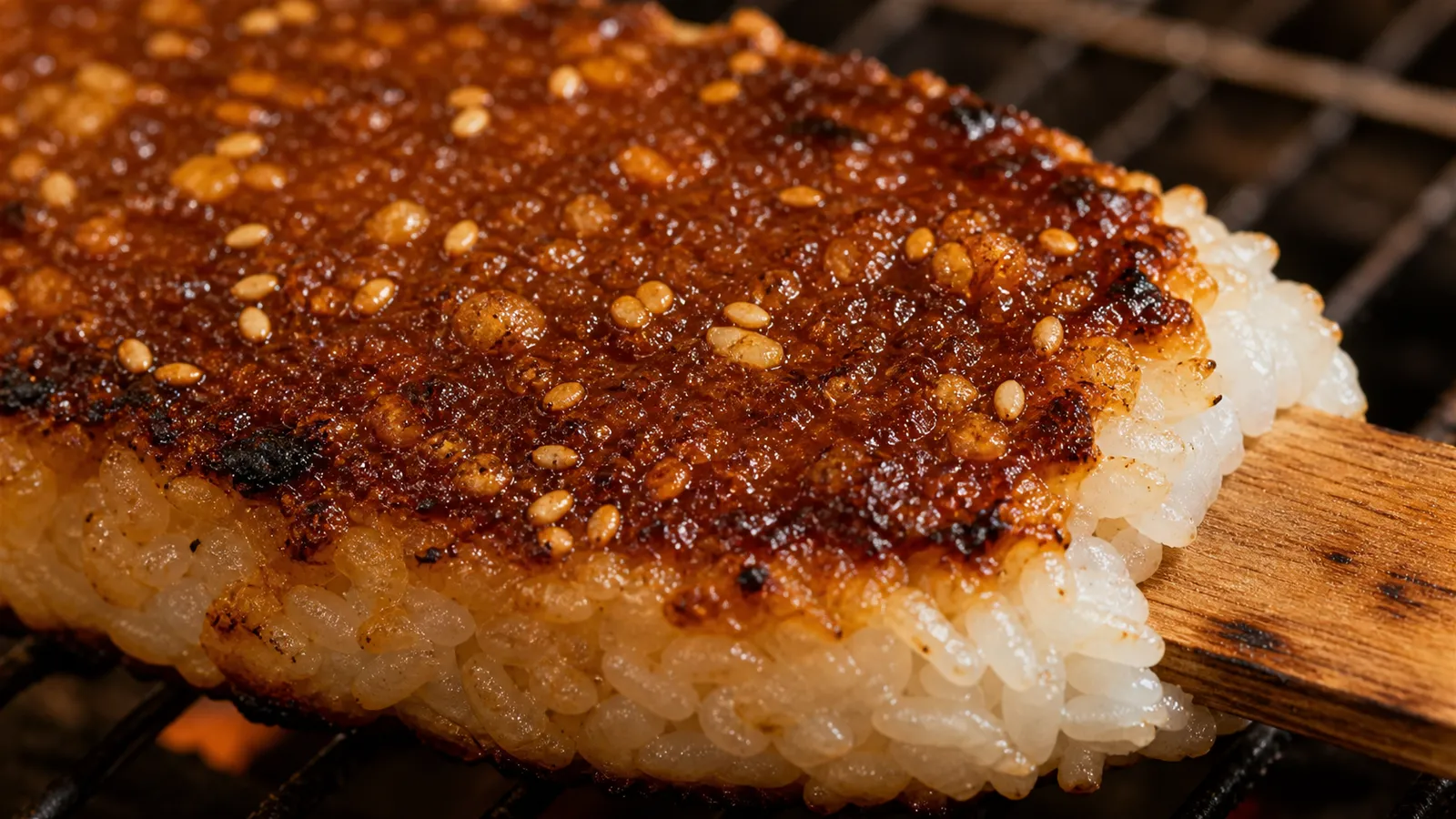
- The rice is half-pounded — sticky and cohesive but still with grain and chew, a texture between a rice ball and a mochi
- The glaze is the magic: sweet-savory miso deepened with ground walnut or sesame, rich, nutty and complex — far more interesting than a simple soy sauce
- Charcoal grilling caramelizes that glaze and crisps the rice edges, adding a smoky, toasty char that makes the whole thing sing
- It's warm, handheld and hearty — a substantial, comforting snack, not a dainty sweet
- Every region's version tastes a little different, so it rewards curiosity as you travel through the highlands
How it's made
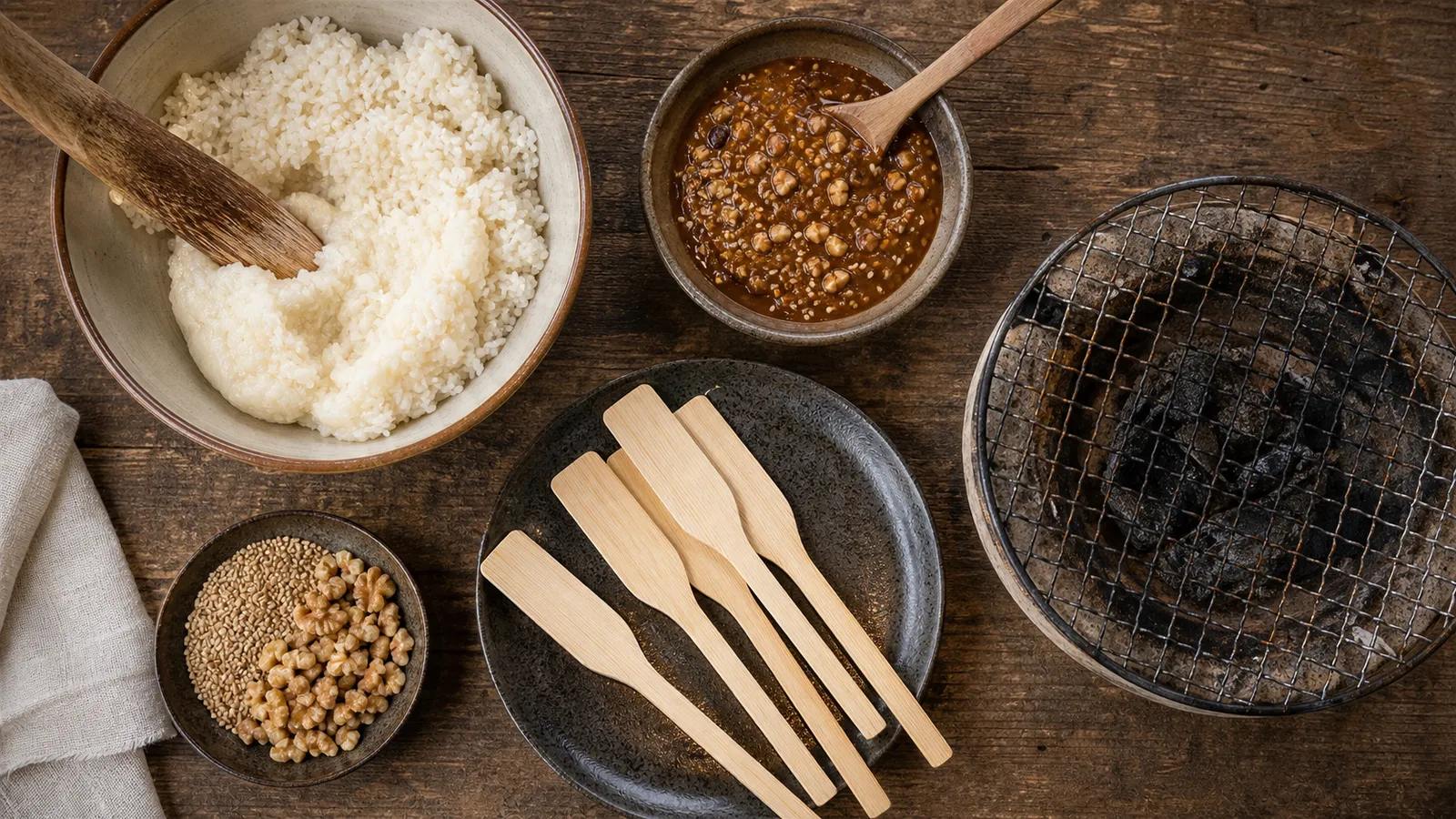
- Half-pound the rice. Cooked rice is pounded partway — enough to make it sticky and hold together, but still keeping some grain (this is the hangoroshi, "half-killed," texture).
- Shape it on a paddle. The rice is pressed firmly onto a flat wooden skewer into an oval paddle (or rolled into balls, depending on the region).
- Make the glaze. Miso is blended with sugar, mirin/sake and ground walnut or sesame (or egoma) into a rich, sweet-savory paste.
- Grill and glaze. The rice paddle is grilled over charcoal, brushed with the glaze, and grilled again so the miso caramelizes and the edges char.
- Serve hot. Off the coals and eaten right away, warm and smoky off the stick.
The half-pounding is the key craft — too little and it falls apart on the grill, too much and it's a dense mochi. Get it right, brush on that nutty miso, and let the charcoal do the rest.
Before you go — eat it in the mountains, hot off the coals
Your questions, answered honestly
"How is this different from other rice-on-a-stick sweets like dango or mitarashi?" — Dango are round, smooth, fully-pounded balls; mitarashi is glazed with a sweet soy sauce. Gohei-mochi is half-pounded (grainier), usually paddle-shaped, and glazed with a rich walnut or sesame miso — nuttier, more savory, and grilled over charcoal. It's the heartier, more mountain-y one.
"Sweet or savory?" — Both, beautifully. The miso glaze is sweet-savory and nutty, and the char adds smoky depth. It leans more toward a savory grilled snack than a dessert, despite the sweetness — think of it as satisfying mountain street food.
"Why does it look different in different places?" — Because every valley has its own version — flat paddles in some towns, round balls on a stick in others, walnut glaze here, sesame or egoma there. That regional variation is part of the charm; try the local style wherever you are in the highlands.
"Where's the best place to eat it?" — The central mountains — Nagano (Kiso), Gifu (Hida/Gero), and the highlands of Aichi. Look for it at roadside stalls, mountain rest stops, post-town streets (like the old Nakasendo towns), and festivals. Hot off a charcoal grill is the only way.
What the staff will ask you
| You'll hear | Romaji | Meaning | Just say |
|---|---|---|---|
| 何本にしますか? | Nan-bon ni shimasu ka? | "How many skewers?" | Ni-hon kudasai (two, please) |
| くるみ味噌とごま味噌、どちらにしますか? | Kurumi-miso to goma-miso, dochira ni shimasu ka? | "Walnut or sesame miso?" | Osusume de (your recommendation) |
| 焼きたてをどうぞ | Yakitate o dōzo | "Here's a fresh-grilled one" | Arigatō (thank you) |
To order, just say "Gohei-mochi o kudasai" (五平餅をください) — "Gohei-mochi, please."
Where to eat it
- Nagano's Kiso Valley and old post towns — the Nakasendo post towns and Kiso-area stalls are a classic place to eat gohei-mochi hot off the grill.
- Gifu (Hida, Gero) and the central highlands — mountain towns, hot-spring areas and roadside stations across the region serve their own local versions.
- Highland Aichi and mountain festivals — the dish's home turf spans these central mountains; festivals and rest stops are great places to find a freshly grilled one.
Gohei-mochi's shape and glaze vary by valley, and it's a mountain-region specialty best eaten hot off the charcoal — stalls and hours vary, so grab one when you spot the smoke.
Soul Score
Local Roots5/5
First-Timer Friendly4/5
Adventure Level3/5
Comfort Level5/5
Travel Worthy4/5
These scores are one obsessed eater's gut feeling — not a verdict. A low number isn't a bad mark, just a different kind of adventure.
Know someone planning Japan?
← All Articles
Local Food · Nagano
Still hungry?
Eat more from Nagano
Local FoodMatsumoto / Shiojiri, Nagano
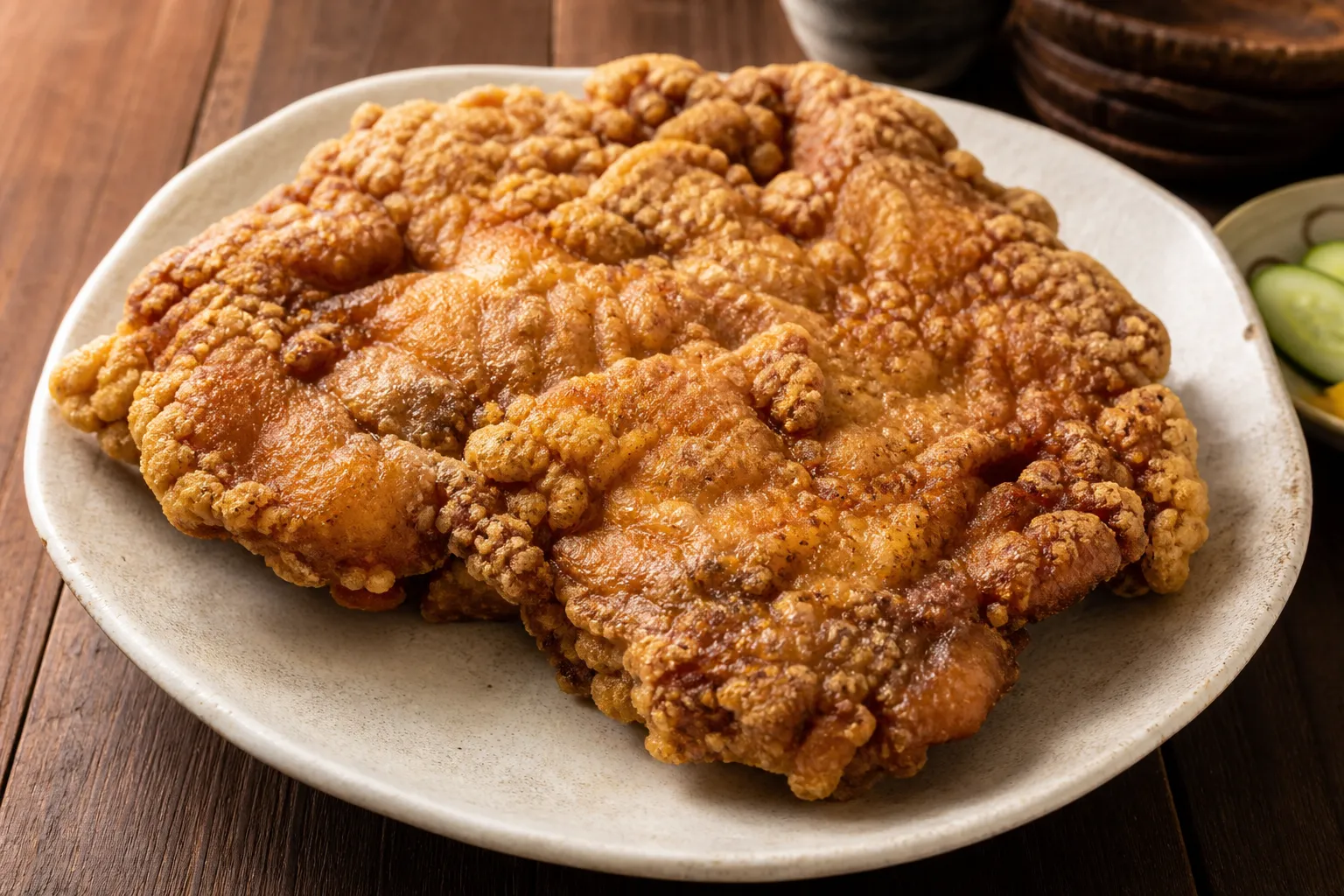
Sanzoku-yaki (山賊焼き)
It's not a piece of fried chicken — it's a whole flattened thigh the size of your face, cragged with garlic-soy crust, and it arrives daring you to finish it.
July 5, 2026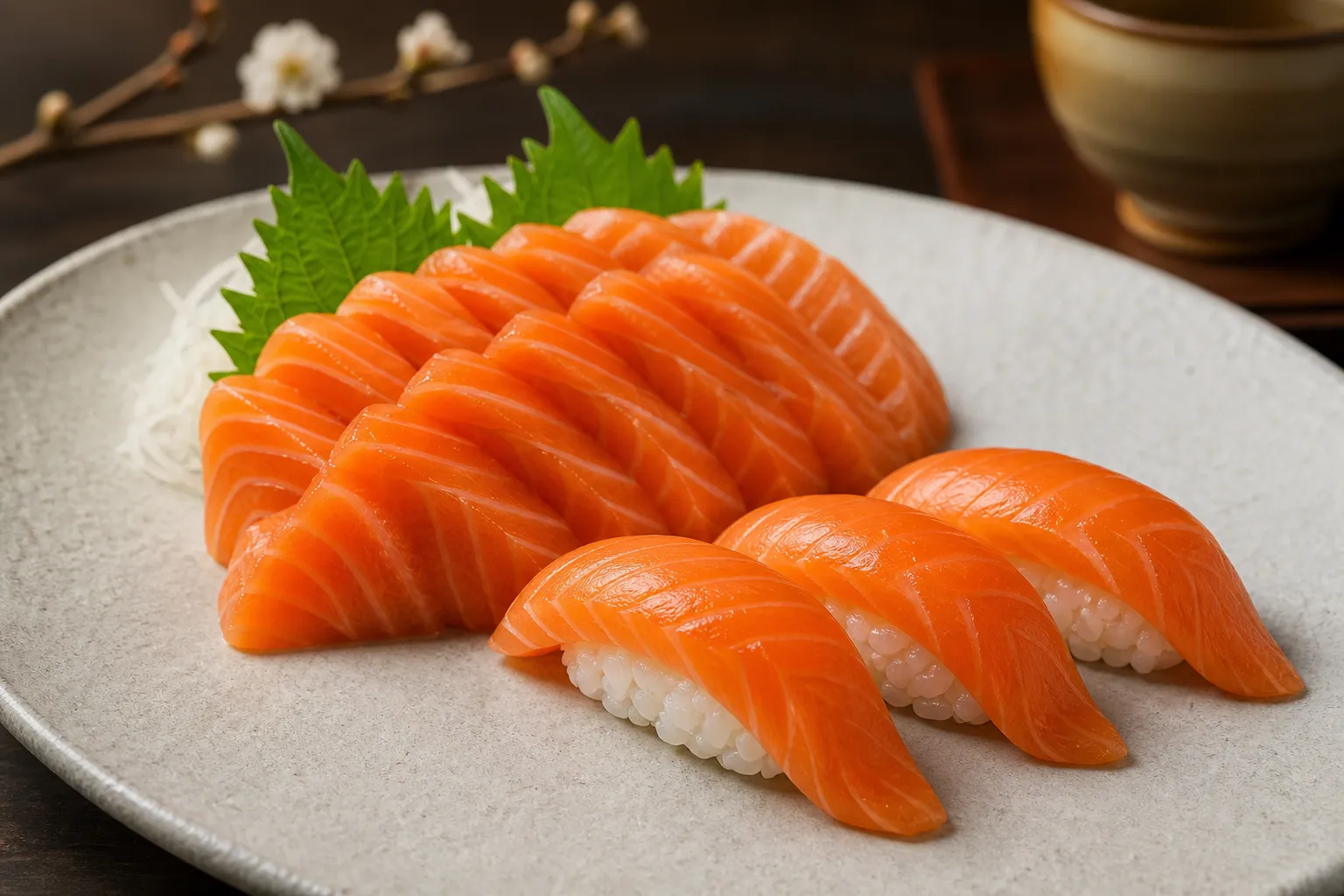
Local FoodNagano
Shinshu Salmon (信州サーモン)
Landlocked Nagano, ringed by mountains, hours from any sea — and it's serving some of the cleanest, sweetest salmon sashimi I've put in my mouth.
July 5, 2026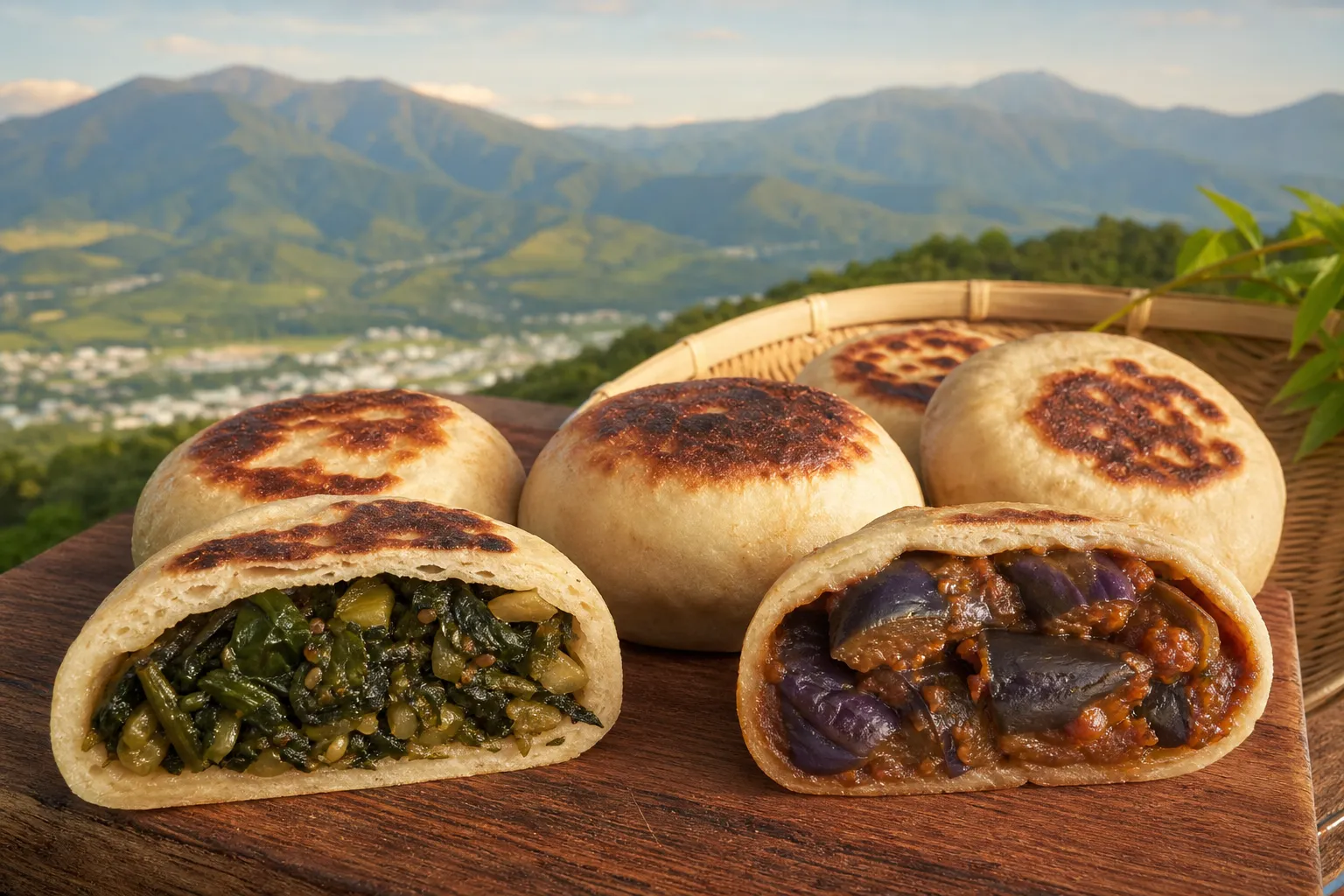
Local FoodNagano, Nagano
Oyaki (おやき)
A chewy, lightly charred bun from the Nagano mountains, stuffed with pickled greens or eggplant miso instead of anything sweet. Farmhouse food that tastes like a cold morning by an irori hearth.
June 28, 2026