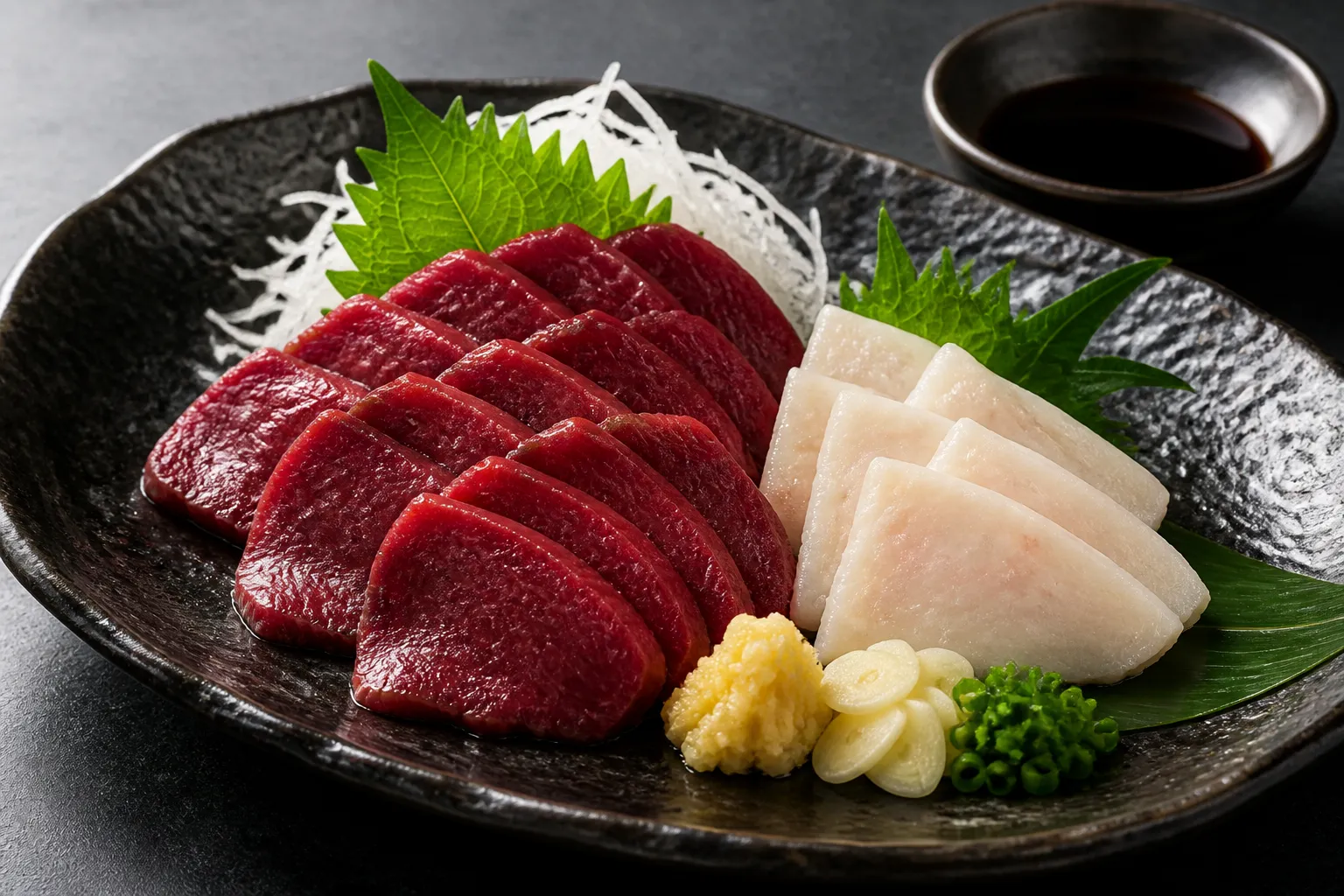
Raw horse. Sliced thin. Served cold on a dark plate with fresh ginger, raw garlic, and soy.
Share this dish


Raw horse meat, sliced thin, eaten with ginger and garlic and soy. Kumamoto's most provocative delicacy. Cleaner than beef, richer than tuna, and once you've tried it, you'll stop being surprised and start being converted.
🍜 Planning a food trip to Kumamoto?Add this dish to my Food Trip →
 Add this dish to my Food Trip →
In Kumamoto, this is not a stunt. This is not a dare. This is not something you eat to have a story. This is the dish. The one you bring out when someone important comes to dinner. The one that signals respect and occasion. Basashi is what Kumamoto eats when it wants to be serious about food.
I ate it for the first time in a Kumamoto izakaya, alone, slightly nervous, and the first bite made me feel genuinely embarrassed about all the years I hadn't been eating this. That is the basashi experience.
Basashi (馬刺し) is horse sashimi — raw horse meat, sliced and served in the same tradition as fish sashimi, with the same reverence for quality and the same attention to temperature. The two cuts that matter: akami (赤身), the lean red meat, clean and subtly sweet, somewhere between tuna sashimi and fine beef carpaccio; and tategami (たてがみ), the mane fat, pure white, almost translucent, dissolving on the tongue like cold butter that tastes faintly of richness and nothing else. Eaten together — red and white, lean and fat — it's one of the most genuinely surprising bites in Japanese cuisine. Whatever you're imagining right now, it's milder than that. And more interesting than that.
How Kumamoto became Japan's horse meat capital
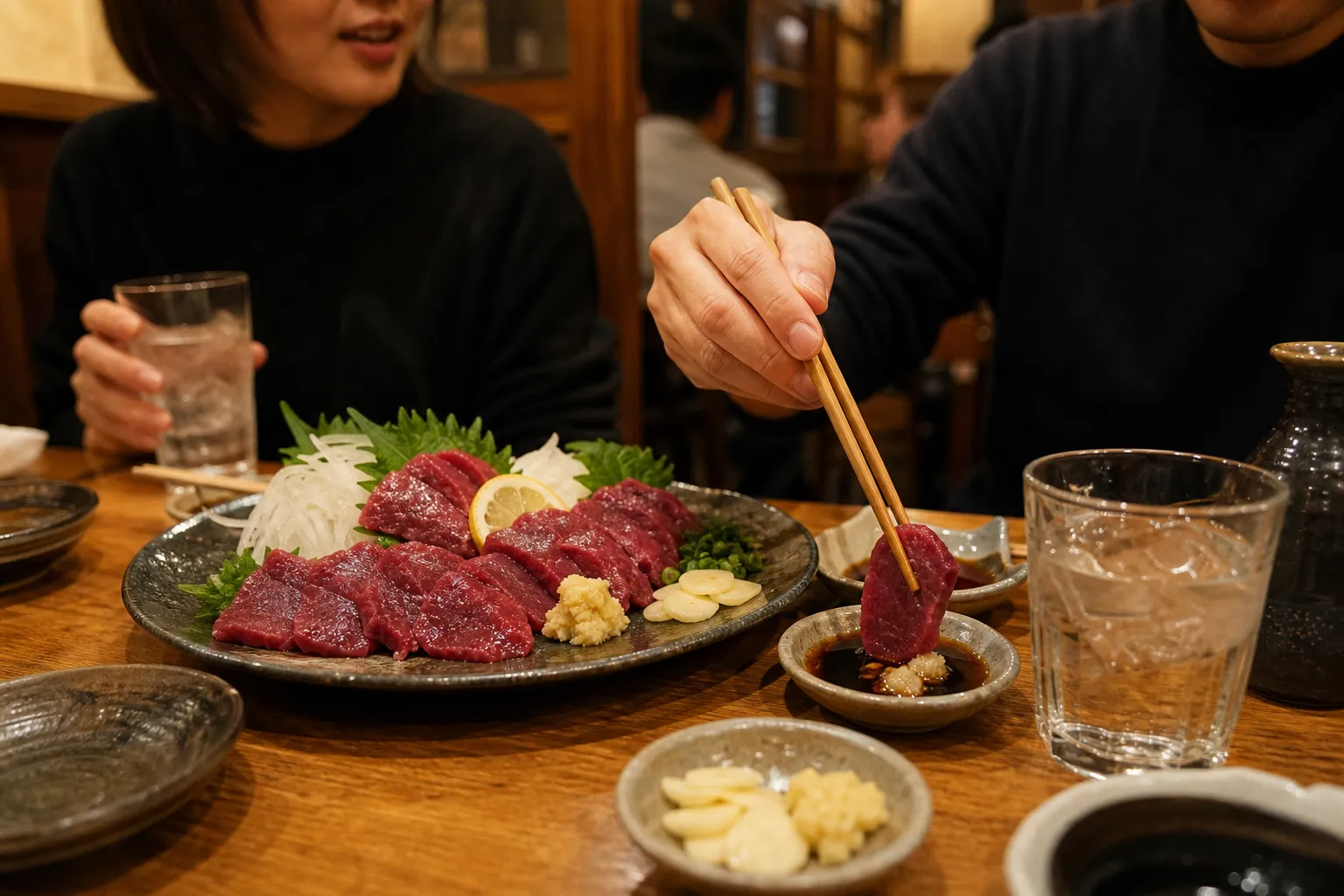
Horses have been bred in Kumamoto since the Sengoku period — the era of constant war that defined Japan's feudal age. The local breed was prized for military use, and when horses were no longer fit for battle, eating them was practical. The practice stayed. Deepened. Became culture. Kumamoto now produces and consumes more horse meat than anywhere else in Japan, and basashi is the prestige preparation: raw, chilled, presented with care, the animal honored by being served at its absolute best.
The food safety standards for raw horse meat in Japan are rigorous. This is not improvised or casual. The horses are raised, slaughtered, processed, and chilled under strict regulations specifically for raw consumption. You are safe. You are, in fact, safer eating basashi in Kumamoto than you might imagine eating raw beef in many other contexts.
Two cuts, two experiences
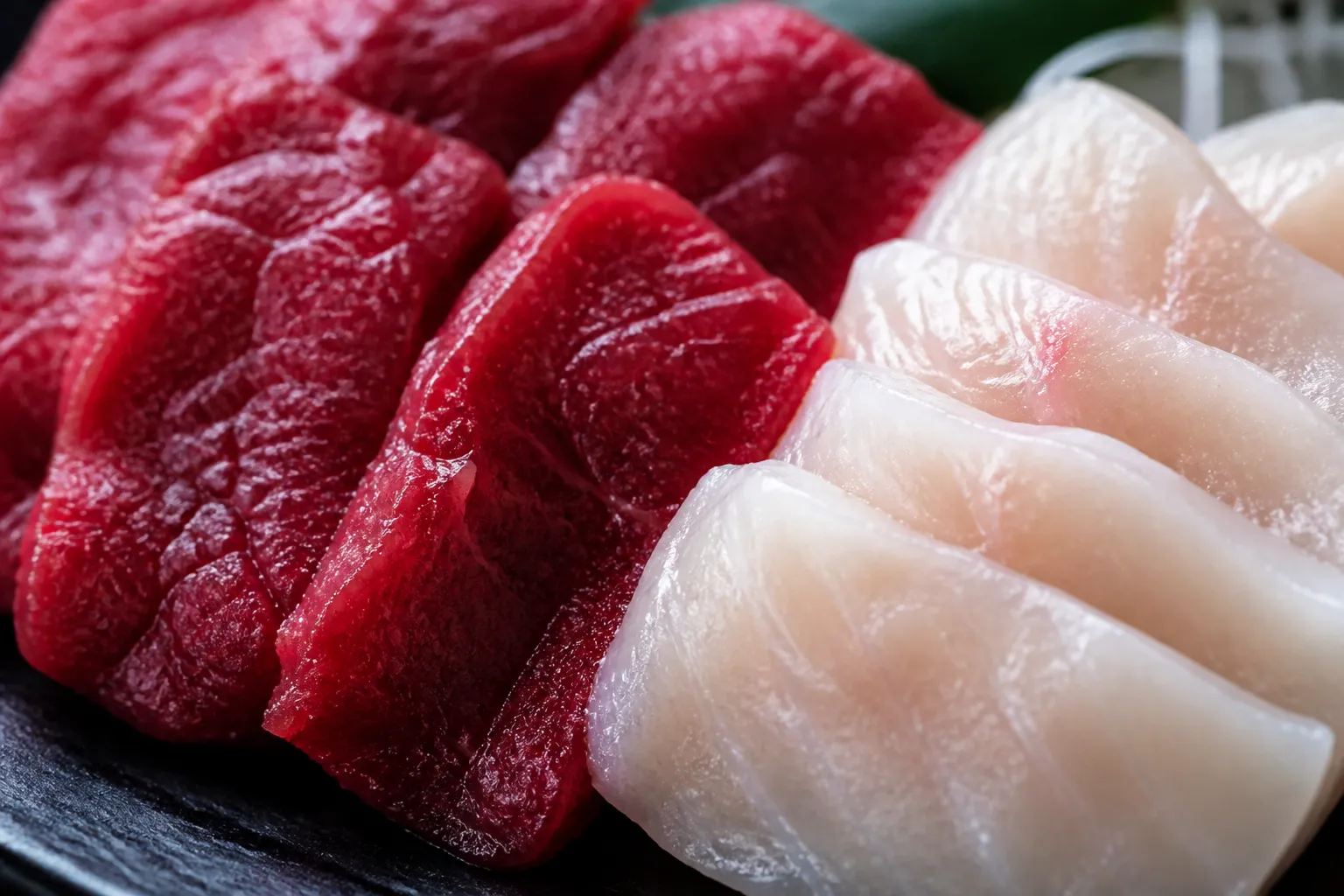
Akami (赤身) is what most people picture: dark red, fine-grained, yielding cleanly when you bite. It's mild — much milder than beef, none of the oceanic quality of tuna — with a subtle sweetness that's entirely its own. With ginger and soy, it's elegant. I would eat this every week if I could.
Tategami (たてがみ) is the revelation that nobody warns you about. Pure white. Silky. Almost translucent, like a slice of cold pork fat except not heavy at all — it dissolves. The fat is neutral and clean, and the texture is so particular and so unlike anything else that the first time you eat it you'll put your chopsticks down for a second just to think about what just happened.
Most basashi sets layer both cuts together, fan-arranged on a cold plate. Take a piece of each in one bite. This is the correct way to eat it.
How it's prepared
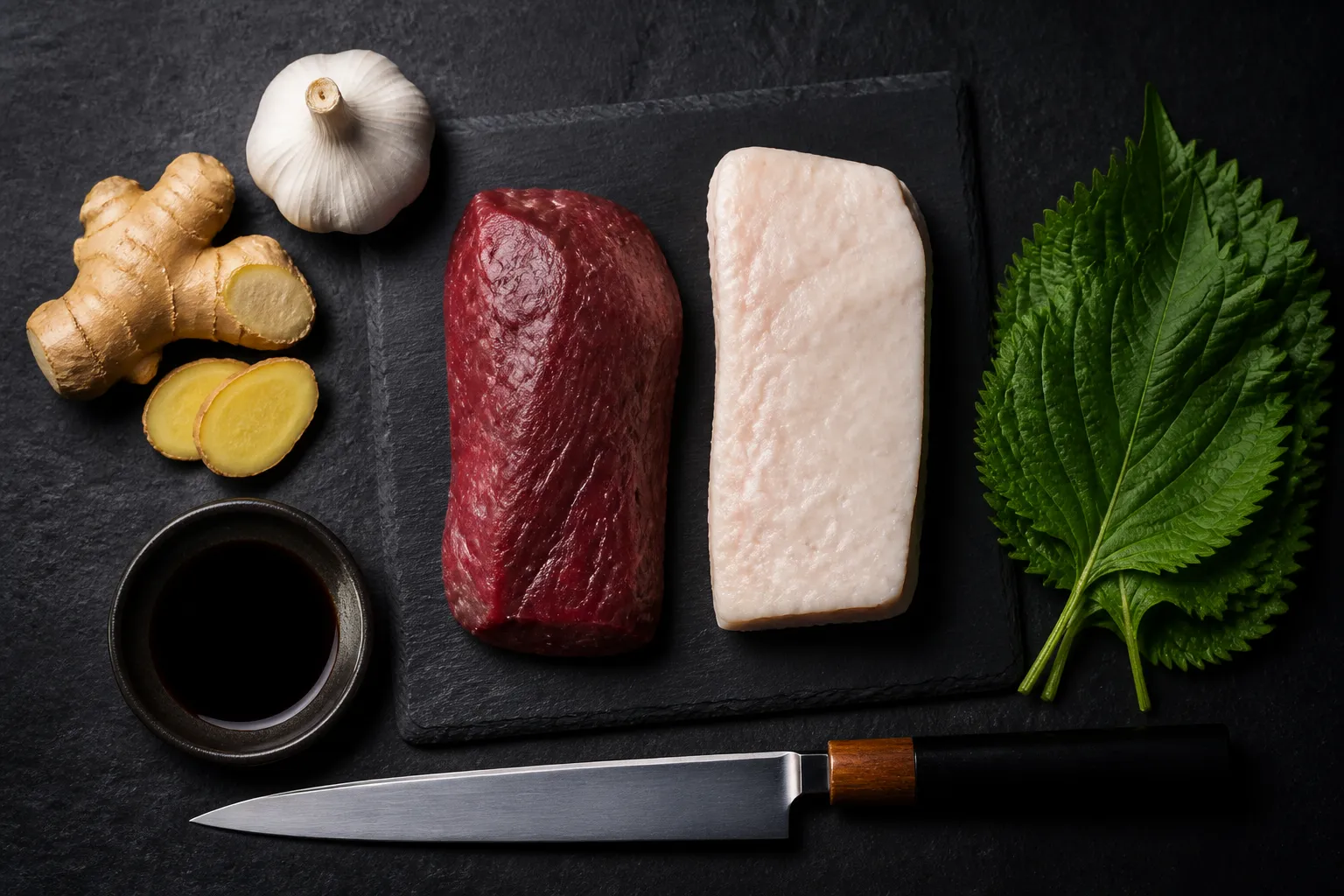
- Fresh horse meat, chilled to near-freezing temperature — cold chain is everything
- Sliced thin and precisely against the grain — texture depends entirely on the cut
- Arranged on a chilled plate; the cold must be maintained from fridge to table to mouth
- Served with fresh grated ginger, thinly sliced raw garlic, perilla leaves (shiso), soy sauce
- Eat immediately while cold — basashi warms fast and the texture is best within the first few minutes
Before you go — order tategami
Your questions, answered honestly
"Is this actually safe?" — Yes. Japan has specific, strict food safety regulations for raw horse meat that are different from raw beef. Horse for raw consumption is produced under controlled conditions. Basashi at any established Kumamoto restaurant is safe.
"What does it taste like?" — Milder than you fear. The lean cut (akami) is subtly sweet, clean, fine-grained. The mane fat (tategami) dissolves. Neither tastes "horsey" in the way your imagination is probably constructing right now.
"Do I have to eat it raw?" — Cooked horse exists, but basashi is the raw preparation and that's the point of being in Kumamoto. Go raw. This is why you're here.
"Is tategami really that different from akami?" — Completely different. Different color, different texture, different experience. Eating only one is like hearing one channel of a stereo mix. Order both.
"What do I dip it in?" — Soy sauce, with raw garlic and fresh ginger both applied generously. Some people use sesame oil; both work. Don't skip the garlic — it elevates the lean cut completely.
What the staff will ask you
| You'll hear | Romaji | Meaning | Just say |
|---|---|---|---|
| 赤身とたてがみ、両方にしますか? | Akami to tategami, ryōhō ni shimasu ka? | "Both lean and mane fat?" | Hai, ryōhō onegaishimasu (yes, both please) |
| にんにくはいりますか? | Ninniku wa irimasu ka? | "Do you want garlic?" | Hai, onegaishimasu (yes — always yes) |
| お飲み物は? | Onomimono wa? | "What to drink?" | Shochu onegaishimasu — Kumamoto shochu is the right pairing |
To order, just say "Basashi kudasai" (馬刺しください) — "Horse sashimi, please."
Where to eat it
- Izakayas throughout Kumamoto city — basashi is on virtually every menu in Kumamoto. You have to try to avoid it.
- Specialty horse cuisine restaurants (uma ryori) — Kumamoto has dedicated horse restaurants where basashi is the centerpiece of a full tasting.
- Near Kumamoto Castle — restaurants in this area almost all carry basashi and quality tends to be high.
Basashi is Kumamoto's most important food. It's the thing you bring home as a story, except the story isn't about bravery — it's about discovering that what you thought was a dare was actually just a delicacy.
Soul Score
Local Roots5/5
First-Timer Friendly2/5
Adventure Level5/5
Comfort Level3/5
Travel Worthy5/5
These scores are one obsessed eater's gut feeling — not a verdict. A low number isn't a bad mark, just a different kind of adventure.
Know someone planning Japan?
← All Articles
Local Food · Kumamoto, Kumamoto
Still hungry?
Eat more from Kumamoto
Local FoodKumamoto
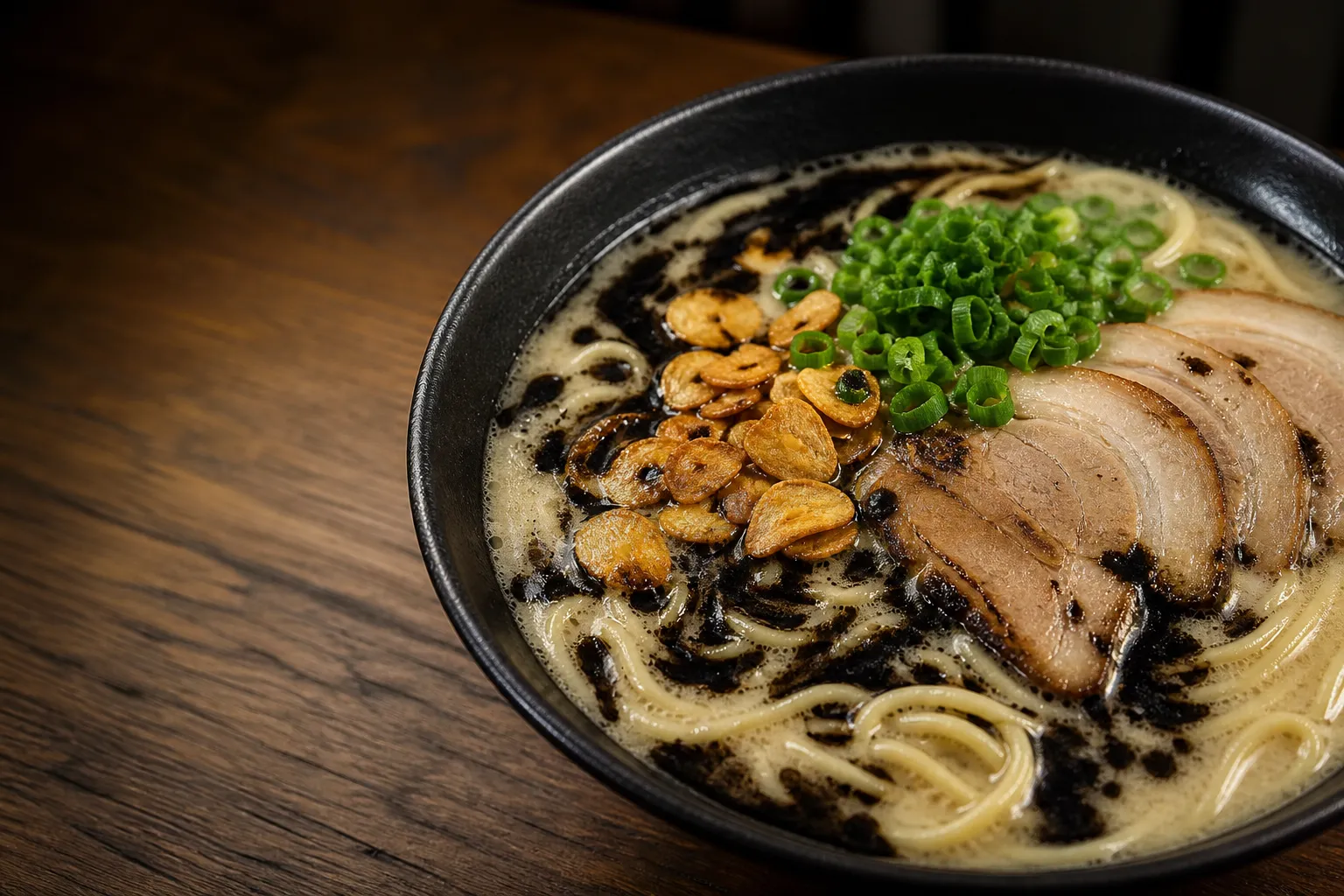
Kumamoto Ramen (熊本ラーメン)
There's a black, glossy pool sitting on top of the broth, and it smells like garlic that's been dared to become something else entirely.
July 5, 2026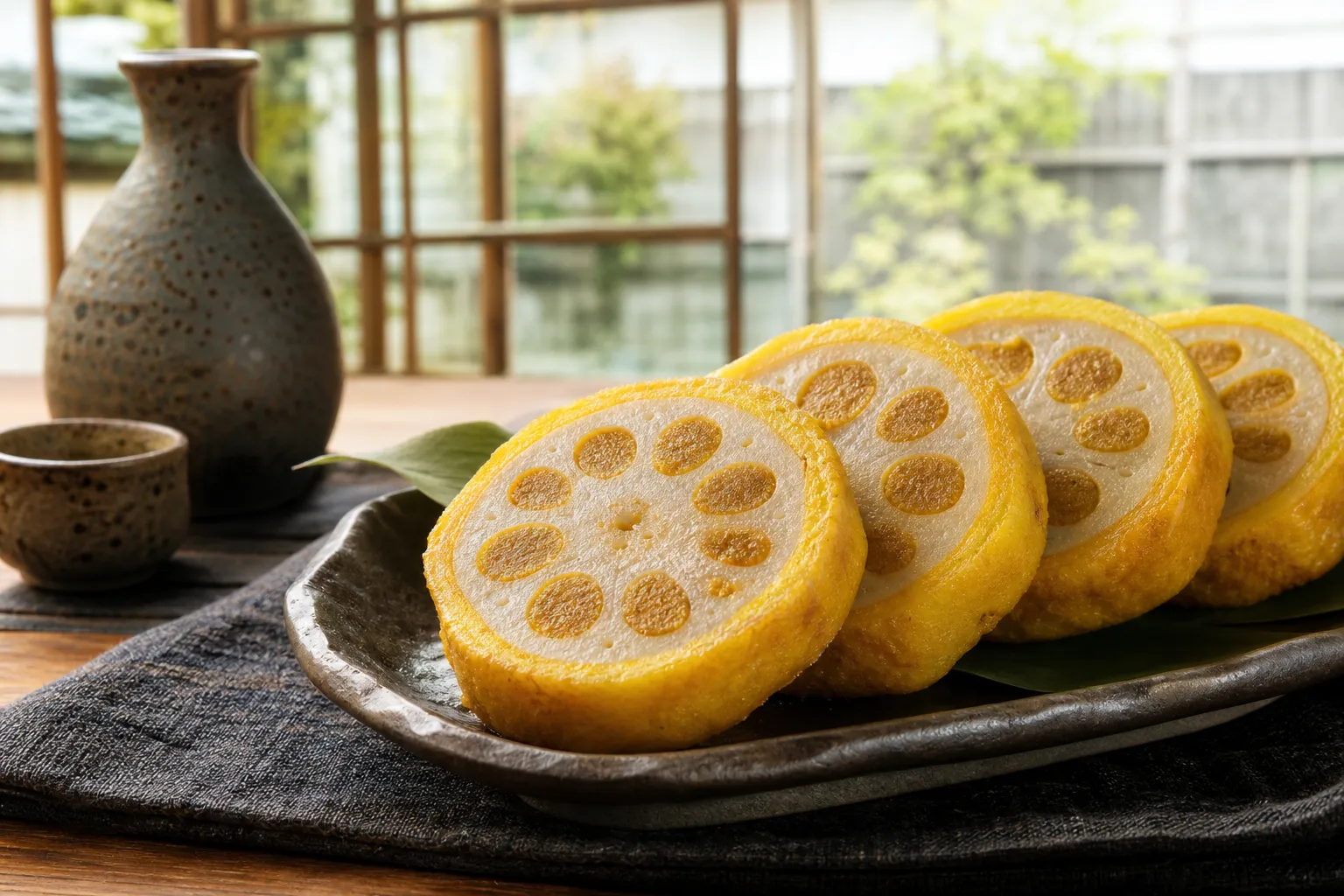
Local FoodKumamoto
Karashi Renkon (からし蓮根)
Someone looked at a lotus root's natural holes and thought: those need to be filled with fire. I bit in expecting a snack. I got a sinus-clearing act of devotion.
July 4, 2026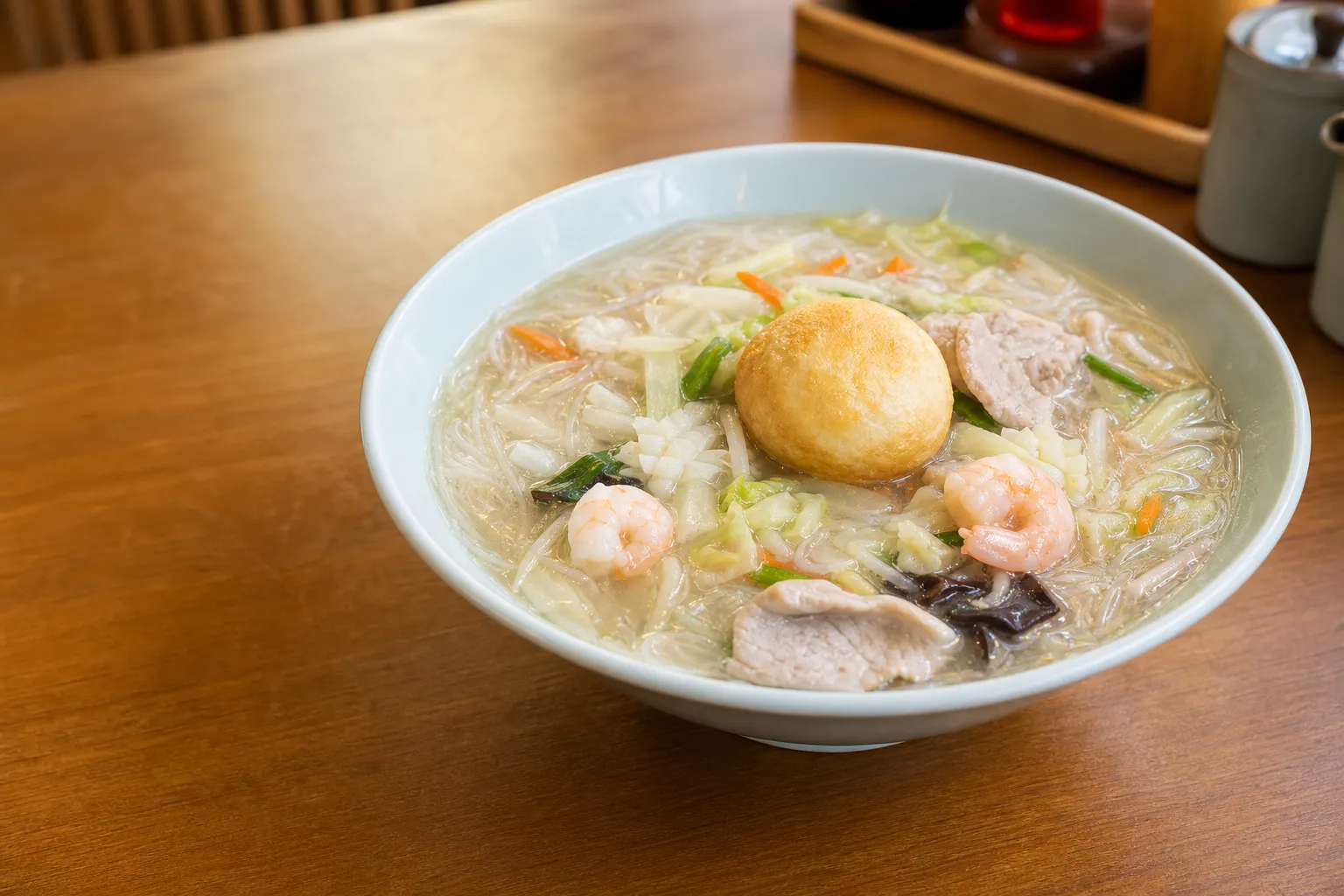
Local FoodKumamoto
Taipien (太平燕)
A whole fried egg, golden and round, floating in the middle of a clear soup like it's holding court. I circled it with my chopsticks for a full minute before I dared touch it.
July 4, 2026Feeling brave?
Japanese FoodNationwide
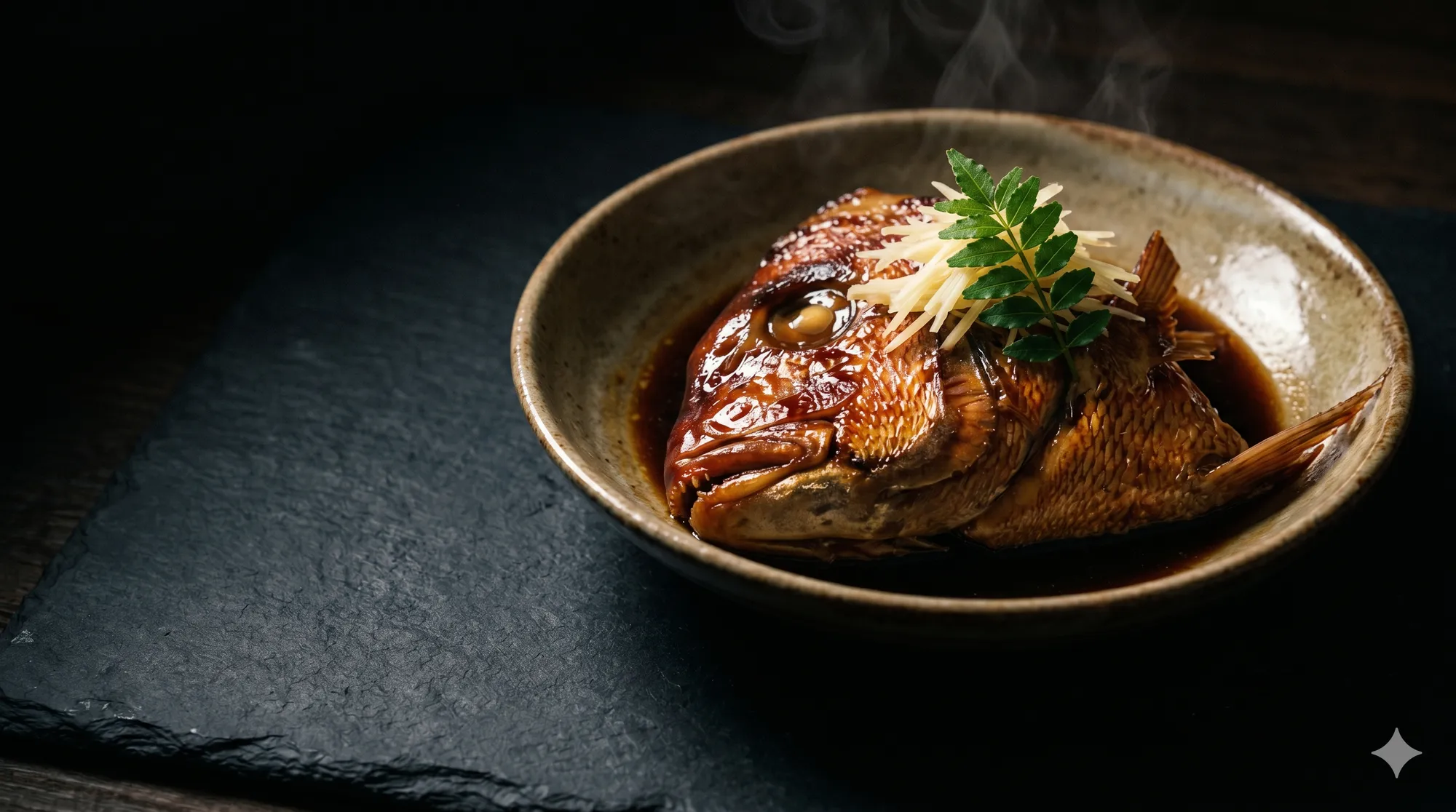
Sakana no Kabuto-ni (魚の兜煮)
A whole fish head simmered in soy and mirin until it glistens like lacquer. It looks intimidating. It's secretly the best, richest, most prized part of the fish.
July 20, 2024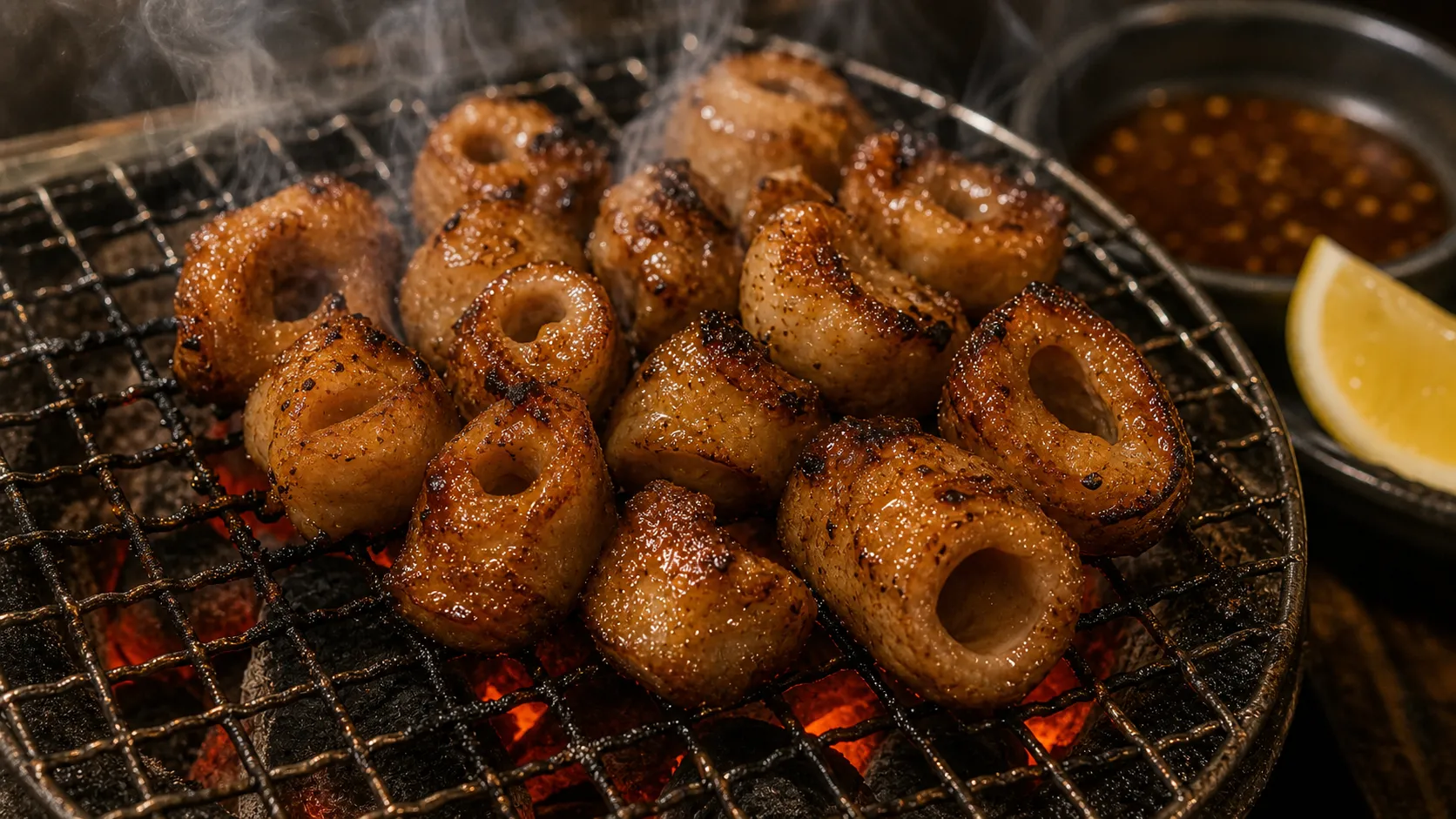
Local FoodAtsugi, Kanagawa
Atsugi Shirokoro-Horumon (厚木シロコロ・ホルモン)
B-1 Grand Prix champion. Thick-cut pig large intestine grilled until the outside shatters and the inside goes creamy. It sounds alarming. It tastes like the best thing you've eaten all week.
June 25, 2026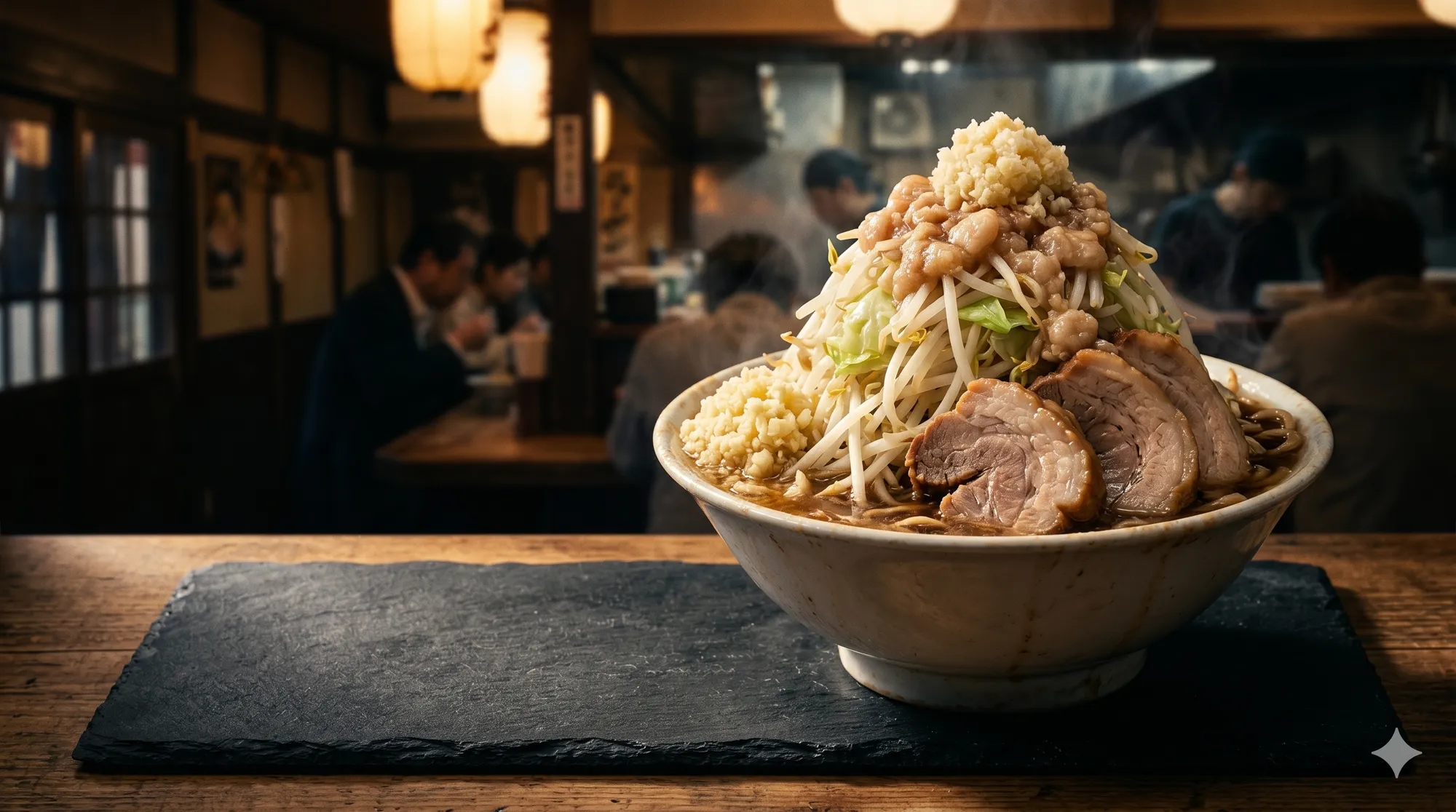
Japanese FoodTokyo
Ramen Jiro (ラーメン二郎)
A roaring mountain of noodles, fat, garlic and pork that broke the rules of ramen and built a cult. Not a meal — a rite of passage. Learn the secret call before you go in.
July 13, 2024