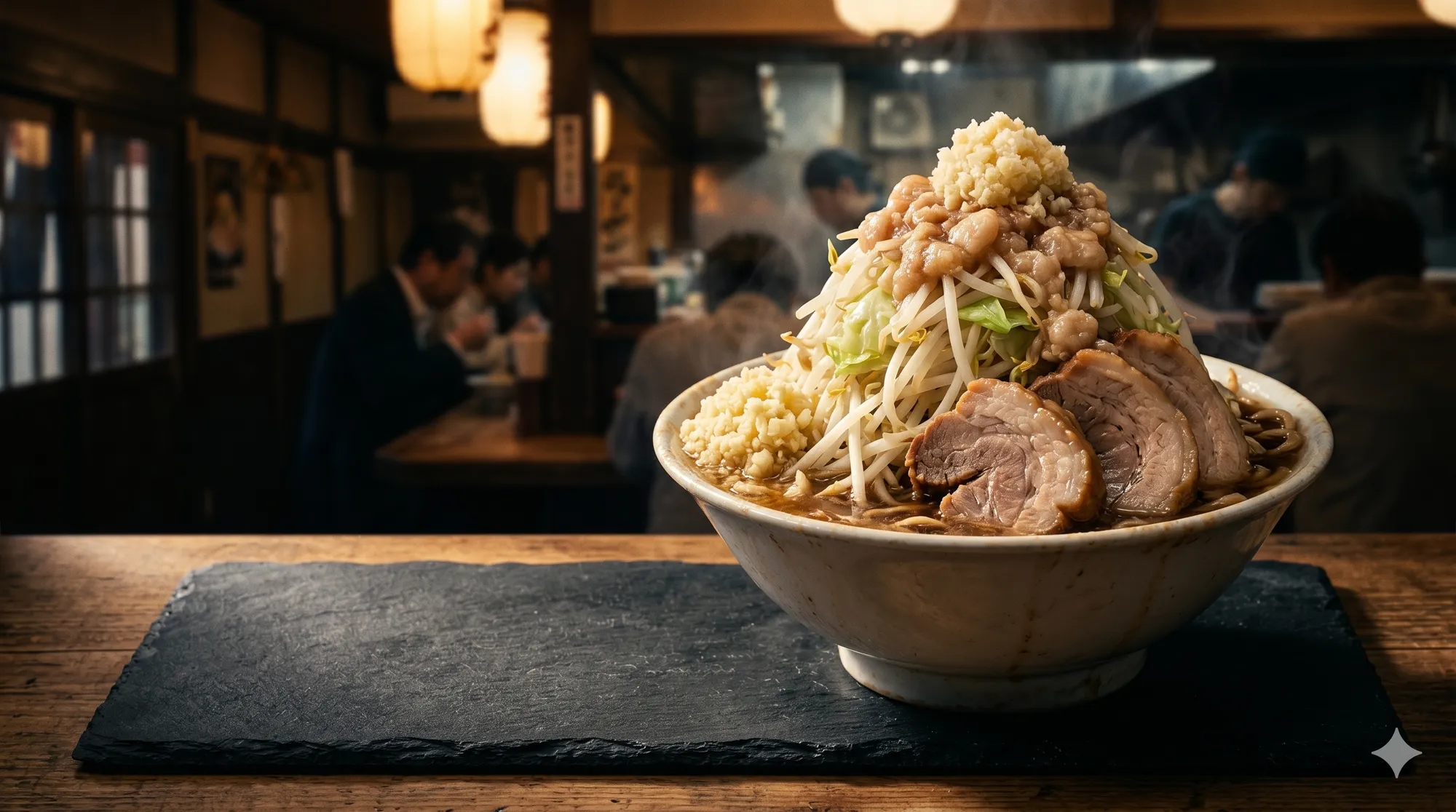
Ramen Jiro is not ramen. I mean that with total love and total seriousness.
Share this dish


A roaring mountain of noodles, fat, garlic and pork that broke the rules of ramen and built a cult. Not a meal — a rite of passage. Learn the secret call before you go in.
🍜 Planning a food trip to Tokyo?Add this dish to my Food Trip →
 Add this dish to my Food Trip →
It is a phenomenon in a bowl — a roaring, towering mound of thick chewy noodles buried under a mountain of bean sprouts and cabbage, slabs of fatty pork, a glistening pool of back fat, and a fistful of raw garlic so pungent your coworkers will know tomorrow. It has its own slang, its own etiquette, its own devoted disciples who call themselves Jirorians and travel the country comparing shops like pilgrims. The first time you finish one, you don't feel full. You feel changed. Buckle up — and read the next part carefully, because you do not want to freeze at the counter.
A student's cheap meal that became a cult
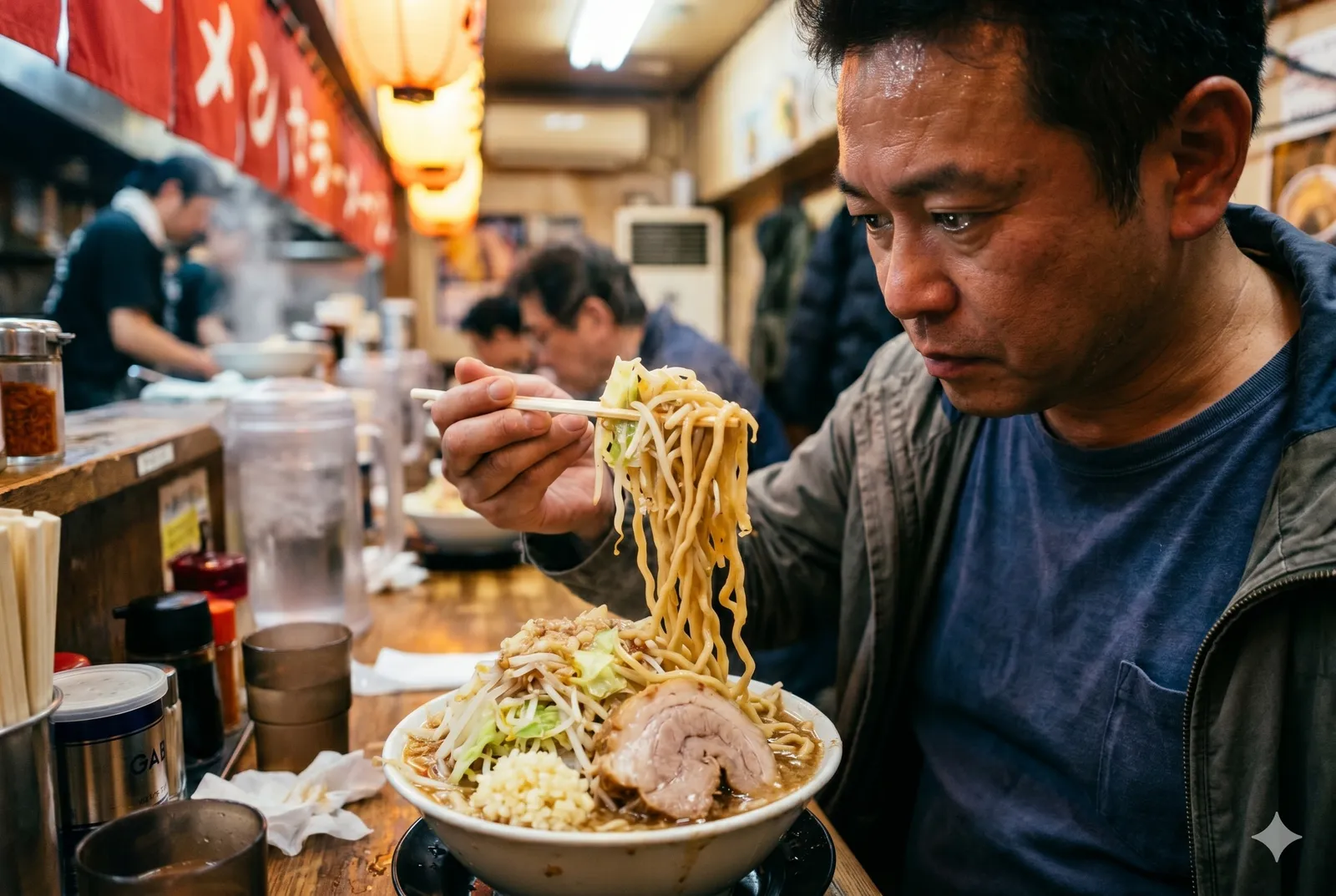
Back in 1968, a tiny stall in Meguro started serving huge, cheap, ridiculously filling bowls so broke Tokyo students could eat like kings. It worked a little too well. Today there are over 40 Jiro shops, each slightly different, each fiercely loved, and "Jiro" has effectively become its own genre of ramen — imitators everywhere are politely called "Jiro-inspired."
Why it hits like a truck
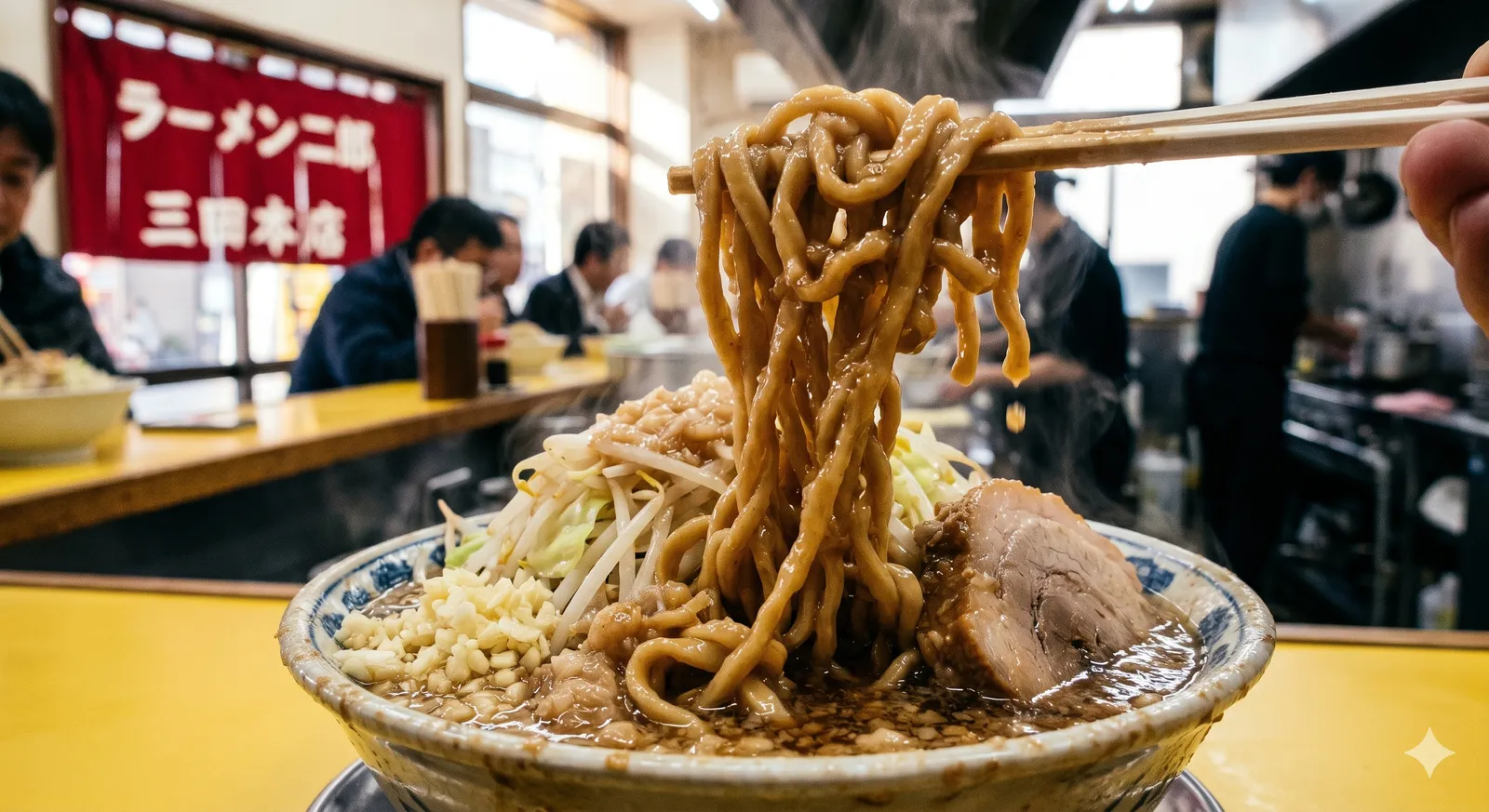
The whole identity is sheer, glorious volume. Thick house-made noodles with serious bite. Heaps of boiled cabbage and bean sprouts. Thick chunks of buta (chashu pork). A heavy tonkotsu-soy broth that's salty, porky, and unapologetic — and then that crown of raw minced garlic that ties the whole beast together. It's a challenge and a ritual at once. Respect it; don't over-order.
How it's made
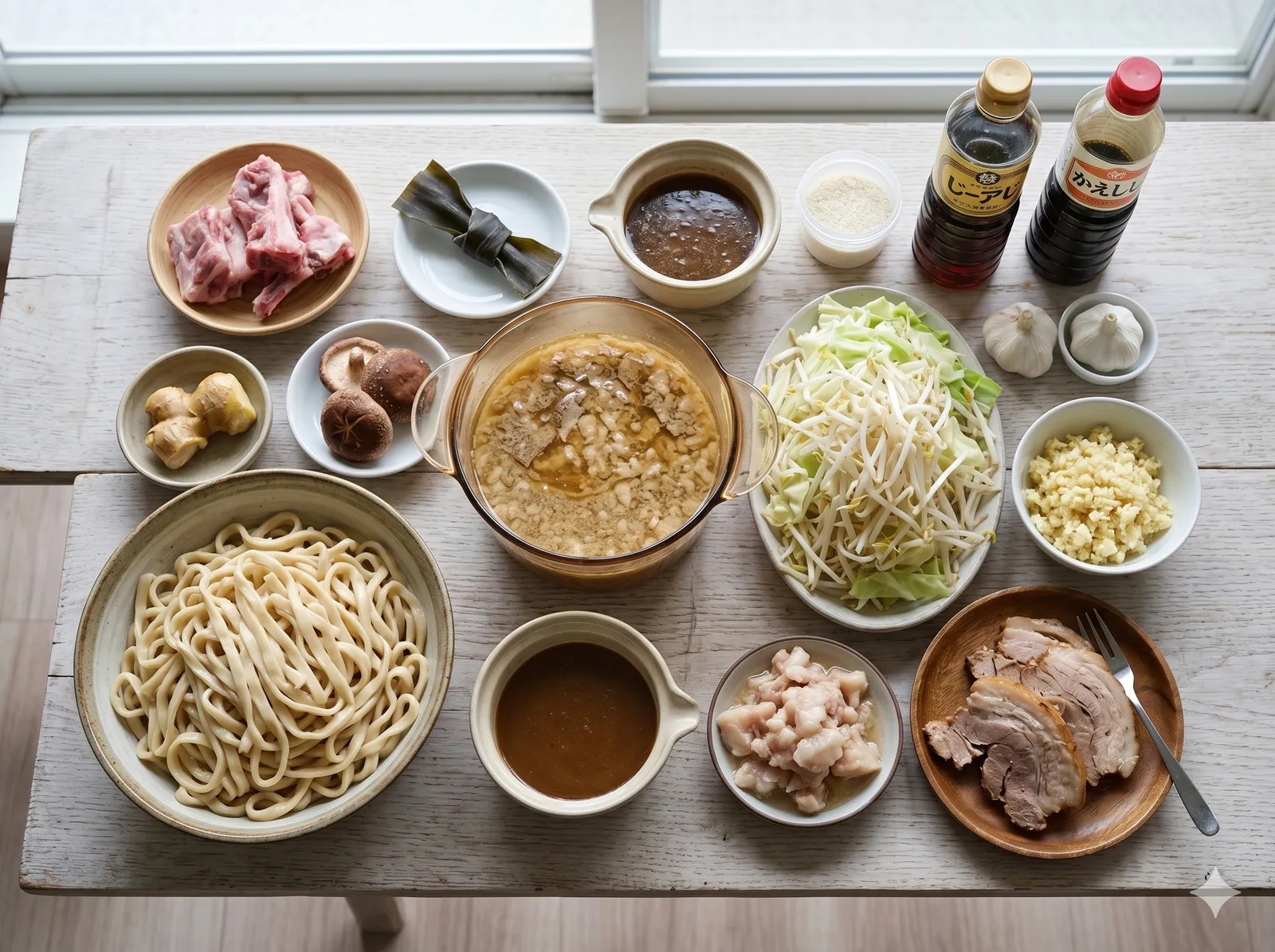
- Boil the thick house-made noodles
- Pile on mountains of boiled bean sprouts and cabbage
- Add thick slices of fatty chashu pork
- Pour over the rich tonkotsu-soy broth
- Crown it with a generous heap of minced garlic
Each shop tweaks the formula, which is exactly why Jirorians make the rounds.
Before you go — learn the call ("the call")
This is the part everyone's scared of, and the part that's secretly easy. When your bowl is about to be assembled, the staff asks one famous question — "Ninniku iremasu ka?" ("Garlic in?") — and that's your cue to recite your call: how you want the four free toppings adjusted.
The four words, in order: Yasai (vegetables), Ninniku (garlic), Abura (back fat), Karame (extra-savory sauce). For each, you say how much: nothing, normal (just don't mention it), mashi (more), or mashi mashi (a LOT more).
🍜 Practice in the Ramen Jiro Call Simulator → build your bowl and get the exact phrase to say
Your questions, answered honestly
"What do I actually say?" — A safe, classic first-timer call: "Yasai ninniku" — a little extra veg and garlic, everything else normal. Want to play it even safer? Just say "Futsū de" (normal everything). You cannot mess this up badly.
"Help, I don't want garlic!" — Just say "Ninniku nashi de" (no garlic). Totally fine. You'll smell more socially acceptable tomorrow.
"How much food is this, really?" — A lot. Order the small (shō) your first time — the Jiro "small" defeats grown adults. And finish what you order; leaving food is frowned upon here.
"Any counter etiquette?" — Eat with focus, don't dawdle (there's a line outside), have your cash ready, and bus your own spot when you can. Jiro runs on momentum.
What the staff will ask you
| You'll hear | Romaji | Meaning | Just say |
|---|---|---|---|
| ニンニク入れますか? | Ninniku iremasu ka? | "Garlic in?" (your cue!) | Yasai ninniku (the safe call) / Futsū de (normal) |
| お好みは? | Okonomi wa? | "How do you want it?" | (recite your call) |
| 麺、固め? | Men, katame? | "Firmer noodles?" | Futsū de (normal) / Katame de (firm) |
To order, buy your ticket from the vending machine first (most shops), then hand it over and wait for the garlic question.
Where to eat it
- Mita Honten (三田本店) — near Keio University, the legendary main shop
- Shinbashi & Kabukicho branches — central Tokyo, easy to reach
- Expect a line at all of them — the queue is part of the experience
Each shop differs and hours/days change (some close unexpectedly), so check before you go — and come hungry, come humble.
Soul Score
Local Roots5/5
First-Timer Friendly2/5
Adventure Level5/5
Comfort Level4/5
Travel Worthy4/5
These scores are one obsessed eater's gut feeling — not a verdict. A low number isn't a bad mark, just a different kind of adventure.
Planning what to eat in Tokyo?🗼 Tokyo Food Guide: What to Eat, Where to Start, and How to Order →
Know someone planning Japan?
← All Articles
Japanese Food · Tokyo
Still hungry?
Eat more from Tokyo
Sweets & SnacksTokyo
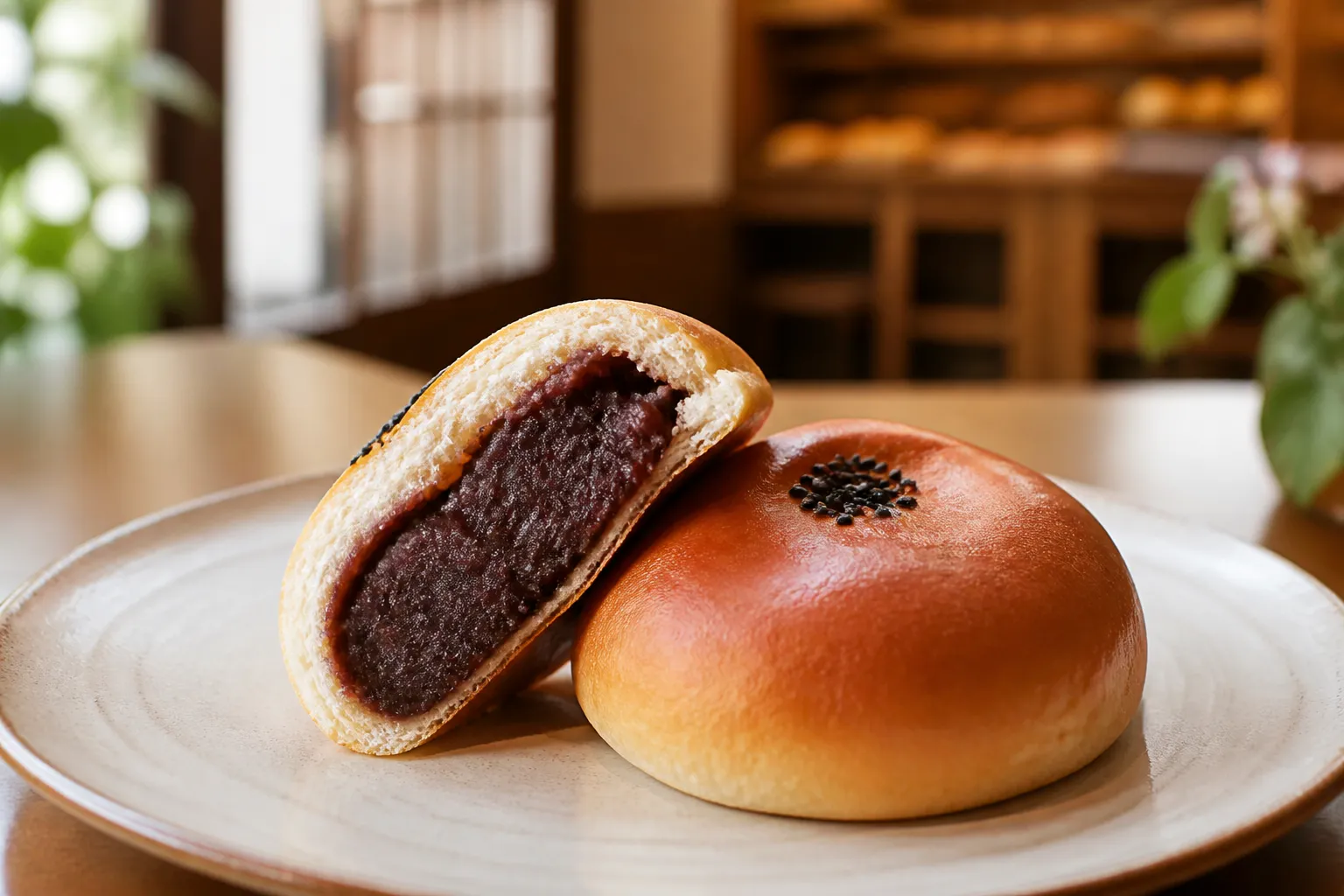
Anpan (あんパン)
A soft little bun, one bite in, and suddenly it's dense, dark, sweet red bean all the way through — the bread that talked 1870s Japan into eating Western-style bread at all.
July 27, 2026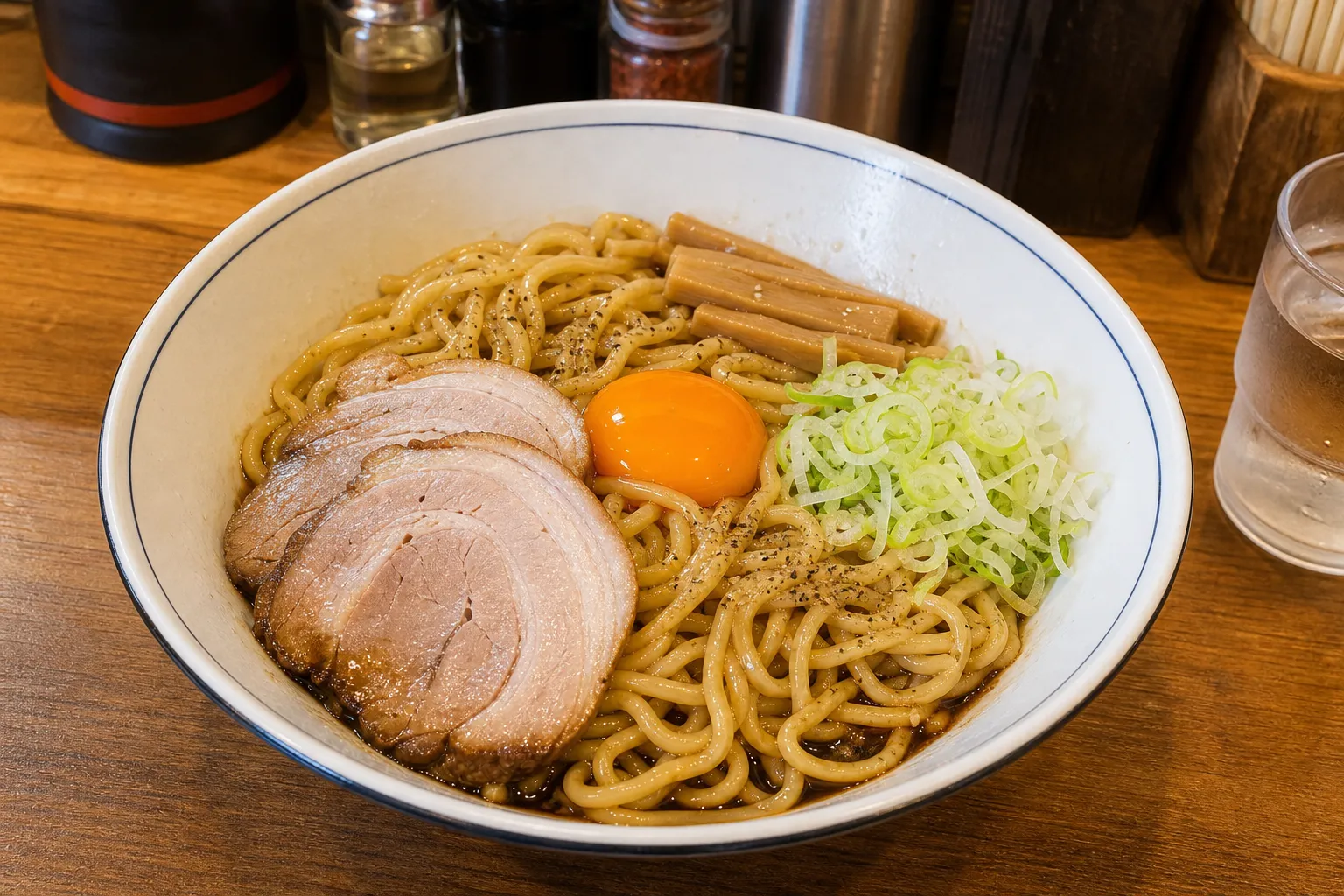
Local FoodTokyo
Abura Soba (油そば)
No soup. Just noodles, a hidden pool of tare and oil at the bottom of the bowl, and thirty seconds of frantic mixing that turns it into one of Tokyo's most addictive cheap thrills.
July 9, 2026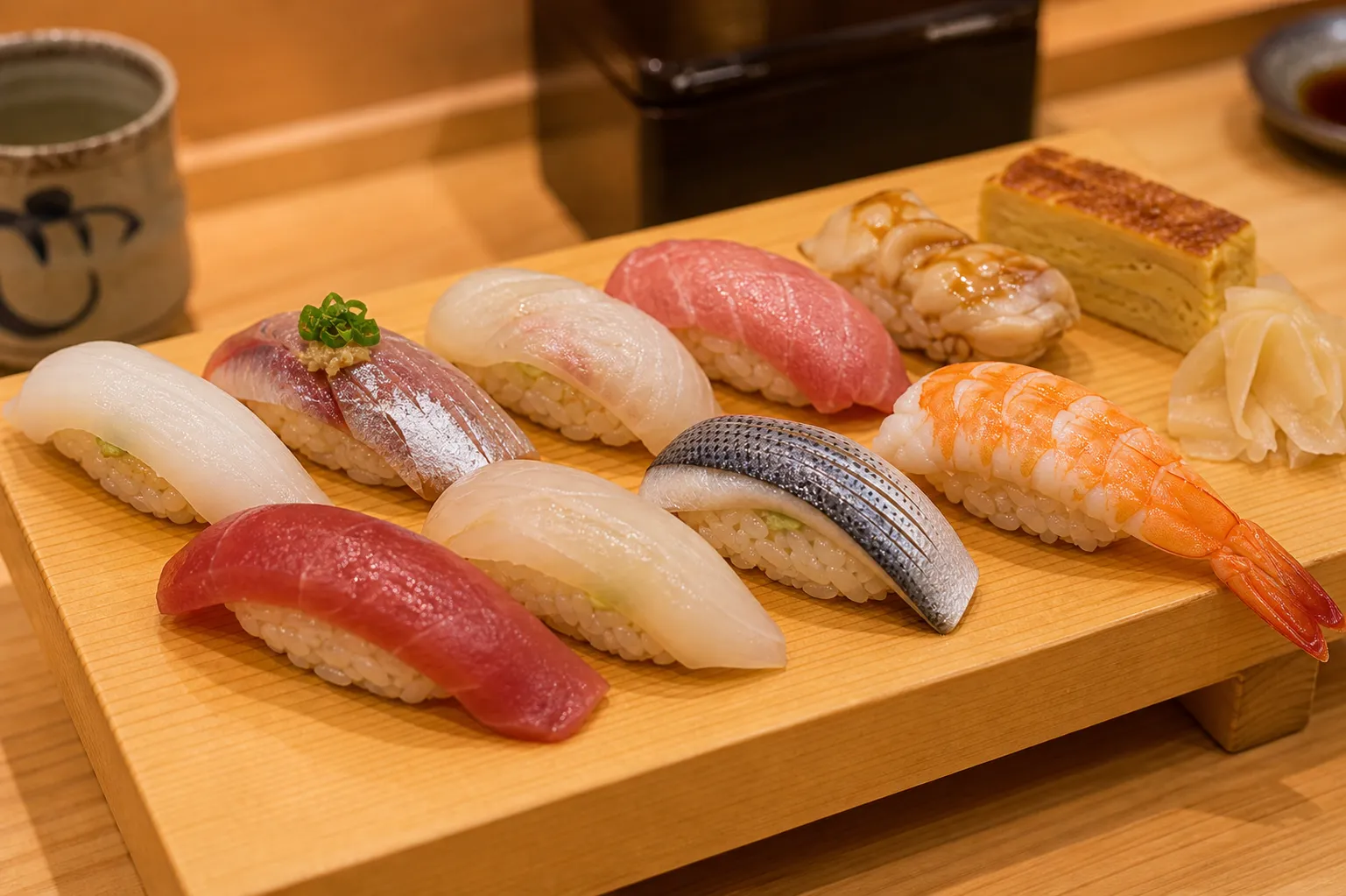
Japanese FoodTokyo
Edomae-zushi (江戸前寿司)
The original Tokyo nigiri, born before refrigerators existed — cured, marinated, simmered by hand, then pressed onto warm rice in a single confident motion. This is where sushi actually comes from, and it's a craft, not a slab of raw fish.
July 9, 2026Keep slurping the ramen trail
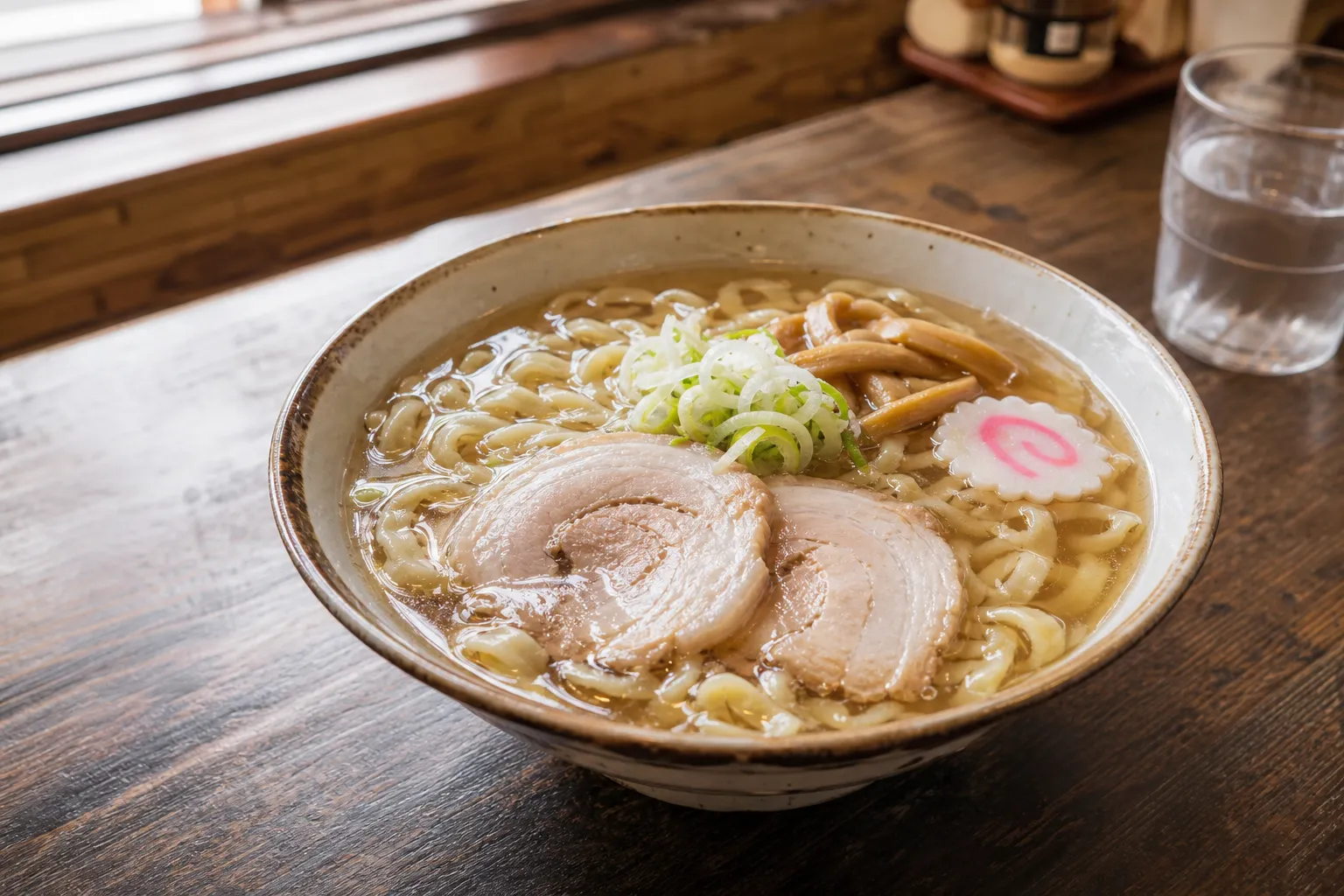
Local FoodKitakata, Fukushima
Kitakata Ramen (喜多方ラーメン)
Flat, wide, curly noodles in a clear soy broth so clean you can see the bottom of the bowl — and a town so obsessed it eats ramen for breakfast. This is comfort with the volume turned down, on purpose.
June 26, 2026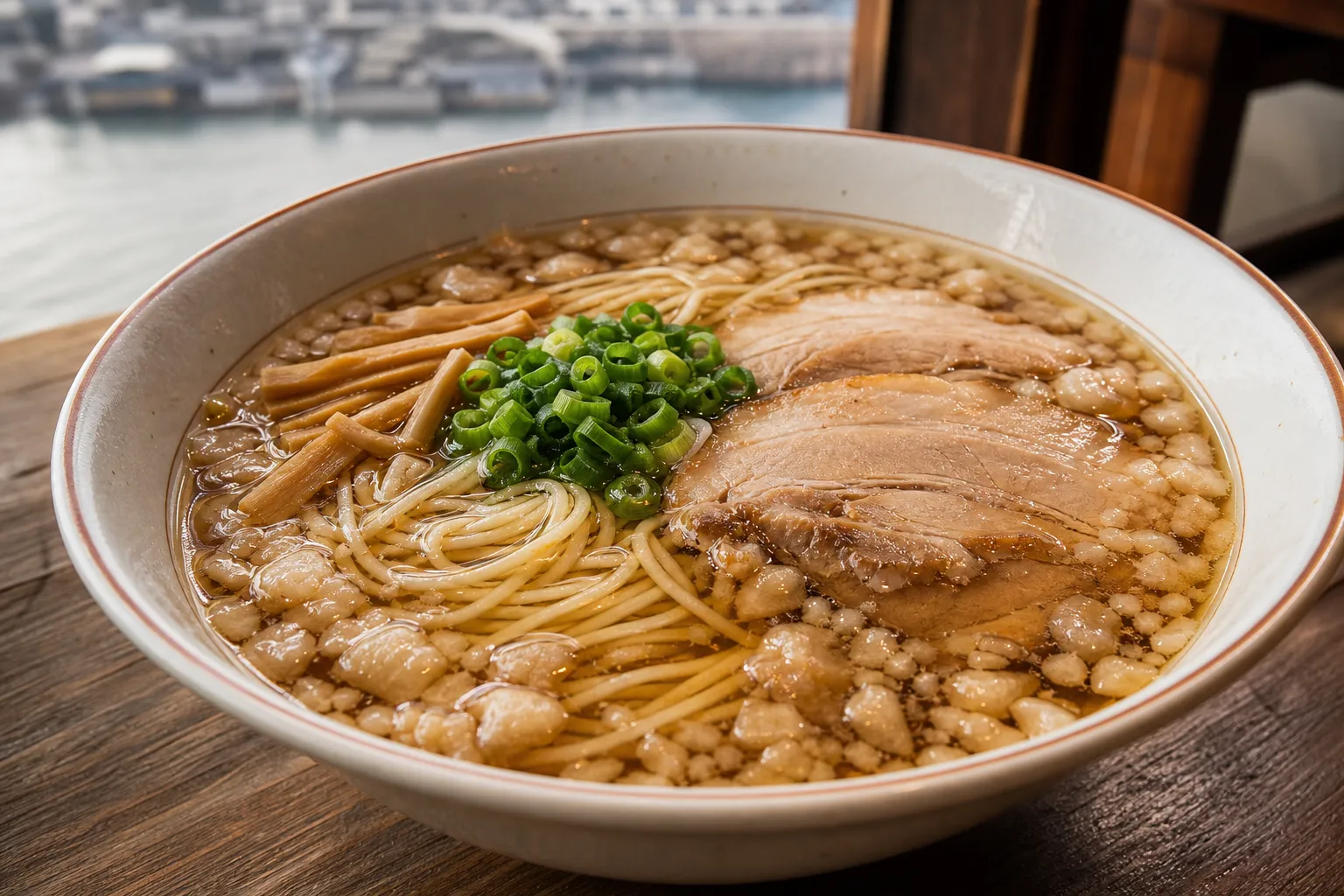
Local FoodOnomichi, Hiroshima
Onomichi Ramen (尾道ラーメン)
Clear soy broth from the Seto Inland Sea, studded with little pillows of melting pork fat that change everything. A hillside port town's bowl — light and deep at the same time, which shouldn't be possible.
June 26, 2026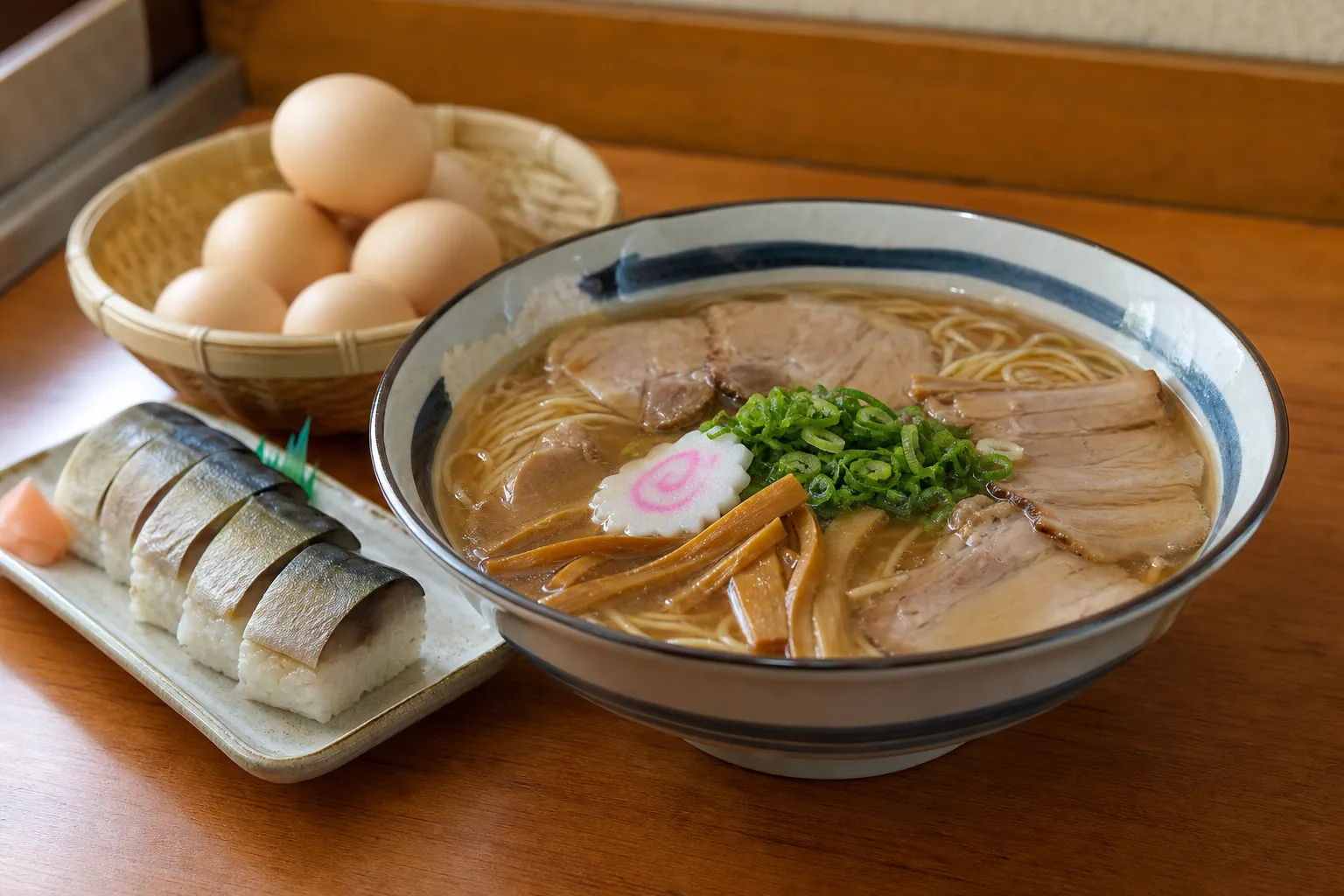
Local FoodWakayama, Wakayama
Wakayama Ramen (和歌山ラーメン)
Pork-bone-meets-soy broth, thin springy noodles — and a self-serve table loaded with pressed mackerel sushi and boiled eggs you grab while you wait. Locals don't even call it ramen. They call it the good stuff.
June 26, 2026