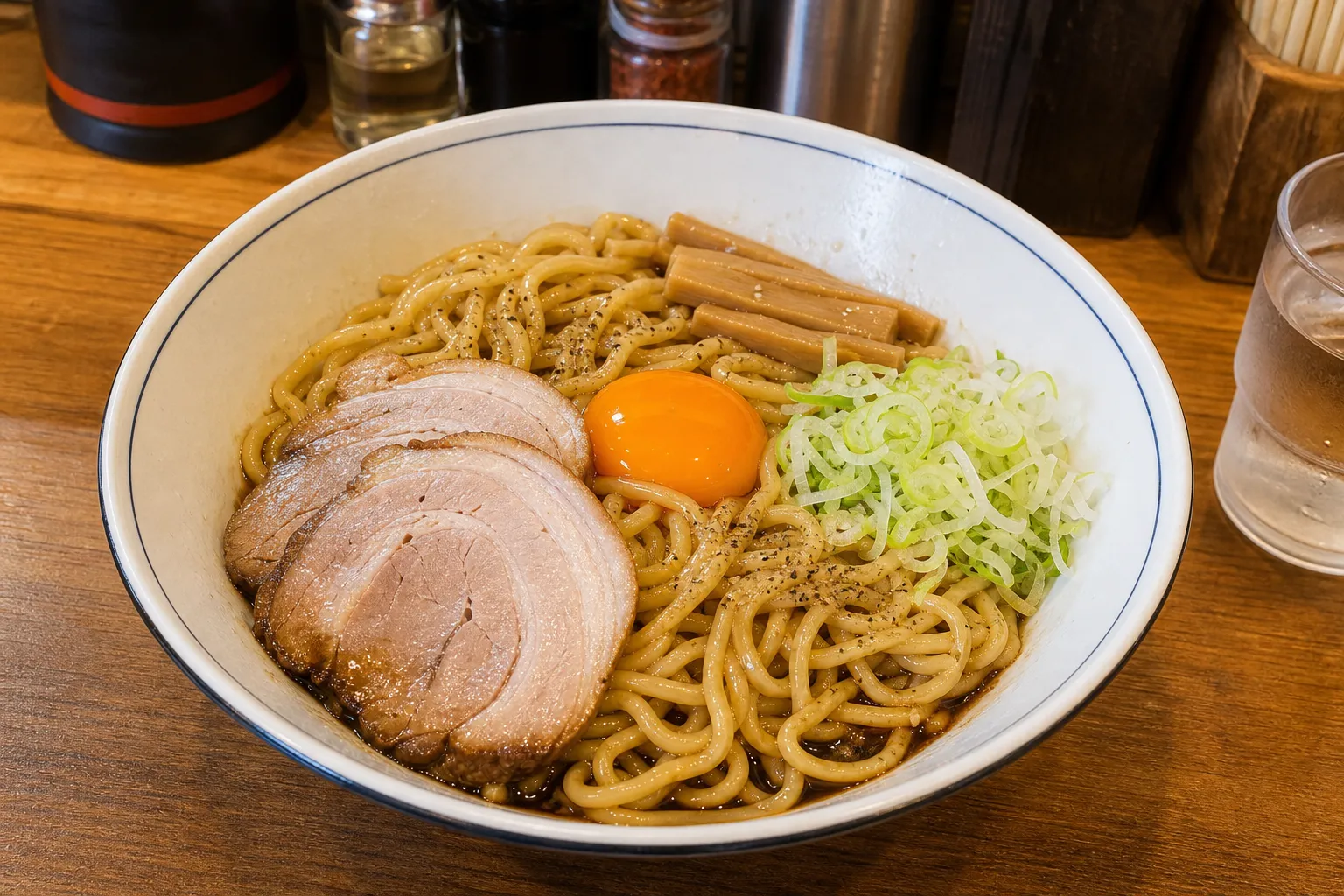
Grab your chopsticks and go — the first thing you do with abura soba isn't eat it, it's attack it. There's no soup to sip, no broth to admire. You dig down, drag the noodles up from the slick of sauce hiding at the bottom, and toss the whole bowl like your life depends on it until every strand goes glossy. Then, and only then, do you taste it. And it hits like a truck.
Share this dish


No soup. Just noodles, a hidden pool of tare and oil at the bottom of the bowl, and thirty seconds of frantic mixing that turns it into one of Tokyo's most addictive cheap thrills.
🍜 Planning a food trip to Tokyo?Add this dish to my Food Trip →
 Add this dish to my Food Trip →
Abura soba is brothless ramen: thick, chewy noodles sitting on a pool of soy-based tare and fragrant oil at the base of the bowl, topped with chashu, menma, chopped negi, and often a soft egg. You mix it, you hit it with vinegar and chili oil from the table, and you eat it fast. It's cheaper than a bowl of ramen, more intense per bite, and once it gets you, it really gets you.
Born from broke students and big appetites
The story starts around Tokyo's Musashino area — think Kokubunji, Kunitachi, the university belt west of the city — back in the mid-20th century. The going legend is that it was a student food: cheaper to make than ramen because you skip the whole labor-intensive broth, and stacked with enough noodles and oil to keep a hungry, broke 20-year-old going all day. Smart. I respect it.
For decades it stayed a quiet regional secret, the kind of thing you only knew if you went to school out there. Then chains like Tokyo Abura-gumi Sōhonten spread it across the city and beyond, and suddenly everyone realized what those students had been hoarding. Now you'll find abura soba shops all over Tokyo — but there's still something right about eating it in a cramped counter seat near a campus, elbow to elbow with people who've clearly done this a hundred times.
Why brothless somehow beats broth
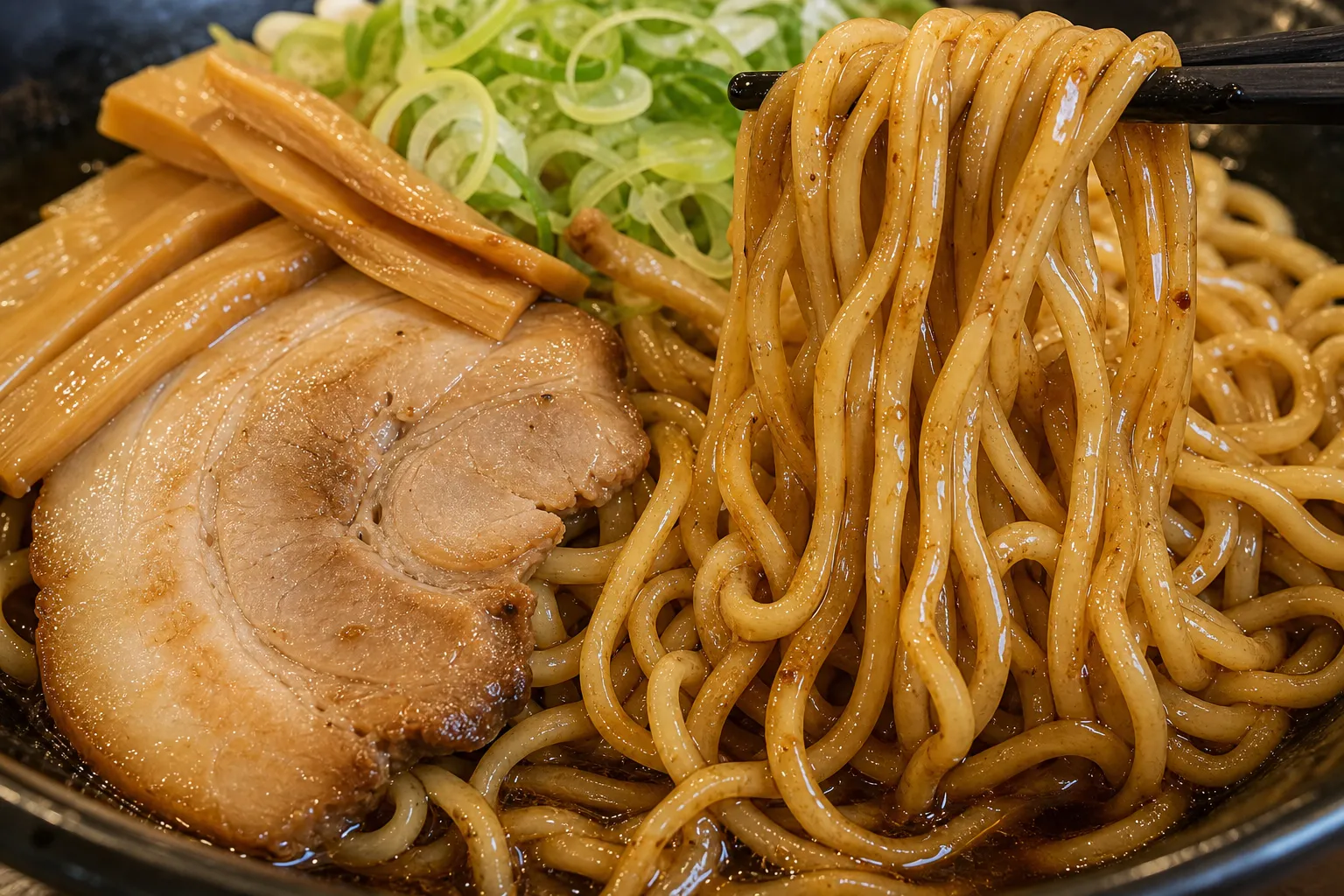
Here's the thing nobody tells you: without soup to hide behind, the noodle has nowhere to run. Abura soba lives and dies on the noodles, and they're built for it — thick, springy, defiantly chewy, the kind that fight back a little. Coated in that tare-and-oil mix, they turn savory, rich, and just faintly sweet, with a slick sheen that catches every topping.
The tare is the soul: soy sauce deepened with dashi, a little sugar, sometimes a whisper of vinegar already built in. The oil carries the flavor into every crevice of every strand. And then you finish the seasoning at the table — a splash of vinegar to cut the richness, a swirl of rāyu chili oil to light it up. It's the rare dish where the last, best chef in the chain is you. Get it right and it's savory, tangy, punchy, and absurdly moreish.
How it's made (and how to actually eat it)
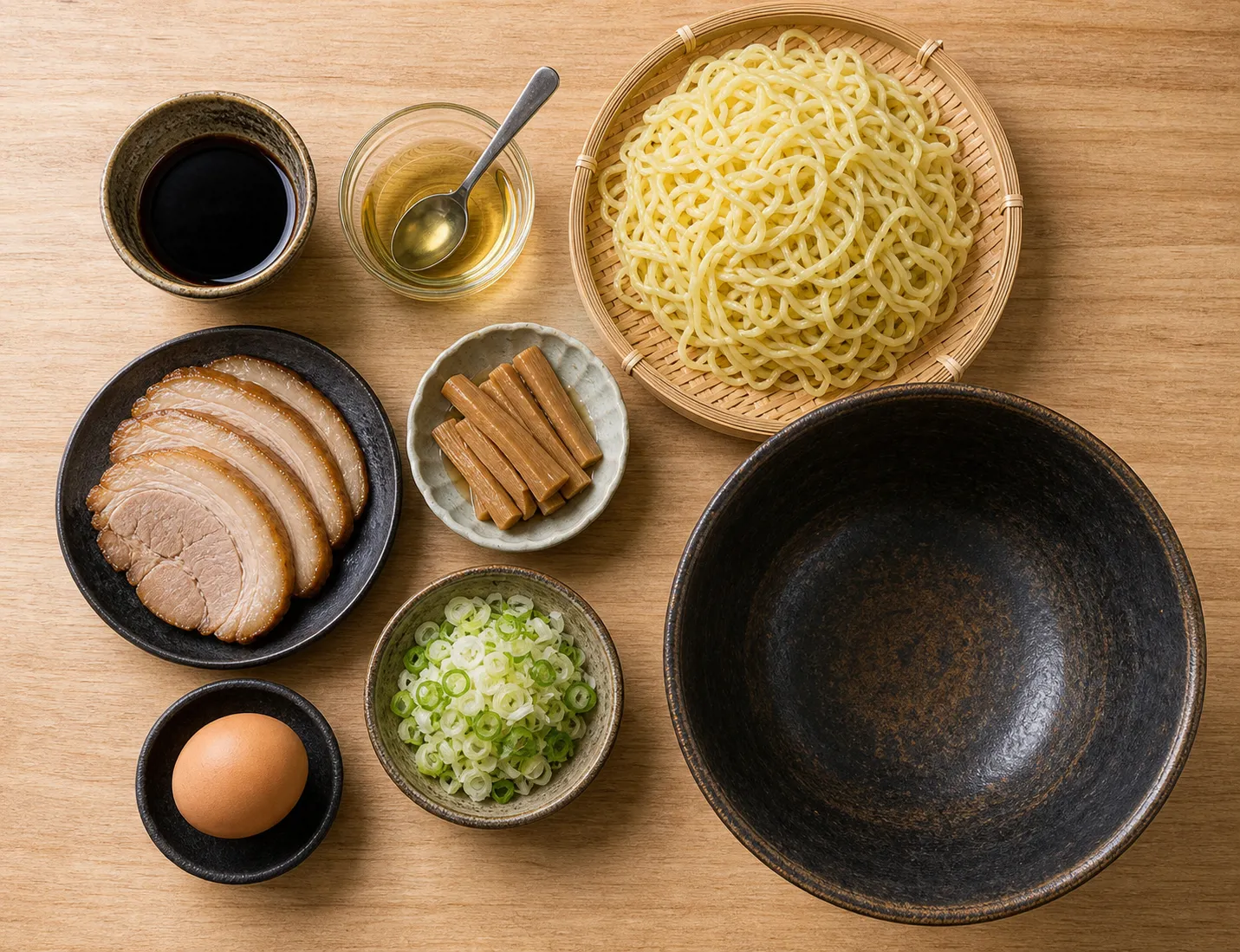
- The shop spoons tare (soy, dashi, a touch of sugar) and a ladle of seasoned oil into the bottom of an empty bowl — no soup goes in.
- Thick noodles are boiled, drained hard, and piled straight on top of the sauce.
- It's finished with chashu, menma, negi, nori, and often a soft or raw egg in the middle.
- Your job: grab the vinegar (su) and chili oil (rāyu) on the counter, add a couple of turns of each.
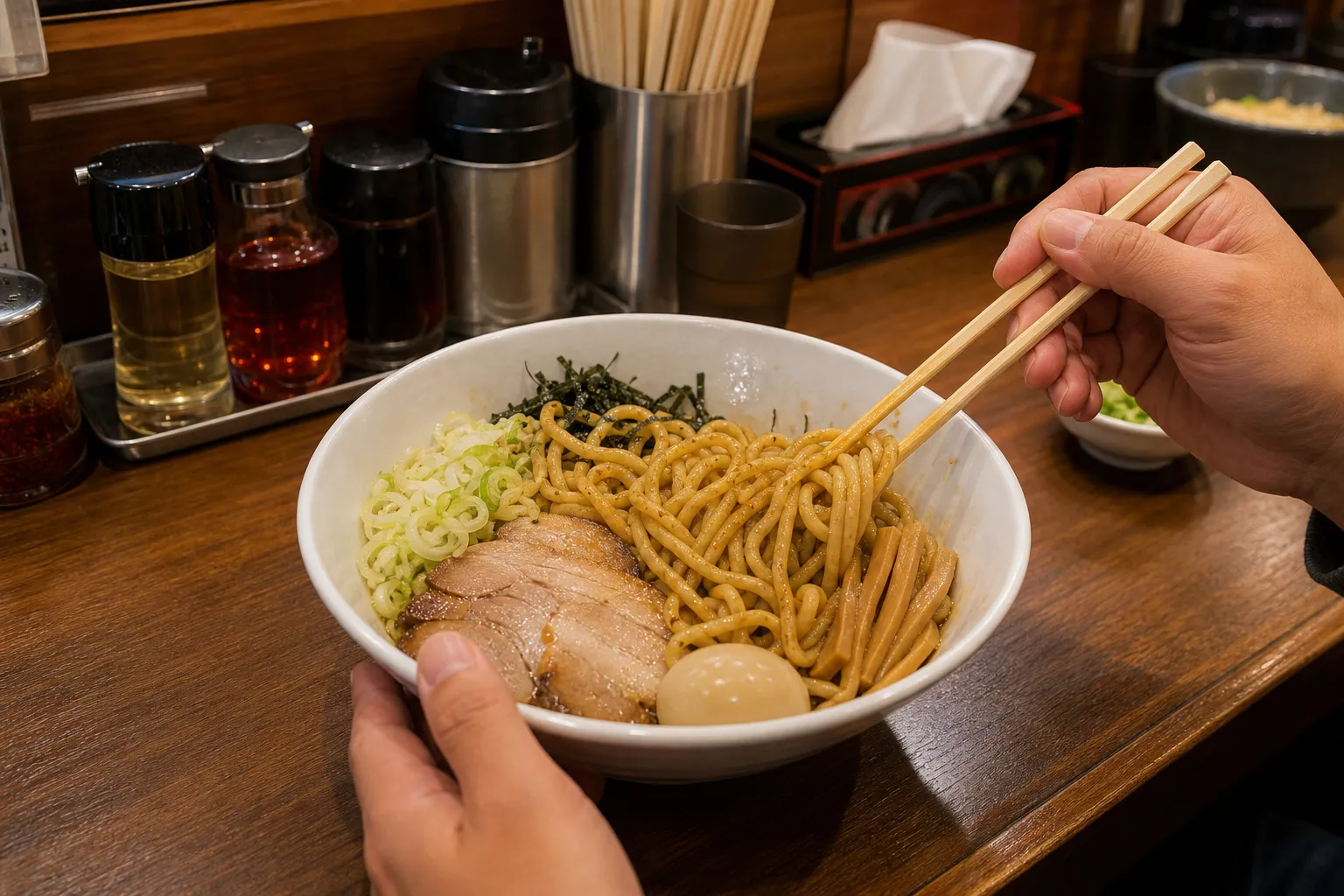
- Now mix like you mean it — lift from the bottom, fold, toss, for a solid 20–30 seconds until every noodle is coated and glossy.
- Eat immediately while it's hot, adjusting vinegar and chili as you go. Slurping strongly encouraged.
Before you go — mix first, ask questions later
Your questions, answered honestly
"Wait — there's no soup. Do I actually mix this?" — Yes. One hundred percent yes. This is the whole point. Do not sip at it, do not eat it dry off the top. Dig to the bottom where the sauce and oil are pooled, and toss everything together hard for half a minute before your first bite. Under-mixed abura soba is a sad, uneven thing; mixed right, it's magic.
"What do I add, and when?" — Vinegar and chili oil, both on the table, before you mix. Start modest — a couple of turns of vinegar, a small swirl of rāyu — mix, taste, then add more. The vinegar keeps it from feeling heavy; the chili gives it teeth.
"Is it greasy?" — There's oil in the name (abura = oil), so yes, it's rich. But the vinegar is your counterweight, and a good bowl reads as savory and glossy rather than heavy. Order a smaller size if you're unsure — the portions run generous.
"Any move for the leftover sauce at the bottom?" — Some shops offer a little rice or extra tare to finish. If there's sauce left and you're still hungry, ask — but honestly, if you mixed properly, there won't be much left behind.
What the staff will ask you
| You'll hear | Romaji | Meaning | Just say |
|---|---|---|---|
| 麺の量は? | Men no ryō wa? | "How much noodle?" | Namimori (regular) / Ōmori (large, often same price) |
| 味の濃さは? | Aji no kosa wa? | "Sauce strength?" | Futsū de (normal, please) |
| 温泉卵つけますか? | Onsen tamago tsukemasu ka? | "Add a soft egg?" | Onegaishimasu (yes, please) |
| トッピングは? | Toppingu wa? | "Any toppings?" | Nori to menma kudasai (nori and menma, please) |
To order, just say "Abura soba hitotsu kudasai" (油そば一つください) — "one abura soba, please."
Where to eat it
- Musashino / western Tokyo (Kokubunji, Kunitachi, Kichijōji) — the birthplace belt, still thick with student-favorite counters.
- Tokyo Abura-gumi Sōhonten — the chain that carried abura soba across the city; a reliable, beginner-friendly first bowl.
- Around any big Tokyo university or station district — this is late-night, between-classes fuel, so the standalone specialist shops cluster where students and commuters are.
Menus and toppings vary shop to shop, and the best little counters keep odd hours, so check before you go.
Soul Score
Local Roots4/5
First-Timer Friendly4/5
Adventure Level3/5
Comfort Level4/5
Travel Worthy4/5
These scores are one obsessed eater's gut feeling — not a verdict. A low number isn't a bad mark, just a different kind of adventure.
Know someone planning Japan?
← All Articles
Local Food · Tokyo
Still hungry?
Eat more from Tokyo
Sweets & SnacksTokyo
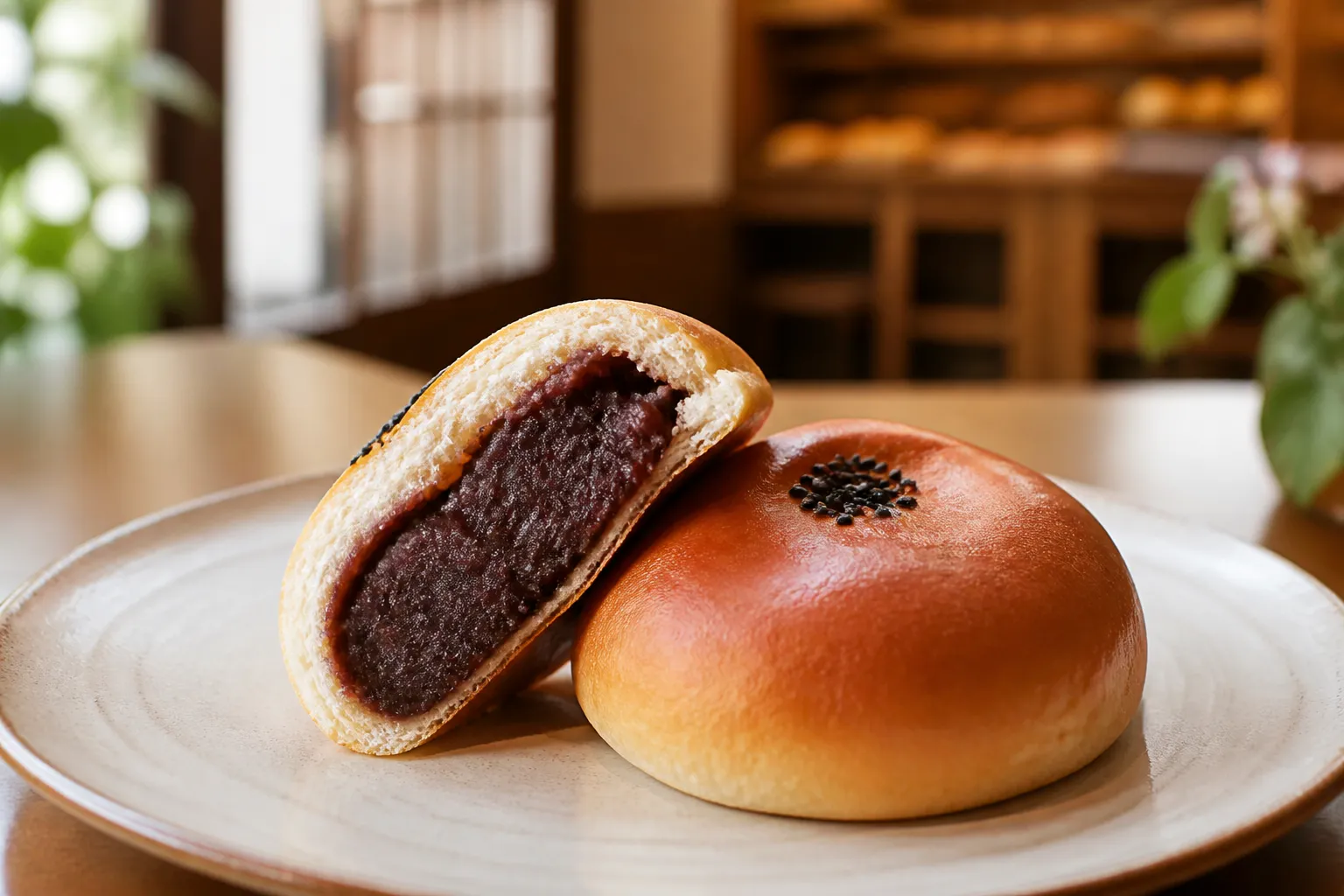
Anpan (あんパン)
A soft little bun, one bite in, and suddenly it's dense, dark, sweet red bean all the way through — the bread that talked 1870s Japan into eating Western-style bread at all.
July 27, 2026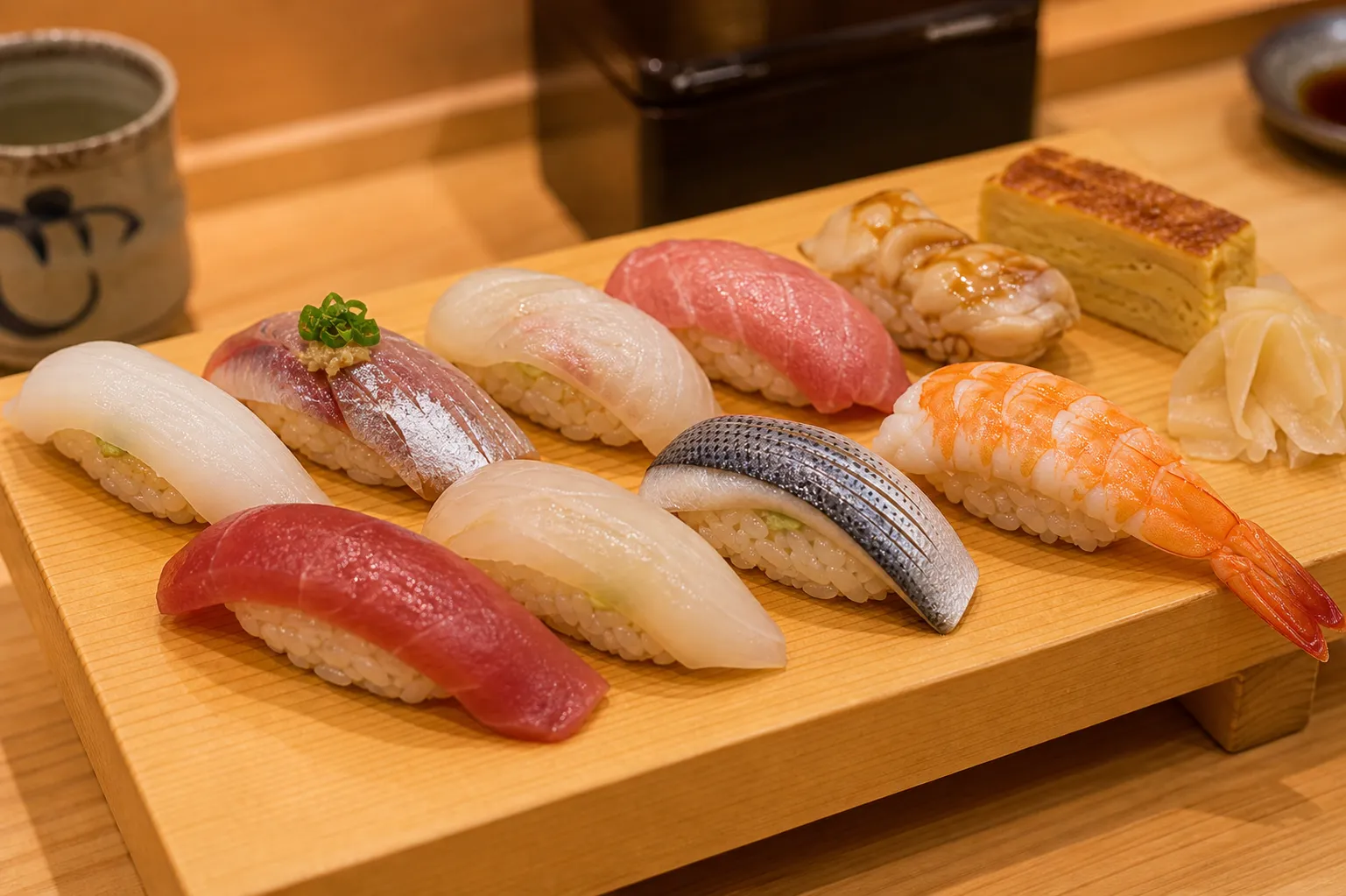
Japanese FoodTokyo
Edomae-zushi (江戸前寿司)
The original Tokyo nigiri, born before refrigerators existed — cured, marinated, simmered by hand, then pressed onto warm rice in a single confident motion. This is where sushi actually comes from, and it's a craft, not a slab of raw fish.
July 9, 2026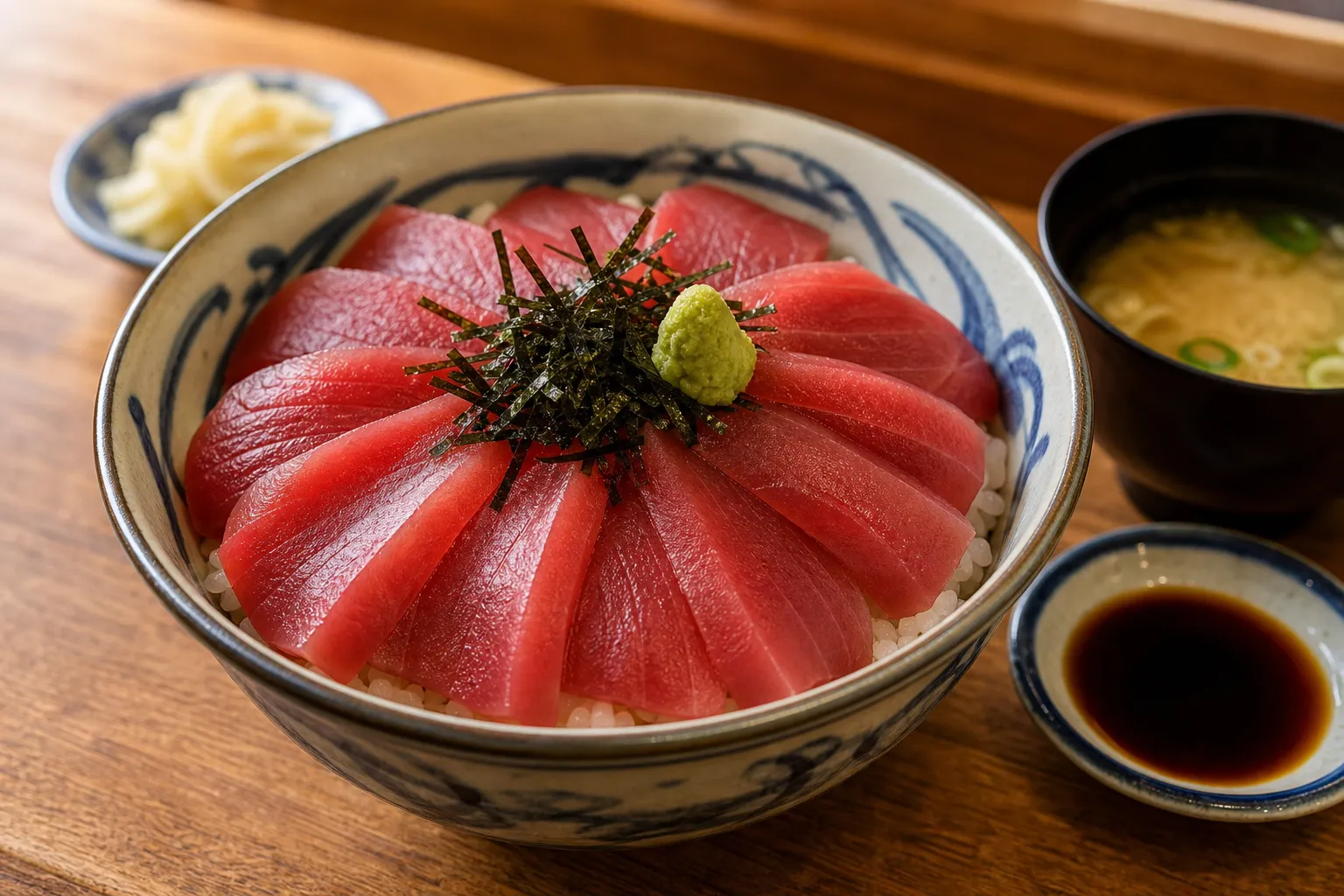
Japanese FoodTokyo
Tekkadon (鉄火丼)
Cold slices of lean tuna over warm vinegared rice, a hit of wasabi, a splash of soy — nothing else, and it needs nothing else. Born in gambling dens for players who wanted one clean, one-handed bite of pure tuna joy.
July 9, 2026