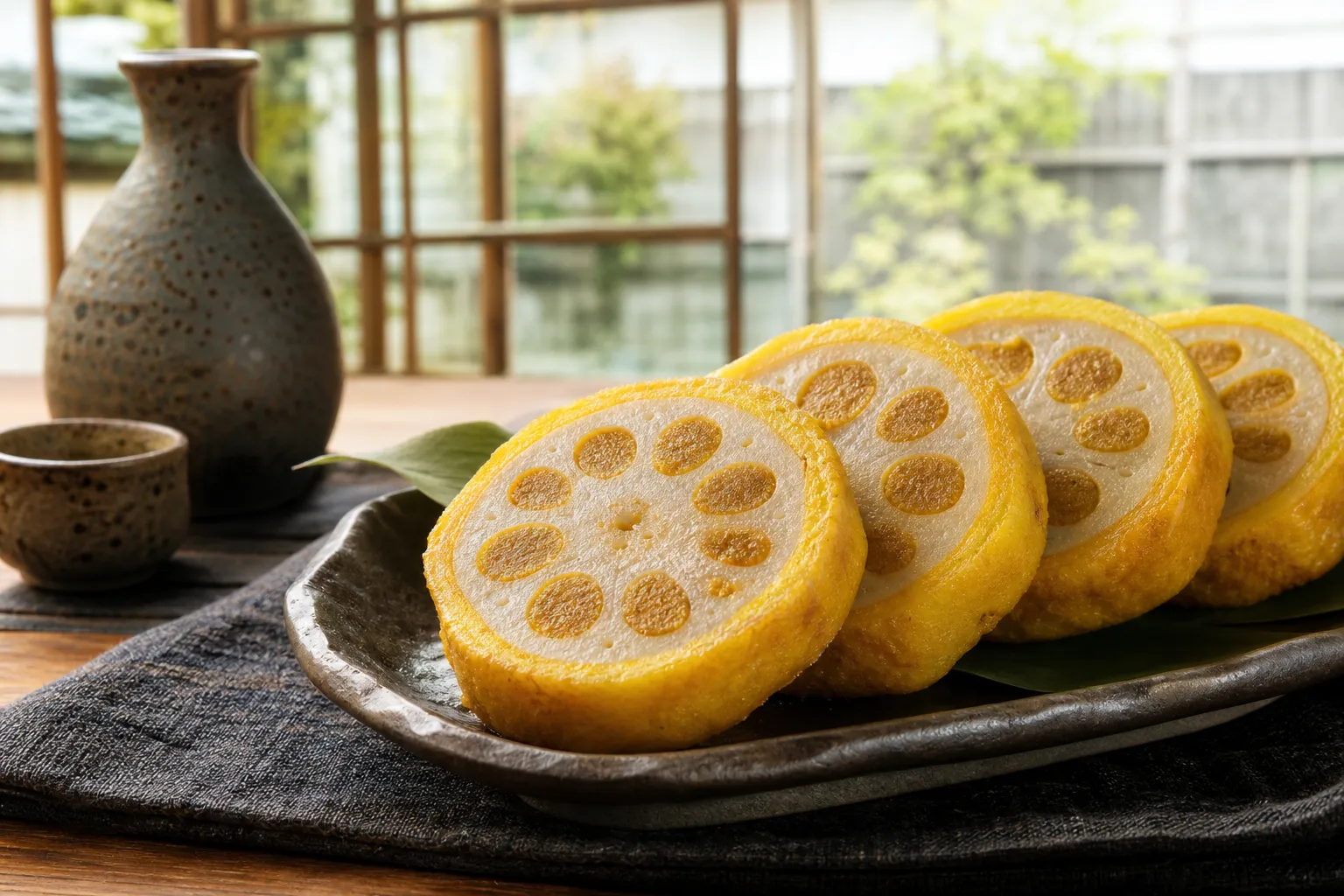
My eyes watered before my brain caught up with why. One bite of golden fried lotus root, a beat of "oh, this is nice and crunchy," and then the mustard hiding inside the holes detonated somewhere behind my nose. I set the piece down. I picked it back up. I am, it turns out, the kind of person who will absolutely eat something that just hurt me, on purpose, again.
Share this dish


Someone looked at a lotus root's natural holes and thought: those need to be filled with fire. I bit in expecting a snack. I got a sinus-clearing act of devotion.
🍜 Planning a food trip to Kumamoto?Add this dish to my Food Trip →
 Add this dish to my Food Trip →
That's karashi renkon (からし蓮根) — Kumamoto's signature snack, and one of the strangest good ideas I've encountered in Japanese food. Someone took a lotus root, looked at the ring of natural holes running through its cross-section, and decided the correct move was to pack every single hole with hot mustard-miso paste, coat the whole thing in a yellow batter, and deep-fry it. Slice it open and you get a flower of white lotus root dotted with golden mustard filling — genuinely one of the most photogenic cross-sections in Japanese cuisine, and also a dare.
A samurai's health food that turned into a whole prefecture's flex
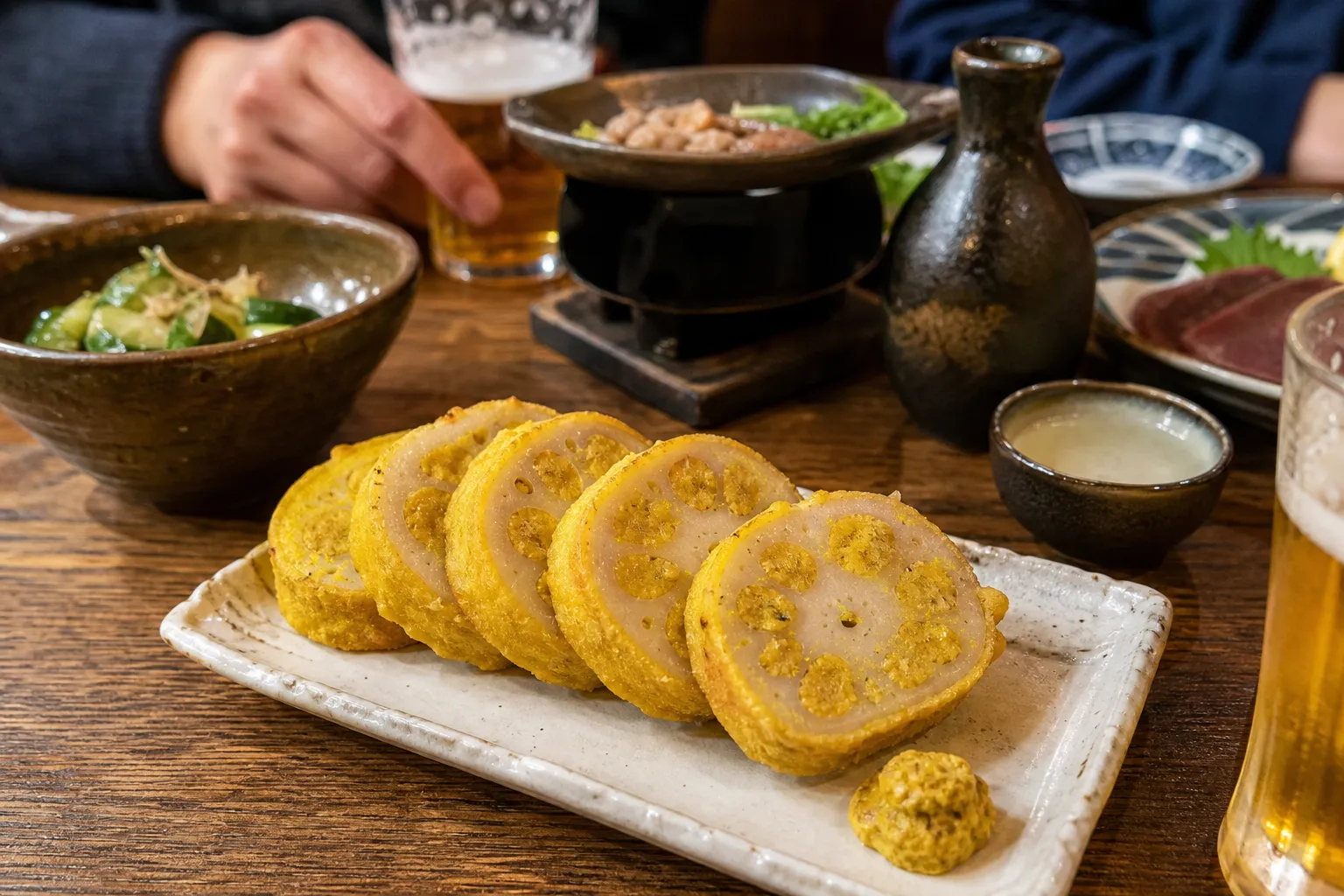
The story goes back to the early Edo period, to the Hosokawa clan who ruled Kumamoto. Their lord was reportedly in poor health, and a monk — knowing lotus root was believed to build strength and stamina — came up with a way to make it more appealing: stuff it with a nutrient-dense mustard-miso mix and fry it. The lord apparently loved it, and for a while it stayed a semi-secret dish tied to the domain, not something ordinary people got to eat freely.
I find that history genuinely charming — a dish invented as medicine that turned out to be delicious enough to become a regional obsession. Centuries later it's everywhere in Kumamoto: izakaya menus, souvenir shops, New Year's spreads, convenience store snack aisles. The lord's health food became the prefecture's proudest flex. I ate three pieces in a row purely to confirm the burn was consistent. It was. My eyes confirmed it too.
Why the holes are the whole point
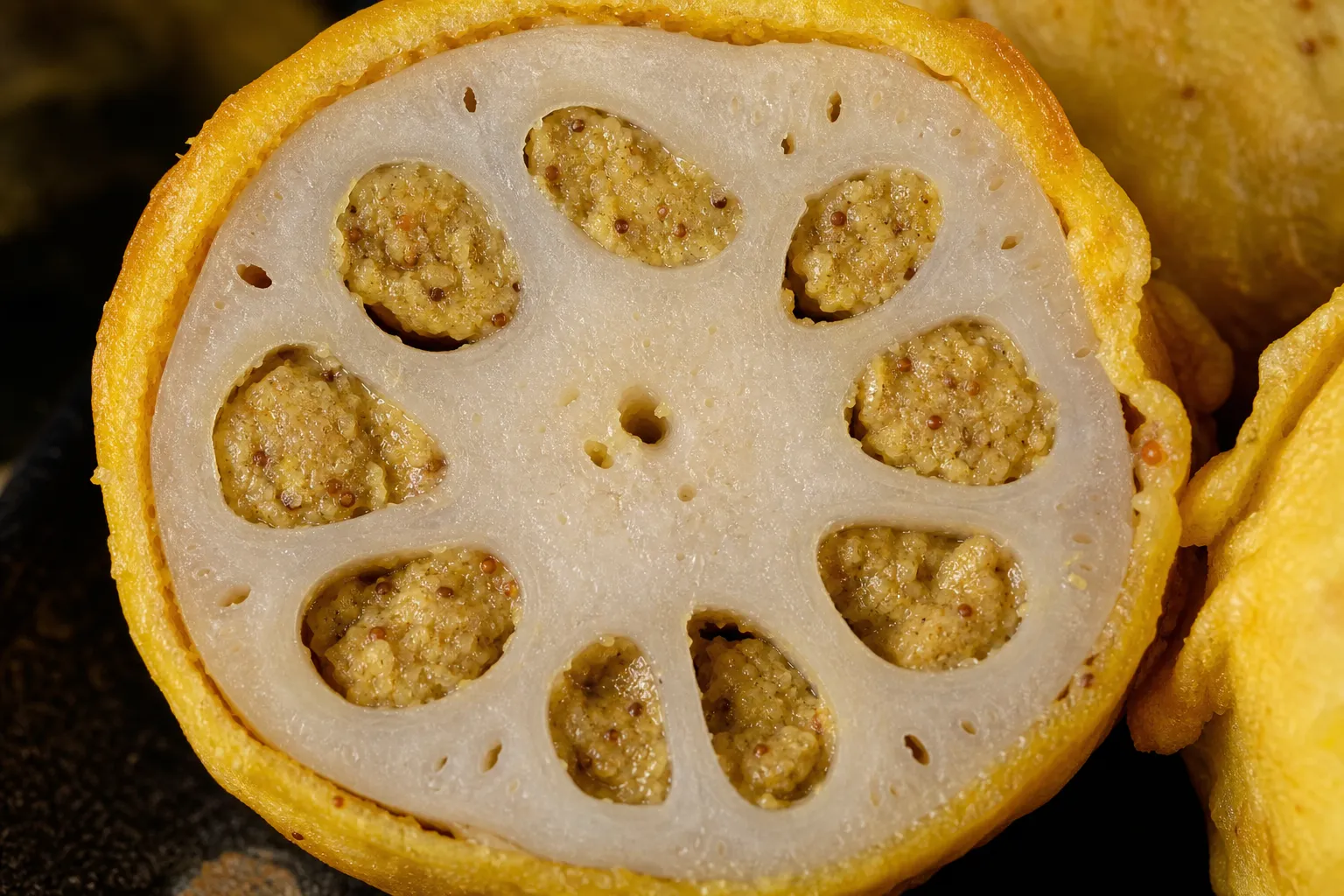
Lotus root already has a genuinely great texture — crisp, faintly starchy, with a satisfying snap that most root vegetables can't match. Karashi renkon builds its whole identity around showing that texture off: slice a piece in half and you see the lotus root's natural ring of holes, each one packed solid with a mustard-and-miso paste the color of egg yolk, the whole thing wrapped in a golden fried shell.
The mustard itself isn't the sharp, vinegary yellow mustard you're picturing — it's Japanese karashi, sharper and more sinus-direct, mellowed slightly by miso and sometimes a touch of sweetness, but still very much in charge. The batter fries up light and slightly chewy rather than crunchy, which means the textural contrast is really between the crisp lotus root and the dense, punchy filling. It's a small bite that argues with you the whole way down. I respect it.
How it's made
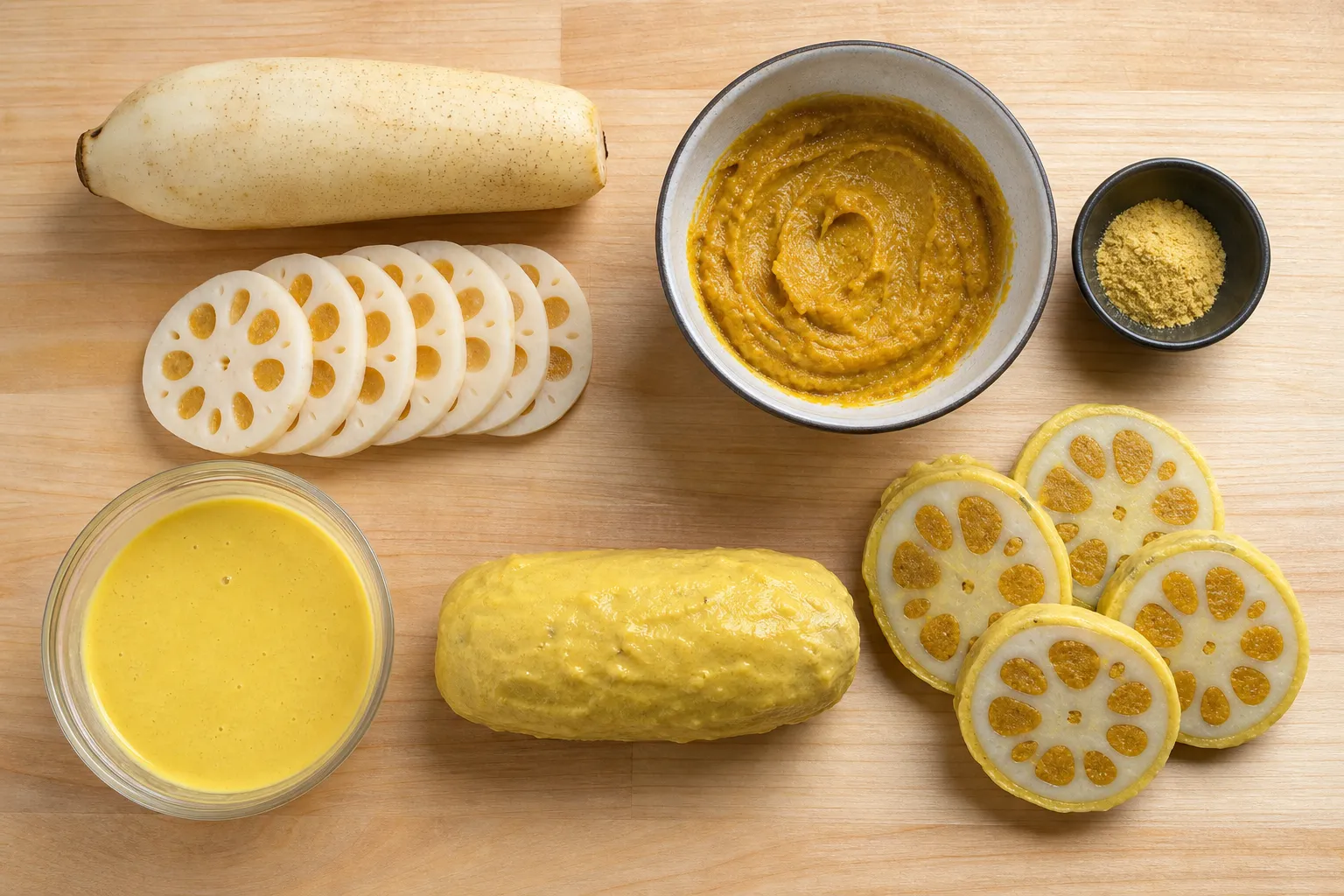
- Peel and boil a thick section of lotus root just until tender, keeping the holes intact
- Mix Japanese karashi mustard powder with miso (and sometimes a little honey or sugar) into a thick paste
- Pack the paste firmly into every hole running through the lotus root, using a spatula or chopstick
- Coat the stuffed lotus root in a turmeric-yellow batter (often colored with turmeric for that signature gold shell)
- Deep-fry until the outside is golden and set
- Cool slightly, then slice into rounds to reveal the mustard-filled flower pattern
Before you go — for the mustard-curious
Your questions, answered honestly
"How spicy is it, really?" — Sharper than Western mustard, more of a nose-clearing hit than a tongue burn. It fades fast. Have a drink ready the first time; after that you'll know what to expect.
"Is it served hot or cold?" — Both — freshly fried and warm at restaurants, or chilled as a snack from a shop or convenience store. Cold slightly mutes the mustard kick; warm makes it sharper.
"Do I dip it in anything?" — Usually eaten as-is, sometimes with a little soy sauce or grated ginger on the side. It doesn't need help.
"Can I bring some home?" — Yes — it's a classic Kumamoto souvenir, sold vacuum-packed at the airport and train station. It travels well and keeps for a while refrigerated.
What the staff will ask you
| You'll hear | Romaji | Meaning | Just say |
|---|---|---|---|
| からし多めでも大丈夫ですか? | Karashi ōme demo daijōbu desu ka? | "Is extra mustard okay for you?" | Futsū de onegaishimasu (regular, please) if you're unsure |
| お土産用にしますか? | Omiyage-yō ni shimasu ka? | "Is this for a souvenir/gift?" | Hai, omiyage desu (yes, it's a gift) |
| 温かいのと冷たいの、どちらが良いですか? | Atatakai no to tsumetai no, dochira ga ii desu ka? | "Warm one or cold one — which do you prefer?" | Atatakai no de (warm) / Tsumetai no de (cold) |
To order, just say "Karashi renkon kudasai" (からし蓮根ください) — "Karashi renkon, please."
Where to eat it
- Kumamoto City izakaya and local restaurants — widely available across the city as a standard side dish or drinking snack.
- Suizenji Jojuen area and Kumamoto Castle souvenir shops — vacuum-packed karashi renkon is a top local souvenir, sold near the castle and at Kumamoto Station.
- Kumamoto Airport and Kumamoto Station shops — reliable last-chance spot to grab some to bring home if you're short on time.
- Check before you go — small shops keep their own hours and can sell out of fresh-fried batches by evening; confirm before a special trip.
Soul Score
Local Roots5/5
First-Timer Friendly2/5
Adventure Level5/5
Comfort Level3/5
Travel Worthy4/5
These scores are one obsessed eater's gut feeling — not a verdict. A low number isn't a bad mark, just a different kind of adventure.
Know someone planning Japan?
← All Articles
Local Food · Kumamoto
Still hungry?
Eat more from Kumamoto
Local FoodKumamoto
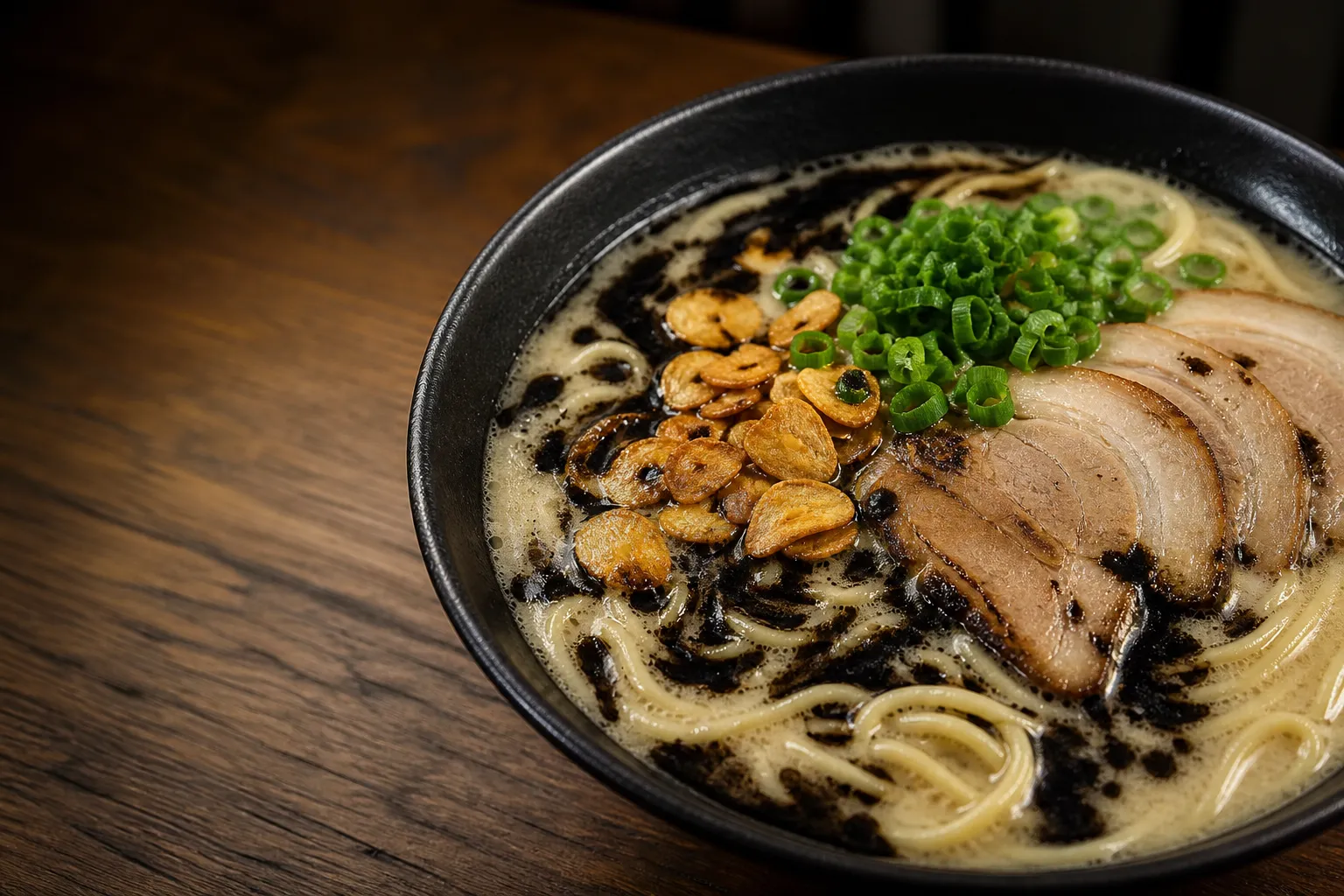
Kumamoto Ramen (熊本ラーメン)
There's a black, glossy pool sitting on top of the broth, and it smells like garlic that's been dared to become something else entirely.
July 5, 2026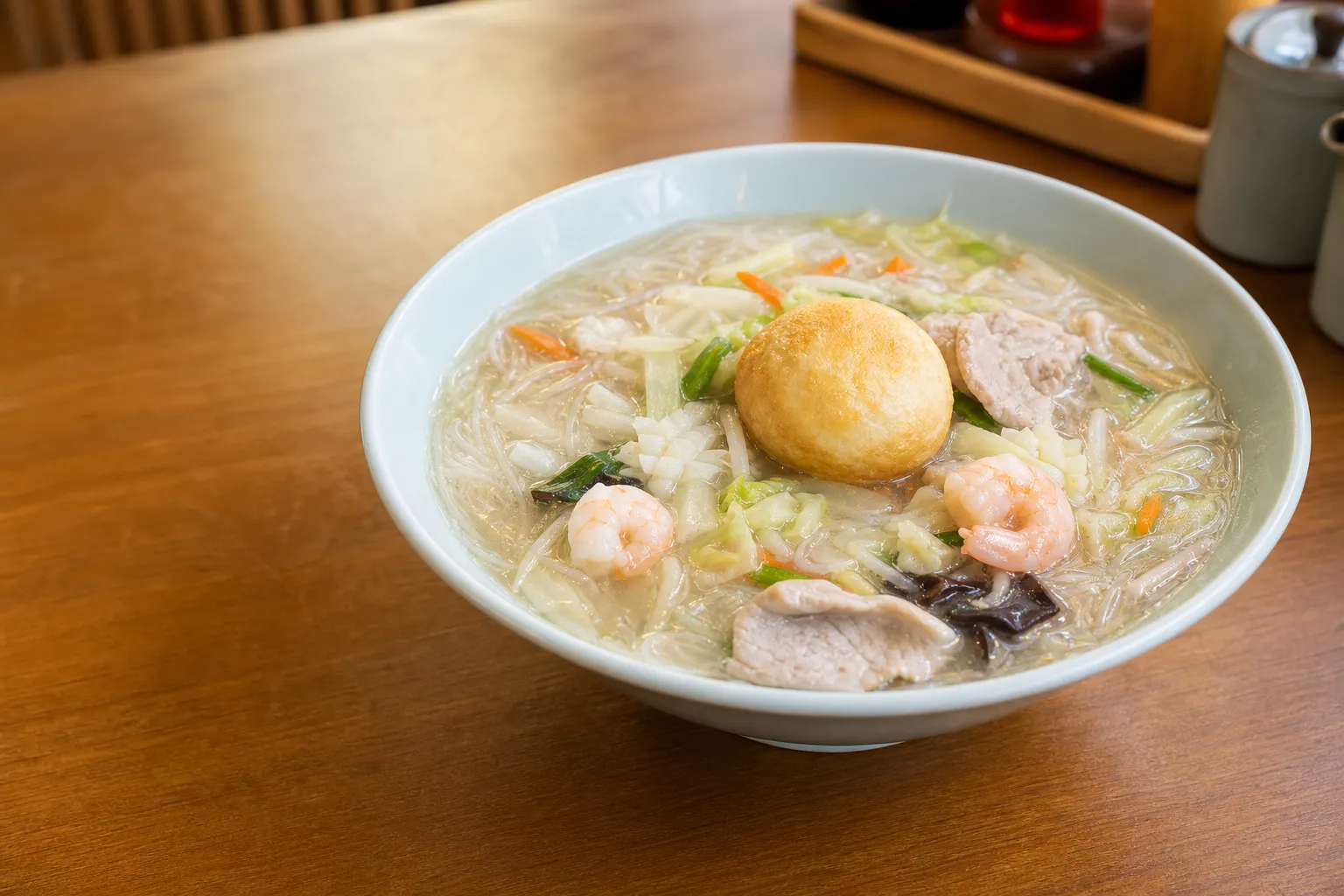
Local FoodKumamoto
Taipien (太平燕)
A whole fried egg, golden and round, floating in the middle of a clear soup like it's holding court. I circled it with my chopsticks for a full minute before I dared touch it.
July 4, 2026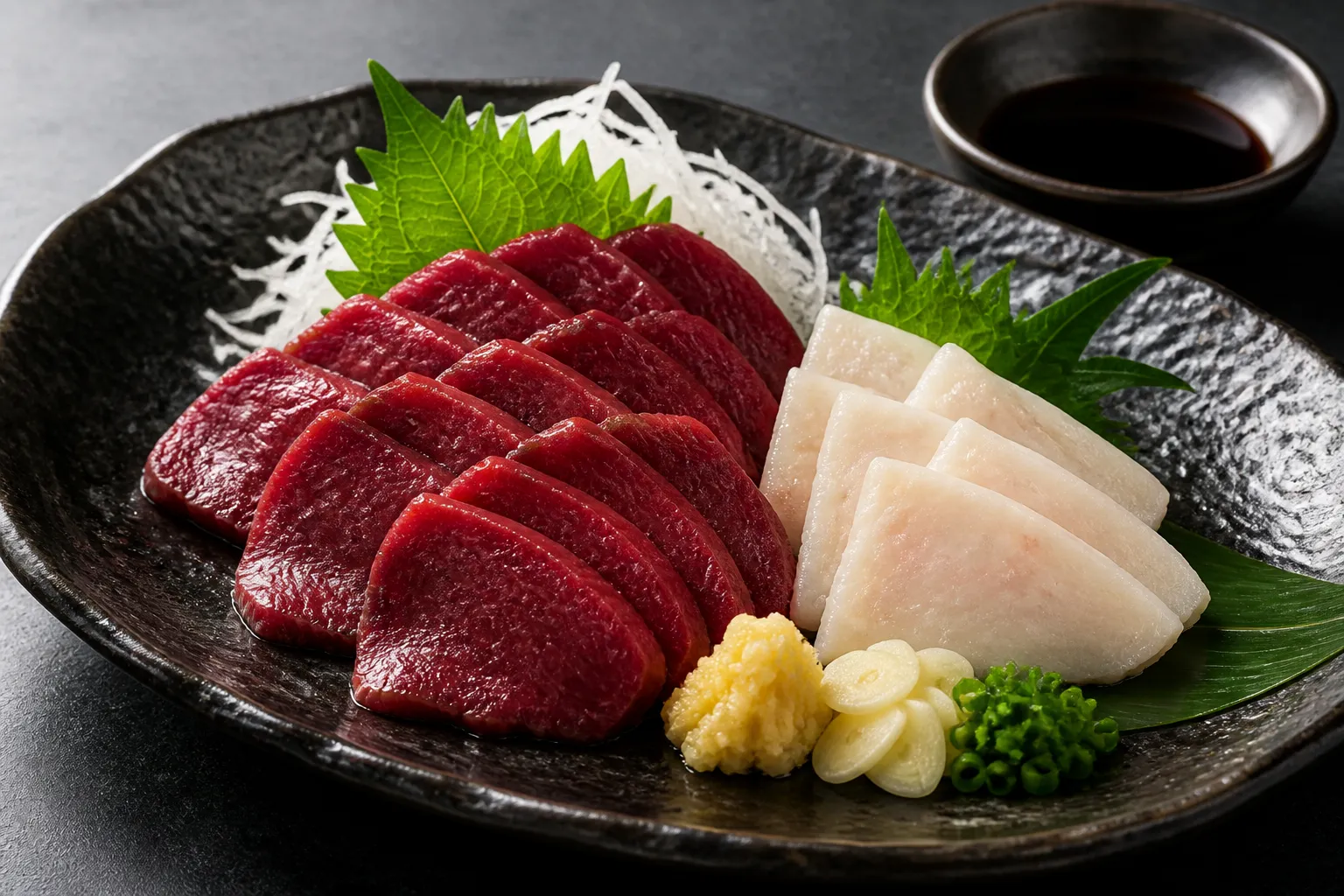
Local FoodKumamoto, Kumamoto
Basashi (馬刺し)
Raw horse meat, sliced thin, eaten with ginger and garlic and soy. Kumamoto's most provocative delicacy. Cleaner than beef, richer than tuna, and once you've tried it, you'll stop being surprised and start being converted.
June 25, 2026