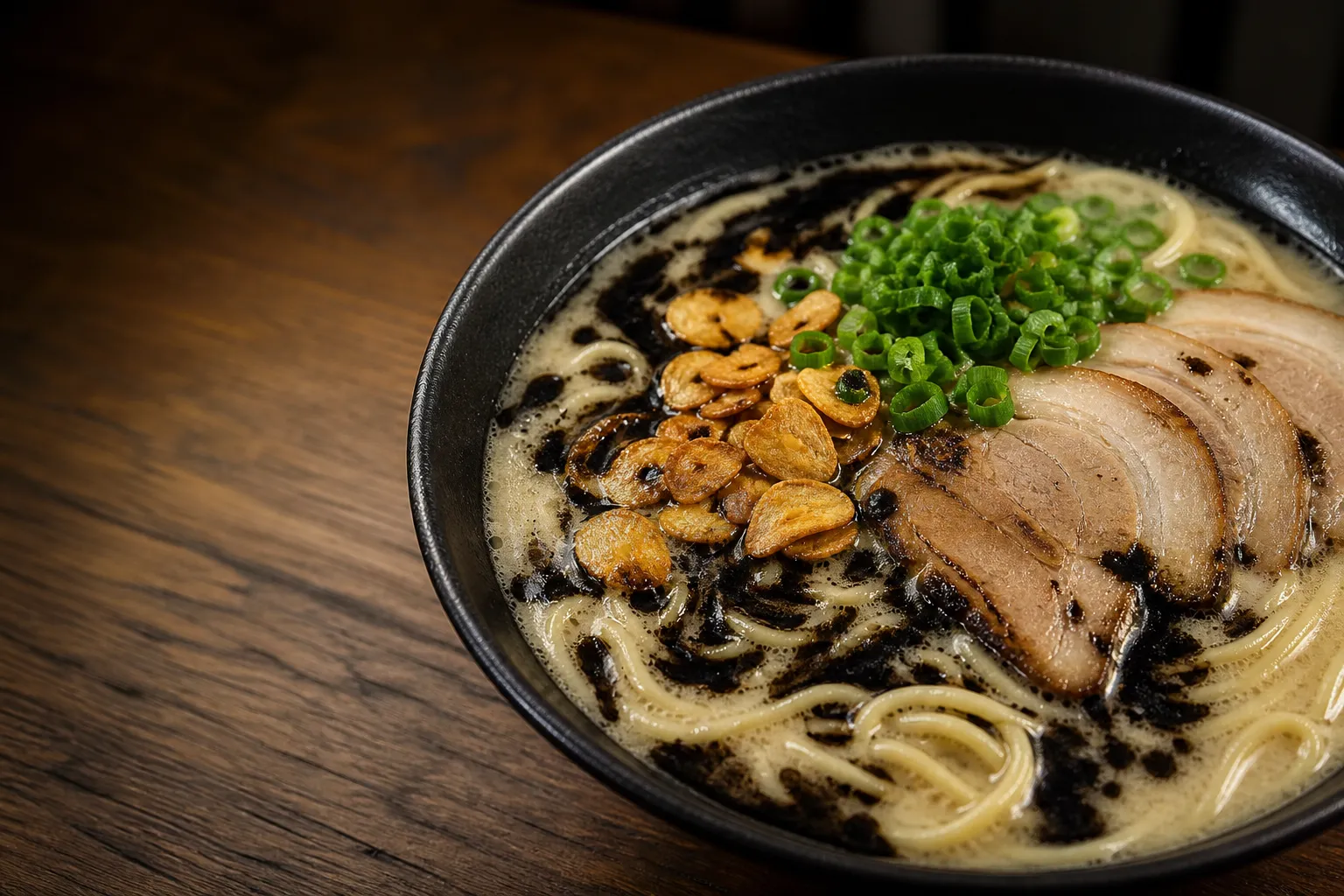
Black oil. Sitting right on top of a pale, milky broth like ink dropped into cream, refusing to mix in on its own. I stirred it once, just a little, and the whole bowl turned this deep amber-brown, and the smell that came up wasn't sharp raw-garlic — it was toasted, almost nutty, like garlic that had been coaxed into becoming something completely different. I have chased that smell down side streets since.
Share this dish


There's a black, glossy pool sitting on top of the broth, and it smells like garlic that's been dared to become something else entirely.
🍜 Planning a food trip to Kumamoto?Add this dish to my Food Trip →
 Add this dish to my Food Trip →
That black pool is mayu — garlic slow-cooked in oil until it darkens and turns fragrant rather than pungent — and it's the signature move of Kumamoto ramen, a regional tonkotsu (pork-bone) style that's often overshadowed by its more famous cousin two prefectures over in Fukuoka. Where Hakata ramen is all about paper-thin noodles and the kaedama refill game, Kumamoto ramen is about the broth itself: a rounder, less aggressively "porky" tonkotsu, medium-thick straight noodles with real bite, and that unmistakable black garlic oil plus a scatter of golden fried garlic chips on top. Same pig, wildly different soul.
Kyushu's other tonkotsu, built to be gentler on the nose
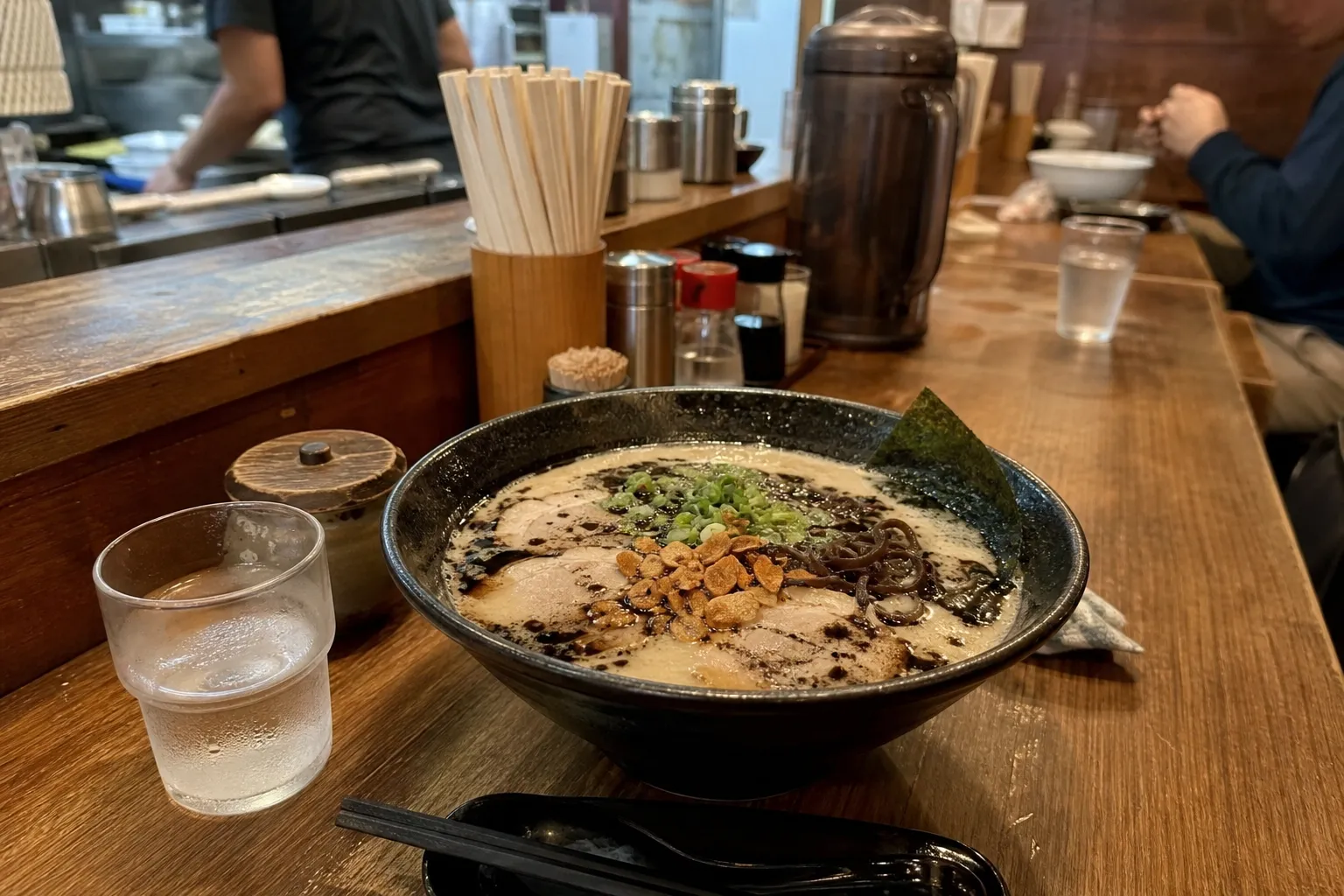
Kumamoto ramen traces back to the postwar decades, when local shops working with the same pork-bone tradition as their Fukuoka neighbors made a deliberate choice: tame the broth's rawer, more "gamey" pork funk while still keeping it rich, and season it with roasted garlic rather than relying on garlic as a raw condiment added at the table. Some shops in the lineage are said to have blended in a touch of chicken bone or vegetable stock alongside the pork to round out the flavor. The result is a tonkotsu broth that's just as creamy and satisfying as Hakata's but noticeably mellower — easier to eat a full bowl of without your senses going into overdrive.
I'll admit I didn't expect a regional ramen war to hinge on garlic preparation method, of all things, but here we are, and I find it genuinely delightful. Somewhere a chef decided raw garlic wasn't the answer and toasted-black garlic oil was, and an entire prefecture's ramen identity followed that one decision.
The black oil is doing more work than you'd think
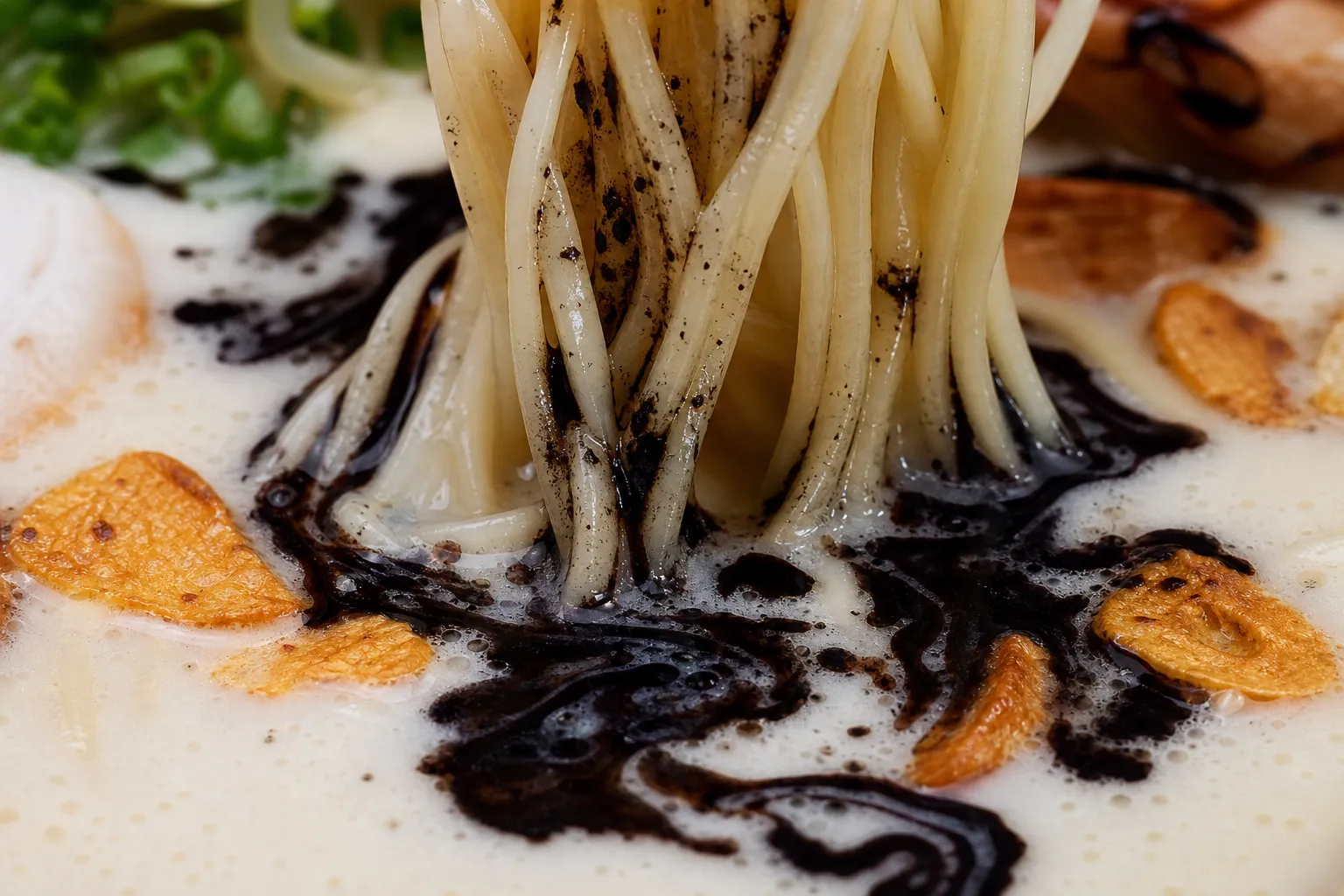
Mayu isn't garnish — it's seasoning, and it changes the whole bowl depending on how much you stir in. Leave it pooled on top and each spoonful gets a little smoky-garlic hit; stir it fully through and the entire broth deepens, turns richer and darker, almost roasted in character. Alongside it come crispy fried garlic chips, adding crunch and an extra hit of that toasted-garlic flavor, plus the usual chashu, wood-ear mushroom, green onion, and sometimes a boiled egg. The noodles are medium-thick and straight — noticeably chewier and more substantial than Hakata's ultra-thin strands — built to hold up under a broth this rich rather than dissolve into it. I ate the whole bowl slower than I meant to, just to keep tasting the oil change the broth as it mixed in.
How it's made
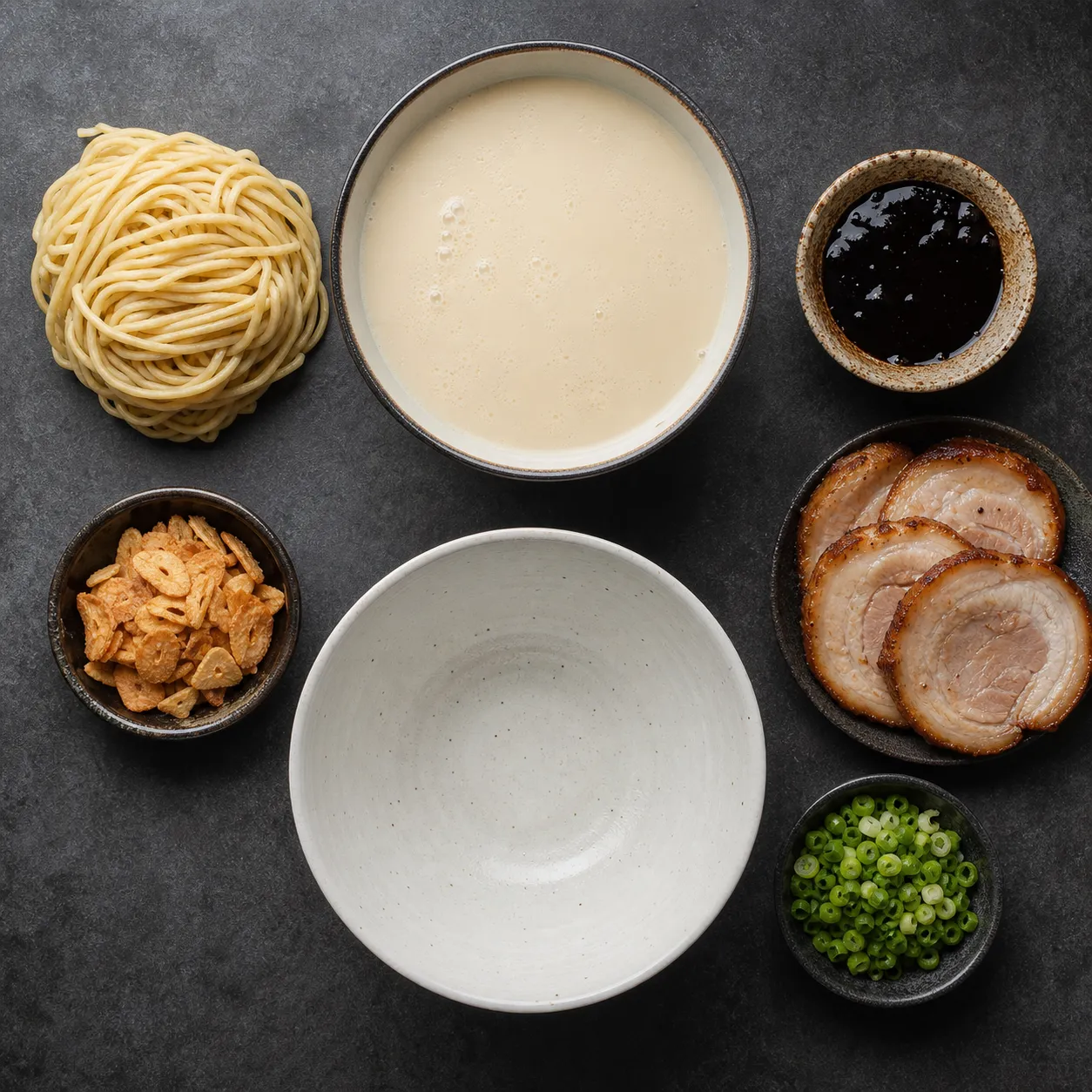
- Simmer pork bones (sometimes with a touch of chicken or vegetable stock) for hours into a rich, milky tonkotsu broth
- Slow-cook garlic in oil until it darkens and turns fragrant, toasted rather than raw — this is the mayu
- Fry sliced garlic separately until golden and crisp for the chips on top
- Cook medium-thick straight noodles until firm with real bite
- Assemble: broth, noodles, a spoonful of mayu, fried garlic chips, chashu, wood-ear mushroom, green onion
- Stir the mayu in gradually, tasting as the broth darkens and deepens
Before you go — meet the black oil slowly
Your questions, answered honestly
"Is the black oil spicy?" — No, not at all — it's savory and toasted-garlic in flavor, not heat. If you want spice, that's a separate condiment (like chili) that some shops offer on the side.
"How is this different from Hakata (Fukuoka) ramen?" — Hakata ramen is built around ultra-thin noodles and the kaedama refill ritual, with a punchier, more overtly porky broth. Kumamoto ramen has thicker, chewier noodles, a rounder and gentler broth, and its defining feature — mayu black garlic oil plus fried garlic chips — which Hakata ramen doesn't use at all.
"Should I mix the oil in all at once?" — Start by stirring in about half, taste, then add more. Mixing it all in immediately can front-load the whole bowl with garlic flavor before you've had a chance to taste the broth underneath.
"Is it too garlicky for a lunch meeting afterward?" — Fair warning: yes, probably. Mayu is delicious and it does linger. Plan accordingly, or share the garlic love and eat it with someone who's having the same bowl.
What the staff will ask you
| You'll hear | Romaji | Meaning | Just say |
|---|---|---|---|
| 麺の硬さは? | Men no katasa wa? | "How firm do you want the noodles?" | Futsū de (normal) |
| マー油の量はどうしますか? | Mayu no ryō wa dō shimasu ka? | "How much black garlic oil?" | Futsū de (normal amount) |
| トッピングは何にしますか? | Toppingu wa nani ni shimasu ka? | "What toppings would you like?" | Ajitama mo onegaishimasu (add a seasoned egg too) |
| お飲み物は? | Onomimono wa? | "Anything to drink?" | Nama biiru (a draft beer) |
To order, just say "Kumamoto rāmen kudasai" (熊本ラーメンください) — "Kumamoto ramen, please."
Where to eat it
- Kumamoto City — the dish's home turf, with long-running ramen shops throughout downtown and around Kumamoto Station.
- Kokutei (黒亭) — a well-known, long-established Kumamoto ramen shop often mentioned as a benchmark for the style.
- Ajisen Ramen — a Kumamoto-born chain (now found across Japan and internationally) that helped introduce Kumamoto-style tonkotsu ramen to a wider audience.
Popular shops can fill up at lunch and dinner peaks, so an off-peak visit is easier — hours and menus change, so check before you go.
Soul Score
Local Roots4/5
First-Timer Friendly4/5
Adventure Level3/5
Comfort Level5/5
Travel Worthy4/5
These scores are one obsessed eater's gut feeling — not a verdict. A low number isn't a bad mark, just a different kind of adventure.
Know someone planning Japan?
← All Articles
Local Food · Kumamoto
Still hungry?
Eat more from Kumamoto
Local FoodKumamoto
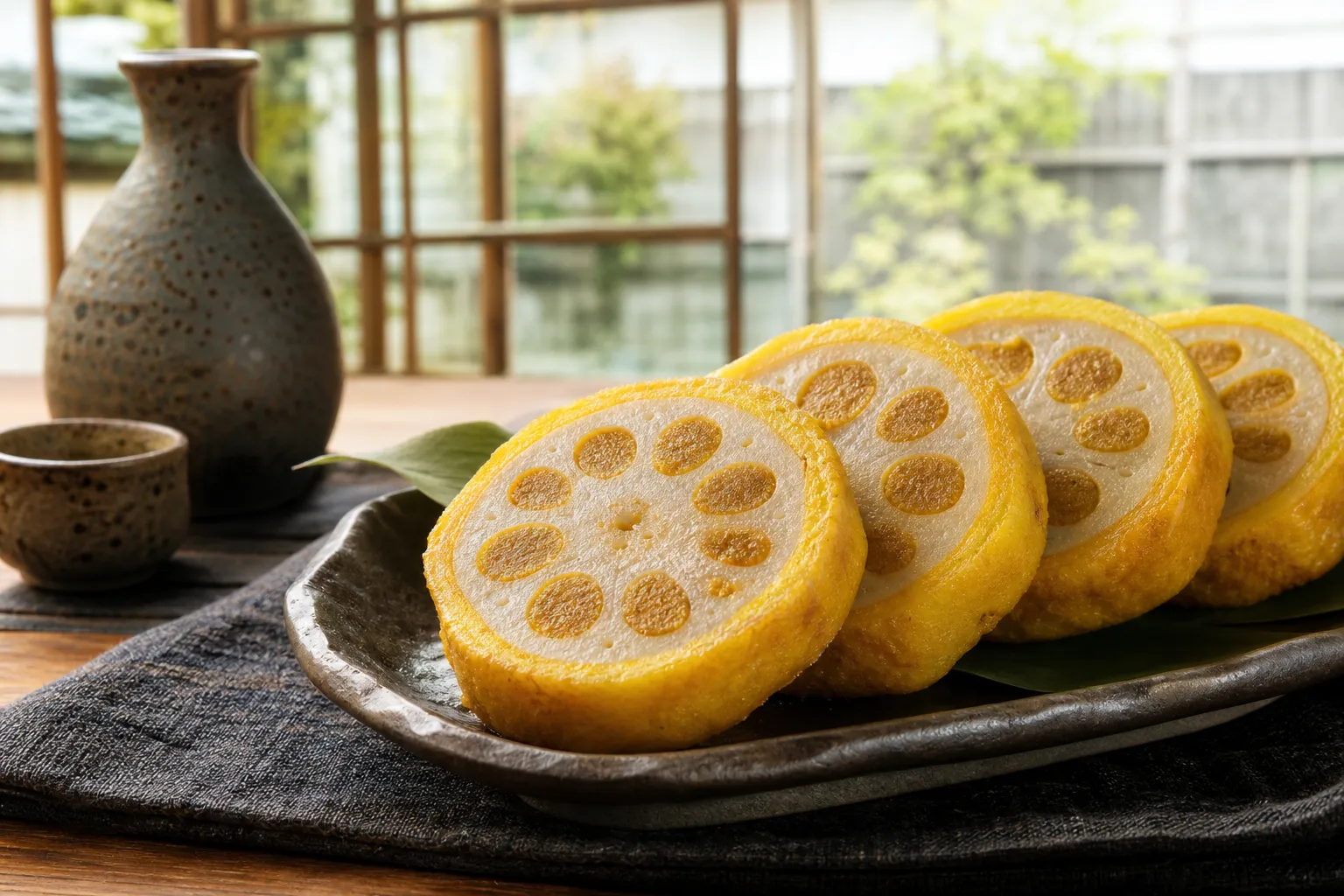
Karashi Renkon (からし蓮根)
Someone looked at a lotus root's natural holes and thought: those need to be filled with fire. I bit in expecting a snack. I got a sinus-clearing act of devotion.
July 4, 2026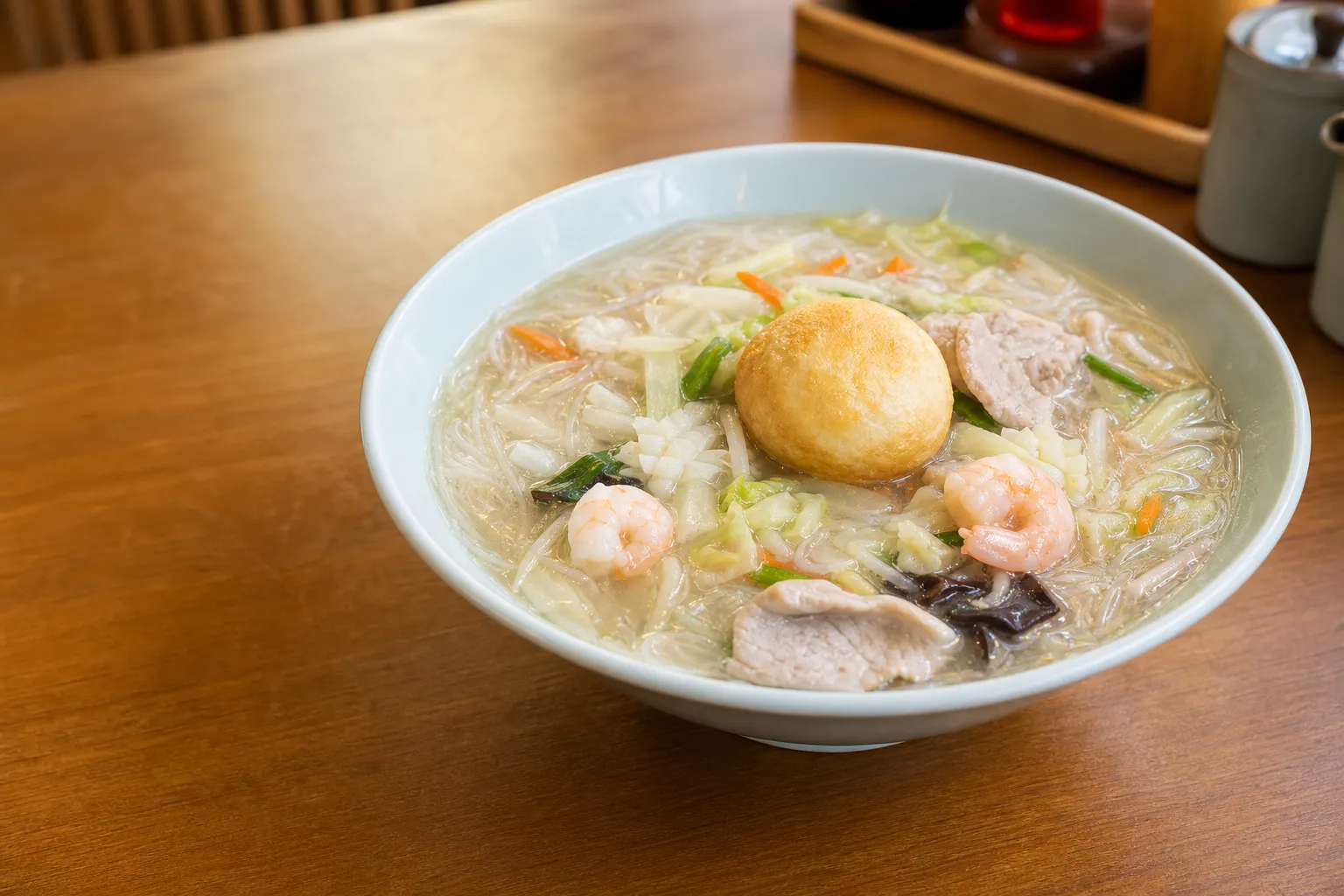
Local FoodKumamoto
Taipien (太平燕)
A whole fried egg, golden and round, floating in the middle of a clear soup like it's holding court. I circled it with my chopsticks for a full minute before I dared touch it.
July 4, 2026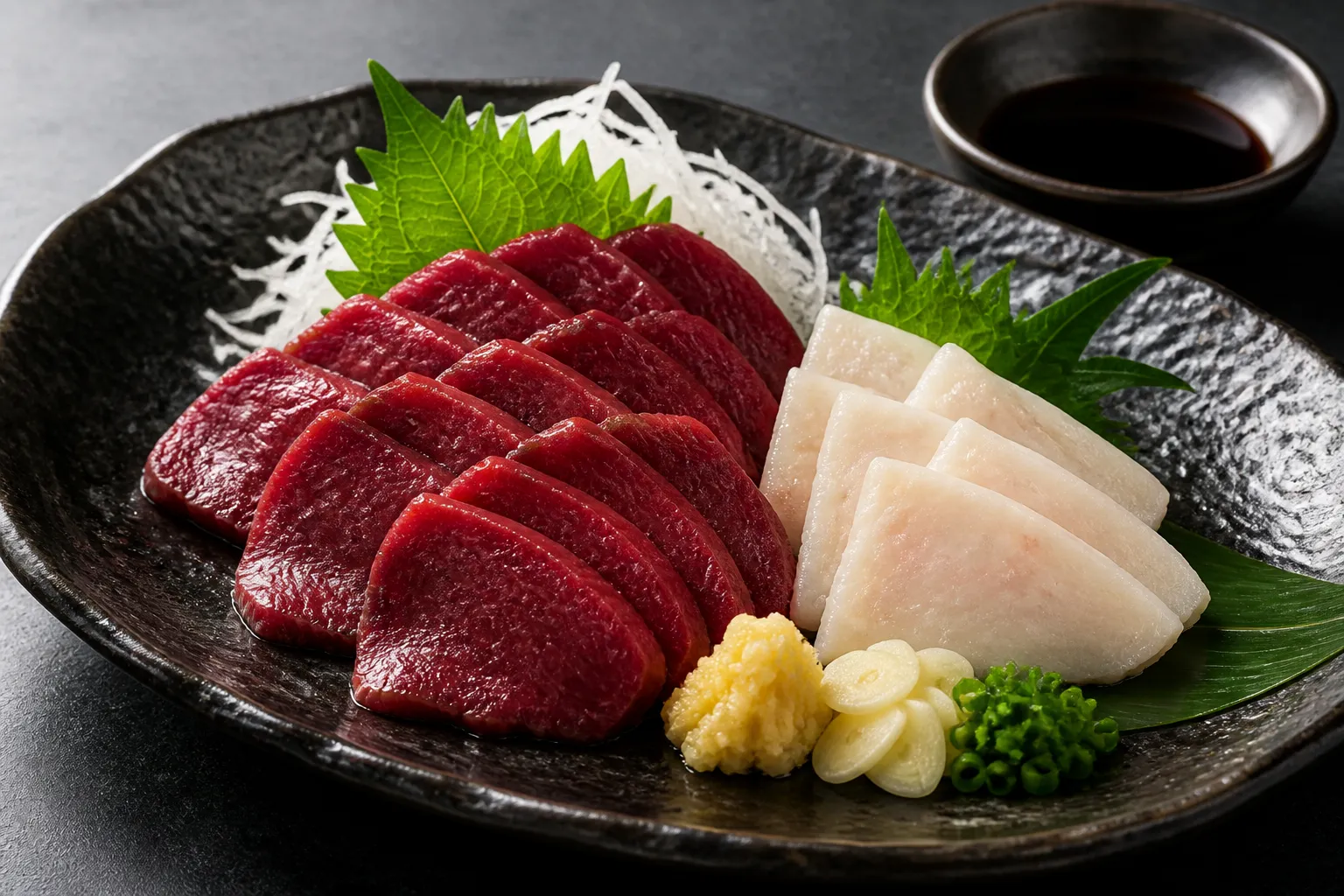
Local FoodKumamoto, Kumamoto
Basashi (馬刺し)
Raw horse meat, sliced thin, eaten with ginger and garlic and soy. Kumamoto's most provocative delicacy. Cleaner than beef, richer than tuna, and once you've tried it, you'll stop being surprised and start being converted.
June 25, 2026