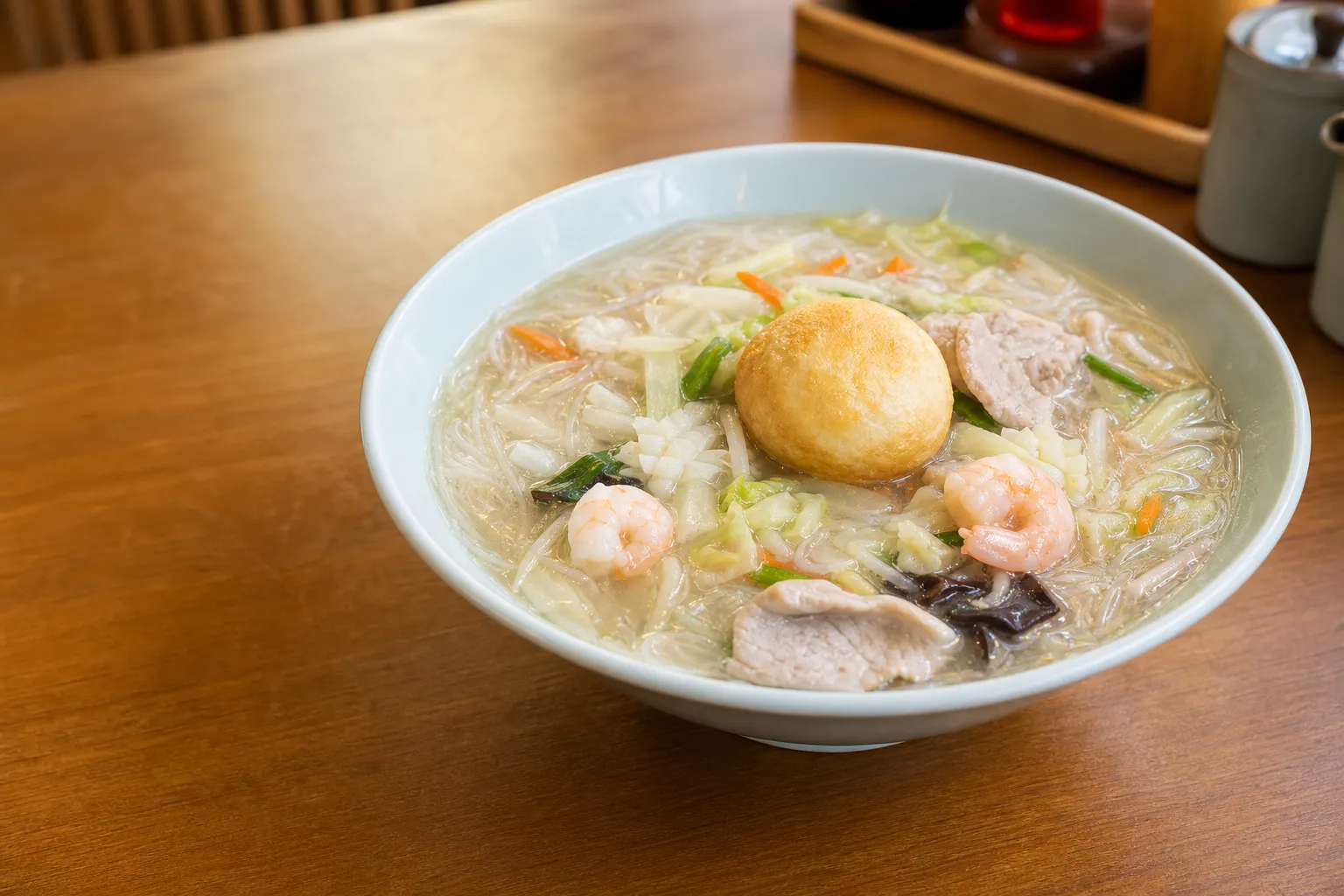
There's a whole fried egg sitting in the middle of my soup. Not sliced, not scrambled in — a whole golden orb, crisped on the outside, sitting there like a tiny sun in a bowl of pale broth. I poked it first. It held its shape. Then I cut it open and the still-soft yolk ran into the soup and I understood, immediately, why this dish has fans who order it specifically for that one ingredient.
Share this dish


A whole fried egg, golden and round, floating in the middle of a clear soup like it's holding court. I circled it with my chopsticks for a full minute before I dared touch it.
🍜 Planning a food trip to Kumamoto?Add this dish to my Food Trip →
 Add this dish to my Food Trip →
This is taipien (太平燕), Kumamoto's clear-broth noodle soup, and it plays a completely different game than the ramen you've had elsewhere. The noodles here are translucent harusame — glass noodles, thin and slippery, nothing like the wheat noodles in ramen or champon. The broth is light and clean, seafood-forward but not heavy. And on top, always, that fried egg (age-tamago), plus shrimp, pork, squid, and a tangle of vegetables. It reads delicate on the surface and then quietly fills you up completely. I did not see that coming.
A Chinese banquet dish that became Kumamoto's school lunch
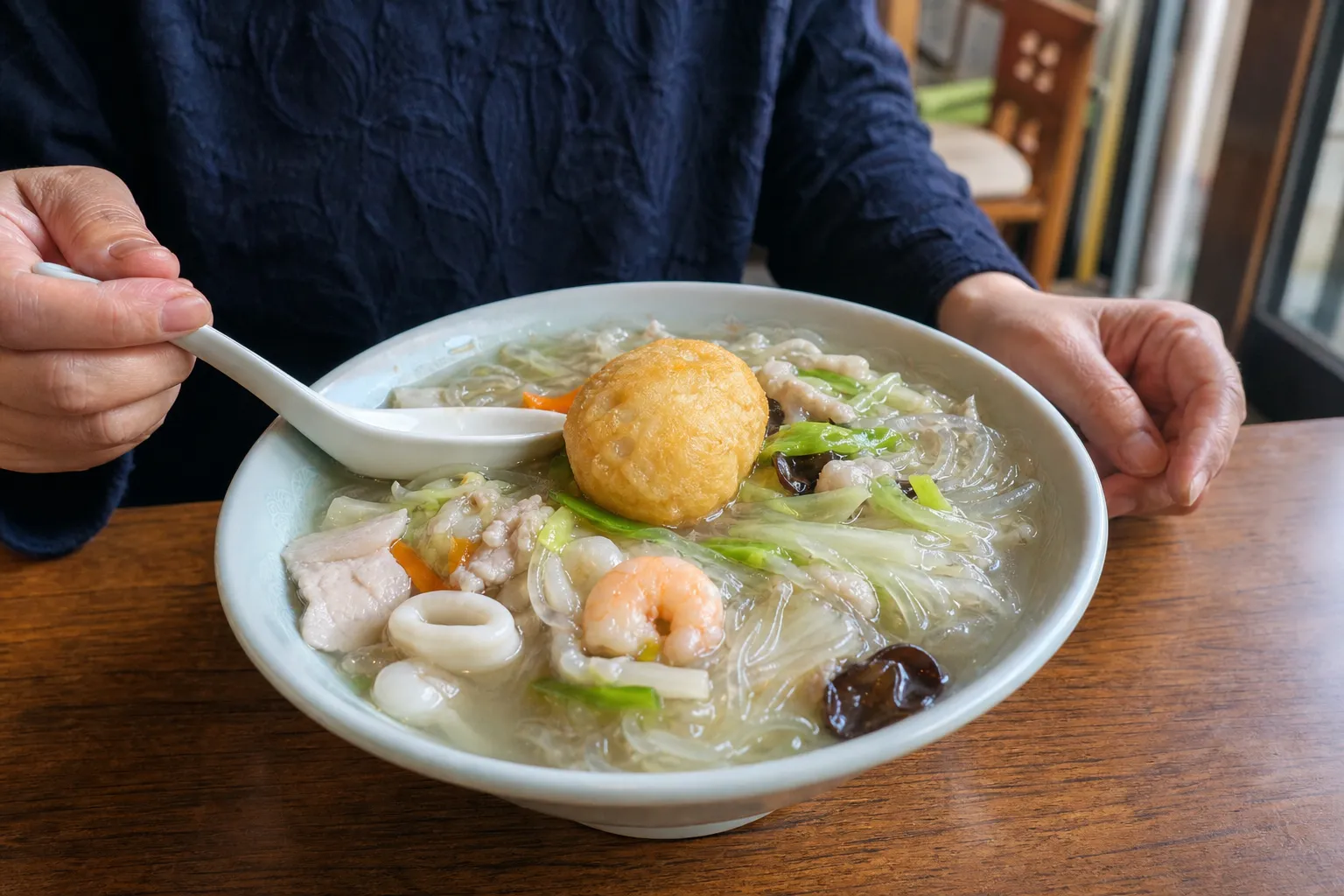
Taipien traces back to Fuzhou in China, where a version of the dish existed as a banquet food built around fried fish balls and glass noodles. Chinese immigrants brought it to Kumamoto in the early 20th century, and over the decades it drifted from restaurant specialty into something much more everyday — it's now a beloved staple that shows up regularly on Kumamoto school lunch menus, which still genuinely surprises me. A dish this specific, this regional, feeding actual schoolchildren on a rotating basis, decade after decade.
I find that oddly touching. This isn't a tourist-facing showcase dish dressed up for visitors — it's comfort food that Kumamoto kids grow up eating without a second thought, the way other places have their own unremarkable-to-locals, remarkable-to-outsiders lunch traditions. Eating it as a first-timer, I felt like I'd been let in on something that wasn't built for me and was better for it.
Why clear broth and glass noodles change everything
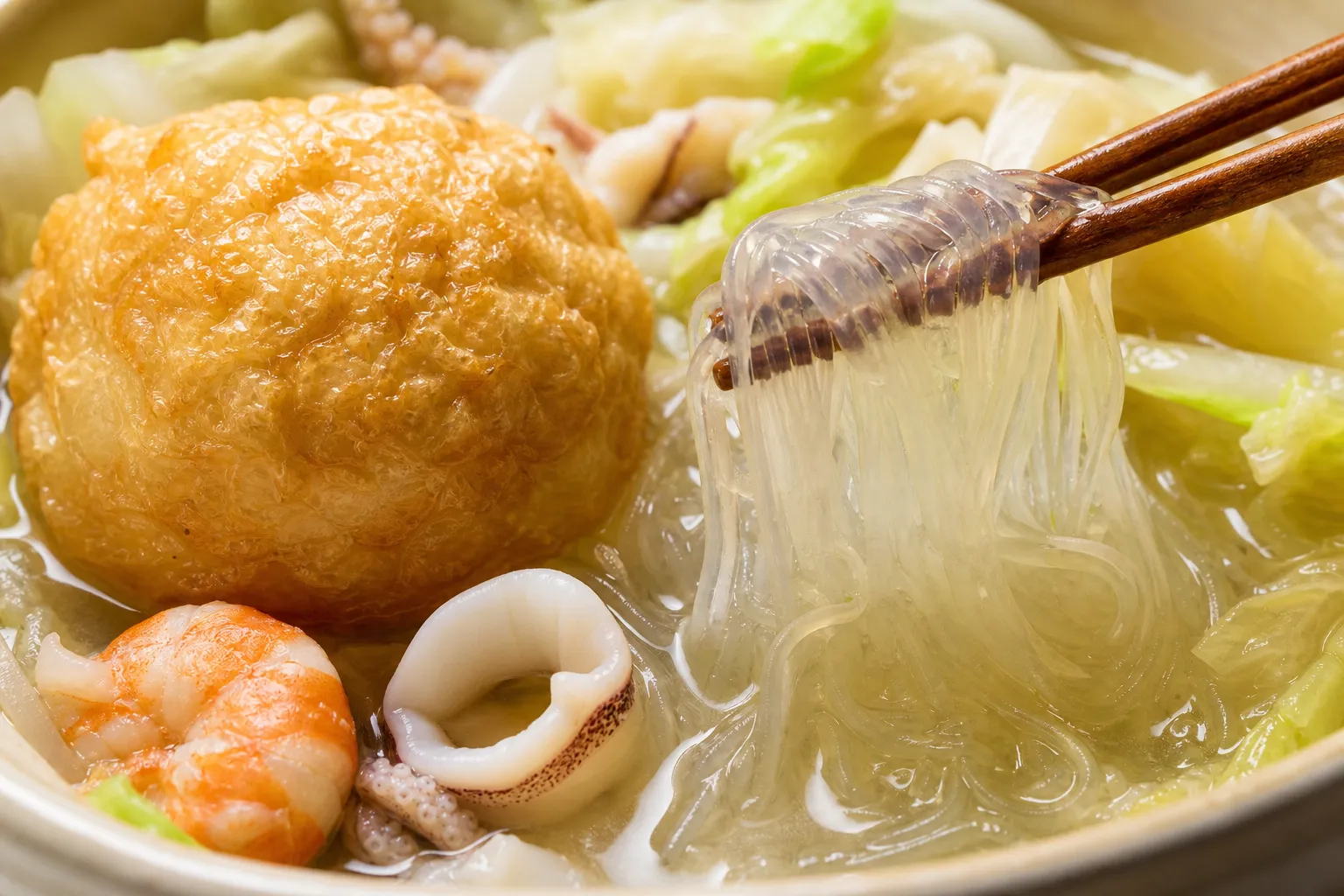
The broth is the opposite of ramen's rich, opaque intensity — clear, pale, savory but restrained, built from chicken or pork stock with seafood depth from shrimp and squid. That lightness is exactly the point: it lets the harusame noodles do their thing. Glass noodles have almost no flavor of their own, but a fantastic slippery, springy texture that soaks up the broth around them without going mushy the way wheat noodles eventually do.
Then there's the toppings doing structural work — shrimp, sliced pork, squid rings, wood ear mushroom, cabbage, and that fried egg sitting proudly on top, crisp-edged and soft-centered. Break the yolk and let it bleed into your spoonful of broth and noodles; it turns a light soup into something suddenly rich for one glorious bite. I chased that yolk around the bowl longer than I'd like to admit.
How it's made
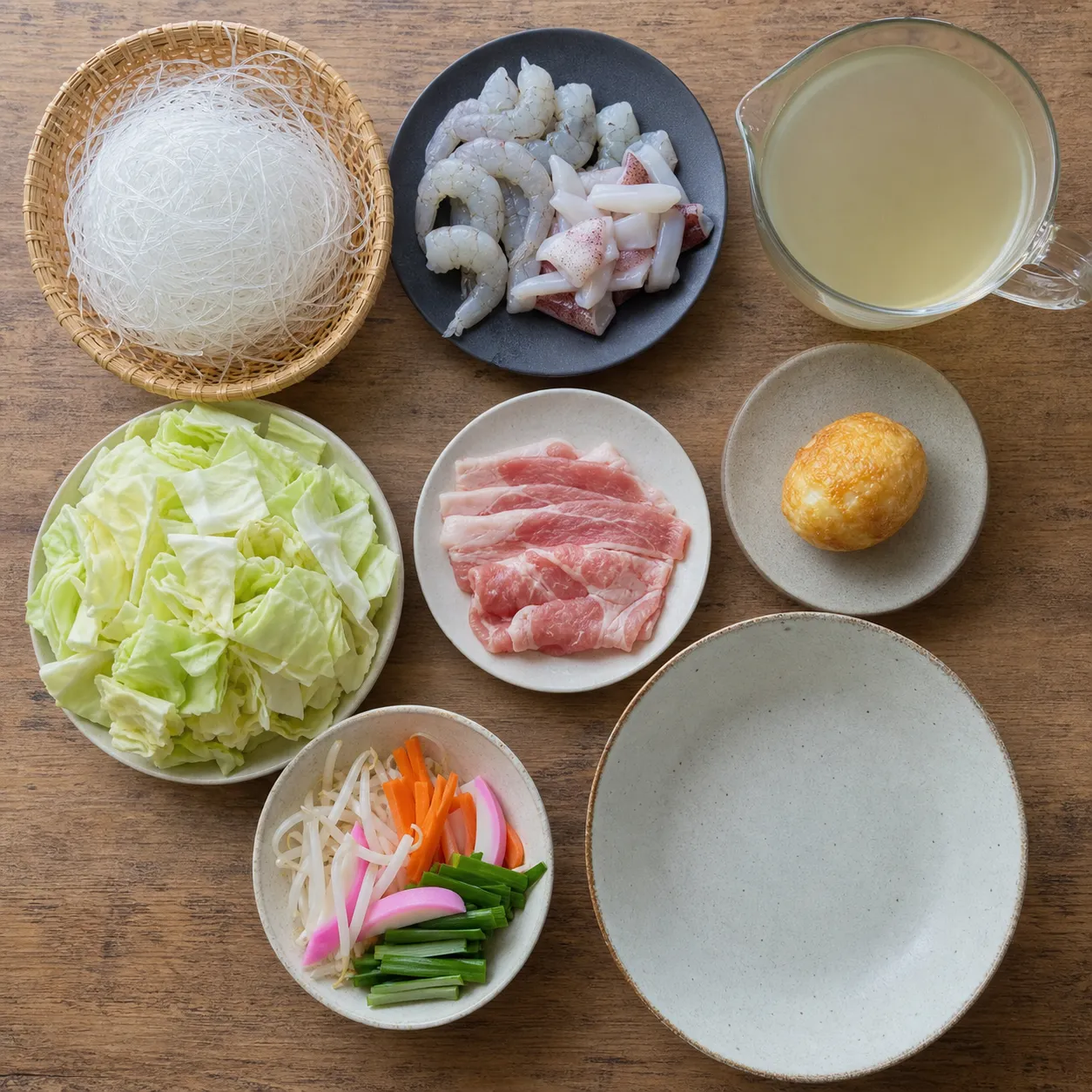
- Simmer a light, clear stock from chicken or pork bones with a touch of seafood
- Soak dried harusame (glass noodles) until soft and translucent
- Stir-fry shrimp, squid, pork, wood ear mushroom, and cabbage briefly in a hot pan
- Fry a whole egg until the white is crisp-edged and the yolk stays soft (age-tamago)
- Combine the noodles and stock in a bowl, top with the stir-fried seafood and vegetables
- Set the fried egg whole on top just before serving
Before you go — for the noodle-curious
Your questions, answered honestly
"Is this the same as champon?" — No — champon uses thick wheat noodles in a richer, often pork-bone-heavy broth. Taipien uses clear glass noodles in a lighter, cleaner broth. Different family entirely, despite both being Kumamoto/Nagasaki-area Chinese-immigrant dishes.
"Do I eat the egg whole or break it first?" — Either way works, but breaking the yolk into the broth partway through is the move locals rave about — it enriches the soup for the rest of the bowl.
"Is it spicy?" — No, taipien is a mild, clean-tasting soup. If you want heat, look elsewhere on the menu.
"Is it filling despite looking light?" — Yes, surprisingly. Between the noodles, egg, and toppings it eats like a full meal, not a starter.
What the staff will ask you
| You'll hear | Romaji | Meaning | Just say |
|---|---|---|---|
| 麺の量、大盛りにしますか? | Men no ryō, ōmori ni shimasu ka? | "Want a large portion of noodles?" | Futsū de daijōbu desu (regular is fine) |
| 卵は半熟でよろしいですか? | Tamago wa hanjuku de yoroshii desu ka? | "Is a soft-set egg okay?" | Hai, sore de onegaishimasu (yes, that's fine) |
| お飲み物は何にしますか? | Onomimono wa nani ni shimasu ka? | "What would you like to drink?" | Mizu de daijōbu desu (water is fine) |
To order, just say "Taipien kudasai" (太平燕ください) — "Taipien, please."
Where to eat it
- Kumamoto City Chinese restaurants and local diners (shokudō) — taipien appears on menus across the city, from casual lunch spots to dedicated Chinese-Japanese fusion restaurants.
- Shin-Machi and Kamitori Chinatown-adjacent areas — several long-established restaurants near central Kumamoto specialize in the Chinese-immigrant dishes taipien grew out of.
- Kumamoto Station and airport food courts — a reliable option if you're short on time and want a quick, genuine taste before heading out.
- Check before you go — smaller local diners keep their own hours and lunch-only service is common; confirm before making a special trip.
Soul Score
Local Roots4/5
First-Timer Friendly4/5
Adventure Level3/5
Comfort Level5/5
Travel Worthy4/5
These scores are one obsessed eater's gut feeling — not a verdict. A low number isn't a bad mark, just a different kind of adventure.
Know someone planning Japan?
← All Articles
Local Food · Kumamoto
Still hungry?
Eat more from Kumamoto
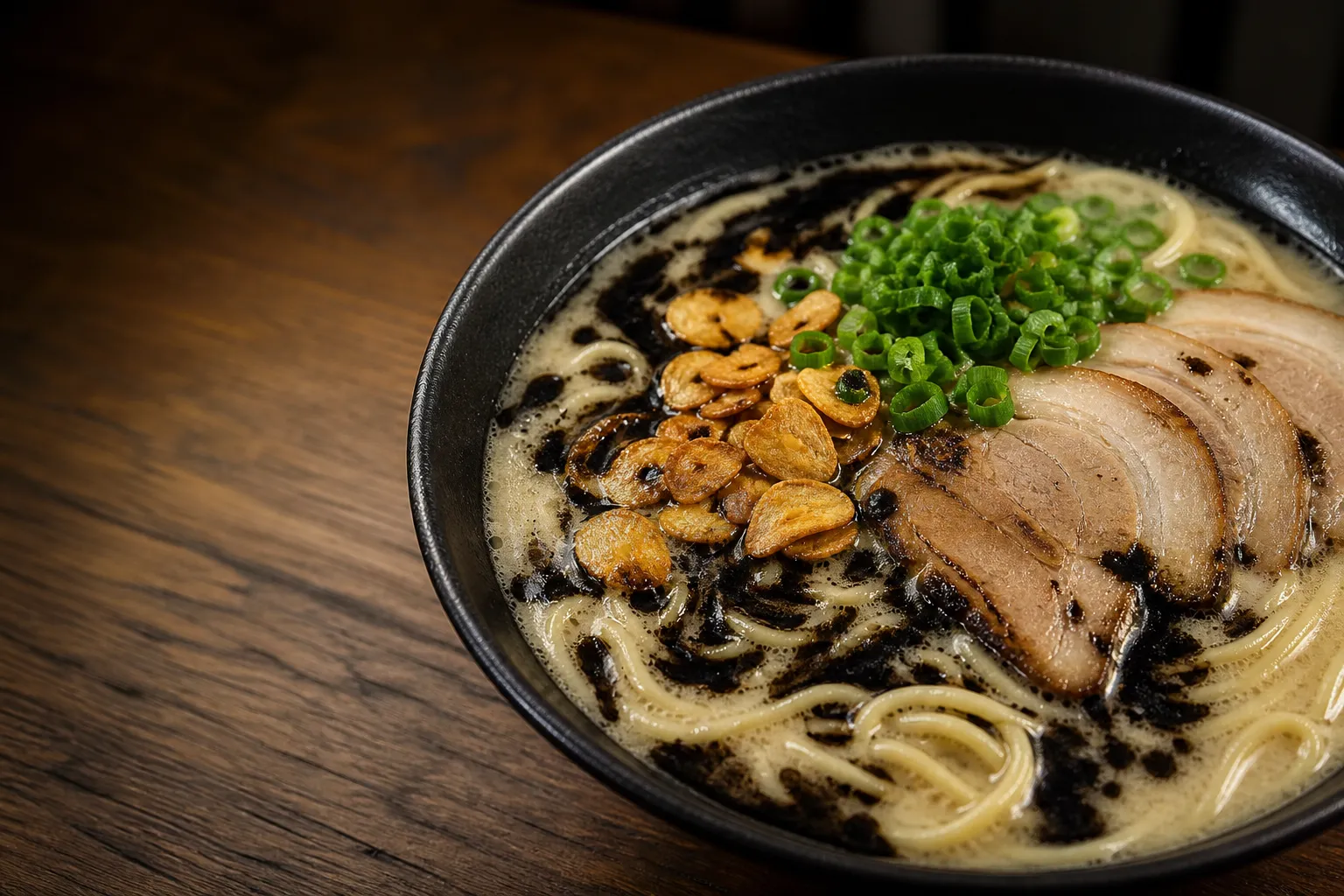
Local FoodKumamoto
Kumamoto Ramen (熊本ラーメン)
There's a black, glossy pool sitting on top of the broth, and it smells like garlic that's been dared to become something else entirely.
July 5, 2026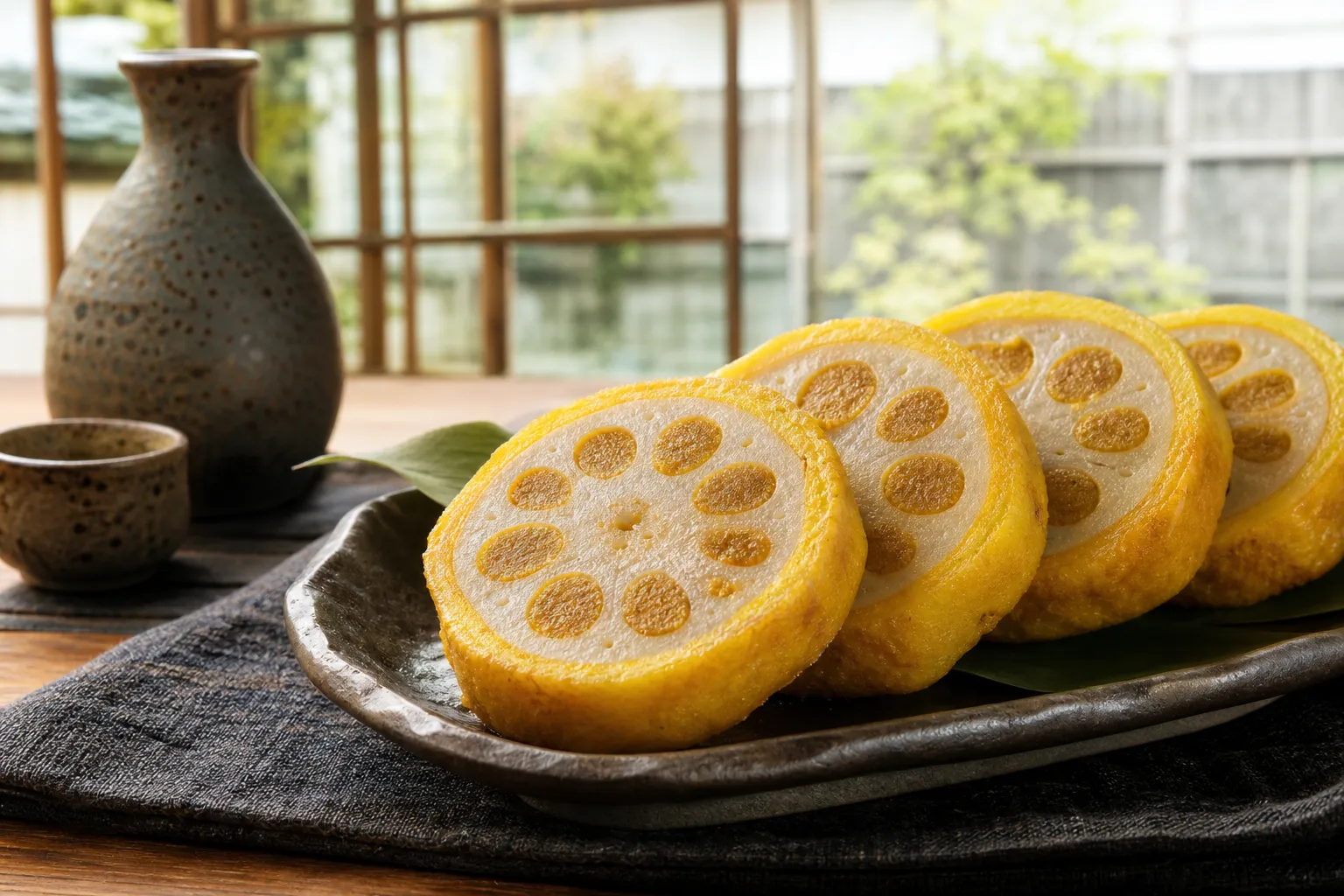
Local FoodKumamoto
Karashi Renkon (からし蓮根)
Someone looked at a lotus root's natural holes and thought: those need to be filled with fire. I bit in expecting a snack. I got a sinus-clearing act of devotion.
July 4, 2026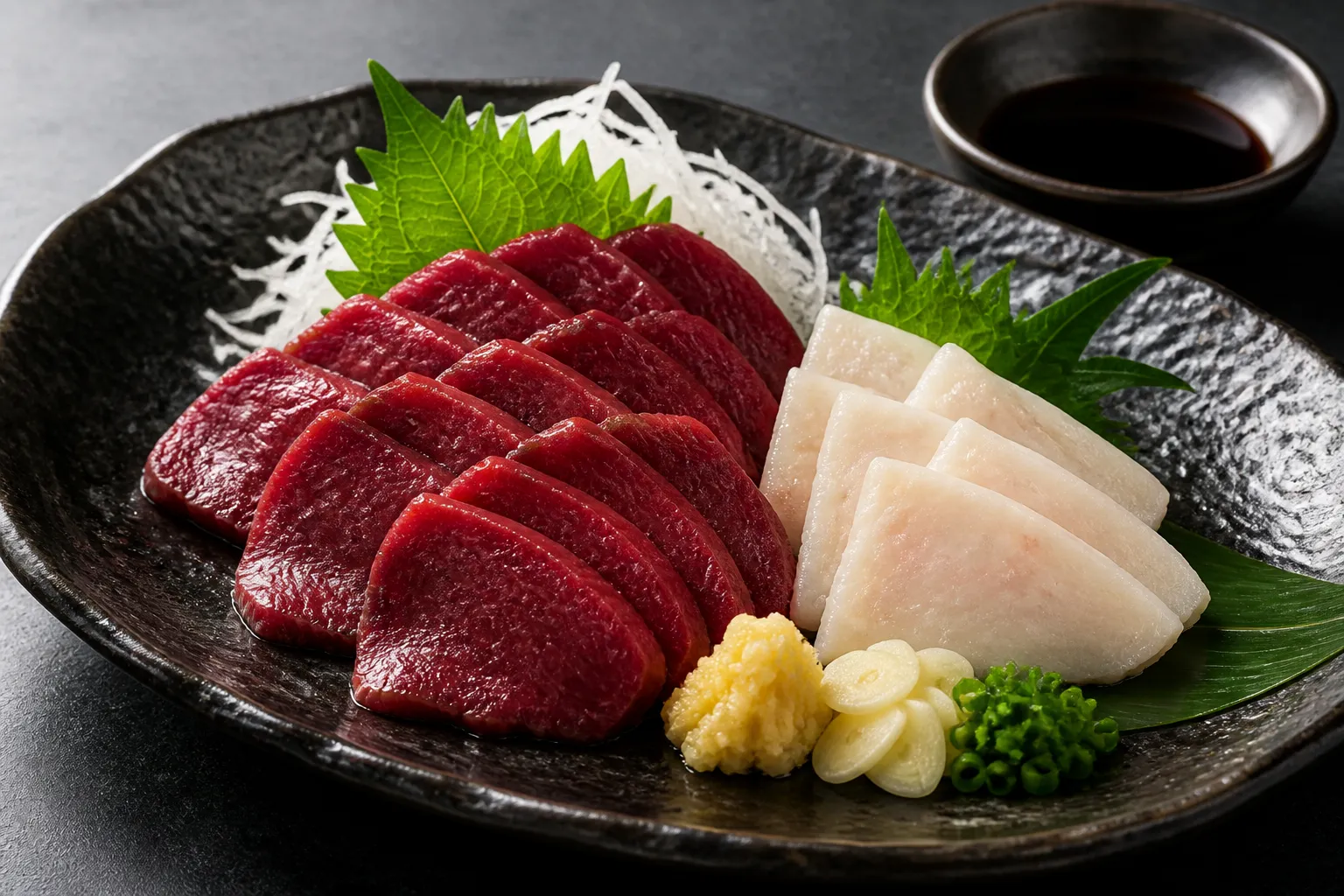
Local FoodKumamoto, Kumamoto
Basashi (馬刺し)
Raw horse meat, sliced thin, eaten with ginger and garlic and soy. Kumamoto's most provocative delicacy. Cleaner than beef, richer than tuna, and once you've tried it, you'll stop being surprised and start being converted.
June 25, 2026