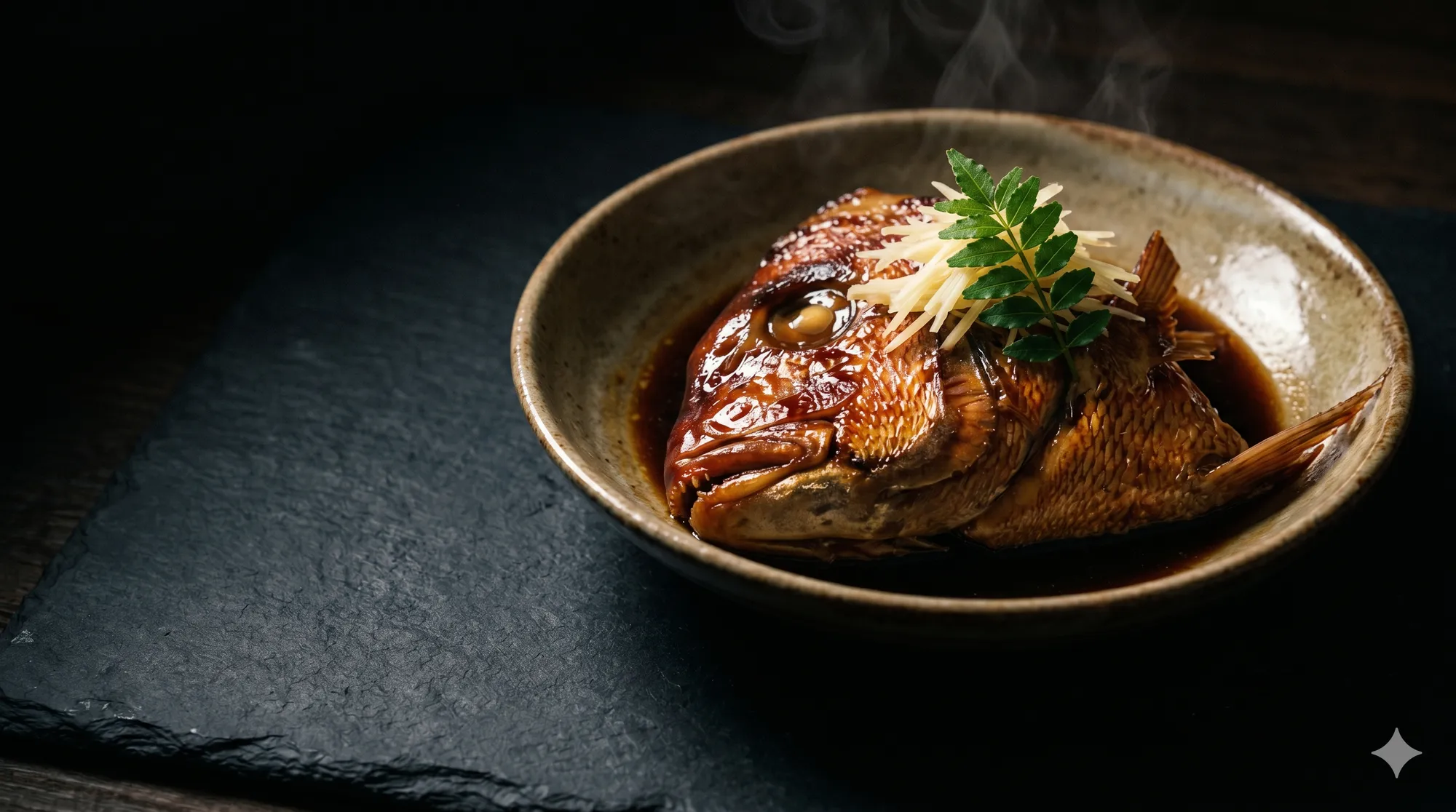
I need you to be brave for a second, because this one looks back at you.
Share this dish


A whole fish head simmered in soy and mirin until it glistens like lacquer. It looks intimidating. It's secretly the best, richest, most prized part of the fish.
Kabuto-ni is a whole fish head — usually a magnificent red sea bream — simmered in soy, mirin, sake, and sugar until it turns deep, glossy, lacquer-dark and the kitchen smells like a festival. And I know, I know, a fish head staring up from a bowl is a lot to take in the first time. But here's the secret every Japanese grandmother already knows: the head is the best part. The cheeks, the collar, the little hidden pockets of meat — sweeter, richer, more tender than any fillet. This is the dish that wastes nothing and rewards everything. Lean in.
A grand dish, kept in the family
Kabuto-ni goes back a long, long way in Japanese home cooking, and tai (red sea bream) kabuto-ni in particular shows up at celebrations — New Year, weddings, the big moments. Sea bream is the lucky fish (its name puns on medetai, "auspicious"), so simmering its noble head into something this rich feels like a small ceremony.
Every region and every family tweaks it. It's the kind of recipe that lives in someone's hands, not a cookbook.
Why people fight over the cheeks
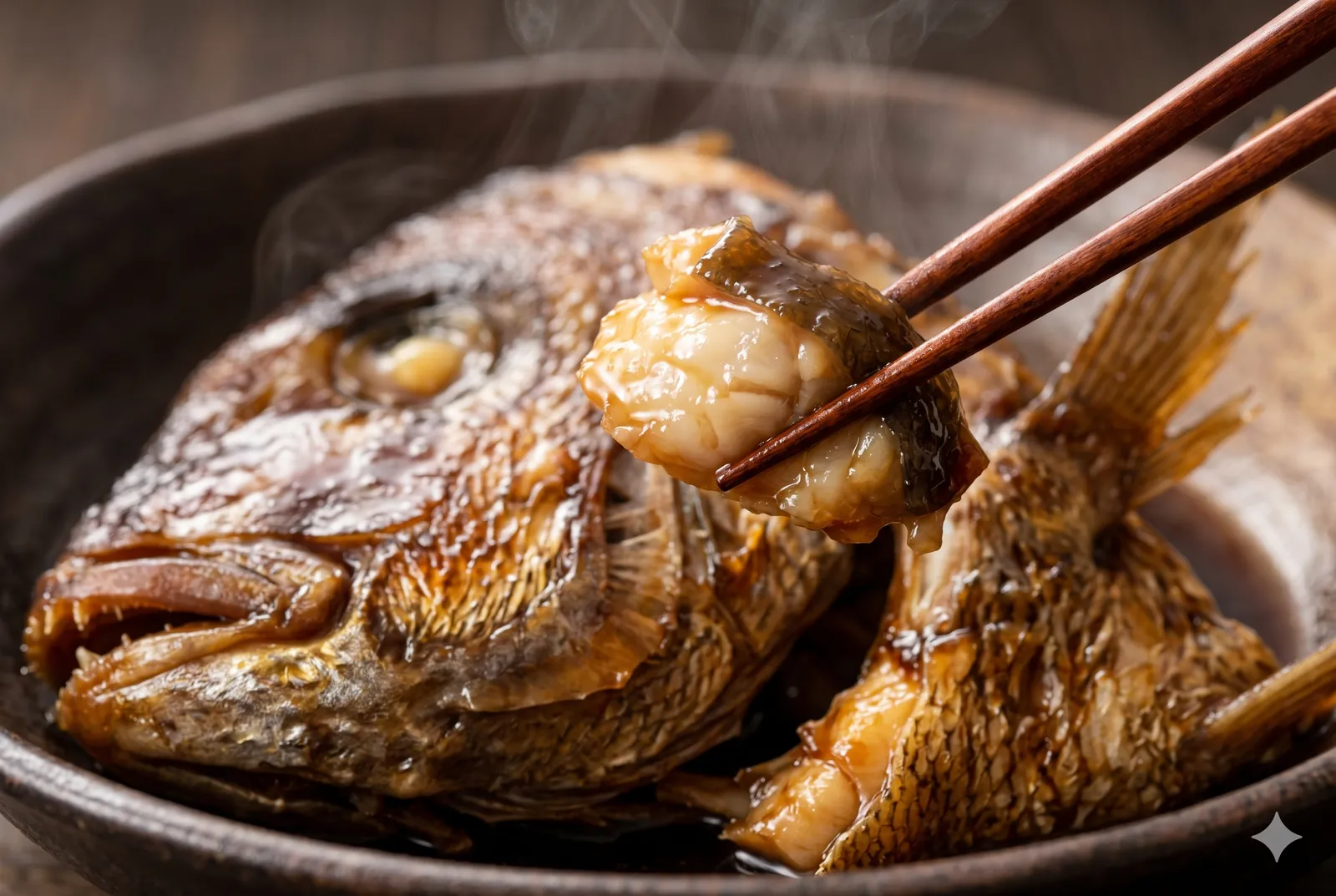
The whole point is that the head holds the sweetest, most delicate meat on the fish. Slow-simmered in that sweet-savory broth, the cheeks go silky, the collar turns lush and fatty, and the gelatin around the bones gives everything a glossy, lip-sticking richness. Burdock and ginger simmered alongside add earthiness and cut the sweetness.
You don't so much eat kabuto-ni as explore it — chopsticks hunting out every tender corner. The treasure hunt is part of the joy.
How it's made
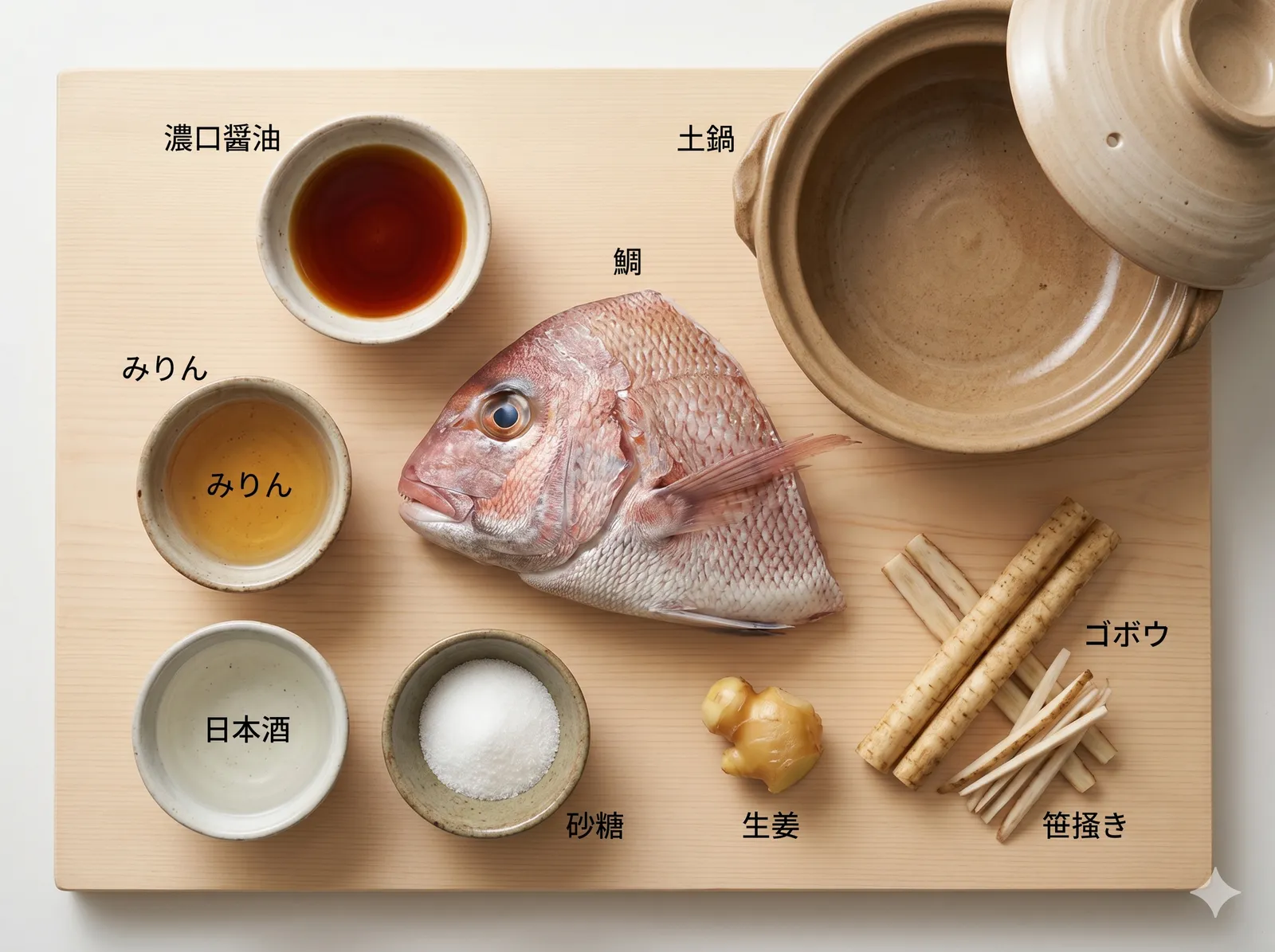
- Halve the fish head and clean it thoroughly — scales, blood, all of it
- Blanch in boiling water until the surface whitens, then shock in ice water to wash away any off-smells
- Simmer sake, water, sugar, mirin, and soy together
- Add the head and baste it constantly as it cooks
- Reduce the broth down to about a third, until it's thick and glossy
- Finish with a hit of fresh ginger juice and one last boil
Step 2 is the make-or-break. Skip the blanch-and-shock and you'll taste it. Do it right, and there's nothing "fishy" about it at all — just deep, clean, savory richness.
Before you go — how to actually eat it
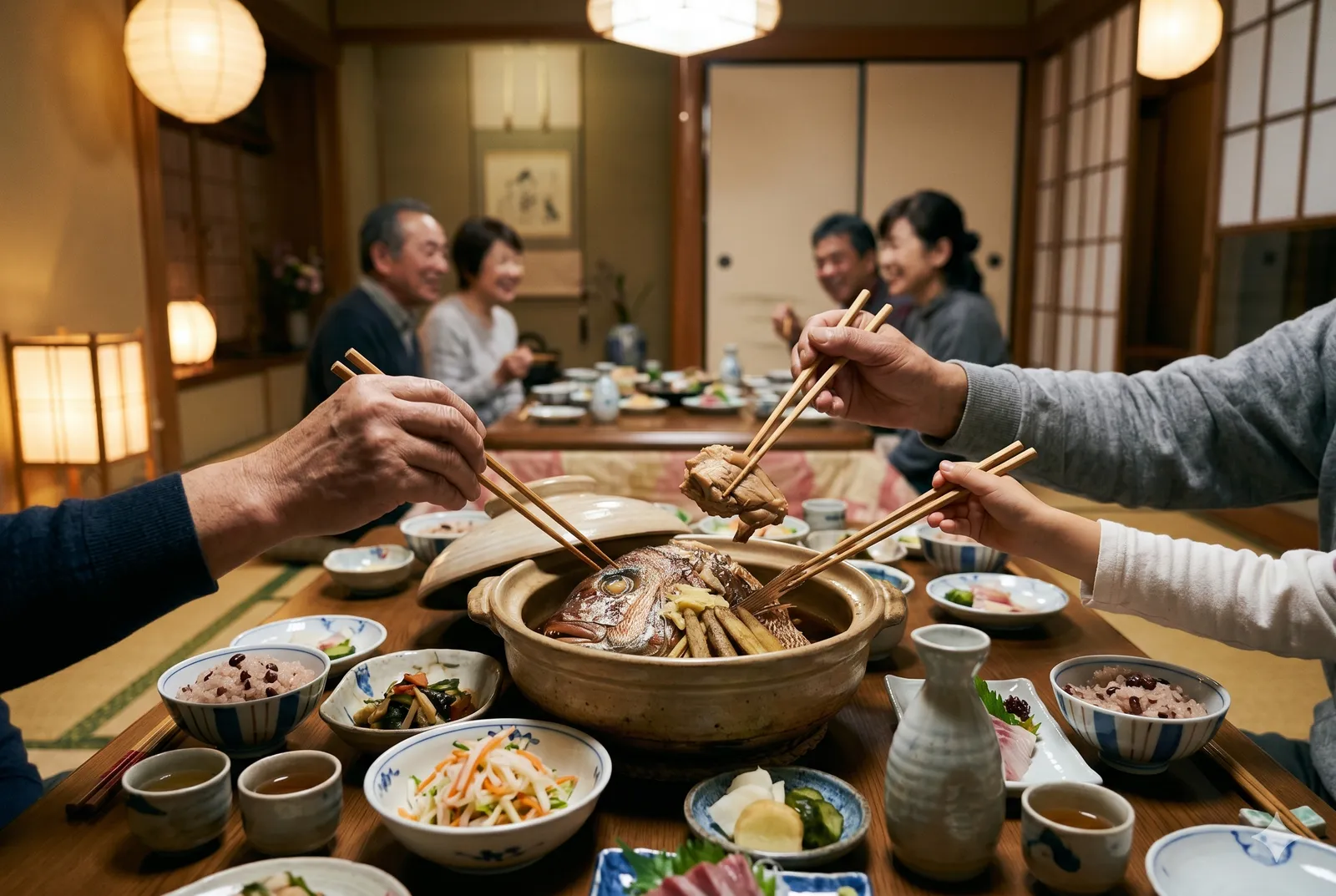
Your questions, answered honestly
"Okay, where's the good stuff?" — The cheek (just below the eye) and the collar (behind the gills) are the prizes. Go there first. Thank me later.
"Am I allowed to use my hands?" — Around the tricky bits, quietly, yes. Even at nice places, picking at a fish head is understood. Chopsticks for the open meat, fingers for the negotiation.
"What about the eye?" — Adventurous eaters swear by it (collagen-rich, jelly-soft). Not your thing? Totally fine. No pressure, no judgment.
"What do I drink with it?" — Sake. The clean rice notes and the deep sweet-soy richness were practically made for each other.
What you'll hear at the table
| You'll hear | Romaji | Meaning | Just say |
|---|---|---|---|
| 本日のおすすめです | Honjitsu no osusume desu | "It's today's special" | Sore o kudasai (I'll have that) |
| ほほ肉が美味しいですよ | Hoho-niku ga oishii desu yo | "The cheek meat is the best" | (go straight for it) |
| 骨に気をつけて | Hone ni ki o tsukete | "Watch for bones" | Hai, arigatō (thanks) |
To order at an izakaya, just say "Tai no kabuto-ni arimasu ka?" (鯛の兜煮ありますか?) — "Do you have sea bream kabuto-ni?"
Where to eat it
- Quality izakaya and old-school Japanese restaurants — especially near fishing ports and markets, where the heads are freshest. Kyoto's Kawaichi Suisan (川一水産) is one well-regarded name for beautifully done versions.
- Fish markets — many have small eateries serving the day's catch, kabuto-ni included.
This is a seasonal, catch-dependent dish, so availability varies — ask, and check before you go.
Soul Score
Local Roots4/5
First-Timer Friendly2/5
Adventure Level5/5
Comfort Level4/5
Travel Worthy3/5
These scores are one obsessed eater's gut feeling — not a verdict. A low number isn't a bad mark, just a different kind of adventure.
Know someone planning Japan?
← All Articles
Japanese Food · Nationwide
Still hungry?
Feeling brave?
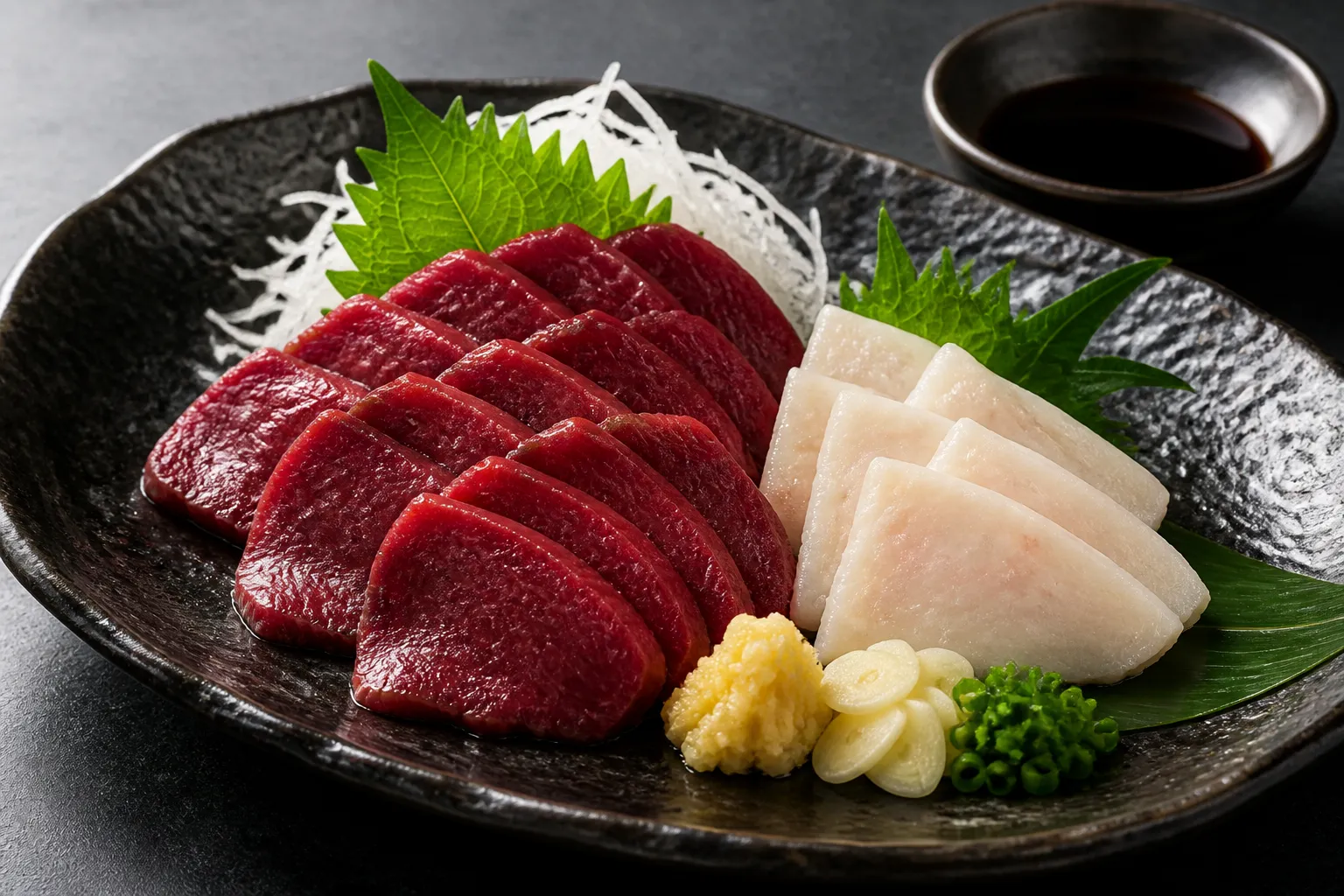
Local FoodKumamoto, Kumamoto
Basashi (馬刺し)
Raw horse meat, sliced thin, eaten with ginger and garlic and soy. Kumamoto's most provocative delicacy. Cleaner than beef, richer than tuna, and once you've tried it, you'll stop being surprised and start being converted.
June 25, 2026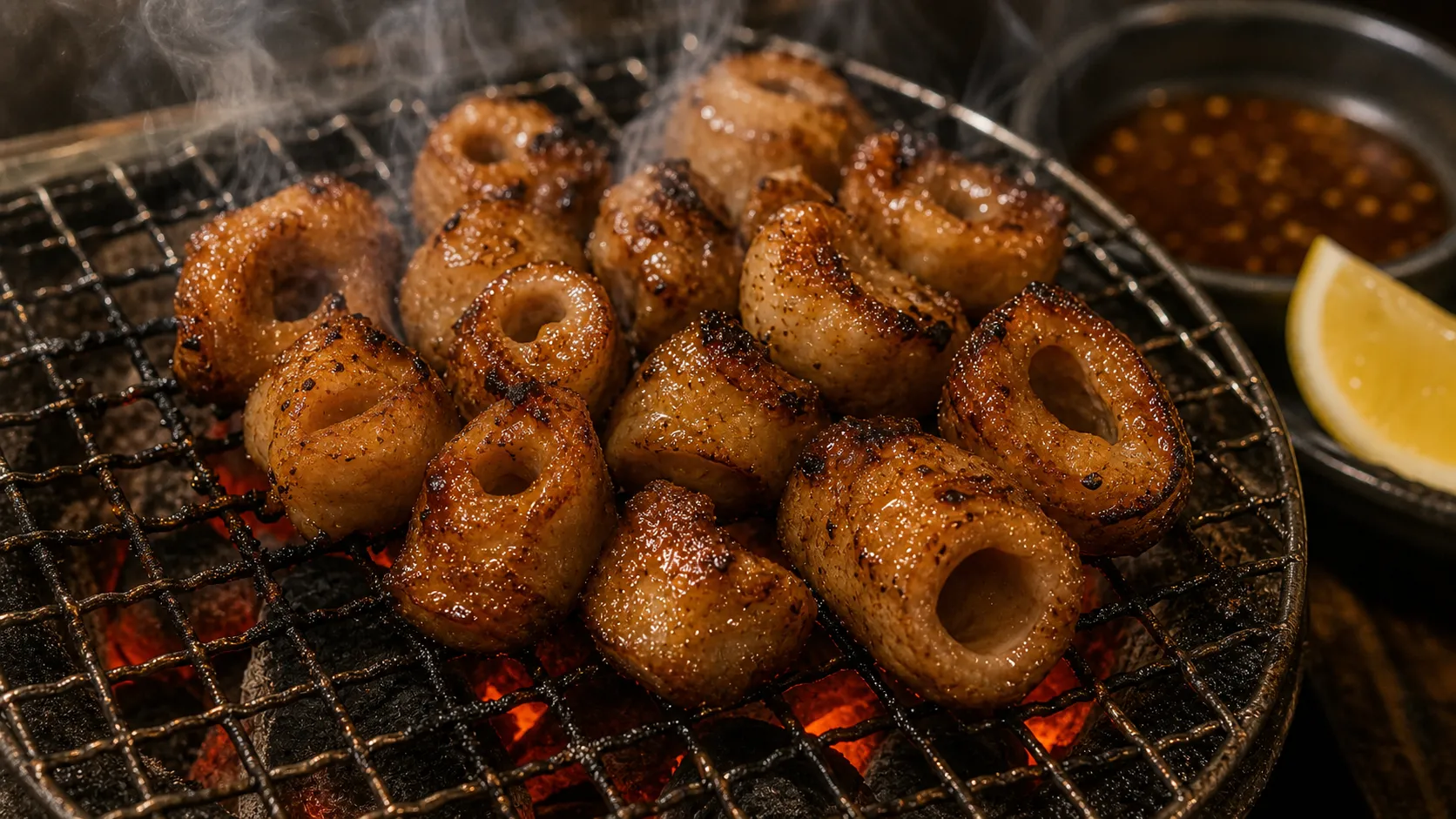
Local FoodAtsugi, Kanagawa
Atsugi Shirokoro-Horumon (厚木シロコロ・ホルモン)
B-1 Grand Prix champion. Thick-cut pig large intestine grilled until the outside shatters and the inside goes creamy. It sounds alarming. It tastes like the best thing you've eaten all week.
June 25, 2026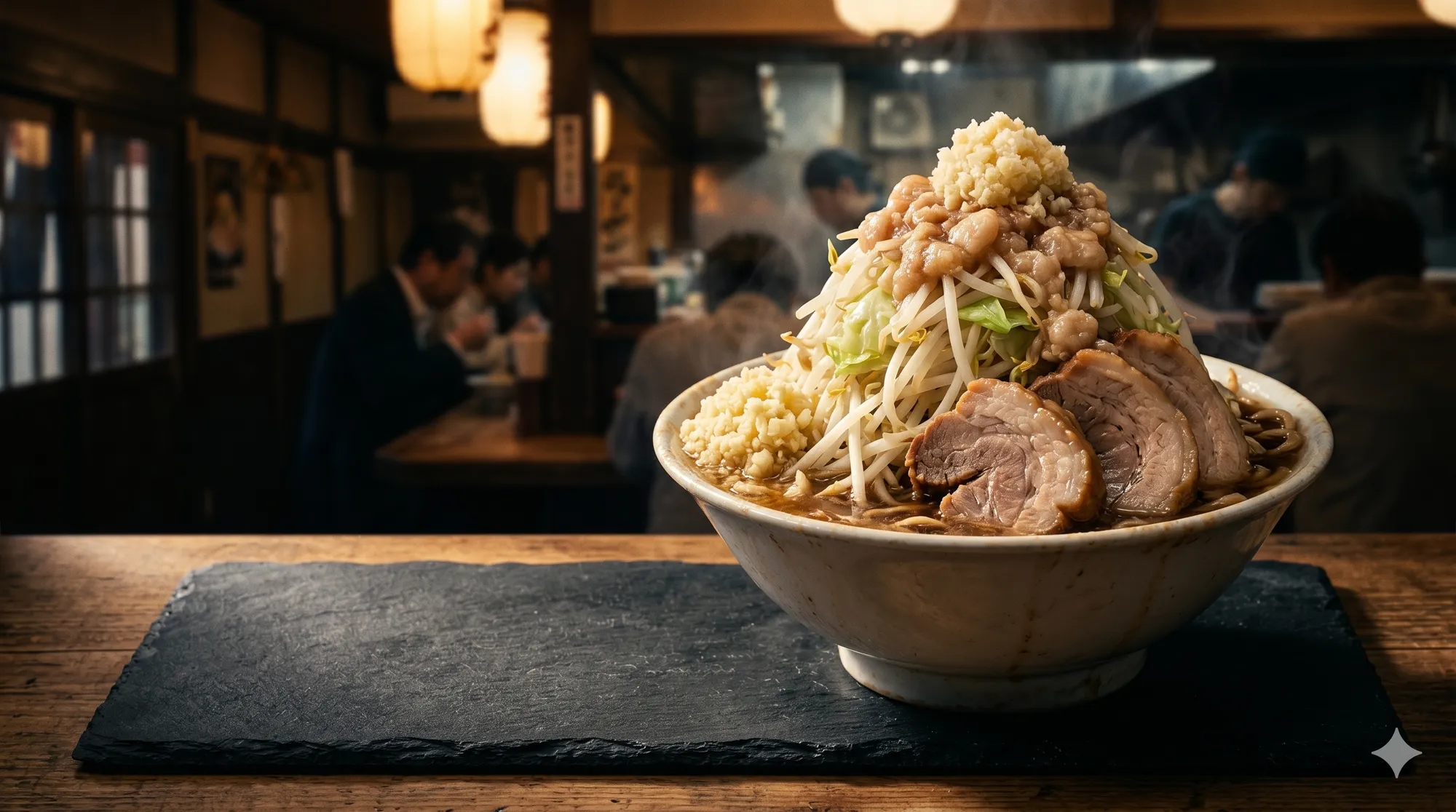
Japanese FoodTokyo
Ramen Jiro (ラーメン二郎)
A roaring mountain of noodles, fat, garlic and pork that broke the rules of ramen and built a cult. Not a meal — a rite of passage. Learn the secret call before you go in.
July 13, 2024