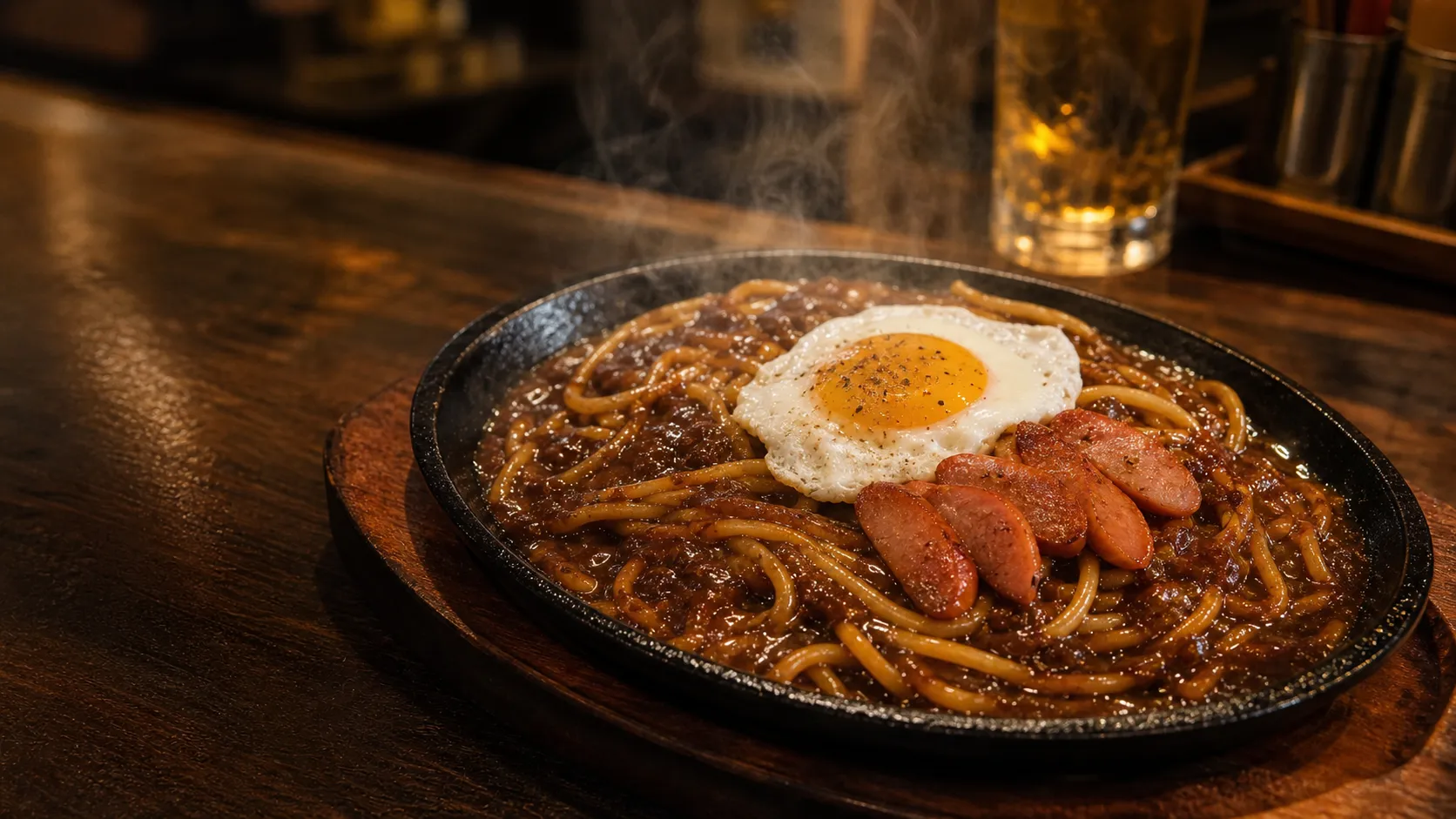
You ordered pasta. What arrived is something else entirely. An oval cast-iron plate, still screaming from the kitchen. A mass of thick noodles — fatter than anything Italy would recognize — buried under a dark, nearly black, heavily peppered meat sauce so dense it barely moves when the plate hits the table. Steam climbing off it. The smell of black pepper hitting you before you even pick up a fork.
Share this dish


Nagoya's gloriously wrong spaghetti: thick noodles smothered in a dark, spiced meat sauce that's been thickened into something between gravy and curry. Italy has no idea this exists. Nagoya doesn't care.
🍜 Planning a food trip to Aichi?Add this dish to my Food Trip →
 Add this dish to my Food Trip →
Oh. You think. Oh, this is different.
Ankake-spa (あんかけスパ) — Nagoya's great unsanctioned pasta heresy, and one of the things I think about most between visits to Japan. Spaghetti reimagined by a city that had no interest in Italy's opinion: thick noodles cooked soft (not al dente — soft), drowned in a glossy, starch-thickened meat sauce spiced with enough black pepper to make you reach for your beer, topped with whatever you want and served on a cast iron plate that keeps everything sizzling until the last bite. It's excessive. It's specific. It's Nagoya in a single dish — a city that has always done exactly what it wanted and been entirely right.
The magnificent disaster that started in 1961
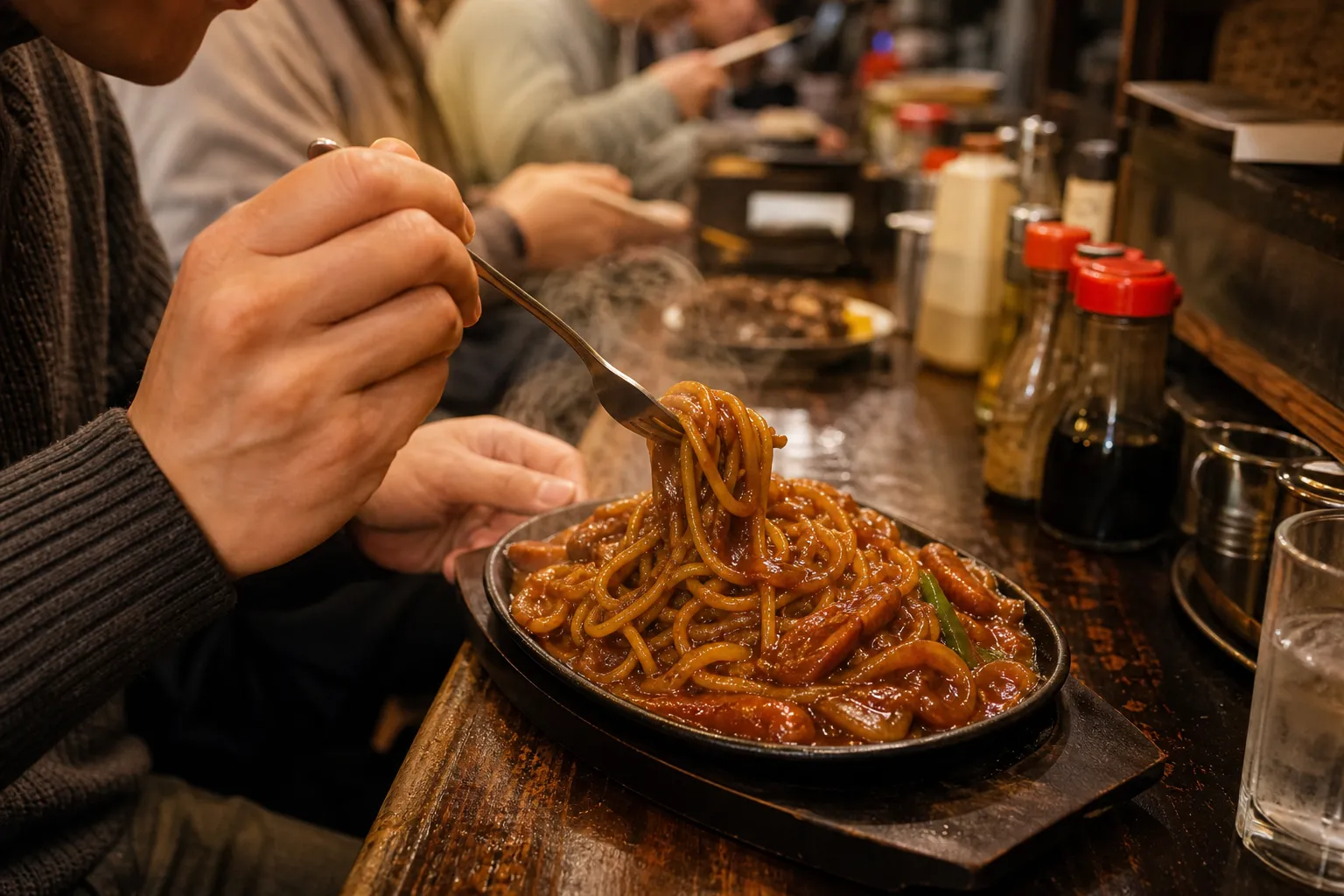
Yokoi (ヨコイ), 1961. A cook who'd worked with Italian cuisine wanted to make pasta that actually satisfied the Nagoya working crowd — heartier, saucier, hotter. He built the ankake: a dark meat sauce thickened with potato starch until it turns glossy and viscous and refuses to run off the noodles. He spiced it with black pepper and what might be Worcestershire. He served it on an iron plate still hot from the oven. People went insane.
Dozens of shops followed. Nagoya developed its own vocabulary: Mira (ミラ) is the sauce-only style; Kani (カニ) — "crab" — is the classic topping of fried egg and sausage that, apparently, looks like a crab to someone in 1960s Nagoya. Every shop guards its sauce recipe like national security. The variations are endless. The arguments about which shop is best are eternal. This is exactly the kind of food culture Nagoya is made of.
The sauce
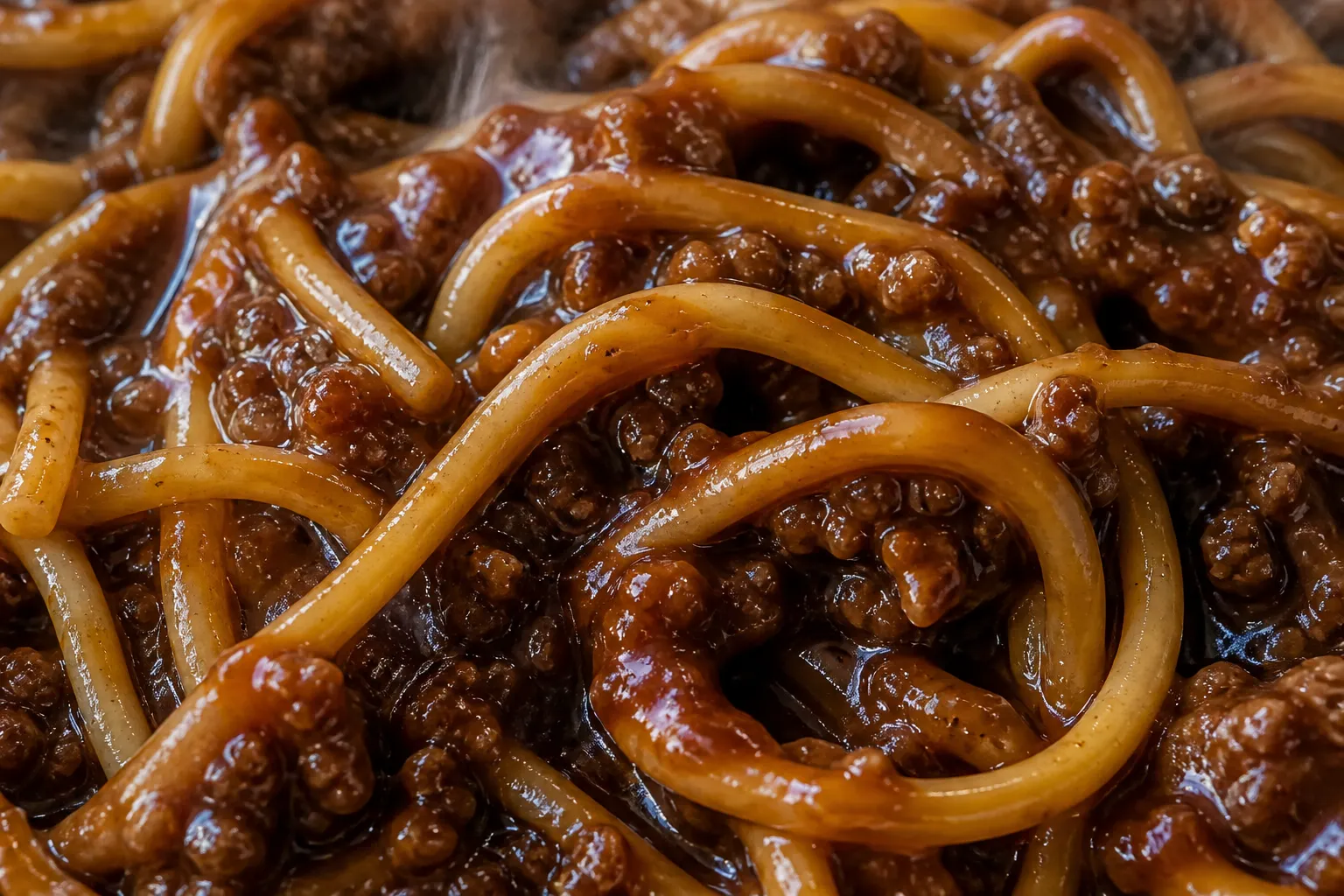
The noodles are thick because they have to be — regular spaghetti would drown and disappear. But the ankake is the entire reason you're here. Ground meat, onions, tomato, a Worcestershire backbone, black pepper without apology — all cooked down and then thickened with starch until it becomes something closer to gravy than sauce. It coats every noodle completely. It stays hot on the iron plate long after you've eaten half the dish. It makes you sweat a little in the best possible way.
Toppings go on after: fried egg, sausage, bacon, shrimp, mushrooms, spinach — or all of them at once, which is absolutely a valid life choice and has its own menu name at most shops.
How it's made
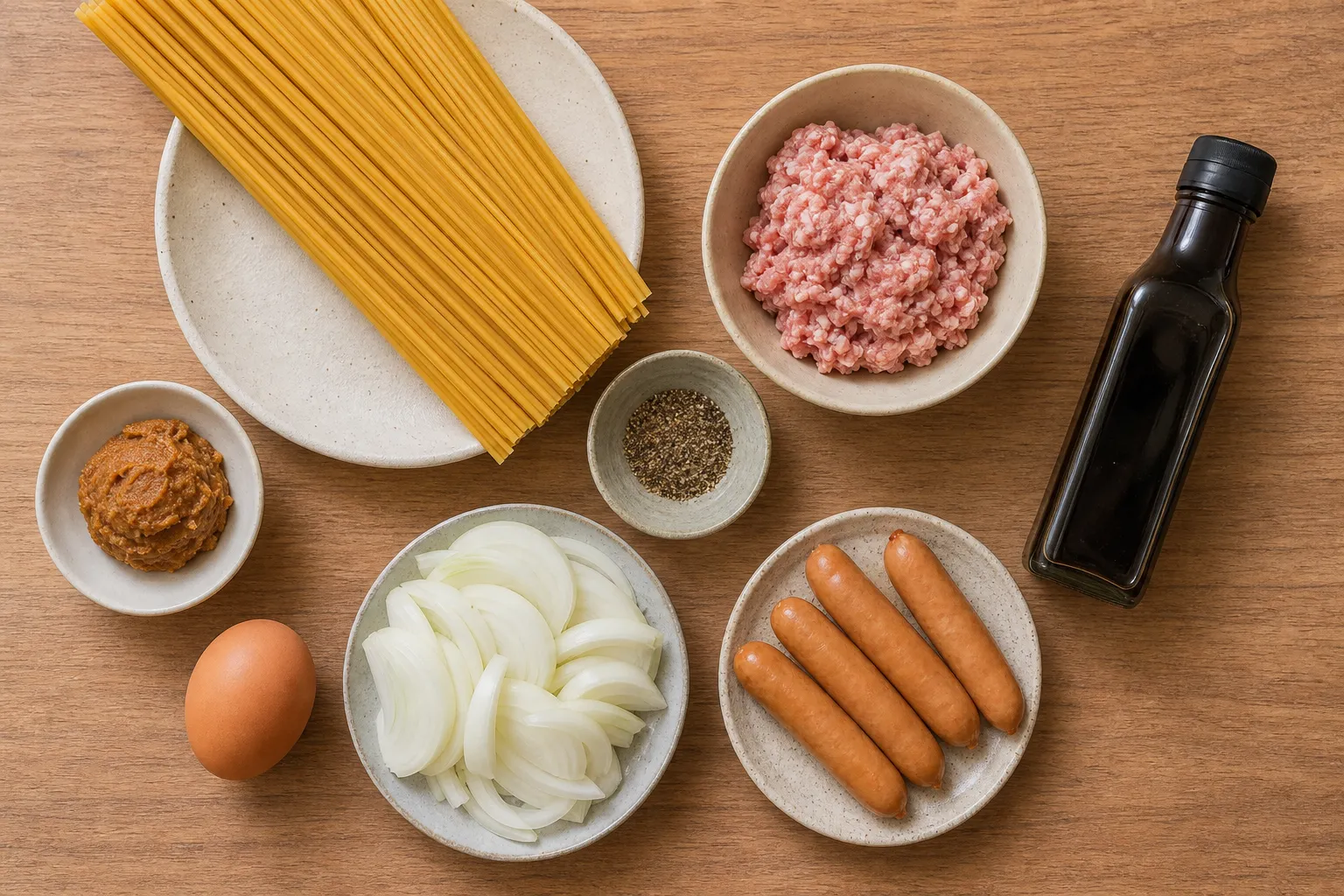
- Boil thick spaghetti (2.2mm+) well past normal — soft noodles, not al dente, that's the rule here
- Brown ground pork and/or beef with onions; add tomato paste, Worcestershire, chili, black pepper — a lot of black pepper
- Simmer the sauce down, then thicken with dissolved potato starch until it goes glossy and barely pours
- Heat an oval iron plate until it's smoking; plate the noodles and pour the sauce over
- Add toppings to order and serve immediately — the plate keeps everything hot and happy
Before you go — order the Kani
Your questions, answered honestly
"Is this actually good or just a novelty?" — I want to be clear: it's genuinely, unreservedly good. The thick sauce and soft noodles create something that works on its own terms, not as a comparison to anything Italian. Go in without expectations and you'll come out a convert.
"What toppings should I get first?" — Kani (カニ): fried egg and sausage. It's the classic for a reason. Once you're comfortable with the dish, add shrimp. Eventually you'll order everything.
"The black pepper — how much are we talking?" — Enough that you'll notice it on the first bite. Not painful, but present. It's part of what makes you reach for your drink and then immediately reach for another forkful.
"Is this only in Nagoya?" — There are a handful of shops elsewhere but ankake-spa is a Nagoya organism. The vocabulary, the shop culture, the loyalty to specific restaurants — it only makes full sense here.
What the staff will ask you
| You'll hear | Romaji | Meaning | Just say |
|---|---|---|---|
| トッピングは何になさいますか? | Toppingu wa nan ni nasaimasu ka? | "What toppings?" | Kani kudasai (egg + sausage classic) |
| サイズはいかがですか? | Saizu wa ikaga desu ka? | "What size?" | Futsū de onegaishimasu (regular please) |
| 辛さは? | Karasa wa? | "Spice level?" | Futsū de onegaishimasu (normal is fine) |
To order, just say "Ankake-spa kudasai" (あんかけスパください) — "Ankake spaghetti, please."
Where to eat it
- Yokoi (ヨコイ) — Nagoya, multiple locations. The 1961 originator. The definitive reference point for what ankake-spa is.
- Spaghetti House Kana'i (スパゲッティハウス かな井) — a long-running institution with devoted locals and excellent sauce.
- Moromoroya (もろもろや) — known for their all-in topping combinations and passionate regulars.
Central Nagoya is full of ankake-spa shops. The oval iron plates are the sign. The smell of black pepper is the signal. Locations change — check before you go.
Soul Score
Local Roots5/5
First-Timer Friendly4/5
Adventure Level4/5
Comfort Level5/5
Travel Worthy4/5
These scores are one obsessed eater's gut feeling — not a verdict. A low number isn't a bad mark, just a different kind of adventure.
Planning what to eat in Nagoya?🍤 Nagoya Food Guide: What to Eat, Where to Start, and How to Order →
Know someone planning Japan?
← All Articles
Local Food · Nagoya, Aichi
Still hungry?
Eat more from Aichi
Sweets & SnacksNagoya, Aichi
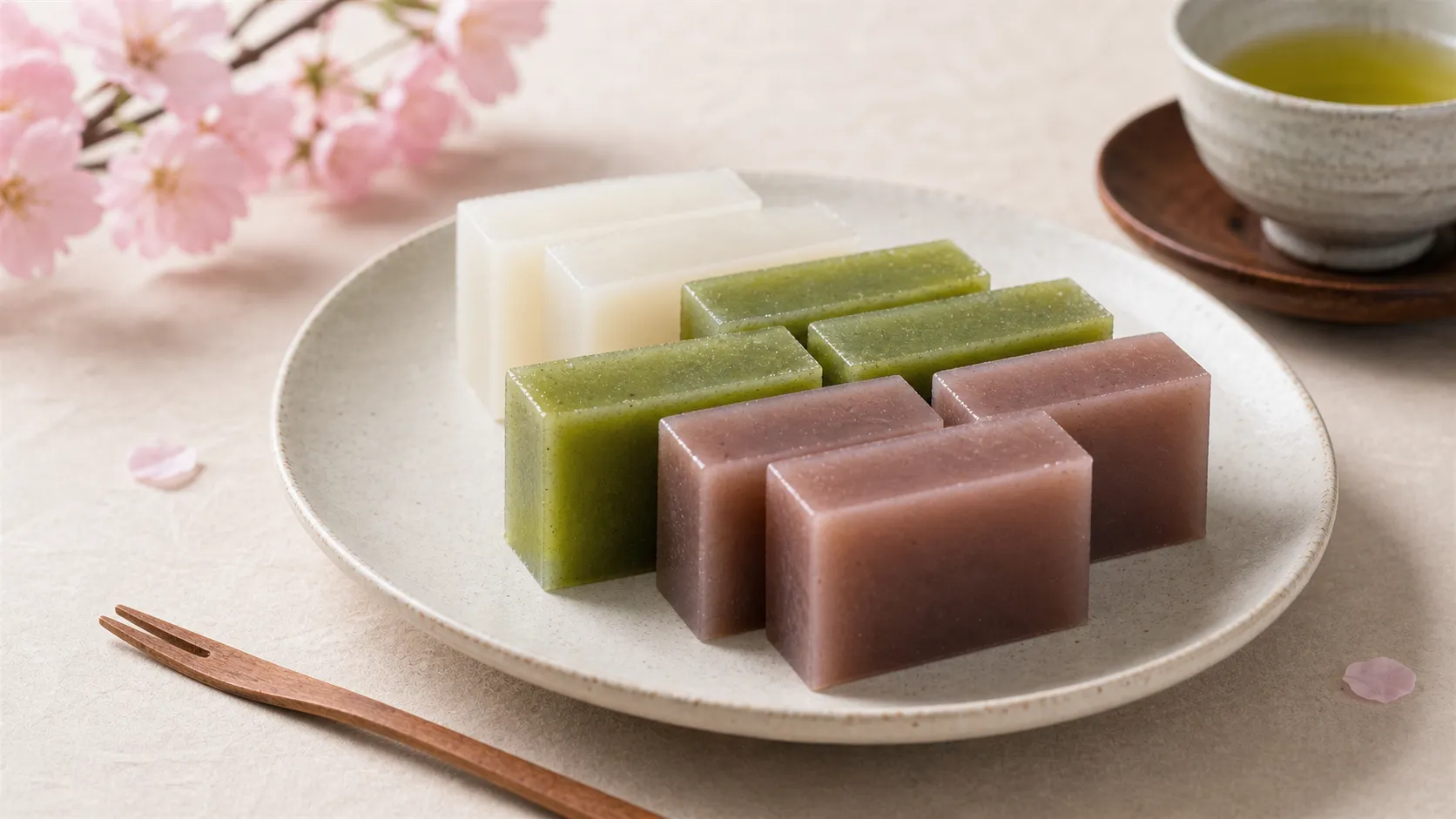
Uiro (ういろう)
A steamed cake of rice flour and sugar that's somehow both chewy and clean, mild and moreish — Nagoya's understated, faintly wobbly sweet that grows on you until you can't stop buying it at the station.
July 10, 2026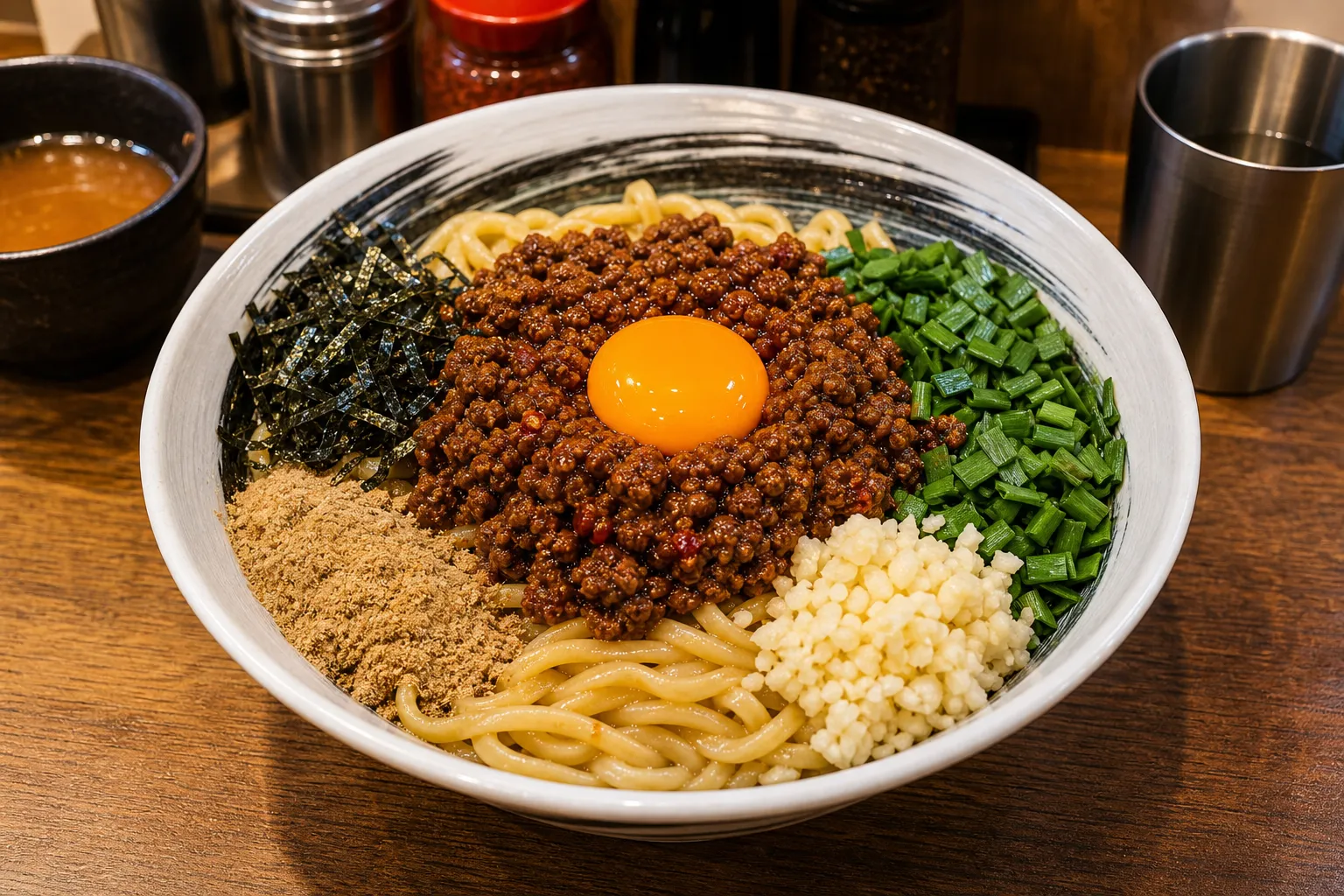
Local FoodNagoya
Taiwan Mazesoba (台湾まぜそば)
Break the egg yolk, plunge in, and mix like you're furious — this brothless Nagoya bomb of spicy pork, raw garlic and chives doesn't reveal itself until it's a chaotic, glorious mess.
July 9, 2026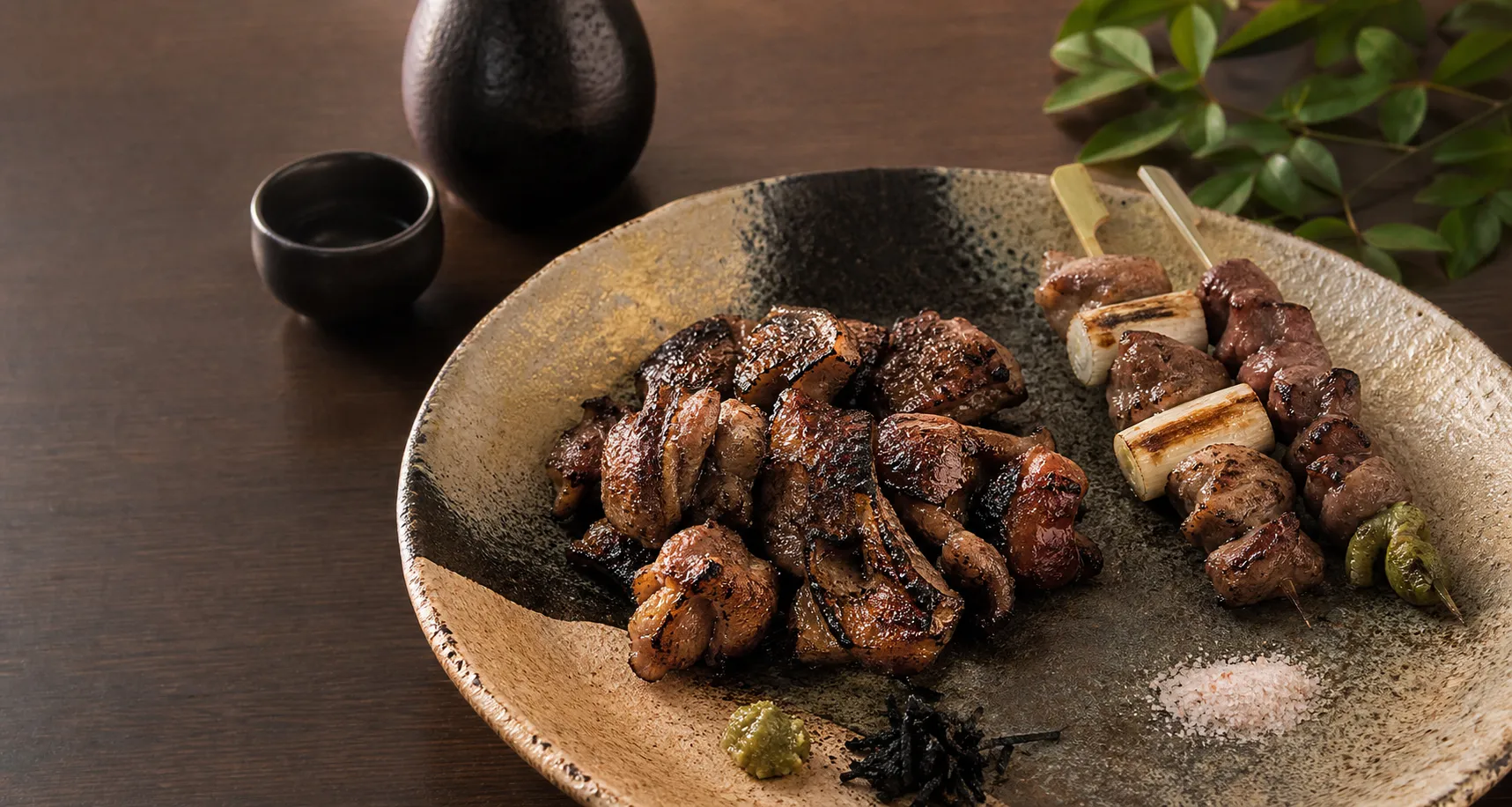
Local FoodNagoya, Aichi
Nagoya Cochin (名古屋コーチン)
Everyone warns you about the chewiness like it's a flaw — but that first spring-back bite of charcoal-grilled thigh is exactly the point, and I get it now.
July 5, 2026