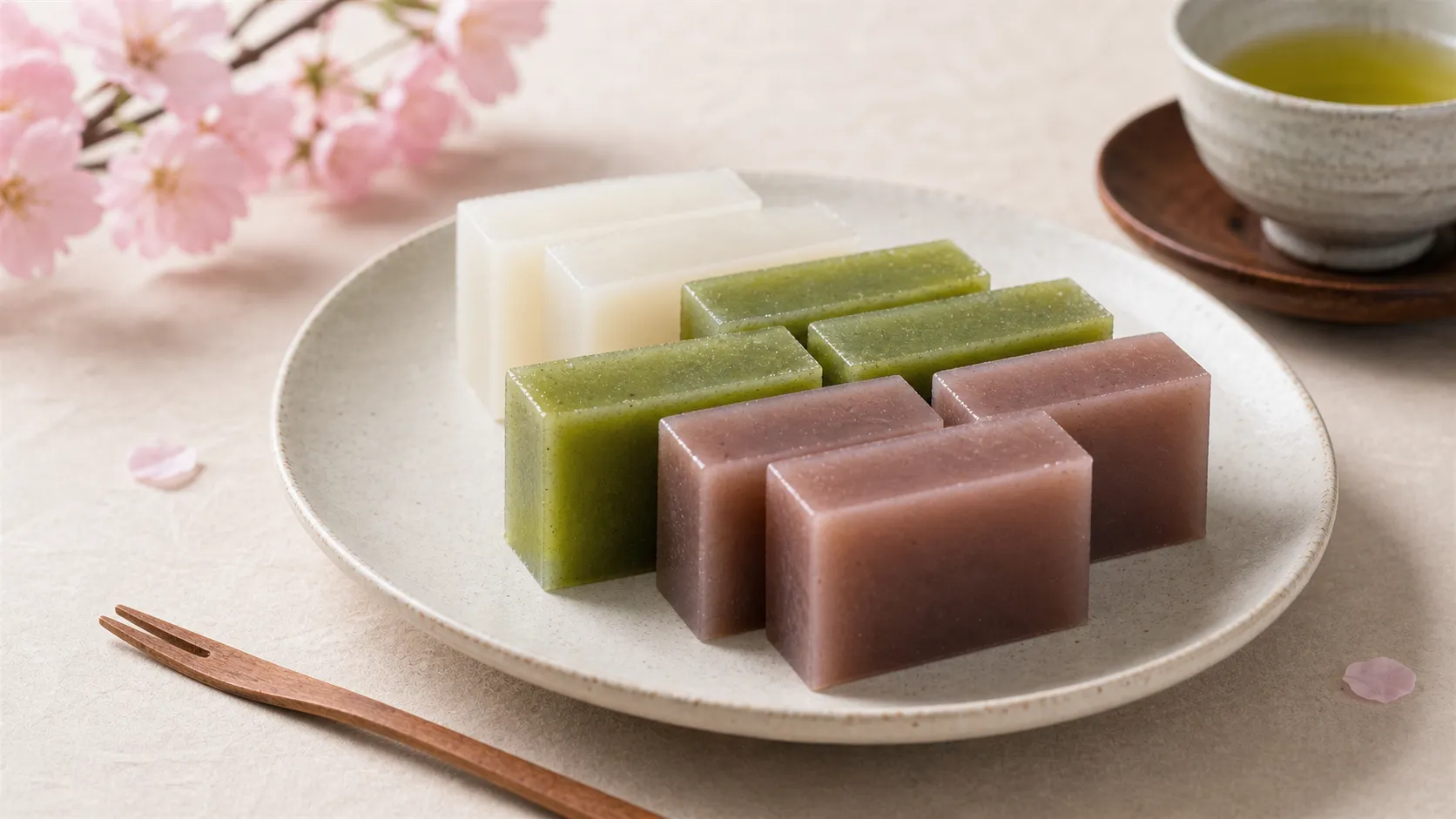
The first bite, I'll be honest, made me go "…huh." Chewy, mild, faintly sweet, a bit like a firmer mochi but cleaner — I didn't quite know what to do with it. Then I had a second slice with green tea. Then a third. Then I bought a whole box at Nagoya station on the way out and ate it on the train, one slice at a time, completely hooked and slightly confused about how it happened. That's uiro — a sweet that doesn't announce itself, and then quietly refuses to let you go.
Share this dish


A steamed cake of rice flour and sugar that's somehow both chewy and clean, mild and moreish — Nagoya's understated, faintly wobbly sweet that grows on you until you can't stop buying it at the station.
🍜 Planning a food trip to Aichi?Add this dish to my Food Trip →
 Add this dish to my Food Trip →
Here's what it is: uiro (ういろう) is a steamed cake made simply from rice flour and sugar (sometimes with other starches), giving it a distinctive firm-but-tender, chewy texture — think of a cleaner, less sticky cousin of mochi. It comes in flavors like plain, matcha, azuki (red bean) and cherry, usually sold as a rectangular block you slice. Steamed rice-flour-and-sugar with that particular springy chew: that's what makes it uiro and not a sticky mochi or a jiggly agar jelly. Nagoya is its most famous home, where it's practically a civic sweet.
Nagoya's quiet, chewy pride
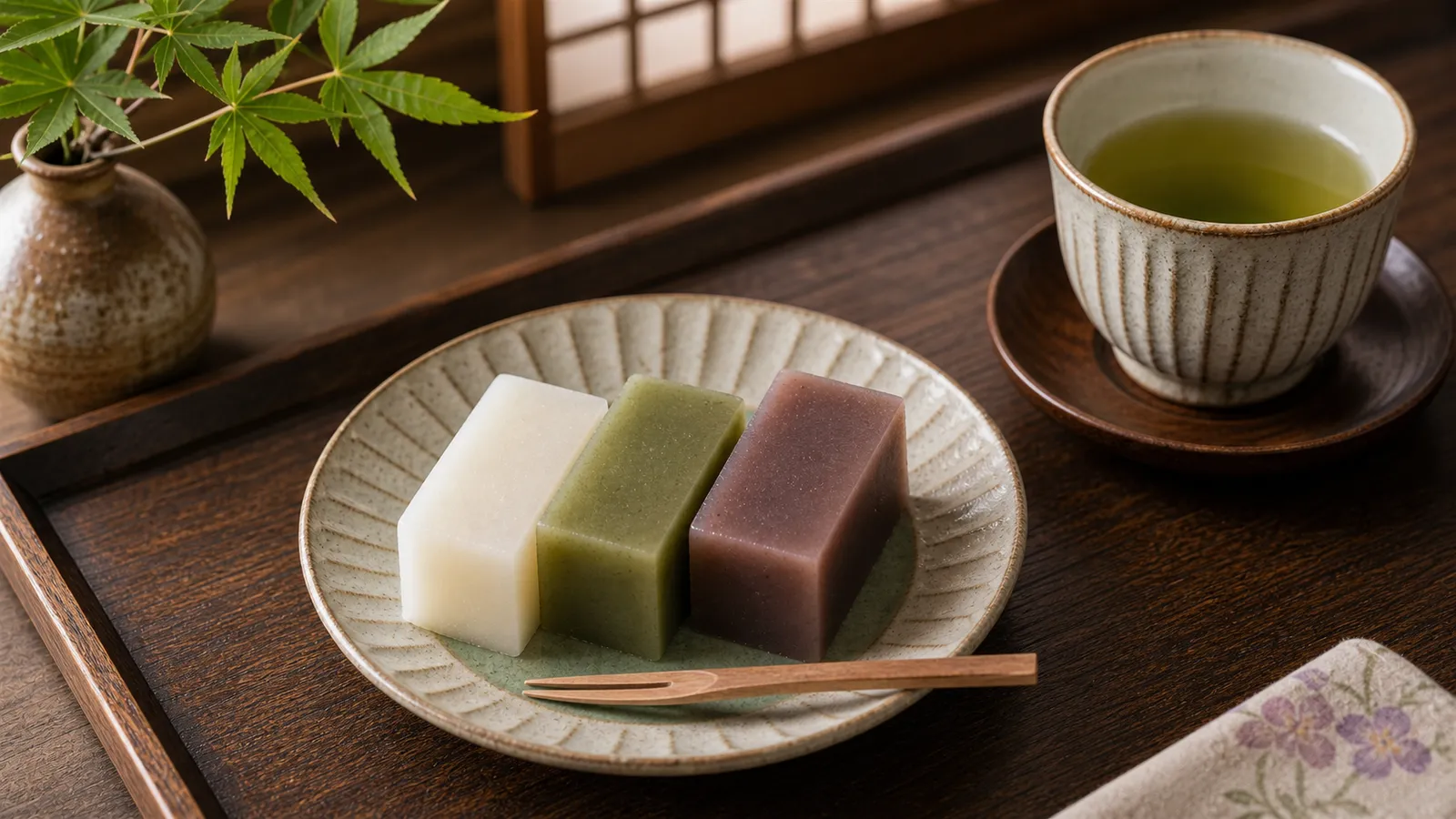
Uiro has old roots — the name is tied to a medicine of the same name from centuries ago, and the sweet became associated with several places, but Nagoya is where it's most beloved and best known, sold in long boxes at the station as the classic Aichi souvenir (omiyage). It's the kind of sweet that locals grow up on and travelers grab on the way through — humble, keeps well, deeply woven into the region's identity. (Yamaguchi and Odawara have their own proud uiro traditions too, so it's a sweet with a few hometowns.)
I find its modesty genuinely endearing. Uiro isn't trying to wow you with richness or a flavor bomb — it's a calm, clean, gently sweet, satisfyingly chewy thing, made to be sliced and eaten slowly with tea. It's anti-flashy in a way that feels very Nagoya. And that's exactly why it sneaks up on you: there's nothing to overwhelm, so you keep going back for the simple pleasure of that texture and that mellow sweetness. It's a sweet you learn to love, and then love a lot.
What makes the eating experience different
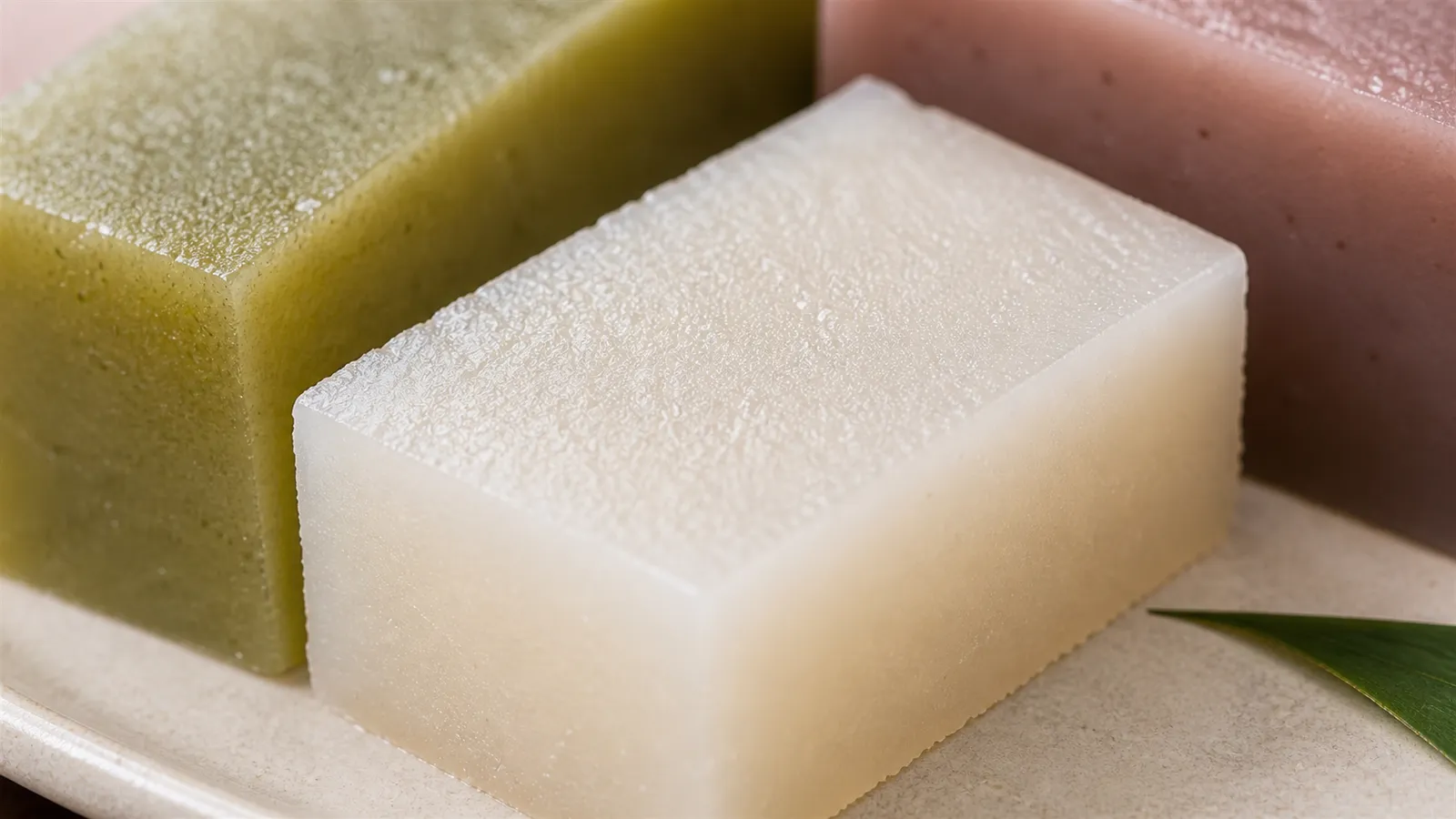
- The texture is the signature: firm, springy and chewy, but cleaner and less sticky than mochi — it slices neatly and has a lovely bounce
- The sweetness is mild and clean, never cloying — this is a sweet built for eating more than one slice
- Flavors shift the mood: plain is pure and milky, matcha adds bitter depth, azuki brings red-bean richness, cherry a floral note
- It pairs perfectly with green tea, the slight bitterness balancing uiro's gentle sweetness
- It keeps well and slices beautifully, which is why it's the archetypal Nagoya souvenir to carry home
How it's made
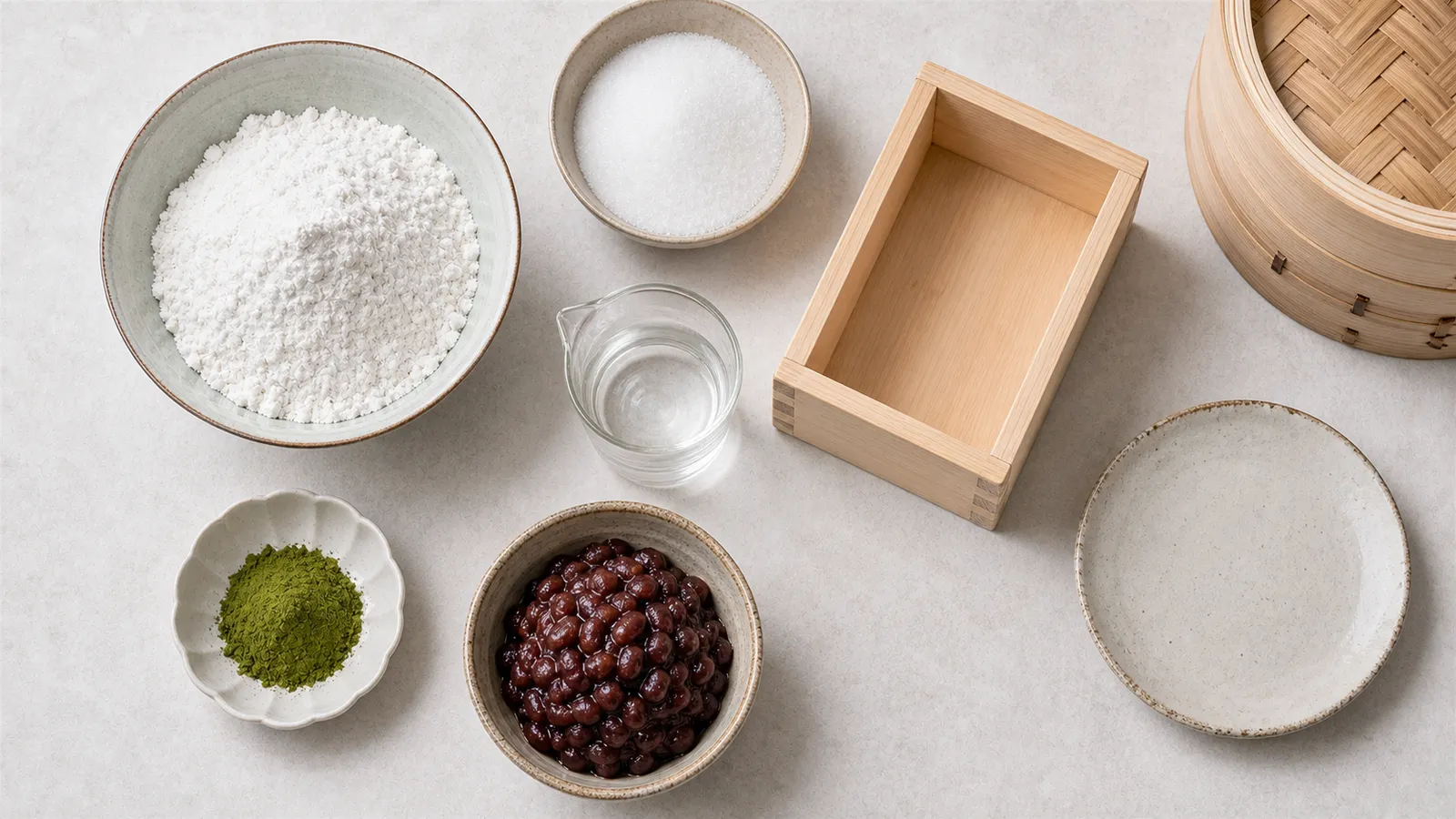
- Mix the batter. Rice flour (and sometimes other starches like wheat starch) is combined with sugar and water into a smooth batter; matcha, ground azuki or other flavorings are added here.
- Pour into a mold. The batter is poured into a rectangular steaming mold.
- Steam it. The mold is steamed until the batter sets into a firm, translucent-ish, springy cake — the steaming is what gives uiro its particular chew.
- Cool and unmold. It's cooled, then turned out as a solid block.
- Slice and serve. Cut into neat slices and served, ideally with green tea.
It's a deceptively simple process — flour, sugar, steam — but the ratio and the steaming are everything, producing that clean, springy, slice-able texture that no other sweet quite matches.
Before you go — give it a second slice
Your questions, answered honestly
"Is it just mochi?" — Not quite. Uiro is steamed rice flour and sugar, giving a firmer, cleaner, springier chew than sticky rice mochi — it slices neatly and isn't gooey. If mochi's stickiness isn't your thing, uiro's tidier chew might suit you better. Same rice-based family, different character.
"It seemed a bit plain at first — am I missing something?" — You're not; it is subtle, and that's the point. Uiro rewards a second and third slice with tea, as the mild sweetness and that satisfying chew grow on you. Try the matcha or azuki version if you want a bit more flavor to hold onto.
"Which flavor should I get?" — For a first taste, get a variety pack if you can — plain, matcha and azuki cover the range. Matcha is a great starting point (the slight bitterness balances the sweetness), and cherry is lovely in spring. Nagoya shops often sell assorted boxes.
"Where do I buy it?" — Nagoya station and department stores are the classic spot — it's the definitive Aichi souvenir. Wagashi shops in and around Nagoya make excellent uiro, and you'll also find proud versions in Yamaguchi and Odawara.
What the staff will ask you
| You'll hear | Romaji | Meaning | Just say |
|---|---|---|---|
| どの味にしますか? | Dono aji ni shimasu ka? | "Which flavor?" | Matcha de / Tsumeawase de (matcha / an assortment, please) |
| ご贈答用ですか? | Go-zōtō-yō desu ka? | "Is it a gift?" | Jibun-yō desu (it's for myself) / Hai (yes) |
| 日持ちは数日です | Himochi wa sū-jitsu desu | "It keeps a few days" | Wakarimashita (understood) |
To order, just say "Uiro o kudasai" (ういろうをください) — "Uiro, please."
Where to eat it
- Nagoya station and department stores — the classic place to buy uiro as the signature Aichi souvenir, often in assorted flavor boxes.
- Wagashi (traditional sweet) shops in and around Nagoya — for fresh, high-quality uiro to enjoy with tea.
- Yamaguchi and Odawara — both have their own celebrated uiro traditions, so it's worth trying the local style if you pass through.
Uiro is a regional steamed sweet with a few proud hometowns (Nagoya especially); flavors, styles and shelf life vary by maker — check the flavors and best-by when you buy.
Soul Score
Local Roots5/5
First-Timer Friendly4/5
Adventure Level3/5
Comfort Level4/5
Travel Worthy3/5
These scores are one obsessed eater's gut feeling — not a verdict. A low number isn't a bad mark, just a different kind of adventure.
Know someone planning Japan?
← All Articles
Sweets & Snacks · Nagoya, Aichi
Still hungry?
Eat more from Aichi
Local FoodNagoya
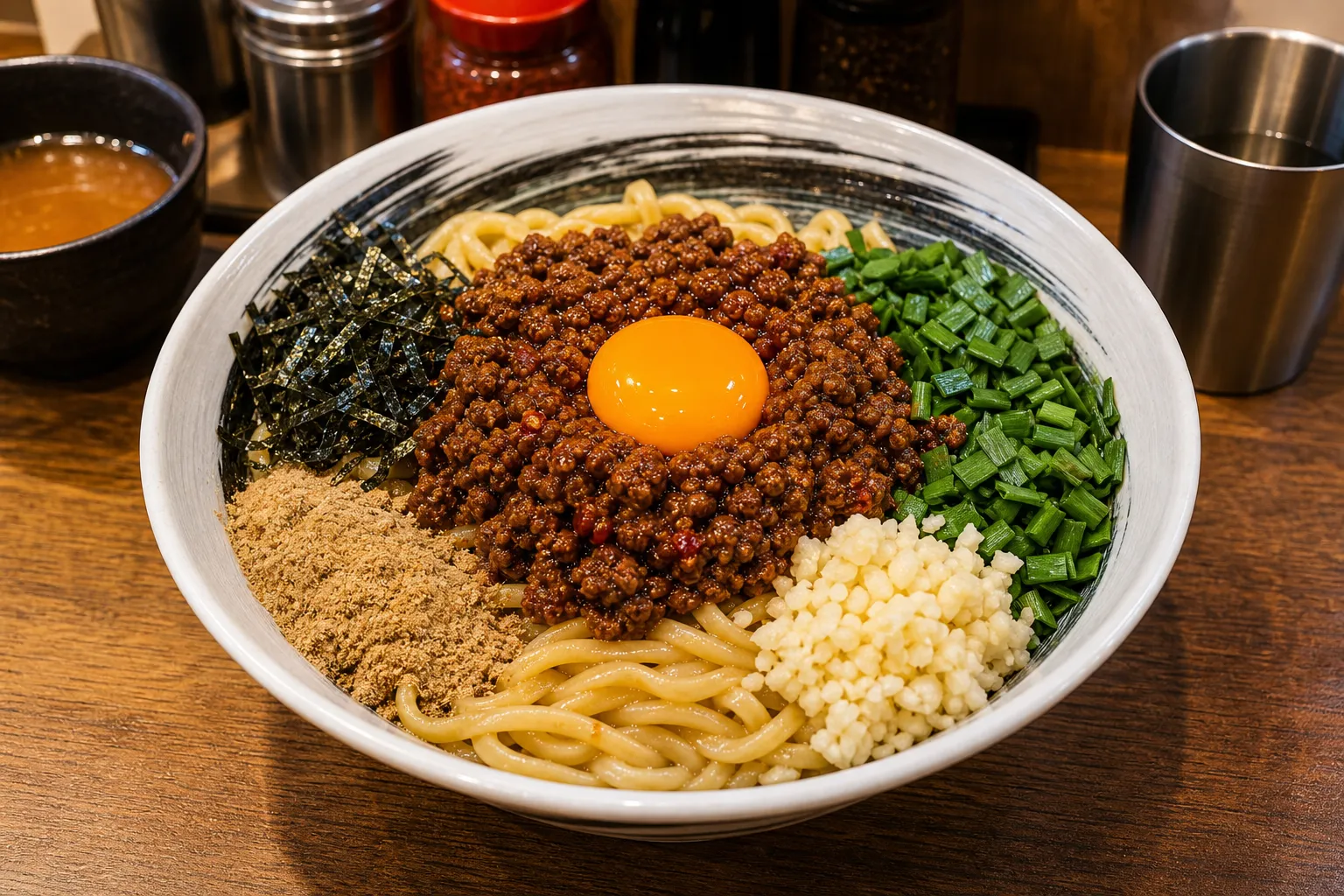
Taiwan Mazesoba (台湾まぜそば)
Break the egg yolk, plunge in, and mix like you're furious — this brothless Nagoya bomb of spicy pork, raw garlic and chives doesn't reveal itself until it's a chaotic, glorious mess.
July 9, 2026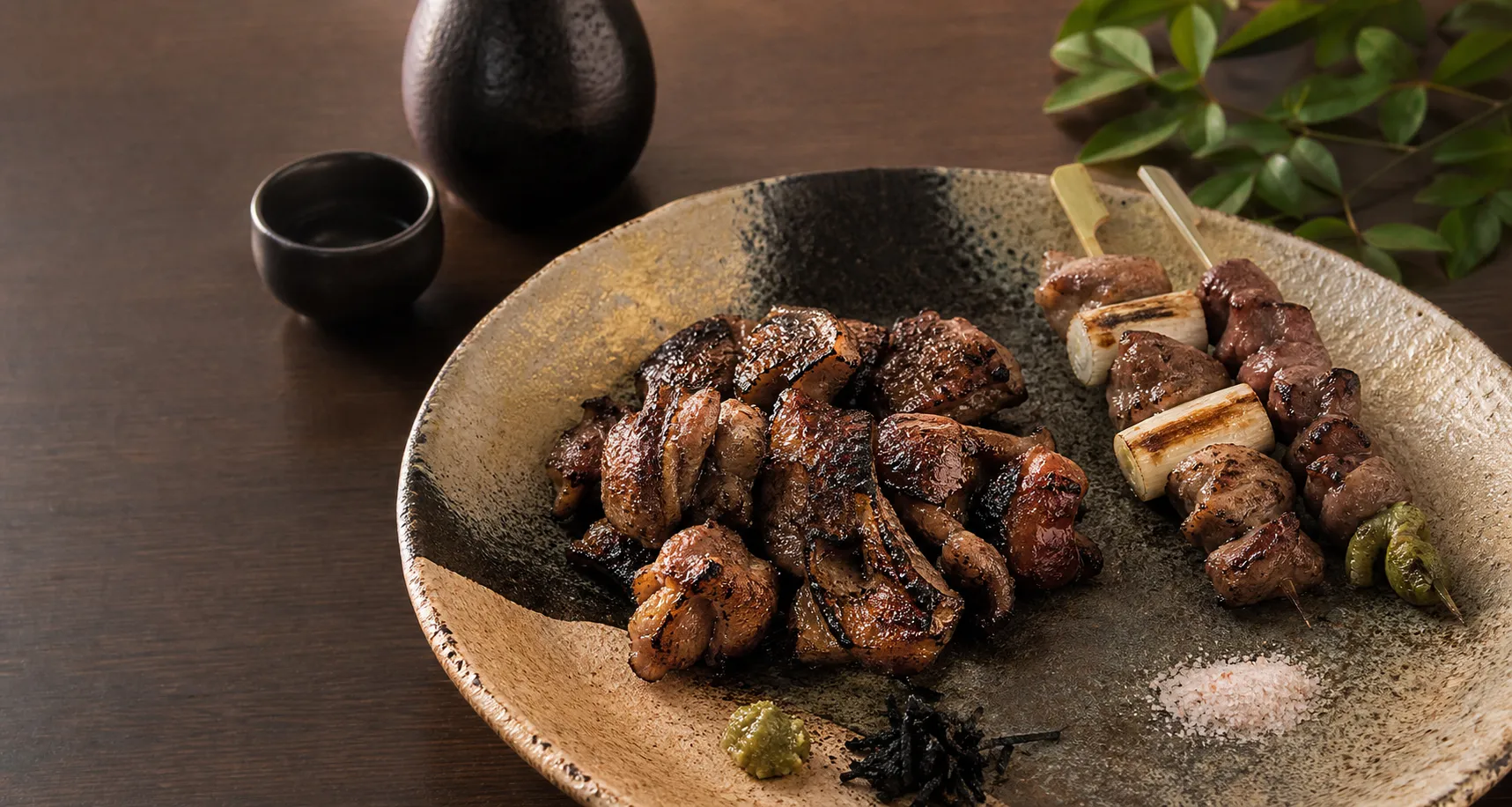
Local FoodNagoya, Aichi
Nagoya Cochin (名古屋コーチン)
Everyone warns you about the chewiness like it's a flaw — but that first spring-back bite of charcoal-grilled thigh is exactly the point, and I get it now.
July 5, 2026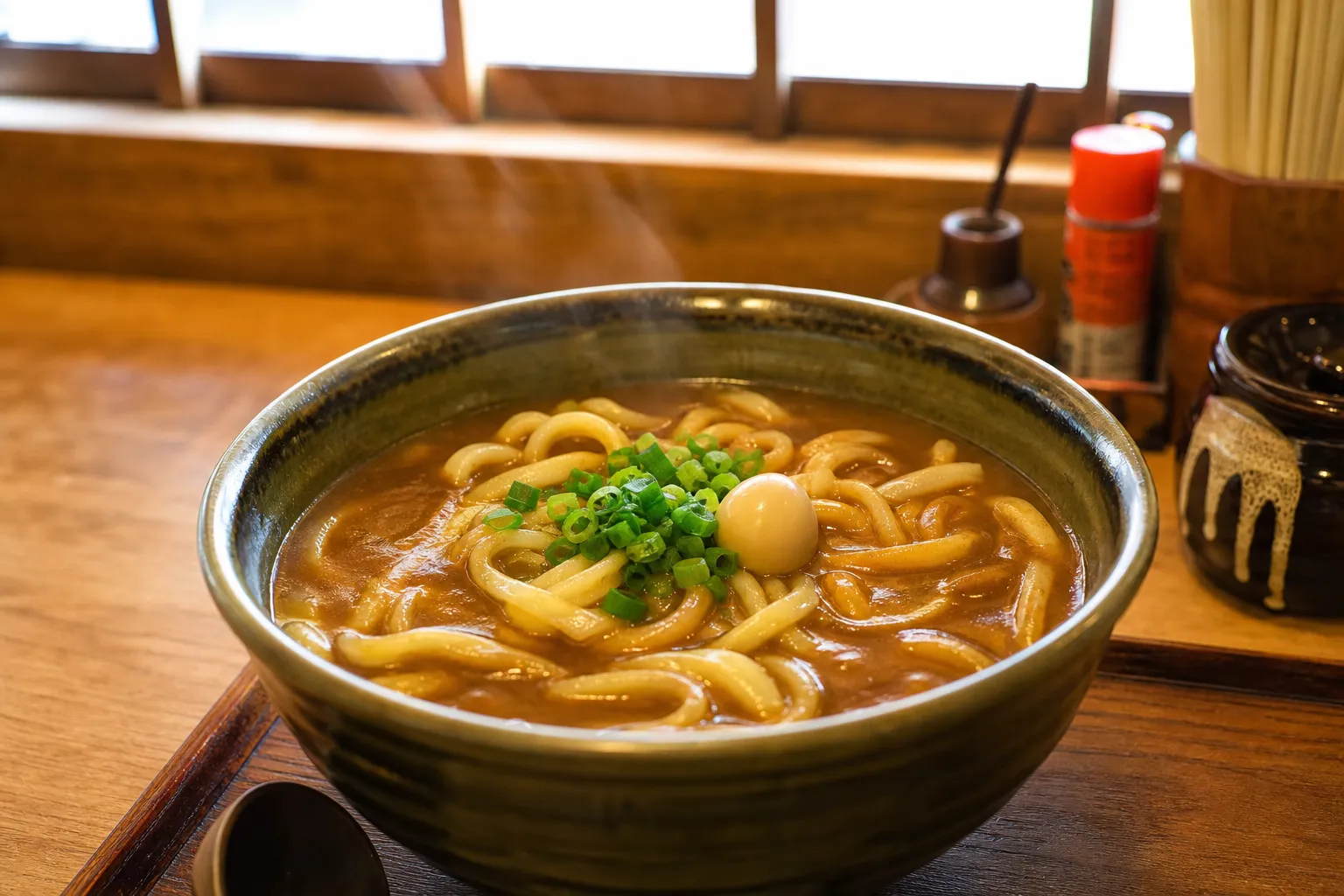
Local FoodToyohashi, Aichi
Toyohashi Curry Udon (豊橋カレーうどん)
Eat the noodles, drink the broth, and just when you think the bowl is empty — dig down and find an entirely second meal waiting underneath.
July 4, 2026