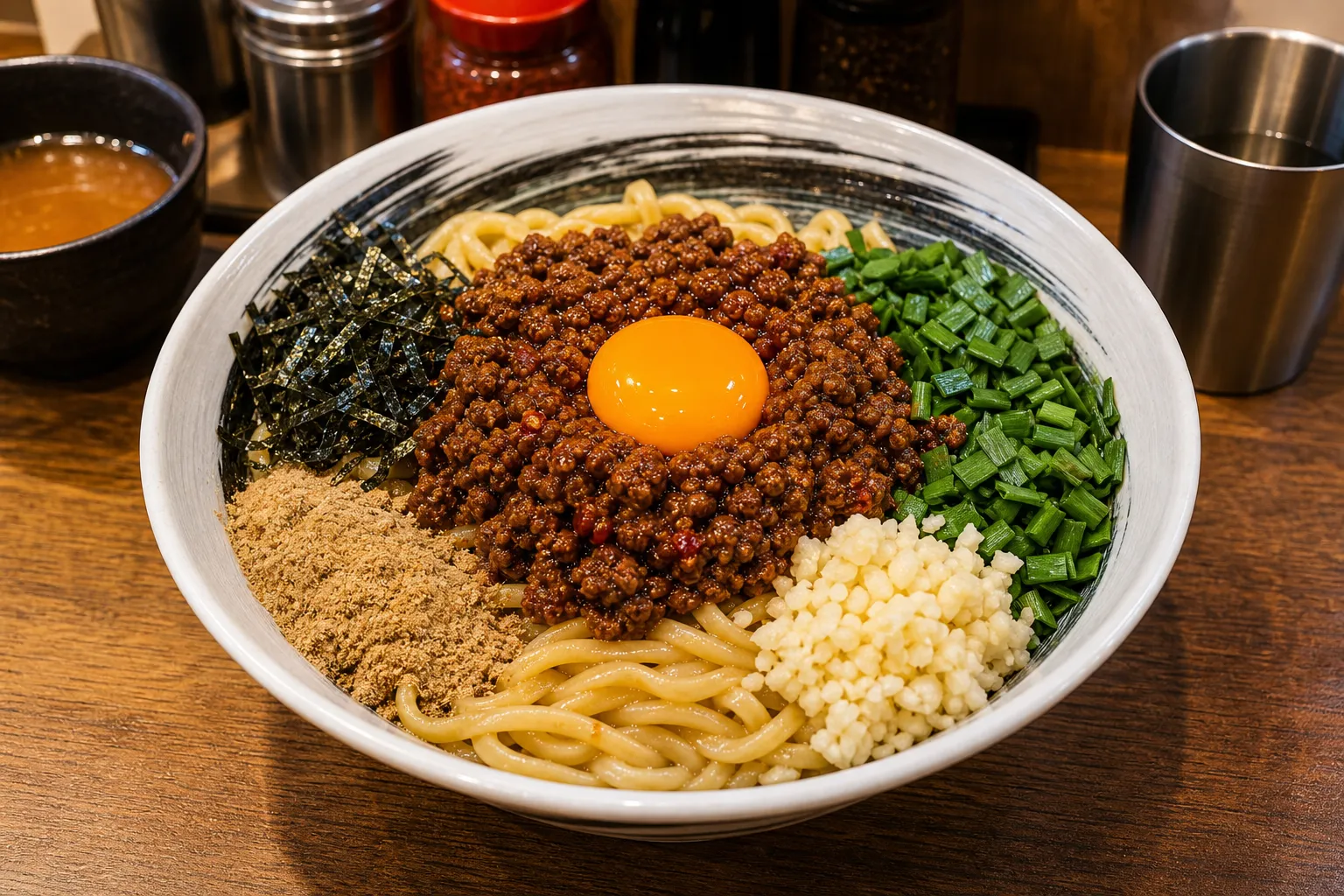
Don't be polite about it. When the bowl lands in front of you — a mound of dark spicy mince, a fistful of green chives, a slick of raw chopped garlic, and one perfect egg yolk glowing in the center — your first move is to break that yolk and stir the whole thing into oblivion. Mix it like you're mad at it. The prettier it looked, the harder you go. What comes out the other side is a glossy, garlicky, spicy tangle that tastes like nothing else in Japan.
Share this dish


Break the egg yolk, plunge in, and mix like you're furious — this brothless Nagoya bomb of spicy pork, raw garlic and chives doesn't reveal itself until it's a chaotic, glorious mess.
🍜 Planning a food trip to Aichi?Add this dish to my Food Trip →
 Add this dish to my Food Trip →
Taiwan mazesoba is brothless noodles from Nagoya, buried under fiery "Taiwan" minced pork, raw garlic, garlic chives (nira), shredded nori, fish powder, and a single egg yolk. There's no soup — the maze literally means "mix" — so you fold everything together until the thick noodles are coated in chili, fat, and garlic, then eat. And when the noodles are gone, you're not done: you order a scoop of rice for the spicy mince left behind.
The "Taiwan" dish that's pure Nagoya
Let's clear this up right away, because it trips everyone: Taiwan mazesoba is not from Taiwan. It was invented in Nagoya, at a shop called Menya Hanabi, in 2008. The story goes that a batch of noodles meant for a spicy soup ramen came out too thick for the broth, and rather than toss them, the owner improvised — pile the spicy topping straight on, skip the soup, mix it up. A happy accident became a phenomenon.
The "Taiwan" part comes from Taiwan ramen, itself a Nagoya invention (spicy soup ramen loosely inspired by a Taiwanese dish, created by a Taiwanese chef in the city). So it's Nagoya riffing on a Nagoya dish that only sort of pointed at Taiwan in the first place. Deeply confusing, extremely Nagoya. This is a city that also gave the world sweet-red-bean toast and miso katsu — they do their own thing here, loudly, and it usually rules.
Why the mess is the whole point
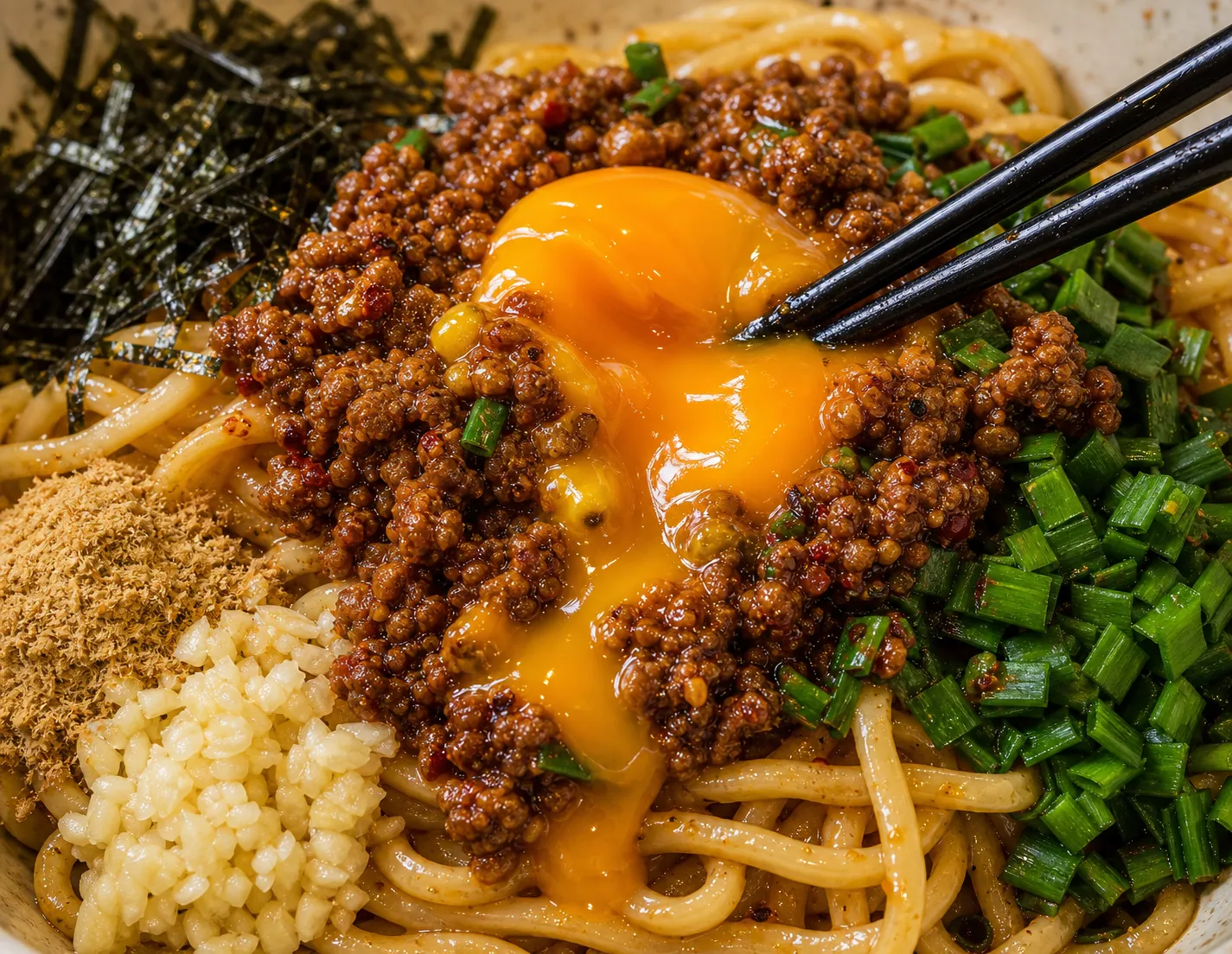
Every element is doing a specific job, and none of them work alone. The noodles are thick and extra-chewy — they have to be, to stand up to all that topping without going limp. The spicy mince (taiwan mince) is savory, chili-hot, and rich. Raw garlic gives it a knockout punch; garlic chives add a green, pungent bite; nori and fish powder pile on umami; and the egg yolk melts through the whole thing, rounding the heat into something silky.
Un-mixed, it's a pile of loud, clashing extremes. Mixed, it's balanced — spicy, garlicky, savory, with that yolk mellowing the fire and the chives keeping it fresh. It's aggressive food, no question, and the raw garlic will absolutely follow you home. But that intensity is exactly why people crave it. Comfort food with a mean streak.
How it's made (and how to eat it)
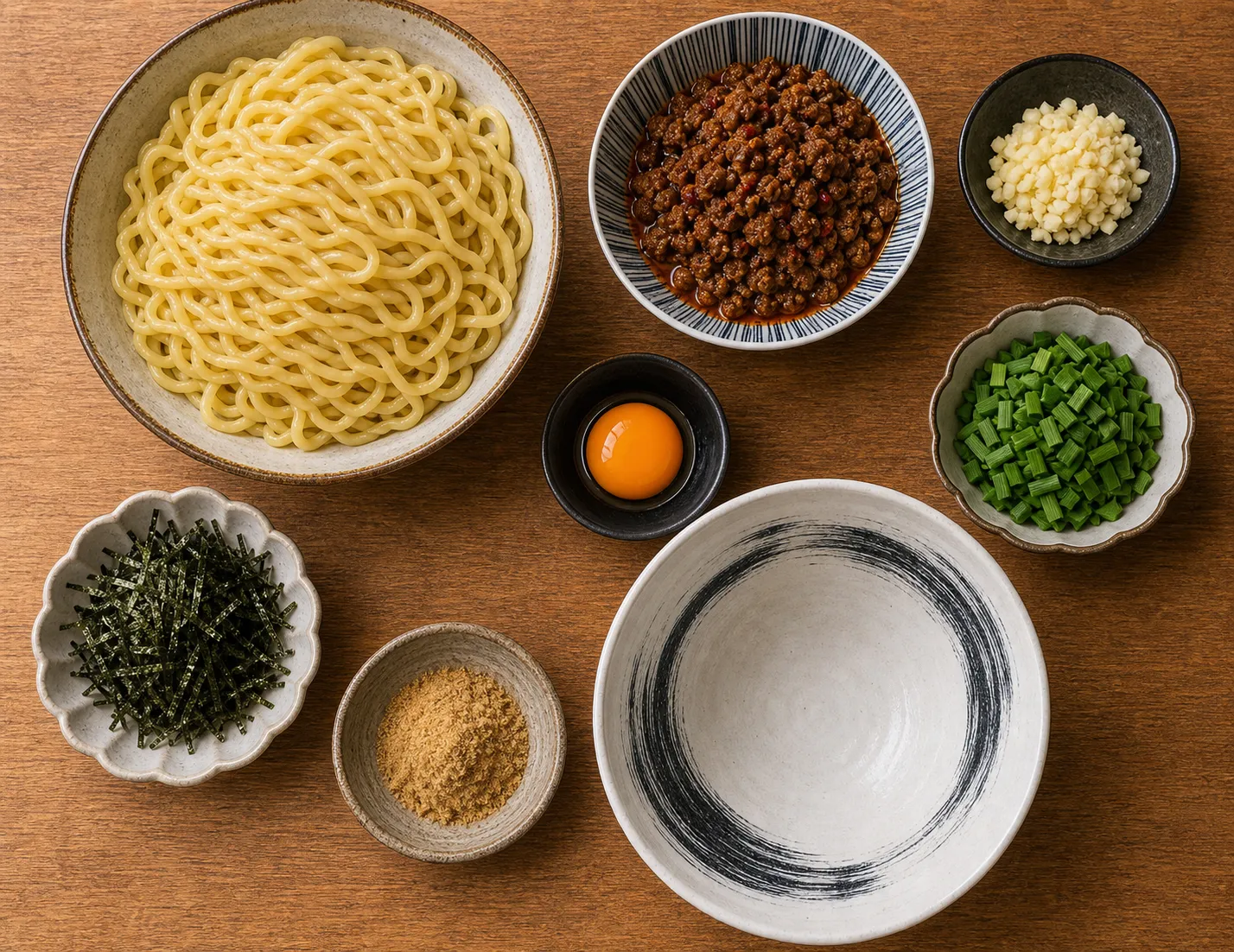
- Thick noodles are boiled, drained well, and tossed with a little tare and oil at the bottom of the bowl — no soup.
- On top goes the spicy taiwan minced pork (pork cooked down with chili, garlic, soy).
- It's crowned with chopped garlic chives (nira), raw minced garlic, shredded nori, fish powder, negi, and an egg yolk in the center.
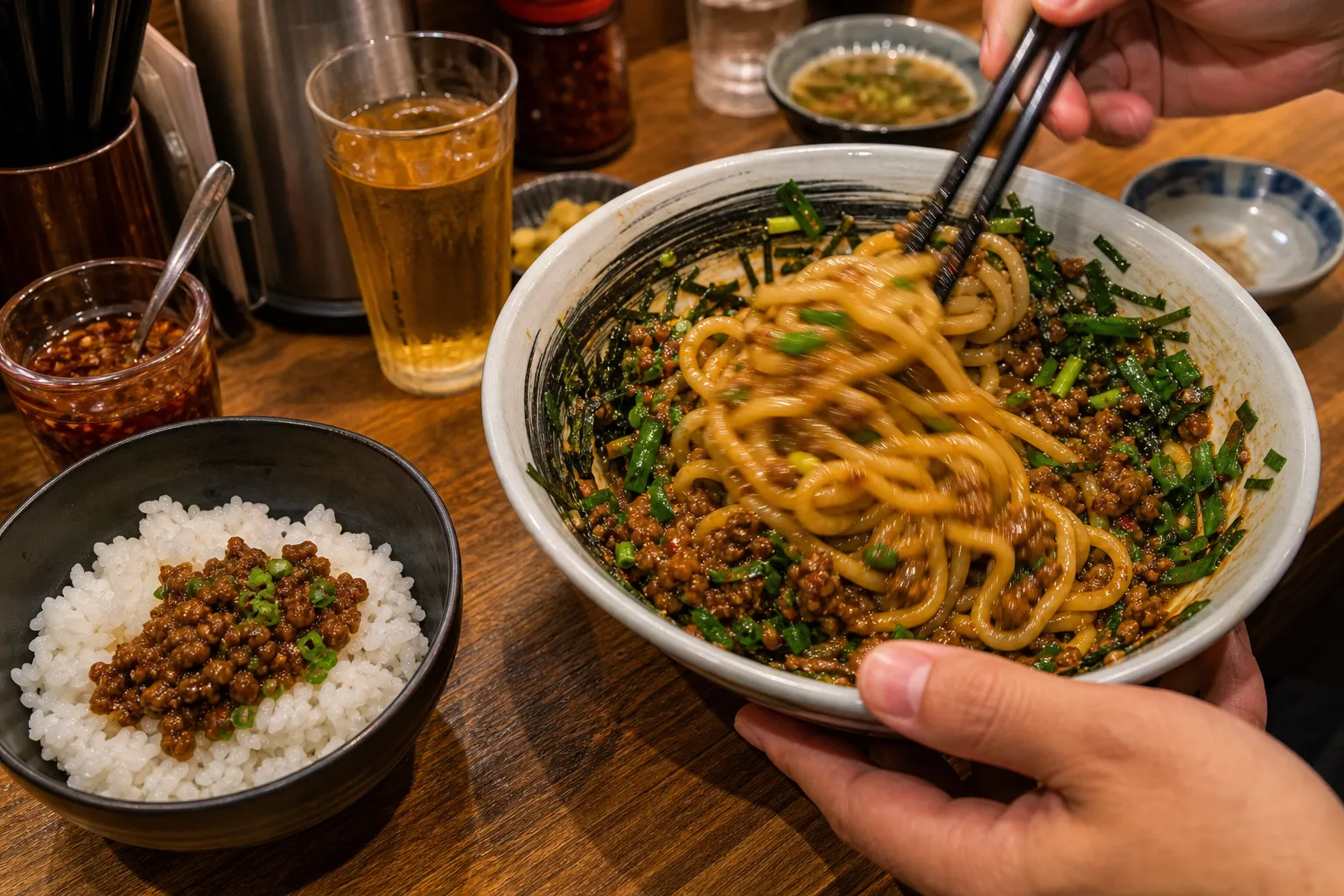
- Break the yolk and mix everything together hard until the noodles are glossy and evenly coated — don't hold back.
- Eat right away while the garlic is loud and the noodles are hot.
- When the noodles are gone, ask for oimeshi (a scoop of rice), tip it into the remaining mince and sauce, mix, and finish the bowl. Non-negotiable.
Before you go — get messy, then get rice
Your questions, answered honestly
"Do I really have to mix it? It looks so nice." — Yes, and yes it does. That artful arrangement exists to be destroyed. Break the yolk and fold everything together thoroughly before your first bite — the flavor only makes sense once the garlic, mince, yolk, and noodles are one. A gently-eaten Taiwan mazesoba is a wasted one.
"What's this rice thing at the end (oimeshi)?" — The best part. After the noodles, there's a puddle of spicy mince and sauce left in the bowl. You add a small bowl of rice, mix it in, and eat that too — it's built into the experience. Many shops offer it cheap or free; just say oimeshi kudasai.
"How spicy and how garlicky are we talking?" — Mild-to-moderate heat, but serious raw garlic. It's punchy, not painful. If you've got plans or a date after, know that the garlic is a commitment. Some shops let you ask for less garlic (ninniku sukuname) if you're nervous.
"Is this the same as abura soba?" — Same family (both brothless, both mixed), different soul. Abura soba is the mellow Tokyo one — soy, oil, vinegar. Taiwan mazesoba is the loud Nagoya cousin — spice, raw garlic, egg yolk, and a rice finish.
What the staff will ask you
| You'll hear | Romaji | Meaning | Just say |
|---|---|---|---|
| 麺の量は? | Men no ryō wa? | "How much noodle?" | Futsū de (regular) / Ōmori (large) |
| ニンニク入れますか? | Ninniku iremasu ka? | "Add garlic?" | Onegaishimasu (yes) / Sukuname de (a little) |
| 辛さは? | Karasa wa? | "Spice level?" | Futsū de (normal, please) |
| 追い飯つけますか? | Oimeshi tsukemasu ka? | "Add a rice finish?" | Onegaishimasu (yes, please) |
To order, just say "Taiwan mazesoba hitotsu kudasai" (台湾まぜそば一つください) — "one Taiwan mazesoba, please."
Where to eat it
- Menya Hanabi (Nagoya) — the shop that invented it in 2008. The original, and still the pilgrimage spot.
- Nagoya, all over — it's a local staple now; specialist and ramen shops across the city serve their own versions.
- Branches in Tokyo and beyond — Menya Hanabi and imitators have spread nationwide, so you can find a bowl outside Nagoya, though eating it on its home turf hits different.
Recipes, spice, and garlic levels vary by shop, and popular spots run lines, so check hours before you go.
Soul Score
Local Roots4/5
First-Timer Friendly3/5
Adventure Level4/5
Comfort Level4/5
Travel Worthy4/5
These scores are one obsessed eater's gut feeling — not a verdict. A low number isn't a bad mark, just a different kind of adventure.
Know someone planning Japan?
← All Articles
Local Food · Nagoya
Still hungry?
Eat more from Aichi
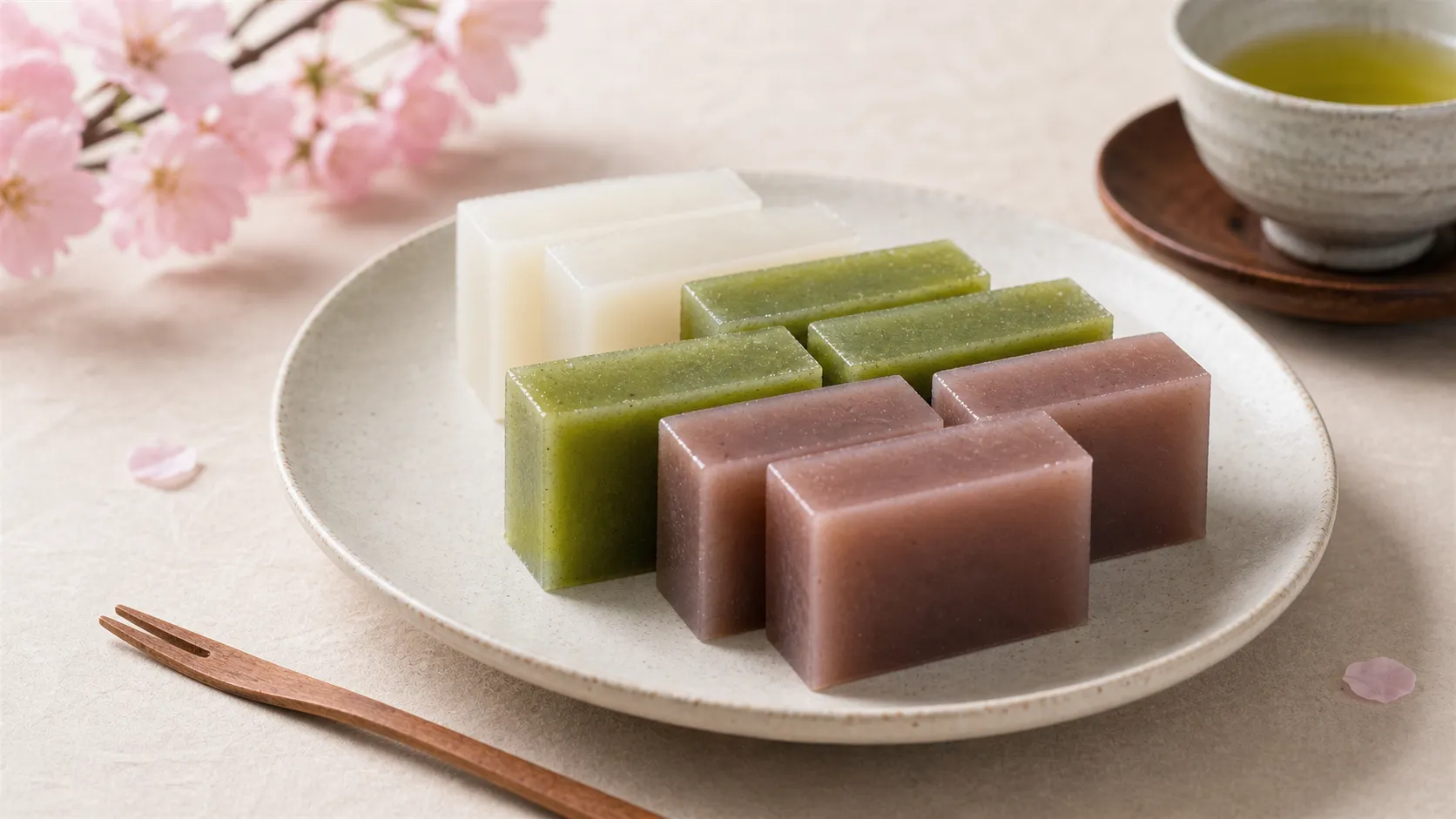
Sweets & SnacksNagoya, Aichi
Uiro (ういろう)
A steamed cake of rice flour and sugar that's somehow both chewy and clean, mild and moreish — Nagoya's understated, faintly wobbly sweet that grows on you until you can't stop buying it at the station.
July 10, 2026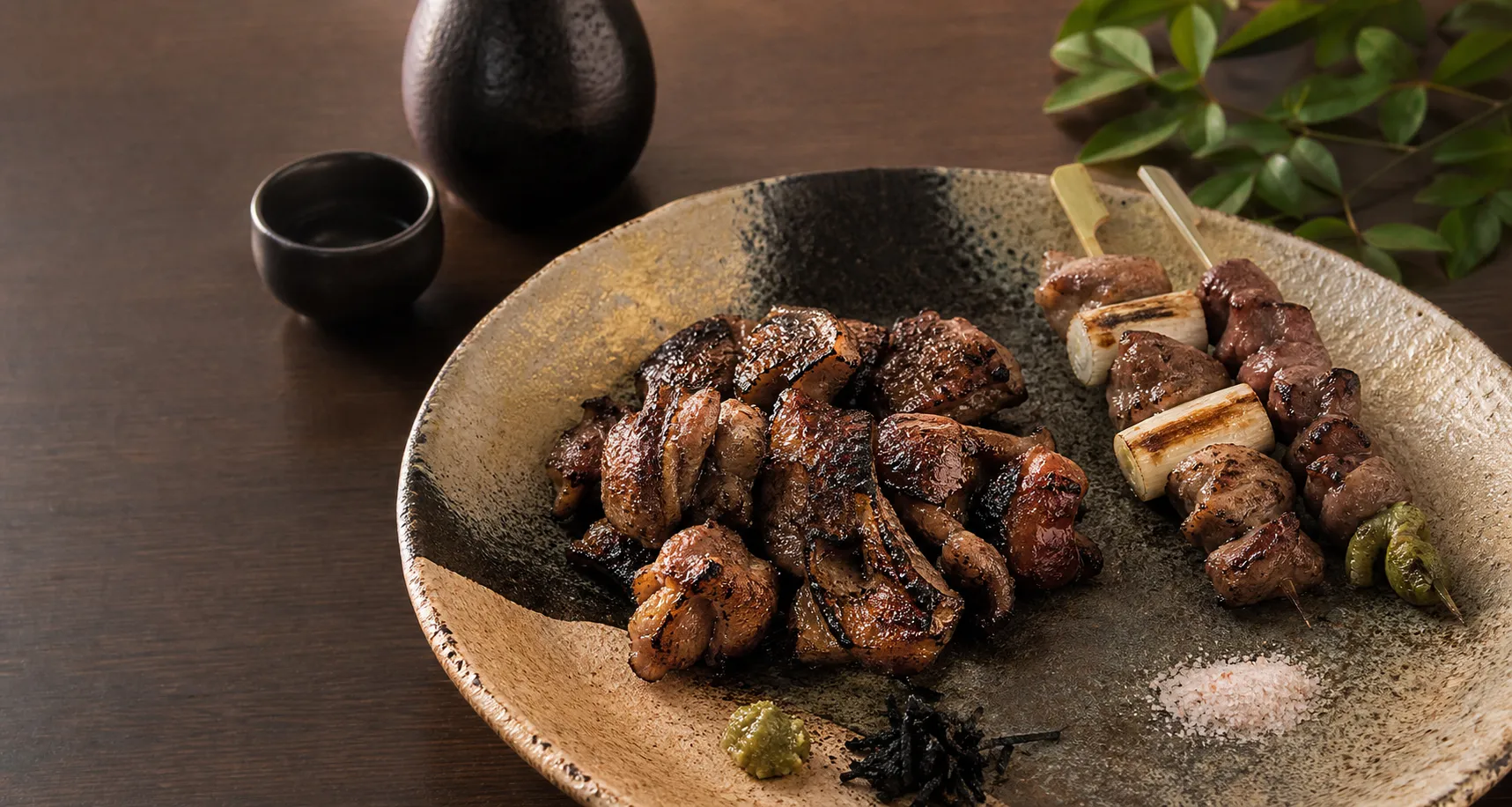
Local FoodNagoya, Aichi
Nagoya Cochin (名古屋コーチン)
Everyone warns you about the chewiness like it's a flaw — but that first spring-back bite of charcoal-grilled thigh is exactly the point, and I get it now.
July 5, 2026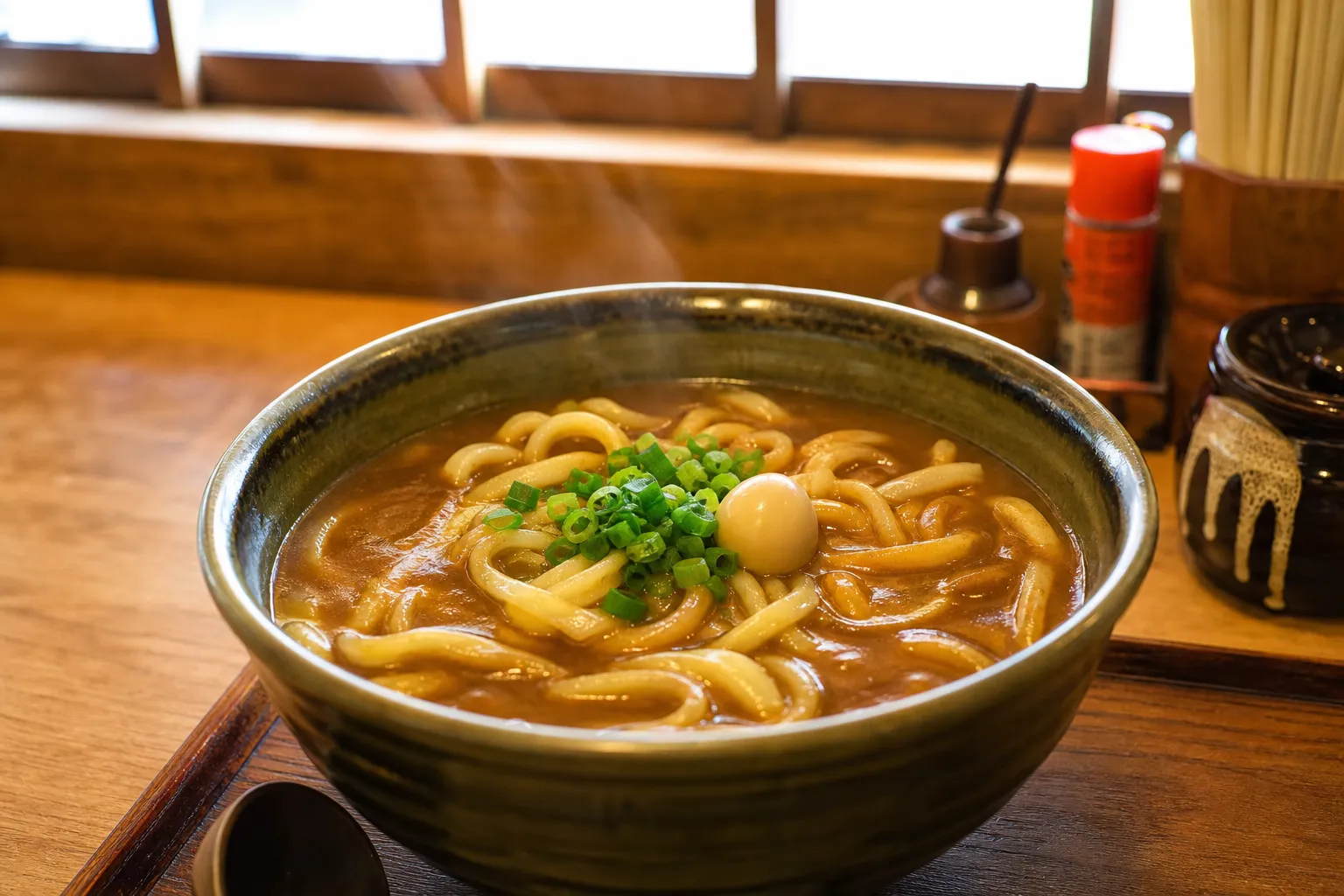
Local FoodToyohashi, Aichi
Toyohashi Curry Udon (豊橋カレーうどん)
Eat the noodles, drink the broth, and just when you think the bowl is empty — dig down and find an entirely second meal waiting underneath.
July 4, 2026