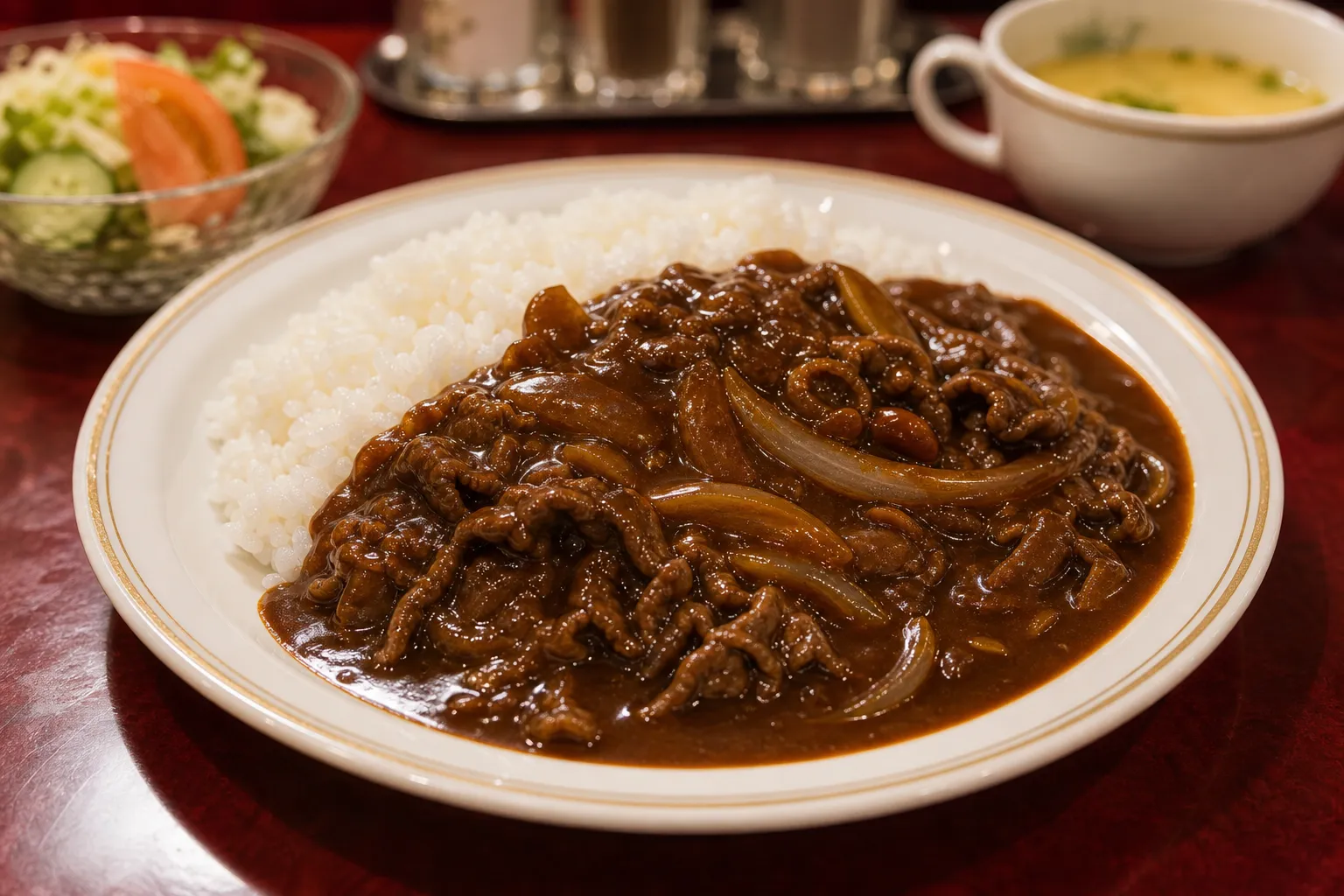
The plate landed and my mouth said curry on reflex — same mound of rice, same glossy brown blanket poured over it — and then the first bite was completely different: no spice heat at all, just this deep, savory, slightly tangy richness with meltingly soft beef and sweet onions folded through it. I went quiet and just kept eating. Hayashi rice doesn't shout. It's the one that sneaks up on you and becomes the thing you crave on a rainy Tuesday.
Share this dish


Curry's quieter, browner cousin — thin beef and onions melted into a glossy demi-glace sauce over rice, and the dish your Japanese friend's mom probably makes best.
This is hayashi rice (ハヤシライス), and the fastest way to understand it is: it's what curry rice's calmer, browner cousin would be. Thin-sliced beef and onions are simmered low and slow in a glossy, dark demi-glace sauce rounded out with tomato, then ladled generously over a bed of white rice. It's a cornerstone of yoshoku — Japan's homegrown genre of Western-influenced comfort food, born in the Meiji era when Japan first opened up to Western cooking and then thoroughly made it its own. No chili, no curry spice. Just rich, savory, faintly sweet-and-sour beef gravy over rice, and it is exactly as comforting as that sounds.
A Western dish that became completely Japanese
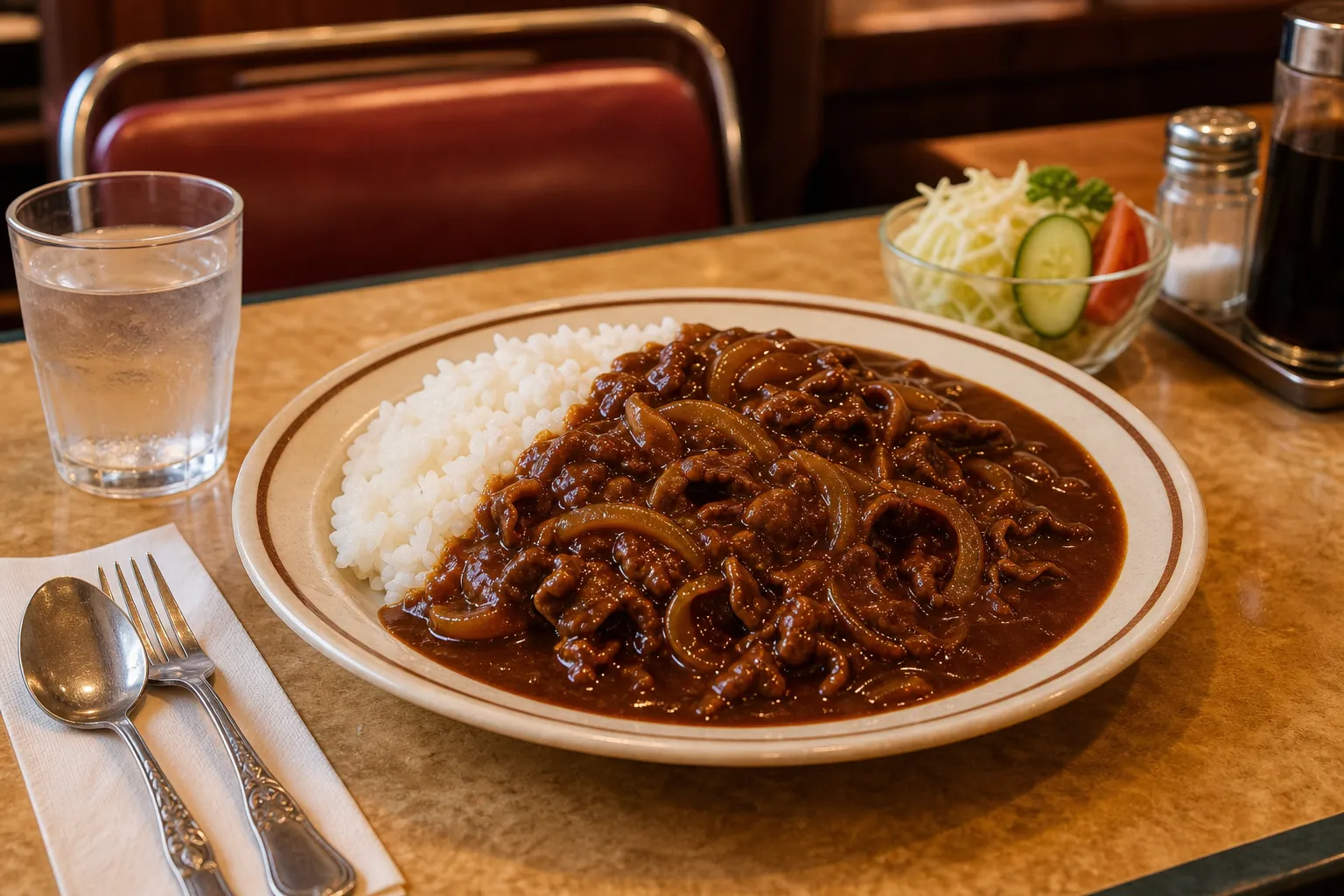
Nobody fully agrees on where the name "hayashi" comes from, and I find that delightful. One story says it's a Japanese mangling of "hashed beef" (as in hashed-beef-and-rice). Another credits a man named Hayashi — possibly a founder connected to the famous Maruzen bookstore — who supposedly ate or invented it. The truth is probably lost, and honestly the mystery suits the dish; it feels like a food that just quietly appeared in Japan's yoshoku diners in the late 1800s and refused to leave. However it got its name, it's been pure Japanese comfort food for over a century.
Like Japanese curry, it lives a double life: a from-scratch demi-glace version simmered for hours at a proper yoshoku restaurant, and a weeknight home version made from a boxed roux you break into a pot. Both are legitimate and both are beloved. That's the mark of a food that truly belongs to a country — when it's on the fine-ish restaurant menu and in the cupboard at home. Hayashi rice is both, without any contradiction.
Why the brown sauce is the whole point
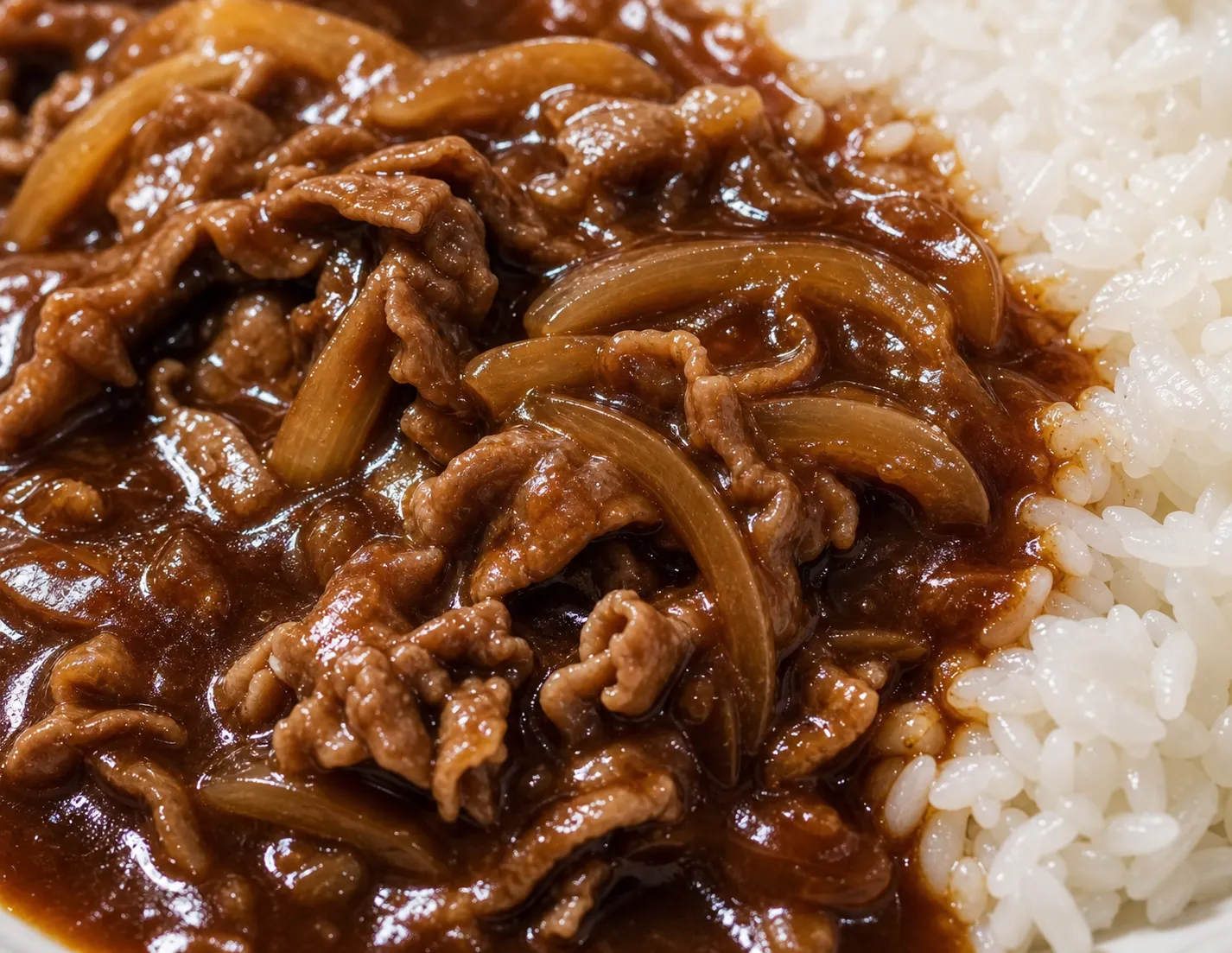
The sauce is everything here, and it's a genuinely different animal from curry. Demi-glace — that deep, glossy, slow-built brown sauce from the French tradition — gives it a savory backbone, while tomato adds a gentle sweet-and-sour brightness that keeps all that richness from feeling heavy. There's no spice burn; the "warmth" is all umami. It's velvety, glossy, and clings to each grain of rice. Where curry announces itself, hayashi murmurs.
And the beef and onions do the emotional work. Cooked long enough, the onions half-dissolve into sweet, jammy strands and the thin beef goes tender and silky, so the whole thing eats soft and almost soothing — nothing to fight, nothing to chew hard. A lot of versions come with a swirl of cream, a scatter of green peas, or a few mushrooms. I add extra onions when I make it at home because I have a problem, and the problem is that they're delicious.
How it's made
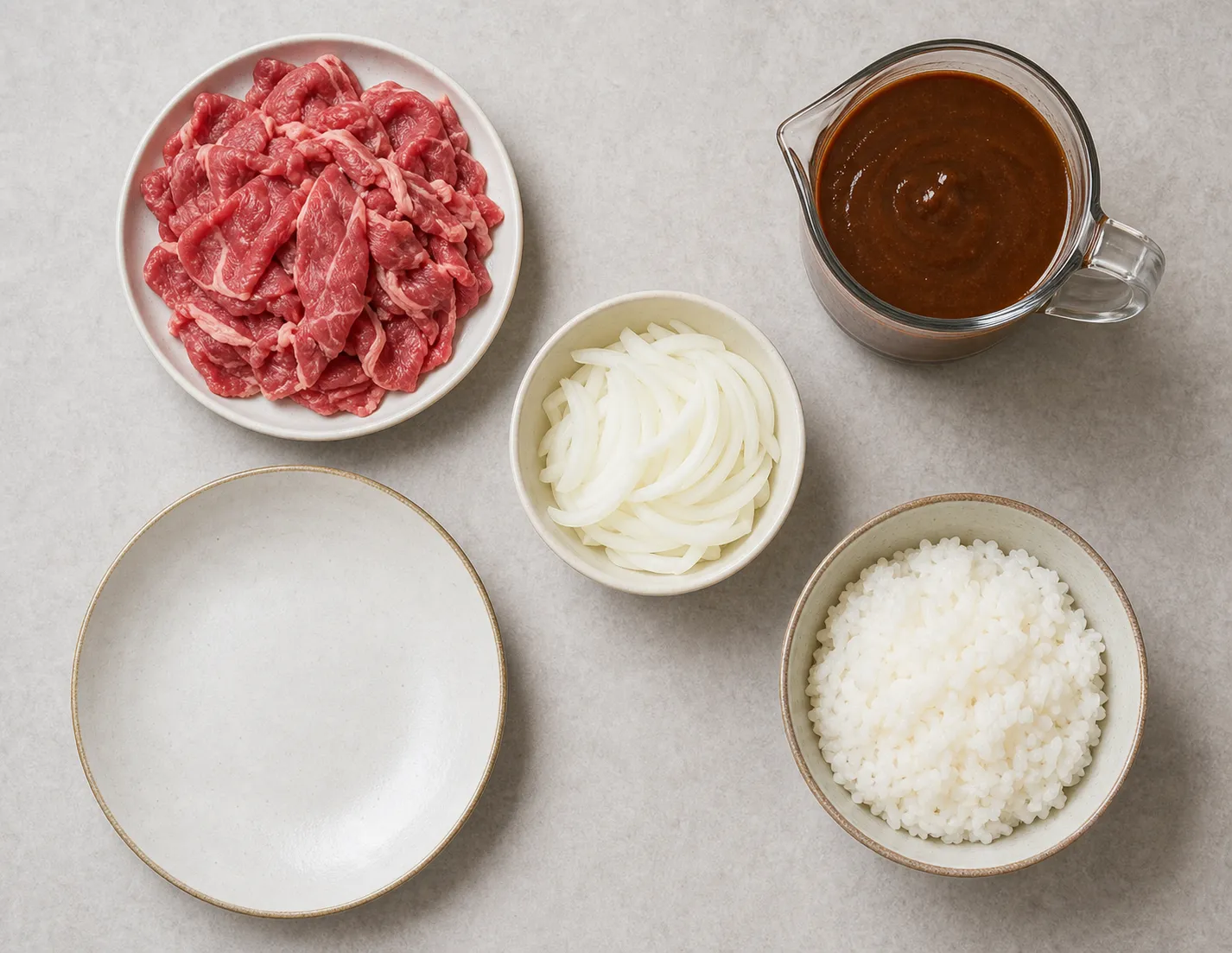
- Slice beef thin and cut plenty of onion; brown the beef lightly and cook the onions down until soft and sweet
- Build the sauce base — demi-glace and tomato (from scratch, or from a boxed hayashi roux at home) — with stock
- Simmer the beef and onions in the sauce low and slow until the beef is tender and the onions melt into it and the sauce turns deep, glossy brown
- Adjust to taste — a touch of red wine, Worcestershire, or a swirl of cream is common
- Serve a mound of hot white rice on a plate and ladle the beef-and-sauce generously over one side
Before you go — curry's quieter cousin, explained
Your questions, answered honestly
"How is this different from Japanese curry?" — Totally different sauce. Curry uses curry spice and has a mild heat; hayashi uses a demi-glace-and-tomato brown sauce with zero spice heat — richer, more savory, a little tangy. Same rice-and-sauce format, completely different flavor. If curry is the loud sibling, hayashi is the mellow one.
"Is it spicy at all?" — No, not remotely. This is one of the safest, gentlest plates on any yoshoku menu — great for kids, spice-averse eaters, or anyone who wants deep flavor without heat.
"What's hashed beef — is that the same thing?" — Basically yes. "Hashed beef" (ハッシュドビーフ) and hayashi rice are close cousins, often the same dish under a slightly different name; some menus distinguish them subtly, but for a traveler, treat them as siblings.
"Fork or spoon?" — Spoon, like curry rice. It's a saucy, over-rice dish you scoop, not a knife-and-fork steak. Grab the spoon and go.
What the staff will ask you
| You'll hear | Romaji | Meaning | Just say |
|---|---|---|---|
| ライスの量はどうしますか? | Raisu no ryō wa dō shimasu ka? | "How much rice would you like?" | Futsū de onegaishimasu (regular, please) |
| サラダはお付けしますか? | Sarada wa otsuke shimasu ka? | "Would you like a side salad?" | Onegaishimasu (yes, please) or Kekkō desu (no, thanks) |
| 温泉卵をのせますか? | Onsen-tamago o nosemasu ka? | "Add a soft poached egg on top?" | Onegaishimasu (yes, please) |
To order, just say "Hayashi raisu o kudasai" (ハヤシライスをください) — "Hayashi rice, please."
Where to eat it
- Yoshoku restaurants — the classic home of hayashi rice; these Western-style Japanese diners, some of them decades old, make the slow-simmered demi-glace versions.
- Cafés and kissaten (retro coffee shops) — many old-school Japanese cafés serve hayashi rice as a hearty lunch plate alongside the coffee.
- Family restaurants — reliable, budget-friendly chains almost always have a hayashi rice or hashed beef option; look for ハヤシライス on the menu.
Recipes, portion sizes, and prices vary widely between a from-scratch yoshoku restaurant and a family chain, so check current details before you go.
Soul Score
Local Roots4/5
First-Timer Friendly4/5
Adventure Level3/5
Comfort Level5/5
Travel Worthy3/5
These scores are one obsessed eater's gut feeling — not a verdict. A low number isn't a bad mark, just a different kind of adventure.
Know someone planning Japan?
← All Articles
Japanese Food · Nationwide
Still hungry?
You might also like
Japanese FoodNationwide
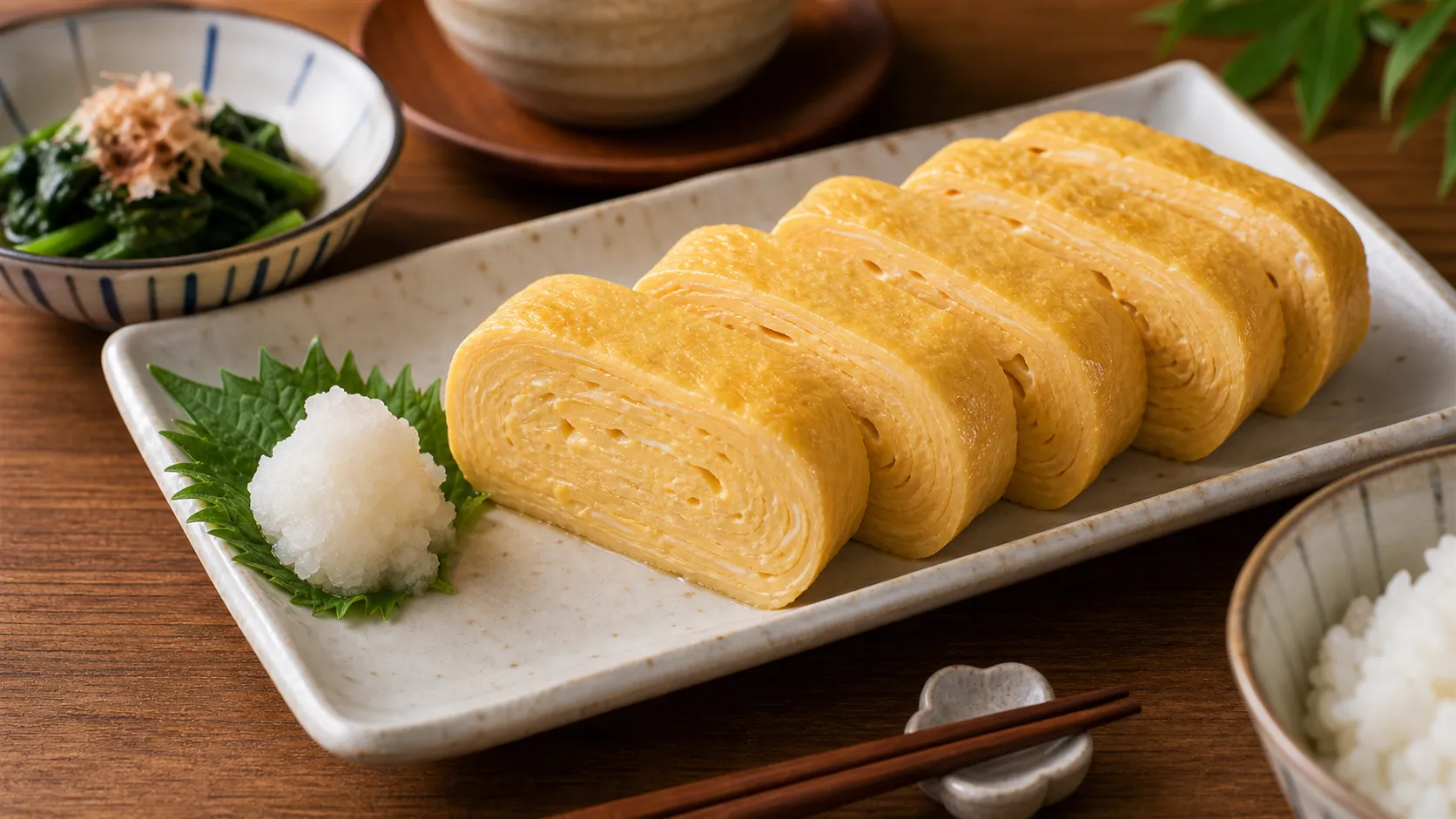
Dashimaki-tamago (だし巻き卵)
A rolled omelette so soft it almost trembles, layered fold over fold and soaked with dashi so that biting in releases a little warm rush of savory broth — the deceptively simple egg dish that Japanese chefs spend years perfecting.
July 11, 2026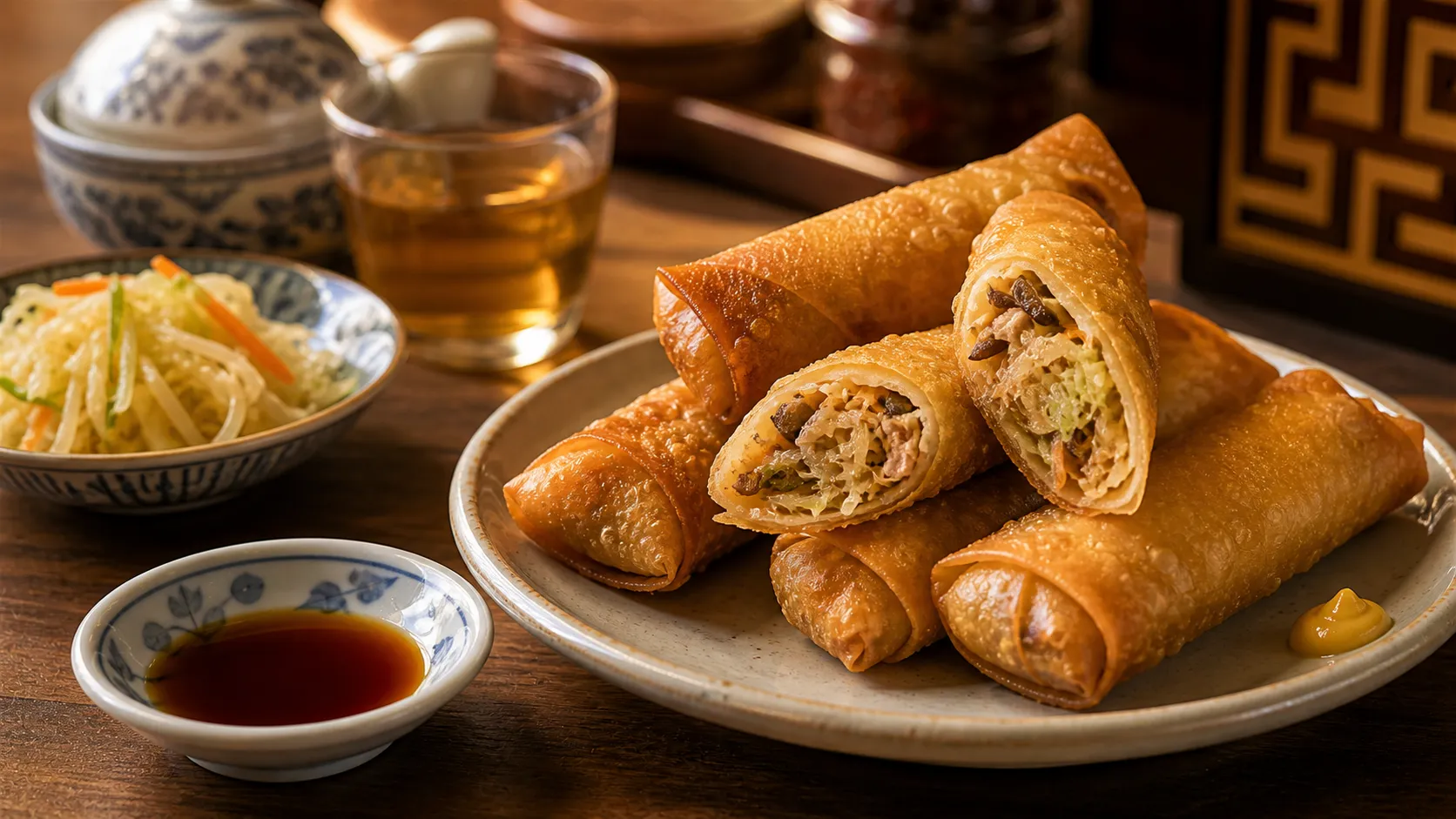
Japanese FoodNationwide
Harumaki (春巻き)
The Japanese spring roll — a shatteringly crisp golden tube that gives way to a hot, savory tangle of pork, cabbage and bamboo shoot, best eaten the second it's cool enough not to burn your mouth (you will not wait that long).
July 11, 2026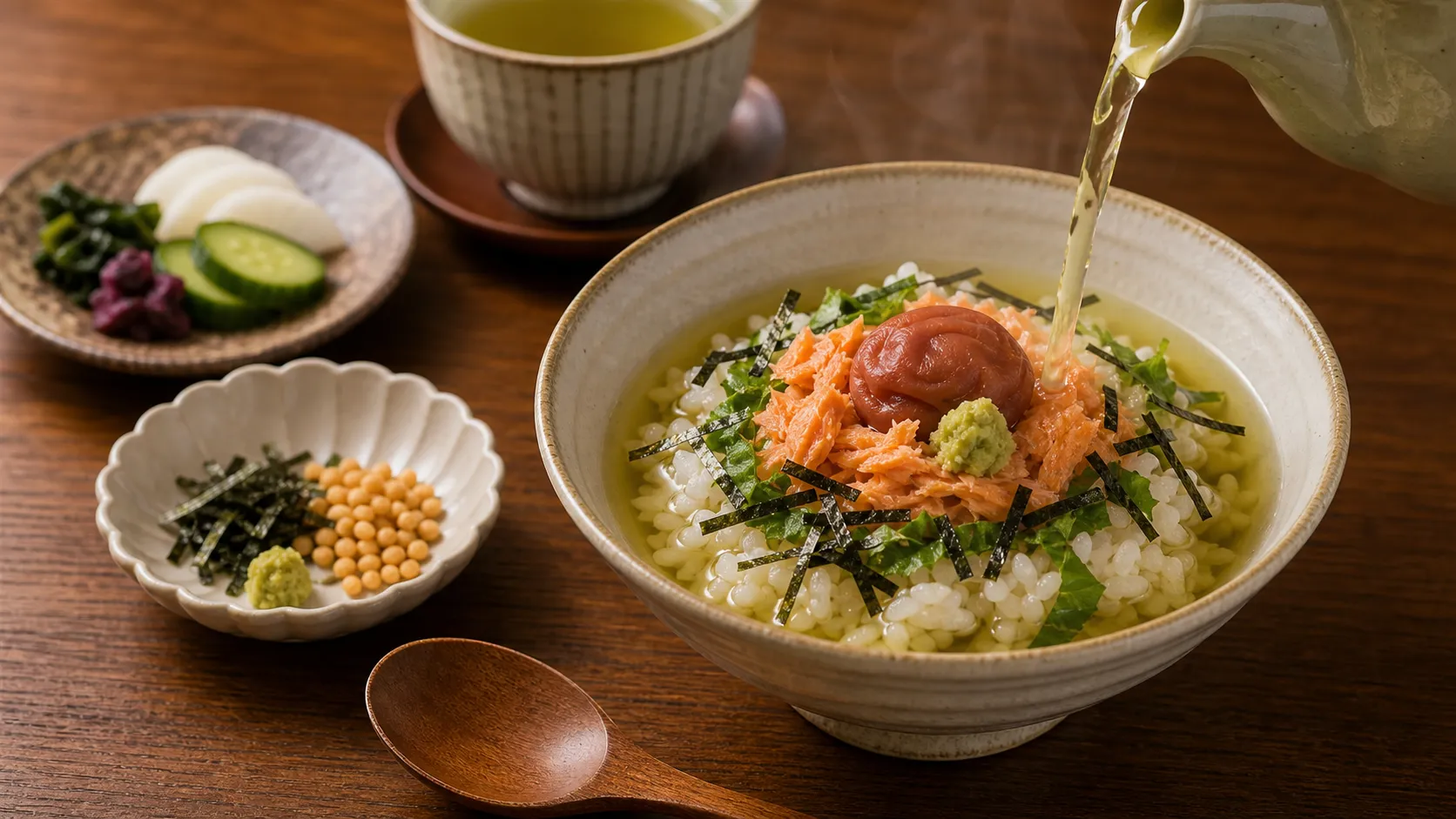
Japanese FoodNationwide
Ochazuke (お茶漬け)
Pour hot green tea or dashi over a bowl of rice, scatter something savory on top, and eat — the gentlest, most quietly restorative dish in Japan, the one you reach for late at night when you just need a warm bowl to make everything okay.
July 11, 2026