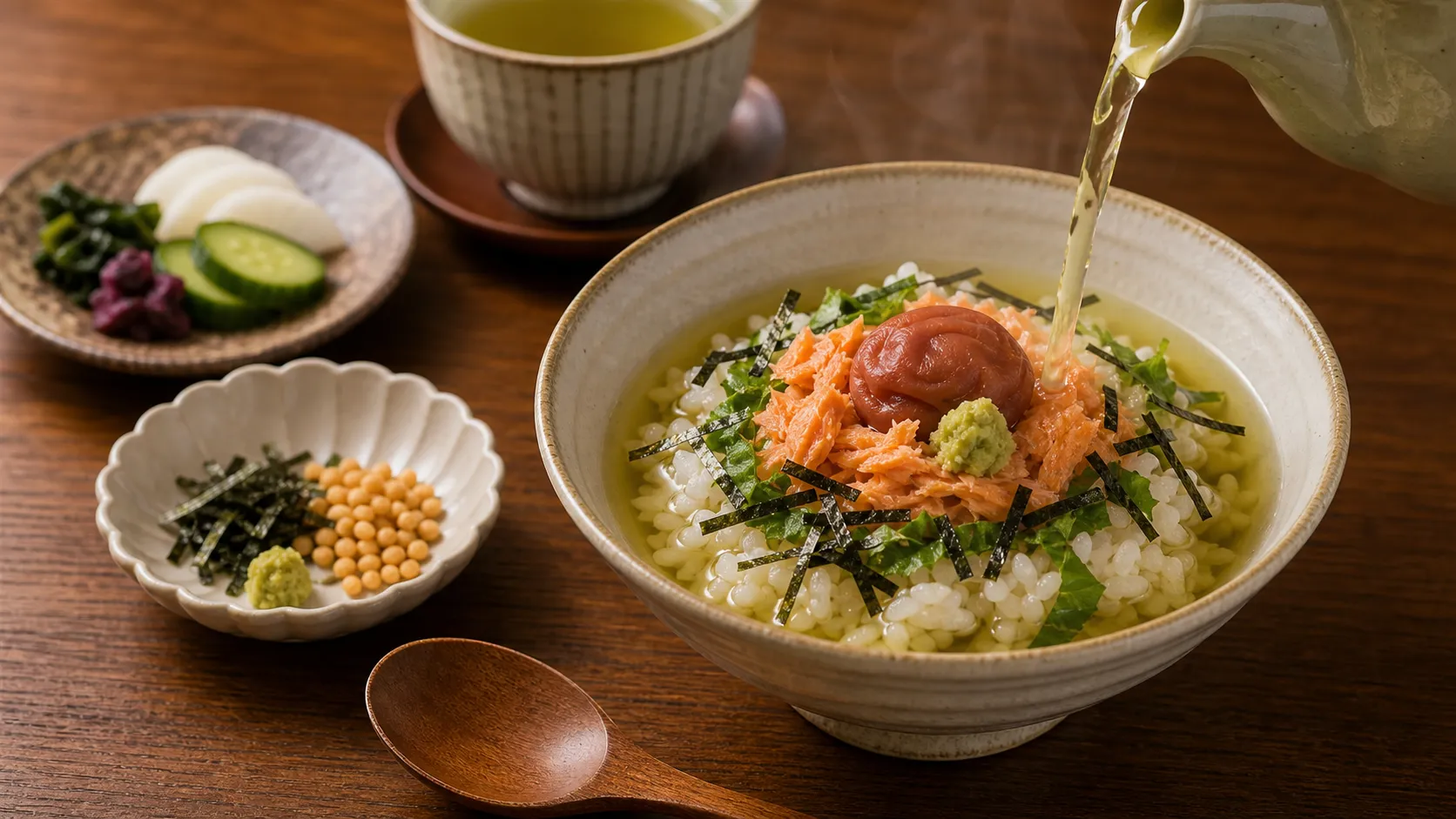
It was late, I was tired, and someone put a bowl in front of me: rice, a scatter of salmon and nori and a salty little umeboshi, and then they poured hot tea right over the whole thing. I thought, that's it? And then I ate it, and something in my chest just… unknotted. Warm, savory, gentle, the rice loosening in the fragrant broth, the plum bright and sour against it. It was the most soothing thing I'd eaten in weeks. That's ochazuke, and it's Japan's answer to needing a warm bowl to make everything okay.
Share this dish


Pour hot green tea or dashi over a bowl of rice, scatter something savory on top, and eat — the gentlest, most quietly restorative dish in Japan, the one you reach for late at night when you just need a warm bowl to make everything okay.
Here's what it is: ochazuke (お茶漬け) is cooked rice with hot green tea or dashi broth poured over it, topped with something savory — grilled salmon, a sour umeboshi (pickled plum), nori (seaweed), pickles, or tsukemono. Rice + hot tea/dashi poured over + savory toppings: that's what makes it ochazuke, gentler and soupier than a rice bowl, lighter than a proper soup. It's a beloved comfort dish — a light meal, a night-ender, a hangover savior, and, in instant-packet form, a pantry staple in every home.
The comfort bowl for late nights and light appetites
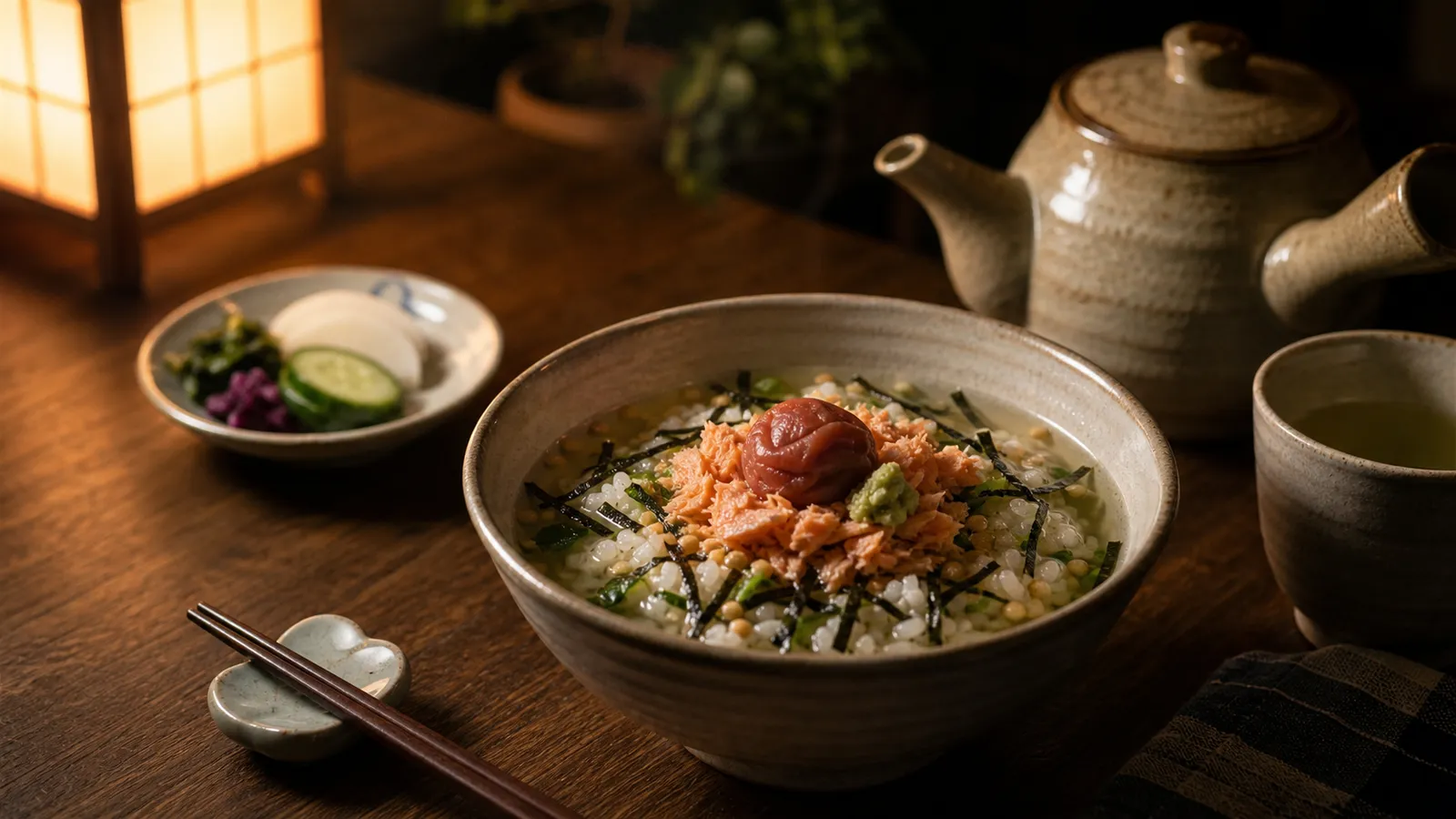
Ochazuke grew out of the simplest instinct — pour something hot over rice to warm it, soften it, and make it slip down easily — and it's been a quiet fixture of Japanese eating for generations. It's the dish for when you don't want much: the end of a night out (a classic izakaya shime, or finisher), a light supper, a gentle thing to eat when you're tired or under the weather or just not that hungry. It's humble to the point of near-invisibility, and that's exactly its power.
I find it genuinely tender, as food goes. There's no showmanship here — it's rice and tea and a few savory bits — but it does something emotional that fancier food often can't: it comforts. It asks nothing of you and gives back warmth and ease. The Japanese have a real genius for this kind of restorative simplicity, food designed not to impress but to soothe, and ochazuke might be the purest example. It's the bowl you make for yourself at midnight, and the one someone makes for you when you need looking after.
What makes the eating experience different
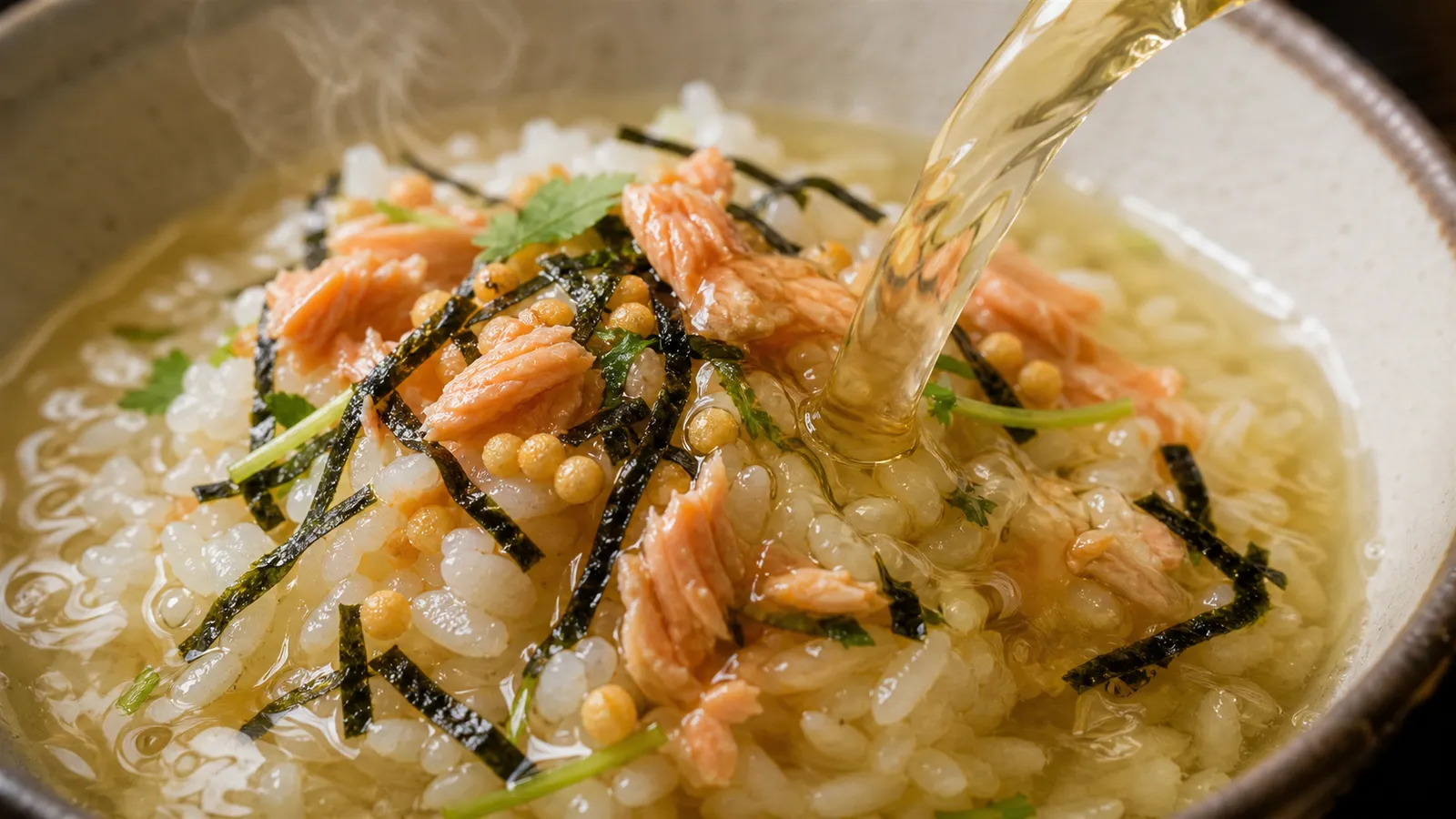
- It's light, warm and soupy — rice loosened in fragrant tea or dashi, easy to eat and gently filling
- The broth carries the flavor: green tea gives a clean, faintly bitter aroma; dashi gives savory umami depth
- The toppings define it — salty-sour umeboshi, savory salmon, briny nori, crunchy pickles, sometimes wasabi for a nose-tingling lift
- The texture shifts as you eat — rice softening in the broth, toppings mingling in — comforting and mellow
- It's the definition of restorative — soothing when you're tired, ill, or just want something quiet and warm
How it's made
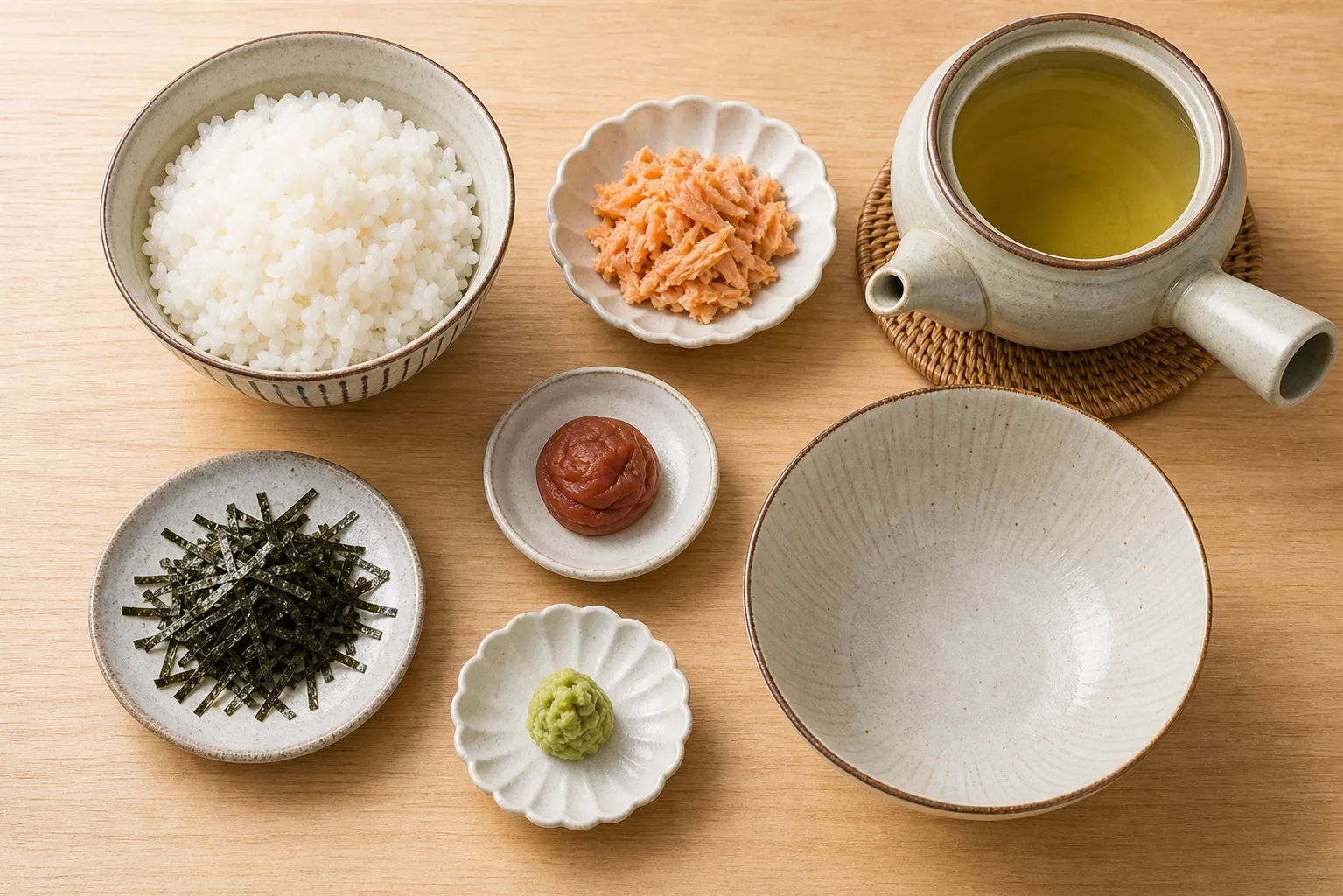
- Start with rice. A bowl of cooked (usually cooled or room-temp) white rice — often leftover rice, which is part of its thrifty charm.
- Add toppings. Scatter over savory bits: grilled salted salmon, umeboshi, shredded nori, pickles, sesame, and optional wasabi.
- Brew the liquid. Prepare hot green tea (traditionally roasted hōjicha or sencha) or a light dashi broth (sometimes a seasoned dashi, which is the dashi-chazuke style).
- Pour it over. Pour the hot tea or dashi over the rice and toppings until the rice is partly submerged.
- Eat right away. Eaten immediately, warm, while the rice is loosening but still has some texture.
There's almost no cooking — the craft is in the balance: good rice, a well-chosen topping, and a broth (tea or dashi) that suits it. Instant ochazuke packets (just add hot water) are hugely popular and genuinely tasty, which tells you how forgiving and beloved the dish is.
Before you go — pour it over and let it soothe you
Your questions, answered honestly
"Is it really just tea poured on rice?" — Essentially, yes — and that simplicity is the point. It's rice with hot green tea or dashi broth poured over, plus savory toppings. It sounds plain, but the warmth, the aroma, the savory bits and the loosening rice add up to something genuinely comforting. Don't underestimate it.
"Tea or dashi — what's the difference?" — Green tea (ocha) gives a clean, lightly bitter, aromatic bowl (the classic ochazuke). Dashi broth gives a more savory, umami-rich, soup-like bowl (dashi-chazuke). Many shops and packets use a seasoned dashi. Both are lovely — dashi is a gentler intro if strong tea isn't your thing.
"What topping should I try first?" — Salmon (sake) is the crowd-pleaser — savory and easy to love. Umeboshi (sour pickled plum) is the classic and wonderfully refreshing, though the sourness surprises some first-timers. Nori and pickles round it out. A little wasabi stirred in adds a lovely sharp lift.
"When do people eat it?" — Often as a light meal, a late-night finisher (the classic end to a drinking session), or a soothing bowl when tired or unwell. It's not a hearty main — it's the gentle, restorative option, and that's exactly when to reach for it.
What the staff will ask you
| You'll hear | Romaji | Meaning | Just say |
|---|---|---|---|
| 具は何になさいますか? | Gu wa nani ni nasaimasu ka? | "Which topping would you like?" | Sake de / Ume de (salmon / plum, please) |
| お茶とだし、どちらにしますか? | O-cha to dashi, dochira ni shimasu ka? | "Green tea or dashi broth?" | Dashi de (dashi, please) |
| わさびはお付けしますか? | Wasabi wa o-tsuke shimasu ka? | "Would you like wasabi?" | Onegaishimasu (yes, please) |
To order, just say "Ochazuke o kudasai" (お茶漬けをください) — "Ochazuke, please."
Where to eat it
- Izakaya nationwide — a classic shime (meal-ending) dish; ordering ochazuke to finish a drinking session is a beloved Japanese ritual.
- Teishoku (set-meal) and rice-focused shops — many serve a proper ochazuke with quality toppings and broth, a great way to try the real thing.
- Any supermarket or convenience store — instant ochazuke packets (just add hot water to rice) are everywhere, cheap, and genuinely good for a taste at home.
Ochazuke ranges from simple green-tea-over-rice to richer dashi versions with premium toppings; it's meant to be light and eaten warm right after pouring, so enjoy it as a gentle finish or a soothing snack.
Soul Score
Local Roots4/5
First-Timer Friendly5/5
Adventure Level3/5
Comfort Level5/5
Travel Worthy3/5
These scores are one obsessed eater's gut feeling — not a verdict. A low number isn't a bad mark, just a different kind of adventure.
Know someone planning Japan?
← All Articles
Japanese Food · Nationwide
Still hungry?
You might also like
Japanese FoodNationwide
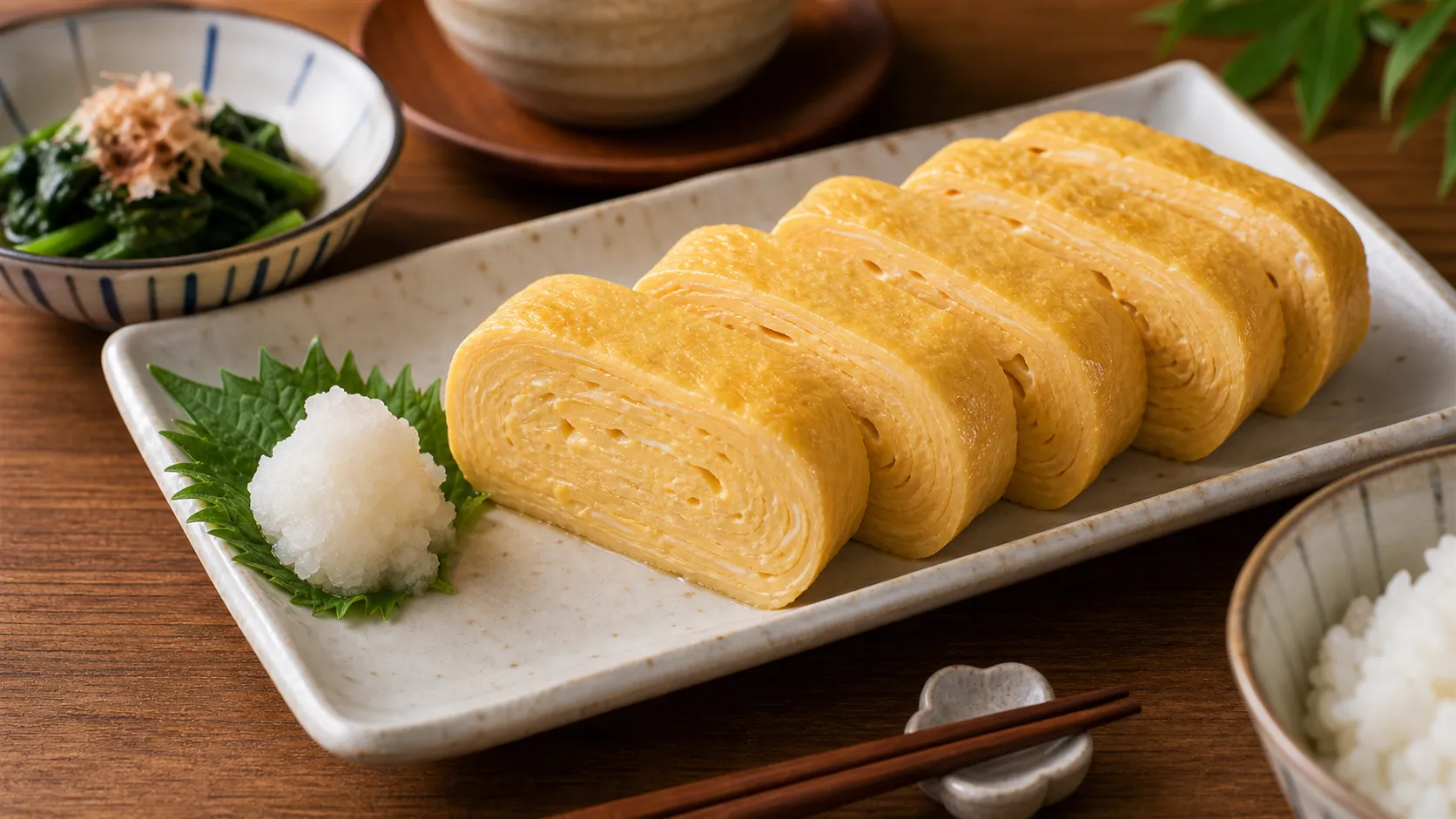
Dashimaki-tamago (だし巻き卵)
A rolled omelette so soft it almost trembles, layered fold over fold and soaked with dashi so that biting in releases a little warm rush of savory broth — the deceptively simple egg dish that Japanese chefs spend years perfecting.
July 11, 2026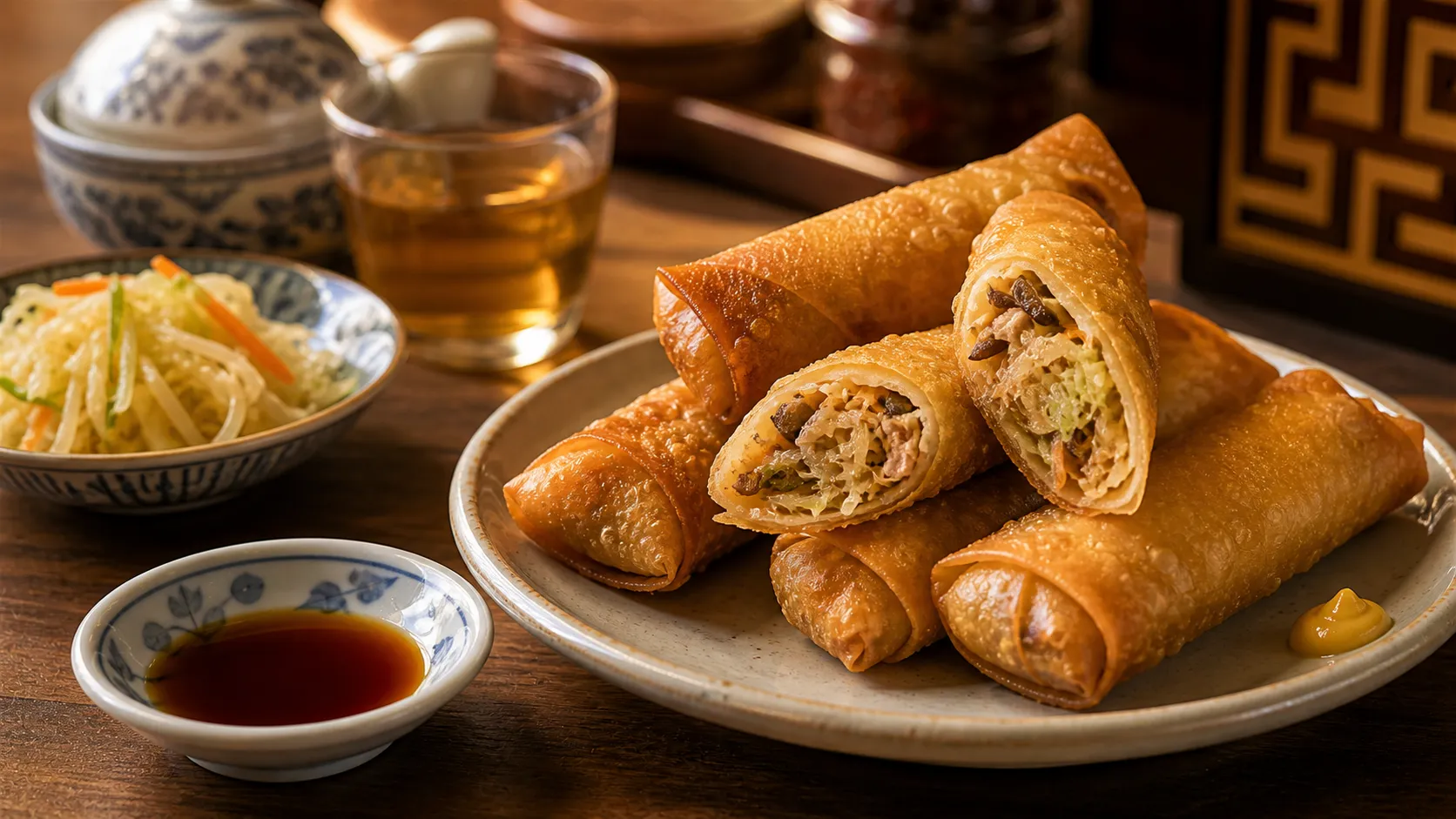
Japanese FoodNationwide
Harumaki (春巻き)
The Japanese spring roll — a shatteringly crisp golden tube that gives way to a hot, savory tangle of pork, cabbage and bamboo shoot, best eaten the second it's cool enough not to burn your mouth (you will not wait that long).
July 11, 2026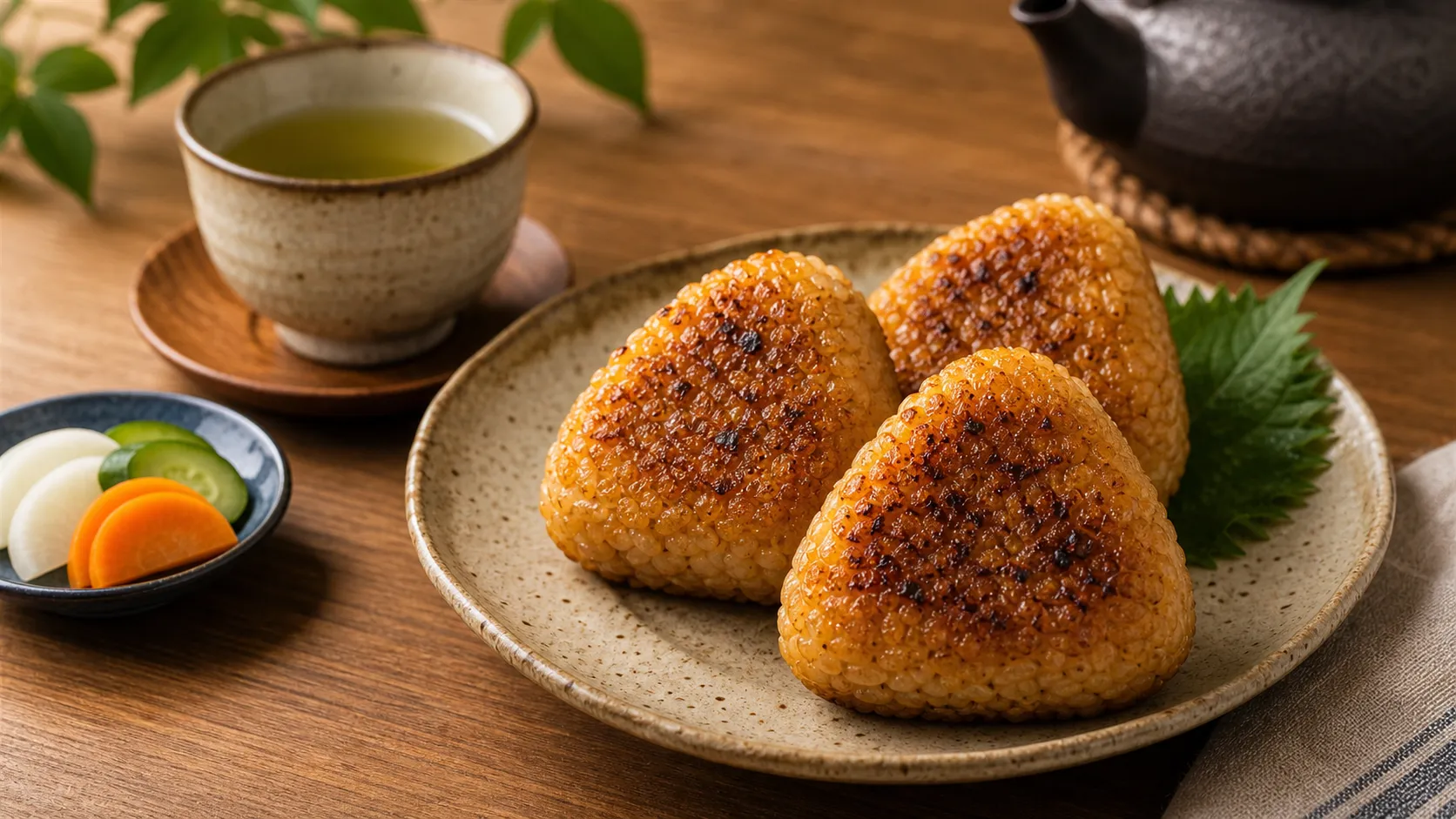
Japanese FoodNationwide
Yaki-onigiri (焼きおにぎり)
A rice ball brushed with soy sauce and grilled until the outside turns crackly-crisp and the whole thing smells like the best kind of caramelized, toasty comfort — the humble onigiri, upgraded by fire.
July 11, 2026