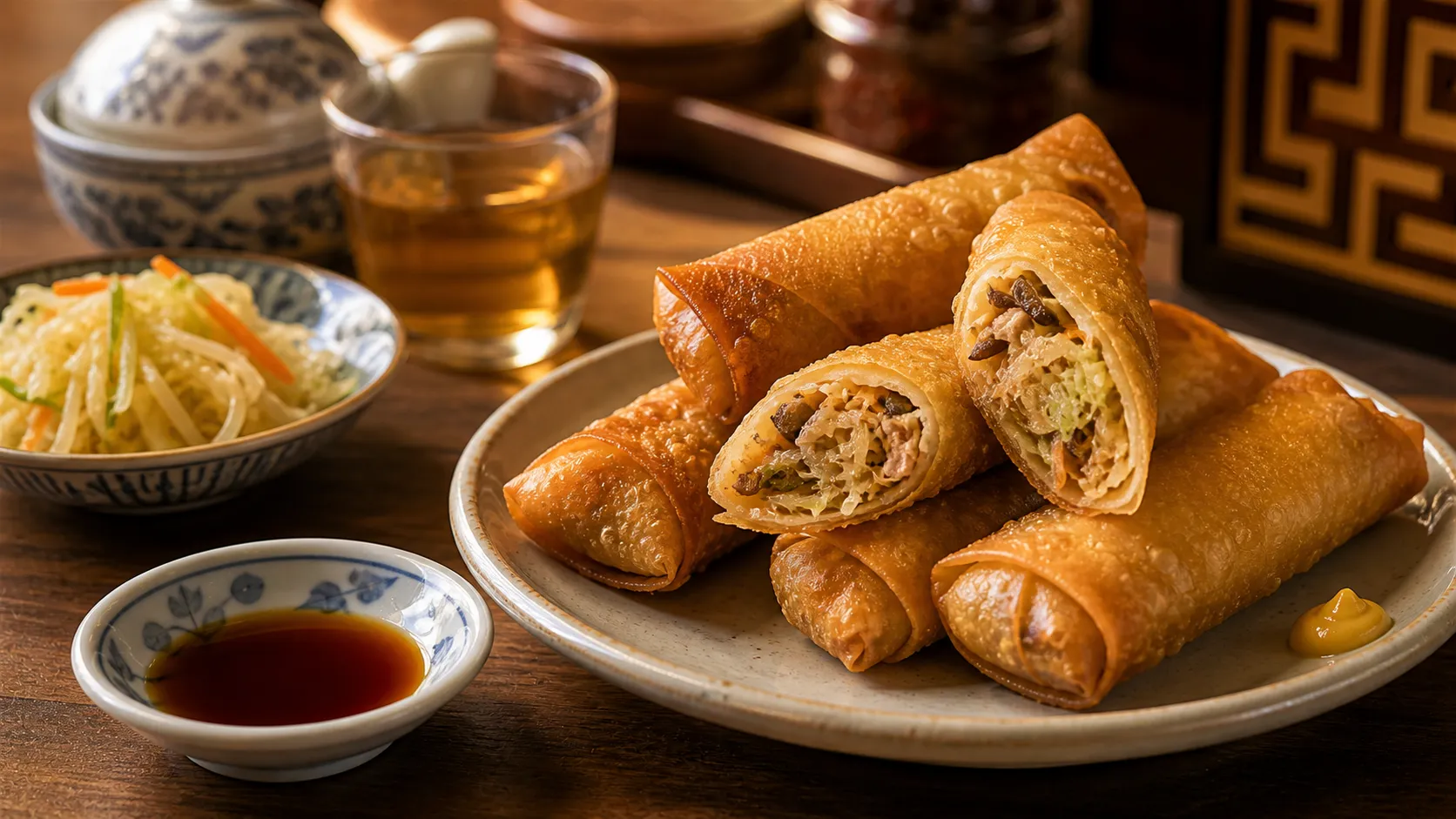
Crunch. That's the sound, and it's the whole reason I order it every time. You pick up the golden tube, still too hot really, and bite, and the wrapper shatters — this delicate, blistered, crackly shell — and then the inside is this hot savory tangle of pork and cabbage and bamboo shoot and slippery noodle, and you burn your mouth a little because of course you didn't wait, and you don't care one bit. That's harumaki, Japan's spring roll, and that first crunch is one of the great small joys of eating.
Share this dish


The Japanese spring roll — a shatteringly crisp golden tube that gives way to a hot, savory tangle of pork, cabbage and bamboo shoot, best eaten the second it's cool enough not to burn your mouth (you will not wait that long).
Here's what it is: harumaki (春巻き, literally "spring roll") is a deep-fried roll of Chinese origin, adapted into the Japanese kitchen — a thin wheat-flour wrapper rolled around a savory filling of pork, cabbage, bamboo shoot, shiitake mushroom and glass noodles, then fried until golden and shatteringly crisp. Crisp wheat wrapper, savory pork-and-vegetable filling, deep-fried: that's what makes it harumaki, distinct from a fresh Vietnamese-style roll or a puffier eggroll. It's a fixture of Japanese-Chinese cooking, izakaya menus, and home dinners everywhere.
China's spring roll, at home in Japan
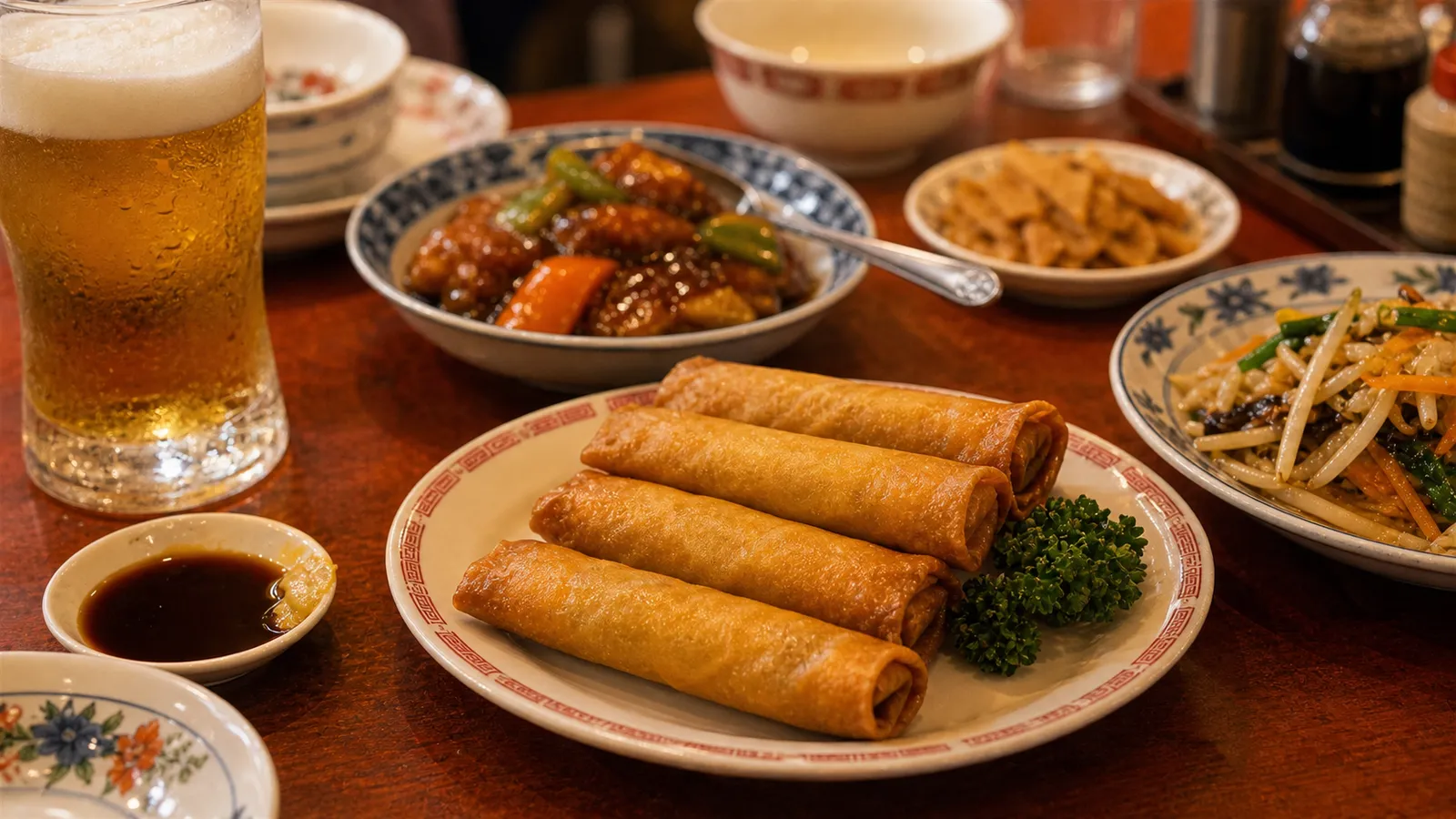
The spring roll came to Japan from China — the name literally means "spring roll," a food tied to the spring festival — and like ramen, gyoza and mabo-dofu, it settled comfortably into the Japanese-Chinese (chūka) repertoire and then into everyday home cooking. The Japanese version tends toward a thin, crisp wheat wrapper and a savory, well-seasoned pork-and-vegetable filling, sometimes bound with a little starch so it's juicy inside. It's a beloved everyday dish: a Chinese-restaurant staple, an izakaya order, a supermarket-deli standby, and a proud home-cooking project.
I love how thoroughly it's been embraced without losing its crunch-first appeal. It's celebratory in a low-key way — the kind of thing that shows up at a family dinner or a New Year's spread — but it's also just deeply satisfying fried food. There's real craft in getting the wrapper blistered and crisp while keeping the filling juicy, and a well-made harumaki, fresh from the oil with its perfect shatter, is proof that "simple fried snack" and "genuinely great food" are not remotely at odds.
What makes the eating experience different
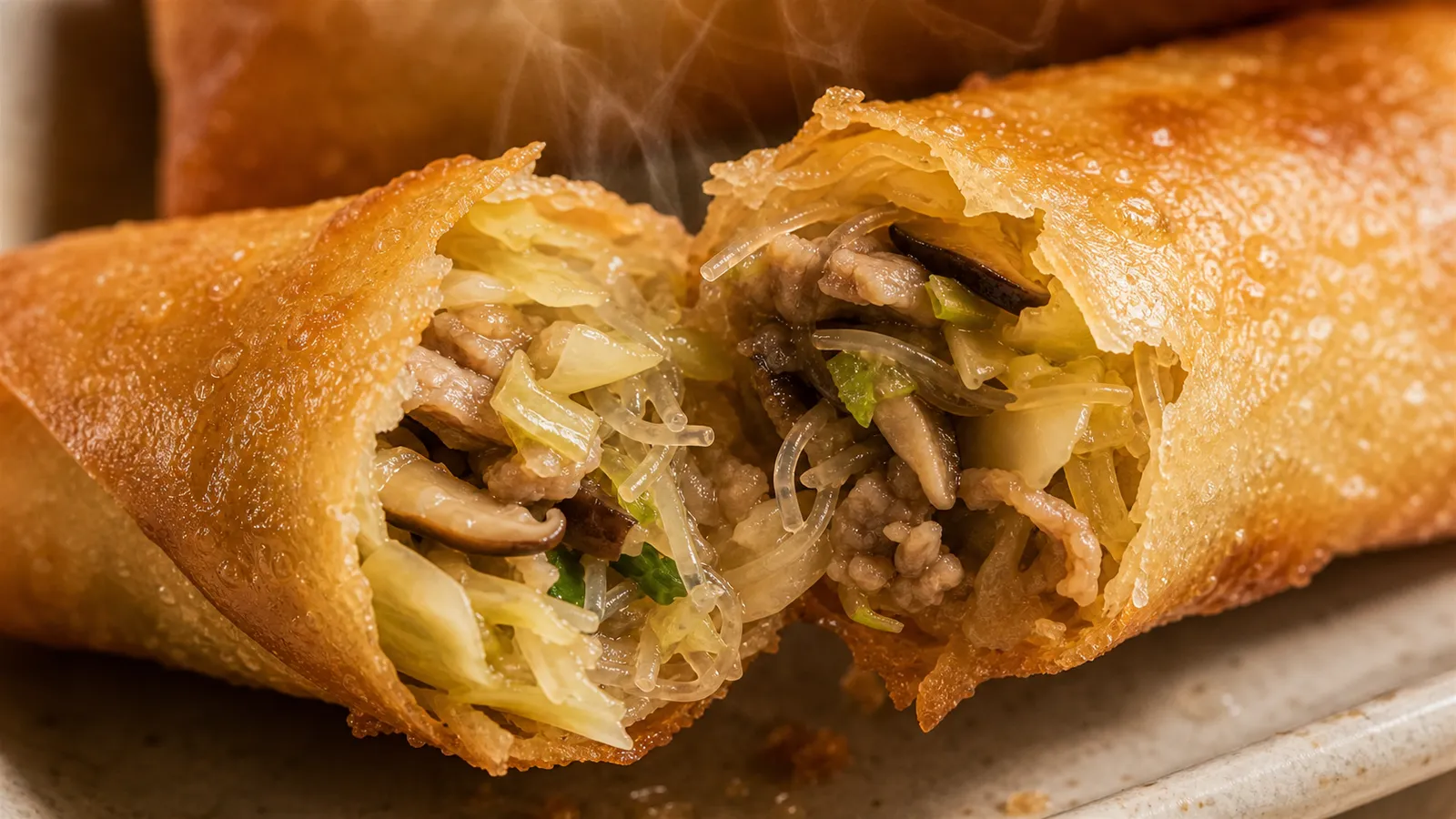
- The wrapper is the star sensation: thin, blistered, golden and shatteringly crisp — that first crunch is everything
- The filling is hot, savory and juicy — pork, cabbage, bamboo shoot, shiitake and glass noodles, seasoned and often lightly saucy
- The contrast between crackly shell and soft, steamy interior is the whole pleasure
- It's dipped to taste — soy and vinegar, a dab of hot mustard (karashi), or chili — so you can tune each bite
- It's handheld, hot and moreish — impossible to eat just one
How it's made
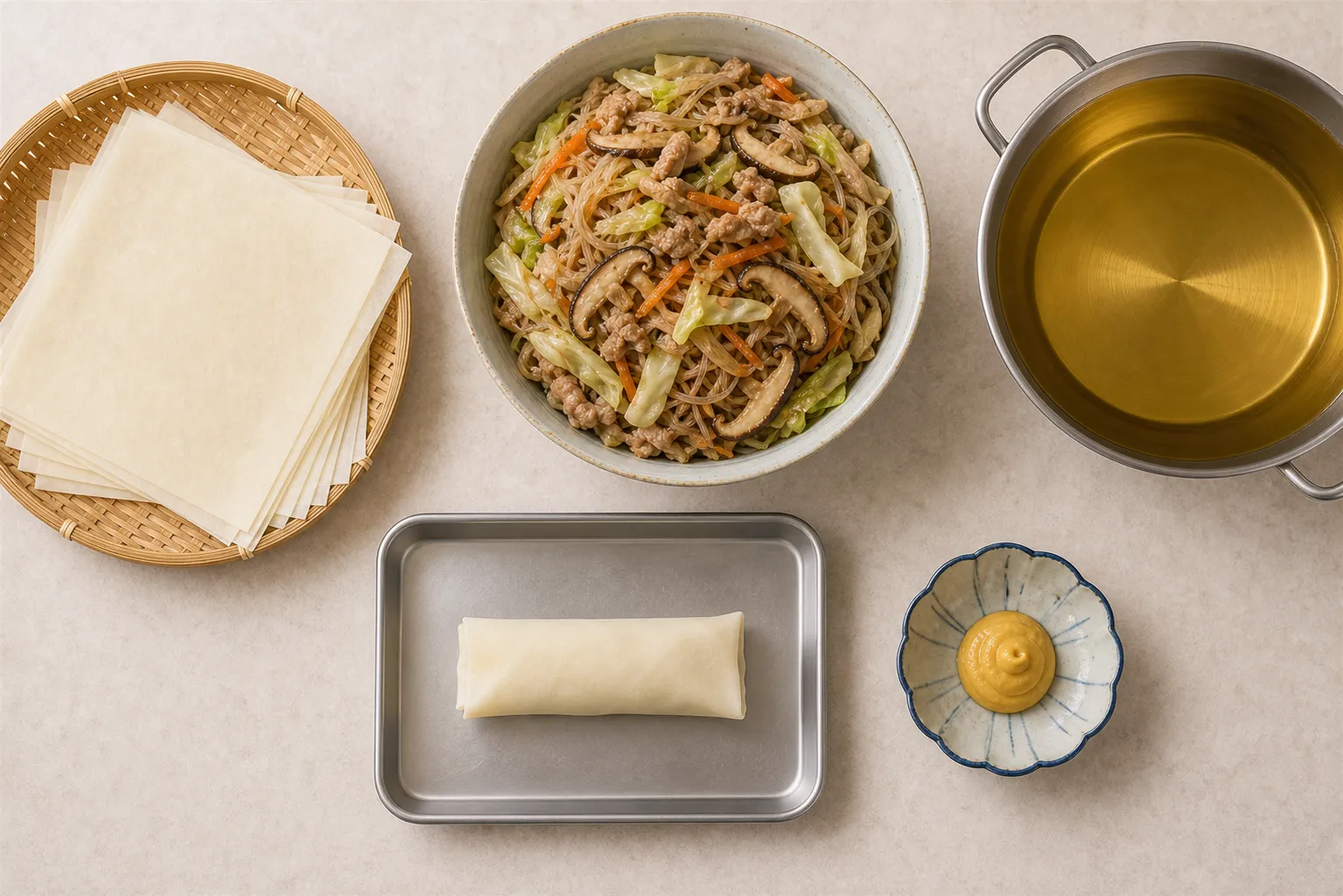
- Make the filling. Pork, shredded cabbage, bamboo shoot, shiitake and glass noodles (harusame) are stir-fried and seasoned, then often thickened slightly with starch and cooled.
- Wrap it. A spoonful of filling is placed on a thin wheat wrapper, folded in at the sides, and rolled up tightly, sealing the edge with a flour-water paste.
- Deep-fry. The rolls are fried in hot oil, turning, until the wrapper is evenly golden, blistered and crisp.
- Drain. Lifted out and drained so the shell stays crisp, not greasy.
- Serve hot with dips. Plated straight away with soy-vinegar, mustard or chili on the side.
The two keys are a cooled, not-too-wet filling (so it doesn't tear or steam the wrapper soggy) and hot, steady oil for an even, crackly fry. Roll it tight, seal it well, fry it right — and you get that perfect shatter.
Before you go — get the first crunch while it's hot
Your questions, answered honestly
"Is this the same as a Vietnamese spring roll?" — No — those fresh, translucent rice-paper rolls (gỏi cuốn) are un-fried and served cold. Harumaki is deep-fried with a crisp wheat wrapper and a hot, savory filling. Different wrapper, different temperature, different dish entirely — this is the crunchy, hot one.
"What's inside?" — Typically pork, cabbage, bamboo shoot, shiitake mushroom and glass noodles, seasoned savory. Some versions are vegetarian or use shrimp; there are also sweet dessert versions (like banana or custard). The classic savory pork-and-vegetable one is the standard.
"What do I dip it in?" — Whatever you like: soy sauce with a little vinegar is classic, a dab of Japanese hot mustard (karashi) is excellent, and chili or chili oil works if you want heat. Try a plain bite first to enjoy the crunch, then dip.
"Any warning?" — Just one: the filling is molten hot straight from the fryer. Give it a few seconds, or take a small first bite to let the steam out — otherwise you'll do what I always do and scorch the roof of your mouth. Worth it, but be warned.
What the staff will ask you
| You'll hear | Romaji | Meaning | Just say |
|---|---|---|---|
| 何本にしますか? | Nan-bon ni shimasu ka? | "How many rolls?" | Ni-hon kudasai (two, please) |
| からしはお付けしますか? | Karashi wa o-tsuke shimasu ka? | "Would you like mustard?" | Onegaishimasu (yes, please) |
| 熱いのでお気をつけください | Atsui node o-ki o tsuke kudasai | "Careful, it's hot" | Hai, arigatō (yes, thanks) |
To order, just say "Harumaki o kudasai" (春巻きをください) — "Harumaki, please."
Where to eat it
- Japanese-Chinese (chūka) restaurants nationwide — the classic home of harumaki, freshly fried and served hot with dipping condiments.
- Izakaya — a popular fried-food order to share with drinks, usually crisp and hot off the fryer.
- Supermarkets and convenience stores — ready-made harumaki are widely sold; they're best re-crisped in a toaster oven rather than eaten cold.
Harumaki fillings and dips vary by restaurant, and it's at its best fresh and hot when the wrapper is crispest — eat it soon after it's fried, and mind the hot filling.
Soul Score
Local Roots3/5
First-Timer Friendly5/5
Adventure Level3/5
Comfort Level5/5
Travel Worthy3/5
These scores are one obsessed eater's gut feeling — not a verdict. A low number isn't a bad mark, just a different kind of adventure.
Know someone planning Japan?
← All Articles
Japanese Food · Nationwide
Still hungry?
You might also like
Japanese FoodNationwide
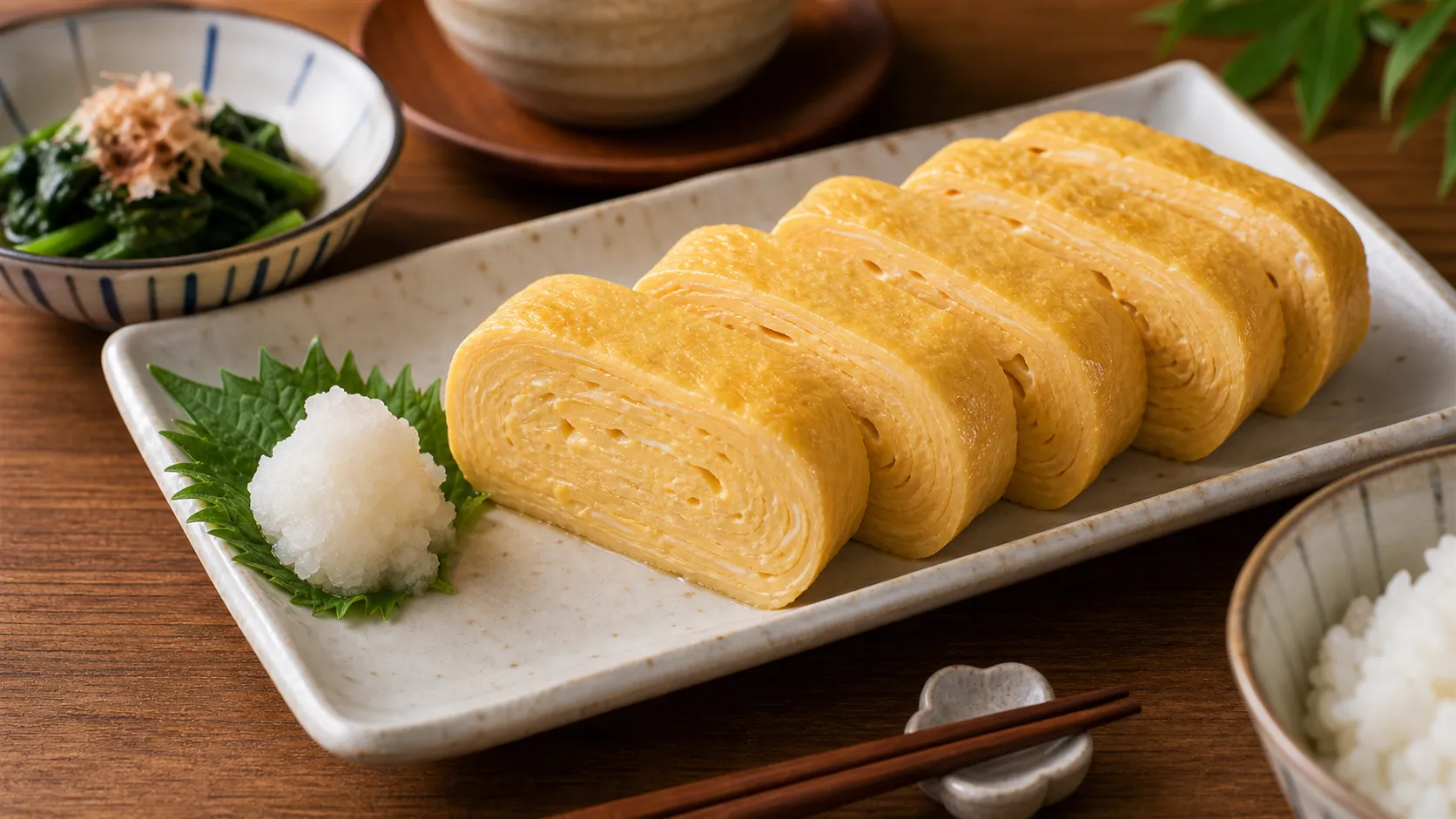
Dashimaki-tamago (だし巻き卵)
A rolled omelette so soft it almost trembles, layered fold over fold and soaked with dashi so that biting in releases a little warm rush of savory broth — the deceptively simple egg dish that Japanese chefs spend years perfecting.
July 11, 2026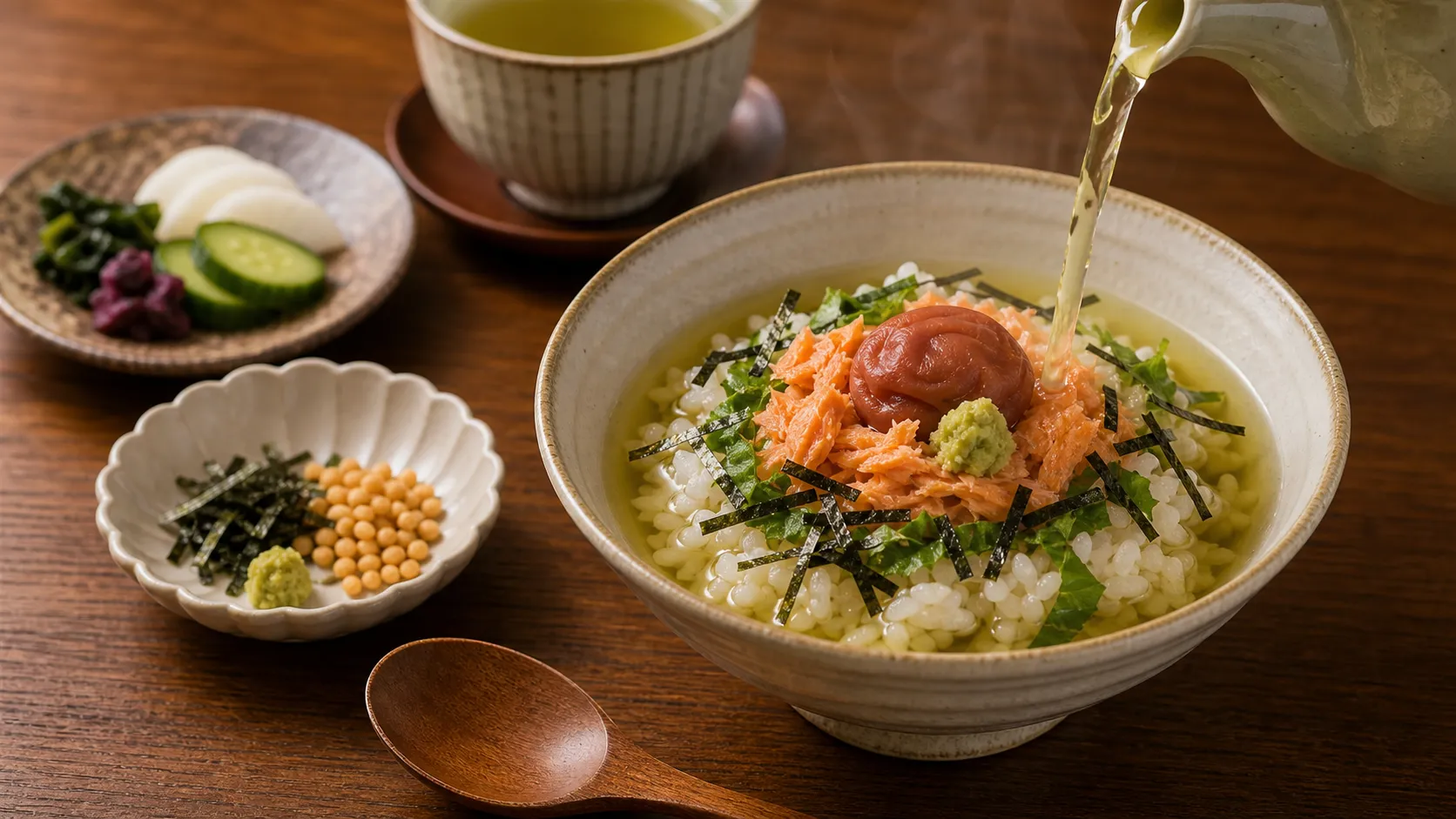
Japanese FoodNationwide
Ochazuke (お茶漬け)
Pour hot green tea or dashi over a bowl of rice, scatter something savory on top, and eat — the gentlest, most quietly restorative dish in Japan, the one you reach for late at night when you just need a warm bowl to make everything okay.
July 11, 2026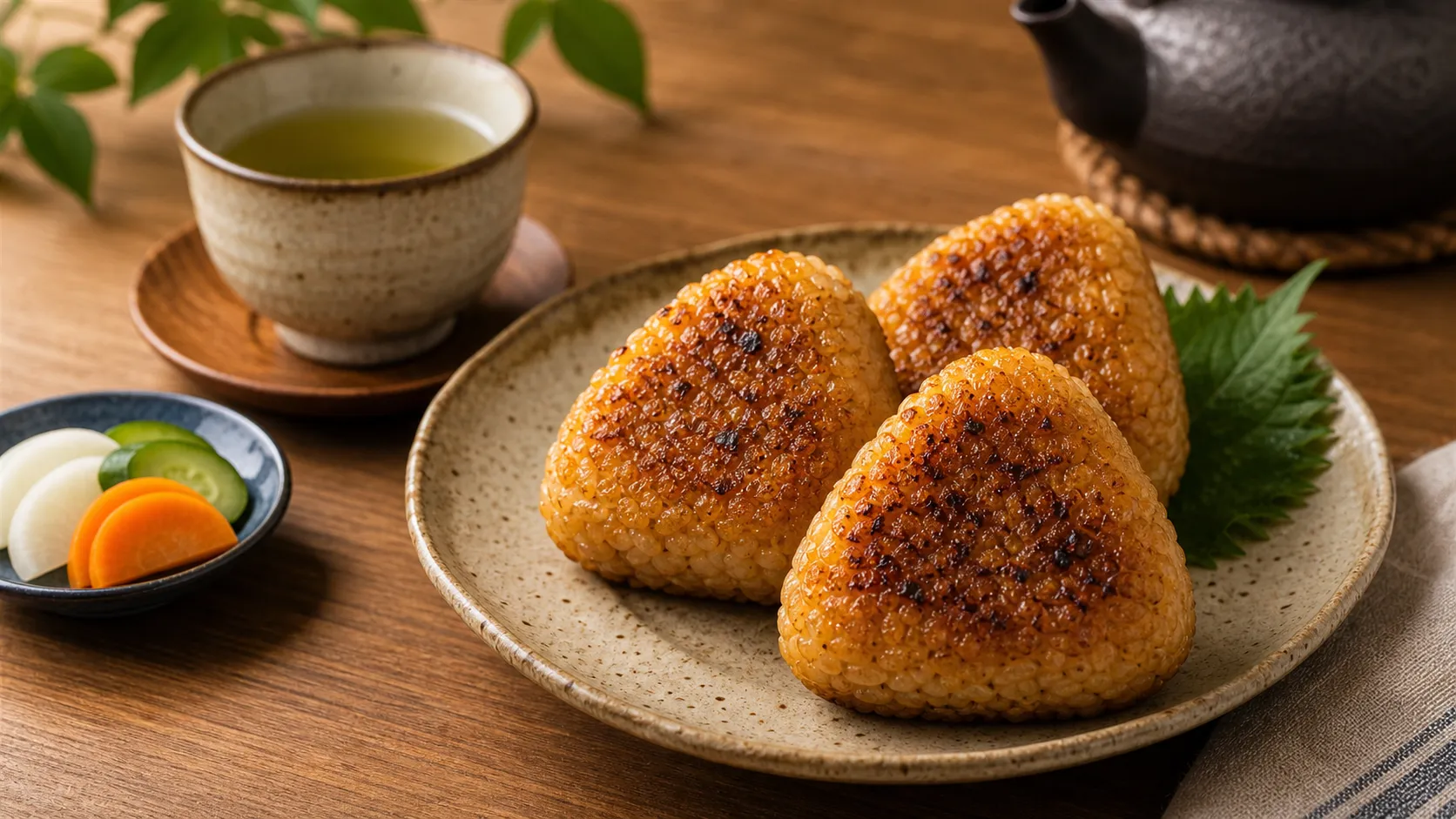
Japanese FoodNationwide
Yaki-onigiri (焼きおにぎり)
A rice ball brushed with soy sauce and grilled until the outside turns crackly-crisp and the whole thing smells like the best kind of caramelized, toasty comfort — the humble onigiri, upgraded by fire.
July 11, 2026