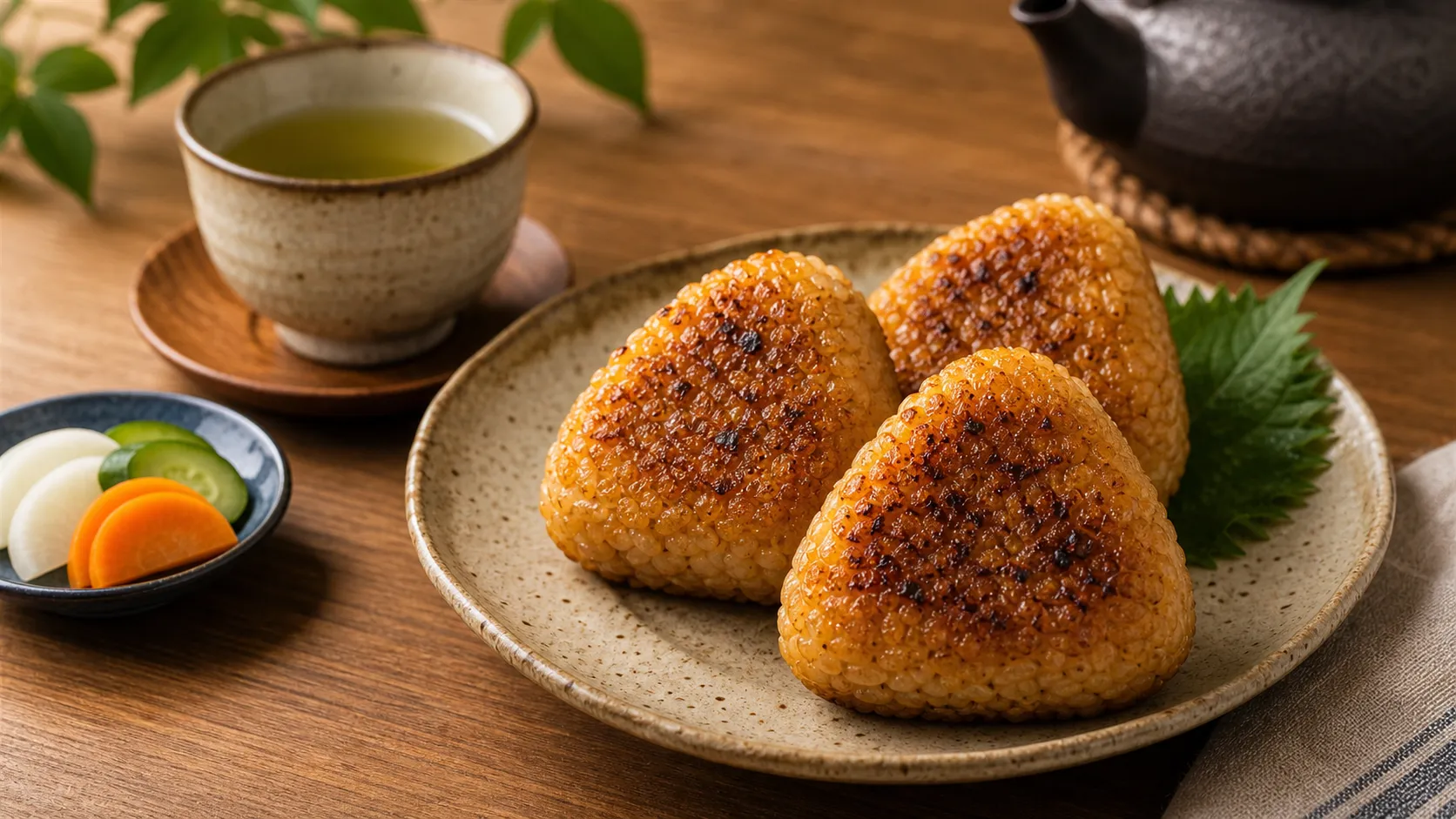
That smell. Soy sauce hitting hot rice over a grill, going toasty and a little sweet and impossibly savory — it stops me in my tracks at every festival I've ever been to. You get one, and the outside is crackly and browned and caramelized where the soy has scorched, and inside it's still soft warm rice, and you stand there burning your fingers slightly because you cannot wait, and it's just soy and rice and fire and it's one of the most satisfying things I know. That's yaki-onigiri, and it proves that the simplest food, done right, wins.
Share this dish


A rice ball brushed with soy sauce and grilled until the outside turns crackly-crisp and the whole thing smells like the best kind of caramelized, toasty comfort — the humble onigiri, upgraded by fire.
Here's what it is: yaki-onigiri (焼きおにぎり) is an onigiri — a rice ball — that's been brushed with soy sauce (or sometimes miso) and grilled until the surface turns crisp, browned and toasty, with the soy caramelizing into a savory crust. Grilled, soy-glazed, crackly-outside-soft-inside: that's what makes it yaki-onigiri and not a plain seaweed-wrapped onigiri. It's everywhere — festival stalls, izakaya closers, the convenience-store freezer — and it's beloved by absolutely everyone.
From leftover rice to festival star
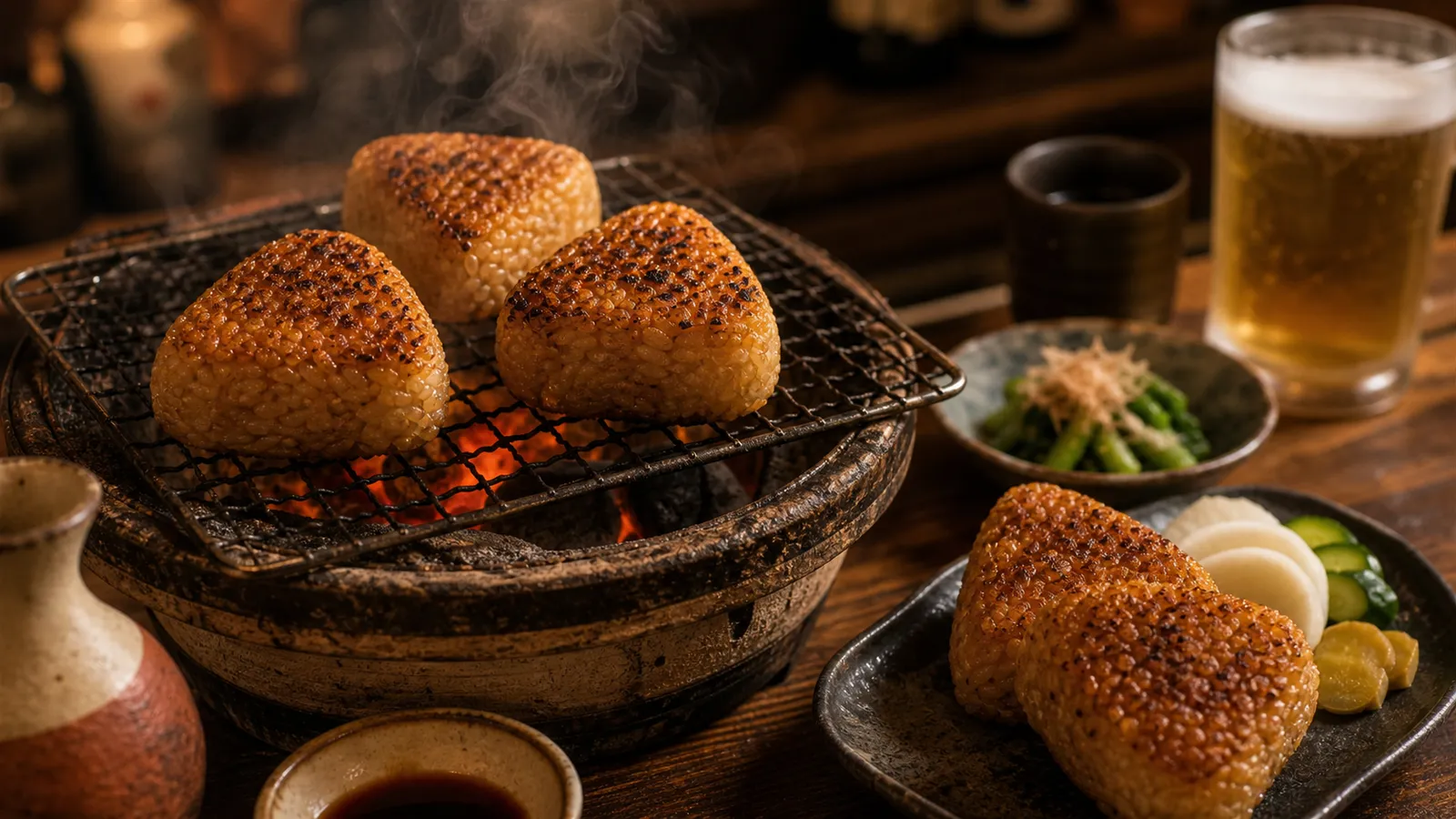
The onigiri itself is ancient — pressed rice, portable, humble, the original Japanese convenience food. Yaki-onigiri is the genius upgrade: take that rice ball, brush it with soy, and put it over fire, and suddenly the humblest thing in the kitchen becomes deeply, almost unfairly delicious. It has roots in the simple thrift of grilling up leftover rice, but it's earned its place as a festival-stall favorite, an izakaya staple to end the night, and a freezer classic you can toast at home.
I find real joy in how democratic it is. There's no luxury ingredient, no technique that takes years — it's rice and soy sauce and heat. And yet the transformation is magic: the Maillard browning, the caramelized soy, the crisp shell giving way to soft rice. It's proof that Japanese food genius often lives in the simplest gestures, done with care. At a summer festival, eaten hot off a charcoal grill in the evening air, a yaki-onigiri is pure happiness on a paper napkin.
What makes the eating experience different
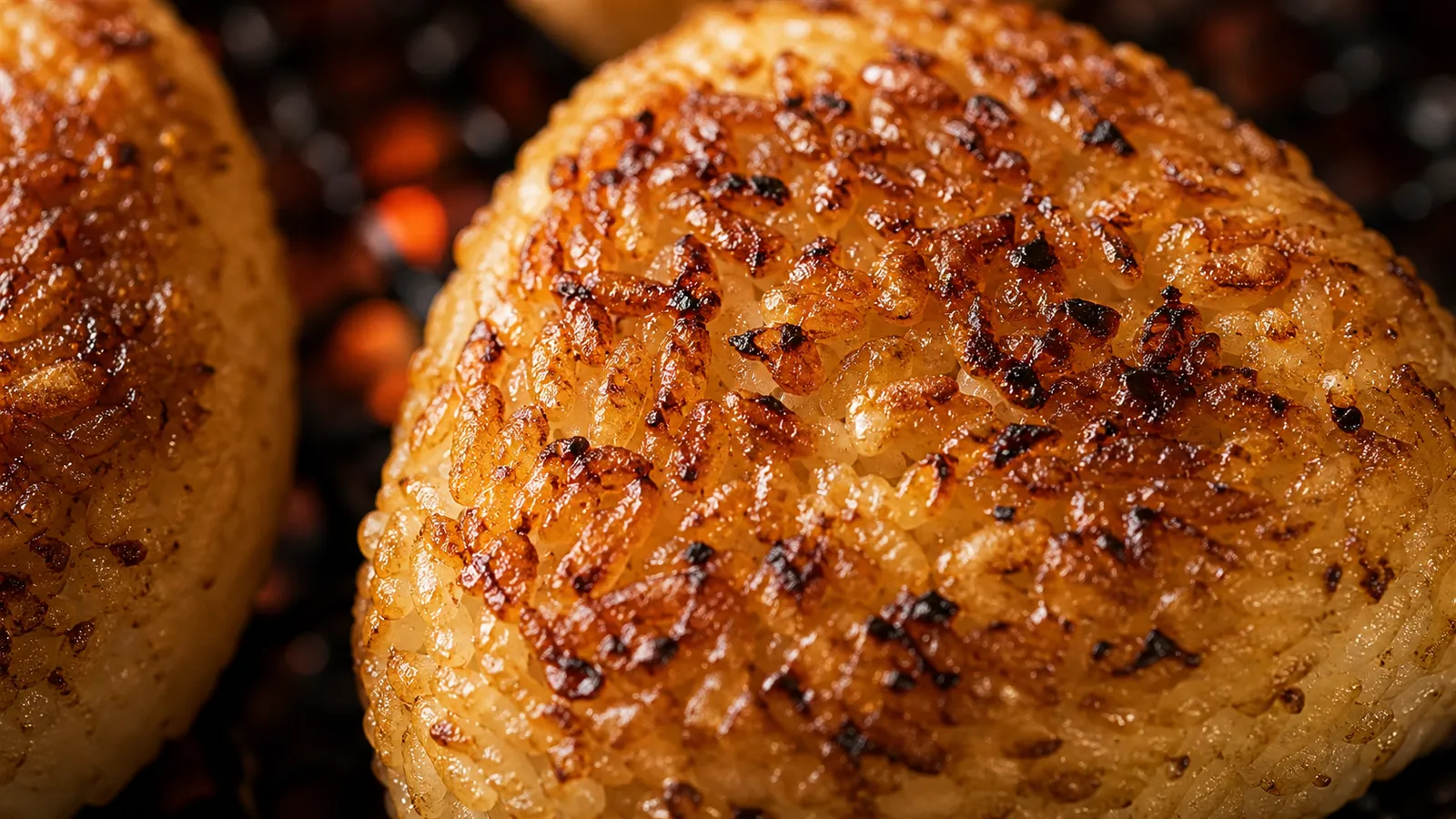
- The contrast is everything: a crisp, browned, slightly crackly crust around soft, warm, fluffy rice inside
- The soy glaze caramelizes on the grill into a savory-sweet, toasty crust — deeply umami and a little smoky
- It's warm, handheld and simple — no wrapper to fuss with, just rice and fire, eaten as-is
- Some versions use miso glaze instead of soy, adding a richer, funkier depth
- It's endlessly comforting and universally liked — a snack, a light meal, a night-ender
How it's made
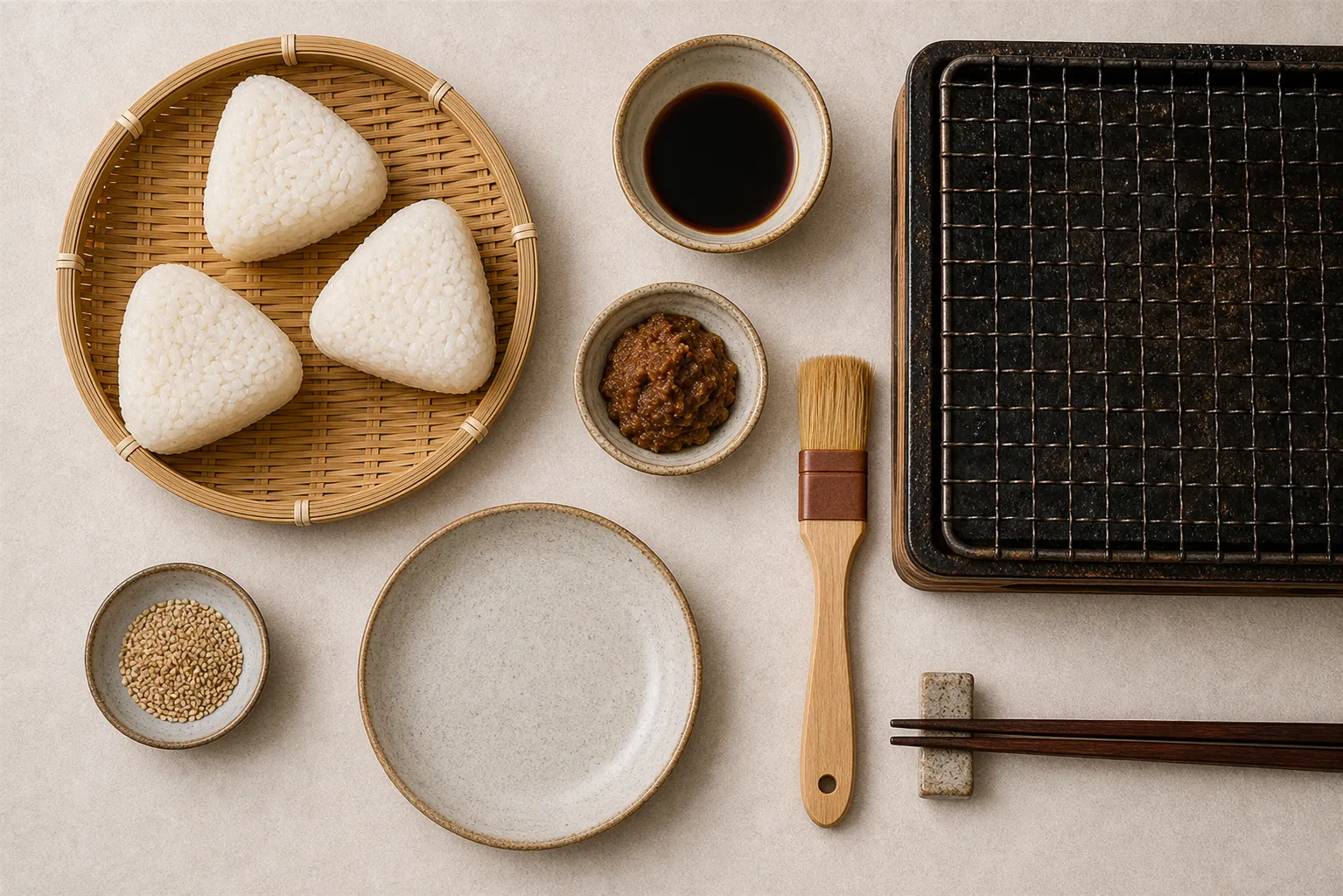
- Shape the onigiri. Cooked rice is pressed firmly into a triangle or round — firm enough to hold together on the grill.
- Dry the surface a little. Often the rice ball is grilled or lightly dried first so the surface firms up before glazing.
- Brush with soy (or miso). Soy sauce (sometimes mixed with a little mirin, or a miso glaze) is brushed onto the surface.
- Grill until crisp. It's grilled — over charcoal, on a pan, or under a broiler — turning and re-brushing until the surface is browned, crisp and caramelized.
- Serve hot. Eaten straight away, while the crust is crackly and the inside warm.
The craft is patience: press the rice firmly so it doesn't crumble, and glaze-and-grill in stages so the soy caramelizes without burning. Simple, but the difference between a soggy one and a perfectly crisp one is all in the grilling.
Before you go — eat it hot off the grill
Your questions, answered honestly
"How is this different from a normal onigiri?" — A regular onigiri is soft rice, usually with a filling, often wrapped in nori (seaweed) and eaten cold or room-temp. Yaki-onigiri is grilled with a soy or miso glaze so the outside goes crisp, browned and toasty — warm, crunchy-edged, and more savory. Same rice-ball soul, transformed by fire.
"Does it have a filling?" — Often not — the classic is plain rice, letting the grilled soy crust be the star. But you'll find versions with a little filling, or mixed-in ingredients. The pure soy-glazed one is the icon.
"Where's the best place to try it?" — Festival stalls (hot off charcoal is unbeatable), izakaya (a classic way to end a drinking session, often with tea or in a broth), and even the convenience store freezer, where the frozen ones are genuinely good toasted. Fresh and hot is always best.
"Can I get it in soup?" — Yes! Yaki-onigiri dropped into hot dashi broth (like ochazuke) is a wonderful thing — the crisp crust softens into the broth. Some izakaya serve it this way as a comforting finisher.
What the staff will ask you
| You'll hear | Romaji | Meaning | Just say |
|---|---|---|---|
| 醤油と味噌、どちらにしますか? | Shōyu to miso, dochira ni shimasu ka? | "Soy or miso glaze?" | Shōyu de / Miso de (soy / miso, please) |
| 何個にしますか? | Nan-ko ni shimasu ka? | "How many?" | Ni-ko kudasai (two, please) |
| 焼きたてをお持ちします | Yakitate o o-mochi shimasu | "I'll bring it fresh-grilled" | Arigatō (thank you) |
To order, just say "Yaki-onigiri o kudasai" (焼きおにぎりをください) — "Yaki-onigiri, please."
Where to eat it
- Izakaya nationwide — a classic end-of-meal dish, sometimes served plain or in a light broth; look for it on the rice/shime (finisher) section of the menu.
- Festival and street stalls — grilled over charcoal at summer festivals and markets, hot and fragrant, is the most joyful way to eat it.
- Convenience stores and supermarkets — frozen yaki-onigiri are widely sold and genuinely good heated up, an easy way to try it any time.
Yaki-onigiri is simple, cheap and everywhere; it's best eaten hot and fresh, so grab one off the grill or toast a fresh one when you can.
Soul Score
Local Roots4/5
First-Timer Friendly5/5
Adventure Level3/5
Comfort Level5/5
Travel Worthy3/5
These scores are one obsessed eater's gut feeling — not a verdict. A low number isn't a bad mark, just a different kind of adventure.
Know someone planning Japan?
← All Articles
Japanese Food · Nationwide
Still hungry?
You might also like
Japanese FoodNationwide
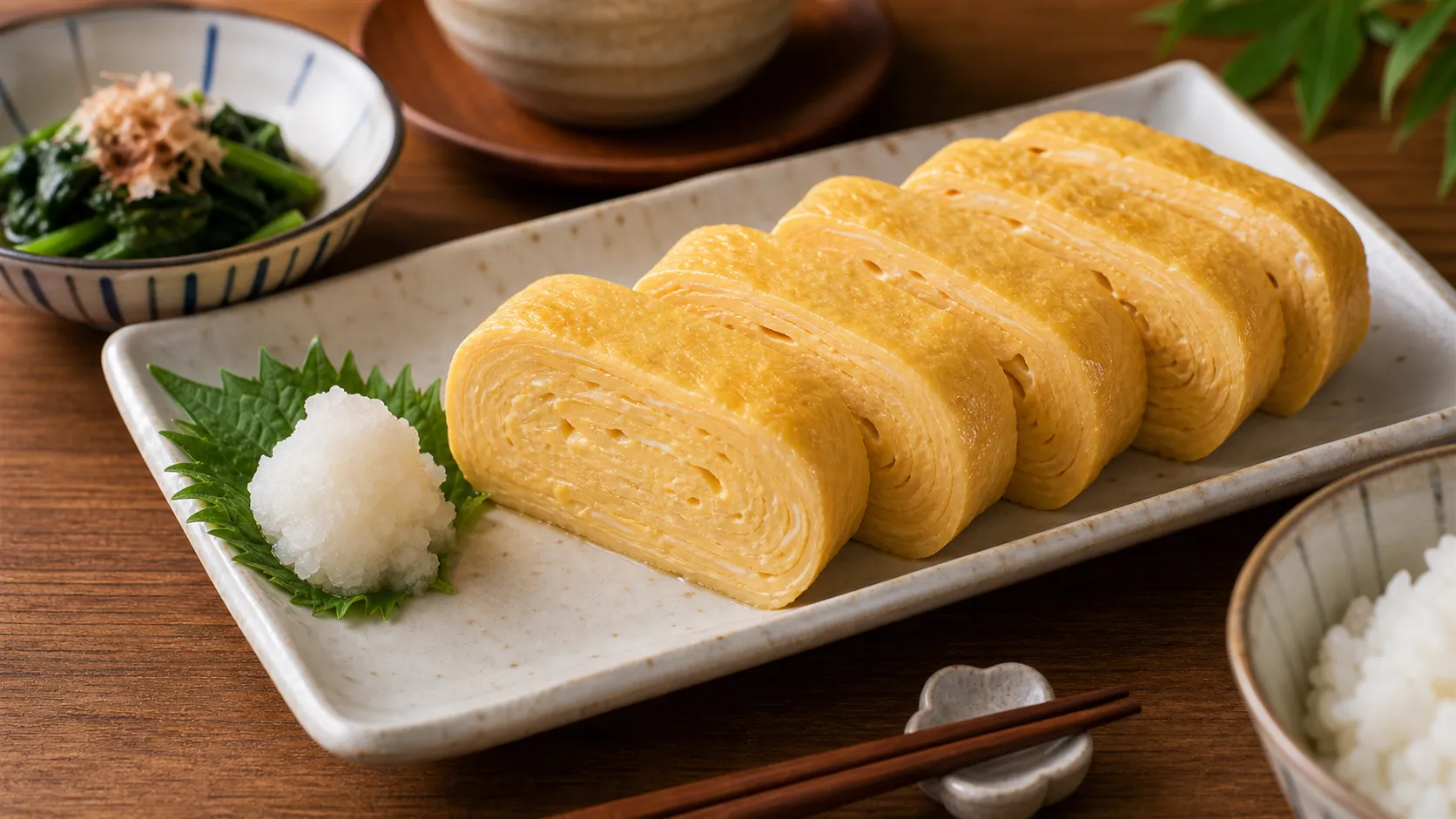
Dashimaki-tamago (だし巻き卵)
A rolled omelette so soft it almost trembles, layered fold over fold and soaked with dashi so that biting in releases a little warm rush of savory broth — the deceptively simple egg dish that Japanese chefs spend years perfecting.
July 11, 2026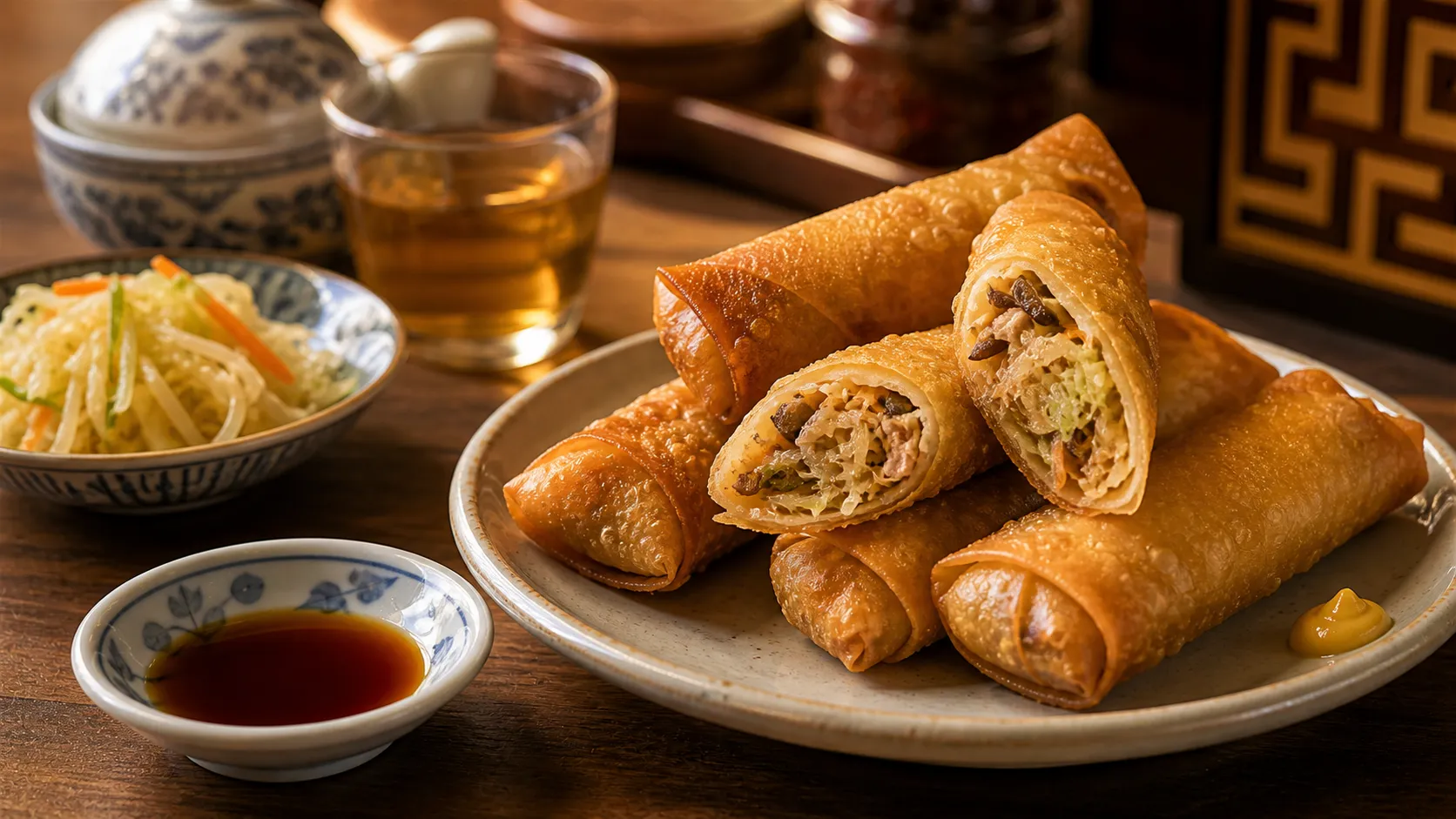
Japanese FoodNationwide
Harumaki (春巻き)
The Japanese spring roll — a shatteringly crisp golden tube that gives way to a hot, savory tangle of pork, cabbage and bamboo shoot, best eaten the second it's cool enough not to burn your mouth (you will not wait that long).
July 11, 2026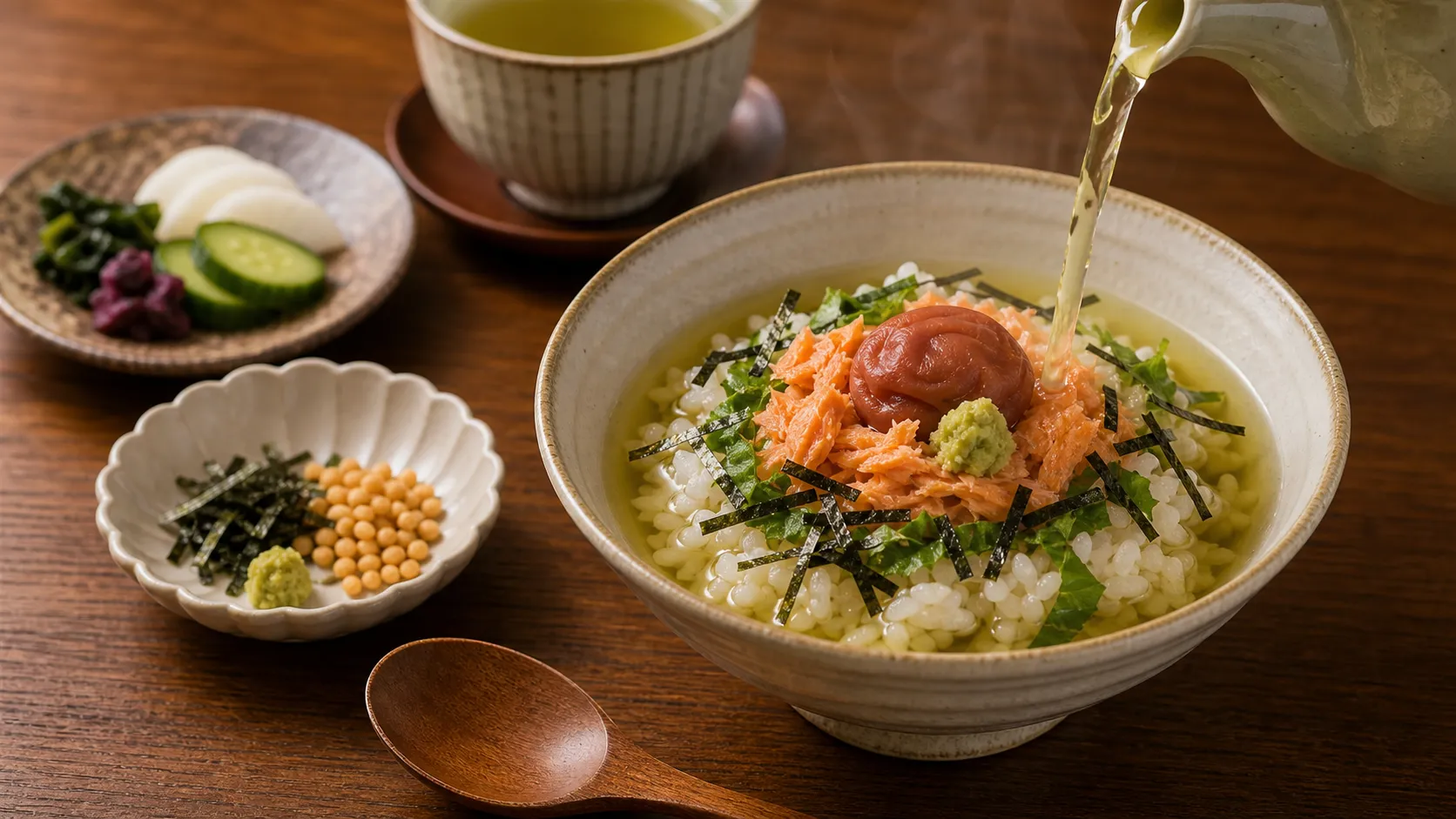
Japanese FoodNationwide
Ochazuke (お茶漬け)
Pour hot green tea or dashi over a bowl of rice, scatter something savory on top, and eat — the gentlest, most quietly restorative dish in Japan, the one you reach for late at night when you just need a warm bowl to make everything okay.
July 11, 2026