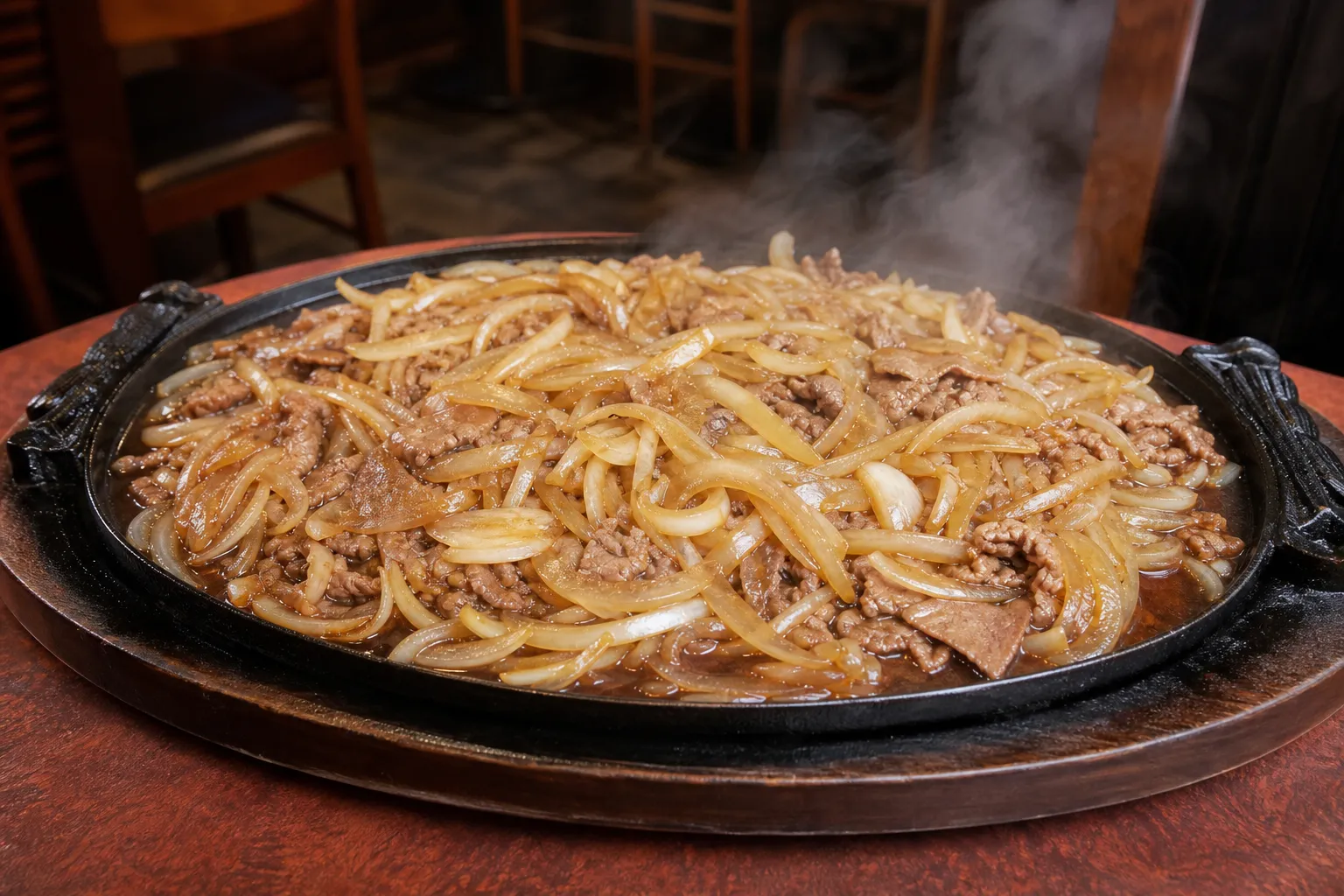
They set the hot plate down and for a second all I can see is onion. A mountain of it, pale and glistening, with the beef somewhere underneath like it's hiding. Then the server starts folding it all together with a spatula, the sauce hits the metal and hisses, and the whole thing collapses into a dark, sweet, caramelized tangle that smells like the best thing that has ever happened to a cow and an onion at the same time.
Share this dish


A hot plate arrives buried under onions, and you can't even see the beef yet — then it starts to sizzle down into a sweet-soy sauce and the whole table goes quiet. This is not yakiniku. This is Towada's own thing.
🍜 Planning a food trip to Aomori?Add this dish to my Food Trip →
 Add this dish to my Food Trip →
I have thought about that smell on the plane home. Multiple times. On multiple flights.
Barayaki — specifically Towada barayaki, from Towada in Aomori Prefecture — is thin-sliced beef bara (short rib) and a genuinely absurd quantity of onion, cooked together on a flat hot plate in a sweet soy-based sauce until the onions go soft and sticky-caramelized and the beef drinks up all that flavor. It is not yakiniku. Nobody hands you tongs and lets you grill bite-sized pieces at your own leisurely pace here — this is stir-grilled, communal, sauce-drenched, and built to be shoveled onto rice as fast as you can manage.
A slaughterhouse town's practical genius
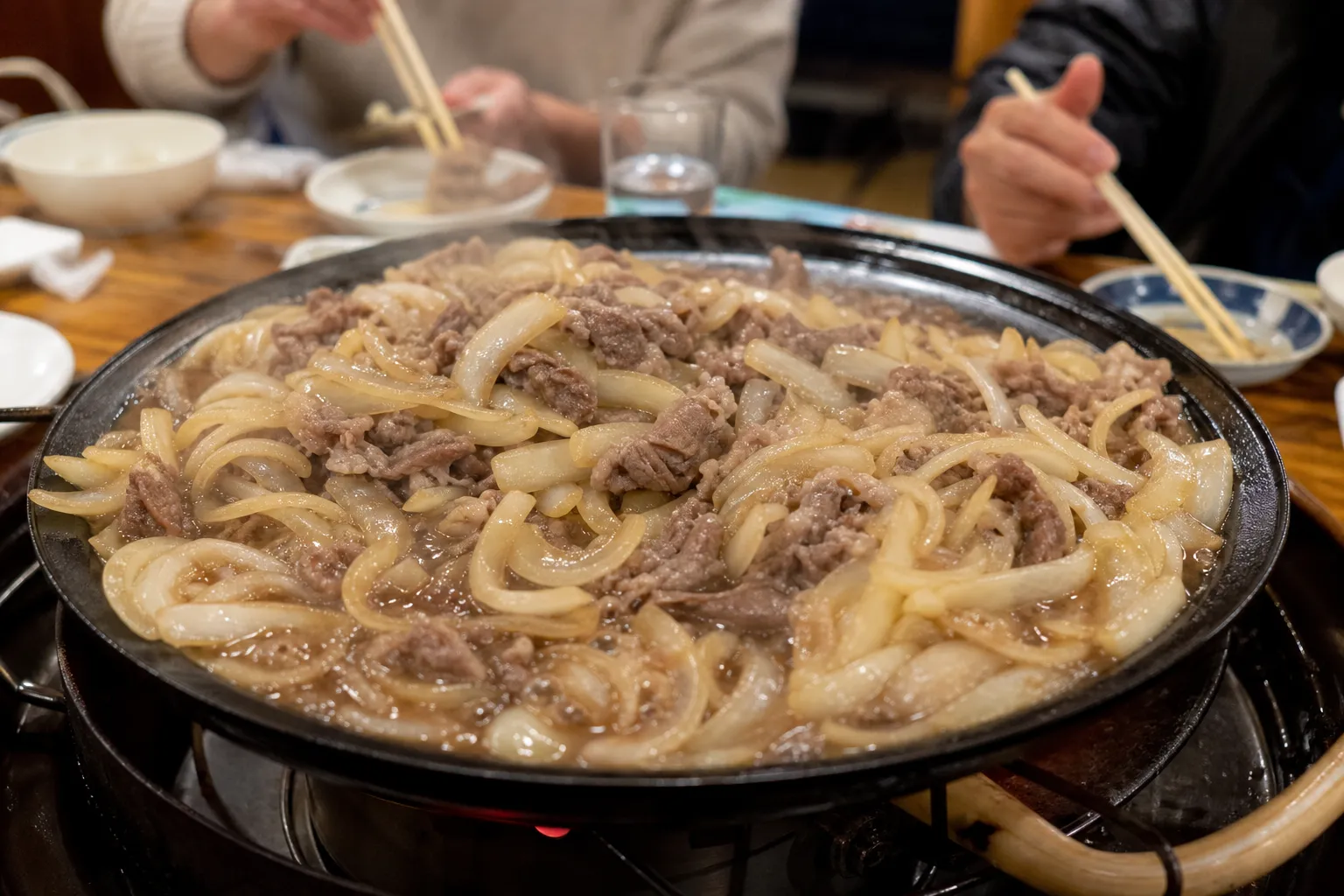
Towada grew up as a base for the U.S. military and a hub for the local livestock and meat-processing industry, and barayaki's origin story is the kind of resourceful, no-waste thinking that a lot of great regional food comes from. Workers at the local meat plants had easy access to bara — the short rib section, cheaper and fattier than the prime cuts that got shipped out to sell — and they started grilling it themselves, on-site, with mountains of cheap local onion and a simple sweet-soy sauce to stretch the flavor and the meal.
What started as a practical, filling worker's lunch turned into Towada's defining dish. By the 2000s the city had leaned all the way in — a barayaki mascot, a city-wide barayaki association, a stamp rally connecting the different restaurants. I find something quietly admirable about a town that took "cheap cut of meat plus a lot of onions" and turned it into a point of civic pride worth defending. That's not marketing spin. That's just what good, honest food does when a place actually loves it.
Why it's the onions that steal the show
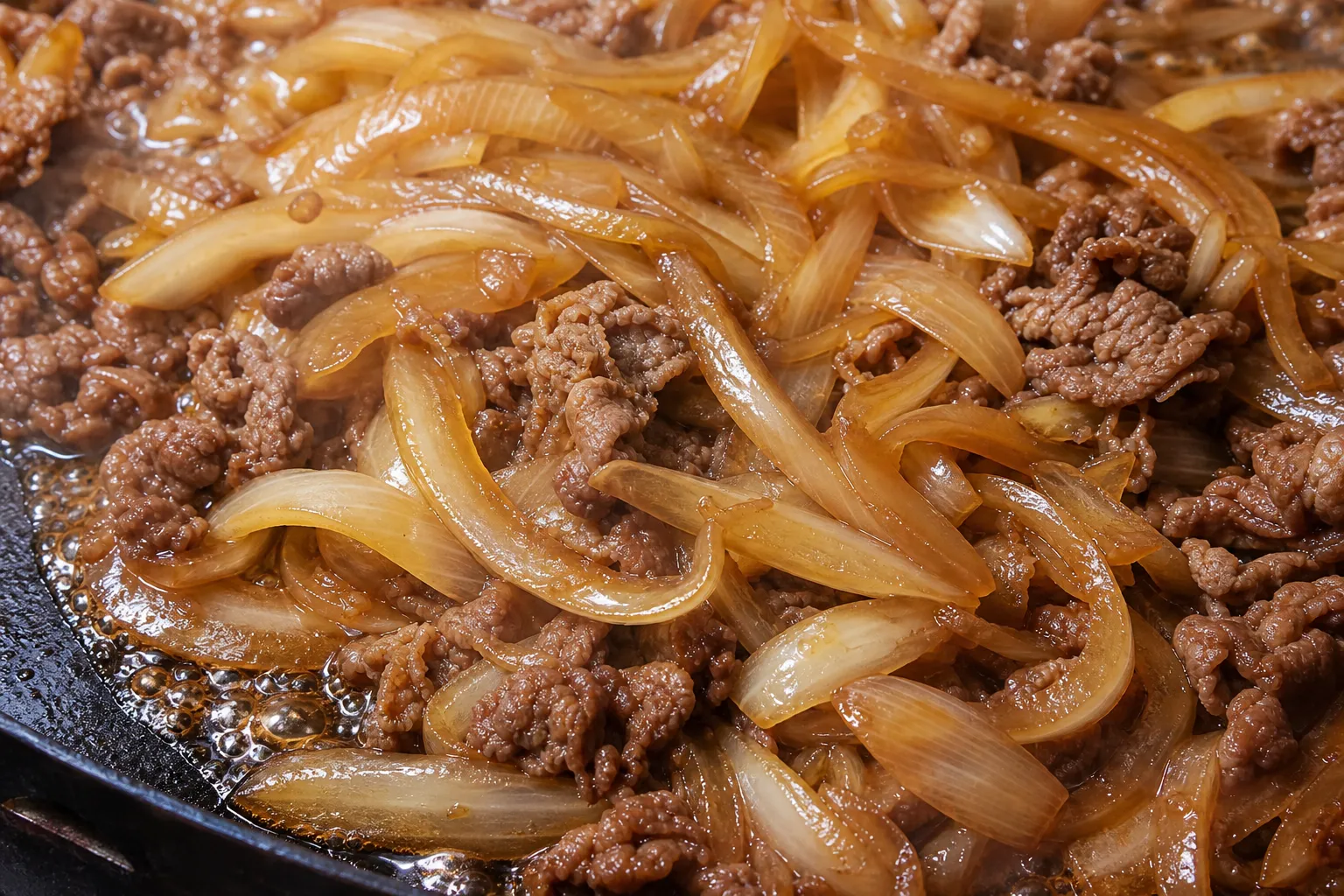
Here's the thing nobody warns you about: barayaki is not really a beef dish that happens to have onions in it. It's closer to the reverse. The onion-to-beef ratio is enormous on purpose, because the whole point is watching those onions collapse from sharp and raw into soft, glossy, faintly sweet threads that have spent ten minutes marinating in beef fat and sauce. By the time they're done, they're arguably better than the beef.
The beef itself — thin-sliced short rib, fattier and more forgiving than a lean cut — holds up to the aggressive stir-grilling without drying out, and the sweet soy sauce (each restaurant guards its own blend, some adding apple or garlic) ties the whole plate together into something dark, sticky, and deeply savory. Put a spoonful over a bowl of white rice and you'll understand why this is comfort food first and spectacle second.
How it's made
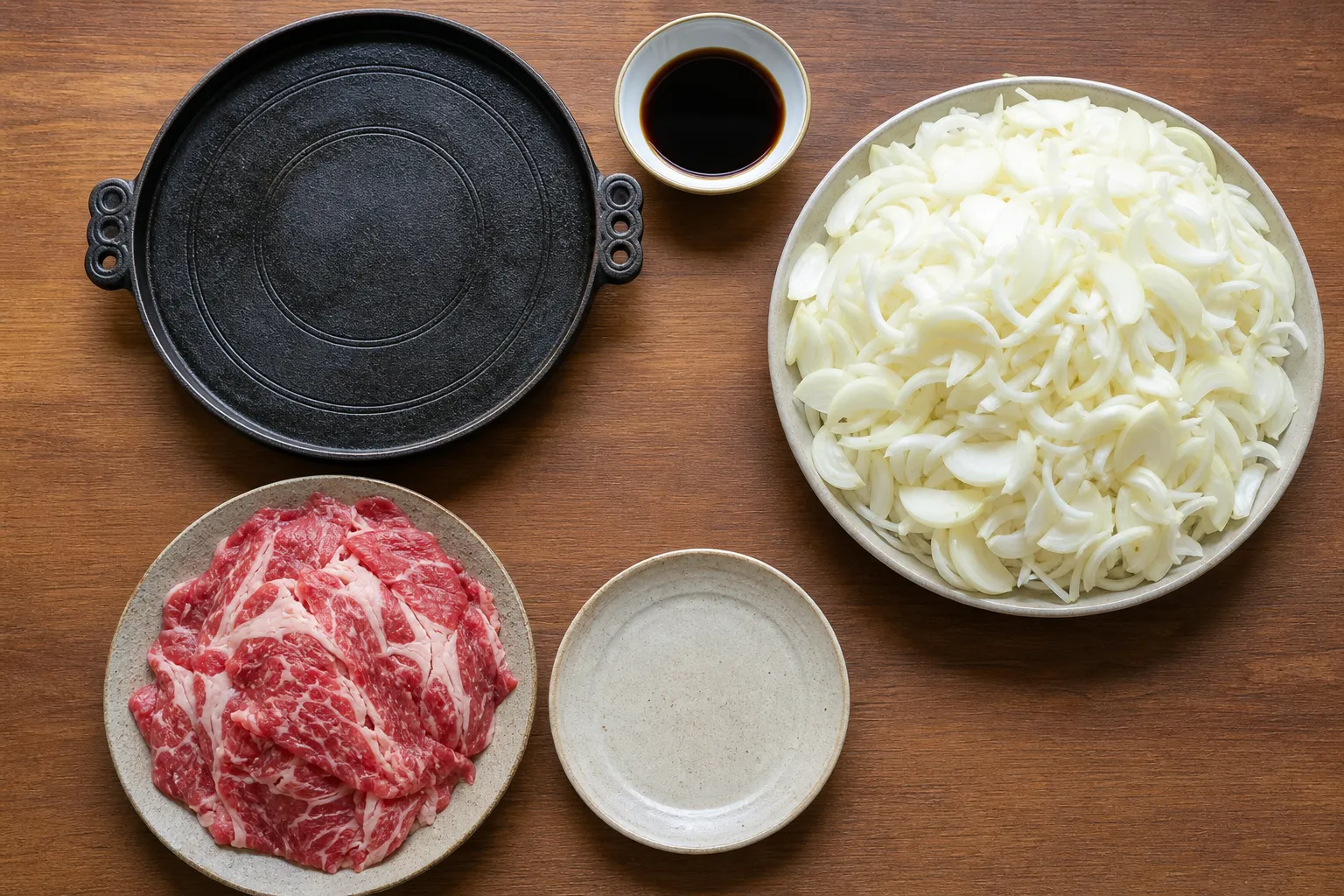
- Slice beef short rib (bara) thin, and slice a large quantity of onion — roughly matching or exceeding the beef in volume
- Heat a flat iron plate or skillet until it's properly hot
- Add the beef and onion together, along with the sweet soy-based sauce (soy sauce, sugar or mirin, garlic, sometimes apple)
- Stir-grill continuously, folding the onion and beef together, until the onions go soft and caramelized and the beef is cooked through and glossy with sauce
- Serve straight off the hot plate with a bowl of steamed rice on the side
Before you go — the stuff that actually matters
Your questions, answered honestly
"Is this the same as yakiniku?" — No, and don't ask for it that way. Yakiniku is individual pieces of meat you grill yourself at the table at your own pace. Barayaki is pre-cooked (or cooked communally on a hot plate) as one stir-grilled dish, sauce and onion mixed right in. It arrives ready to eat, not raw for you to manage.
"Why is there so much onion?" — That's not a mistake or a cheap filler move — it's the identity of the dish. The onion volume is intentional and, honestly, half of why people love it. Trust it.
"Is it very sweet?" — Sweet-savory, not dessert-sweet. Think teriyaki's heartier, oniony cousin. It pairs perfectly with plain white rice, which cuts the richness.
"Do I mix it myself or does staff do it?" — Depends on the restaurant — some bring it to your table already cooked, some cook it in front of you on a tabletop plate and you help stir. Either way, once it's done, just dig in with rice on the side.
"Can I get it outside Towada?" — Rarely, and only in a diluted form. This is genuinely a Towada dish — the city's restaurants have organized specifically around preserving and promoting it, so eating it there is part of the point.
What the staff will ask you
| You'll hear | Romaji | Meaning | Just say |
|---|---|---|---|
| ご飯は付けますか? | Gohan wa tsukemasu ka? | "Add a bowl of rice?" | Hai, onegaishimasu — always yes |
| 味付き、味なし、どちらにしますか? | Ajitsuki, aji nashi, dochira ni shimasu ka? | "Pre-sauced or plain?" | Ajitsuki de (pre-sauced — the classic) |
| 辛みそを付けますか? | Karamiso o tsukemasu ka? | "Add spicy miso?" | Hai, sukoshi (yes, a little) / Nashi de (no) |
To order, just say "Barayaki kudasai" (バラ焼きください) — "Barayaki, please."
Where to eat it
- Towada City, Aomori — dozens of member restaurants belong to the local Barayaki Association and display a shared logo; look for it in restaurant windows around the city center.
- Towada Barayaki Yokocho area — a cluster of casual eateries near central Towada known for barayaki, good for comparing a couple of versions in one evening.
- Towada Barayaki Stamp Rally — an ongoing city promotion covering participating restaurants; worth checking if you want a curated shortlist of solid spots.
Restaurant lineups and stamp rally details change over time, so check current participants before you go — and don't be shy about asking a local which shop they'd send you to. Everyone in Towada has an opinion.
Soul Score
Local Roots5/5
First-Timer Friendly4/5
Adventure Level3/5
Comfort Level5/5
Travel Worthy4/5
These scores are one obsessed eater's gut feeling — not a verdict. A low number isn't a bad mark, just a different kind of adventure.
Know someone planning Japan?
← All Articles
Local Food · Towada, Aomori
Still hungry?
Eat more from Aomori
Local FoodKuroishi, Aomori
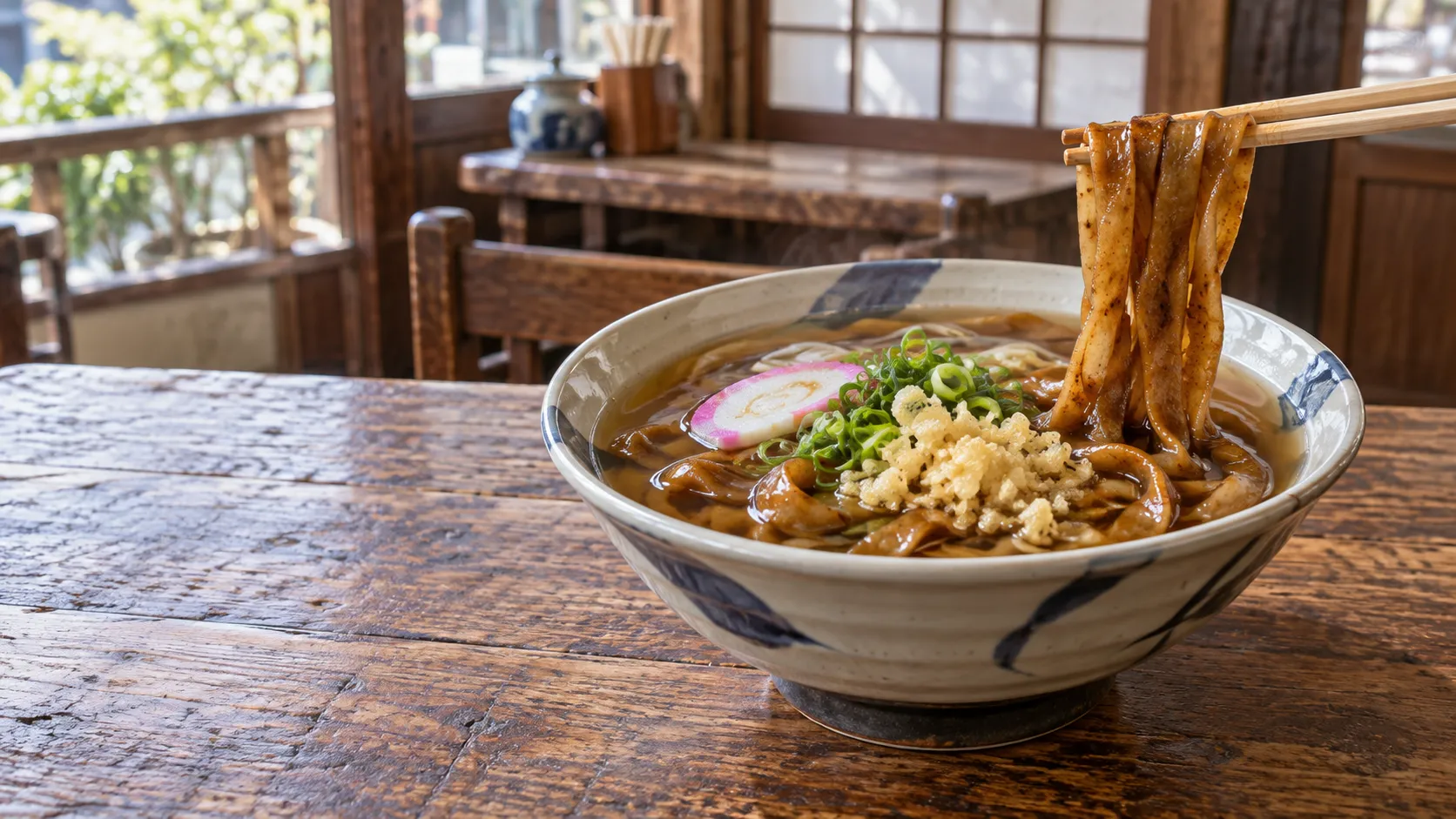
Kuroishi Tsuyu Yakisoba (黒石つゆやきそば)
Somebody in Kuroishi looked at a plate of fried noodles and thought: what this needs is soup. They were wrong about that. They were also completely right.
September 26, 2026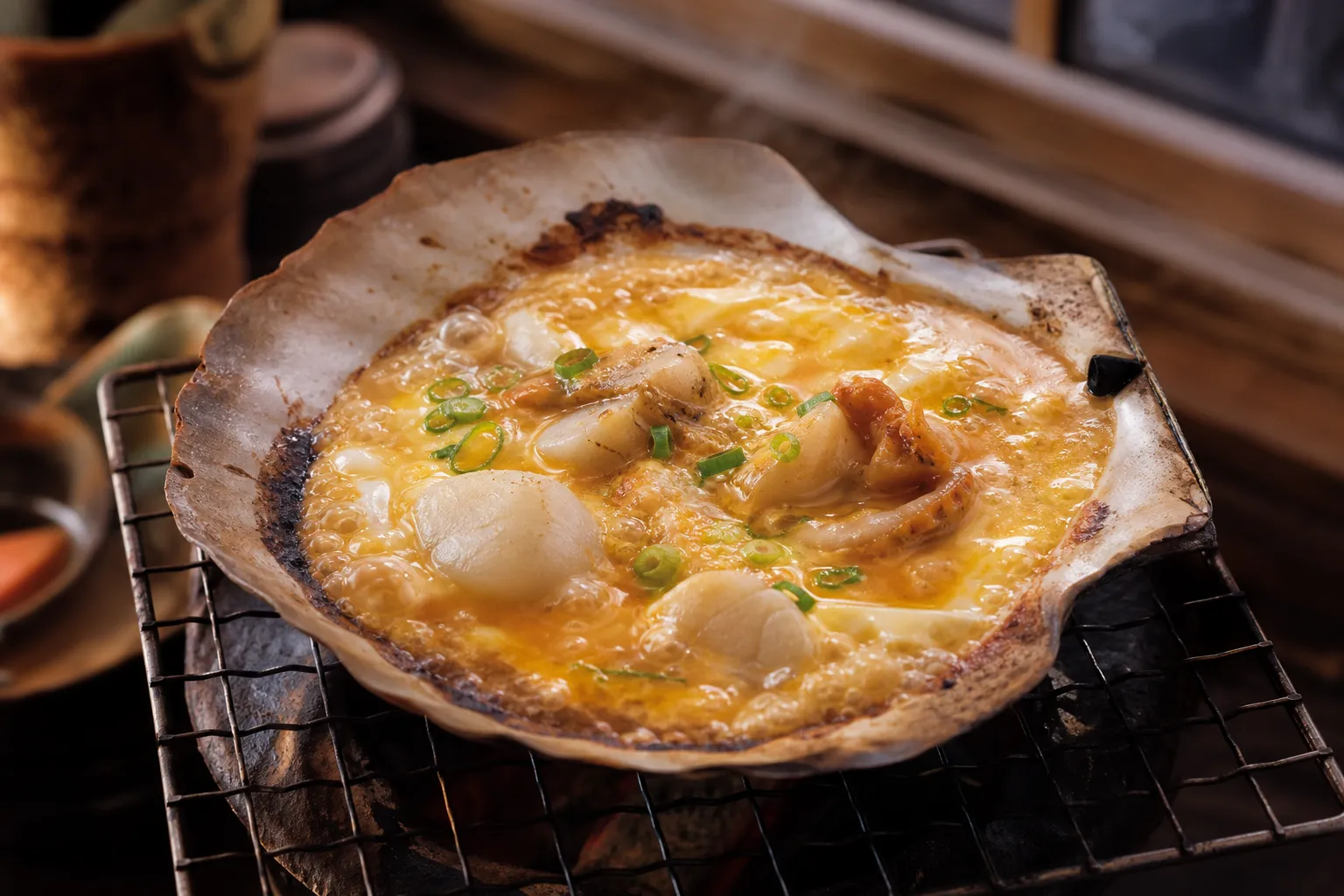
Local FoodAomori
Kaiyaki Miso (貝焼き味噌)
A scallop shell used as its own tiny frying pan — miso, dashi and scallop bubbling away until a beaten egg drapes over it all in soft golden folds. Aomori grandmothers have been cooking dinner in a seashell for generations.
July 12, 2026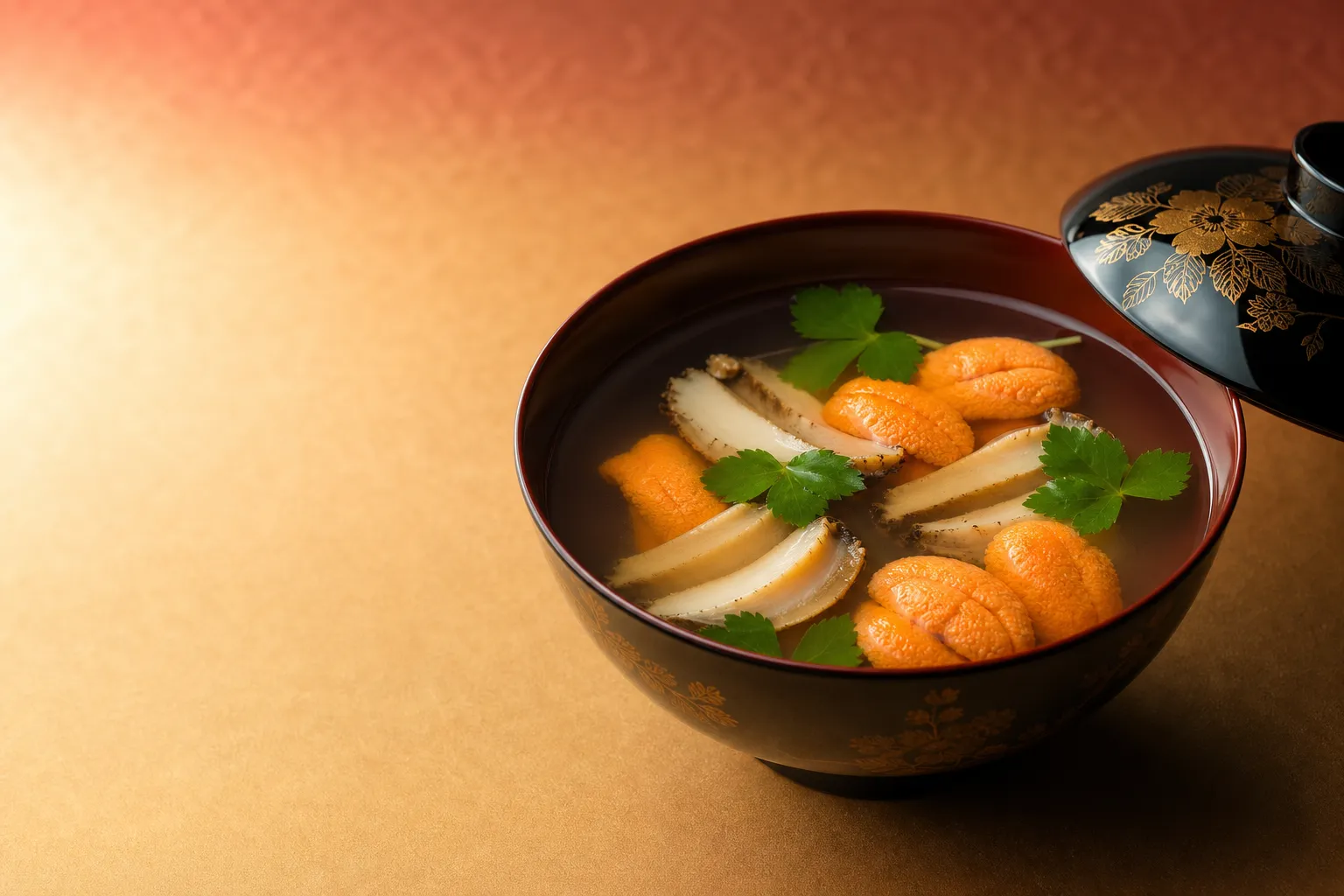
Local FoodHachinohe, Aomori
Ichigo-ni (いちご煮)
I ordered it expecting something fruity and got a bowl of the ocean at its most expensive instead — sea urchin and abalone floating in a broth so clear you could read through it.
July 5, 2026