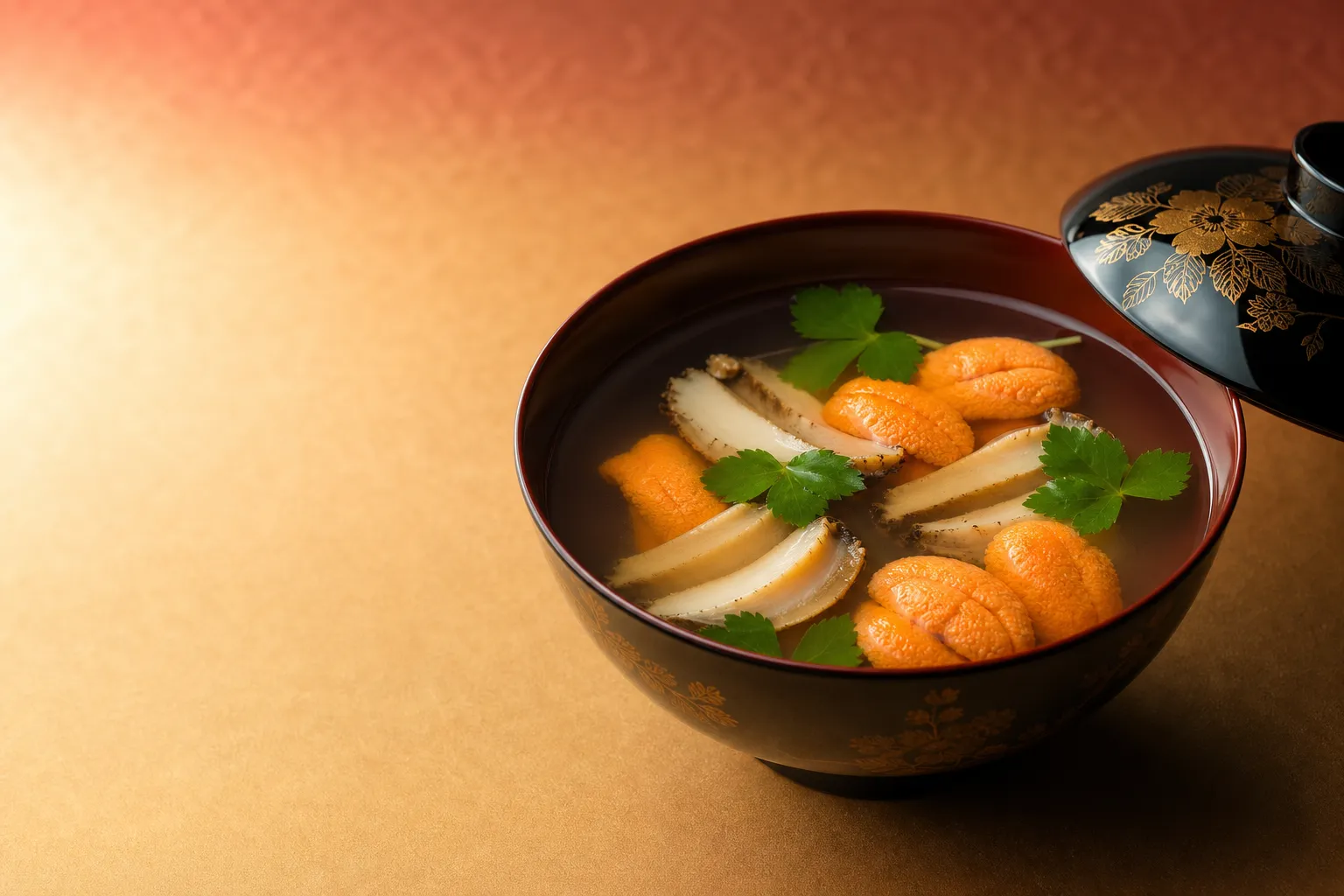
The name promised strawberries. What arrived was a bowl of clear broth with lobes of orange sea urchin bobbing in it, and I just stared at it for a second, recalibrating my entire afternoon. Then I tasted it, and any disappointment about the missing fruit evaporated — this is the sea, distilled, served warm. I have thought about that bowl more than I've thought about most actual meals.
Share this dish


I ordered it expecting something fruity and got a bowl of the ocean at its most expensive instead — sea urchin and abalone floating in a broth so clear you could read through it.
🍜 Planning a food trip to Aomori?Add this dish to my Food Trip →
 Add this dish to my Food Trip →
Here's where the name comes from, because it confused me too: this is ichigo-ni (いちご煮), and ichigo does mean "strawberry," but nobody put fruit in your soup. Look down into the bowl — the plump orange uni floating in the pale, cloudy-gold broth looks like wild strawberries half-hidden in morning mist. That's it. That's the whole poem. It's a clear (sumashi) soup of fresh sea urchin and abalone, a specialty of the Sanriku coast around Hachinohe in Aomori, and it is one of the most quietly extravagant things you can eat in the Tohoku region. Not a hot pot. Not a miso soup. Not a creamy chowder. A clear, elegant broth built around two of the most expensive things the local sea produces.
Why a fisherman's snack became a celebration dish
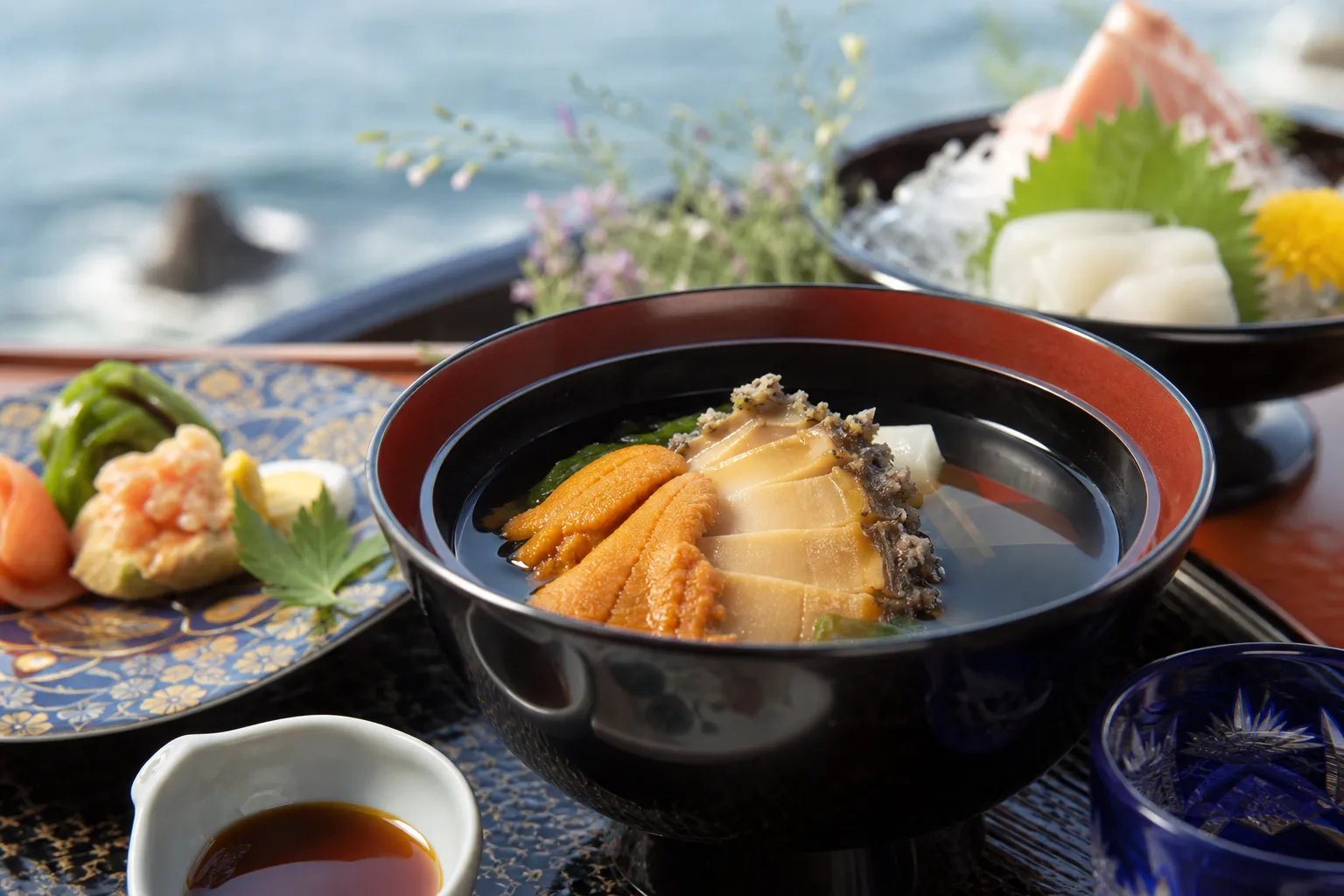
Ichigo-ni started humble, which I love. Fishermen and divers along the Sanriku coast pulled up uni and abalone as a matter of course, and simmering them quickly in seawater or a light broth was just… lunch. An everyday thing made from ingredients that happened to be right there. The idea of it being "luxury" would have made them laugh.
Then the rest of the world decided uni and abalone were treasures, prices climbed, and the same simple bowl quietly transformed into a dish reserved for weddings, New Year, and welcoming important guests. I find that arc deeply satisfying — a working coast's casual meal becoming its proudest formal offering, without changing a single ingredient. It got fancy by standing still while everything around it got expensive.
What it actually tastes like
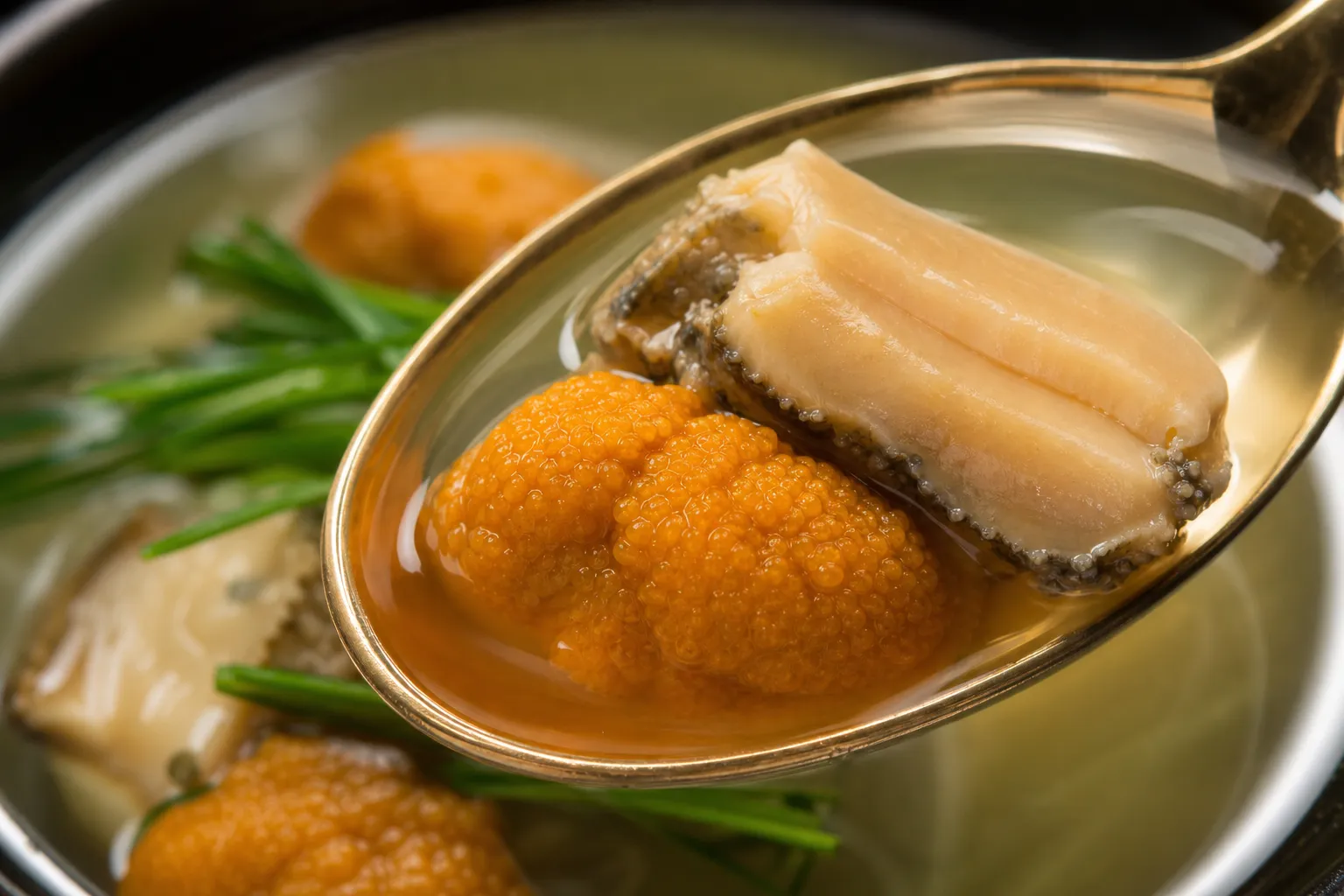
The broth is the surprise. You expect something rich and thick to carry ingredients this famous, and instead it's almost startlingly clean — a light dashi, a whisper of salt, sometimes a splash of sake, and nothing else fighting for attention. It's designed to disappear so the uni and abalone can speak.
And they speak. The uni goes soft and creamy the instant it's warmed, dissolving into that sweet, briny, faintly custard-like richness that uni does and almost nothing else can. The abalone plays the opposite role — firm, snappy, a clean mineral bite that resets your mouth between spoonfuls of uni. A single shiso or mitsuba leaf usually floats on top, one green herbal note against all that sea. I drank the last of the broth straight from the bowl. I regret nothing.
How a bowl of ichigo-ni comes together
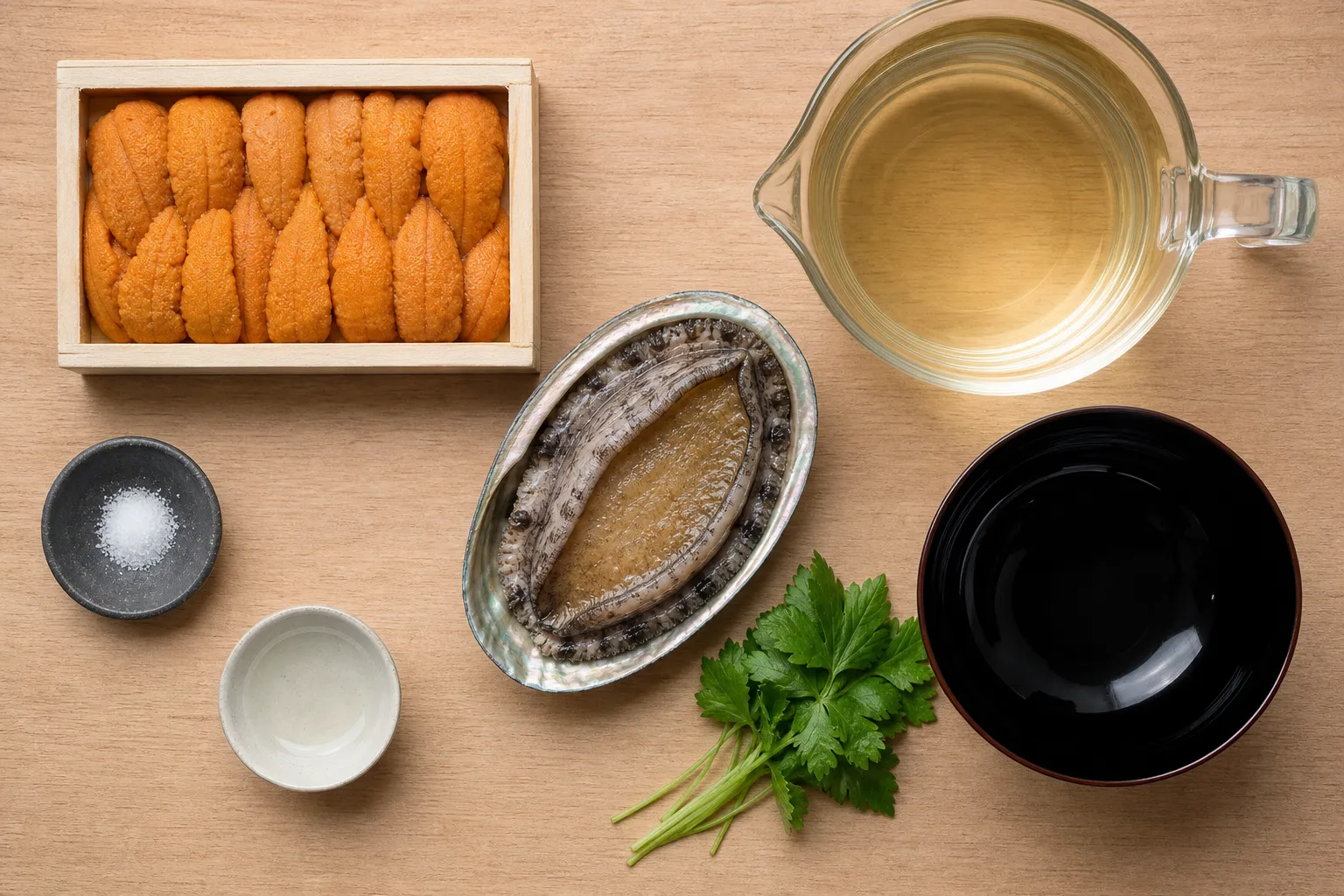
- A clear dashi is drawn from kombu and katsuo, kept light and unclouded
- It's seasoned gently — mostly salt, sometimes a little sake — never heavy, never miso
- Fresh abalone is sliced and added first, so it can cook through without turning rubbery
- Fresh sea urchin roe goes in last and is barely heated, so it stays creamy rather than falling apart
- It's poured into a bowl, finished with a shiso or mitsuba leaf, and served hot, the orange uni floating like the "strawberries" it's named for
Before you go — treat it as the splurge it is
Your questions, answered honestly
"Wait — there's no strawberry in it at all?" — None. Zero fruit. The name is pure poetry about how the uni looks floating in the broth. If you're picturing anything sweet or pink, reset now: this is a savory seafood soup, full stop.
"Is it expensive?" — It can be, yes, and that's fair — you're eating fresh uni and abalone, two genuinely premium ingredients, in one bowl. A single serving is often reasonable; as part of a kaiseki course it climbs. Check the price before you commit, but know that what you're paying for is real.
"Is it seasonal?" — Largely, yes. It's most associated with the warmer months when local uni is at its best, though you'll find it year-round in some places using preserved or sourced ingredients. If you're there in season, this is the moment to order it.
"I've never liked uni. Should I still try this?" — Honestly? This might be the gentlest possible introduction. Warmed in a clean broth, the uni loses that sometimes-intimidating raw intensity and turns soft, sweet, and mellow. If uni was ever going to win you over, it's here.
What the staff will ask you
| You'll hear | Romaji | Meaning | Just say |
|---|---|---|---|
| 温かいのと冷たいの、どちらになさいますか? | Atatakai no to tsumetai no, dochira ni nasaimasu ka? | "Would you like it hot or cold?" | Atatakai de onegaishimasu (hot, please) |
| 単品になさいますか、コースになさいますか? | Tanpin ni nasaimasu ka, kōsu ni nasaimasu ka? | "À la carte or as a course?" | Tanpin de onegaishimasu (à la carte, please) |
| 今日のうには入っていますか、とのことですが… | Kyō no uni wa haitte imasu ka, to no koto desu ga… | "You're asking if today's uni is in it?" | Hai, onegaishimasu (yes, please) |
To order, just say "Ichigo-ni o kudasai" (いちご煮をください) — "Ichigo-ni, please."
Where to eat it
- Hachinohe, Aomori — the spiritual home of ichigo-ni; the city's seafood restaurants, ryotei, and ryokan around the port are where it's most proudly served.
- The Sanriku coast — resort ryokan and coastal restaurants along northern Aomori and into Iwate often feature it, especially in season and in celebration menus.
- Local kaiseki and ryotei — traditional multi-course restaurants in the region frequently include ichigo-ni as a course; a good place to eat it in its formal, dressed-up form.
Availability is often seasonal and prices vary a lot with the day's catch, so check current menus and seasons before you make the trip.
Soul Score
Local Roots5/5
First-Timer Friendly3/5
Adventure Level4/5
Comfort Level4/5
Travel Worthy5/5
These scores are one obsessed eater's gut feeling — not a verdict. A low number isn't a bad mark, just a different kind of adventure.
Know someone planning Japan?
← All Articles
Local Food · Hachinohe, Aomori
Still hungry?
Eat more from Aomori
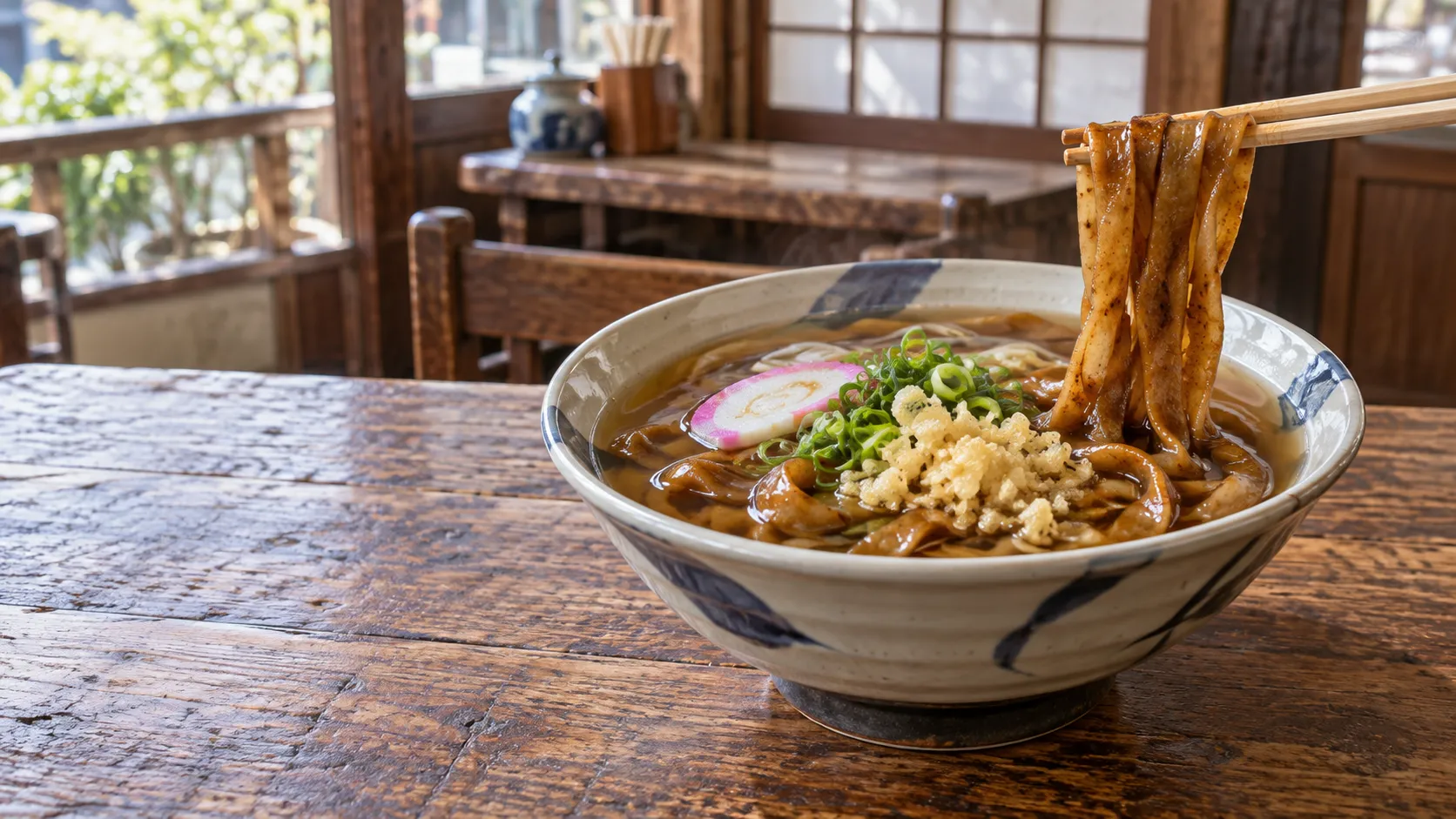
Local FoodKuroishi, Aomori
Kuroishi Tsuyu Yakisoba (黒石つゆやきそば)
Somebody in Kuroishi looked at a plate of fried noodles and thought: what this needs is soup. They were wrong about that. They were also completely right.
September 26, 2026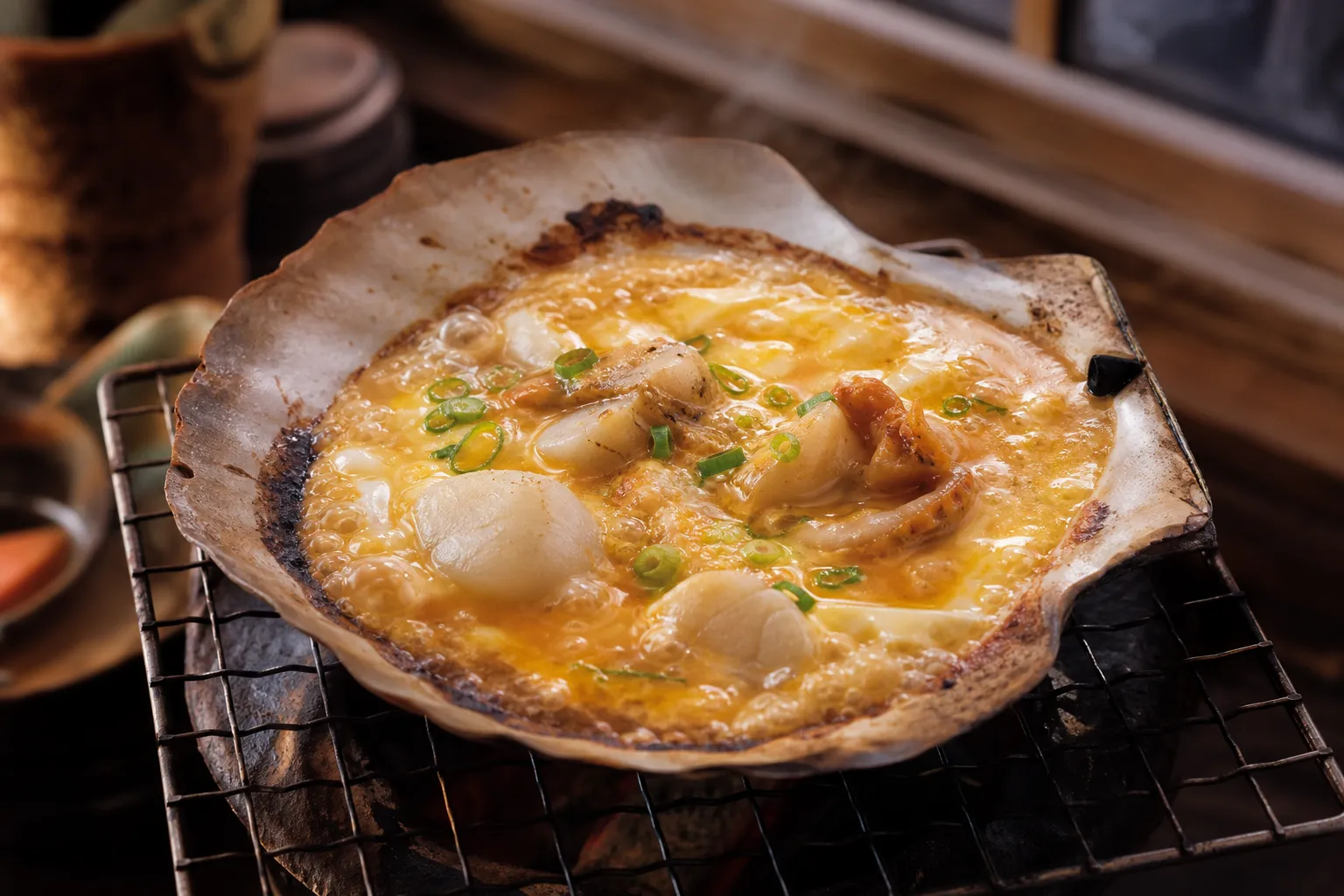
Local FoodAomori
Kaiyaki Miso (貝焼き味噌)
A scallop shell used as its own tiny frying pan — miso, dashi and scallop bubbling away until a beaten egg drapes over it all in soft golden folds. Aomori grandmothers have been cooking dinner in a seashell for generations.
July 12, 2026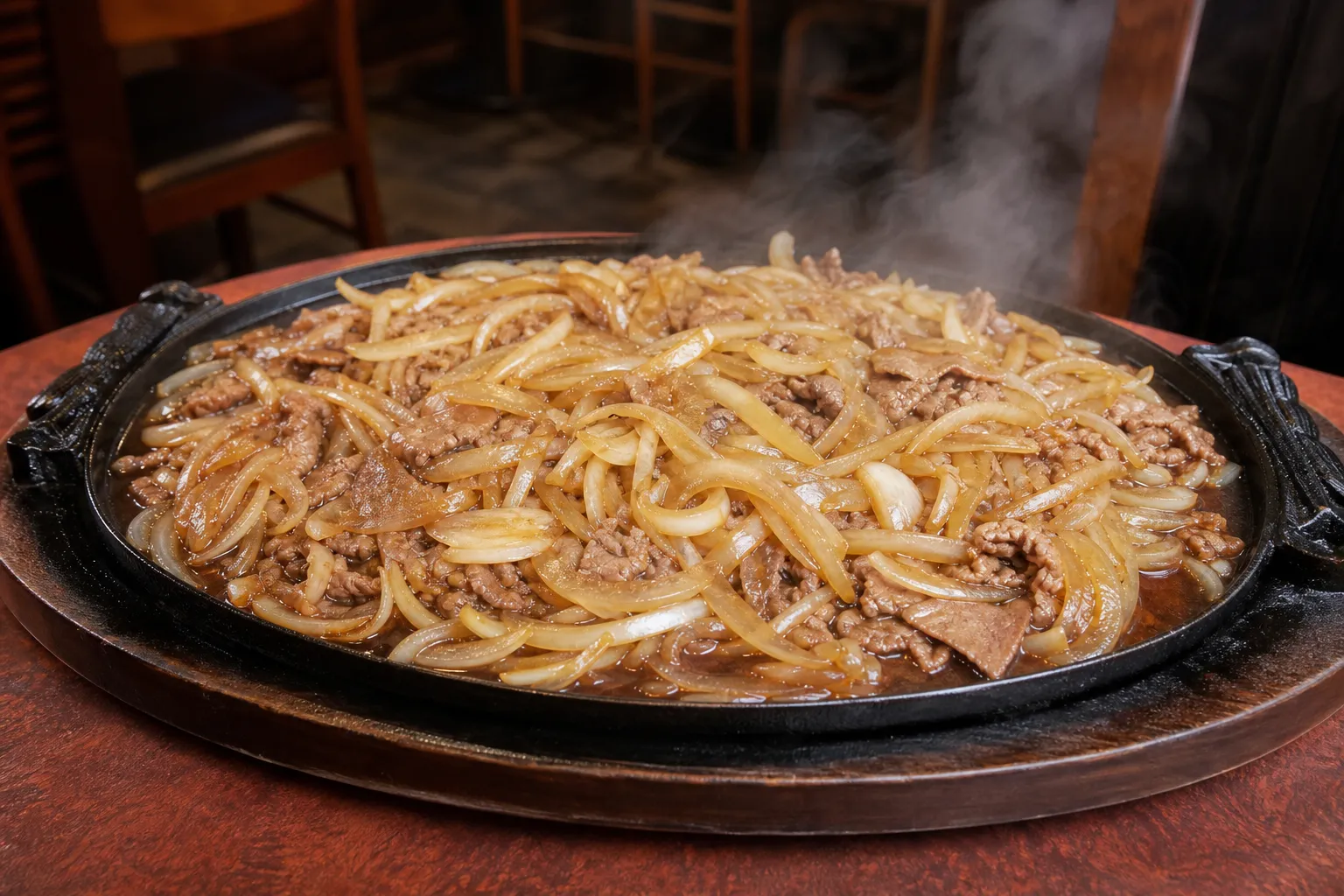
Local FoodTowada, Aomori
Towada Barayaki (十和田バラ焼き)
A hot plate arrives buried under onions, and you can't even see the beef yet — then it starts to sizzle down into a sweet-soy sauce and the whole table goes quiet. This is not yakiniku. This is Towada's own thing.
July 5, 2026