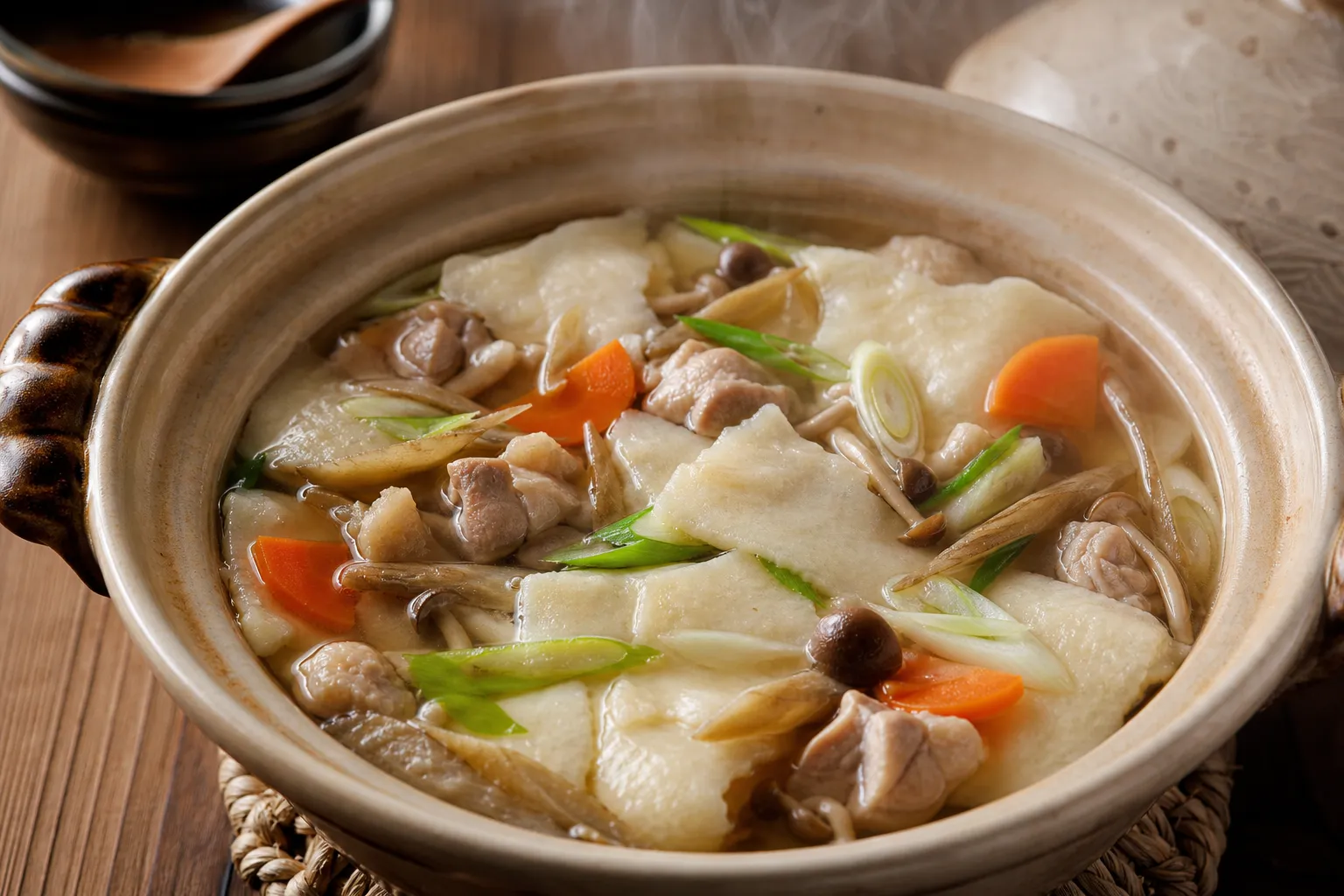
They put crackers in the hotpot. I watched it happen and I'll be honest, my first thought was no. Crackers are a dry-snack thing; you eat them next to soup, not in it. Then someone snapped a few flat wheat rounds into the bubbling pot, let them cook, and fished one out for me — and the edges had gone soft and slightly translucent and chewy, like a dumpling that used to be a cracker, soaked through with savory broth. I ate it, went quiet, and reached for another.
Share this dish


They put crackers in the hotpot. On purpose. Then they cooked them until the edges went soft and chewy like little dumplings — and I stopped doubting Hachinohe and started asking for seconds.
🍜 Planning a food trip to Aomori?Add this dish to my Food Trip →
 Add this dish to my Food Trip →
This is senbei-jiru (せんべい汁), the soul food of Hachinohe in southern Aomori: a light, clear soy-and-kombu hotpot loaded with chicken, burdock, mushrooms and green onion, into which you break pieces of nanbu senbei — a sturdy local wheat cracker made specifically to be cooked in soup. They soften at the edges, stay chewy in the middle, and drink up the broth. It is the coziest thing the snowy north makes.
A cracker built to be boiled
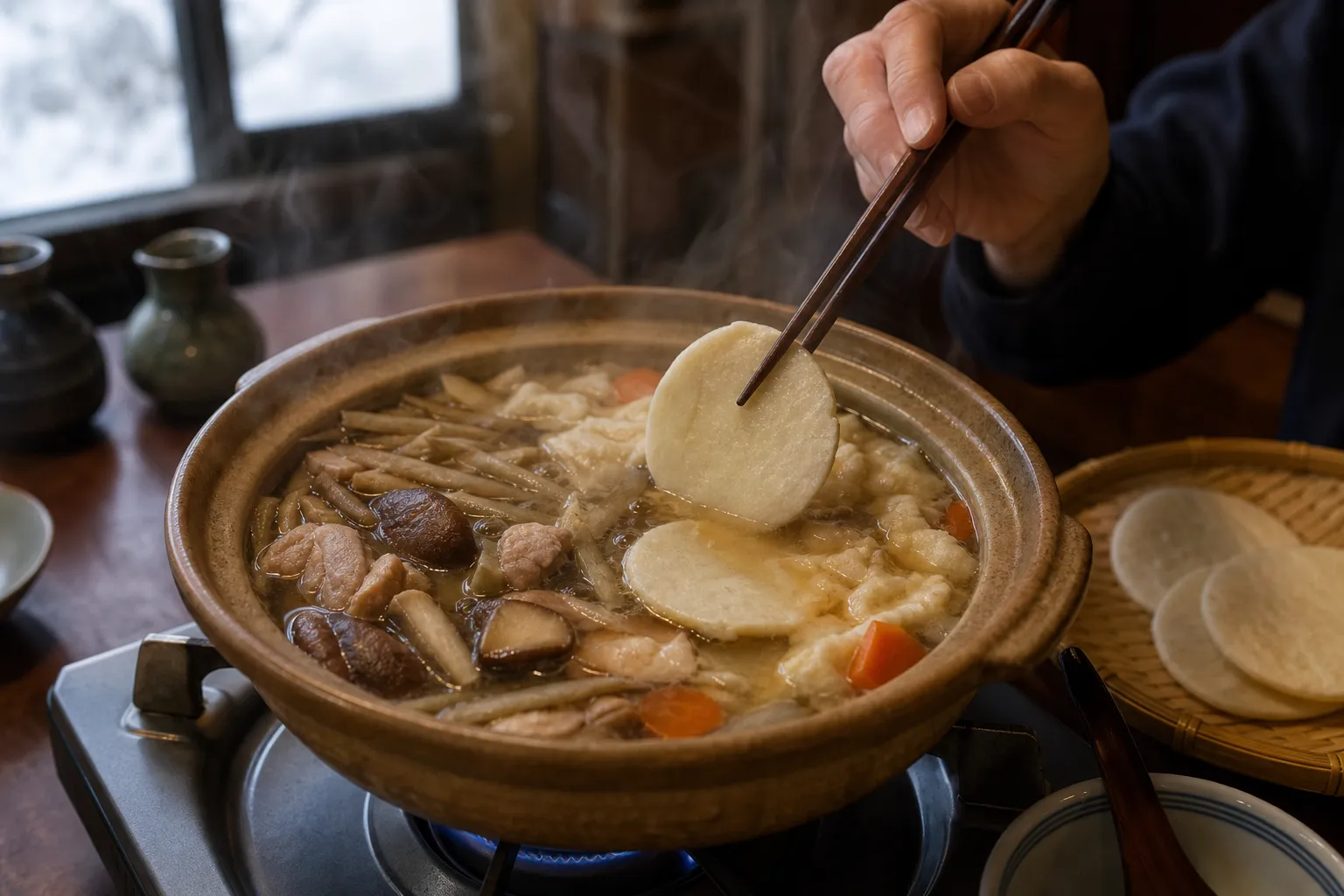
Here's the part I love: these aren't ordinary crackers that someone decided to drop in a pot one desperate winter. The nanbu senbei of this region come in a special o-tsuyu (for-the-soup) variety — plainer, firmer, made to hold their shape and turn pleasantly chewy instead of dissolving. The dish grew out of the old Nanbu domain's wheat-and-cracker culture, a way for snowbound Aomori households to stretch a pot of broth into a full, warming meal. Frugal, clever, and now beloved far past necessity.
Hachinohe is genuinely proud of it — it's a fixture of the city's food identity, served in its famous yokocho drinking alleys and championed as a regional treasure. I find that quietly moving: a humble survival dish, born of long winters and not much money, that a whole city decided was worth celebrating. Eat it in Hachinohe in February with snow outside and you'll understand completely.
Why the broth-soaked cracker works
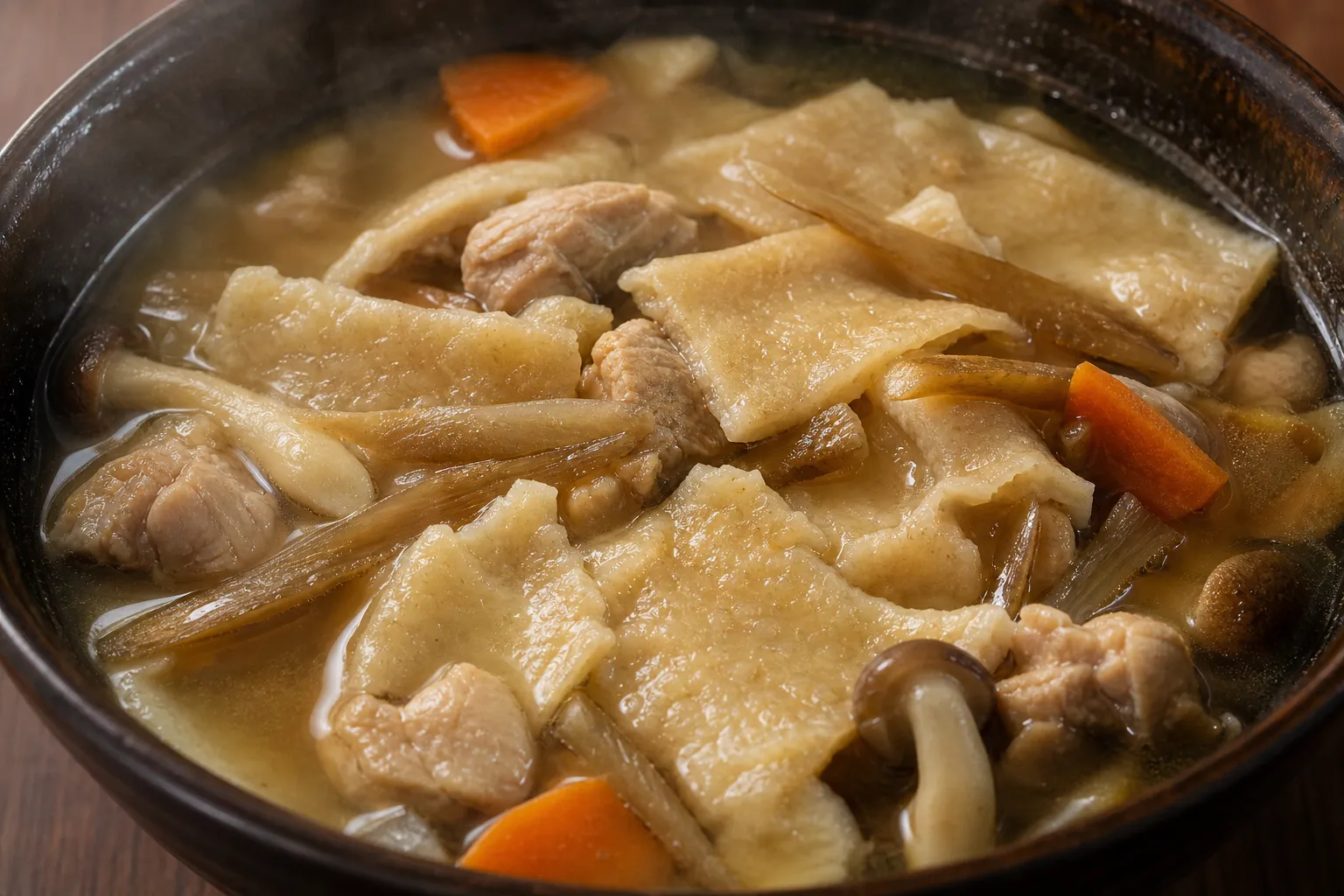
The magic is texture and timing. The broth itself is gentle — chicken and kombu, soy-seasoned, clean rather than heavy — so it tastes like a hug rather than a punch. Into that go the crackers, and as they simmer they hit a window where the outer rim turns soft and silky while the center keeps a springy, noodle-like chew. It's somewhere between a suiton dumpling and a wide flat noodle, and it's genuinely unlike anything else.
So you eat in stages: tender chicken and earthy burdock and mushrooms first, then the crackers once they've drunk their fill of broth, chasing that exact half-soft, half-chewy moment. Leave them too long and they keep getting softer; that's fine too. I kept adding pieces just to catch them at different stages. There are no wrong answers here, only warmer ones.
How it's made
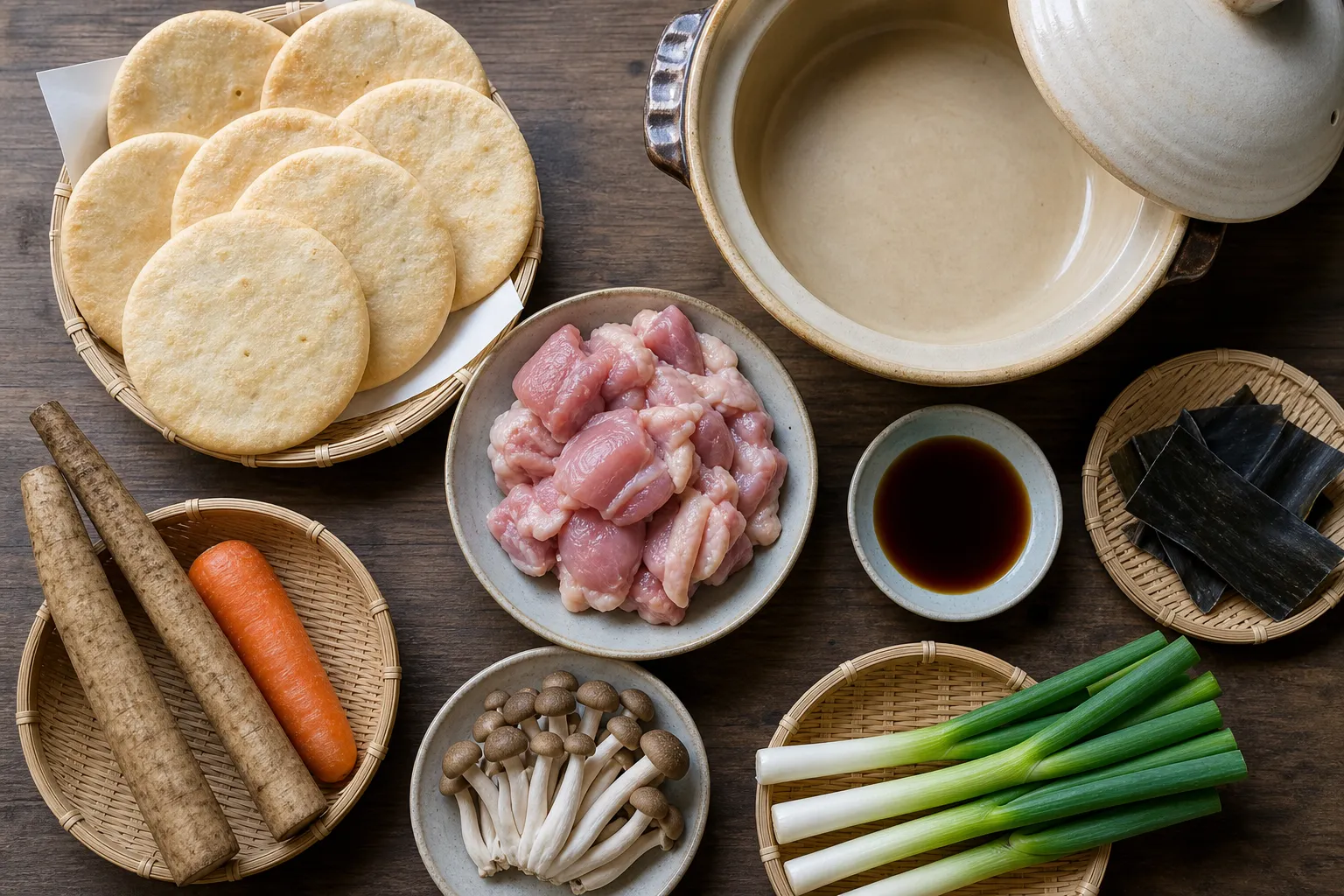
- Build a broth from chicken and kombu, seasoned with soy sauce (sometimes a little miso)
- Add chicken pieces, burdock (gobo), carrot, mushrooms (shimeji/maitake) and green onion
- Simmer until everything is tender and the broth is savory
- Snap nanbu senbei (the o-tsuyu cooking type) into pieces and add them to the pot
- Let the crackers simmer until the edges soften and they turn chewy — a few minutes
- Eat hot, ideally from a shared pot on a tabletop burner, adding crackers as you go
Before you go — for the cracker-curious
Your questions, answered honestly
"Wait, the crackers go in the soup?" — Yes, and that's the whole point. These are special wheat crackers (nanbu senbei) made to be cooked in broth — they soften at the edges and turn chewy, not soggy. Eating them dry on the side would be missing the dish entirely.
"Are they like noodles?" — Sort of. Once simmered, a piece of senbei sits somewhere between a flat noodle and a dumpling — chewy, broth-soaked, satisfying. That texture is the reason the dish exists.
"Is it spicy or heavy?" — Neither. It's a light, clean, soy-and-kombu broth. One of the most comforting hotpots in the north, and very easy to like.
"When should I eat the crackers?" — Add them toward the end and fish them out while the rim is soft and the center still chews. They keep softening, so eat them in waves rather than all at once.
What the staff will ask you
| You'll hear | Romaji | Meaning | Just say |
|---|---|---|---|
| おひとり様ですか? | Ohitori-sama desu ka? | "Just one?" | Hai (yes) / Futari desu (two of us) |
| せんべい、追加しますか? | Senbei, tsuika shimasu ka? | "Want to add more crackers?" | Hai, onegaishimasu (yes please) |
| 〆はどうしますか? | Shime wa dō shimasu ka? | "Anything to finish the pot?" | Kore de daijōbu desu (this is fine) |
To order, just say "Senbei-jiru kudasai" (せんべい汁ください) — "Senbei-jiru, please."
Where to eat it
- Hachinohe, Aomori — the home of senbei-jiru, where it's a local staple in izakaya, set-meal restaurants, and the city's lively yokocho drinking alleys (like Miroku Yokocho). The most atmospheric place to try it, especially in winter.
- Across southern Aomori — it's a regional specialty served at restaurants and at festivals throughout the Hachinohe area; you'll spot it on local menus and in supermarkets as a kit.
- Check before you go — individual shops and yokocho stalls keep their own hours; confirm in advance, especially for late-night alley spots.
Soul Score
Local Roots5/5
First-Timer Friendly4/5
Adventure Level3/5
Comfort Level5/5
Travel Worthy4/5
These scores are one obsessed eater's gut feeling — not a verdict. A low number isn't a bad mark, just a different kind of adventure.
Know someone planning Japan?
← All Articles
Local Food · Hachinohe, Aomori
Still hungry?
Eat more from Aomori
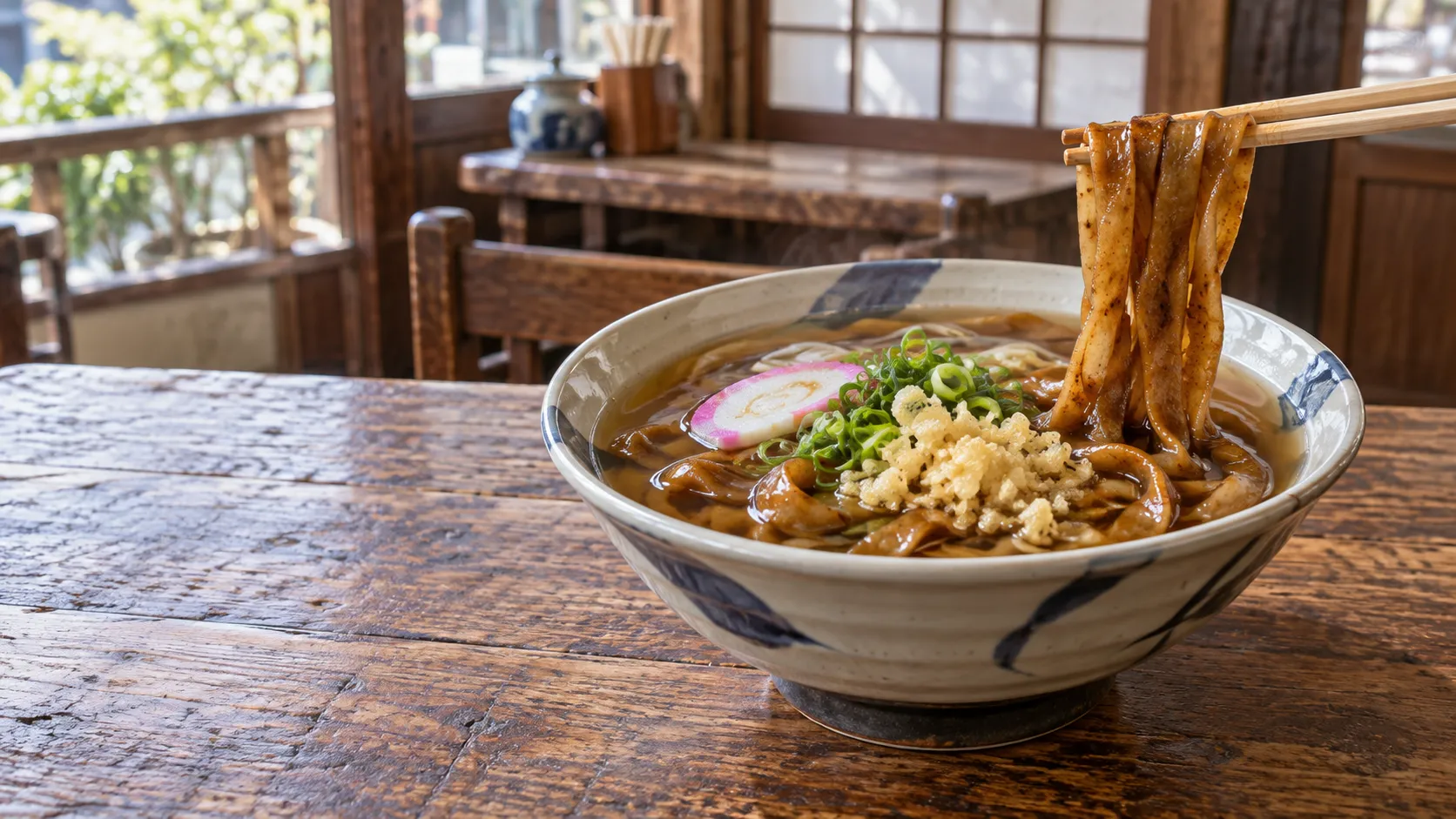
Local FoodKuroishi, Aomori
Kuroishi Tsuyu Yakisoba (黒石つゆやきそば)
Somebody in Kuroishi looked at a plate of fried noodles and thought: what this needs is soup. They were wrong about that. They were also completely right.
September 26, 2026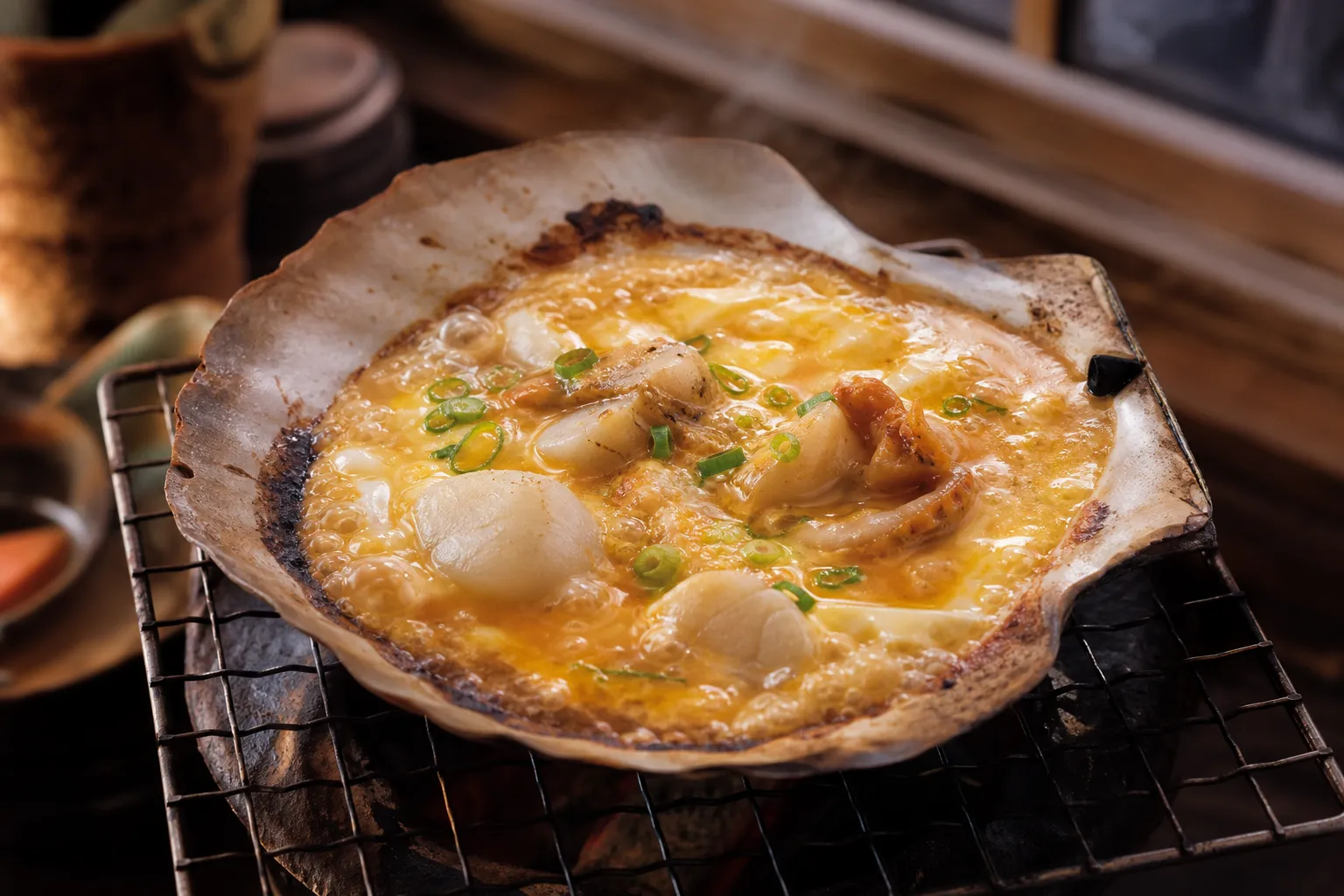
Local FoodAomori
Kaiyaki Miso (貝焼き味噌)
A scallop shell used as its own tiny frying pan — miso, dashi and scallop bubbling away until a beaten egg drapes over it all in soft golden folds. Aomori grandmothers have been cooking dinner in a seashell for generations.
July 12, 2026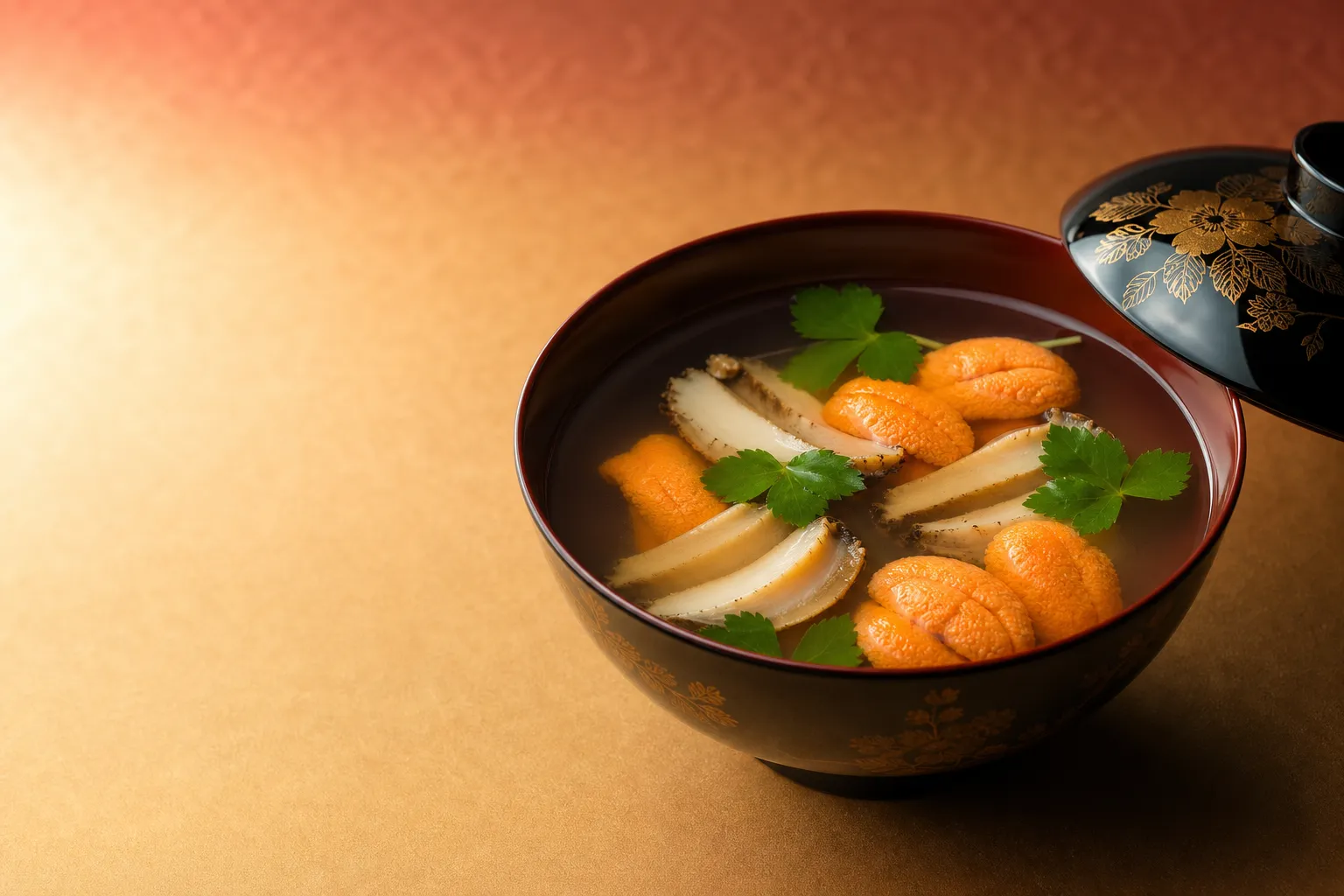
Local FoodHachinohe, Aomori
Ichigo-ni (いちご煮)
I ordered it expecting something fruity and got a bowl of the ocean at its most expensive instead — sea urchin and abalone floating in a broth so clear you could read through it.
July 5, 2026