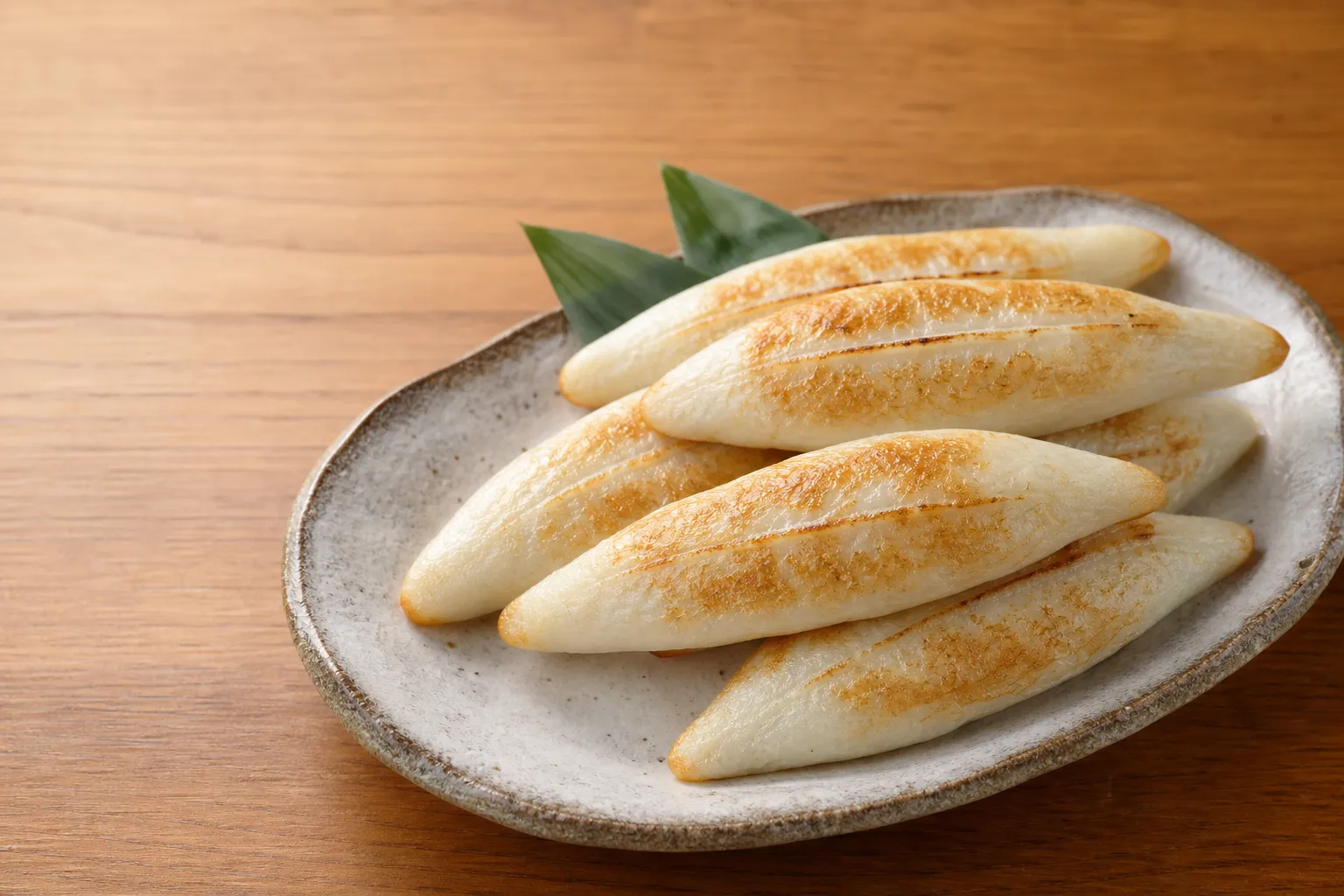
The first bite pushed back. That's the thing nobody warned me about — I bit into this little golden leaf-shaped thing expecting soft and got springy, a clean firm snap that bounced against my teeth and released a wave of pure, sweet white fish. I stood there on the platform in Sendai, chewing, mildly offended by every limp supermarket fish cake I'd ever tolerated. This was a different species of thing entirely.
Share this dish


Grilled fresh off the rack, it snaps back against your teeth and tastes purely of the sea — a leaf-shaped little thing that ruined every rubbery fish cake I'd met before it.
🍜 Planning a food trip to Miyagi?Add this dish to my Food Trip →
 Add this dish to my Food Trip →
That thing is sasakamaboko (笹かまぼこ), and the name is refreshingly literal: sasa means bamboo leaf, and that's exactly the shape — a flat, tapered leaf you can hold in your fingers. It's kamaboko, a fish cake made from white fish pounded into a smooth, elastic paste called surimi, then shaped and grilled until the surface turns golden. This is a proud specialty of Sendai in Miyagi, and it is emphatically not the pale, wobbly, soft stuff you might be picturing. It's firm, it's bouncy, it's toasted, and eaten fresh off the grill it's honestly one of the great cheap thrills of Tohoku.
Why Sendai turned surplus fish into a leaf
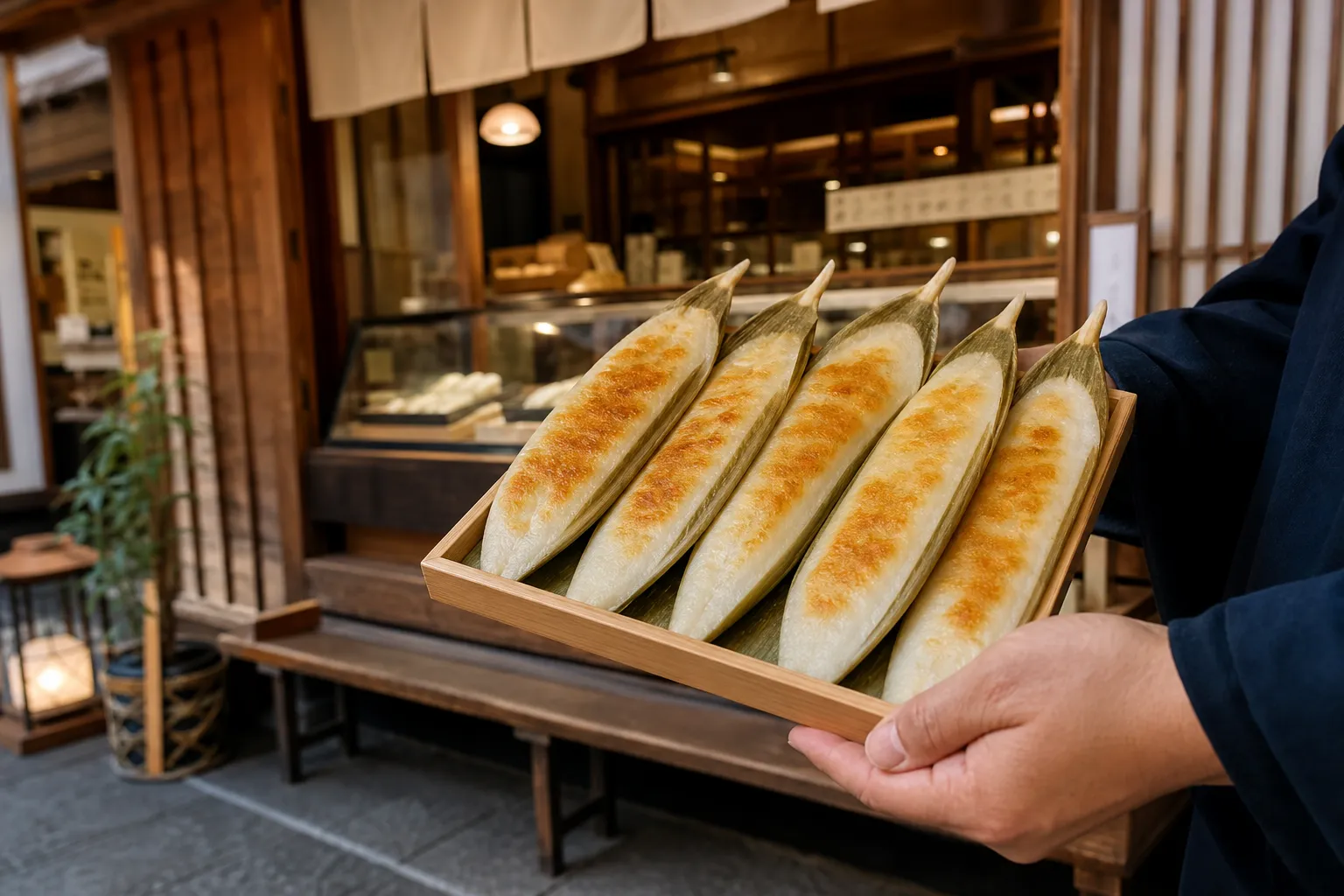
The story goes that Sendai, a serious fishing region, would land big hauls — historically flatfish and other white fish — more than could be sold fresh. Rather than waste the surplus, fishmongers pounded the meat into surimi and grilled it into cakes that kept longer and traveled better. Practical, unglamorous problem-solving. My favorite kind of food origin.
The leaf shape is the local flourish, and there's a nice story that it echoes the crest of the Date clan, the samurai family who ruled Sendai — Date Masamune himself, the one-eyed "Dragon of Ōshu," is a regional folk hero, and the whole city is quietly stamped with his aesthetic. Whether the leaf is truly his crest or just good marketing, I don't fully care; I love that a humble grilled fish cake carries a whiff of samurai swagger. It makes eating one on a train platform feel faintly heroic.
What it actually tastes like
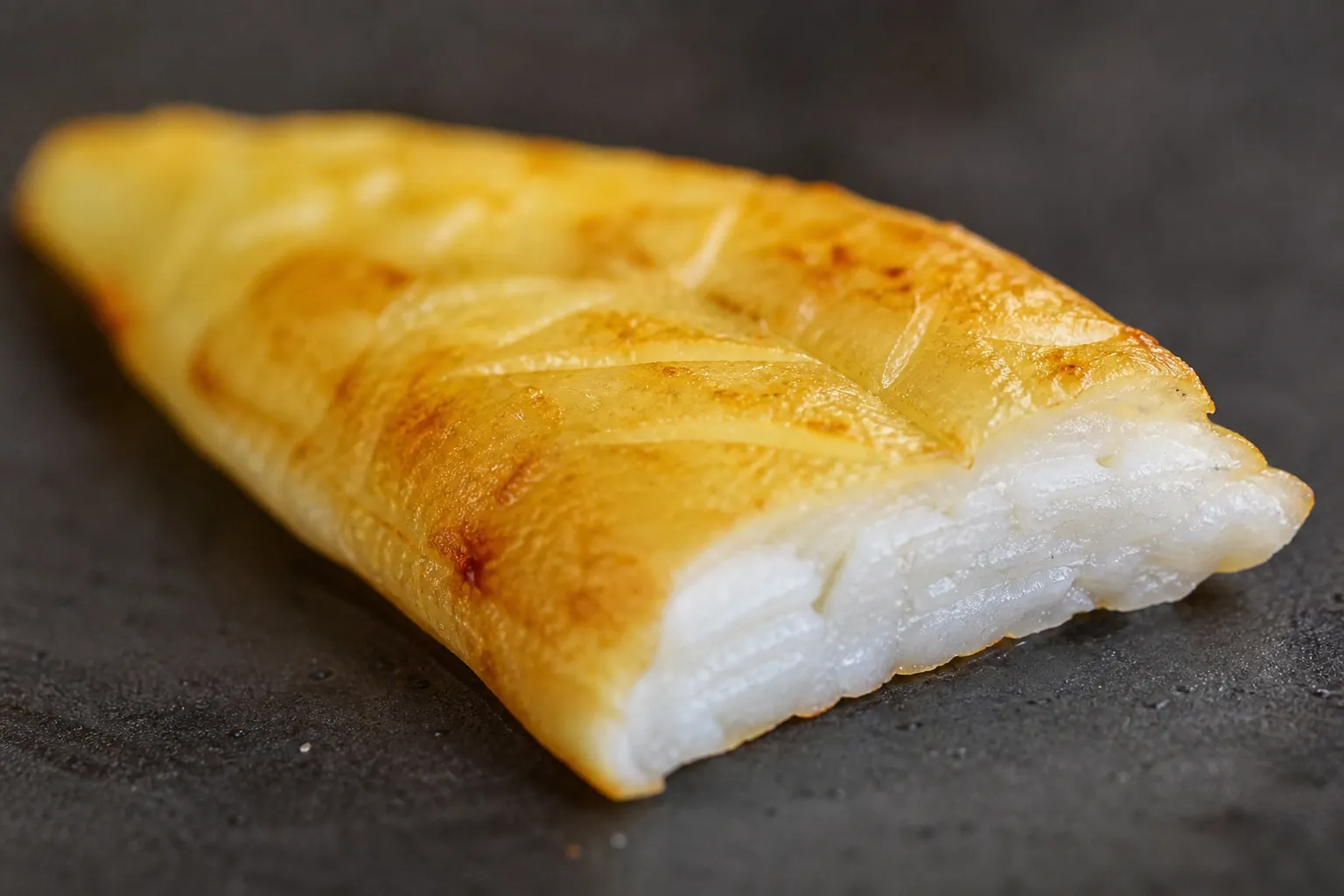
The texture is the headline. Good sasakamaboko has that distinctive kamaboko koshi — a firm, resilient springiness that pushes back and then yields, nothing mushy about it. That bounce is a craft; it comes from how thoroughly the surimi is pounded and how carefully it's grilled. Cheap fish cake is soft because it's lazy. This is not lazy.
The flavor is clean and gently sweet, pure white fish with a light savory toast where the surface caught the heat. Warm and fresh off the grill, it's faintly smoky at the edges and tender-springy in the middle — a completely different experience from the cold, chilled ones sold in packs. If you get the chance to eat one grilled in front of you, hot in your hand, take it. I ate two and immediately wanted a third. I've made peace with that.
How sasakamaboko is made
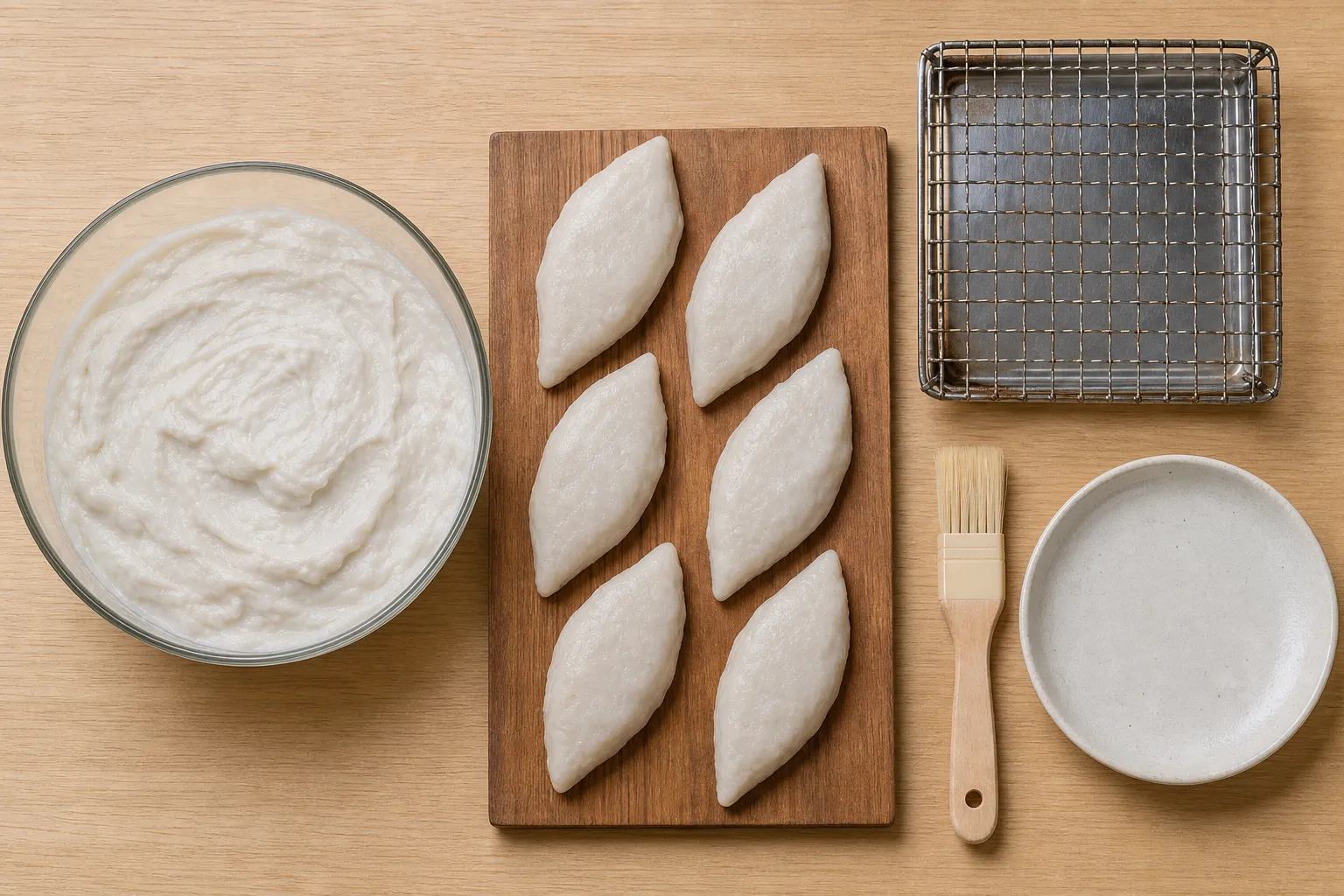
- Fresh white fish is filleted and the flesh is pounded into a smooth, sticky surimi paste
- The paste is seasoned lightly — salt, sometimes a little sugar or mirin — and worked until springy
- It's shaped by hand or machine into the flat, tapered bamboo-leaf form
- The shaped cakes are grilled over heat, turning until the surface is golden and lightly toasted on both sides
- They're served warm and fresh at specialty stands, or cooled and packed as a firmer souvenir version
Before you go — get one hot
Your questions, answered honestly
"Isn't this just the pink-and-white stuff on top of ramen?" — Same family, different world. That's kamaboko too, but sasakamaboko is grilled, leaf-shaped, and eaten as its own snack — firmer, toastier, and made to shine on its own rather than garnish something else. Don't judge it by the ramen topping.
"Hot or cold — does it matter?" — It matters a lot. Freshly grilled and warm, it's fragrant, springy, and lightly smoky, and that's the version worth crossing town for. The chilled, vacuum-packed souvenir kind is good and travels well, but if there's a grill-it-fresh stand, that's the real thing.
"Can I grill my own?" — At some Sendai shops and stands, yes — they'll hand you a skewered cake and a little grill to toast it yourself, which is enormously fun and slightly dangerous to your self-control. Great with kids, great with a beer.
"Is it safe/easy for a nervous first-timer?" — About as friendly as regional Japanese food gets. It's mild, clean, not fishy in a challenging way, no bones, no weird surprises. If someone's cautious about Japanese seafood, this is a perfect on-ramp.
What the staff will ask you
| You'll hear | Romaji | Meaning | Just say |
|---|---|---|---|
| 焼きたてになさいますか? | Yakitate ni nasaimasu ka? | "Would you like it freshly grilled?" | Hai, yakitate de onegaishimasu (yes, freshly grilled, please) |
| 何枚になさいますか? | Nan-mai ni nasaimasu ka? | "How many pieces would you like?" | Ichi-mai onegaishimasu (one, please) |
| お土産用になさいますか? | Omiyage-yō ni nasaimasu ka? | "Is this for a souvenir/gift?" | Sono ba de tabemasu (I'll eat it here) |
To order, just say "Sasakamaboko o kudasai" (笹かまぼこをください) — "Sasakamaboko, please."
Where to eat it
- Sendai, Miyagi — the home base; specialty kamaboko makers, souvenir shops, and food halls across the city sell it, and several long-running local makers run their own storefronts.
- Sendai Station — a practical spot to find it, with stands and shops selling both freshly grilled pieces and packed gift boxes right where travelers pass through.
- Miyagi coastal towns and department-store food halls (depachika) — regional makers are well represented, and some stands let you grill your own on the spot.
Which shops offer grill-it-fresh and what's in stock changes by location and day, so check before you make a special trip.
Soul Score
Local Roots4/5
First-Timer Friendly5/5
Adventure Level3/5
Comfort Level4/5
Travel Worthy3/5
These scores are one obsessed eater's gut feeling — not a verdict. A low number isn't a bad mark, just a different kind of adventure.
Know someone planning Japan?
← All Articles
Local Food · Sendai, Miyagi
Still hungry?
Eat more from Miyagi
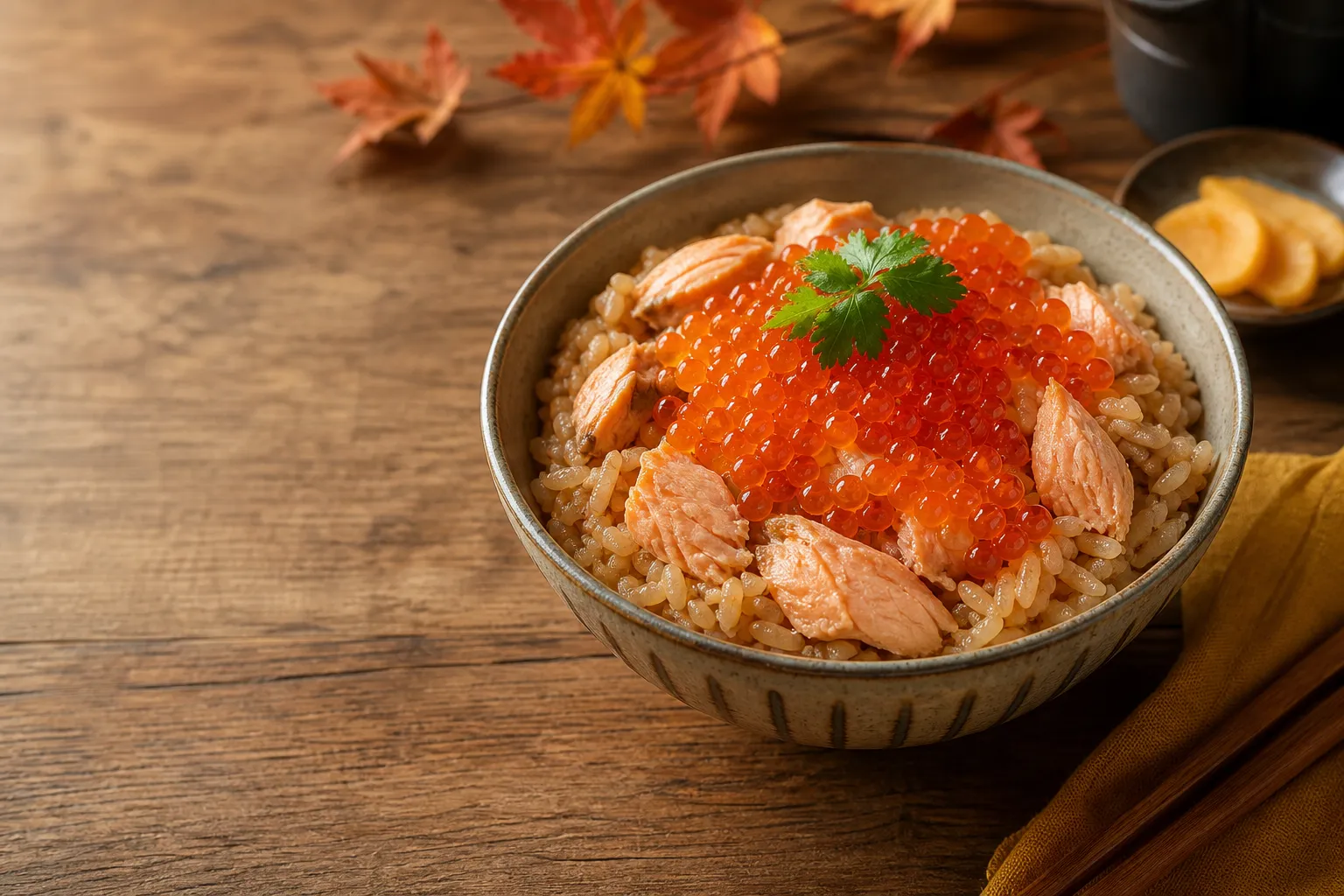
Local FoodWatari, Miyagi
Harako Meshi (はらこ飯)
Rice cooked in the same broth as the salmon that's sitting on top of it, then crowned with roe so fresh it still pops between your teeth — this is a river town's autumn in a bowl.
July 4, 2026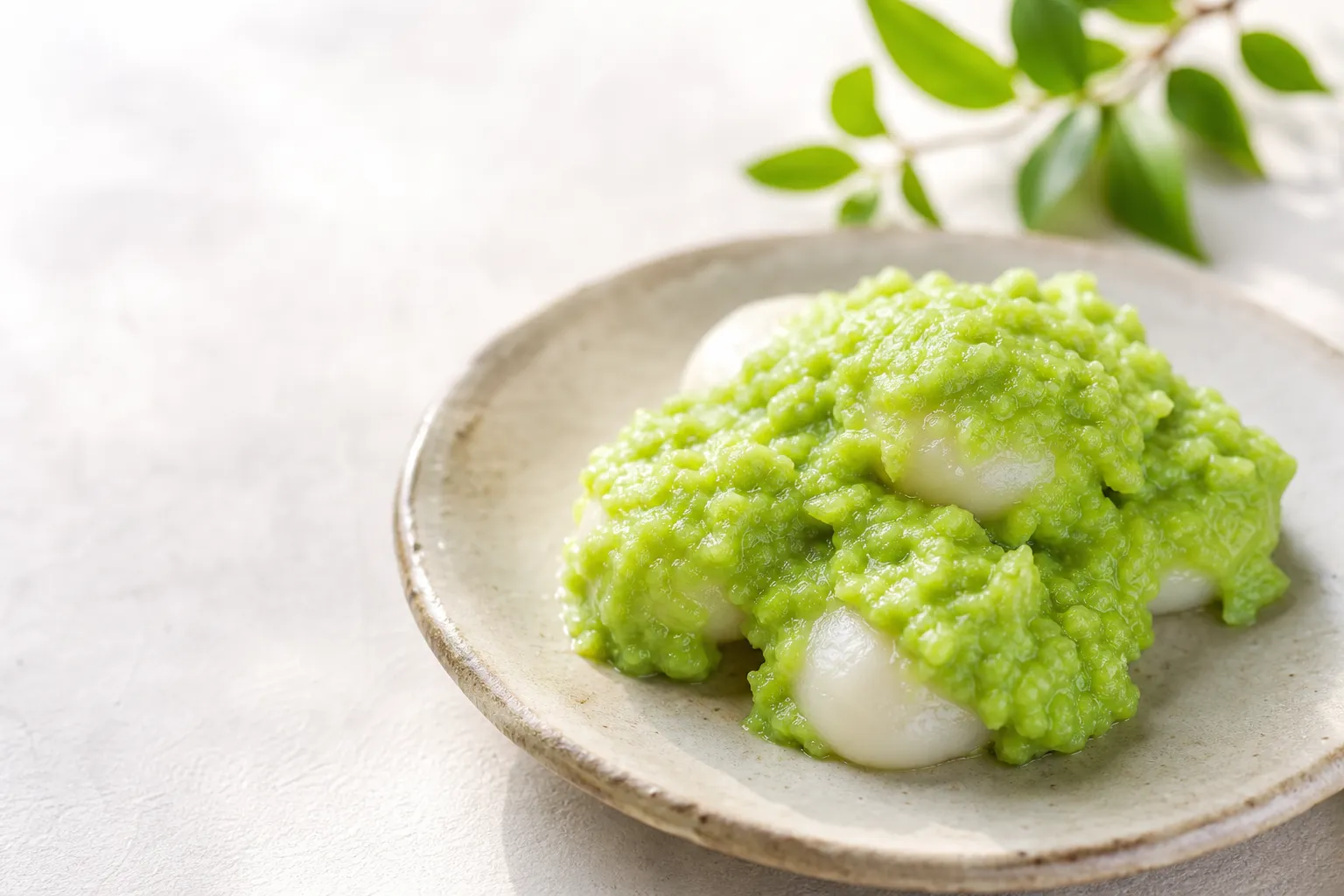
Sweets & SnacksSendai, Miyagi
Zunda Mochi (ずんだ餅)
Soft mochi smothered in a vivid green paste of mashed young soybeans — sweet, grassy, faintly savory, and a color that stops you in the street. Sendai's most beautiful sweet.
June 27, 2026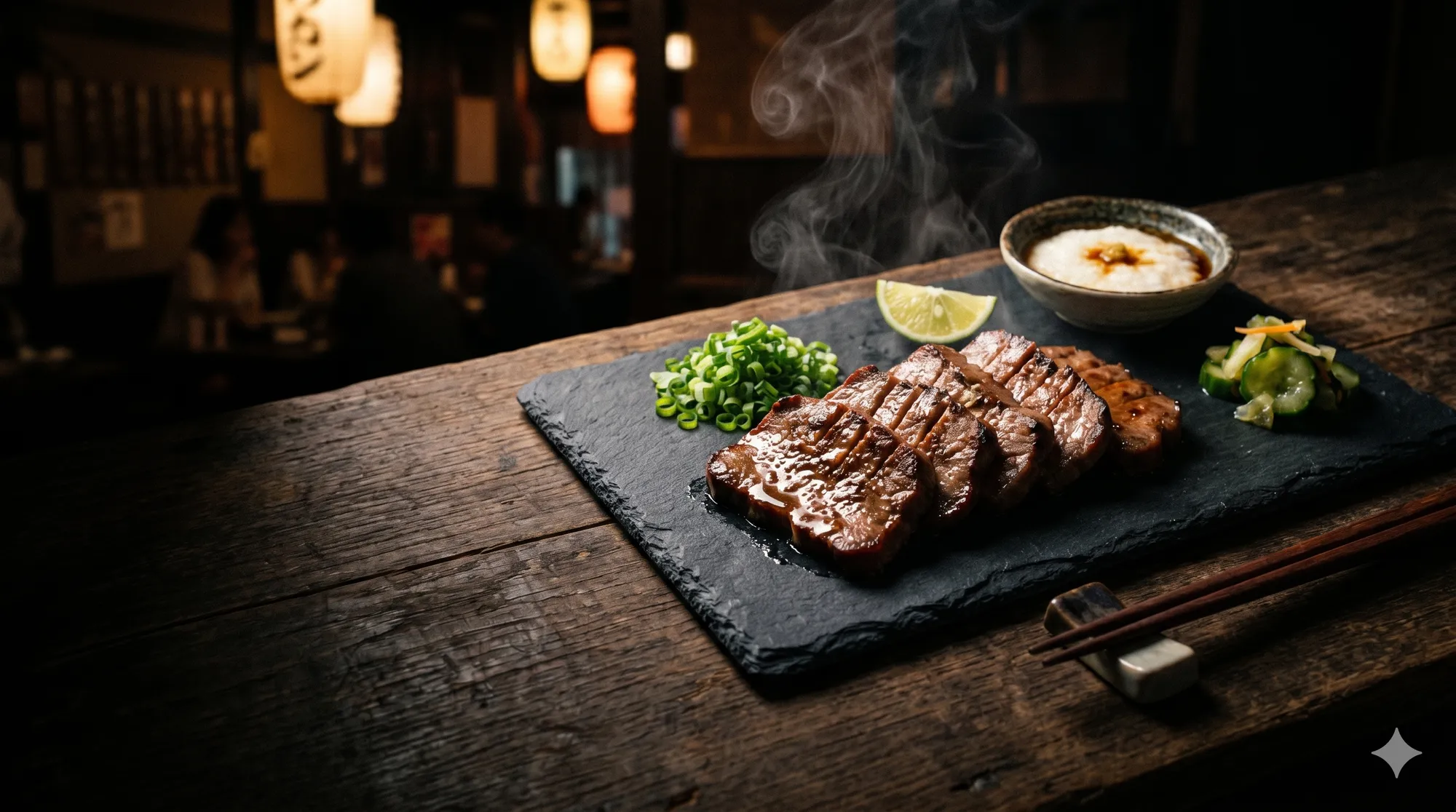
Local FoodSendai, Miyagi
Gyutan (牛タン)
Thick-cut grilled beef tongue, charcoal-charred, snappy and rich — served with barley rice and oxtail soup. Sendai turned an overlooked cut into a destination. Trust the tongue.
June 15, 2026