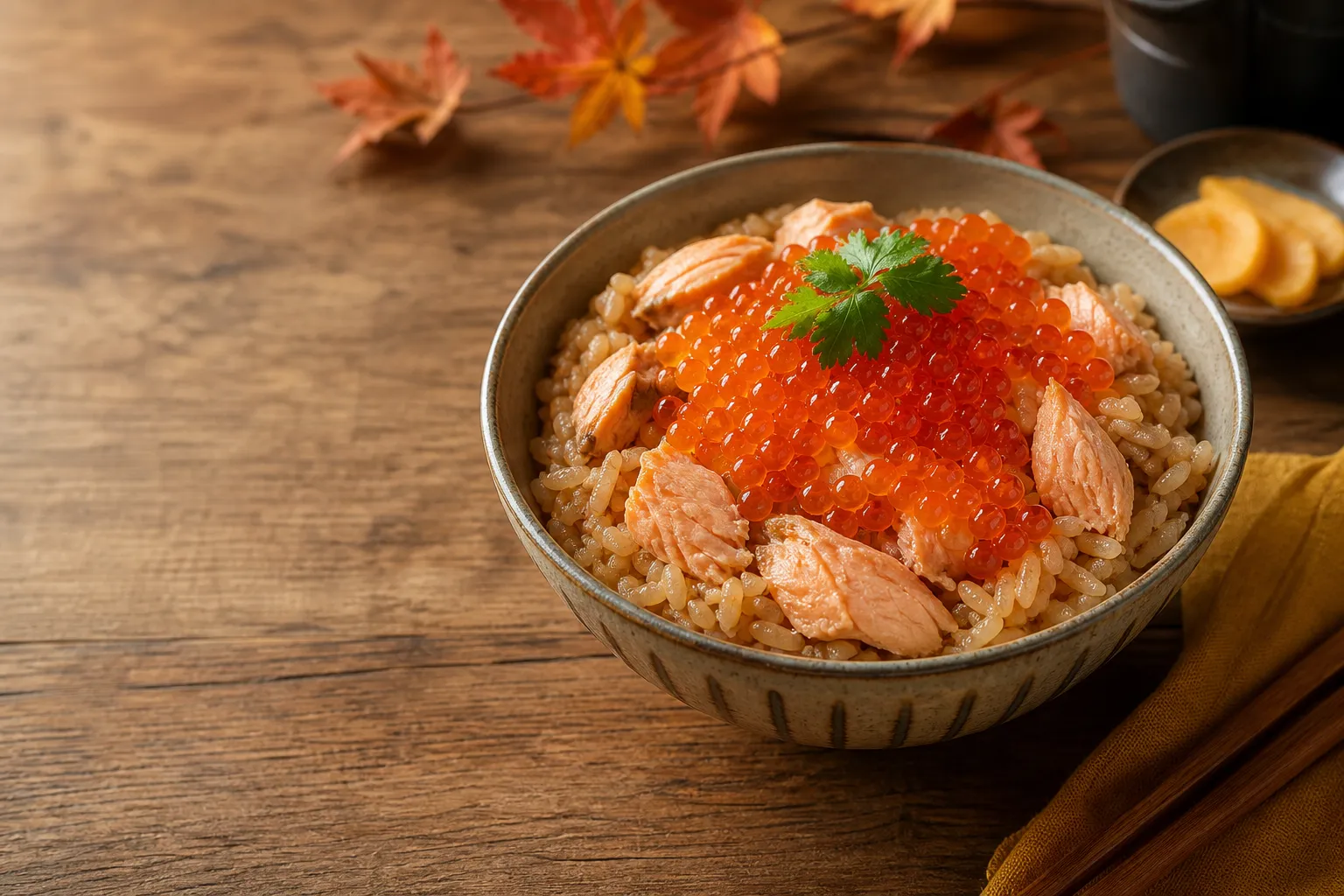
The roe popped. Not "burst" — popped, a tiny, distinct little snap against my teeth, followed by a rush of salty-sweet brine, and I had to put my chopsticks down for a second just to process it. Then I got to the rice underneath and understood the trick: it wasn't just steamed white rice with fish dumped on it. The rice itself tasted like the salmon. Somebody had been cooking this for a very long time to figure that out.
Share this dish


Rice cooked in the same broth as the salmon that's sitting on top of it, then crowned with roe so fresh it still pops between your teeth — this is a river town's autumn in a bowl.
🍜 Planning a food trip to Miyagi?Add this dish to my Food Trip →
 Add this dish to my Food Trip →
This is harako meshi (はらこ飯), a rice bowl from Watari in Miyagi Prefecture built entirely around one river's autumn salmon run. Salmon is simmered gently in a broth of soy sauce, sake, and sugar; that same broth is then used to cook the rice; the simmered salmon gets flaked and layered over the finished rice; and the whole thing is topped with a generous, glistening pile of ikura — salmon roe — marinated in that exact same broth. It is not oyakodon (no chicken, no egg) and it's not a catch-all kaisendon of random seafood — it is, very specifically, one fish and its own eggs, doing double duty on the same bowl of rice.
A river-mouth town's tribute to its own salmon run
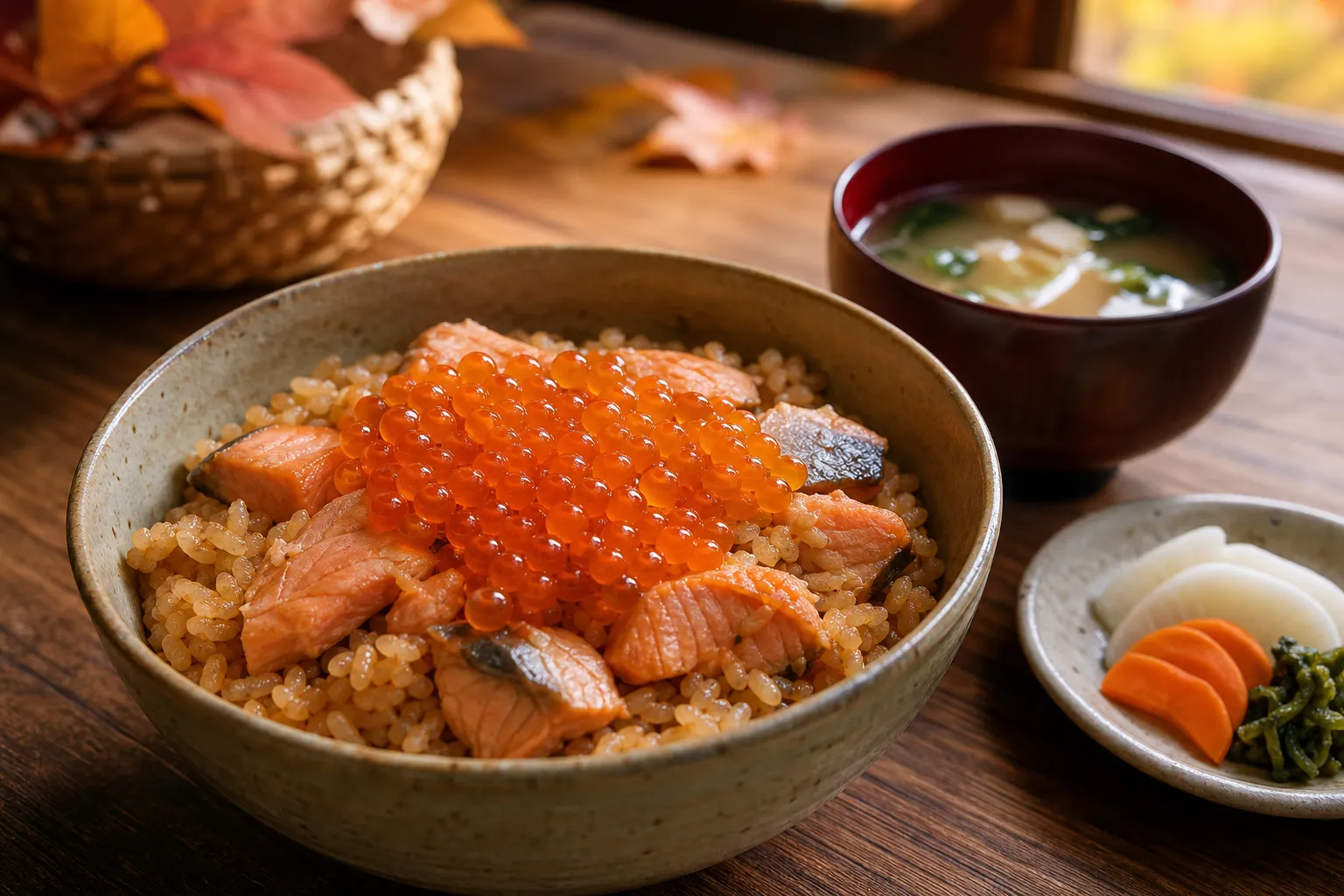
Watari sits where the Abukuma River meets the Pacific, and every autumn salmon return upstream to spawn — bringing with them both fatty adult fish and, crucially, egg-laden females full of ikura. Harako meshi grew directly out of that seasonal abundance: local fishing families didn't want to waste a single part of the catch, so the salmon simmering liquid became the rice-cooking liquid, and the roe that would otherwise just be a byproduct became the crowning ingredient. "Harako" literally refers to the roe still inside the fish — this dish is named after the part everyone secretly wants the most.
I find this kind of resourcefulness deeply moving, honestly — a dish built entirely so nothing from one fish goes to waste, and it happens to be one of the most luxurious-tasting rice bowls in the country. Watari holds harako meshi festivals in autumn, and I now understand why people plan trips around them.
Salmon-cooked rice is the quiet genius here
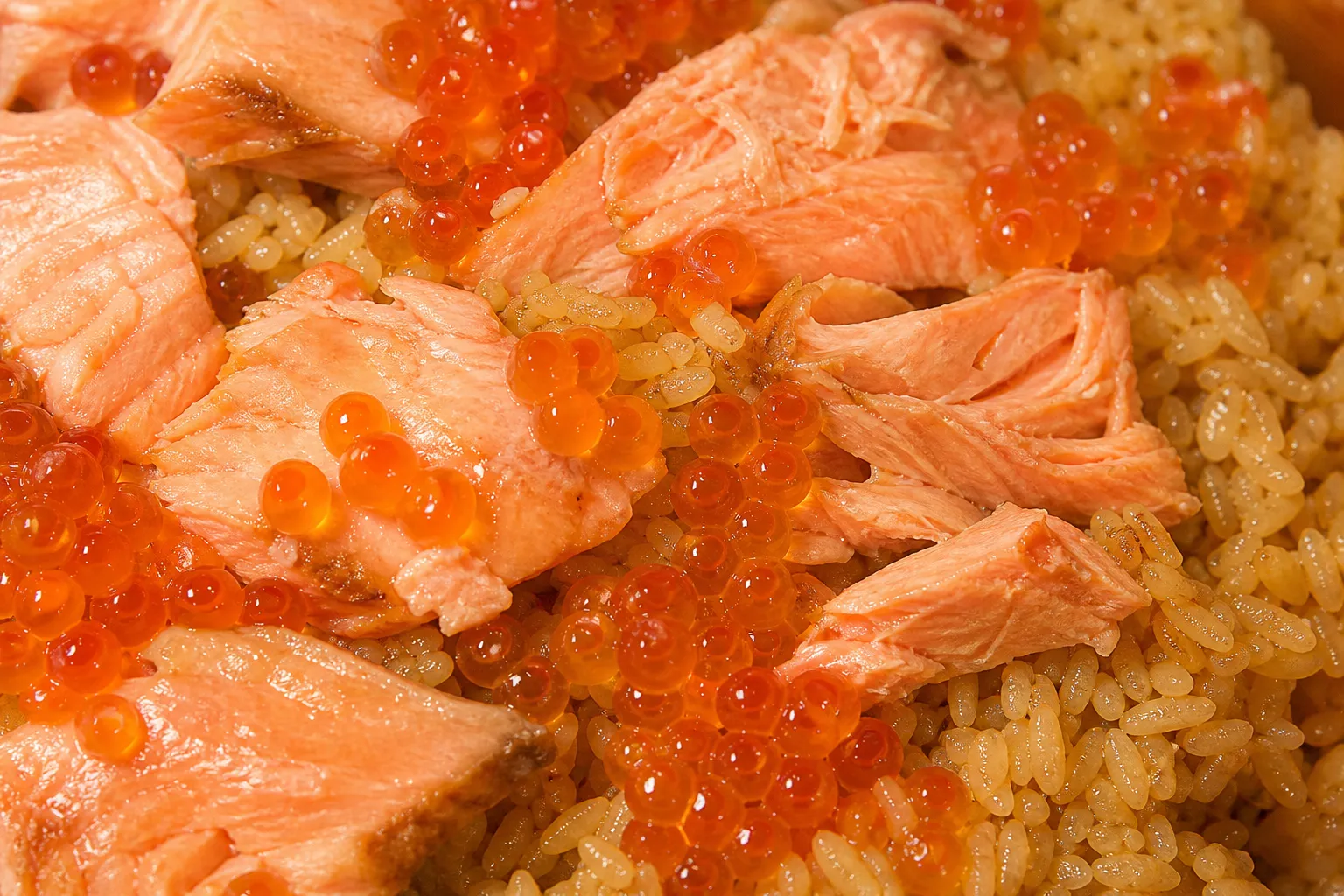
Look closely at a good bowl and you can see the rice grains themselves have gone slightly amber, glossy with soy and sake, each one carrying real salmon flavor rather than just sitting under it. The flaked salmon pieces are tender and just barely holding together, simmered gently rather than seared, so they stay soft against the rice. And then the roe — each individual egg translucent, deep orange, marinated just long enough to season it through without turning it firm.
The textures do all the work: soft, savory rice; flaky, mild simmered salmon; and that unmistakable pop of roe on top, salty and clean and a little bit briny. I ate three bites in a row without stopping to talk, which for me is a genuine review.
How it's made
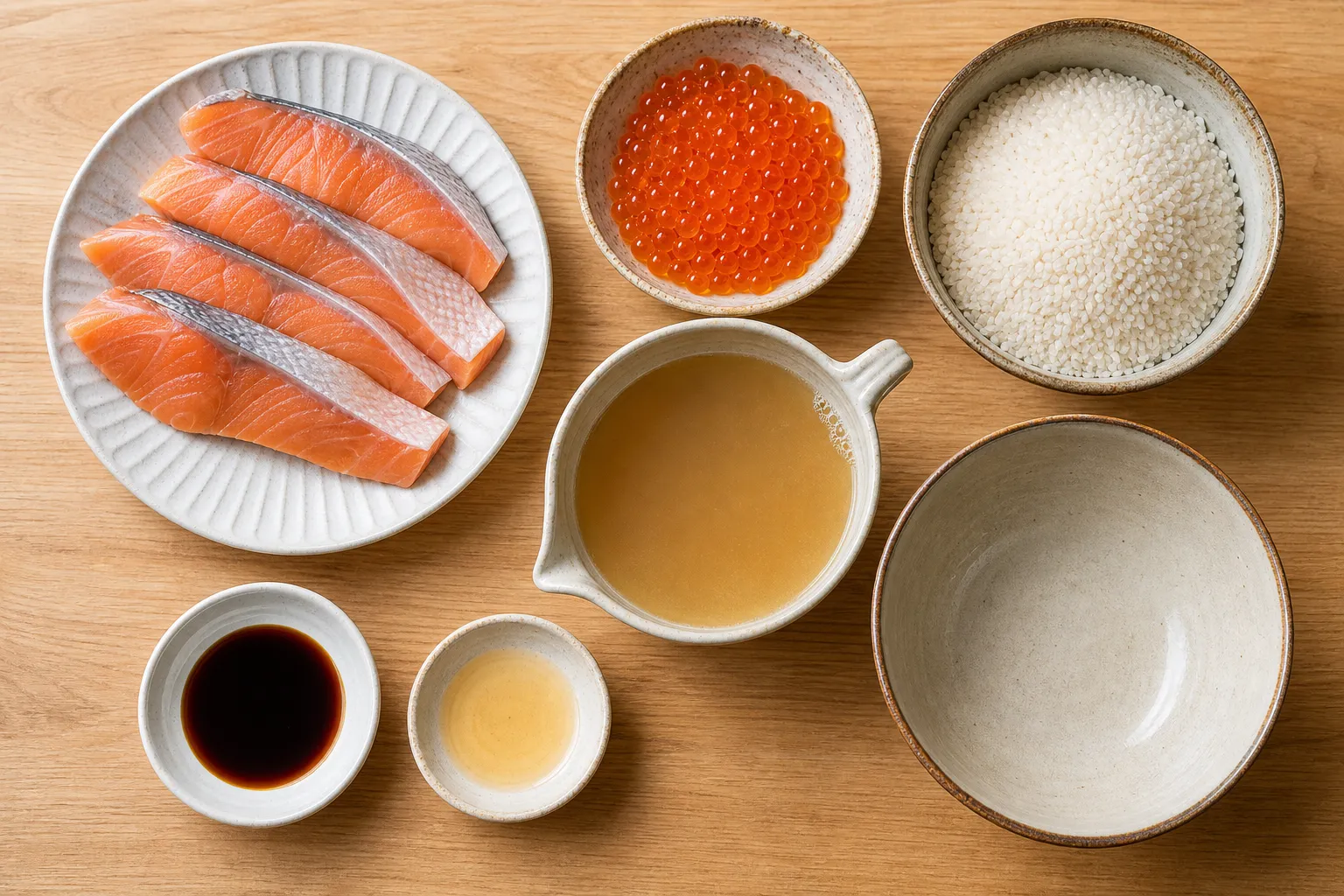
- Simmer fresh salmon fillets gently in a broth of soy sauce, sake, sugar, and water
- Remove the salmon, flake it into large pieces, and set it aside
- Marinate fresh salmon roe (ikura) briefly in the same soy-based broth
- Cook the rice using the leftover salmon-simmering broth in place of some of the water
- Fluff the finished rice and layer the flaked salmon generously over the top
- Crown the bowl with the marinated ikura and a few slices of pickled ginger or ginger shoots on the side
Before you go — for the first-timer
Your questions, answered honestly
"Is this raw fish?" — No. The salmon is simmered, not raw — only the roe on top is served the way ikura normally is, lightly cured rather than cooked.
"Is it the same as oyakodon?" — No relation — oyakodon is chicken and egg. Harako meshi is salmon and salmon roe, and the "parent and child" here refers to the fish, not poultry.
"Is it super fishy-tasting?" — It's rich and savory but not aggressively fishy — the soy-sake broth mellows it, and the roe adds a clean, briny pop rather than a strong fish flavor.
"When's the best time to get it?" — Autumn, during the actual salmon run (roughly October–November), when both the salmon and the roe are at their freshest and local festivals celebrate the dish.
What the staff will ask you
| You'll hear | Romaji | Meaning | Just say |
|---|---|---|---|
| いくらは多めにしますか? | Ikura wa ōme ni shimasu ka? | "Extra salmon roe?" | Hai, onegaishimasu (yes please) |
| ご飯は大盛りにしますか? | Gohan wa ōmori ni shimasu ka? | "Want a large rice?" | Futsū de daijōbu desu (regular is fine) |
| お味噌汁は付けますか? | Omisoshiru wa tsukemasu ka? | "Add miso soup?" | Onegaishimasu (yes, please) |
To order, just say "Harako meshi kudasai" (はらこ飯ください) — "Harako meshi, please."
Where to eat it
- Watari, Miyagi — the dish's home town, where restaurants near the coast and the Abukuma river mouth serve it fresh during the autumn salmon season.
- Sendai and around Miyagi Prefecture — many Miyagi restaurants specializing in regional cuisine (kyōdo ryōri) carry harako meshi seasonally, especially in autumn.
- Check before you go — this is a seasonal dish tied to the salmon run; availability and freshness are best in autumn, and some restaurants only offer it for a limited window, so confirm before visiting.
Soul Score
Local Roots5/5
First-Timer Friendly4/5
Adventure Level3/5
Comfort Level5/5
Travel Worthy4/5
These scores are one obsessed eater's gut feeling — not a verdict. A low number isn't a bad mark, just a different kind of adventure.
Know someone planning Japan?
← All Articles
Local Food · Watari, Miyagi
Still hungry?
Eat more from Miyagi
Local FoodSendai, Miyagi
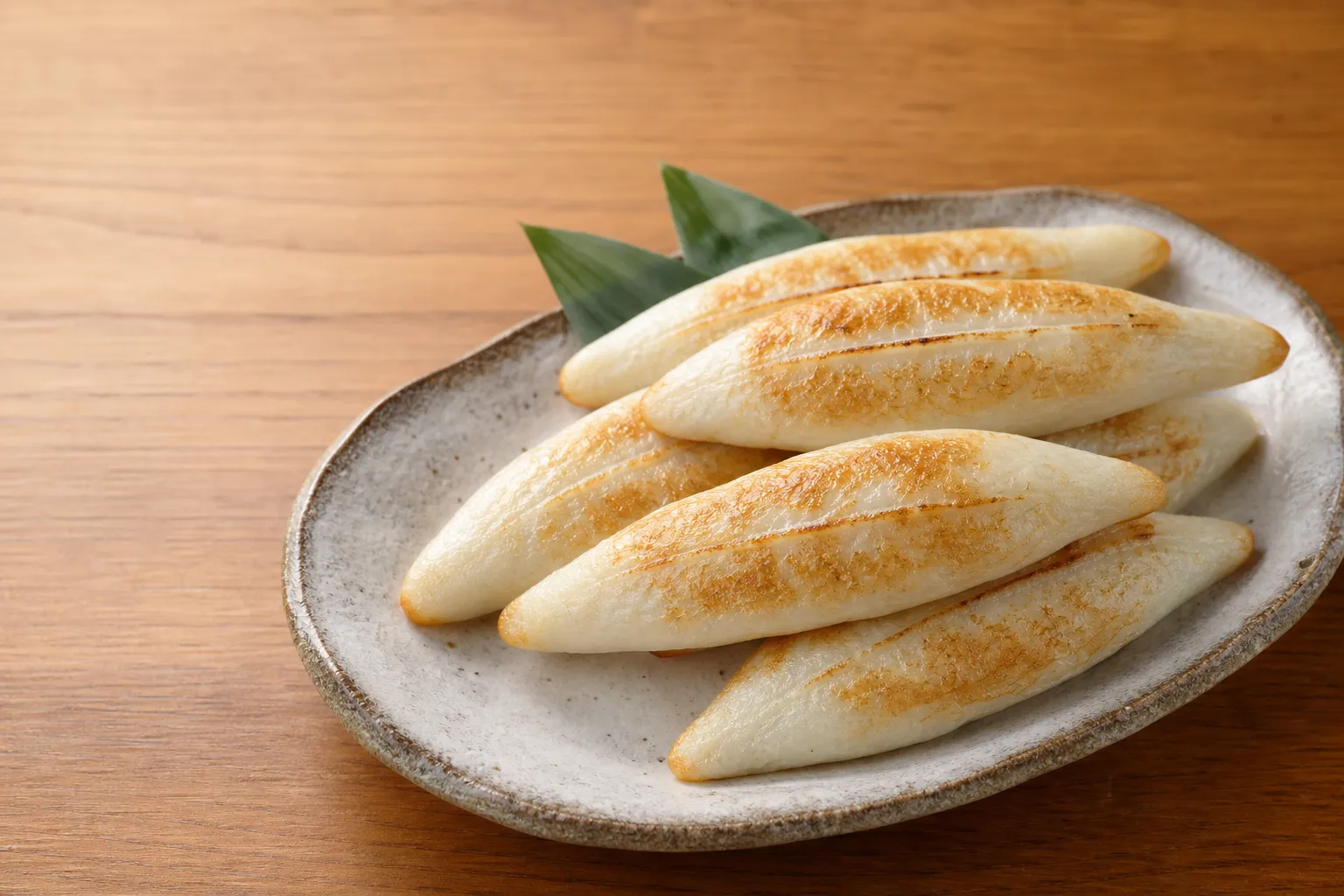
Sasakamaboko (笹かまぼこ)
Grilled fresh off the rack, it snaps back against your teeth and tastes purely of the sea — a leaf-shaped little thing that ruined every rubbery fish cake I'd met before it.
July 5, 2026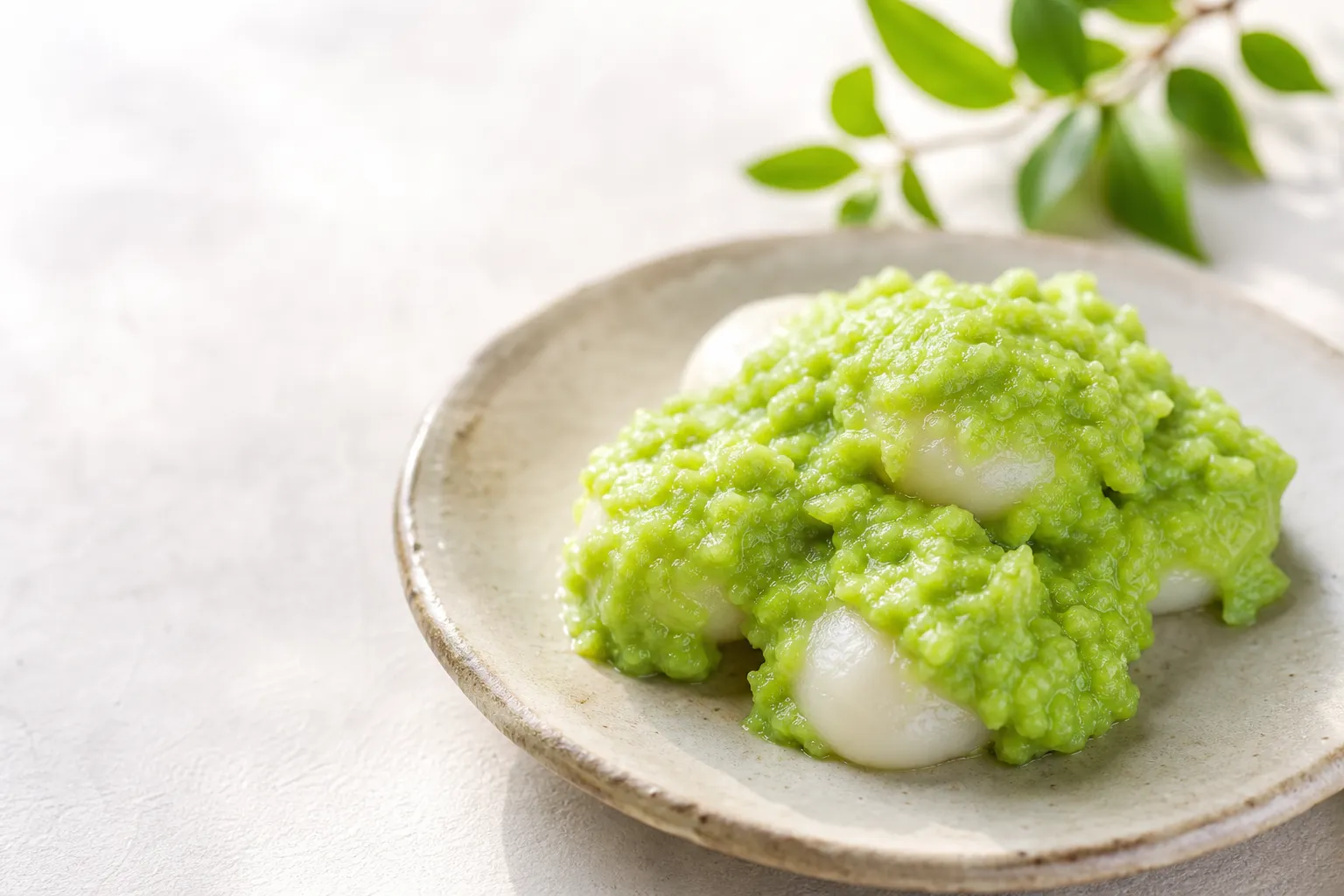
Sweets & SnacksSendai, Miyagi
Zunda Mochi (ずんだ餅)
Soft mochi smothered in a vivid green paste of mashed young soybeans — sweet, grassy, faintly savory, and a color that stops you in the street. Sendai's most beautiful sweet.
June 27, 2026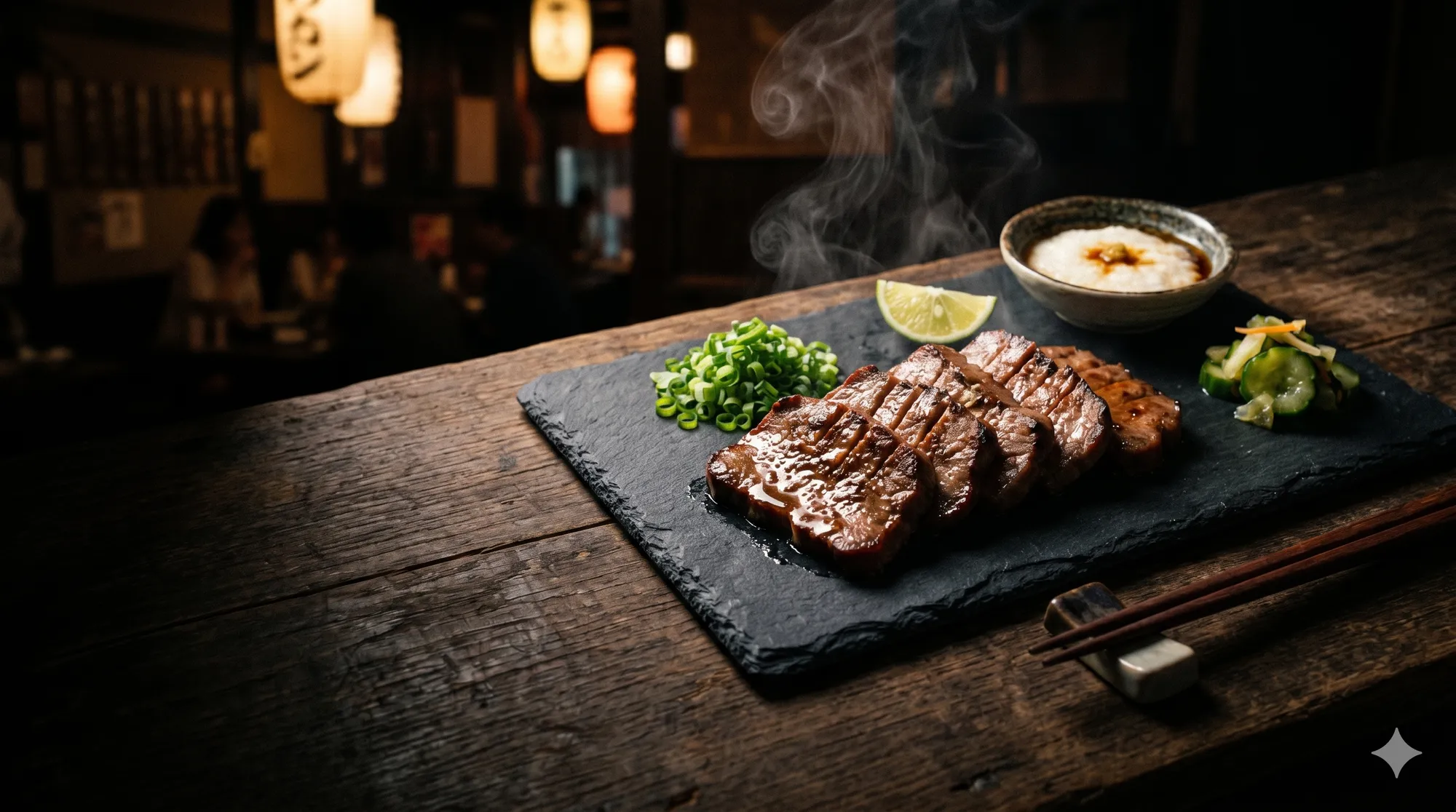
Local FoodSendai, Miyagi
Gyutan (牛タン)
Thick-cut grilled beef tongue, charcoal-charred, snappy and rich — served with barley rice and oxtail soup. Sendai turned an overlooked cut into a destination. Trust the tongue.
June 15, 2026