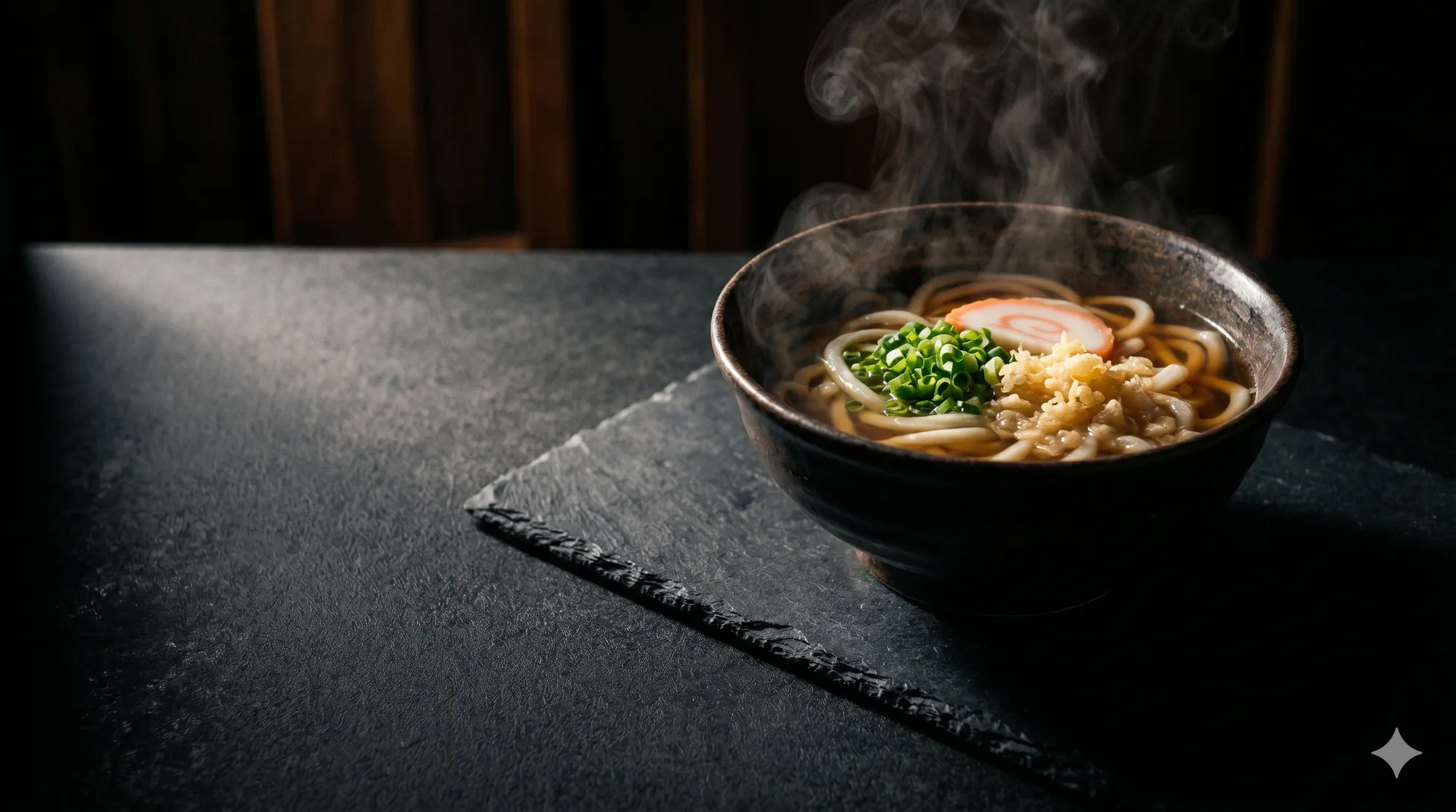
Ramen gets the hype, but udon is the one Japan actually eats when it just wants to feel okay again. Udon is a thick, soft-yet-springy wheat noodle, usually swimming in a light, clear dashi broth — and the magic is in the texture. A great udon noodle has a chew, a bounce, a slippery snap that thin noodles can't touch. It's cheap, fast, warming, and quietly one of the best things you can eat in this country.
Share this dish


Thick, chewy, white wheat noodles in a clean dashi broth — the cozy, cheap, deeply satisfying bowl Japan reaches for when it wants comfort. Sanuki udon will ruin you for all other noodles.
🍜 Planning a food trip to Japan?Add this dish to my Food Trip →
 Add this dish to my Food Trip →
The basic bowl is kake udon — noodles in hot dashi broth topped with a little green onion. From there it branches endlessly: cold or hot, in soup or dipped, topped with tempura, raw egg, sweet fried tofu, or curry. It's the ultimate canvas.
A noodle worth crossing the country for
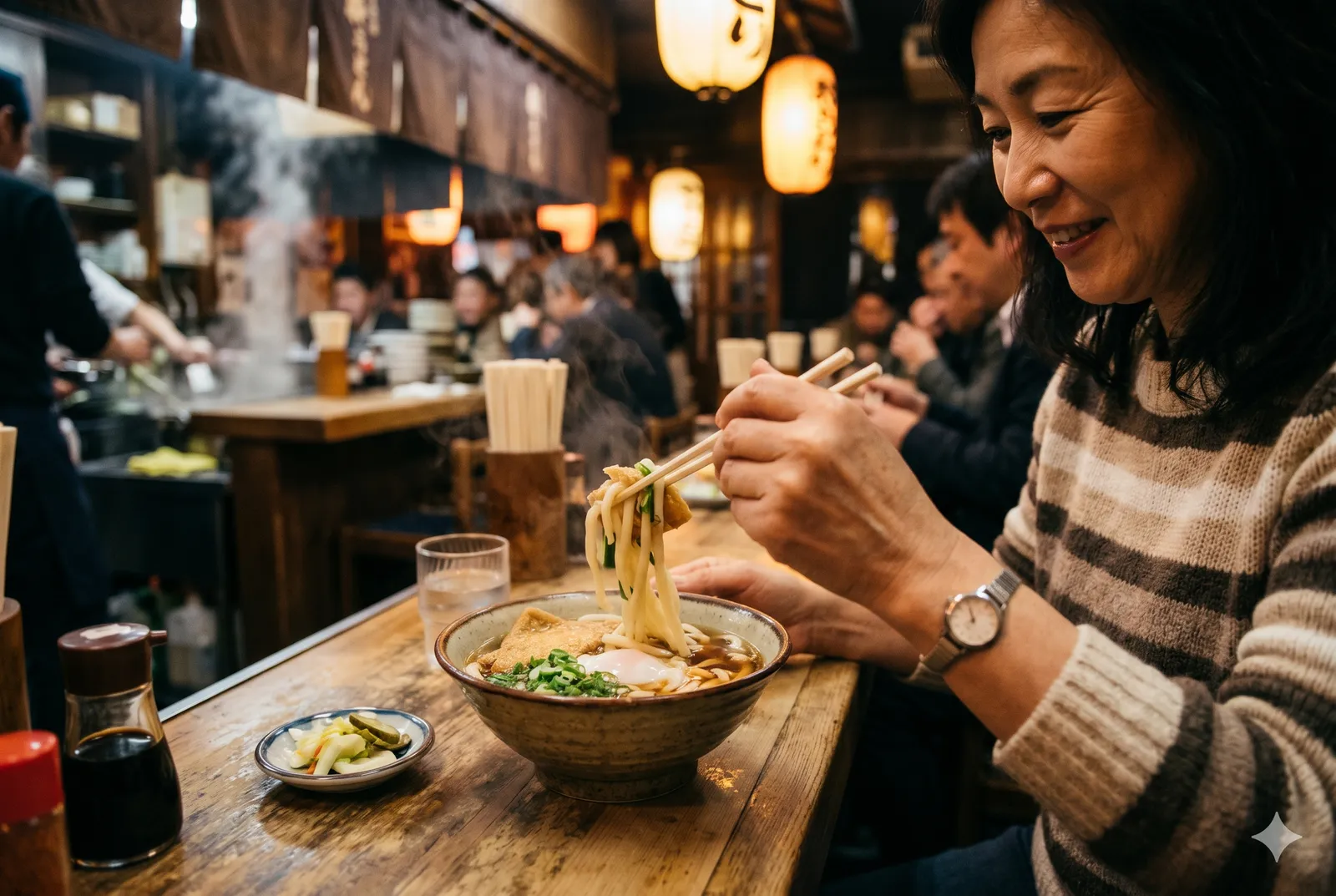
Udon has been eaten in Japan for over a thousand years, but the modern obsession centers on one place: Kagawa Prefecture, home of Sanuki udon. Kagawa is so devoted that it half-jokingly rebranded itself "Udon Prefecture." There, self-service udon shops (serufu) let you grab noodles, ladle your own broth, add toppings, and pay a few hundred yen — and the quality is staggering.
Other regions have their own takes: thin, soft Inaniwa udon from Akita; flat, wide Himokawa from Gunma; the dark-broth Osaka style. But Sanuki — firm, glossy, chewy — is the one people make pilgrimages for.
Why the chew is everything
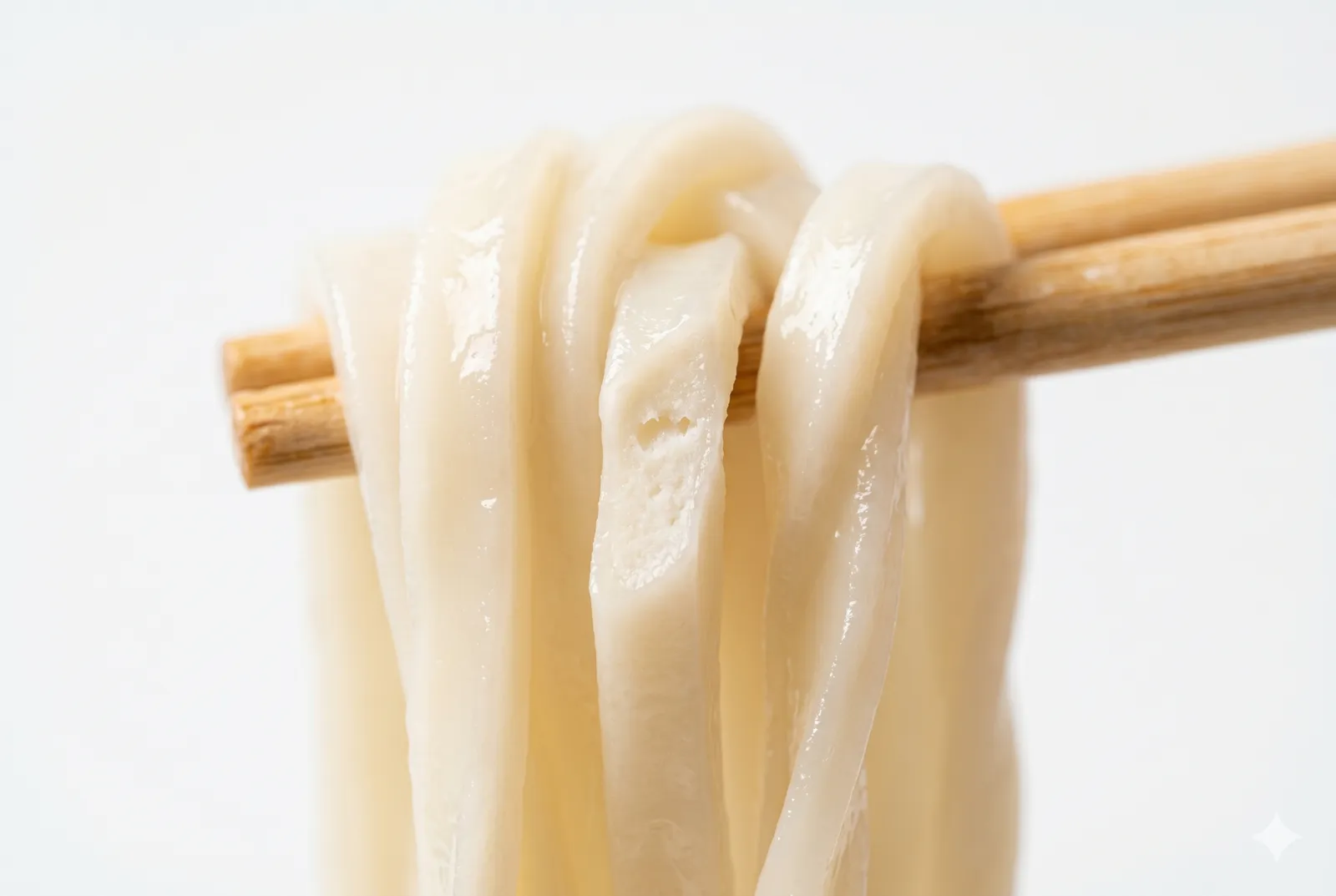
Sanuki udon's signature is koshi — that springy, resilient bite. It comes from well-kneaded dough (traditionally kneaded by foot!), the right flour, and precise boiling. Too soft and it's baby food; done right, it's addictive.
The broth matters too: a clean dashi of kombu and bonito, seasoned light so the noodle stays the star. Compared to ramen's heavy, complex soups, udon is all about restraint and texture.
How it's made
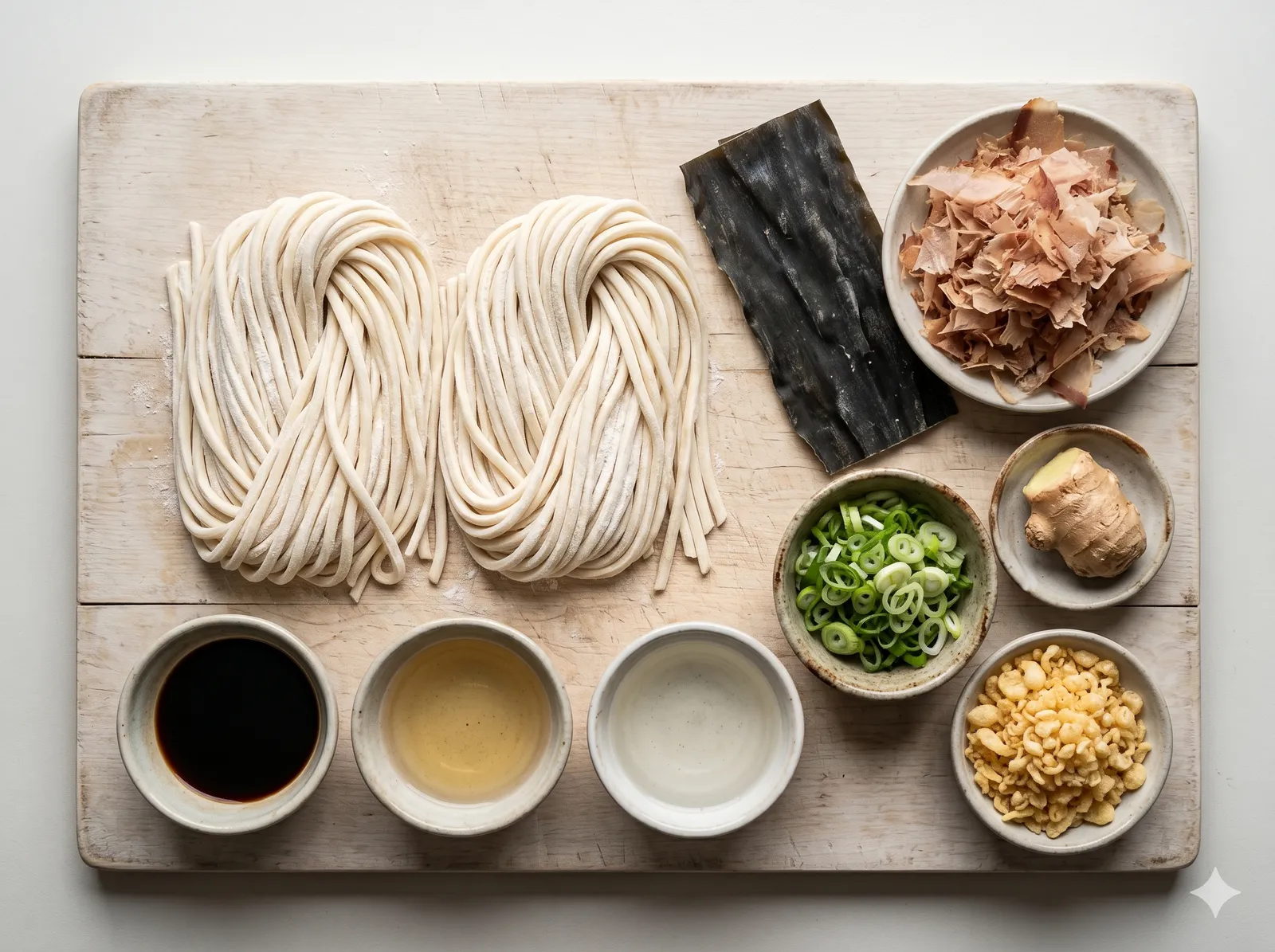
- Knead wheat flour, water, and salt into a stiff dough (the foot-kneading gives it koshi)
- Rest the dough, then roll and cut into thick noodles
- Boil until springy, then rinse in cold water to tighten the texture
- Serve hot in dashi broth (kake), or chilled with a dipping sauce (zaru)
- Top as you like — tempura, raw egg, fried tofu, grated yam
Before you go — build your bowl
Your questions, answered honestly
"Hot or cold?" — Both rule. Hot kake in winter; cold zaru (dipped in tsuyu sauce) in summer. Bukkake udon (cold noodles with a little concentrated sauce poured over) is a great middle ground.
"What should a beginner top it with?" — Kake udon with a piece of kakiage (vegetable tempura) or chikuwa tempura is the classic. Kitsune udon (with sweet fried tofu) is gentle and lovely.
"How do self-service shops work?" — Grab a tray, tell them the size, take your bowl of noodles, add hot broth from the dispenser, grab tempura/toppings from the rack, then pay at the end. Cheap and fun — just follow the person in front of you.
"Slurp?" — Yes, slurp away, same as ramen and soba.
What the staff will ask you
| You'll hear | Romaji | Meaning | Just say |
|---|---|---|---|
| 温かいの、冷たいの? | Atatakai no, tsumetai no? | "Hot or cold?" | Atatakai de (hot) / Tsumetai de (cold) |
| サイズは? | Saizu wa? | "What size?" | Futsū (regular) / Ō-mori (large) |
| 麺の量は? | Men no ryō wa? | "How much noodle?" | Ippai (ichi-dama) (one portion) |
| 天ぷらは? | Tenpura wa? | "Any tempura?" | Kakiage kudasai (a kakiage, please) |
To order, just say "Kake udon hitotsu kudasai" (かけうどん一つください) — "one kake udon, please."
Where to eat it
- Kagawa Prefecture (Sanuki udon) — the holy land. Self-service shops in Takamatsu are a bucket-list food experience.
- Marugame Seimen — a nationwide self-service chain that's genuinely good and beginner-friendly (noodles cut in front of you).
- Akita (Inaniwa) and Gunma (Himokawa) for regional styles worth seeking out.
Hours vary and the best rural shops close early when the noodles run out, so go hungry and go early.
Soul Score
Local Roots4/5
First-Timer Friendly5/5
Adventure Level3/5
Comfort Level5/5
Travel Worthy4/5
These scores are one obsessed eater's gut feeling — not a verdict. A low number isn't a bad mark, just a different kind of adventure.
Know someone planning Japan?
← All Articles
Japanese Food · Nationwide
Still hungry?
Start with the classics
Japanese FoodNationwide
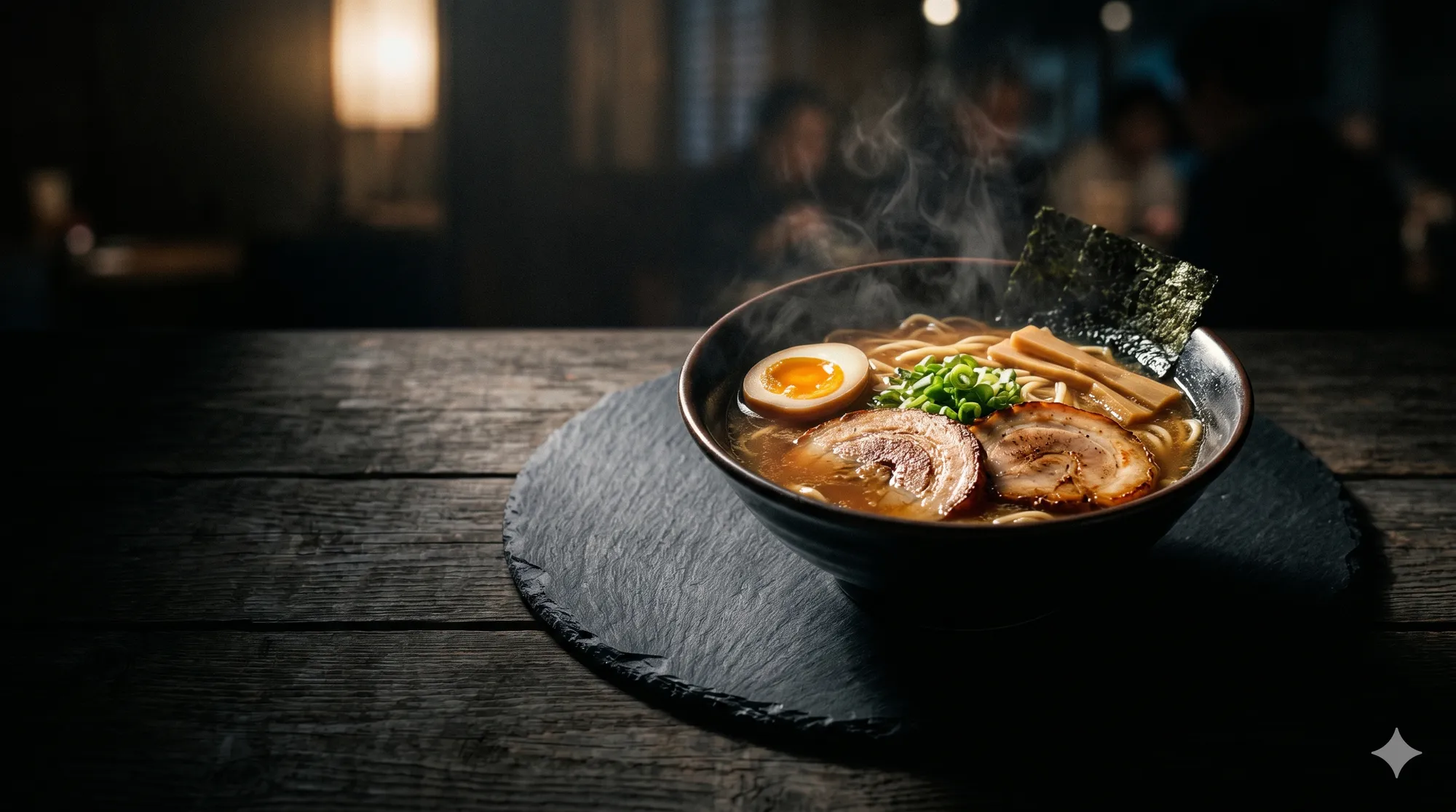
Ramen (ラーメン)
A bowl of noodles in soup — and somehow one of the most obsessed-over foods on the planet. Shoyu, miso, shio, tonkotsu: here's how to read a ramen menu and slurp like you mean it.
June 20, 2026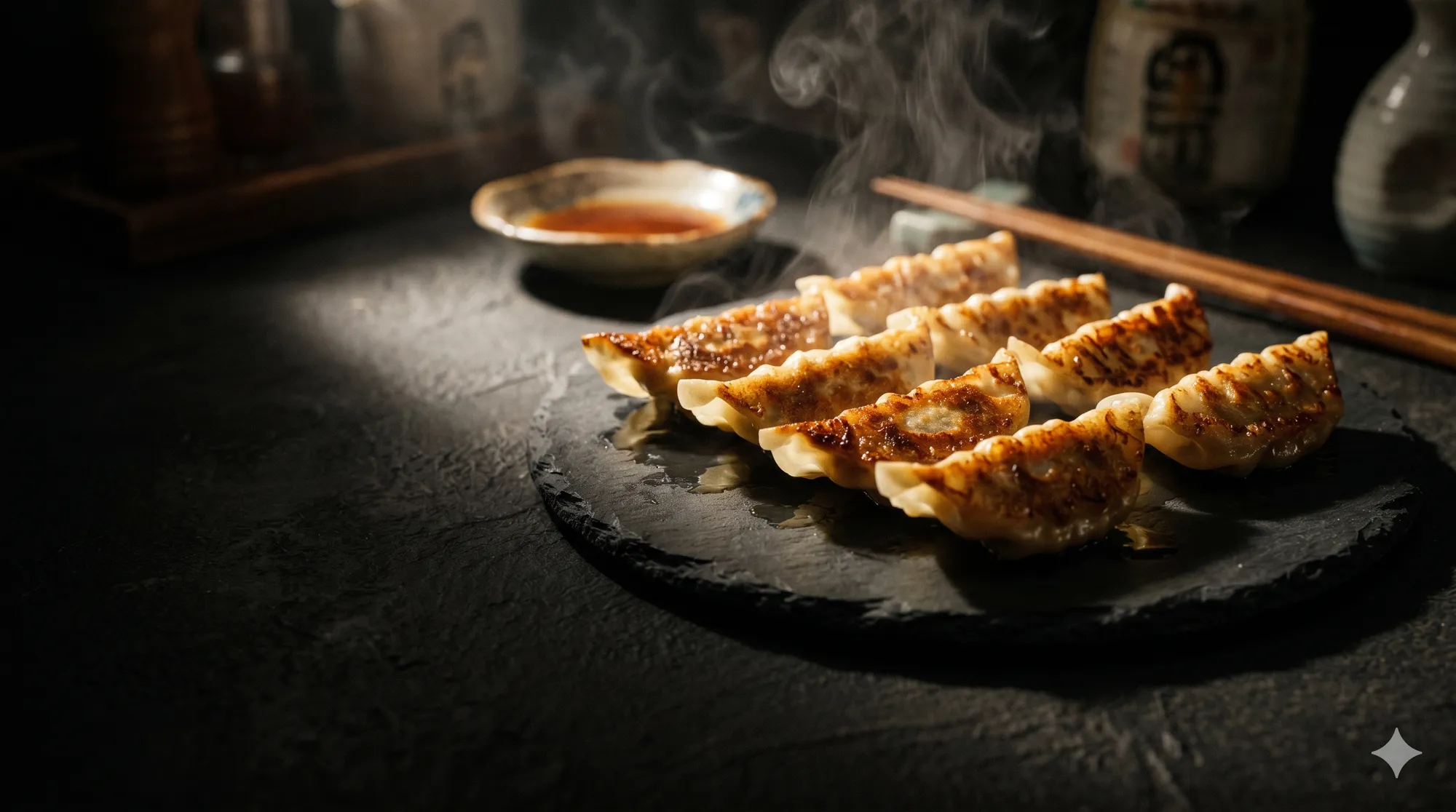
Japanese FoodNationwide
Gyoza (餃子)
Pan-fried dumplings with a crispy bottom and a juicy pork-and-cabbage filling, dunked in vinegar-soy-chili. The ultimate ramen sidekick, the izakaya staple, and the snack nobody can stop eating.
June 20, 2026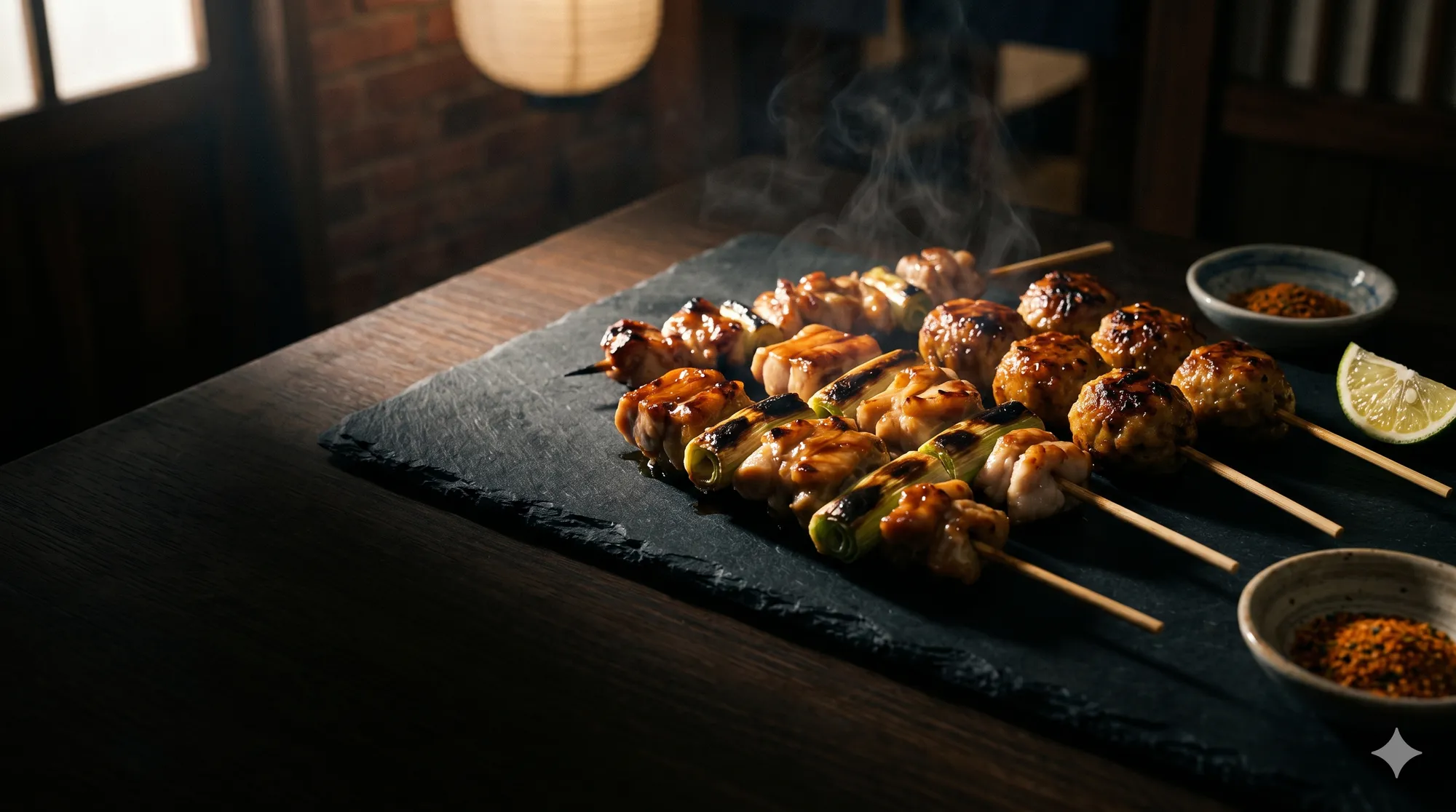
Japanese FoodNationwide
Yakitori (焼き鳥)
Bite-sized skewers of chicken grilled over blazing charcoal, seasoned with just salt or a sweet-savory tare. The beating heart of the izakaya, smoke and beer included. Nose-to-tail, and all of it good.
June 20, 2026