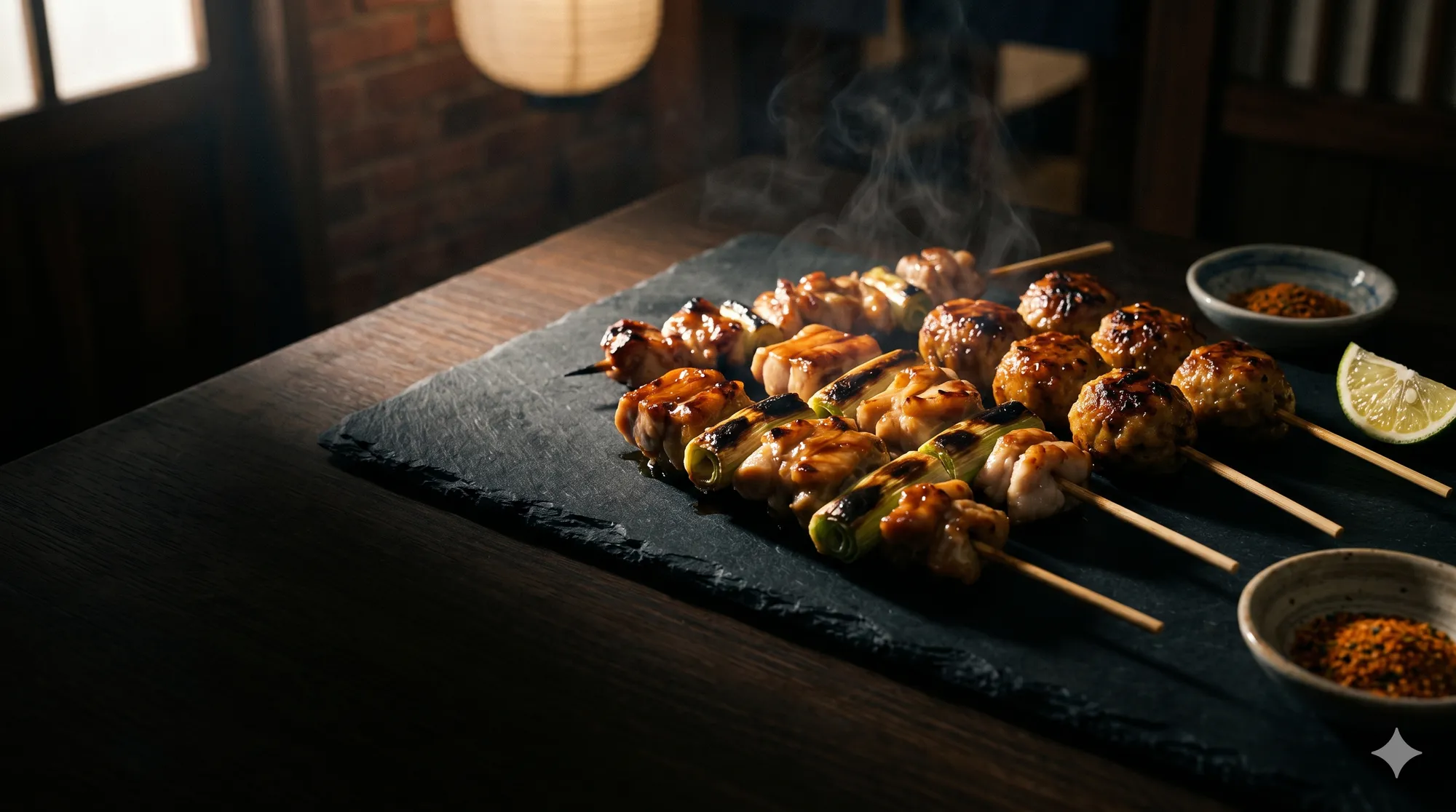
If you want to understand how Japan unwinds, find a smoky little yakitori counter under the train tracks, order a cold beer, and start pointing at skewers. Yakitori is chicken — every part of it — skewered on bamboo and grilled over roaring charcoal until the edges char and the fat drips and sizzles. It's the soul of the izakaya: cheap, sociable, smoky, endlessly orderable, and best enjoyed one stick at a time with a drink in hand.
Share this dish


Bite-sized skewers of chicken grilled over blazing charcoal, seasoned with just salt or a sweet-savory tare. The beating heart of the izakaya, smoke and beer included. Nose-to-tail, and all of it good.
🍜 Planning a food trip to Japan?Add this dish to my Food Trip →
 Add this dish to my Food Trip →
The beauty is the range. It's not just thigh meat (momo). Yakitori is gloriously nose-to-tail — skin, liver, heart, gizzard, tail, meatballs, even cartilage — each part with its own texture, each turned delicious by salt, fire, and a little smoke. And if offal scares you, the basic skewers alone are worth the trip.
Born under the tracks
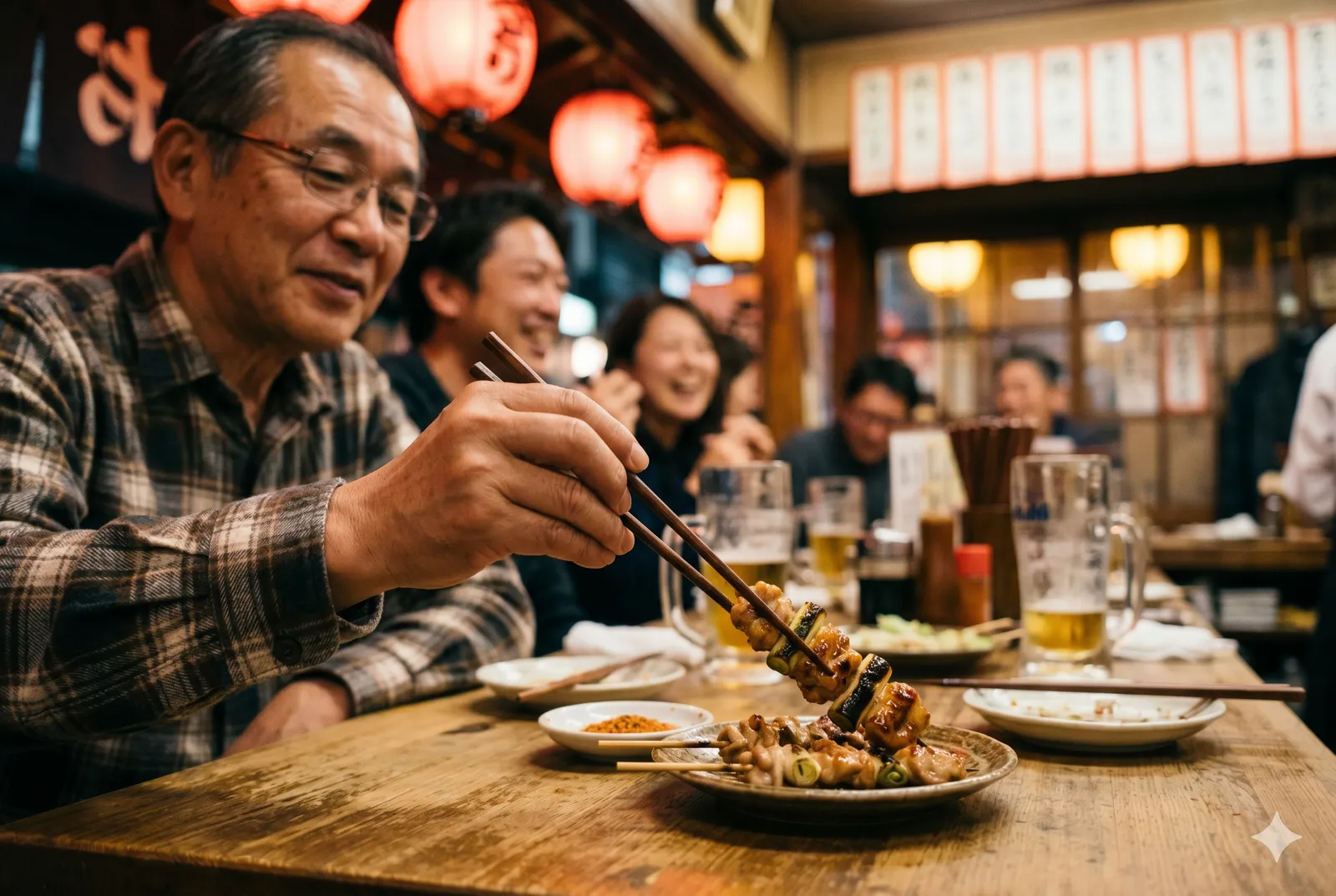
Grilled skewered food is old, but yakitori as we know it boomed in the 20th century as cheap post-war street food — smoky stalls and counters clustering around stations and in alleys like Tokyo's famous Omoide Yokocho ("Memory Lane") and Yurakucho under the train tracks. It was working people's food: a few sticks, a beer, a place to decompress after a shift.
That DNA is still there. The best yakitori is often a tiny, well-worn counter where the master grills in front of you, sweat and smoke and all. It's atmosphere you can taste.
Why salt-or-tare is the whole decision
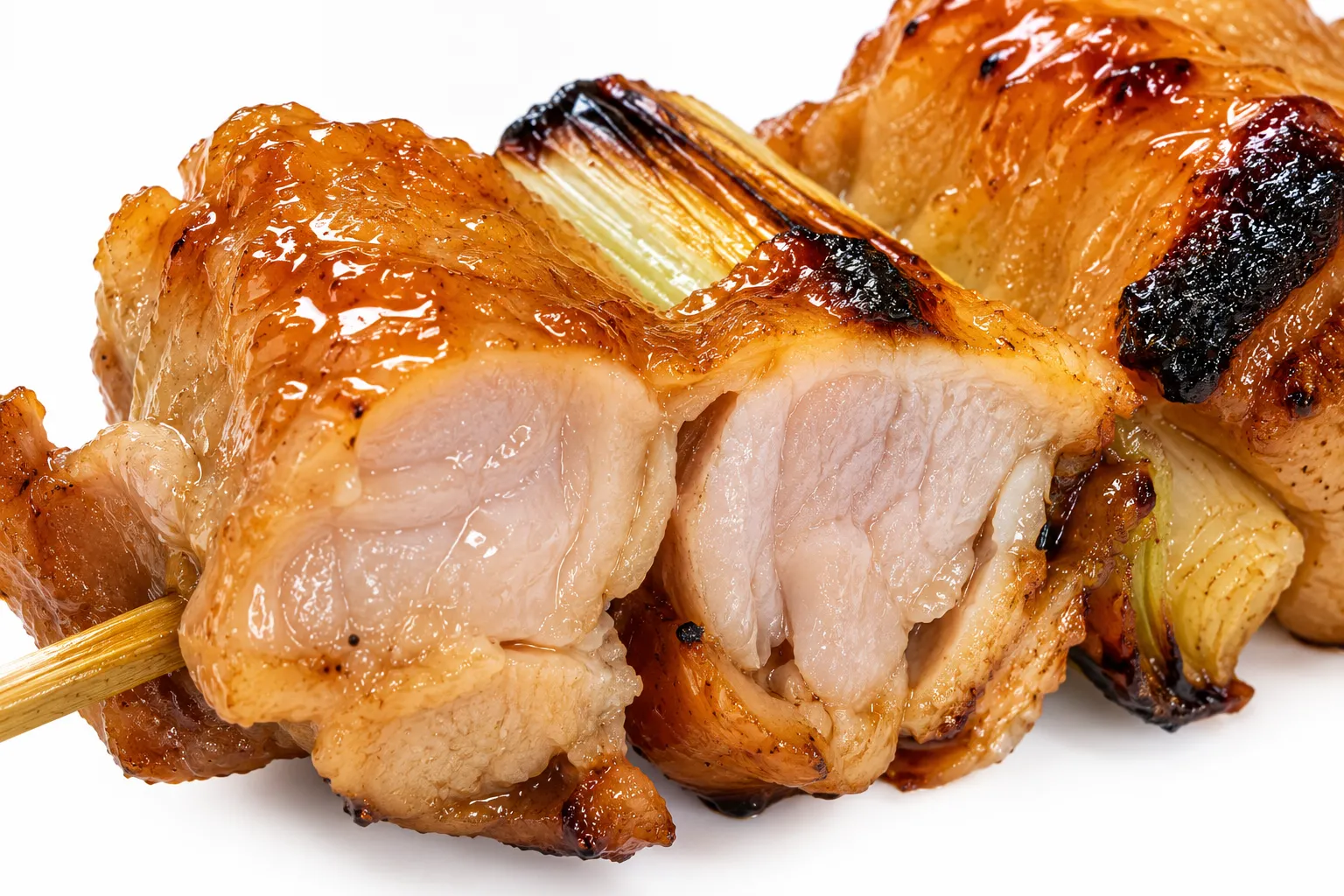
Every skewer comes one of two ways: shio (just salt, letting the chicken and char speak) or tare (a glossy sweet-savory soy glaze, brushed on and caramelized over the fire). Purists say lean cuts like breast and sasami shine with shio; richer cuts and tsukune (meatballs) love tare. Honestly, order some of each.
The other secret is the charcoal — ideally binchotan, a dense white charcoal that burns hot and clean, searing the outside while keeping the inside juicy. That smoke is the flavor.
How it's made
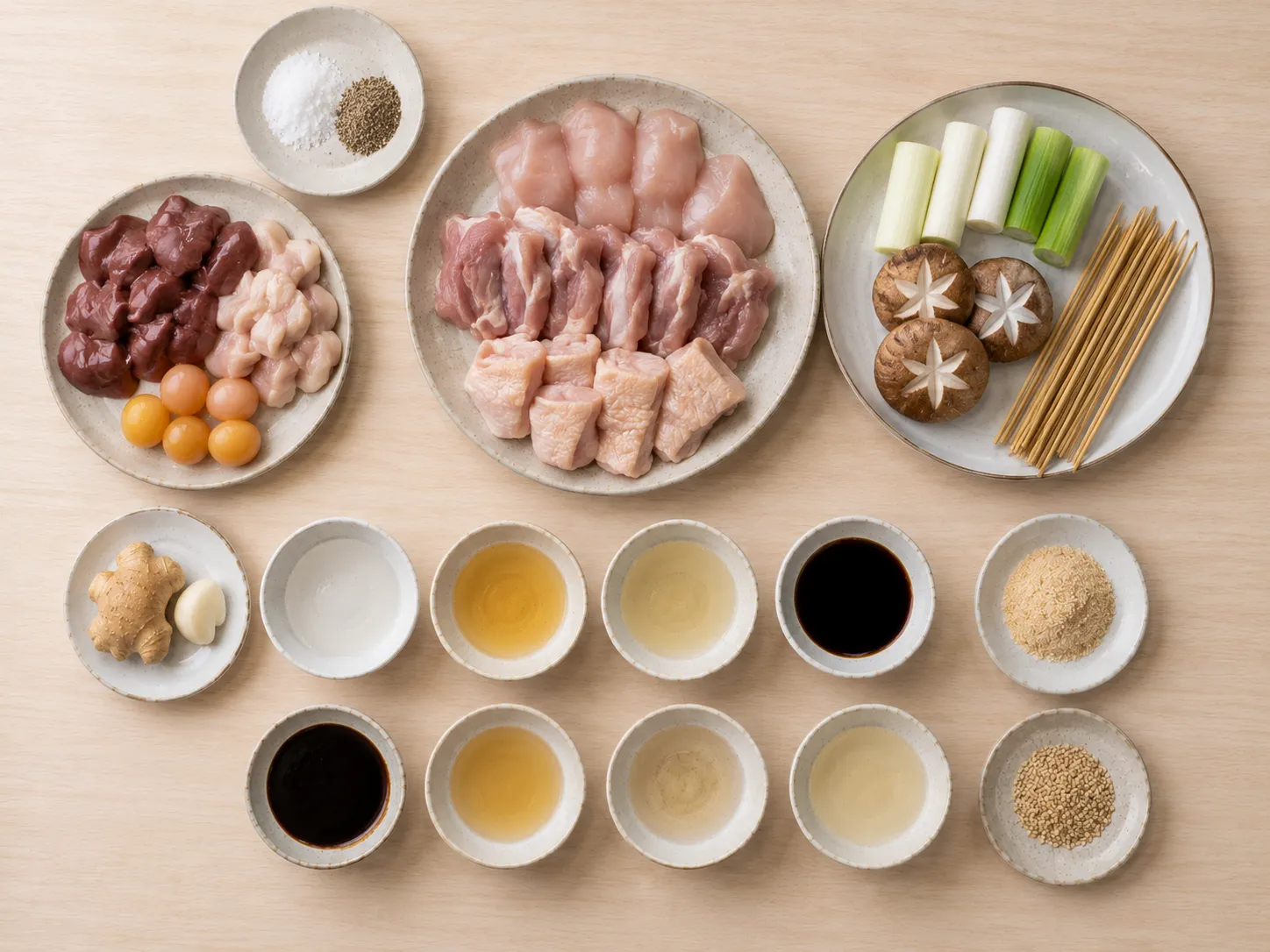
- Cut chicken (and various parts) into bite-sized pieces and thread onto bamboo skewers
- Season with salt (shio) or prepare to glaze with tare
- Grill over hot charcoal, turning, until the edges char and the fat renders
- For tare, dip and grill repeatedly to build a caramelized glaze
- Serve hot off the grill, often with a sprinkle of shichimi pepper
Before you go — point, sip, repeat
Your questions, answered honestly
"What do I order first?" — Start with the crowd-pleasers: momo (thigh), negima (thigh + leek), tsukune (meatball), and kawa (crispy skin). Then get adventurous.
"Shio or tare?" — Try both. A good move: lean cuts shio, richer cuts and meatballs tare. Tell them per skewer or just say "omakase" and let the chef choose.
"What's the small dish they bring first?" — That's otoshi, a small seated charge / appetizer that's normal at izakaya. Don't be surprised by it on the bill — it's basically a table/seating fee.
"Is the weird stuff worth it?" — Yes. Bonjiri (tail, fatty and rich), nankotsu (crunchy cartilage), and reba (liver) are favorites for a reason. Be brave.
"What do I drink?" — Beer or a highball (whisky soda). Cold, fizzy, and made for cutting through smoky charcoal chicken.
What the staff will ask you
| You'll hear | Romaji | Meaning | Just say |
|---|---|---|---|
| 塩、タレ、どちらにしますか? | Shio, tare, dochira ni shimasu ka? | "Salt or sauce?" | Shio de (salt) / Tare de (sauce) |
| お飲み物は? | Onomimono wa? | "Anything to drink?" | Nama biiru (a draft beer) |
| とりあえず盛り合わせは? | Toriaezu moriawase wa? | "An assorted set to start?" | Hai, omakase de (yes, chef's choice) |
To order, just say "Yakitori moriawase kudasai" (焼き鳥盛り合わせください) — "an assortment of yakitori, please."
Where to eat it
- Omoide Yokocho & Yurakucho (Tokyo) — atmospheric alleys of tiny smoky yakitori counters under the tracks.
- Any izakaya — yakitori is on nearly every izakaya menu nationwide; look for a charcoal grill (sumibi).
- Yakitori specialists (yakitori-ya) — for the nose-to-tail experience with a master at the grill.
Tiny counters fill up fast after work, so go early — and the seating charge (otoshi) is normal, not a scam.
Soul Score
Local Roots4/5
First-Timer Friendly4/5
Adventure Level4/5
Comfort Level5/5
Travel Worthy3/5
These scores are one obsessed eater's gut feeling — not a verdict. A low number isn't a bad mark, just a different kind of adventure.
Know someone planning Japan?
← All Articles
Japanese Food · Nationwide
Still hungry?
Start with the classics
Japanese FoodNationwide
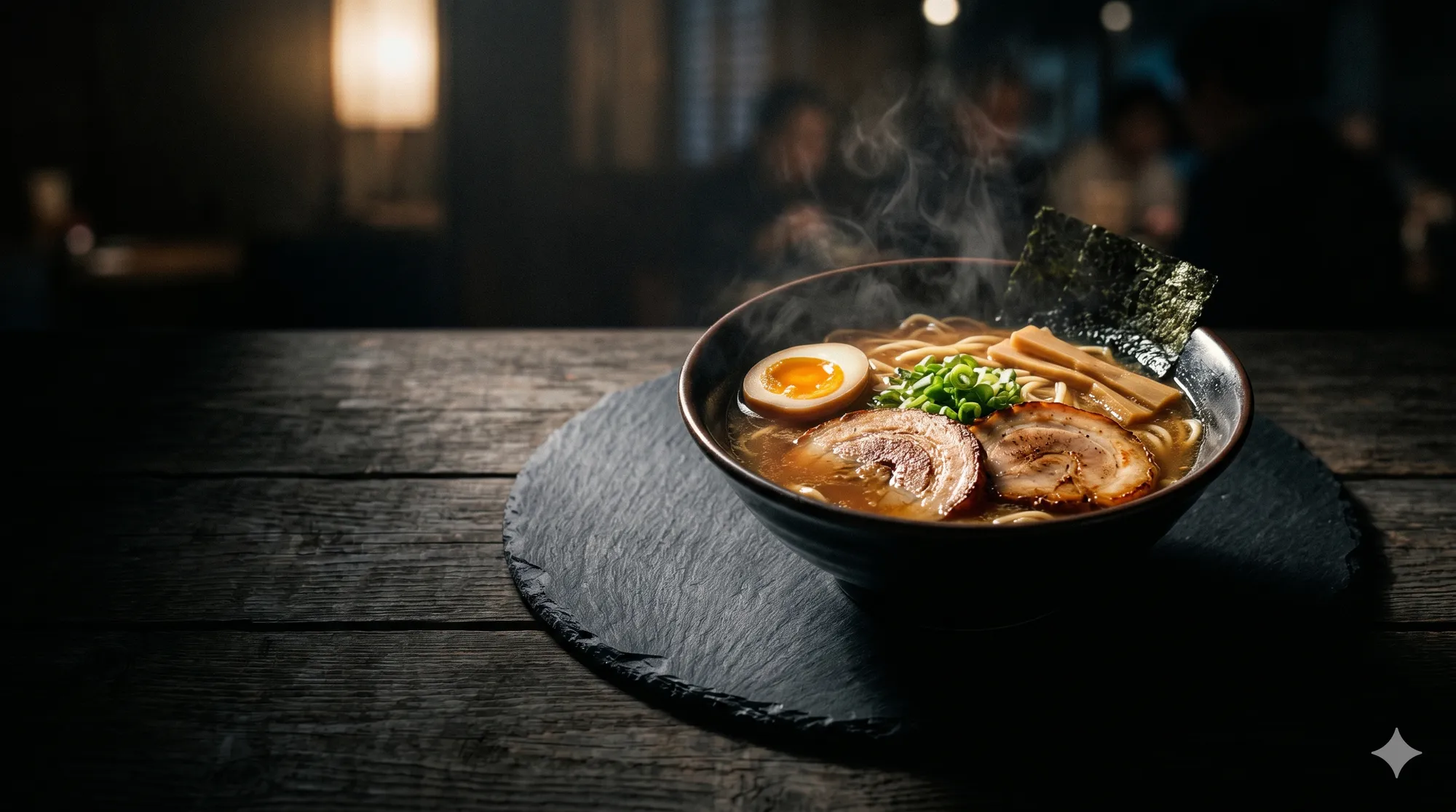
Ramen (ラーメン)
A bowl of noodles in soup — and somehow one of the most obsessed-over foods on the planet. Shoyu, miso, shio, tonkotsu: here's how to read a ramen menu and slurp like you mean it.
June 20, 2026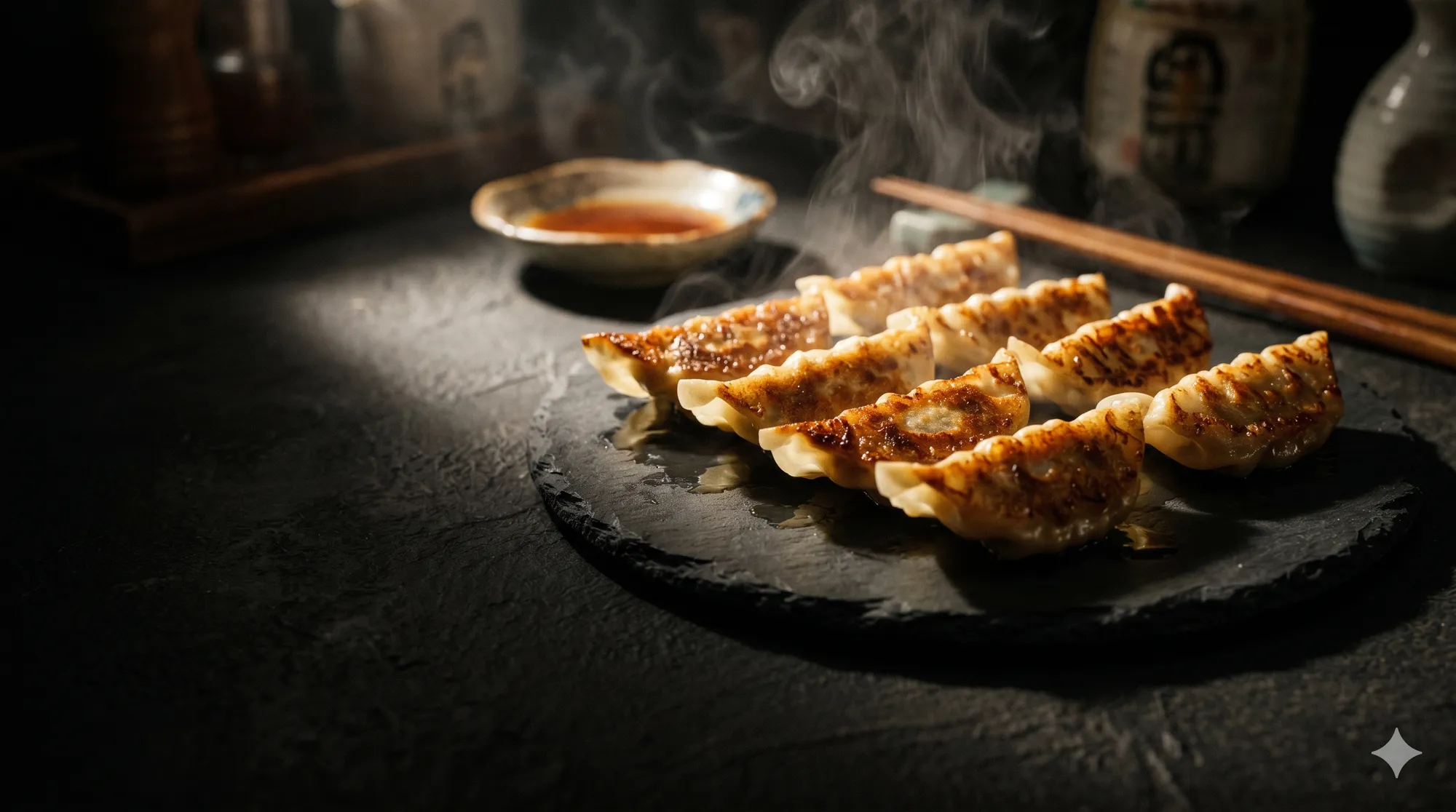
Japanese FoodNationwide
Gyoza (餃子)
Pan-fried dumplings with a crispy bottom and a juicy pork-and-cabbage filling, dunked in vinegar-soy-chili. The ultimate ramen sidekick, the izakaya staple, and the snack nobody can stop eating.
June 20, 2026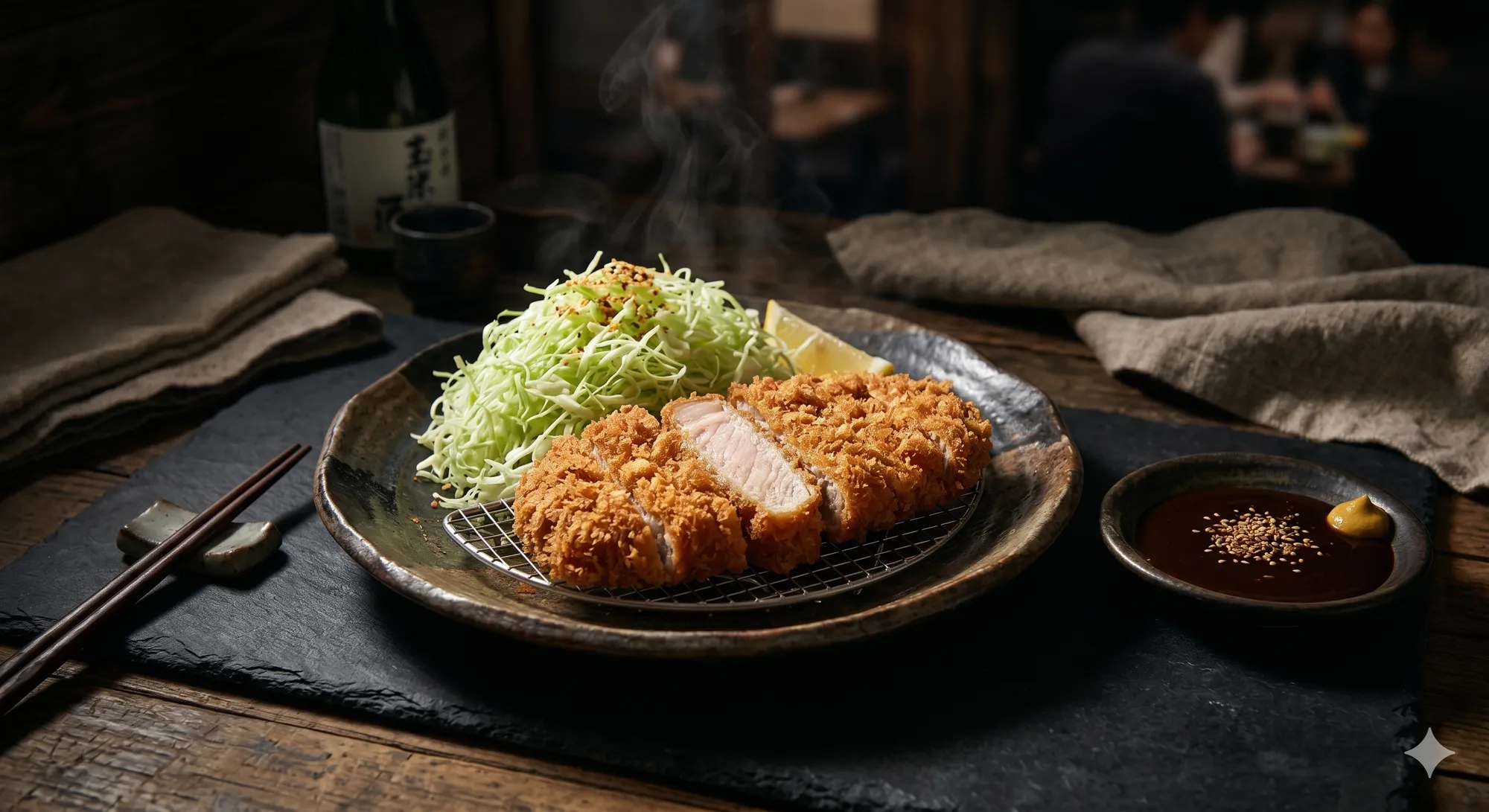
Japanese FoodNationwide
Tonkatsu (トンカツ)
The crunch you can hear across the room. Japan borrowed a French cutlet, deep-fried it into something better — and here's how to order it like you belong.
July 13, 2024