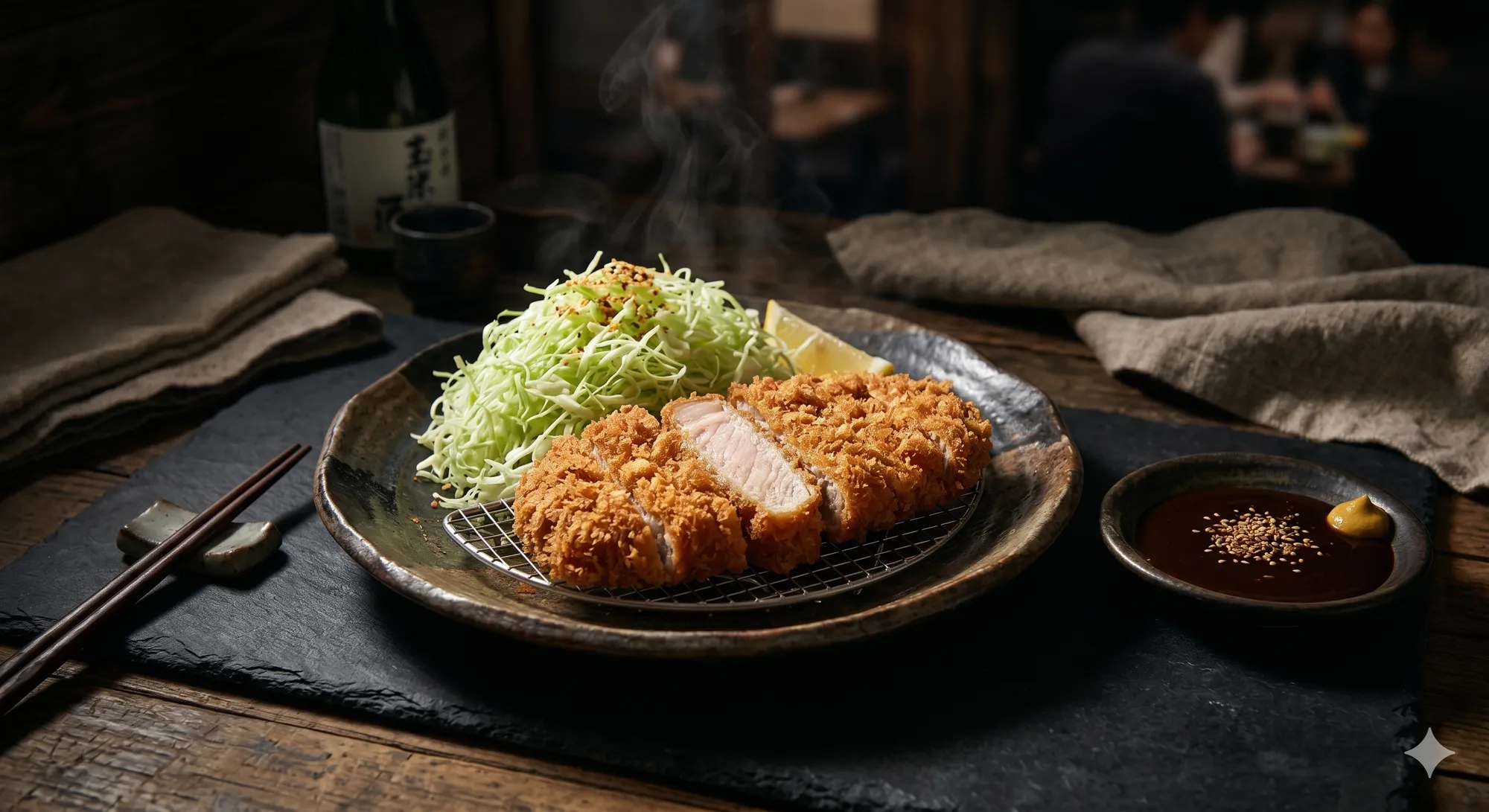
There is a sound. You'll know it the second you hear it — that shhhk-crack of a knife going through a fresh-fried tonkatsu, the shatter of golden panko giving way like thin ice. I have walked into restaurants on that sound alone. I have changed dinner plans for it.
Share this dish


The crunch you can hear across the room. Japan borrowed a French cutlet, deep-fried it into something better — and here's how to order it like you belong.
Tonkatsu started life as a French côtelette, a polite little Western import — and then Japan got hold of it, cranked the breadcrumbs up, plunged it into bubbling oil, and turned it into something so thoroughly, gloriously its own that France would barely recognize it. This is comfort food with a backbone. Let me show you why people line up for it.
From France, with a Japanese accent
In the Meiji era, Japan threw its doors open to the West and Western food came pouring in — including a breaded, pan-fried veal cutlet. A Tokyo restaurant called Rengatei took that idea, swapped in pork, drowned it in deep oil instead of a shallow pan, and served it with a mountain of shredded cabbage and a bowl of rice.
That's the genius move. It stopped being "Western food in Japan" and became Japanese food, full stop — the kind your grandmother makes, the kind you eat the night before a big exam (katsu = カツ = "to win"). It's superstition you can chew.
The crunch, and what's under it
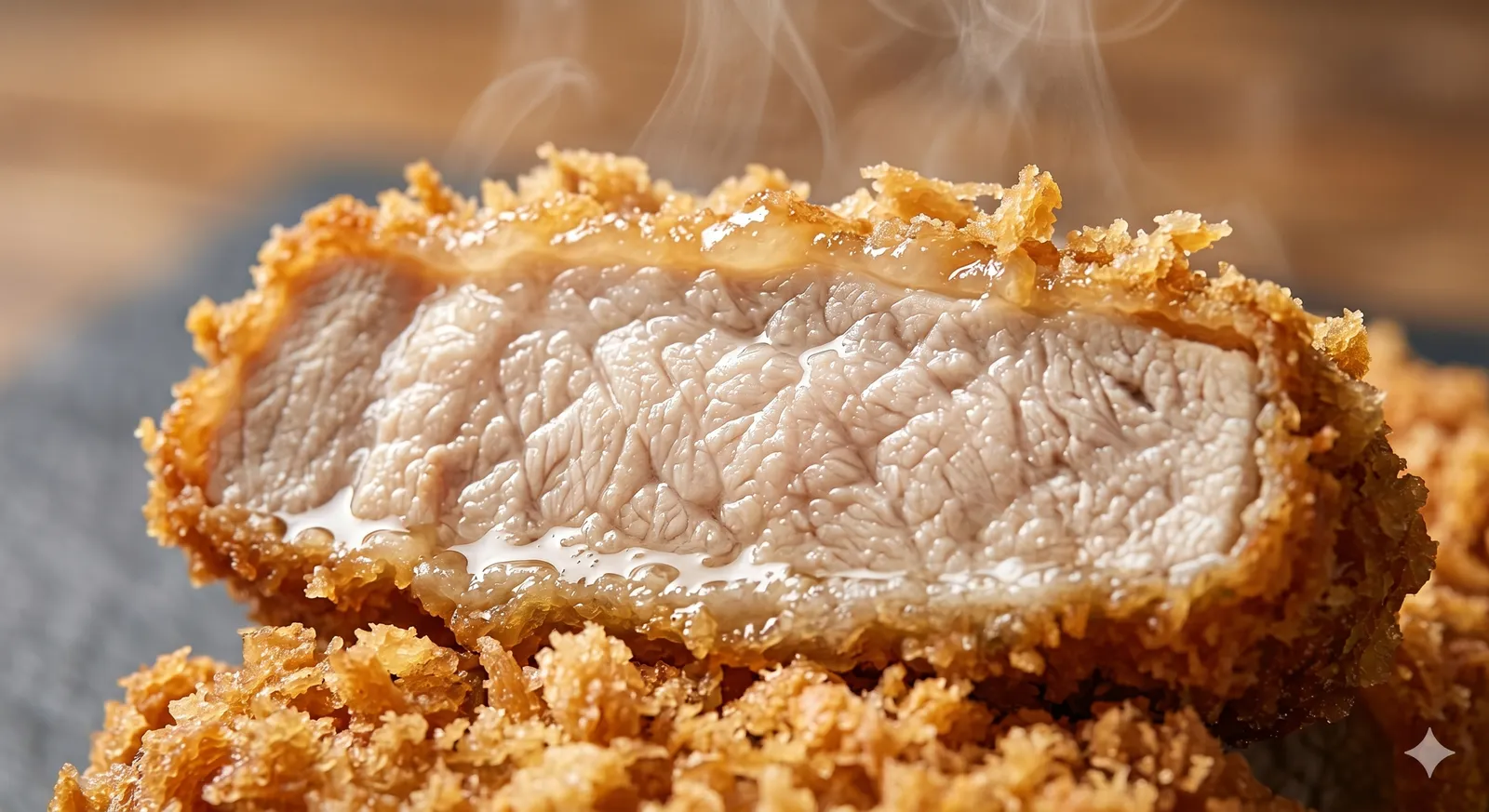
The whole thing lives or dies on contrast: a crust that shatters and an interior that stays absurdly juicy. Good tonkatsu has thick, jagged panko — not fine breadcrumbs, the big airy flakes that trap pockets of crunch — wrapped around pork that's cooked through but still tender enough to make you sigh.
Hit it with a squeeze of lemon, a smear of thick sweet-tangy tonkatsu sauce, maybe a little hot mustard, and pile the shredded cabbage on top. That's the chord. All of it together.
How it's made
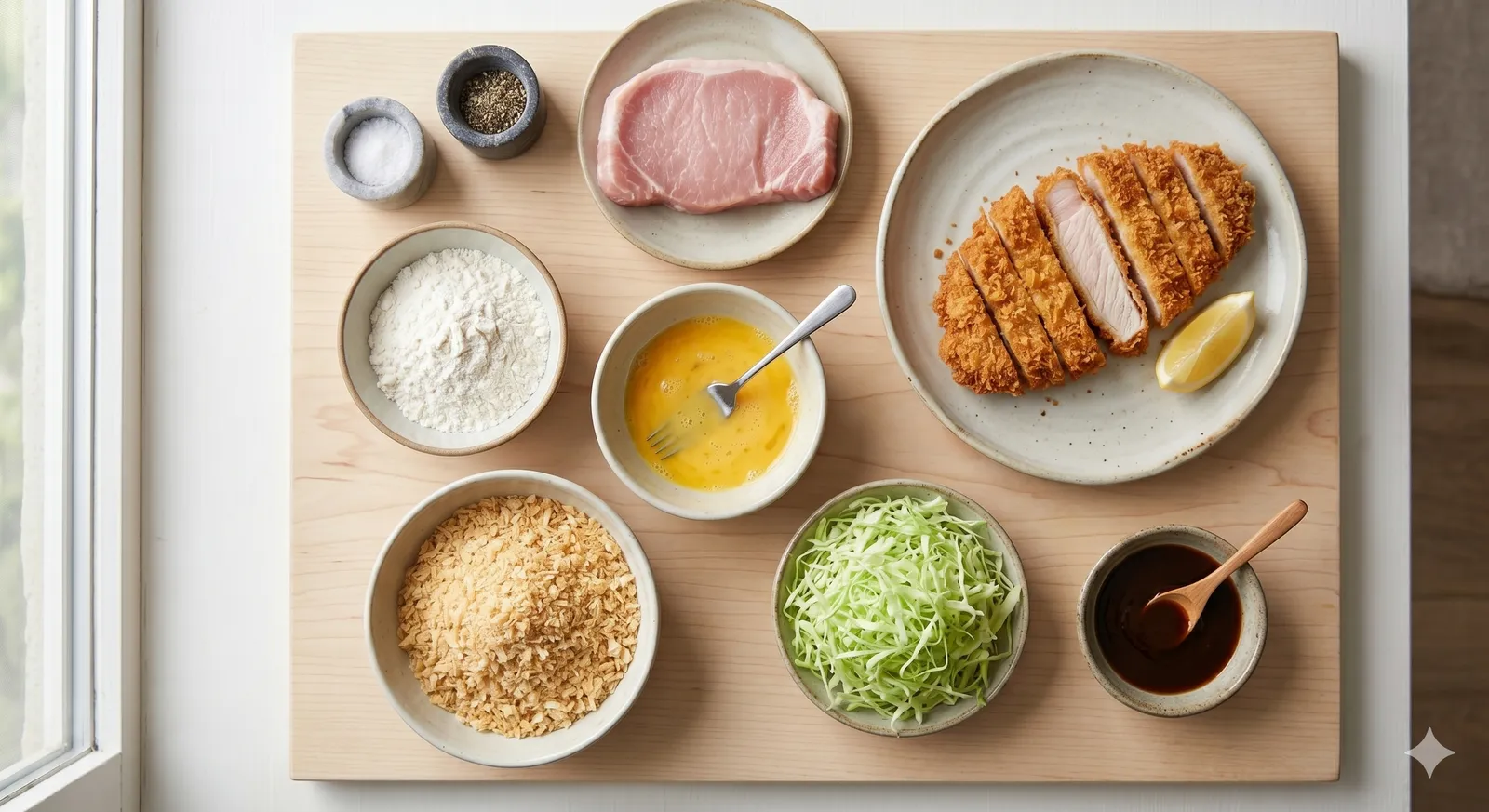
- Season a thick cut of pork loin (rōsu) or fillet (hire) with salt and pepper
- Dredge it in flour, then beaten egg, then a thick coat of panko — in that exact order, no shortcuts
- Fry at a patient 160–170°C until deep gold and cooked through
- Rest it, then slice into thick batons so the steam comes rolling out
That resting step is the secret nobody talks about. Slice too soon and the juices run; wait a minute and they stay right where they belong — inside.
Before you go — order it like you belong
Your questions, answered honestly
"Rōsu or hire — which do I get?" — Rōsu (loin) has a ribbon of fat along the edge and more flavor; hire (fillet) is leaner and softer. First time? Go rōsu. The fat is the point.
"Sauce, salt, or lemon?" — Yes. All three, in that order across the plate. Try one piece with just salt and good pork — you'll understand why the chef sweats the oil temperature.
"What do I do with these sesame seeds and the little grinder?" — Grind the sesame in the bowl, then pour the tonkatsu sauce in. That nutty sauce is half the experience. Don't skip the ritual.
"Is the cabbage just decoration?" — Never. It's a palate cleanser, it's often free-refill, and it makes the whole fried plate feel weirdly light. Eat it.
What the staff will ask you
| You'll hear | Romaji | Meaning | Just say |
|---|---|---|---|
| ロースとヒレ、どちらに? | Rōsu to hire, dochira ni? | "Loin or fillet?" | Rōsu de (loin) / Hire de (fillet) |
| 定食にしますか? | Teishoku ni shimasu ka? | "Make it a set meal?" | Hai, onegaishimasu (yes please) |
| ごはんのおかわりは? | Gohan no okawari wa? | "More rice?" (often free) | Onegaishimasu (yes) / Daijōbu desu (I'm good) |
| キャベツ、おかわりできます | Kyabetsu, okawari dekimasu | "Cabbage refills are free" | (nod, accept gladly) |
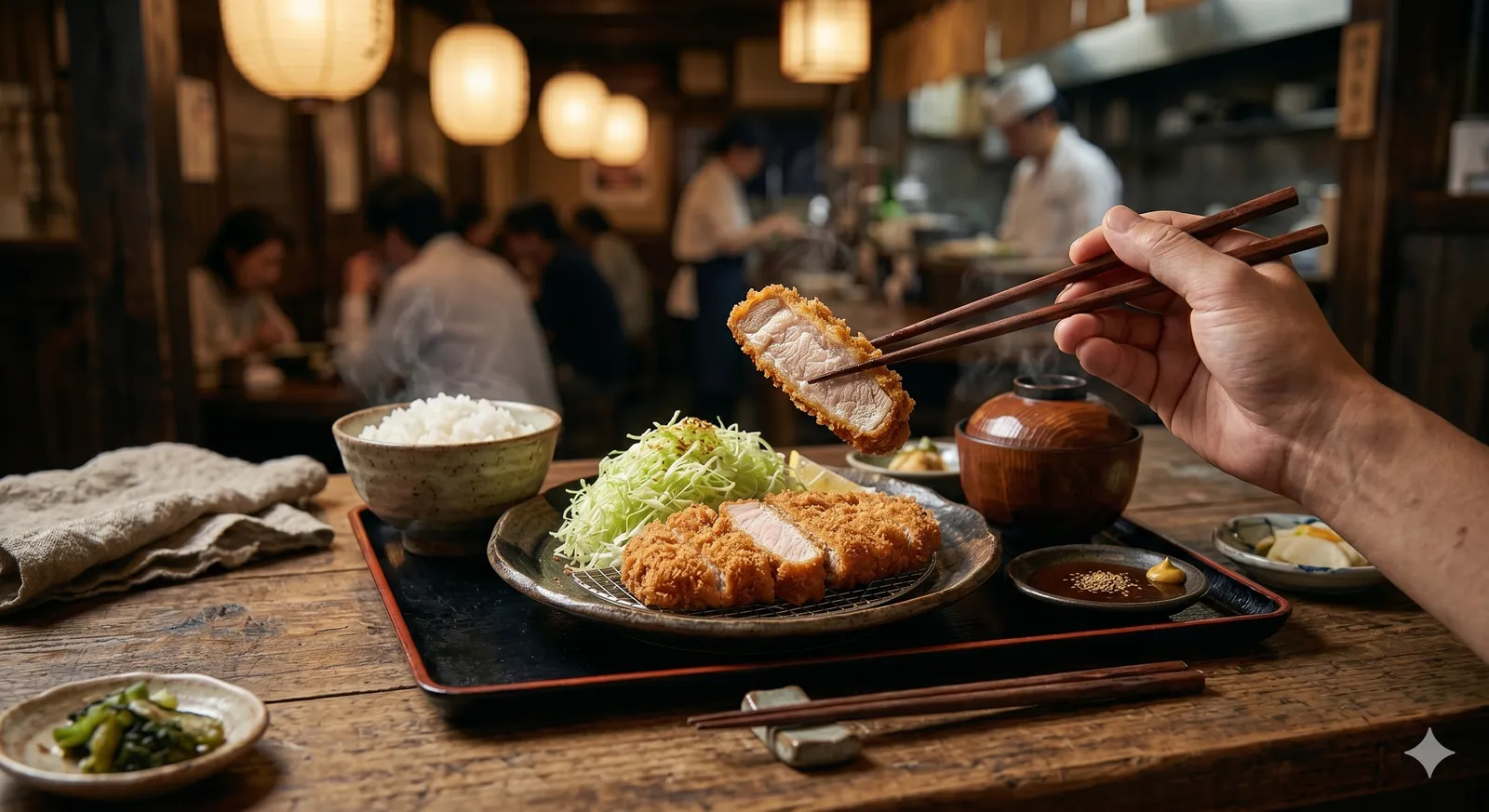
To order, just say "Rōsu katsu teishoku kudasai" (ロースカツ定食ください) — "The loin cutlet set, please." A teishoku gets you the katsu, rice, miso soup, cabbage, and pickles. The full deal.
Where to eat it
- Maisen (まい泉) — Aoyama, Tokyo. A converted old bathhouse, famously tender cutlets. The tourist-friendly classic done right.
- Ginza Bairin (銀座梅林) — Ginza, Tokyo. One of the oldest tonkatsu-ya in the city, open since 1927.
- KYK — Osaka. A reliable, beloved chain when you want the full set without the wait.
Honestly, though? The neighborhood tonkatsu-ya with no English menu and a line of salarymen at lunch is where the magic usually is. Be brave. (Hours and locations change — check before you go.)
Soul Score
Local Roots4/5
First-Timer Friendly5/5
Adventure Level3/5
Comfort Level5/5
Travel Worthy3/5
These scores are one obsessed eater's gut feeling — not a verdict. A low number isn't a bad mark, just a different kind of adventure.
Know someone planning Japan?
← All Articles
Japanese Food · Nationwide
Still hungry?
Start with the classics
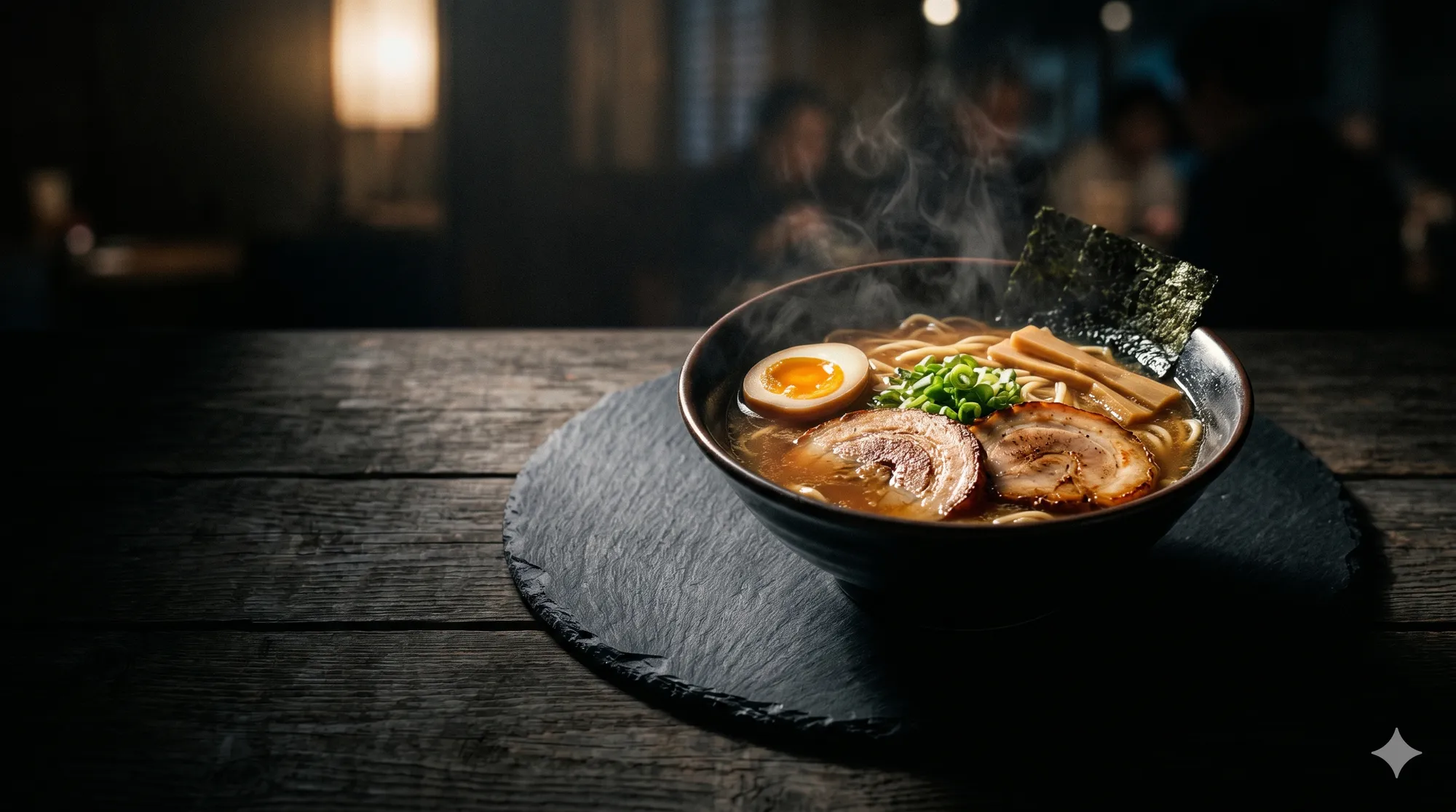
Japanese FoodNationwide
Ramen (ラーメン)
A bowl of noodles in soup — and somehow one of the most obsessed-over foods on the planet. Shoyu, miso, shio, tonkotsu: here's how to read a ramen menu and slurp like you mean it.
June 20, 2026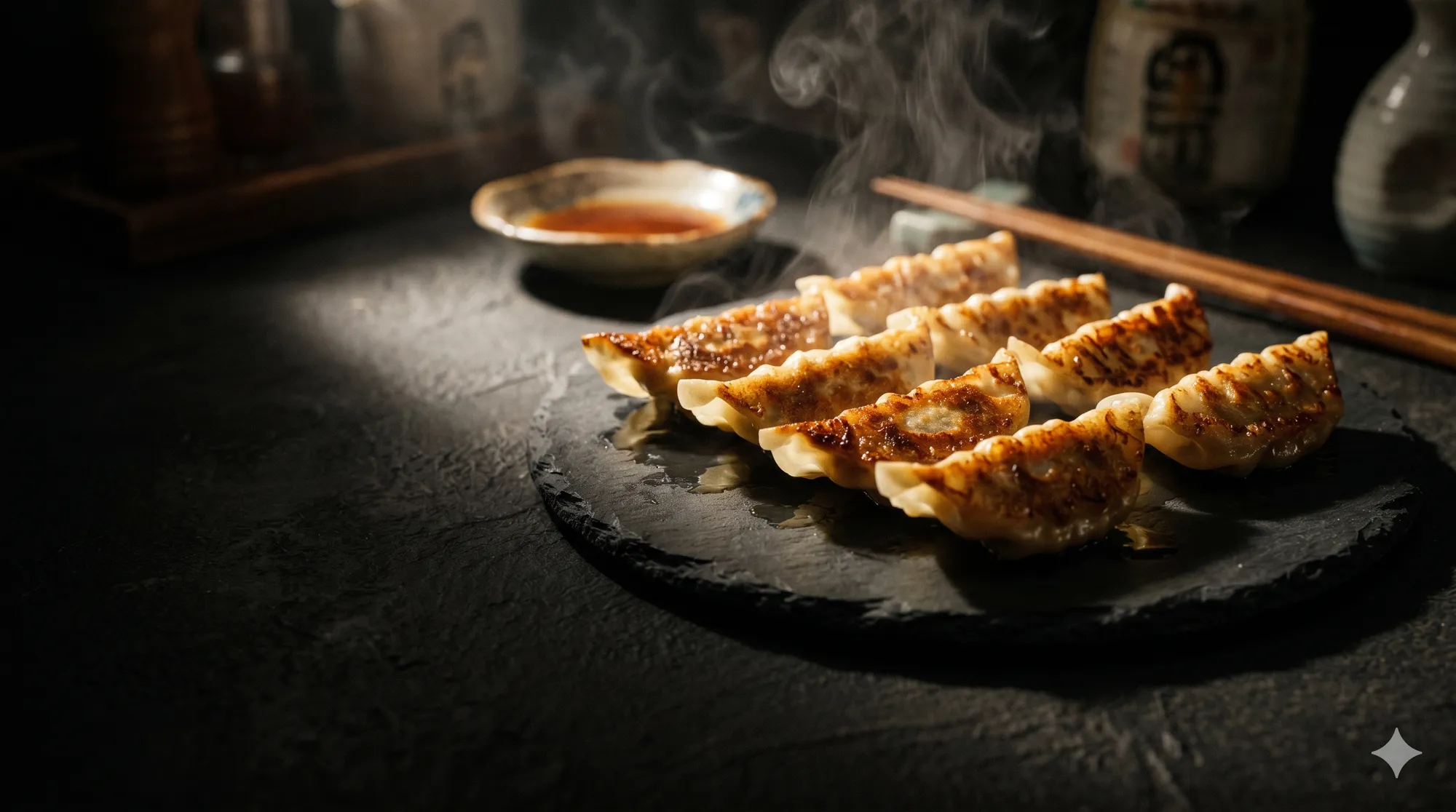
Japanese FoodNationwide
Gyoza (餃子)
Pan-fried dumplings with a crispy bottom and a juicy pork-and-cabbage filling, dunked in vinegar-soy-chili. The ultimate ramen sidekick, the izakaya staple, and the snack nobody can stop eating.
June 20, 2026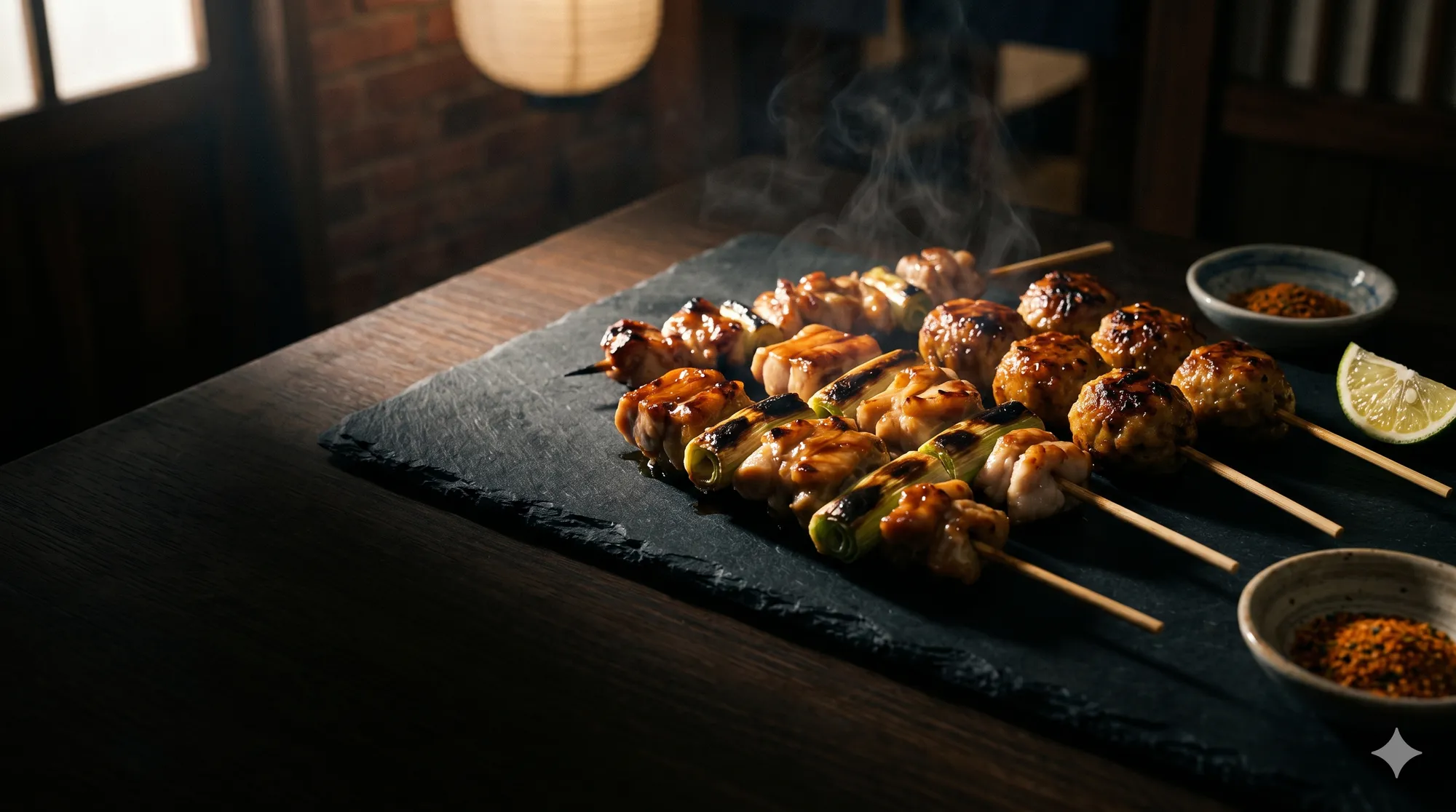
Japanese FoodNationwide
Yakitori (焼き鳥)
Bite-sized skewers of chicken grilled over blazing charcoal, seasoned with just salt or a sweet-savory tare. The beating heart of the izakaya, smoke and beer included. Nose-to-tail, and all of it good.
June 20, 2026