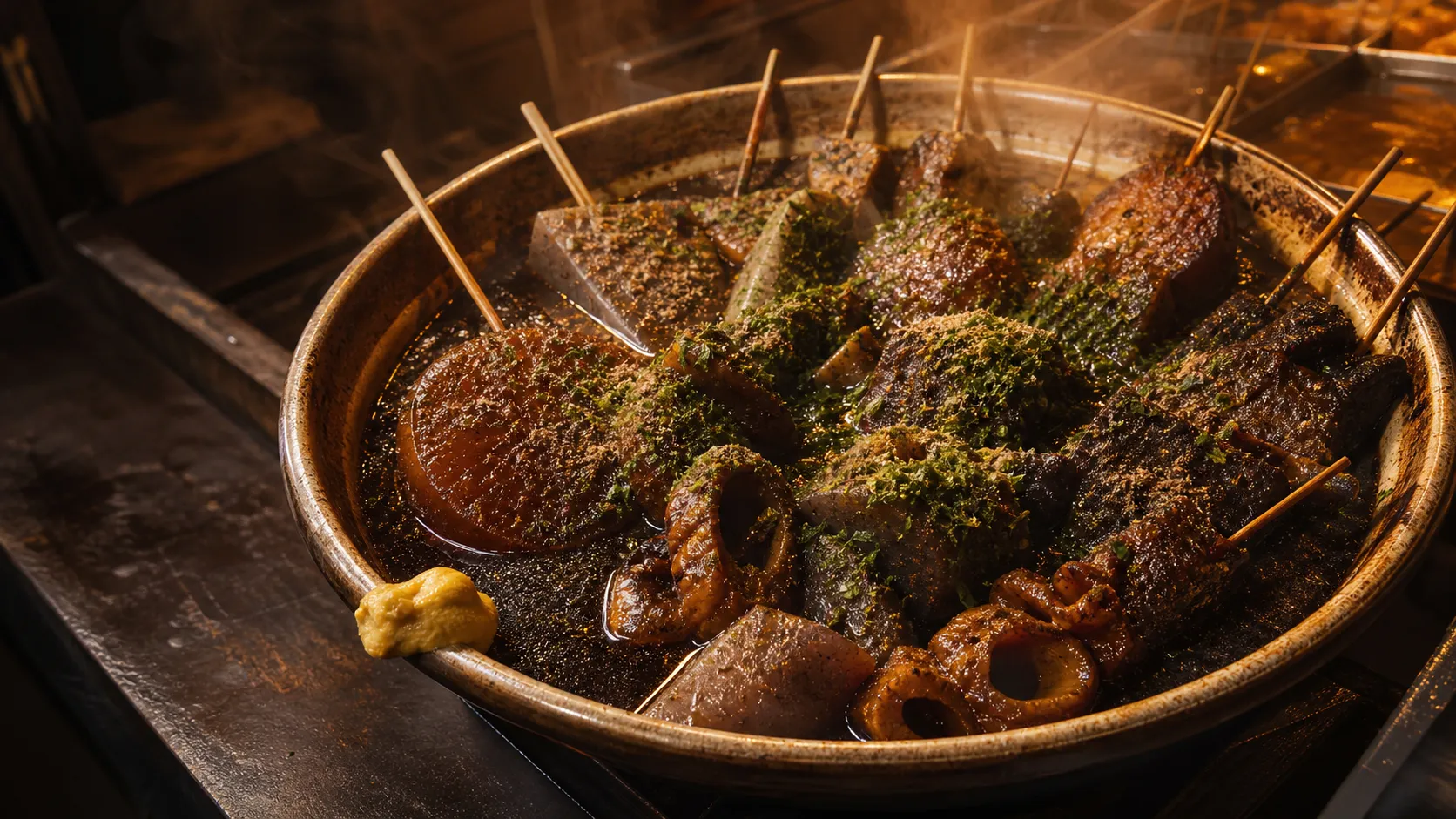
The broth is black. Not dark amber. Not deep brown. Black — the color of a pot that has been cooking since the Showa era and has absolutely no intention of stopping. You stare at it. It stares back. And then the woman behind the stall shakes a cloud of dried sardine powder over your skewers, and the smell hits you — deep, ancient, oceanic, completely alive — and every hesitation you had disappears in one breath.
Share this dish


Black broth, beef tendons, skewered everything, finished with dried sardine powder and aonori. Shizuoka's oden looks intimidating, tastes like the deepest umami you've ever encountered, and costs about 100 yen per stick.
🍜 Planning a food trip to Shizuoka?Add this dish to my Food Trip →
 Add this dish to my Food Trip →
This is Shizuoka oden (静岡おでん), and it is not what you think oden is.
You know regular oden. The pale, gentle, amber dashi with tofu drifting peacefully around. Shizuoka oden is the opposite of that in every possible direction. Everything is skewered on bamboo sticks — always, without exception. The broth is coal-dark and funky with beef tendon and soy, built up over hours or days at traditional shops that never fully drain the pot. And the finishing move that makes it specific to this city alone: a generous shake of dried sardine powder (dashi-ko) and aonori over the top, turning every skewer into a small, concentrated explosion of umami. It costs 100 yen per stick. It tastes like a secret Japan kept mostly to itself.
Working-class legend
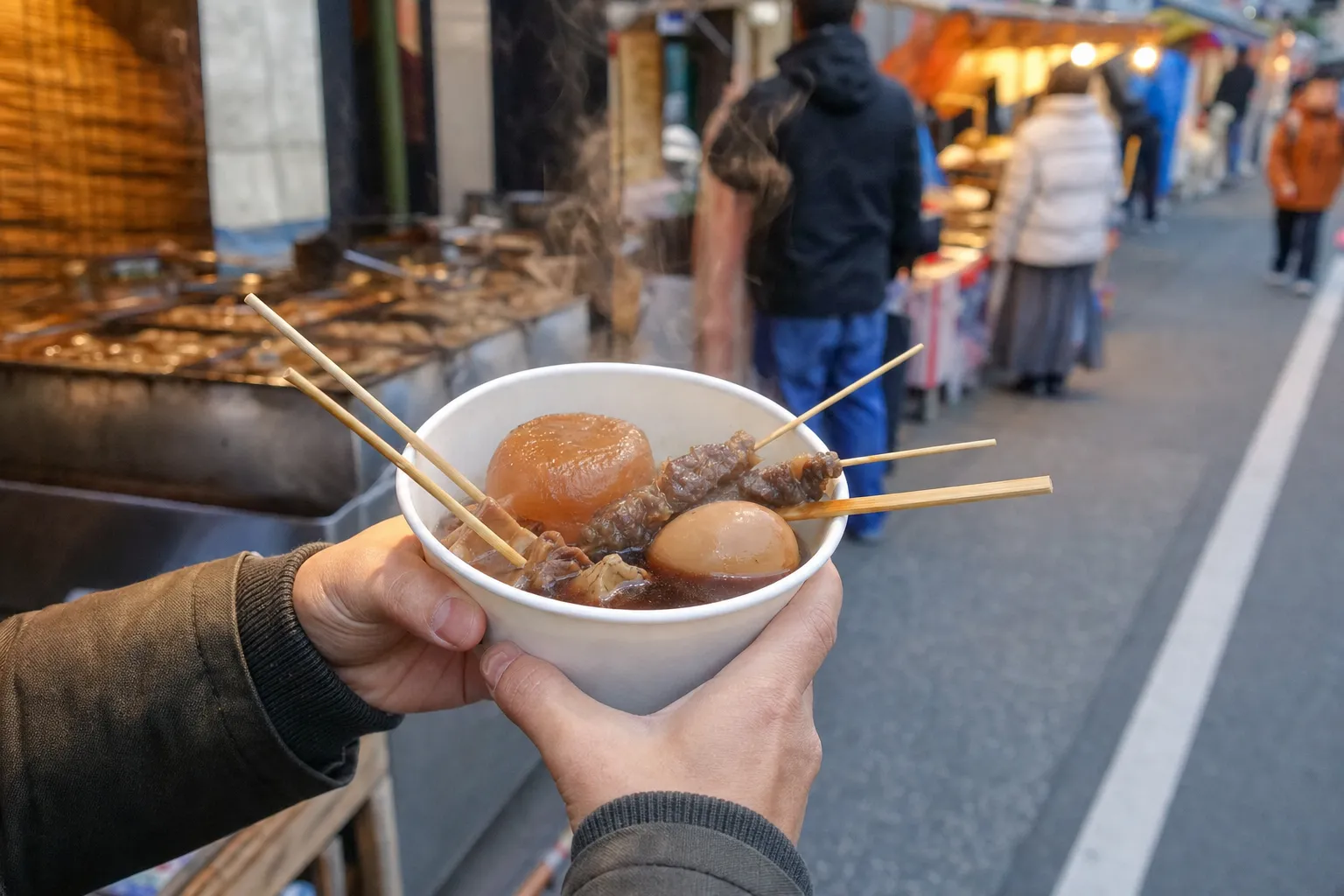
Shizuoka oden grew up after the war in dagashiya (駄菓子屋) — the cheap candy-and-snack shops that fed working-class Shizuoka on a budget. Eat standing up over a steaming pot. Point at what you want. Pay almost nothing. Come back tomorrow. The black broth developed from a practical choice: beef tendons and heavy soy are cheap, filling, and build extraordinary depth over time. The sardine powder topping was even more practical — intense umami from dried fish, zero cost, total genius.
The style never went national. Regular oden spread everywhere; Shizuoka oden stayed exactly where it was born, stubbornly, proudly local. At some shops, the pot has been simmering uninterrupted for decades. The broth now is partly the broth from thirty years ago. I find this deeply moving. I can't fully explain why.
What makes the black broth
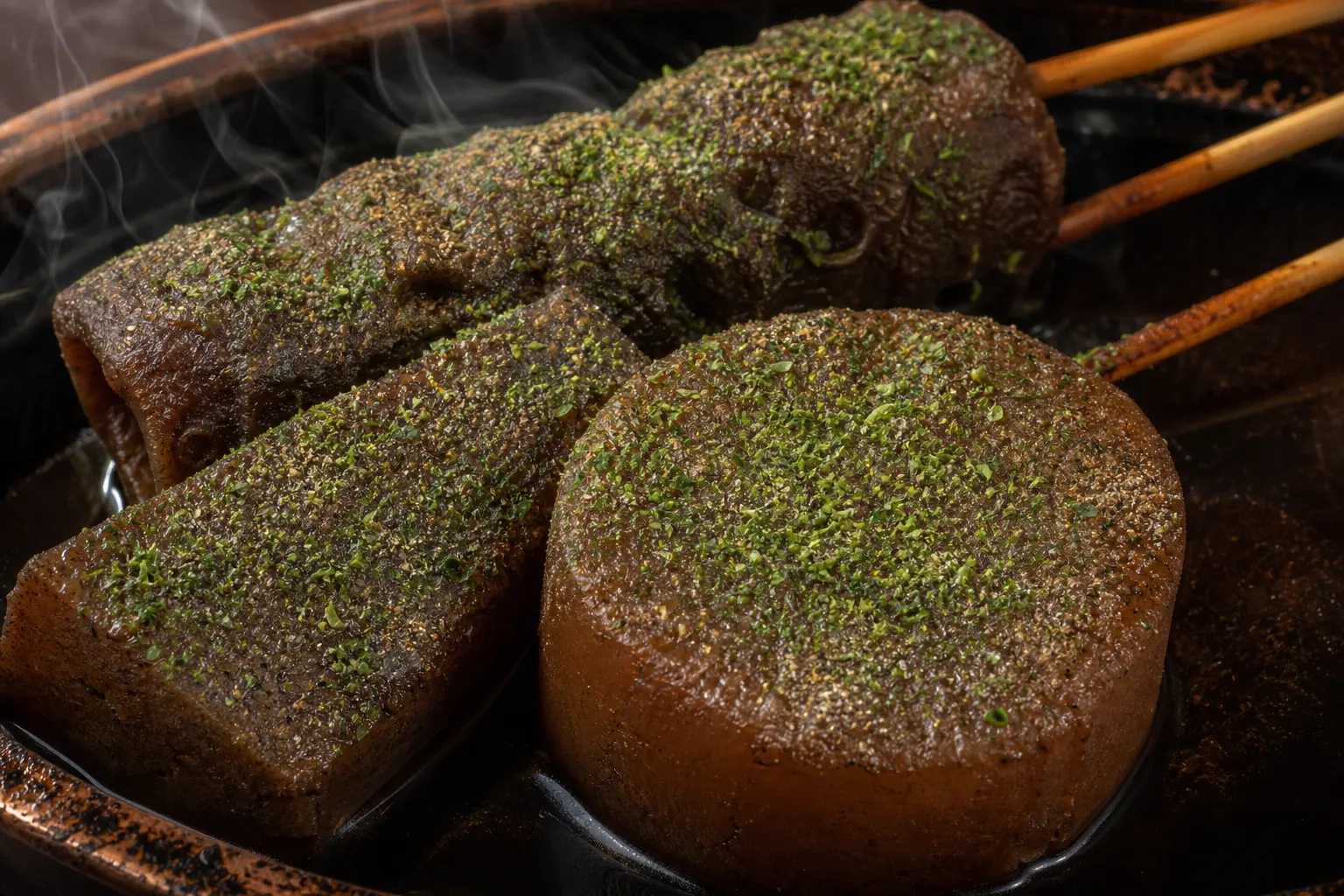
The darkness is time and soy — a ratio that never fully reverses, only deepens. Beef tendons (suji) give the broth body and a gelatinous, gluey richness that clings to every ingredient. Classic skewers include gyusuji (beef tendon, the essential one), kuro hanpen (black fish cake — denser and more pungent than the white version, a Shizuoka specialty all its own), konnyaku, quail eggs, tofu, and daikon. The daikon, after hours in that black broth, turns mahogany all the way through and tastes like the essence of winter. I ate three in a row. I have no regrets.
Then the sardine powder. You ask for it. You get it. Everything changes.
How it's made
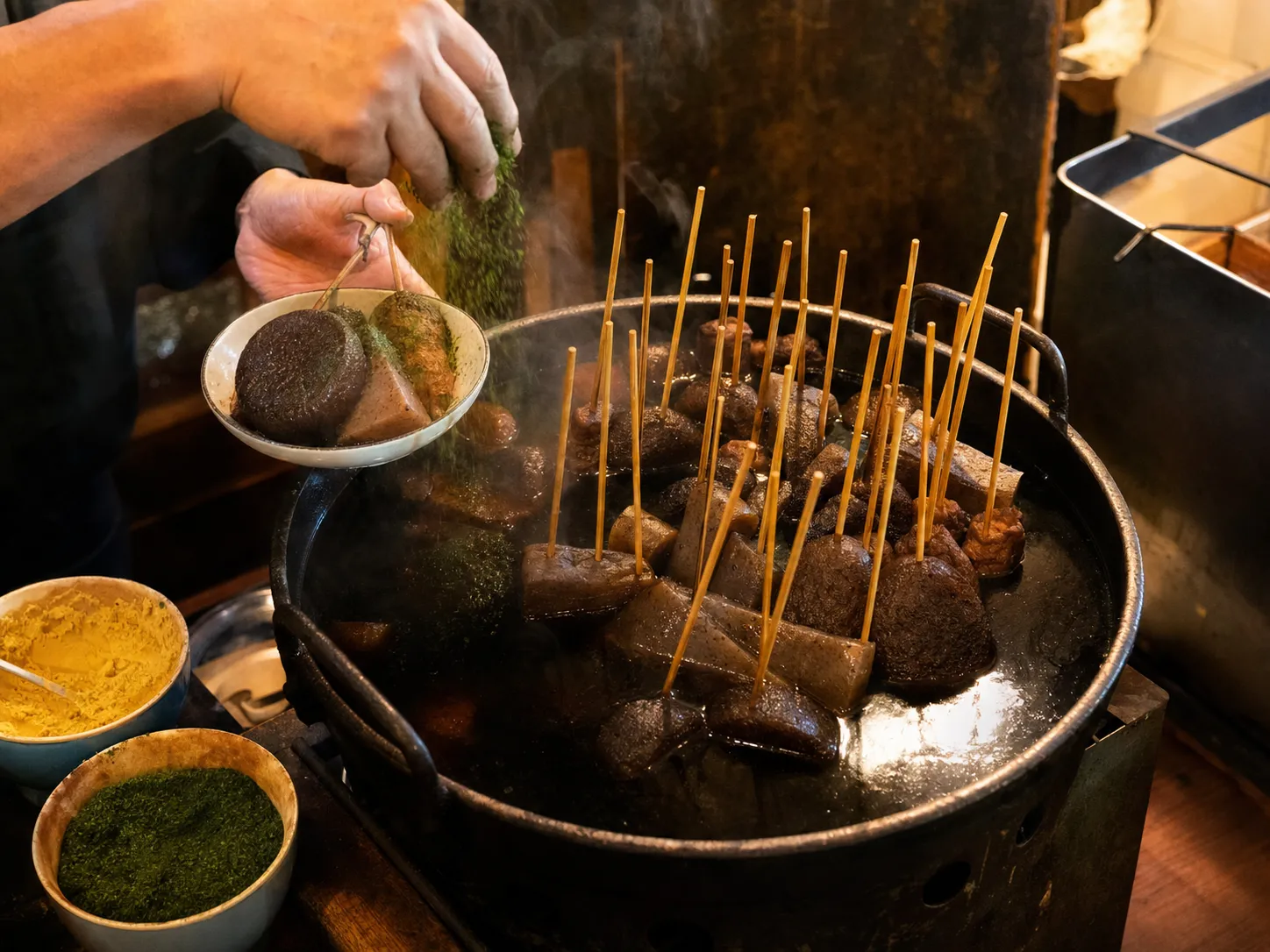
- Build the base: soy sauce, mirin, and beef — especially long-simmered beef tendons for depth and body
- Skewer every ingredient on bamboo sticks — this is not negotiable, this is the whole aesthetic
- Simmer low and slow; at traditional shops the pot runs continuously, never fully emptied
- Pull out your chosen skewers when ready
- Finish with a shake of dried sardine powder (dashi-ko) and green aonori — don't skip this part, this is the point
Before you go — point and eat
Your questions, answered honestly
"The broth looks terrifying — is it actually safe?" — Completely safe, and also wonderful. The darkness is flavor, not danger. It's soy and collagen and time. Drink a sip if they offer it. You'll want to.
"What's the black fish cake (kuro hanpen)?" — A Shizuoka-specific fish cake made from mackerel or sardine. Much denser and funkier than white hanpen. Earthy, savory, slightly aggressive in the best possible way. Order one even if you're not sure about it. Especially if you're not sure about it.
"How do I order without Japanese?" — Point at whatever looks good. Hold up fingers for the number. The whole system is designed for standing there and pointing. It's one of the more foreigner-friendly food formats in Japan.
"How cheap is this actually?" — Usually 100–150 yen per skewer. This is some of the best value eating in Japan. You can get completely full for under 1,000 yen and feel like you discovered something.
"Is it only a winter thing?" — Regular oden is seasonal. Shizuoka oden runs year-round because Shizuoka takes it too seriously to make it seasonal.
What the staff will ask you
| You'll hear | Romaji | Meaning | Just say |
|---|---|---|---|
| どれにしますか? | Dore ni shimasu ka? | "Which ones do you want?" | Point at the skewers |
| 粉かけますか? | Ko kakemasu ka? | "Sardine powder on top?" | Hai, onegaishimasu (yes — always yes) |
| 何本ですか? | Nanbon desu ka? | "How many sticks?" | Hold up fingers |
To order, just say "Kore kudasai" (これください) while pointing — "This one, please."
Where to eat it
- Aoba Oden Street (青葉おでん街), Shizuoka city — a lane of oden specialists near the city center. The essential destination. Go here first.
- Shizuoka Station area — several shops within walking distance if you're passing through on the Shinkansen.
- Dagashiya-style stalls throughout the city — the most authentic version. Look for the dark pot and the bamboo skewers sticking out.
Outside Shizuoka, genuine black-broth oden is nearly impossible to find. Come to the source. Bring cash for lots of sticks.
Soul Score
Local Roots5/5
First-Timer Friendly3/5
Adventure Level4/5
Comfort Level5/5
Travel Worthy4/5
These scores are one obsessed eater's gut feeling — not a verdict. A low number isn't a bad mark, just a different kind of adventure.
Know someone planning Japan?
← All Articles
Local Food · Shizuoka, Shizuoka
Still hungry?
Eat more from Shizuoka
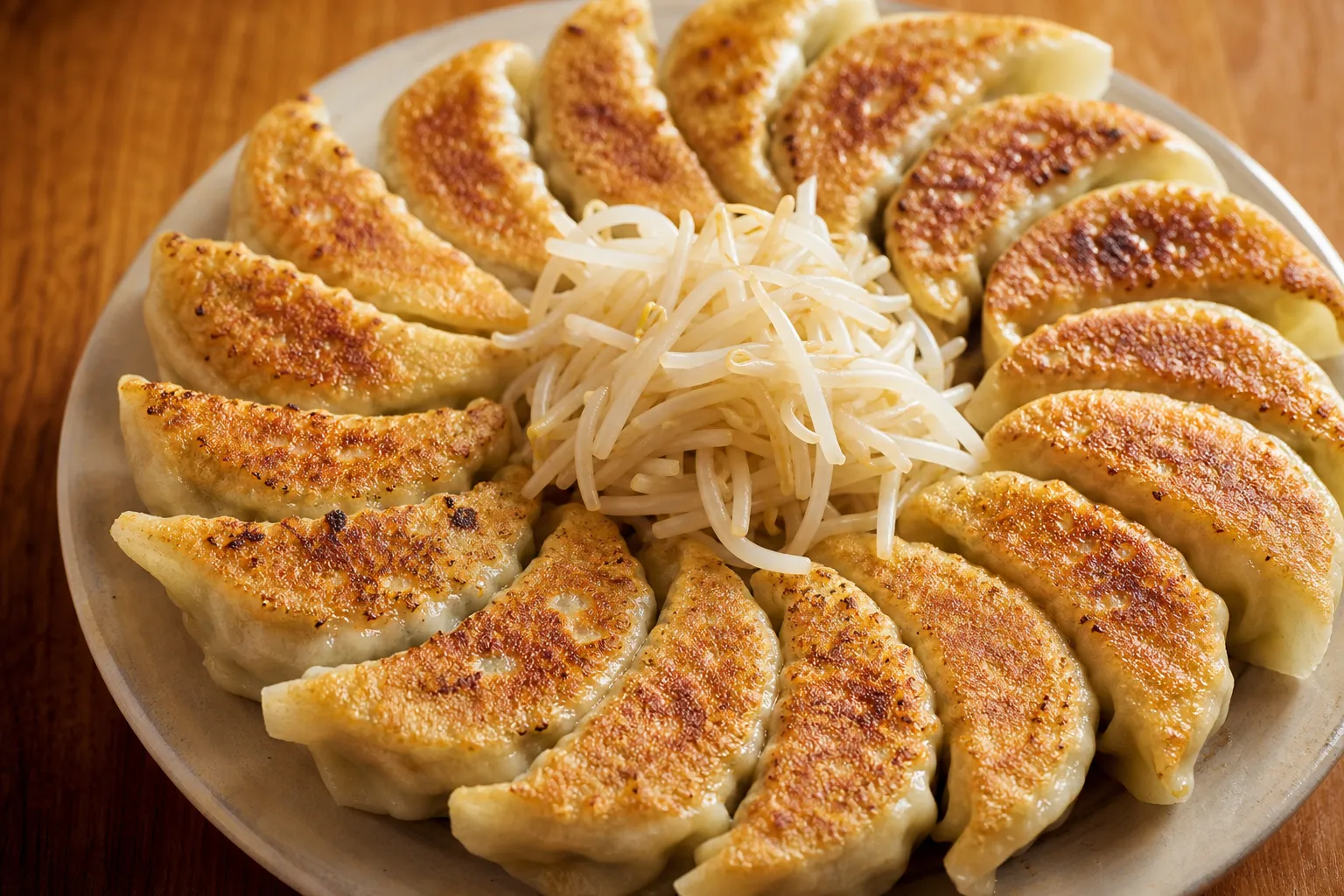
Local FoodHamamatsu, Shizuoka
Hamamatsu Gyoza (浜松餃子)
A ring of gyoza with a snowy mound of bean sprouts sitting in the hole at the center — like the plate itself is winking at you before you've picked up your chopsticks.
July 5, 2026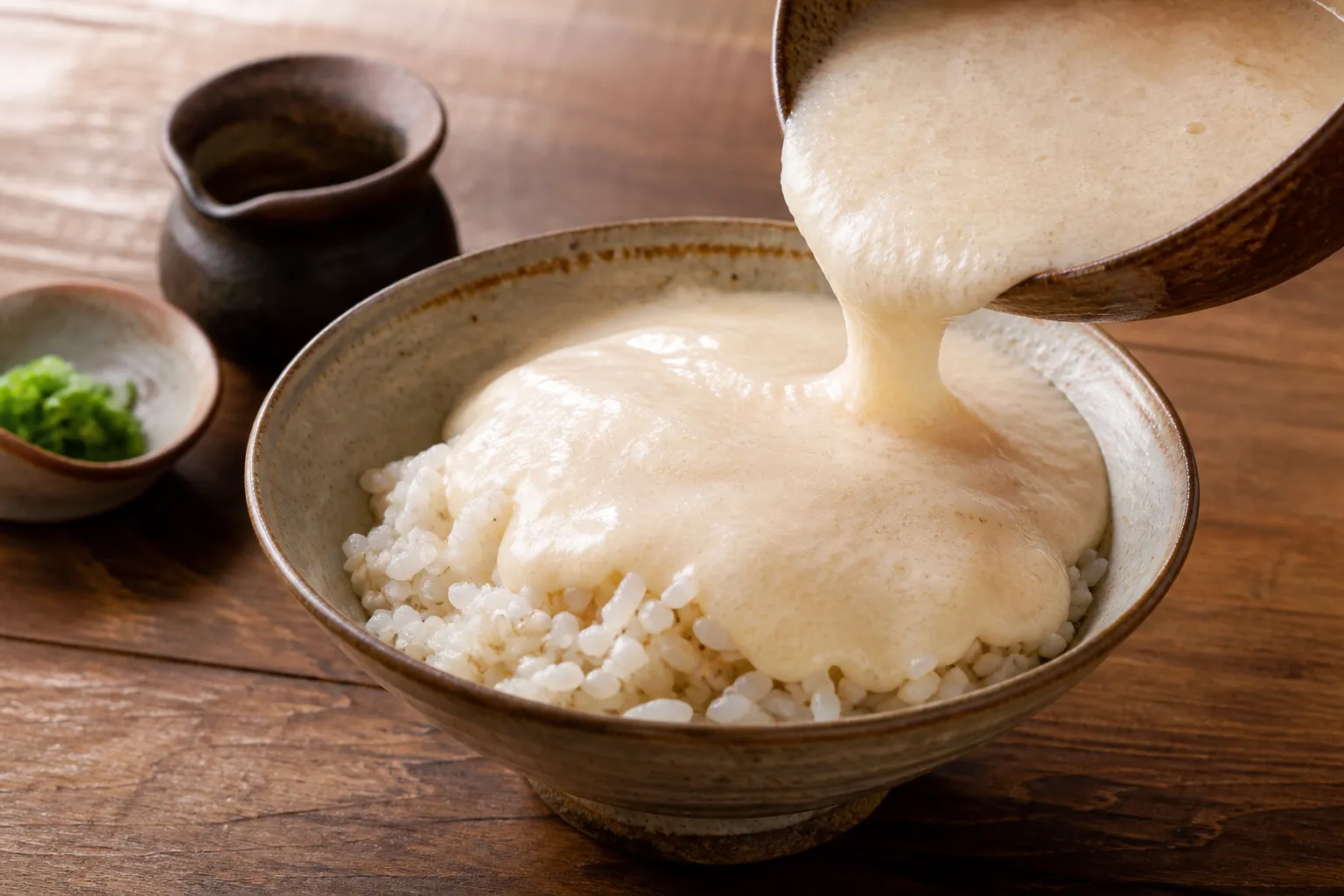
Local FoodMariko, Shizuoka
Shizuoka Tororo-jiru (静岡とろろ汁)
It slides off the spoon in one glossy, unbroken rope and refuses to let go — and travelers have been slurping this exact sticky bowl on the old Tokaido road for 400 years.
July 5, 2026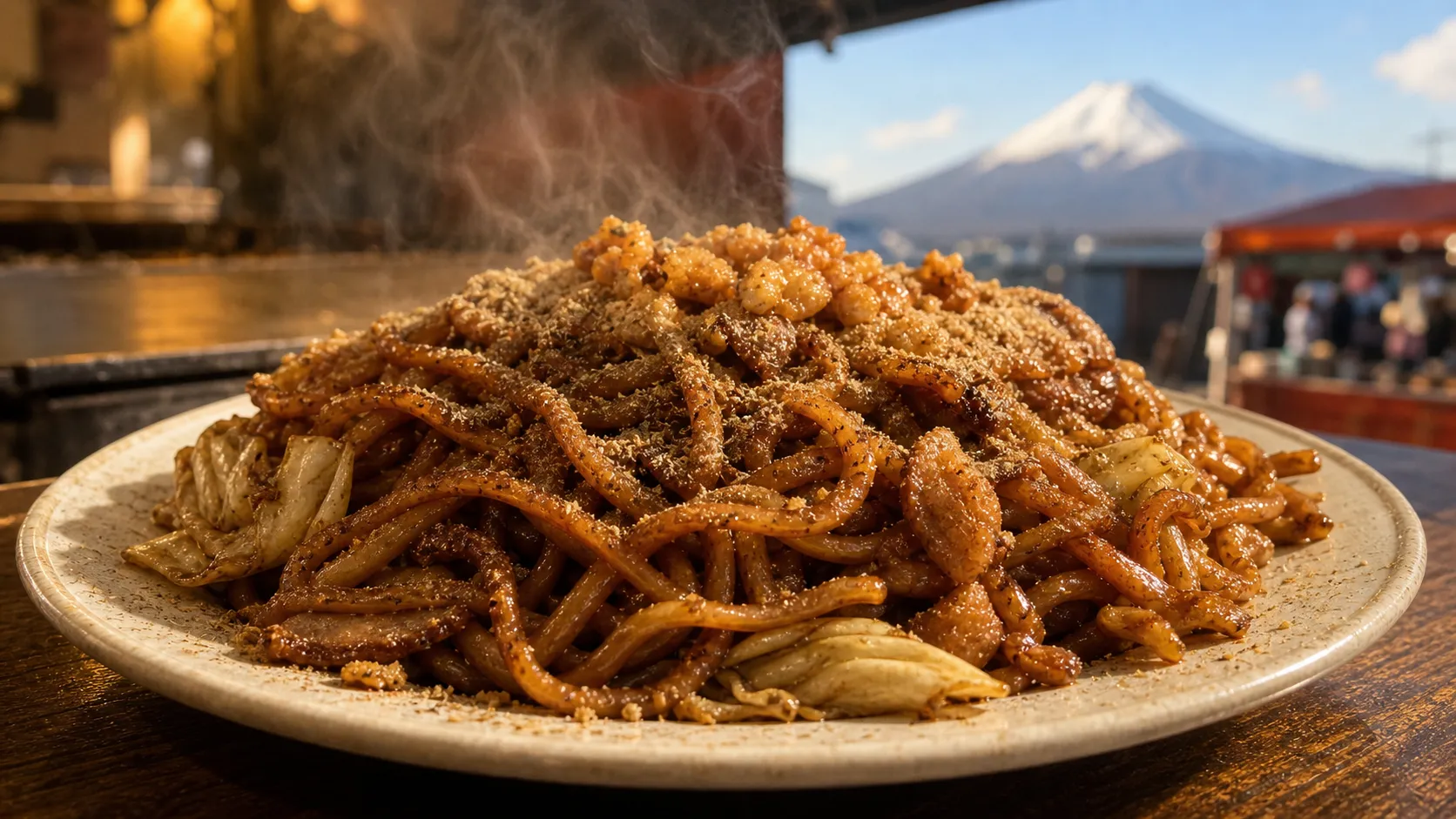
Local FoodFujinomiya, Shizuoka
Fujinomiya Yakisoba (富士宮やきそば)
The yakisoba that won Japan's biggest B-grade food competition. Twice. Thick chewy noodles, lard frying, fish powder topping — this is what yakisoba becomes when a whole city decides to take it seriously.
June 25, 2026