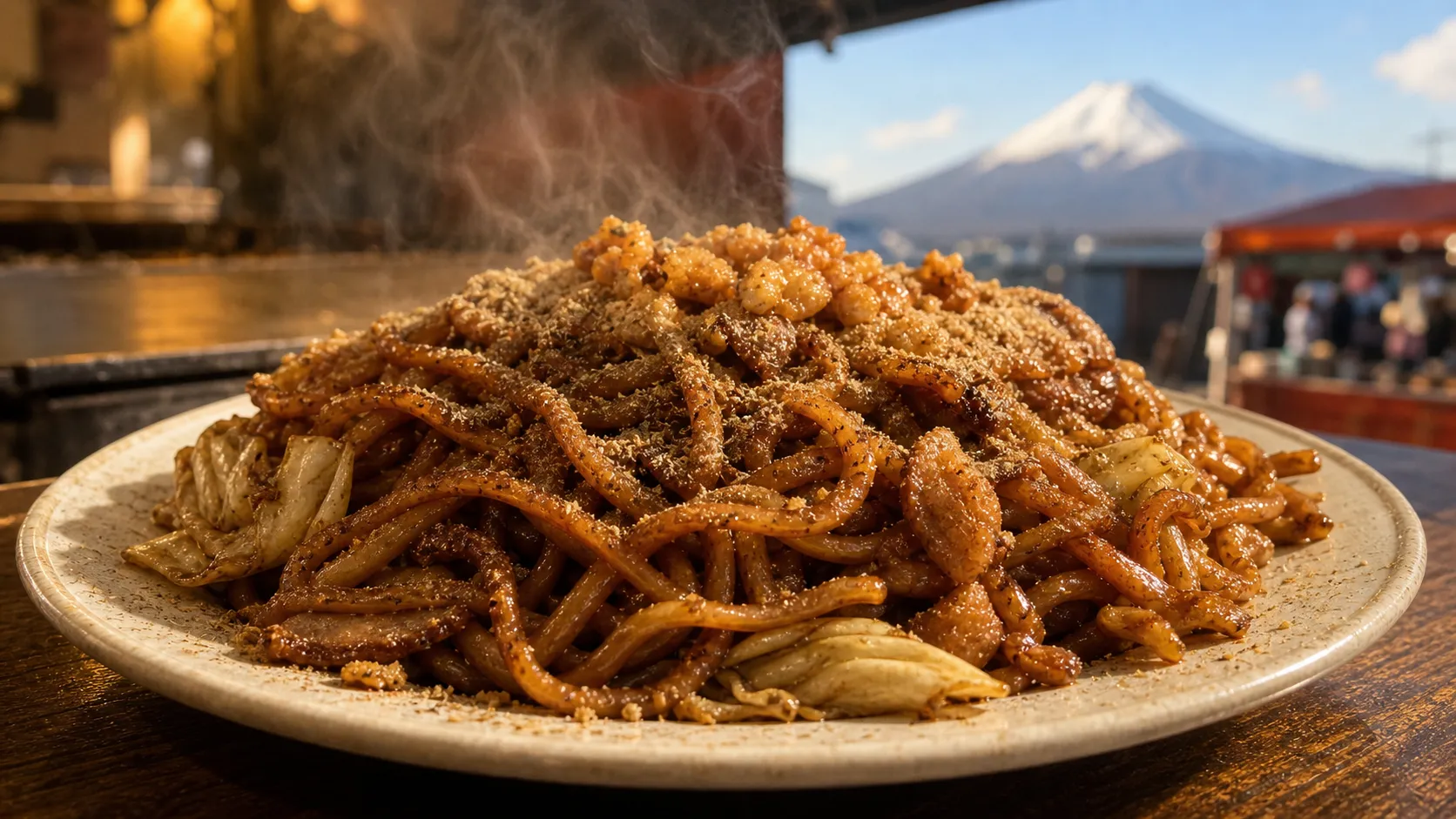
You've had yakisoba. The kind from the school festival, or the convenience store, or the perfectly fine stall at any matsuri in Japan. Soft noodles, sweet sauce, a little cabbage, done. It's fine. It's completely fine.
Share this dish


The yakisoba that won Japan's biggest B-grade food competition. Twice. Thick chewy noodles, lard frying, fish powder topping — this is what yakisoba becomes when a whole city decides to take it seriously.
🍜 Planning a food trip to Shizuoka?Add this dish to my Food Trip →
 Add this dish to my Food Trip →
This is not that.
Fujinomiya yakisoba (富士宮やきそば) won Japan's biggest B-grade food competition — the legendary B-1 Grand Prix — twice in a row, beating hundreds of regional dishes to be crowned the people's champion two consecutive times. When I first heard this I thought: yakisoba? Really? And then I ate it and I understood immediately. Of course. Of course this is the one.
The difference is in every detail. The noodles are steamed, not boiled — thick, springy, with a serious bite that holds up under the sauce instead of going limp. They're fried in lard (shibukawa, pork back fat), which gives them a depth that vegetable oil simply cannot touch. And on top, always, without exception: fish powder (katsuobushi flakes ground fine) and crisp meat scraps (nikukasu) that add crunch and a savory hit that makes you think "what IS that and how do I get more of it." The noodles are made with water from Mount Fuji's springs. This is not a marketing claim. The water is genuinely different, and the noodles taste like it.
The yakisoba that made a city famous
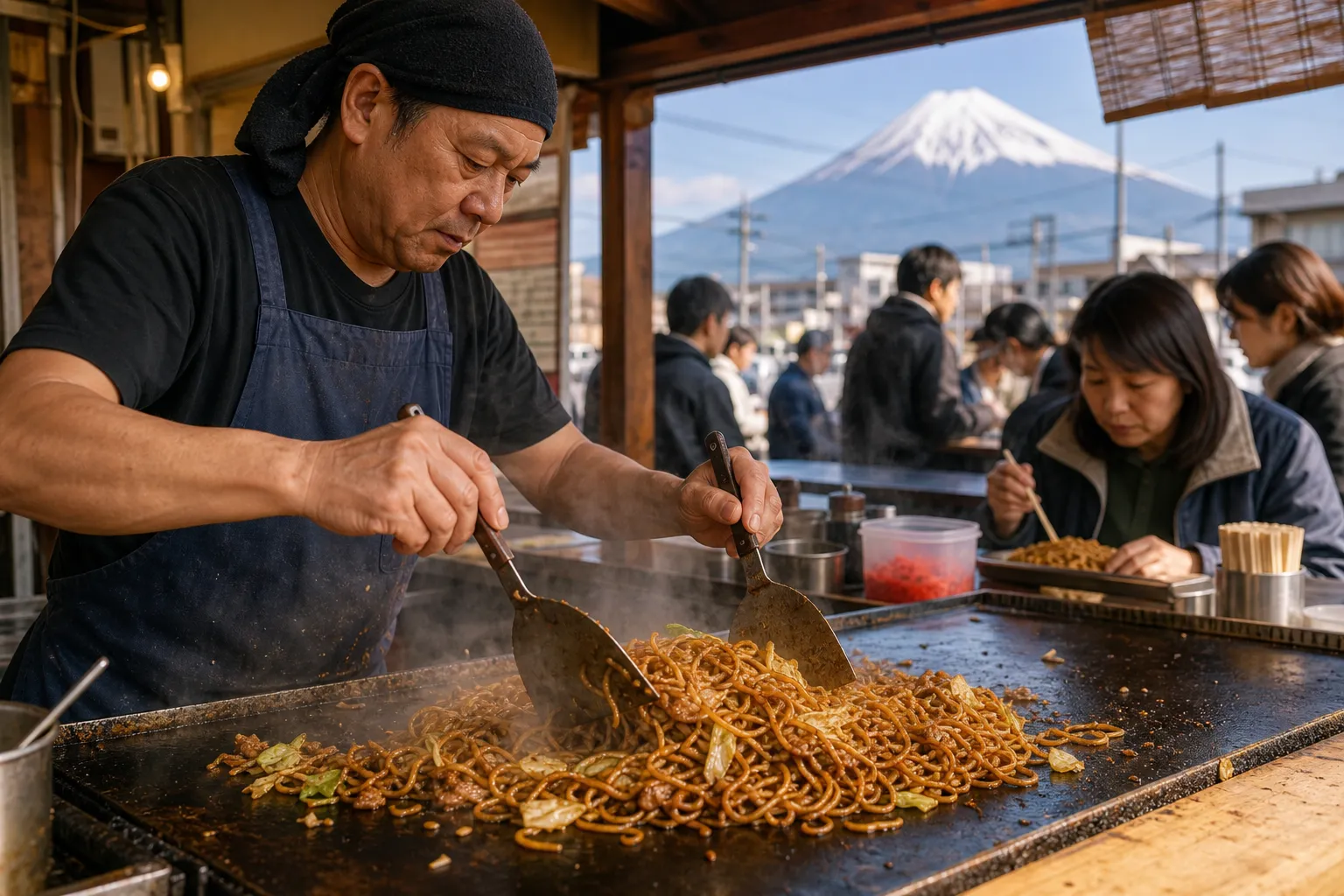
Fujinomiya is a small city at the base of Mount Fuji, and before the B-1 Grand Prix it was known primarily as a gateway to the mountain. Then in 2006, the first B-1 Grand Prix was held, and Fujinomiya yakisoba won. In 2007, it won again. The city went from "near Fuji" to "that yakisoba city" almost overnight, and yakisoba shops — always a fixture here — became the beating heart of local identity. The city now has an estimated 100+ yakisoba shops. There are yakisoba food courts. There are yakisoba tours. The dish has its own promotion committee. Fujinomiya took this completely seriously and the results are remarkable.
The key ingredient, nikukasu (肉かす), was originally a byproduct of lard production — the crispy meat scraps left after the fat was rendered. Fujinomiya cooks discovered it added incredible texture and umami, and it became essential. This is exactly the kind of waste-nothing, make-it-great instinct that produces great B-grade food.
What makes these noodles different
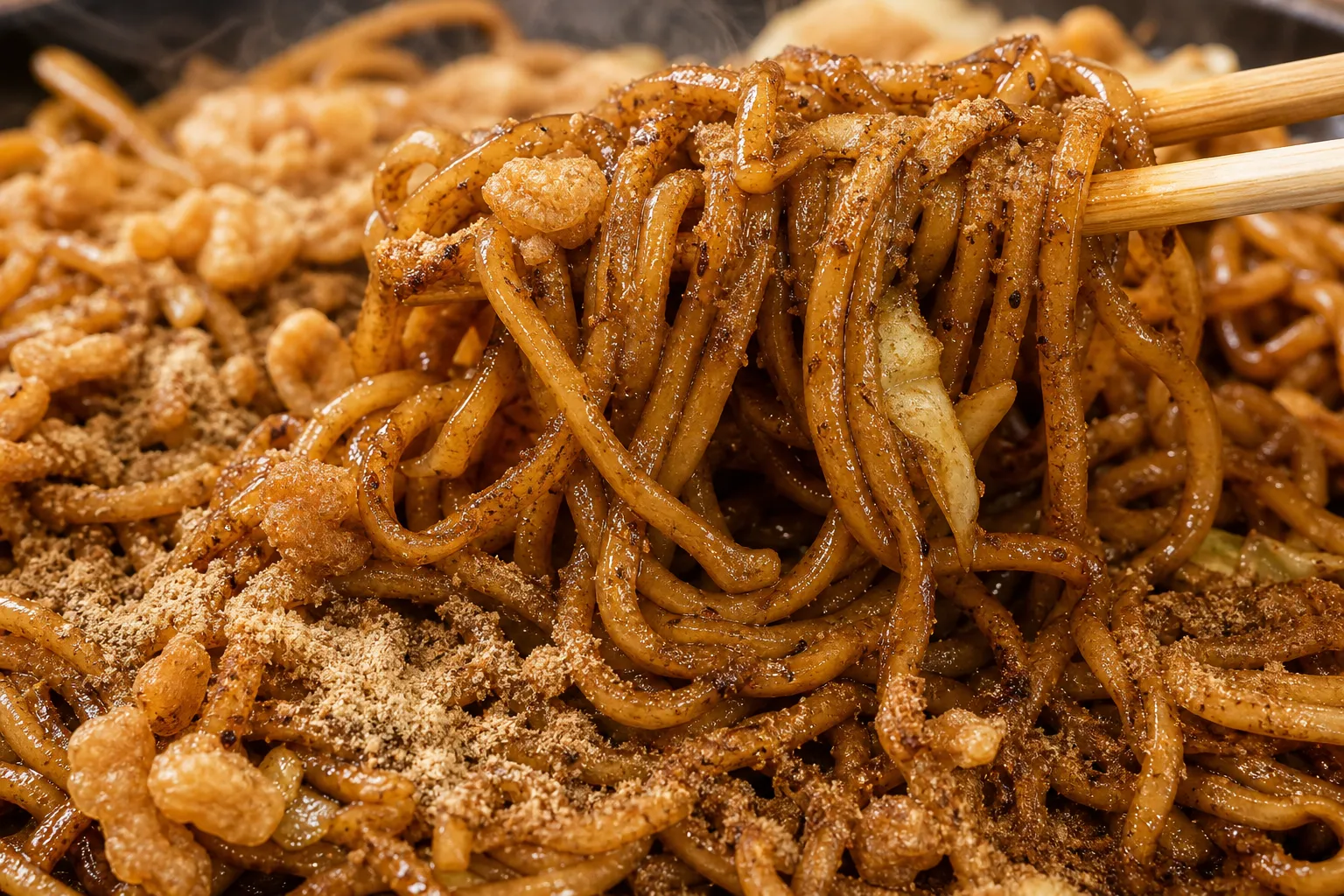
Three things that matter:
The noodles. Steamed rather than raw or boiled, using Fuji spring water, producing a firm, dense, distinctively chewy result. They don't collapse under the sauce. They maintain their character all the way through eating. This is rare in yakisoba.
The fat. Cooked in lard (shibukawa). Not sesame oil, not vegetable oil — pork back fat, which adds a richness and a fragrance that you notice immediately even before tasting it.
The topping. Fish powder (katsuobushi ground fine) and nikukasu (crispy meat scraps). The fish powder is not optional. Neither is the crunch. Together they add umami and texture that make Fujinomiya yakisoba taste like a complete dish rather than a side item.
How it's made
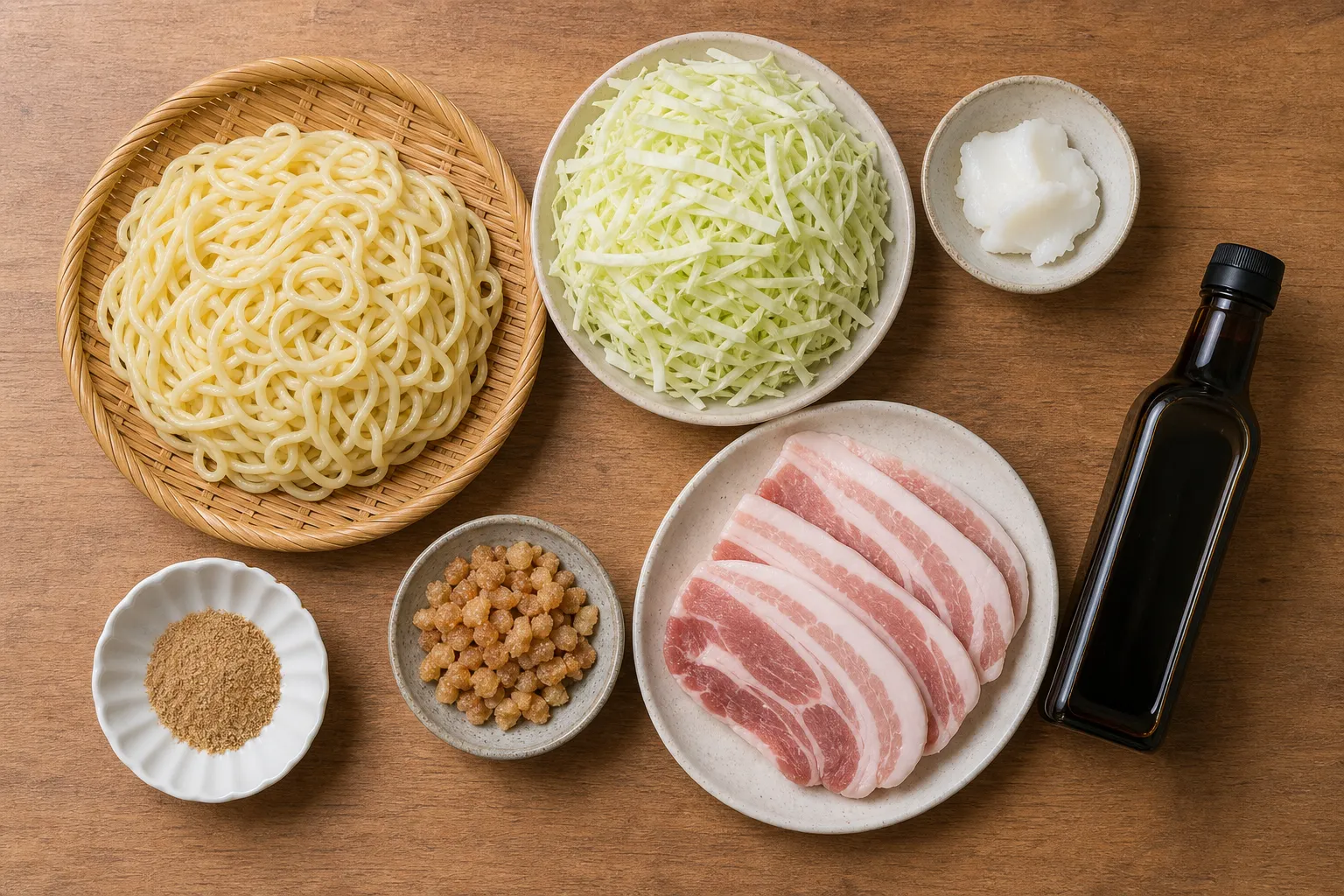
- Heat the griddle (teppan) with lard until smoking
- Stir-fry cabbage, pork, and vegetables briefly
- Add the pre-steamed Fujinomiya noodles; press and fry until lightly charred in spots
- Season with Worcestershire-based sauce; toss everything together
- Plate and finish with nikukasu (meat scraps) and a generous shake of fish powder (katsuobushi-ko)
Before you go — apply the powder
Your questions, answered honestly
"How different is it from regular yakisoba really?" — Genuinely, noticeably different. The chew of the noodles alone sets it apart from anything you've had at a festival. Eat it next to regular yakisoba once and you'll never un-know this.
"What's the fish powder exactly?" — Finely ground katsuobushi (bonito flakes). Not flakes — powder. It dissolves into the sauce and adds deep, marine umami rather than a fishy taste. It's subtle but you'd notice its absence immediately.
"What are the meat scraps (nikukasu)?" — Crispy pork bits left over after lard rendering. They add texture and a salty, fatty depth. This is exactly the kind of ingredient that separates "good" from "why is this so much better than elsewhere."
"Can I find this outside Fujinomiya?" — There are a few shops in Tokyo and elsewhere, but Fujinomiya has 100+ dedicated shops and the noodles made with local spring water. Come to the source.
What the staff will ask you
| You'll hear | Romaji | Meaning | Just say |
|---|---|---|---|
| 肉かすは入れますか? | Nikukasu wa iremasu ka? | "Want meat scraps?" | Hai, onegaishimasu (yes — always) |
| 魚粉かけますか? | Gyofun kakemasu ka? | "Fish powder on top?" | Hai, onegaishimasu (yes — always) |
| 大きさはどうしますか? | Ōkisa wa dō shimasu ka? | "What size?" | Futsū de onegaishimasu (regular please) |
To order, just say "Yakisoba kudasai" (やきそばください) — "Yakisoba, please."
Where to eat it
- Yakisoba no Okamoto (やきそばのお好み焼き岡本) — Fujinomiya. Long-established local favorite.
- Fuji no Shita (富士の下) — near Fujinomiya Station. Classic B-1 Grand Prix style.
- Fujinomiya Yakisoba Gakkai shops — the official promotion association lists member shops on their website. Any on the list is reliable.
Mount Fuji is right there. Eat yakisoba at the base, stare up at the mountain, feel like you earned it.
Soul Score
Local Roots5/5
First-Timer Friendly5/5
Adventure Level3/5
Comfort Level5/5
Travel Worthy4/5
These scores are one obsessed eater's gut feeling — not a verdict. A low number isn't a bad mark, just a different kind of adventure.
Know someone planning Japan?
← All Articles
Local Food · Fujinomiya, Shizuoka
Still hungry?
Eat more from Shizuoka
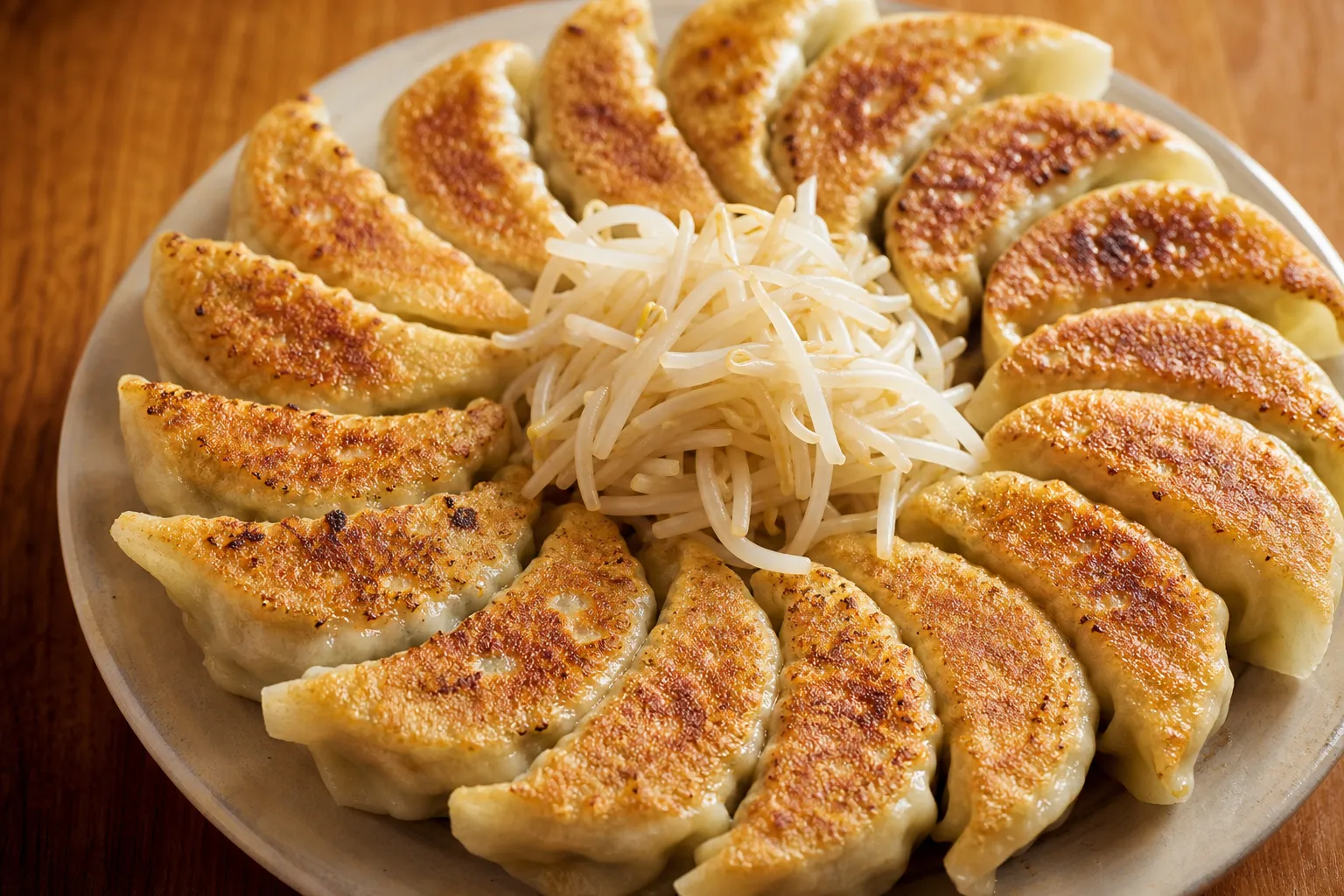
Local FoodHamamatsu, Shizuoka
Hamamatsu Gyoza (浜松餃子)
A ring of gyoza with a snowy mound of bean sprouts sitting in the hole at the center — like the plate itself is winking at you before you've picked up your chopsticks.
July 5, 2026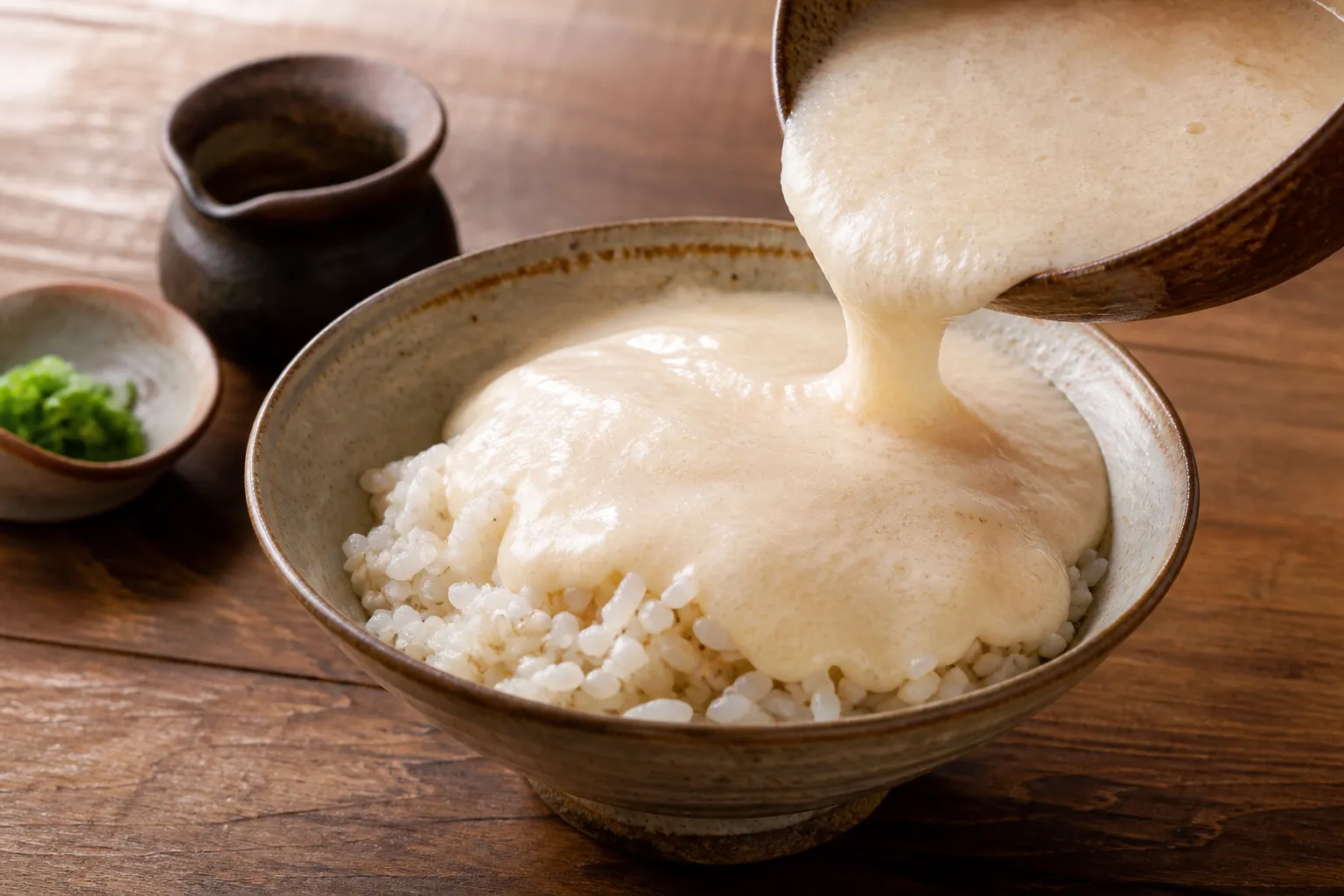
Local FoodMariko, Shizuoka
Shizuoka Tororo-jiru (静岡とろろ汁)
It slides off the spoon in one glossy, unbroken rope and refuses to let go — and travelers have been slurping this exact sticky bowl on the old Tokaido road for 400 years.
July 5, 2026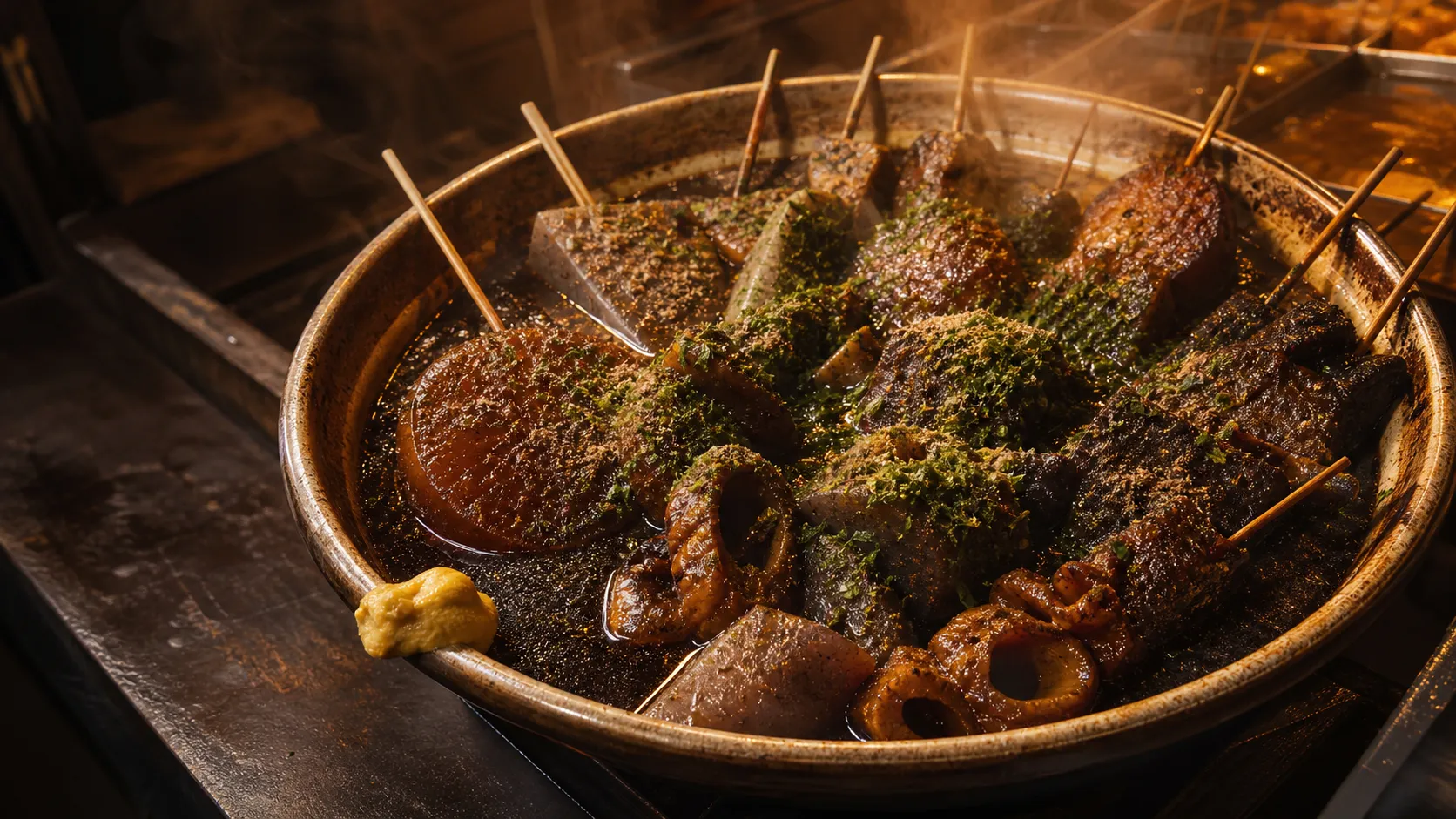
Local FoodShizuoka, Shizuoka
Shizuoka Oden (静岡おでん)
Black broth, beef tendons, skewered everything, finished with dried sardine powder and aonori. Shizuoka's oden looks intimidating, tastes like the deepest umami you've ever encountered, and costs about 100 yen per stick.
June 25, 2026