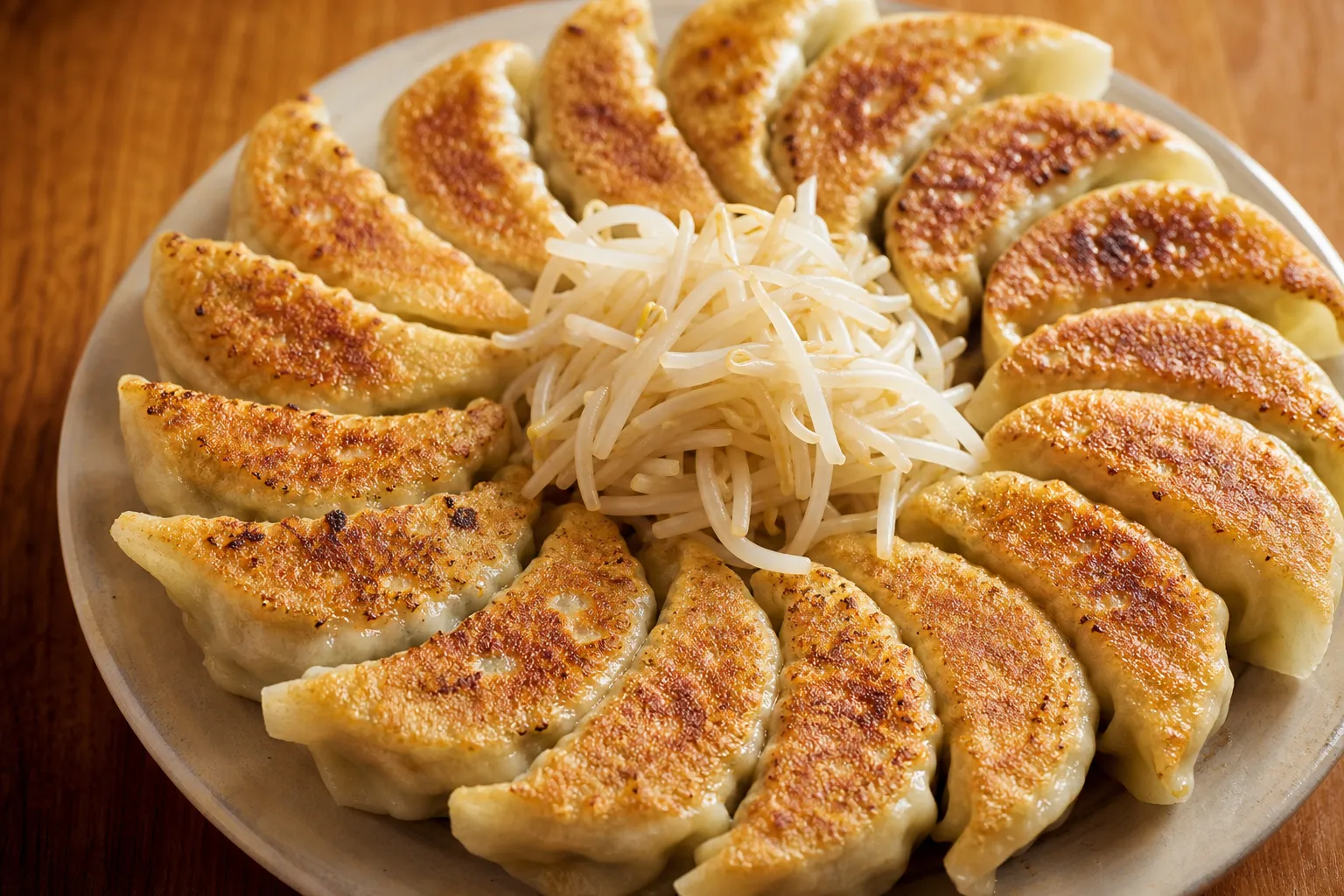
There's a hole in the middle of the plate. Not a mistake — the point. Somebody arranged a dozen-plus gyoza into a perfect ring, left a gap right in the center, and then piled it high with a snowdrift of pale, glossy bean sprouts. I stared at it for a solid ten seconds before I understood I was allowed to just eat the whole thing.
Share this dish


A ring of gyoza with a snowy mound of bean sprouts sitting in the hole at the center — like the plate itself is winking at you before you've picked up your chopsticks.
🍜 Planning a food trip to Shizuoka?Add this dish to my Food Trip →
 Add this dish to my Food Trip →
This is Hamamatsu gyoza — Hamamatsu, Shizuoka's answer to the "who has the best gyoza in Japan" argument that rages nationwide (Utsunomiya, mostly, but don't tell them that here). The dumplings themselves are pan-fried and unmistakably gyoza — pork, cabbage, garlic — but the ratio leans hard toward cabbage, so they come out lighter and a little sweeter than the garlic-bomb versions elsewhere. What makes them Hamamatsu, though, isn't the filling. It's the circle, and the moyashi in the middle. I've had gyoza in a lot of cities. I have never had gyoza that came with its own crop circle.
A shape born from noodle-cart economics
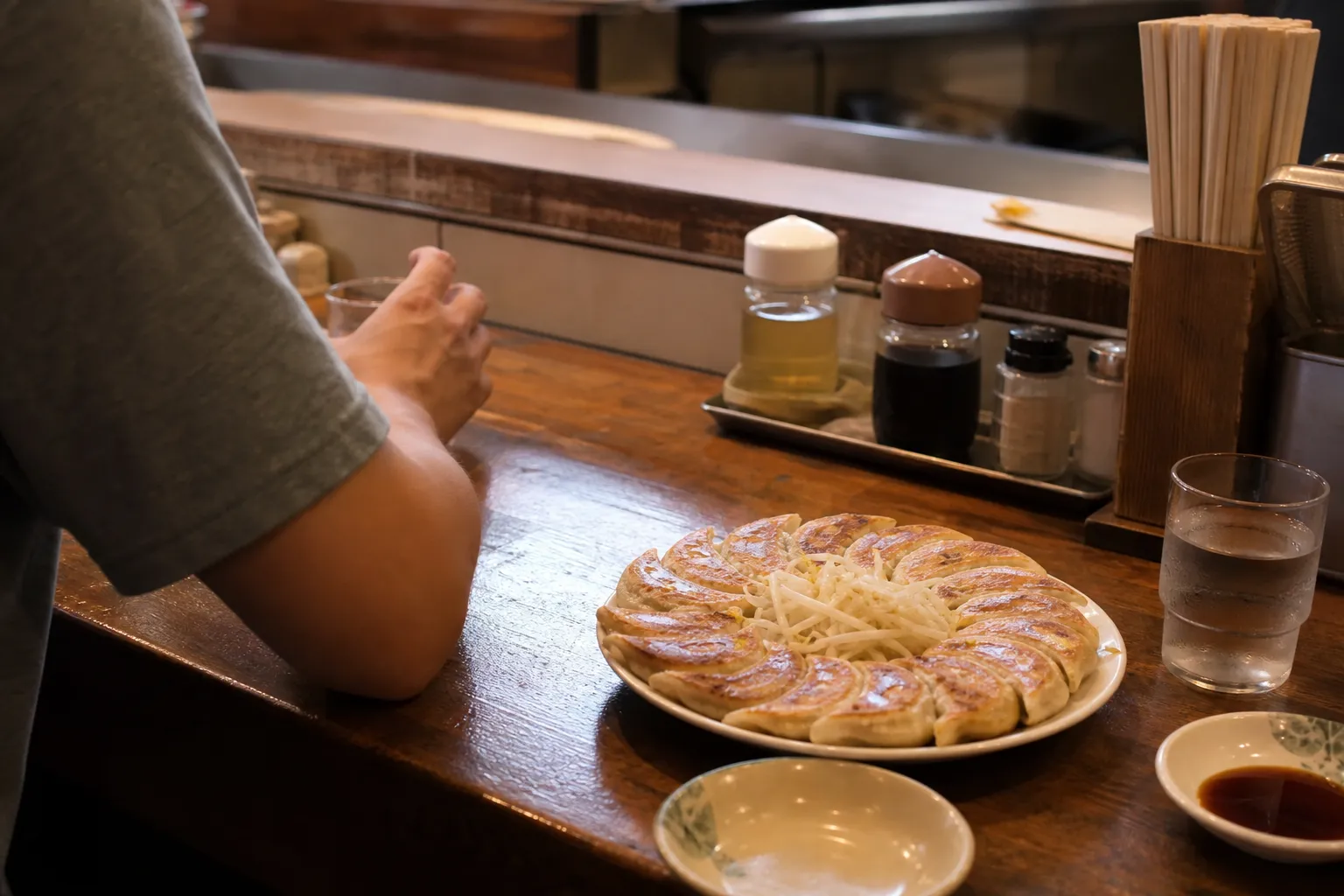
Hamamatsu's gyoza culture took shape in the postwar decades, when Chinese-influenced street stalls and cheap diners near the station started serving pan-fried dumplings to factory workers and travelers passing through on the Tokaido line. The circular arrangement is, depending on who you ask, either pure kitchen efficiency — you can pack more gyoza into a round pan without wasted space — or a deliberate bit of showmanship that turned an ordinary side dish into something instantly recognizable. Probably both are true at once, and I don't think anyone in Hamamatsu loses sleep over which.
The bean-sprout mound came along as the practical, cheap, crunchy counterweight to a plate full of fried dumplings — something to cut the oil and stretch the meal without stretching the budget. It's a very Shizuoka move: unpretentious, a little frugal, completely delicious. I find something genuinely charming about a regional specialty built half on showing off and half on not wasting pan space.
Cabbage-forward, lighter, and built to share the plate
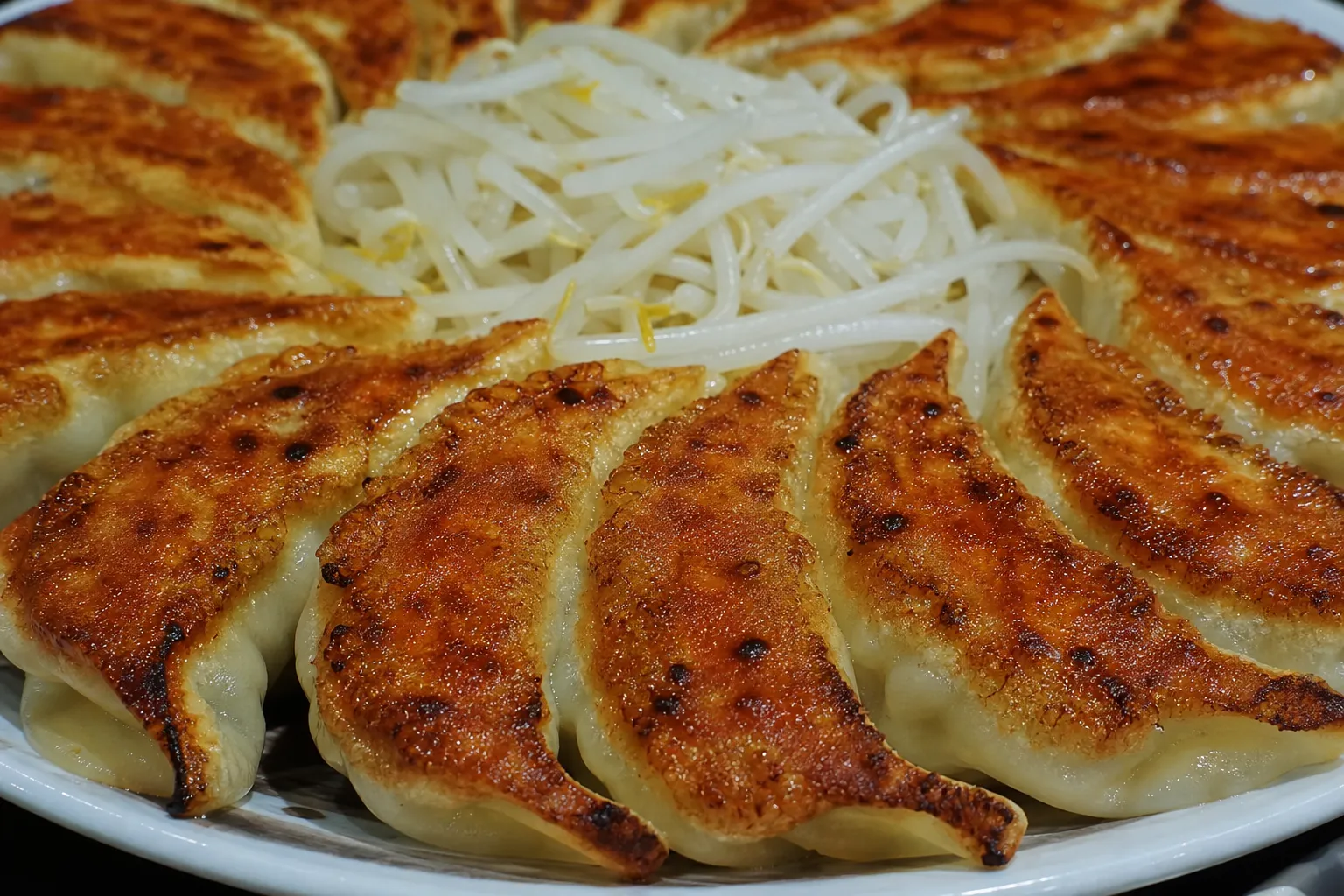
Bite into one and the first thing you notice is how much lighter it feels than a heavy, garlic-forward gyoza — that's the higher cabbage-to-pork ratio doing its job, giving you sweetness and juice rather than a punch of raw garlic. The wrapper is thin, the bottoms crisp up nicely in the ring formation (each one still gets its own individual crust, unlike a fused disc-style gyoza), and the whole thing is built to be eaten alongside — not instead of — that pile of blanched bean sprouts in the middle, usually hit with a little sesame oil, salt, or a light vinegar dressing. Dunk the gyoza in the usual soy-vinegar-chili combo, then grab a forkful of moyashi as a palate reset, and go again around the ring. I ate my way clockwise. I have no strong opinion on whether counterclockwise people are wrong, but I suspect they might be.
How it's made
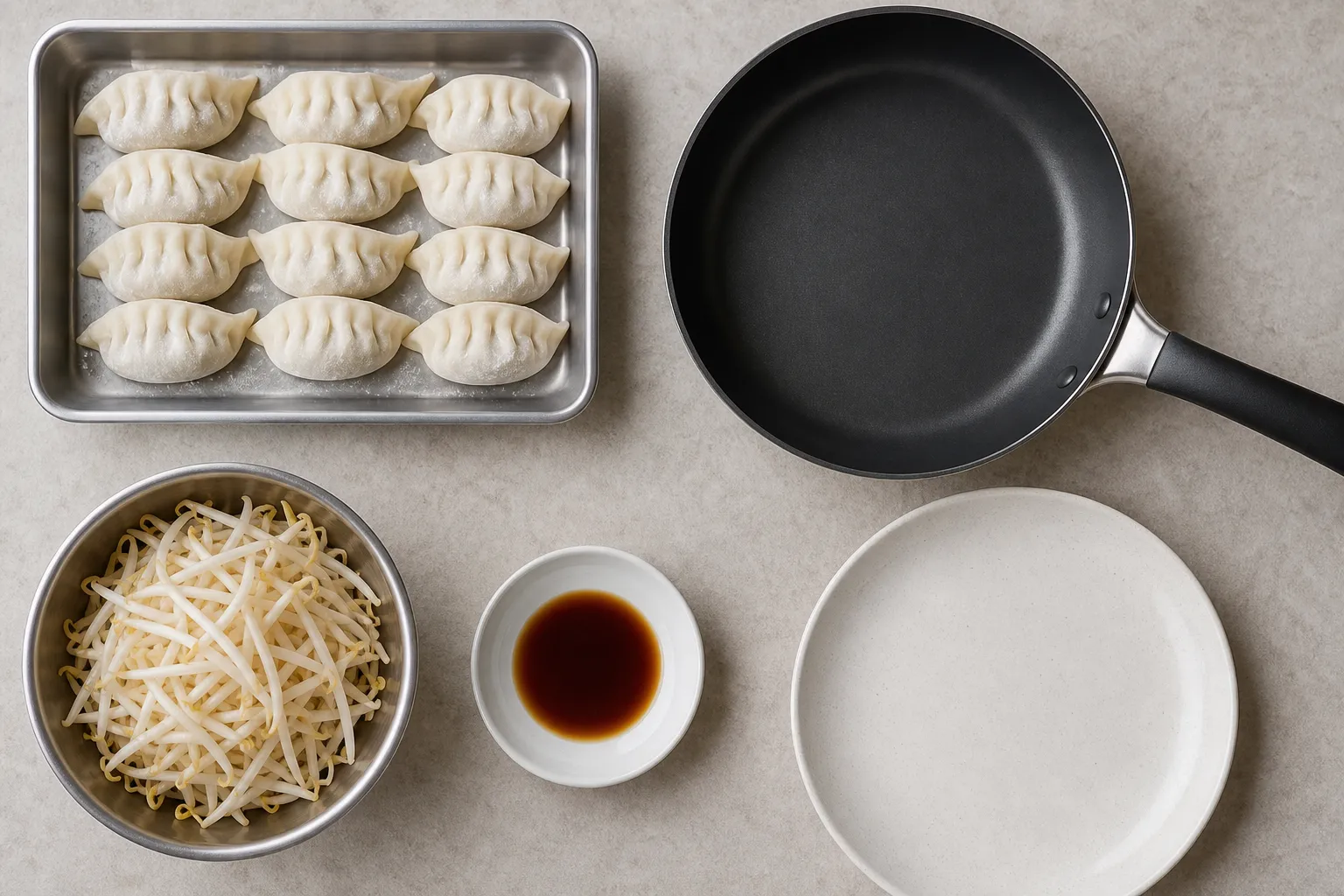
- Mix ground pork with a generous amount of finely chopped cabbage, garlic, and ginger — cabbage-heavy, unlike garlic-forward regional styles
- Wrap and pleat the filling into thin gyoza skins by hand
- Arrange the raw gyoza standing in a circle in a hot, oiled pan, leaving the center open
- Fry, then add water and cover to steam-fry until the bottoms crisp
- Slide the whole ring onto a plate and pile boiled, well-drained bean sprouts (moyashi) into the empty center
- Serve with soy sauce, rice vinegar, and rayu (chili oil) for dipping
Before you go — mind the hole in the middle
Your questions, answered honestly
"Am I supposed to eat the bean sprouts too?" — Yes, absolutely — they're not garnish, they're a full component of the dish, there to cool your mouth down between dumplings and stretch the meal. Skipping them is like ordering ramen and leaving the noodles.
"Is this the same as Utsunomiya gyoza?" — No, and don't say that out loud in Hamamatsu. Utsunomiya's gyoza is garlicky and often plated in neat rows; Hamamatsu's is cabbage-forward, lighter, and always plated as a ring with the moyashi mound. Different filling balance, different presentation, different rivalry.
"Is this the same as the fused 'disc' gyoza from Fukushima?" — Different trick entirely. Fukushima's enban gyoza fuse their bottoms into one connected crispy sheet you break apart like a cracker. Hamamatsu gyoza stay as individual dumplings arranged in a ring — each one keeps its own separate crispy bottom; only the shape on the plate is circular.
"How do I make the dip?" — Soy sauce and rice vinegar, roughly equal parts, then chili oil (rayu) to your own taste. Mix it right there on the little dish.
What the staff will ask you
| You'll hear | Romaji | Meaning | Just say |
|---|---|---|---|
| 何人前にしますか? | Nan-ninmae ni shimasu ka? | "How many orders?" | Ni-ninmae (two orders) |
| もやしは大盛りにしますか? | Moyashi wa ōmori ni shimasu ka? | "Extra-large bean sprouts?" | Hai, onegaishimasu (yes please) |
| ラー油は使いますか? | Rāyu wa tsukaimasu ka? | "Using chili oil?" | Sukoshi dake (just a little) |
| お飲み物は? | Onomimono wa? | "Anything to drink?" | Nama biiru (a draft beer) |
To order, just say "Hamamatsu gyoza ichi-ninmae kudasai" (浜松餃子一人前ください) — "One order of Hamamatsu gyoza, please."
Where to eat it
- Around Hamamatsu Station (Shizuoka) — the highest concentration of long-running gyoza specialty shops, many with the ring-and-moyashi format on their signage out front.
- Gyoza no Mingei (餃子の民芸) — a well-known local chain that helped popularize the Hamamatsu style; multiple branches around the city.
- Any Hamamatsu izakaya or diner — the ring-and-moyashi format is common enough that it shows up well beyond the specialist shops.
Shops here can get a dinner-hour line, especially near the station, so an early or off-peak visit helps — and hours and menus change, so check before you go.
Soul Score
Local Roots4/5
First-Timer Friendly5/5
Adventure Level3/5
Comfort Level5/5
Travel Worthy3/5
These scores are one obsessed eater's gut feeling — not a verdict. A low number isn't a bad mark, just a different kind of adventure.
Know someone planning Japan?
← All Articles
Local Food · Hamamatsu, Shizuoka
Still hungry?
Eat more from Shizuoka
Local FoodMariko, Shizuoka
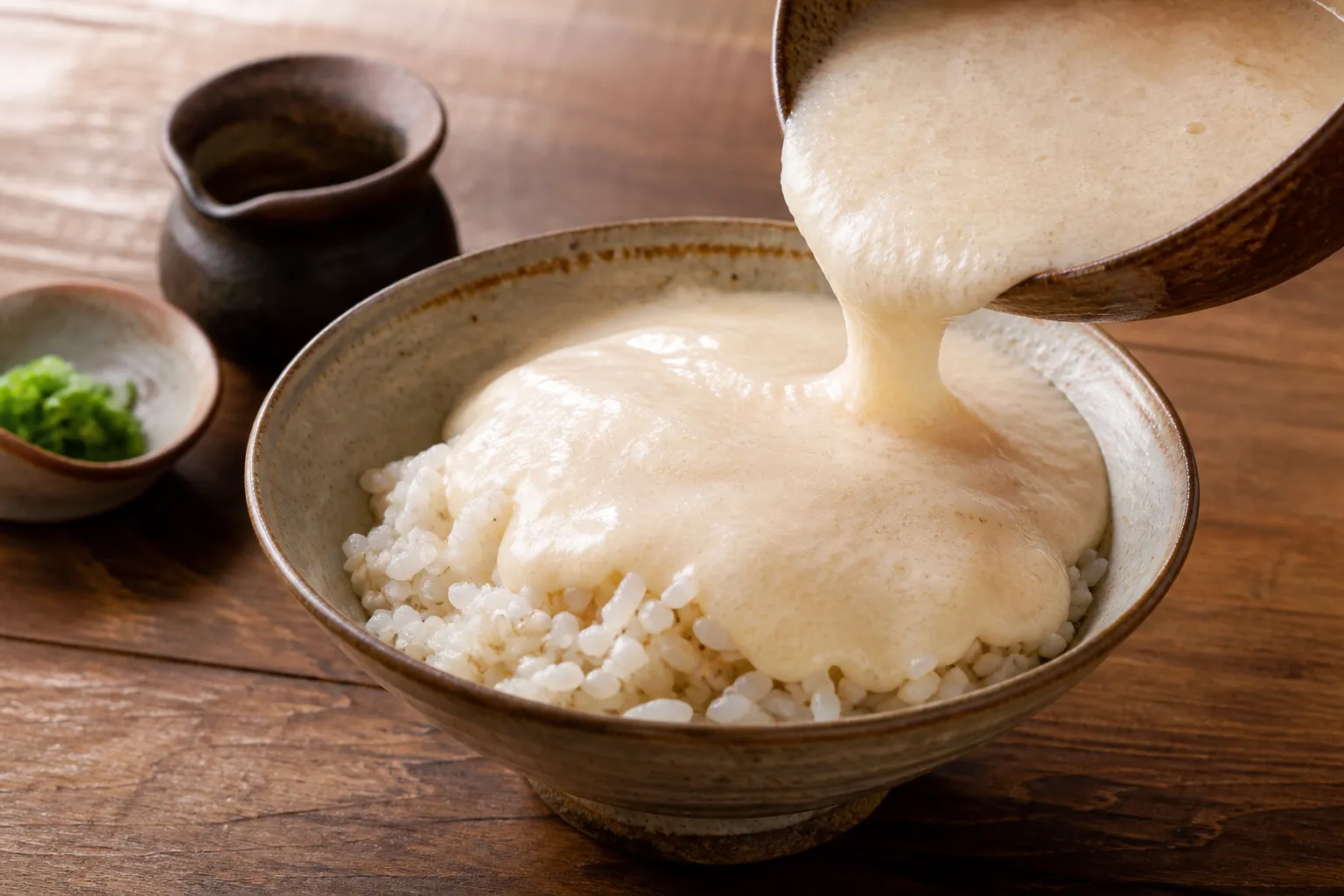
Shizuoka Tororo-jiru (静岡とろろ汁)
It slides off the spoon in one glossy, unbroken rope and refuses to let go — and travelers have been slurping this exact sticky bowl on the old Tokaido road for 400 years.
July 5, 2026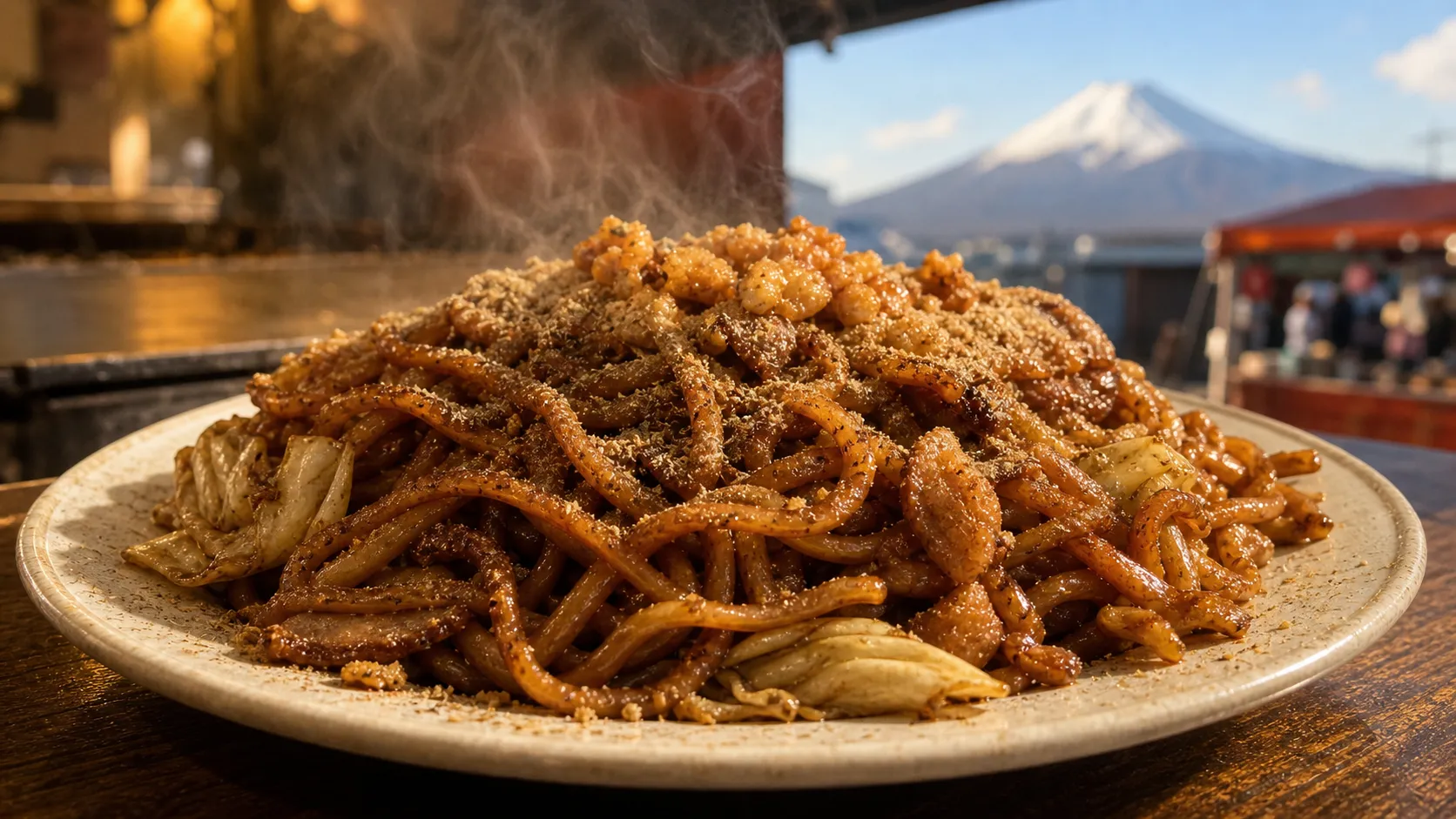
Local FoodFujinomiya, Shizuoka
Fujinomiya Yakisoba (富士宮やきそば)
The yakisoba that won Japan's biggest B-grade food competition. Twice. Thick chewy noodles, lard frying, fish powder topping — this is what yakisoba becomes when a whole city decides to take it seriously.
June 25, 2026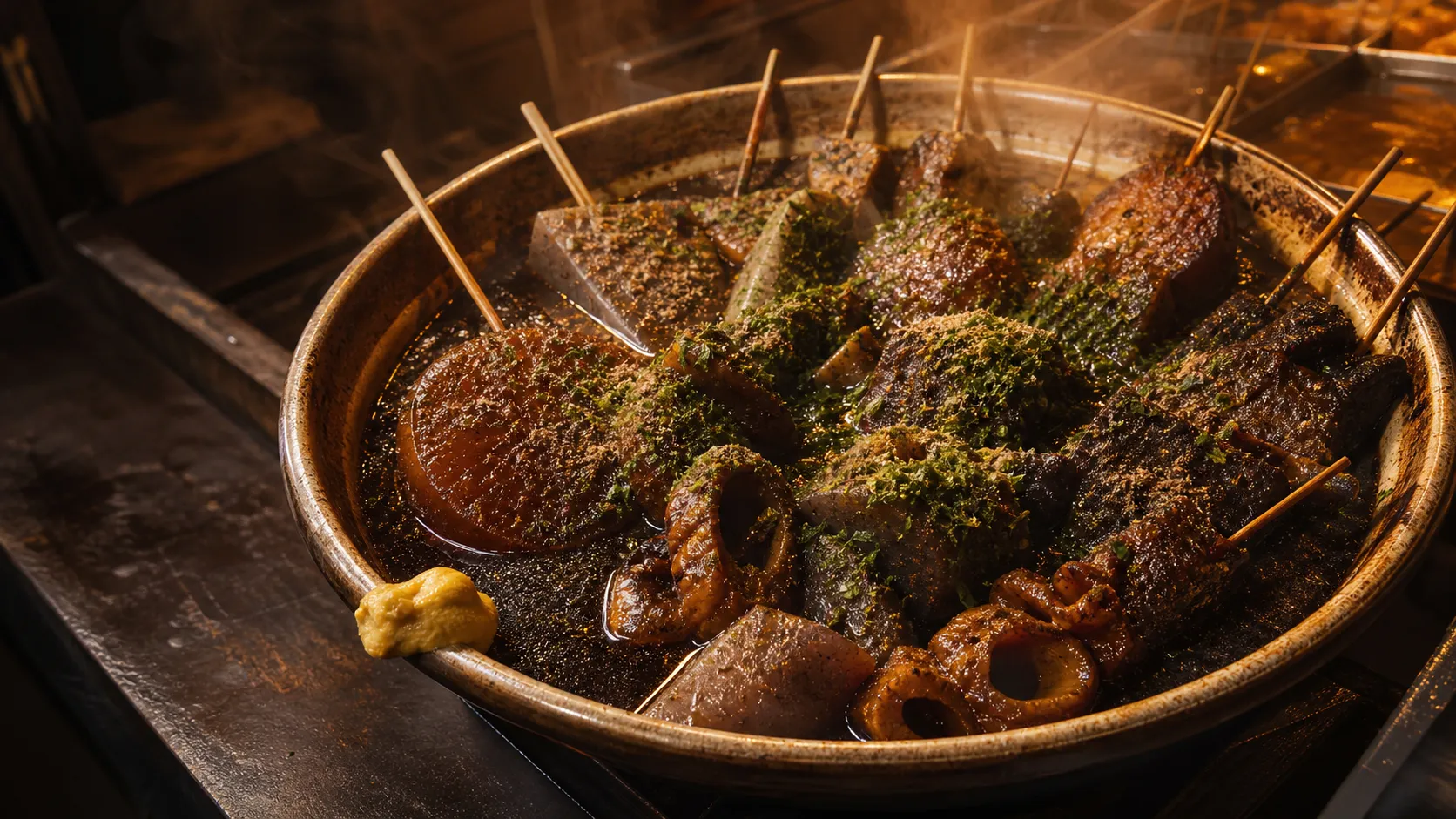
Local FoodShizuoka, Shizuoka
Shizuoka Oden (静岡おでん)
Black broth, beef tendons, skewered everything, finished with dried sardine powder and aonori. Shizuoka's oden looks intimidating, tastes like the deepest umami you've ever encountered, and costs about 100 yen per stick.
June 25, 2026