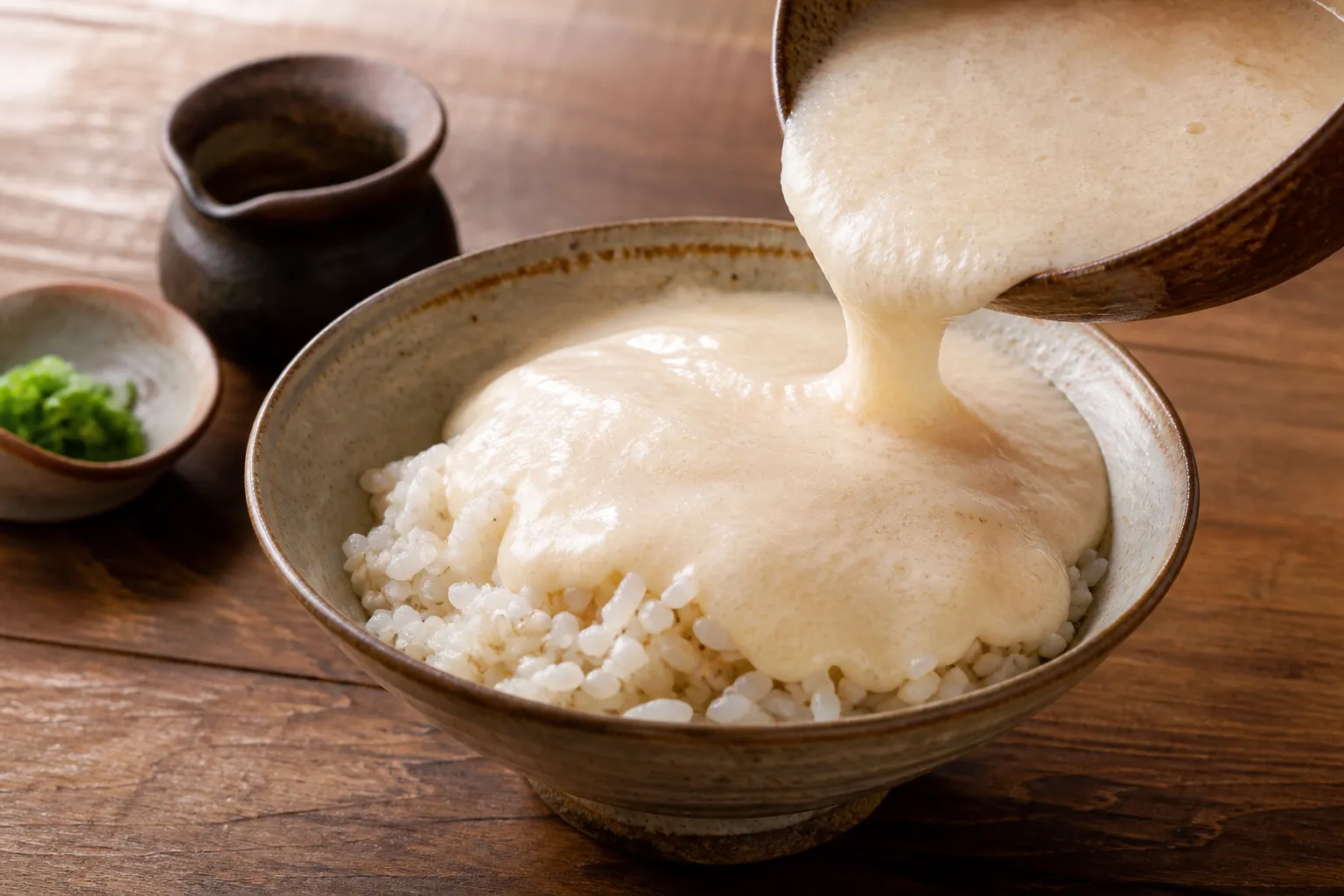
I tilted the bowl and the pale grated yam poured out in one glossy, stretching rope that would not break — it just kept going, elastic and shining, refusing to fall in normal drips. I laughed. Then I poured it over the warm barley rice, slurped a mouthful, and understood why travelers have been stopping in this exact spot for four hundred years to eat exactly this.
Share this dish


It slides off the spoon in one glossy, unbroken rope and refuses to let go — and travelers have been slurping this exact sticky bowl on the old Tokaido road for 400 years.
🍜 Planning a food trip to Shizuoka?Add this dish to my Food Trip →
 Add this dish to my Food Trip →
This is Shizuoka Tororo-jiru (静岡とろろ汁), and it is deceptively simple: wild mountain yam — jinenjo (自然薯) — grated into a fine, intensely sticky paste, loosened with dashi and a little miso or soy, then poured over a bowl of mugimeshi (barley rice). That's basically it. But jinenjo, the true wild yam, is denser, stickier, and far more flavorful than the cultivated yams you might know, and this dish has been the signature of Mariko (丸子) — a post town on the old Tokaido highway — since the Edo period. It even shows up in classic haiku and woodblock prints. You are, quite literally, eating a scene from a 17th-century travel guide.
A roadside meal older than most countries
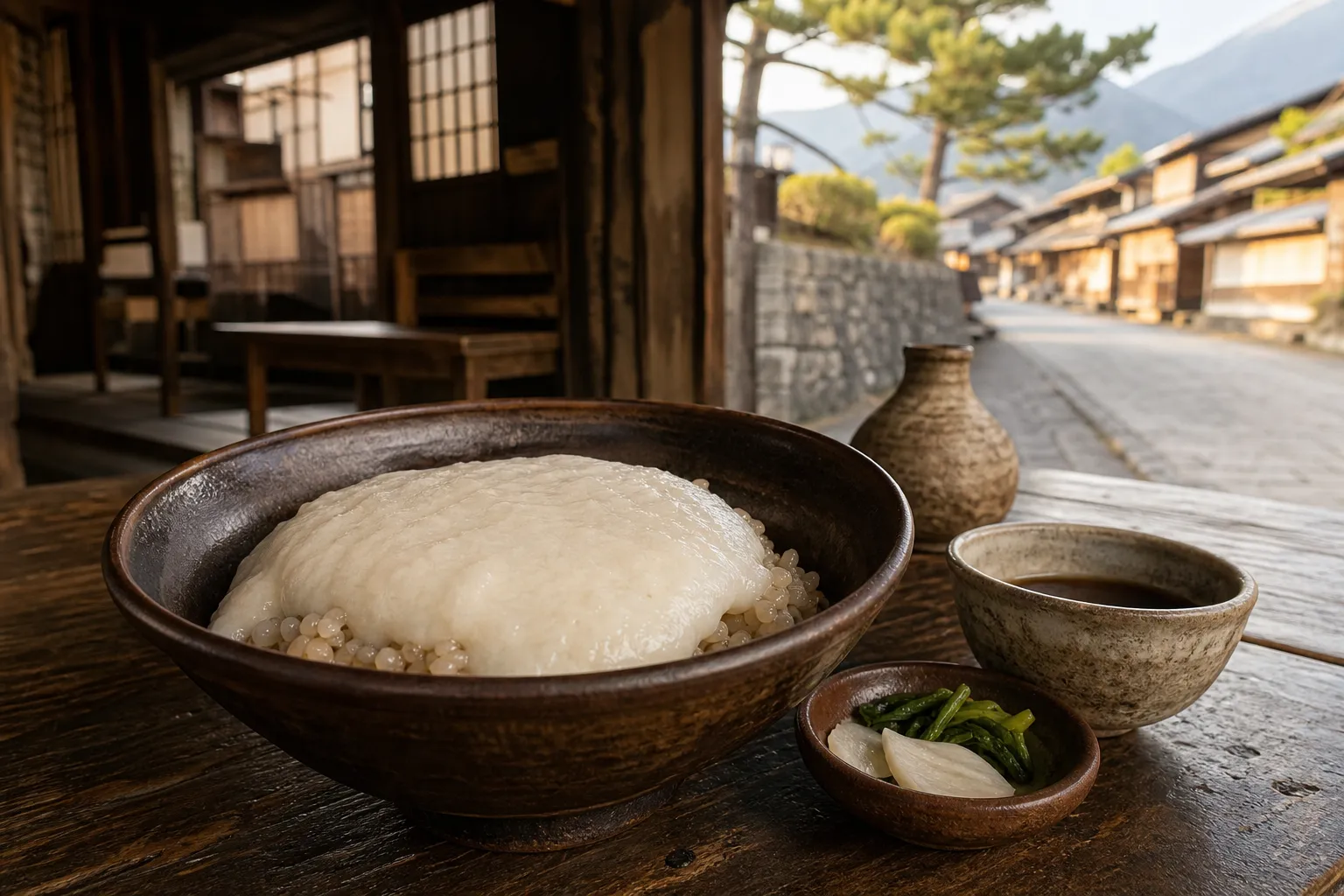
Mariko was the 20th of the 53 stations on the Tokaido, the great road connecting Edo (Tokyo) and Kyoto, and its tororo-jiru was famous enough that the poet Matsuo Bashō name-checked it and the ukiyo-e master Hiroshige painted the roadside teahouse serving it. Weary travelers on foot would stop here, slurp down a bowl of sticky yam over barley rice, and carry on. Some of the teahouses on that road have been serving it, in an unbroken line, for centuries — the same dish, in the same spot, for the same reason.
I find that genuinely stirring. Not a reconstruction, not a theme restaurant — an actual continuous thread of hungry travelers eating grated yam on the same stretch of road for four hundred years. Barley rice was originally the humble everyman's grain, and jinenjo was a mountain food believed to give strength and stamina. So this is peasant fuel elevated by time into a beloved regional treasure. The most ordinary ingredients, made sacred by sheer persistence.
Why the stickiness is the whole point
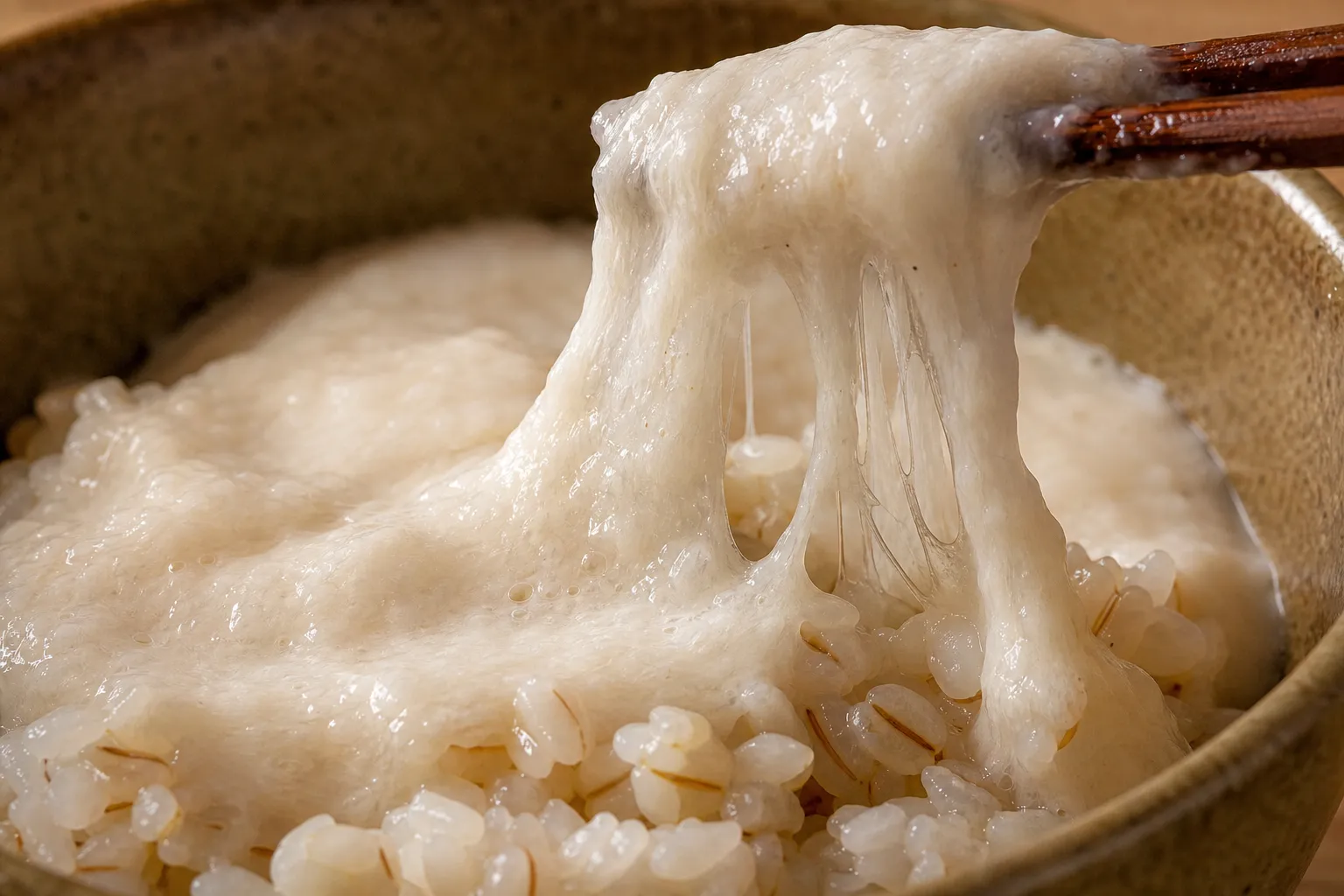
Jinenjo is not the watery cultivated yam. It's the real wild thing — dense, powerfully sticky, with a clean earthy sweetness — and when it's grated fine and loosened with dashi it turns into this glossy, elastic, almost alive-looking topping that stretches instead of pouring. That viscosity is the experience: silky and slippery in the mouth, coating the barley rice so every grain slides down together. The dashi and miso give it a gentle savory backbone; the yam gives it that unmistakable slick, cool, faintly nutty texture.
Here's the honest heads-up: it is genuinely slippery, and eating it demands a little surrender. The move is to pour it over the barley rice and slurp — don't fight it with careful, dignified bites. Lean in, make some noise, let it slide. It's warming, deeply comforting, and weirdly moreish. I finished the bowl faster than I meant to and immediately understood the four centuries.
How the bowl is made
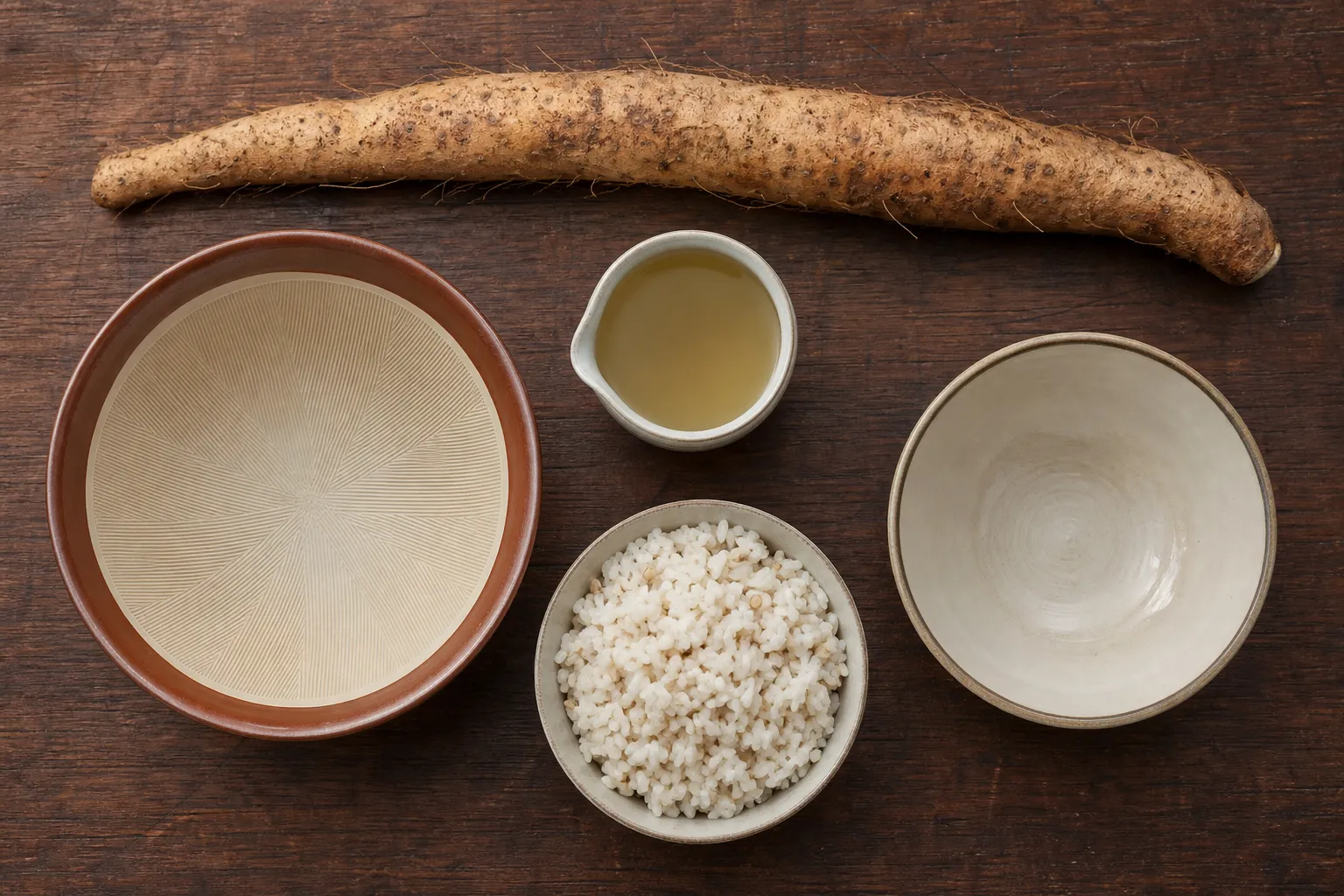
- A whole jinenjo (wild mountain yam) is peeled and grated to an extremely fine, sticky paste — often against a coarse grater, then ground in a suribachi mortar
- The grated yam is slowly loosened with warm dashi and seasoned with a little miso or soy, whisked until glossy and pourable
- Barley rice (mugimeshi) is cooked separately — the nubbly grain is part of the point, adding chew and rustic character
- The tororo is poured generously over a bowl of the barley rice at the table or just before serving
- You mix, then slurp it straight down — usually with pickles and simple sides in a classic set meal
Before you go — surrender to the slime
Your questions, answered honestly
"How on earth do I eat something this slippery?" — Pour the tororo over the barley rice, give it a stir, lift the bowl, and slurp. Slurping is correct and encouraged. Do not try to eat it in small, polite forkfuls — it will defeat you, and you'll miss the whole pleasure of it.
"Is this the raw-tuna yam thing (yamakake)?" — No. Yamakake is grated yam over raw tuna. Shizuoka tororo-jiru is grated wild yam loosened with dashi and poured over barley rice — no fish, older tradition, different dish entirely. Don't confuse the two.
"Is grated raw yam actually good, or just weird?" — Genuinely good. The wild jinenjo has real flavor — earthy, faintly sweet, savory from the dashi — and the silky texture over chewy barley rice is strangely addictive. It's adventurous in texture but gentle in taste; there's nothing to be scared of.
"Heads up on the yam itself?" — Raw yam can lightly tingle or itch some people's lips or hands (from natural crystals in the skin); it's harmless and passes quickly. If you have a known yam allergy, skip it.
What the staff will ask you
| You'll hear | Romaji | Meaning | Just say |
|---|---|---|---|
| 麦飯でよろしいですか? | Mugimeshi de yoroshii desu ka? | "Is barley rice okay?" | Hai, onegaishimasu (yes, please) |
| ご飯のおかわりはいかがですか? | Gohan no okawari wa ikaga desu ka? | "Would you like a rice refill?" | Onegaishimasu (yes, please) / Daijōbu desu (I'm good) |
| 定食にしますか? | Teishoku ni shimasu ka? | "Would you like the set meal?" | Teishoku de onegaishimasu (the set, please) |
To order, just say "Tororo-jiru o kudasai" (とろろ汁をください) — "Tororo-jiru, please."
Where to eat it
- Mariko, Shizuoka — the old Tokaido post town is the home of tororo-jiru, with long-running teahouse-style restaurants on the historic road specializing in it, some in business for centuries.
- Along the old Tokaido in Shizuoka — several traditional tororo restaurants line this stretch, often in atmospheric old wooden buildings that feel unchanged from the Edo-period travelers' era.
- Shizuoka city area — some restaurants and inns in and around the city serve tororo set meals if you can't make it out to Mariko itself.
Hours, availability, and menus change over time — some historic shops keep short or irregular hours — so check current details before you go.
Soul Score
Local Roots5/5
First-Timer Friendly3/5
Adventure Level4/5
Comfort Level5/5
Travel Worthy4/5
These scores are one obsessed eater's gut feeling — not a verdict. A low number isn't a bad mark, just a different kind of adventure.
Know someone planning Japan?
← All Articles
Local Food · Mariko, Shizuoka
Still hungry?
Eat more from Shizuoka
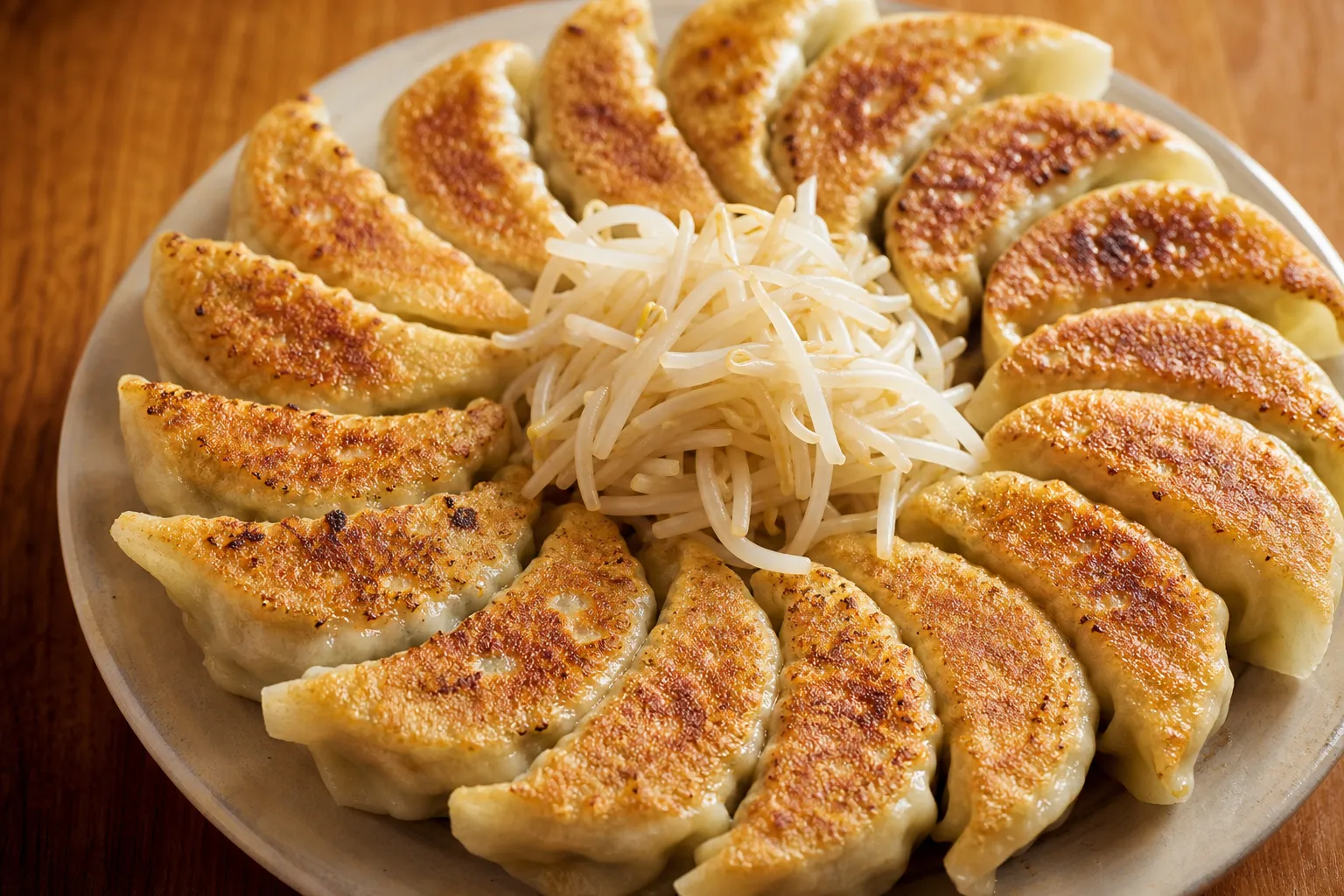
Local FoodHamamatsu, Shizuoka
Hamamatsu Gyoza (浜松餃子)
A ring of gyoza with a snowy mound of bean sprouts sitting in the hole at the center — like the plate itself is winking at you before you've picked up your chopsticks.
July 5, 2026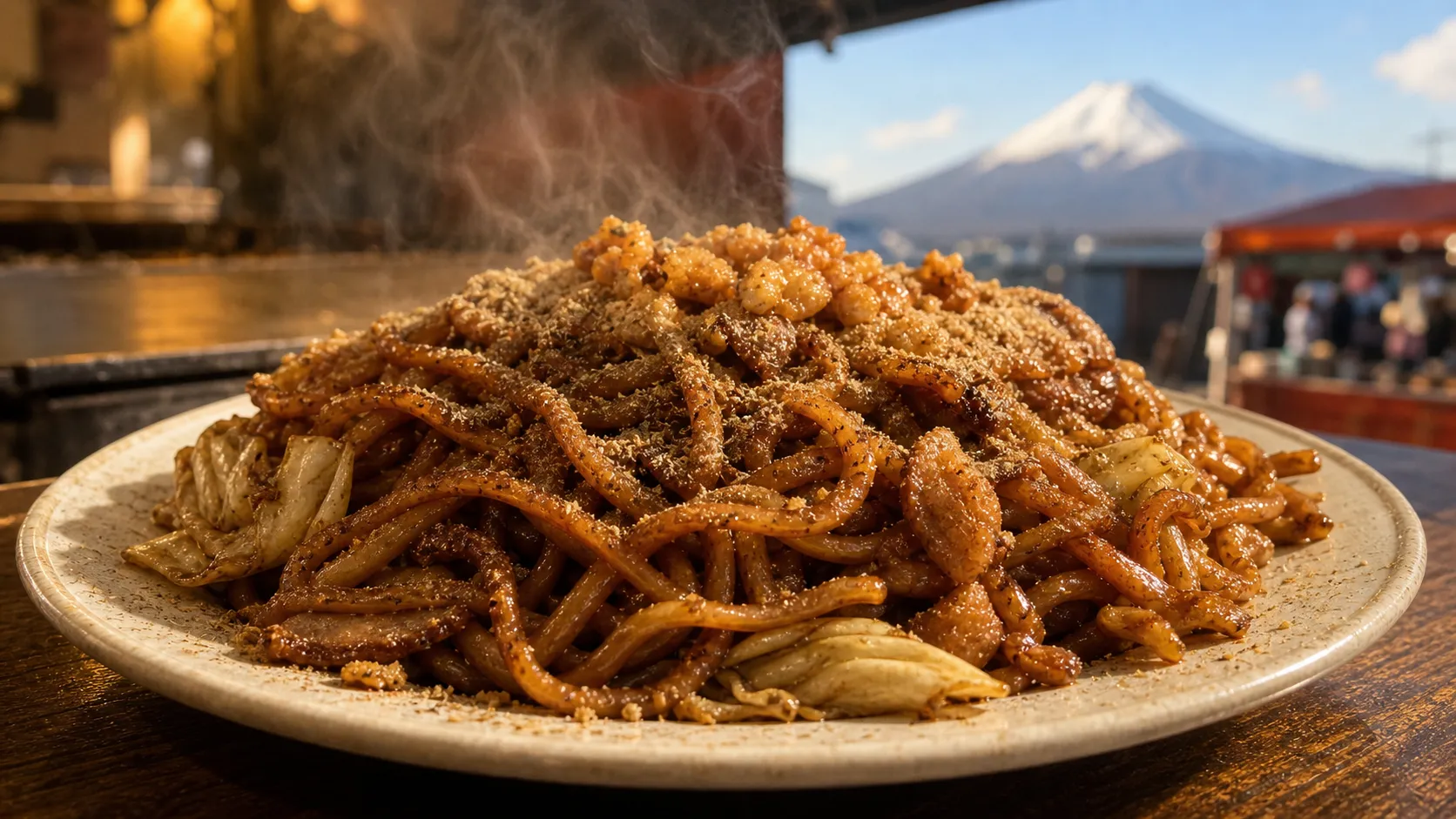
Local FoodFujinomiya, Shizuoka
Fujinomiya Yakisoba (富士宮やきそば)
The yakisoba that won Japan's biggest B-grade food competition. Twice. Thick chewy noodles, lard frying, fish powder topping — this is what yakisoba becomes when a whole city decides to take it seriously.
June 25, 2026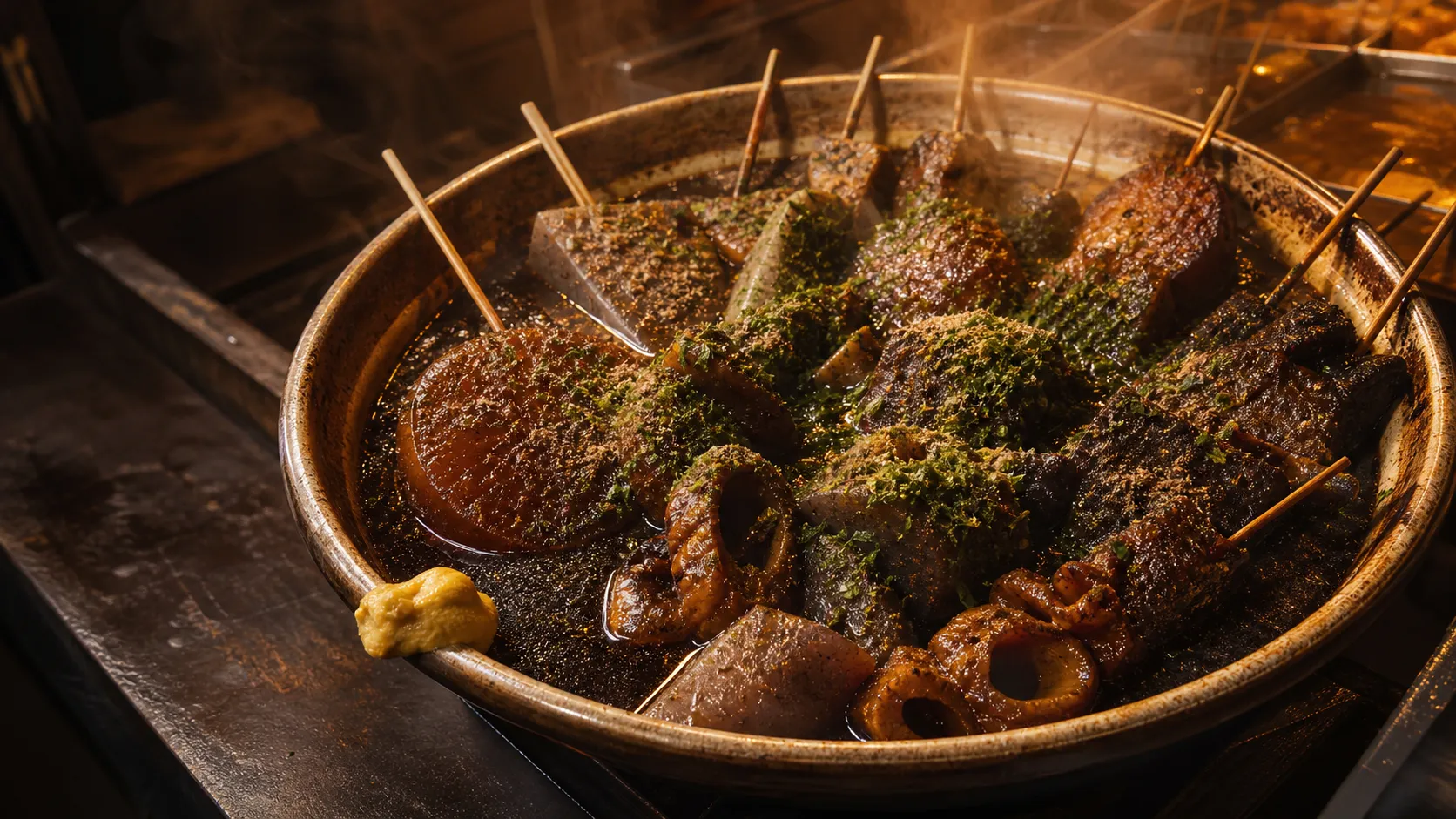
Local FoodShizuoka, Shizuoka
Shizuoka Oden (静岡おでん)
Black broth, beef tendons, skewered everything, finished with dried sardine powder and aonori. Shizuoka's oden looks intimidating, tastes like the deepest umami you've ever encountered, and costs about 100 yen per stick.
June 25, 2026