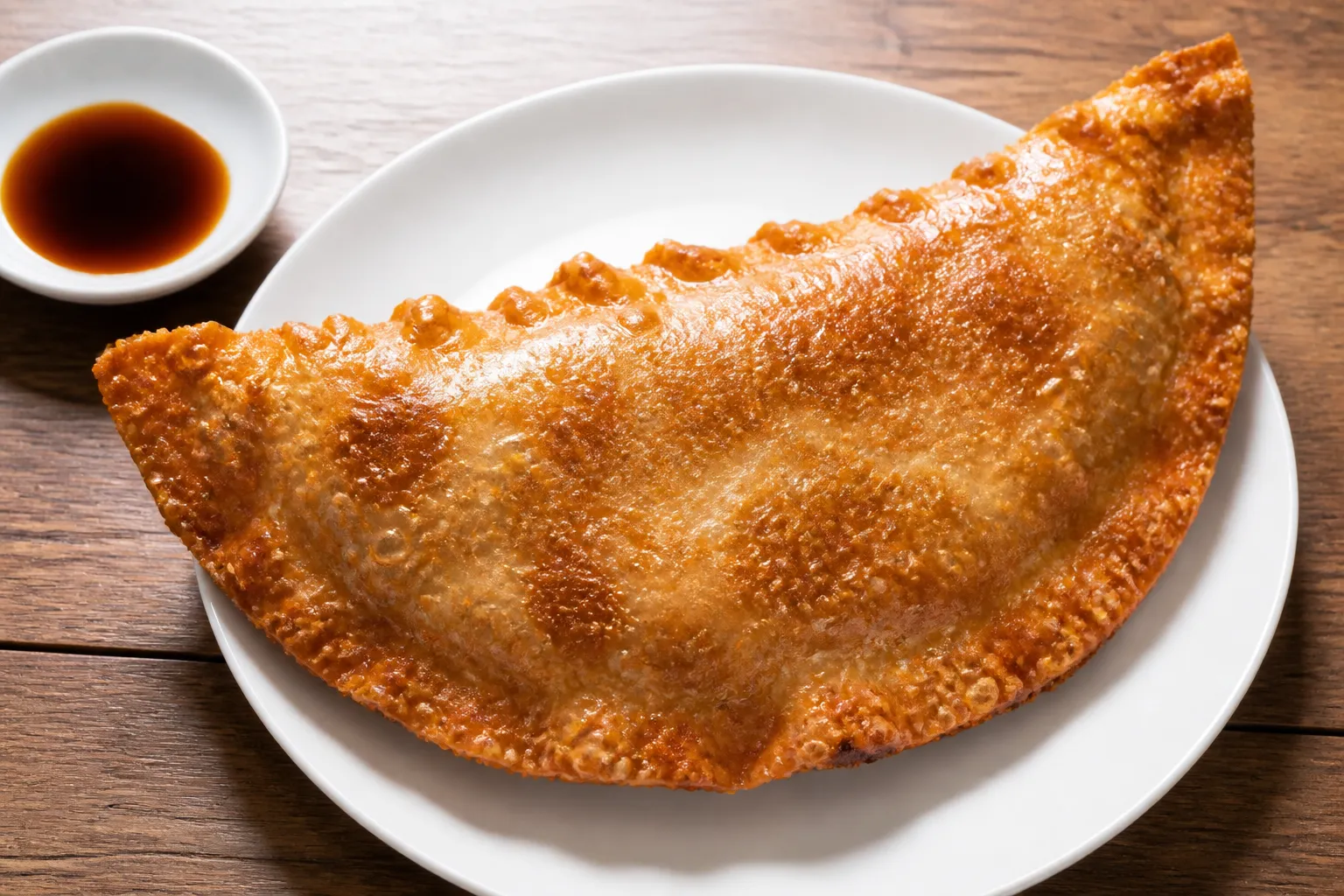
It's the size of your face.
Share this dish


Japan's biggest gyoza. Fifteen centimeters across. Fried until the skin shatters. One piece is a meal. Tsu, Mie Prefecture's finest contribution to the ongoing debate about what gyoza can be.
🍜 Planning a food trip to Mie?Add this dish to my Food Trip →
 Add this dish to my Food Trip →
Not figuratively. Not "it's big for a gyoza." I mean the thing arrives on the plate and it is approximately the diameter of a human adult's face and it is golden and it is glistening and it has been deep-fried until the skin is a shatteringly crisp shell over a filling that presses against it from inside like it's trying to escape. You pick it up with both hands. You take a bite. The skin cracks. Steam escapes. The pork-and-vegetable filling is dense and juicy and perfectly seasoned.
One is enough. You will order two anyway.
Tsu gyoza (津ぎょうざ) is the landmark dish of Tsu city, the prefectural capital of Mie — a city most people have never heard of, which is precisely where these things tend to happen. The gyoza is approximately 15 centimeters across, roughly ten times the size of a standard gyoza, deep-fried (not pan-fried, not steamed — deep-fried) until the wrapper turns into a golden, oil-blistered shell with an interior that stays soft and yielding against the crunch outside. It was originally developed as school lunch food in Mie Prefecture — designed to be filling, economical, and possible to eat with one hand — and has since become the city's defining B-grade delicacy.
School lunch. School lunch. I wish my school lunches had looked like this.
How Tsu put a school meal on the culinary map
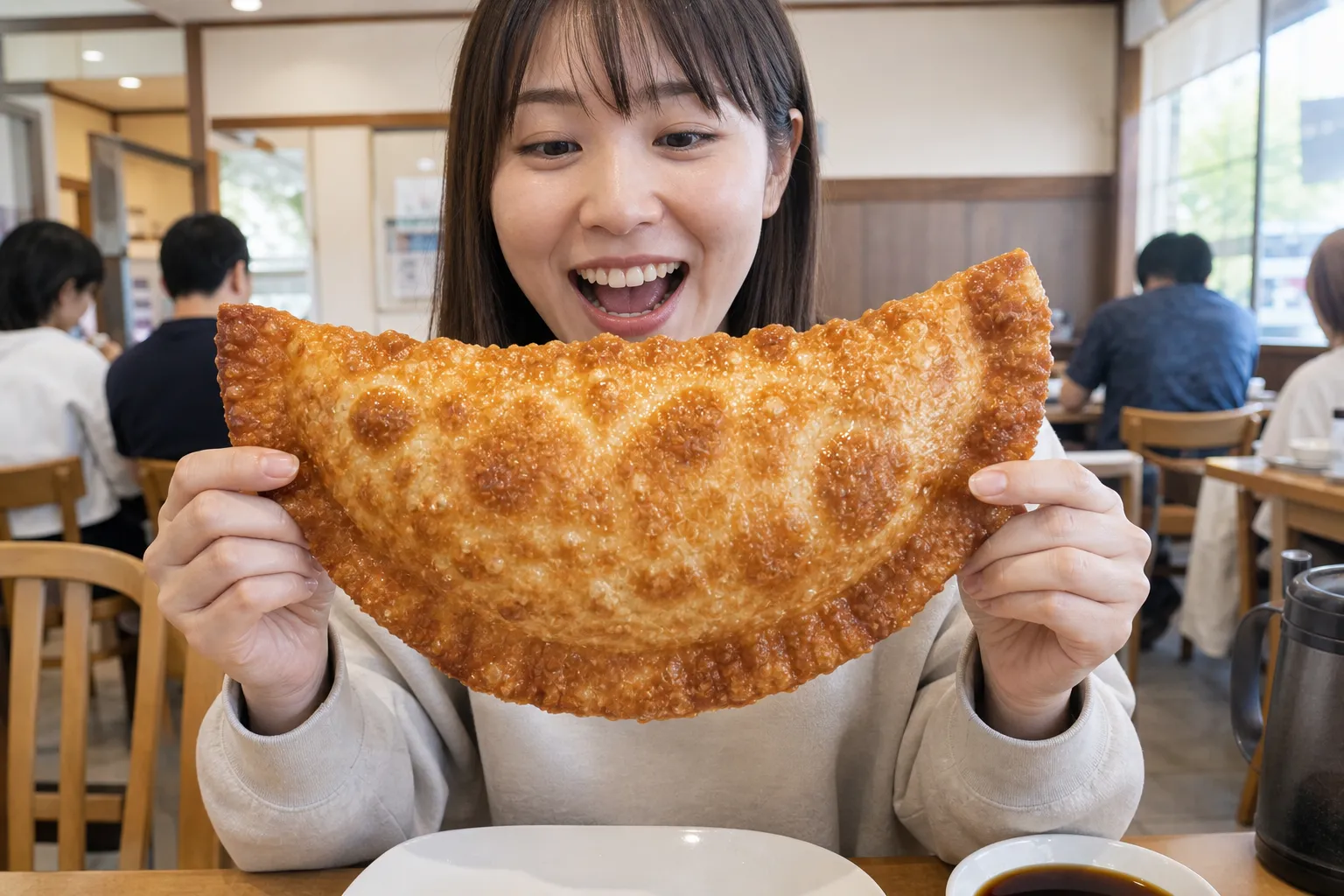
The origin story is genuinely charming: Tsu gyoza was created in the 1980s as part of the Mie Prefecture school lunch program, designed to be large enough to be a real meal component, economical enough for school budgets, and beloved enough that children would actually eat it. It succeeded on all three counts. The kids loved it. The kids grew up and kept loving it. The dish spread from schools to local restaurants and street stalls, and Tsu city eventually claimed it as a point of civic pride.
The size is functional, not showoff. At 15cm across, one gyoza provides enough filling to constitute a proper serving at a school lunch. The deep-frying method (rather than the pan-fry typical of standard gyoza) makes large-scale production easier and gives the wrapper a consistent, long-lasting crunch. What started as cafeteria practicality became culinary genius.
The skin is the achievement
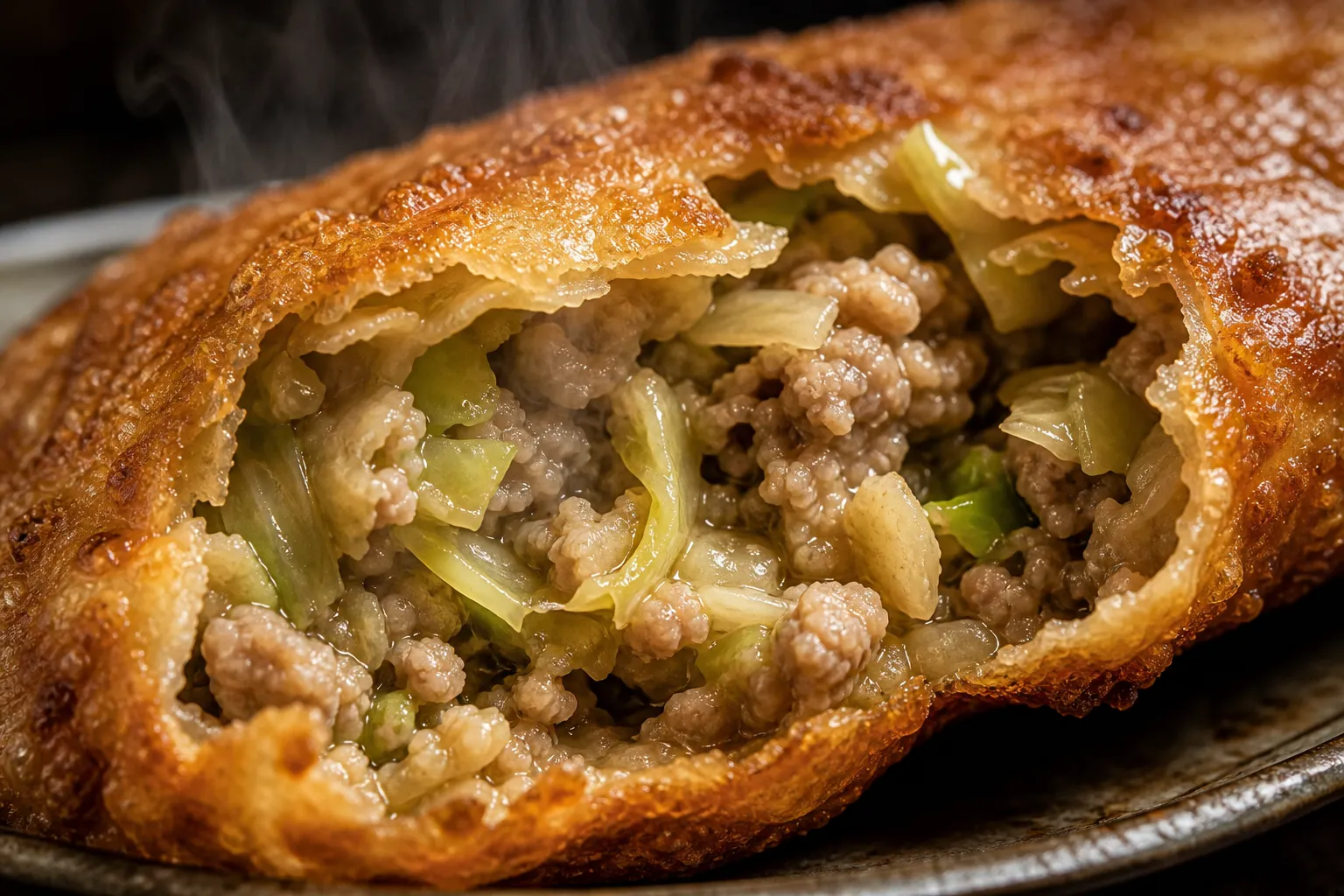
At standard gyoza size, the pan-fry method produces a crispy bottom and soft, steamed sides. At 15cm, you need a different approach — and deep-frying solves it completely. The whole wrapper goes into oil and comes out uniformly golden and crisp, blistered in spots where steam escaped during frying, with a texture that's closer to a spring roll shell than a dumpling wrapper. But it's thicker than a spring roll — it has substance, it cracks rather than shatters completely, and it stays crispy even as the filling heats it from inside.
The filling is classically gyoza: ground pork, cabbage, garlic, ginger, soy, sesame. Straightforward, honest, well-seasoned. The skin is the point. The size is the experience.
How it's made
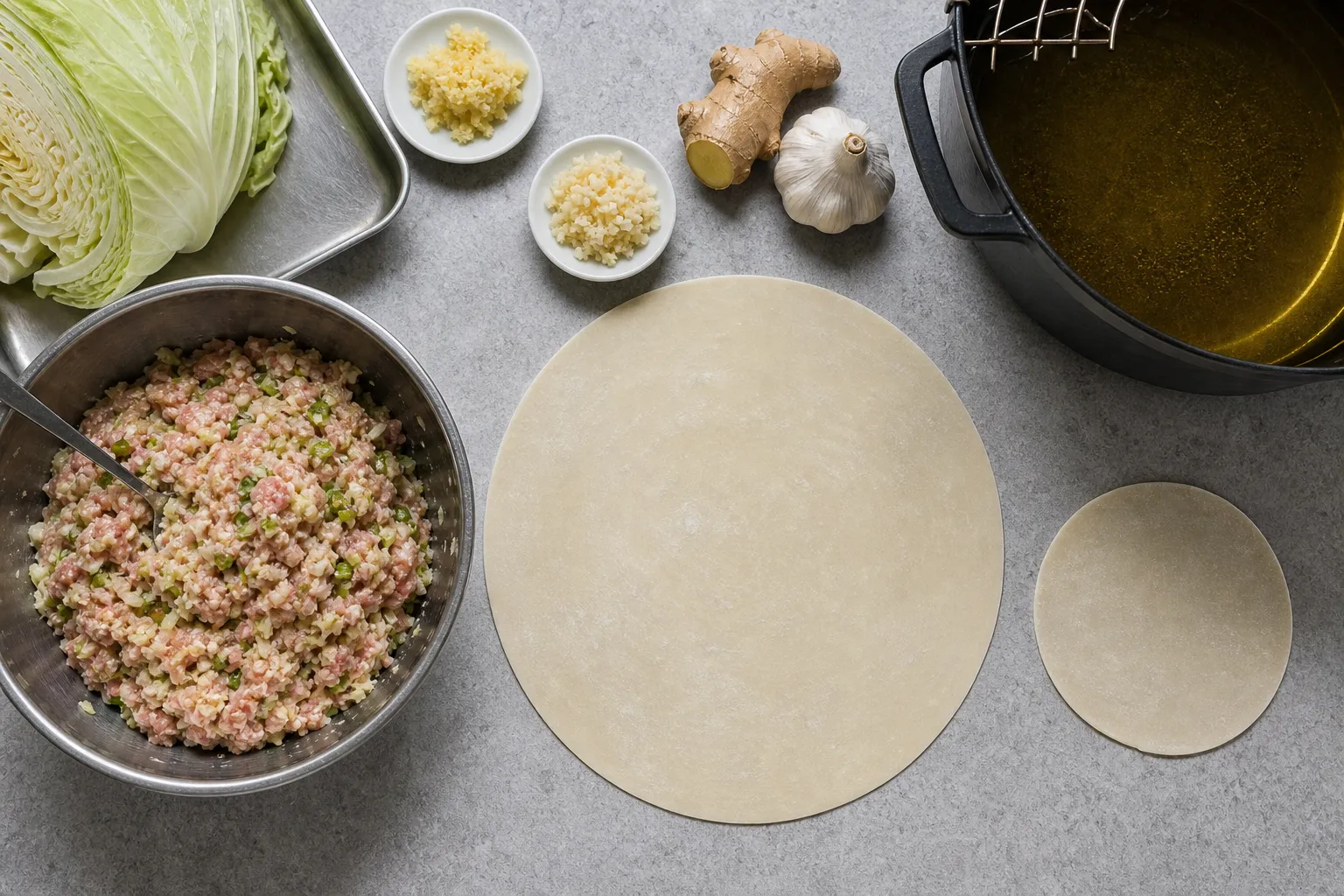
- Prepare the filling: ground pork, finely chopped cabbage, garlic, ginger, soy sauce, sesame oil
- Roll the wrapper large — roughly 15cm diameter, significantly thicker than standard gyoza wrappers to hold the filling
- Fold and seal carefully; the large size means the seal has to hold more filling weight
- Deep-fry in oil at medium-high heat until the wrapper is golden and uniformly crisp
- Drain and serve immediately — this is not a gyoza that sits well, the crunch is the entire point
Before you go — handle with both hands
Your questions, answered honestly
"Really 15cm? That's enormous." — Really 15cm. Most people do a double-take when it arrives. It's the size of a large man's palm. One piece is a legitimate meal component, not a snack.
"Is it greasy from deep-frying?" — Good Tsu gyoza should be crispy and light, not heavy with oil. The frying temperature matters enormously — too low and it absorbs oil, too high and the outside burns before the filling cooks. Done right, it's shatteringly crisp with no grease feeling.
"Do I need dipping sauce?" — Most places serve it with a standard gyoza dipping sauce (soy, vinegar, chili oil). The filling is well-seasoned enough to eat plain if you want to taste the wrapper.
"Is this different from regular gyoza besides the size?" — Yes — the deep-fry method creates a fundamentally different skin texture from pan-fried gyoza. Think of the difference between a fried spring roll and a steamed dumpling. Same concept applies here.
"One piece is really enough?" — One is enough. You should order two. Three is a commitment. Make it.
What the staff will ask you
| You'll hear | Romaji | Meaning | Just say |
|---|---|---|---|
| 何個にしますか? | Nanko ni shimasu ka? | "How many pieces?" | Niko kudasai (two pieces please) |
| ソースはどうしますか? | Sōsu wa dō shimasu ka? | "Dipping sauce?" | Hai, onegaishimasu (yes please) |
| ご飯はいりますか? | Gohan wa irimasu ka? | "Want rice?" | Up to you — one gyoza over rice is a complete meal |
To order, just say "Tsu gyoza kudasai" (津ぎょうざください) — "Tsu gyoza, please."
Where to eat it
- Tsu city school lunch stalls and local gyoza shops — Tsu gyoza has spread from schools to a network of local restaurants and street stalls in the city.
- Mie Prefecture local food events — Tsu gyoza regularly appears at regional food festivals where its size makes it immediately identifiable.
- Tsu Station area — several restaurants near the main station serve it for visitors passing through Mie.
Tsu is accessible from Nagoya in about an hour. Combine with Ise Shrine (one of Japan's most sacred sites) for a full Mie day trip — gyoza and national treasure in one.
Soul Score
Local Roots5/5
First-Timer Friendly4/5
Adventure Level4/5
Comfort Level5/5
Travel Worthy4/5
These scores are one obsessed eater's gut feeling — not a verdict. A low number isn't a bad mark, just a different kind of adventure.
Know someone planning Japan?
← All Articles
Local Food · Tsu, Mie
Still hungry?
Eat more from Mie
Local FoodMie
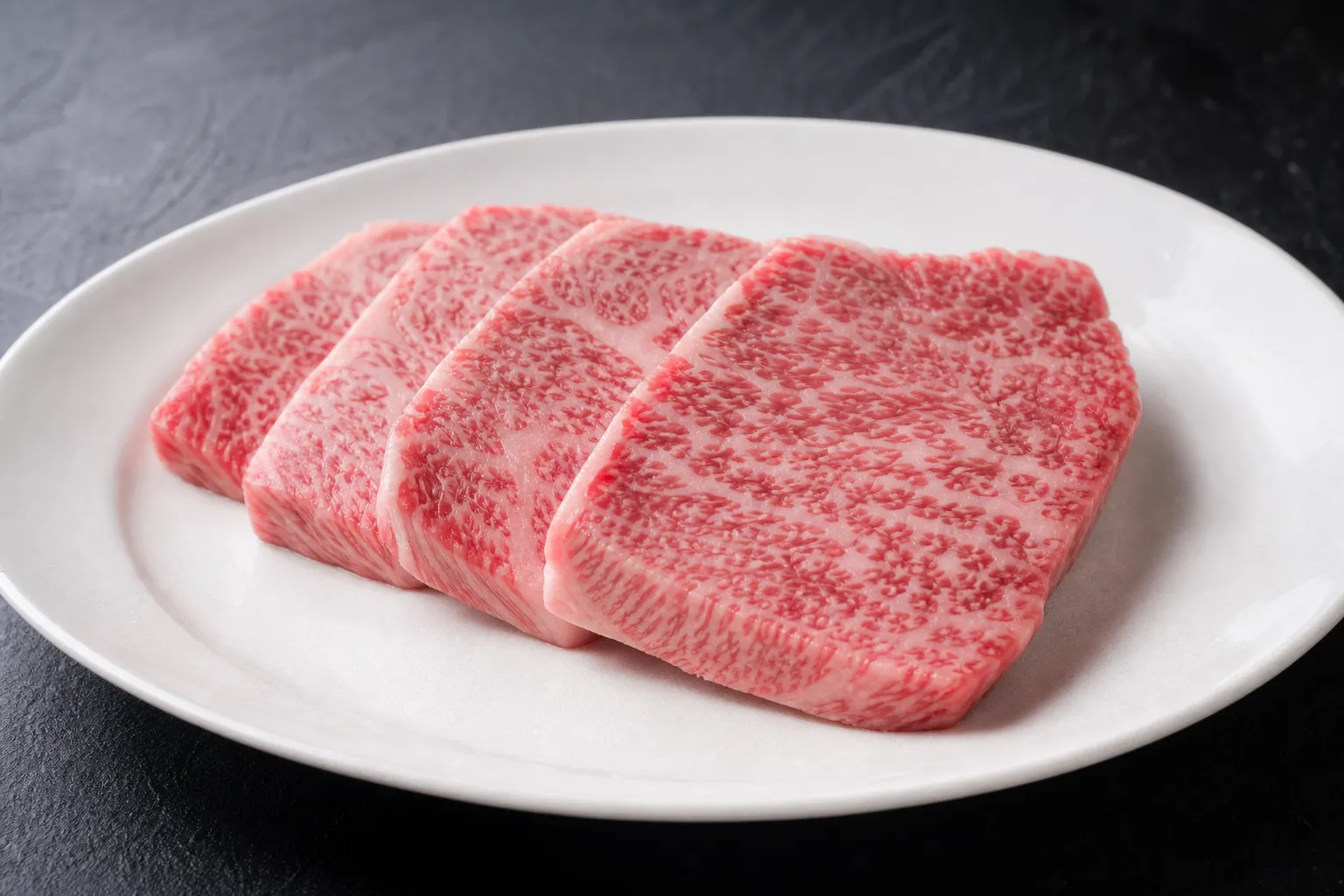
Matsusaka Beef (松阪牛)
Four slices of raw beef on a plain white plate looked less like dinner and more like marble sculpture — and it turns out the fat is so fine it starts melting from the warmth of your fingers alone.
July 22, 2026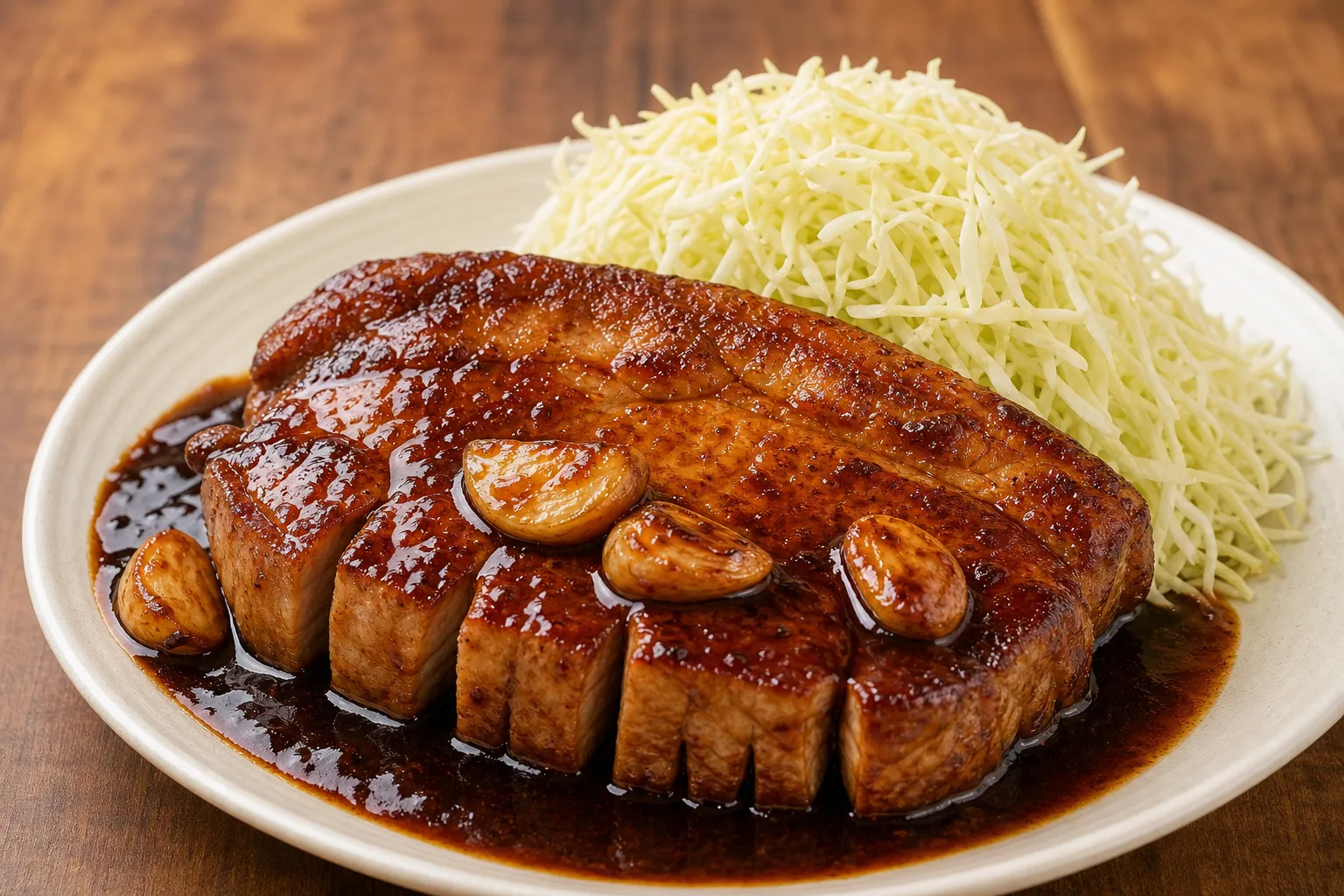
Local FoodYokkaichi, Mie
Tonteki (トンテキ)
A slab of pork the thickness of your fist, seared black-brown and drowning in garlic sauce — this is not the polite cutlet you were expecting.
July 4, 2026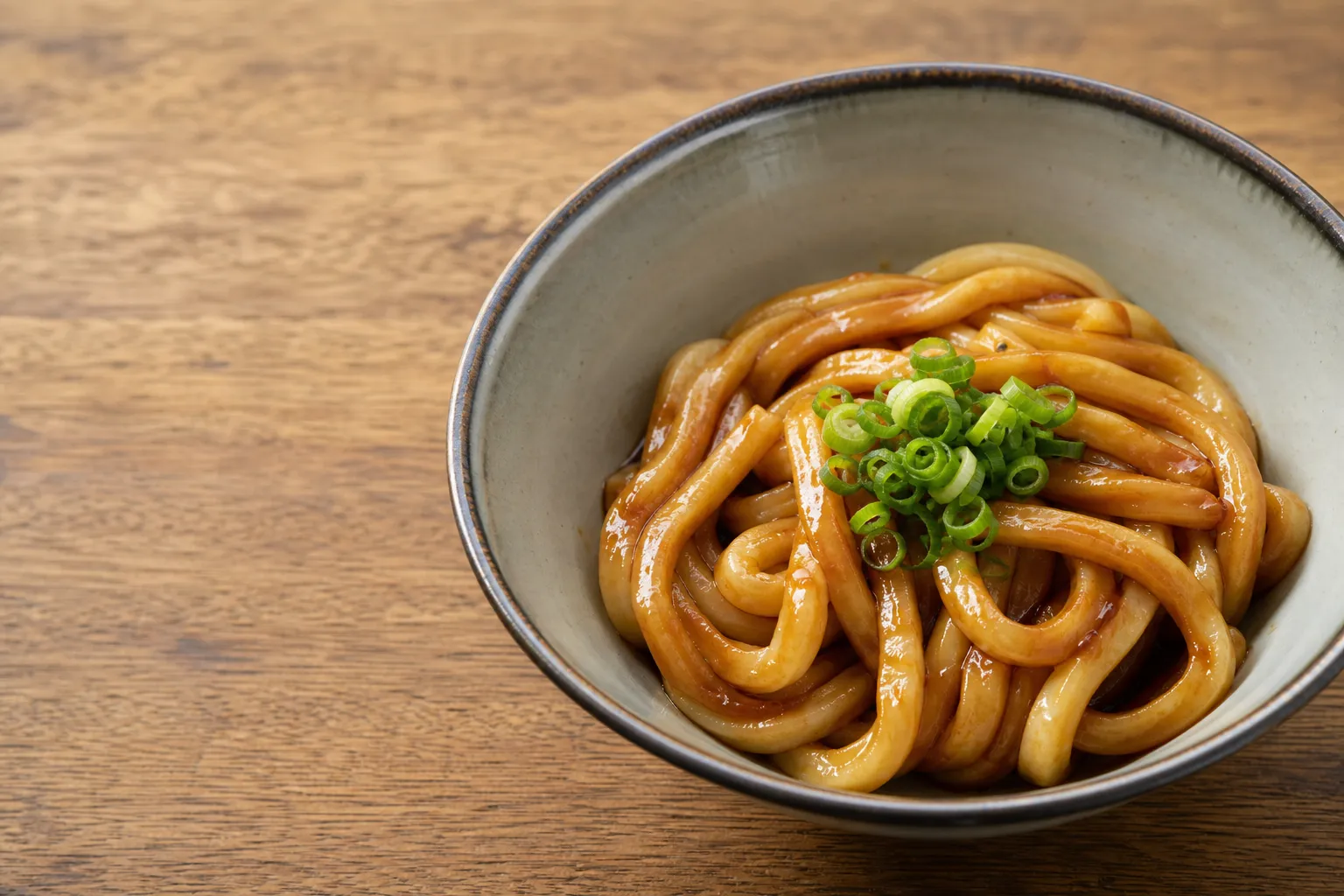
Local FoodIse, Mie
Ise Udon (伊勢うどん)
Fat, pillowy udon so soft it barely fights back, glossed in a dark, sweet-savory tare instead of soup. Ise's pilgrim food breaks every udon rule on purpose — and after a day on your feet, it's exactly right.
July 3, 2026