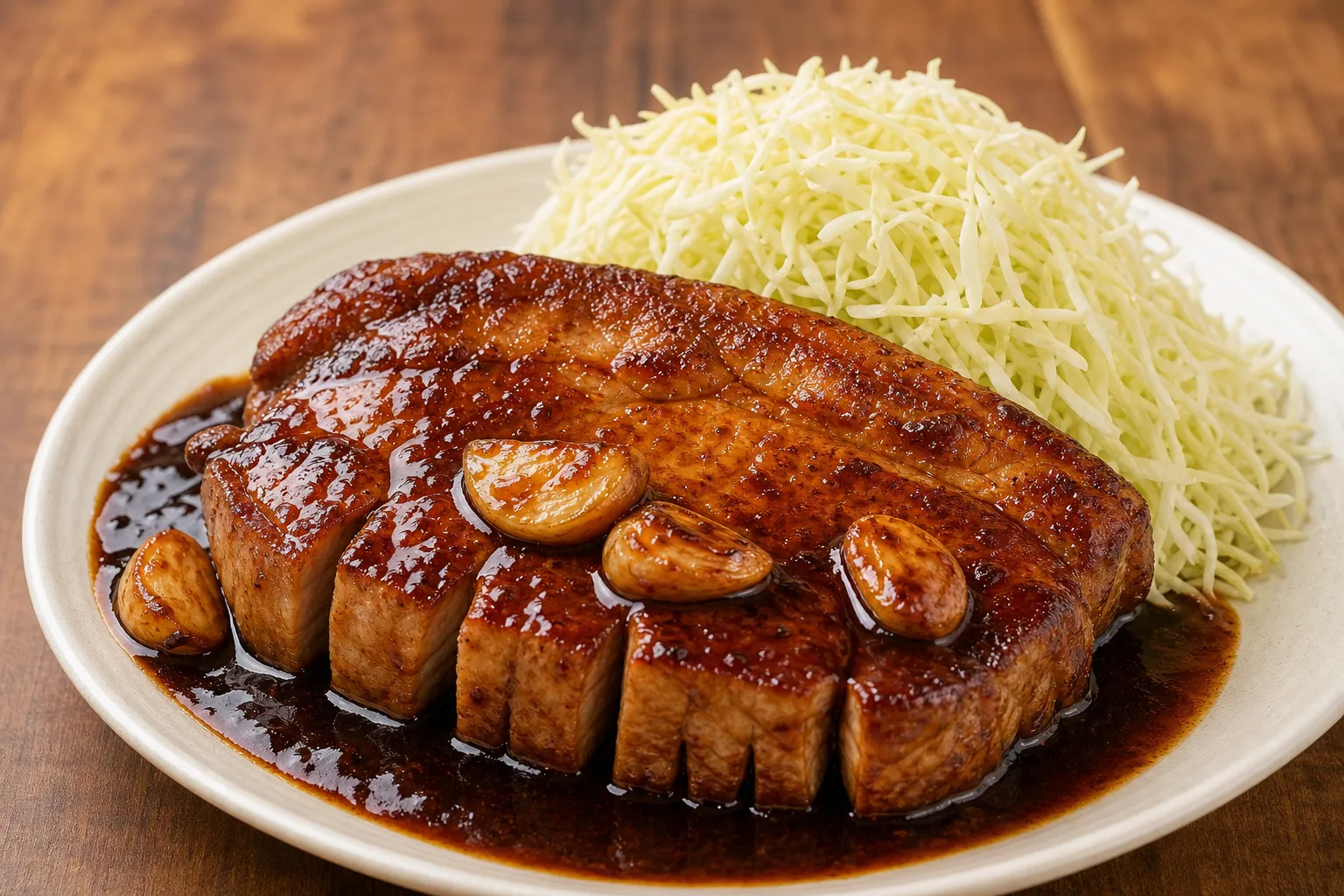
I cut into it expecting resistance. There wasn't any. The knife went through that dark, glistening crust and the inside was pale, juicy, almost shockingly tender for a piece of meat that thick — and then the sauce hit, sweet and garlicky and a little bit violent, and I just sat there chewing with my eyebrows up. Nobody warned me a pork steak could do this.
Share this dish


A slab of pork the thickness of your fist, seared black-brown and drowning in garlic sauce — this is not the polite cutlet you were expecting.
🍜 Planning a food trip to Mie?Add this dish to my Food Trip →
 Add this dish to my Food Trip →
This is tonteki (トンテキ), Yokkaichi's answer to the question "what if a steak, but pork, and also somehow better." Forget what you think you know about Japanese pork dishes — this isn't tonkatsu (no breadcrumbs, no deep fryer) and it isn't the thin-sliced ginger pork of shogayaki. It's a thick-cut loin steak, seared hard on a griddle, sliced into ribs so you can actually get your chopsticks through it, and buried under a garlic-heavy, Worcestershire-adjacent sauce with a mountain of raw shredded cabbage standing guard on the side. It's a working-class hero of a dish and it knows it.
Where a factory-town lunch became a local legend
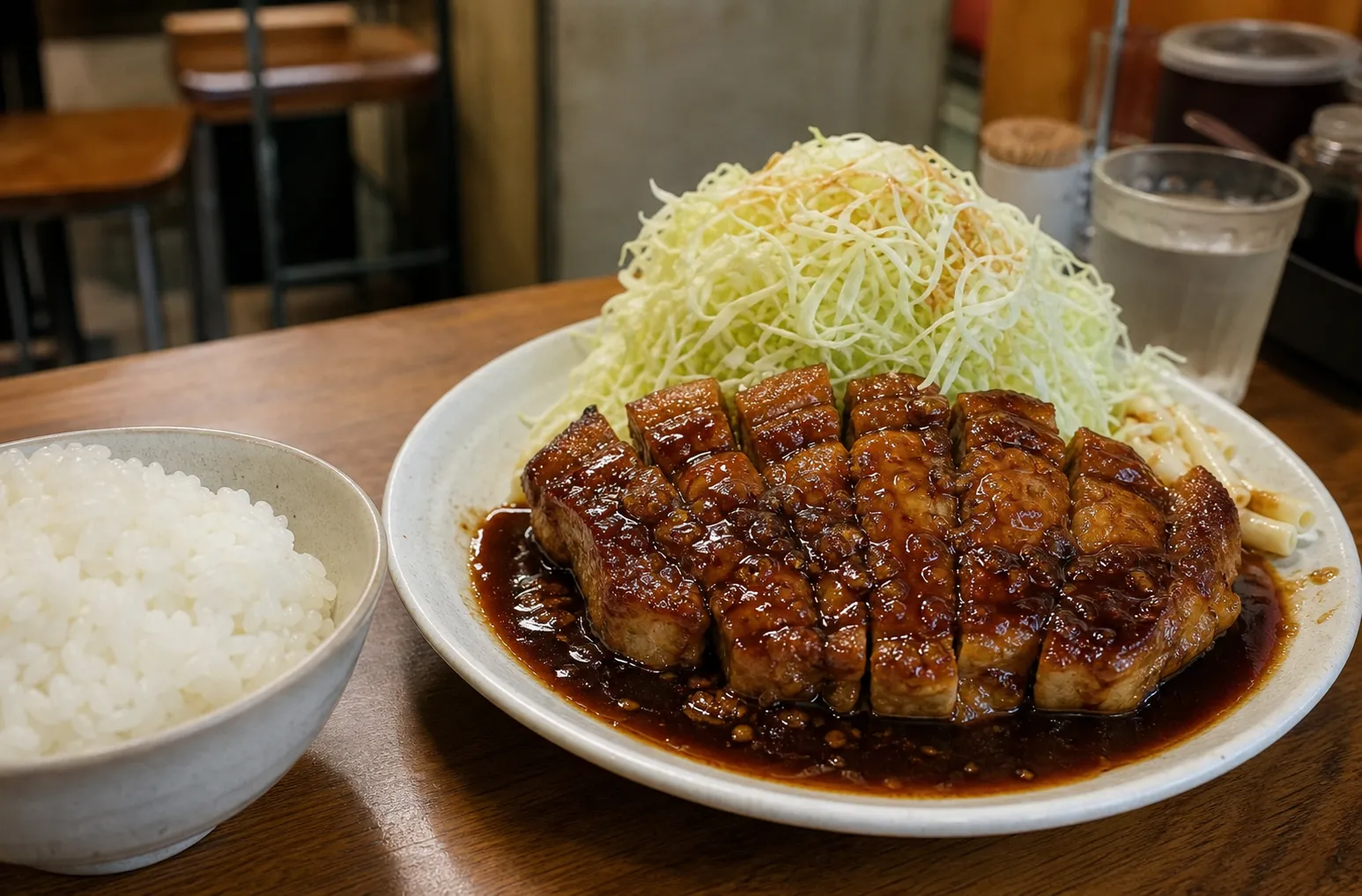
Yokkaichi is an industrial port city in Mie Prefecture, and tonteki grew up feeding the people who worked there. Steak was expensive; pork was not. So local cooks did the obvious, brilliant thing: took a cheap, thick cut of pork loin, seared it hard enough to get real char, and hit it with a sauce aggressive enough to make anyone forget they weren't eating beef. It caught on at diners and stand-up lunch counters near the factories, and it never left — Yokkaichi now runs an actual "Tonteki Map" of shops serving their own house version, each one insisting theirs is the original.
I love that this dish exists purely out of stubbornness. Someone decided a lunch break deserved a real steak experience regardless of budget, and eighty-some years later it's the thing you fly to Mie for. I ordered a second helping of cabbage just to keep up with the sauce. No regrets.
The sauce is doing all the emotional labor
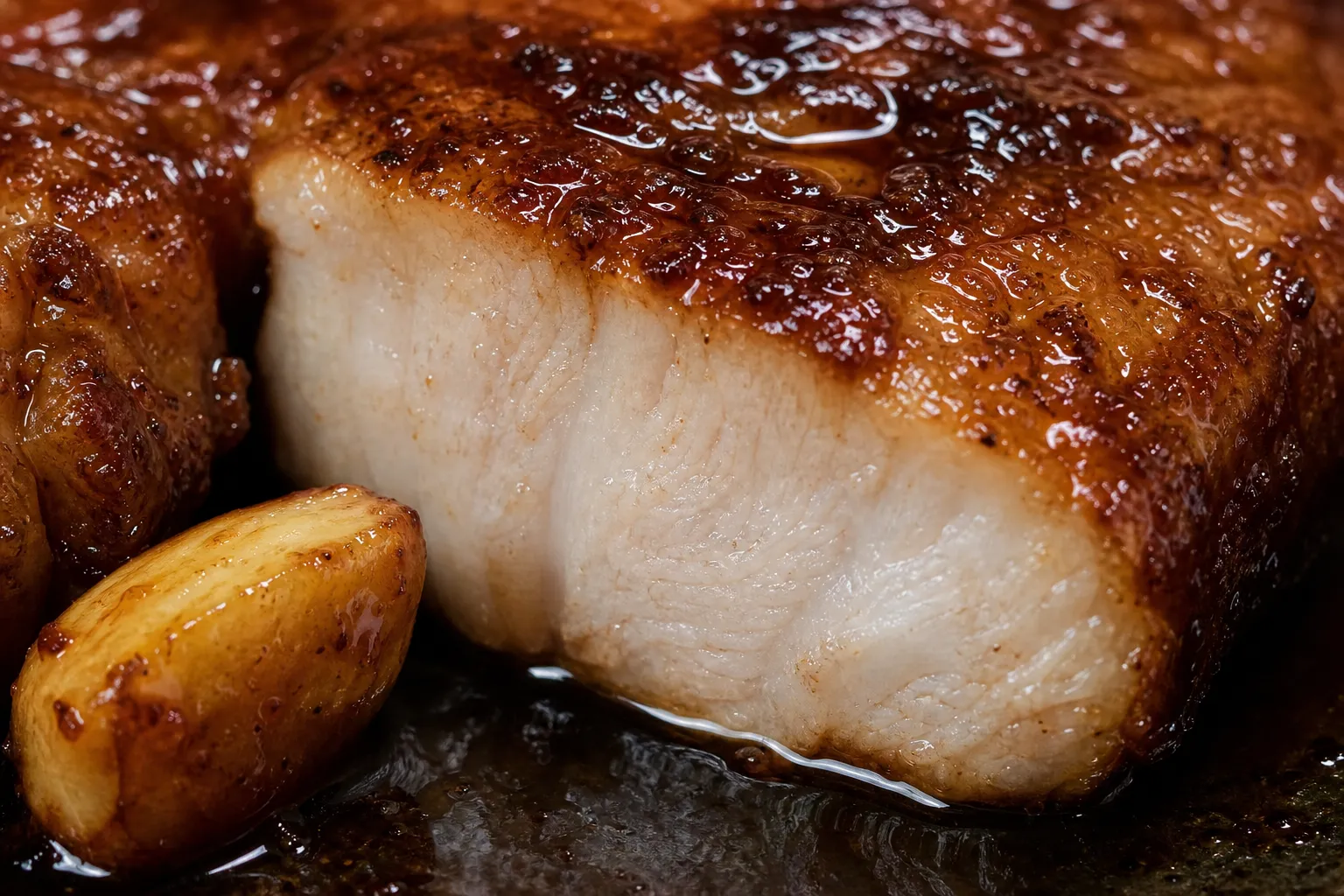
Cut one open and you'll see why it works: the crust is thin, dark, almost lacquered, and the meat underneath stays pale and juicy because it's seared hot and fast rather than cooked through slowly. The garlic cloves scattered across the top aren't garnish — they're pan-fried alongside the meat until they go soft and sweet, and you're meant to eat every single one.
Then there's the sauce. It's built on soy sauce and Worcestershire-style sauce with garlic and usually a little ketchup or oyster sauce for body, reduced until it clings instead of pools. It's sweet, salty, and just sharp enough from the garlic that it cuts through the richness of the pork instead of adding to it. The raw cabbage isn't a side salad you're supposed to ignore — pile it onto your rice, let the sauce run into it, and it becomes the thing that keeps you eating past the point of being full. I did this. I have no regrets about that either.
How it's made
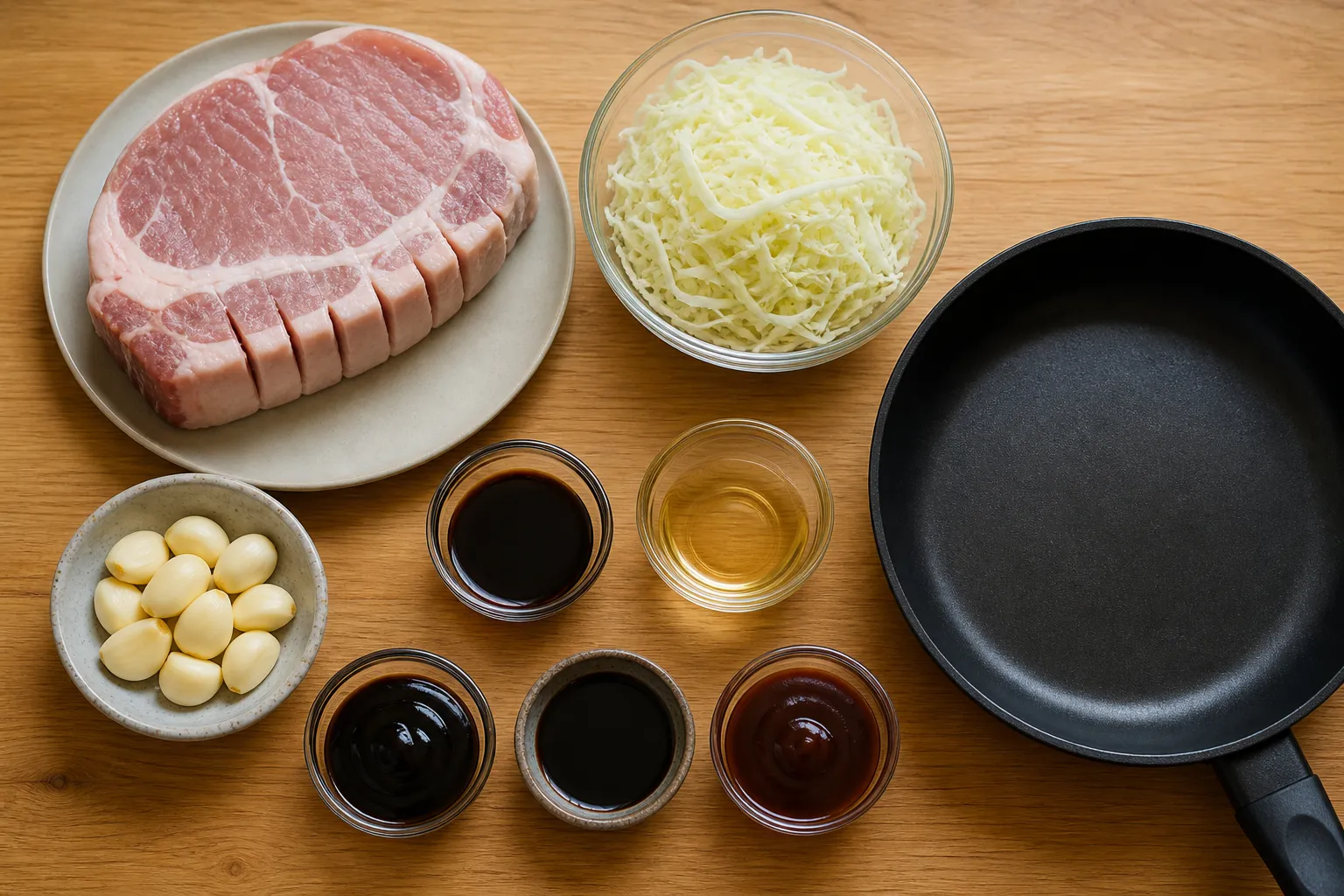
- Take a thick-cut pork loin steak (2–3 cm) and score the fat edge so it doesn't curl
- Sear it hard in a pan or on a griddle over high heat, searing both sides until deeply browned
- Pan-fry whole garlic cloves alongside the pork until soft and golden
- Slice the seared steak into thick "ribs" so it's easier to eat with chopsticks
- Build the sauce in the same pan — soy sauce, Worcestershire-style sauce, garlic, sugar — and reduce until glossy
- Pour the sauce over the sliced pork, top with the fried garlic
- Serve with a generous pile of raw shredded cabbage and a bowl of rice
Before you go — for the first-timer
Your questions, answered honestly
"Is this the same as tonkatsu?" — No, and don't let a translation app tell you otherwise. Tonkatsu is breaded and deep-fried; tonteki is pan-seared, no breadcrumbs, closer to a steak than a cutlet.
"How much garlic is normal here?" — A lot. Whole cloves are part of the dish, not a warning label. If you don't eat garlic, say so when ordering — most places can go lighter.
"Do I eat the cabbage plain?" — You can, but the move is to drag it through the sauce, or pile it on your rice bowl once the meat's gone. Don't leave it untouched.
"Is it very filling?" — Yes. This is a lunch-counter dish built for people doing physical work. Come hungry or plan to share.
What the staff will ask you
| You'll hear | Romaji | Meaning | Just say |
|---|---|---|---|
| ご飯は大盛りにしますか? | Gohan wa ōmori ni shimasu ka? | "Want a large rice?" | Futsū de (regular) / Ōmori de (large) |
| ソース多めにしますか? | Sōsu ōme ni shimasu ka? | "Extra sauce?" | Hai, onegaishimasu (yes please) |
| にんにく大丈夫ですか? | Ninniku daijōbu desu ka? | "Is garlic okay for you?" | Daijōbu desu (it's fine) |
To order, just say "Tonteki kudasai" (トンテキください) — "Tonteki, please."
Where to eat it
- Yokkaichi, Mie — the dish's hometown; look for shops on the local "Tonteki Map," a self-published guide to the city's competing versions.
- Tonteki specialist diners and yōshoku restaurants — many casual Western-style diners (yōshoku-ya) across Mie and beyond keep tonteki on the menu alongside hambāgu and omurice.
- Check before you go — smaller lunch-counter shops in Yokkaichi often keep limited weekday hours and can sell out of their daily cut of pork, so an early lunch is safer than a late one.
Soul Score
Local Roots4/5
First-Timer Friendly4/5
Adventure Level3/5
Comfort Level5/5
Travel Worthy4/5
These scores are one obsessed eater's gut feeling — not a verdict. A low number isn't a bad mark, just a different kind of adventure.
Know someone planning Japan?
← All Articles
Local Food · Yokkaichi, Mie
Still hungry?
Eat more from Mie
Local FoodMie
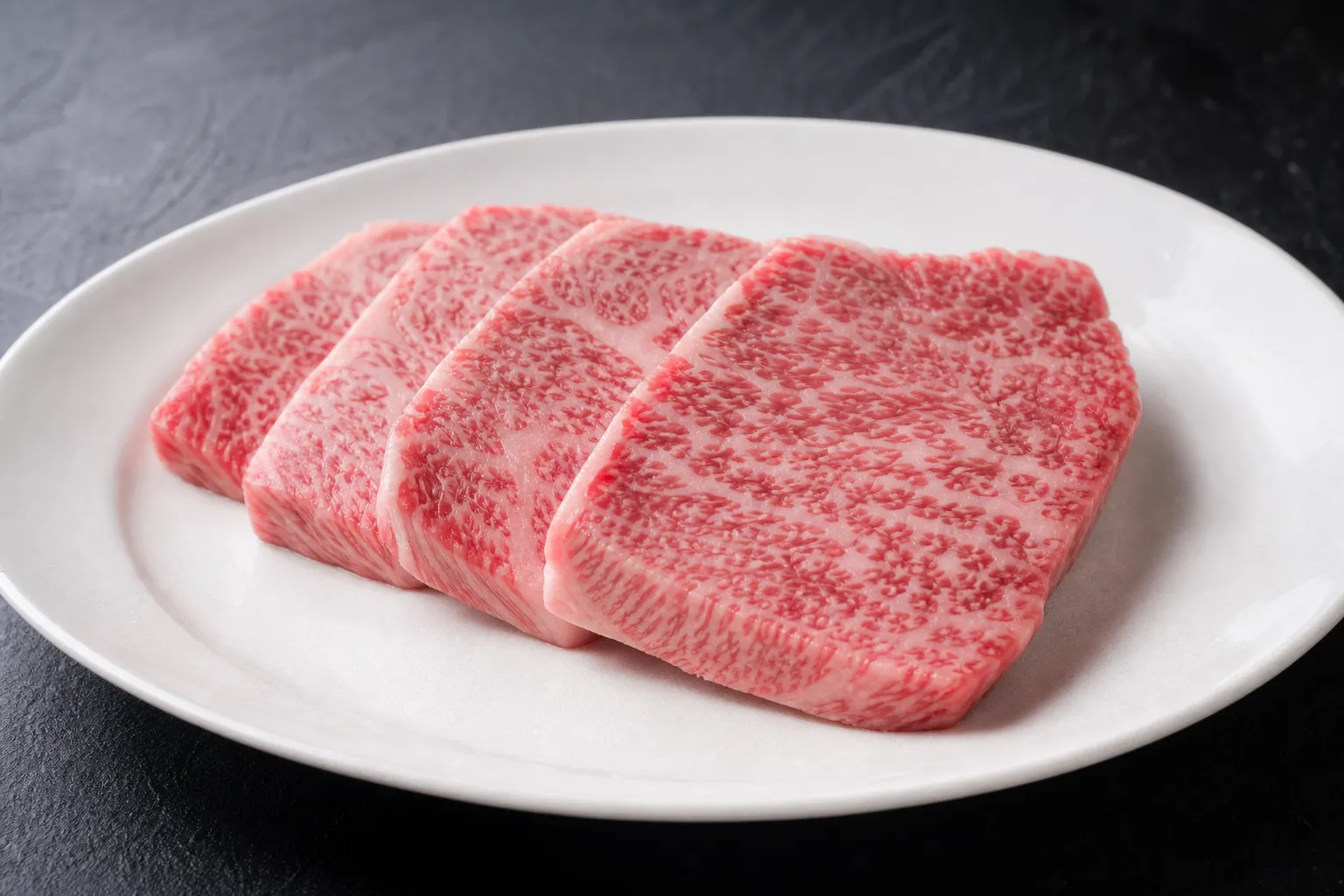
Matsusaka Beef (松阪牛)
Four slices of raw beef on a plain white plate looked less like dinner and more like marble sculpture — and it turns out the fat is so fine it starts melting from the warmth of your fingers alone.
July 22, 2026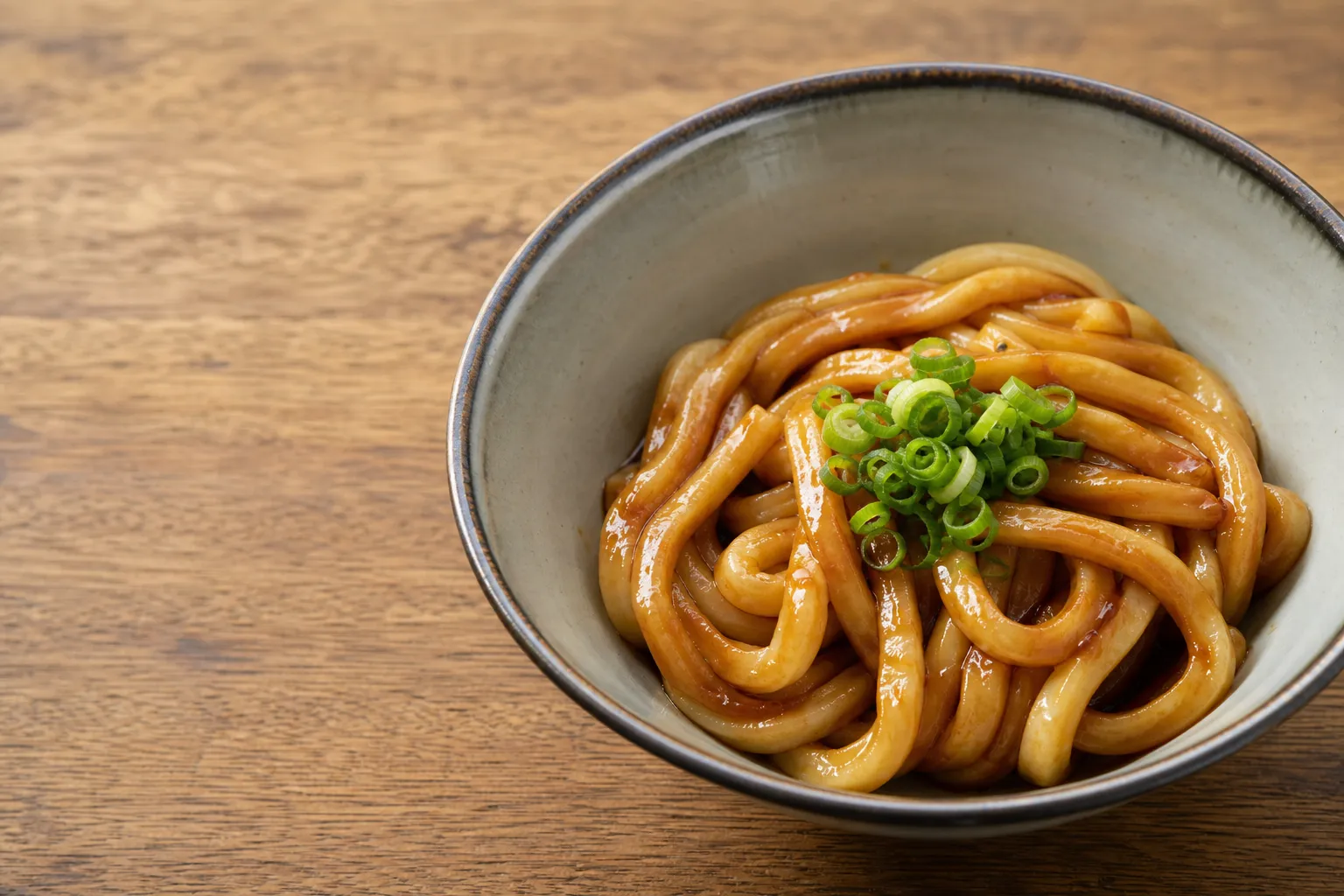
Local FoodIse, Mie
Ise Udon (伊勢うどん)
Fat, pillowy udon so soft it barely fights back, glossed in a dark, sweet-savory tare instead of soup. Ise's pilgrim food breaks every udon rule on purpose — and after a day on your feet, it's exactly right.
July 3, 2026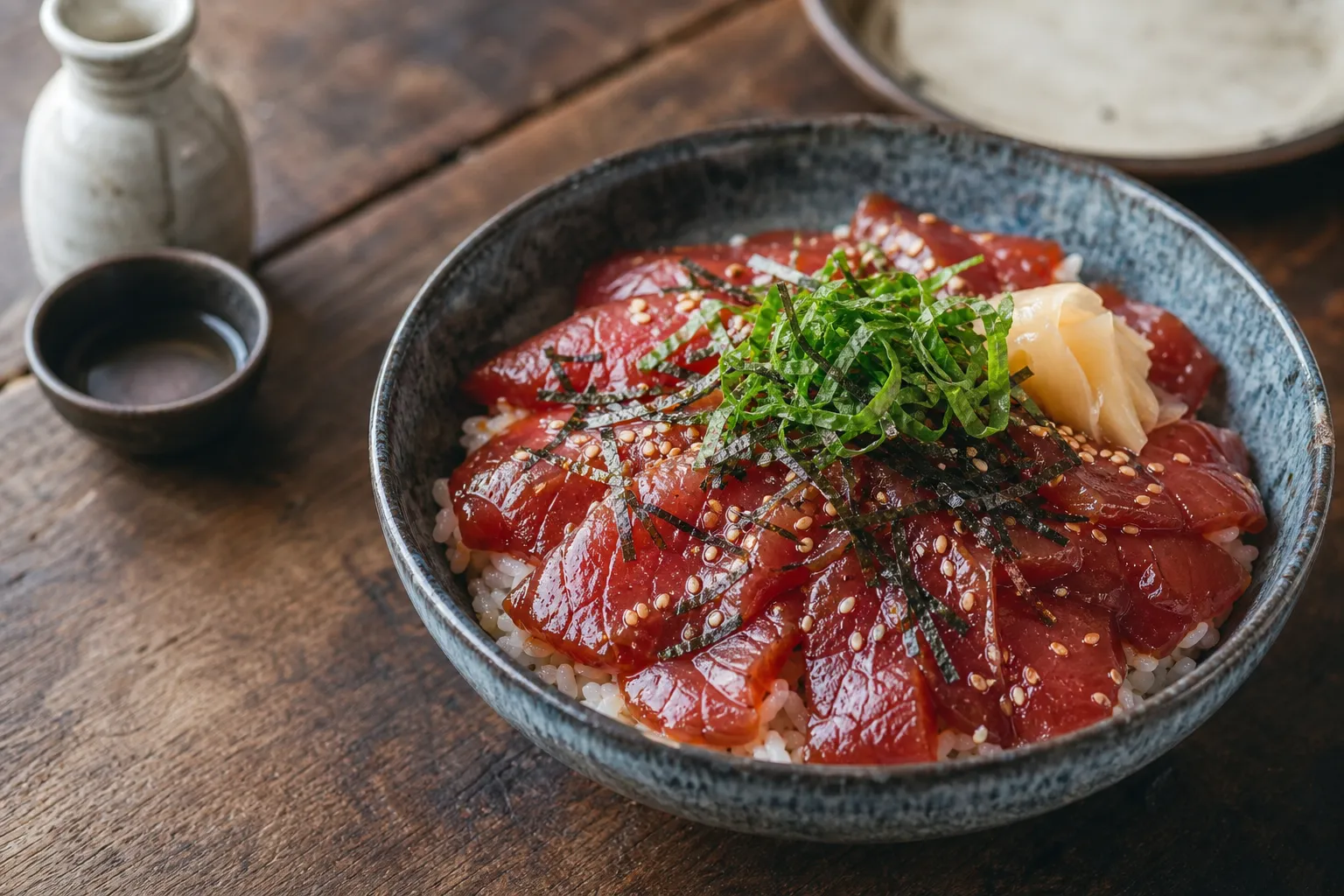
Local FoodIse-Shima, Mie
Tekone-zushi (てこね寿司)
Dark, glossy slices of soy-soaked bonito, still cool from the sea, mixed straight into warm vinegared rice with someone's bare hands. I took one bite on the ferry dock and forgot to keep walking.
July 3, 2026