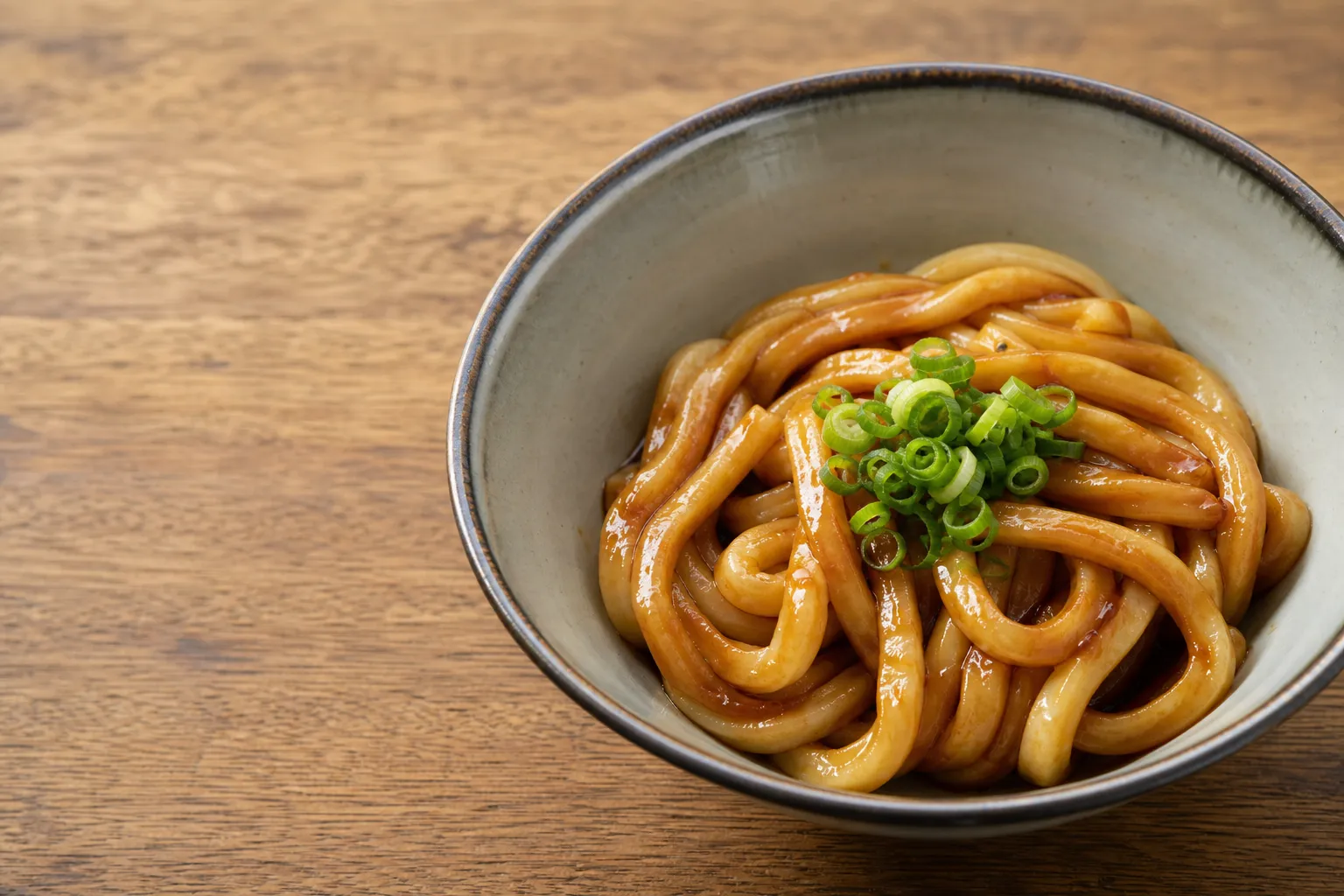
I bit down and my teeth met almost no resistance. The noodle just gave — soft, plump, pillowy, dissolving into a chew that barely qualified as chewing. My first thought, honestly, was did they overcook this? Then I looked at the bottom of the bowl: no soup. A dark little pool of glossy sauce, a scatter of green onion, and these fat, pale, cloud-soft noodles waiting to be stirred. Nothing about it matched the udon in my head. And after a whole day walking the streets around Ise, it was exactly, quietly, perfectly right.
Share this dish


Fat, pillowy udon so soft it barely fights back, glossed in a dark, sweet-savory tare instead of soup. Ise's pilgrim food breaks every udon rule on purpose — and after a day on your feet, it's exactly right.
🍜 Planning a food trip to Mie?Add this dish to my Food Trip →
 Add this dish to my Food Trip →
This is Ise udon (伊勢うどん): extremely thick, deliberately soft noodles — boiled long and slow until every trace of koshi (that springy bite udon usually brags about) is gone — coated in a small amount of dark, thick, sweet-savory tamari-soy tare. There is almost no broth. You get the noodles, the sauce, some green onion, maybe an egg, and that's the whole show. You mix it up, and you eat. It sounds like too little. It is somehow enough.
A noodle built for pilgrims
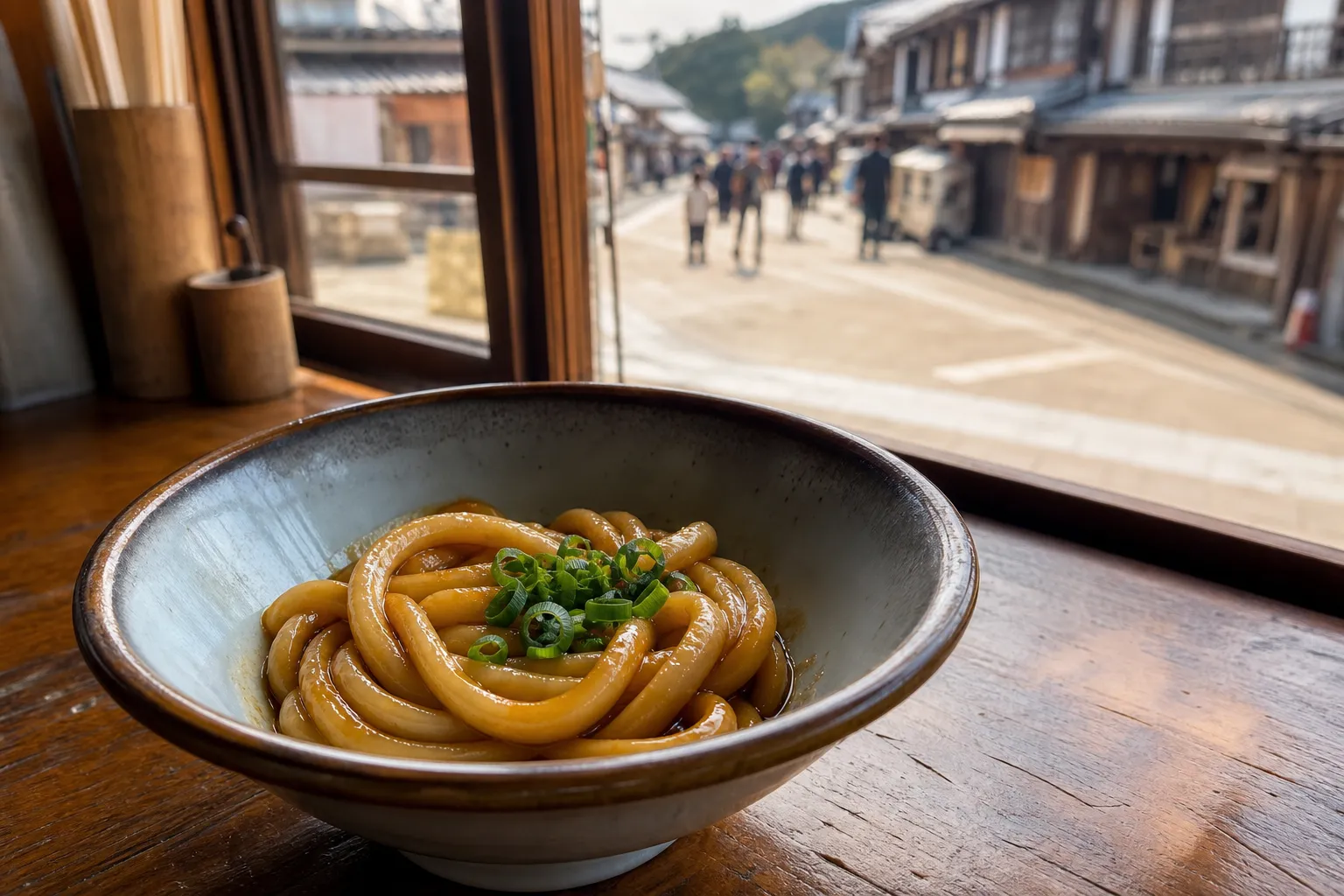
For centuries, Ise was the place every Japanese person hoped to visit at least once — a pilgrimage to Ise Jingu, the country's most sacred shrine. People walked for days, sometimes weeks, to get here. And when travelers finally arrived — footsore, hungry, running on nothing — the tea houses along the approach needed to feed them fast. So they kept the noodles sitting in the pot, boiling soft, ready to scoop and sauce and serve the second someone sat down. No waiting on a fresh boil, no delicate timing.
That's the secret hiding in the softness: it isn't a mistake, it's service. The noodles are soft because tired pilgrims needed food that was instant, gentle, and easy on a stomach that had been walking since dawn. I find that genuinely moving. This is a bowl shaped entirely by kindness to strangers — a food invented to say sit down, you made it, eat. Around Okage-yokocho you can still feel the ghost of that road under your feet.
Why the soft noodle actually wins
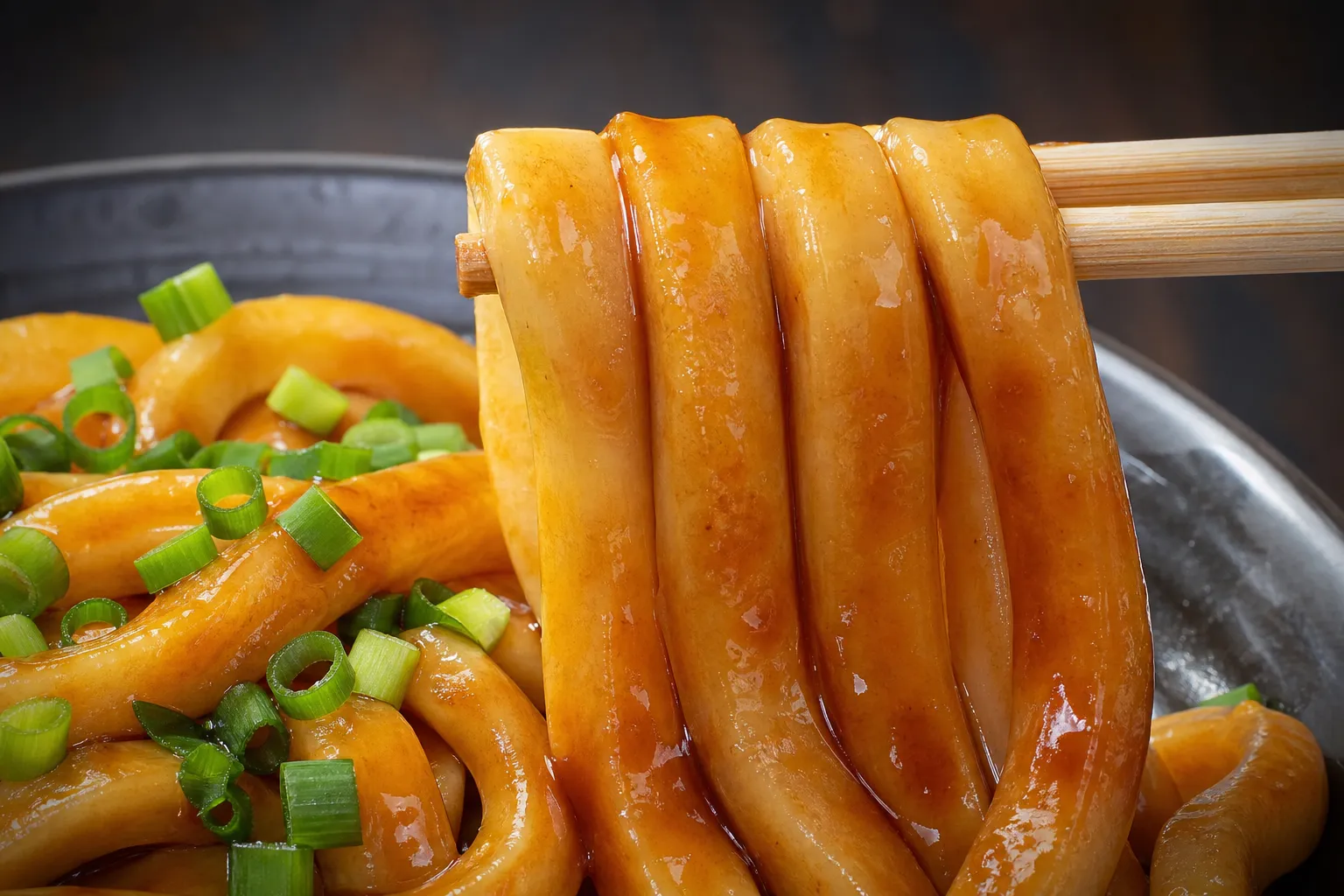
Let me defend the softness, because I know how it sounds. We've all been trained to praise chewy, springy noodles — koshi is basically a national virtue. Ise udon throws that out on purpose, and once you stop fighting it, you get it. These noodles are thick, up to a centimeter across, and so tender they practically melt. There's nothing to wrestle. You just... receive them.
And the sauce is the other half of the magic. It looks alarmingly dark — almost black — so your brain screams that's going to be salty. It isn't. Tamari soy makes it deep and round and faintly sweet, with dashi and mirin softening the edges. There's only a couple of spoonfuls at the bottom, no swimming pool of broth, so every strand comes up lightly cloaked instead of drowned. Stir it all together, let the green onion sharpen it, and the whole thing turns into this warm, mellow, low-key comfort that I did not expect to crave the moment I finished. But I did. I sat there wanting a second bowl I didn't have room for.
How it's made
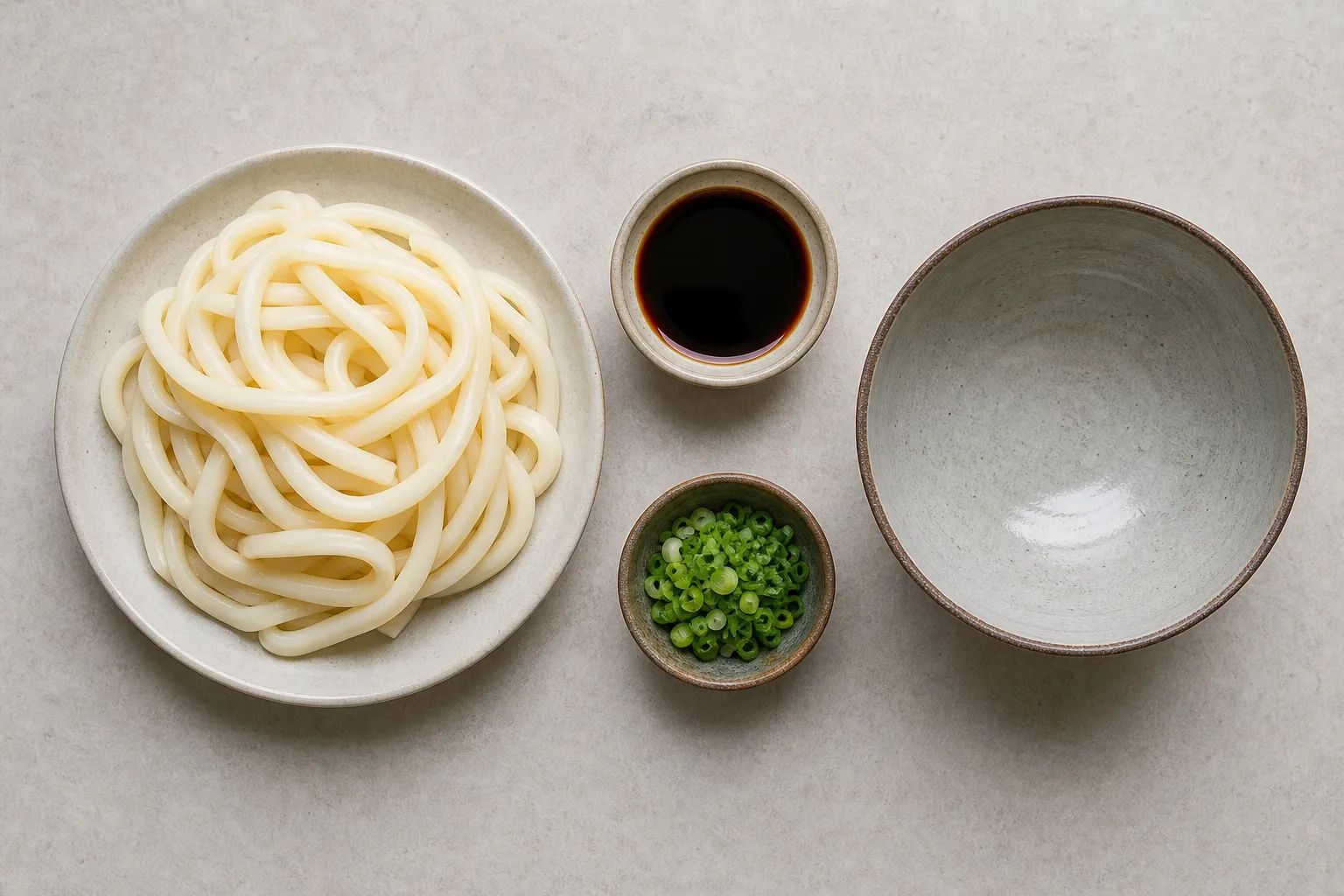
- Make a thick udon dough and cut it into fat, wide noodles
- Boil them long and slow — up to an hour — until soft and plump, with the springy koshi deliberately gone
- Separately, make the tare: dark tamari soy simmered with dashi, mirin, and a touch of sweetness into a thick, glossy sauce
- Drain the hot noodles and pile them into a bowl
- Pour just a small amount of the dark tare over the top — no broth, no filling the bowl
- Finish with chopped green onion (and, if you like, a raw or soft egg), then mix well before eating
Before you go — for the udon-curious
Your questions, answered honestly
"Where's the soup?" — There isn't one. That's not a mistake and the kitchen didn't forget. Ise udon is noodles + a small pool of thick dark sauce, not a brothy bowl. Mix the sauce up from the bottom and you'll see it coats everything.
"Are the noodles supposed to be this soft?" — Yes. One hundred percent yes. The whole point is soft, plump, no-chew noodles. If you come expecting the springy koshi of Sanuki udon, recalibrate first — it's a different pleasure entirely.
"Is it salty? That sauce looks intense." — It looks way saltier than it tastes. Tamari soy makes it dark but rounded and gently sweet, not sharp. Trust it.
"Do I need the egg?" — Not required, but a soft or raw egg mixed in makes it richer and even mellower. First time, I'd try it plain to meet the noodle, then add the egg on round two.
What the staff will ask you
| You'll hear | Romaji | Meaning | Just say |
|---|---|---|---|
| 卵は入れますか? | Tamago wa iremasu ka? | "Add an egg?" | Hai, onegaishimasu (yes please) / Nashi de (without) |
| 温かいのでいいですか? | Atatakai no de ii desu ka? | "The warm one is fine?" | Hai (yes) |
| ネギは大丈夫ですか? | Negi wa daijōbu desu ka? | "Green onion okay?" | Hai, onegaishimasu (yes please) |
| 混ぜて食べてください | Mazete tabete kudasai | "Please mix it before eating" | Hai, arigatō (yes, thanks) |
To order, just say "Ise udon kudasai" (伊勢うどんください) — "Ise udon, please."
Where to eat it
- Okage-yokocho & Oharai-machi, Ise — the old cobbled approach streets leading to the Naikū (Inner Shrine) of Ise Jingu are lined with tea houses and shops serving Ise udon right where the pilgrims once ate it. This is the atmospheric, do-it-here spot.
- Around Ise city — Ise udon is the local staple, so you'll find it at shops and diners throughout the city, not just on the shrine approach.
- Check before you go — shops near the shrine often keep daytime-only hours and can get busy around peak sightseeing and festival days; go a little off-peak and confirm current hours before you make a special trip.
Soul Score
Local Roots5/5
First-Timer Friendly4/5
Adventure Level3/5
Comfort Level4/5
Travel Worthy4/5
These scores are one obsessed eater's gut feeling — not a verdict. A low number isn't a bad mark, just a different kind of adventure.
Know someone planning Japan?
← All Articles
Local Food · Ise, Mie
Still hungry?
Eat more from Mie
Local FoodMie
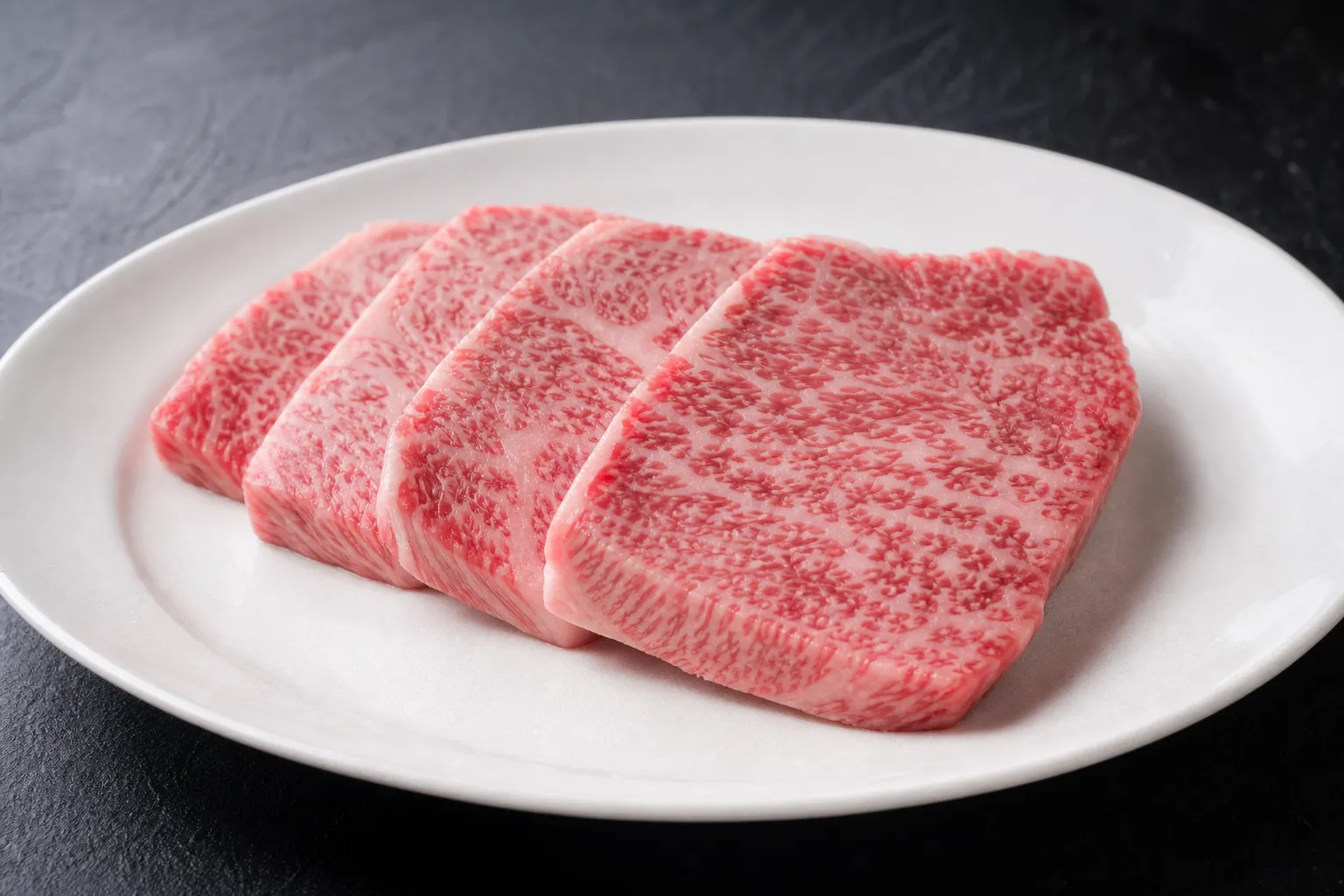
Matsusaka Beef (松阪牛)
Four slices of raw beef on a plain white plate looked less like dinner and more like marble sculpture — and it turns out the fat is so fine it starts melting from the warmth of your fingers alone.
July 22, 2026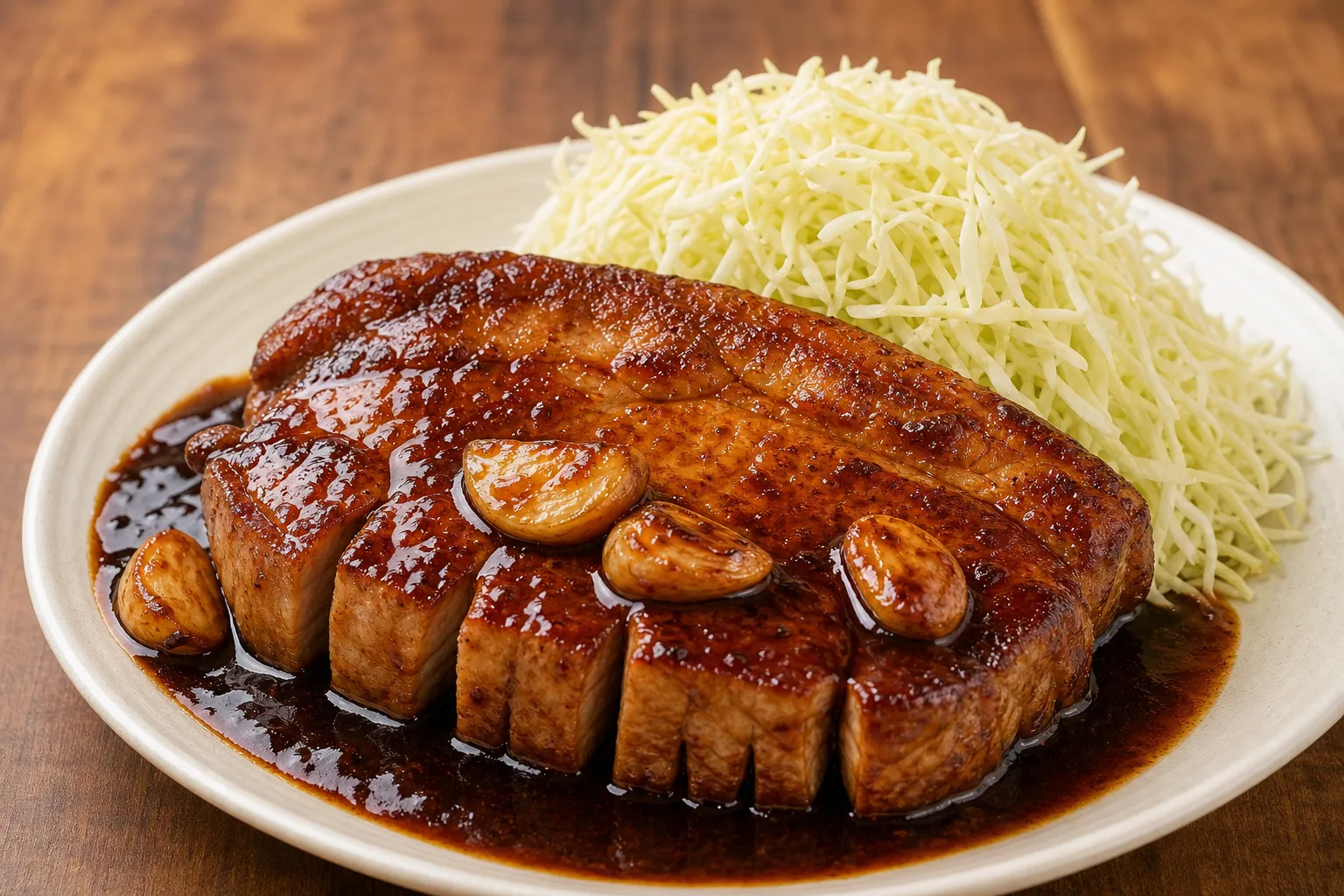
Local FoodYokkaichi, Mie
Tonteki (トンテキ)
A slab of pork the thickness of your fist, seared black-brown and drowning in garlic sauce — this is not the polite cutlet you were expecting.
July 4, 2026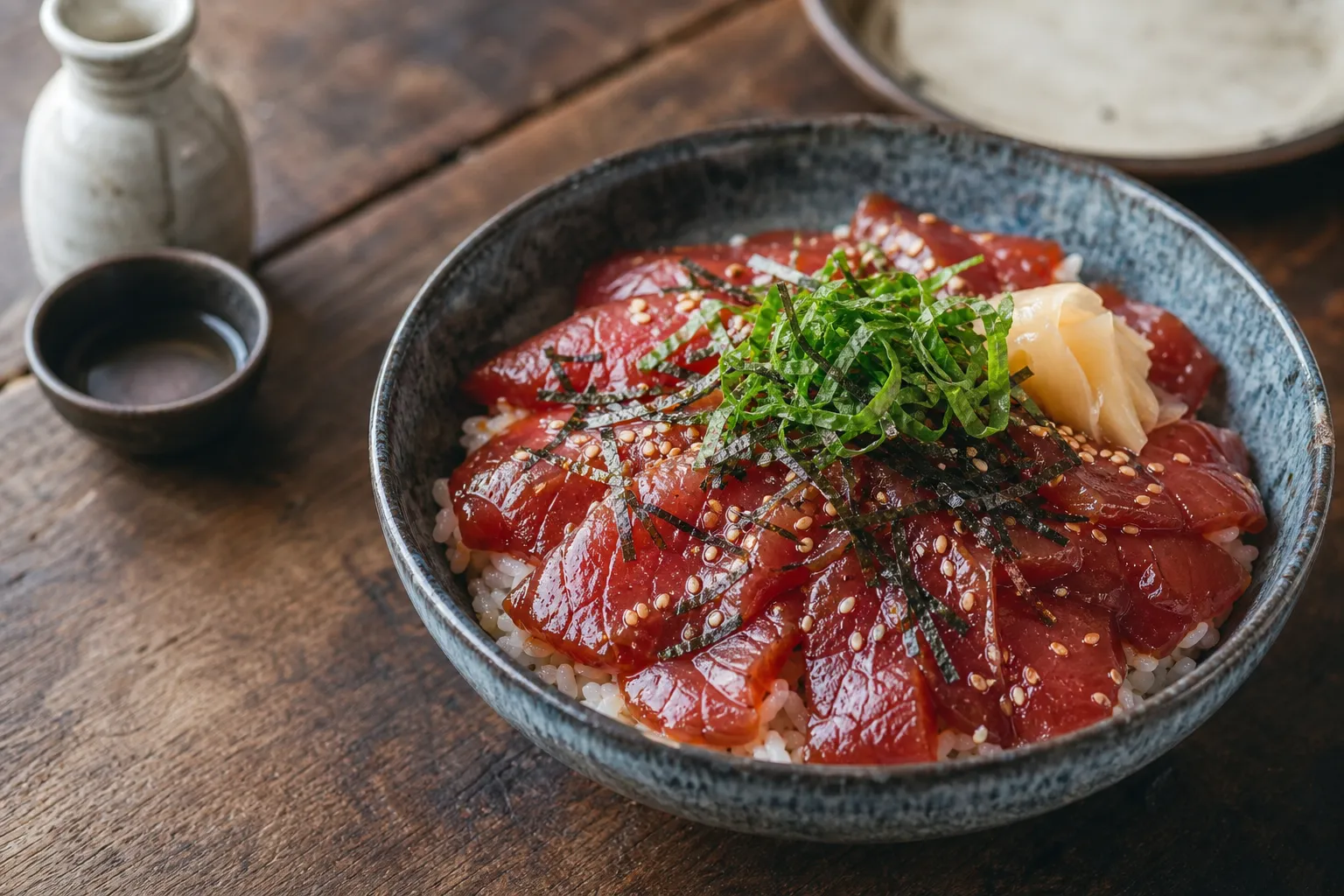
Local FoodIse-Shima, Mie
Tekone-zushi (てこね寿司)
Dark, glossy slices of soy-soaked bonito, still cool from the sea, mixed straight into warm vinegared rice with someone's bare hands. I took one bite on the ferry dock and forgot to keep walking.
July 3, 2026