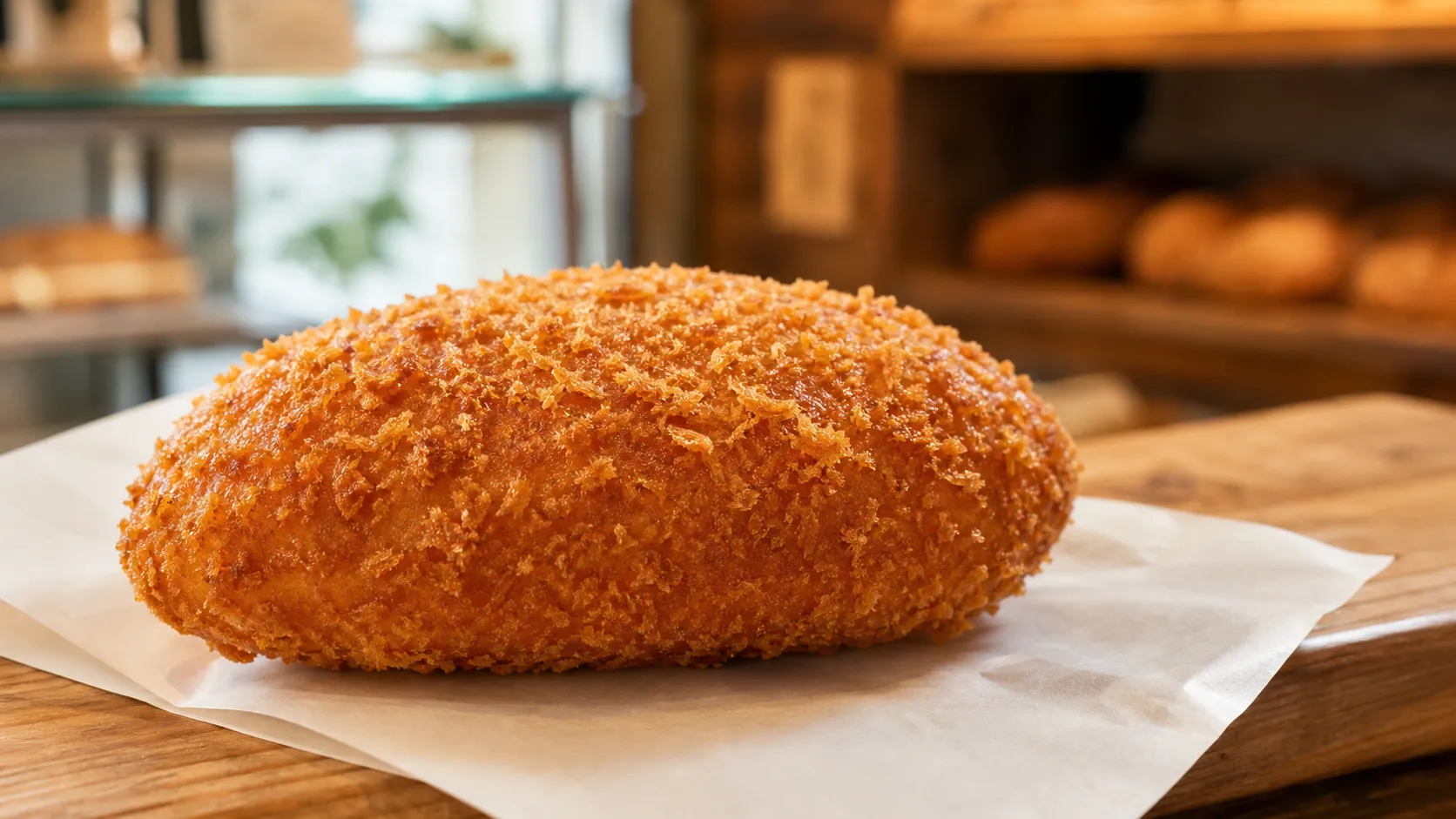
That first bite is a small act of violence, and I mean that as the highest possible compliment. The panko shell shatters — loud, crumbs everywhere, down your shirt — and then your teeth hit warm curry where soft custard or sweet bean would normally be, and the savory shock of it rewires something. Bread is not supposed to do this. This one does.
Share this dish


Japanese curry sealed inside dough, breaded, and deep-fried until shatteringly crisp. The savory bakery hero — crunchy outside, molten-spicy inside, and dangerously easy to eat two of.
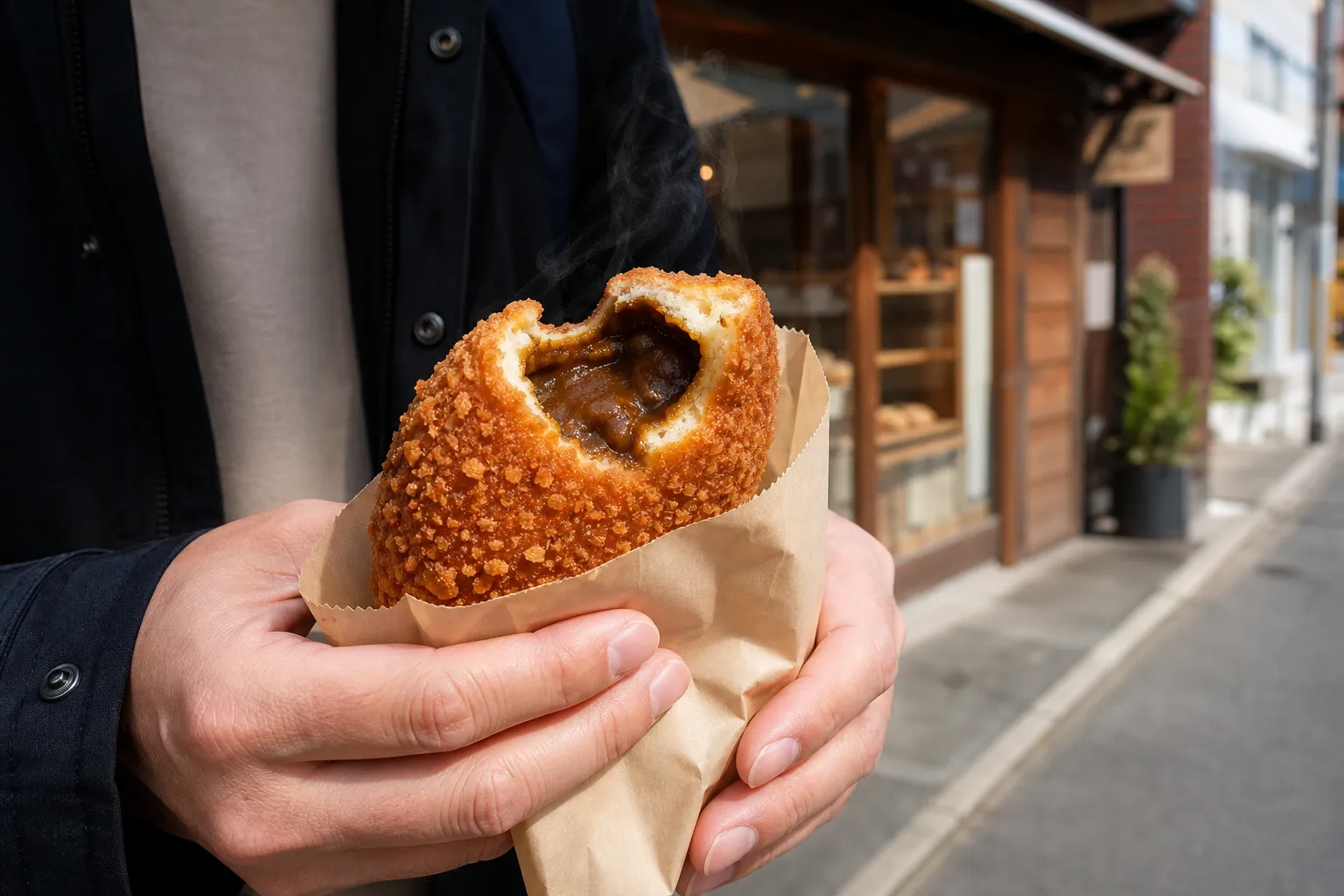
Curry pan (カレーパン) is the rebel of the Japanese bakery: a portion of thick Japanese curry sealed inside bread dough, coated in panko breadcrumbs, and deep-fried until the outside is deep-golden and shatteringly crisp. Bite through that crunchy shell and you hit warm, savory-sweet curry inside. Crispy, rich, a little spicy, and totally satisfying — it's the bakery item savory-food lovers make a beeline for.
It's a fixture of every bakery and convenience store, usually cheap, and one of the great handheld snacks in Japan. There are baked versions too, but the classic is fried, and the fried one is the one.
A yoshoku bakery invention
Curry pan is pure Japanese ingenuity — a marriage of two adopted-and-localized foods: Japanese curry (itself a British-via-Indian import the country made its own) and bread (pan). It was reportedly created at a Tokyo bakery in the 1920s–30s, possibly inspired by the breaded-and-fried katsu, and became a beloved staple of the Japanese bakery (pan-ya) tradition.
It belongs to the same inventive spirit as melonpan and anpan — Japan's century-long project of turning bread into an endlessly creative snack category.
Why the fried crust makes it
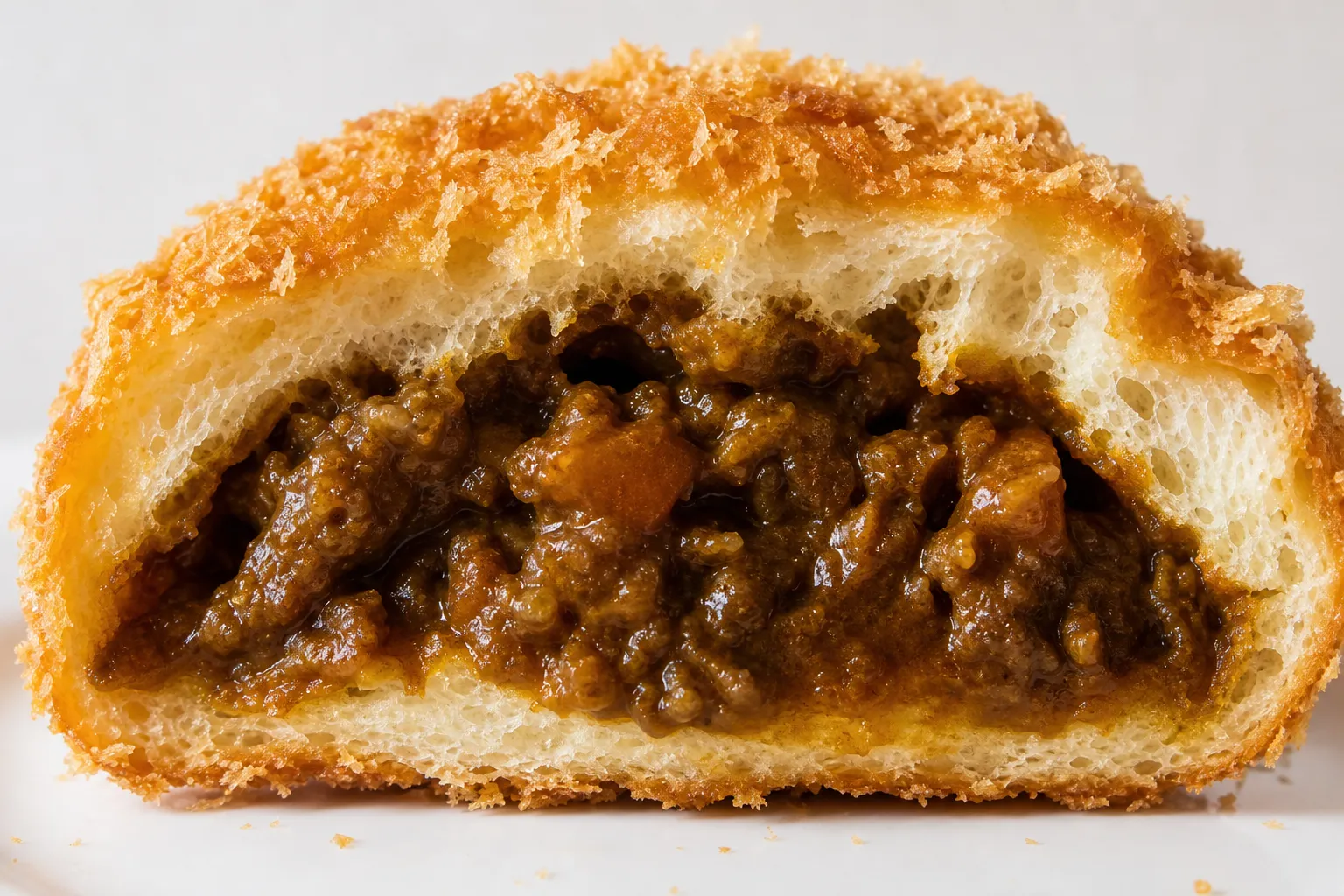
The defining feature is that crunchy deep-fried panko shell. Unlike soft baked breads, curry pan is breaded and fried, giving it a crackly, golden exterior that contrasts with the soft dough and the molten curry within. That crunch is the whole appeal — it's practically a savory doughnut filled with curry.
The filling is thick Japanese curry — mild, savory-sweet, sometimes with a little kick — reduced enough that it won't leak. Premium versions add cheese, a boiled egg, or extra-spicy curry. Fresh and hot, with the curry still molten, it's irresistible.
How it's made
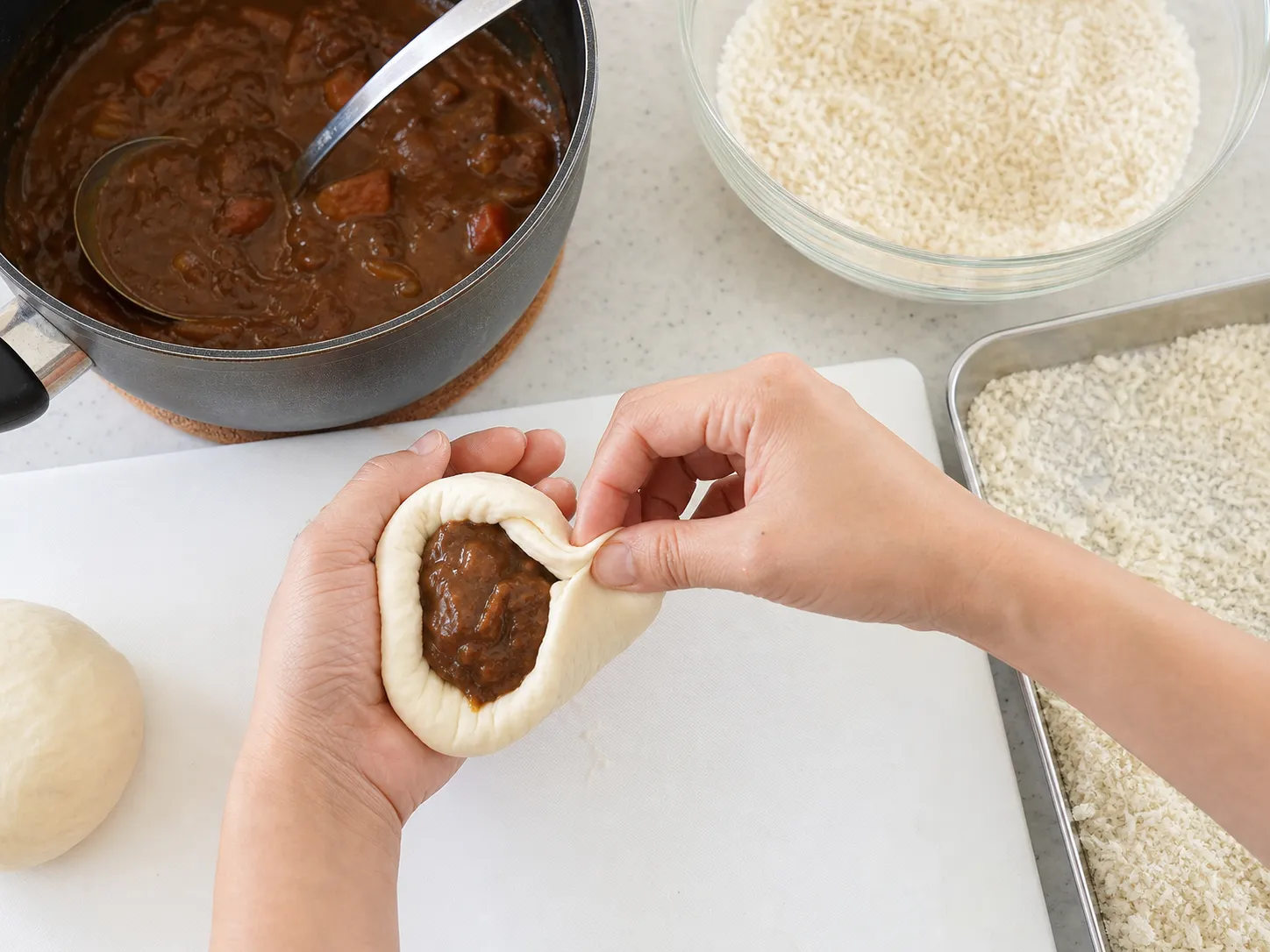
- Make a thick, well-reduced Japanese curry (so it won't run when cut)
- Wrap a portion of cooled curry inside a circle of bread dough, sealing it well
- Coat the whole bun in beaten egg/water and panko breadcrumbs
- Deep-fry until deep golden and crisp all over (or bake, for a lighter version)
- Drain and serve hot, while the curry inside is still warm
Before you go — mind the molten center
Your questions, answered honestly
"Careful — is it hot inside?" — Yes! Fresh curry pan can have molten curry in the center. Let it cool a moment and take a careful first bite so you don't burn your mouth.
"Fried or baked?" — The fried one (crispy panko shell) is the classic and the best. Baked versions exist and are lighter, but you came for the crunch.
"Is it spicy?" — Usually mild and savory-sweet, like standard Japanese curry. Some shops offer a spicier (kara-kuchi) version if you want heat.
"Bakery or convenience store?" — Both. Convenience-store curry pan is cheap and good; a freshly-fried one from a bakery (especially a curry-pan specialist) is next-level. Reheat konbini ones for crispness.
What the staff will ask you
| You'll hear | Romaji | Meaning | Just say |
|---|---|---|---|
| 温めますか? | Atatamemasu ka? | "Shall I heat it up?" | Hai, onegaishimasu (yes please) |
| 辛口もありますがどうしますか? | Karakuchi mo arimasu ga dō shimasu ka? | "We have a spicy one too — which?" | Futsū de (regular) / Karakuchi de (spicy) |
| 袋はご利用ですか? | Fukuro wa goriyō desu ka? | "Need a bag?" | Onegaishimasu (yes) |
At a bakery you grab it with tongs; otherwise say "Karē pan hitotsu kudasai" (カレーパン一つください) — "one curry bread, please."
Where to eat it
- Any bakery (pan-ya) — freshly fried is the dream; some specialists fry to order.
- Convenience stores — cheap and reliable (heat it up for crispness).
- Curry-pan specialists & food halls — for premium, molten, cheese-loaded versions.
Best fresh and hot — but let that molten curry cool a second before the first bite.
Soul Score
Local Roots4/5
First-Timer Friendly5/5
Adventure Level3/5
Comfort Level4/5
Travel Worthy3/5
These scores are one obsessed eater's gut feeling — not a verdict. A low number isn't a bad mark, just a different kind of adventure.
Know someone planning Japan?
← All Articles
Convenience Store · Nationwide
Still hungry?
You might also like
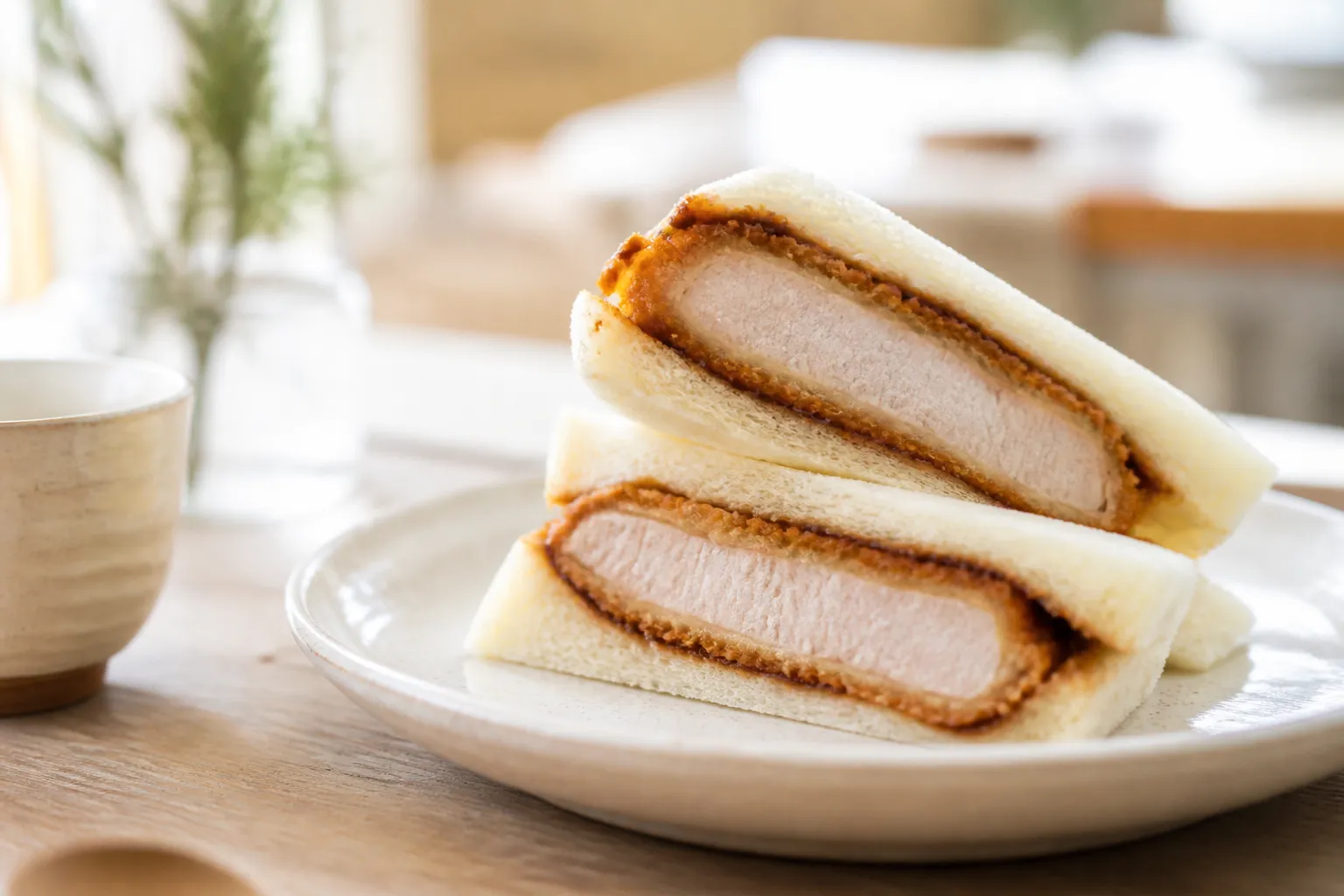
Convenience StoreNationwide
Katsu Sando (カツサンド)
A thick, golden-fried pork cutlet, crustless white bread, one bite — and suddenly a convenience-store sandwich has no business tasting this good.
July 27, 2026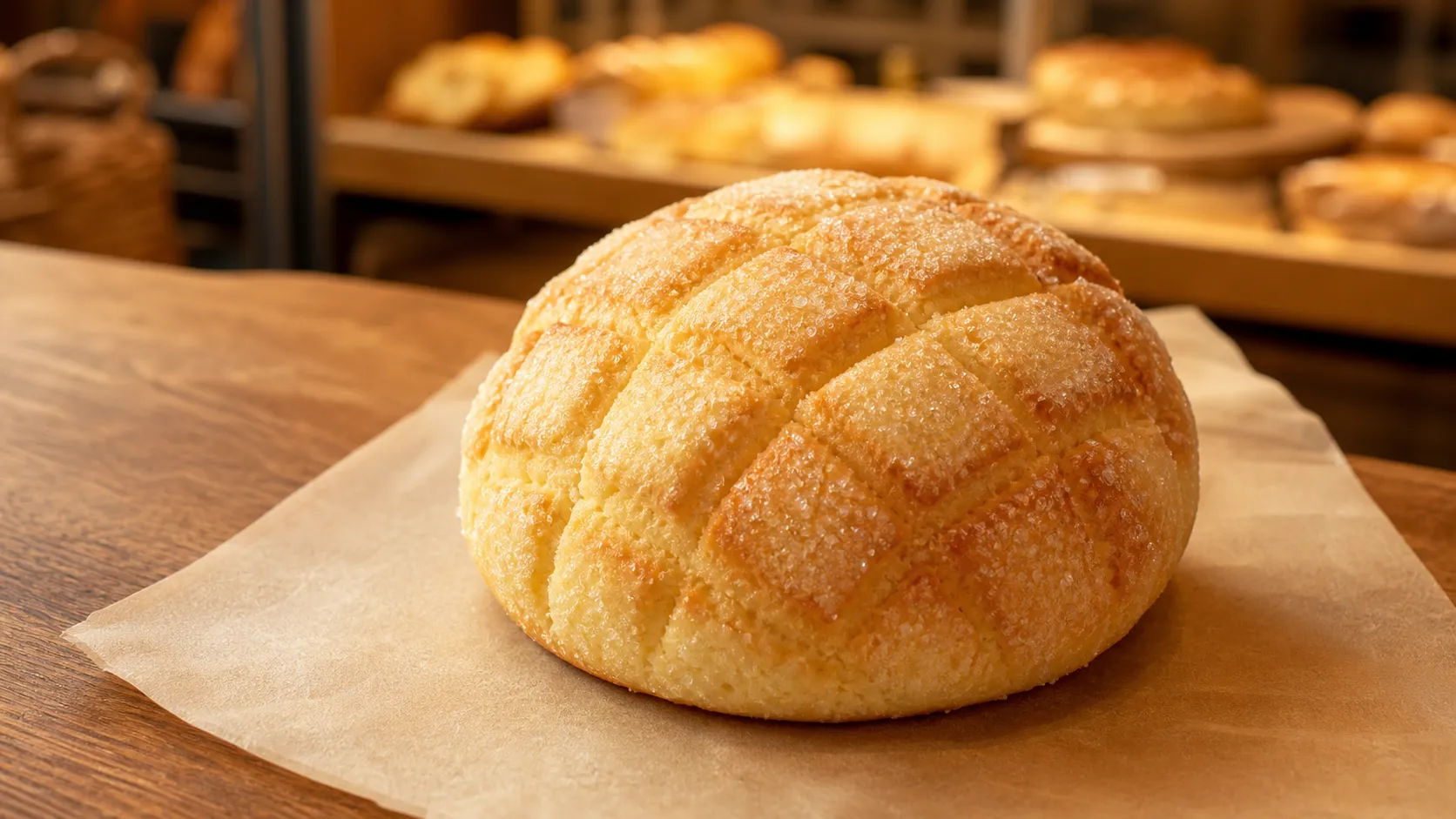
Convenience StoreNationwide
Melonpan (メロンパン)
A soft, fluffy bun under a crisp, sweet, cookie-crust shell scored like a melon. There's usually no melon in it — just one of Japan's most beloved bakery treats, best warm and crackly.
June 20, 2026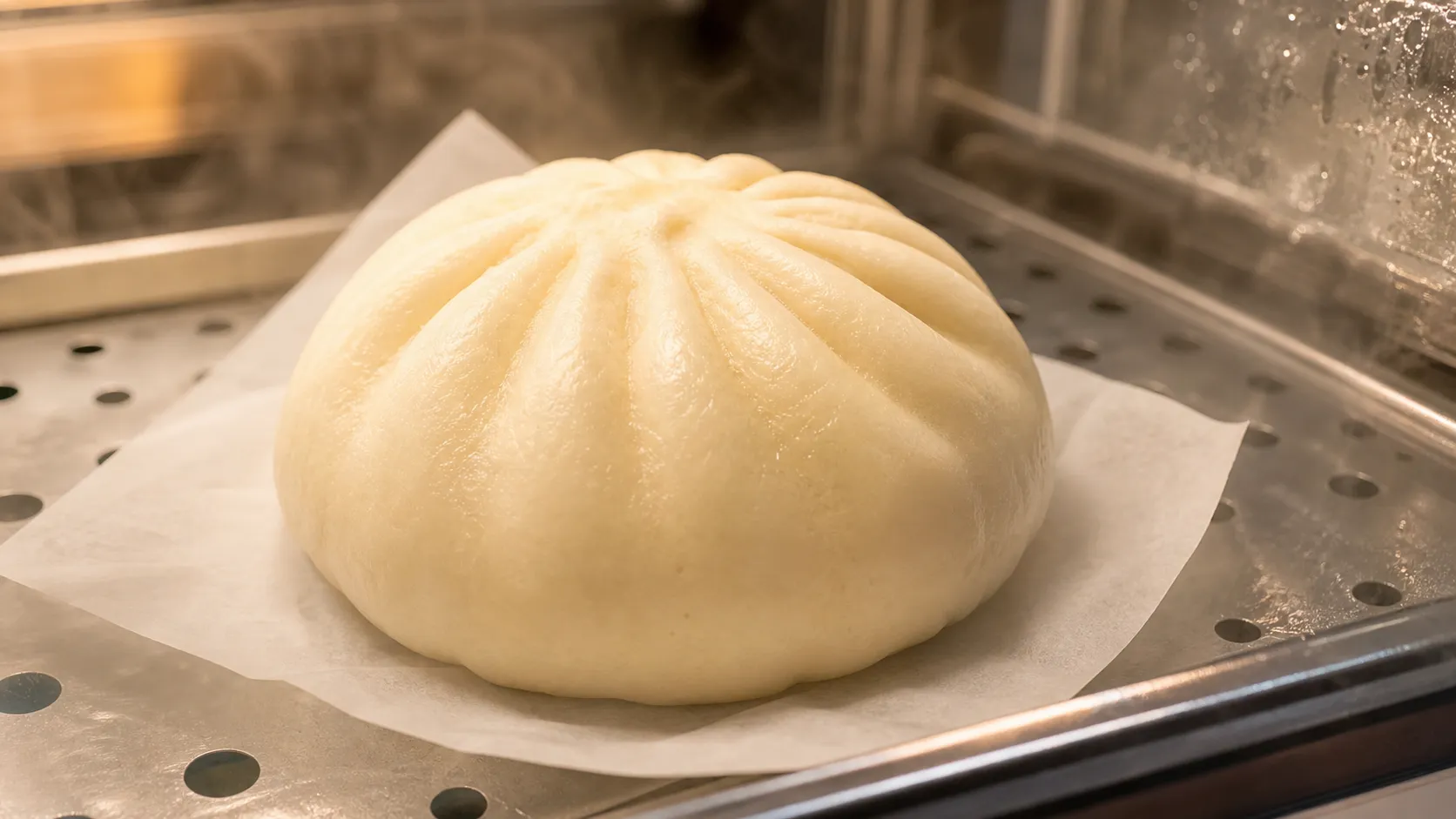
Convenience StoreNationwide
Nikuman (肉まん)
A fluffy steamed white bun stuffed with juicy seasoned pork — pulled hot from the convenience-store steamer on a cold day. Cheap, warming, and one of winter's small perfect pleasures.
June 20, 2026