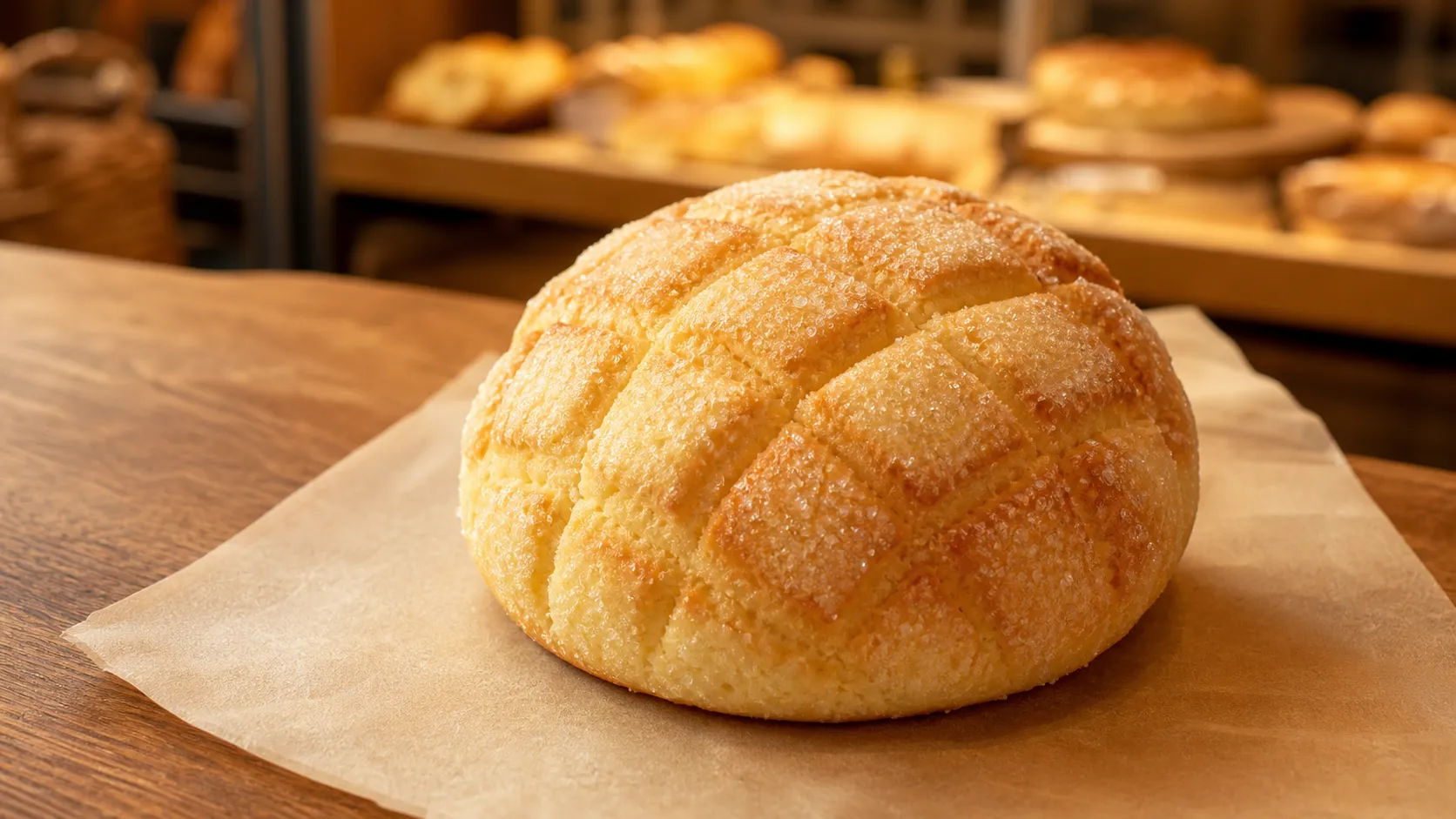
Here's the joke baked right into the name: there is no melon in it. None. I checked — repeatedly, with the faintly betrayed enthusiasm of someone who really wanted there to be melon — and there is just bread, and a cracked golden cookie shell, and the slow realization that I didn't need the melon at all.
Share this dish


A soft, fluffy bun under a crisp, sweet, cookie-crust shell scored like a melon. There's usually no melon in it — just one of Japan's most beloved bakery treats, best warm and crackly.
Melonpan (メロンパン) is a masterpiece of Japanese bakery culture built on that small, delightful lie: it's named for how it looks, not what's in it. A soft, fluffy bread bun is draped in a thin layer of sweet cookie dough and baked until the top turns crisp and golden and cracks into a grid pattern — exactly like the netted skin of a muskmelon. Bite in and the sweet cookie crust crackles and gives way to pillowy, slightly sweet bread underneath. Simple, nostalgic, and completely addictive.
You'll find it in every bakery, supermarket, and convenience store in Japan, often for pocket change. It's a staple of childhood lunches and an easy, cheap, very happy snack.
A bun named for its looks, not its taste
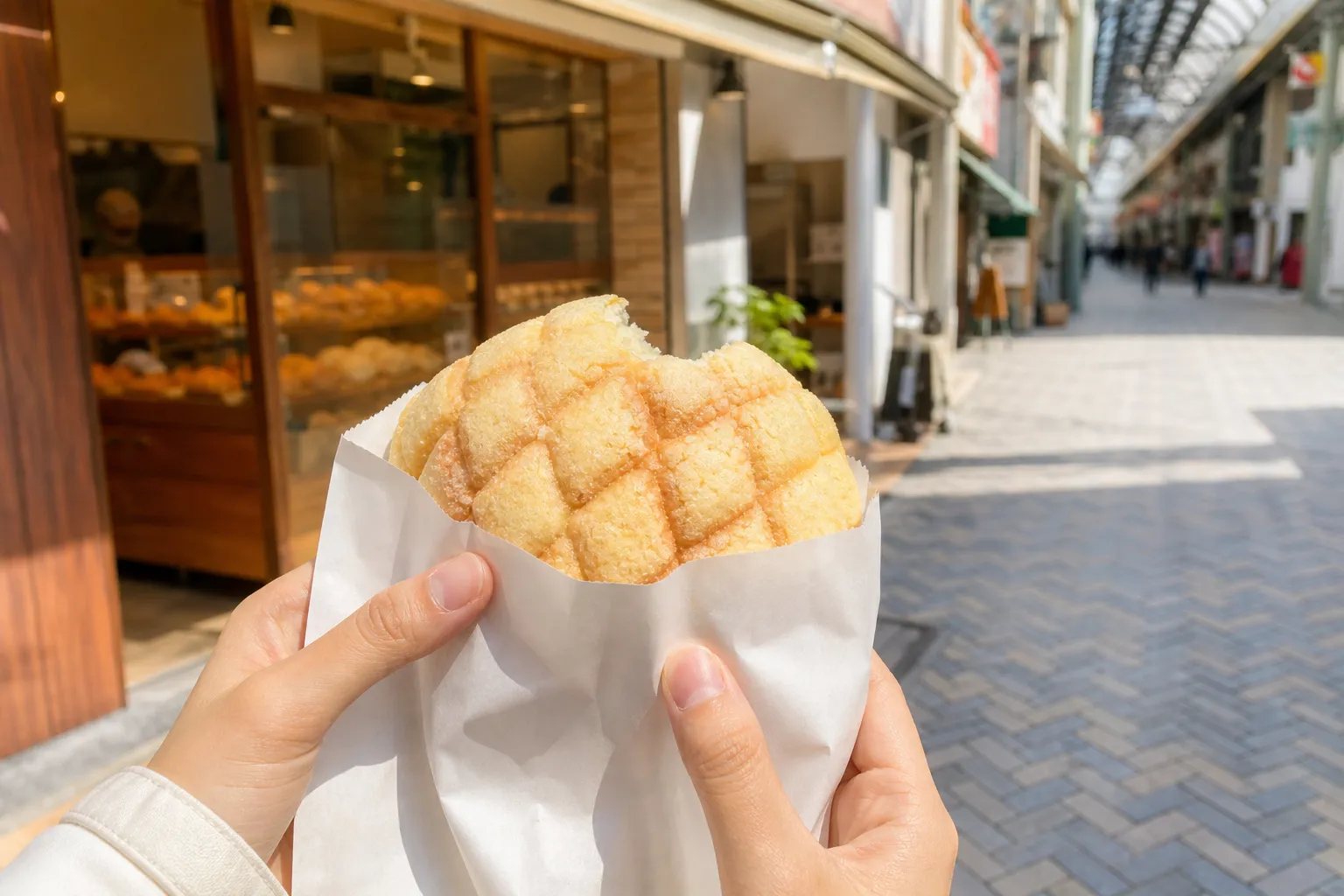
Melonpan emerged in Japan in the early 20th century and got its name purely from its appearance — the cookie-crust top, scored into a crosshatch, resembles the netted skin of a muskmelon. (Traditionally there was no melon flavor; only in recent decades have some shops added actual melon cream to lean into the name.)
It's pure Japanese bakery (pan = bread, from Portuguese pão) — part of the country's deep, inventive love of soft, sweet breads. Every region and bakery has its own take, and there are famous specialist melonpan shops with lines out the door.
Why the crust is the whole appeal
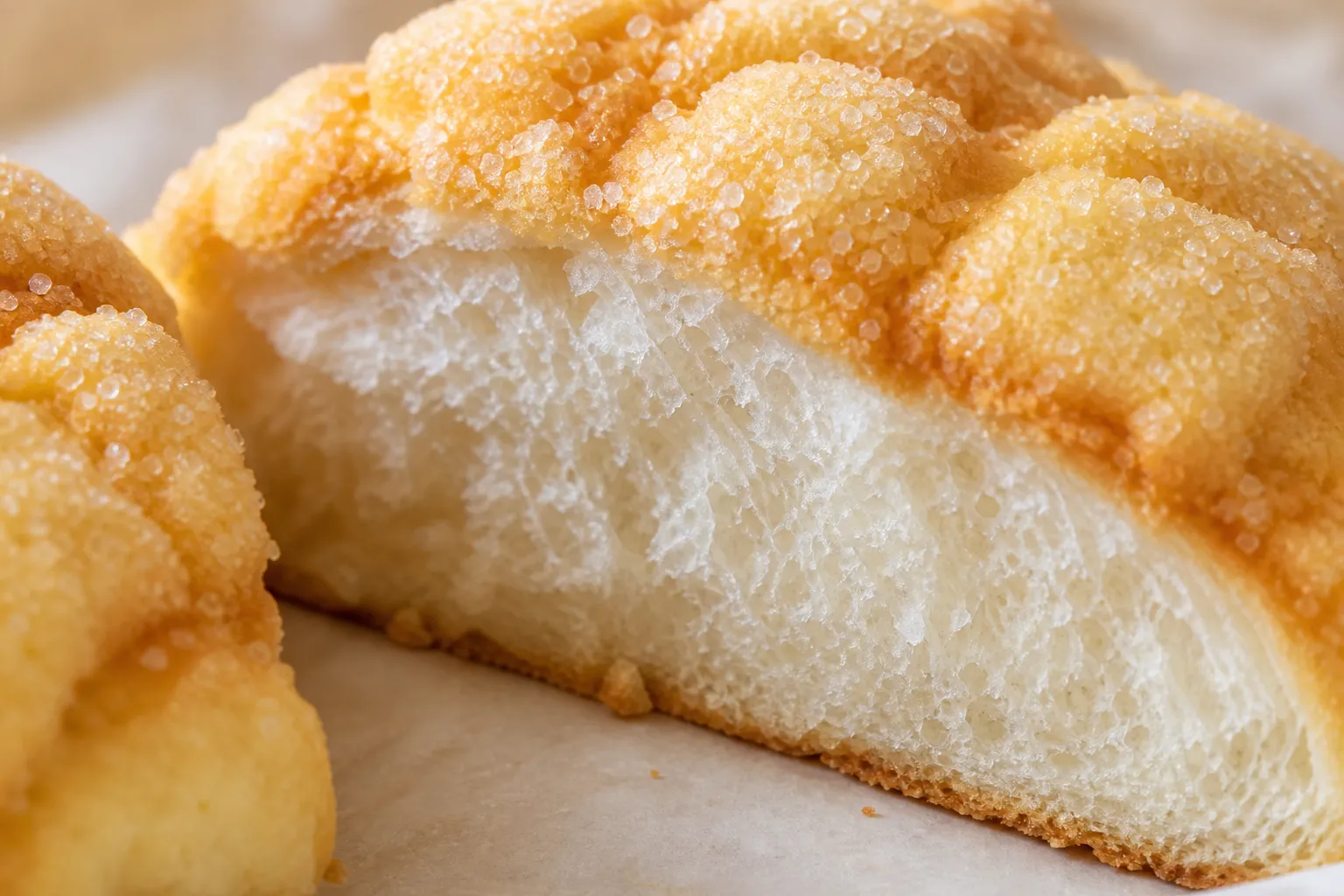
The genius of melonpan is the two-texture contrast: a thin, sweet, crisp cookie-dough shell over a soft, fluffy, mildly sweet bread interior. Fresh from the oven, that top layer is crackly and almost candy-like while the inside stays tender and warm — that's peak melonpan.
Variations abound: melonpan with chocolate chips, filled with custard or whipped cream, the famous freshly-baked melonpan with ice cream stuffed inside (a street-stall hit), and genuinely melon-flavored modern versions. But the plain, crackly-topped original is the icon.
How it's made
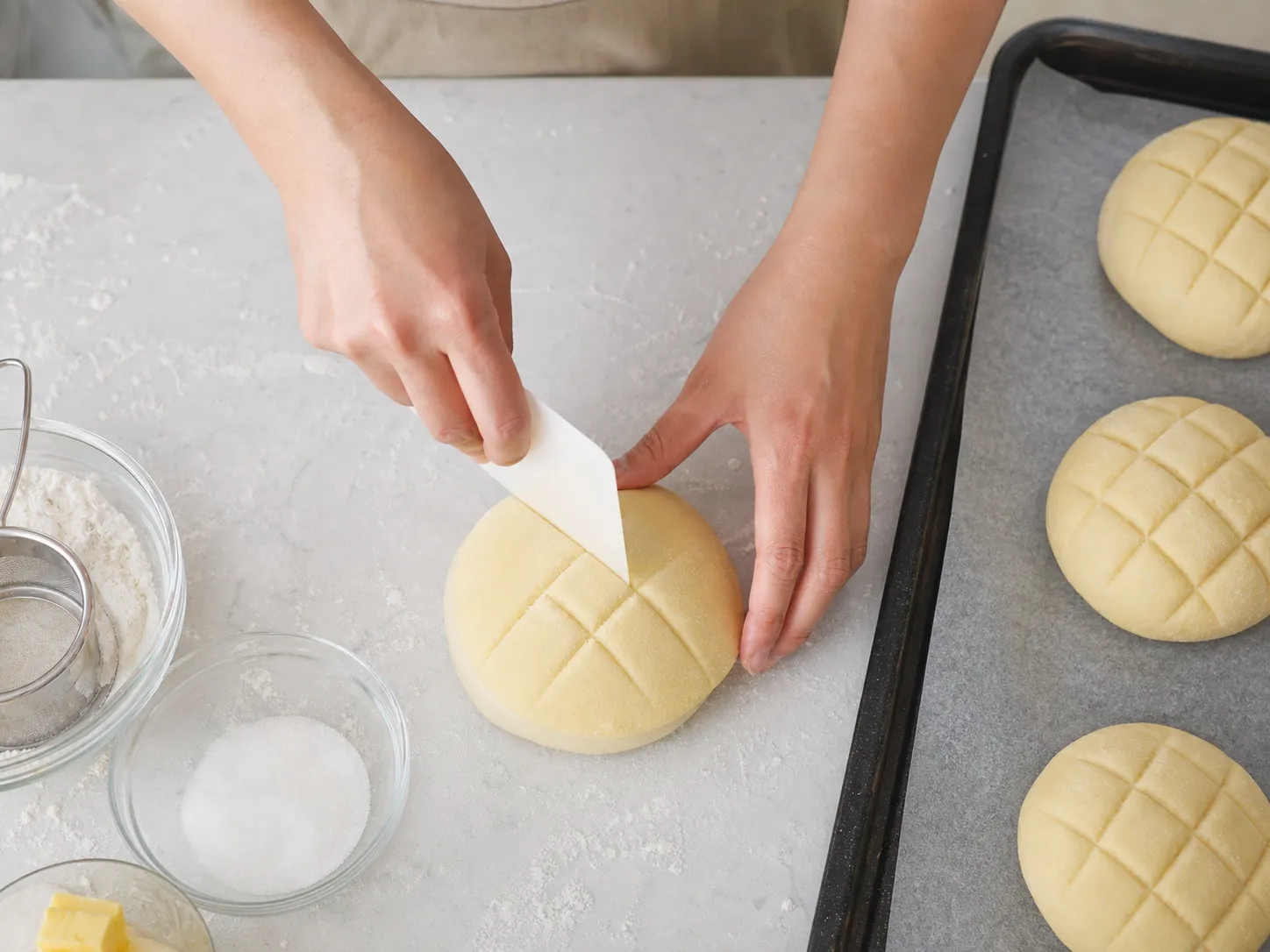
- Make a soft, yeasted bread dough and let it rise
- Separately make a sweet cookie dough (butter, sugar, flour, egg)
- Flatten the cookie dough and drape it over each ball of bread dough
- Score a crosshatch pattern into the cookie top and sprinkle with sugar
- Let proof, then bake until the bread is fluffy and the cookie crust is crisp and golden
Before you go — get it warm
Your questions, answered honestly
"Is there melon in it?" — Usually none — the name is purely about the cracked, netted look. Some modern versions add melon cream or flavoring, but the classic is just sweet bread + cookie crust.
"When is it best?" — Fresh and warm, when the cookie crust is crisp and crackly. A just-baked melonpan from a bakery beats a packaged one every time.
"What's the ice cream version?" — Some stalls split a warm melonpan and stuff it with ice cream — hot crisp crust + cold ice cream. If you see it, get it.
"Bakery or convenience store?" — Both work; convenience-store melonpan is fine and cheap, but a fresh bakery one (or a famous specialist) is noticeably better.
What the staff will ask you
| You'll hear | Romaji | Meaning | Just say |
|---|---|---|---|
| 温めますか? | Atatamemasu ka? | "Shall I warm it up?" | Hai, onegaishimasu (yes please) |
| トレーをお使いください | Torē o otsukai kudasai | "Please use a tray" (bakery self-service) | (take a tray & tongs) |
| 袋はご利用ですか? | Fukuro wa goriyō desu ka? | "Need a bag?" | Onegaishimasu (yes) |
At a self-service bakery you grab it with tongs; otherwise say "Meronpan hitotsu kudasai" (メロンパン一つください) — "one melonpan, please."
Where to eat it
- Any bakery (pan-ya) — freshly baked is best; many have a signature melonpan.
- Convenience stores & supermarkets — cheap, everywhere, perfectly decent.
- Famous specialists (e.g. Asakusa's Kagetsudo jumbo melonpan) — worth a detour and a photo.
Eat it warm and fresh for that crackly-crust magic.
Soul Score
Local Roots4/5
First-Timer Friendly5/5
Adventure Level3/5
Comfort Level4/5
Travel Worthy3/5
These scores are one obsessed eater's gut feeling — not a verdict. A low number isn't a bad mark, just a different kind of adventure.
Need a quick konbini meal?🏪 Japanese Convenience Store Food Guide →
Know someone planning Japan?
← All Articles
Convenience Store · Nationwide
Still hungry?
You might also like
Convenience StoreNationwide
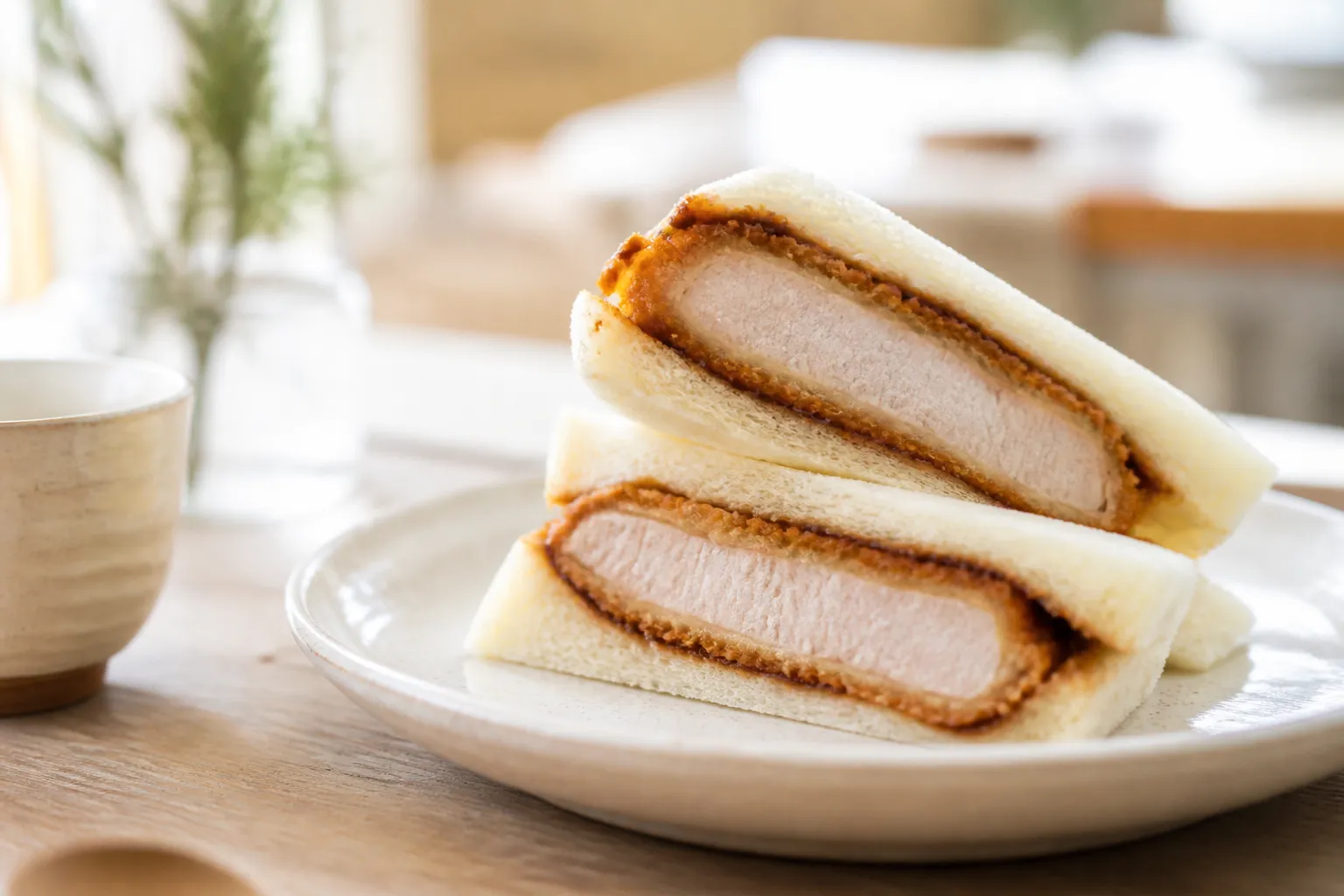
Katsu Sando (カツサンド)
A thick, golden-fried pork cutlet, crustless white bread, one bite — and suddenly a convenience-store sandwich has no business tasting this good.
July 27, 2026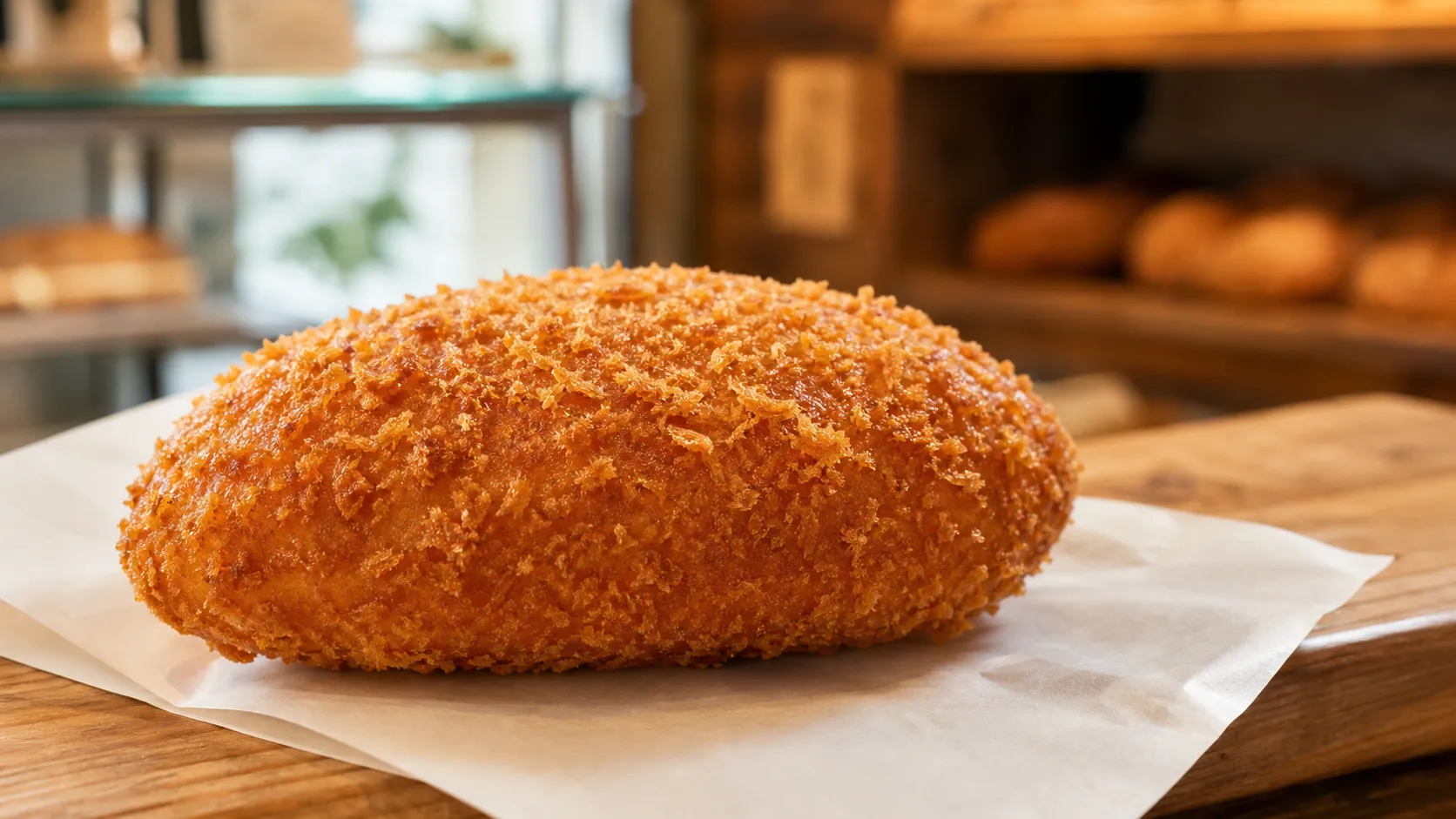
Convenience StoreNationwide
Curry Pan (カレーパン)
Japanese curry sealed inside dough, breaded, and deep-fried until shatteringly crisp. The savory bakery hero — crunchy outside, molten-spicy inside, and dangerously easy to eat two of.
June 20, 2026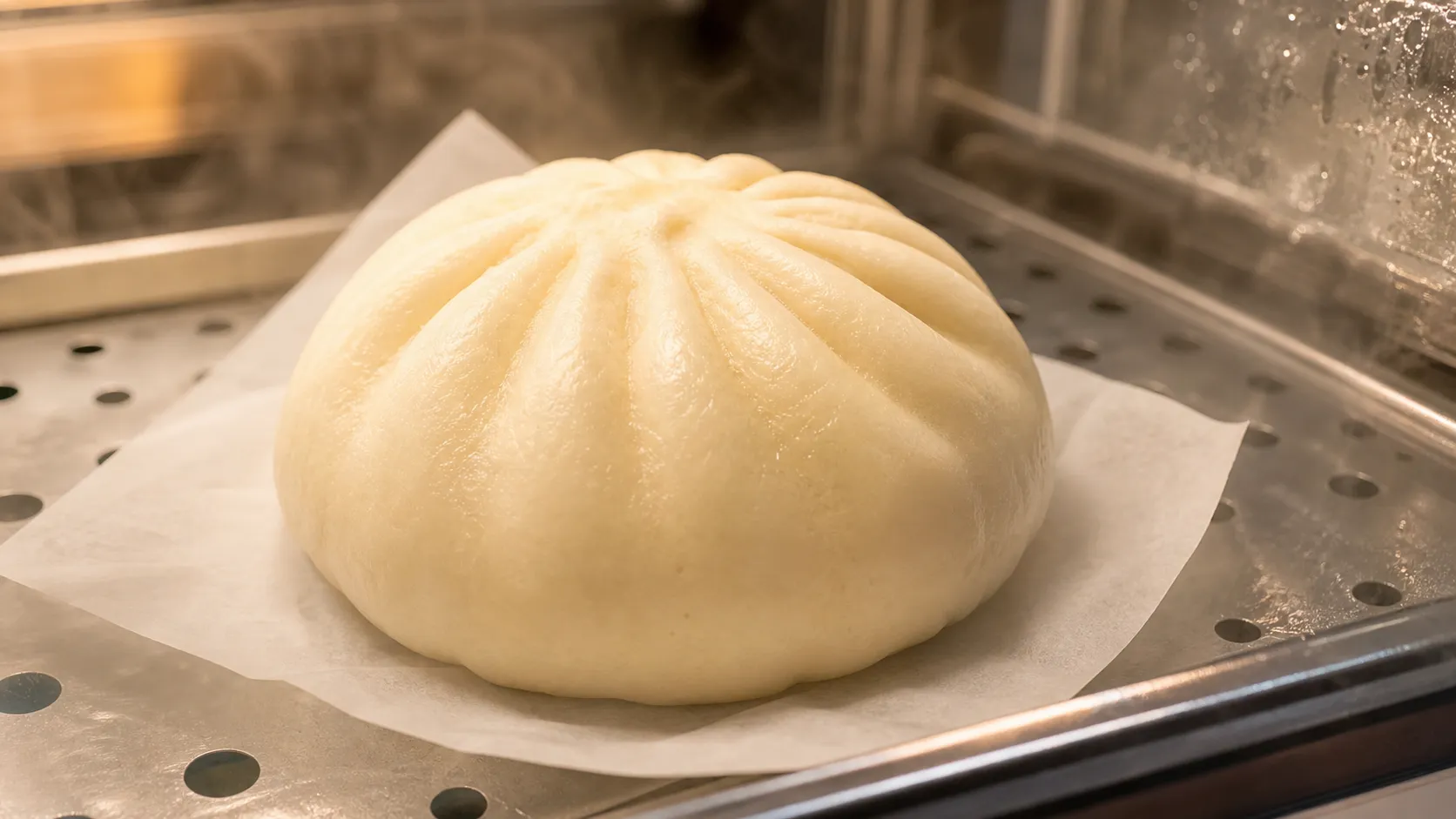
Convenience StoreNationwide
Nikuman (肉まん)
A fluffy steamed white bun stuffed with juicy seasoned pork — pulled hot from the convenience-store steamer on a cold day. Cheap, warming, and one of winter's small perfect pleasures.
June 20, 2026