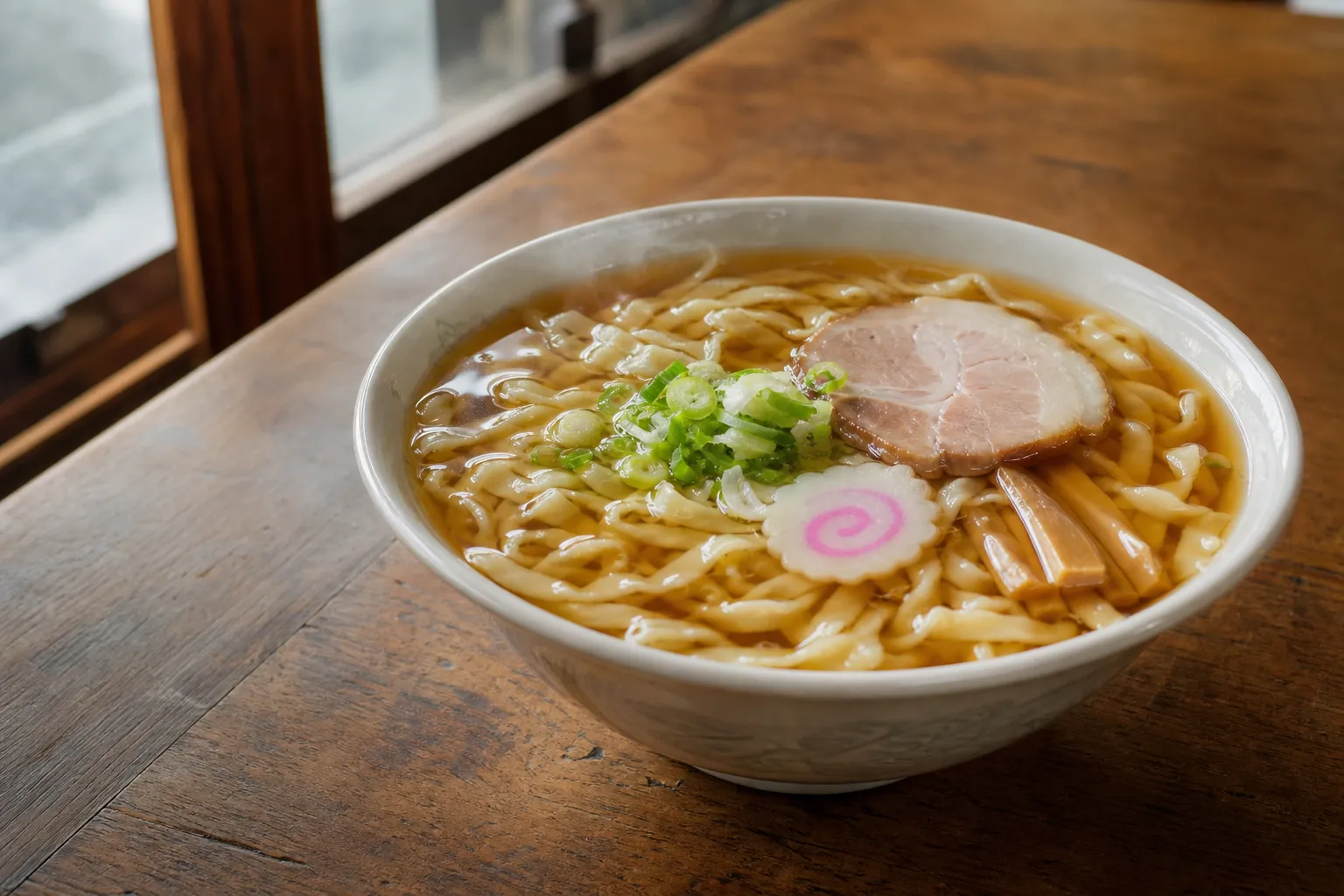
The broth was clear. Not cloudy, not thick, not slicked with fat — a pale golden soy broth I could honestly see straight through to the bottom of the bowl. After years of being told ramen had to be a rich, punishing, life-changing experience, here was a bowl quietly insisting otherwise. Then I lifted the noodles — flat, wide, wavy, no two exactly alike — and got it. Oh. This is the point.
Share this dish


Noodles hand-pressed with a bamboo pole, flat and gloriously uneven, swimming in a soy broth so clear you can see the bottom of the bowl. Tochigi's ramen is a quiet masterclass in less-is-more.
🍜 Planning a food trip to Tochigi?Add this dish to my Food Trip →
 Add this dish to my Food Trip →
This is Sano ramen (佐野ラーメン), the pride of Sano in Tochigi: a clean, light soy (shoyu) broth with hand-pulled flat noodles traditionally pressed out with a springy bamboo pole — a technique called aodake-uchi that leaves the noodles gloriously irregular, slippery, and chewy. Simple toppings, clear soup, and noodles that no machine could fake. It's ramen that trusts you to notice the details.
Noodles pressed with a bamboo pole
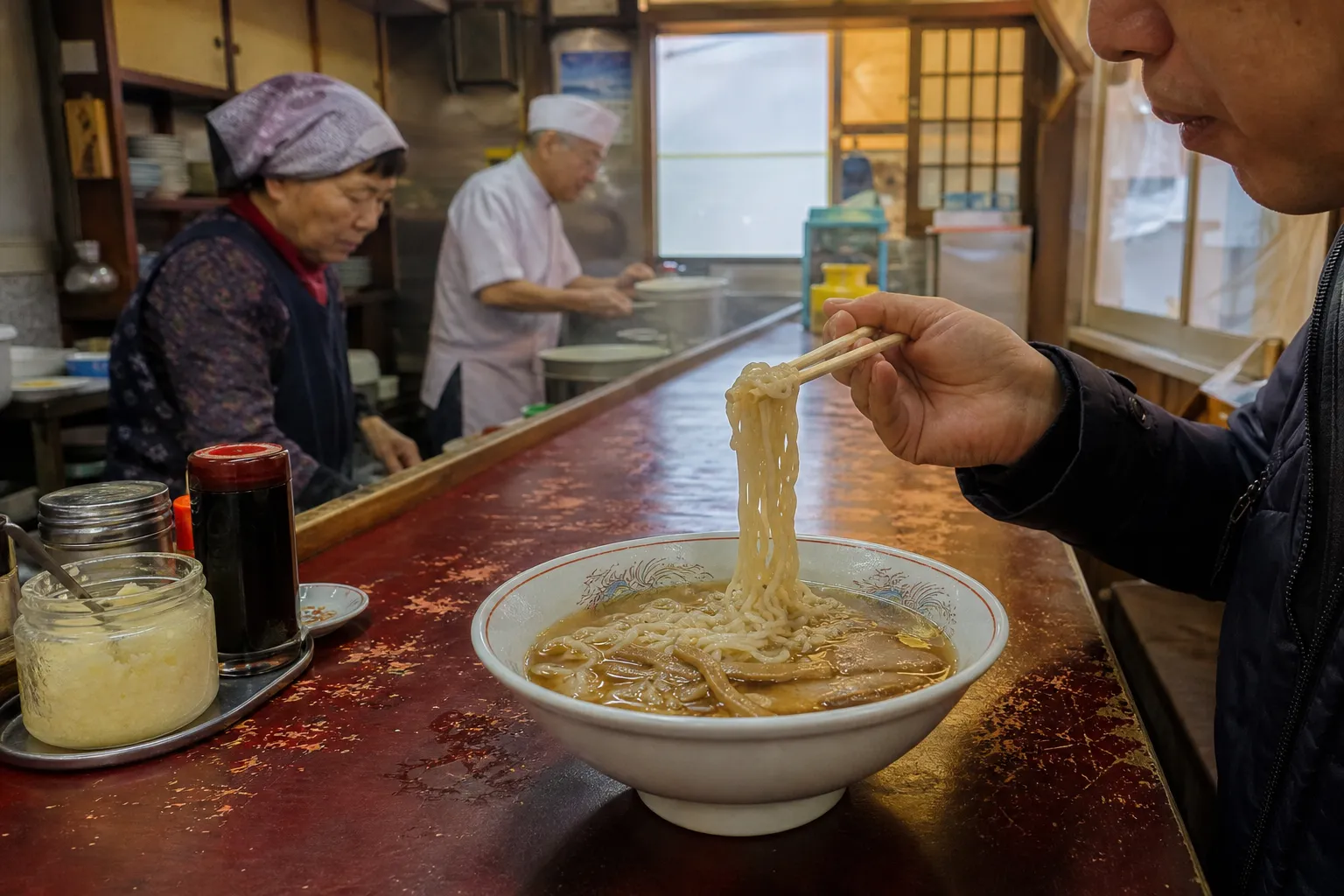
The signature here is older and stranger than it looks. To make the noodles, a maker traditionally sits on one end of a long green bamboo pole (aodake) and bounces along it to press and stretch the dough — a full-body, slightly comical, genuinely skilled process that produces flat noodles with uneven width and wonderfully wavy edges. The technique came to Sano generations ago and stuck, and it's the reason the noodles look hand-made, because they are.
I find this kind of stubbornness beautiful. In an age of machines that can extrude perfect uniform noodles in seconds, a town full of shops kept bouncing on bamboo poles because the result is better — the irregular surface grabs the clear broth, and the chew is alive in a way uniform noodles never manage. Sano isn't trying to out-rich anyone. It's just quietly making the noodle the hard way because the hard way tastes right.
Why the clear bowl works
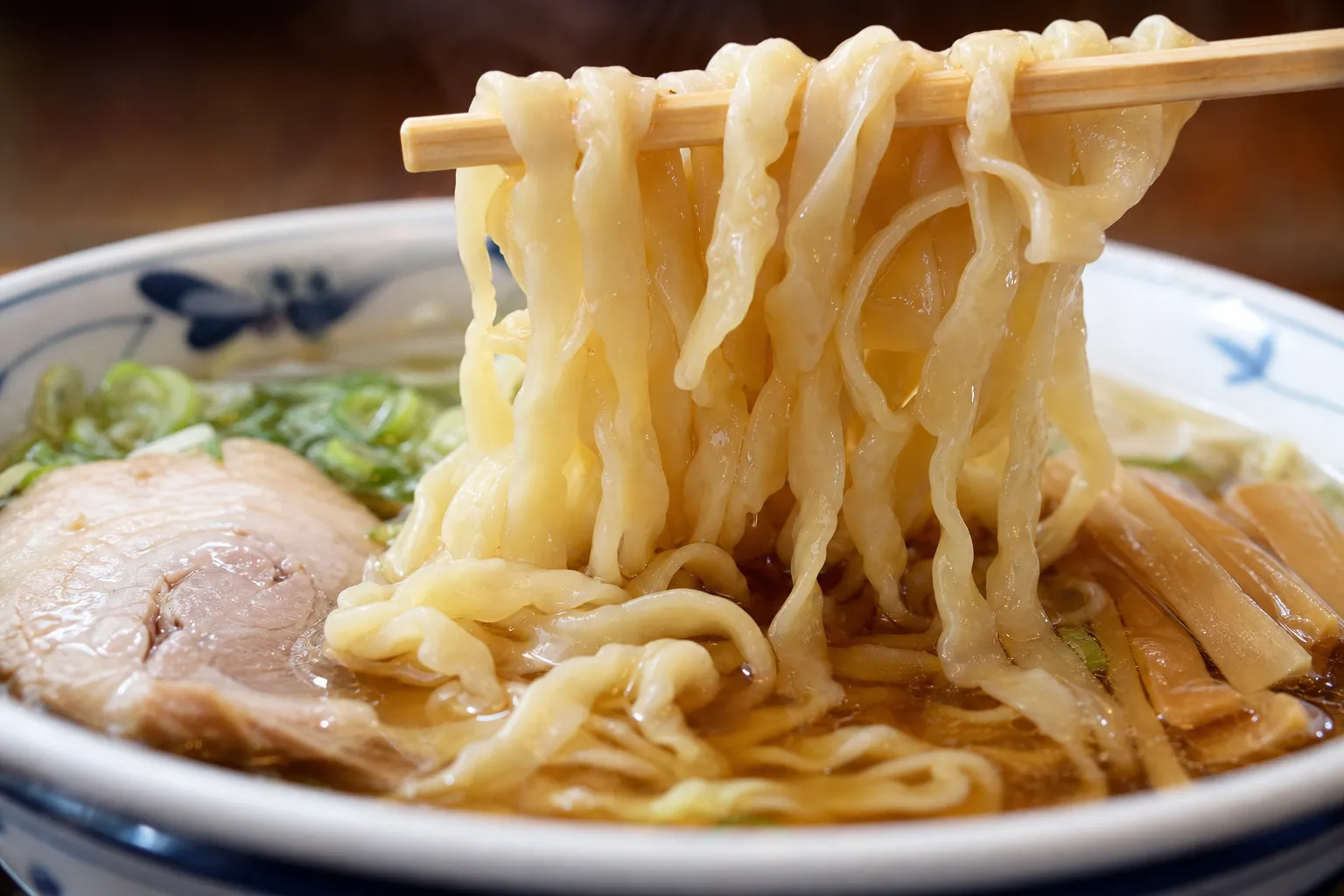
Clarity is the flex. The soup is a light chicken-and-soy broth, clean and gentle, the kind you can actually drink to the bottom without feeling defeated. Over it go restrained toppings — a slice or two of chashu, some menma, a piece of naruto, chopped green onion — nothing piled high, nothing fighting for attention. It's a bowl with nothing to hide behind.
And that's exactly why the noodles get to be the star. Flat and uneven, they slip and chew and carry the broth in their wavy folds, every strand a little different from the last. You slurp, you taste the clean soy, you go back for more noodle. By the end I'd drained the bowl and felt lighter, not heavier — which, for ramen, is its own quiet kind of magic.
How it's made
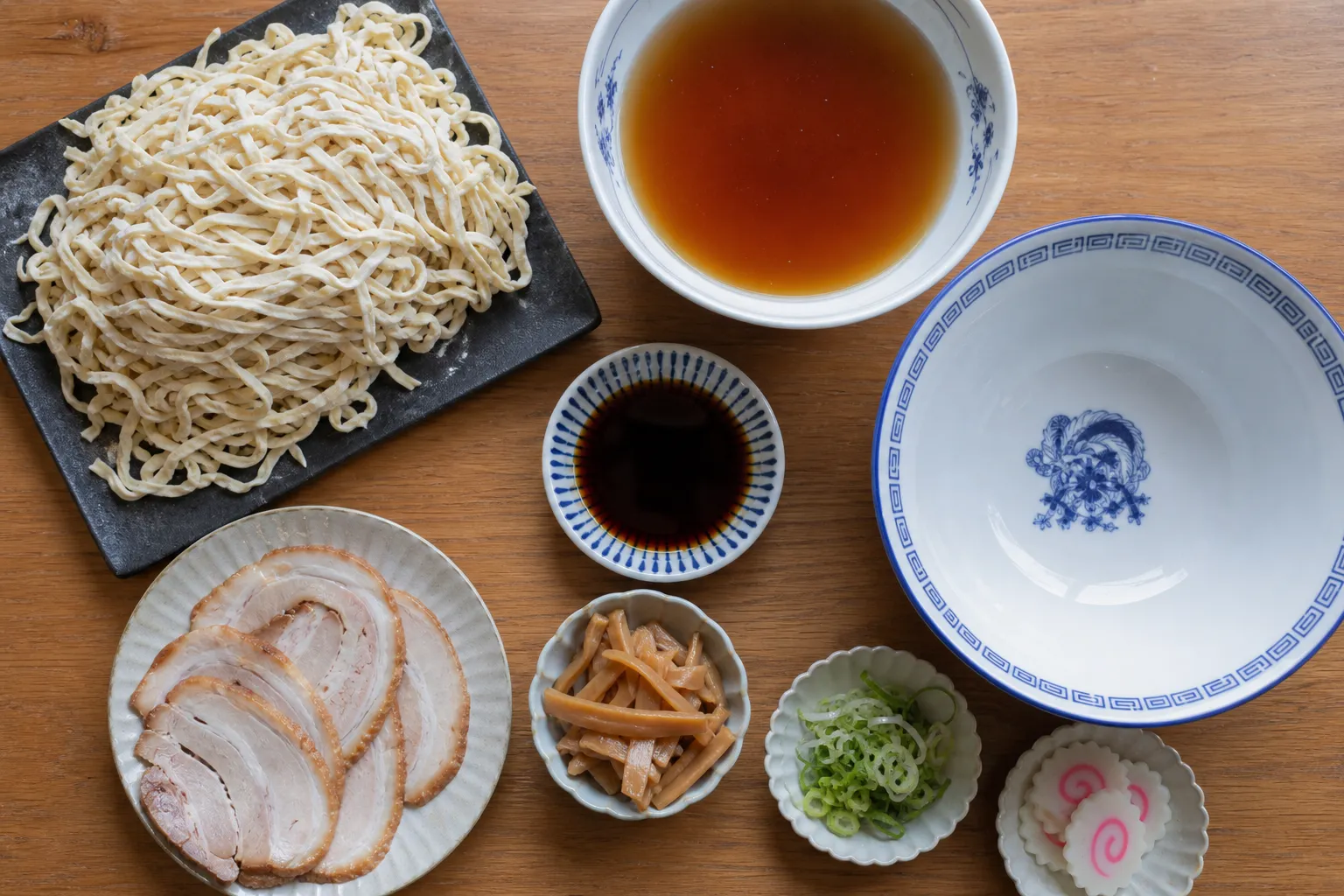
- Press and stretch the noodle dough with a green bamboo pole (aodake-uchi) into flat, wavy, uneven noodles
- Build a light, clear broth from chicken and a soy-based tare
- Boil the hand-cut noodles until springy
- Pour the clear soy broth over them in the bowl
- Top simply — chashu pork, menma, naruto fish cake, green onion
- Serve at once, and notice the noodles before anything else
Before you go — for the noodle-curious
Your questions, answered honestly
"Why is the broth so clear and light?" — That's Sano ramen on purpose. It's a clean soy (shoyu) broth, not a rich tonkotsu. The whole style is built around the noodles and a drinkable, gentle soup. If you came for heavy and creamy, this isn't that — and that's the point.
"What's special about the noodles?" — They're traditionally hand-pressed with a bamboo pole, which makes them flat, wide, and wavy with uneven edges. That irregular surface grabs the broth and gives a lively chew you don't get from machine noodles.
"Is it spicy?" — No. It's a mild, savory, soy-based bowl — very easy for first-timers.
"Is it filling enough?" — Yes — the noodles are substantial and the bowl is satisfying without being heavy. You can finish the broth and not regret it.
What the staff will ask you
| You'll hear | Romaji | Meaning | Just say |
|---|---|---|---|
| 大盛りにしますか? | Ōmori ni shimasu ka? | "Want a large (extra noodles)?" | Futsū de (regular) / Ōmori de (large) |
| 餃子はつけますか? | Gyōza wa tsukemasu ka? | "Add gyoza?" | Hai, onegaishimasu (yes please) |
| 味、いかがですか? | Aji, ikaga desu ka? | "How's the flavor?" | Oishii desu! (it's delicious!) |
To order, just say "Sano ramen kudasai" (佐野ラーメンください) — "Sano ramen, please."
Where to eat it
- Sano City, Tochigi — the home of the style, with ramen shops all over town, many still pressing their noodles by hand with a bamboo pole. An easy day trip or stop in northern Kanto, and the most authentic place to try it.
- Around Sano — you'll find Sano ramen at shops and roadside spots throughout the area; it's a well-signed local specialty, so it's not hard to track down once you're nearby.
- Check before you go — popular shops can sell out of hand-made noodles and keep their own hours; confirm timing, especially for famous spots at lunch.
Soul Score
Local Roots4/5
First-Timer Friendly5/5
Adventure Level3/5
Comfort Level5/5
Travel Worthy4/5
These scores are one obsessed eater's gut feeling — not a verdict. A low number isn't a bad mark, just a different kind of adventure.
Know someone planning Japan?
← All Articles
Local Food · Sano, Tochigi
Still hungry?
Eat more from Tochigi
Local FoodTochigi
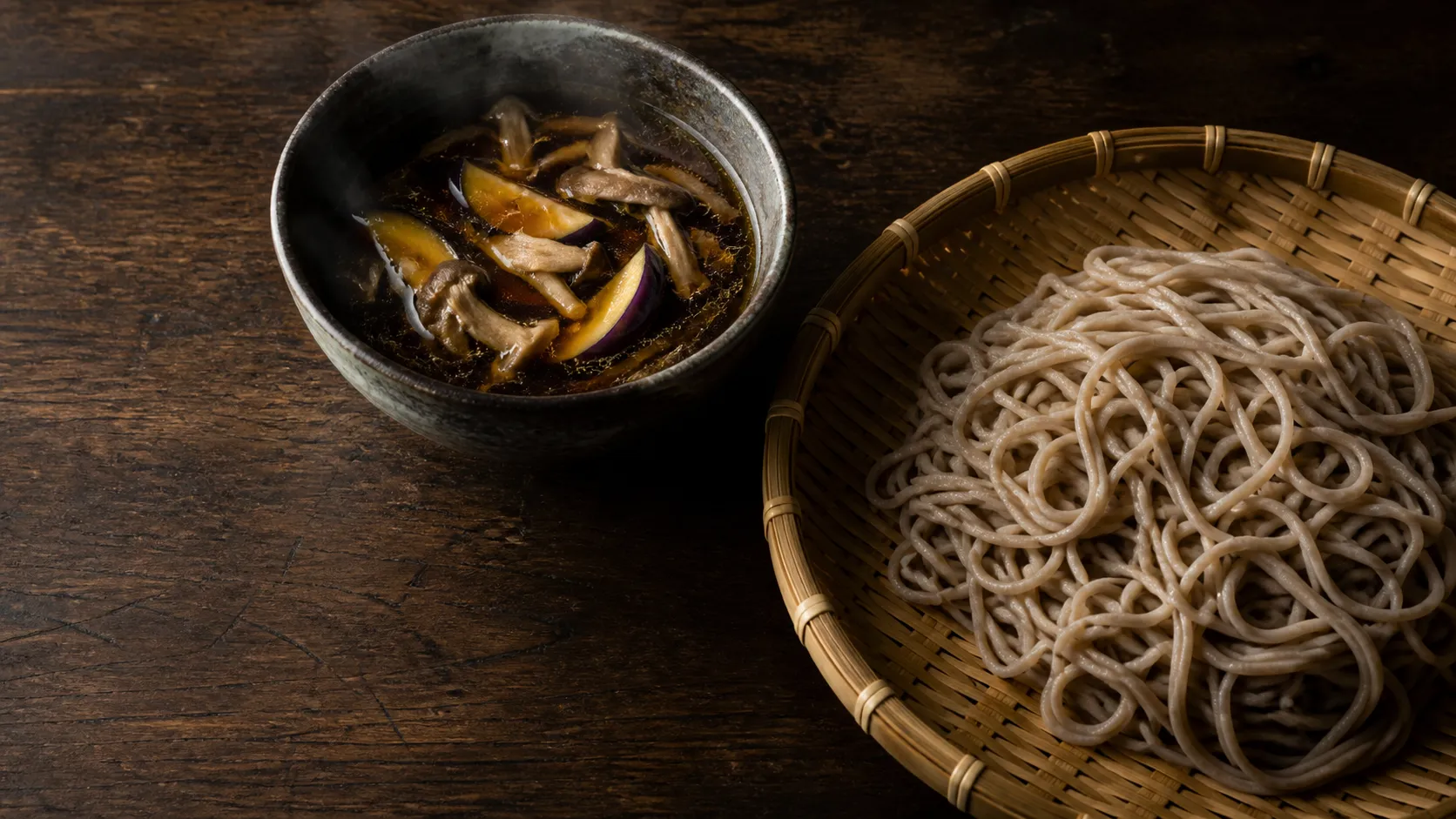
Chitake Soba (ちたけそば)
The mushroom itself is chewy and honestly a bit gritty. Nobody in Tochigi cares. They want what it leaks into the broth, and after one dip I understood the whole obsession.
September 2, 2026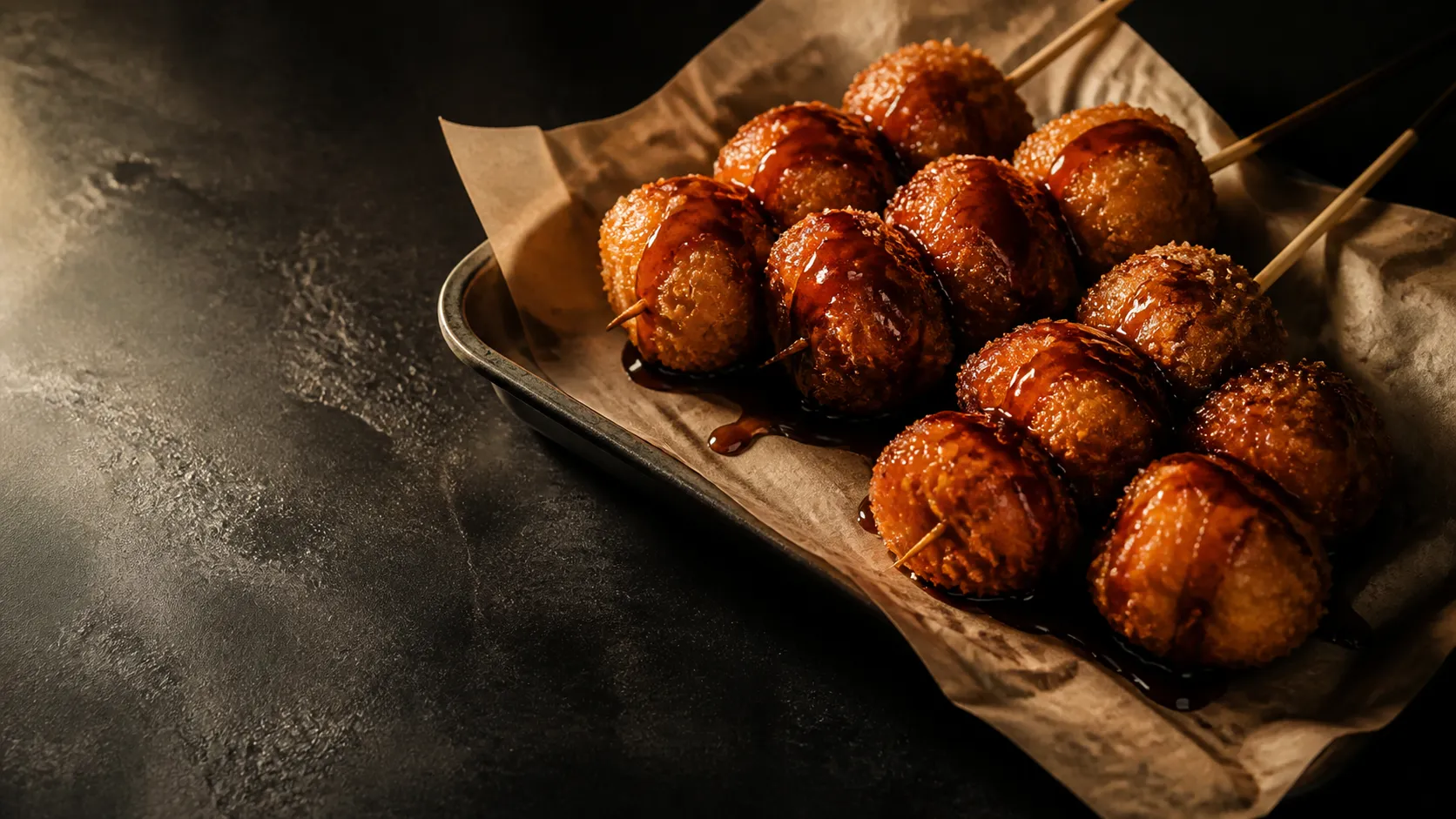
Local FoodSano, Tochigi
Imo-furai (いもフライ)
A hundred yen. One skewer. Potato, panko, and a slap of dark sauce — and I stood on the street eating four of them like I had somewhere to be and had decided not to go.
September 2, 2026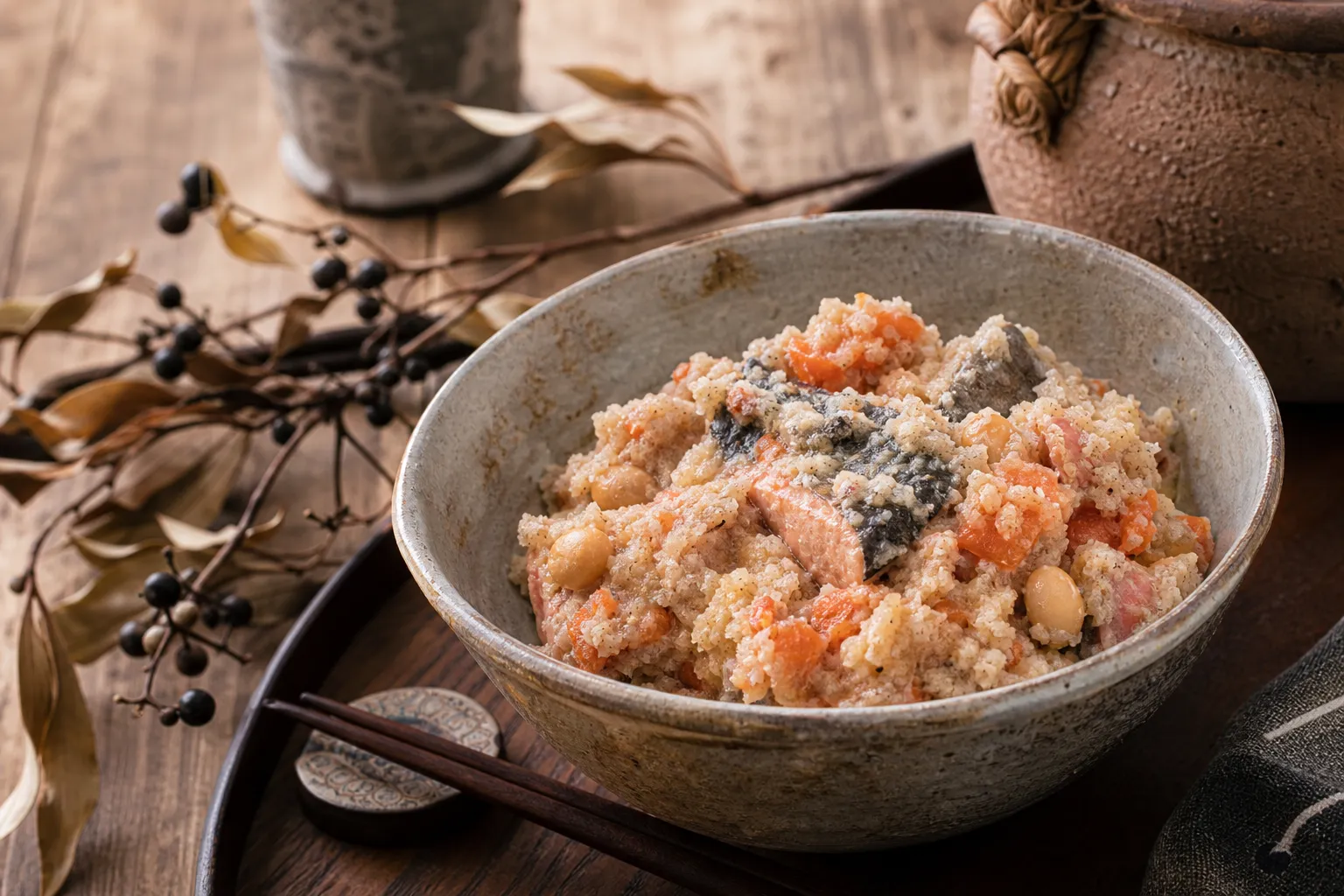
Local FoodTochigi
Shimotsukare (しもつかれ)
Grated daikon, soybeans, a salmon head and sake lees, simmered into a pinkish-grey rustic mess that Tochigi grandmothers swear by — the most polarizing bowl in Japan, and I ate the whole thing.
July 12, 2026