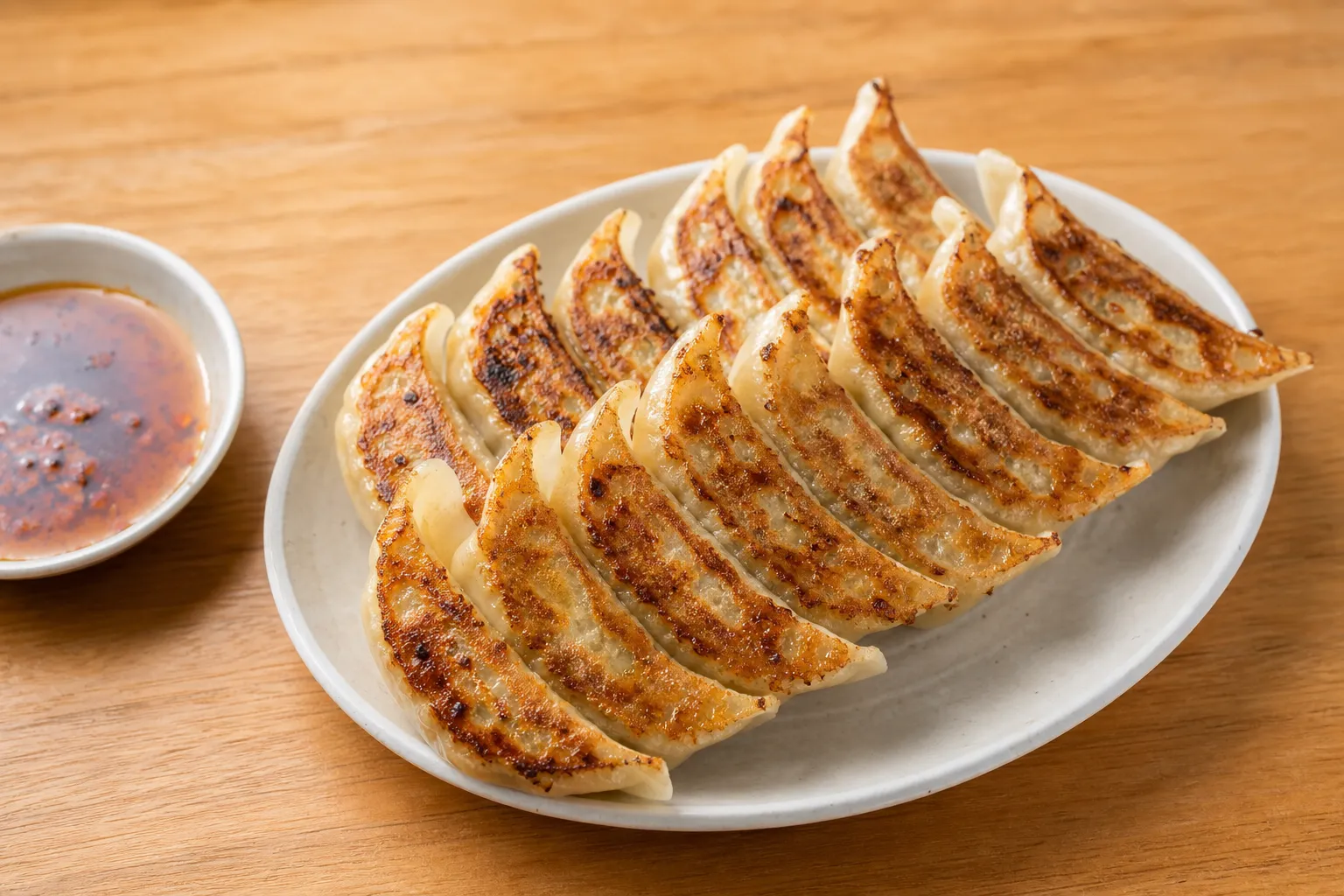
That first bite bites back — the bottom shatters with a crunch, then hot juice floods out and I nearly drop the chopsticks, and I just sit there for a second going okay, that's why this city is obsessed. One plate becomes two. Two becomes "should we get the boiled ones too?" I came for a snack and stayed for a campaign.
Share this dish


A whole plate of pan-fried dumplings with lacquered, crackle-crisp bottoms — in the city that eats more gyoza than anywhere else in Japan and has zero shame about it.
🍜 Planning a food trip to Tochigi?Add this dish to my Food Trip →
 Add this dish to my Food Trip →
Here's what it is: Utsunomiya gyoza (宇都宮餃子) is the everyday pan-fried dumpling — pork and lots of cabbage folded into a thin wrapper, seared flat-side down until the bottom goes lacquered and crisp, then steamed in the same pan so the top stays soft and the filling turns juicy. What makes Utsunomiya's version a thing isn't a secret recipe; it's the sheer devotion. This is the city that fights every year for the title of Japan's top gyoza-eating household, where dumplings come by the plateful and every shop has its own fold. It's not winged hanetsuki gyoza with a lacy skirt, and it's not gyoza swimming in soup — it's the honest, crisp-bottomed plate, done more times, in more shops, than anywhere else in the country.
How a train town became the gyoza capital
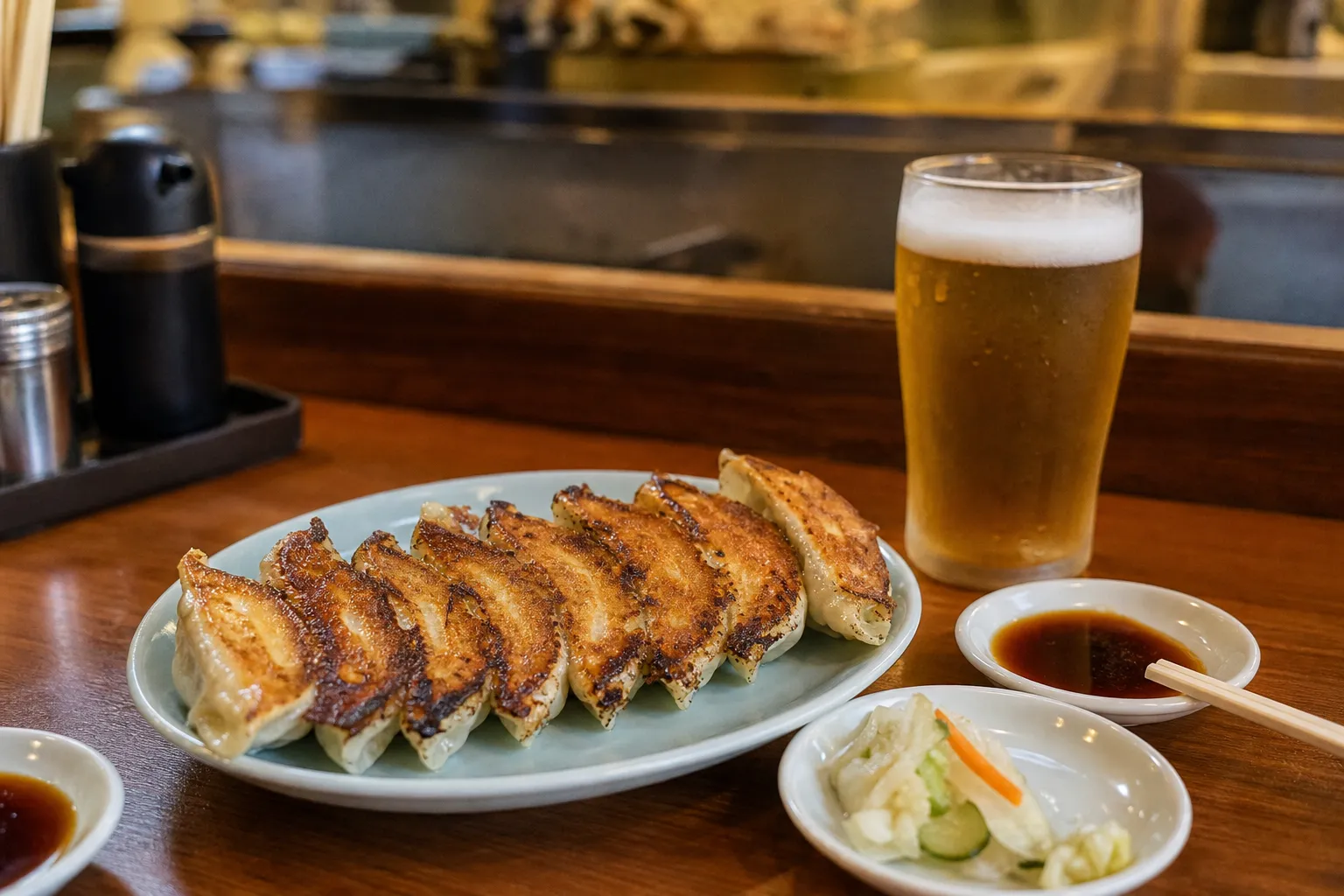
The story people tell goes back to soldiers stationed in the area returning from northeastern China before and during the war, bringing a taste for dumplings home with them. It stuck. Then in the early 1990s, someone noticed Utsunomiya households were topping the national statistics for money spent on gyoza, the city leaned all the way in, and a local food identity was born — complete with a stone gyoza statue outside the station that honestly looks like a dumpling wrapped in a robe. I find that statue genuinely funny and I salute it every time.
What I love is that the city didn't invent some fancy dish to get famous; it just admitted, loudly, that it eats an absurd amount of a very normal food. There are dozens of shops clustered near the station, each with regulars who'll defend their favorite to the death. It's civic pride expressed entirely through dumplings, and I think that's a beautiful way to run a city.
What makes the eating different
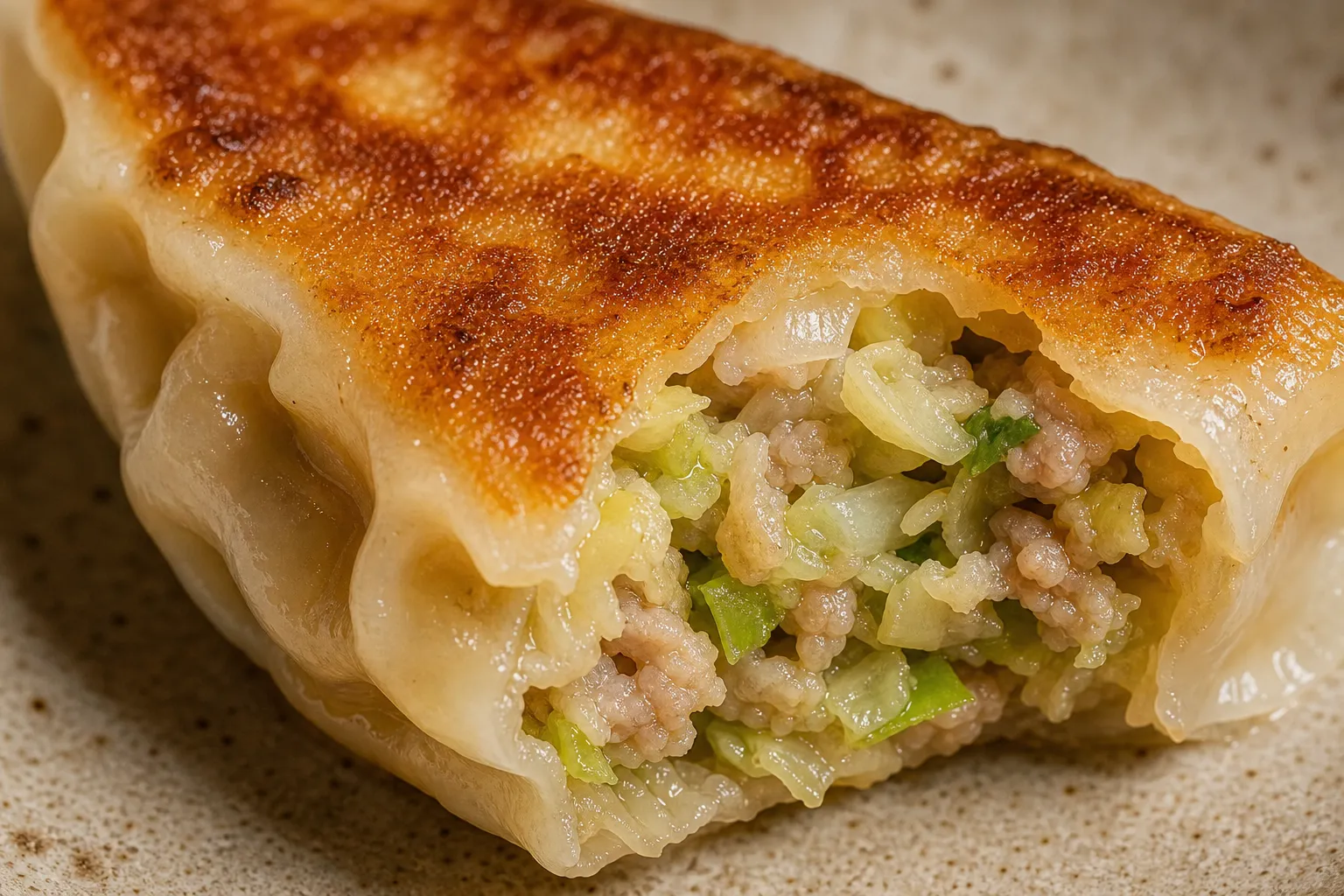
- The bottom is the whole game — pan-fried until it's genuinely crisp and browned, so every dumpling has a crunch before it goes soft
- The filling leans vegetable-forward — lots of cabbage and often garlic chives, so it's lighter and juicier than a heavy all-meat dumpling
- You build your own dip: soy sauce, vinegar and chili oil in whatever ratio you like, so you set the acidity and the heat
- It's sold by the plate (usually six), which makes ordering in rounds natural — get some, taste, get more
- Many shops offer both yaki (pan-fried) and sui/yude (boiled) — order both and you get crisp and silky in one sitting
How it's made
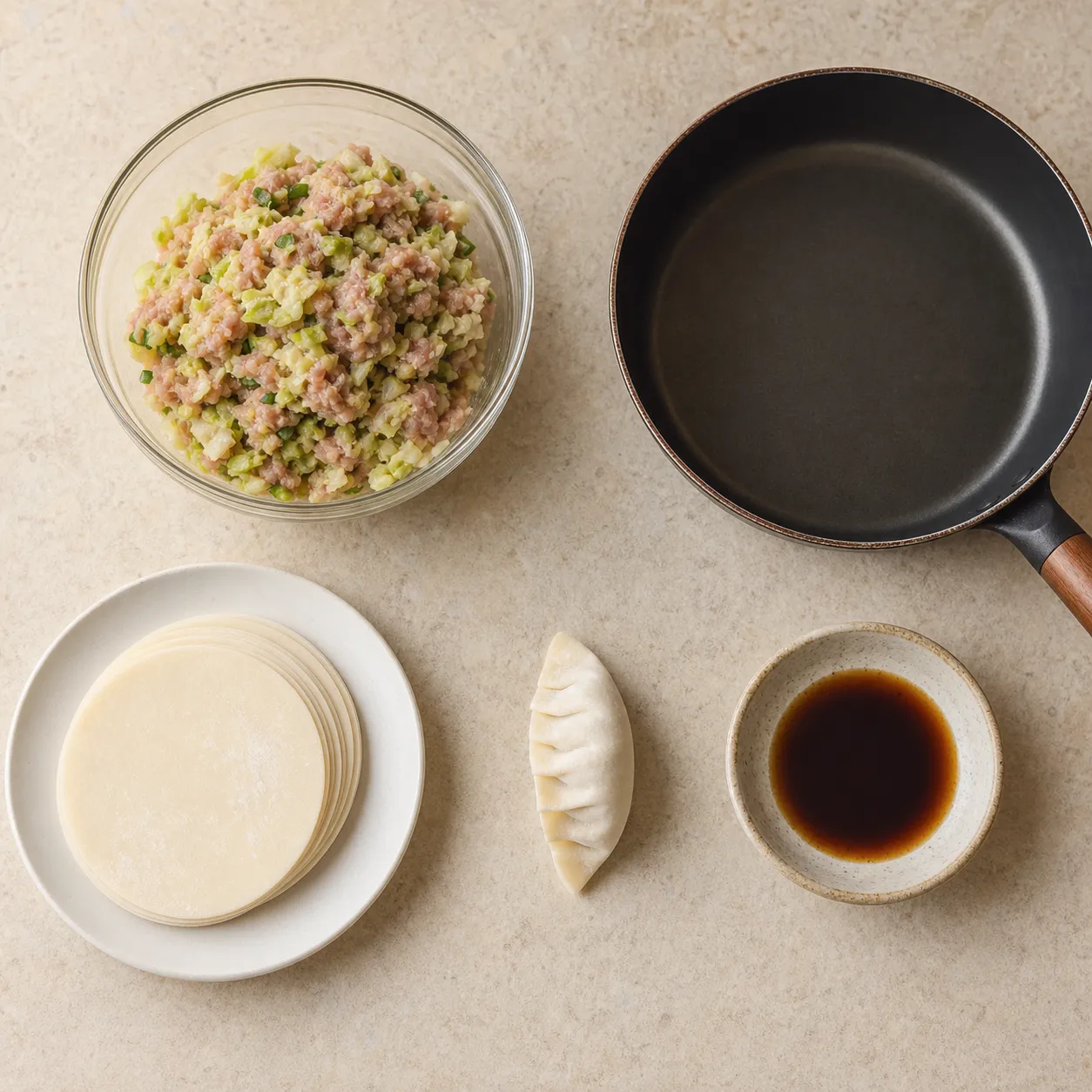
- Make the filling. Ground pork is mixed with finely chopped cabbage, garlic chives or garlic, ginger and seasoning, then rested so the flavors meld.
- Fill and fold. A spoon of filling goes onto a thin round wrapper, and the edge is pleated shut into the classic crescent with a flat base to sit on.
- Sear. The dumplings are set flat-side down in a hot oiled pan and fried until the bottoms brown and crisp.
- Steam in the pan. Water (sometimes a thin flour-water) is poured in and the pan is covered, steaming the tops until the wrappers are cooked and the filling is juicy.
- Finish and flip out. The lid comes off, the last water cooks away to re-crisp the base, and the whole plate is turned out crisp-side up, served hot with the dipping sauce.
The trick is that one pan does two jobs — fry, then steam — so you get crunch on the bottom and soft on top from a single skillet. Get the timing right and the base is glassy-crisp without burning.
Before you go — order in rounds, hot off the pan
Your questions, answered honestly
"Pan-fried or boiled — which do I order?" — Get yaki-gyoza (pan-fried) first; the crisp bottom is the signature and the reason you're here. If you're staying a while, add a plate of sui-gyoza (boiled) — softer, silkier, lighter. Doing both in one sitting is the local move, not greed.
"How do I make the dipping sauce?" — There's usually soy, vinegar and chili oil on the table. A good starting point is more vinegar than soy, then chili oil to taste — the acidity cuts the richness. Adjust freely; there's no wrong ratio, and locals all have their own.
"Is it spicy?" — Not by itself. The dumplings are mild and savory; you add all the heat yourself with the chili oil, so you're fully in control. If you want none, just skip the oil.
"How much should I order?" — Plates are small (about six each) on purpose. Start with one or two, taste, and order more — shops expect you to eat in rounds, and it's the best way to try several shops in one crawl.
What the staff will ask you
| You'll hear | Romaji | Meaning | Just say |
|---|---|---|---|
| 焼きと水、どちらにしますか? | Yaki to sui, dochira ni shimasu ka? | "Pan-fried or boiled?" | Yaki de (pan-fried, please) |
| 何人前にしますか? | Nan-nin-mae ni shimasu ka? | "How many plates?" | Ni-nin-mae kudasai (two plates, please) |
| ライスは付けますか? | Raisu wa tsukemasu ka? | "Would you like rice with that?" | Onegai shimasu (yes, please) / Kekkō desu (no thanks) |
To order, just say "Yaki-gyoza o kudasai" (焼き餃子をください) — "Pan-fried gyoza, please."
Where to eat it
- Around Utsunomiya Station (west exit) — the densest cluster of gyoza shops in the city, including long-running names like Masashi and Min-Min, is a short walk from the station and made for a multi-shop crawl.
- Kirasse (餃子のまち宇都宮 来らっせ) — a dedicated gyoza food hall near the station where several famous local shops serve under one roof, ideal if you want to compare styles in one stop.
- The gyoza statue outside the station — not a restaurant, but the city's dumpling landmark and the natural starting point for a crawl.
Utsunomiya has dozens of gyoza shops and popular ones draw lines, especially on weekends; hours and days off vary and some close early when they sell out, so check before you go and consider going off-peak.
Soul Score
Local Roots4/5
First-Timer Friendly5/5
Adventure Level3/5
Comfort Level5/5
Travel Worthy4/5
These scores are one obsessed eater's gut feeling — not a verdict. A low number isn't a bad mark, just a different kind of adventure.
Know someone planning Japan?
← All Articles
Local Food · Utsunomiya, Tochigi
Still hungry?
Eat more from Tochigi
Local FoodTochigi
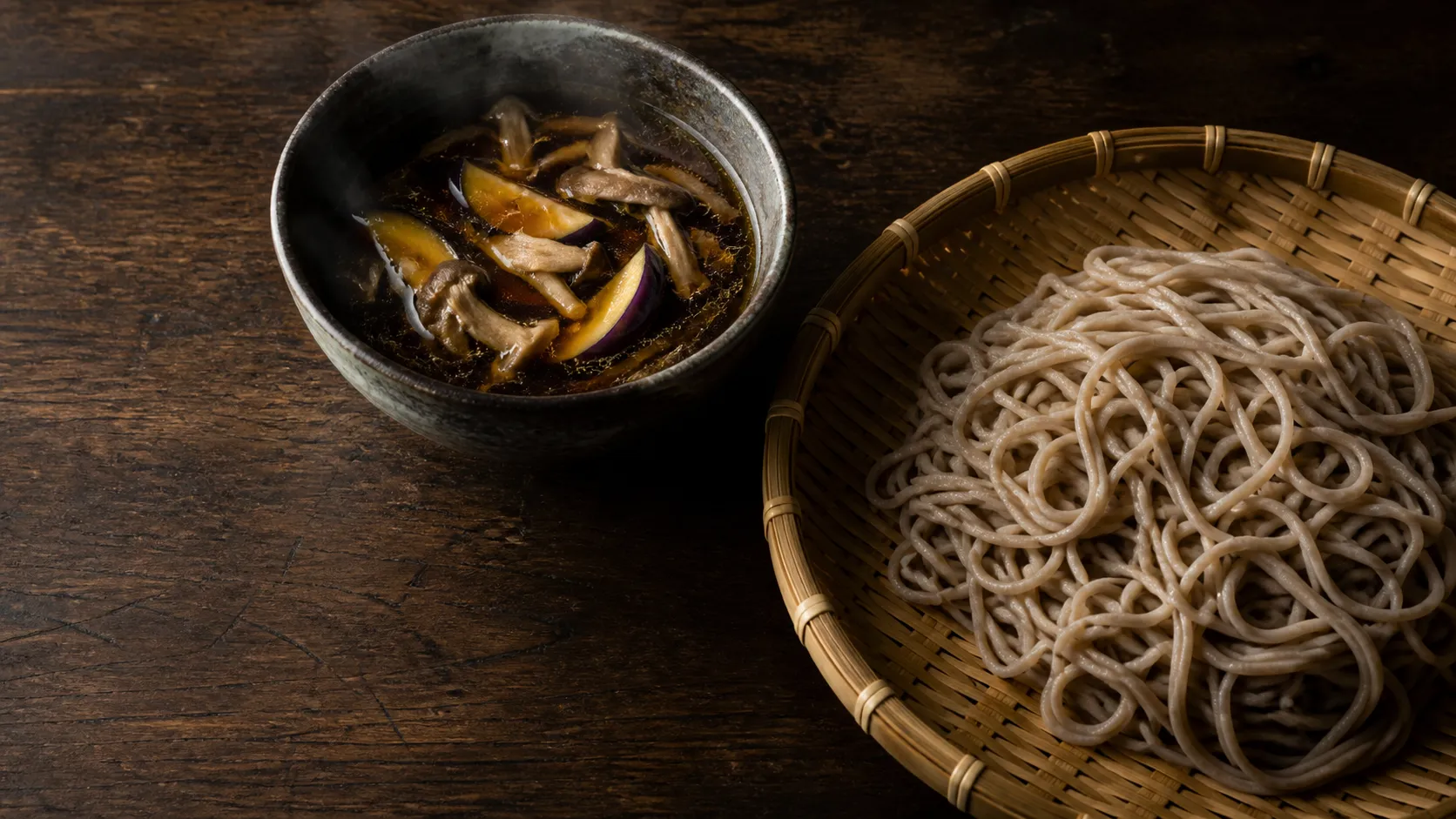
Chitake Soba (ちたけそば)
The mushroom itself is chewy and honestly a bit gritty. Nobody in Tochigi cares. They want what it leaks into the broth, and after one dip I understood the whole obsession.
September 2, 2026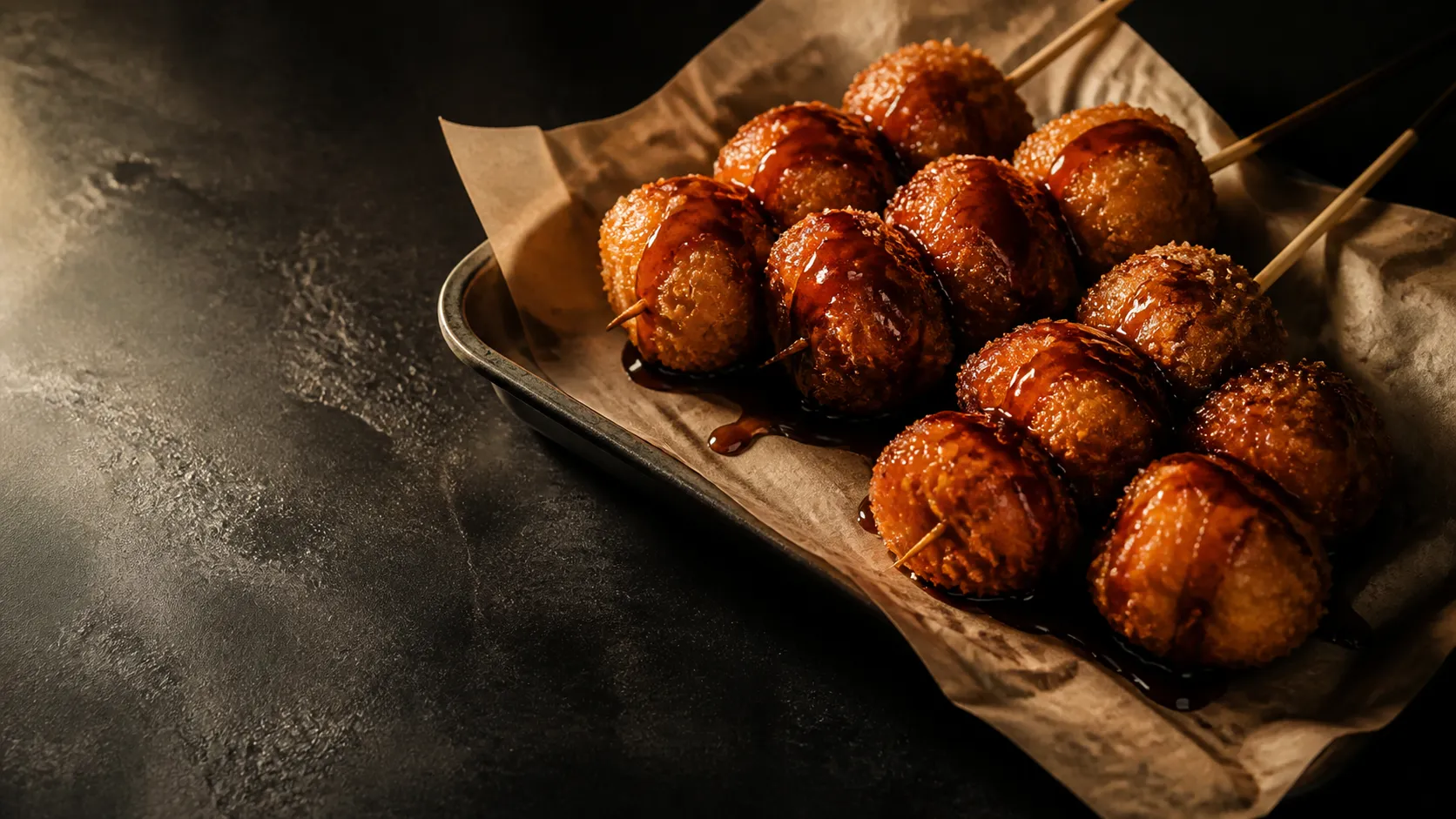
Local FoodSano, Tochigi
Imo-furai (いもフライ)
A hundred yen. One skewer. Potato, panko, and a slap of dark sauce — and I stood on the street eating four of them like I had somewhere to be and had decided not to go.
September 2, 2026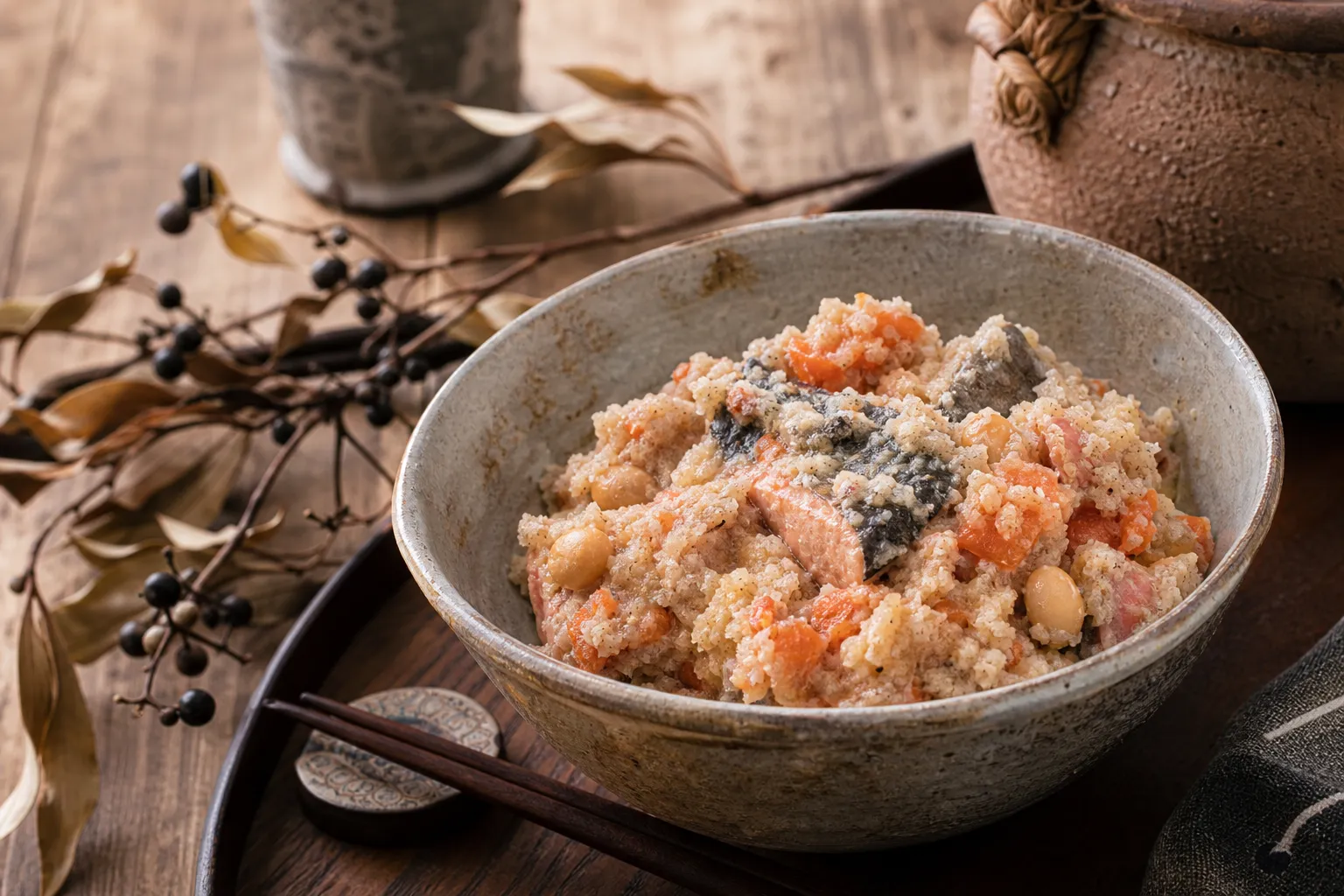
Local FoodTochigi
Shimotsukare (しもつかれ)
Grated daikon, soybeans, a salmon head and sake lees, simmered into a pinkish-grey rustic mess that Tochigi grandmothers swear by — the most polarizing bowl in Japan, and I ate the whole thing.
July 12, 2026